It started with a single plastic bag. Just one, snagged on a fence. That’s how I got my group, the Litter Caterpillars, going. A few friends and I, armed with trash grabbers, just fed up. We were cleaning our little corner of Chicago. But as we filled more bags than I can count, something shifted. We saw more than clean grass. We saw potential. We imagined raised beds just bursting with tomatoes and peppers, a butterfly garden humming with life, a simple bench where you could just sit and talk to your neighbor. The dream was big. Our pockets were empty.
That’s when my real work began. I dove into the world of funding. Headfirst. I spent hours, days, weeks sifting through websites, trying to make sense of grant applications. It’s a whole other language, I swear. I made mistakes. I missed deadlines. I wrote proposals that went straight into the void. But I learned. I figured out what funders are actually looking for, how to tell my story, and where to find the money that matched my vision. I learned how to turn a simple passion for picking up trash into a real, compelling case for planting a park.
This guide is everything I wish I’d had. It's the shortcut I built from my own long, winding journey. I’ve done the heavy lifting for you, curating a list of the best grants for gardens out there, from huge federal programs to tiny local microgrants. Inside, you’ll find my breakdown of each opportunity with screenshots and direct links, plus the tips I learned the hard way on crafting a winning proposal, finding partners, and even some sample language to get you started. This isn't just a list; it's a roadmap. It's how you turn your own patch of overlooked land into a thriving community oasis. Your dream is possible, and this is how you fund it.
1. Grants.gov
If you're dreaming big, really big, and aiming for serious federal funding for your garden project, Grants.gov is your first stop. You have to start here. Think of it as the Grand Central Station for every single competitive federal grant. It’s not just a list; it’s the official place where you find money from agencies like the USDA or EPA and submit your entire application, all in one spot. This is where you go for the kind of funding that can transform a vacant lot into a full-blown urban farm or launch a gardening program across multiple schools.

This platform is so important because it centralizes the whole, often painful, federal application process. You can create saved searches for keywords like "community garden" or "urban agriculture" and get email alerts when new grants pop up. This alone will save you hours of your life.
Navigating the Federal Landscape
I'll be honest with you, the website can feel a little clunky and bureaucratic at first. The biggest hurdle you’ll face is the initial registration. It requires getting a Unique Entity ID (UEI) and registering with the System for Award Management (SAM.gov). You must start this process months before you plan to apply, because it can take a long, long time to get approved. It’s a marathon, not a sprint. Once you’re set up, though, the system becomes an incredibly powerful tool for managing your applications.
- Best For: Ambitious, large-scale projects seeking substantial federal grants for gardens, like urban agriculture initiatives, community food systems, or environmental education programs.
- Pros: It’s the official, comprehensive source for all federal grant opportunities. It's free to use and standardizes the application process across different agencies.
- Cons: The learning curve is steep, and the initial SAM.gov registration can be a significant administrative task. It exclusively lists federal grants, so you won't find private or foundation funding here.
Ready to explore federal funding? Visit the portal at Grants.gov.
2. USDA Office of Urban Agriculture & Innovative Production (OUAIP)
If Grants.gov is that giant, bustling station for all federal funding, think of the USDA's OUAIP as your dedicated express train. It takes you right to the powerful grants for gardens focused on urban farming and community food. This office is the USDA’s hub built specifically to support projects just like yours. It’s where you’ll find announcements for the famous Urban Agriculture and Innovative Production (UAIP) competitive grants, which are perfect for turning a neighborhood food desert into a fresh food oasis.
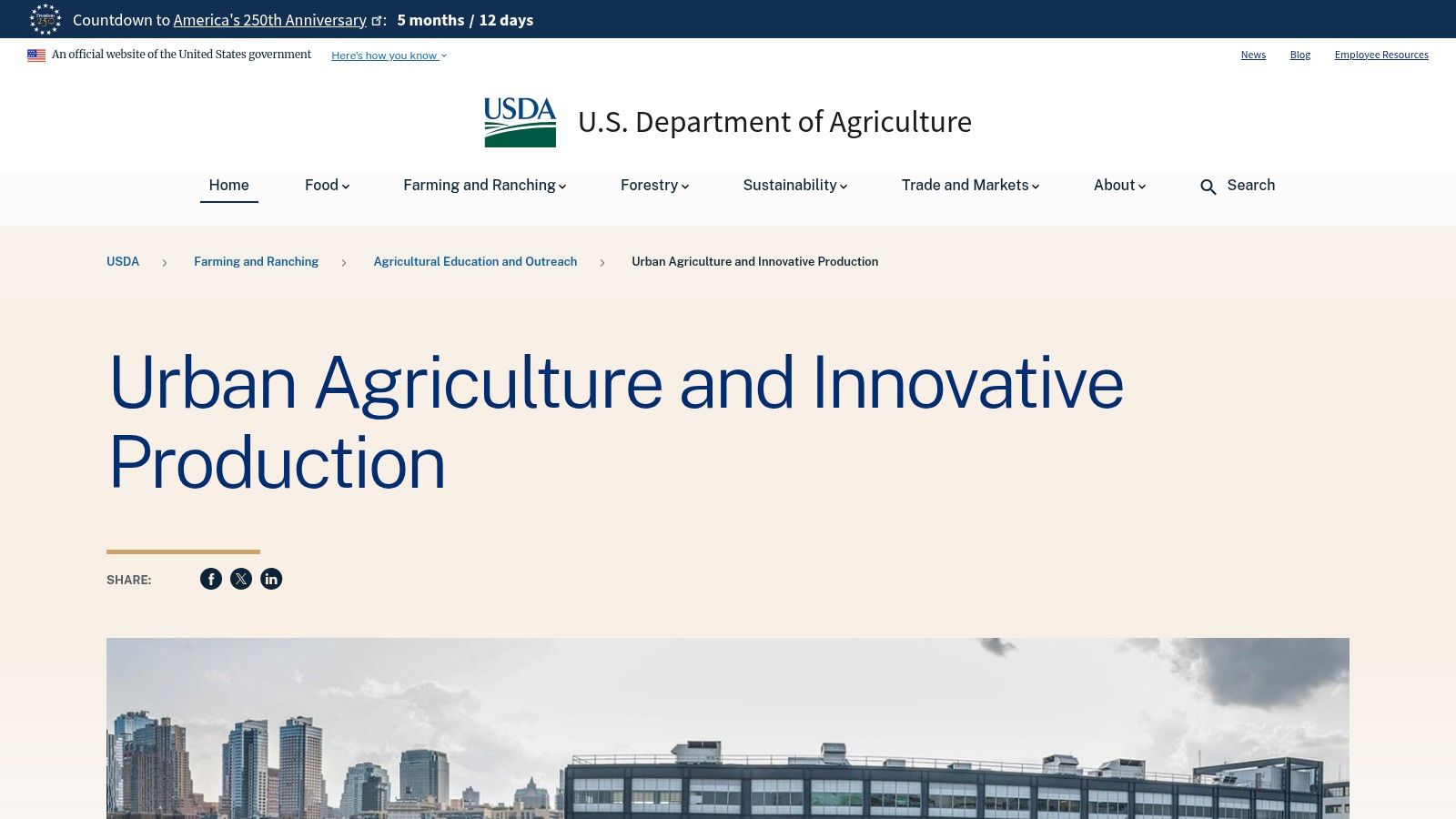
This platform stands out because it cuts through the noise of the bigger federal grant world. You get directly connected with funding cycles, technical help, and inspiring examples of projects they’ve already funded, all tailored to urban agriculture. For me, it was an invaluable resource for understanding what the USDA actually wants and seeing what a successful application looks like.
Tapping into a Dedicated Funding Stream
Let me be direct: while this office announces the grants, you will still need to submit the final application through Grants.gov. Think of the OUAIP website as your strategic headquarters. It's where you gather intelligence and prepare for your mission. You should bookmark this page and check it religiously around the time grant cycles typically open. The competition is fierce, so being prepared is your secret weapon. For great examples of what this funding can achieve, you can explore the work of community gardens in Chicago, IL and see the impact for yourself.
- Best For: Community gardens, urban farms, rooftop gardens, and composting initiatives focused on food access, production, and innovation in metropolitan areas.
- Pros: It’s a direct source for USDA's premier urban-agriculture funding. The site clearly aligns with community and urban farm priorities, offering fantastic project examples.
- Cons: These grants are highly competitive. Eligibility and match requirements can vary, and you still have to navigate the separate Grants.gov submission process.
Ready to see what the USDA has to offer? Visit the office's main page at usda.gov/urban.
3. USDA Patrick Leahy Farm to School (Food & Nutrition Service)
If your vision involves weaving a garden deep into a school's curriculum and even its cafeteria, then the USDA's Patrick Leahy Farm to School Grant Program is a monster opportunity. This isn't just about planting a few seeds; it’s about changing a school’s entire relationship with food. This federal program funds huge projects that connect students to where their food comes from, support local farmers, and get fresh, healthy food onto lunch trays. It’s one of the most powerful grants for gardens in the K-12 education world.
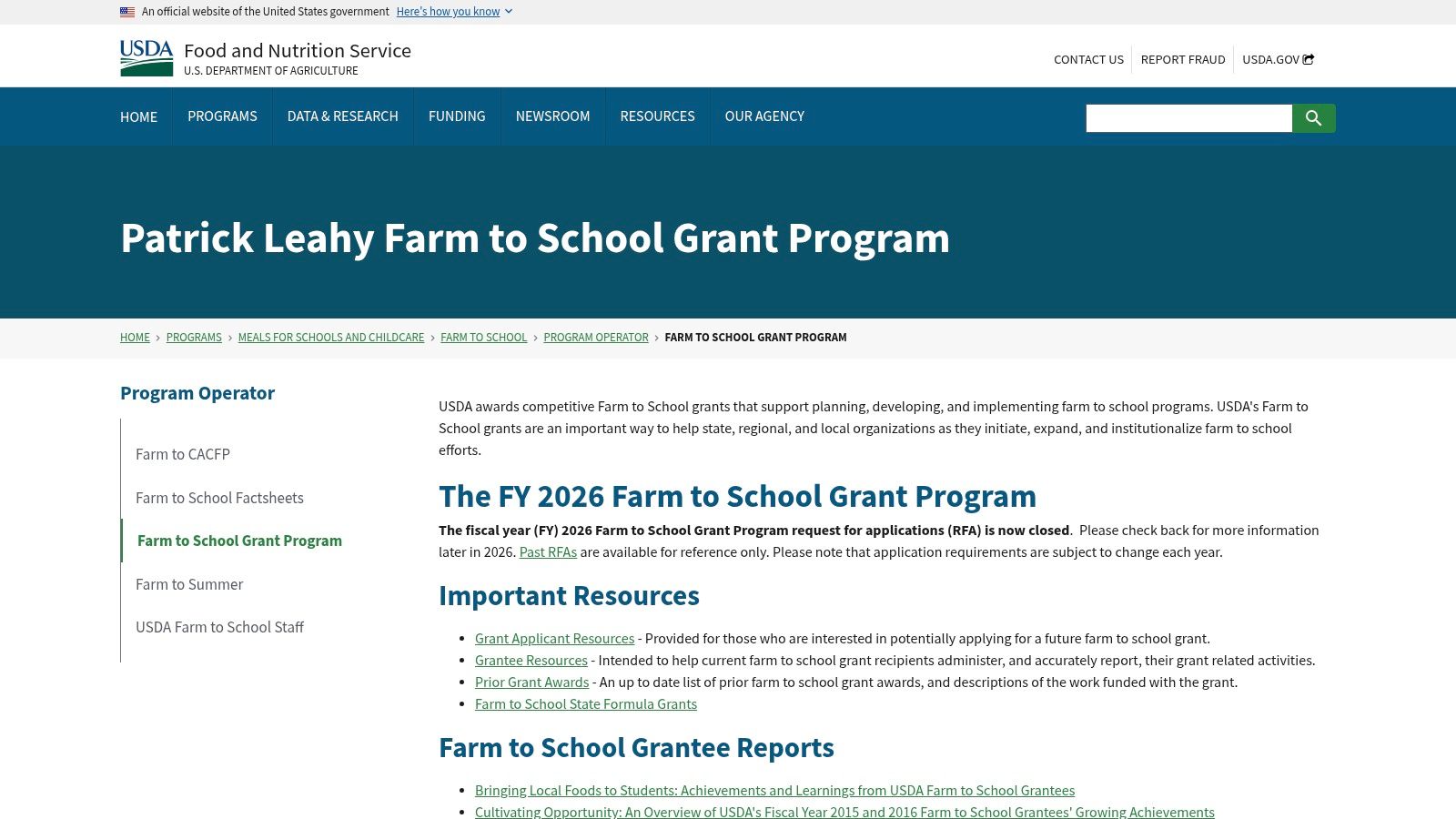
This program is a big deal because of its scale and its focus on systemic change. The FNS website is your home base. It gives you all the Request for Applications (RFA) documents, resources for applicants, and a signup for "The Dirt" newsletter to stay updated. Think of it as your direct line to funding that can create edible education programs and school garden infrastructure that last for years.
Building a K-12 Food Revolution
Let me be clear with you: this is a competitive, high-stakes grant. The application is heavy on documentation and often requires a non-federal match, meaning you'll need to show you have other resources to contribute. For the FY26 cycle, I saw they noted a 25% match. You'll need to build a strong team of educators, administrators, and community partners. You must start planning your partnerships and documenting your project's goals early, long before they even release the RFA. This level of prep is what separates the winners from the losers.
- Best For: School districts, non-profits, or state agencies aiming to launch or expand ambitious farm-to-school programs that include school gardens, local food procurement, and agricultural education.
- Pros: Significant funding awards (often $100k–$500k) that can support multi-year, large-scale projects. It's a national program with a strong focus on K-12 edible education.
- Cons: The application process is highly competitive and requires extensive documentation. The matching fund requirement can be a barrier for some organizations.
Ready to bring the farm to school? Visit the program page at USDA FNS.
4. KidsGardening – Grant Opportunities
If your garden dream revolves around empowering the next generation, KidsGardening should be your North Star. Seriously. This isn't just a website; it's a whole ecosystem for anyone passionate about connecting kids with nature. It’s like a central hub, gathering multiple grant programs specifically for youth, school, and community garden projects, all in one easy-to-use space. You'll find opportunities from their own programs and also partnerships with big names like Mrs. Meyer’s and Scotts Miracle-Gro.
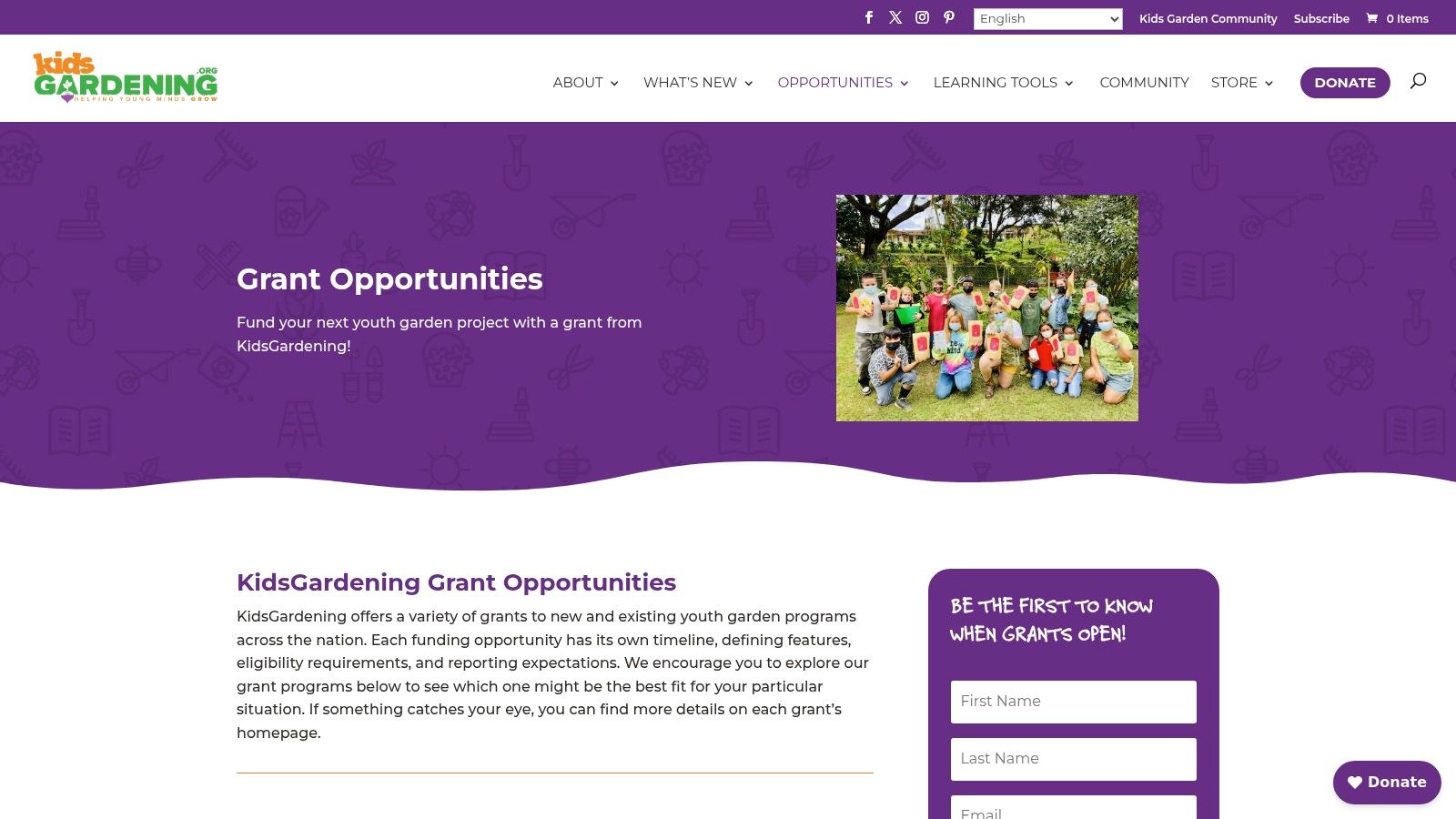
What makes KidsGardening so special to me is its laser focus. Instead of you having to sift through hundreds of unrelated grants, you get a curated list where every single opportunity is relevant to youth gardening. Their grant calendar and application help are made for real educators and community leaders, helping you build a stronger, more compelling story about your project's impact on children.
Sowing Seeds for the Future
The user experience here is just a breath of fresh air. It’s intuitive, it's inspiring, and it’s packed with resources beyond just funding, like curriculum ideas and project planning guides. The biggest thing you have to watch for is the timing. Many of their grant cycles are seasonal and have very specific, often short, application windows. My advice? Bookmark their grants page and set a calendar reminder to check it once a month. That way, you'll never miss the perfect opportunity when it finally sprouts up.
- Best For: Schools, youth groups, and community organizations looking for targeted grants for gardens that prioritize education, equity, and hands-on learning for kids.
- Pros: It’s a specialized hub with a strong youth focus, offering frequent award cycles and incredibly clear, helpful eligibility guidance. Many grants offer in-kind donations of tools and supplies.
- Cons: Application windows can be short and highly seasonal. Eligibility can be strict, often requiring official nonprofit or school status.
Start growing your youth garden project at KidsGardening.org.
5. Whole Kids Foundation – Garden Grants
If your dream is to bring an edible garden to life for students, the Whole Kids Foundation is one of the friendliest and most encouraging places you can start. Backed by Whole Foods Market, this program is designed specifically to help K-12 schools and nonprofits serving children get their hands dirty. They offer straightforward money to plant or expand gardens where kids can learn where their food actually comes from. This isn't about complicated bureaucracy; it's about getting a shovel in the ground and seeds in the soil.
What makes this foundation stand out is its intense focus on youth and its incredibly supportive application process. They give you webinars, a simple eligibility flowchart, and tools that feel like someone is holding your hand, guiding you through your first grant proposal. I think it’s the perfect entry point if you’re a passionate teacher or parent volunteer new to the whole world of grant writing.
Cultivating the Next Generation
Think of this grant as the "starter kit" for school gardens. With a typical award of $3,500, it’s the perfect amount to build your raised beds, buy good soil and tools, and purchase all the seeds you need for a vibrant first season. The biggest hurdle is just the timing. They run one main grant cycle each year, so you’ll need to mark your calendar and get your application ready way in advance. Don't miss that window!
- Best For: K-12 schools (public, private, charter), and non-profits serving children in the U.S. and Canada who are launching or expanding an edible garden program.
- Pros: The application is refreshingly straightforward and geared toward first-time applicants. The foundation provides excellent resources, and the recognized brand backing adds credibility to your project.
- Cons: It's strictly for youth-focused gardens, so it won’t work for adult-only community projects. The single annual grant cycle means if you miss the deadline, you have to wait a full year.
Ready to grow with your students? Visit the foundation at Whole Kids Foundation.
6. SeedMoney
If you love the idea of rallying your community's support and then getting it matched with grant funding, SeedMoney is a brilliant platform you absolutely need to know. It’s not just a grant application; it’s a whole 30-day crowdfunding challenge designed specifically for public food gardens. Imagine turning every small donation from your neighbor into a bigger win. You launch your campaign, you share your story, and every single dollar you raise not only supports your project directly but also helps you compete for extra challenge grants from SeedMoney.
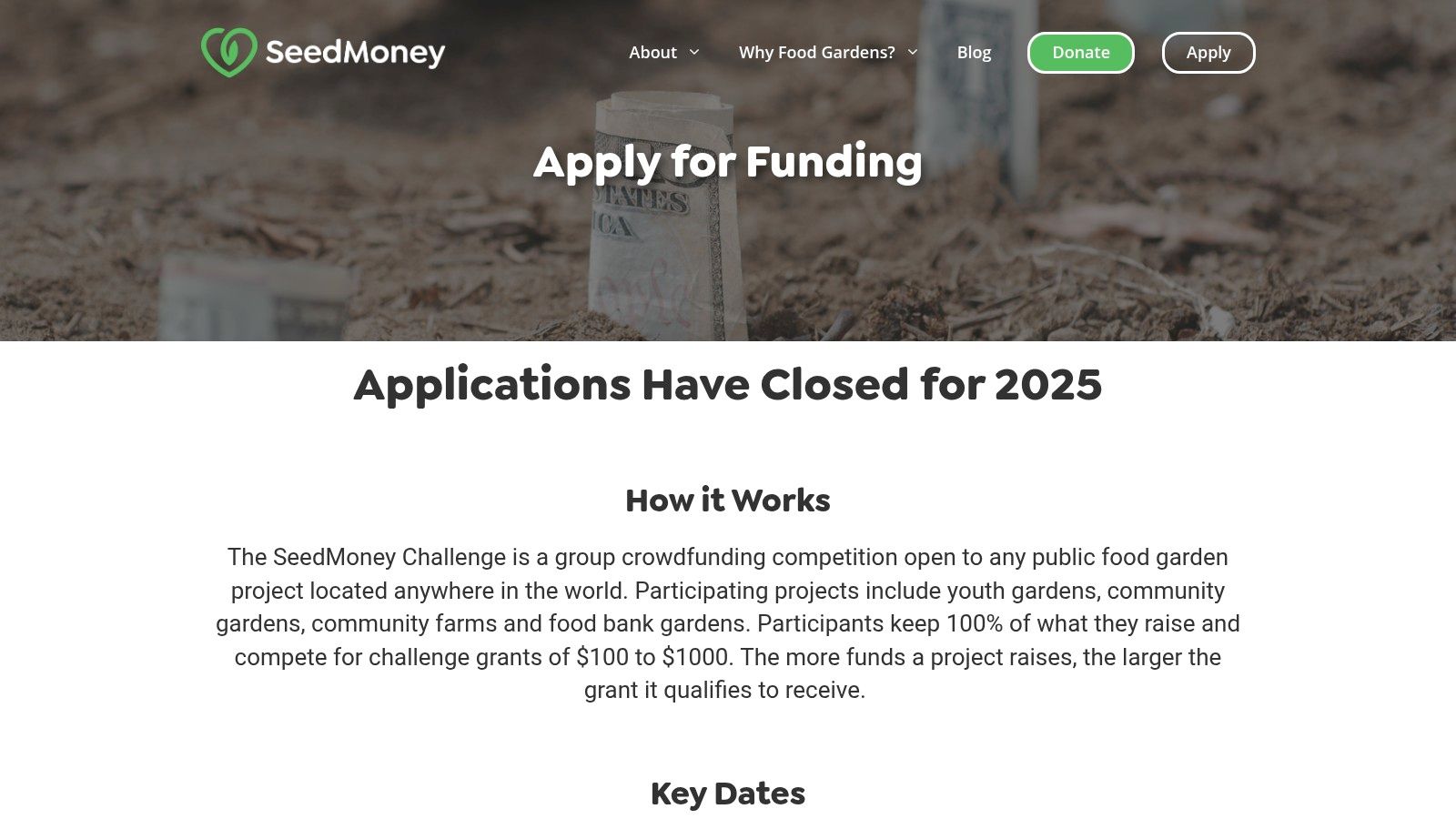
This platform’s magic is in its hybrid model. It gives you the power to build a local base of supporters while you’re also chasing grant money. Even better, you get to keep 100% of the funds you raise through your campaign, no matter if you win one of the top challenge grants or not. It’s a true win-win that builds both your garden beds and your community connections at the same time.
Crowdfund Your Way to a Grant
Think of SeedMoney as a fundraising coach and a funder all rolled into one. The platform gives you tools and guidance to help you run a successful online campaign. The challenge grants, which can be anywhere from $100 to $1,000, are awarded based on how much you raise, which adds an exciting, competitive spark to your work. The key here is mobilization. You have to plan your 30-day campaign in advance by lining up your supporters and creating powerful stories to share online. Your success in getting larger grants for gardens through this platform is directly tied to how well you can engage your network.
- Best For: Grassroots community, school, or food bank gardens that have a strong community network ready to be activated for a focused, short-term fundraising push.
- Pros: Combines fundraising with community engagement, you keep all the money you raise, and it’s open to both U.S. and international projects.
- Cons: The performance-based model means that groups with smaller or less-resourced networks may struggle to win the larger challenge grants.
Ready to grow your funding and your community? Get started at SeedMoney.
7. National Fish & Wildlife Foundation (NFWF) – Five Star & Urban Waters Restoration
If your garden project is less about growing vegetables and more about creating a sanctuary for wildlife, the National Fish & Wildlife Foundation (NFWF) is where you need to look. Their Five Star & Urban Waters Restoration program is designed for on-the-ground projects that bring nature back. Think pollinator gardens buzzing with life, rain gardens that manage stormwater, or shoreline restoration projects that create vibrant habitats. This is for you visionaries who see your garden as a piece of a much larger ecological puzzle.
What makes this program special is its focus on partnerships and results you can actually measure. NFWF wants to see you collaborating with your local government, nonprofits, and corporations to make a bigger impact. They give you excellent resources, like program fact sheets and guidance documents, to help you build a competitive application that clearly shows how your project will improve the local ecosystem.
Focusing on Ecological Impact
Navigating NFWF's site feels professional and focused, which reflects the scientific nature of their work. The application process is tough because they are funding projects with clear ecological outcomes, not just community beautification. Your proposal has to connect your garden to specific conservation goals, like improving water quality or providing critical habitat for native species. If your main goal is growing food for a food pantry, this grant probably isn't the right fit for you unless you can integrate significant habitat components.
- Best For: Ecologically-focused garden projects that emphasize habitat restoration, native plants, pollinator support, or green infrastructure with measurable environmental benefits.
- Pros: Potential for larger awards and national visibility. It strongly supports building powerful community partnerships and achieving real ecological change.
- Cons: Highly competitive and requires a strong focus on measurable conservation outcomes. It’s not suitable for projects centered exclusively on food production.
Ready to build a garden that heals the planet? Learn more at the NFWF Five Star & Urban Waters program page.
8. AARP Community Challenge
If your garden project is about more than just plants, if it’s about creating a vibrant, accessible space for all ages, the AARP Community Challenge is an incredible opportunity. This is a quick-action grant program made to fund tangible projects that make communities more livable, especially for older adults. Think intergenerational community gardens, accessible raised beds, or therapeutic green spaces that become hubs for connection and well-being.
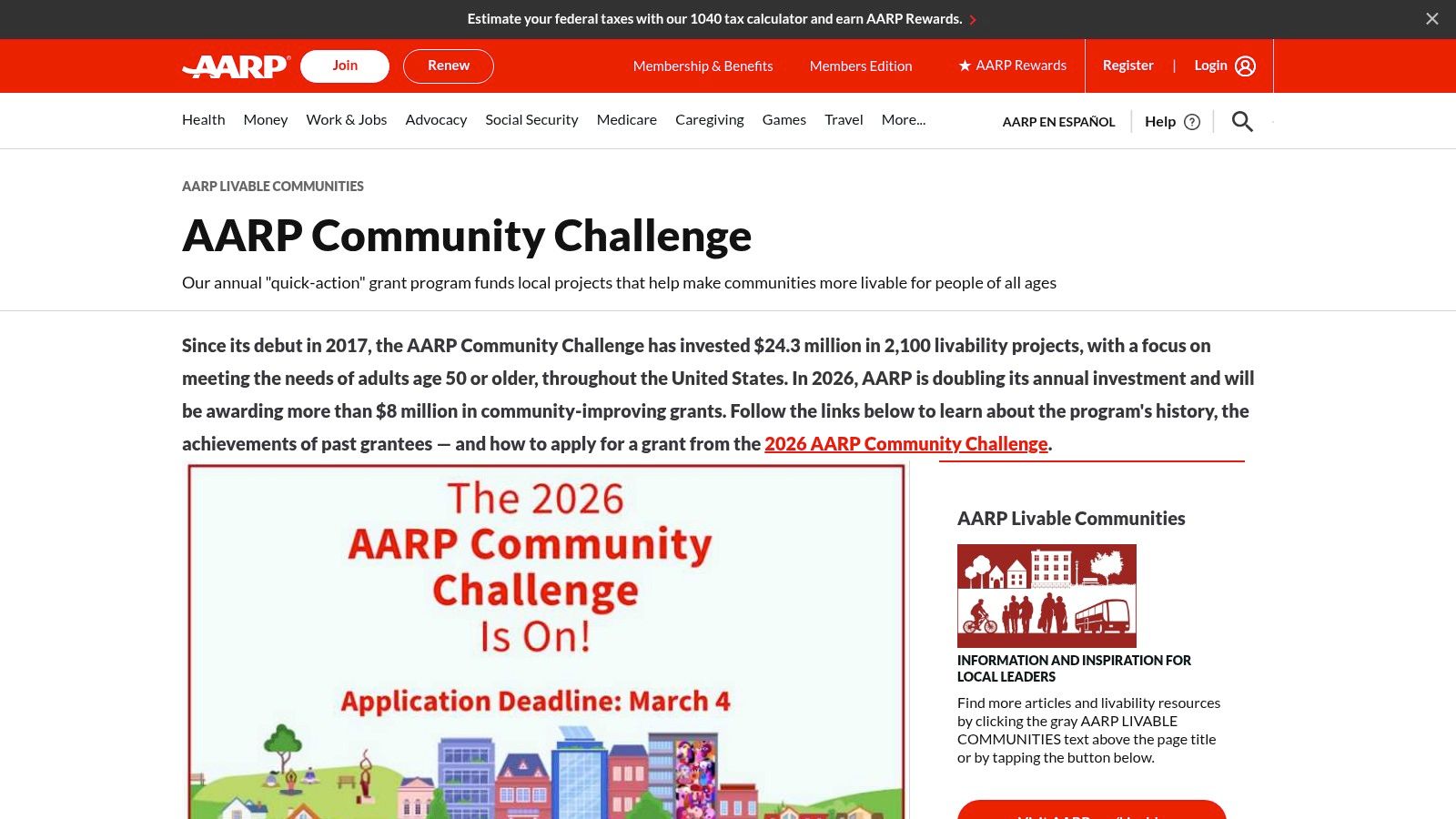
What makes this grant stand out is its focus on fast, visible impact. AARP wants projects that you can complete quickly, and they provide significant media and storytelling support to the winners. This is your chance to not only get your garden funded but also to share its story with a huge audience, which can be a powerful tool for building momentum and support for you.
Creating Age-Friendly Green Spaces
The application process itself is straightforward, but the competition is fierce and the submission window is famously short. You need to have your project planned and ready to go before the application even opens. The key is to frame your garden as a solution that builds social connection and makes public spaces better for everyone, from toddlers to seniors. Highlighting how your project strengthens community engagement strategies is crucial for standing out in the crowd.
- Best For: Community gardens focused on intergenerational activities, accessibility improvements (like raised beds or paved paths), and projects that create welcoming public spaces for older adults.
- Pros: The application is relatively simple, and it offers high public visibility and storytelling opportunities for winning projects. The funding is flexible for both physical improvements and programming.
- Cons: It's a very competitive grant with a short, specific application window each year. Award timelines and funding amounts can also vary, making long-term planning difficult.
Ready to make your community more age-friendly? Visit the grant homepage at AARP Community Challenge.
9. Fruit Tree Planting Foundation (FTPF) – Orchard Donations
Imagine your community garden not just with seasonal vegetables, but with a living legacy of fruit-bearing trees that nourish your neighborhood for generations. The Fruit Tree Planting Foundation (FTPF) makes this dream a real, tangible thing by providing in-kind orchard grants. This isn't a cash grant; it's something I’d argue is even more valuable. They donate the trees, they help you design the orchard, they provide hands-on support for a community planting day, and they offer the training you need to make sure your new orchard thrives.
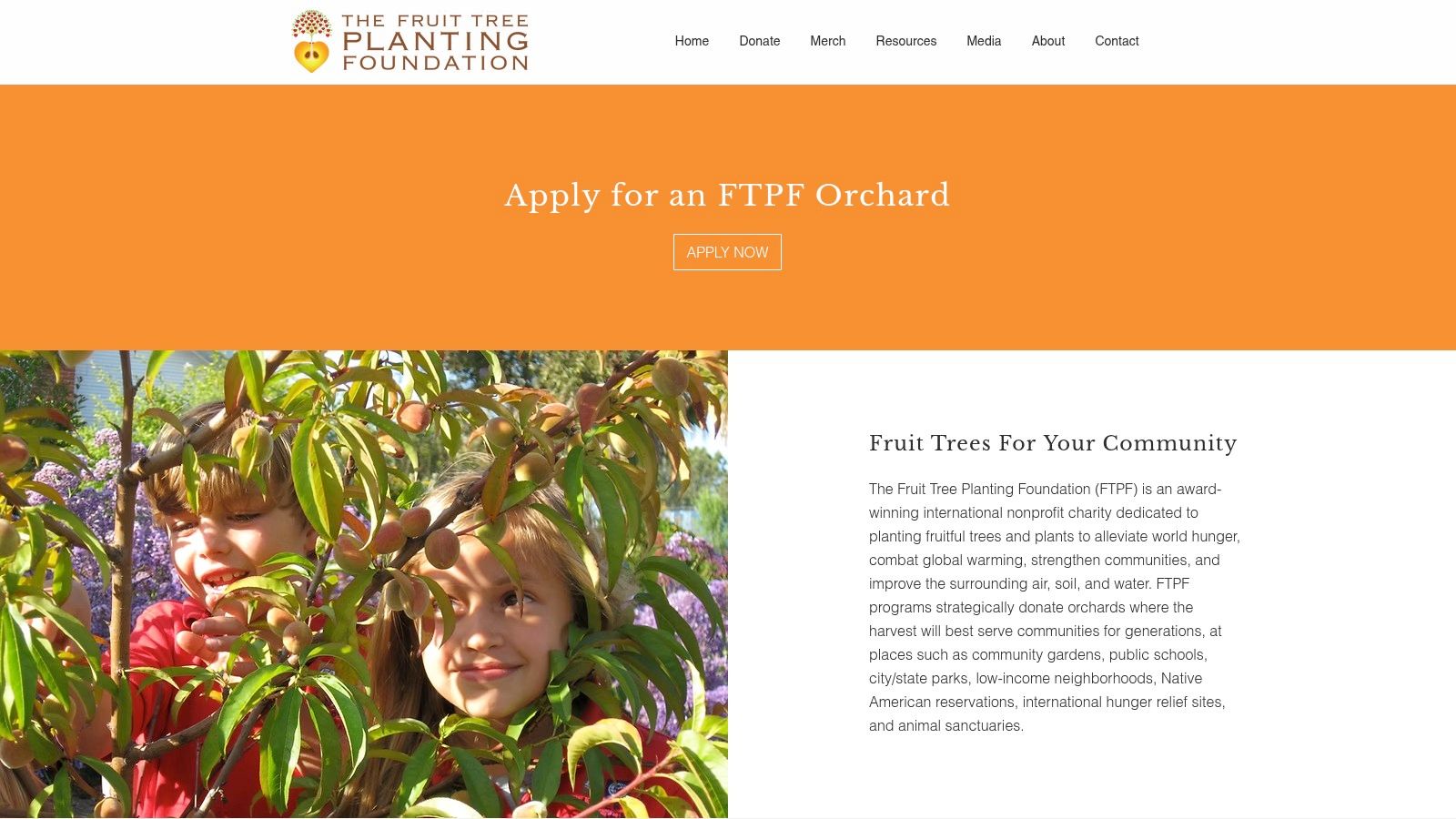
This platform stands out because it delivers a complete, expert-led experience. Instead of just sending you money and a "good luck," FTPF partners with you to create a permanent source of fresh, healthy food. Their focus is on long-term impact, transforming community spaces, schoolyards, and Tribal lands into productive, beautiful, and educational places.
Planting a Perennial Legacy
The application process is straightforward, focusing on your organization's mission and your ability to care for the trees for the long haul. You need a solid plan for watering, pruning, and harvesting. You have to think deeply about your volunteer team's commitment, because an orchard is a multi-year investment of care and attention. Success here is about showing that you have the community support to see these trees through to maturity. It's one of the most fulfilling grants for gardens because you get to watch your work literally bear fruit.
- Best For: Schools, community gardens, nonprofits, and Tribal communities ready to commit to the long-term care of a perennial food source.
- Pros: Incredible in-kind value with expert design, installation support, and training included. It creates a lasting community asset and food source.
- Cons: It's primarily an in-kind donation, not a cash grant. It requires a significant and sustained commitment to maintenance and care from your group.
Ready to grow a lasting food legacy? Apply for an orchard at FTPF.org.
10. Wild Ones – Lorrie Otto Seeds for Education (SFE)
If your project is less about feeding people and more about feeding pollinators, the Wild Ones’ Seeds for Education (SFE) grant is a perfect fit for you. This program is laser-focused on creating vibrant native plant gardens, prairies, and other natural landscapes with direct youth involvement. Think of it as providing the seed money, literally and figuratively, to connect the next generation with their local ecosystem. It’s for projects that aim to restore a patch of land to its natural, wild beauty.
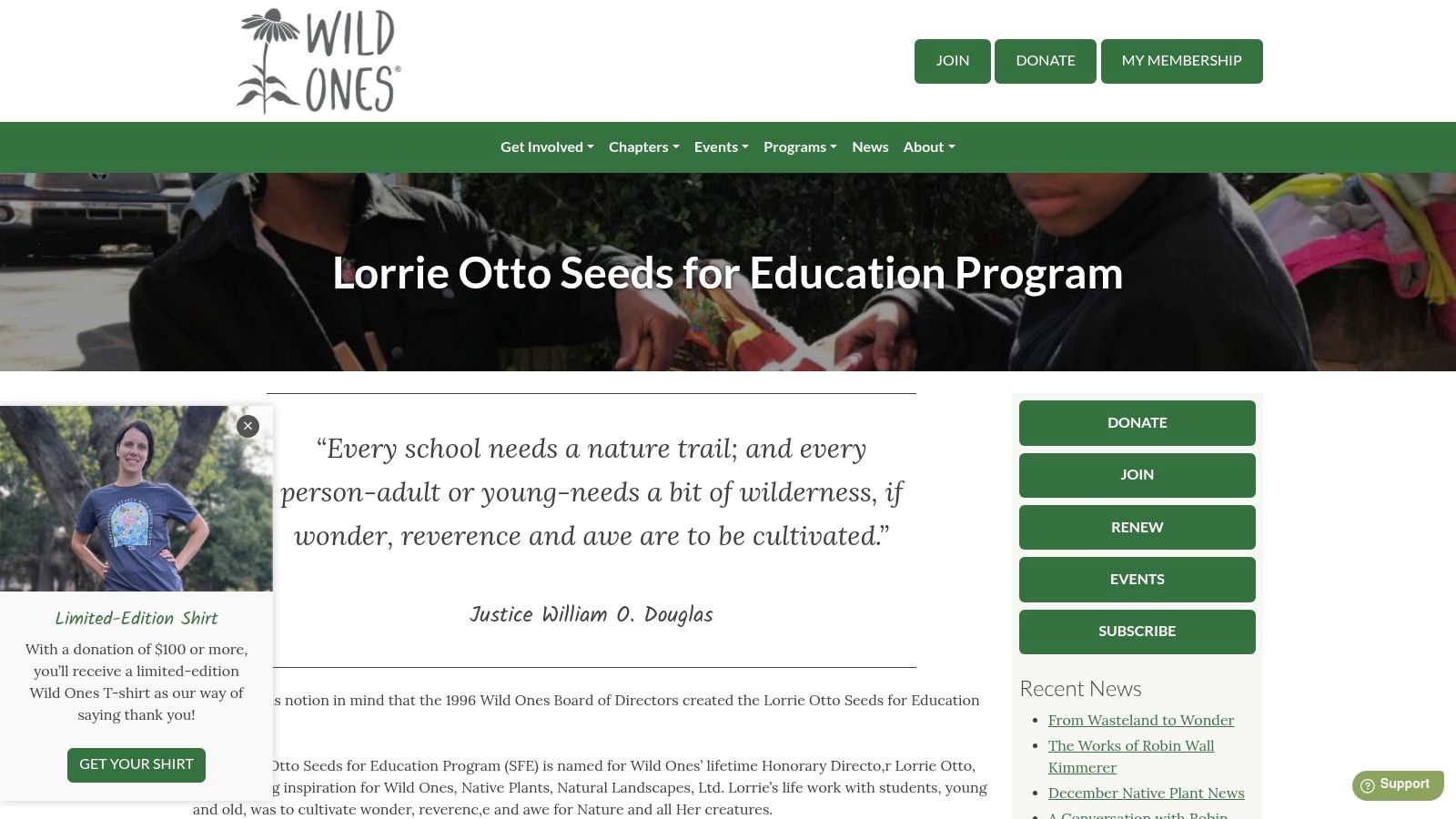
What makes this program so special is its dedication to native species and its accessible scale. You don't need a complex budget or a huge team to apply. The application is straightforward and geared toward smaller organizations like schools, nature centers, or youth clubs that want to make a tangible ecological impact. It’s one of the most direct grants for gardens that champion biodiversity.
Nurturing Native Habitats
The application process is refreshingly simple compared to the bigger grants. You'll need a clear plan, a list of the native plants you intend to buy, and a description of how you'll involve kids in the project. They really want to see that this isn't just about planting flowers; it's about teaching powerful lessons. This focus on hands-on learning is a core part of what they fund, making it a fantastic way for you to introduce young minds to the principles of environmental stewardship.
- Best For: Schools, youth groups, and non-profits focused on creating educational pollinator habitats or native plant gardens.
- Pros: Highly accessible for small-scale projects, with a clear focus on native species and youth education. The application is uncomplicated.
- Cons: Funding is modest ($100–$500), and it explicitly excludes vegetable or food-producing gardens. The focus is strictly on native plants.
Ready to plant some native roots? Learn more at the Wild Ones SFE Program.
11. Openlands + ComEd Green Region Grants
If you are in Northern Illinois and you want to bring a native pollinator garden or a local conservation project to life, this partnership between Openlands and ComEd is a game-changer. This isn't just about a few flowers; it's about funding meaningful projects that boost climate resilience, support local wildlife, and beautify your community. Think of it as a powerful local ally dedicated to helping you create vibrant, sustainable green spaces right in your own backyard.
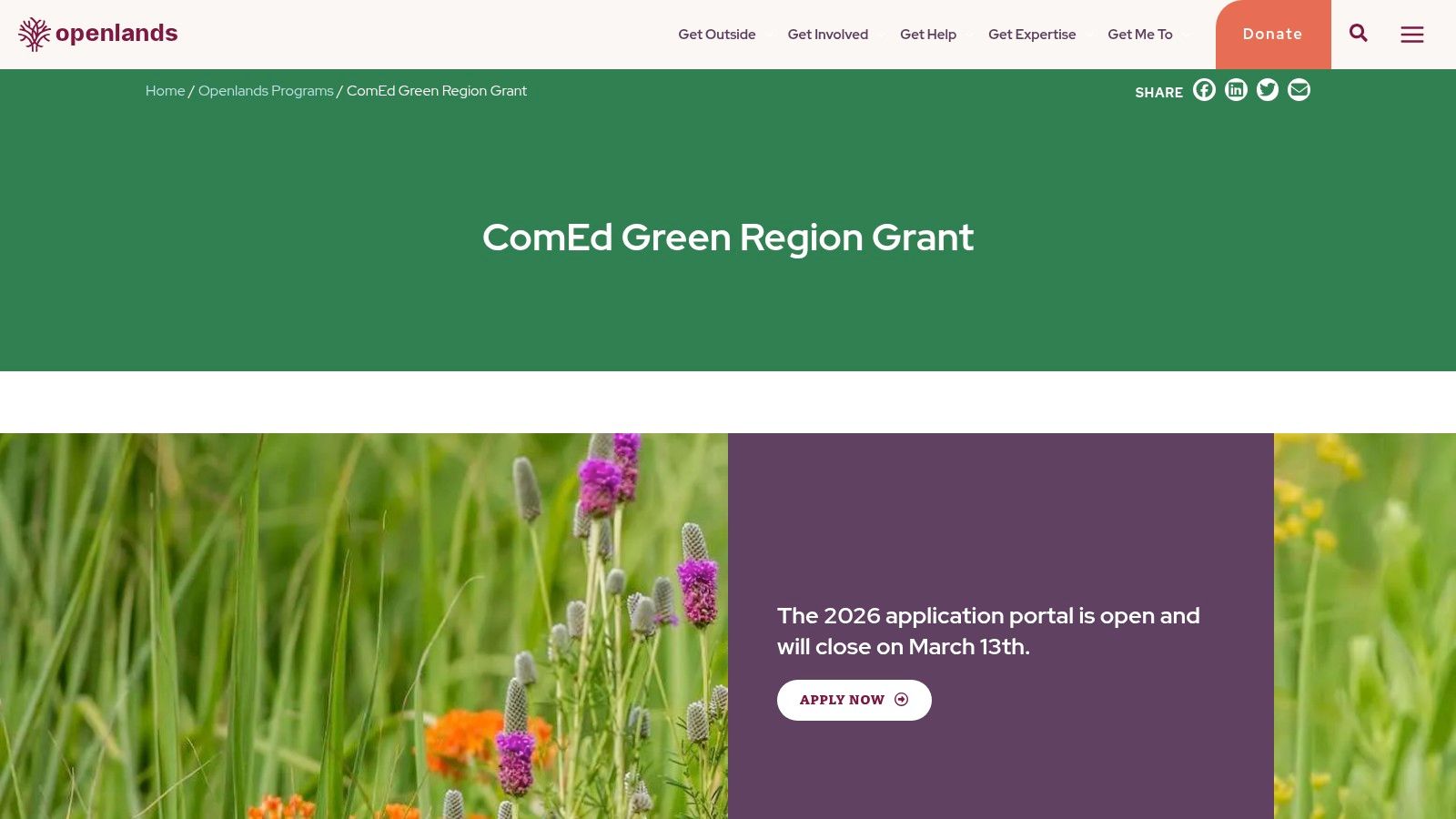
This grant stands out because it combines funding with regional expertise. You're not just getting a check; you're getting support from an organization that deeply understands the local ecosystem. They specifically look for projects that involve public engagement and education, which makes it perfect for community gardens that also act as outdoor classrooms.
Cultivating Local Ecosystems
Navigating this grant requires you to do a bit of local groundwork. The biggest hurdle for grassroots groups is often the requirement for a letter of support from your local government and the 50% cash match. You must start building relationships with your park district or municipal leaders early, and plan your fundraising strategy to meet that match requirement. Don't let the match scare you; it's a way for you to show you have broad community buy-in for your project.
- Best For: Municipalities and nonprofits in the Northern Illinois/Chicagoland area focused on pollinator gardens, habitat restoration, and open-space conservation projects.
- Pros: It provides significant regional funding (up to $10,000) and technical guidance. It's an excellent fit for projects that blend conservation with community education.
- Cons: It's geographically restricted to the ComEd service area. The 50% cash match can be a significant challenge for smaller, volunteer-led organizations.
Ready to make an impact in your Illinois community? Explore the grant at Openlands.
12. Instrumentl – Garden Grant Database and Grant Management
If you're ready to graduate from just casually searching for grants to a strategic, streamlined process, Instrumentl is the powerful upgrade your team needs. You should think of it as your grant-seeking command center. It's a paid platform that uses smart technology to comb through thousands of public and private funders, serving you a curated list of opportunities perfectly matched to your garden project. This isn't just a list; it's an entire project management system built to help you win grants.
Instrumentl’s magic is in its consolidation. It brings grant discovery, deadline tracking, and team collaboration into one polished interface. It has a specific "Community & School Garden Grants" view that cuts through the noise, showing you only the funders who care about projects like yours. This is how you stop spending your weekends on Google and start spending that time making your proposals better.
Supercharging Your Grant Search
While a free search can feel like panning for gold, using Instrumentl is like having a high-tech metal detector that only beeps when it finds treasure. The platform is incredibly user-friendly, but its power comes at a cost. The subscription model is a serious investment, making it a better fit for established non-profits or community groups that have a dedicated fundraising budget. You should take full advantage of the 14-day free trial to build a robust prospect list and decide if the ongoing cost delivers enough value for your team.
- Best For: Serious grant-seekers, non-profits, and organized groups who want to manage multiple applications and find both foundation and government grants for gardens efficiently.
- Pros: Saves an immense amount of time with AI-powered grant matching and a built-in tracker. It consolidates discovery and project management in one place.
- Cons: The subscription fee can be a significant barrier for small, volunteer-run garden projects. It’s a professional tool with a professional price tag.
Ready to professionalize your grant strategy? Start your trial at Instrumentl.
Comparison of 12 Garden Grant Resources
| Program | Focus / What it funds | Best fit (👥) | Standout ✨🏆 | Cost & access (💰 ★) |
|---|---|---|---|---|
| Grants.gov | Central portal for federal competitive grants (USDA, EPA, etc.) | 👥 Orgs seeking federal funding | ✨ One-stop federal listings & submission guides 🏆 | 💰 Free; ★★★ |
| USDA OUAIP | Urban agriculture & innovative production grants; links to RFAs | 👥 Urban farms, community gardens | ✨ USDA hub with examples & UAIP focus 🏆 | 💰 Free; via Grants.gov; ★★★★ |
| USDA Farm to School (FNS) | Large competitive grants for school gardens & local procurement | 👥 K–12 schools & districts | 🏆 Large awards ($100k–$500k); multi‑year support | 💰 Free to apply; often requires match; ★★★ |
| KidsGardening – Grants | Multiple recurring garden grants and youth resources | 👥 Youth programs, schools, community gardens | ✨ Many cycles + equity/youth planning resources | 💰 Free; seasonal windows; ★★★★ |
| Whole Kids Foundation | Annual school garden grants (~$3,500) with webinars | 👥 Schools & child‑serving nonprofits | ✨ Straightforward process; strong implementation support | 💰 Free; annual cycle; ★★★★ |
| SeedMoney | Crowdfunding + challenge mini‑grants for food gardens | 👥 Grassroots groups & small projects | ✨ Keeps 100% of funds; community engagement boost | 💰 Free platform; funds via campaigns; ★★★ |
| NFWF Five Star & Urban Waters | Habitat, pollinator, and urban waters restoration grants | 👥 Ecology‑focused groups & partnerships | 🏆 Larger awards for measurable ecological outcomes | 💰 Competitive; project metrics needed; ★★★★ |
| AARP Community Challenge | Quick‑action livability grants for public spaces & gardens | 👥 Intergenerational & accessibility projects | ✨ Fast turnaround + public visibility for winners | 💰 Competitive; variable awards; ★★★ |
| Fruit Tree Planting Foundation | In‑kind orchard donations: trees, design, install support | 👥 Schools, community gardens, parks | 🏆 High‑value in‑kind support + training ✨ | 💰 Free in‑kind; requires long‑term care; ★★★★ |
| Wild Ones – Seeds for Education | Micro‑grants ($100–$500) for native/pollinator youth projects | 👥 Youth/native habitat projects | ✨ Simple process; focused on native species & education | 💰 Small awards; accessible; ★★★ |
| Openlands + ComEd Green Region | Regional Chicago/Northern IL grants (up to ~$10k) | 👥 Chicago/Northern IL orgs | 🏆 Local funding + technical guidance for climate/adaptation | 💰 May require ~50% match; ★★★ |
| Instrumentl | Paid grant discovery & management platform (garden view) | 👥 Staffed teams & nonprofits seeking efficiency | ✨ AI matching, deadline tracking & PM tools 🏆 | 💰 Subscription (paid); 14‑day trial; ★★★★ |
Your First Shovel in the Ground: Making the Leap from Dreamer to Doer
You’ve made it. You’re through the entire toolkit. Your head is probably buzzing with grant deadlines, eligibility rules, and just the sheer possibility of it all. I know that feeling so well. It’s exactly like standing at the edge of an empty lot, seeing not just weeds and broken glass, but a future. A future filled with raised beds and buzzing bees and neighbors sharing fresh tomatoes. This list isn't just a collection of links for you; it's a map to that future.
Looking back, we’ve journeyed from the vast, sometimes scary, federal landscape of Grants.gov and the USDA all the way to the hyper-local, people-focused power of the AARP Community Challenge and Chicago's own Openlands grants. We’ve seen how organizations like KidsGardening and the Whole Kids Foundation are dedicated to putting tools in the hands of our youngest growers. And we’ve explored the innovative crowdfunding model of SeedMoney, which proves to me that your community’s passion is as valuable as any foundation’s check.
This journey shows me one powerful truth: there is no single "right" way for you to fund your garden. The best tool for you depends entirely on where you are right now and where you want to go.
Charting Your Course: From Idea to Action
So, what’s your next step? I know it's easy to feel overwhelmed, to have a dozen browser tabs open and a sense of paralysis. Let's quiet that noise. Take a deep breath. Ask yourself a few simple questions.
- Are you a small, volunteer-led group just starting out? Forget the complex federal grants for a moment. Your sweet spot is with microgrants and crowdfunding. I’d have you look directly at SeedMoney to harness your local network’s energy or a KidsGardening grant to get that initial boost of confidence and supplies. These are your quick wins. They are the fuel that gets your engine started.
- Are you an established school or nonprofit with a track record? This is where you can start aiming higher. The USDA Farm to School Grant or the National Fish & Wildlife Foundation grants are perfect for you. You have the structure and experience to manage the reporting they require, and the rewards can be transformative, funding entire programs, not just a few garden beds.
- Is your primary goal to bring people together and beautify a specific block? Then the AARP Community Challenge is tailor-made for you. They love projects that are visible, tangible, and build social connections. It's less about crop yield and more about community spirit.
Remember, applying for grants for gardens is a bit like gardening itself. You don't just throw every seed you have onto the soil and hope for the best. No. You choose the right seeds for your climate, your soil, and the season you’re in. Your "climate" is your organization's size and experience. Your "soil" is your community's needs and support.
The Real Secret to Success
The most important thing I want you to take away from this entire guide isn't a specific grant or a secret application tip. It’s this: Your story is your most powerful tool.
Every funder, from a federal agency to a small family foundation, is looking for impact. They want to know why your garden matters. The sample boilerplate language and the application checklists I've seen are just the trellis; your story is the vine that grows on it. Don’t just tell them you want to build a pollinator garden. Tell them about the kids on your block who have never seen a monarch butterfly. Don’t just say you need funding for a community garden. Describe the elderly neighbors who feel isolated and would find connection and purpose among the vegetables.
That passion, that specific, human-centered vision, is what will make your application stand out from a stack of a hundred others. It’s what turns a simple request for money into an invitation for them to co-create a better world with you. You are no longer just asking for help; you are offering them a chance to be part of your incredible story.
So pick one. Just one grant from this list that feels right for you. The one that makes you say, "This is us." Start the application. Your dream garden is waiting, and that first shovel is in your hand. Now, it's time for you to break ground.
Feeling inspired but need a team to bring your vision to life? At Litter Caterpillars, we turn beautification projects into community-building events, and we’re experts at helping groups like yours organize for impact, whether it's a cleanup day or prepping a new garden plot. Find your crew and make a real difference by joining us at Litter Caterpillars.