
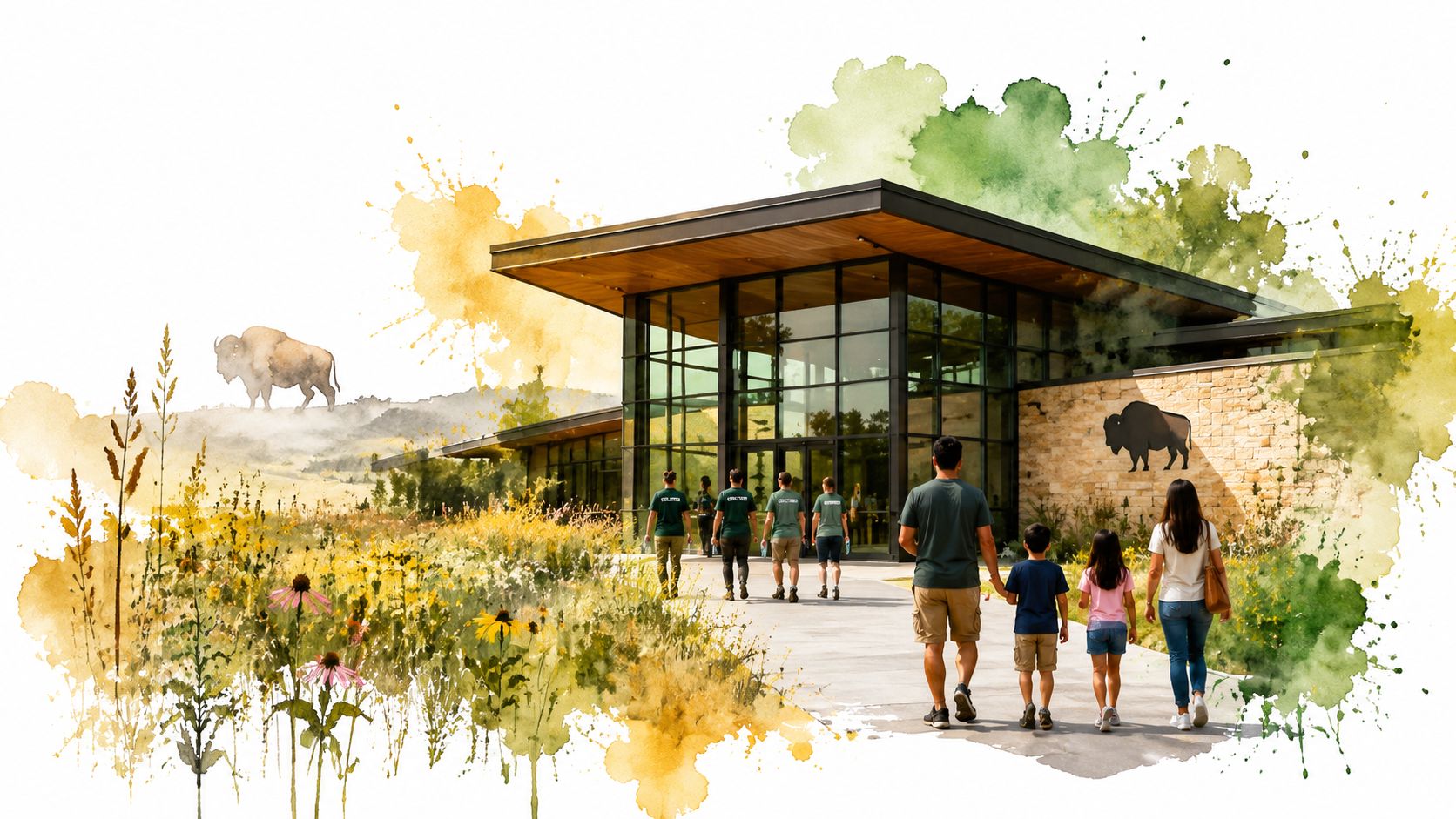
I once left a Chicago cleanup with black gloves, a full trash bag, and that familiar feeling that I had only shaved a corner off a much bigger mess. A few days later I drove out to Midewin, walked into the Midewin Welcome Center, and felt that same feeling again, except this time it came with wind, grass, and hope.
Finding a Bigger Mess to Clean
The first time I drove south after a city cleanup, my gloves were still on the passenger seat. They smelled like wet cardboard and old coffee. At a stoplight, I looked at that crumpled pair of gloves and had the oddest thought. Street litter was not the only mess I wanted to help with anymore.
Midewin pulled me for that reason.
It was once the site of the Joliet Army Ammunition Plant. Now people come there to witness a long repair job in progress, the kind that takes patience, public will, and a willingness to keep showing up after the novelty wears off. That made sense to me right away. Litter Caterpillars know that feeling. You clear one block, then come back next week and clear it again, and somewhere in that repetition your own habits start changing too.
Why this place hit me
A restored prairie sounds romantic from far away. Up close, it feels more honest than romantic. You are standing near ground that carries a heavy history, and you are also standing in a place where people chose not to leave the damage as the final story.
That landed hard for me.
In the city, our work can feel small. One bottle. One fast-food bag. One storm drain pulled clear before the rain comes. At Midewin, the scale gets bigger, but the lesson stays the same. Repair happens through repeated care. People remove what harms, protect what can return, and make room for life to come back slowly.
Practical rule: Go to Midewin when you need proof that slow work still counts.
A trip for people who like sleeves rolled up
I would not call Midewin a polished attraction. I liked that. The place feels like a public invitation to witness recovery while it is still underway.
That is why the Welcome Center matters before you ever set foot on a trail. It gives you a way to enter the prairie with the right frame of mind. You are not arriving to consume a pretty view and leave. You are arriving to learn how damaged ground gets another chance, and what your part in that story can be.
For me, that changed the whole drive. I was not heading out for a break from cleanup work. I was heading toward a bigger version of the same calling. Restore what has been neglected. Respect the time it takes. Come back. Bring others. Let the work outside you shape the work inside you too.
Your First Step into the Prairie
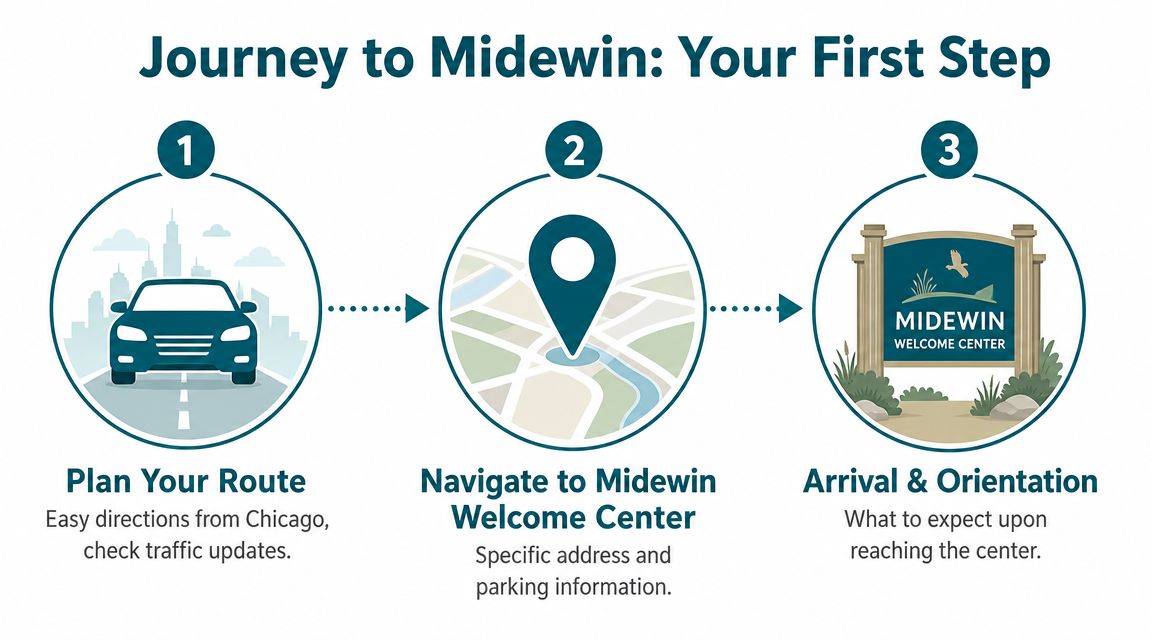
The first time I drove down from the city, I felt that familiar cleanup-day doubt. Did I pack enough water. Was I leaving too late. Was this going to be one of those trips where I spend more time in the car than on the ground. Then the roads opened up, the buildings fell back, and the whole day started to loosen its grip on me.
That shift matters.
For Litter Caterpillars people, the drive to Midewin can feel like going to meet an older cousin of the work we already do. In the city, we clear a block, a curb line, a patch of weeds behind a fence. Out here, you arrive at a place trying to recover at prairie scale. The Welcome Center gives that feeling a place to land before your feet hit the trail.
The part that makes the day go better
Keep the plan simple. Pick a morning when you are not already depleted. Leave early enough that you do not turn the whole trip into a rushed errand. Bring what you would bring for a long, open walk instead of a quick stop.
I have learned that prairie time punishes sloppy city habits. A late start feels later. Sun feels bigger. Wind has opinions. If you roll in hungry, underdressed, or irritated, you will notice all of that before you notice anything beautiful.
A few things earn their place in the car every time:
- Water and a snack
- Good walking shoes
- One extra layer
- A notebook, or your phone notes app, if quiet places tend to pull thoughts out of you
If you have ever visited Goose Lake Prairie State Natural Area and watched your pace change once the horizon opened up, you already know the rhythm I mean.
Why the Welcome Center comes first
The Welcome Center works like a reset point. You stop being a driver passing through and become a visitor who is paying attention.
I would not skip it, even on a day when you feel eager to get straight outside. Starting here helps you settle your mind, use the restroom, look over the layout, and shake off that city habit of treating every destination like something to conquer quickly. That small pause changes the visit. You arrive less like a consumer and more like a participant.
That distinction stayed with me. Restoration asks for a different kind of presence. It asks you to notice what has returned, what is still missing, and how much care sits behind ground that looks calm.
What it feels like when you pull in
You are not arriving at a flashy attraction. You are arriving at a working threshold.
I like that. It fits the place.
The Welcome Center is the point where scattered intentions become an actual day in the prairie. You get your bearings. You slow down enough to be teachable. You remember that healing land, like healing a neighborhood or your own habits, starts with one honest step taken on purpose.
What You Will Discover Inside
The first time I stepped into the Midewin Welcome Center, I expected something plain and procedural. A counter. A brochure rack. Maybe a map and a quick restroom stop. Instead, I felt the day slow down in a good way.
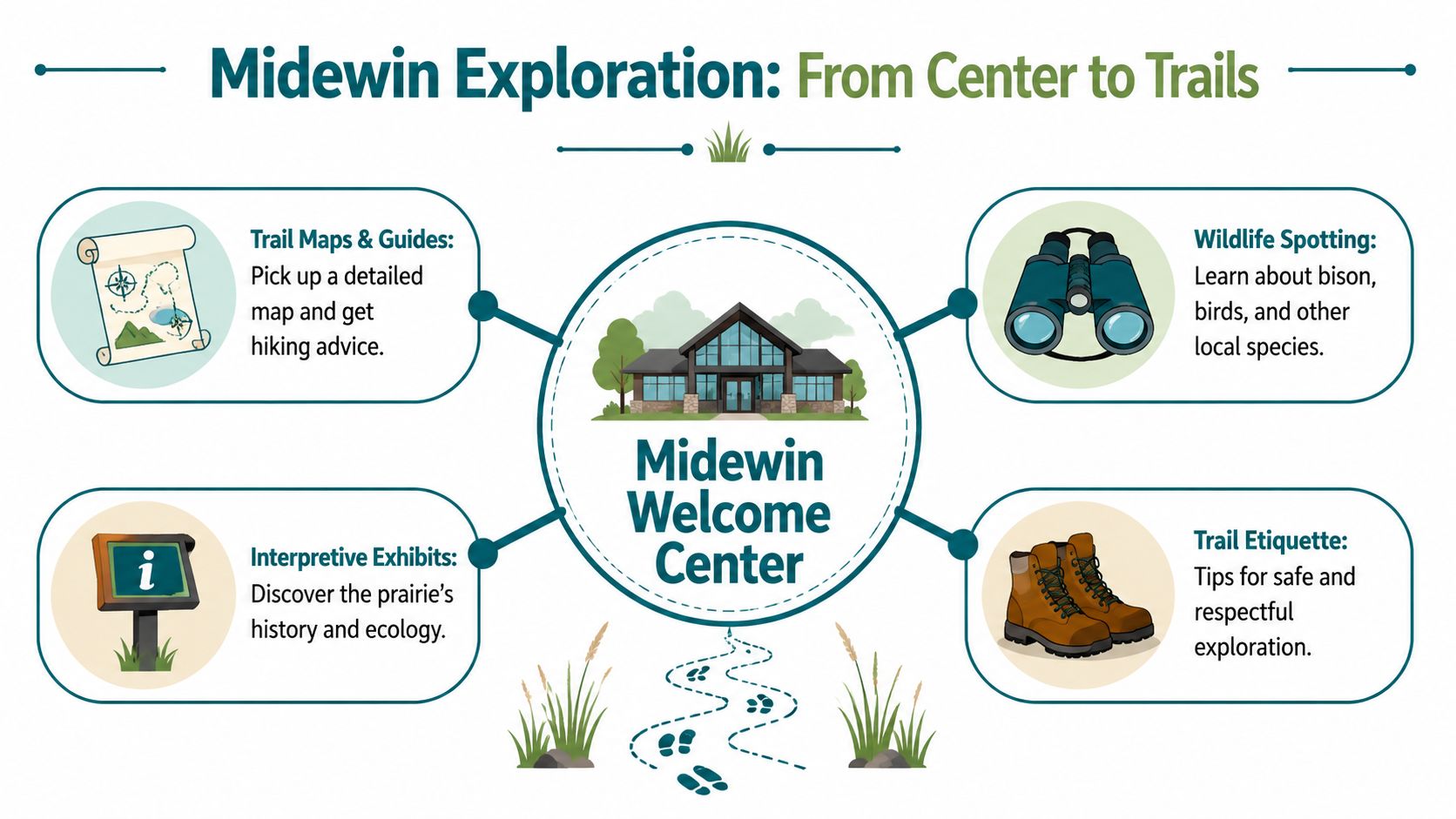
Inside, the story of the land starts taking shape. The Forest Service says the center has exhibit clusters on glaciers, wetlands, prairies, wildlife, and the site's restoration timeline, and it has trail maps, program guides, and brochures that help you plan your way through the large trail system on the Midewin Welcome Center page from the Forest Service.
The room changes what you see outside
That matters more than it sounds. Before you go in, you may think you're driving out to see “some grass.” After you spend a little time with the exhibits, the prairie gets sharper. The ground has a past. The water has a story. The animals stop feeling random. Even the flatness starts to read differently.
I had that same shift at Goose Lake Prairie State Natural Area. Once you learn how a prairie works, your eyes stop sliding over it. You notice textures, little changes in height, wet areas, bird movement, and the strange power of a place that doesn't scream for attention.
What stayed with me
The restoration timeline hit hardest. I'm drawn to any place that admits, openly, that repair takes a long time. In a city, we often want proof fast. We want the before-and-after photo. We want the cleaned lot, the organized room, the redeemed week.
Midewin doesn't let you think that way for long. Inside the Welcome Center, you start to understand that renewal is a chain of ordinary acts. Someone studies. Someone plants. Someone monitors. Someone explains. Someone comes back.
A map is useful, but context is better. Once you know what you're walking through, every mile feels less like exercise and more like attention.
Don't rush this part
If you're anything like me, your instinct might be to hurry outside. Fight that instinct. Spend a little time with the exhibits. Ask questions if staff are available. Take the brochure. Study the trail map.
That indoor pause is like sorting your cleanup supplies before hitting the street. It doesn't look dramatic, but it changes the whole day. You leave the building carrying more than paper. You leave with a way of seeing.
From the Center to the Trails
The first time I walked out of the Welcome Center, I stopped after maybe twenty steps.
Nothing dramatic happened. No bison crossed the road. No hawk swooped overhead on cue. I just felt the city pace fall off my body. The building had given me names, history, and a map. Outside, all of that turned into a real place with wind in it.
What struck me most was the room. Midewin gives you space to settle down and pay attention. You stop checking how fast you are going. You start noticing where the ground holds water, where the grasses shift, where a bird keeps returning to the same patch. For Litter Caterpillars people, that change feels familiar. It is the same shift that happens on a cleanup when you stop rushing for a full bag and begin seeing the block clearly.
How I choose a trail day
I do better here when I choose the day before I choose the route.
| Day you want | What I'd do |
|---|---|
| Quiet reset | Take a shorter walk and stop often. Let the place slow you down. |
| Longer effort | Use the map from the center and commit to a fuller hike. Bring more water than you expect to need. |
| Learning day | Match your walk to one or two things you noticed inside. Watch for wetlands, birds, and plant changes rather than trying to see everything. |
That little decision saves me from turning a prairie visit into another city habit where I chase completion instead of paying attention.
Start with a basecamp mindset
The Welcome Center works best as a place to gather yourself, then head out with purpose. A prairie can look simple from a distance, but openness asks something from you. It asks for patience, water, and a little humility.
I learned that same lesson at Springbrook Prairie Pavilion. Wide ground is not empty ground. It rewards people who slow down enough to catch small signs of life and recovery.
Trail etiquette that feels close to cleanup ethics
A first visit goes better when you carry the same respect you would bring to a neighborhood cleanup.
- Keep the map with you so you can stay oriented without guessing.
- Walk carefully because restoration is ongoing and the place is still being tended.
- Pause longer than feels normal. The prairie reveals itself in layers.
- Leave with care in your body. Even when you take nothing and change nothing physically, your attention matters.
That last part stays with me. In the city, we pick up what was dropped and try to leave a corner better than we found it. At Midewin, the service is quieter. You practice restraint. You let the prairie be what it is. You learn that restoration is not always about doing more. Sometimes it is about moving through a recovering place without adding to the mess.
How We Can Partner with the Prairie
A few steps outside the Welcome Center, I watched a kid crouch beside the path and study a plant like it was giving instructions. His dad stood over him with the map folded wrong, smiling anyway. Nobody looked polished. They looked the way our cleanup crews look at the start of a Saturday morning. Ready to help, not fully sure how yet.
That is the spirit I would bring to Midewin.

Service changes the day
As noted earlier, the Welcome Center offers different ways to learn through the year, including guided programs in the warmer season and educational events in colder months. I love that rhythm. It lets your first visit be simple. You show up, listen, walk, and let the place work on you a little.
That pattern feels familiar to me because it matches the way restoration usually starts in the city. We do not begin with mastery. We begin by noticing what has been neglected, then returning with more care the next time.
If you want language for that shift, this guide on what environmental restoration means in practice puts clear words to it. Repairing land and repairing ourselves often follow the same motions. Show up. Remove what harms. Protect what can grow. Repeat.
A few ways to show up well
One good day at Midewin can start a longer habit. Here are a few honest ways to make the visit feel like participation instead of consumption:
- Join a program or tour if one is available. A guided walk can help you notice signs of recovery you would pass right by on your own.
- Bring one person who has been tired in the city kind of way. The prairie has a way of stretching out your thoughts until they stop bumping into each other.
- Make it a service-minded outing with a community group. Litter Caterpillars does that through volunteer trash pickups across Chicago, and a prairie visit can carry the same spirit of care into a different kind of environment.
Here's a good video to watch if you want the mood before the drive:
Stewardship starts smaller than you think
I do not think stewardship begins with a title.
It begins the moment you stop asking, “What can I get from this place?” and start asking, “How can I move through this place without making recovery harder?” At Midewin, that may mean staying on the trail, paying attention during a program, or bringing home a steadier idea of what care looks like. Quiet service still counts.
That is why a trip here can feel bigger than a day trip. You leave with more than prairie photos. You leave with a sharper standard for your own life. The grasslands are being restored over time, through patience and repeated care. Our blocks, our habits, and our own worn-out parts usually heal the same way. One return. One better choice. One piece of trash, or one careful step, at a time.
Your Midewin Field Guide Questions Answered
I've found that most hesitation about a first trip has less to do with desire and more to do with tiny practical questions. So here are the answers I'd give a friend the night before we go.
What should I wear
Wear clothes you can walk in for a while without fussing. I'd choose comfortable shoes, light layers, and something you don't mind getting a little dusty. Prairie weather can feel open and direct, so I'd rather have one extra layer in the car than wish I'd packed it.
If it's sunny, act like you're going to spend time with very little shade. If it's cooler, don't let the city fool you into thinking the open ground will feel the same.
What should I bring
Keep it simple.
- Water because open trails can dry you out fast.
- Snacks if you think you'll stay longer than planned.
- Your phone or a paper note with your basic plan for the day.
- Curiosity. I know that sounds corny, but this place gets better when you slow your eyes down.
Is it good for a first-time prairie visitor
Yes. In fact, I think the Midewin Welcome Center makes it easier for first-timers because you can orient yourself inside before you head out. You don't need to pretend you already understand what you're seeing. Start with the exhibits. Get a map. Ask a question.
Is it good for kids
I think so, especially if you frame the trip the right way. Don't sell it as a forced march through educational content. Sell it as a discovery day. Let kids look for birds, notice water, compare grasses, and learn that restoration is real work done by real people.
What if the weather shifts
Treat weather as part of the day, not a betrayal. Still, use judgment. If conditions look rough, adjust your walk, spend more time inside, or save the longer trail for another visit. There's no prize for pretending discomfort is wisdom.
Field note: The best prairie days usually come from flexibility. A shorter walk with full attention beats a stubborn epic hike every time.
Should I plan around programs
If you like structure, yes. Educational programming and tours are especially available from April to October, so that's a good window if you want your visit to include more guided learning. If you prefer a quieter day, just use the center for orientation and head out on your own path.
What mindset should I bring
Bring the same mindset you'd bring to service. Be useful. Be observant. Don't rush the process. Let scale humble you a little.
That's really why I keep thinking about this place. The Midewin Welcome Center isn't just where you pick up a map. It's where a regular person from a messy city life can remember that repair is possible, even when it happens slowly, even when it happens over years, even when the work looks plain from the outside.
If you want more days like this, and more chances to turn service into friendship and self-respect, take a look at Litter Caterpillars. We organize volunteer cleanups around Chicago for people who want to show up, do good work, and grow through it.