Tag: local volunteering

  • Green City Project: A Practical Guide to Local Success

    Green City Project: A Practical Guide to Local Success

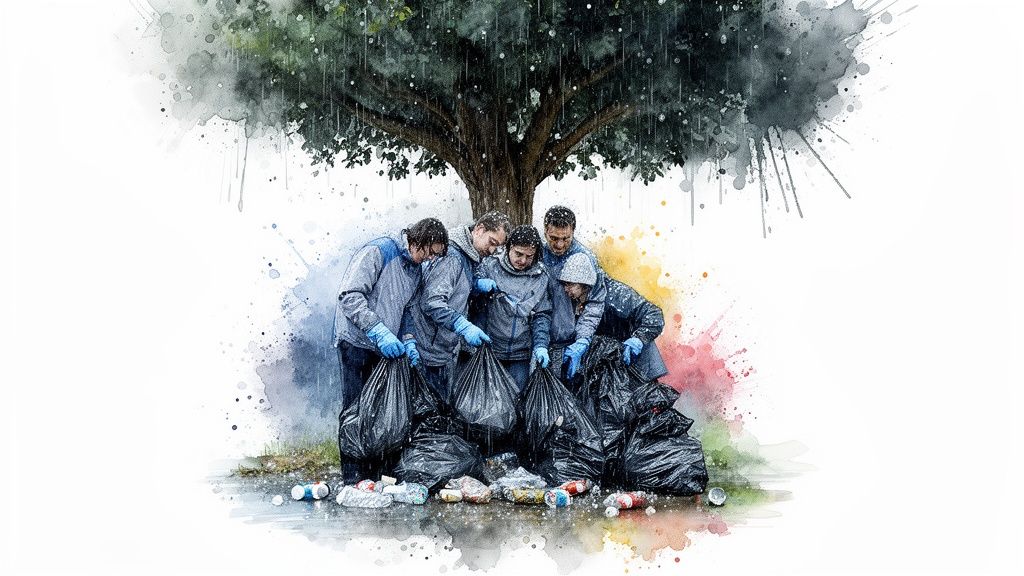
    The first time I went out to pick up trash, there were three of us, cold hands, cheap gloves, and sky that looked like trouble. Then Chicago threw hail at us, every Uber canceled, and I remember thinking, weirdly, that this was the most alive I'd felt in a long time.

    That's where a green city project can begin. Not with a grant. Not with a board meeting. With one ugly corner, one honest reason, and one day when you decide you're tired of walking past the mess.

    Finding Your 'Why' Behind the Project

    I didn't start outside because I had my life together. I started outside because I didn't.

    My apartment was a museum of stalled decisions. Old jars in the fridge. Half-used bags of food from failed health kicks. Random objects with sentimental stories attached to them like little anchors. Any normal piece of trash weighed almost nothing, but to me it felt like it weighed a truckload. I could see the mess. I hated the mess. I still couldn't move it.

    Then one relationship in my life blew up in the way bad relationships do. Chaos, selfishness, too much noise, too little honesty. After that, I made a promise to myself. I'd build a life around cleanliness, consistency, and bravery, even if I had to do it in a crooked, awkward way at first.

    So I tried something sideways. If I couldn't clean my own mess, maybe I could clean up someone else's.

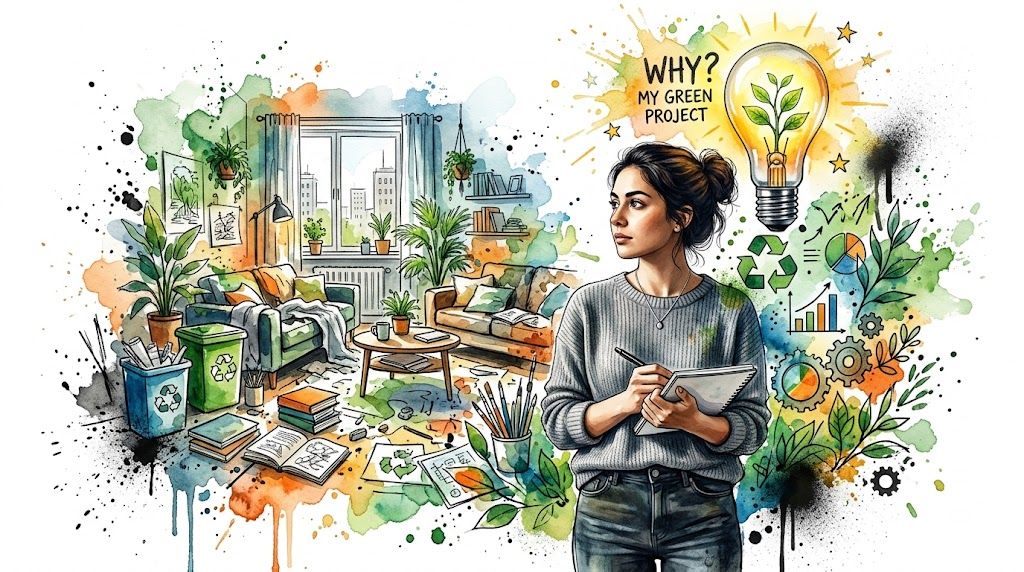
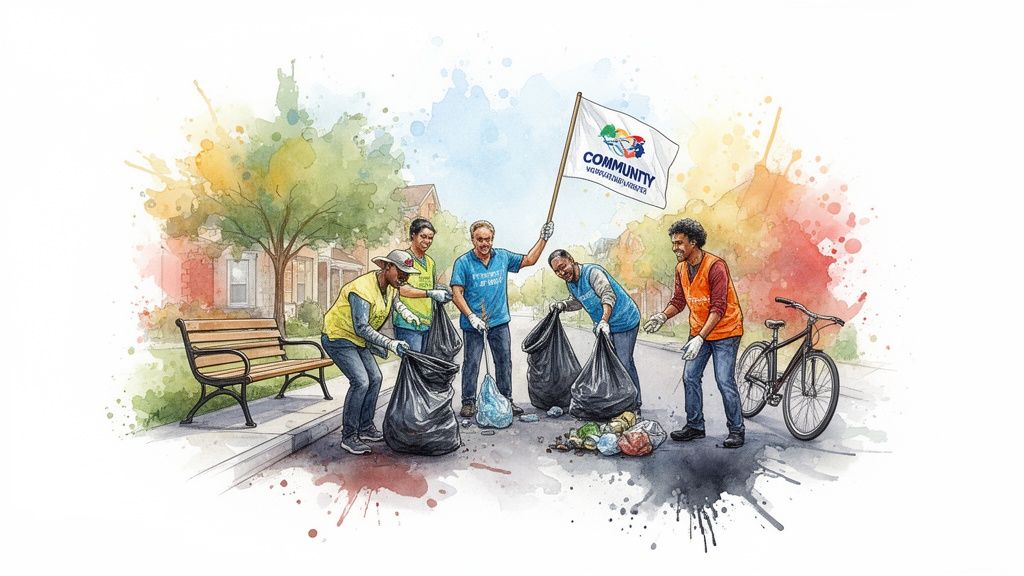
    A young woman reflecting on a green city project with sustainable home and business ideas sketched around her.

    Start with the pain you can feel

    That first reason matters more than people think. If your reason is thin, your project dies the first time it rains. If your reason is personal, you'll keep going when it gets annoying, lonely, or embarrassing.

    Maybe your why is simple:

    • Your block embarrasses you: You're tired of guests stepping around fast-food wrappers.
    • Your kid noticed the litter: That kind of comment gets under your skin.
    • You need better friends: You want to meet people who wake up to give, not just to consume.
    • You need a reset: Service is sometimes the fastest way to stop obsessing over yourself.

    A lot of people wait for a polished mission statement. I think that's backward. Your first why can be rough. It can be selfish in the healthiest sense. You want to feel stronger. You want to trust yourself again. Good. Use that.

    Practical rule: Don't start by asking, “What citywide plan should I create?” Start by asking, “What corner am I willing to care about every week?”

    Big institutions usually think about green cities from high above. The term itself has often been used in large benchmark projects. The Siemens Green City Index summary evaluated over 120 cities worldwide, and the North American edition rated 27 cities across the U.S. and Canada using indicators like CO2 emissions, water, waste, transport, and energy use.

    That kind of work is useful. It helps cities compare real systems instead of just slapping a green label on themselves.

    Your small start is an advantage

    But you and I don't need to begin at that altitude.

    You can begin with a bus stop full of cups. An alley behind your building. A vacant lot everyone has given up on. Large systems matter, but local courage matters too. You can move faster than a committee because your project has a heartbeat.

    If you need a push because you're still circling the idea, look at this guide on how to find volunteer work that actually fits your life. Don't overthink your identity before you act. Action is what reveals identity.

    I've learned that a good green city project doesn't begin when you feel ready. It begins when your discomfort finally gets a direction.

    From Idea to Your First Cleanup

    Our first cleanup was half joke, half dare, half spiritual experiment. Yes, that's three halves. That's what it felt like.

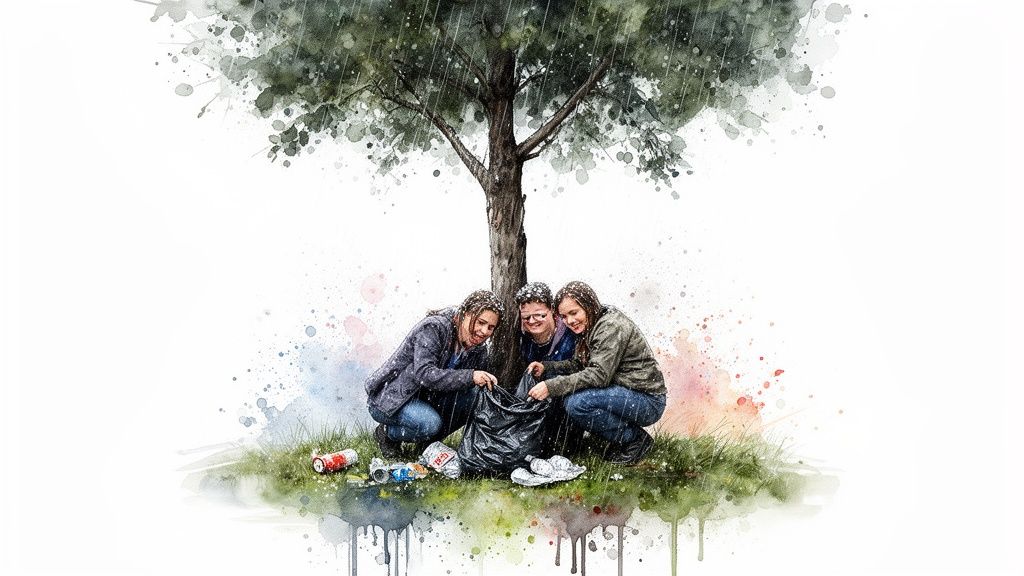
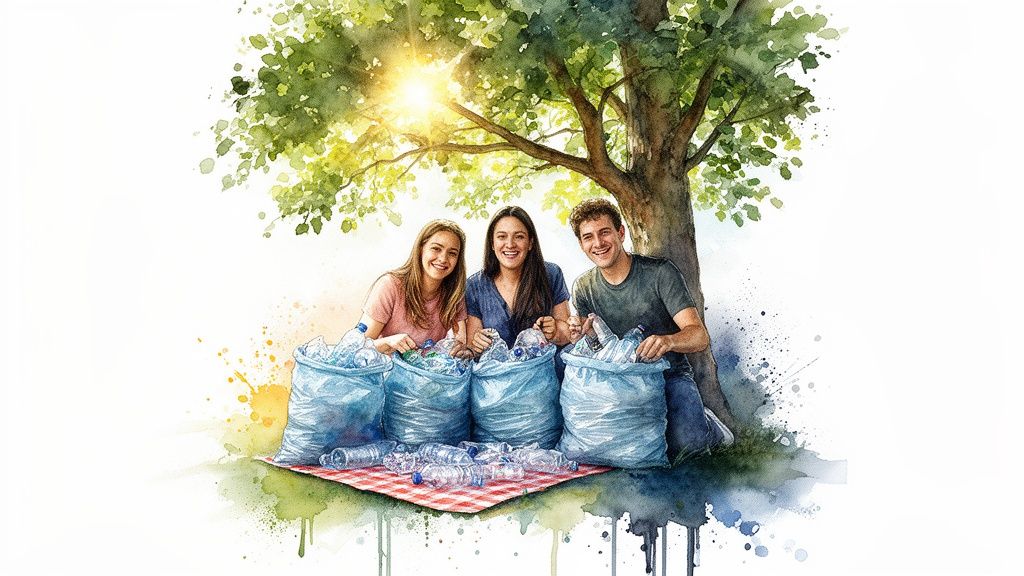
    There were only three of us. We picked a spot, showed up, and then got hit by a freak spring hailstorm. We hid under a tree, shaking, laughing, checking our phones while ride after ride disappeared. It was miserable in the way a camping trip can be miserable. You're wet, your plans are broken, and later it becomes the only story anyone wants to hear.

    That day taught me something useful. You don't need an elegant launch. You need a start.

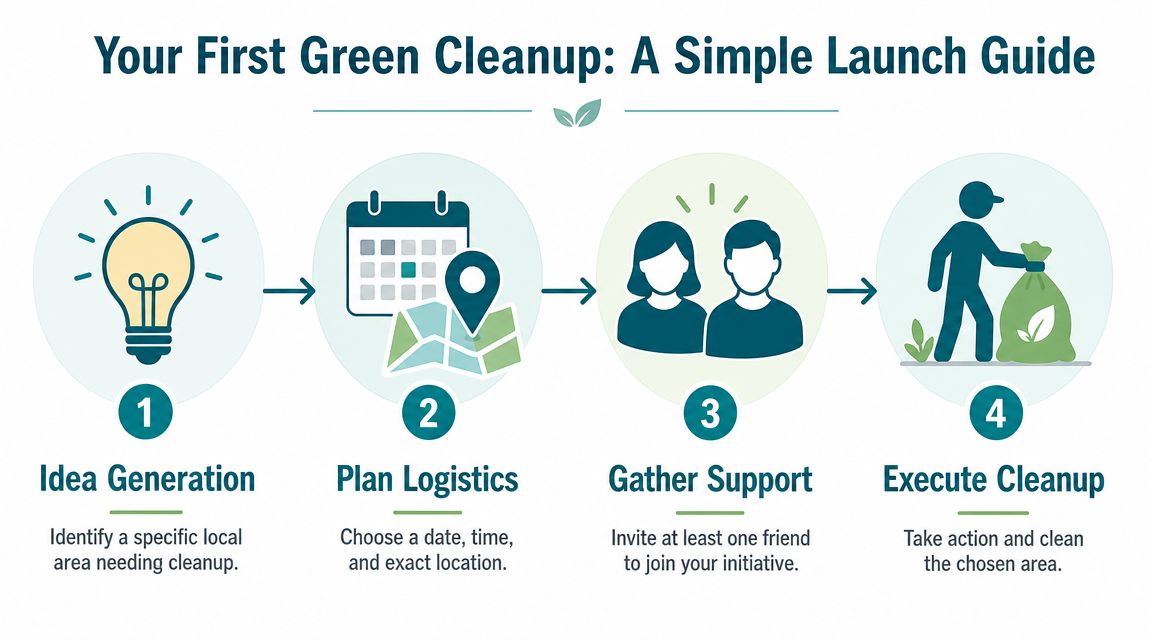
    A four-step infographic illustrating a simple guide for launching a local green cleanup project.

    Pick a target you can finish

    Your first cleanup should be almost embarrassingly manageable. Don't announce a mission to transform your entire city. Pick one place where success is visible.

    I like spots with a clear border:

    1. A single block
    2. One park edge
    3. One alley
    4. A bus stop corridor
    5. A lot line near a fence

    When you finish a defined area, people feel the win in their body. They can see before and after without needing a chart.

    The logic here matches how bigger planning methods often work. The Cambodian Green City Strategic Planning Methodology starts by defining goals and priority actions before trying to tackle everything at once. That's not city-hall-only advice. That's street-level advice too.

    Use the ugly simple plan

    You can launch your first cleanup inside a week if you do this:

    • Choose the place: Walk it first. Make sure you know where people can meet.
    • Set a date: Weekend mornings work well because people show up fresh and less distracted.
    • Invite one friend: One reliable person beats ten vague maybes.
    • Bring basic gear: Gloves, trash bags, hand sanitizer, water.
    • Decide your finish line: One hour, ninety minutes, or “until this block is clear.”

    That's enough.

    I've seen people spend more time designing a logo than choosing a corner. Don't do that. A green city project lives or dies on repeated action, not on branding at the start.

    If you can put a date on a calendar and a pin on a map, you're already farther along than most people with “big ideas.”

    Make the first event easy to join

    Your invitation should sound like a human wrote it.

    Try something like this:

    What to say Why it works
    “I'm cleaning this block Saturday morning. Want to join?” It's direct and casual.
    “No experience needed. I'll bring supplies.” It removes friction.
    “We're only out for an hour.” It respects people's time.
    “Come even if you're shy.” It gives nervous people permission.

    You don't need to impress people. You need to lower the emotional cost of showing up.

    If you want a model for organizing a first event in a simple, public way, look at a live example of a volunteer trash pickup listing. Notice what matters. Date. place. expectation. That's the skeleton.

    Let the first cleanup be a little imperfect

    Rain might come. Someone might cancel. You might bring the wrong gloves or forget water or realize the lot is nastier than you thought.

    Good.

    Your first event should leave you with three things:

    • A visible result
    • A story
    • A reason to do it again

    The hailstorm gave us all three. It was cold and ridiculous, but it proved the idea had teeth. If people are willing to freeze a little and still laugh, then you've found something stronger than convenience.

    Building Your Crew and Keeping Them Safe

    A cleanup group is only as healthy as the people inside it. If volunteers feel unsafe, confused, or used, they won't come back. If they feel protected and welcomed, they bring their friends.

    I learned early that I had to treat volunteer energy like a flame in high wind. It can light a whole block. It can also go out fast.

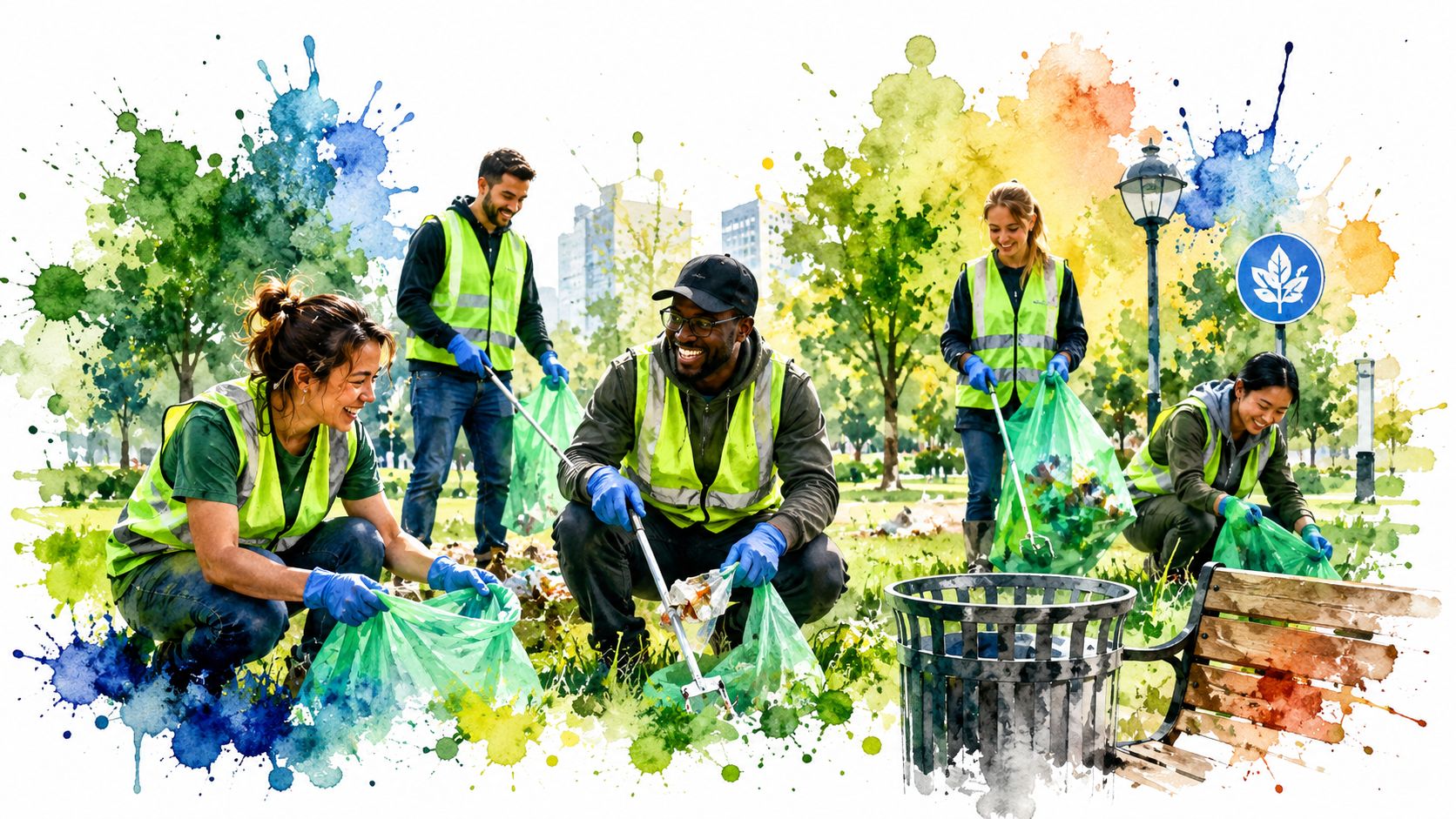
    A group of diverse volunteers in high-visibility vests picking up litter in a green city park.

    Safety first means real scouting

    Before I ask anyone to join me at a site, I try to walk it myself. I'm looking for the obvious stuff and the annoying stuff.

    Here's what I check:

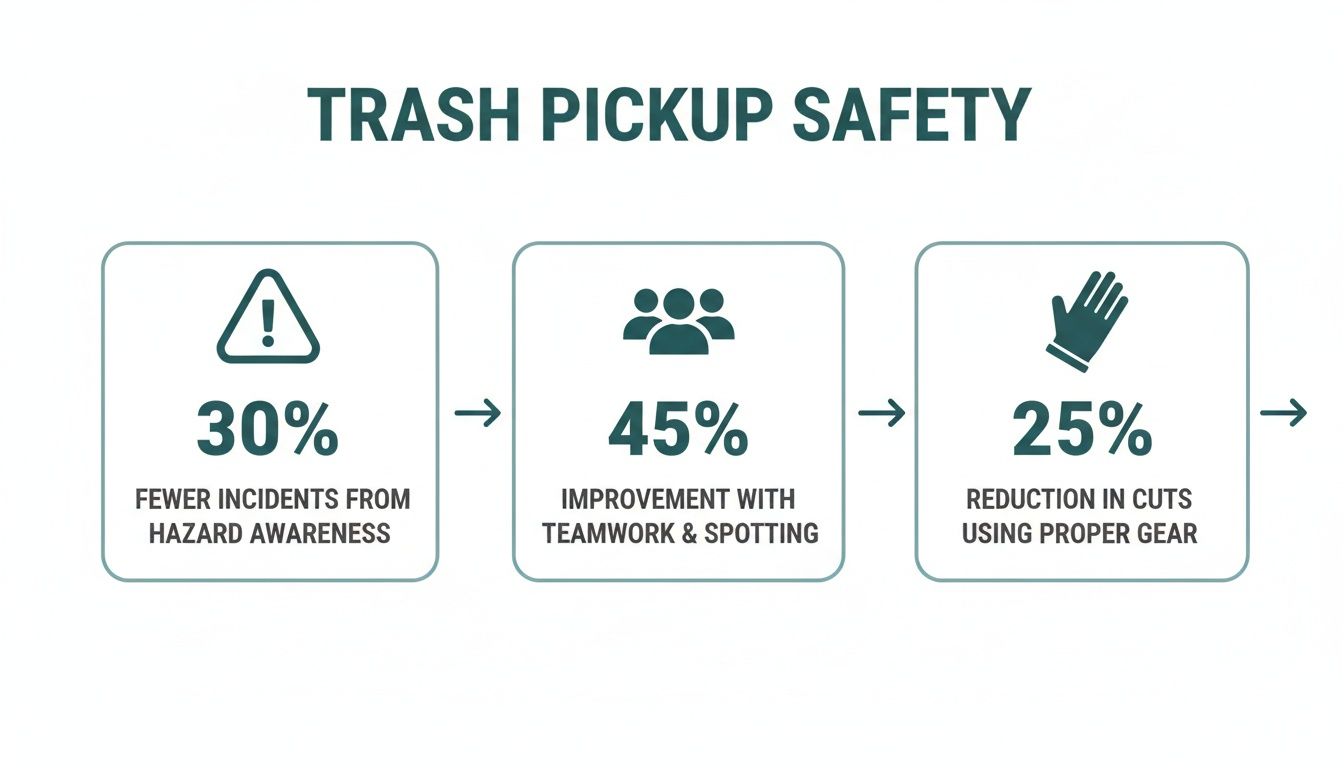
    • Traffic risk: Fast corners, blind turns, bad shoulders, aggressive merging.
    • Ground risk: Broken glass, needles, metal, deep mud, unstable surfaces.
    • Weather exposure: Not just rain, but heat, wind, icy patches, and poor shade.
    • Exit options: Where can people stop, rest, or leave if something goes wrong?

    Formal green city planning often uses broad criteria like water, waste, transport, climate impacts, and disaster frequency. The Global Green Growth Institute guidelines frame green city work through systems and local risk awareness. At our scale, I translate that into one basic rule. Know the environment you're bringing people into.

    That means you don't just ask, “Is there trash there?” You ask, “Can I bring people here and keep them safe?”

    Protect people before you try to inspire them

    I keep my volunteer-first philosophy simple.

    Priority What it means on the ground
    Safety I won't run a cleanup in conditions that feel reckless.
    Happiness I want people to leave lighter than they arrived.
    Dignity I don't pressure volunteers for money or guilt them into more.

    Many groups inadvertently burn out the very people they depend on. They ask too much, communicate poorly, and act like sacrifice is endless. It isn't.

    If you're building your own crew, read through these volunteer management best practices. Even if your group is tiny, habits form early.

    Build a crew, not a roster

    A list of names isn't a community. A community is what happens when people remember each other's stories.

    I like weekend mornings for a reason. The people who come out then are usually ready to give something of themselves. That creates a different kind of group chemistry. Less flaky. Less performative. More grounded.

    Ways to turn strangers into teammates:

    • Use a group chat: It keeps momentum between events.
    • Learn names fast: Nothing warms a group quicker.
    • Give people jobs: One person hands out gloves. One tracks bags. One watches traffic.
    • End with a small ritual: Coffee, snacks, a group photo, even a goofy cheer.

    Here's a look at the kind of spirit that helps a crew stick together over time.

    Field note: People return when the work feels meaningful and the atmosphere feels safe. They don't return because your signup form was impressive.

    You also need to be honest about your limits. If a site feels sketchy, skip it or redesign the event. If the weather is nasty in a dangerous way, cancel. Bravery is real. So is common sense.

    I'd rather have a group that lasts than one dramatic day that scares everyone off.

    Creating an Identity People Are Proud Of

    Trash pickup can feel like punishment if you frame it badly. That's why identity matters.

    I think about Tom Sawyer and the fence all the time. He turned boring labor into something people wanted to join. I'm not interested in tricking anybody, but I am interested in the same human truth. People want to belong to something that feels honorable, brave, and alive.

    Give the work a flag

    Most volunteer groups stop at logistics. Date, time, supplies, done. That gets bodies to a site, but it doesn't always build pride.

    Pride is useful when it's tied to service.
    A strong green city project has cultural signals. Maybe that's a flag. Maybe it's a phrase you repeat. Maybe it's a shared playlist on the drive home. In our case, flags, badges, and a theme song helped turn “I picked up trash once” into “I'm part of something.”

    That sounds small until the work gets hard. Identity is what gets people out of bed when novelty has worn off.

    Use symbols honestly

    You don't need to fake intensity. You just need to make goodness feel bold.

    Try a few things:

    • A name people can wear proudly: It should feel alive in conversation.
    • A simple visual marker: Pins, patches, stickers, gloves in one color.
    • A repeatable ritual: Group photo, chant, snack stop, post-cleanup walk.
    • Language with backbone: Words like bravery, kindness, unity, grit.

    Sports teams do this. Countries do this. Clubs do this. Human beings like banners. We like songs. We like the feeling that our effort belongs to a story bigger than one Saturday morning.

    A broom in your hand feels different when you think, “I'm helping out,” versus “This is who I am.”

    Make service feel like a privilege

    At this point, a lot of leaders get squeamish. They worry that making volunteer work feel special somehow cheapens it.

    I think the opposite is true.

    If your group treats cleanup like a sad obligation, people will feel that. If your group treats service like a proud act of courage, people rise to it. They stand taller. They invite friends. They wear the shirt.

    You don't need hype. You need meaning that people can feel in their chest.

    And the best part is that identity doesn't cost much. A handwritten sign, a shared joke, a song on someone's phone, a nickname for your regulars. Those things create glue. Once your group has glue, the work stops feeling like random labor and starts feeling like a mission people chose with open eyes.

    Expanding Your Impact Beyond Trash Pickup

    At some point, the cleanup ends and you keep staring at the space.

    That's when your project starts changing shape.

    I've felt that shift on blocks where we came back again and again. At first you notice the litter. Then you notice the busted fence, the dead corner, the empty lot, the way everybody walks past like the place is already lost. If you keep showing up, your eyes change. You stop asking, “How do we clean this?” and start asking, “What could this become?”

    Consistency earns bigger chances

    We grew by doing the unglamorous thing over and over. Weekly cleanups. Rain. Heat. Bitter cold. The city started to feel less like a set of separate neighborhoods and more like one giant body with sore spots.

    Then odd opportunities appeared.

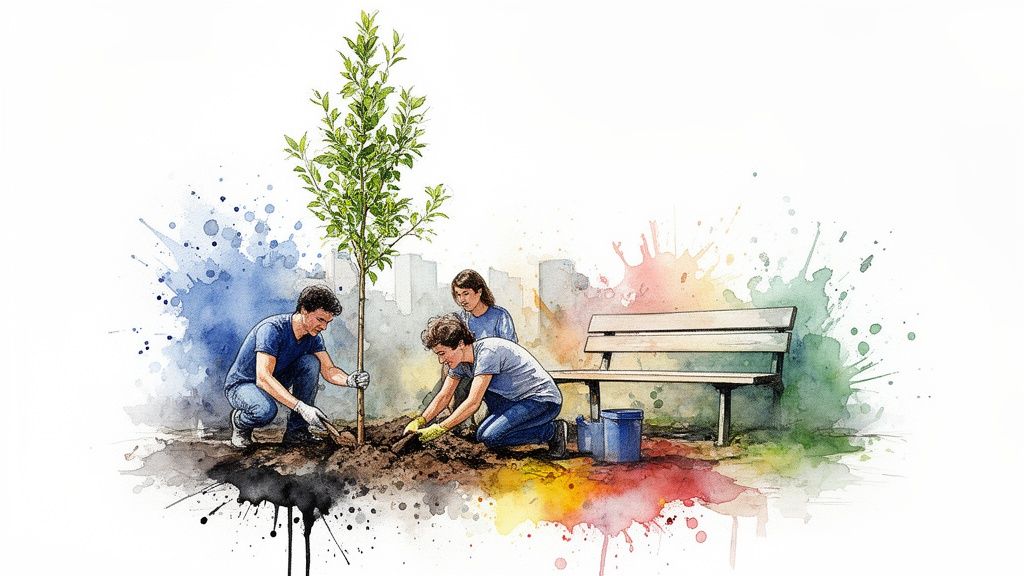
    A bigger event needed cleanup help along a major route. We said yes. Later, an empty lot became more than an eyesore in our minds. It became a possible future park. That kind of leap sounds huge when you say it fast, but it doesn't feel huge when it grows out of regular work. It feels like the next honest step.

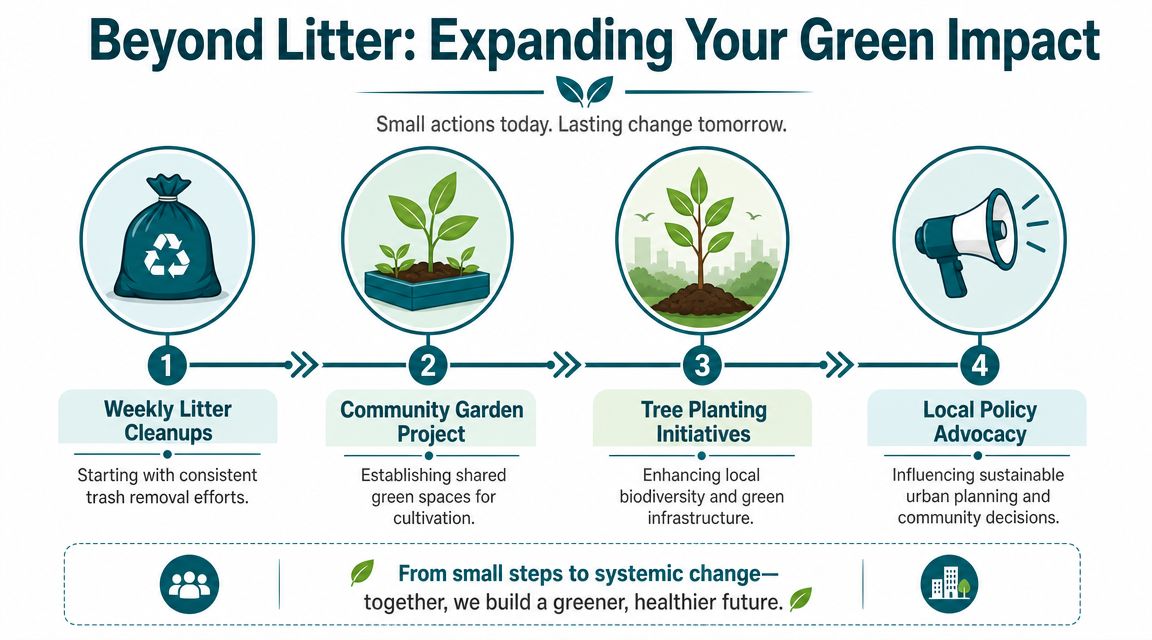
    An infographic showing four steps for expanding green impact: litter cleanups, community gardens, tree planting, and policy advocacy.

    Think in layers, not in leaps

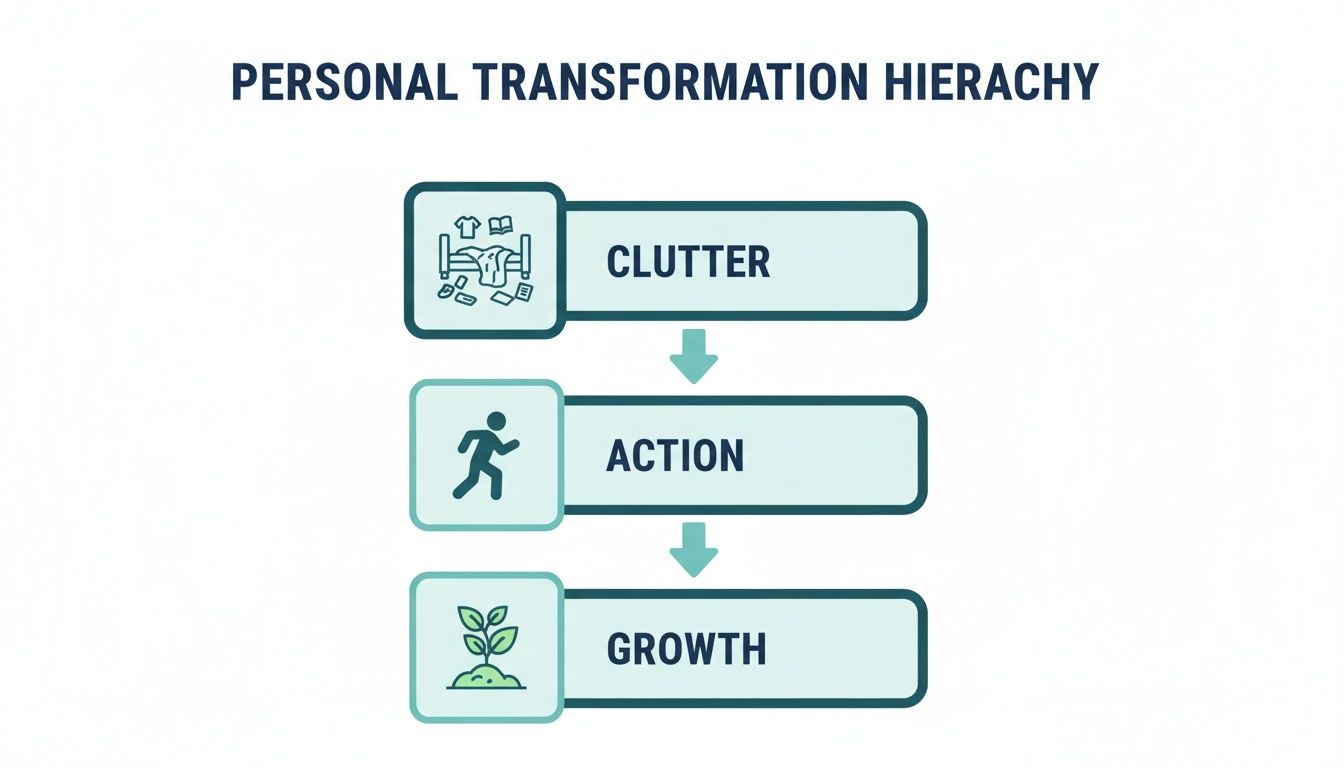
    A local green city project often grows best in this order:

    Layer What it looks like
    Cleanup Repeated litter removal in one area
    Stewardship Returning, monitoring, reporting, caring
    Transformation Planting, beautifying, repairing, reusing land
    Partnership Working with neighbors, businesses, event organizers, or city staff

    People get stuck because they jump from “one cleanup” to “citywide movement” in their head. That gap is too wide. Layers are easier.

    One lot. Then repeated care. Then a small physical improvement. Then a larger ask.

    Ask for the next thing, not the final thing

    When you approach a partner, don't pitch a fantasy. Pitch the next visible step.

    That might mean:

    • Borrowing tools
    • Getting permission to access a site
    • Finding a place for bag disposal
    • Asking a nearby business for water or storage
    • Raising support for one specific lot improvement

    Many projects often drift into vague mission language. I try to avoid that. Many green initiatives have big ideals but weak outcome reporting. The current Green City Project site leaves a real opening for clearer, tangible results, and that's the lesson I take from it. If you want people to believe in you, show them a changed place they can point to.

    One solid lot transformed beats a thousand dreamy sentences about change.

    That's how you expand without getting fake. You let the ground itself make the argument.

    If you want examples of different cleanup formats, neighborhood actions, and recurring volunteer work, Litter Caterpillars is one group that organizes public trash pickup events in Chicago through open signups and recurring meetups. That kind of repeated public action is one workable model. It isn't the only model, but it shows how consistency can build enough trust for bigger projects later.

    Measuring What Matters and Sustaining Momentum

    People love asking for one clean metric. How many bags? How many pounds? How many blocks? I understand the urge. Numbers feel solid.

    But if you run a green city project long enough, you learn that one metric can lie to you.

    A rough site can produce lots of trash one week and less the next. A smaller cleanup can be harder and more useful than a big easy one. A volunteer who comes once and then changes their whole weekend routine has experienced a real victory, even if your spreadsheet barely notices.

    Don't worship a single score

    Project success is slippery because local conditions change everything. Culture changes it. Money changes it. Weather changes it. Capacity changes it. One commentary on project outcomes says it is almost impossible to measure success accurately with a single global metric because local conditions shape results so heavily. The same piece points to a smart-sustainable-cities report where 60% of surveyed initiatives focused on planning, while 25% emphasized Smart Living and 21% Smart Environment, and it also notes bottlenecks like interoperability, mixed data sources, and low capacity to connect data to analytical models in implementation work, as discussed in this project success commentary.

    That lands with me because I've seen groups become obsessed with planning and image while the ground stays dirty.

    Track what keeps the project alive

    I care about a different set of questions.

    • Did we show up again?
    • Did people feel safe?
    • Did anyone make a friend?
    • Did someone become braver because they came?
    • Did we leave the place better than we found it?

    Those aren't soft questions to me. They are survival questions.

    The project lasts when it gives people energy back. If every cleanup drains your crew, the calendar will eventually go blank.

    You can still keep simple records. Attendance notes. Photos. Repeated locations. Specific site changes. Those things help. But don't confuse easy-to-count with most important.

    Momentum comes from rhythm

    Burnout usually doesn't arrive with a trumpet. It creeps in subtly. One skipped week. Then two. Then the group chat gets stale. Then the project becomes a memory everyone still “cares about.”

    Rhythm fights that.

    A few ways I protect momentum:

    1. Keep the schedule predictable. Same general time pattern beats constant rescheduling.
    2. Make the events finite. Leave people wanting a little more.
    3. Let people rest without shame. Guilt is a bad fuel source.
    4. Celebrate tiny wins. Clean curb line. New regular. A volunteer who smiled all morning.

    The true measure of a green city project is whether it keeps changing both the place and the people. If the street gets cleaner while your volunteers get steadier, kinder, and more connected, that's success I can trust.


    If you want a real-world place to plug in, Litter Caterpillars runs volunteer-driven Chicago cleanups built around bravery, kindness, unity, and a volunteer-first approach. Join an event, meet good people, and start building your own version of a green city project one block at a time.

  • What is civic pride? How it strengthens neighborhoods – what is civic pride

    What is civic pride? How it strengthens neighborhoods – what is civic pride

    So, what is civic pride? Let me break it down for you. At its heart, it’s choosing to treat your neighborhood—your block, your city—like an extension of your own home. It’s that deep feeling of ownership and responsibility for the spaces we all share, not just what’s inside your four walls.

    Finding Pride Beyond Your Front Door

    For my whole life, I’ve had a secret struggle: I couldn't keep my own apartment clean. It was a mess. And as the clutter grew, my life felt messier, too. Every piece of trash told a story I couldn't let go of. A four-year-old jar of jam from a trip to Michigan. A bag of nuts from a failed health kick. Each item might as well have weighed 500 pounds because I felt paralyzed, unable to move it.

    My own space was a mess, and honestly, so was my head.

    It took hitting a personal rock bottom for me to stumble upon something wild. While I couldn't clean up my own life, I found this incredible surge of purpose cleaning up someone else's mess. This is what civic pride means to me. It's not some abstract, patriotic slogan you see on a billboard; it’s a hands-on, get-your-boots-dirty commitment to the world right outside your door.

    The Shift from 'Me' to 'We'

    That journey from personal chaos to collective action is where real civic pride is born. It's that click in your brain when you stop seeing a trashed-out park as "the city's problem" and start seeing it as our park. You start to believe, really believe, that your small actions can ripple outward, sparking a powerful change for everyone.

    Civic pride is the radical belief that your individual effort matters to the collective whole. It’s the decision to show up for your community, even when no one is watching, because you feel a genuine stake in its success and well-being.

    It all boils down to this:

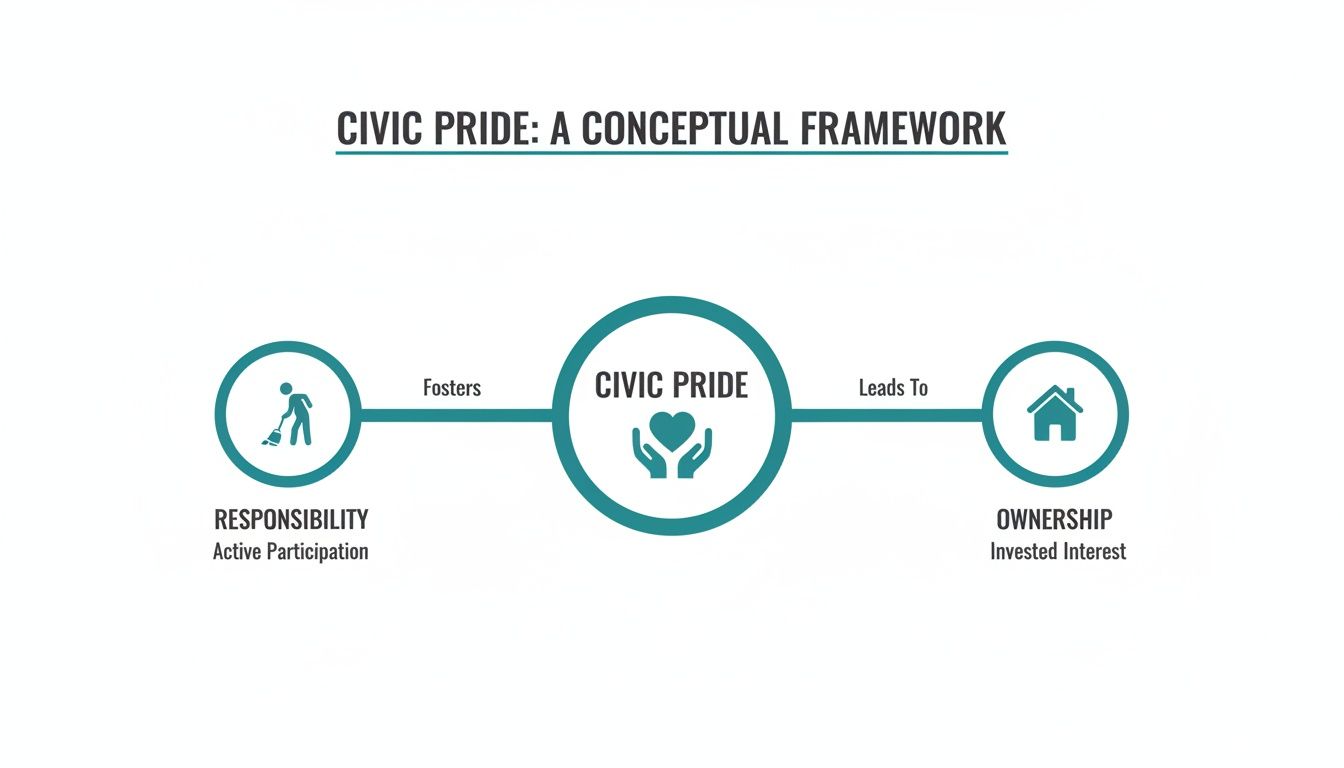
    A conceptual framework illustrating how responsibility fosters civic pride, which then leads to ownership.

    The idea is simple. When you take responsibility for the shared spaces around you, you naturally build a powerful sense of ownership. That feeling of ownership is the engine that drives true civic pride.

    The Four Pillars of Civic Pride

    You can build civic pride on four core actions—things anyone can do in their own community.

    Pillar What It Looks Like in Action
    Responsibility You see a piece of trash on the sidewalk and you pick it up instead of walking past it.
    Connection You get to know your neighbors by name and actually check in on them.
    Contribution You volunteer for a local cleanup or join a community garden.
    Celebration You go to a neighborhood block party or cheer for a local sports team.

    These pillars aren't just concepts; they are tangible actions. When you practice them together, you create a strong, vibrant community spirit.

    More Than Just a Feeling

    Civic pride is something you do, not just something you feel. It's about actively building something better, together.

    Imagine a sports team. Their success isn't just about raw talent. It's about players who feel a deep pride in their jersey, their city, and each other. They grind it out together because they share a common identity and a common goal. This is exactly what we’re building with projects like Litter Caterpillars all across Chicago.

    This idea is closely related to a bigger concept. You can learn more about how all these individual actions add up in our article on what is civic engagement. It's the practical, real-world application of the pride we all feel for our home.

    The Surprising Power of a Shared Mess

    Let me tell you the story of how our group, Litter Caterpillars, was truly born. It wasn't in some sterile meeting room with a whiteboard. Nope. It was under a soggy tree during a freak Chicago hailstorm.

    A few of us were out picking up trash when the sky just opened up and dumped on us. Ice pellets hammered down, forcing us to huddle together, shivering. I remember watching as Uber after Uber canceled, leaving us stranded, cold, clutching bags of strangers' garbage. Right there, in that moment of shared misery, something clicked.

    There’s a strange kind of magic in cleaning up a mess that isn't yours. It's often way more satisfying than finally tackling the disaster in your own room. But facing that challenge together? That turns a chore into a real adventure. It adds a "flavor" to the story that makes you feel connected and alive.

    From Chore to Adventure

    This gets to the real psychology behind civic pride. It’s like a modern-day Tom Sawyer convincing his friends that painting a fence is the coolest adventure they could possibly have. He didn't just get a fence painted; he created an experience. He turned a punishment into a game, a solo job into a community event.

    That's exactly what happens when we team up to tackle a shared problem. We aren't just picking up litter; we're writing a story of resilience together.

    The shared struggle is a powerful glue. It forges bonds that simple, pleasant interactions never could. Overcoming a small bit of chaos together creates a profound sense of "us."

    This collective effort taps into a deep human need to belong and to contribute to something bigger than ourselves. Study after study on group dynamics shows that teams who face and overcome obstacles together have way higher levels of trust and cohesion. Each piece of trash you pick up becomes a tiny victory, a visible trophy of your collective power. For more practical tips, check out our blog on cleaning up trash effectively.

    Why Shared Suffering Builds Stronger Bonds

    It might sound crazy, but that hailstorm was one of the best things to ever happen to our group. It bonded us in a way a sunny, easy day never could have. Facing that unexpected hardship created a unique, shared memory that’s now part of our origin story.

    Psychologically, this makes total sense. Enduring a challenge with other people triggers a release of hormones linked to bonding and cooperation. It creates an instant camaraderie. You’ve been through something together.

    You can see this principle everywhere in community efforts:

    • Community Gardens: You aren't just planting vegetables; you're fighting off weeds, droughts, and pests as a unit.
    • Neighborhood Watch: You're not just looking out a window; you're collectively standing against uncertainty to create a safer block for everyone.
    • Barn Raising: The classic example where an entire community shows up to build something essential, knowing that many hands make light work of a huge task.

    In every case, the effort is the point. The struggle becomes the story, and that story becomes the foundation of your shared pride. You look at what you’ve built, and you don’t just see a clean park or a new shed—you see the strength of your connection. You see what you can accomplish when you do it together.

    Discovering the Real Benefits of Community Care

    Five volunteers cleaning up litter in a park, placing trash into black bags under a tree.

    When you start to actually care for the spaces around you, something incredible happens. I’ve seen it time and again, from Rogers Park all the way to Englewood—picking up litter is never just about the trash. It’s about forging a community that’s more connected, more resilient, and way more beautiful for every single one of us.

    The payoffs go so much deeper than just a clean street. They hit you personally and then spread through the whole neighborhood like wildfire.

    The Psychological Boost of Visible Impact

    You feel this powerful surge of self-respect when you see the immediate result of your work. You can literally stand back, look at a park that was just a mess of debris, and think, "I did that." This isn't just about feeling good for a moment; it's about proving to yourself that you have the power to make a real, positive change.

    That feeling of purpose is a potent antidote to the helplessness we all feel sometimes. It's a tangible win. You're not just wishing for a better neighborhood; you're physically building it, one piece of trash at a time. This kind of direct action beefs up your sense of agency. And what is civic pride if not believing in your own power to make a difference?

    Seeing the immediate impact of your work creates a positive feedback loop. The more you do, the more you believe you can do, which fuels even greater action and deeper community investment.

    Forging Friendships Through Shared Action

    The social side of this is just as huge. When you're working side-by-side with your neighbors, you stop being just acquaintances. You become teammates. You’ve got a common goal, you’re sweating together, and you're celebrating the wins together.

    Honestly, I’ve met some of my best friends while hauling bags of junk. These aren't the kinds of bonds you form over small talk; they're forged over a shared commitment to our city. These relationships strengthen the very fabric of a neighborhood, turning a collection of houses into a real community where people actually look out for each other.

    And this kind of engagement is happening everywhere. In fact, a recent study found 58% of LGBTQ young people got involved in at least one form of civic action last year, from community service to contacting officials. You can check out the full research on youth civic engagement from The Trevor Project.

    Environmental Wins That Build Momentum

    Of course, the environmental perks are obvious—cleaner parks, safer streets, and healthier local ecosystems. But the ripple effect is even bigger than that. A clean space sends a clear message: "This place is cared for."

    This visibility alone discourages more littering and vandalism, sparking a cycle of positive reinforcement. When people see that a space is respected, they’re far more likely to respect it themselves. Your small act of picking up a few bottles can inspire an entire block to keep things tidy, leading to lasting environmental improvements that make your community a better place to live for everyone.

    See How Civic Pride Transforms a Community

    It’s one thing to talk about civic pride. It’s another thing entirely to watch it explode into reality. Let me tell you about Caterpillar Park—our biggest, boldest, and most heart-filling project yet. This is where you can see what civic pride looks like when it stops being a feeling and becomes a physical place you can stand in.

    It all started with a forgotten, trash-filled lot in Englewood. You know the kind of space I'm talking about. The ones you walk past and try not to look at, a glaring symbol of neglect. But we saw something else. We saw potential.

    So, we did something that felt a little crazy. A bunch of us dedicated volunteers pooled our energy, fought through the bureaucracy, and actually won that lot at a city auction. It was ours. Suddenly, this wasn't just another cleanup; this was about reclaiming a piece of our city for our city.

    From Dirt to Determination

    This project was never just about planting a few flowers or putting in a bench. It was an act of defiance against apathy. It was us, a group of ordinary Chicagoans, pouring our souls into a patch of dirt because we believed, truly believed, it could be beautiful.

    We ran into every challenge you can imagine. Hauling away decades of illegally dumped junk. Dealing with skeptical looks from passersby. Figuring out how to turn hard, compacted soil into something that could actually grow life. There were days I thought we’d bitten off way more than we could chew.

    Caterpillar Park is our proof. It's living evidence that when a community is brave enough to care, they can create something beautiful and lasting from nothing more than dirt and determination.

    Small Wins and a Shared Vision

    But the real magic wasn't in the big, dramatic moments. It was in the small victories that kept us going. The day the very first seedling poked through the soil. The afternoon a neighbor, who’d been watching us for weeks, finally came over with a cold bottle of water and stayed to help pull weeds. The sound of kids laughing on the grass where there had only been broken glass before.

    Each tiny win fueled our energy. You could literally feel the shift on the block. The park became a magnet for positive connection, a rallying point for a vision we all started to share.

    This transformation shows the true power of civic pride. It moves from an abstract idea into a tangible reality you can touch, see, and feel. It’s a place built by love.

    Simple Ways to Cultivate Civic Pride Where You Live

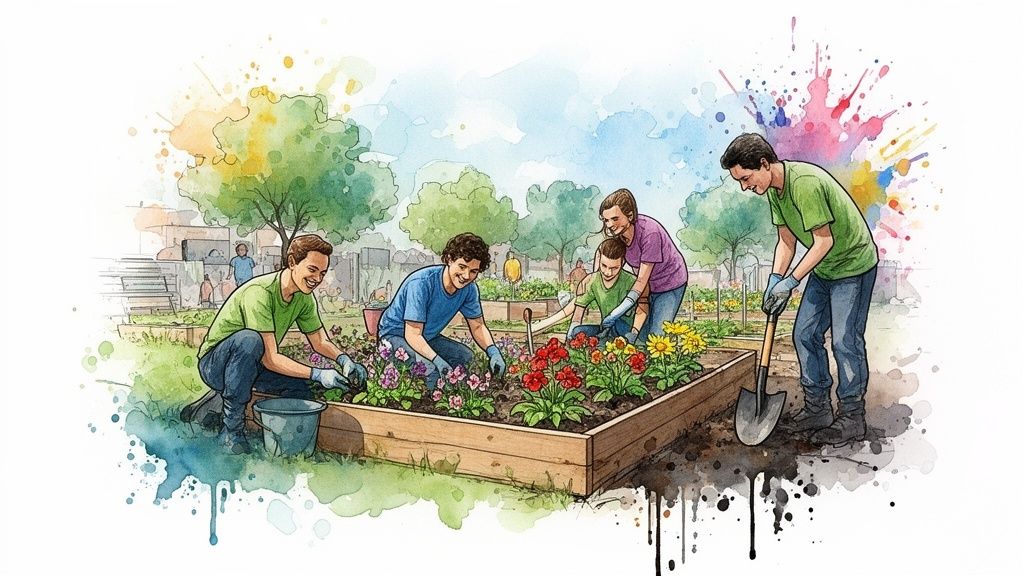
    A group of smiling people collaboratively planting colorful flowers in a raised garden bed.

    So you’ve got that fire in your belly. Good. You don't need a huge, elaborate plan or a fully-funded nonprofit to start making a real difference. The truth is, the most powerful movements begin small. You already have everything you need to spark a change, right now, on your own block.

    Civic pride isn’t born in a city council meeting. It’s grown in the soil of our neighborhoods through small, consistent acts of care. It’s about taking that abstract feeling of pride and making it something you can actually see and touch.

    Make Your Care Visible

    The first step is often the simplest: create visible signs that scream, "this place is loved." It could be as easy as putting a colorful planter on your porch or as bold as organizing a mural on a wall that's been a graffiti magnet for years. Visible care is contagious. When one person starts, others notice.

    Think about these simple, but powerful, moves:

    • Organize a Weekend Cleanup: Just pick a Saturday. Grab some trash bags and gloves, and text a few neighbors. You’ll be floored by what you can get done in just a couple of hours.
    • Start a Community Garden: Find a forgotten patch of dirt, get permission, and plant something beautiful. A garden is a living, breathing symbol of shared investment and hope.
    • Create Public Art: Even small art installations can completely shift the energy of a place. They can turn an overlooked corner into a spot that makes people stop, smile, and feel a little spark of pride.

    These actions do way more than just make a space look nice. They send a powerful signal to every single person who walks by.

    Turn Chores into Celebrations

    Let’s be real: picking up trash isn't exactly glamorous. Here at Litter Caterpillars, we stumbled upon a secret early on: you have to turn it into an event. We transformed our cleanups into celebrations by creating little rituals that built a shared identity and a real connection between us.

    It's an art form. We have theme songs. We give out badges for hitting milestones. Our weekly meetups have become a social gathering people actually look forward to. By layering in fun and ceremony, we took a chore and turned it into a ritual we all cherish. You can do this, too. Make a playlist for your cleanup day, have a potluck afterward, or design a simple t-shirt for your block’s "Green Team." You can check out more of our community engagement strategies that have worked for us.

    The key is to inject the work with joy and a sense of shared mission. When people feel like they’re part of a team, their motivation goes through the roof.

    Foster Visibility and Connection

    Creating chances for people to feel seen and connected is the absolute core of building civic pride. This can look like a lot of different things—from a classic neighborhood block party to bigger initiatives that celebrate a community’s identity. Just look at Pride events globally. A recent report showed events were held in at least 101 out of 193 UN member states. These gatherings are powerful. They build awareness, connect people who might feel isolated, and send a clear message about a community's presence and strength. You can learn more about how Pride builds community worldwide in this awesome report.

    The lesson here is huge: when you make your community’s spirit visible, you strengthen the bonds that hold it all together. You don't need a parade. You just need to create spaces where people can show up, be themselves, and feel like they’re part of something good.

    Your Questions About Civic Pride Answered

    I know what you're thinking. You're feeling that fire in your belly, but there's a little voice of doubt whispering in your ear. What if I'm the only one who cares? What if people are just negative? What if I burn out?

    These are real questions. Let's tackle them head-on.

    The fear of being the lone weirdo picking up trash while everyone else walks by is a big one. And yeah, sometimes that happens. You might even get a cynical comment or two.

    But here’s the thing: you’re not doing it for them. You’re doing it because you know a better neighborhood is possible. Your actions, week after week, become a quiet, steady force. You’d be surprised how many people you inspire without ever knowing it.

    Pride vs. Nationalism: This Is a Big One

    It’s really important we get this straight. Healthy civic pride is not the same as blind nationalism. Not even close.

    Think of it like this: True civic pride is like loving your family. You see their flaws, you want to help them grow, and you're committed to them, warts and all. Nationalism is like insisting your family is perfect and better than every other family, and refusing to see any problems.

    Civic pride says, "I love this place, and I’m all in on making it better for everyone." Nationalism often says, "My place is the best, and I will ignore its problems to prove it." One builds community; the other builds walls.

    Knowing the difference keeps your work pure. Your motivation comes from a place of genuine care, not ego.

    Why Your Small Effort Is Actually Huge

    Look, staying motivated is tough. I get it. The secret is to see how your small actions connect to a much bigger picture. We're all more connected than we think.

    A global survey found that 1 in 2 adults knows someone who is gay or lesbian, and it showed huge generational shifts in how we see each other. You can read more about these community connections at Ipsos.

    What does that have to do with picking up litter? Everything. It shows that individual lives and experiences ripple out and change the consciousness of the whole community. Your small act of care does the exact same thing. You’re part of a massive, unspoken network of people who believe in showing up. That’s why this work matters so much.


    At Litter Caterpillars, we turn that belief into action every single week. If you're ready to stop wondering and start doing, join us. Find an event and see for yourself how good it feels to build a better Chicago, together. https://www.littercaterpillars.com

  • Volunteer Trash Pick Up Guide to Transforming Your Community

    Volunteer Trash Pick Up Guide to Transforming Your Community

    I'll tell you a secret. A volunteer trash pick up isn't just about cleaning a street. It’s a strange and powerful way to find your courage, build friendships with incredible people, and start cleaning up the chaos inside your own head.

    How Picking Up Trash Can Change Your Life

    I didn't start picking up trash to save the world. Not even close. I started because my own life was a complete disaster.

    I was stuck. Trapped. I felt suffocated by the clutter of past failures and a chaotic relationship that had just imploded. It was like living in a house where every surface was covered in junk. That old jar of jam in the back of my fridge wasn't just jam anymore; it was a monument to a trip that felt like a lifetime ago. Every piece of trash I couldn't bring myself to throw away felt like it weighed 500 pounds.

    I’d hit a breaking point. I knew something had to change, and I decided to mindfully engineer my social circle, filtering out selfishness and forcing myself to embrace things that terrified me: consistency, cleanliness, and bravery. And I learned something fast—cleaning up other people's messes is way easier than cleaning up your own.

    Three young people in a watercolor style, collecting litter under a tree during a rainy cleanup.

    A Hailstorm and a Beginning

    My very first cleanup? I remember it like it was yesterday. It was just me and two friends. And, of course, a freak Chicago hailstorm decided to join us. We were huddled under a tree, shivering, watching Uber after Uber cancel on us. It was cold. It was absurd. It was, honestly, pretty miserable.

    But in that moment, something clicked. Shared struggle doesn't just build character; it forges unbreakable bonds. That freezing, bizarre experience taught me that facing a challenge together, no matter how small, adds a certain "flavor" to life. It moves the plot forward. It showed me that service is one of the most powerful tools for personal transformation.

    I realized that picking up trash wasn't a punishment. It was an adventure. A way to turn a personal low point into a powerful mission for a cleaner city and a clearer mind.

    Finding Your People and Your Purpose

    This simple act connects you to something so much bigger than yourself. It's not just about what you remove from the environment; it’s about what you build in its place. Every cleanup becomes a chance to meet people who share a fundamental kindness—people who just show up.

    You start to see your city not as a backdrop, but as a home you're actively tending to. It’s a journey where you find both your courage and your community.

    • You prove you can be consistent. Showing up week after week, rain or shine, builds a new level of self-trust. A promise you keep to yourself.
    • You find real connection. Working alongside someone toward a shared goal is one of the most natural ways to form friendships.
    • You see immediate impact. An hour of work results in a visibly cleaner park. A sidewalk transformed. It’s a tangible reward that’s incredibly satisfying.

    And this feeling isn't just happening in Chicago. It’s a global movement. Imagine millions of us banding together—that's the magic of World Cleanup Day. Since 2018, this initiative has rallied over 114 million volunteers across 211 countries to remove more than 708,000 tonnes of waste.

    Groups like ours, the Litter Caterpillars, embody this spirit right here at home, showing up every single week to prove that small actions create huge ripples.

    This guide is about helping you start that same journey. You can learn more about my philosophy on cleaning up trash in other articles. Think of this as your first step toward transforming not only your neighborhood, but yourself.

    Finding Your Cleanup Crew

    So, you feel that fire in your belly. The urge to get out there and actually do something. That’s the hardest part, and you've already done it. But then the big question hits: where do I find my people? It can feel like you’re trying to find a secret club, but I promise, the doors are wide open if you know where to knock.

    Finding the right group for a volunteer trash pick up is more than just plugging a time into your calendar. It's like finding a good coffee shop—some are quiet and intense, others are loud and full of energy. You have to find your spot. You're looking for a vibe, a crew you actually want to hang out with.

    Digital Campfires Where Communities Gather

    When I was just starting out, I hit the internet to find my real-world crew. It felt a bit weird at first, but platforms like Meetup and even Instagram are basically the modern town square where we connect over things we care about. They are powerful.

    I found out pretty fast that Meetup is perfect for this. Just search for "trash pickup" or "community cleanup" and you'll probably find a bunch of groups right in your city that you never knew existed. It's how a ton of people found us, the Litter Caterpillars. They saw a post, felt a connection to our mission of being brave and kind, and just showed up.

    Instagram is another place that's surprisingly good for finding your people. Search hashtags like #chicagocleanup, #trashtag, or #volunteertrashpickup. You’ll see pictures and stories from groups out in the wild, which gives you a real feel for their energy before you even commit.

    A great event post tells you a lot more than just the time and place. It shows you the group's heart. Look for posts that talk about community, safety, and making sure volunteers have a good time—not just getting a job done.

    How to Spot a Great Group

    Okay, so you’ve found a few potential crews. How do you pick one? It’s all about reading between the lines. I’ve learned that a group’s true character really comes through in how they talk about their events. A great group doesn't just want your time; they want you to have a positive, safe experience.

    Here’s the mental checklist I use when I’m checking out a new group:

    • Do they talk about safety? Look for mentions of them providing gloves, bags, and doing a quick safety talk. It shows they put you, the volunteer, first. Always.
    • Is the vibe welcoming? Read their event descriptions. Do they sound friendly? Are they encouraging to newbies? Green flags are phrases like "first-timers welcome" or "come alone and leave with friends."
    • Are they consistent? A group that meets regularly—say, every weekend—is usually more organized and has a solid community. It shows they’re in it for the long haul.

    I’ll never forget one of our regulars telling me he was super nervous to come to his first event alone. He saw our photos on Instagram—just a bunch of people smiling in a blizzard, holding trash bags like they were trophies—and said he knew this was a group that found joy in the work. He showed up. He’s been with us ever since.

    That's the feeling you're looking for. The journey of how to find volunteer work is really about finding that sense of belonging. Your crew is out there. Waiting.

    Your First Volunteer Trash Pick Up

    Showing up to your first volunteer trash pick up can feel a bit like the first day of school. You're excited, maybe a little nervous, and you definitely don't want to show up unprepared. Let’s walk through what you can expect. Think of this as your pre-game pep talk, designed to make your first cleanup so awesome you’ll be hooked.

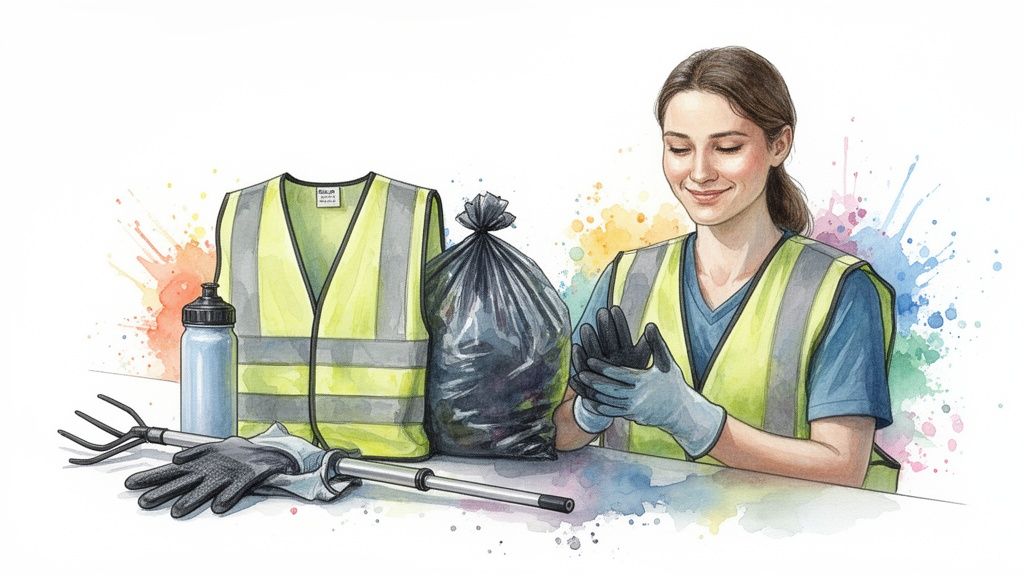
    A smiling woman in a high-visibility vest and gloves, with a trash bag and cleanup tools.

    From my experience, the biggest hurdle isn't the trash itself—it's the uncertainty. You’re putting yourself out there, meeting new people, and diving into something new. That takes real courage. Give yourself credit for even considering it.

    Dressing for the Adventure

    Your outfit is your first line of defense. Remember that hailstorm I mentioned? It taught me a vital lesson: nature doesn’t care about your plans. Comfort and safety are everything. This isn't a fashion show; it's a mission.

    • Closed-toe shoes are non-negotiable. You’ll be walking on uneven ground and encountering things you can't see. Sturdy boots or old sneakers are your best friend.
    • Wear layers you can move in. The weather can turn on a dime, especially in Chicago. A t-shirt, a hoodie, and a light jacket give you options.
    • Choose bright colors if you can. Especially if you're cleaning up near a road, being visible is key to staying safe. Think of yourself as a friendly, helpful traffic cone.

    Think of it like dressing for a hike. Forget fashion; this is all about function. You need to be ready for anything, from a sudden downpour to a surprisingly sunny day.

    What to Bring and What to Expect

    A good organizer will handle the core supplies, but being personally prepared makes the whole experience smoother. It’s the difference between just getting through it and actually having a great time.

    Here's a quick reference for what to bring versus what a great organizer should provide, ensuring you're prepared and safe.

    Your Essential Cleanup Day Checklist

    What You Should Bring What the Group Should Provide
    A reusable water bottle to stay hydrated Heavy-duty, puncture-resistant gloves
    Sunscreen and a hat for sun protection Durable trash bags
    Your phone for photos and emergencies Trash grabbers or "pickers"
    An open mind and a positive attitude Hand sanitizer and a first-aid kit

    Being prepared helps you focus on what really matters: the people and the mission.

    The most important thing you can bring is a willingness to connect. This isn't just a chore; it’s a social event disguised as community service. The trash is just the icebreaker.
    Embracing the Mindset

    Okay, you’re dressed, you’re packed, and you've arrived. Now what? Your first instinct might be to grab a bag and furiously start picking. My advice? Slow down.

    Pace yourself. This is a marathon, not a sprint. Take a moment to look around and introduce yourself to the person next to you. A simple "Hey, I'm new here" is the perfect opener. Every single person here was a first-timer once. We all remember that feeling.

    You will find weird stuff. It’s part of the fun. I’ve found everything from a single high heel to a perfectly preserved (and unopened) can of peas from the 1980s. When you do, share it! It's a great way to start a conversation and get a laugh with your fellow volunteers.

    Focus on the shared mission. You're all there for the same reason—you care. That common ground is a powerful foundation for friendship. By the end of the day, you’ll leave with more than just a full trash bag; you’ll leave with a sense of accomplishment and a few new friends.

    Leading Your Own Community Cleanup

    Do you feel that fire to start your own crew? That's a huge step. A monumental one. When I first started this, I wasn't trying to lead anyone. I was just trying to show up for myself and fix my own life. But leadership is what happens when you keep showing up. If you're feeling that pull, it means you're ready to build something real.

    So, I’m opening up my personal playbook. This is how we plan and run a cleanup that's safe, effective, and honestly, a strange new form of "fun." You're not just picking a spot on a map; you're crafting an experience. Think of yourself as an event planner, but your main guests are your neighbors and the guest of honor is your community. You’re building something from scratch.

    Scouting Your Mission

    First thing's first: you must become a scout. Before you can lead a volunteer trash pick up, you need a location. This is more art than science. I like to just walk or bike through neighborhoods, keeping my eyes peeled for the spots that look forgotten—but are still safe for a group to work in.

    Look for a place that tells a story. Is there a park that’s become an unofficial dumping ground? An underpass people just avoid? These are perfect. Why? Because the "before and after" will be so dramatic it gives your volunteers that incredible feeling of victory.

    I always make sure my route has:

    • Safe access: No one should be dodging fast-moving traffic or climbing over sketchy terrain. The safety of your volunteers is everything. It comes first, always.
    • A clear start and end point: This keeps the group together and makes your life a million times easier. I’ve found a one-mile loop or a half-mile down a single street works perfectly.
    • A "trash hotspot": You want a concentrated mess. A dragon to slay. It gives the crew a clear, satisfying challenge and a visible win at the end.

    Once you think you have a spot, you have to walk the route yourself. Take notes. See some broken glass? Overgrown thorns? Make a mental note. Knowing the territory gives you the confidence to lead everyone else through it.

    Scheduling for Success

    Timing is everything. You might think any weekend afternoon will work, but I’ve found that weekend mornings are pure magic. We intentionally schedule our events for Saturday or Sunday mornings because it filters for a certain kind of person: the giver.

    People who drag themselves out of bed early on a weekend aren't looking for a party. They are there to serve. They’re the ones who are ready to build consistent, positive habits. Kicking off your day with service just sets a powerful tone for the whole weekend.

    The goal isn’t just to get people to show up once. It's to create an experience so positive and fulfilling that it becomes a cherished part of their routine. A weekend morning cleanup can be that anchor.

    This one small choice says a lot about your group's identity. It signals that you're about purpose and connection, not just killing time. It’s a quiet way of saying, "We’re here to do the hard work, together."

    The Unspoken Contract: The Safety Briefing

    This is the most important part of your job. Before a single piece of trash gets picked up, you deliver a safety briefing. Every. Single. Time. It doesn’t need to be some long, dramatic speech, but it is absolutely non-negotiable.

    Your safety talk is an unspoken contract with your volunteers. It tells them, "I see you, I value your time, and I will do everything in my power to keep you from getting hurt."

    I always cover these key points:

    • Point out known hazards: "Watch out for the broken glass over by that fence." I mention what I saw on my scout walk.
    • Explain the "don'ts": No sharp objects (especially needles), no trying to lift heavy furniture by yourself, and no wandering off into sketchy areas alone.
    • Set the boundaries: I clearly define the cleanup zone so nobody gets lost. "We're cleaning from this corner down to the blue building."
    • Have a communication plan: "If you need anything, find me. I’ll be the one in the bright green hat."

    This briefing does more than just keep people safe—it builds trust. It shows you’re a leader who actually cares about their team, not just the task. And that trust is the foundation of any real community. My leadership isn’t measured by how much trash we collect, but by how well I take care of the people who show up to help. You're not just cleaning a street; you are building a movement, one small, safe, and powerful event at a time.

    Building a Community That Lasts

    Let me tell you a secret: a volunteer trash pick up is almost never about the trash. It’s the perfect excuse. The stage we set to build friendships and community, using the shared task as the glue that brings us all together. The real victory isn't a clean street; it's the tough, supportive crew you build along the way.

    But this doesn't just happen. You can't just hope a community forms; you have to intentionally build the container for it. My whole philosophy is “volunteer-first.” This means protecting the energy of the people who show up is your most sacred duty as an organizer. Their time and spirit are the fuel for this whole mission. You must guard it.

    This also means you never, ever pressure people for money. Their presence is the donation.

    The Volunteer-First Philosophy

    When someone decides to spend their Saturday morning with you instead of sleeping in, they’re giving you something incredibly precious. Your job is to honor that gift. This isn't a transaction; it's a relationship built on mutual respect and a shared desire to do some good.

    Think of your volunteer group like a garden. You can't just throw seeds on the ground and expect a harvest. You have to nurture it. This means prioritizing safety, but it also means prioritizing joy. It's about creating an environment where people feel seen, valued, and actually want to come back.

    The goal isn’t just to get people to show up once. It’s to create an experience so positive and fulfilling that it becomes a cherished part of their routine. A weekend morning cleanup can be that anchor.

    This volunteer-first mindset changes everything. When people feel safe and appreciated, they relax. They open up. They stop being just a group of individuals picking up litter and start becoming a team, a family. This is how you build a movement that lasts. If you want to dive deeper, you can check out my guide on effective volunteer retention strategies.

    Fostering Connection Beyond the Cleanup

    So, how do you actually do it? You create spaces for connection that exist outside the two hours you’re filling trash bags. The work itself is a great icebreaker, but the real bonds form when people can just be themselves.

    I use a group chat, not just for event logistics, but for casual conversation. People share photos of their pets, talk about their week, or ask for recommendations. It keeps the community spirit alive long after the gloves come off.

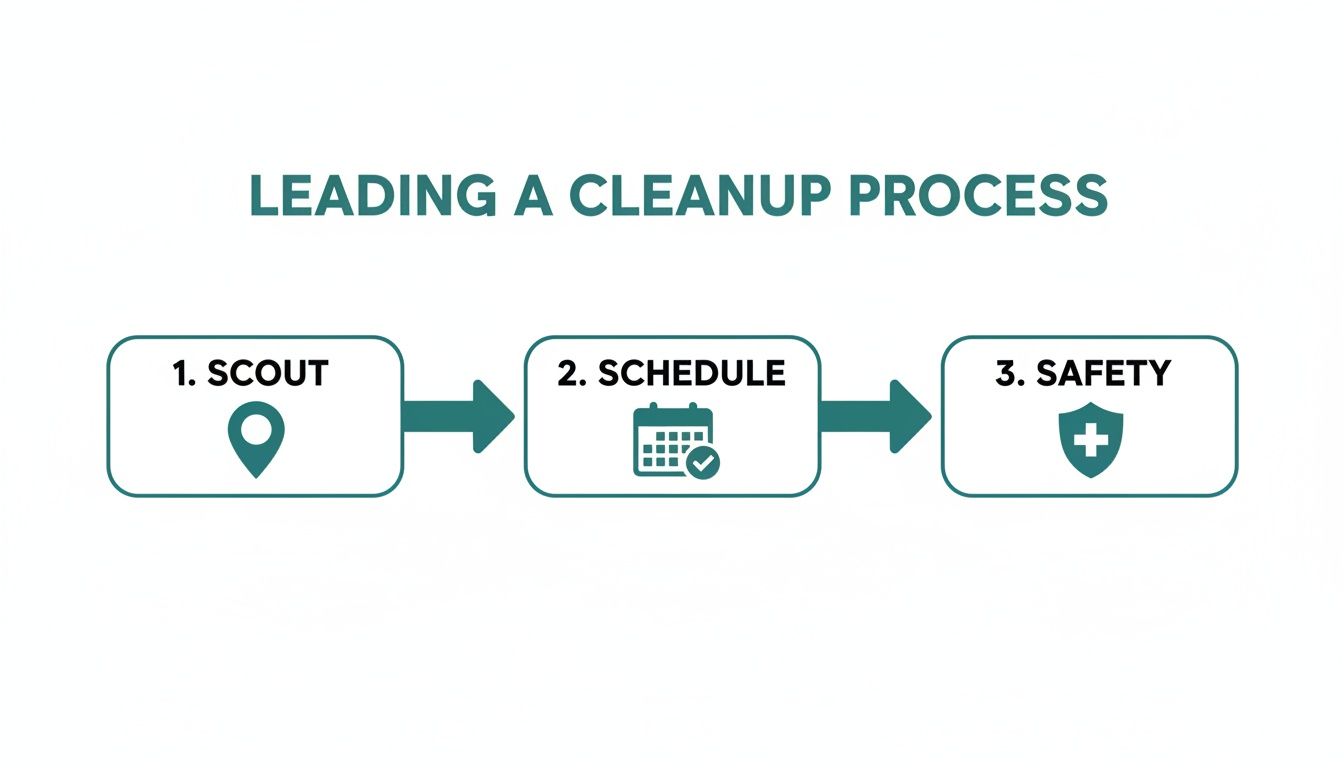
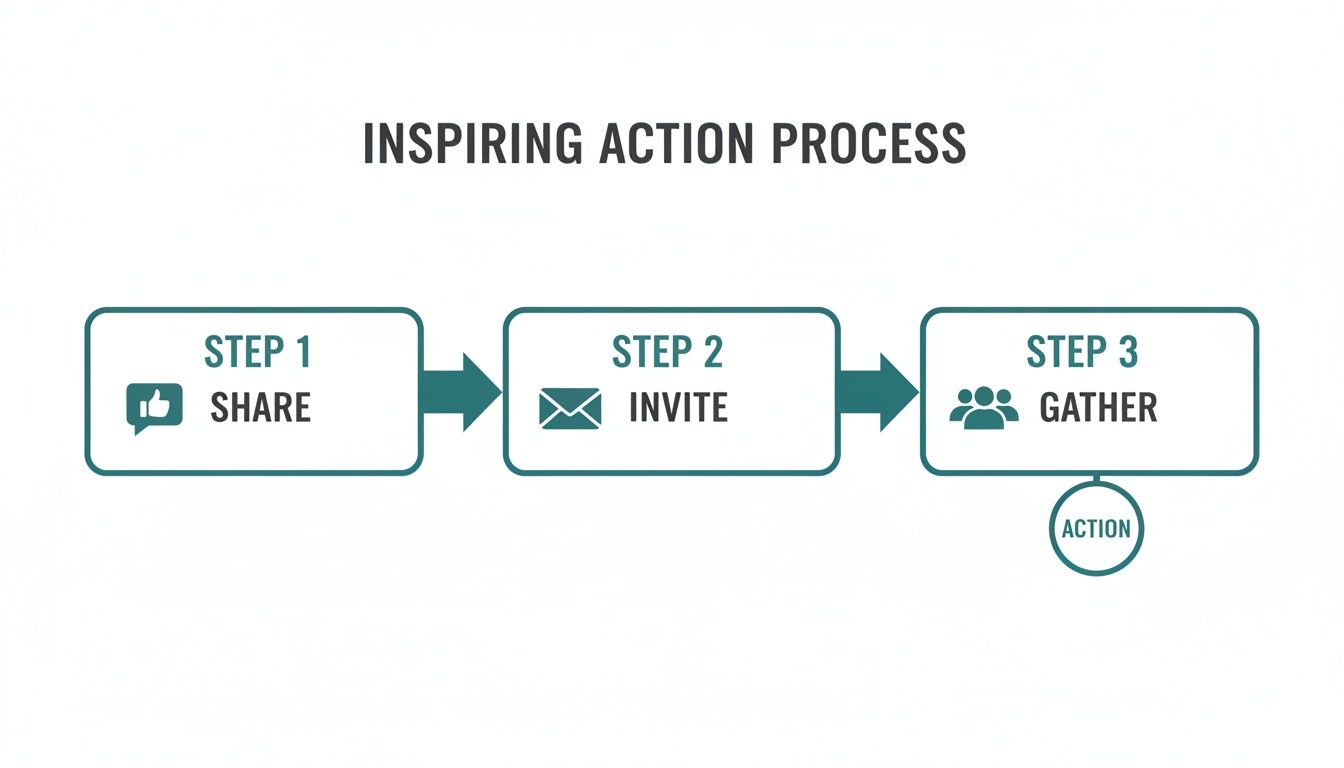
    This process chart shows the basic flow for leading a cleanup, but the real work—the community building—happens between these steps.

    Flowchart illustrating the three steps to lead a cleanup process: scout, schedule, and safety.

    While scouting, scheduling, and safety are the skeleton of an event, the community is its heart.

    We also celebrate milestones. We have badges for attending a certain number of cleanups or for braving a blizzard. It’s a simple, fun way to acknowledge dedication and create a shared identity. It’s like getting a merit badge for being a good human, and it makes people proud to be a part of something.

    • Create a shared identity. We have flags and a theme song. It sounds a little goofy, I know, but it works. It gives people pride and a sense of belonging.
    • Encourage casual hangouts. After a cleanup, a few of us might grab coffee. It’s not an official part of the event, but it’s where real friendships solidify.
    • Tell your group's story. I share photos and celebrate our wins on social media. I want people to see the impact they’re making and the fun they’re having.

    The power of this is immense. Look at beach cleanups. The Surfrider Foundation shattered records last year, removing 365,000 pounds of trash thanks to 40,000 dedicated volunteers nationwide. Those are huge numbers, but they’re driven by the same spirit we have. It all comes back to prioritizing volunteer joy and safety above everything else.

    From Empty Lot to Community Park

    Let me tell you a story. A few years ago, my little group of friends noticed a forgotten, trash-filled empty lot in Englewood. So we cleaned it. And then we cleaned it again. We started dreaming about what it could be.

    So we did something crazy. We pooled our money, we entered a city auction, and we won. We bought that empty lot. Today, it’s no longer a dumping ground; it's on its way to becoming Caterpillar Park, a green space for the whole neighborhood.

    That’s what a dedicated community can do. It starts with a few people who decide to show up, and it grows into a force that can literally reshape a city, block by block. It was never just about the trash. It was about building something that would last.

    Common Questions We Get All The Time

    You've got questions, and I've got answers. After years of running these cleanups every single week, in every kind of Chicago weather imaginable, I've heard them all. It's totally normal to wonder about the little details before you dive into your first volunteer trash pick up. Honestly, the fact you're even asking shows you care, and that’s what matters most.

    Here are some of the things people often ask before they grab a bag and join us for the first time.

    What If the Weather Is Terrible?

    I’ll let you in on a little secret: we kind of love it when the weather gets weird. We go out rain or shine, in blizzards and heatwaves. Why? Because suffering and freezing together actually makes things interesting. It gives the day "flavor." It advances the plot!

    Of course, your safety is my number one priority. I’ll absolutely cancel for truly dangerous conditions like lightning or extreme winds. But a little rain or snow? That just makes us feel that much more accomplished at the end. It's a badge of honor.

    A good organizer will always communicate clearly about any weather plans. My advice? Just dress in layers, bring a great attitude, and be ready for an adventure. You might be surprised by how much fun you have when things get a little crazy.

    Do I Have to Bring My Own Bags and Gloves?

    Nope, you shouldn't have to. Any well-run cleanup will provide the essentials to keep you safe and effective. We always show up with heavy-duty trash bags, puncture-resistant gloves, and plenty of hand sanitizer for everyone.

    Protecting my volunteers is the most important job I have as an organizer, and that starts with having the right gear ready to go. You’re giving me your time; the least I can do is give you the tools. That said, if you have a favorite pair of work gloves or your own trusty trash grabber, by all means, bring them along! Just check the event description, but expect the basics to be covered.

    I'm Coming Alone and I'm a Little Nervous.

    First off, it's incredibly brave to show up to something new by yourself. Be proud of that. Seriously. You are taking a step that most people are too afraid to take. Second, I can almost guarantee you won't be the only one. So many of our most dedicated regulars came alone their very first time.

    My best advice is to just focus on the task at hand. The simple, shared act of working alongside someone is a wonderfully low-pressure way to start a conversation. You can just point to some bizarre piece of trash and ask, "Wow, have you ever seen anything like that before?"

    The shared mission does all the hard work for you. You're all there for the same reason, and that creates an instant connection. Just show up. I promise, the community will find you.

    At our events, I try to create a welcoming vibe from the very start. We have a theme song. We introduce new people. You've already done the hardest part by deciding to come out.

    How Can I Convince My Friends to Join Me?

    Don't frame it as a chore. You have to be like Tom Sawyer painting the fence—make it sound like the coolest, most exclusive club in town. Tell them it’s a weird, fun adventure, a way to explore a new neighborhood you'd never see otherwise and get some fresh air.

    Talk about the deep satisfaction of seeing a tangible result—a clean street that was filthy an hour ago. And definitely highlight the social side: it's a chance to meet other cool, kind people who actually care.

    Be honest about the challenge, too. Say something like, "It might be tough, and the weather might be crazy, but it'll be a story to tell." That sense of shared purpose and adventure is way more compelling than just asking, "Hey, want to pick up garbage with me?"


    Ready to start your own transformation? Join Litter Caterpillars at our next cleanup and see how service, friendship, and a little bravery can change everything. Find our next event and become part of our story at https://www.littercaterpillars.com.

  • Your Guide to Becoming a Picking Up Trash Volunteer

    Your Guide to Becoming a Picking Up Trash Volunteer

    I believe becoming a picking up trash volunteer is more than just a good deed. It's a surprisingly simple act that can completely shift your world.

    You're literally sorting through other people's messes, and in doing so, you start organizing your own life, one discarded bottle cap at a time. It's an adventure. It might start with you holding a single trash bag, but I've seen it lead people to real personal growth and a sense of community they never saw coming.

    How Picking Up Trash Can Transform Your Life

    I never would have guessed that dedicating my weekends to sifting through garbage would be the thing that helped me get my own life together. For years, my apartment was a shipwreck, and my life felt just as cluttered. Every single piece of junk—old food, forgotten trinkets—held a story I couldn't seem to let go of. That weight was an anchor, and moving forward felt like trying to swim with it chained to my ankle.

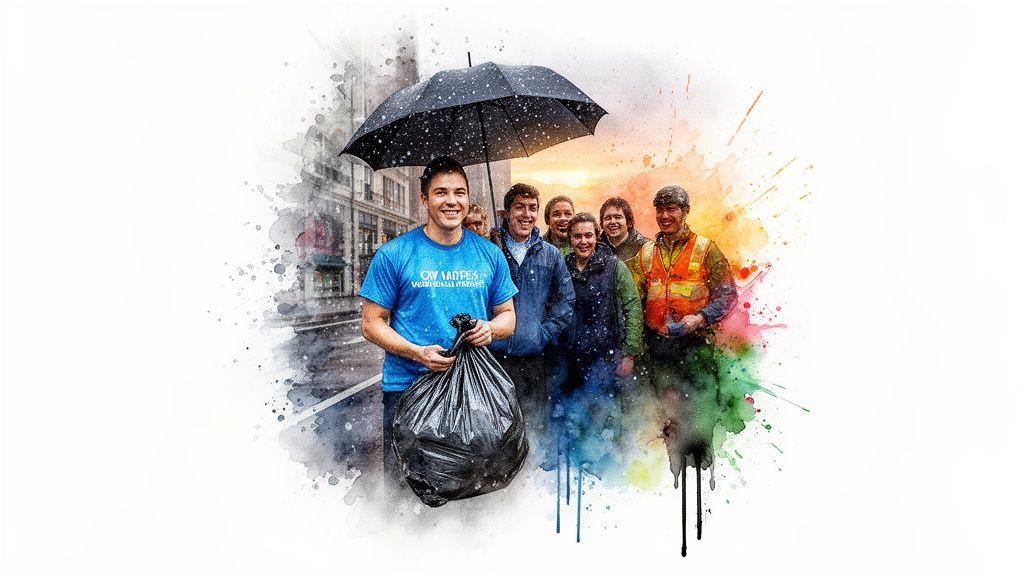
    Smiling diverse volunteers with an umbrella, holding a trash bag during a community cleanup on a street.

    Then, a long, chaotic relationship finally imploded. I knew something had to give. I decided to lean into the things that had always been the hardest for me: cleanliness, consistency, and bravery. And that's how Litter Caterpillars was born—out of my own personal need to create order from chaos.

    The Origin Story in a Hailstorm

    Our very first cleanup was a complete comedy of errors. A tiny crew of three of us showed up, and within minutes, the Chicago sky just ripped open with a wild hailstorm. We were soaked, freezing, huddled under a tree as every single Uber canceled on us, one by one. It should have been a total disaster.

    But it wasn't. It became our origin story.

    In that moment of shared misery, something clicked for me. I realized that cleaning up someone else’s mess was way easier than facing my own. This tiny, miserable adventure bonded us in a way nothing else could. I saw that it was never just about picking up trash; it was about showing up for each other. You can read more about my philosophy on cleaning up trash on our site.

    We discovered that suffering together builds resilience. It forges the most unlikely friendships. It adds a flavor to life, another page to the story. It advances the plot.

    Finding Joy in Simple Service

    Now, three years later, we meet every single week, no matter what. We’ve faced blizzards, negative wind chills, and scorching summer days. And each time we show up, we prove to ourselves that we're capable of more than we think.

    This simple act of service has taught me more than I ever could have imagined:

    • Tangible Impact: You can physically see the difference you're making, block by block. It's an instant reward, a hit of pure satisfaction.
    • Building Resilience: Braving the elements to do something good for your community builds an incredible inner strength. You feel like a low-key superhero.
    • Forging Friendships: There's a special connection, a kind of battlefield camaraderie, that forms when you work alongside others toward a common goal.

    Becoming a picking up trash volunteer isn’t just about the environment. It's about clearing your mind, building your character, and finding your people. I invite you to see the world—and yourself—in a totally new light.

    Finding Your Volunteer Cleanup Crew

    So, you feel that pull. That little spark that says you want to get out there and actually do something. But where do you even start? Where do you find your people? It can feel a bit like you’re trying to find a secret club, but I promise, it's easier than you think to find a community that’s as passionate about picking up trash as you are.

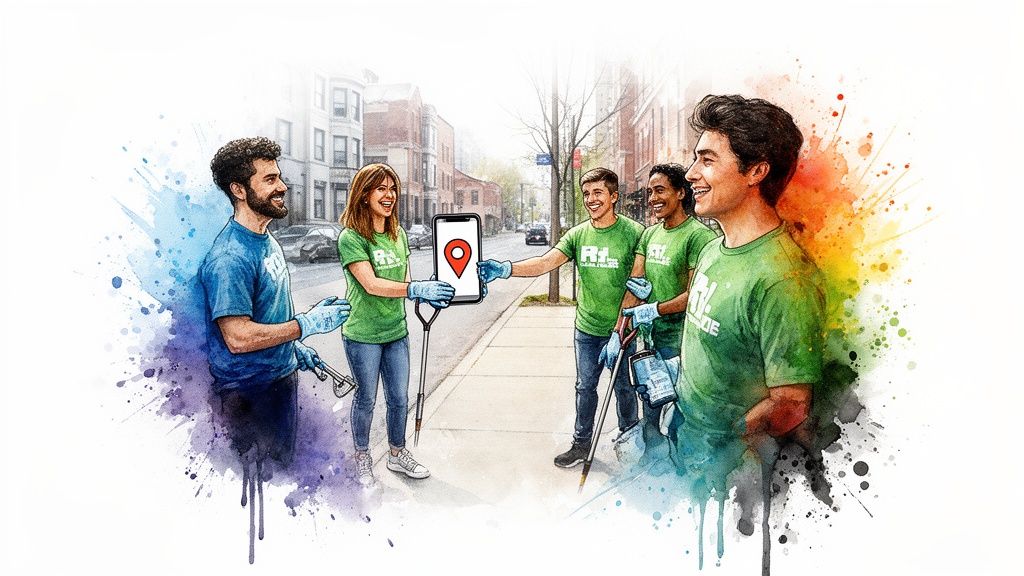
    Diverse volunteers happily cleaning a city street, using an app to locate cleanup areas.

    Think of it like dating—you’ve got to figure out what you’re looking for. Are you after a casual, once-a-month meetup? Or are you ready to join a hardcore crew like mine that shows up every single weekend, no matter what Chicago's weather throws at us? Both exist, and both are awesome.

    Here at Litter Caterpillars, we use platforms like Meetup and Instagram to connect with new faces every week. I see people join our group who are brand new to the city, just looking to make friends and explore neighborhoods they’ve never seen. They find us, show up one Saturday morning, and by noon, they’re laughing with total strangers, feeling like they’ve finally found their tribe.

    How to Find Your People

    Your search can start with a few simple clicks. I want you to just cast a wide net and see what you can catch. These platforms are buzzing with groups just waiting for someone like you to join in.

    • Meetup: This is my personal favorite and how most of our members find us. A quick search for "litter cleanup" or "environmental volunteering" will probably pull up groups right in your neighborhood.
    • Social Media: Instagram and Facebook are goldmines. Search hashtags like #trashcleanup, #plogging, or #[YourCity]volunteers. You’ll discover posts, events, and groups you can join on the spot.
    • Local Organizations: Don’t forget to check the websites for your city’s park district or local environmental non-profits. They’re often hosting or promoting cleanup events.

    A great volunteer group doesn’t just clean up; it builds you up. It should feel like a team where everyone has your back, ensuring you’re safe, valued, and actually having a good time while doing important work.

    Vetting a Group for Safety and Vibe

    Once you find a potential crew, I recommend you do a little homework. Look at their past event photos. Do people look happy? Engaged?

    Most importantly, a good group will make their commitment to volunteer safety crystal clear. At Litter Caterpillars, this is our absolute top priority. I kick off every single event with a safety talk because I want you focused on the fun and the impact, not worrying about hazards.

    Finding a group that matches your energy is everything. I’ve seen people join us who were initially shy and reserved. But after a few cleanups—sharing stories while bagging up litter—they open up and become the heart of our crew. That’s the magic of it.

    For more guidance on finding opportunities, you can explore our tips on environmental volunteering near you. Take that first step; your crew is out there waiting for you.

    The Essential Gear and Safety Checklist

    Showing up is half the battle when you decide to become a picking up trash volunteer. But showing up prepared? That’s what separates a one-time good deed from a legit, safe, and surprisingly fun habit.

    I want you to think of it this way: Batman doesn't just wander out of the Batcave. He has his utility belt. Your gear is your utility belt. It’s what gives you the confidence to face down whatever mess the city throws at you.

    Here at Litter Caterpillars, I’ve seen countless people go from nervously standing on the sidewalk to becoming cleanup pros. That transformation always starts with getting your hands on the right tools. You don't need a ton of stuff, but what you have needs to be right.

    Your Must-Have Cleanup Kit

    First, let's talk about the absolute essentials. I consider these the non-negotiables that keep you safe and make the work a million times easier. I’ve been to enough cleanups to know that the people having the most fun are the ones who feel protected and ready for anything.

    Here’s what I never leave the house without:

    • Sturdy Gloves: This is your first line of defense. Don't even think about those flimsy latex gloves. You need real protection—think gardening or work gloves that can handle sharp edges and mystery goo.
    • A Litter Grabber: This thing is a total game-changer. It saves your back and keeps you a safe distance from whatever you’re picking up. Plus, let's be honest, it’s basically a real-life claw machine where you win every single time.
    • Durable Trash Bags: You need bags that won't give up and split open at the first sign of a pointy stick. Contractor bags are the gold standard, but any heavy-duty bag will work.
    • Closed-Toe Shoes: This is a big one. I'm serious. You’ll be on uneven ground, maybe near broken glass or rusty metal. Protect your feet. Sturdy sneakers or boots are a must.

    To make it even easier, here's a quick rundown of the gear we recommend at Litter Caterpillars, separating the must-haves from the nice-to-haves.

    Essential Cleanup Gear at a Glance

    Item Why You Need It Pro Tip from Me
    Sturdy Gloves Protects your hands from sharp objects, chemicals, and general grossness. We prefer leather-palmed work gloves. They last longer and offer the best protection.
    Litter Grabber Saves your back from endless bending and keeps you from directly touching trash. Look for one with a rubberized grip. It makes grabbing small, slick items way easier.
    Heavy-Duty Bags Prevents rips and spills. A broken bag is a huge mess and morale killer. 30-gallon contractor bags are our go-to. They're tough enough for almost anything.
    Closed-Toe Shoes Shields your feet from glass, nails, and uneven terrain. A top safety rule. Waterproof boots are a godsend on dewy mornings or after it rains. Dry feet = happy volunteer.
    Water Bottle (Optional) Hydration is key, especially during our summer cleanups. You'll be working up a sweat. I suggest you get a reusable bottle with a carabiner clip so you can attach it to your belt or bag.
    Sunscreen/Hat (Optional) Protects you from sunburn. Even on cloudy days, the sun can get you. A wide-brimmed hat is better than a baseball cap for protecting your neck and ears.

    Having the right gear isn't just about safety; it’s about feeling capable and ready to make a real difference without worrying about the small stuff.

    Safety Is the Main Event

    Look, picking up trash in a city like Chicago has its own set of rules. We've cleaned along busy highways, in overgrown lots, and under sketchy bridges. In every single situation, your safety isn't just a talking point—it's everything. Your well-being is always more important than a stray bottle cap.

    I remember we were clearing a dense patch of weeds near an off-ramp, and someone found a little baggie with some weird stuff in it. They didn't touch it. They remembered my rule: when in doubt, leave it out. We marked the spot and moved on. That's the mindset. You're here to pick up litter, not to become a hazmat expert.

    Your most important tool is your awareness. Always pay attention to traffic. Watch where you step. Look at what you’re about to pick up. A safe volunteer is an effective volunteer.

    Always bring water, especially on those hot days that sneak up on you. Wear bright clothes so cars and your teammates can see you. We also insist on working in pairs or groups—it's safer, and honestly, way more fun. You’re part of a crew, never out there alone.

    For things that need special handling, you have to know what to do. My guide on City of Chicago hazardous waste disposal breaks down what to leave for the professionals. Being a great volunteer means knowing your limits. With the right gear and a safety-first attitude, you’re ready to go.

    How to Organize Your Own Neighborhood Cleanup

    See that little spark you're feeling? That voice in your head saying, "I could do this"? That's exactly how I got started with Litter Caterpillars. Leading the charge is an incredible feeling. Putting together your own cleanup multiplies your impact in ways you can’t even imagine yet. It’s like planting a single seed and watching a whole garden bloom.

    This is your roadmap. It doesn't matter if you're wrangling three of your best friends or thirty neighbors you've never met. The principles are the same, and I'm going to share everything I learned turning a personal mission into a city-wide movement.

    Laying the Groundwork for Success

    Before you send a single text or make a social media post, you need a plan. A great cleanup isn't just about showing up with a trash bag. It's about making it easy and inspiring for others to show up with you. I want you to think of yourself as a party host—your job is to create the right vibe and handle the logistics so everyone else can have a good, meaningful time.

    One of my first big lessons was about timing. I quickly learned that scheduling on weekend mornings, especially Saturdays, taps into a unique energy. The people who show up are givers, ready to kick off their weekend with purpose.

    Here’s where you should start:

    • Scout Your Location: Walk around your neighborhood with fresh eyes. Is there a park that needs some love? A specific street that’s always a mess? Pick a spot where your crew's efforts will make a huge, visible difference.
    • Set a Date and Time: Choose a weekend morning a few weeks out. This gives people enough time to plan and builds a little anticipation. A two-hour window is perfect—long enough to make an impact, but short enough that it doesn't feel like a huge commitment.
    • Define a Clear Goal: Is the mission to clear one block? A whole park? Having a specific, achievable goal keeps everyone focused and motivated. "Let's clean the entire city" is daunting. "Let's make this playground beautiful again" is inspiring.

    You’re not just cleaning a street; you’re building a temporary community centered on a shared goal. Your planning is the foundation that makes the whole experience feel powerful and worthwhile for every single picking up trash volunteer.

    Building Your Crew and Gathering Supplies

    Once your plan is in place, it’s time to rally the troops. I know this part can feel intimidating, but people genuinely want to help. You just have to give them a clear and easy way to say "yes."

    I suggest starting with your inner circle—friends, family, coworkers. A simple, personal text or call is incredibly effective. From there, you can branch out. Post in neighborhood Facebook groups or on Nextdoor. Keep the message simple and positive: "Join me for a couple of hours to make our neighborhood shine!"

    As you recruit, you also need to think about supplies. You don't need a massive budget. In fact, you can often get everything you need for free. Before you spend a dime, reach out to local hardware stores or even cafes. You’d be surprised how many businesses are willing to donate a box of trash bags or a case of water to support a local effort.

    For any new organizer, I believe it's crucial to have the essential gear on hand so everyone can participate safely and effectively.

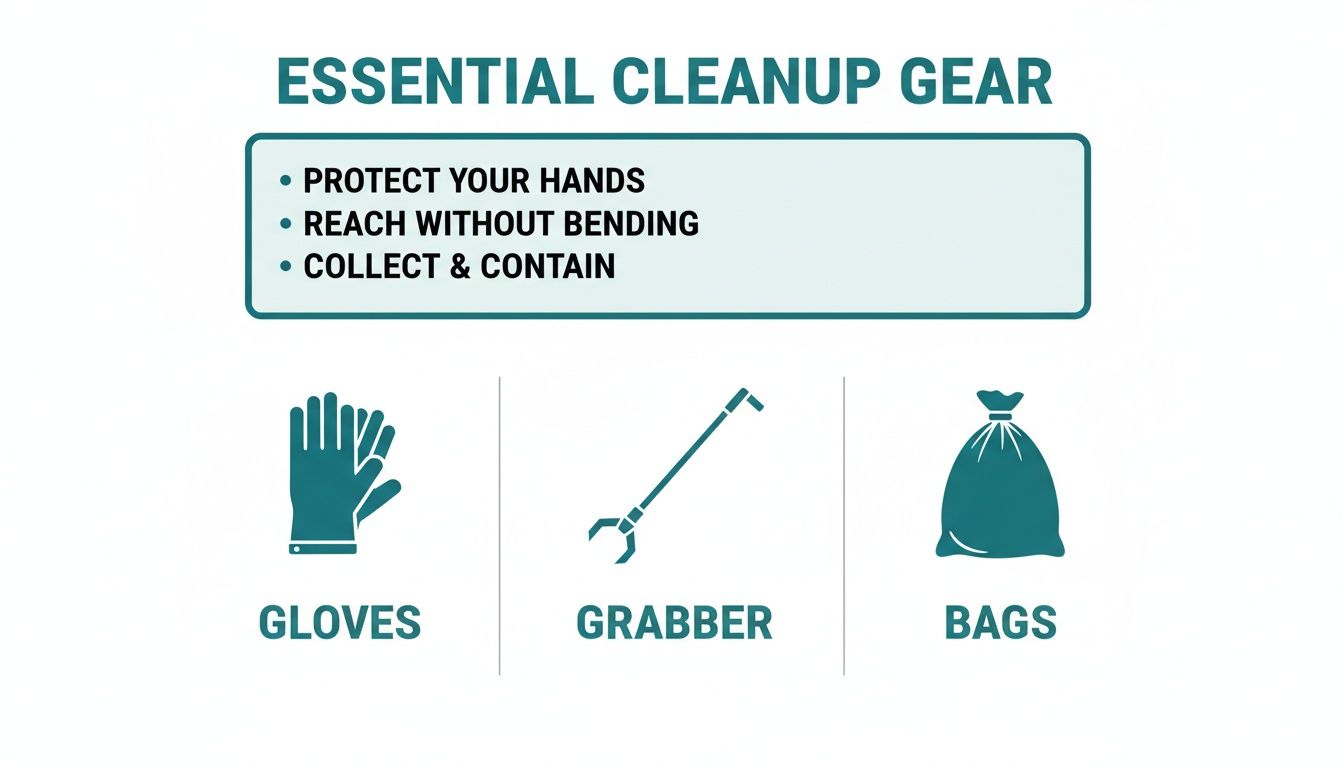
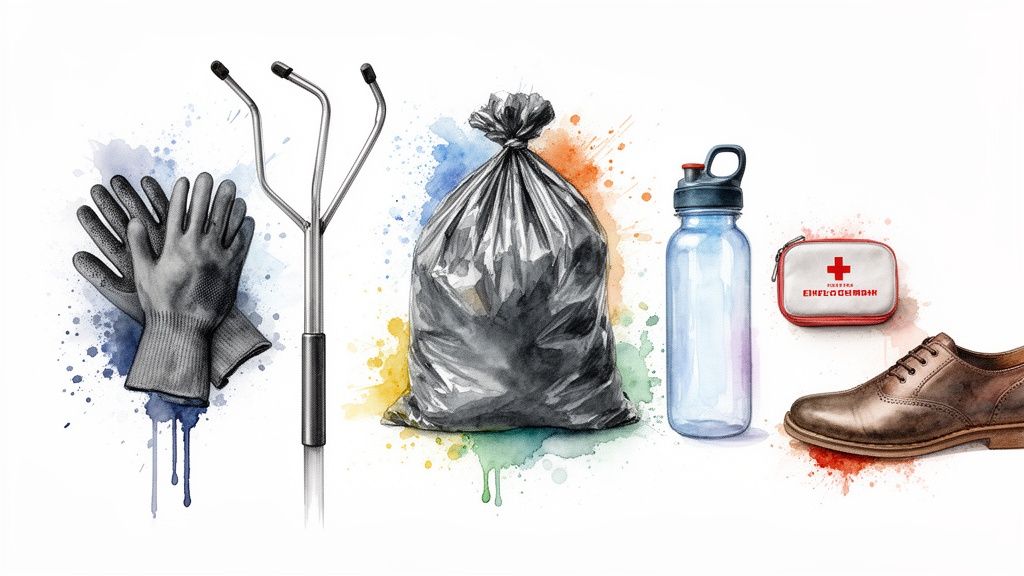
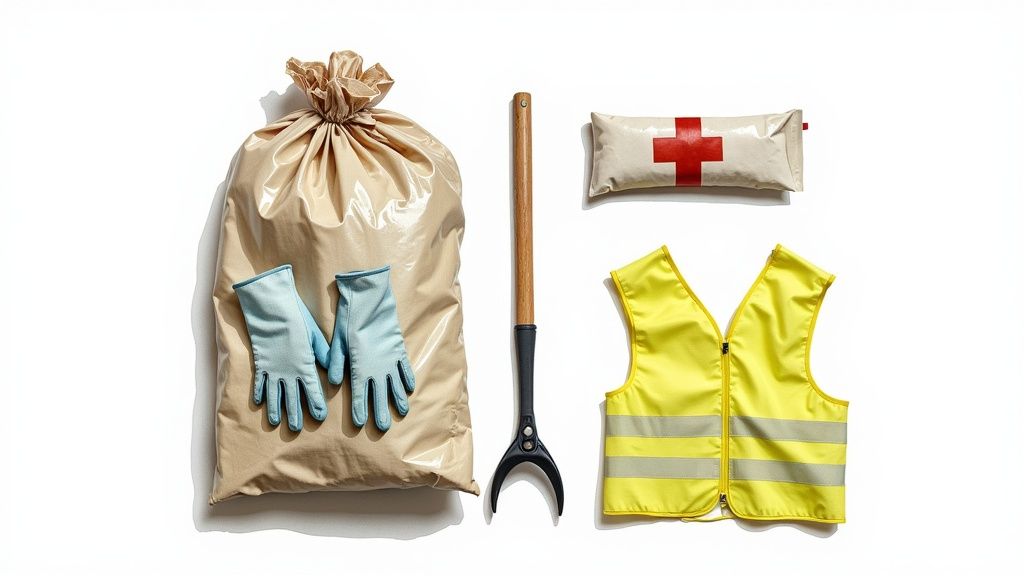
    Essential cleanup gear: gloves, grabber tool, and trash bags for safe and efficient waste collection.

    This picture nails the three non-negotiables: tough gloves, a reliable grabber, and strong bags.

    The final piece of the puzzle is figuring out trash disposal. For a small group, you might be able to use your own residential bins. For a bigger haul, a quick call to your city’s sanitation department is all it takes. Many cities offer special pickups for volunteer cleanups if you schedule it in advance.

    Organizing your first event might feel like a huge leap, but it really just starts with one small step. I remember when my little crew from Litter Caterpillars won a vacant lot at a city auction. It started as just another cleanup spot, but it became a dream. We’re now turning it into a community park.

    That's what's possible when you decide to lead.

    Your Local Effort Is a Global Movement

    I get it. Sometimes, when I'm out on a quiet Chicago street with just a grabber and a bag, it's easy to feel small. You look at the sheer scale of the mess and think, "Am I even making a dent?" It feels like you’re just one person trying to bail out the ocean with a teacup.

    But then I remember something incredible. You aren't just one person. When you decide to start picking up trash, you're stepping into a current, joining a massive river of millions of people all over the world who are doing the exact same thing. You’re part of a global team.

    That little piece of plastic you just snagged? Someone in Tokyo and someone in Rio de Janeiro just did the same thing. That feeling of satisfaction you get from seeing a clean patch of grass? That feeling is being shared right now, across continents.

    The Power of Millions of Teacups

    It's so easy to dismiss our own actions, but when millions of us act together, the numbers become staggering. They paint a picture of what's possible when we all just decide to show up.

    Just look at the International Coastal Cleanup (ICC), an event that shatters records year after year. In one massive push, over 486,000 volunteers worldwide collected more than 7.4 million pounds of trash. That’s not just a statistic; that’s nearly half a million stories of people, just like you, showing up.

    Your single act of service isn't a drop in the ocean. It's the drop that starts the ripple, which joins another ripple, until it becomes a wave of change felt across the globe.

    Think about that for a second. That’s the collective power of individuals who refused to feel small. Among that haul, they scooped up over 1.4 million food wrappers alone, turning ordinary citizens into debris detectives who help scientists and policymakers understand the true scale of our plastic problem.

    You Are Part of the Solution

    Every time you fill a bag, you're adding to this global momentum. You're not just cleaning a single block in your city; you're casting a vote for a cleaner world. You are a crucial part of a worldwide wave of positive change.

    So, the next time you're out there, feeling like your effort is just a tiny gesture, I want you to remember those numbers. Remember the hundreds of thousands of others standing with you in spirit.

    • You're joining a movement that spans borders and languages.
    • You're providing real-world data that drives policy change.
    • You're inspiring others in your own community to join in, even if you don't realize it.

    Your work matters far beyond what you can see at your feet. It’s proof that no act of kindness is too small when we all do it together. You are the movement.

    Your Cleanup Questions Answered

    Jumping into your first trash pickup can feel like the first day of school. You're excited, maybe a little nervous, and you definitely have questions. I've heard them all at our Litter Caterpillars meetups, and I want to tackle the ones that pop up most often.

    Think of this as our little chat before the main event. It's the part where you realize everyone's here for the same reason—to do a little good and meet some great people along the way.

    What If I Can Only Come Sometimes?

    That's totally fine! Life is messy and unpredictable. I believe your volunteer energy is a precious thing, and you should use it when you feel inspired, not because you feel obligated.

    The best groups, including mine, are built on a "come when you can" philosophy. Just showing up once makes a real difference. This is about building a positive, sustainable habit, not adding another chore to your to-do list.

    Your presence is a gift, never an expectation. Whether you join us once a year or every single Saturday, you are a valued part of the crew from the moment you arrive.

    Do I Need to Bring My Own Gear?

    Good question. It really depends on the group. Many established crews like Litter Caterpillars provide all the essentials—we’ve got a stash of grabbers, gloves, and bags ready for you.

    Still, it's always smart to check the event description or shoot the organizer a quick message beforehand. If you get hooked and plan on making this a regular thing, I think investing in your own comfy gloves or a lightweight grabber is a great move. The one thing you should always bring is a pair of sturdy, closed-toe shoes. Your feet will thank you.

    How Safe Is It, Really?

    Your safety is the absolute number one priority. Period. A responsible volunteer group will always start with clear safety guidelines. It’s not about being fearful; it’s about being smart so you can focus on the rewarding work.

    I kick off every single one of our events with a quick safety briefing. This always covers a few key rules:

    • Know what to avoid: Never, ever touch sharps, broken glass, or anything that looks like hazardous waste.
    • Stay aware of your surroundings: Keep an eye on traffic and watch where you step. It's easy to get in the zone.
    • Work with your crew: Sticking together is way safer and honestly, a lot more fun.

    Follow these simple rules, and you'll have an incredibly safe and fulfilling experience.

    What Happens to All the Trash?

    Ah, the logistics puzzle! For smaller cleanups, we might just use our personal waste bins. For our bigger events, I coordinate directly with the city’s sanitation department for a special pickup. We always have a solid disposal plan before the event even starts, so all you have to do is focus on cleaning.


    Ready to turn that inspiration into action? Join Litter Caterpillars at our next cleanup and see for yourself how a simple act of service can build friendships and transform our city. Find our next event and become part of our story at https://www.littercaterpillars.com.

  • Environmental Stewardship Programs: How to Transform Your Community Today

    Environmental Stewardship Programs: How to Transform Your Community Today

    You might think environmental stewardship programs are just about picking up trash. But you’d be missing the best part. They’re really about personal transformation and community building. I’m telling you, these programs take the simple act of caring for your neighborhood and turn it into a journey. It’s a journey that can change your whole outlook, introduce you to lifelong friends, and build a stronger, tougher you.

    The Day I Declared War On My Own Clutter

    Let me tell you a story. For the longest time, my apartment was a perfect reflection of my life—cluttered, chaotic, completely weighed down by the past. Every single thing held a story I couldn't seem to let go of. Four-year-old jam in the back of the fridge. Snacks from a health kick I’d already abandoned. Each item felt like it weighed 500 pounds, a heavy anchor holding me in place.

    Things finally hit a breaking point after a really tough breakup. I knew I needed a radical change. I decided I was going to build a life surrounded by givers, not takers. It was time to finally stare down the things I was most afraid of: consistency, cleanliness, and bravery.

    From Inner Chaos to Outer Action

    That’s when it hit me. The battle wasn't just inside my own four walls; it was happening right outside my front door. All over my neighborhood. The same feelings of neglect and being completely overwhelmed were visible on the streets, in the overflowing bins and forgotten lots. This realization sparked an idea, something that would grow into something much bigger than I ever imagined: Litter Caterpillars.

    It all started with a simple truth I stumbled upon by accident.

    Cleaning up other people's messes is way easier than cleaning up your own. It creates a strange, new kind of fun, and facing a little adversity together—like a freak hailstorm—just makes the story that much better.

    This pivot, this jump from an internal struggle to external action, changed everything for me. My focus shifted away from my own clutter and onto a shared mission. It became less about what was wrong with me and more about what we could all make right, together.

    The Unexpected Start of a Movement

    Our very first cleanup was just three of us. We were ready to go, but Chicago, of course, had other plans. Out of nowhere, a bizarre spring hailstorm erupted. It forced us to huddle under a tree, shivering, as a string of Ubers canceled on us one by one. But in that moment of shared misery, something clicked. We weren't just picking up trash. We were building resilience. Forging a bond.

    That day taught me that environmental stewardship isn't a chore. It’s a transformative act that can literally rewire your brain. It proves that you can show up, face down discomfort, and create a visible, positive impact with your own two hands. This is the foundation of all effective environmental stewardship programs: they start with a simple decision to act, turning personal frustration into collective power and creating friendships in the most unexpected places.

    What Are Environmental Stewardship Programs, Really?

    Forget the dry, academic definitions. Let's get real.

    Imagine our planet is a huge, beautiful, and kinda neglected community garden. An environmental stewardship program is just you deciding to roll up your sleeves and start weeding your patch. It’s that simple, powerful act of taking responsibility for the world right outside your door.

    Some of these programs are massive, like global initiatives steering billions of dollars to protect entire ecosystems. Others? As pure and simple as three friends meeting up on a Saturday morning to pick up trash on their street. There's no single "right" way to do it.

    From Global Giants to Neighborhood Heroes

    The scale can be wild. On one end, you have behemoths like the World Bank's Global Program on Sustainability. In fiscal year 2023 alone, they influenced over $4.2 billion in investments for sustainable land use, expanding their work to 26 countries. This is stewardship at the highest level—shaping national policies, directing huge sums of money.

    But here’s the secret: that global impact starts with the exact same spark we felt huddled under a tree in a hailstorm. It's the decision to act. You don’t need a billion-dollar budget. You just need to care enough to show up.

    The journey from feeling overwhelmed by a mess to taking real action is a powerful one. It’s a simple but profound path from chaos to growth that lies at the very heart of stewardship. I’ve lived it.

    Hierarchy diagram showing personal transformation: Clutter leads to Action, which leads to Growth.

    This process—moving from clutter to action and finally to growth—is exactly what stewardship is all about. It changes our environment. And it changes us, too.

    The Different Flavors of Stewardship

    Think of these programs like different kinds of teams. They all have their own playbook and goals, but we're all playing the same game: caring for our shared home.

    To give you a better sense of the landscape, here's a quick look at the different ways people like you and me organize to care for our environment, from global organizations to neighborhood groups.

    Program Type Who Runs It Example Best For
    Government-Led City, state, or national environmental agencies. A city parks department's "Adopt-a-Park" program. Structured, large-scale projects with official backing.
    Corporate-Sponsored Companies, as part of their CSR (Corporate Social Responsibility). An annual company-wide volunteer day at a local beach. Mobilizing lots of people for a single, high-impact event.
    Nonprofit/NGO Mission-driven 501(c)(3) organizations. The Ocean Conservancy or The Nature Conservancy. Focused, long-term campaigns on specific issues (e.g., ocean plastic).
    Grassroots Community Passionate local volunteers (like us!). Litter Caterpillars, a neighborhood garden club. Hyper-local, flexible action built on community passion.

    Each model has its own strengths, and there’s a place for everyone.

    You might start by joining a city-wide cleanup and then realize you want to create something more personal, more consistent, right in your own neighborhood. That’s the beauty of it.

    Stewardship isn't an academic term—it’s a choice you make. A community you build. A power you claim for yourself.

    The Unexpected Rewards of Showing Up

    When you first sign up for an environmental stewardship program, you probably think you know what you're getting into. You show up. You pick up some bottles and wrappers. You go home. But let me tell you, you walk away with so much more than a cleaner park. You walk away changed.

    Three smiling young people collect plastic bottles for recycling under a tree in a watercolor style.

    It’s about turning a chore into a shared mission. It's like the 'Tom Sawyer effect.' Remember that? When Tom was stuck painting a fence, he didn't complain. No, he made it seem like the most exciting, exclusive activity in the world. Pretty soon his friends were paying him for the privilege of helping out.

    That's the magic. That's what happens when you turn individual work into a collective goal. Suddenly, sorting recycling or clearing an overgrown lot isn't a burden; it's an adventure.

    From Strangers to a Tight-Knit Crew

    I’ve seen the most incredible friendships forged in the middle of a cleanup. You're working side-by-side, united by a simple, tangible purpose. The usual social barriers? They just melt away.

    You bond over the weirdest things you find. You celebrate filling another bag. And you get to know people on a level that just doesn't happen at a bar or a networking event. This shared effort creates a unique kind of connection, built on action rather than just words.

    It’s in facing a little adversity—a sudden downpour, a scorching summer day—that the real camaraderie is built. Those are the moments that become stories, the shared experiences that turn a group of volunteers into a team.

    You build a unique kind of toughness together. When you’ve survived a surprise Chicago blizzard just to clean a small patch of land, you know you can count on the people shivering next to you.

    More Than Just a Clean Street

    The benefits go far deeper than just community bonds. There's a powerful mental shift that happens when you're outside, working with your hands. Science tells us that spending time in nature reduces stress and improves mood, and I see it happen in real-time every single weekend.

    The mix of sunlight, fresh air, and physical activity is a potent remedy for feeling stuck or powerless. You’re not just passively consuming nature; you are actively healing it.

    Here’s what I’ve personally noticed:

    • A Shift from Powerless to Powerful: Seeing a street go from trash-strewn to pristine in just a couple of hours is incredibly satisfying. It’s tangible proof that your actions matter. It fights those feelings of helplessness about bigger environmental issues.
    • A Boost in Confidence: Consistently showing up and doing something hard builds self-respect. You prove to yourself that you are someone who follows through, someone who contributes.
    • A Deeper Connection to Your City: When you’ve cleaned a place, you feel a sense of ownership and pride. It's no longer just a random block; it’s your block.

    This is the real reward of getting involved in environmental stewardship programs. You might start by exploring the best ways for cleaning up trash in your community, but you end up discovering a new version of yourself—stronger, more connected, and filled with a quiet pride that can only come from making a real difference.

    You don’t just clean a park. You reclaim a piece of your world and a piece of yourself.

    How We Built a Movement From Nothing

    Let me tell you about one of our proudest moments—a story that gets right to the heart of who we are. In Englewood, there was this abandoned lot. Overflowing with trash. It was a total eyesore, the kind of place you’d cross the street to avoid. But we didn't see neglect. We saw potential.

    After months of sheer persistence—I’m talking endless calls, meetings, paperwork—we won that lot at a city auction. It was a massive win for us. Now, we're in the middle of turning that forgotten space into 'Caterpillar Park,' a green oasis built by and for the community.

    Watercolor illustration of three people planting a tree in a park, symbolizing environmental stewardship.

    This isn't just one story; it's a whole collection of them, full of highs and lows. It’s the story of how we built a tough, impactful movement from absolutely nothing.

    Living Our Values Out Loud

    Every decision we make, every cleanup we host, is guided by a few core values. These aren't just pretty words on a website. They’re the compass that keeps us pointed in the right direction, especially when things get hard.

    Our values are simple but they're everything to me:

    • Bravery: Showing up when it’s cold, wet, or just plain miserable. It’s cleaning a highway during a bike race or tackling a lot that’s been ignored for decades.
    • Kindness: Always looking out for each other. Our volunteer-first philosophy means we protect your energy and well-being above all else. That’s our golden rule.
    • Unity: Bringing people together from every corner of the city. We know the mission is stronger when everyone has a place in it.

    These principles shape our environmental stewardship programs and build a culture where people don't just volunteer—they belong. I've learned that building a movement is less about logistics and more about creating a shared identity rooted in real, actionable values.

    The Power of Identity and Pride

    Ever notice how sports teams have flags, songs, and mascots? It’s all about building pride. A sense of shared purpose. We thought, why can't service have that same energy? Kind people deserve to feel powerful, too.

    So, we gave ourselves an identity. We fly our own flags proudly at every single event. We even have an official theme song that captures our spirit of joyful grit.

    Pride is a crucial, natural emotion. When you give people a banner to rally under and a song to sing, you turn a simple act of service into a powerful statement. You make it feel like you're part of something much bigger than yourself.

    We also created badges for our volunteers. These aren't just little trinkets; they're symbols of commitment, marking milestones. They celebrate the consistency and bravery it takes to show up week after week, rain or shine, across all 50 Chicago wards.

    Creating this strong identity was a turning point. It transformed our cleanups from quiet acts of service into vibrant, inspiring events that pull people in. It made volunteering feel less like a duty and more like joining a team you’re damn proud of.

    A Blueprint for Your Own Movement

    This story isn't just about us. I'm sharing it because it's a blueprint. It's proof that you don't need a huge budget or some formal organization to start making a real difference.

    You just need a clear 'why' and the guts to start. You have to believe in the power of showing up, even when you're the only one there. Our journey, my journey, from a few friends shivering under a tree to a city-wide movement was built one small, consistent step at a time.

    It started with seeing potential where others only saw trash. It grew by creating a culture of bravery and kindness. And it became a movement by giving people a reason to feel proud of the work they were doing. This is how you build something that not only cleans a city but also changes lives—including your own.

    Your Guide to Starting a Stewardship Movement

    Got that fire in your belly? You don’t need a fancy nonprofit status or a truckload of cash to actually change things. All you need is a couple of friends and a rock-solid answer to one simple question: Why am I doing this?

    This is your no-fluff guide to getting your own environmental stewardship thing off the ground. Forget the complicated fundraising plans for now. You start by just doing the work.

    Getting Into the Arena

    First things first: pick your battlefield. Is it that local park where the trash cans are always puking out garbage? That forgotten, weed-choked lot on your block? Pick a spot that means something to you, a place where winning a small battle will feel like winning a war.

    Next, get your gear. Seriously. All you need to start are some tough trash bags and a good pair of gloves for everybody. Don't get hung up on the details. The whole point is to tear down the excuses and just begin.

    Then, pick a time and carve it in stone. We do our cleanups on weekend mornings. That's not an accident. It's a filter. It selects for a certain type of person: the giver. These are the folks who will pick service over sleeping in, and that kind of heart is the foundation you build a real community on.

    Finding Your People

    Getting the right kind of volunteers is everything. You're not just looking for warm bodies to fill bags; you’re building an army. You want the people who show up for the mission, not just a selfie for their Instagram.

    Here’s how I built our crew of givers:

    • Be a Rock: Show up. Same time, same place, every single week. When people see you out there, sweating and committed, they start to believe. Then they join.
    • Keep It Simple: Focus on one thing: the work. Don't bury your first events under a pile of sign-up sheets or long, boring speeches. Just say hi, hand them a bag, and get to it.
    • Make It Fun: Your energy sets the tone. Make it a good time, high-five over a particularly gross find, and let people connect. Friendships will bloom in the dirt.

    Our entire volunteer-first philosophy is built on this. We guard your energy and your time because we know that’s the most precious thing we have. If you need some more ideas, check out our guide on how to organize an effective volunteer trash pickup. It's packed with simple, straight-to-the-point tips.

    Get ready for a hard truth: this won't always be easy. Some days, only two people will show up. Some days, it'll pour rain. You have to be relentless. This isn't about one heroic cleanup; it's about building something that doesn't quit.

    The Bigger Picture

    It’s easy to feel defeated. I get it. You look at the global picture and it's bleak. In 2022, the world lost 5.8 million hectares of forest. That's an area bigger than Croatia, and farming is behind almost 90% of it. We've got 41 out of 42 major climate indicators flashing red, nowhere near our goals. It can feel like we’re losing.

    But that’s exactly why what you’re doing matters so damn much.

    Every bag of trash you pull out of a ditch is an act of defiance. It’s a middle finger to apathy. It's in these moments—getting your hands dirty, facing a little bit of discomfort together—that we build the grit and the bond we need to even think about bigger change. Your small movement is a shockwave. It proves that change starts right where you stand.

    Finding Your People and Growing Your Impact

    A movement is just a good idea until people start showing up. But where do you find them? And maybe more importantly, how do you convince them to stick around? This is the human side of environmental stewardship programs, and if I'm being honest, it's the only part that really matters. You can have the best plan in the world, but without your people, you’re just one person picking up trash by yourself.

    Think of it like tending a garden. You're not just yanking out weeds; you're cultivating a whole ecosystem. We use simple stuff like Meetup and Instagram to spread the word. The secret isn't some slick marketing campaign—it's showing the real, unfiltered grit and joy of what we do. People are starving for authenticity. They want to see the smiling, muddy faces and know they’re joining something genuine.

    Building a Crew That Lasts

    Getting people to show up once is just the first step. Getting them to come back is where you build real power. Why do people stay? It's not for the free trash bags, I can tell you that. They stay because they feel like they belong.

    This is where communication becomes our secret weapon. We run open group chats where we make plans, share stupid jokes, and build friendships that go way beyond cleanup day. It turns a weekend chore into a real part of your social life. That constant, easy connection is the glue holding our community together. If you're stuck on this, our team put together a no-nonsense guide on how to find volunteers for your cleanup that cuts right to the chase.

    Measuring What Actually Matters

    So, how do you know if you're winning? Forget just counting the pounds of trash you collect. That’s a decent start, but it misses the entire point. The real signs of a healthy movement are human.

    We measure our impact by the number of volunteers who come back again and again. I measure it by the laughter I hear during a tough cleanup. We measure it in the visible change of a neighborhood, week after week, because a dedicated crew just refuses to give up on it.

    This is where the real magic happens. A recent UN report on the Sustainable Development Goals pointed out something huge: while global progress is stalling, small, focused stewardship programs driven by local passion are making incredible waves. Public trust in ethical stewardship is on the rise, hitting 45%, because people are seeing the results with their own eyes. When you transform your own block, it's a small-scale version of how bigger programs change policy on a national level. You can read the full 2023 SDG report from UN DESA to see how the dots connect.

    The goal isn't just to clean a street. It's to build a culture so positive and welcoming that people don’t just want to join—they feel like they've finally found their people. That's how you build something that lasts.

    Your Questions Answered

    Got questions? Good. It means you’re really thinking about this. About taking that first brave step. Let's get into some of the common worries I hear from people who are right where you are now, ready to join or start one of these environmental stewardship programs.

    What If I Am Not Physically Fit Enough For a Cleanup?

    This is a totally fair question, but let me put your mind at ease. Any program worth its salt is inclusive. At Litter Caterpillars, our first and most important rule is always: "go at your own pace."

    You don’t have to be a superhero. Seriously. There are so many ways you can be part of the mission. Some of our volunteers focus on a small, manageable patch. Others help by organizing supplies, taking incredible photos, or just being there to cheer everyone on. The real magic is in the collective effort, not individual heroics. Your presence alone is a huge contribution.

    How Do I Find a Good Group Near Me?

    Start by thinking local. Platforms like Meetup.com are a great place to look—that’s how a ton of our own volunteers find us. You can also search social media for hashtags like #[YourCity]Cleanup or #[YourNeighborhood]Volunteers.

    Keep an eye out for a few signs of a healthy group:

    • They show up: A consistent schedule shows they’re serious, not just a flash in the pan.
    • They communicate: It should be easy for you to find out when and where to be.
    • They're volunteer-first: The focus is on taking care of their people, not just fundraising or getting good press.

    Don't be afraid to try out a few different crews. You'll know when you find the right one.

    The right group won't feel like an obligation; it will feel like coming home. You'll know it when you find it because the focus will be on the shared mission and the friendships you build along the way.

    I Want to Start a Group, But I'm Worried About Safety.

    That concern is not just valid—it's the most important thing to get right. Safety is, and always will be, priority number one for me. No exceptions.

    For your first few events, pick a public spot with plenty of visibility. Always have the essential gear on hand: good gloves, bright safety vests, and a solid first-aid kit. Before every single cleanup, gather everyone for a quick safety huddle. Remind people to watch for traffic, steer clear of hazardous materials, and stick together. The goal is to build a culture where everyone looks out for everyone else.

    What’s the Most Important Thing for Making a New Program Successful?

    Consistency. Hands down, it’s consistency.

    It's not about that one massive cleanup that gets all the attention. It’s about you showing up, week after week, even when it’s raining, even when it’s cold, and even when only a few people make it out. That's what builds trust in the community. That's what creates real momentum. Most importantly, it forges a habit of service in you and your core team. When people know you’ll be there, rain or shine, they will eventually join you.


    Ready to find your people and start making a difference? Join Litter Caterpillars at our next cleanup. We’re out there every weekend, building friendships, and making Chicago a little brighter, one piece of trash at a time. Find our next event at https://www.littercaterpillars.com.

  • How to Start a Volunteer Trash Pickup in Your Community

    How to Start a Volunteer Trash Pickup in Your Community

    You hear “volunteer trash pickup,” and I bet you’re not picturing the highlight of your weekend. But stick with me. This is way more than tidying up a street corner. I’m talking about building a real community, finding your own grit, and taking direct, powerful action for the planet. It’s about you showing up for your neighborhood and, in a strange way, showing up for yourself.

    This is the real story behind what I do—the incredible personal shift that happens when a simple act of service turns into something that changes you.

    The Unexpected Joy of Picking Up Trash

    Three diverse volunteers smiling and happily picking up trash, putting it into black garbage bags.

    I get it. A "volunteer trash pickup" doesn't exactly scream 'fun times.' But what if I told you it could be one of the most fulfilling things you’ll ever do?

    I started Litter Caterpillars when my own life felt like a total mess. And I stumbled upon something wild: cleaning up someone else's discarded junk actually helped me sort through my own. Every bottle cap I grabbed, every plastic bag I stuffed into a sack, it felt like untangling a knot inside of me. It was like a strange, unexpected therapy session with nothing but a sidewalk and a garbage bag.

    More Than Just Cleaning Streets

    This isn't just about making your block look better, though that’s a fantastic perk. It’s about forging real connections. Building resilience. It's you and a few other people, feeling that raw, unfiltered energy of working together for a common cause.

    I’ve learned nothing builds a friendship faster than going through a little bit of hell together. Imagine this: I'm standing with two other people under a flimsy tree, shivering, as a freak Chicago hailstorm turns our very first cleanup into a chaotic blizzard. Every Uber driver cancels on us. You're soaked, you're freezing… but you're also laughing your head off.

    That moment under the tree, I realized something profound. Suffering together, even in a small way, doesn't just create a story—it creates a bond. It advances the plot of your life.

    That hailstorm didn't stop us. If anything, it lit a fire under me. It proved that showing up, especially when it’s hard, is where the real magic happens.

    Finding Yourself in Service

    This work acts like an incredible filter. It weeds out selfishness, plain and simple. When you commit to waking up on a weekend morning to serve your city, you automatically surround yourself with givers. You find people who are brave, kind, and ready to actually do something.

    This is the real story behind Litter Caterpillars and every volunteer trash pickup out there. It’s about the personal transformation that happens when a simple task becomes a powerful purpose. You might show up just wanting to clean a park, but I promise you’ll walk away having discovered a stronger, more connected version of yourself.

    It's all about you showing up for your city as the first step toward showing up for yourself.

    How to Find Your Cleanup Crew

    There’s that old saying: if you want to go fast, go alone. If you want to go far, go together. The real power of a volunteer trash pickup isn’t just about the number of bags you fill—it's about the people you fill them with. It’s like joining a team sport where your only opponent is apathy, and the whole city wins. So, how do you find your team?

    Finding a group is way easier than you might think. Places like Meetup and Instagram are basically the new town squares for communities like ours. A quick search for "trash pickup" or "community cleanup" in your area will probably pop up a few options. I'm always on there connecting with new people who share our passion for service right here in Chicago.

    Finding the Right Vibe

    Look, not every group is going to feel like home, and that’s perfectly fine. Your goal is to find one whose energy just clicks with yours. Ask yourself what you’re really looking for. A flexible schedule? A super-specific mission? Or is it just about the general energy of the people?

    For us at Litter Caterpillars, our weekend morning meetups are very intentional. They tend to attract givers and naturally filter for people who are serious about showing up. We’ve found this consistency builds more than just clean streets—it builds a reliable, supportive community. You can dive deeper into what makes a great volunteer gig in our guide on how to find volunteer work.

    This is about you finding a community where you don't just fit in, but where you actually belong.

    Tapping into a Global Movement

    Sometimes, finding your local crew starts by thinking bigger. It’s powerful to realize you’re part of a massive, worldwide wave of people taking action. Imagine millions of people, just like you, all rolling up their sleeves on the same day to tackle the trash problem—that’s the magic of World Cleanup Day. Between 2018 and 2024, more than 114 million volunteers across 211 countries picked up over 708,000 tonnes of waste. That’s an incredible scale of global unity, and you can learn more about its impact on the World Cleanup Day website.

    This global momentum is built one neighborhood at a time, by people just like you. The same energy that fuels a worldwide event is present every weekend in parks and on sidewalks across your city.

    Keep an eye out for local events tied to these larger movements, like National Public Lands Day or a local river cleanup. These are often awesome entry points for you to find the dedicated groups that are out there year-round. All it takes is showing up once to find your people.

    Gearing Up for Your First Cleanup Day

    Various items for a volunteer trash cleanup including gloves, rake, trash bag, water bottle, and first-aid kit.

    Alright, you're fired up and ready to join your first volunteer trash pickup. What do you actually need to bring? I'll give you a hint: not much. Honestly, the most important thing you can bring is yourself. Your willingness to show up and get a little dirty is the real secret weapon.

    Everything else is just about making the job easier and, more importantly, safer.

    Think of it like getting ready for a team sport. You wouldn't play soccer barefoot, right? Same idea here. It's not about you buying a bunch of expensive, high-tech tools. It’s about being smart and prepared so you can focus on the good stuff—cleaning up our neighborhoods and connecting with the awesome people doing it alongside you.

    Your Essential Cleanup Starter Kit

    Here at Litter Caterpillars, volunteer safety is everything. I say it all the time: a prepared volunteer is a happy volunteer, and happy volunteers are the ones who come back and build the movement.

    This is the go-to gear list that I swear by. It’s simple, but it gets the job done.

    Gear Item Why You Need It My Pro-Tip
    Puncture-Resistant Gloves This is your non-negotiable. It's your first line of defense against sharp stuff, germs, and just general grossness. Forget the flimsy disposable ones. You should grab a pair of thick, reusable work gloves from a hardware store. They're worth it.
    Closed-Toe Shoes Protects your feet from all the fun things you can't see hiding in the grass—broken glass, sharp metal, you name it. I find that old hiking boots or sturdy sneakers work perfectly. Comfort is key because you'll be on your feet for a bit.
    Thick Trash Bags You need bags that won't explode the second you shove a soggy pizza box or a gnarly branch inside. I'm a big fan of contractor-grade bags. They’re way tougher than your average kitchen bag and can handle heavy, sharp junk.
    A Trash Grabber (Optional) This simple tool is a lifesaver for your back and keeps you from having to touch anything… questionable. A grabber is awesome, but don't let not having one stop you from coming out. Good gloves are the real must-have.

    Beyond that, just use common sense. You should wear clothes you don’t mind getting dirty, bring a reusable water bottle to stay hydrated, and maybe some sunscreen if you're lucky enough to get a sunny day. That’s really it. You’re ready to roll.

    Getting geared up isn't a barrier to entry; it's the first step of the ritual. It’s you telling yourself, "I'm ready to make an impact today."

    This simple prep work changes everything. You’re not just picking up litter; you’re an urban explorer, a community builder, an environmental steward. Your gear is your uniform, and it shows you’re part of a team that's out here making Chicago shine.

    Organizing Your Own Volunteer Trash Pickup

    Smiling team of volunteers with a white flag pointing towards a neighborhood of homes.

    So, you feel that pull? The one that says it's time for you to lead your own volunteer trash pickup? Good. This is where the real adventure begins. It’s a lot like you being Tom Sawyer, convincing your friends that painting a fence isn't a chore, but the coolest thing they could possibly do with their Saturday. Because you genuinely believe it is.

    I'm going to walk you through exactly how to bring your own event to life, based on what I’ve learned from organizing hundreds of cleanups. It’s all about turning a simple task into a community gathering that people actually want to be a part of.

    Find Your Spot And Set The Time

    First things first, you need to go on a trash treasure hunt. Seriously. Scout out a location in your neighborhood that could use some love—a forgotten alleyway, a park that's looking a little rough, or that busy street corner that’s always overflowing.

    Got your location? Now pick a time. I’ve found that weekend mornings are magic. They attract the givers, the people who are ready to start their day with service instead of brunch. And here's the secret sauce: consistency.

    You pick a day and time and stick to it, whether it's every week or every month. This creates a rhythm, a reliable beat that people can count on. It transforms from a one-off event into a community ritual.

    You’re not just cleaning a street; you’re claiming it. You’re sending a message that this place matters and that people are willing to show up for it. This visible action creates a powerful ripple effect.

    Get The Word Out And Make It Fun

    Now you need your crew. Spreading the word is easier than you think. Post in local Facebook groups, tag your neighborhood on Instagram, or just tell your friends. Your key is to be relentlessly positive and inviting.

    But how do you keep them coming back? You make it an experience.

    • Give your group an identity. We have a flag and a theme song. It sounds a little goofy, but it builds real pride and a sense of belonging for me and everyone else.
    • Celebrate your wins. That group photo you take with all the trash bags at the end? That’s your trophy. It’s tangible proof of what you accomplished together.
    • Make it easy. You should have all the supplies ready to go. Don't make people think too hard—just let them show up and start making a difference.

    If you’re scratching your head wondering where to begin, don't worry. I put together a whole guide on how to find volunteers who are just as ready to jump in as you are.

    Embrace The Global Connection

    When you lead a volunteer trash pickup, you're joining a legacy. For 40 years, the International Coastal Cleanup (ICC) has been mobilizing everyday heroes to protect our beaches and waterways. Just last year, over 486,000 volunteers collected more than 7.4 million pounds of trash across the globe.

    Since 1986, this movement has rallied nearly 19 million people who have removed over 400 million pounds of waste. That's about 10,000 garbage trucks full. You can read the whole incredible story of this decades-long effort on the Ocean Conservancy website.

    Your local effort, no matter how small it might feel, is a part of this massive, worldwide current of change. You’re not alone; you’re leading a local chapter in a global story of hope.

    Staying Safe While Making an Impact

    Bravery is one of our core values, but so is kindness—and that starts with you being kind to yourself by staying safe. A volunteer trash pickup can throw some curveballs, from sharp objects hiding in the grass to you navigating busy Chicago streets. This isn’t just about feeling good; it's about doing good, safely.

    I want you to come back every week, full of energy and ready for the next adventure. That can only happen if you feel secure and protected. Think of safety not as a set of restrictive rules, but as the foundation that makes our brave work possible. It's the sturdy ground we stand on so we can reach higher.

    Your Safety Checklist

    Before you even touch your first piece of trash, run through this mental checklist. It becomes second nature after a while. I see our regulars do it without thinking, like a musician tuning their instrument before a show. It’s all about preparation.

    • Scan Your Area: You must always know what’s going on around you. Are you near a busy road? Is the ground uneven? A quick look around can prevent most accidents before they even have a chance to happen.
    • Work with a Buddy: The buddy system isn't just for summer camp. I insist we always work in teams, looking out for each other. It’s way more fun and infinitely safer.
    • Hydrate and Rest: Especially on those surprisingly hot Chicago days, you need to listen to your body. Take breaks when you need them. Being a hero doesn't mean ignoring your own limits.

    What Not To Touch

    This part is simple and non-negotiable. If you see something that makes you pause, even for a second, leave it. Your gut instinct is your best safety guide. We have a clear rule: when in doubt, don't touch it.

    Your goal is to remove everyday litter, not to become a hazardous waste specialist. Leave the dangerous stuff to the professionals. Your well-being is always more important than one extra piece of trash.

    Here’s a quick list of items I absolutely never let anyone touch with their bare hands—and often, we leave them for city services entirely:

    • Anything Sharp: This includes broken glass, needles, or jagged pieces of metal.
    • Medical Waste: You should report syringes or any other medical equipment but never, ever touch them.
    • Suspicious Containers: If you don't know what’s inside a container, leave it sealed. Don't play detective.
    • Heavy Objects: Don't try to be a strongman. I've seen people try. Lifting something too heavy is a quick way to injure yourself and ruin your weekend.

    Remember, my goal isn't just to clean a street; it's to build resilience and trust. And that can only happen when we all look out for one another and put our own safety first.

    The Lasting Impact of Your Efforts

    So, you’ve filled a few bags with other people's garbage. What's the big deal? Think of it like a stone you toss into a pond—the ripples just keep spreading, reaching shores you never even thought about.

    Every single piece of litter you grab is one less plastic shard for a bird to mistake for food, one less chemical-leaching wrapper poisoning our waterways. But the change goes so much deeper than that. It’s about you taking ownership of your community, a defiant act of kindness that declares, "This place matters. I matter."

    A Ripple Effect of Pride

    When people see you out there, week after week, something shifts. Visible action is contagious. I’ve seen it happen. It inspires neighbors to sweep their own sidewalks, encourages local businesses to support the cause, and sparks a powerful sense of community pride that was just waiting for a chance to ignite.

    This infographic shows just how much our focus on safety and teamwork pays off, making our cleanups not just effective, but sustainable.

    Infographic showing trash pickup safety improvements: 30% fewer incidents, 45% teamwork improvement, 25% fewer cuts.

    Drilling down on teamwork, proper gear, and hazard awareness doesn't just keep us safe; it makes every single cleanup stronger and more impactful.

    I’ve seen these small, weekly efforts create massive, lasting change right here in Chicago. It’s the story of how we won an empty lot at auction to create Caterpillar Park, turning a forgotten, trash-strewn space into a community hub. You can read more about how we approach these transformations by checking out our philosophy on cleaning up trash.

    You’re not just picking up someone else’s mess; you’re building a better world, one candy wrapper at a time. It’s an investment in the future of your city and in the collective spirit of its people.

    This local passion can absolutely scale to a planetary level. Just look at the 2025 Global Ocean Cleanup, where 1,984 volunteers across 25 countries united for 54 events. Together, they removed a staggering 47.4 tons of marine debris. These efforts, detailed in these powerful ocean cleanup marketing statistics, prove that what we do on our streets can combat global pollution.

    Your consistent effort is a beacon. It shows what’s possible when you decide to show up for each other and for the place you call home.

    Got Questions? I've Got Answers.

    Jumping into your first cleanup can bring up a few questions. That’s a good thing! It means you're thoughtful and ready to do this right.

    I get asked a lot of the same things by first-timers, so let me clear the air on the most common ones right now.

    What If I Can’t Make It Every Week?

    No problem at all. This isn't your job, and I’m not punching a time clock. We're a volunteer-first crew. That means your energy and your time are precious, and I respect that.

    The whole point is for you to show up when you can. Life is busy. I get it.

    Come when it feels good and sustainable for you. Honestly, even joining us just once a month makes a huge difference on the streets and in our community. You're part of the team, no matter what.

    Do I Need to Bring My Own Supplies?

    Usually, no. I bring the essentials for everyone: bags, gloves, and those super-handy trash grabbers. But it's always smart for you to double-check the event description just in case.

    No matter what, though, always bring these two things for yourself:

    • Closed-toe shoes are a must. They’ll protect your feet from anything unexpected.
    • Clothes you don’t mind getting dirty. Because, let's be real, you're gonna be around trash!

    Is It Safe to Join a Volunteer Trash Pickup?

    Absolutely. Safety is everything to me—it's my priority number one, always. We stick together in groups, stay aware of what's going on around us, and I have clear rules about what to pick up and what to leave for the pros.

    I’m proud that we serve every part of this city, including neighborhoods some people might shy away from. We do it by being smart, by being prepared, and by always looking out for each other. You should think of it as a safe, rewarding adventure.


    Ready to start your own adventure and make a real difference in Chicago? Join Litter Caterpillars and find your crew. Visit us at https://www.littercaterpillars.com to see our next event.

  • Cleaning up trash: How small actions transform communities

    Cleaning up trash: How small actions transform communities

    Cleaning up trash is a brave, simple choice to care for the world right outside your door. It starts small—one person, one bag—but that single act has the power to inspire an entire community. This is the journey of turning that feeling of frustration into action, and discovering just how damn fun and fulfilling it can be to make a real difference.

    The Moment You Decide to Make a Difference

    Watercolor illustration of a young man kneeling on a sidewalk, holding a bag, possibly cleaning up trash.

    It always starts with a feeling, doesn't it? You’re walking your usual route and see it again. That same crushed can or fast-food wrapper tucked into the bushes. At first, it's just a mild annoyance. But then it morphs into a question: "Why doesn't someone do something about this?"

    That question is a seed. It can die right there, or it can grow into something powerful. The moment it really takes root is when you realize the simple, profound truth: you are that someone.

    This is the turning point. It's not about becoming a superhero overnight or solving the world's problems in one afternoon. It’s about the brave, kind decision to change the small slice of the world you walk through every day. It's about personal growth, about deciding you have the power to make things better, right here, right now.

    From Observer to Participant

    Once you make that switch, it’s like seeing your neighborhood in a totally new light. Before, the litter was just background noise, an ugly part of the landscape. Now, each piece represents a choice—a choice someone made to toss it, and a choice you can make to pick it up.

    This feels deeply personal. It's a quiet declaration that you care, a commitment to kindness for the shared spaces we all use. The first time you bend down to pick up a piece of trash, you're drawing a line in the sand. You’re saying, “This matters to me.”

    “Cleaning other people's messes is WAY easier than cleaning up our own. It brings about a strange, new form of 'fun.' Suffering and freezing… actually makes things interesting. It adds a type of 'flavor.' Another page in the story. It 'advanced' the plot!”

    That first step is the bravest one. It might feel small, maybe even invisible, but its impact is huge. A neighbor sees you and feels inspired. Someone else notices the cleaner street and feels a bit more pride. It’s a lot easier to make an impact than you think. If you're looking for that initial spark, you can explore guides on how to find volunteer work that speaks to you.

    The journey starts with you, a bag, and the decision to just do it. It’s an adventure in kindness, a practice in bravery, and proof that one person really can make a world of difference.

    Your Cleanup Toolkit From Simple to Pro

    A flat lay of essential items for litter cleanup, including a trash bag, gloves, and a grabber tool, next to a first aid kit and a yellow high-visibility safety vest, all on a white background.

    You really don’t need a bunch of high-tech gear to make a difference. Honestly, you can start this journey right now with two things you probably have: a bag from your kitchen and a pair of gloves.

    That's it. That’s your ticket to the game.

    Think of it like learning to cook. You don't start with a sous vide machine. You start with a pan and a spatula. The gear doesn't make the change—you do. The gear just makes the work safer, easier, and a hell of a lot more comfortable. So let’s build your kit, from the bare essentials to a full-blown "pro" setup. This is all about making it feel easy and fun.

    The Scrappy Starter Pack

    This is your go-to for spontaneous action. It's light, costs nothing, and proves you don’t need to spend a dime to be a force for good.

    • A Simple Bag: Any sturdy bag works. A reusable tote, a plastic grocery bag you've been saving, a small trash bag from under the sink. Doesn't matter.
    • Basic Gloves: A pair of gardening or work gloves is perfect. They create that crucial barrier between your hands and whatever gnarly thing you’re about to pick up.

    That’s all you need to get going. This minimalist approach removes every excuse. It's about grabbing what you have and just walking out the door.

    Leveling Up Your Gear

    Once you get a taste for it, you’ll want to upgrade. This isn’t about looking official; it’s about protecting yourself and being able to stay out there longer. It's about self-kindness.

    First on the list: puncture-proof gloves. These are your best friends. They shield you from the nasty surprises—broken glass, sharp metal, or worse—that can turn a good deed into a trip to urgent care.

    Next up, get yourself a litter grabber. This tool is a complete game-changer. It saves your back from bending over a hundred times, extends your reach into thorny bushes, and keeps you at a safe distance from sketchy items. It’s the key to making this a sustainable, and even fun, habit.

    “When you adopt a spot, you’re not just cleaning up — you’re showing pride in the place we all call home.”

    Finally, a high-visibility vest is a non-negotiable if you’re cleaning anywhere near a road. This simple piece of gear makes you seen. It yells to drivers, cyclists, and pedestrians that you’re there. It's a loud, clear signal that says, "I'm here, I'm helping, and my safety matters."

    Building Your Pro Kit for Group Events

    When you start leading others, your toolkit has to grow with you. Suddenly, you're not just responsible for yourself—you’re creating a safe and effective experience for your whole crew. Think of yourself as the host of a party. Your job is to have everything ready so your volunteers can just show up and focus on the good work. It's surprisingly fun to be this prepared.

    Here’s what you’ll need to put together a solid group cleanup kit.

    Essential Cleanup Gear Guide

    Gear Item Why You Need It (The Real Talk) Where to Find It
    Heavy-Duty Trash Bags Flimsy bags rip, creating a second mess. Strong bags hold more and just don't quit. Don't be that person. Hardware stores or online bulk supply retailers.
    Variety of Gloves Bring extras in different sizes. I promise, someone will always forget theirs or need a fresh pair after a gross find. Buy multi-packs from a home improvement store like Home Depot.
    First-Aid Kit Scrapes happen. Being ready with bandages shows you genuinely care about your team's safety. It's simple kindness. Any pharmacy or supermarket. Keep it stocked.
    5-Gallon Buckets These are perfect for safely collecting sharp stuff like broken glass or needles that could easily pierce a bag. Old paint buckets (cleaned out) or durable bins from a hardware store.
    Hand Sanitizer & Wipes A must-have. It lets everyone clean up before grabbing a drink or heading home. It's a small detail that shows you care. Drugstores or ordered in bulk online.

    Having this gear on hand makes your event run smoothly and shows your volunteers that you’re a prepared and thoughtful leader. It’s these little details that make people want to come back. And don't forget to check with local resources! Your city's public works department often provides supplies for free. All you have to do is ask. They want to help you.

    Rallying Your Crew and Sparking a Movement

    Picking up trash by yourself is a noble act. But doing it with others? That's when you become a force of nature. That's where the real magic is—you're not just cleaning streets, you're building a tribe of people who give a damn. It's FUN.

    Asking people to join you can feel weird, I get it. What if no one shows up? Let that fear go. You're not begging for help. You're offering a connection, a chance to do something real that leaves a tangible mark of kindness on your neighborhood.

    Imagine lighting a campfire. You start with one spark—just you. To make it grow, you invite others to bring their own logs to the fire. It's about sharing warmth and light, not demanding help.

    How to Craft an Invitation That Actually Works

    Forget the boring flyers. The secret to a great invitation is genuine human connection. Your goal isn't just to find "volunteers"; it's to create an experience people actually want to be part of.

    So, how do you do that? You tell a story.

    Instead of posting, "Volunteer cleanup this Saturday," try coming from the heart. Post a photo of a spot that breaks your heart a little—that park bench covered in coffee cups, that beautiful trail spoiled by plastic bags. Then, share your vision for it.

    Here’s an example for a local Facebook group:

    "Hey neighbors! I walk past the little playground on Elm Street every morning, and the trash lately has been really getting to me. I keep picturing how amazing it would be for the kids. I'm going to be out there this Saturday at 10 AM with a box of trash bags to do something about it, and I'd love some company! Let's spend an hour making our corner of the world a little brighter. I'll bring coffee for everyone who shows up."

    See the difference? It's personal, it's specific, and it has a clear, kind call to action. It’s not a chore; it’s a shared mission. It promises good company, a feeling of accomplishment, and coffee! That’s the kind of authentic invitation people respond to.

    Small Groups Create Big Movements

    Every big movement starts small. The Litter Caterpillars began with just three of us huddled under a tree during a freak hailstorm, shivering but laughing our butts off. We didn't set out to clean the whole city; we just wanted to clean one block.

    Your first cleanup might just be you and a friend. That's a huge win! Celebrate it. Take a picture of your full trash bags and post it with a thank you. People need to see the impact. Your consistency is what will turn that duo into a dozen.

    When you share your "why"—your personal reason for caring—you give people something to connect with on a human level. It’s not about the trash; it’s about the community you’re building, one piece of litter at a time.

    This isn't just a local problem. Globally, we produce over 2 billion tonnes of municipal solid waste each year. And get this: high-income countries, with just 16% of the world's population, generate over a third of it. Your small, local action is a brave pushback against a massive global problem. You can learn more about the staggering scale of it all over at 4thbin.com.

    Building Your Tribe

    Once people start showing up, your job is to make the experience fun and welcoming. Remember names. Introduce people. Create a space where friendships can spark. The trash is the excuse to gather, but the connection is the reason people stay.

    Here are a few ways to build that community spirit:

    • Make it easy to join: Use platforms people already use, like a local Meetup group or an Instagram page. Keep the instructions simple and the vibe low-pressure. For a deeper dive, check out our guide on how to find volunteers who share your passion.
    • Celebrate everyone: Acknowledge every single person who shows up. A simple "So glad you could make it today!" goes a long, long way.
    • End on a high note: Always finish with a social element, even if it's just five minutes of chatting over coffee or donuts. This is where the real community building happens.

    You're the host of a party where the main activity is cleaning up trash. Your energy sets the tone. Be brave, be kind, and be unapologetically enthusiastic. People are drawn to that passion, and soon, you won't be inviting people to a cleanup; you'll be gathering your tribe.

    Your Cleanup Day Playbook for Success

    This is where it all comes together. You've got the gear, you've rallied your crew, and now it's game day. This is your playbook for turning good intentions into a smooth, safe, and ridiculously successful cleanup. Forget about boring safety talks and logistical nightmares. We're keeping it simple, brave, and focused on what really matters.

    Think of yourself as the captain of a sports team. Your job isn't to micromanage every move. It's to set the strategy, make sure everyone's equipped, and keep the energy high. A little prep work ensures the day feels less like a chore and more like a victory lap.

    Choosing Your Battlefield

    Where you decide to clean is everything. You're looking for a spot where your efforts will make a huge, visible impact. This is about strategic kindness. Picking a high-traffic park or a neglected neighborhood block sends a powerful message: this space is loved.

    Don't overthink it. Pick a place that speaks to you, a spot you know could be beautiful if it just got a little attention.

    • Go for visibility: A cleanup along a busy street inspires others. It shows the whole community what you’re about.
    • Target a 'forgotten' area: Cleaning up a neglected alleyway or a small patch of woods can completely transform the feel of a neighborhood.
    • Keep it manageable: Don’t try to clean the entire city in one day. Pick a defined zone so your team can see their progress and leave with a real sense of accomplishment.

    Safety That Actually Sticks

    Long, preachy safety speeches are where good intentions go to die. Nobody remembers a ten-minute lecture. What they do remember is a simple, clear rule that gets stuck in their head.

    Here’s our one and only safety rule: "If it’s sharp, glassy, or sketchy—leave it!"

    That's it. Repeat it. Make it your mantra. This single phrase covers 99% of what people need to know. It empowers them to use their own judgment and reminds them that their safety is the top priority. No bag of trash is worth a trip to the ER. For those few sketchy items, have a designated sharps container or a sturdy bucket ready.

    “When Tom Sawyer was punished by his aunt and was forced to paint a fence, he could have wallowed and complained. Instead he convinced his friends that painting the fence was actually extremely fun. His friends even paid him with an apple for the opportunity! We believe that a big part of bravery is also pride / inspiration.”

    Demystifying the Paperwork

    Let’s talk permits. The word itself sounds intimidating, but it’s usually way easier than you think. See your local council or parks department not as a barrier, but as a potential partner. They want people like you helping to keep the city clean.

    A quick phone call or email is often all it takes. Just explain who you are, what you want to do, and ask what they need from you. Many cities will not only grant permission but will also provide free supplies and arrange to pick up the trash you collect. For those eager to jump in, checking a list of weekend volunteer opportunities near me can connect you with established groups that already have these relationships figured out.

    This simple visual breaks down the core process of turning your idea into a community event.

    A flowchart illustrates the 'Inspiring Action Process' with three steps: Share, Invite, and Gather, leading to action.

    The flow is straightforward: bravely share your vision, kindly invite others to join, and gather as a community to make a real impact.

    Keeping Your Crew Happy

    Your final job as the leader is to be the chief of good vibes. A successful event is one where people feel appreciated, stay hydrated, and have a genuinely good time.

    • Hydration is non-negotiable: Bring a big cooler of water. Gently nag people to drink it.
    • Snacks are magic: Seriously. A box of donuts or a bag of oranges can completely change the mood and turn a group of strangers into a team of friends.
    • Crank the tunes: A portable speaker with an upbeat playlist makes everything more fun.
    • Celebrate the wins: Point out the progress. Take before-and-after photos. End the event by gathering everyone to admire the mountain of trash bags you’ve all collected together.

    This isn’t just about picking up trash. It’s about building a community of givers. A little planning makes sure everyone leaves feeling safe, valued, and pumped for the next one.

    Beyond the Bag: What to Do With the Trash You Collect

    Hands in yellow gloves sorting a plastic bottle, general trash, and hazardous waste into labeled bins.

    There's no feeling quite like seeing that mountain of full trash bags at the end of a cleanup. It’s a trophy. It’s tangible proof of your hard work, your kindness, and your bravery. You stood up and did something.

    But the job isn't quite done yet.

    Now comes the final, crucial step: what do you do with it all? Responsible disposal is the last link in the chain, ensuring your good deed doesn’t just move a problem from a park to an overflowing city can.

    Think of it like finishing a race. You don’t stop one foot from the finish line—you have to cross it. Sorting and properly disposing of the trash you’ve collected is that final, powerful stride. It’s how you complete the act of care you started.

    The Simple Art of Sorting

    Sorting doesn't have to be complicated. You’re not expected to be a waste management expert! The goal is just to make a good-faith effort to separate the obvious stuff. A quick sort can make a huge difference.

    We usually set up a few distinct collection points right at our cleanup site. A few separate bags or buckets make it easy for everyone to pitch in.

    • General Waste: This is for the majority of what you’ll find—food wrappers, weird plastics, and other random gunk. This is your main pile.
    • Recyclables: Focus on the easy wins. Aluminum cans, plastic bottles, and glass are the low-hanging fruit.
    • Sharps & Hazardous Items: Anything that feels dangerous goes into a separate, puncture-proof container, like a 5-gallon bucket. This includes broken glass, needles, and batteries. Safety first, always.

    This simple system keeps everyone safe and makes the final disposal process much smoother. It’s a small bit of extra effort that honors the work you’ve already done.

    The act of sorting is an act of intention. It’s recognizing that not all trash is created equal and that with a little thought, we can help reduce the burden on our planet’s systems.

    You’re Now on the Front Lines of the Plastic Problem

    Once you start cleaning up trash, you’ll quickly notice one thing: plastic is everywhere. Bags, bottles, straws, and a million tiny fragments.

    You're now face-to-face with a massive challenge. Global plastic waste has now hit a record 225 million tonnes, with a staggering 72 million tonnes of that ending up mismanaged, polluting our oceans, rivers, and soil. When you pick up a plastic bottle, you are directly intervening in this cycle of pollution. You can dive deeper into the global plastic waste crisis at letsrecycle.com.

    Knowing this doesn’t make the work feel heavier; it makes it feel more important. Every piece you remove is one less piece choking our environment.

    Logistics of the Last Mile

    So, where does it all go? You have a few options for the final disposal, and a little pre-planning can save you a major headache.

    Connect with Your City
    Your local public works or sanitation department can be your biggest ally. Give them a call before your event. Many cities are thrilled to support volunteer cleanups and will arrange a special pickup for your collected bags. They might even provide the bags and gloves themselves.

    Leverage Your Own Bins
    For smaller, solo cleanups, using your own residential bins is perfectly fine. Just be mindful not to overwhelm them.

    Find Local Drop-Off Sites
    For specific items, you might need a dedicated drop-off location.

    • Hazardous Waste: Your county likely has a designated facility for hazardous materials like paint, chemicals, and batteries. Never put these in regular trash.
    • Scrap Metal: Items like old appliances or large metal pieces can often be taken to a local scrap yard, which may even pay you for them.
    • Recycling Centers: For large quantities of sorted recyclables, a dedicated recycling center is your best bet.

    Your hard work deserves a thoughtful finish. By taking these final steps, you ensure your impact is positive and lasting, turning a simple cleanup into a truly sustainable act of community care.

    How to Keep the Momentum Going

    You did it. You filled the bags, cleared the space, and left a small corner of the world a little brighter. That feeling is electric, right? A mix of exhaustion and pure, unfiltered pride.

    A single cleanup is a victory. It’s a powerful statement.

    But a recurring one? That’s how you start a revolution.

    The real magic isn't in the one-time event; it's in the echo it creates. It’s in turning that incredible day into a sustainable movement, a rhythm of kindness that becomes part of your community’s heartbeat. This is how you keep the fire going, not just for others, but for yourself. It’s the ultimate act of personal growth.

    The Power of Appreciation and Proof

    After the last bag is tied, the most important part begins, and it has nothing to do with trash. It’s about celebrating the people who showed up.

    A simple, heartfelt thank-you is the fuel that powers a volunteer movement. Send a group message, but not some generic "Thanks." Give it real warmth. Mention a specific moment—how awesome it was to see everyone tackle that overgrown trail, or how much you all laughed when that surprise rain shower hit.

    Then, give them proof of their impact. Before-and-after photos are your superpower.

    Juxtapose the image of a trashed park with a photo of the same spot, clean and beautiful, with your crew standing proudly in the middle. This visual evidence is undeniable. It screams, "Look what we did together!" It transforms an abstract idea of "helping" into a tangible, beautiful reality.

    “When we share the results, we’re not just showing off our work. We’re building a story of collective power, a story people will want to be a part of again and again.”

    Strike While the Iron Is Hot

    The energy after a successful cleanup is a precious, fleeting thing. Don't let it fade. The best time to schedule the next event is right after the last one ends, while everyone is still buzzing.

    You don't need a firm date. Just plant the seed: "This was amazing. Let's do the other side of the park next month!" This small step turns a one-off event into a series, a habit of service. It gives people something to look forward to and solidifies the idea that this isn't just something you did; it's something you do. It's a lot easier to build momentum than you think.

    Connecting Your Work to the Bigger Picture

    It’s easy to feel like your local cleanup is just a drop in the ocean. But every piece of trash you pick up is part of a much larger story.

    Think about the challenge of food waste, which represents a colossal cleanup burden on our planet. Globally, a staggering 1.3 billion tonnes are discarded every year. This waste rots in landfills, releasing methane that contributes 8-10% to global emissions. You can dive deeper into these global waste trends and their impact to see the scale of the problem.

    When you’re out there cleaning up, you are on the front lines, fighting back against this tide of waste. You are not just cleaning a street; you are participating in a global act of stewardship.

    Framing your work this way empowers everyone. It connects your small, brave actions to a worldwide movement of people who refuse to just stand by. You are proving, one bag at a time, that a small group of kind, brave people can indeed change the world. Keep going.


    At Litter Caterpillars, we believe in the power of showing up, for our city and for ourselves. We're out there every weekend, turning frustration into action and strangers into friends. Join our movement and discover how fun and fulfilling it is to make a real difference, one block at a time. Learn more and find your next cleanup at https://www.littercaterpillars.com.