The hail started before we finished our first bag. Three of us huddled beneath a tree, shivering while our rides kept canceling, and somehow we were laughing. That was my first litter cleanup, and I learned that cleaning other people's mess can feel easier than facing your own.
Why I Started Picking Up Trash and Why You Might Too
For years, I could not keep my own things organized. Every object seemed to demand a memory. An old jar brought back a trip, while a forgotten snack recalled an attempt to eat better. Even a small mess became a decision I kept postponing.
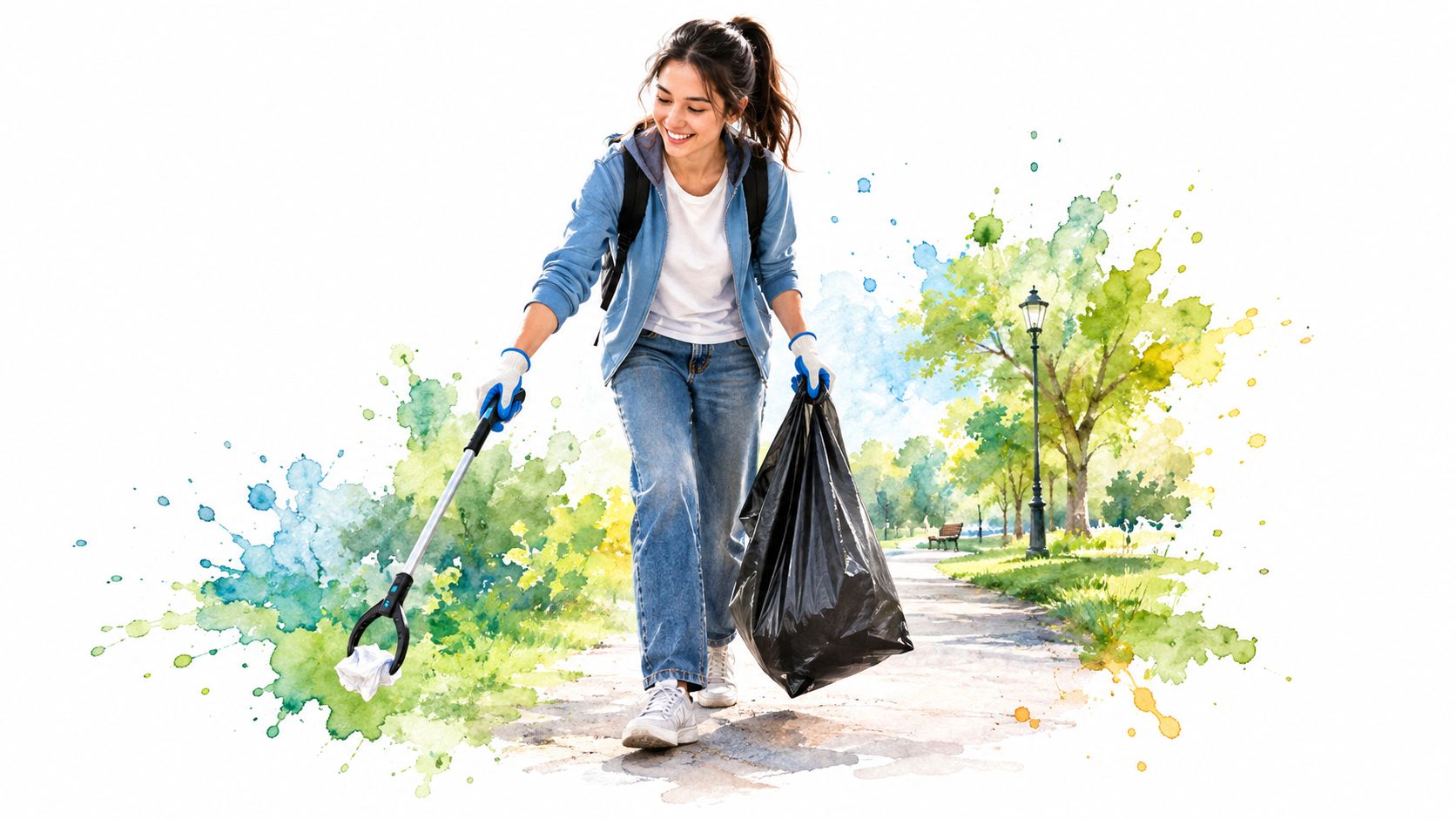
Street litter asked less of me. A bottle had no personal history, and a wrapper did not make me remember where I bought it. I could reach down with a grabber, drop the item into a bag, and keep walking.
The first storm changed what volunteering meant to me. The weather was miserable, yet it gave the morning a shared story. We were three people trying to finish an odd little adventure, and the cold made our jokes better.
Why showing up matters
I returned because the work offered a clear promise. I could arrive, carry a bag, and leave one small place cleaner. I did not have to feel organized first. I needed gloves, some courage, and people willing to stand beside me.
The Litter Caterpillars follow that same rhythm. The group cleans across Chicago's wards, including areas other groups may avoid, and meets on weekend mornings. Volunteers bring flags, theme songs, and badges, turning an ordinary sidewalk into a place with its own shared identity.
Rain or shine, that routine changes people. You learn to keep showing up, and familiar faces become friends because you have sweated, shivered, and worked beside them.
My rule: Choose one cleanup before you decide whether volunteering fits you.
Litter cleanup also has a broad community history. Keep America Beautiful describes volunteer work spanning community events and public spaces across the United States. Its overview of litter cleanup volunteerism shows how a simple bag-and-grabber routine can connect people at a much larger scale. Keep America Beautiful describes the scale of litter cleanup volunteerism.
You do not need to fix the whole city. Choose one morning, meet people outdoors, and let the bag fill gradually. Consistency becomes easier when friends are waiting for you, and a small act can leave you braver than when you arrived.
How to Find and Join a Litter Cleanup Group Near You
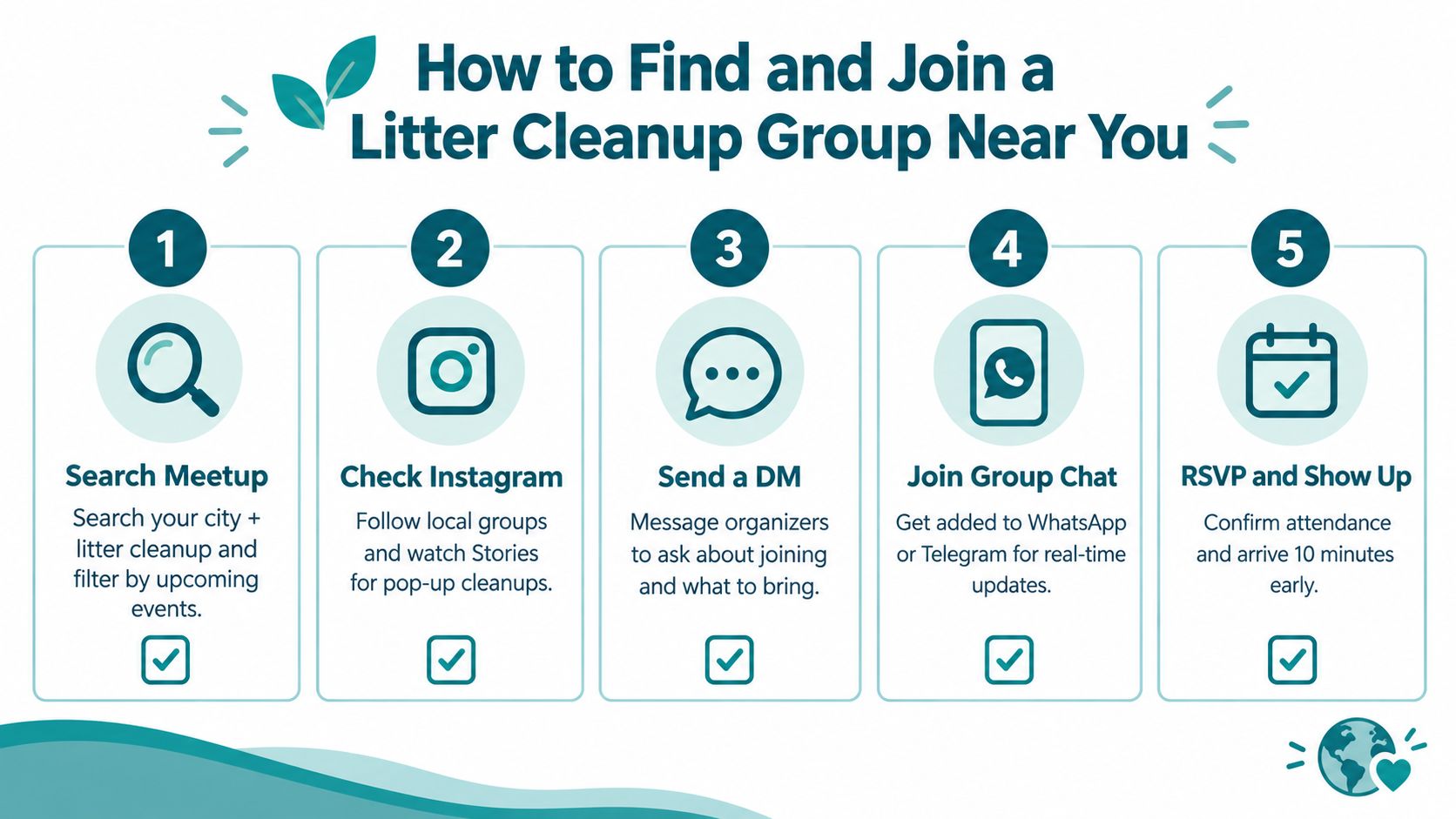
I usually begin with Meetup, because event listings give me a date, meeting place, and host in one screen. Search your city with phrases like “litter cleanup,” “trash pickup,” or “community cleanup,” then filter for upcoming events.
Read the listing before you RSVP. Look for the meeting point, expected pace, supplied equipment, weather plan, age rules, and contact method. A clear listing should tell you what happens after you arrive, not leave you guessing beside a park entrance.
Use Meetup and Instagram together
Instagram helps when groups announce smaller events quickly. Search your city name with “litter pickup” and follow local groups, parks, neighborhood associations, and environmental volunteers. Watch Stories for pop-up cleanups, route changes, and weather notices.
Send a short direct message:
Hi, I'm interested in joining your next litter cleanup. Is the event open to new volunteers, and should I bring anything?
That message does enough. You don't need a personal essay. Hosts can tell you whether they provide grabbers, gloves, and bags, or whether you should bring your own.
Choose a first event you can actually attend
Weekend mornings work well for many volunteer groups because the schedule leaves room for service and conversation. Pick a site that feels manageable, with a clear meeting point and a host who answers questions.
A group chat can make the first visit easier. Ask whether the organizers use WhatsApp, Telegram, or another open chat for last-minute updates. RSVP, save the address, and arrive early enough to find the host without rushing.
If you're searching around Chicago, browse local volunteer trash pickup events near you and compare the next available meetup with your schedule. Then make the decision concrete. RSVP before you talk yourself out of it, send the host your question, and put the event on your calendar.
What to Expect at Your First Litter Cleanup Meetup
My first calm meetup began with a small circle of people near the starting point. The host welcomed everyone, explained the route, and gave a short safety briefing. Nobody expected a speech or a perfect introduction. We signed in, collected supplies, and started talking while we prepared.
The group split the area into small zones. That choice kept us from crowding one patch of sidewalk while another remained untouched. I paired with a buddy, took a grabber and bag, and followed the boundary of our assigned block.
At first, I felt awkward. My buddy found a cup beneath a hedge, and I found a tangled receipt near a curb. After a few minutes, the pattern became almost meditative. Reach, squeeze, drop. Reach, squeeze, drop. Between finds, we talked about neighborhoods, pets, jobs, and whatever had happened that week.
A simple rhythm carries the morning
The host checked routes and kept the group together without hurrying anyone. We took breaks for water and paused when the ground, traffic, or weather made a section unsuitable. A first-time litter cleanup volunteer doesn't need to compete with anyone. A steady pace works better than a frantic one.
You may meet students, neighbors, people new to the city, and regulars who know every shortcut around the block. Some people talk constantly. Others work without a word. Both styles fit.
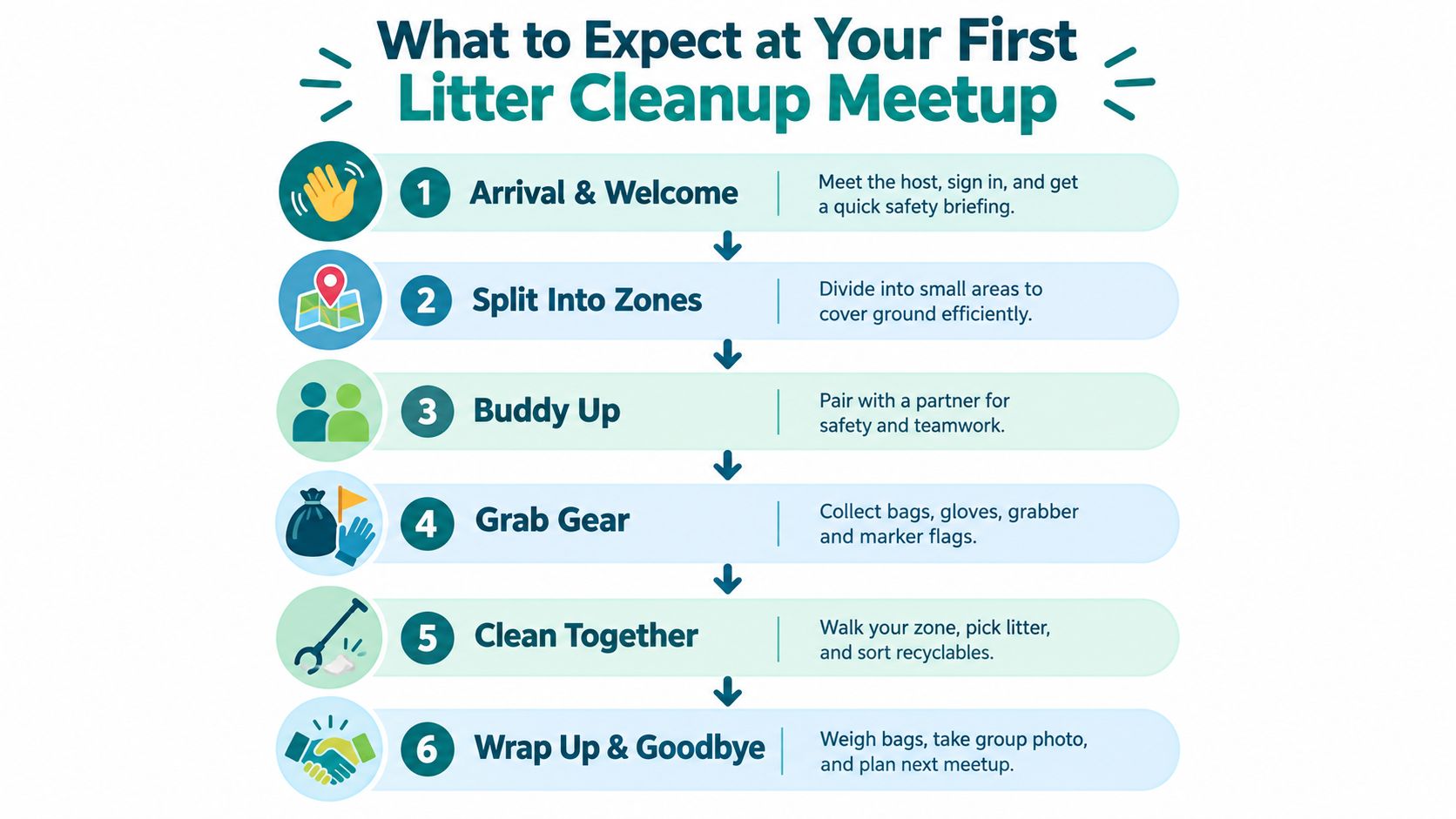
Near the end, volunteers bring filled bags to the agreed pickup point. Some groups sort recyclables or record what they find. The group may take a photo, thank everyone, and discuss the next route. The goodbye often feels warmer than the greeting because you've shared a task that leaves visible evidence.
You don't have to arrive confident. You can borrow confidence from the person walking beside you.
The meetup may include laughter, quiet concentration, muddy shoes, and an unexpected weather change. That mixture makes the experience memorable. You leave with cleaner streets behind you and a few names you can recognize at the next gathering.
Safety and Gear Checklist for Litter Cleanup Volunteers
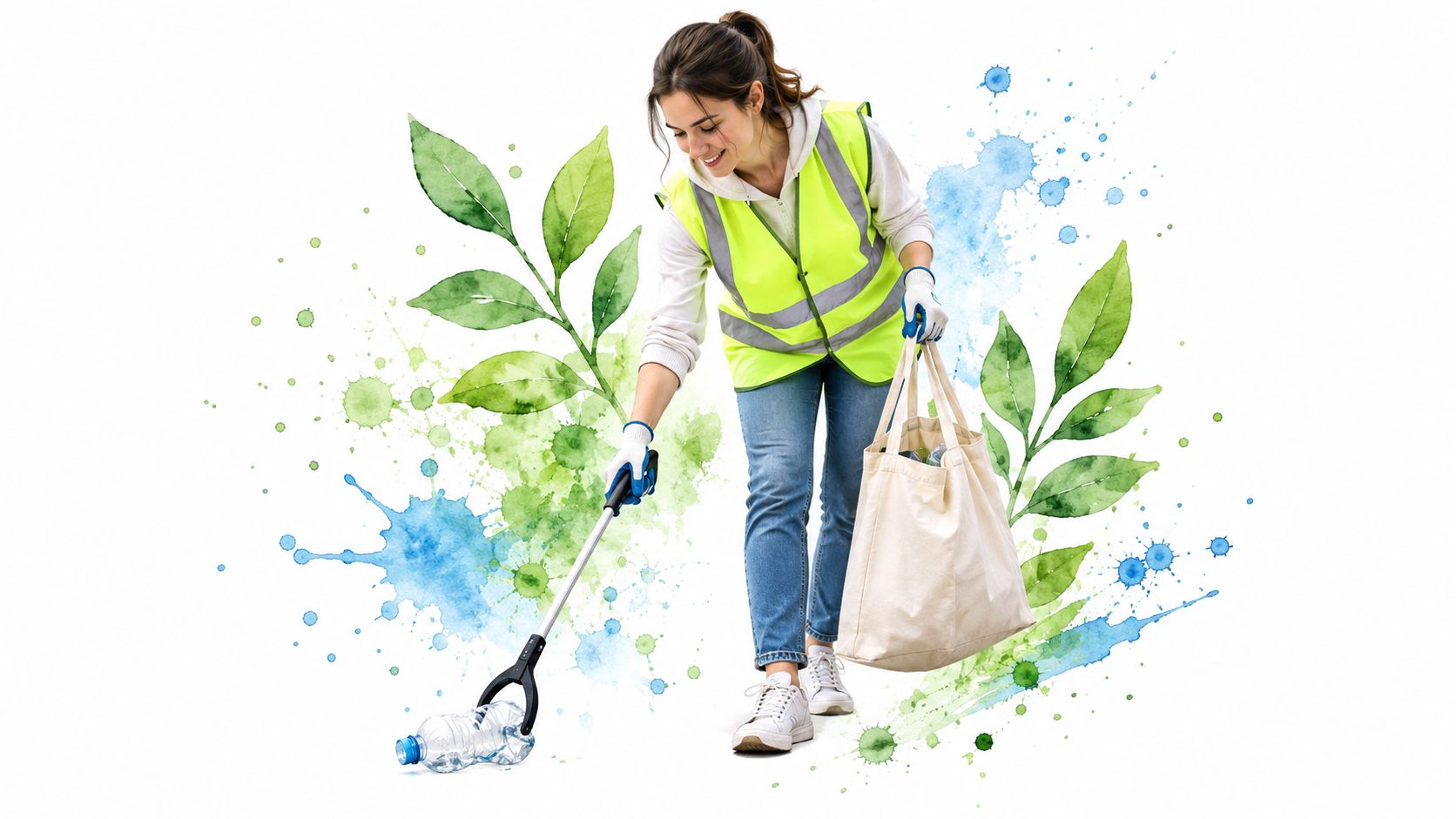
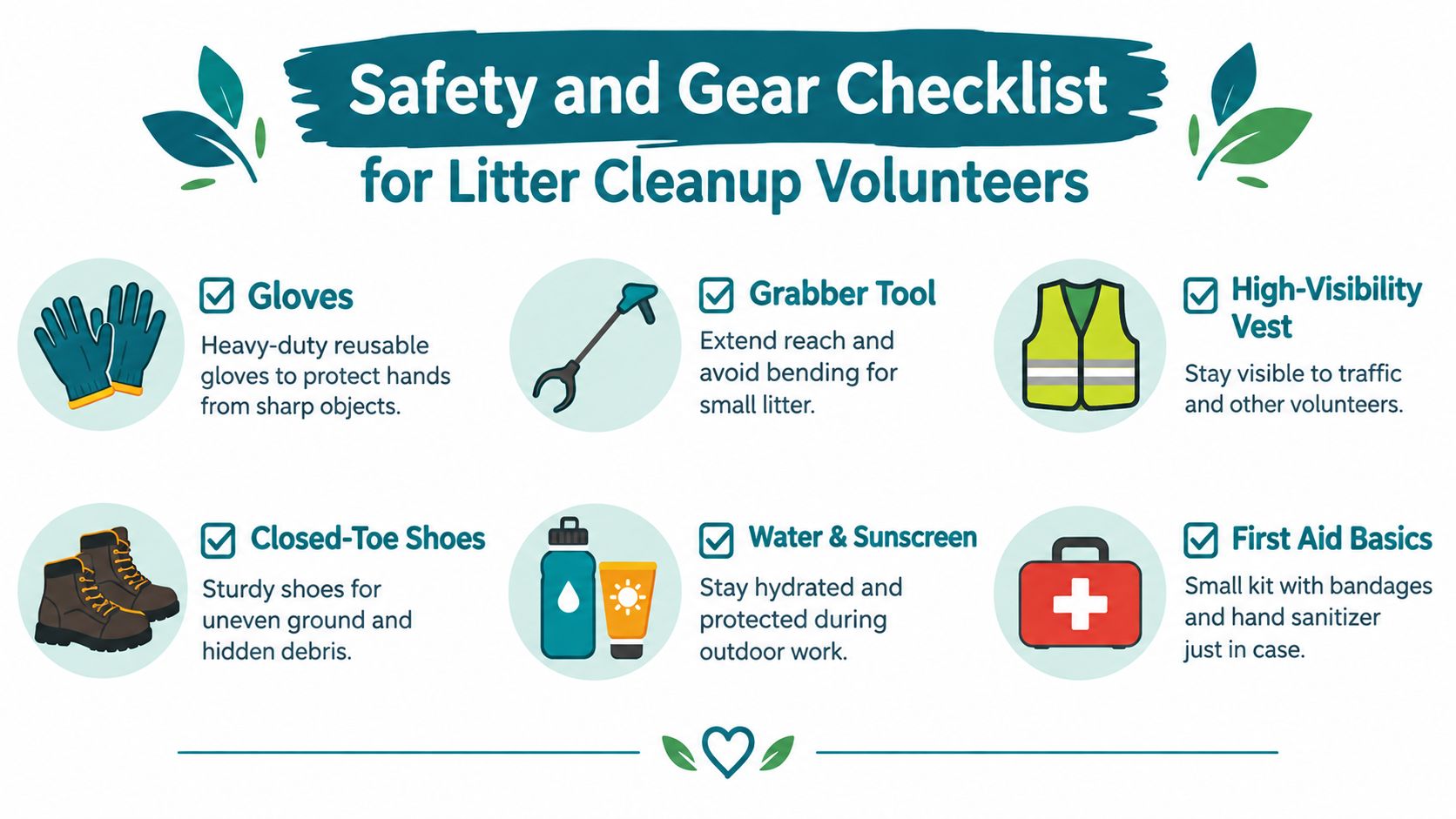
I pack the night before because a rushed volunteer forgets the item that matters most. Start with gloves, a grabber, high-visibility clothing, closed-toe shoes, water, and sunscreen. Add layers when wind or heat may change the feel of the morning.
Use this checklist:
- Gloves: Wear sturdy gloves that protect your hands from hidden sharp edges. Never pick up litter with bare hands.
- Grabber: Use a grabber instead of reaching into bushes, gaps, or piles. It keeps your hands farther from unknown objects.
- High-visibility vest: Wear reflective gear near any traffic or parking area so drivers and teammates can see you.
- Closed-toe footwear: Choose hard-soled shoes or work boots that handle uneven ground and concealed debris.
- Water and sunscreen: Drink regularly, take breaks, and protect exposed skin during outdoor work.
- Basic first aid: Carry bandages and hand sanitizer for small needs after you finish handling bags.
See the litter cleanup equipment options used for trash pickup work before your first event.
Follow the route, then stop for hazards
A safe workflow starts with a site inspection. The leader checks for traffic, water, unstable ground, construction, severe weather, and other hazards. The team divides the area into small zones, works in buddy pairs, fills only manageable bags, and places tied bags at a safe pickup point.
Stay off the roadway. Work in daylight, avoid wet or poor-visibility conditions, and never choose a busy road to collect more litter. Minnesota's Adopt a Highway guidance also tells volunteers to face oncoming traffic, avoid bridges and open water, and leave enough room for crews to tie bags shut. Read the Minnesota volunteer safety guidance.
Some objects belong to trained responders. Leave needles, broken glass, batteries, dead animals, heavy or bulky objects, sealed containers, and unknown substances alone. Tell the group leader, who can report the item to the right authority.
Hazard rule: If you can't identify it or lift it safely, don't touch it.
A county roadside program requires safety training, a vest, gloves, and hard-soled shoes or work boots before participation. Review the Will County roadside terms and conditions. Texas guidance also places volunteers in a defined right-of-way workflow, asks groups to carpool, and says bags should remain tied and reachable for collection. Read the Texas cleanup safety tips.
When you finish, wash your hands and disinfect reusable equipment. Safety keeps one enjoyable morning from becoming a reason to quit.
Cleanup Etiquette That Keeps Teams Kind and Unified
A cleanup group works best when nobody treats the morning like a competition. I share the awkward finds, the heavy sections, and the boring stretches. Someone else may take the next bag, hold a flag, or walk with a newer volunteer who feels unsure.
Keep your footprint light in the neighborhood. Stay aware of entrances, gardens, parked cars, and people using the sidewalk. Keep voices reasonable, leave private property alone, and let the leader handle questions from residents or tricky waste.
Small teams make the work easier to supervise. Assign one side of a road at a time, keep buddy pairs together, and use a clear handoff for anything hazardous. Never pressure someone to work faster, lift beyond their capacity, or enter a place that feels unsafe.
Protect the volunteer mood
A volunteer-first group protects energy. Leaders should explain the plan, notice fatigue, and make breaks normal. Nobody should feel embarrassed for sitting out a difficult patch or leaving when the weather turns.
Celebration helps too. A flag, a theme song, or a badge can turn a plain bag of litter into a shared achievement without turning service into a performance. I like the moment when everyone sees the same block at the end and recognizes the difference.
- Do welcome newcomers: Introduce yourself and explain the next simple task.
- Do share information: Tell the leader about hazards instead of trying to solve them alone.
- Don't pressure donations: People arrive to give time, and organizers should respect that.
- Don't shame residents: Clean the space without turning strangers into targets.
- Do thank the team: A sincere goodbye makes returning feel easy.
Before joining a group, read its volunteer code of conduct so you understand how it handles respect, safety, and shared work.
How Volunteering Transforms You and Your City
The first time hail hit during a cleanup, I nearly headed home. Then a friend tightened her hood, laughed, and kept walking. We filled bags between showers. That morning changed my idea of service. A cleanup clears one sidewalk, while returning regularly changes how you see yourself and your neighborhood.
The Litter Caterpillars' rain-or-shine, all-wards approach makes that change visible. You learn to show up before you feel ready, work beside people you did not know, and trust a plan when the weather turns. Bravery becomes an ordinary habit, built one meetup at a time.
Friendship grows through repetition. You meet the same people at the gathering point, follow familiar routes, and learn how someone laughs when a bag snags on a thorn. Those small moments create belonging without demanding an instant friendship.
Chicago looks different with a grabber in your hand. Walking through its wards has led me down streets I might otherwise overlook. Projects such as Caterpillar Park in Englewood also give volunteers a place where shared work can continue beyond one cleanup morning.
Turn one morning into a practice
Keep the first commitment modest. RSVP for one event, bring a friend, and decide beforehand which weather would send you home. Afterward, record the next date while the experience still feels fresh.
For another community view of waste reduction and local action, read Fillaree's guide to the top reasons Durham is zero-waste capital.
The broader participation is encouraging. Keep Britain Tidy reports that many adults take part in litter picking regularly, and that hundreds of thousands of volunteers collected hundreds of thousands of rubbish bags in one year. The scale shows that local service can become a shared public habit.
You do not need a heroic plan. Choose a meeting point, wear shoes you trust, and let the people beside you make the morning lighter. Return before the habit disappears.
Litter Caterpillars organizes volunteer trash pickup events across Chicago, provides grabbers, bags, and gloves, and offers a practical way to meet people while cleaning local streets. Visit Litter Caterpillars, RSVP for a weekend cleanup, and bring a friend to your first morning.