Tag: lake county forest preserve

  • Raven Glen Forest Preserve: A Guide to Your Next Adventure

    Raven Glen Forest Preserve: A Guide to Your Next Adventure

    I pulled into Raven Glen with a trash bag in my glove box and too much static in my head. Ten minutes into the trail, the noise started to break apart.

    An Invitation to a Different Kind of Place

    I want to walk you into Raven Glen Forest Preserve the way I'd walk a friend into it. No dramatic speech. No fake wilderness mystique. Just, “Come on, let's go. I think this place might help.”

    Some days your life feels like a junk drawer someone shook upside down. You've got half-finished thoughts, old stress, weird guilt, too many tabs open in your brain. I know that feeling well. I've had days where even a simple walk felt like too much effort, where my mind kept circling the same stale problems like a shopping cart with one bad wheel.

    Then I found places like Raven Glen.

    What got me wasn't some single perfect view. It was the way the preserve let me settle down in pieces. First the parking lot. Then the first stretch of trail. Then the quiet around the water. Then the moment where I stopped checking my phone because I didn't want to.

    You don't always need a breakthrough. Sometimes you need a place that lets your mind unclench.

    That's what this preserve feels like to me. It feels usable. That matters. Some outdoor places are beautiful but intimidating. Raven Glen Forest Preserve feels like a place where you can arrive exactly as you are. Tired. Distracted. Irritable. Hopeful. All of that is fine.

    What I think happens here

    When I walk through a place with a real history, I stop pretending change has to be clean and immediate. Raven Glen doesn't feel polished in that artificial way. It feels worked on. Lived through. Recovered.

    That's part of why I keep coming back.

    If you've ever looked at your own life and thought, “This is messier than I wanted,” this preserve has something to say to you without speaking. Land can change. Water can be redirected. Old uses can end. New care can begin.

    Come here for more than exercise

    Yes, you can come here for a walk. You can come for a bike ride. You can come to get outside for an hour because your week went sideways.

    But if you let it, Raven Glen Forest Preserve becomes something else.

    • A reset button: You step onto the trail one version of yourself and come back a little less tangled.
    • A quiet teacher: The land doesn't rush, and it doesn't perform for you.
    • A mirror: If a used-up place can be repaired, maybe you can too.

    I'm not trying to sell you a fantasy. I'm saying I've walked into Raven Glen feeling cluttered and walked out with one clear thought I could act on. Sometimes that's enough to change a day. Sometimes it changes more than that.

    The Story of a Place Re-Made

    Raven Glen makes more sense when you know what it used to be.

    Before it became the preserve you and I can walk today, Lake-Cook Audubon says the site was once a campground and daily farm, and it now holds a large glacial lake and scattered wetlands in the same setting, which you can read on the Lake-Cook Audubon event page about Raven Glen. I love that combination because it feels honest. This wasn't some untouched fantasy world waiting for us. People used it. Worked it. Moved through it. And under all that human activity, older forces had already shaped it.

    You can feel that when you're there.

    The place has the energy of a site with layers. The farm story is one layer. The campground story is another. The glacial water and wetlands are older layers still. Put them together and you get a preserve that feels less like a postcard and more like a recovery story.
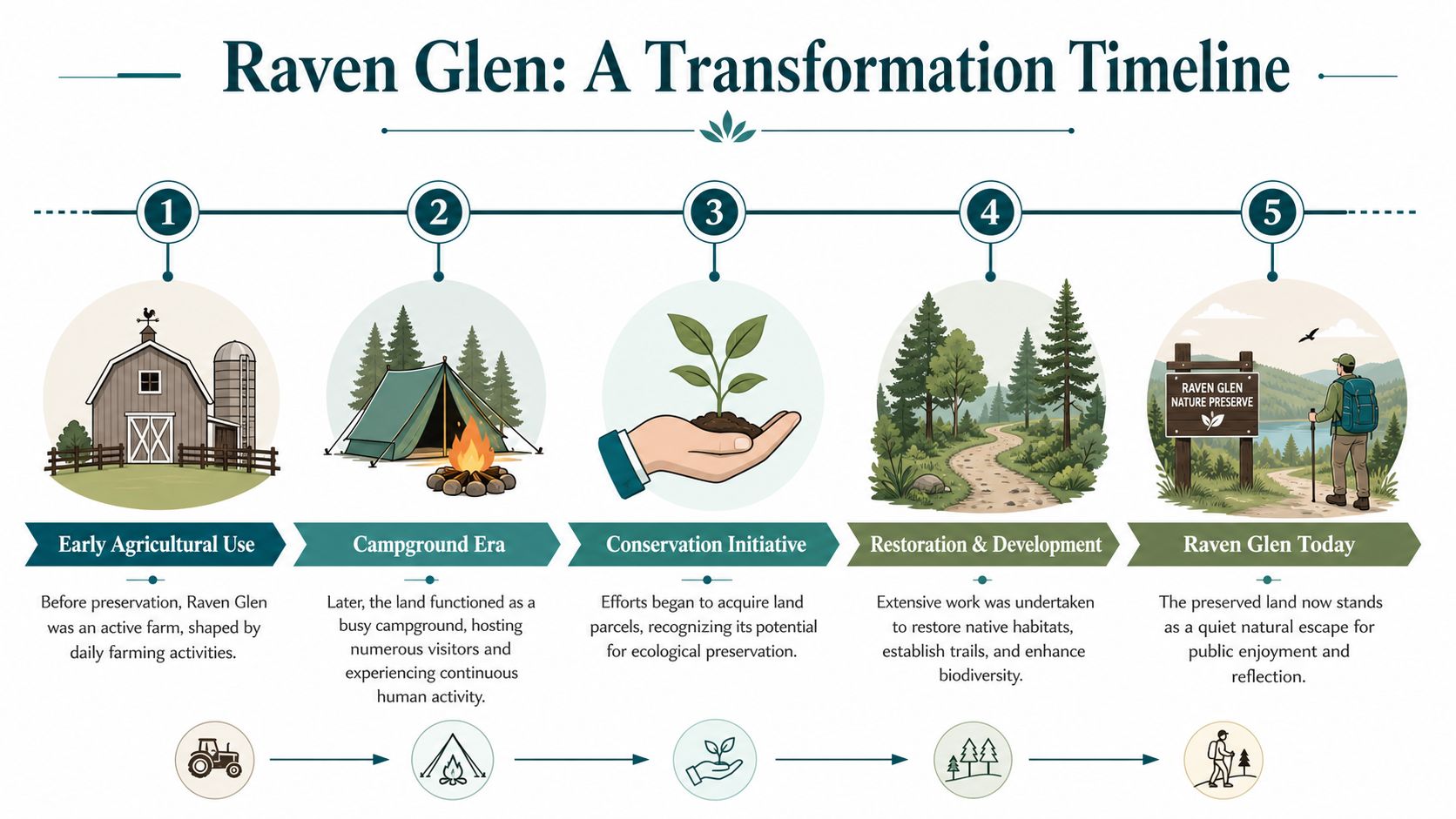
    A timeline illustration showing the five stages of transformation for the Raven Glen nature preserve site.

    The land didn't “bounce back” by accident

    I think people sometimes talk about restoration as if nature heals itself the minute we step aside. Sometimes it does part of that work. But at Raven Glen, people are also doing real physical work on the site.

    A Daily Herald report on the Raven Glen restoration project says the plan covers 429 acres and involves $11 million, with the aim of easing flooding by changing how water moves through the preserve. I like that detail because it's concrete. This isn't decorative cleanup. This is the hard kind of repair. Dirt-moving, water-shaping, system-thinking repair.

    That idea hits me personally.

    A messy life usually doesn't improve because you bought a notebook and had one good Sunday. Real change is often more like water management. You look for the places where things keep overflowing. You find the weak spots. You stop pretending the same pattern will somehow fix itself. Then you start redirecting the flow.

    Why this story stays with me

    I've spent a lot of time thinking about trash, not in an abstract way, but with my hands. Picking it up. Bagging it. Looking at the weird stuff people leave behind. When you do that long enough, you stop seeing waste as a final state. You start seeing it as a call for intervention.

    Raven Glen gives me that same feeling.

    • It was used hard before: Farm and campground use leave marks.
    • It still carries old shapes: Glacial water, wetlands, uneven ground, all of that remains part of the place.
    • People chose to repair it: Large-scale restoration means someone looked at the site and decided it was worth the effort.

    Practical rule: When a place has been through a lot, don't ask why it isn't pristine. Ask what kind of care helps it recover.

    That applies to land. It applies to people too.

    When I walk here, I don't think, “Wow, what a perfect place.” I think, “This place got worked over, and it's still becoming itself.” That's a much better kind of hope. It's sturdier. It has dirt on it. It makes room for anyone who is still in progress.

    Finding Your Path at Raven Glen

    Raven Glen Forest Preserve is friendly in the way I like best. It doesn't demand a big production from you. You can show up, park, pick a direction, and move.

    The Lake County Forest Preserves page for Raven Glen says the preserve has 6.8 miles of trails overall. It also says Raven Glen East includes 4.5 miles for hiking and cross-country skiing and 2.8 miles for biking. You also get two entrances: a main entrance on Route 45 south of Route 173 and north of Miller Road, plus another entrance with parking and trail access on Route 173 just west of Route 45.

    That setup matters more than people think. A preserve gets easier to love when access is simple.

    Pick the entrance that matches your mood

    If I want a straightforward start, I like the idea of choosing my entrance based on energy.

    • Route 45 entrance: Good when I want the classic arrival. Park, breathe, begin.
    • Route 173 entrance: Good when I want to get moving fast and skip overthinking.

    That second option matters on low-motivation days. If you're waiting to feel perfectly inspired before you go outside, you'll lose half your best walks. Better to make the start easy.

    Raven Glen Trail Summary

    Trail Section Length (miles) Use Notes
    Total trail network 6.8 Mixed preserve use Good for choosing a longer outing or combining segments
    Hiking and cross-country ski trails 4.5 Hiking, winter skiing Best fit for slower walks, quiet loops, and winter visits
    Biking trails 2.8 Biking Gravel riding for a quicker, more rhythmic outing

    How I'd choose a route

    I don't think in terms of “best trail.” I think in terms of “best trail for the version of me that showed up today.”

    If my mind is busy and snagged on too many things, I walk. Walking lets me notice details in the water, the edges of the trail, the way the preserve opens and closes around me. If I'm carrying stress in my body and I need to physically shake it loose, I bring a bike and let repetition do the work.

    Here's the simple filter I use:

    1. Need calm? Choose the hiking trail.
    2. Need motion? Choose the biking route.
    3. Need to make the outing happen fast? Use the entrance that gets you moving with the least resistance.

    Start before you feel ready. Most of the value comes after the first few minutes.

    A few on-the-ground tips

    You don't need much, but a little preparation changes the whole experience.

    • Wear shoes you trust: The point is to pay attention to the preserve, not your sore feet.
    • Bring water: Even short outings go better when you're not running dry.
    • Keep your phone charged: Safety first. Then tuck it away when you can.
    • Decide your outing before you arrive: “I'm here to walk for a while” is enough of a plan.

    I'd also give you one mental instruction: don't chase completion. You do not need to conquer Raven Glen Forest Preserve. You do not need to optimize every mile. You just need to begin and stay present long enough for the place to work on you a little.

    That's the actual path. The trail only helps you find it.

    The Preserve Through the Seasons

    I don't trust the “perfect weather only” approach to nature. It turns the outdoors into a product review. Sunny enough? Mild enough? Convenient enough? That mindset misses most of what a place is trying to show you.

    Raven Glen Forest Preserve changes its face all year. If you keep returning, you stop asking the preserve to entertain you and start learning how to meet it where it is.
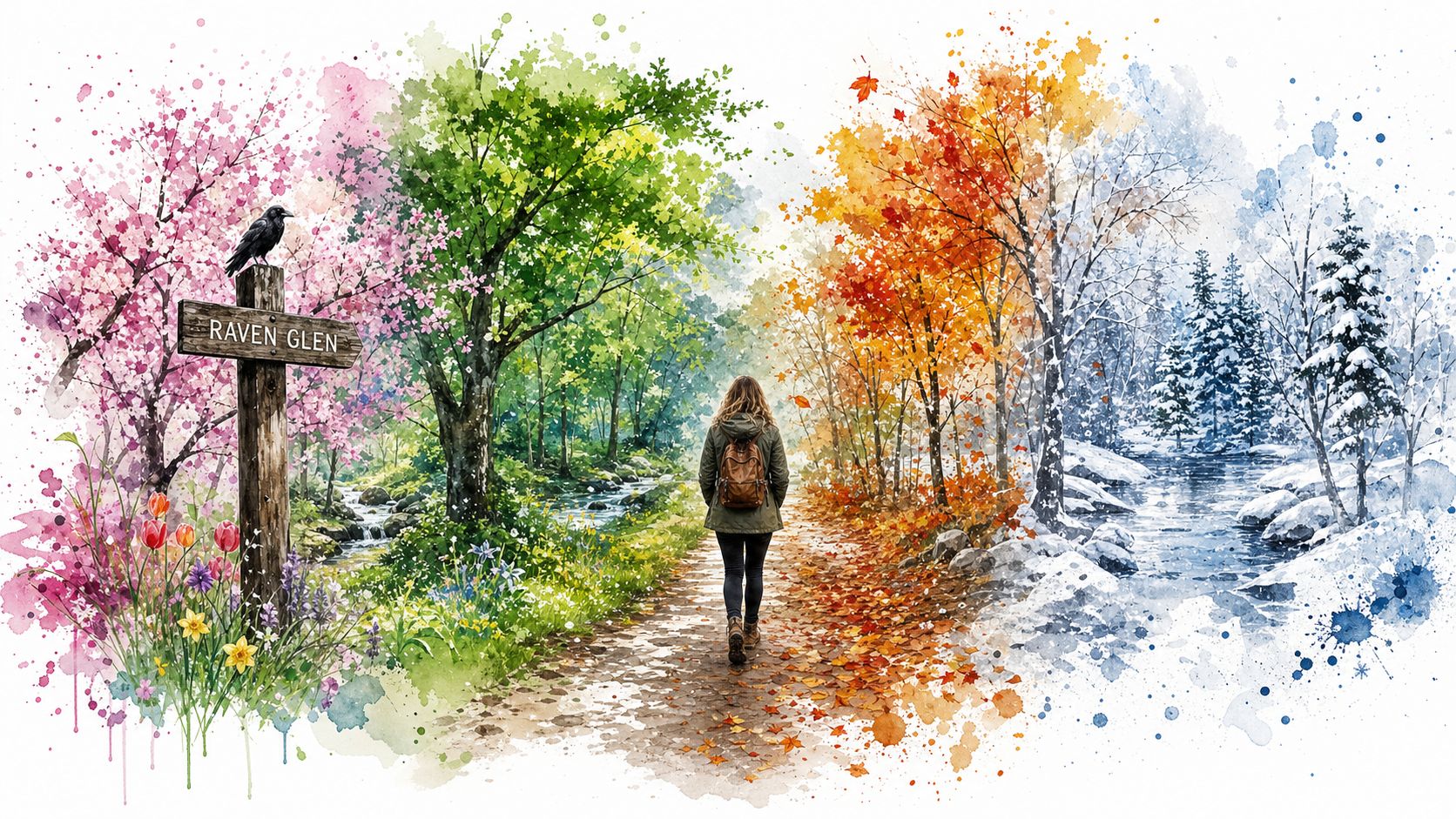
    A hiker walking through a forest path depicting all four seasons transitioning from spring to winter.

    Spring is messy in the best way

    Spring at Raven Glen feels like a room being reopened after a long winter. The ground softens. Water speaks louder. The preserve smells alive again.

    I like spring because it doesn't pretend renewal is neat. There's mud. There's dampness. There are sections where your shoes might come home carrying half the trail. Good. That's part of it. Growth usually starts ugly.

    When I'm out in early green-up, I think about how people want transformation without inconvenience. Nature never agrees to that bargain.

    Summer asks you to slow down

    Summer can feel full and noisy. The green closes in. The air gets thick. Everything seems to hum.

    That's when I like going early. The preserve feels gentler then. You hear more than you see, and that changes how you move. You stop charging ahead and start listening.

    If trees are part of what draws you out, this guide to trees in Illinois adds another layer to the walk. Once you start noticing tree shapes, bark, shade, and spacing, even a familiar trail feels fresh.

    Fall gives you the obvious beauty

    Yes, fall is the easy season to love. Crisp air helps. The color helps too.

    But even then, I try not to rush into “look how pretty” mode and leave it there. Fall at Raven Glen has a stripping-down quality I really like. The preserve feels honest. Things are letting go. The year is showing its wear. That can feel comforting if your own life is in a shedding season.

    • Go longer in fall: The cooler air invites a slower, deeper walk.
    • Pause more often: This is a good season for standing still near the water.
    • Notice what's thinning out: The preserve starts revealing its structure.

    Bad weather and changing weather often give you the most memorable day.

    Winter is where the place gets quiet enough to hear yourself

    Winter is my favorite season to test whether I really mean what I say about loving the outdoors. Snow, cold air, gray sky, empty stretches. That's where a place either becomes boring to you or becomes real.

    At Raven Glen, winter clears visual clutter. You start seeing lines, shape, distance, tracks, openings. The preserve gets simpler, and your thoughts often do too.

    I've learned a lot about myself in rough weather. Cold exposes your attitude fast. So does wind. So does the moment when comfort leaves and you have to decide whether you're still glad you came. I think everybody needs a few days like that. They teach you that toughness isn't loud. Sometimes it's just quietly continuing down the trail.

    Three Perfect Days at Raven Glen

    Some people freeze up because they think they need the ideal plan. You don't. You need a plan that matches your energy and gets you out the door.

    Here are three ways I'd spend time at Raven Glen Forest Preserve, depending on what kind of day I needed.

    The solo re-charge

    Start at the Route 173 entrance if you want the day to begin with very little friction. Park, silence your phone, and walk with no ambition beyond staying outside long enough for your breathing to settle.

    Bring a water bottle and a snack that won't turn into mush in your bag. Then give yourself permission to stop often. Look at the water. Look at the trail edge. Listen for the shift in your own mind when it stops producing fake emergencies every five seconds.

    This outing works best if you follow a few rules:

    • Don't track your performance: Leave the stats obsession at home.
    • Don't fill the silence: Skip the podcast for once.
    • Do one honest check-in: Ask yourself what's bothering you.

    By the time I finish a walk like this, I usually don't have every answer. I do have more room inside my head. That's enough.

    The family adventure

    For a family day, I'd begin at the main entrance on Route 45 and keep the pace loose. Kids don't need a lecture about ecology. They need a mission.

    Turn the outing into a scavenger hunt. Look for a cool rock, a strange leaf, a bird sound, a bend in the trail that feels secret even if it isn't. Let younger hikers stop and stare at small things. That's not wasted time. That is the day.

    A simple family rhythm works well here:

    1. Walk a while.
    2. Pause before anyone gets cranky.
    3. Eat a snack.
    4. Let curiosity set the next direction.

    A good family outing feels like discovery, not enforcement.

    If you're bringing kids, pack more patience than gear. The memory won't come from how far you went. It'll come from the odd little moments they decide matter.

    The after-work ride

    Some days you don't need serenity first. You need to burn the static off. That's what the bike day is for.

    Bring your bike, hit the gravel route, and let repetition clean out the mental junk. Pedal, breathe, corner, repeat. If the day at work left you annoyed, don't overanalyze it on the trail. Let your body process it through effort.

    I love this kind of outing because it's simple. You don't need a personal breakthrough speech. You need movement.

    Pack like someone who respects the basics:

    • Sturdy shoes or riding gear: Comfort keeps your focus where it belongs.
    • Water: Small oversight, big difference.
    • Charged phone: Practical, boring, necessary.
    • A small spare bag: If you see trash, you can carry it out.

    That last item changes your posture. The moment you're willing to leave a place better than you found it, you stop acting like a customer and start acting like a participant. I think that's a better way to move through any preserve.

    Keep the Adventure Going Nearby

    When I drive out to a preserve, I like letting the day stretch a little. A good outdoor trip doesn't have to end the second you leave the lot.

    If you want a totally different texture after Raven Glen Forest Preserve, head toward the northern unit of Illinois Beach State Park. Raven Glen gives you woods, trails, water, and that inland quiet. Illinois Beach gives you sand, open shoreline, and a very different mood. Doing both in one day can make the whole outing feel bigger without making it complicated.

    Make Antioch part of the trip

    After time outside, food tastes better. That's just true.

    Downtown Antioch has the kind of easy small-town stop that works after a hike or ride. Grab a burger. Get pizza. Sit down somewhere casual and let the dirt on your shoes be part of the story. You don't need a curated experience. You need something satisfying.

    A simple way to build a full day

    If you like structure, this is the format I'd use:

    • Start with Raven Glen: Let the preserve set your pace.
    • Add a second stop: Choose shoreline if you want contrast.
    • End with food nearby: Reward helps habits stick.

    If you enjoy planning preserve visits as a recurring habit, this roundup of Waterfall Glen forest content is another good rabbit hole to go down. I like collecting ideas this way because one walk usually leads to the next.

    Why I like spending locally

    There's also something nice about not treating a preserve like a sealed-off destination. You go outside, then you re-enter ordinary community life a little lighter. You support a local restaurant, maybe wander a bit, maybe stay out longer than you planned.

    That's my favorite kind of adventure anyway. Not the flashy kind. The kind that starts with a trail, picks up momentum, and sends you home more awake than when you left.

    Your Adventure in Service

    A place changes when you care for it with your hands.

    That's the thought I keep coming back to after a walk at Raven Glen Forest Preserve. It's one thing to admire a trail, enjoy the quiet, and head home with a clearer mind. I'm for all of that. But there's another step available, and I think it changes you faster.

    Bring a small bag.

    That's it. Nothing grand. Nothing ceremonial. Just make yourself available to pick up the bottle by the edge of the path, the wrapper caught in brush, the random bit of litter that would otherwise become part of the background. The act is small, but your relationship to the place changes right away.
    Screenshot from https://www.littercaterpillars.com

    Why service feels different

    When you care for a shared space, you stop consuming it. You join it.

    That's a big shift. A visitor asks, “What did I get from this place?” A steward asks, “What can I do while I'm here?” I think that second question is better for the soul. It gets you out of your own head. It gives your body something clear and good to do.

    I've found that service works like a powerful catalyst. If your life feels messy, helping with a visible mess can restart your sense of agency. You may not know how to solve everything at home, at work, or inside your own mind. But you can pick up one piece of trash. Then another. Then another.

    Start small and stay consistent

    You don't need a perfect environmental identity. You don't need special gear. You need willingness.

    Here's the version I believe in:

    • Carry one small bag: Easy to bring, easy to use.
    • Pick up what you safely can: No heroics. Just care.
    • Leave the place a little cleaner: Small wins matter because they are real.
    • Repeat the habit elsewhere: One preserve can teach you how to notice every public space differently.

    If the service side of outdoor life speaks to you, you might enjoy learning more about environmental stewardship programs. I think the best programs don't just clean places. They train people to become the kind of person who notices, returns, and helps.

    The moment you help care for a place, it starts living in you differently.

    Raven Glen is a great place to practice that. Walk it. Breathe there. Reset there. Then do one thing that makes the place better after you've passed through it.


    If that idea hits something in you, take the next step with Litter Caterpillars. It's a simple, brave way to turn time outdoors into service, friendship, and the kind of personal change you can feel.
  • Van Patten Woods Lake County IL: Trails & Wildlife

    Van Patten Woods Lake County IL: Trails & Wildlife

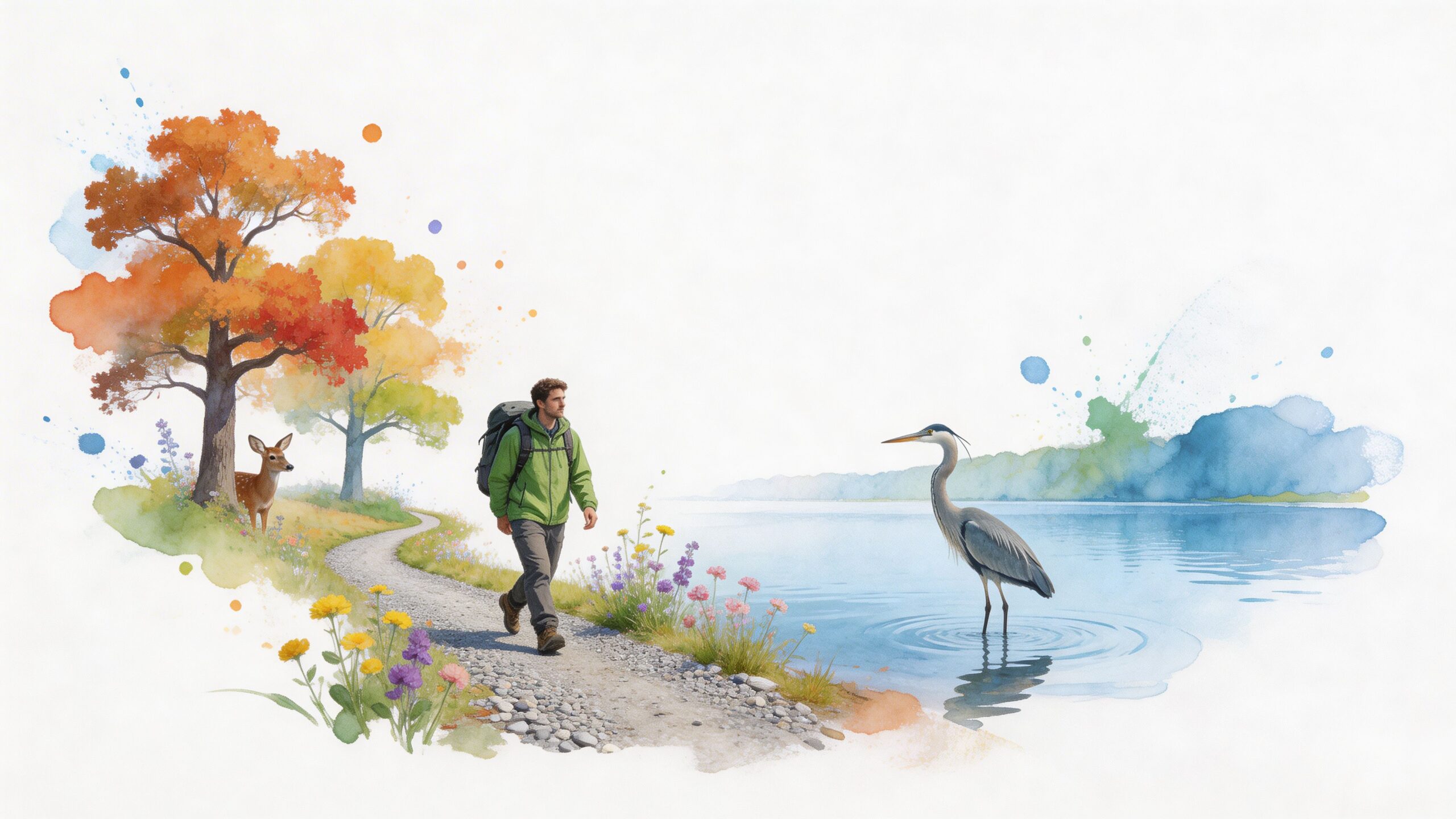
    I once pulled into Van Patten Woods with a head full of noise and a coffee gone cold in the cup holder. By the time I stood near the lake and heard my own footsteps on the gravel, the day felt less like something attacking me and more like something I could shape.

    Your Adventure Begins at Van Patten Woods

    Some places meet you where you are. Van Patten Woods Lake County IL does that for me.

    I don't mean that in a soft, postcard way. I mean it in a genuine way. The way a place feels when your mind is packed with old conversations, unfinished plans, and that stale sense that you've been standing still too long.

    I know that feeling.

    I’ve had seasons when my life looked manageable from the outside but felt cluttered underneath. Not just physically cluttered. Spirit cluttered. The kind where every task feels heavier than it should, and even a simple day trip feels like too much effort.

    Then you get out of the car. You smell damp earth. You see water through the trees. You start walking.

    That’s the invitation here.

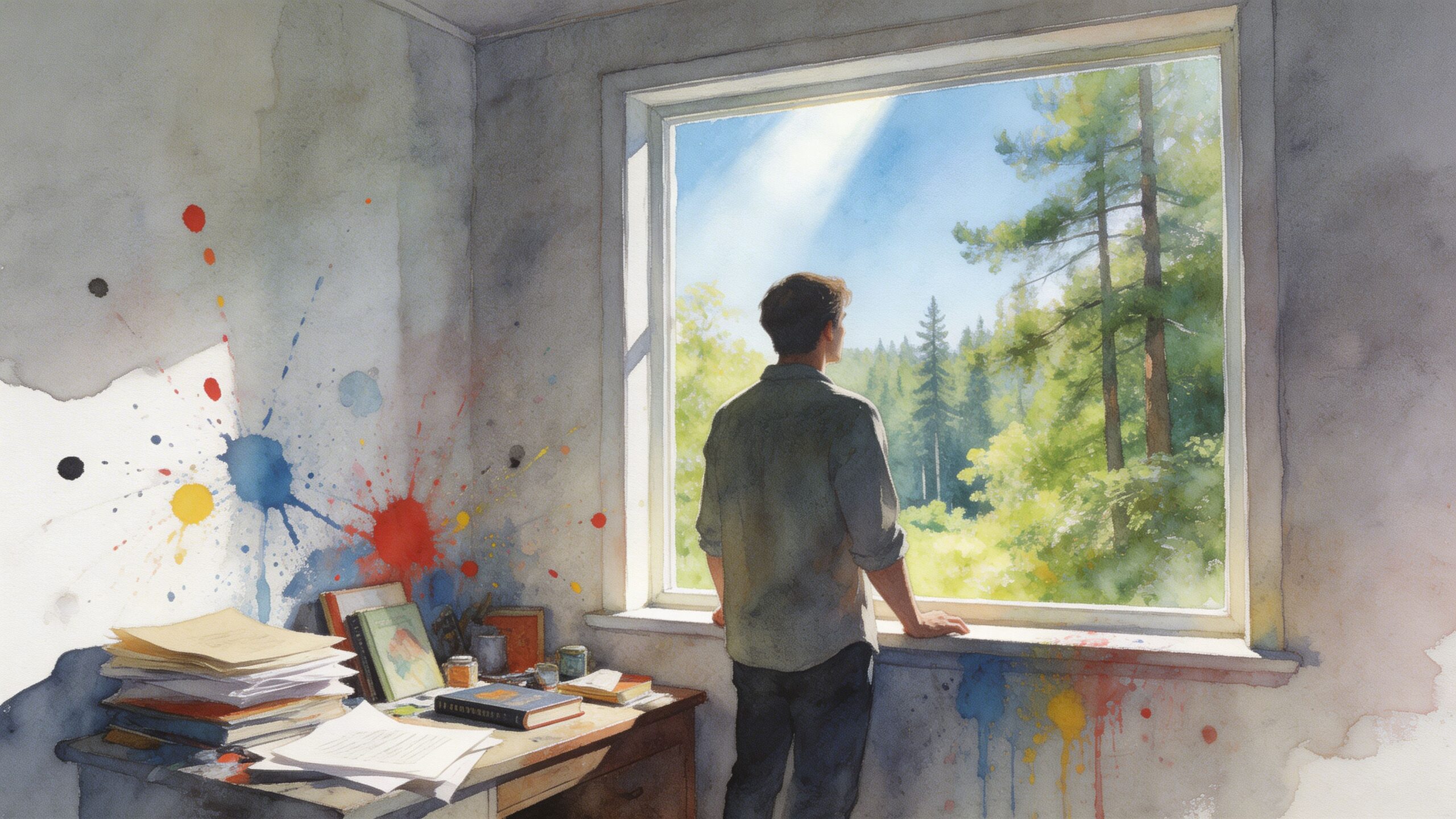
    A person standing by a window looking out at a lush forest scene with scattered paint splashes.

    When a walk becomes a reset

    I’ve learned that a forest preserve can do what a pep talk can’t. It gives your body something honest to do. Step. Breathe. Look up. Keep going.

    Van Patten Woods doesn't ask you to become a new person before you arrive. It just asks you to show up.

    That matters.

    If you've ever had one of those mornings where your room is a mess, your phone is full of notifications, and your head feels like a junk drawer, this place can break the spell. Not because it magically fixes your life. Because it gives you one clean action.

    Walk forward.

    You don't need a grand breakthrough in the woods. Sometimes you just need one hour without friction.

    Why this place feels different

    This preserve has a grounded energy. Water, woods, open trail, old history in the soil. It feels close enough to daily life to be reachable and far enough away to let your thoughts loosen their grip.

    If you like pairing one preserve with another, I also like the contrast between this place and MacArthur Woods Forest Preserve. One day can feel expansive and river-worn. Another can feel tucked away and quiet. Both teach the same lesson. Your mind changes when your surroundings change.

    Here’s how I’d frame your first visit:

    • If you feel restless: Start with movement. Don’t overthink the route.
    • If you feel worn down: Go to the water early and sit longer than feels productive.
    • If you feel numb: Pay attention to textures. Gravel under shoes, bark under your palm, wind off the lake.

    The woods won't sort your whole life in an afternoon. But they can help you clear one shelf in your mind. Sometimes that's how change starts.

    How to Get There and What to Expect

    The hardest part of a restorative day is often the front door. Once you commit to leaving home, the rest gets easier.

    Van Patten Woods sits in Wadsworth, Illinois. If you're coming from the Chicago area, the drive feels like a gradual exhale. Buildings thin out. The pace softens. You stop thinking about errands and start thinking about weather, trail shoes, and whether the water will be still.

    Arrive with a simple plan

    Don’t turn this into a military operation. Give yourself a basic plan and let the place do the rest.

    Try this:

    1. Choose your anchor activity. Pick one thing before you leave. Walking, sitting by the lake, paddling, or fishing.
    2. Pack for mud, not for fantasy. Bring water, decent shoes, and one extra layer.
    3. Keep your first visit light. Let curiosity lead more than ambition.

    When you pull in, expect a preserve that feels practical rather than flashy. That’s part of the charm. You’re not there for spectacle. You’re there for contact with something steady.

    You’re stepping into local history

    Van Patten Woods carries weight beyond its tree line. It was the very first forest preserve established by the Lake County Forest Preserves district in 1961, and that first step helped launch a system that now protects over 31,200 acres and more than 200 miles of trails in Lake County, as noted by the Lake County Forest Preserves overview on Wikipedia.

    I like knowing that when I arrive.

    It changes the mood of the place. You’re not just wandering into a random patch of green. You’re walking into the starting point of a larger act of care.

    Practical rule: Treat the arrival like part of the experience. Don’t rush from parking lot brain into trail brain. Pause for a minute before you move.

    What the first few minutes feel like

    Many visitors need those first minutes to recalibrate. You get out. You hear less traffic. You notice more sky. Your shoulders drop a little without asking permission.

    That’s when the preserve starts working on you.

    A few things to expect on the ground:

    • Trail variety: You can keep things easy or stretch into a longer outing.
    • Water access: The lake draws anglers, paddlers, and people who need a horizon line.
    • A lived-in preserve feel: This place feels used in the best sense. It invites return visits.

    If you tend to hesitate before trying somewhere new, this is a good antidote. It’s approachable. It doesn’t demand expertise. It rewards attention.

    Trails for Every Mood and Fitness Level

    Some days I want a trail that asks nothing from me except motion. Other days I want a path that pushes back a little. Van Patten Woods gives you both.

    The preserve has five miles of trails that support hiking, biking, horseback riding, and cross-country skiing, and those routes connect with the Des Plaines River Trail, according to the background details provided earlier in this guide. What matters on the ground is simpler. You can choose the conversation you want to have with yourself.

    The easy loop mood

    When my brain feels overcrowded, I start near the lake.

    That kind of walk works like wiping steam off a mirror. You don’t solve everything. You just see better. A wider, easier route gives you room to settle in without constantly watching your feet.

    This is the route for:

    • Mental overload: You need rhythm more than challenge.
    • A first visit: You want confidence before exploration.
    • A shared walk: You’re with someone and want easy conversation.

    The woods path mood

    Then there are the unpaved stretches through the trees.

    These ask more from your attention. Roots, turns, softer ground, changing light. I like those paths when I’ve been scattered. They pull me back into my body because they require me to notice where I am.

    That’s the hidden gift of a slightly rougher trail. It doesn’t let you drift too far into your own static.

    A dirt path can do what a meditation app can't. It keeps asking, "Are you here or not?"

    The long-haul mood

    Some visitors hit the connector routes and keep going. That’s the day for endurance, for seeing what happens when you stay with your effort a little longer.

    If that sounds like your kind of outing, the regional connection to the Des Plaines River Trail near Chicago gives the whole preserve a bigger horizon. Van Patten Woods can be a destination, but it can also be a launch point.

    Van Patten Woods Trail Overview

    Trail Name Length (Round Trip) Surface Best For
    Sterling Lake area route Flexible Crushed gravel and developed path Easy walks, strollers, calm starts
    Woodland side paths Flexible Unpaved natural surface Presence, quiet, a little more focus
    Des Plaines River Trail connection Flexible Mixed multiuse trail Longer outings, biking, momentum

    I’m keeping the table honest on purpose. The exact route you create depends on your choices once you arrive.

    Pick the trail by feeling, not ego

    A lot of us choose the wrong path because we want to impress ourselves. We pick the longer route when what we need is the gentler one.

    Try asking a better question. Not “What should I accomplish?” Ask “What kind of return do I need?”

    Maybe you need sweat. Maybe you need stillness. Maybe you need to walk until your inner monologue gets bored and goes quiet.

    Van Patten Woods is good at all three.

    What You'll See When You Look Closely

    The lake is the part that catches many people first. Water does that. It gathers your attention and holds it there.

    But Sterling Lake means more when you know what it used to be.

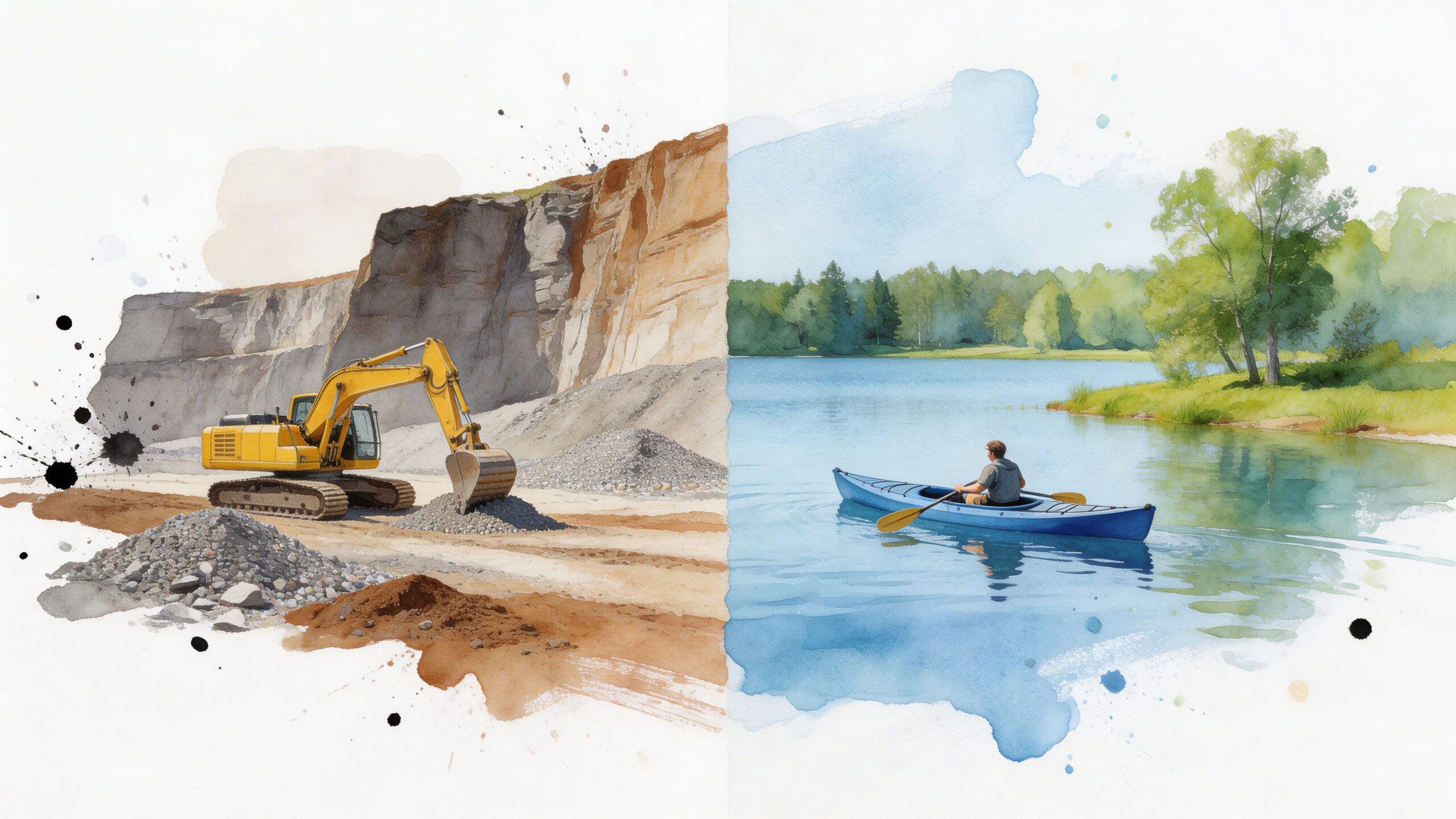
    A split-screen watercolor illustration showing an industrial quarry on the left and a peaceful lake on the right.

    The scar beneath the beauty

    Sterling Lake covers 86 acres, and it began as a gravel quarry mined from the 1930s to the mid-1970s. Then a major restoration effort from 1989 to 1993 reshaped the contaminated site into a stable aquatic ecosystem through sediment capping and shoreline revegetation, as described by Visit Lake County's Van Patten Woods page.

    I love that story because it refuses the easy version of beauty.

    This lake did not appear untouched. People wounded this land first. Then people helped heal it. You can stand at the water’s edge and feel both truths at once.

    That lands hard if you’ve ever looked at your own life and seen old damage.

    Restoration changes how you view a natural area

    When I know the history, I stop seeing a pretty lake and start seeing a record of repair. The shoreline feels more meaningful. The calm feels earned.

    That changes the whole visit.

    You start noticing that recovery usually looks ordinary from the outside. It looks like reeds, water, stable banks, birds moving through space that once held extraction. In a person, recovery often looks ordinary too. Better routines. Cleaner choices. More patience. Less chaos.

    Healing rarely arrives with fireworks. Most of the time it looks like steadier ground.

    Watch the season, not just the scene

    This is a place worth revisiting because the woods keep changing their language.

    Here’s how I think about the seasons:

    • Spring: raw hope, bright mud, the feeling of starting before you feel ready.
    • Summer: full canopy, longer light, a more generous kind of energy.
    • Fall: clarity, edge, the beauty of things letting go.
    • Winter: honesty. No cover. No decoration. Just shape and silence.

    The preserve also carries the practical life of a working natural area. It sits along the Des Plaines River floodplain, and that terrain plays a role in holding and slowing water during heavy rain. I respect places more when they do a job as well as offer comfort.

    Looking takes practice

    A lot of people visit nature and still don’t quite see it. I’ve done that too. I’ve walked while mentally answering emails and left with almost no memory of where I was.

    If you want the woods to hit deeper, slow down enough to notice one thing fully.

    Try one of these:

    • Follow the shoreline with your eyes instead of rushing to the next turn.
    • Stand still under the oaks and listen until the loudest sound changes.
    • Look for contrast between restored water, floodplain, and forest.

    Van Patten Woods teaches a blunt lesson. A damaged place can become generous again. That’s not just ecology. That’s a way to live.

    Designing Your Perfect Day

    A good day in the woods doesn’t happen by accident. It helps to choose your purpose before you arrive.

    When I started getting serious about changing my own habits, I stopped hoping my days would somehow improve on their own. I started designing them. A visit to Van Patten Woods gets better when you do the same.

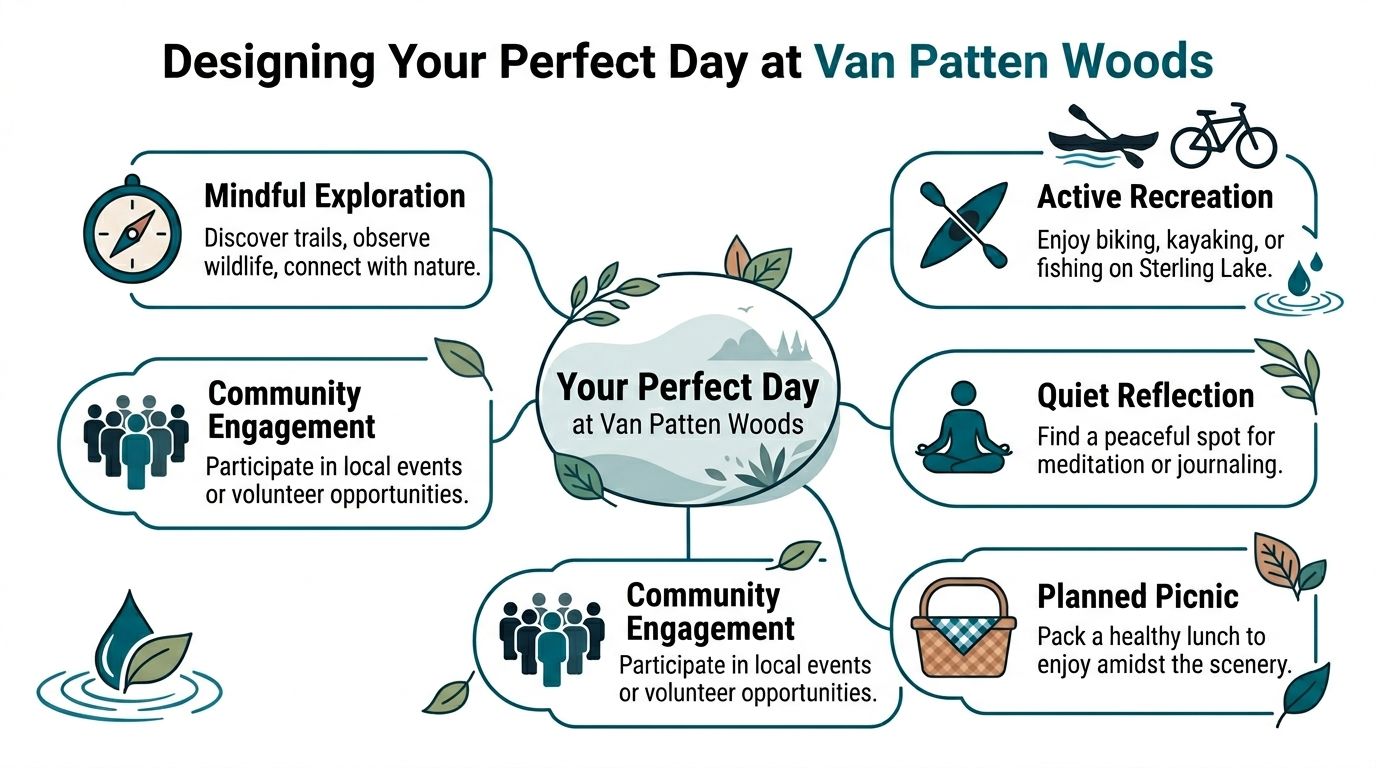
    An infographic titled Designing Your Perfect Day at Van Patten Woods listing various recreational activity ideas.

    The Solo Reset

    This is the one I recommend when life feels too loud.

    Arrive early. Walk at a brisk pace until your thoughts stop tripping over each other. Then sit by the lake without reaching for your phone.

    That last part matters more than people admit. If you fill every quiet second, you never hear what your mind has been trying to say.

    Good ingredients for this version:

    • A thermos or water bottle
    • Shoes you don’t mind getting dusty
    • A small notebook if thoughts come loose

    The Connector Day

    Some places make conversation easier because your bodies have something simple to do while your minds open up.

    Bring one friend. Keep the plan loose. Walk, pause, point things out, maybe eat lunch after. You don’t need entertainment when the environment does the heavy lifting.

    This kind of day works especially well if a friendship has felt rushed, distracted, or trapped inside restaurants and screens.

    The Water-and-Motion Day

    Sterling Lake gives you more than a view. The preserve offers a wheelchair-accessible floating dock, two fishing piers, and a boat ramp for non-motorized craft, with electric trolling motors allowed, based on the verified park details provided for this article.

    That opens up a different kind of outing.

    Try this blend:

    1. Start with a trail walk.
    2. Shift to fishing or paddling if that’s your thing.
    3. End with a quiet sit before leaving.

    The day feels fuller when it includes both movement and pause.

    The Intentional blueprint

    If you don’t know what to choose, use this filter.

    Day style Best if you feel What to prioritize
    Solo Reset Overstimulated Silence and slow observation
    Connector Day Disconnected Easy walking and conversation
    Water-and-Motion Day Restless Variety and physical engagement

    I think intention is underrated. You don’t need a perfect day. You need a day with shape. Van Patten Woods gives you enough options to build one that meets you where you are.

    Leaving the Woods Better Than You Found It

    Many visitors think a park visit ends with a nice walk, a photo, maybe tired legs. I think that’s too small.

    A place gives you something. You can give something back.

    A happy diverse family picking up trash and cleaning litter from the grass in a park.

    Don’t stay a spectator

    I used to think stewardship belonged to experts, staff, or the especially outdoorsy. That idea falls apart fast once you spend time in real public spaces.

    Public land stays beautiful because people decide it matters.

    At Van Patten Woods, that can be simple. Pick up a stray bottle near the shoreline. Grab a snack wrapper from the trail edge. Set a better tone than the one you found.

    This isn't about guilt. It's about identity.

    Small acts build a stronger self

    One of the strangest truths in life is that helping with an outer mess can steady something inside you.

    There’s a satisfaction in doing one direct, useful thing with your own hands. No performance. No abstract opinions. Just action.

    That’s why I think environmental care is personal care too.

    If this idea resonates, I like the framing in this piece on environmental stewardship. It treats care for a place as a lived practice, not a slogan.

    A field note: Pride grows when you leave evidence that you contributed.

    How to do it without making it weird

    You don’t need to turn your outing into a full cleanup operation. Keep it light and respectful.

    A practical approach:

    • Bring gloves: Lightweight work gloves make it easier to help safely.
    • Use a spare bag: One small bag is enough for incidental litter.
    • Know your limit: Leave hazardous items alone and report them if needed.

    That last point matters. Courage doesn’t mean carelessness.

    Service changes the flavor of the day

    A walk can refresh you. A small act of service can strengthen you.

    That’s the difference.

    When you leave Van Patten Woods after giving something back, the visit sticks differently. The memory has more grit. More ownership. More meaning. You weren't just a consumer of scenery. You joined the life of the place for a moment.

    I think that’s part of growing up, no matter your age. You stop asking only, “What can I get from this place?” You start asking, “How can I honor it?”

    That question improves more than parks.

    Your Questions About Van Patten Woods Answered

    Let’s keep the last details clean and useful.

    Can you bring a dog

    Yes. Dogs are generally welcome if you keep them leashed and clean up after them. Good trail manners make the day better for everyone.

    Are there restrooms

    Yes. You can expect restroom access near main visitor areas. I still recommend handling the basics before you arrive if you want a low-stress start.

    Can you fish at Sterling Lake

    Yes, fishing is part of the draw here. Sterling Lake includes two fishing piers and a wheelchair-accessible floating dock, based on the verified preserve details already referenced in this article.

    Bring whatever licenses and gear Illinois requires for your outing. Check current rules before you go.

    Can you bring a kayak or canoe

    Yes. Non-motorized boats such as canoes, kayaks, and paddleboards are allowed, and electric trolling motors are permitted. The launch is free, and the setup is designed for cartop-style access according to the verified preserve information provided for this piece.

    Is Van Patten Woods accessible

    Parts of it are built with accessibility in mind. The floating dock is accessible, and the easier lake-adjacent routes tend to work better for wheelchairs and strollers than rougher woodland paths.

    Can you camp there

    Yes, but not in the casual, show-up-and-pitch-a-tent sense. The preserve has a rustic campground for organized youth groups of up to 60 participants, and reservations require a permit through the district offices, based on the verified details provided for this article.

    What activities fit best here

    That depends on your mood.

    If you want a short answer, use this:

    • Need peace: walk and sit by the lake
    • Need movement: bike or hike the trail system
    • Need focus: fish, paddle, or take the woods slowly
    • Need connection: bring one good friend and let the preserve carry the conversation

    Van Patten Woods works best when you don’t demand too much from it. Show up ready to notice, and it gives a lot back.


    If you want to turn that energy into action after your visit, check out Litter Caterpillars. It’s a Chicago volunteer group built around service, friendship, and the idea that caring for the environment can also reshape your own life.