Tag: illinois state parks

  • Goose Lake Prairie State Natural Area: A Visitor’s Guide

    Goose Lake Prairie State Natural Area: A Visitor’s Guide

    I once finished a trash pickup on a windburned Chicago morning and drove out to Goose Lake Prairie with dirty boots still in the trunk. By the time I stepped onto the trail, the city noise had drained out of me, and all that was left was sky, grass, and the uncomfortable feeling that I had no more excuses.

    An Escape You Have to Earn

    Some places let you stay half-asleep. Goose Lake Prairie State Natural Area doesn't feel like that.

    You don't stroll into a prairie the way you drift through a farmer's market or wander into a coffee shop. You go there because something in you is crowded. Your head is loud. Your phone has trained you to twitch every few minutes. You need a bigger room, and sometimes the only room big enough is outside.
    A surreal watercolor illustration blending a peaceful prairie sunset landscape with a bustling vintage Chicago street scene.

    When the city gets too tight

    I've had mornings where Chicago felt like a fist. Traffic. Sirens. Fast food wrappers in the gutter. That strange exhaustion you get when you've talked to too many people and still haven't said anything real. Then you drive out and the horizon opens up so wide it almost insults you.

    The prairie doesn't flatter you. It doesn't entertain you. It strips things down.

    A forgotten alley teaches a similar lesson. When you're standing there with a grabber in one hand and a bag in the other, there isn't much room for self-deception. You either pick up the trash or you don't. At Goose Lake, you either walk into the openness or you retreat to the car.

    You don't come to a prairie to be distracted. You come to see what still rattles around inside you when the noise is gone.

    A different kind of challenge

    A lot of people hear "state natural area" and think easy day trip. Maybe a pleasant little walk. Maybe a few photos. That's not wrong, but it misses the point.

    This place asks for more than attendance. It asks for attention.

    If you've ever done something hard on purpose, you'll recognize the feeling. The first cold minute. The first muddy patch. The first stretch where there isn't shade and you're alone with your breathing. That's the good part. That's where you stop acting like your life is happening to you and start meeting it head-on.

    Here is what I mean:

    • You leave the easy script: no store windows, no quick exit into a restaurant, no scrolling while pretending to look around.
    • You feel small in a healthy way: big sky does that. It cuts ego down to size.
    • You remember your body: your legs work, your lungs work, your senses wake up.

    If you're thinking about visiting Goose Lake Prairie State Natural Area, go with the right frame of mind. Don't go looking for a polished attraction. Go because you want something real. Go because routine has made you soft and scattered. Go because a little discomfort can clean a person out better than comfort ever will.

    What Exactly Is This Place

    Before you walk it, it helps to know what you're standing in.

    Goose Lake Prairie State Natural Area is a 2,537-acre state park in Grundy County, Illinois, and more than half of it is protected as a tallgrass prairie nature preserve. It's about 50 miles southwest of Chicago, and it's one of the rare large remnants of the world that once covered nearly 60% of Illinois, as described in the Goose Lake Prairie State Natural Area entry.
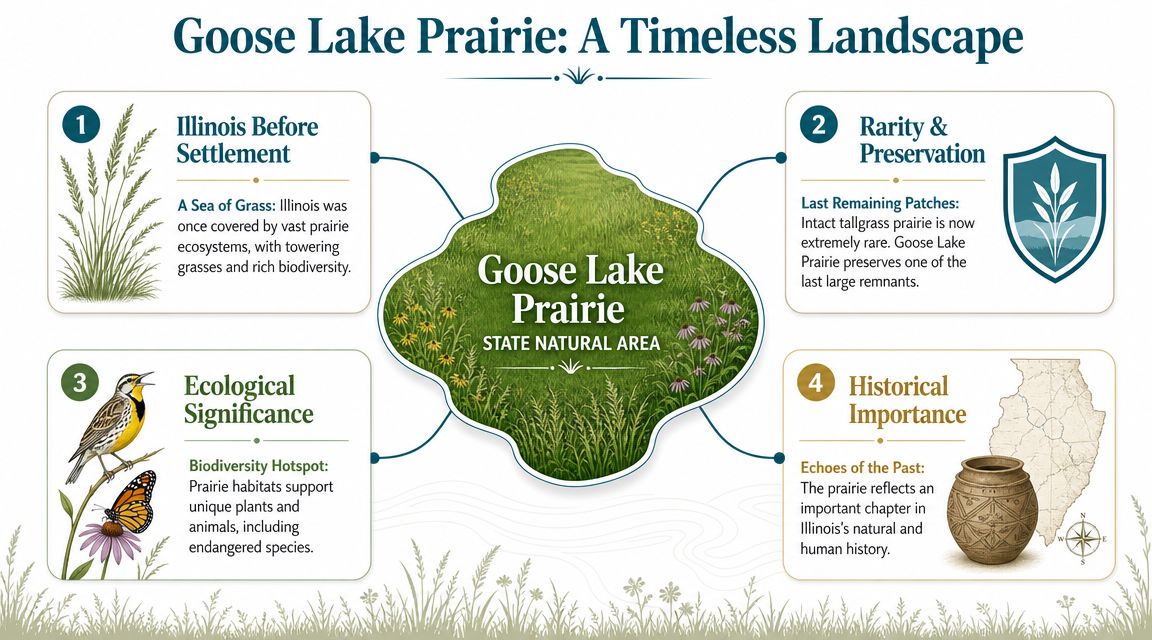
    An infographic titled Goose Lake Prairie: A Timeless Landscape explaining the history and ecological significance of the area.

    The original Illinois

    If you've lived around Chicago long enough, it's easy to think Illinois was always roads, subdivisions, parking lots, cornfields, and industrial strips. It wasn't. A huge amount of it was prairie. Grassland. Wind and root and fire and birds.

    It is an ocean, its waves formed by stems instead of water.

    Tallgrass prairie sounds simple, but it hits hard when you actually see it. You aren't looking at lawn grass. You aren't looking at a manicured park. You're looking at a living system built by plants that rise over your head and anchor deep into the ground. It feels old in a way that cities never do.

    Why it feels like lost property

    The reason Goose Lake hits people so hard is that it doesn't feel decorative. It feels like inheritance. Like something your state used to have in abundance and then mostly traded away.

    That changes how you walk.

    You stop asking, "What's the attraction?" and start asking, "How much of this is left?" That question gives the place weight without needing any hype. You can feel it in your chest when the wind moves through the grass and there isn't a building in the frame.

    Practical rule: If a place feels ancient and fragile at the same time, walk slower and pay better attention.

    What to notice first

    When you arrive, don't rush to identify every plant or bird. Start simpler than that.

    Try this short mental checklist:

    1. Look at the scale
      Let your eyes adjust to distance. Prairie doesn't give you the same visual clutter as the city. It gives you room.

    2. Notice the height
      Some native grasses here can tower over a person. That changes how the whole place feels.

    3. Feel the exposure
      You're not tucked into dense woods. The openness is part of the experience.

    Goose Lake Prairie State Natural Area makes more sense when you stop treating it like a park built for you and start treating it like a surviving piece of a much older Illinois.

    Your Guide to Getting There

    The drive is part of the reset.

    Goose Lake Prairie State Natural Area sits far enough from Chicago that you feel the city loosen its grip, but close enough that you can still make it a day trip. If you want a broader shortlist before you commit, this guide to a state park in Illinois near Chicago helps you compare options.

    Mission briefing before you leave

    Keep this simple. You don't need a heroic plan. You need a clean one.

    • Pick your window early: Morning is better if you want cooler air, softer light, and a quieter start.
    • Dress for exposure: Prairie sun and wind hit differently because you don't get the same shelter you'd get on a wooded trail.
    • Bring water and keep it honest: Even a short outing feels longer when you're in open country and fully present.

    I also like to leave my phone on silent once I get close. Not because silence is sacred, but because most of us are too reachable. The drive out is your chance to stop reacting.

    What the route feels like

    The best part of driving to Goose Lake isn't some dramatic final turn. It's the gradual stripping away. The streets get less packed. The visual noise drops. The billboards start losing to open space.

    That transition matters. It gives your mind time to catch up to your body.

    If you've spent weeks boxed in by the same train lines, office ceilings, apartment walls, and corner stores, a prairie trip can feel oddly serious. You don't need to make it mystical. Just notice that you are leaving one rhythm and entering another.

    When you pull in

    Once you're there, pause before you move. Sit for a minute in the parked car with the engine off. Let the stillness reach you before you start planning your route.

    A few practical habits make the visit better:

    What to do Why it helps
    Check the conditions around you Wind, mud, and sun shape the day more than people expect
    Choose a trail before walking Wandering without a plan can turn into rushed backtracking
    Keep your gear light Less fiddling means more attention on the prairie

    If you want the prairie to clear your head, don't bring your entire indoor life with you in a backpack.

    That first step out of the car is where the visit really starts. You've already done the hard part by leaving your routine.

    Choose Your Path on the Trails

    Goose Lake Prairie State Natural Area has 7 miles of hiking trails, including the Tall Grass Nature Trail and the Prairie View Trail, according to the Illinois Department of Natural Resources trail page. The Tall Grass route puts you close to native grasses like big bluestem and Indian grass, which can grow to 8 feet tall. Prairie View reaches the highest point at Goose Lake and looks over reclaimed mine areas. The Sagashka Trail crosses a mix of nature preserve, restoration areas, and marshy habitat.
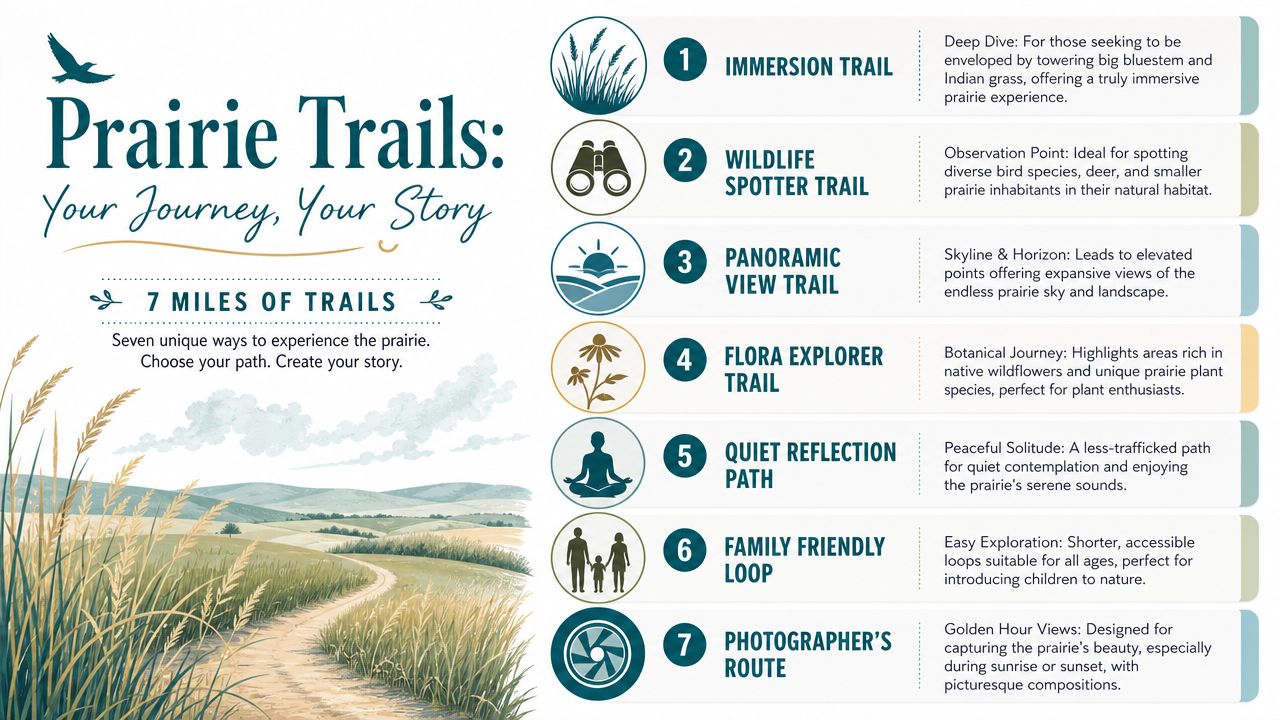
    An infographic titled Prairie Trails showing seven numbered hiking trails with icons and descriptions of the prairie.

    The trail that swallows you whole

    The first time you get close to those tall grasses, it changes your posture. You stop moving like you're in a casual urban park. You start moving like you're inside something.

    That is why I like the Tall Grass Nature Trail for people who need a reset fast. It gets physical and psychological at the same time. The grasses don't just look tall in photos. They can grow to 8 feet, and when you're near them, the prairie stops being a postcard and starts being an environment.

    If your life has felt shallow lately, this trail helps. It pulls you into the texture of the place.

    The trail for bigger views

    Prairie View Trail is where I send the person who wants a longer breath and a wider horizon. The route goes to the highest point in the park and gives you views over reclaimed mine areas. That matters because you can see different chapters of land use and repair in one outing.

    Here is the feeling of it. You walk, the ground rolls, the sky keeps opening, and suddenly your normal worries look tiny and repetitive.

    To get a visual sense of the place before you go, this clip helps:

    The trail for comparison

    Sagashka Trail is for the person who likes seeing contrast. It moves through nature preserve, restoration areas, and marshy habitat. That gives you a compact lesson in paying attention. One stretch feels dense. Another feels open. Another feels soft underfoot and alive in a different way.

    Try choosing your route by mood:

    • You want immersion: go where the grasses crowd your senses.
    • You want perspective: take the path that gets you elevation and long views.
    • You want to study change: walk where habitats shift and compare what you see.

    There isn't one correct trail at Goose Lake Prairie State Natural Area. The right trail is the one that meets the version of you who showed up that day. Tired. Restless. Brave. Uncertain. It can handle all of that.

    How to Experience the Prairie All Year

    A prairie in summer is easy to love. The harder seasons tell you more.

    Public-facing descriptions of Goose Lake Prairie mention hiking, winter cross-country skiing, and bird habitat, but they don't always give much season-by-season guidance. The Enjoy Illinois page for Goose Lake Prairie makes one thing clear: more than half the area is a dedicated nature preserve protecting species including the Henslow's sparrow and the upland sandpiper, so responsible visitation changes with the season.
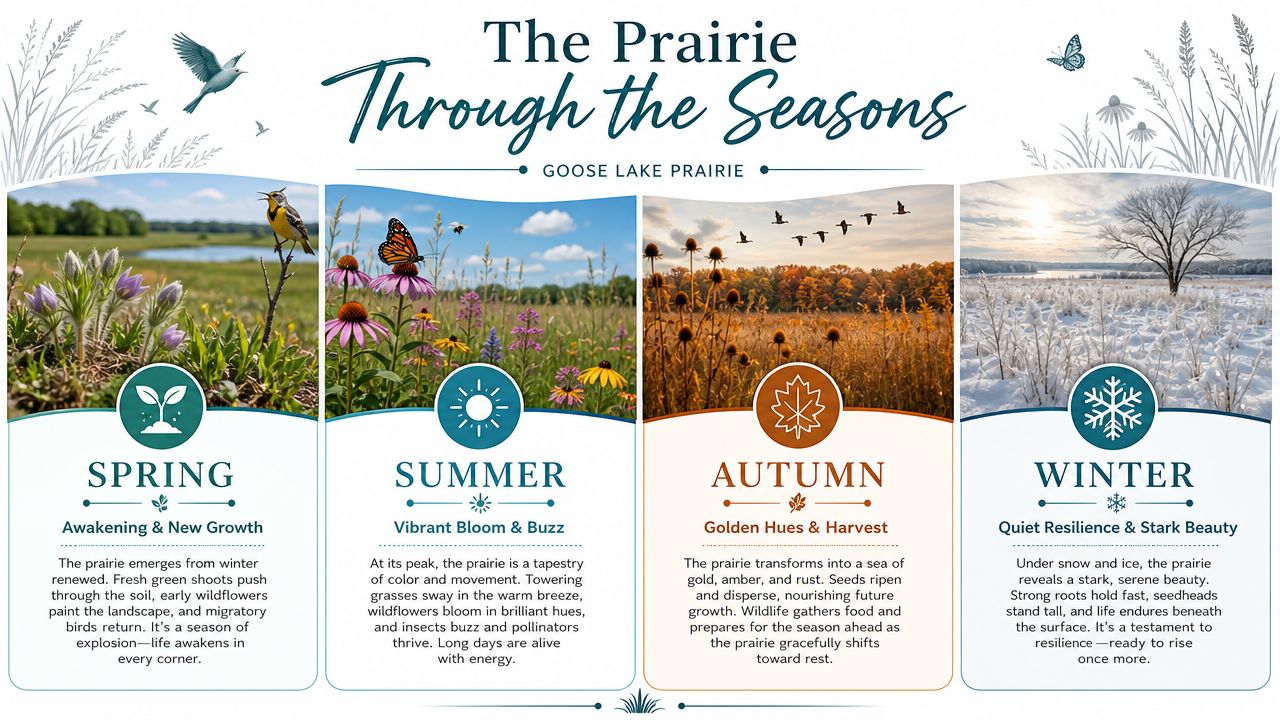
    A scenic infographic showing the cycle of seasons in the Goose Lake Prairie with beautiful landscape photography.

    Spring and summer

    Spring is messy. That's part of its honesty.

    Trails can feel muddy, the air can flip from warm to sharp in a hurry, and the ground has that half-awake look where life is pushing up but hasn't settled yet. I like spring for people who don't need perfection. You hear more, smell more earth, and remember that rebirth is usually awkward before it's pretty.

    Summer is the season that overwhelms people in a good way. The grasses rise, insects buzz, and the prairie starts feeling almost architectural. It can also feel exposed and hot. That's the trade. You get fullness, but you need to respect the weather and your limits.

    Fall and winter

    Fall has a calmer authority. The colors turn drier and warmer. Seed heads and stems catch the light in a way that makes the whole prairie feel stripped down and finished at once.

    Winter is for the people who want the cleanest line. No lush distraction. No softness. Just form, distance, wind, and whatever grit you brought with you. The openness gets even more intense when the year is bare.

    In winter, a prairie can feel bigger because there's less asking for your attention.

    A simple seasonal code

    The most useful way to think about the year at Goose Lake isn't by calendar labels. Think in terms of pressure and care.

    • During wet periods: expect softer ground and slower walking.
    • During bird-sensitive times: keep your distance, stay on marked routes, and don't chase a better photo.
    • During harsh weather: treat the prairie like a real outdoor environment, not a casual errand.

    If you're after comfort, pick your day carefully. If you're after clarity, almost any season can give it to you.

    Beyond the Hike What Else to Do

    Walking is only half the experience. The other half is learning how to notice.

    The park's 7 miles of trails, including the 3.5-mile Prairie View Trail, give you room for recreation and for watching how restoration supports biodiversity, according to the Illinois DNR park page for Goose Lake Prairie. That means a visit can be active without being rushed. It can also be quiet without being empty.

    Birding and photography without acting like you own the place

    The people who get the most out of Goose Lake Prairie usually aren't the ones sprinting for maximum trail mileage. They're the ones who stop. They look longer. They let the place reveal itself at its own pace.

    If you bring binoculars, use them as an excuse to slow down. If you bring a camera, don't turn the whole visit into a hunt for content. The prairie is better when you let it stay bigger than your feed.

    A few habits help:

    • Stay patient: birds and small movements often show up after you've been still for a while.
    • Work with distance: the openness can make everything look closer than it is.
    • Shoot the scale: wide views, changing light, and weather often tell the story better than a tight close-up.

    Read the ground

    What I like most about places like this is that observation becomes a form of work. You're learning to read signs. Where the plants change. Where the habitat shifts. Where the reclaimed areas and restored areas create a different feel.

    That same mindset helps in other prairie spaces too. If you're curious how another Illinois prairie visit can feel more grounded and less rushed, this look at Springbrook Prairie Pavilion is worth your time.

    Field note: The best outdoor skill isn't speed. It's restraint.

    Be the kind of visitor you'd want after you

    Goose Lake Prairie State Natural Area doesn't need you to improve it during your visit. It needs you not to cheapen it.

    That means staying on trails, leaving plants where they are, giving wildlife space, and carrying out every scrap you brought in. The standard is simple. Leave no little mess for somebody else to deal with later.

    If the place moves you, let that change your behavior after the trip too. Pick up litter in your neighborhood. Learn your local preserves. Return with more patience than you had the first time. Service doesn't always begin with a trash bag. Sometimes it begins with finally paying attention.

    Find Your Own Prairie

    I think a lot of us are starved for difficulty that benefits us.

    We get plenty of fake difficulty. Endless messages. Petty drama. Digital noise. The constant friction of modern life. Very little of that makes us better. It just wears us down. Goose Lake Prairie State Natural Area is different because the challenge is clean. Walk the trail. Face the weather. Stay present. Respect what's alive around you.

    Why this kind of place changes people

    A prairie doesn't flatter your ego. It gives you scale. That can sting a little at first.

    When you're standing in open country, you can't pretend your whole life is your inbox, your apartment, your job title, or the story you've been repeating about why you're stuck. The place interrupts that loop. It reminds you that attention is a choice.

    That is why I think people should go, especially when they feel off. Not because the prairie is magic. Because showing up somewhere real has consequences. You breathe differently. You walk differently. You start asking harder questions.

    Go before you feel ready

    You do not need to become an outdoors person first. You do not need the perfect gear, the perfect friend group, or the perfect free weekend.

    You need enough willingness to break pattern.

    If Goose Lake stirs something in you, keep the thread going. Visit another prairie. Learn another trail. Try a place with different ground and water and history, like the Des Plaines Dolomite Prairies Land and Water Reserve. Build a life that has more real weather in it.

    Go when you're tired. Go when you've been hiding indoors too long. Go when your thoughts have started to smell stale.

    The prairie won't solve your life. That's too much to ask from any place. But it can do something better. It can return you to yourself for a few hours. Sometimes that's enough to start cleaning up the rest.


    If this piece lit a fire in you, take the next step with Litter Caterpillars. Show up for a cleanup, meet good people, and do one real thing with your hands. That's where clarity starts.
  • 7 Best State Park in Illinois Near Chicago (2026 Guide)

    7 Best State Park in Illinois Near Chicago (2026 Guide)

    I remember staring at a moldy jar in my fridge like it was a moral failure. Then I went outside, picked up trash with other people, and felt lighter before the bag was even full.

    Your mess is heavier than any trash bag. The mail pile. The stale relationship. The habits you keep stepping around. I know that weight because I built Litter Caterpillars out of it. My own life was chaotic, and I learned something weirdly hopeful. Cleaning up someone else’s mess is way easier than cleaning up your own. That’s not avoidance. It’s a doorway. You grab a bag, step onto a trail, and your body learns a lesson your mind has been refusing. You can show up. You can do hard things. You can leave a place better than you found it. If you’re hunting for the best state park in Illinois near Chicago, don’t just ask where the prettiest overlook is. Ask where you’ll finally breathe. Ask where your hands can help your head catch up. Start there.

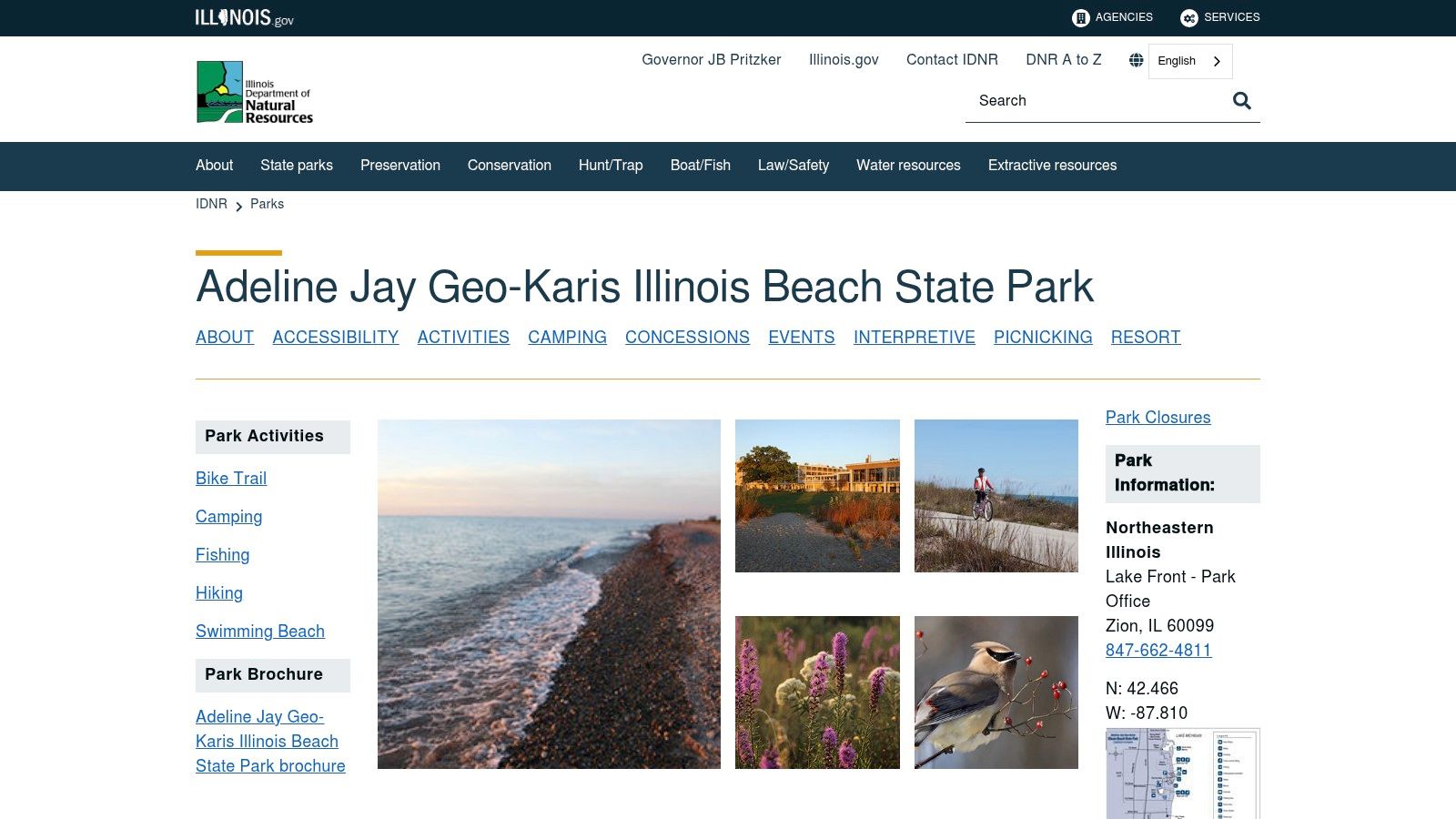
    1. Adeline Jay Geo-Karis Illinois Beach State Park

    Adeline Jay Geo-Karis Illinois Beach State Park

    When Chicago starts feeling like concrete stacked on top of stress, I want water. Not a decorative fountain. Not a riverwalk with traffic humming behind me. I want a real shoreline and enough wind to blow the stale thoughts out of my skull.

    That’s why Illinois Beach hits hard. It gives you Lake Michigan in a state park setting, which feels different from a city beach. Wilder. Less managed. More honest.

    If you want the official park page, use the Adeline Jay Geo-Karis Illinois Beach State Park website.

    Why this one works

    This park is a strong first answer to the question “what’s the best state park in Illinois near Chicago if I need a reset fast?” because it’s built for simple wins.

    • Water changes your mood: Shoreline walks force your brain to stop clenching.
    • You can keep it easy: Beach access and paved areas make this less intimidating for beginners.
    • You can stay longer: Camping and on-site lodging make it easy to turn a shaky day trip into a real weekend.

    I also like it for cleanup-minded people. Beaches make litter visible. You don’t need some grand environmental theory to understand a bottle cap in the sand. You see it. You pick it up. The place looks better immediately. So do you, on the inside.

    If you spend a lot of time closer to the city, you might also like these ideas for a forest preserve in IL. Sometimes the right first step is the closest one.

    Practical rule: Go early if you want the healing version of the lake, not the crowded version.

    The tradeoff is real. Summer can get busy. Lake conditions can change what areas are pleasant or accessible. That doesn’t ruin the park. It just means you should go with a little humility and check conditions before you drive.

    Illinois Beach is for the person who wants nature without a huge commitment. You can walk, breathe, touch the water, and remember you still belong to the physical world. That matters more than people admit.

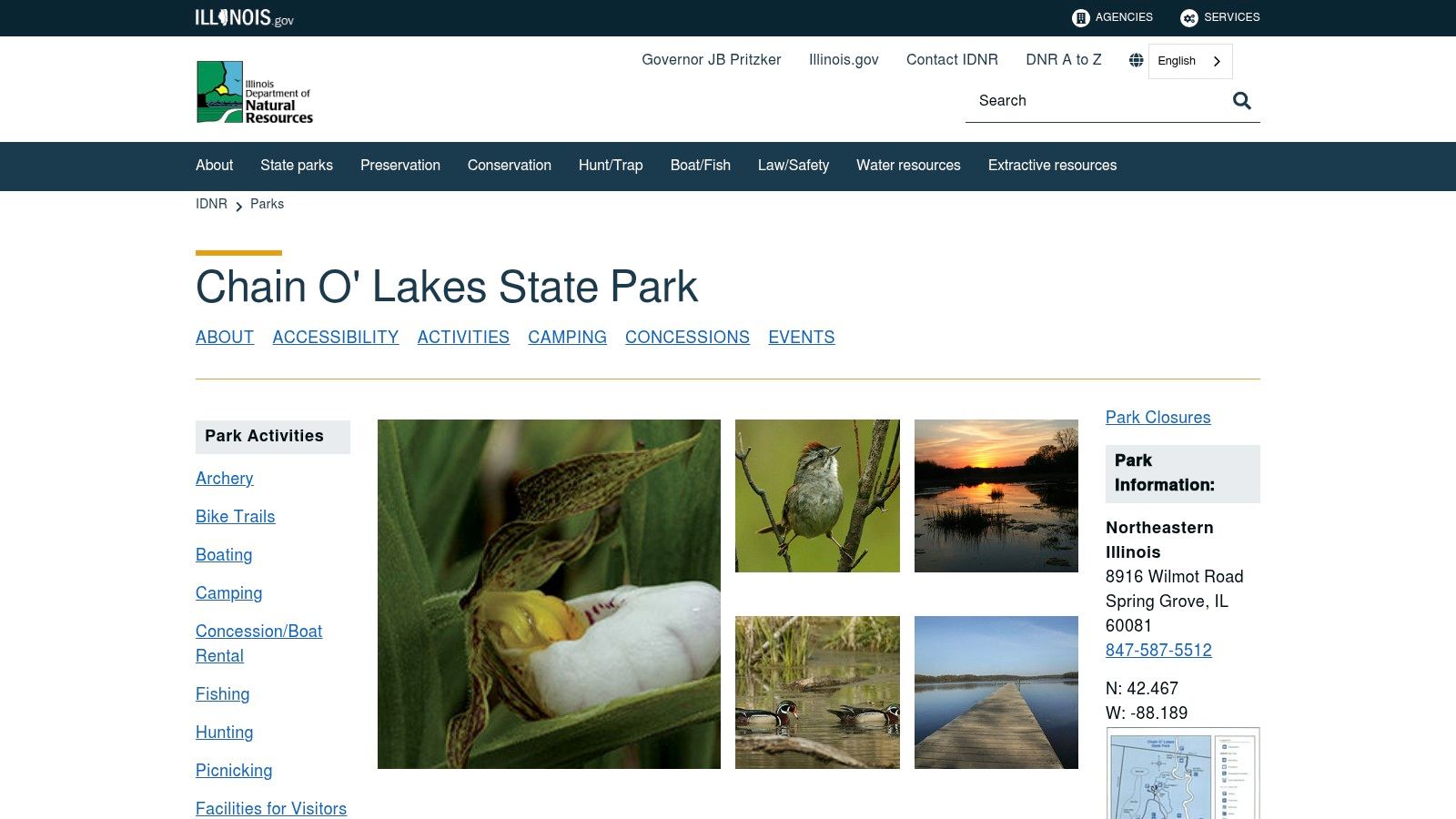
    2. Chain O' Lakes State Park

    Chain O' Lakes State Park

    Some parks ask you to hike. This one asks you to move with water.

    Chain O’ Lakes feels social in the best way. Boats. Launches. Camp spots. Trails. People cooking breakfast outside. Kids learning to paddle badly. Adults pretending they know how to tie things down. It has energy. If Starved Rock is drama, Chain O’ Lakes is motion.

    You can check details on the Chain O’ Lakes State Park website.

    Best for people who need momentum

    I recommend this park to people who say they’re “stuck.” Not sad, exactly. Not broken. Just spiritually parked in neutral.

    Water systems teach a blunt lesson. You’re not supposed to sit still forever.

    Here’s what I like about it:

    • You get options: Paddling, boating, fishing, trails, camping. That matters when your group can’t agree on one thing.
    • It works for friend-building: Shared activity kills awkwardness fast.
    • It rewards a full day: You don’t show up, take one photo, and leave. You settle in.

    And that’s the deeper point. A good state park in Illinois near Chicago shouldn’t just entertain you. It should interrupt you. Chain O’ Lakes does that because it makes idleness inconvenient. Once you’re there, you start doing things.

    Some people need silence to reset. Other people need motion. Be honest about which one you are.

    The downside is obvious. Busy water brings busy people. Peak season can feel crowded, and marshy areas can come with mosquitoes. Late-season activity changes can also affect what parts of the park feel open or quiet. None of that is a dealbreaker. It just means this park rewards planning more than spontaneity.

    I’d bring friends here when I want service and fun to sit in the same day. Paddle in the morning. Clean a shoreline edge if you’re doing your own informal stewardship. Eat lunch tired. Laugh harder than you expected. That’s not small. That’s how people start becoming useful to each other.

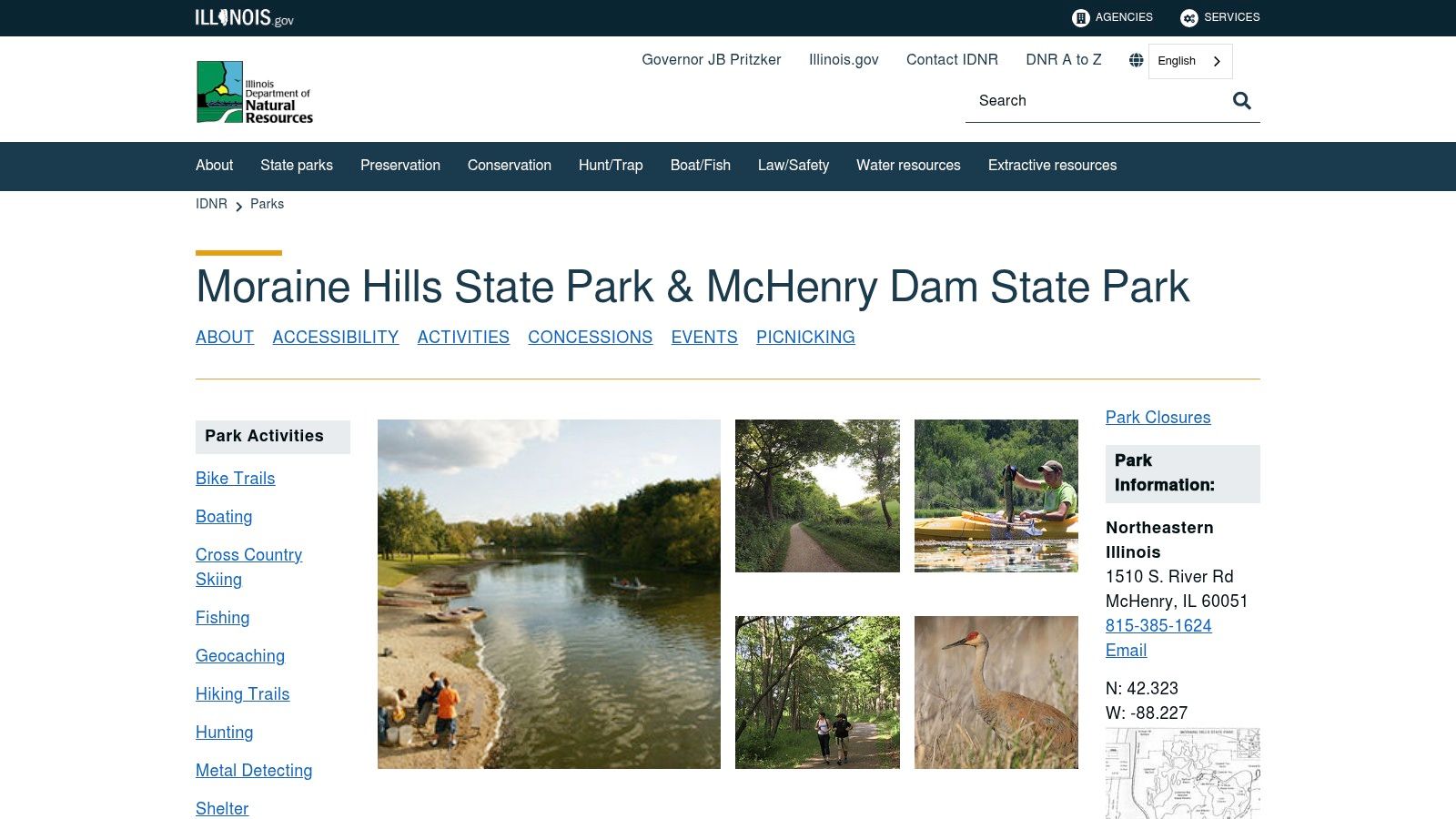
    3. Moraine Hills State Park & McHenry Dam State Park

    Moraine Hills State Park & McHenry Dam State Park

    This is the pair I’d hand to a beginner.

    Not everyone needs the grand canyon version of Illinois. Some of you need a place where you can show up without pressure, walk without performance, and leave feeling steadier than when you arrived. Moraine Hills and nearby McHenry Dam do that well.

    Use the Moraine Hills State Park website for current park info.

    Easy doesn’t mean weak

    I get annoyed when people act like only the dramatic parks count. That’s ego talking. If your life is messy, the best park is the one you’ll visit.

    Moraine Hills gives you trails, wetlands, lake views, river edges, and bird-heavy quiet without demanding some rugged identity. McHenry Dam adds more river access and fishing energy. Together they create a day that feels full but not punishing.

    A few reasons I’d send a mixed group here:

    • Low-friction day trip: Good if half your group is enthusiastic and the other half almost canceled.
    • Different trail vibes: Helpful when fitness levels don’t match.
    • No camping pressure at Moraine Hills: That makes planning simpler for people who just need a clean morning outdoors.

    I also like this area for volunteer-minded walks. Day-use parks create a psychological boundary. You come, you do the thing, you leave. That can be perfect for someone rebuilding consistency. No overthinking. No giant production. Just a date on the calendar and shoes by the door.

    The real gift

    This place teaches gentleness without laziness. That’s rare.

    A lot of us swing between two bad modes. We either avoid hard things or make everything harder than it has to be so we can feel heroic. Moraine Hills rejects both. It says, take the walk. Notice the water. Pick up the wrapper. Be normal and decent. Repeat.

    The main limitation is also the strength. This is not an overnight adventure base in the same way some other parks are. It’s better for a half-day or full day reset. If that sounds too plain, good. Plain saves lives. Ordinary habits rescue people more often than dramatic breakthroughs do.

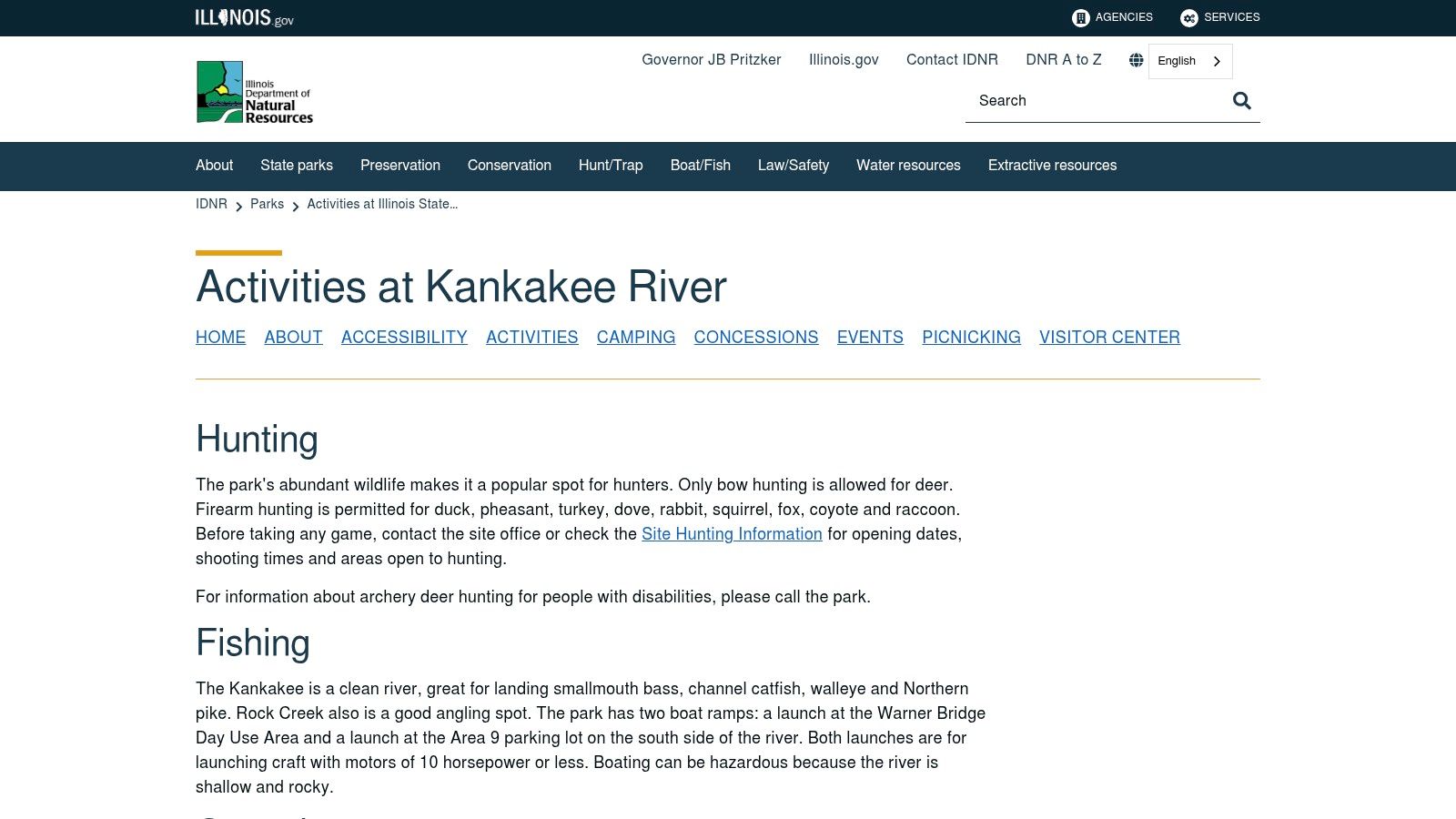
    4. Kankakee River State Park

    Kankakee River State Park

    Kankakee River State Park feels like a place where you go to get your head knocked straight.

    Not by cruelty. By clarity.

    There’s something about a rocky river corridor that strips away self-pity. You hear current. You see stone. You understand, very quickly, that nature is not your therapist. It’s better. It doesn’t flatter you.

    You can plan through the Kankakee River State Park website.

    For people who need edge, not comfort

    This park works when you want more than a stroll. The river, the canyon trail, the bike path, the shelters, the campgrounds. It gives you ways to spend your energy on something real.

    That’s why I like it for groups. A park like this lets people spread out across activities and still share one story together.

    If you already love linear trail systems and riverside miles, you might also enjoy the Des Plaines River Trail near Chicago. It scratches a similar itch in a different way.

    Don’t come here to drift around indecisively. Pick the trail. Pick the shelter. Pick the plan.

    I respect Kankakee because it has rules that force respect back. You can’t swim in the park because of the currents and rocky bottom. Good. Not every place should bend to what you feel like doing that day. Sometimes growth starts when you accept the terrain instead of arguing with it.

    Why it sticks with you

    This is one of the better answers if you want a state park in Illinois near Chicago that can hold both activity and reflection. Bike for a while. Sit by the river. Cook something simple. Pick up trash along a corridor where litter looks especially insulting against the natural setting. That contrast wakes people up.

    The caution is straightforward. Check park notices before you go. Infrastructure or area access can shift. If your whole trip depends on one access point being open, you’re planning too tightly anyway.

    Kankakee is a park for rebuilding backbone. Not with motivational speeches. With motion, rock, current, and a day that asks something from you.

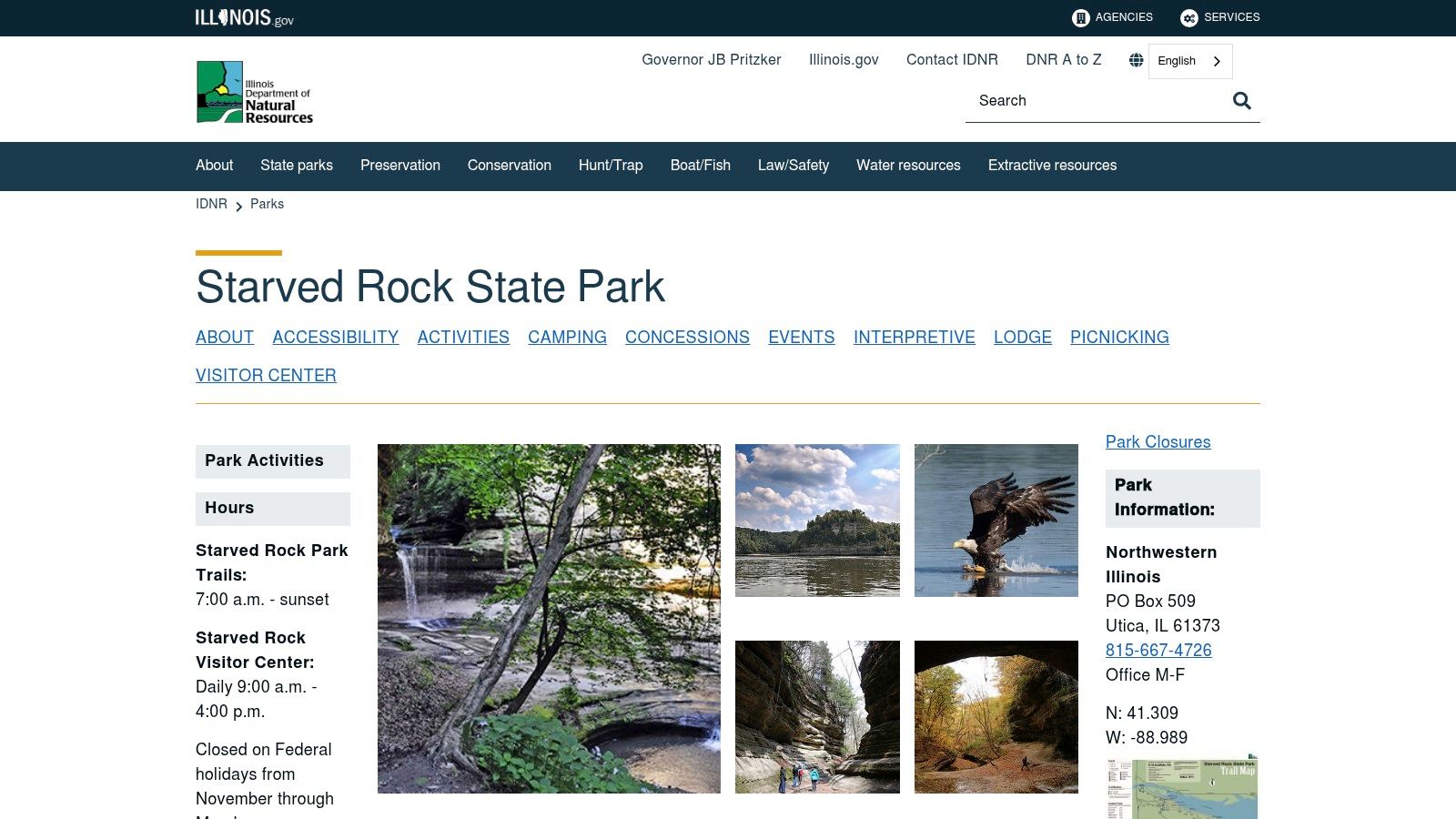
    5. Starved Rock State Park

    Starved Rock State Park

    I watched a family spill out of an SUV at Starved Rock like they had been holding their breath since Joliet. Kids sprinted toward the overlook. Dad was still checking his phone. Mom was already pointing at the trees like she needed proof that the world was bigger than errands and bills.

    That’s Starved Rock.

    You drive down from Chicago carrying your own noise, then a canyon wall, a waterfall, or a sweep of the Illinois River cuts straight through it. The park is famous for good reason. It pulls huge crowds, and Time Out Chicago’s report on the Google Maps ranking points to just how many people keep showing up. Use the official Starved Rock State Park website before you go.

    The beauty is real. So is the test.

    A place this loved gets worn down.

    You’ll feel that tension fast. One minute you’re staring into a sandstone canyon, the next you’re stepping around mud, noise, and the leftovers people were too lazy to carry out. Good. Let that bother you. That irritation is useful. It means you still know the difference between a gift and a mess.

    This is why Starved Rock matters to me more than some quieter park with easier logistics. It puts the whole Litter Caterpillars idea right in front of your face. You came out here to clear your head. Fine. Now prove it by helping clear the trail. If you want to turn that impulse into action, start with this guide on how to clean up a park.

    Come for the canyon. Leave with dirt on your hands and a better reason for being there.

    You also need to plan like an adult. High traffic changes the day. Closures change the day too. Enjoy Illinois notes that Starved Rock’s Trail Project Phase 1 is scheduled to run from late March through June 2026, with closures affecting areas including French Canyon and Tonti Bridge, so your route and meetup plan may need to change according to this Enjoy Illinois overview of state parks and forests.

    Who should go

    Go if you need scale.

    Go if your mind has been shrinking to the size of your inbox, your rent, your grudges, your excuses. Starved Rock is big enough to interrupt that. It gives you overlooks, canyon trails, river views, and enough human traffic to remind you that beauty does not stay beautiful by accident.

    I would not send you here for quiet on a busy weekend. I would send you here if you need a first honest step. Show up early. Walk hard. Pick up what somebody else dropped. Sometimes the way out of your internal mess starts with kneeling down in a famous park and doing one unglamorous thing well.

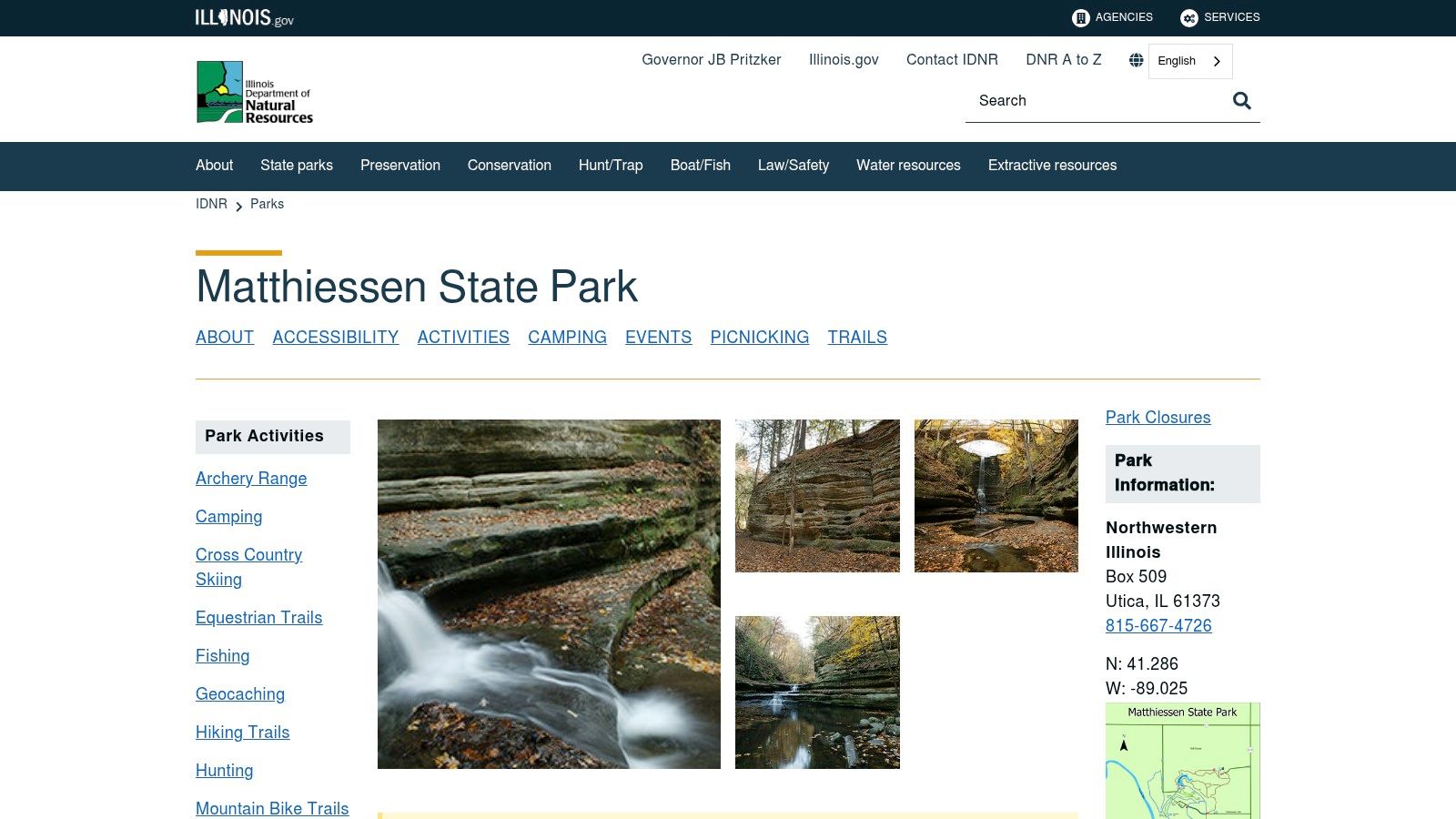
    6. Matthiessen State Park

    Matthiessen State Park

    Matthiessen is the friend of the famous guy.

    It sits near Starved Rock, and that’s exactly why some people overlook it. Big mistake. If you want canyons, bridges, and that sudden feeling that Illinois has more drama in it than outsiders assume, Matthiessen delivers. Sometimes the side character is the one with the better soul.

    You can get official details at the Matthiessen State Park website.

    Smaller stage, sharp payoff

    I love parks like this because they expose a common flaw in people. We chase the place with the giant reputation, then act surprised when everyone else had the same idea.

    Matthiessen often feels like the smarter move. You still get sandstone scenery and waterfall energy, but the experience can feel more compact and manageable. It’s easier to combine with a bigger trip. It’s easier to recommend to someone who wants beauty without spending the whole day in one famous funnel of people.

    That makes it a great “prove it” park.

    • Prove you’ll wake up early: Pair it with another stop.
    • Prove you’ll keep moving: Take the stairs and trails seriously.
    • Prove you don’t need hype: Let the park speak for itself.

    I especially like this park for people who are learning to choose substance over prestige. That sounds dramatic for a park recommendation, but it’s true. Life gets better when you stop outsourcing your judgment to popularity.

    A good test of your honesty

    If you say you want nature, Matthiessen asks whether you mean actual nature or just recognizable nature.

    The tradeoff is simple. Services are more limited than at a larger destination with a lodge and broader built amenities. Capacity can also become a problem on popular weekends. So show up with a little discipline. Bring what you need. Respect closures and access limits. Don’t act shocked that a beautiful place attracts people.

    For me, Matthiessen feels like the park version of quiet confidence. Less chest-thumping. More depth. If your inner life has been noisy lately, that’s a good match.

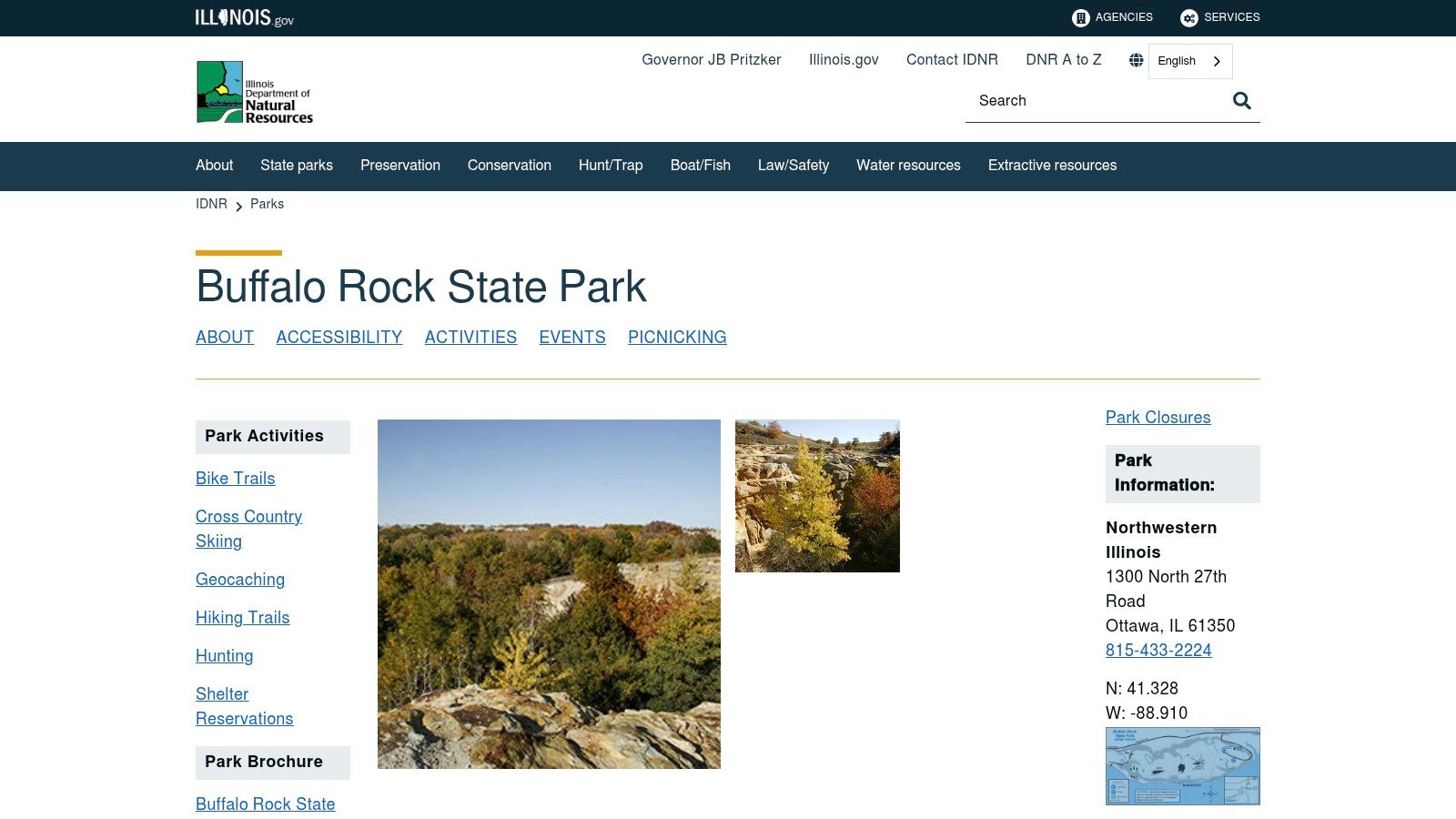
    7. Buffalo Rock State Park & Effigy Tumuli

    Buffalo Rock State Park & Effigy Tumuli

    Buffalo Rock doesn’t win by size. It wins by surprise.

    You walk short trails. You get river overlooks. You move through prairie restoration space. Then you encounter the Effigy Tumuli, giant earthwork forms shaped into animals and land-based imagination. It’s quieter than the headline parks nearby, and that quiet gives it teeth.

    The official page is the Buffalo Rock State Park website.

    This one is for people who need softness

    Not every breakthrough comes from exhaustion. Some come from walking gently through a place that asks you to pay attention.

    Buffalo Rock is a good choice if your group has mixed abilities, mixed energy, or mixed willingness. It doesn’t demand a huge day. It invites one.

    That invitation matters. A lot of people won’t start if the first step looks too heroic. They’ll start if the day feels possible.

    I also like Buffalo Rock as a counterweight to tourism brain. You don’t need a giant checklist to have a meaningful outdoor day. You need place, time, and enough openness to be affected.

    Quiet parks can still change you

    Illinois state parks as a whole saw 41 million visits in 2024, the highest annual total in 15 years, and the nine parks with more than 1 million annual visitors accounted for 14.2 million visits, about 35% of total traffic. That concentration near accessible corridors tells me something simple. Big parks absorb attention. Smaller parks can absorb you according to NPR Illinois reporting on statewide visitation.

    Buffalo Rock benefits from that contrast. It can feel like a side road off the louder story.

    Its limitations are real. Fewer facilities. Less trail mileage. Less room for large, complicated plans. But if what you want is a humane day outdoors, those limits can become strengths. You don’t need abundance to be transformed. You need contact. With land. With friends. With your better self, the one that’s been waiting for less noise.

    Comparison of 7 Illinois State Parks Near Chicago

    Park (Location) 🔄 Access & ⚡ Travel time Resource requirements (permits / gear) ⭐ Experience quality / Key advantages 📊 Expected activities / Outcomes 💡 Ideal use cases / Tips
    Adeline Jay Geo‑Karis Illinois Beach State Park (Zion, ~50 mi N of Chicago) Easy–moderate access; ~1–1.5 hr from Chicago; seasonal closures possible Campground reservations via ExploreMoreIL; basic beach/swim gear; check erosion/beach advisories ⭐⭐⭐, best for natural Lake Michigan shoreline, dunes & unique plant communities Shoreline walks, swimming (seasonal), camping, trail biking/hiking Visit weekdays or shoulder seasons to avoid crowds; monitor lake/erosion advisories
    Chain O' Lakes State Park (Spring Grove, ~60 mi NW) Moderate access; ~1–1.25 hr; peak boat traffic on busy weekends Extensive camping (230+ sites), boat rentals/concessions; boating/fishing gear recommended ⭐⭐⭐, versatile water‑recreation hub with many launch/trail options Boating, paddling, fishing, family camping, equestrian trails Reserve campsites/boat rentals in advance for summer weekends; expect mosquitoes in marsh areas
    Moraine Hills & McHenry Dam State Park (McHenry, ~50 mi NW) Easy access; ~1 hr; day‑use focused with straightforward parking No camping at Moraine Hills; boat rentals at McHenry Dam; binoculars for birding ⭐⭐, strong for short day outings, birding and mixed‑ability trails Birdwatching (200+ species), short hikes, fishing, half‑day visits Good for short trips from suburbs; bring birding/fishing gear and plan half‑day routes
    Kankakee River State Park (Bourbonnais/Bradley, ~60 mi S) Moderate access; ~1–1.5 hr; linear river corridors with some closures possible Multiple campgrounds (reservable), bike & fishing gear; no swimming due to currents ⭐⭐⭐, excellent river scenery and fishing/biking opportunities Riverfront biking, smallmouth bass/walleye fishing, group picnics, equestrian camping Bring sturdy footwear for rocky trails; check bridge/area closure notices before visiting
    Starved Rock State Park (Utica/Oglesby, ~95 mi SW) Moderate–high access effort; ~1.5–2 hr; very high visitor impact on peak days Campground/resort/lodge reservations available; visitor center; permit for large groups ⭐⭐⭐⭐, iconic canyons & waterfalls with robust visitor services Canyon hikes, waterfall viewing, guided programs, overnight lodge or campground stays Arrive early on weekends or visit off‑peak; verify phased trail closures before travel
    Matthiessen State Park (Oglesby, ~95 mi SW) Moderate access; adjacent to Starved Rock; possible weekend capacity limits No lodge; multi‑use trails (hike/mtb/equestrian); picnic gear ⭐⭐⭐, dramatic canyons with fewer crowds than Starved Rock Canyon photography, hiking, mountain biking, equestrian rides Pair with Starved Rock on the same trip; expect limited services and weekend capacity closures
    Buffalo Rock State Park & Effigy Tumuli (Ottawa, ~85 mi SW) Easy access; ~1.5 hr; small park with short loops and overlooks Minimal facilities; good for educational groups and casual hikers ⭐⭐, quiet river overlooks and unique effigy earthworks Short, flat hikes, river overlooks, educational/nature programs Ideal for mixed‑ability groups, school visits, or as a quieter alternative to nearby canyon parks

    Go Far by Going Together

    You’ve seen the parks. Good. Now I want to challenge you.

    Don’t turn this into content consumption. Don’t just forward this list to a friend, save three tabs, and keep living exactly the same way. That’s what people do when they want the feeling of change without the cost of change.

    Go outside.

    Pick one state park in Illinois near Chicago and commit. Not someday. Not when your apartment is cleaner. Not when your schedule is magically less annoying. Go while your life still feels imperfect. Especially then.

    Because that’s the secret I keep relearning. Nature doesn’t require you to arrive polished. Service doesn’t require you to be fixed. You get fixed by showing up. Slowly. Through repetition. Through weather. Through carrying a bag. Through walking a trail with people who also want to become a little better than they were last month.

    I started Litter Caterpillars because I was losing to my own mess. I’m serious. Old food, clutter, emotional chaos, bad social patterns. It all felt fused together. Then one day I learned that picking up trash outside gave me access to a version of myself I couldn’t reach alone in my room. A braver version. A cleaner version. A kinder version. Not perfect. Just moving.

    That’s why I care about these parks as more than destinations. Illinois Beach can wake you up. Chain O’ Lakes can get you moving. Moraine Hills can make starting feel possible. Kankakee can toughen your spine. Starved Rock can humble you. Matthiessen can teach you to value substance over hype. Buffalo Rock can quiet you enough to hear your own conscience again.

    And the transformation gets bigger when you do it with others.

    I still think about that first hailstorm cleanup. We were cold, stuck, half-laughing, half-miserable, trying to get home while every ride seemed to vanish. It should’ve been awful. Instead it became a story. That’s what shared effort does. It turns discomfort into meaning. It gives your life texture. Suffering together, in the right spirit, stops being pointless. It becomes glue.

    We believe service, sunlight, and friendship can change everything. We are the Litter Caterpillars. We aren’t perfect, but we’re all trying to grow. When you’re ready to stop just visiting beautiful places and start helping heal them, come with us on a Saturday morning. You’ll find out fast that it was never really about the trash. It was about becoming someone who shows up.


    If this stirred something in you, don’t let it die in another open tab. Join Litter Caterpillars and come pick up trash with us in Chicago. You’ll get sunlight, movement, real people, and a chance to build courage the physical way. One bag. One block. One park. One Saturday at a time.