
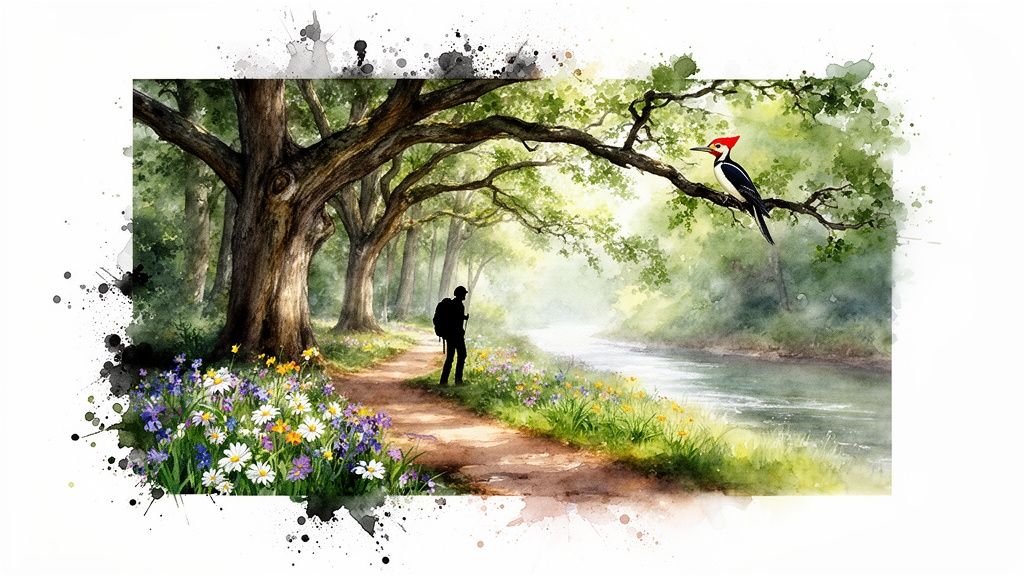
Have you ever felt so tangled up in your own head that you can't see the way out? That was me. City life, deadlines, the constant noise—it all just becomes a mess. Then I found MacArthur Woods Forest Preserve.
This place isn't some manicured park with a playground. It's wild. It's real. And I think it's the perfect place for you to untangle your life, one step at a time.
A Wild Escape for the Brave and Kind
I want to show you this place. Not just as a guide, but as someone who found a piece of myself on these trails. Imagine a sanctuary where you can finally hear yourself think. It’s a place that asks you to be brave enough to get a little lost, and kind enough to leave it better than you found it.
The first time I came here, I was just looking to escape. What I found was a place that puts everything in perspective. The sheer size of the trees, the profound quiet—it’s like the forest doesn't care about your problems, and in a weird way, that’s exactly what you need to hear. It forces you to just be.
Step Into a Living Piece of History
This isn't just a patch of woods. It’s a genuine window, a portal, into what Illinois looked like centuries ago. I discovered that MacArthur Woods is a massive 491-acre remnant of the original forests that grew along the Des Plaines River Valley. It was officially dedicated as a state nature preserve way back in July 1981 because it’s just that special. You can dig into the specifics of its unique ecology on the state's official profile, which details its special status and biodiversity.
What makes it so incredible is the mix of different forest communities, each with its own vibe:
- Dry-Mesic Upland Forests: Here, you find the old guard. Think ancient, sturdy white oaks and a more open canopy letting sunlight splash on the ground.
- Mesic Floodplain Forests: Closer to the river, things get lush with silver maples and bur oaks. You can feel the life in the damp air.
- Northern Flatwoods: Swamp white oaks rule these unique, wet patches of forest, creating a world all their own.
This variety is why MacArthur Woods is a hotspot for wildlife, especially for forest birds that need deep, unbroken woods to breed. You should keep your eyes peeled for the elusive brown creeper, the powerful red-shouldered hawk, or even hear the crazy, echoing call of a pileated woodpecker.
This Isn't Just a Walk
Coming here is a chance for you to practice paying attention. To notice the little things—the way the sun cuts through the leaves like a spotlight, a chipmunk scrambling over a log, the feel of bark on a tree that's older than your great-grandparents. It pulls you out of your head and into the real world.
I see the preserve as a partner in an adventure. It provides the rugged, stunning backdrop. You bring your curiosity and a promise to be respectful. It’s a place to feel small, but in the best way possible; humbled by something so old and resilient. Let's dig in and see what makes this place a refuge for both rare animals and anyone like you or me just needing to get away.
Navigating the Trails of MacArthur Woods
So, you're ready to hit the trails? Good. Getting your boots muddy is the first step. The paths at MacArthur Woods aren't just dirt tracks; they're more like a ‘choose your own adventure’ book, and I’ve found that every choice leads to a different kind of magic.
I’ll never forget one crisp autumn day, I took a path I'd never noticed before, just following the late afternoon sun. The air was sharp, and the ground was a thick carpet of gold and orange leaves. It led me to this tiny, hidden clearing, a perfect circle of silence where the only thing I could hear was my own breath. That’s this place. You find what you need, even when you aren't looking for it.
Your Path, Your Journey
Picking a trail here isn't about getting from Point A to Point B. It’s about what you’re looking for today. Do you need a quiet walk to clear your head? Or are you itching to push deeper into the wild and get your heart pumping?
This isn't a map, it's a guide to help you find the experience you're craving.
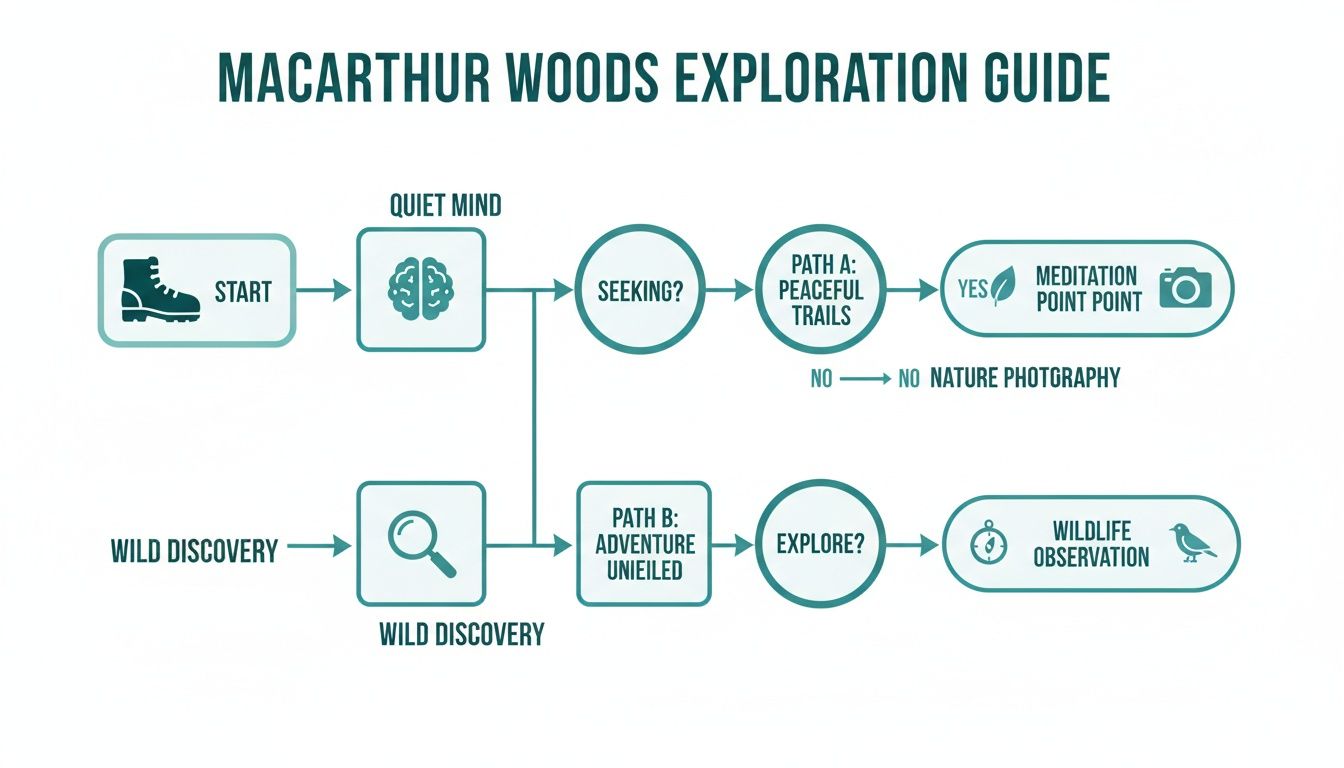
Think of it as a way to match your mood to the woods. It’s all about you deciding if you’re out for a moment of peace or a day of discovery.
A Quick Guide to the Trails
To help you choose, here's a quick look at the main loops you'll find at MacArthur Woods.
| Trail Name/Loop | Approx. Length (Miles) | Difficulty | What You'll See |
|---|---|---|---|
| River Overlook Trail | 1.0 | Easy | Gentle path on the bluff, peeks of the Des Plaines River |
| Upland Forest Loop | 1.5 | Moderate | Rugged trail, ancient white oaks, gentle inclines |
| Floodplain Path | Varies | Easy-Moderate | Soft, damp ground, silver maples, deer and songbirds |
These are just starting points. The real fun for you begins when you start combining them to make your own adventure.
The Main Loops: A Hiker's Primer
Forget perfectly paved sidewalks. The trails here are the real deal—unpaved, natural paths that wind through the preserve. You’ll find uneven ground, exposed tree roots, and some mud after a good rain. It’s what makes it feel like a true escape for you.
The best part is that the main loops are all interconnected. You can easily create a hike that’s as short or as long as you want.
Here’s a breakdown of what you can expect from my favorite spots:
- The River Overlook Trail: This is my go-to for a quick hike that still feels like a full dose of nature. The path is pretty gentle and follows the bluffs over the Des Plaines River. You get these incredible, stark views of the water through the trees, especially in fall and winter when the leaves are gone.
- The Upland Forest Loop: If you want to feel small next to something ancient and powerful, this is your trail. It takes you right through the heart of the upland forest, where you’ll walk among towering white oaks that have been here for hundreds of years. The path gets a little more rugged, with some hills that will definitely get your blood moving.
- The Floodplain Path: For a totally different feel, you can follow the trails that dip down into the floodplain. The air gets cooler and damper, and the ground feels softer under your feet. It's a great spot for spotting deer and just listening to the songbirds calling from the dense silver maples.
Walking these trails is like learning the forest’s language. You start to recognize the drumming of a woodpecker, the rustle of a squirrel in the leaves, the smell of damp earth after a rain. It's a conversation that connects you right to the land.
The way the paths weave together at MacArthur Woods reminds me a lot of Waterfall Glen, another incredible place where the trails offer so much diversity. If you love exploring different kinds of terrain, you should check out our guide to the best trails at Waterfall Glen Forest Preserve for your next trip.
Honestly, the best advice I can give you is to just start walking and let your curiosity take over. You can’t really get lost here—you can only discover something new.
Get to Know the Living History of the Preserve
Walking into MacArthur Woods is like time-traveling. Seriously. You're not just stepping into another forest; you're entering a living, breathing timeline of what Illinois was long before we were here. I want to introduce you to the old-timers, the ones who hold the real history of this land in their roots and feathers.
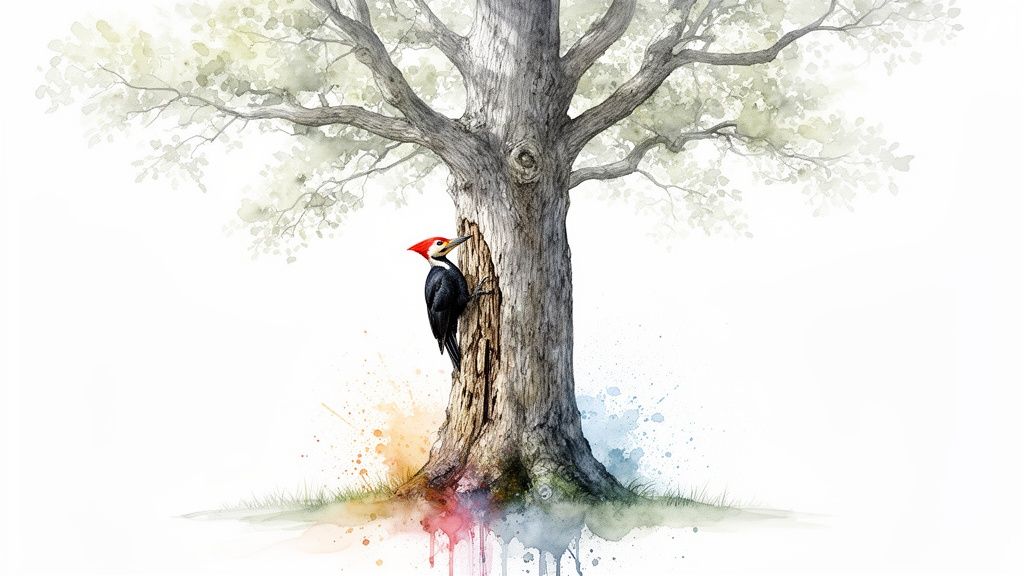
This place isn't just a bunch of trees—it's a community with its own stories. If you learn to shut up and listen for a minute, it’ll tell you everything.
The Silent Witnesses
The first thing that always gets me are the white oaks. These aren’t just trees; they’re silent giants who have witnessed centuries of change. Some of them were already ancient when the first European settlers showed up.
Putting your hand on the deep, grooved bark of one of these guys is something else. It feels like you’re shaking hands with history itself. I find myself just standing there, feeling the resilience these trees give off. They’ve survived everything—brutal storms, droughts, and a changing world—and they're still here. I think they teach you a thing or two about strength without saying a word.
This deep sense of history is why the place is protected. Back in July 1981, MacArthur Woods was officially named a dedicated nature preserve. It’s a 491-acre slice of the nearly-vanished forests of the Northeastern Morainal Natural Division. It's raw, it's real, and it’s a mix of different worlds like dry uplands, green floodplains, and boggy flatwoods. You can dig into its conservation story and the mission to protect these habitats on the Forest Preserves of Cook County website.
Learning the Language of the Forest
Beyond the old trees, there's a whole world of wildlife living out their own dramas. I’ve found that learning to spot them is like picking up a new language—one that connects you right to the pulse of the land.
I’ve spent a ton of time trying to get fluent in it. At first, I only saw the obvious stuff, like a deer peeking through the brush at dawn, its ears twitching at my every move. But then I started to notice the smaller stories.
It's in the flash of a white tail as a rabbit bolts, the frantic scratching of a chipmunk hiding nuts, or the nearly invisible spiderweb catching the morning dew. Each one is a character playing its part.
The real kick for me, though, was when I started to listen. The forest has its own soundtrack. If you can quiet the noise in your own head, you’ll hear it. It’s the sharp, piercing scream of a hawk circling overhead, a sound that puts the whole woods on alert. It’s a language of survival.
The Punk-Rock Birds and Winged Hunters
My absolute favorites here are the pileated woodpeckers. These birds are the punk rockers of the forest—they’re huge, have these fiery red crests, and make a call that sounds almost like a crazy laugh. The first time I saw one, I couldn't believe it was real.
It was just hammering away at a dead tree, sending massive chips of wood flying everywhere. The sound was this deep, echoing thump-thump-thump. Seeing one feels like a real reward for being patient and paying attention.
This isn't an accident. The preserve is a refuge for sensitive species that just can't make it in places chopped up by human activity. That makes it a goldmine for you if you're a birdwatcher looking for rare warblers or the awesome red-shouldered hawk.
- Pileated Woodpeckers: Listen for that loud drumming and look for big, rectangular holes in dead trees. They're hard to miss.
- Red-Shouldered Hawks: You’ll often hear their sharp "kee-yar" call before you spot them soaring over the treetops.
- White-Tailed Deer: Your best chance to see them is early in the morning or around dusk at the edge of clearings.
- Rare Warblers: These little guys are flashes of color that pass through during spring and fall migration, zipping through the lower branches.
This kind of wild experience reminds me of other amazing preserves nearby. If you dig the untamed vibe of MacArthur Woods, you should check out our guide to the diverse ecosystems at Blackwell Forest Preserve. It's another fantastic place to get lost in nature's stories. I believe every visit to MacArthur Woods is a chance for you to add a new page to your own story, one tied to a history way bigger than any of us.
The Nitty-Gritty: Parking, Amenities, and What You Need to Know
Look, before you can get lost in the beauty of the woods, you have to actually get there. So let’s cover the practical stuff first. I’ve learned that getting the boring details right means you can spend your time worrying about which trail to take, not where to park.
The first thing you need to know is that MacArthur Woods Forest Preserve is beautifully secluded. It's in Mettawa, Illinois, just off St. Mary's Road, but it feels a hundred miles away from any suburb. That quiet is exactly why I love it, but it also means you can’t just stumble upon it. You have to know where you’re going.
Finding the Trailhead
The main entrance is your mission control. It’s where you’ll park and where the trails begin. But it's not a giant, sprawling lot. It’s small. On a perfect fall Saturday, it will fill up, and it will fill up fast. My advice? Get there early. Beat the crowds and get the woods all to yourself for a little while. It's a totally different, more peaceful experience.
This map shows you the only public parking lot, right on St. Mary's Road. This is your way in.
As you can see, the lot drops you right at the trailhead. No long walks to get to the good stuff. You park, you step out of your car, and you’re immediately in it.
What to Expect (and What NOT to Expect)
Let’s be real about the amenities here. This is a true nature preserve, not a city park with manicured lawns and snack bars. The whole point is to keep it wild and untouched. So here’s the honest truth for you:
- Parking: One simple gravel lot. It does the job, but it’s basic.
- Restrooms: There's a portable toilet at the trailhead. It’s there if you need it, but don't expect a fancy restroom building. You should plan ahead.
- Accessibility: The trails are dirt, roots, and sometimes mud. They're amazing for a good hike, but they're not built for wheelchairs or most strollers.
Here's the deal: The preserve offers you an escape into raw nature, not a list of conveniences. You’re trading a paved path for a real one. It’s a trade I’ll make every single time.
This stripped-down, "nature-first" approach is exactly what makes this place special. It forces you to be a little more self-reliant. You’re not just visiting; you're exploring.
Because of this, I never show up empty-handed. I bring a small "go-kit" and you should too. At a minimum, pack plenty of water, a few snacks, your phone (with a full battery), and maybe a little first-aid kit. A little preparation goes a long way to making sure your day is about the adventure, not about what you forgot.
Become a Guardian of the Woods
If this place makes you feel something, I get it. And if you're looking to do more than just walk through it, you've found the right people. This is where my personal mission, a group I started called Litter Caterpillars, finds its purpose in a place like MacArthur Woods Forest Preserve.
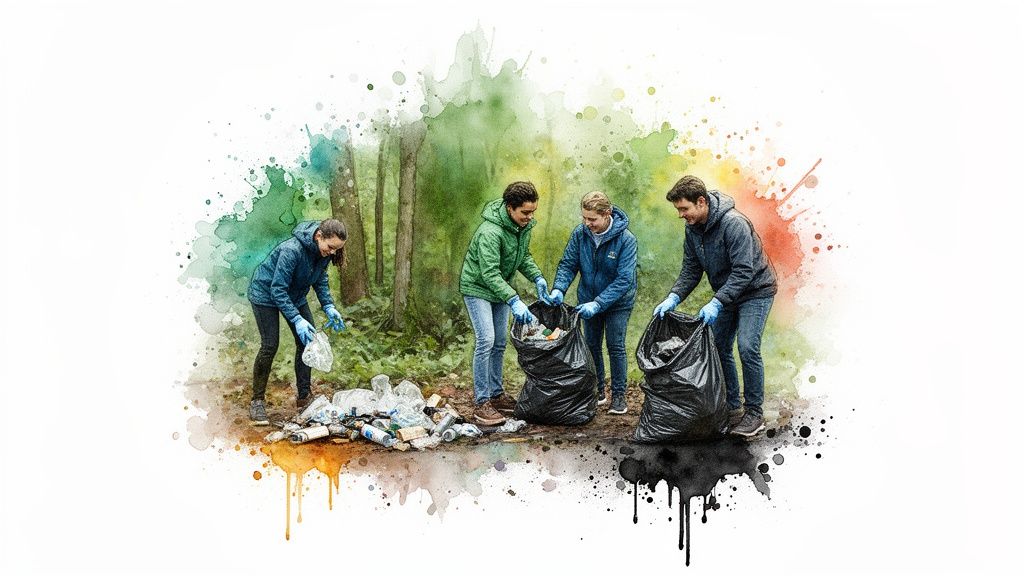
I started this group because cleaning up messes—my own, mostly—felt impossible. Imagine trying to lift something that weighs 500 pounds. A single piece of trash could feel like that, bolted to the ground by some story or failure I couldn't let go of. But I found a secret: cleaning up other people's messes, for a place we all love, changes everything.
The work stops being a chore. It becomes something that builds you, connects you, and, weirdly enough, is actually a lot of fun.
A Mission of Brave Kindness
At Litter Caterpillars, we believe service is an act of bravery and kindness. Showing up to clean MacArthur Woods isn't just about bagging up soggy chip bags and forgotten plastic bottles. It’s about you choosing to be a giver, to face a problem without flinching, and building real friendships while you do it.
It’s about deciding to be the kind of person who shows up. You're building a community of people who look out for each other and the world around them.
And this hands-on work really, truly matters. I've learned that it directly supports the massive restoration efforts happening across Lake County. In a recent two-year period, crews planted 204 trees and 326 shrubs at sites like Fort Sheridan. In fall 2022 alone, they got 831 trees and 1,723 shrubs into the ground. Our small acts of cleaning up make it possible for this new life to thrive.
What to Expect at Your First Cleanup
Joining us is simple. No complicated sign-ups, no fees. We bring the gloves, bags, and trash grabbers. You just bring yourself.
At Litter Caterpillars, our mindset is volunteer-first. Your safety and happiness are the top priority. This isn't about pressure. It's about positive action and connection.
Here’s the basic flow of our mornings:
- The Welcome: We circle up for quick intros, a safety chat, and the plan for the day. You won't be a stranger here for long.
- The Gear-Up: We hand out all the supplies. All you need is a can-do attitude (and maybe a water bottle).
- The Cleanup: We spread out and get to work. It’s surprisingly peaceful. You can chat with new friends or just pop in headphones and find your focus.
- The Wrap-Up: We gather the bags, take a group photo to admire our work, and appreciate the visible difference we just made together.
I started this group over three years ago with just three of us shivering under a tree in a freak hailstorm. That wild day taught me that getting through a challenge together builds some serious resilience and friendship. Now, MacArthur Woods is calling for new guardians—for brave people like you, ready to filter out the world's selfishness and build something good.
This is a direct path to growing as a person while connecting with others. You can see how we apply these ideas across all our projects by checking out our environmental stewardship programs. It’s a journey of transforming ourselves right alongside the places we care for.
Your Questions Answered
Got a question about MacArthur Woods? Or maybe you’re curious about joining a cleanup? Good. Curiosity leads to growth. Here are the things I get asked all the time.
Can I Bring My Dog?
Yes, you can bring your furry friend. But—and this is a big but—you have to keep them on a leash, and it can’t be longer than 10 feet. No exceptions.
This isn’t just some random rule. It's about protecting what makes this place special. Lots of birds build their nests right on the forest floor, and even the friendliest dog can accidentally cause a ton of harm. I see it as your act of service to the wildlife. Oh, and you must always, always clean up after them.
When’s the Best Time for Wildflowers?
You want to see the real magic? You should come in the spring. It’s like the forest floor decides to throw a wild, colorful party before the big trees get all the attention.
That sweet spot, usually from late April through May, is when the sunlight still hits the ground. It triggers an explosion of spring beauties, trout lilies, and trilliums. It’s a show that doesn't last long, but man, it is absolutely worth it for you to see.
Do I Need Experience to Volunteer with Litter Caterpillars?
Absolutely not! In fact, having no experience is perfect. I want you to know that every single one of us started exactly where you are. I started this group because my own life was a mess, and I found that cleaning up someone else's mess was way easier.
We bring all the gear—gloves, bags, and those fun grabber-claw things. We start every event with a quick safety chat and a chance to connect. This isn't about being a perfect volunteer; it's about showing up and trying. It's about bravery. You just need to bring yourself.
Are the Trails Any Good in the Winter?
Winter is my secret favorite season here. The trails are unpaved, which means they get snowy and icy. And honestly? That's what makes it an adventure.
Get yourself a good pair of boots with traction, maybe some microspikes, and you'll see a whole different side of the woods. The snow makes everything quiet, and you can see all the animal tracks you miss in the summer. It's peaceful and raw. I think it teaches you something.
Ready to stop thinking and start doing? I hope you’ll join us at Litter Caterpillars and help us protect beautiful places like MacArthur Woods. You can find out about our next cleanup and become part of the story at https://www.littercaterpillars.com.