Tag: illinois hiking

  • Midewin Welcome Center: Gateway to the Prairie

    Midewin Welcome Center: Gateway to the Prairie

    I once left a Chicago cleanup with black gloves, a full trash bag, and that familiar feeling that I had only shaved a corner off a much bigger mess. A few days later I drove out to Midewin, walked into the Midewin Welcome Center, and felt that same feeling again, except this time it came with wind, grass, and hope.

    Finding a Bigger Mess to Clean

    The first time I drove south after a city cleanup, my gloves were still on the passenger seat. They smelled like wet cardboard and old coffee. At a stoplight, I looked at that crumpled pair of gloves and had the oddest thought. Street litter was not the only mess I wanted to help with anymore.

    Midewin pulled me for that reason.

    It was once the site of the Joliet Army Ammunition Plant. Now people come there to witness a long repair job in progress, the kind that takes patience, public will, and a willingness to keep showing up after the novelty wears off. That made sense to me right away. Litter Caterpillars know that feeling. You clear one block, then come back next week and clear it again, and somewhere in that repetition your own habits start changing too.

    Why this place hit me

    A restored prairie sounds romantic from far away. Up close, it feels more honest than romantic. You are standing near ground that carries a heavy history, and you are also standing in a place where people chose not to leave the damage as the final story.

    That landed hard for me.

    In the city, our work can feel small. One bottle. One fast-food bag. One storm drain pulled clear before the rain comes. At Midewin, the scale gets bigger, but the lesson stays the same. Repair happens through repeated care. People remove what harms, protect what can return, and make room for life to come back slowly.

    Practical rule: Go to Midewin when you need proof that slow work still counts.

    A trip for people who like sleeves rolled up

    I would not call Midewin a polished attraction. I liked that. The place feels like a public invitation to witness recovery while it is still underway.

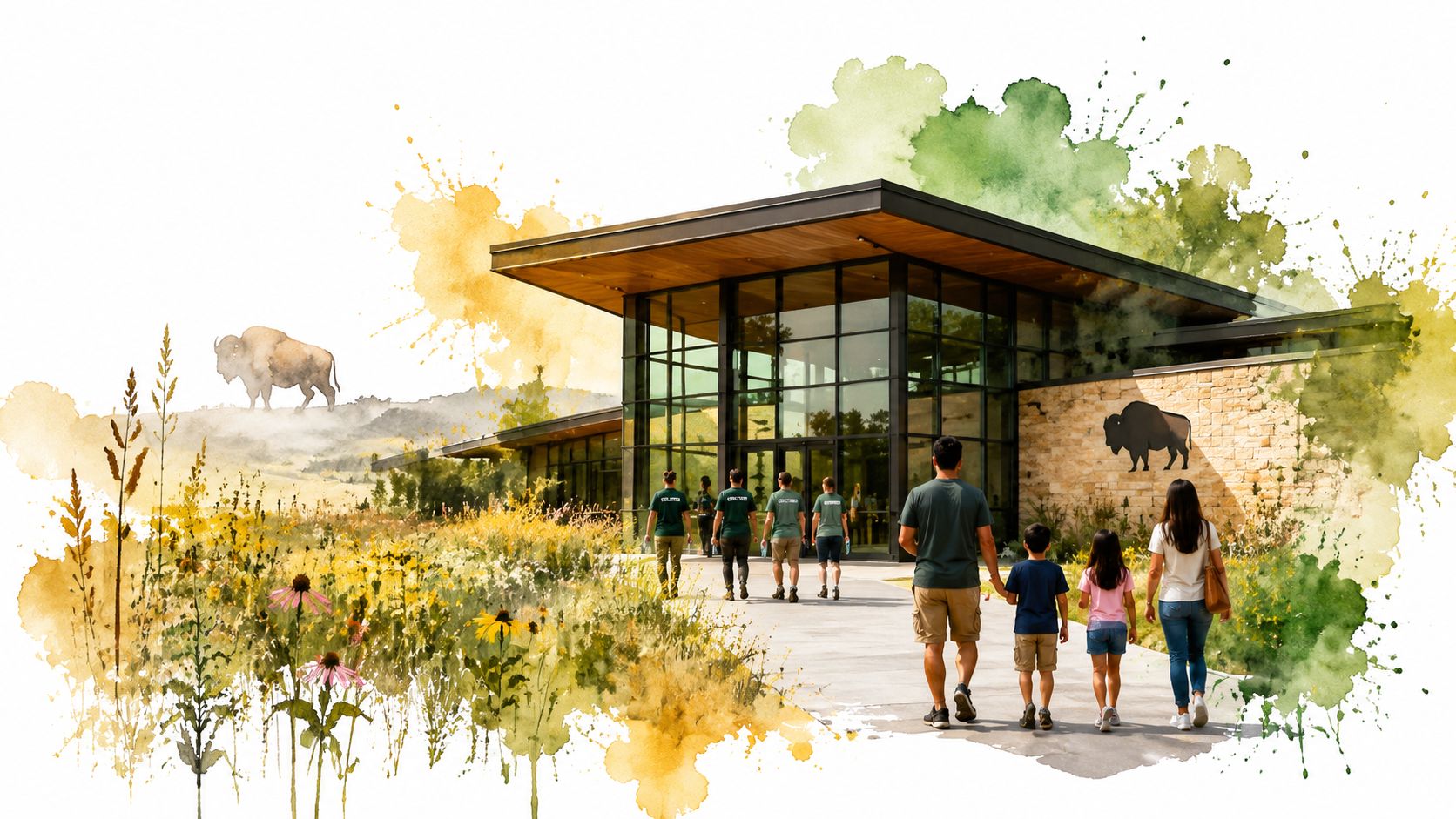
    That is why the Welcome Center matters before you ever set foot on a trail. It gives you a way to enter the prairie with the right frame of mind. You are not arriving to consume a pretty view and leave. You are arriving to learn how damaged ground gets another chance, and what your part in that story can be.

    For me, that changed the whole drive. I was not heading out for a break from cleanup work. I was heading toward a bigger version of the same calling. Restore what has been neglected. Respect the time it takes. Come back. Bring others. Let the work outside you shape the work inside you too.

    Your First Step into the Prairie

    The first time I drove down from the city, I felt that familiar cleanup-day doubt. Did I pack enough water. Was I leaving too late. Was this going to be one of those trips where I spend more time in the car than on the ground. Then the roads opened up, the buildings fell back, and the whole day started to loosen its grip on me.

    That shift matters.

    For Litter Caterpillars people, the drive to Midewin can feel like going to meet an older cousin of the work we already do. In the city, we clear a block, a curb line, a patch of weeds behind a fence. Out here, you arrive at a place trying to recover at prairie scale. The Welcome Center gives that feeling a place to land before your feet hit the trail.
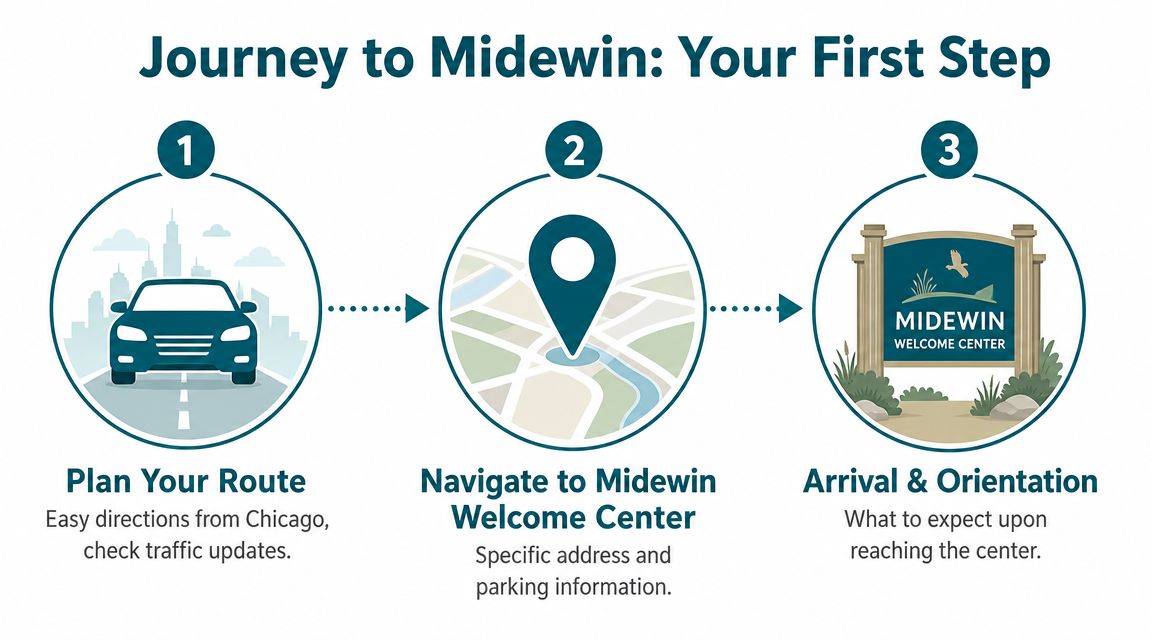
    A three-step infographic showing how to plan a visit to the Midewin Welcome Center.

    The part that makes the day go better

    Keep the plan simple. Pick a morning when you are not already depleted. Leave early enough that you do not turn the whole trip into a rushed errand. Bring what you would bring for a long, open walk instead of a quick stop.

    I have learned that prairie time punishes sloppy city habits. A late start feels later. Sun feels bigger. Wind has opinions. If you roll in hungry, underdressed, or irritated, you will notice all of that before you notice anything beautiful.

    A few things earn their place in the car every time:

    • Water and a snack
    • Good walking shoes
    • One extra layer
    • A notebook, or your phone notes app, if quiet places tend to pull thoughts out of you

    If you have ever visited Goose Lake Prairie State Natural Area and watched your pace change once the horizon opened up, you already know the rhythm I mean.

    Why the Welcome Center comes first

    The Welcome Center works like a reset point. You stop being a driver passing through and become a visitor who is paying attention.

    I would not skip it, even on a day when you feel eager to get straight outside. Starting here helps you settle your mind, use the restroom, look over the layout, and shake off that city habit of treating every destination like something to conquer quickly. That small pause changes the visit. You arrive less like a consumer and more like a participant.

    That distinction stayed with me. Restoration asks for a different kind of presence. It asks you to notice what has returned, what is still missing, and how much care sits behind ground that looks calm.

    What it feels like when you pull in

    You are not arriving at a flashy attraction. You are arriving at a working threshold.

    I like that. It fits the place.

    The Welcome Center is the point where scattered intentions become an actual day in the prairie. You get your bearings. You slow down enough to be teachable. You remember that healing land, like healing a neighborhood or your own habits, starts with one honest step taken on purpose.

    What You Will Discover Inside

    The first time I stepped into the Midewin Welcome Center, I expected something plain and procedural. A counter. A brochure rack. Maybe a map and a quick restroom stop. Instead, I felt the day slow down in a good way.

    Inside, the story of the land starts taking shape. The Forest Service says the center has exhibit clusters on glaciers, wetlands, prairies, wildlife, and the site's restoration timeline, and it has trail maps, program guides, and brochures that help you plan your way through the large trail system on the Midewin Welcome Center page from the Forest Service.

    The room changes what you see outside

    That matters more than it sounds. Before you go in, you may think you're driving out to see “some grass.” After you spend a little time with the exhibits, the prairie gets sharper. The ground has a past. The water has a story. The animals stop feeling random. Even the flatness starts to read differently.

    I had that same shift at Goose Lake Prairie State Natural Area. Once you learn how a prairie works, your eyes stop sliding over it. You notice textures, little changes in height, wet areas, bird movement, and the strange power of a place that doesn't scream for attention.

    What stayed with me

    The restoration timeline hit hardest. I'm drawn to any place that admits, openly, that repair takes a long time. In a city, we often want proof fast. We want the before-and-after photo. We want the cleaned lot, the organized room, the redeemed week.

    Midewin doesn't let you think that way for long. Inside the Welcome Center, you start to understand that renewal is a chain of ordinary acts. Someone studies. Someone plants. Someone monitors. Someone explains. Someone comes back.

    A map is useful, but context is better. Once you know what you're walking through, every mile feels less like exercise and more like attention.

    Don't rush this part

    If you're anything like me, your instinct might be to hurry outside. Fight that instinct. Spend a little time with the exhibits. Ask questions if staff are available. Take the brochure. Study the trail map.

    That indoor pause is like sorting your cleanup supplies before hitting the street. It doesn't look dramatic, but it changes the whole day. You leave the building carrying more than paper. You leave with a way of seeing.

    From the Center to the Trails

    The first time I walked out of the Welcome Center, I stopped after maybe twenty steps.

    Nothing dramatic happened. No bison crossed the road. No hawk swooped overhead on cue. I just felt the city pace fall off my body. The building had given me names, history, and a map. Outside, all of that turned into a real place with wind in it.

    What struck me most was the room. Midewin gives you space to settle down and pay attention. You stop checking how fast you are going. You start noticing where the ground holds water, where the grasses shift, where a bird keeps returning to the same patch. For Litter Caterpillars people, that change feels familiar. It is the same shift that happens on a cleanup when you stop rushing for a full bag and begin seeing the block clearly.
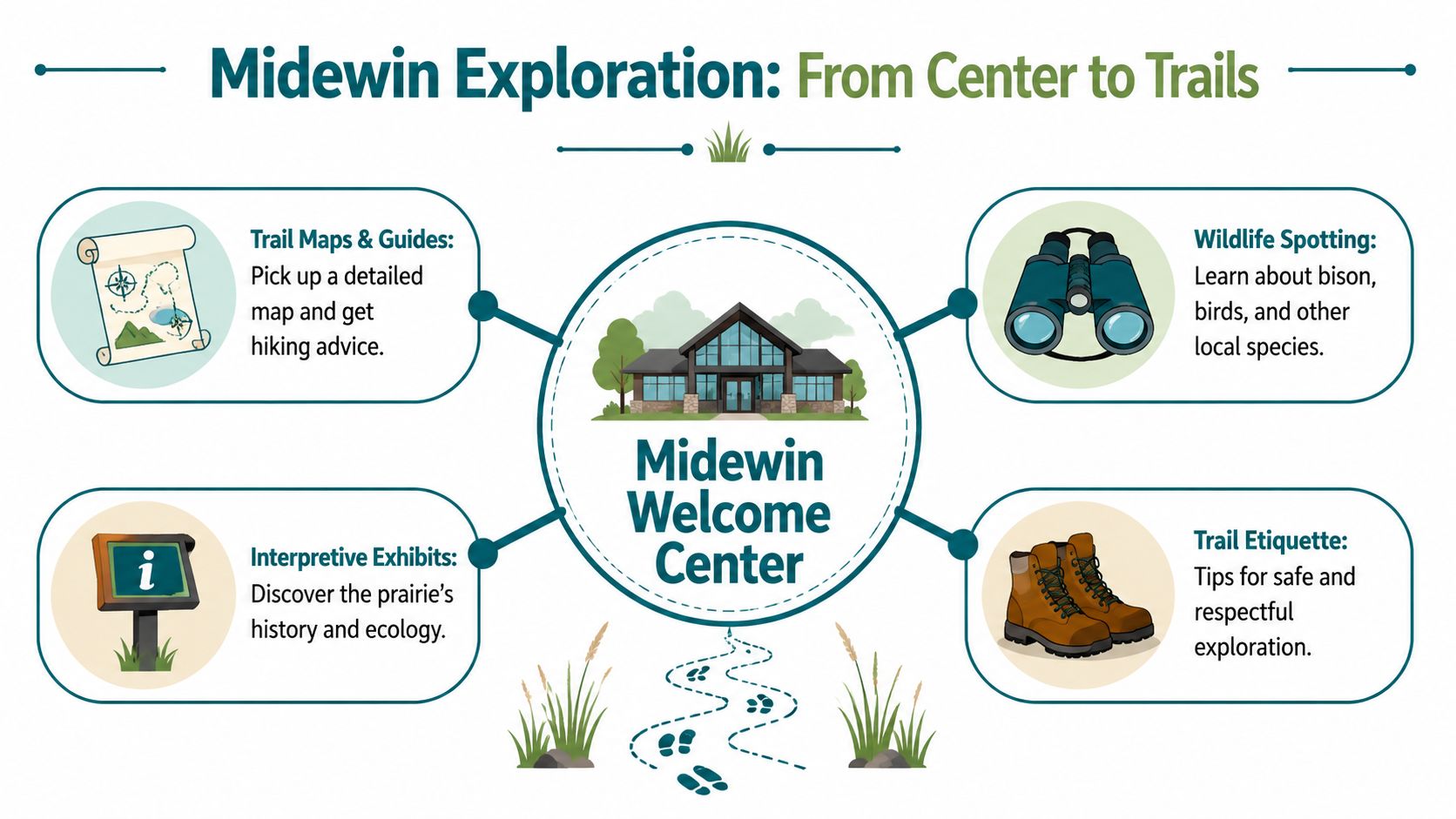
    An infographic titled Midewin Exploration showcasing resources like maps, wildlife spotting, exhibits, and trail etiquette tips.

    How I choose a trail day

    I do better here when I choose the day before I choose the route.

    Day you want What I'd do
    Quiet reset Take a shorter walk and stop often. Let the place slow you down.
    Longer effort Use the map from the center and commit to a fuller hike. Bring more water than you expect to need.
    Learning day Match your walk to one or two things you noticed inside. Watch for wetlands, birds, and plant changes rather than trying to see everything.

    That little decision saves me from turning a prairie visit into another city habit where I chase completion instead of paying attention.

    Start with a basecamp mindset

    The Welcome Center works best as a place to gather yourself, then head out with purpose. A prairie can look simple from a distance, but openness asks something from you. It asks for patience, water, and a little humility.

    I learned that same lesson at Springbrook Prairie Pavilion. Wide ground is not empty ground. It rewards people who slow down enough to catch small signs of life and recovery.

    Trail etiquette that feels close to cleanup ethics

    A first visit goes better when you carry the same respect you would bring to a neighborhood cleanup.

    • Keep the map with you so you can stay oriented without guessing.
    • Walk carefully because restoration is ongoing and the place is still being tended.
    • Pause longer than feels normal. The prairie reveals itself in layers.
    • Leave with care in your body. Even when you take nothing and change nothing physically, your attention matters.

    That last part stays with me. In the city, we pick up what was dropped and try to leave a corner better than we found it. At Midewin, the service is quieter. You practice restraint. You let the prairie be what it is. You learn that restoration is not always about doing more. Sometimes it is about moving through a recovering place without adding to the mess.

    How We Can Partner with the Prairie

    A few steps outside the Welcome Center, I watched a kid crouch beside the path and study a plant like it was giving instructions. His dad stood over him with the map folded wrong, smiling anyway. Nobody looked polished. They looked the way our cleanup crews look at the start of a Saturday morning. Ready to help, not fully sure how yet.

    That is the spirit I would bring to Midewin.

    A conceptual illustration of hands planting a sapling at Midewin National Tallgrass Prairie featuring diverse community involvement.

    Service changes the day

    As noted earlier, the Welcome Center offers different ways to learn through the year, including guided programs in the warmer season and educational events in colder months. I love that rhythm. It lets your first visit be simple. You show up, listen, walk, and let the place work on you a little.

    That pattern feels familiar to me because it matches the way restoration usually starts in the city. We do not begin with mastery. We begin by noticing what has been neglected, then returning with more care the next time.

    If you want language for that shift, this guide on what environmental restoration means in practice puts clear words to it. Repairing land and repairing ourselves often follow the same motions. Show up. Remove what harms. Protect what can grow. Repeat.

    A few ways to show up well

    One good day at Midewin can start a longer habit. Here are a few honest ways to make the visit feel like participation instead of consumption:

    • Join a program or tour if one is available. A guided walk can help you notice signs of recovery you would pass right by on your own.
    • Bring one person who has been tired in the city kind of way. The prairie has a way of stretching out your thoughts until they stop bumping into each other.
    • Make it a service-minded outing with a community group. Litter Caterpillars does that through volunteer trash pickups across Chicago, and a prairie visit can carry the same spirit of care into a different kind of environment.

    Here's a good video to watch if you want the mood before the drive:

    Stewardship starts smaller than you think

    I do not think stewardship begins with a title.

    It begins the moment you stop asking, “What can I get from this place?” and start asking, “How can I move through this place without making recovery harder?” At Midewin, that may mean staying on the trail, paying attention during a program, or bringing home a steadier idea of what care looks like. Quiet service still counts.

    That is why a trip here can feel bigger than a day trip. You leave with more than prairie photos. You leave with a sharper standard for your own life. The grasslands are being restored over time, through patience and repeated care. Our blocks, our habits, and our own worn-out parts usually heal the same way. One return. One better choice. One piece of trash, or one careful step, at a time.

    Your Midewin Field Guide Questions Answered

    I've found that most hesitation about a first trip has less to do with desire and more to do with tiny practical questions. So here are the answers I'd give a friend the night before we go.

    What should I wear

    Wear clothes you can walk in for a while without fussing. I'd choose comfortable shoes, light layers, and something you don't mind getting a little dusty. Prairie weather can feel open and direct, so I'd rather have one extra layer in the car than wish I'd packed it.

    If it's sunny, act like you're going to spend time with very little shade. If it's cooler, don't let the city fool you into thinking the open ground will feel the same.

    What should I bring

    Keep it simple.

    • Water because open trails can dry you out fast.
    • Snacks if you think you'll stay longer than planned.
    • Your phone or a paper note with your basic plan for the day.
    • Curiosity. I know that sounds corny, but this place gets better when you slow your eyes down.

    Is it good for a first-time prairie visitor

    Yes. In fact, I think the Midewin Welcome Center makes it easier for first-timers because you can orient yourself inside before you head out. You don't need to pretend you already understand what you're seeing. Start with the exhibits. Get a map. Ask a question.

    Is it good for kids

    I think so, especially if you frame the trip the right way. Don't sell it as a forced march through educational content. Sell it as a discovery day. Let kids look for birds, notice water, compare grasses, and learn that restoration is real work done by real people.

    What if the weather shifts

    Treat weather as part of the day, not a betrayal. Still, use judgment. If conditions look rough, adjust your walk, spend more time inside, or save the longer trail for another visit. There's no prize for pretending discomfort is wisdom.

    Field note: The best prairie days usually come from flexibility. A shorter walk with full attention beats a stubborn epic hike every time.

    Should I plan around programs

    If you like structure, yes. Educational programming and tours are especially available from April to October, so that's a good window if you want your visit to include more guided learning. If you prefer a quieter day, just use the center for orientation and head out on your own path.

    What mindset should I bring

    Bring the same mindset you'd bring to service. Be useful. Be observant. Don't rush the process. Let scale humble you a little.

    That's really why I keep thinking about this place. The Midewin Welcome Center isn't just where you pick up a map. It's where a regular person from a messy city life can remember that repair is possible, even when it happens slowly, even when it happens over years, even when the work looks plain from the outside.


    If you want more days like this, and more chances to turn service into friendship and self-respect, take a look at Litter Caterpillars. We organize volunteer cleanups around Chicago for people who want to show up, do good work, and grow through it.
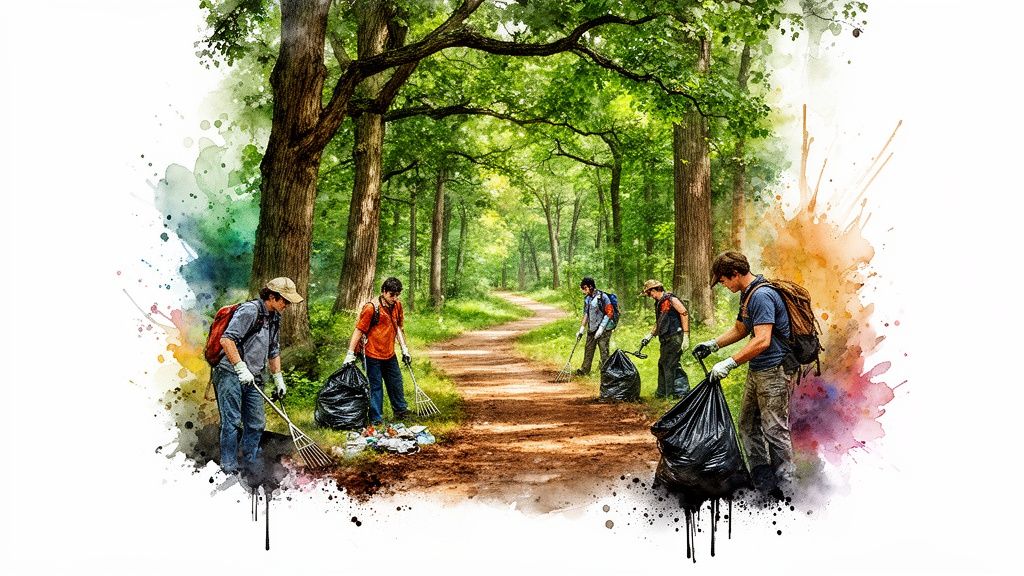
  • 10 Transformative Adventures at a Forest Preserve in IL You Can’t Miss in 2026

    10 Transformative Adventures at a Forest Preserve in IL You Can’t Miss in 2026

    I know what it’s like to feel stuck. Imagine your life is a refrigerator full of old jam and bags from failed health kicks. That was me. Each piece of trash felt like a 500-pound weight, a story I couldn't move past. I had to end a bad relationship to finally see it. I realized I needed to face the things that terrified me: cleanliness, consistency, and being brave enough to start over.

    So, I started picking up trash. It's a strange hobby, I know. But cleaning up other people's messes felt so much easier than tackling my own. And you know what? I found a weird kind of fun in it, especially when things got tough. I remember my very first cleanup, huddled under a tree with two friends during a freak Chicago hailstorm. We were shivering. Ubers were canceling. But in that moment, I realized something powerful. Suffering together adds flavor to the story. It moves the plot forward.

    That’s how I started Litter Caterpillars. We believe in showing up—for our city, for our parks, and for ourselves. The spaces in this guide, from a sprawling forest preserve in IL to a dense city park, are not just land. Think of them as canvases for your own transformation. Let me show you 10 places where you can find that for yourself.

    1. Schiller Woods Forest Preserve: A Gateway to the Des Plaines River Trail

    You step into Schiller Woods and feel it instantly. The city's hum fades away, replaced by the rustle of ancient oak trees. This classic forest preserve in IL is more than just green space; it's a living portal, a doorway to the vast Des Plaines River Trail. For me and my crew, it’s a frontline where we protect a vital waterway.

    Cleaning along the riverbanks here feels incredibly direct. It’s like being a goalie for the environment. I remember one Saturday morning, we were pulling out forgotten fishing lines, picnic leftovers, and all the usual city debris from the water's edge. Each piece I grabbed was one less item that could float downstream and pollute the river. It's a powerful act of interception.

    Why You Should Go

    Schiller Woods is a perfect spot whether you're new to this or a seasoned pro. The trails are mostly flat and easy, so you can cover a lot of ground. Plus, its connection to the Des Plaines River means your work sends ripples of positive change through an entire ecosystem.

    "When you tackle the litter here, you feel like you're healing a small part of something much larger. You watch the river flow on, relentless and steady, and you know you helped it stay clean."

    Get Involved:

    • Your Mission: Focus on the riverbanks. That's where trash gets stuck before the water can sweep it away.
    • Actionable Tip: You should bring waders or waterproof boots. This lets you safely grab the litter tangled just offshore that other people can't reach.
    • Learn More: Find details on parking and trail maps on the Forest Preserves of Cook County website.

    2. The Chicago Botanic Garden (Glencoe)

    When you walk into the Chicago Botanic Garden, you don't feel like you're in a typical forest preserve. It's more like a perfectly curated masterpiece of nature. This 385-acre living museum isn’t just for looking at beautiful flowers; it’s a powerhouse for restoring native habitats. For us, it offers a unique chance to protect delicate ecosystems where manicured gardens and wild nature meet.

    I once volunteered during a prairie cleanup here, working right alongside their expert staff. We weren't just picking up stray wrappers. No. We were learning to identify and remove invasive plants that were choking out the native grasses. Pulling each invasive thistle felt like a direct action, a way to help the local ecosystem flourish. It was a hands-on lesson in ecological stewardship.

    Why You Should Go

    The Garden is an amazing place if you want a deeper, more educational cleanup experience. The work here is about precision and care, like a surgeon protecting sensitive plant life while removing litter. Your effort supports the conservation of rare and beautiful native Illinois flora in a truly world-class setting.

    "Working here is like being a surgeon for the prairie. You’re not just clearing debris; you are making careful, intentional moves to help a beautiful, complex system heal and thrive."

    Get Involved:

    • Your Mission: You should focus on the edges of the naturalized areas, like the Skokie River Corridor and the Dixon Prairie. That’s where litter and invasive species often sneak in.
    • Actionable Tip: Partner up with the Garden’s volunteer coordinator. They can align our cleanup efforts with their seasonal needs, like seed collecting or invasive species removal days.
    • Learn More: Discover volunteer opportunities and plan your visit on the Chicago Botanic Garden website.

    3. Lincoln Park: Urban Oasis, Crucial Cleanup Zone

    You might not think of Lincoln Park when you hear “forest preserve in IL,” but don't be fooled. This sprawling urban oasis is a critical ecosystem on the front lines of our city. It stretches for miles along Lake Michigan, a mosaic of beaches, gardens, and wooded paths right in the heart of Chicago. For us, its high visibility and heavy foot traffic make it a top priority for litter interception.

    I remember leading a cleanup at North Avenue Beach right after a big storm. The sheer amount of plastic debris washed ashore was jarring. It was a plastic graveyard. But as my group and I worked, clearing section by section, we saw the immediate difference. We weren't just cleaning sand; we were stopping that pollution from going back into the lake, protecting a vital source of fresh water for millions of people.

    Why You Should Go

    Lincoln Park's incredible diversity makes it an ideal spot for any kind of cleanup. You can tackle high-traffic picnic areas one day and feel like you're in a remote nature sanctuary the next. Its location makes it super accessible, letting you organize focused, neighborhood-based efforts that have a massive impact.

    "Cleaning Lincoln Park is a direct act of service to the city itself. You’re protecting a shared space that brings joy to so many, and you can see the immediate, positive result of your work right before your eyes."

    Get Involved:

    • Your Mission: Focus on areas right after big events or storms. That's when debris is most concentrated, especially along the lakefront.
    • Actionable Tip: You should divide and conquer. Split the park's six-mile stretch into zones and assign a team to each. This systematic approach ensures no area gets missed.
    • Learn More: Connect with the Lincoln Park Conservancy for resources and to coordinate your cleanup efforts with their ongoing work.

    4. Humboldt Park: Urban Preservation and Community Power

    Humboldt Park stands as a testament to the power of a community green space. This 207-acre park on Chicago's West Side isn't just a bunch of trees and fields; it's the vibrant, breathing heart of its neighborhoods. It’s an urban forest preserve in IL where our mission goes beyond just picking up litter and into building real, human connections.

    I’ll never forget a cleanup we organized around the lagoon. We partnered with a local neighborhood group, and what I thought would be a small event blossomed into a full-on community gathering. We shared stories, we shared donuts, and we shared a common goal. Removing bags of storm debris and picnic trash from the water's edge felt like we were restoring a community landmark, not just cleaning a park.

    Why You Should Go

    Humboldt Park is where our work feels most connected to people. It's the perfect spot if you want to see your efforts build community pride. The mix of manicured parkland, natural wooded areas, and the iconic lagoon presents a unique set of challenges and incredibly rewarding moments.

    "Cleaning here is about more than the environment; it’s about showing love for a neighborhood. You can see the 'before and after' in the landscape and in the smiles of the people who call this park their own."

    Get Involved:

    • Your Mission: You should concentrate on the lagoon edges and the natural wooded sections where trash often gets hidden from view.
    • Actionable Tip: Schedule cleanups for early weekend mornings, between 8 and 10 AM. This is a sweet spot for safety and attracting the most community volunteers before the park gets too busy.
    • Learn More: Discover more about this historic park on the Chicago Park District website.

    5. Grant Park: Restoring Chicago's Iconic Front Yard

    While it's not a traditional forest preserve in IL, Grant Park is Chicago's public heart. It's our sprawling front yard along Lake Michigan. For us, cleaning here is an act of pure civic pride, a high-visibility effort that shows thousands of people what community care looks like in action. It’s about protecting the city's most iconic gathering space.

    I’ll never forget a post-festival cleanup we organized. The sheer volume of discarded items was overwhelming. It looked like a party had exploded. But as we worked, dozens of passersby stopped to thank us, and a few even jumped in to help. We weren't just picking up trash; we were inspiring a sense of collective ownership over this incredible public asset.

    Why You Should Go

    Grant Park is the ultimate stage for showing what we do. The high foot traffic means your efforts are seen by everyone, creating a powerful recruiting opportunity. By partnering with the Grant Park Conservancy or joining post-event cleanups, you can directly support Chicago’s cultural backbone and keep its most famous park beautiful.

    "Cleaning in Grant Park feels different. You’re not hidden away in the woods; you are on full display, restoring a space that belongs to everyone. Each piece of litter you grab is a direct contribution to the city's spirit."

    Get Involved:

    • Your Mission: Focus on the less-maintained borders of Millennium Park and Museum Campus, where trash often piles up.
    • Actionable Tip: You can schedule your cleanup to coincide with a major cultural event. You’ll find more volunteers and create opportunities to partner with event organizers.
    • Learn More: Connect with the Grant Park Conservancy to find official volunteer events and coordinate your own group cleanup.

    6. Busse Woods Forest Preserve (Rolling Meadows/Des Plaines)

    Busse Woods feels like you've stepped into a completely different world. With over 3,000 acres, it’s a vast expanse of woodlands and wetlands that shows what a dedicated forest preserve in IL can truly protect. This isn't just a park; it's a genuine ecosystem where our work feels less like tidying up and more like real habitat restoration.

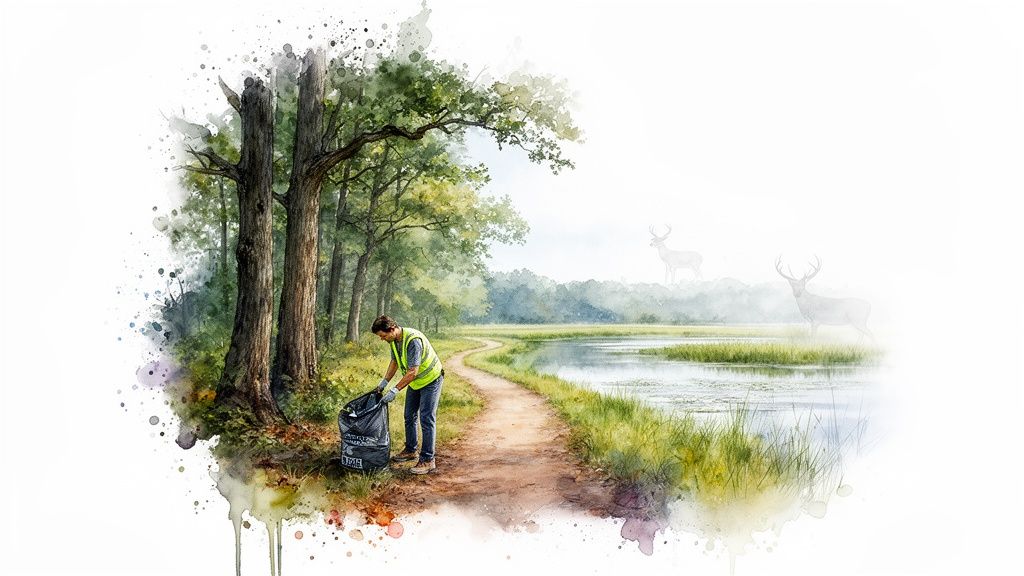
    A person in a high-visibility vest cleans a forest path beside a lake, with two deer in the misty background.

    Our first volunteer day trip here was an eye-opener for me. We partnered with the Forest Preserve District and focused on a section of trail near the elk pasture. Instead of just picking up wrappers, we were learning to identify and remove invasive garlic mustard. It felt like we were giving the native wildflowers a fighting chance, directly contributing to the health of the entire forest understory.

    Why You Should Go

    Busse Woods is perfect for you if you want to go deeper than just a surface-level cleanup. It’s an opportunity to learn about habitat restoration and see the direct impact of removing invasive species. The sheer scale of the preserve means our efforts are crucial for maintaining its wild character for both wildlife and visitors.

    "Working in Busse Woods is like being a gardener for a giant, wild forest. You're not just picking up trash; you're helping native plants thrive and protecting the homes of countless animals. It’s a powerful feeling."

    Get Involved:

    • Your Mission: Focus on trail edges and undergrowth for invasive species removal and accumulated litter. Its immense size means there's always a new area to restore.
    • Actionable Tip: You should organize a carpool day trip. Since it’s a bit of a drive from the city, making it a group event with shared transport builds community and makes it easier for everyone to participate.
    • Learn More: Explore volunteer opportunities and preserve details on the Forest Preserves of Cook County website.

    7. Garfield Park (Douglas Park Historic District): A Partnership in Urban Renewal

    Garfield Park isn't just a park; it's the heart of a community. Spanning 185 acres on the West Side, its historic lagoons, formal gardens, and the stunning Garfield Park Conservatory act as a vital green haven. For us, this isn't a typical forest preserve in IL; it's a chance to build deep community partnerships and restore a piece of Chicago's legacy.

    I'll never forget a cleanup we did near the lagoon. We worked alongside a neighborhood group that had been caring for the park for years. We weren’t just picking up litter. No, we were sharing stories, learning about the area’s history, and becoming part of a local movement. It showed me that our work here is about more than just trash; it's about solidarity.

    Why You Should Go

    Garfield Park is where you can make a profound, visible impact. The need is significant, but the potential for collaboration with groups like the Garfield Park Conservancy is even greater. This is a place to invest your energy where it will be seen, felt, and celebrated by the people who call this park their home.

    "Cleaning up here is an act of respect. You're showing the community that you see their efforts and want to stand with them. It’s about building trust, one piece of litter at a time."

    Get Involved:

    • Your Mission: Your first goal should be to build relationships. You need to connect with local organizations before you even plan a cleanup.
    • Actionable Tip: Schedule early morning cleanups (7-9 AM) with clear safety protocols. This respects the park's daily rhythm and ensures your volunteers feel comfortable.
    • Learn More: Discover the incredible community work happening and see how you can join in by exploring our guide to Garfield Park.

    8. Navy Pier Lakefront & Easternmost Edge

    While not a traditional forest preserve in IL, the public lakefront surrounding Navy Pier offers a unique and vital urban cleanup frontier. The pier itself is private, but the surrounding pedestrian paths and shoreline are where the city’s energy meets Lake Michigan’s vastness. This intersection creates a high-impact zone for our cleanup efforts, protecting a world-renowned waterfront.

    I’ll never forget an early morning cleanup we organized here. The city was just waking up, and we patrolled the eastern edge, collecting countless plastic bottles, food wrappers, and windblown debris. With the iconic skyline behind us, every bag we filled felt like a direct gift back to the city and the lake. It was like giving Chicago a thank-you note.

    Why You Should Go

    The Navy Pier lakefront is an incredible spot to show the power of community action in a highly visible area. The constant foot traffic means there is always work to be done, and the urban setting allows us to engage with tourists and locals alike, spreading awareness about litter prevention.

    "Cleaning here is a powerful statement. You’re standing at the edge of one of the world's great cities, physically stopping pollution from entering one of the world's great lakes."

    Get Involved:

    • Your Mission: You need to target the water’s edge and the rocky revetments along the easternmost point where trash gets trapped by the waves.
    • Actionable Tip: Schedule your cleanups for early mornings or weekdays to avoid the largest crowds. This gives you better access and makes the work much more efficient.
    • Learn More: Coordinate with the Navy Pier sustainability team for access and to see how your efforts can support their larger environmental initiatives.

    9. Des Plaines River Corridor & Restoration Areas

    The Des Plaines River isn't just one forest preserve in IL; it's a vital artery flowing through dozens of them. It snakes over 80 miles, a long, winding corridor connecting communities and ecosystems. For us, this isn't a single site but a massive, linear opportunity to defend an entire watershed from pollution.

    A man in a green shirt cleans up litter by a winding river with reeds in watercolor.

    I think of the river as a story that we can help rewrite. We've worked at access points from the Salt Creek confluence all the way north, and the mission is always the same: stop trash before it travels. A single plastic bottle you remove here won't end up miles downstream, and that’s a victory you can see and feel in real-time.

    Why You Should Go

    The Des Plaines River Corridor is perfect for you if you want to see your impact scale up. Cleaning just one section contributes to the health of the entire river system. It’s an ideal setting for ongoing projects, where you can "adopt" an access point and witness its transformation week after week.

    "Working along the river feels like you're part of a relay race for conservation. Every cleanup event passes the baton of a cleaner waterway to the next community downstream."

    Get Involved:

    • Your Mission: You should focus on the riparian zone—that critical area where land meets water. This is where litter gets snagged in reeds and roots.
    • Actionable Tip: You can partner with a group like the Des Plaines River Watershed Group for larger, coordinated cleanups that will amplify your impact.
    • Learn More: Discover more about the many access points by exploring our guide to the Des Plaines River Trail.

    10. Cantigny Park & Neighboring Woods (Wheaton/DuPage): A Fusion of History and Habitat

    Cantigny Park offers something different. It’s a beautifully curated estate where manicured gardens meet authentic woodland habitat. While not a traditional forest preserve in IL, its 500 acres in Wheaton represent a significant commitment to preserving natural spaces. For us, it’s an opportunity to blend our cleanup mission with history, education, and community partnership.

    I think of it as a destination cleanup. We once organized a day-trip here. We started the morning by clearing debris from the edges of the woodland trails, where nature meets the more formal park areas. After our work, we explored the museums and gardens. It turned a simple cleanup into a rich, rewarding experience for everyone, showing that stewardship can be part of a larger, wonderful day out.

    Why You Should Go

    Cantigny is ideal for a more structured volunteer event. The park is well-maintained, but the borders between the wilder sections and curated landscapes are prime spots for stray litter. It’s a perfect place to introduce new volunteers to our work in a setting that feels safe, inspiring, and full of other activities.

    "Cleaning up at Cantigny feels like you’re protecting a living museum. You’re not just picking up trash; you’re helping preserve a piece of Illinois history and its natural legacy for families and visitors."

    Get Involved:

    • Your Mission: Focus on the woodland trail edges and the borders of the native plant gardens. These transitional zones are where litter often gets overlooked.
    • Actionable Tip: You must contact the park’s volunteer office beforehand to coordinate your group's visit. This can open doors for partnerships and ensure you’re helping in the most impactful way.
    • Learn More: Plan your trip and explore partnership opportunities on the Cantigny Park website.

    Top 10 Illinois Forest Preserves & Parks Comparison

    Site 🔄 Implementation Complexity ⚡ Resource Requirements 📊 Expected Outcomes (⭐) 💡 Ideal Use Cases ⭐ Key Advantages
    Millennium Park & AT&T Plaza High — permit coordination & crowd management Medium — volunteer teams, early-morning staffing, park coordination ⭐⭐⭐⭐ — immediate visible improvement & media attention Urban volunteer recruitment; high-visibility campaigns Partnerships with city/cultural institutions; strong media appeal
    Chicago Botanic Garden (Glencoe) Medium — sensitive habitats require coordination with staff Medium — trained volunteers, transport for urban groups, educational materials ⭐⭐⭐⭐ — habitat restoration & volunteer retention Ecology-focused cleanups and educational workshops Established volunteer network; strong education potential
    Lincoln Park High — large geographic scope and multi-agency logistics High — many volunteers, equipment, ongoing scheduling ⭐⭐⭐⭐ — sustained lakefront and neighborhood impact Rotating weekly zones; large-group lake/beach cleanups Diverse ecosystems for varied volunteer experiences; strong recruitment
    Humboldt Park Medium — safety planning and community trust-building Medium — consistent volunteer commitment, local partnerships ⭐⭐⭐⭐ — neighborhood pride and meaningful environmental justice impact Building community relationships in underserved areas Strong local engagement; visible neighborhood benefits
    Grant Park High — event schedules, permits, dense crowds High — large volunteer drives, coordination with institutions ⭐⭐⭐⭐⭐ — maximum visibility and media/social reach Media-focused recruitment; post-event cleanups Iconic location; high volunteer influx and partnership potential
    Busse Woods Forest Preserve Medium — transportation logistics to suburban site Medium — trail tools, day-trip coordination, fewer volunteers needed ⭐⭐⭐⭐ — strong habitat and trail preservation outcomes Authentic forest preservation and trail maintenance trips True natural preserve experience; safer, less-crowded work
    Garfield Park (Douglas Park Historic District) Medium–High — community engagement and safety protocols Medium — regular volunteer cadence, conservatory coordination ⭐⭐⭐⭐ — deep community impact and restoration gains Long-term neighborhood partnership projects Conservatory partnerships; multigenerational volunteer potential
    Navy Pier Lakefront & Easternmost Edge High — intense crowds, commercial coordination, water safety High — strict timing, safety gear, coordination with Navy Pier ⭐⭐⭐⭐⭐ — high social-media impact and visible litter removal Tourist engagement; photo-driven volunteer recruitment Iconic skyline/backdrop; exceptional social visibility
    Des Plaines River Corridor & Restoration Areas Medium — dispersed sites require transport planning Medium — trail/river gear, partner coordination, variable access ⭐⭐⭐⭐ — measurable watershed and riparian habitat benefits Sequential ward-by-ward or watershed restoration campaigns Linear coverage enables consistent weekly presence; educational value
    Cantigny Park & Neighboring Woods Low–Medium — coordinate with institutional staff, smaller scale Medium — transport, small-group tools, museum coordination ⭐⭐⭐⭐ — combined preservation and educational outcomes Day-trip volunteer experiences blending history and ecology Strong educational partnerships; intimate woodland stewardship

    Your Story Is Waiting in the Woods

    We’ve walked together, virtually, through ten incredible green spaces. From the sculpted gardens of the Chicago Botanic Garden to the wild, sprawling trails of the Des Plaines River Corridor, each place offers you more than just scenery. They are invitations. They are blank pages waiting for your story.

    I remember my first real cleanup. It was a cold, drizzly Saturday at Busse Woods. Honestly, I didn't want to go. I was tired, feeling a little lost in my own life, and the idea of picking up soggy fast-food wrappers felt anything but inspiring. But I showed up. And within an hour, something inside me shifted. Working alongside strangers, sharing a thermos of hot coffee, and watching a patch of woodland slowly return to its natural state changed me. It wasn't about the trash. It was about the shared effort. It was about taking a small, messy corner of the world and making it whole again.

    That simple act became my lifeline. I found that every piece of litter I picked up felt like I was clearing away a piece of my own internal clutter. Every restored prairie I saw was a metaphor for my own potential to grow. These places, these beautiful examples of a forest preserve in IL, are not just for you to look at. They are dynamic arenas for action and connection.

    You don't need a grand plan to start. Your journey can begin with a single step onto a trail at Cantigny Park or a quiet moment watching the birds in Humboldt Park. Let the peace of the woods settle your mind.

    But if you feel a deeper calling, a pull to do more, then that’s where the real story begins.

    • Your Next Step: You should choose one location from this list that speaks to you. Don't overthink it. Just pick one and make a plan to visit within the next week.
    • Your First Action: Go for a walk. That's it. No pressure. Just observe. Notice the light filtering through the trees, the sound of your own footsteps, the feel of the air. See what feelings come up for you.
    • Your Community: If you feel that spark, that desire to protect these spaces, then you know where to find us. You know there’s a community waiting for you with open arms, a trash bag, and a shared purpose.

    This is your story. It might start with a simple walk in a park, but it can lead you to discover your own strength, find your people, and realize you have the power to create real, tangible change. Your transformation is waiting for you. It might just be under a piece of litter in a forest preserve in IL.


    Ready to turn your inspiration into action? Join Litter Caterpillars and become part of a community dedicated to restoring the beauty of our local parks and preserves. We provide the gear and the camaraderie; you provide the heart. Find your next cleanup event and start your story with us at Litter Caterpillars.