
Tag: how to volunteer

  • 10 Best Free Volunteer Opportunities to Join in 2026

    10 Best Free Volunteer Opportunities to Join in 2026

    My apartment used to look like a museum of stalled intentions. A jam jar from an old trip, a half-empty bag of nuts from a health kick I dropped, receipts I couldn't throw away. After a chaotic relationship ended, I got tired of living inside my own mental junk drawer, so I tried something odd: I started picking up trash outside.

    It felt easier to lift a stranger's bottle off the sidewalk than to face the stories in my own kitchen. But that small act gave me three things I'd been missing for years: cleanliness, consistency, and bravery. If you've ever wanted free volunteer opportunities that don't feel stiff or transactional, I want to show you the ones I'd tell a friend to try.

    1. Litter Caterpillars

    Litter Caterpillars

    The first time I joined a Litter Caterpillars cleanup, I was carrying more than a grabber and a trash bag. I was carrying the stale sadness of a life that felt cluttered from the inside out. For two hours, I stopped replaying old conversations and started noticing broken glass in the grass, fast-food wrappers snagged in a fence, and a neighbor who smiled and said thanks from her porch.

    That morning changed the scale of my problems. A whole block looked lighter by noon, and so did I.

    Litter Caterpillars is where I send you first if you want free volunteer opportunities that feel human, physical, and real. You show up, get the supplies you need, and spend a morning doing work you can see with your own eyes. There is something grounding about leaving a street cleaner than you found it. No résumé glow-up. No complicated onboarding. Just a clear task and a shared purpose.

    Why this one feels different

    What grabbed me was the group's attitude. They have cleaned in every ward of Chicago, as noted on the group's Meetup page. That told me they were serious about the whole city, not just the easy or photogenic corners.

    Their work has also stretched beyond curbside pickups. A Chicago Tribune report on Caterpillar Park in Englewood describes how the group helped turn an empty lot into a community park with gardens and native plants. I love that arc. Pick up one bottle. Return next week. Keep showing up. Eventually a neglected space starts to look cared for, and people do too.

    That is the hidden gift of a group like this. You come for trash pickup, but you leave with rhythm.

    What you'll like and what might bug you

    • Best fit: You want outdoor service, casual conversation, and visible results by the end of the shift.
    • Why people stay: Regular weekend meetups make it easier to build a habit and recognize familiar faces.
    • Possible downside: Early mornings, weather, and messy cleanup sites can be a tough match for some people.
    • Easy next step: If you want help choosing your first event, this guide on how to find volunteer work that fits your life makes the decision easier.

    I also appreciate the social contract here. Your time counts. You are useful the minute you arrive.

    If you're in Chicago and you want a starting point that feels bold, scrappy, and unexpectedly healing, Litter Caterpillars is a strong first yes.

    2. Idealist

    When I don't know exactly what kind of service I want, I use a big directory. Idealist is that kind of tool. It helps when your mood is vague but sincere, like, "I want to help this month, but I don't yet know if that means tutoring, cleanup, or remote work."

    Idealist now pulls from a bigger pool because it merged with VolunteerMatch in early 2025. That makes it a strong place to search if you want both skills-based roles and boots-on-the-ground options.

    When to use it

    I like Idealist when I want filters. You can search by location, remote or in-person work, cause area, and time commitment. You can also save searches and watch for new openings instead of starting from scratch every week.

    If you're still figuring out your lane, I'd pair it with this guide on how to find volunteer work. It helps turn "I should volunteer sometime" into "I'm signing up today."

    • What it does well: It has a huge range of listings.
    • What to watch for: Some postings get stale, and some groups want you to create an account before applying.
    • Best for: People who want options more than a single community.

    You can browse it at Idealist.

    3. Points of Light Engage

    Points of Light Engage (formerly All for Good)

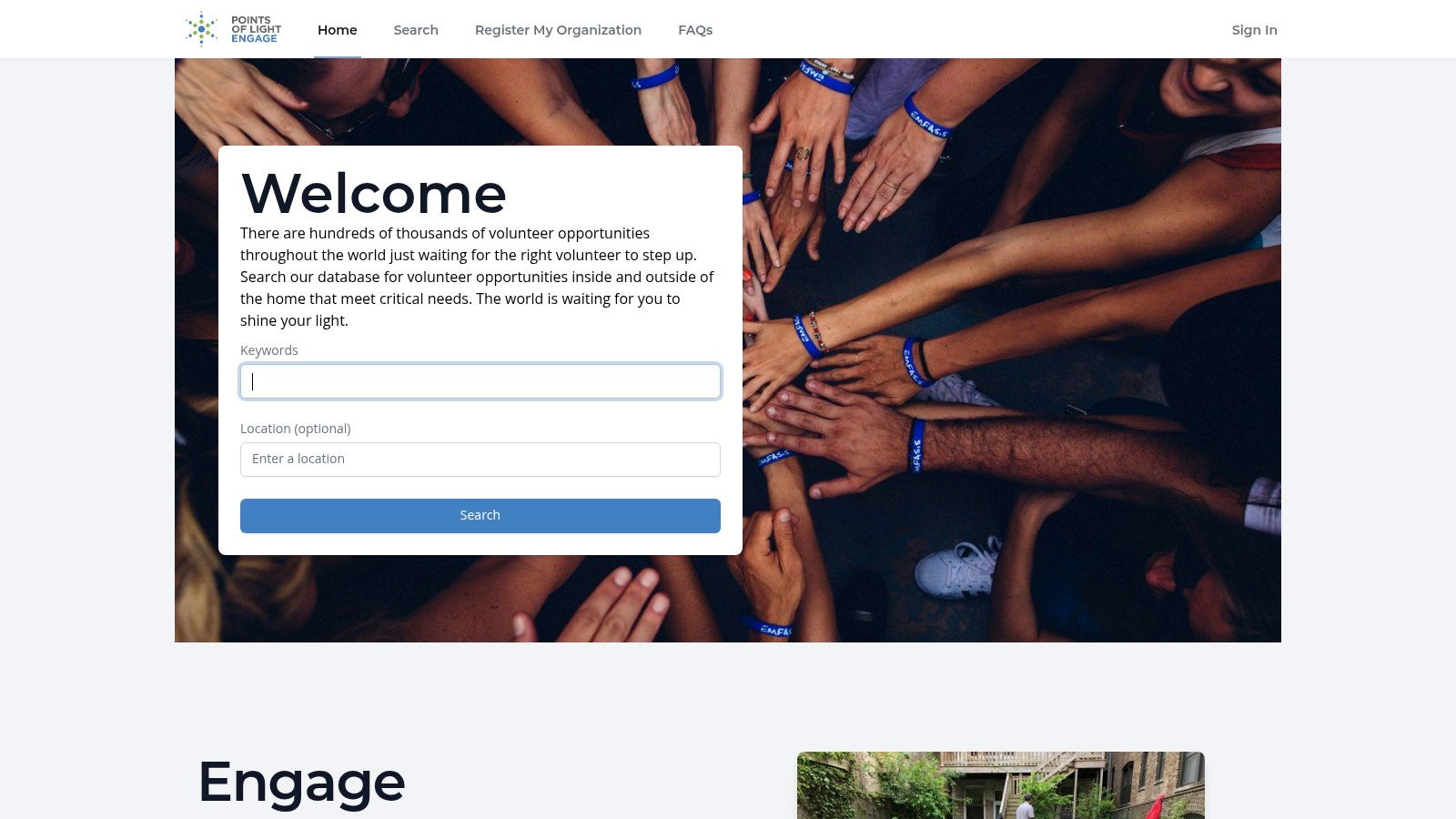
    Points of Light Engage feels like the big train station of volunteer search. Lots of routes, lots of causes, lots of partner listings moving through one place. When I want to cast a wide net without opening ten tabs, I use Points of Light Engage.

    That broad view matters because formal volunteering got harder for many groups to sustain. The Council of Nonprofits summary on new volunteer data says the U.S. formal volunteering rate fell by over 23 percent, from 30 percent in 2019 to 23.2 percent in 2021, and nearly half of nonprofit respondents called volunteer recruitment a big problem.

    Why it's useful

    Points of Light Engage pulls listings from partner organizations and platforms, so you may find opportunities there that don't show up on a single local site. I also like it for comparing virtual and in-person roles side by side.

    Volunteer energy is fragile. A search tool should lower friction, not add more of it.

    That said, aggregator sites can get messy. You may hit duplicate listings, and some sign-ups send you to partner portals.

    • Good pick if: You want breadth and don't mind a little clicking.
    • Less ideal if: You hate redirects or repeated listings.
    • Best use: Search broadly first, then narrow by cause and distance.

    You can search at Points of Light Engage.

    4. United Way

    United Way (local volunteer portals)

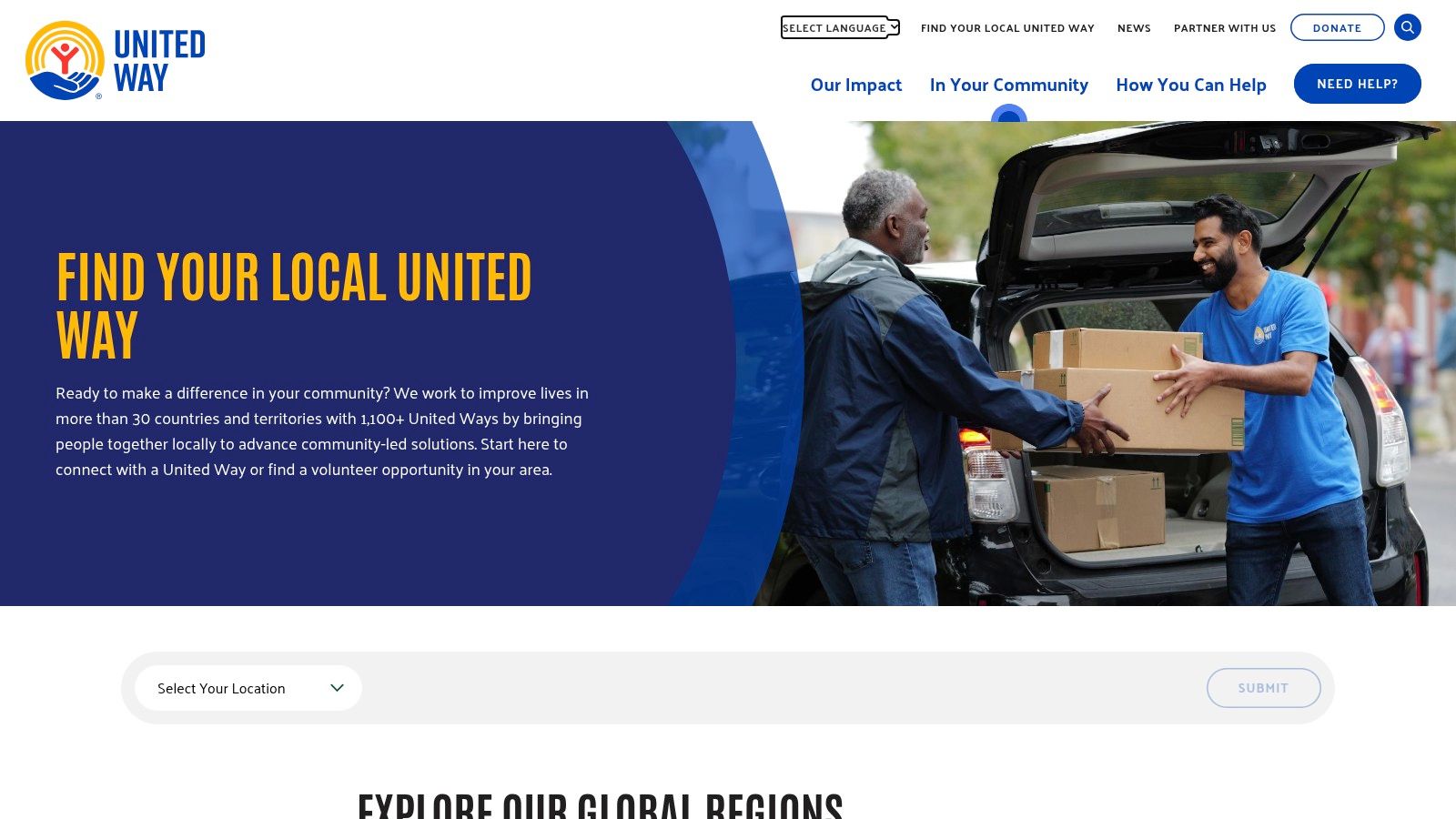
    United Way is the friend I'd send to someone who says, "I want something reliable near me." Its local portals usually feel less chaotic than giant directories. You search, find a shift, and the role often sounds concrete: pantry sorting, event help, tutoring, admin support.

    I like that structure. Some weekends, I want the wild-card energy of a street cleanup. Other weekends, I want something scheduled and clear, like a shift with a start time, a room number, and a person expecting me.

    Where it shines

    United Way has local hubs, and those hubs often include short-shift options for individuals, families, and work groups. If you're trying to volunteer with a roommate, partner, or office team, that's handy.

    The trade-off is that local inventory changes by city and season. Some roles also need a background check or short orientation before you start.

    • Best fit: You want nearby roles with some structure.
    • Good for groups: Family volunteering and company volunteer days.
    • Watch for: Popular shifts can fill fast.

    Start at United Way's local finder.

    5. Keep America Beautiful

    If picking up litter gave me my footing back, then Keep America Beautiful speaks my language. This network focuses on cleanup and beautification, and that makes it one of the easiest entries into free volunteer opportunities if you like visible results.

    I always tell people this: some service feels like planting seeds you'll never see. Cleanup is different. You see the before and after with your own eyes. That's satisfying in a very direct way.

    Why cleanup people love it

    Keep America Beautiful connects volunteers to local affiliate events across the country. During seasonal pushes like the Great American Cleanup, it can be especially easy to find a date, sign up, and join a group.

    The catch is local variation. In some places, you'll find a full calendar. In others, the schedule thins out outside the busier season.

    If you struggle with motivation, choose work with an obvious finish line. A full trash bag is a finish line.

    I also like cleanup work because it changes how you consume. The Litter Free Chicago-Calumet River initiative recommends avoiding single-use plastics like water bottles, straws, and bags because they require enormous energy to produce and add to climate change. Once you pick those items up off the ground enough times, you stop seeing them as disposable.

    Find events through Keep America Beautiful's volunteer portal.

    6. National Park Service Volunteers-In-Parks

    National Park Service – Volunteers‑In‑Parks (VIP)

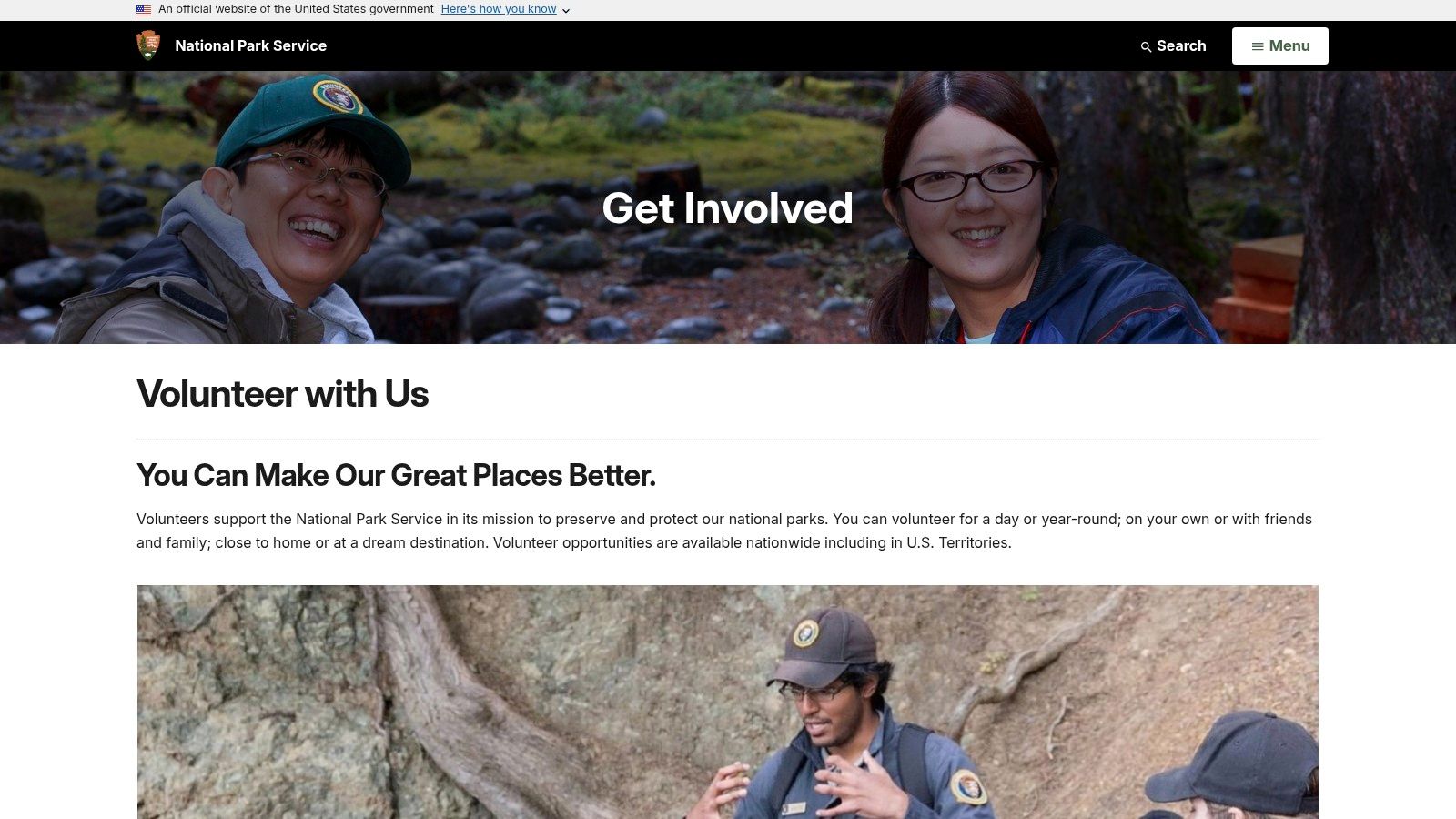
    The National Park Service Volunteers-In-Parks program is for the part of you that wants your service to feel like a field journal. Trails, habitat work, historic sites, visitor help, citizen science. It has the feeling of doing something useful while also stepping into a bigger physical world.

    I turn to this kind of volunteering when city life starts making me feel boxed in. A park shift changes the scale of the day. You stop staring at your phone and start paying attention to dirt, weather, and time.

    What to expect

    The range is wide. Some roles are beginner-friendly. Others need advance applications, training, or a set schedule. Travel can also be part of the equation, and lodging is usually on you.

    That makes this less spontaneous than a neighborhood cleanup, but more immersive if you're ready for it.

    • Great for: Outdoor people, history lovers, and anyone who wants structured conservation work.
    • Harder part: Planning ahead.
    • Best mindset: Treat it like a trip with a purpose.

    You can search openings through the National Park Service volunteer page.

    7. Habitat for Humanity

    Habitat for Humanity

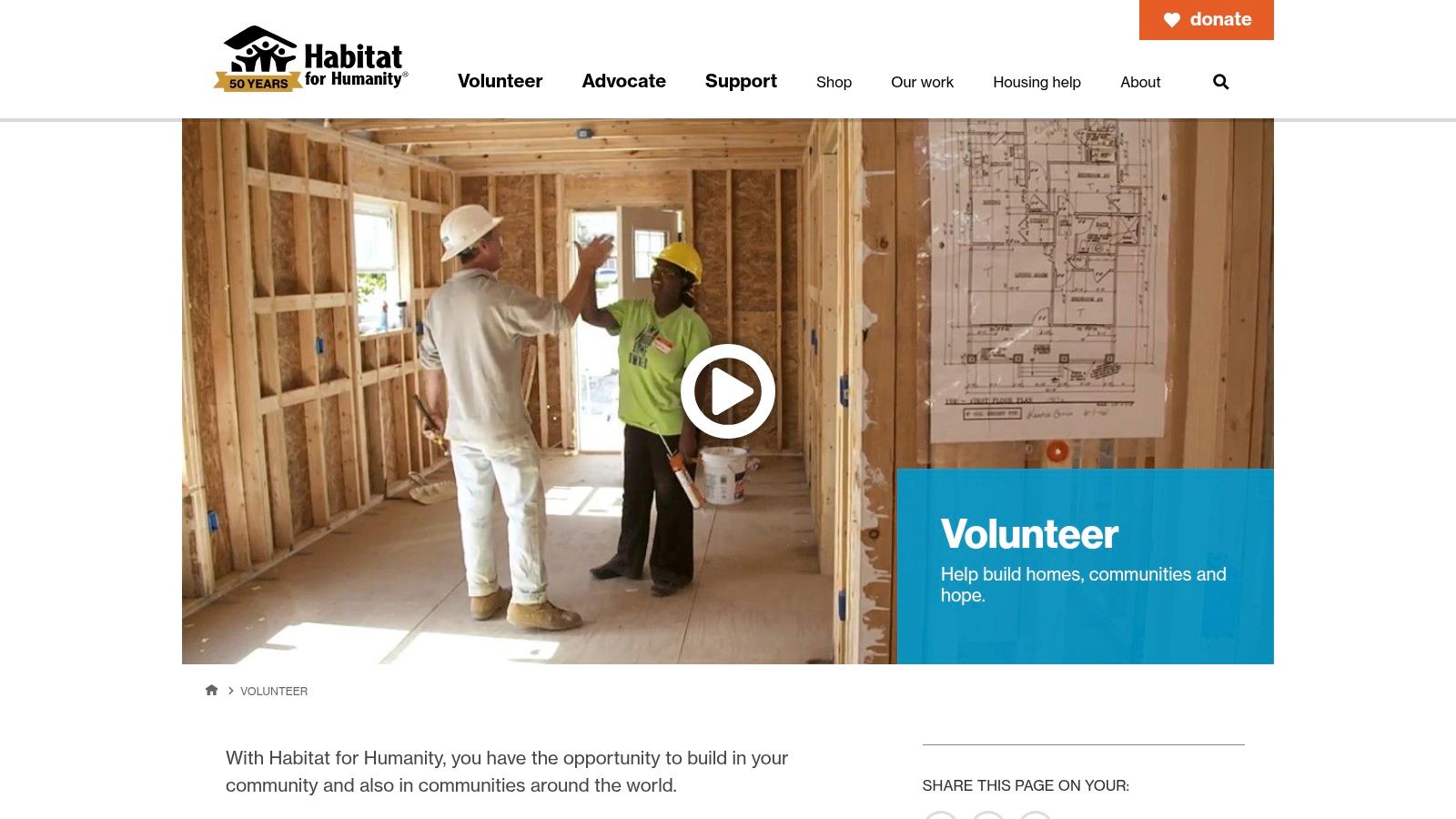
    Habitat for Humanity is for people who want to point at a wall, a window, or a repaired room and say, "I helped do that." I love that kind of service because it leaves behind a tangible memory. You're not guessing whether your effort mattered. You can plainly see the frame.

    You also don't need to arrive as a construction pro. Habitat trains volunteers on site and gives supervision and safety briefings through local affiliates.

    Why people keep coming back

    There's something sticky about shared labor. The Independent Sector page on the value of volunteer time says the presence of a regular volunteer raises the probability of a volunteer returning by 15 percent, moving from an average 10% return probability to 11%. I read that and nodded because it matches real life. Familiar faces pull you back.

    If you're helping a group recruit and keep people engaged, this page on volunteer recruitment strategies is worth your time too.

    • Best fit: You want a team environment and visible progress.
    • Know before you go: Some tasks are physical, and some shifts have age or safety limits.
    • Why it works: The site crew usually makes the day feel organized and social.

    Sign up through Habitat for Humanity.

    8. Feeding America

    Feeding America (food bank network)

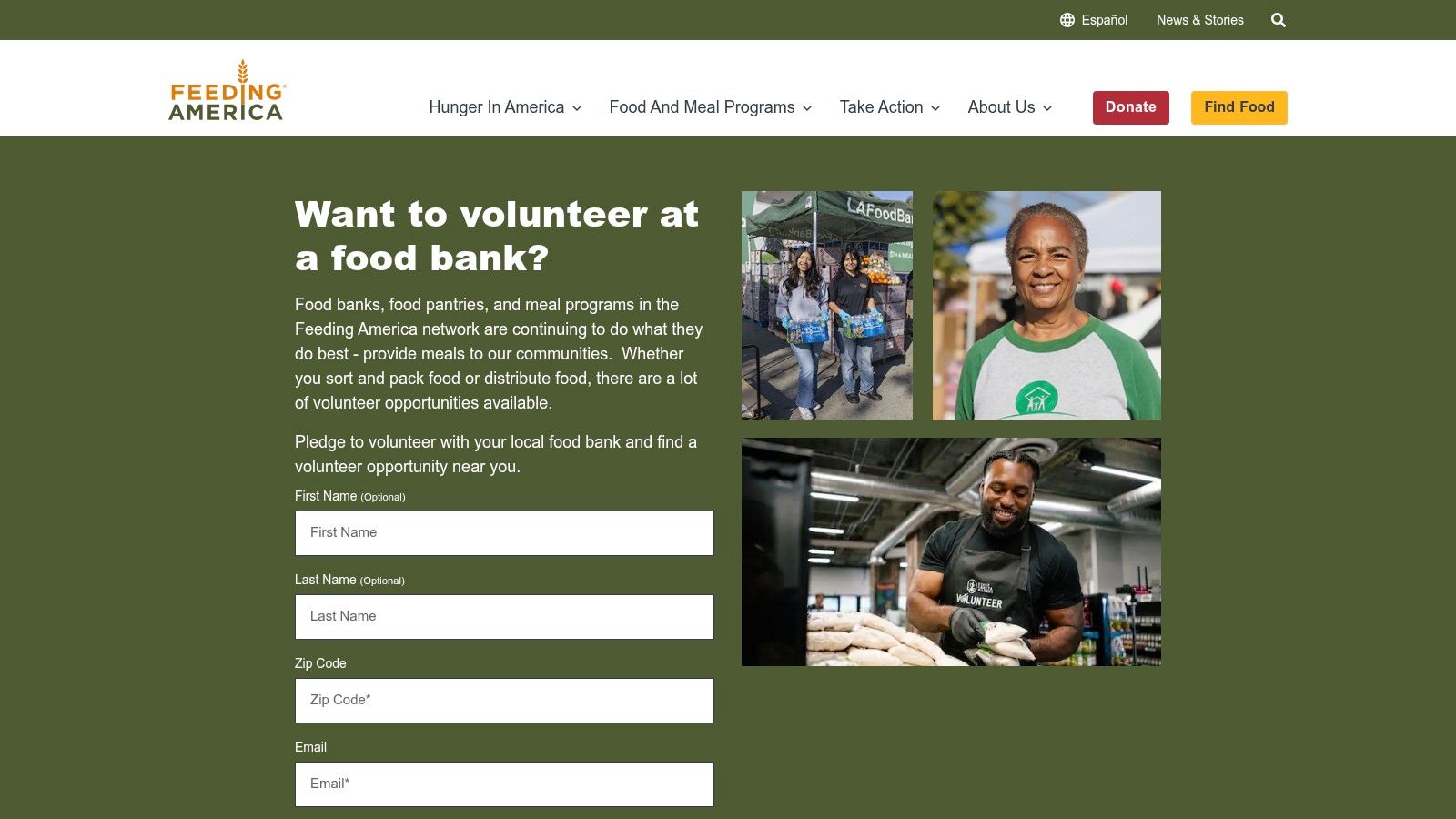
    Feeding America is what I suggest when someone wants a practical first step. Food bank shifts are often easier to book than more specialized roles, and the work is easy to understand. Sort, pack, move, organize, distribute.

    That kind of rhythm is good for anxious brains. Your hands know what to do, so your mind gets a break.

    Why it's easy to start

    Feeding America lets you use your ZIP code to find nearby food banks and their volunteer calendars. A lot of local sites have short shifts, evening options, and weekend slots, which helps if you work standard hours.

    The work can be repetitive. That isn't always a downside. Repetition can calm you down, the way sweeping a floor can calm you down.

    • Great first volunteer stop: Simple tasks and low friction.
    • Good for groups: Friends, families, work teams.
    • Small catch: Some sites want a brief orientation and closed-toe shoes.

    Search near you at Feeding America volunteer opportunities.

    9. Team Rubicon

    Team Rubicon

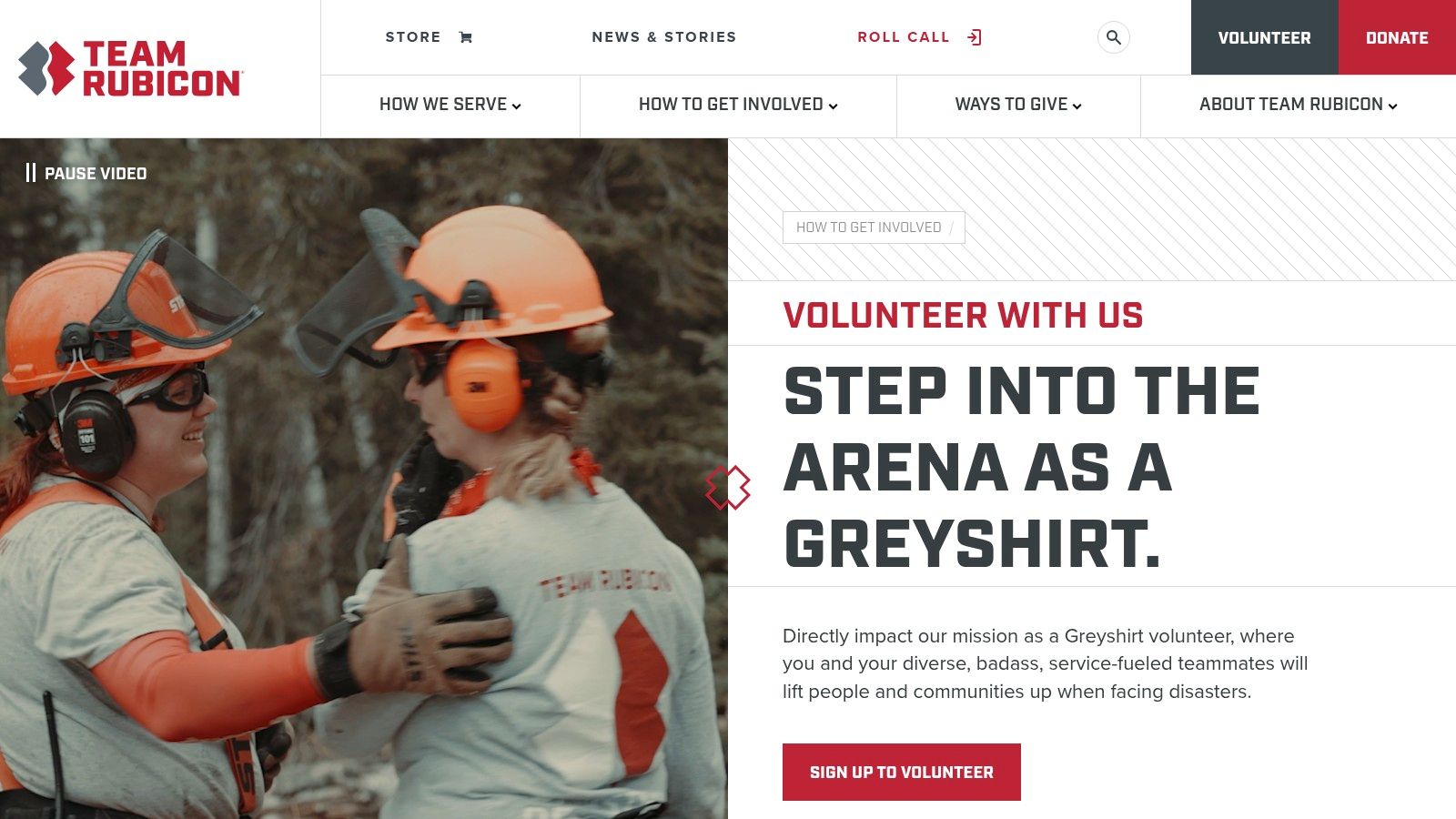
    Team Rubicon is for the person who wants service with urgency. Disaster response has a different emotional texture from weekly neighborhood volunteering. It asks for readiness, training, and patience, then suddenly asks you to move.

    I admire that model because it respects preparation. You don't just drift into a serious field operation. You onboard, learn the basics, and wait for the right moment.

    Who should join

    If you like clear roles, field training, and strong camaraderie, Team Rubicon has that pull. Volunteers can get alerts for deployments and local events after onboarding and safety training.

    This path is less predictable than a weekly cleanup or pantry shift. Disasters don't run on your calendar. Some roles are also physically demanding and may require background checks and more training.

    Some people need a weekly routine. Other people need a mission that calls them when it's time.

    Visit Team Rubicon volunteer information.

    10. DoSomething.org

    DoSomething.org is the easiest recommendation on this list for younger volunteers, students, and people who want to start from home. If traditional volunteering feels like too many forms, too much logistics, or too much pressure, this is a softer runway.

    I like it because momentum matters more than drama at the beginning. A quick action you perform beats a grand plan you keep postponing.

    Best for building the habit

    DoSomething.org has campaigns, toolkits, and checklists around issues like the environment, mental health, civic engagement, and equity. Many actions are remote or DIY, so you can start from school, your room, or a local hangout spot.

    That flexibility can turn intention into routine. In the United States, nearly 51% of people age 16 and older engaged in civic help between September 2020 and 2021 when informal volunteering was included, according to the U.S. Census Bureau's civic life report. I think that's part of the appeal here. Help doesn't always begin with a formal badge or a clipboard.

    • Best fit: Teens, students, and young adults.
    • Why it works: Fast start, no cost, easy to share with friends.
    • Possible mismatch: If you only want traditional in-person shifts, the site may feel too campaign-driven.

    You can start at DoSomething.org.

    Top 10 Free Volunteer Resources Comparison

    The first time I tried to choose a place to volunteer, I did what a lot of us do. I opened too many tabs, compared too many options, and nearly talked myself out of starting.

    What helped was a simpler question. What kind of change did I need most right then?

    If you want what helped me at the beginning, start with Litter Caterpillars. It is local, visible, physical, and hard to romanticize. You show up, pick up trash, talk to strangers, and leave with a cleaner block and a quieter mind. That kind of service changed me because it was immediate. I could see the bag filling up while I was clearing out some mess in myself too.

    If you want a wider search, use the rest of this list by fit instead of by rank:

    • Choose Litter Caterpillars if you want direct, outdoor, community-level action and a group with personality.
    • Choose Idealist if you want the biggest range of searchable opportunities across causes.
    • Choose Points of Light Engage if you want one starting point that pulls together many partner options.
    • Choose United Way if you want trusted local coordination and shorter, organized shifts.
    • Choose Keep America Beautiful if litter cleanup and beautification are what pull you in.
    • Choose National Park Service Volunteers-In-Parks if you want conservation work in outdoor settings.
    • Choose Habitat for Humanity if you want to build or repair something tangible with your hands.
    • Choose Feeding America if you want repeatable shifts with immediate help for local families.
    • Choose Team Rubicon if you want structured disaster response and the commitment that comes with it.
    • Choose DoSomething.org if you want a low-pressure start, especially if you're young or beginning from home.

    That is the true comparison I wish someone had given me earlier. Less spreadsheet, more honest match.

    You do not need the perfect option. You need the one you will show up for.

    Your Turn to Start the Story

    My story started with one piece of trash and one decision. I didn't wake up transformed. I just got tired of waiting to feel ready, and I learned that action can come before clarity.

    That lesson is why I care about free volunteer opportunities so much. They remove one excuse. You don't need to buy your way into purpose. Around the world, informal volunteering is already the bigger share of service. The State of the World's Volunteerism Report 2022 says about 14.3% of the working-age population engages in informal volunteering, compared with 6.5% in formal volunteering, and that volunteer work adds up to about 61 million full-time equivalent workers. A lot of people are already helping in ordinary, direct ways.

    I also think people stay with service for human reasons, not abstract ones. The same U.S. Census Bureau page noted earlier says 35% of volunteers cite socializing as a primary motivation. That tracks with my own experience. I started because I needed to clean up my life, but I kept going because other people showed up too.

    Sometimes the first step is tiny. You sign up for a Saturday cleanup. You sort canned goods for two hours. You pack a toolkit from your laptop and do one action before bed. Those steps look small from the outside, but they can change the story you're telling yourself about who you are.

    I wouldn't overthink the perfect choice. Pick the one that matches your energy right now. If you're restless, choose a cleanup. If you want structure, choose United Way or Feeding America. If you want to build something with your hands, choose Habitat. If you want adventure, choose the parks or Team Rubicon. If you want a low-pressure start, choose DoSomething.org.

    Tom Sawyer made fence painting feel like a prize because he changed the frame around the work. Volunteering can do that too. What looked like a chore to me became an adventure, then a rhythm, then a lifeline.

    Start with one shift. Put it on your calendar. Let the story begin.


    If you want the kind of free volunteer opportunity that gets you outside, introduces you to good people, and lets you see the difference you made before lunch, join Litter Caterpillars. Show up on a weekend morning, pick up a bag, and give yourself a better story to live inside.

  • What Is Community Service: Your Guide to Impact

    What Is Community Service: Your Guide to Impact

    Trash clung to my life before it ever clung to my grabber. I could stare at an old jar in my fridge for months, not because it was heavy, but because every useless thing carried a memory, and every memory made my room feel impossible.

    Then one cold day, I went outside and picked up someone else's litter. Somehow that was easier. It was even fun.

    My Messy Room and the Start of an Adventure

    I started to understand what community service is when I failed, over and over, at cleaning my own room.

    I'm serious. My place used to feel like a museum of unfinished versions of me. The bag of nuts from the week I swore I'd get healthy. The old blueberry jam from a trip I didn't want to forget. Random papers, boxes, wrappers, half-plans, half-dreams. Every item looked small, but each one felt like it weighed five hundred pounds in my mind.

    Then my life cracked open. I got out of a chaotic relationship that drained me. I looked around and saw mess everywhere. My room was messy. My habits were messy. My social circle was messy. I felt stuck in the kind of way that makes even tiny tasks feel impossible.

    An artistic illustration featuring a human hand reaching toward a single flower growing from scattered items

    Why someone else's mess felt lighter

    So I tried something strange. Instead of fixing my whole life in one dramatic sweep, I went outside to pick up trash in my neighborhood.

    That first cleanup had only a few of us. We got caught in a Chicago spring hailstorm that felt more like a prank than weather. We huddled under a tree, freezing, while ride after ride canceled on us. I should've hated it.

    I didn't.

    I laughed. I felt awake. I realized that cleaning other people's messes was easier than cleaning my own, and that mattered more than I expected. A candy wrapper on the sidewalk didn't come with guilt. A bottle in the gutter didn't ask me to revisit an old regret. I could just bend down, grab it, and make the block a little better.

    Sometimes the first honest step in fixing your life is doing one small useful thing outside your own head.

    The plot started moving again

    That day gave me a weird kind of relief. Service didn't feel like punishment. It felt like motion.

    When you're stuck, motion is gold. You don't need a perfect plan. You need a task you can finish. Pick up the cup. Tie the bag. Walk to the next corner. Say hi to the person next to you. Survive the hail. Tell the story later.

    That's why I still think community service is one of the best ways to restart yourself. It gives you a simple job when your inner life feels too tangled. You don't have to solve everything. You just have to show up and carry one piece of the load.

    What Community Service Really Means

    Community service is simple. You give your time and energy to improve the shared world around you.

    That's it. It's being a good neighbor at a bigger scale. Maybe you clean a sidewalk, stock a pantry shelf, tutor a kid, plant flowers, or help at a library. The action changes, but the heartbeat is the same. You see a need, and you answer it with your time.

    A city is just a giant block party

    I like to think of a neighborhood as one big apartment building. If the hallway is dirty, the lights are broken, and nobody checks on each other, everyone feels it. Community service is what happens when you stop walking past the mess and decide, “I live here too.”

    That choice is common all over the world. About 862.4 million volunteers aged 15 and older take part each month worldwide, or roughly one out of every seven working-age people, according to Better Impact's volunteer facts roundup.

    That number doesn't mean you need to be heroic. It means ordinary people help all the time. Repeatedly. In ways that often look small up close.

    What counts and what doesn't

    A lot of people overcomplicate this. They think service has to be dramatic, formal, or impressive. It doesn't.

    Here's a better way to judge it:

    • Does it help other people or a shared place? Then it's probably service.
    • Does it cost you time, effort, attention, or comfort? Then it's probably real.
    • Does it make life a little easier, cleaner, safer, or kinder for someone else? Then you're in the right lane.

    If you want another angle on public participation, this guide on civic engagement and community action connects the dots between personal effort and shared life.

    Practical rule: If you can point to what got better because you showed up, you're probably doing community service.

    The cleanest definition I know is this: community service is love made visible through action. Nothing fancy. Just hands, time, and follow-through.

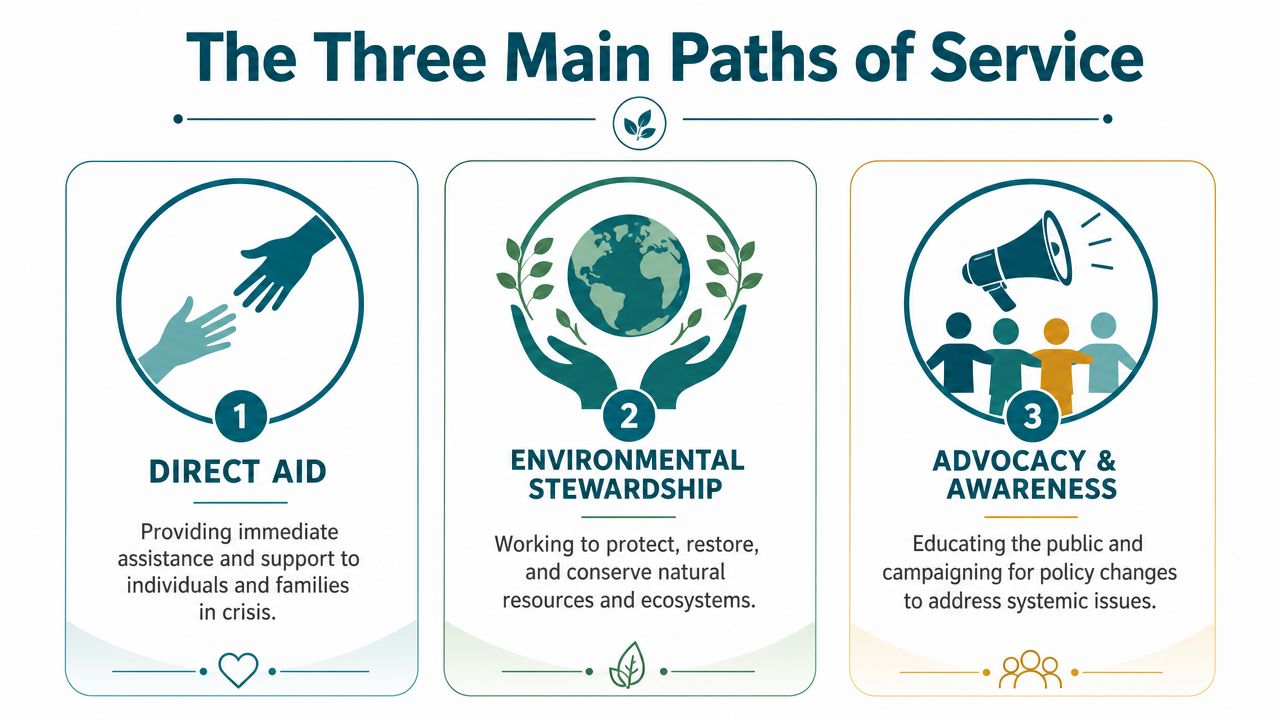
    The Three Main Paths of Service

    People use the phrase community service to mean different things. That's why confusion happens.

    I've seen one person say it after a joyful weekend cleanup, another say it about a court requirement, and a student say it about a class project. All three can fit under the same umbrella, but the reason behind the work changes the experience.

    An infographic detailing the three main paths of service: direct aid, environmental stewardship, and advocacy and awareness.

    Voluntary service

    This is the kind I know best. You choose it.

    Nobody sentences you to it. Nobody grades you on it. You wake up early on a Saturday, pull on your gloves, and go because you want your block, your river, your school, or your neighbors to feel more cared for. Voluntary service has a certain spark because choice changes the mood. You're there on purpose.

    You also learn fast that your reason can be mixed. Maybe you want to help. Maybe you want friends. Maybe you need structure. Maybe you're trying to become braver. That still counts.

    Court-ordered service and service-learning

    Court-ordered service is different. A person does work for the community because the legal system requires it. The task might look similar on the surface, but the starting point is obligation.

    Service-learning has another flavor. A school or training program ties service to reflection and education. You serve, then think about what happened, what you learned, and how the experience connects to a larger lesson.

    Here's a quick comparison:

    Path Why you do it What it often feels like
    Voluntary service Personal choice Freer, social, self-directed
    Court-ordered service Legal requirement Structured, mandatory
    Service-learning Educational goal Reflective, guided, tied to study

    Why motivation matters

    This matters a lot for students. Many people confuse general volunteering with the stricter meaning of community service in academic or professional settings. In medical school prep, direct work with underserved populations often matters most, and 78% of pre-med students overlook that distinction, according to GHL Foundation's discussion of underserved community service.

    So if you're asking what community service is, the full answer is this: the action matters, and the context matters too. Picking up litter, mentoring youth, visiting elders, helping with food distribution, or teaching health basics can all fit. The question is why you're there, who you're helping, and what kind of service the situation calls for.

    The Unexpected Gift You Get from Giving

    I started serving because I wanted to clean streets. I kept serving because it started cleaning up parts of me.

    That sounds dramatic, but I mean it in a plain, practical way. When you keep showing up to help other people, you build traits that are hard to fake. You become steadier. You get less fragile. You stop panicking every time conditions aren't perfect.

    You practice being the person you want to be

    I didn't become brave by reading about bravery. I became brave by standing outside when it was cold, awkward, inconvenient, and a little uncomfortable. I became more reliable by showing up again the next week. Then the week after that.

    Service works like a gym for character. One cleanup won't change your life. Repeated cleanups might.

    Here's what I got from it:

    • Bravery in small doses. Going to unfamiliar blocks, meeting strangers, and doing visible public work trained me to move before I felt fully ready.
    • Consistency I could feel. Weekend after weekend, the habit got stronger than my excuses.
    • Better friendships. Shared work is a great filter. People who wake up to help others usually have something solid in them.

    You find out who you are when the weather gets bad and you stay anyway.

    Volunteer-first groups change the experience

    Group culture matters. A lot.

    The healthiest service spaces I've seen protect the people doing the work. They care about safety. They care about morale. They don't treat volunteers like a wallet with legs. Volunteer-first groups that put safety and happiness ahead of pressure for money create a more sustainable experience, and that changes whether people come back.

    If you want a deeper look at what real results can look like over time, this page on measuring community service impact has a useful framework.

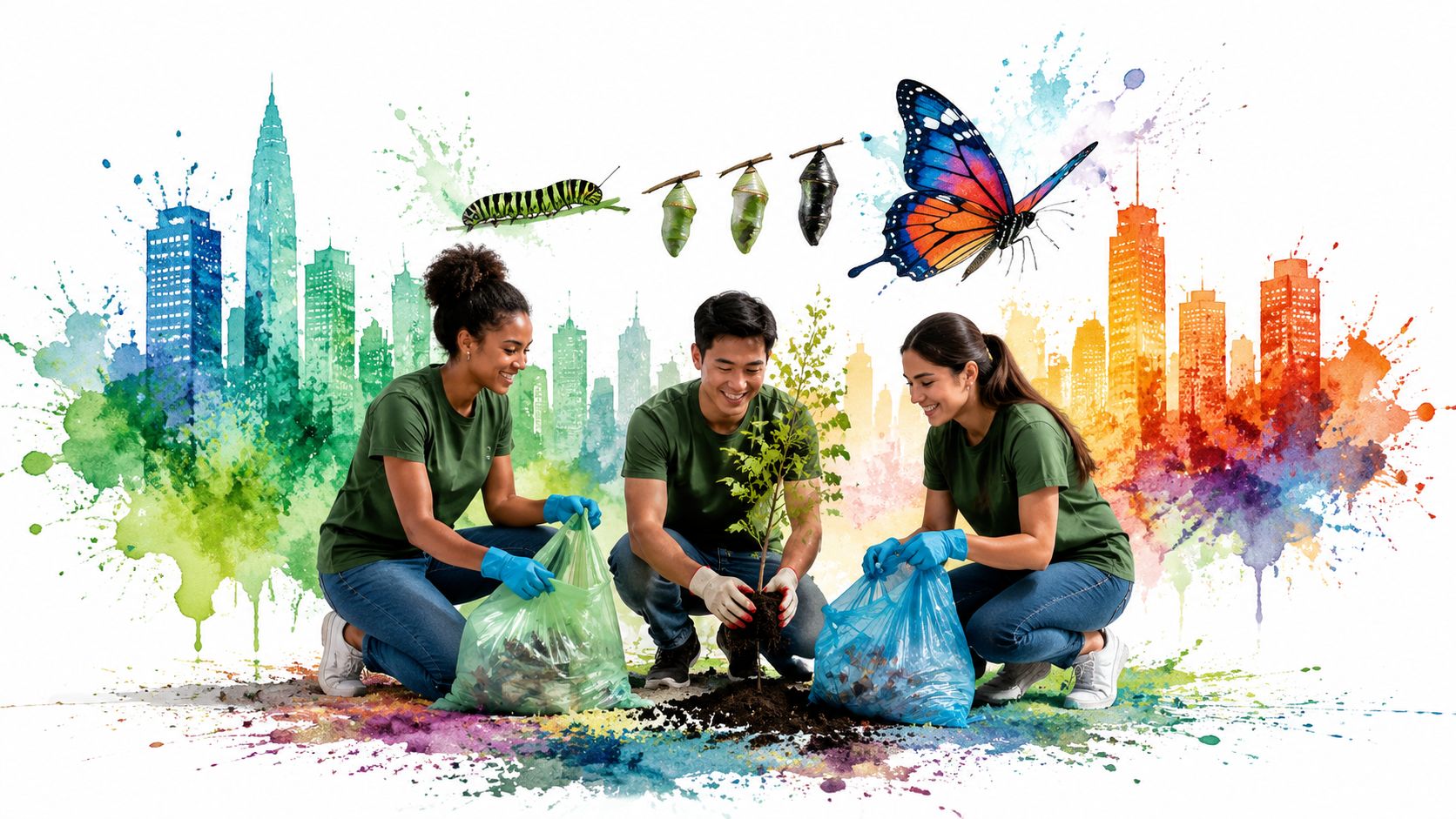
    The caterpillar idea is real to me

    I love the caterpillar image because nobody expects a caterpillar to stay a caterpillar.

    That's how service felt for me. I wasn't trying to become flawless. I was trying to become less afraid, less selfish, less flaky, less trapped in my own head. Service gave me a place to practice that transformation in public, one bag of trash at a time.

    And there's something else. Hard days become good stories. The freezing cleanup. The long walk. The muddy shoes. The weird conversation that turned into a real friendship. Service gives your life texture. It gives the plot somewhere to go.

    Watching Your Neighborhood Come Alive

    The first thing you notice after a cleanup is visual. A block looks calmer. A curb line appears again. Grass comes back into view. The street breathes a little easier.

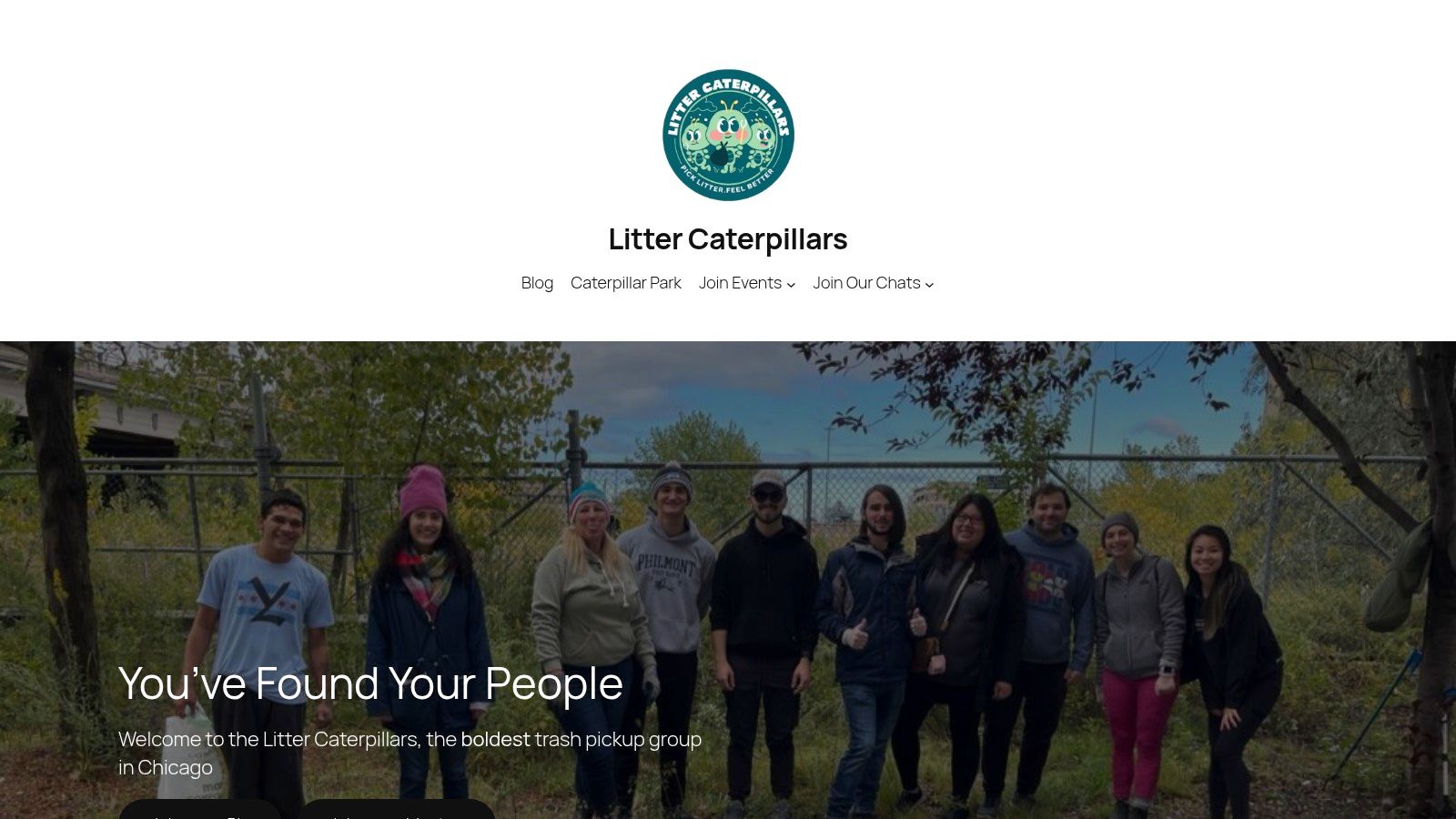
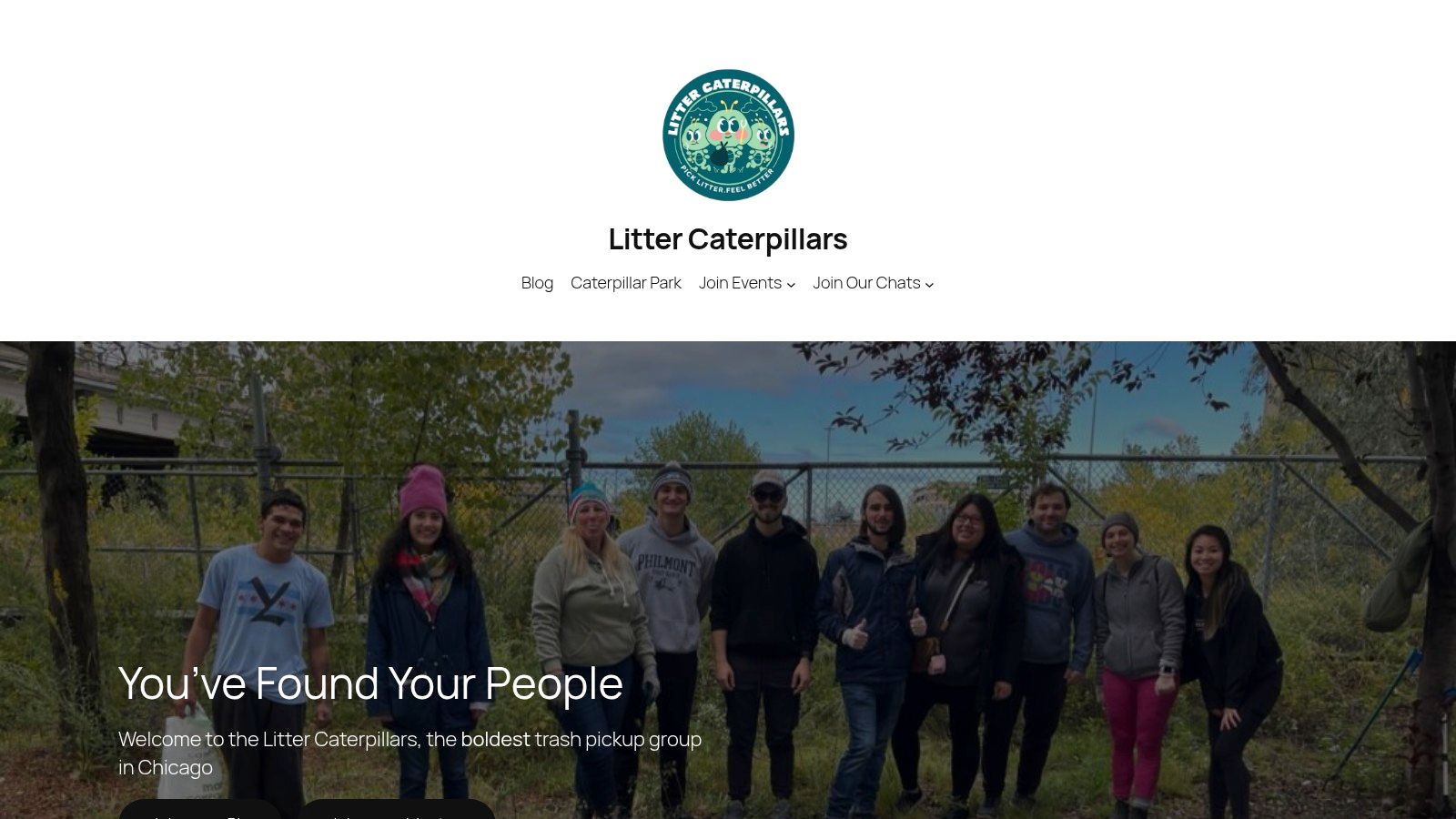
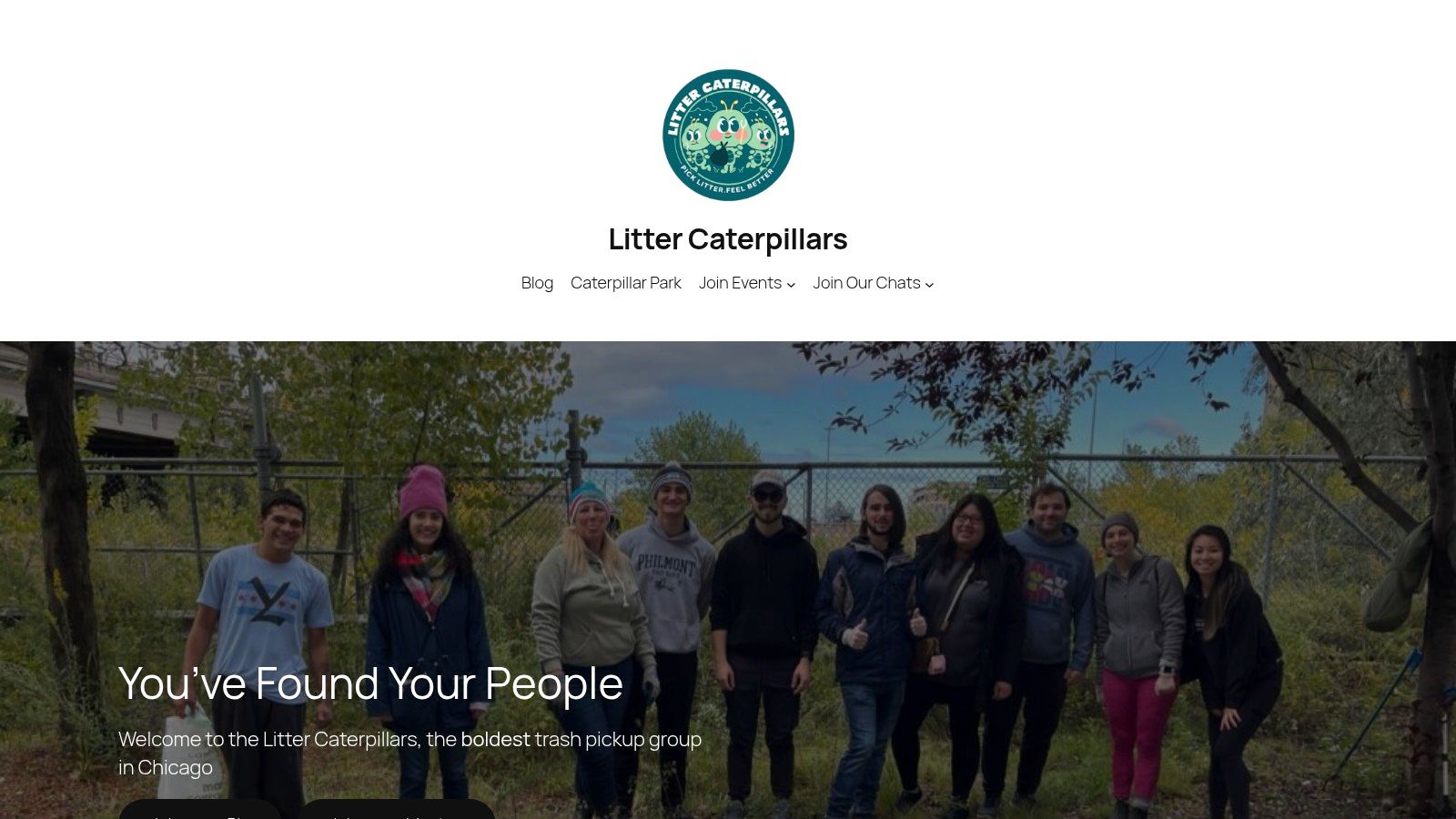
    Screenshot from https://www.littercaterpillars.com

    But the deeper change is emotional. People walking by start talking. Someone thanks you from a porch. A kid stares like you're doing magic with a trash bag and a grabber. Another neighbor starts picking up around their own building a few days later. Service spreads because people copy what they can see.

    Block by block is how a city changes

    I've learned to trust repeated action more than grand speeches. One corner today. Another next week. A rough alley nobody wanted to deal with. A commercial strip full of bottles and wrappers. An empty lot that looked forgotten.

    That kind of work gets especially real in places people avoid. Community service grows when you stop treating some neighborhoods as disposable. Litter Caterpillars has cleaned all 50 Chicago wards, including neighborhoods others often avoid. I love that example because it refuses the lazy map in people's heads, the one that says some areas count more than others.

    There's also a direct environmental side to this work. Litter cleanup helps stop trash from washing into rivers, and the Chicago-Calumet River litter prevention effort shows how local cleanup connects to cleaner waterways.

    A short clip tells that story better than I can:

    You start seeing possibility where you used to see blight

    One of my favorite shifts is internal. You stop looking at an ugly space and thinking, “That's a shame.” You start thinking, “We can do something about that.”

    That mindset changes a neighborhood because it changes the people in it. Cleanup is rarely about making things look cute. It's about telling the truth with your hands. This place matters. These people matter. We're not waiting for someone else.

    A cared-for block invites more care. A neglected block teaches people to give up.

    That's why community service feels alive to me. You can watch the before and after happen in real time.

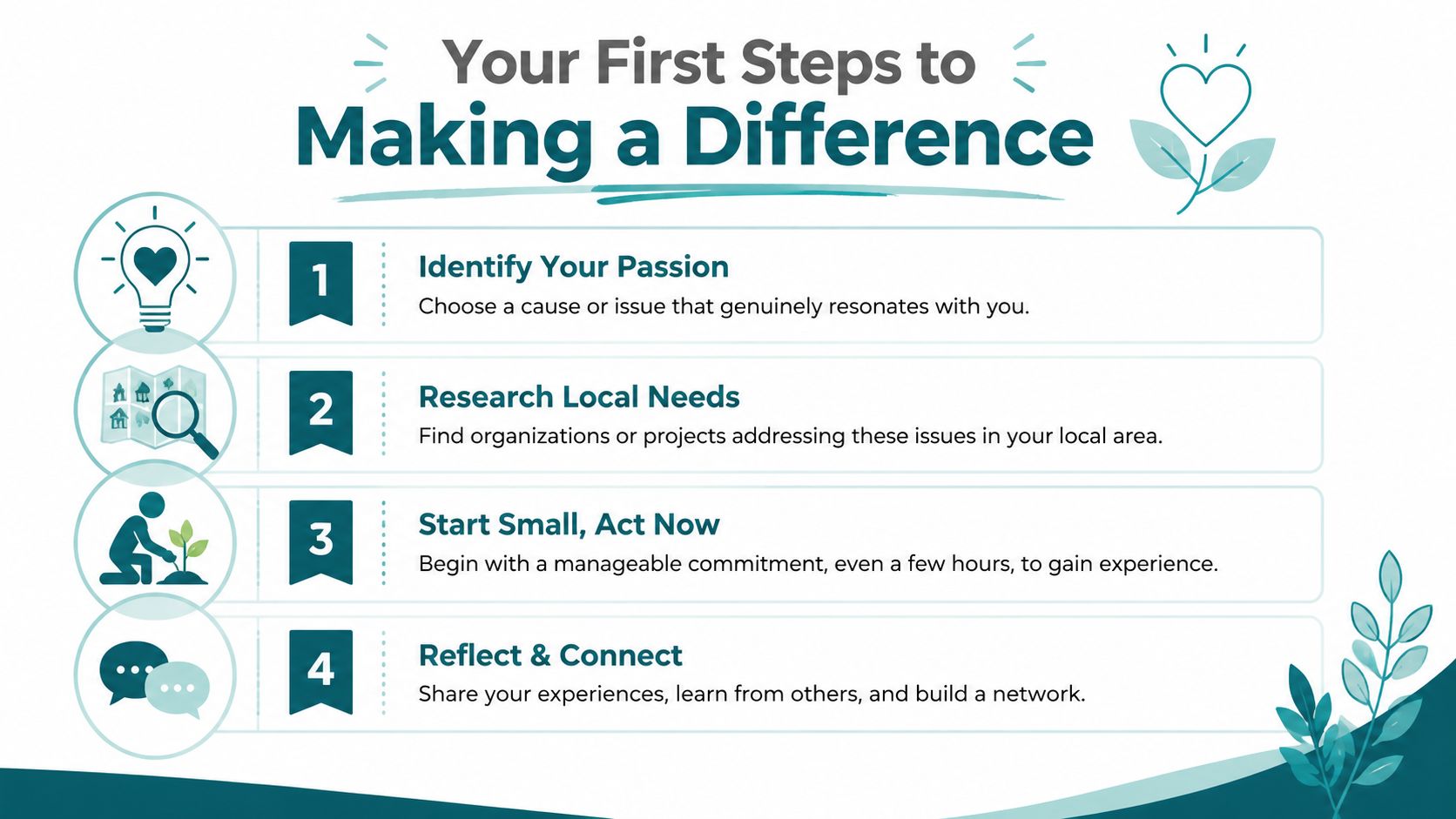
    Your First Steps to Making a Difference

    Individuals don't need more inspiration. They need a first move.

    The good news is that starting is much easier than performing some giant act of goodness. You don't need a full life mission. You need one cause you can stick with long enough to build a habit.

    A four-step infographic illustrating how to start contributing to community service and making a difference.

    Start with fit, then build consistency

    Pick something that pulls at you. If you care about litter, join a cleanup. If you care about hunger, find a pantry. If you care about reading, help at a library. Your odds of staying committed go way up when the work feels personal.

    Then make the commitment small enough that you'll keep it.

    • Choose one lane. Don't sign up for five causes at once. Pick one and learn its rhythm.
    • Check the group culture. Look for clear meeting details, safety norms, and respectful communication.
    • Use a simple schedule. One steady hour each week can change you more than one giant burst once a year.
    • Reflect after each shift. Ask yourself what felt energizing, awkward, useful, or meaningful.

    If you want a practical starting point, this guide to starting volunteering gives a straightforward way to begin. One factual option is Litter Caterpillars, which organizes volunteer trash pickups in Chicago and provides cleanup tools for participants.

    If you need service for school or applications

    Consistency matters even more when service connects to admissions or career goals.

    For academic or professional applications, longitudinal service over 6+ months is prioritized over one-day events by AMCAS and AAMC, according to this PMC article on service learning and sustained engagement. That tracks with what I've seen in real life too. A single service day can be nice. Ongoing service changes how you think, who you know, and what you notice.

    A good starting checklist looks like this:

    1. Pick a cause you can talk about without forcing it.
    2. Find a group that feels safe and grounded.
    3. Commit to a repeat schedule, even if it's modest.
    4. Keep showing up long enough for your presence to mean something.

    You don't have to become a saint. You just have to become dependable. That's where the change begins.


    If you want a simple way to try community service in Chicago, join Litter Caterpillars. You'll spend a morning cleaning a block, meeting other people who like to help, and finding out how much lighter life can feel when you carry one bag of trash at a time.

  • Volunteer tips for volunteer work on saturdays to start a weekend habit

    Volunteer tips for volunteer work on saturdays to start a weekend habit

    Finding meaningful volunteer work on saturdays can feel like the perfect cure for a chaotic work week. I know you're looking for a way to trade a few hours of your weekend for a feeling of purpose, of real connection, of making a dent in a problem you can actually see. This guide is all about helping you find that perfect fit, a place where you belong.

    Your Weekend Can Be More Than Just An Escape

    I know how it feels. The work week is a frantic blur of deadlines and demands, and Saturday is your one sacred day to just breathe. To escape. But what if I told you that giving away just a couple of hours on a Saturday morning could actually give you more energy back than sleeping in ever could?

    Let me tell you my story. A few years ago, I hit a wall. My life felt like a cluttered room I just couldn't figure out how to clean. A long, draining relationship had just cratered, leaving me feeling… well, stuck. I knew I needed to change something fundamental about how I spent my time. I had to build consistency, find some courage, and surround myself with genuinely good people who showed up.

    So, on a whim, I did something that felt totally radical to me then. I signed up for a Saturday morning trash pickup.

    A Surprising Discovery in the Rain

    That first day, it was just me and two other souls. And within an hour, a classic Chicago storm rolled in—a bizarre, biting mix of freezing rain and hail. We were huddled under a tree, shivering, watching Ubers cancel on us one by one. It was miserable. But in that misery, something incredible happened. I realized that cleaning up someone else’s mess was a lot simpler, a lot more direct, than trying to untangle my own.

    That shared struggle, that moment of absurd "fun," became a turning point for me. It taught me a few things pretty quickly:

    • Action Creates Clarity: Focusing on a simple, physical task cleared my head in a way that just thinking about my problems never could. It was like meditation, but with a trash grabber.
    • Shared Hardship Builds Bonds: The freezing rain was a better icebreaker than any forced small talk. It created an instant "we're in this together" feeling that was raw and real.
    • Purpose Is Energizing: I went home cold and wet, but I felt more alive than I had in months. I had turned my weekend into something that mattered.

    That day, I learned that a Saturday morning doesn't have to be an escape from your week. It can be the foundation for a better one. It’s about building a life you don't need to escape from.

    This isn’t just about picking up litter. It’s about you finding a rhythm of service that grounds you. It’s a way to meet people who show up, who care, and who, like you, want to make things a little bit better.

    If you're ready to start this journey, learning how to find volunteer work is the essential first step. This guide will help you discover that perfect opportunity to make your weekend mean something more.

    Finding Your Volunteer Tribe

    So, you’re ready. You've decided to trade a lazy Saturday morning for a meaningful one, but that big question is hanging in the air: where do you even start? It can feel like searching for a specific book in a library with no catalog. I get it. When I first started, I felt the exact same way.

    The good news is, you’re looking at the perfect time. The world has shifted, and organizations finally understand that you need flexibility. Short, predictable shifts—like a couple of hours on a Saturday—are becoming the new normal for volunteering. It’s no surprise that formal volunteering in the U.S. shot up by a massive 22.1% between 2022 and 2023. This boom is happening because groups are finally offering these manageable, weekend-friendly roles that actually fit into your life.

    My own group, Litter Caterpillars, was born on Meetup. I think it's a fantastic place to start because it’s built around shared interests and community, not just tasks. You get a real feel for a group's personality before you even show up. But don't sleep on the old-school approach, either.

    Where To Find Your People

    Finding the right group is like finding a good pair of shoes; they have to fit your style and your energy. To help you zero in on your perfect match, here's a quick rundown of the most effective places I've found to look.

    Where To Find Your Saturday Volunteer Crew

    Platform Best For What to Look For
    Online Platforms Niche interests & city-wide groups Use filters for "Saturday" or "weekend" on Meetup, VolunteerMatch, and local Facebook groups.
    Community Boards Hyper-local neighborhood projects Check the bulletin boards at your local library, coffee shop, or community center for flyers.
    Nonprofit Websites Supporting a cause you already love Look for a "Volunteer" or "Get Involved" page on the websites of your favorite animal shelters or food banks.

    These are the big three, and mixing and matching them is usually the fastest way you'll find a group that clicks. You might find a big park cleanup on Meetup one week and then spot a flyer for a small community garden project the next. Keep your eyes open!

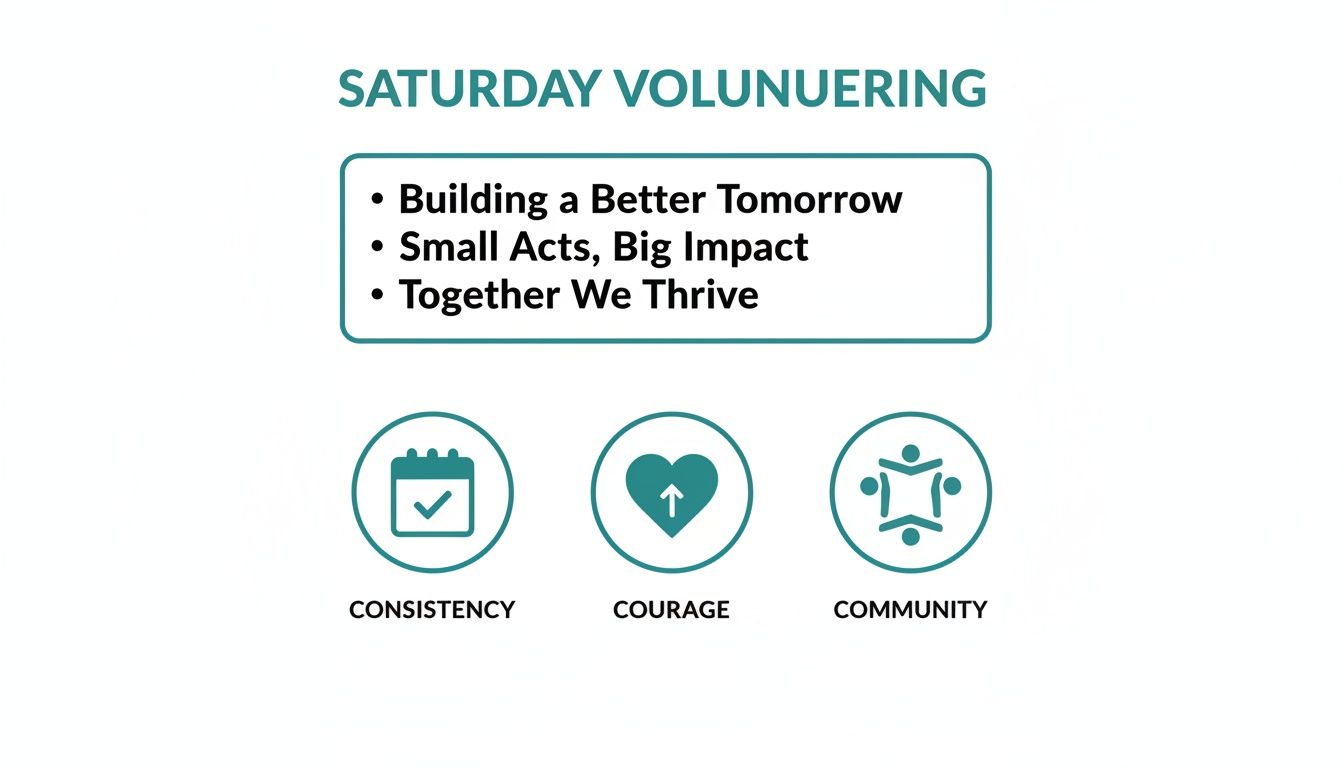
    This image really captures the three core elements that make Saturday volunteering so powerful.

    A graphic about Saturday volunteering, highlighting consistency, courage, and community themes.

    It’s all about consistency, courage, and community coming together. When you find a group that nurtures all three, you’ve hit the jackpot.

    Spotting Red Flags and Green Lights

    As you start exploring, you have to be a bit of a detective. Not all groups are created equal, and the vibe matters more than you think. A great organization makes you feel valued from the first email; a bad one makes you feel like just another cog in a machine.

    A huge green light is a group that puts its volunteers' happiness and safety first. If their first message is an ask for a donation, or they seem disorganized and never reply, that’s a big red flag. You're giving your most valuable asset—your time. It should be respected.

    Look for a crew with a clear mission and a welcoming vibe. Do they post photos of smiling volunteers? Do they share stories about their impact? These are signs of a healthy, thriving community where you won't just be volunteering—you'll feel like you belong.

    If you want to see some concrete examples, we’ve put together a list of great weekend volunteer opportunities near me.

    Navigating Your First Day With Confidence

    Walking into a group of total strangers can be terrifying. I still get flashbacks to my first time—that awkward hesitation, the internal debate about whether I’d know anyone, or if I’d just end up glued to my phone to avoid eye contact. It’s basically the first day of school all over again, but for adults.

    Let’s walk through it together. My goal here is to get you so prepped that you can show up feeling less like a nervous newcomer and more like you actually belong. This isn't just about showing up; it's about owning it.

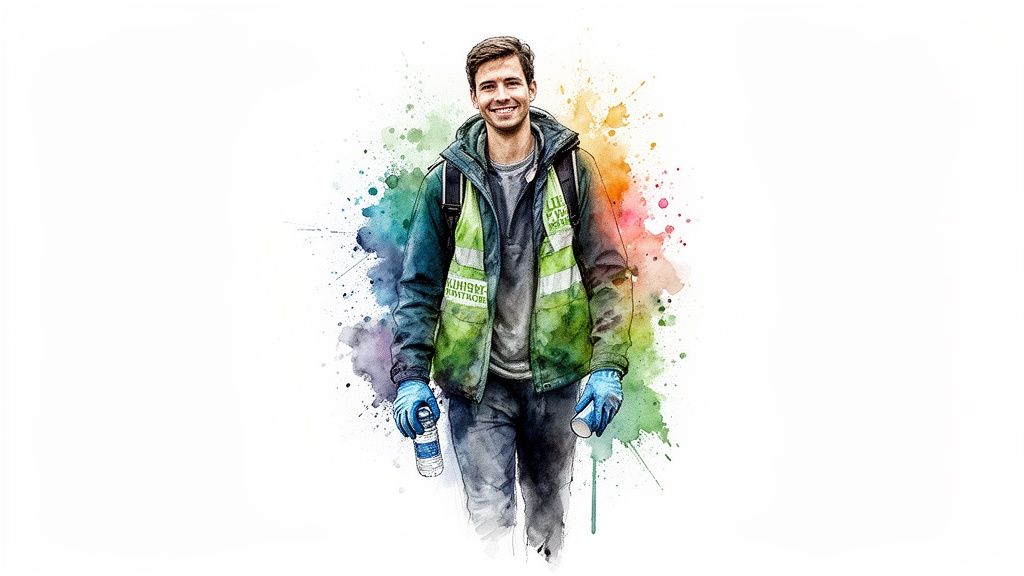
    A smiling young man, a volunteer, in a safety vest and gloves holding a bottle and can, amidst colorful watercolor splashes.

    What To Bring And Wear

    First, let's get the practical stuff out of the way. Think of this as your personal adventure kit. For any volunteer work on Saturdays, especially somewhere like Chicago where the weather has a personality of its own, layers are your best friend. Seriously.

    A comfy t-shirt, a hoodie or fleece, and maybe a light jacket will let you adapt to whatever the morning decides to do. You’ll be moving, bending, and lifting, so wear clothes you don’t mind getting a little dirt on.

    Here’s a quick-and-dirty checklist for your bag:

    • A reusable water bottle. You’ll be surprised how thirsty you get.
    • A small snack, like a granola bar. A little fuel goes a long, long way.
    • Your phone, fully charged. For directions, photos, and swapping numbers with new friends.
    • An open mind. Honestly, this is the most important thing on the list.

    Breaking The Social Ice

    Okay, now for the part that trips most people up: talking to strangers. Here's the secret—the beauty of volunteering is that the work itself is the ultimate icebreaker. You don’t need some clever opening line when you can just turn to the person next to you and ask, "Hey, have you seen any other plastic bottles over here?"

    The shared task completely removes the social pressure. I've seen the shyest people I know absolutely blossom when they’re focused on a common goal right alongside someone else. The minute you put on your gloves, you’re already a team.

    It's completely okay to just listen at first. You’re there to contribute, not to perform. Your presence alone says you care, and that’s the only introduction you really need.

    And remember this: every single person there was new once. The volunteer working next to you probably felt the exact same way on their first Saturday. They aren’t judging you; they’re just happy to have another set of hands. You’ve already done the hardest part by stepping out of your comfort zone.

    How To Turn One Saturday Into A Lasting Habit

    One awesome Saturday of volunteering feels great. But a real habit of showing up? That's life-changing. Let’s be real, though—how do you make it stick when your calendar is a mess and your bed is screaming your name?

    It’s not about having some kind of superhuman willpower. It's about building a system so simple and rewarding that showing up feels way easier than staying home. Think of it like learning to play guitar. You don't start by shredding a crazy solo; you start with basic chords until it becomes muscle memory.

    Building Your System For Showing Up

    Your first few Saturdays are all about laying down the tracks. You want to make the path to volunteering so ridiculously smooth that you just glide right into it. The whole point is to kill every little bit of friction that could give you an excuse to bail.

    Here’s the simple system I stumbled into:

    • Prep The Night Before: I lay out my "volunteer uniform"—old jeans, a comfy shirt, sturdy boots—before I even think about going to bed. This one tiny step saves my groggy Saturday morning brain from having to make a single decision.
    • Link It To A Reward: My post-cleanup ritual is grabbing a coffee from a favorite local spot. This anchors the whole experience with something I genuinely look forward to, turning the morning into a positive feedback loop.
    • Put It In Your Calendar: Seriously, treat it like a doctor's appointment you can't miss. That little block on your digital calendar is a promise you’re making to yourself and your community.

    The Power Of A Shared Struggle

    Consistency isn't just about showing up on the sunny days. It’s forged in those moments when you’d rather be literally anywhere else.

    I'll never forget our first "official" Litter Caterpillars event. It was a classic Chicago spring day that turned on a dime—one minute it was cloudy, the next we were getting pelted with actual hail.

    There were only three of us, huddled under a tree, just laughing at how absurd it all was. We were cold, soaked, and pretty miserable. But that shared struggle bonded us more than a hundred perfect, sunny days ever could have. We had a story.

    That’s the secret sauce. When you show up on the hard days—the rainy, cold, or just plain "I don't feel like it" days—you’re not just picking up trash. You’re building resilience and a deep, unspoken trust with the people right there next to you.

    This is why volunteer work on saturdays becomes such a huge deal globally. Big international networks often mobilize thousands of people for city-wide service campaigns on specific Saturdays to maximize this shared energy. For instance, some groups coordinate an annual Global Volunteer Day on a Saturday in May, getting people in dozens of cities to serve their communities all at once.

    Finding Your Accountability Partner

    Somewhere in your new volunteer tribe, find one person who makes you want to show up. This doesn't have to be some formal thing. Just find someone whose energy you vibe with and make a point to check in. A simple "See you Saturday?" text can be the nudge you both need.

    This person becomes your anchor. They're living proof that you’re part of something real. Celebrate the small wins together—a ridiculously clean block, a hilarious story from the morning. These little moments are the glue that holds the habit together.

    And for those of you leading groups, we have a whole guide on volunteer retention strategies that digs way deeper into this idea.

    The Unexpected Rewards Of Showing Up Consistently

    You might sign up for your first Saturday morning volunteer gig thinking it’s about cleaning up a park or planting a tree. That’s what I thought, too. But after years of doing this, I can tell you that the real payoff has almost nothing to do with the task itself.

    The magic is in the consistency. It’s what happens when you show up again and again, especially on the days you really don't feel like it.

    Happy man and woman smiling while planting a small green tree, hands in the soil.

    You Build Real Resilience

    Something powerful happens when you willingly face a little discomfort. Dragging yourself out of bed on a drizzly, gray Saturday morning to do something for someone else builds a kind of inner strength that spills over into every other part of your life.

    It's like a workout for your soul.

    That project you’ve been avoiding at work? Suddenly, it doesn’t seem so bad compared to picking up trash in 40-degree rain. You learn that a little hardship won’t break you. In fact, it makes you stronger, more capable, and a whole lot less likely to quit when things get tough anywhere else.

    You Find Your People, Not Your Network

    Forget those awkward networking events. The friendships you forge while doing volunteer work on Saturdays are different. They're built on a foundation of shared action and shared values, not on what you can do for each other professionally.

    These are the people who see you at your most authentic—sleepy-eyed, wearing old clothes, and totally focused on a common goal. This shared purpose strips away all the pretense. You’re not trying to impress anyone; you’re just trying to get the job done, together.

    This isn’t networking; it's community. It’s the kind of genuine connection we’re all starving for, found not over cocktails, but over a shared pair of work gloves and a desire to make things a little bit better.

    You Take Ownership Of Your City

    Finally, there’s an incredible sense of pride that comes from consistently caring for your community. You start to see the city not just as a place you live, but as your place. That park isn’t just some random patch of green; it’s the park you helped clean.

    This feeling connects you to something much bigger than yourself. It’s a powerful antidote to feeling small or helpless in a huge city.

    And this is why Saturday volunteering is so widespread. In just one year, about 75.7 million U.S. adults volunteered, with a huge chunk of them giving up a slice of their weekend. Organizations know that scheduling recurring Saturday shifts is a strategic choice—it attracts people willing to sacrifice leisure time, which is a strong predictor of long-term commitment. You can check out some fascinating volunteer statistics on ActivateGood.org that show just how much this time is valued.

    You’re not just a resident anymore. You become a guardian, a caretaker, and an active participant in the story of your neighborhood.

    Answering Your Questions About Saturday Volunteering

    Got questions spinning around in your head? Good. That means you’re actually thinking about this. It means you’re on the verge of doing something incredible.

    I’ve heard a lot of the same worries pop up over the years, so let’s just tackle them head-on, right now. Think of this as our little pre-game huddle. Once we get these out of the way, you’ll be ready to jump in.

    What If I Can’t Commit To Every Single Saturday?

    This is the big one. And the answer is simple: don’t. That’s totally fine.

    Any group worth your time will never, ever pressure you to show up. My whole philosophy is "come when you can." Your time is a gift, not a contract. Honestly, showing up just one Saturday a month is huge. It all adds up.

    The goal isn't perfect attendance; it's finding a crew that gets it. A place that’s just happy to have you when you can make it. It’s about contribution, not checking a box.

    I’m Shy And Awkward Around New People. Is This Really For Me?

    Yes. Absolutely. In fact, volunteering might just be the best place for introverts.

    This isn’t some loud party where you have to force small talk. Here, we have a job to do. We have a shared mission. You can just focus on the task—picking up the trash, pulling the weeds, whatever it is—and the conversation just… happens. It grows naturally out of the work.

    There's zero pressure to be "on." Some of our most dedicated people are the quiet ones who just love getting in the zone and making a difference.

    The task is the icebreaker. When you're working side-by-side toward a common goal, the connection builds itself. You don’t have to force a thing.

    Do I Need Special Skills Or My Own Equipment?

    For the kind of volunteer work on saturdays we do, like a neighborhood cleanup, you need zero special skills. I'm serious. If you can show up, you’re qualified.

    We’ve got all the gear you’ll need: gloves, bags, grabbers, the works. Just bring a good attitude. That’s the real beauty of this—it’s simple, direct, and you can see the impact you’ve made by the end of the morning. No experience necessary.

    What If The Weather Is Bad On Saturday Morning?

    Ah, my favorite question. This is where the real magic happens.

    We go out rain or shine, cold or heat. I’m telling you, pushing through a little bad weather together is what forges the strongest bonds. It gives the group a story. You’ll be laughing about that time it hailed on you in May for years to come.

    Of course, safety is always priority number one. We’ll cancel for anything truly dangerous like lightning. But overcoming a little discomfort? That shows you what you’re made of. Those are the days you remember.


    At Litter Caterpillars, we live these principles every single weekend. We’re the volunteer crew out there cleaning up Chicago, building a community of brave, kind people who aren’t afraid of a little hard work.

    If you’re ready to see what your Saturdays can really be, we’d love for you to join us. Find our next event and become part of the story at https://www.littercaterpillars.com.