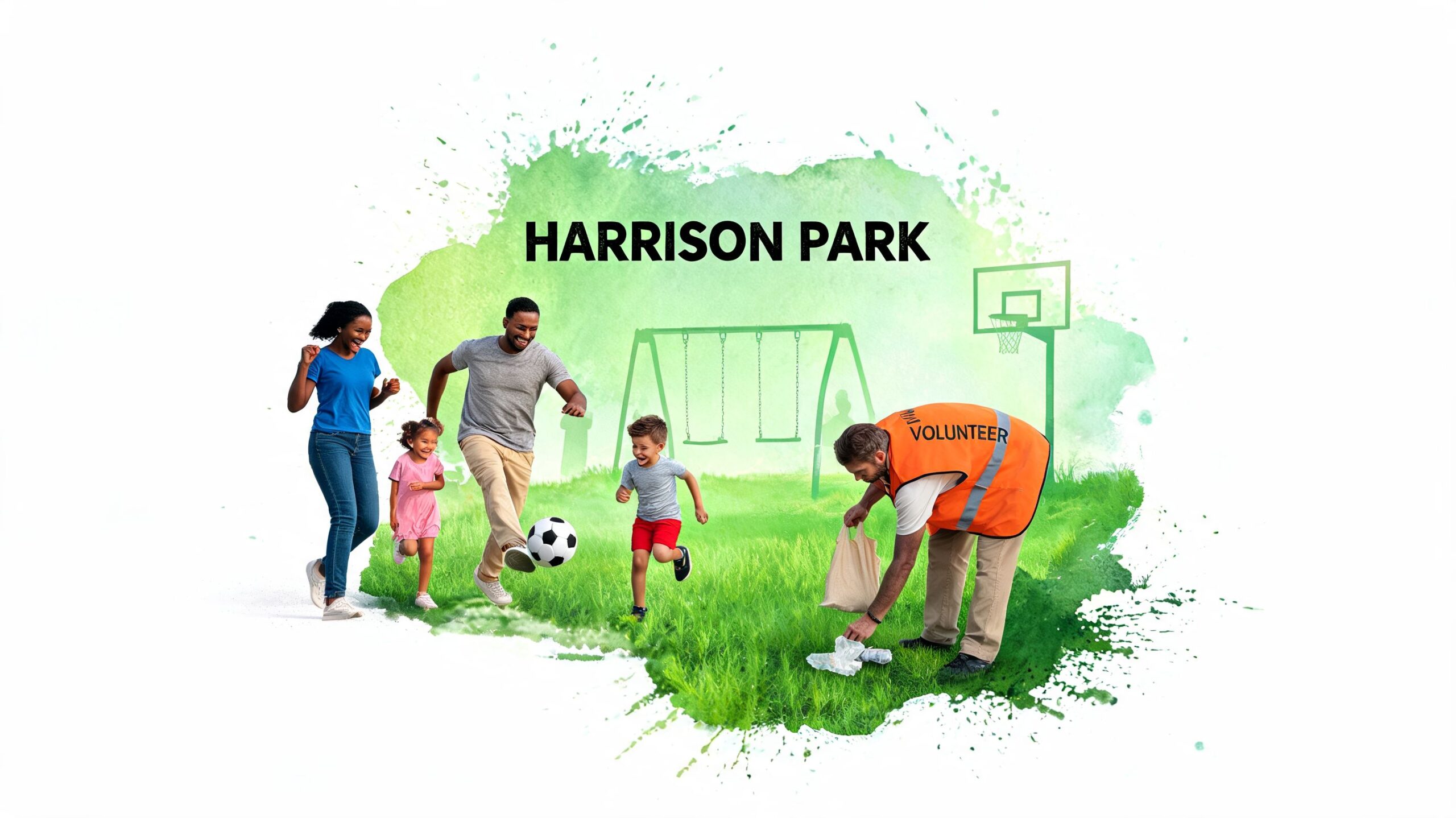
I remember one cold morning when my gloves were already damp before breakfast. I cut through Pilsen, stepped into Harrison Park, and felt that weird reset you only get when a neighborhood gives you a little room to breathe.
Finding A New Kind of Fun in Pilsen
The first time I really paid attention to harrison park in pilsen, I wasn't looking for beauty. I was looking for a place to sit down for five minutes after hauling bags of trash and trying to get my heartbeat back under control.
I watched a kid race toward the playground like he had somewhere urgent to be. A man moved slowly along the path with his coffee. On the courts, you could hear the ball before you saw the game. That mix hit me hard. Sweat, noise, grass, concrete, laughter. It felt honest.
Parks tell on us. If people care, you can see it. If people stop caring, you can see that too.
What I notice when I walk in
Harrison Park doesn't feel like an escape from the city. It feels like the city taking a full breath. That's why I keep coming back to it in my mind. You don't come here to pretend Chicago disappeared. You come here to remember that people can still make room for each other inside all the pressure.
A simple morning at the park can turn into a whole emotional weather report:
- On the basketball side, the energy is sharp and loud. You feel competition, rhythm, and habit.
- Near the open fields, things loosen up. Families spread out. Kids drift. People stop checking their phones.
- Around the fieldhouse, you get that public-building feeling I love. Real use. Real wear. Real life.
What hooked me: I didn't need Harrison Park to impress me. I needed it to feel lived in. It did.
If you're the kind of person who likes exploring green spaces with purpose, this Chicago parks guide from Litter Caterpillars is a good companion. I like tools that get people out the door instead of trapping them in research mode.
Why this place sticks with me
Some fun is flashy. This kind isn't.
This is the fun of showing up early. The fun of hearing a ball bounce off blacktop. The fun of seeing a public place that people use, and knowing that use is fragile. One rough season, one stretch of neglect, one wave of people deciding "someone else will deal with it," and a park starts to feel different.
That's why I don't look at Harrison Park like a pin on a map. I look at it like a test. Will we keep this place alive with our presence, our respect, and our effort, or will we just consume it and leave?
That question follows me every time I walk through the gate.
The Surprising Story of Harrison Park
The first time I learned what this ground used to be, I stopped walking.
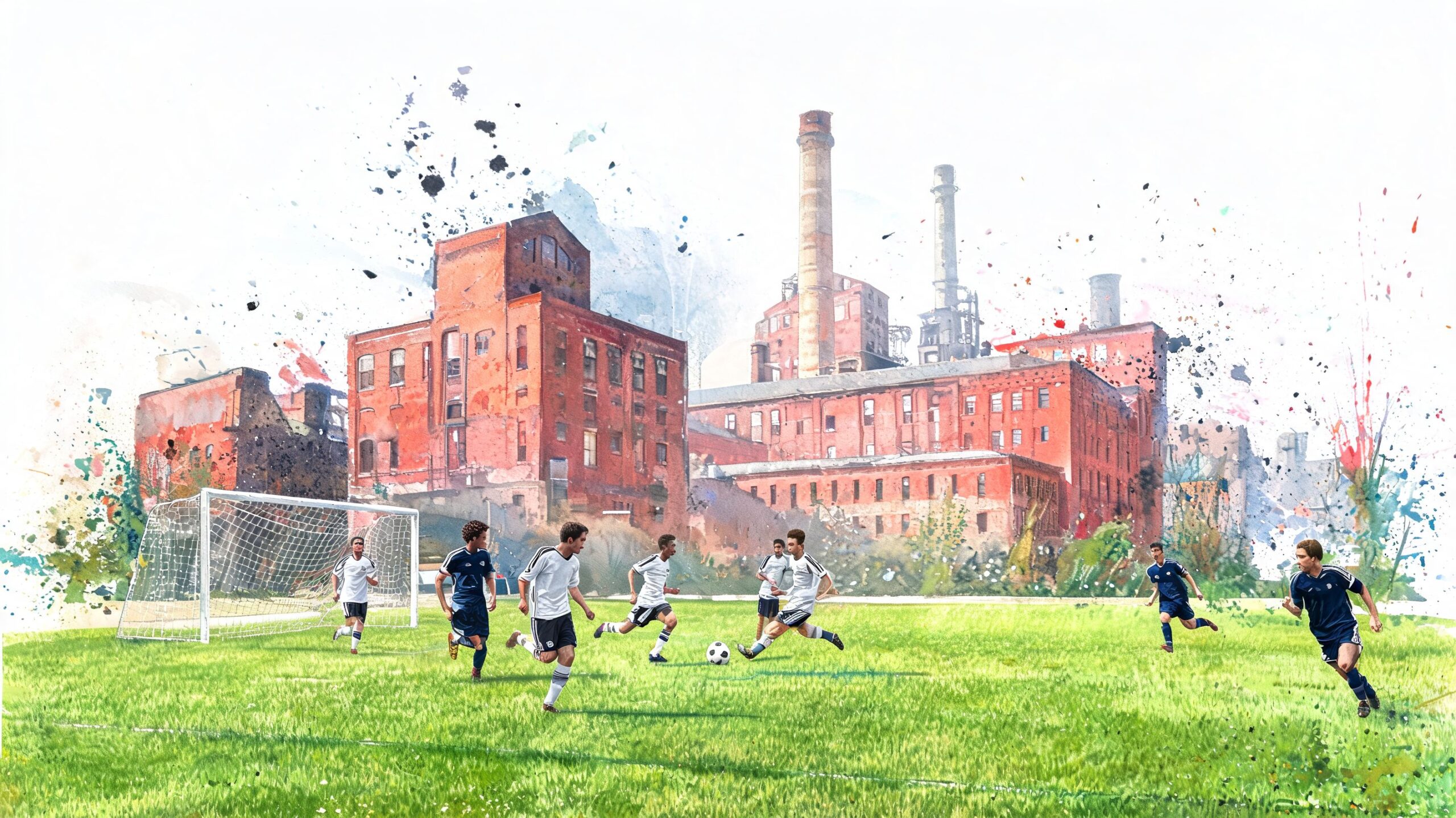
A teenager was cutting across the grass with cleats in one hand. A grandfather was posted up on a bench like he'd earned that seat through twenty Chicago winters. Kids were shouting near the path. Then I found out this park began as a limestone quarry, a deep industrial cut in the earth before it became a place where neighbors could breathe.
That hit me hard.
Before Harrison Park held pickup games and family routines, this site was worked for dolomite at the old Chicago Union Lime Works. Later, public officials turned the land into park space on the Lower West Side. The park dates back to the early 1900s and became part of the Chicago Park District during the 1930s. I am leaving the official park page for the next section, where it helps more with the on-the-ground details.
From quarry floor to neighborhood ground
Our volunteer crew talks a lot about cleanup, repairs, turnout, showing up. We do not talk enough about conversion. Harrison Park is a conversion story.
Men once blasted and hauled stone here. Then a neighborhood that needed open space got a park instead of a permanent wound in the ground. Somebody had to look at damaged land and say, no, children should run here. Families should gather here. A community should get something back.
I trust places built from that kind of decision.
You can feel the older layers if you pay attention. The park carries industry under its grass and public effort over it. Pilsen has always had people making something out of pressure, and this park fits that pattern. It was not handed down clean and easy. It was reshaped.
That matters to me because I have seen the same thing in people. I have watched volunteers come in late, angry, distracted, burned out, then steady themselves with simple work. Fill bags. Sweep glass. Haul mulch. Check on a neighbor. A rough beginning does not disqualify a place. It does not disqualify a person either.
Why the history changes the visit
Once you know the ground was remade, you stop treating the park like background scenery.
You notice the labor under the ordinary stuff. A path is no longer just a path. A field is proof that a city chose public life over abandonment. Even a worn patch near a busy corner starts to read differently. People kept working on this land until it could hold daily life.
That is the part of Harrison Park I carry with me. It is not only a park in Pilsen. It is a piece of local stubbornness made visible.
And around here, stubbornness can become love.
What You Can Actually Do at the Park
One Saturday, one of our younger volunteers showed up carrying too much. Bad week. Tight jaw. Would not say much. We handed him a trash grabber, cleaned a stretch near the walkway, and ended up staying for a pickup game after the work was done. An hour later he was laughing, drenched in sweat, arguing about a missed call like the world had given him a little room back.
That is a real use for Harrison Park.
A park like this earns its keep in small recoveries. Kids burn off chaos on the playground. Neighbors catch up by the courts. Somebody swims laps inside, somebody else sits still long enough to breathe right again. Harrison Park gives you a lot of ways to enter the day, depending on what you need and what you can carry.
Start with the fieldhouse
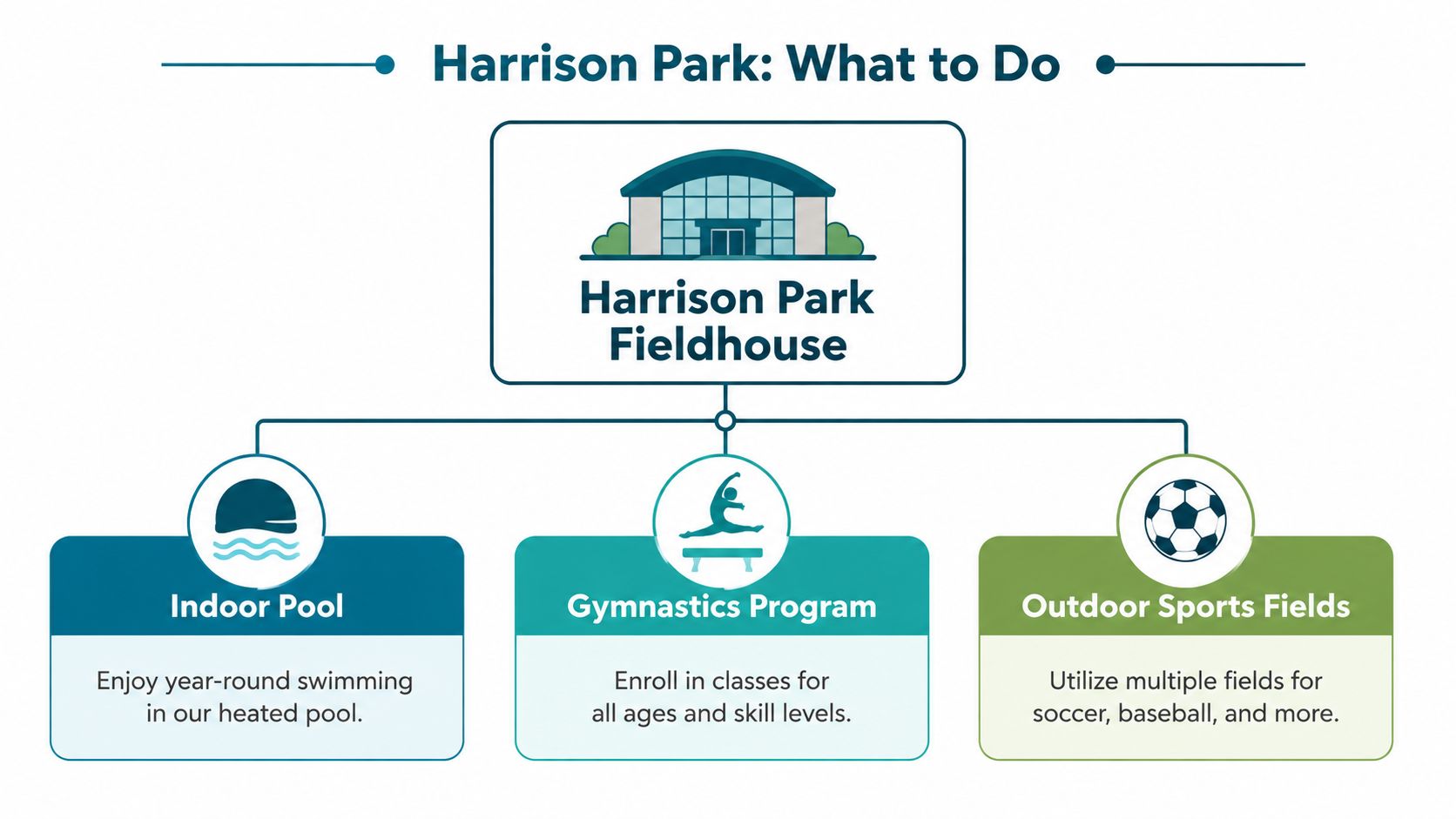
The fieldhouse is the practical center. If you are meeting people, make that your landmark. If the weather turns rude, it keeps the day alive. As noted earlier, it includes an indoor pool, a gymnasium, meeting rooms, a gymnastics center, and a reception rotunda that honors Emiliano Zapata.
That mix matters. You can come here for organized activity, for a class, for a swim, or just to get oriented before heading outside. I have watched families use it like a base camp, one kid pulled toward the pool, another toward the gym, a parent trying to keep the whole operation from drifting apart.
Here's a visual overview that helps if you're trying to picture the layout before you go.
Pick the part of the park that fits your day
Outside, the park spreads the pressure out. Courts pull in the loud energy first. Fields give people room. The playground keeps its own rhythm, all motion and quick course corrections. If you need structure, go where the games already have rules. If you need air, head for the edges and keep walking until your thoughts stop crowding each other.
The outdoor setup includes courts, ball fields, a turf field, and a playground, as noted earlier. You do not need a perfect plan to use any of it well.
| Area | What happens there | Best for |
|---|---|---|
| Courts | Fast talk, fast feet, people testing each other | Basketball, tennis, meeting up with active friends |
| Open field space | Room to spread out | Soccer, tossing a ball, walking with kids |
| Fieldhouse interior | More structure, less weather drama | Swimming, classes, scheduled activities |
| Playground area | Constant movement and quick attention shifts | Families, short visits, after-school energy |
A better way to spend an afternoon here
I tell first-timers to stop trying to conquer the whole park.
Pick one thing that gets your body involved. Shoot for ten minutes. Walk a lap. Stretch near the field. Join a game if somebody waves you in. Then change gears before you wear yourself thin.
Sit where you can still hear life happening. Near the court fence works. So does a bench with a view of the playground or the field. Let the park do some of the work on you.
Then end with something small and deliberate. A phone call you have been putting off. A slow walk out. A check-in with the person you came with. We spend a lot of time in this neighborhood teaching people to show up for each other. Parks help when you use them that way.
Practical rule: Pick one corner and stay with it long enough to notice people, patterns, and your own mood changing.
What I tell people before their first visit
If you have kids, start at the playground and stay loose. Children do not care about your itinerary.
If you want noise and momentum, head toward the courts and see if the energy feels right.
If you need to clear your head, do not march straight into the busiest section. Walk the perimeter first. Let your nervous system catch up.
That is the version of Harrison Park I trust most. Not as a checklist of amenities, but as a public place where a rough day can turn into a decent one, and a decent one can turn into a day you remember.
How to Get Here and Find Your Way
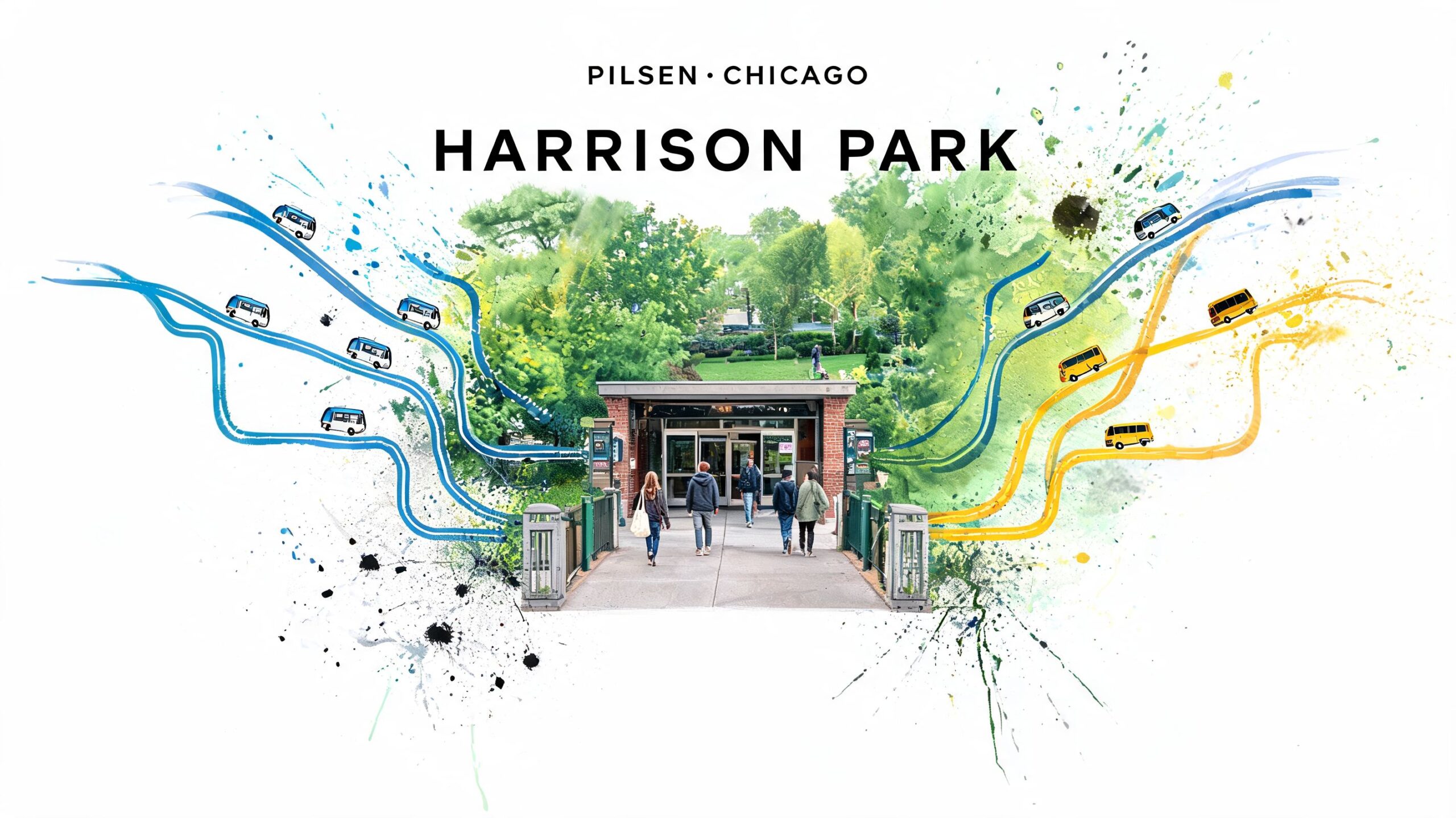
Getting to a park shouldn't feel like solving a riddle. In Pilsen, it helps to keep your expectations plain. Streets are active, parking can get annoying, and your best move is usually the one that keeps the trip simple.
Keep the arrival low drama
If you're taking transit, I suggest checking your route before you leave and aiming for a short final walk. I won't pretend every trip across Chicago is elegant. Build in a little buffer, wear shoes you don't mind walking in, and don't cut things too close if you're meeting people.
If you're driving, get there earlier than you think you need to. That's the honest advice. Neighborhood parking can turn a relaxed park visit into a cranky loop around the block if you arrive at the same time as everybody else.
Once you're there
The easiest way to orient yourself is to use the fieldhouse as your home base. From there, you can branch outward depending on what you're doing that day. If you're with friends, pick a meeting point before anyone arrives. If you're with kids, identify the bathroom situation and the nearest seating before anyone starts running.
A few habits make the whole thing smoother:
- Choose a meetup spot early. "By the fieldhouse" is better than a text thread full of guesswork.
- Pack for a change in pace. Bring water, a layer, and something to sit on if you like lingering.
- Walk the edges first. A slow loop gives you a read on the courts, fields, and quieter corners.
Show up with a loose plan, not a military campaign. Parks are better that way.
Accessibility and comfort
I always look for the path of least friction. Paved routes and clear entrances matter, especially if someone in your group has mobility concerns or just doesn't want a chaotic approach. Public places feel friendlier when you can understand them fast.
That's another thing I like about Harrison Park in Pilsen. Once you enter, the place reads clearly. You don't waste your whole visit trying to decode where life is happening.
A Smarter Way to Care for Our Park
One often sees litter and thinks the answer is simple. Grab a bag. Pick it up. Done. I respect that instinct, but Harrison Park asks for a little more brainpower.
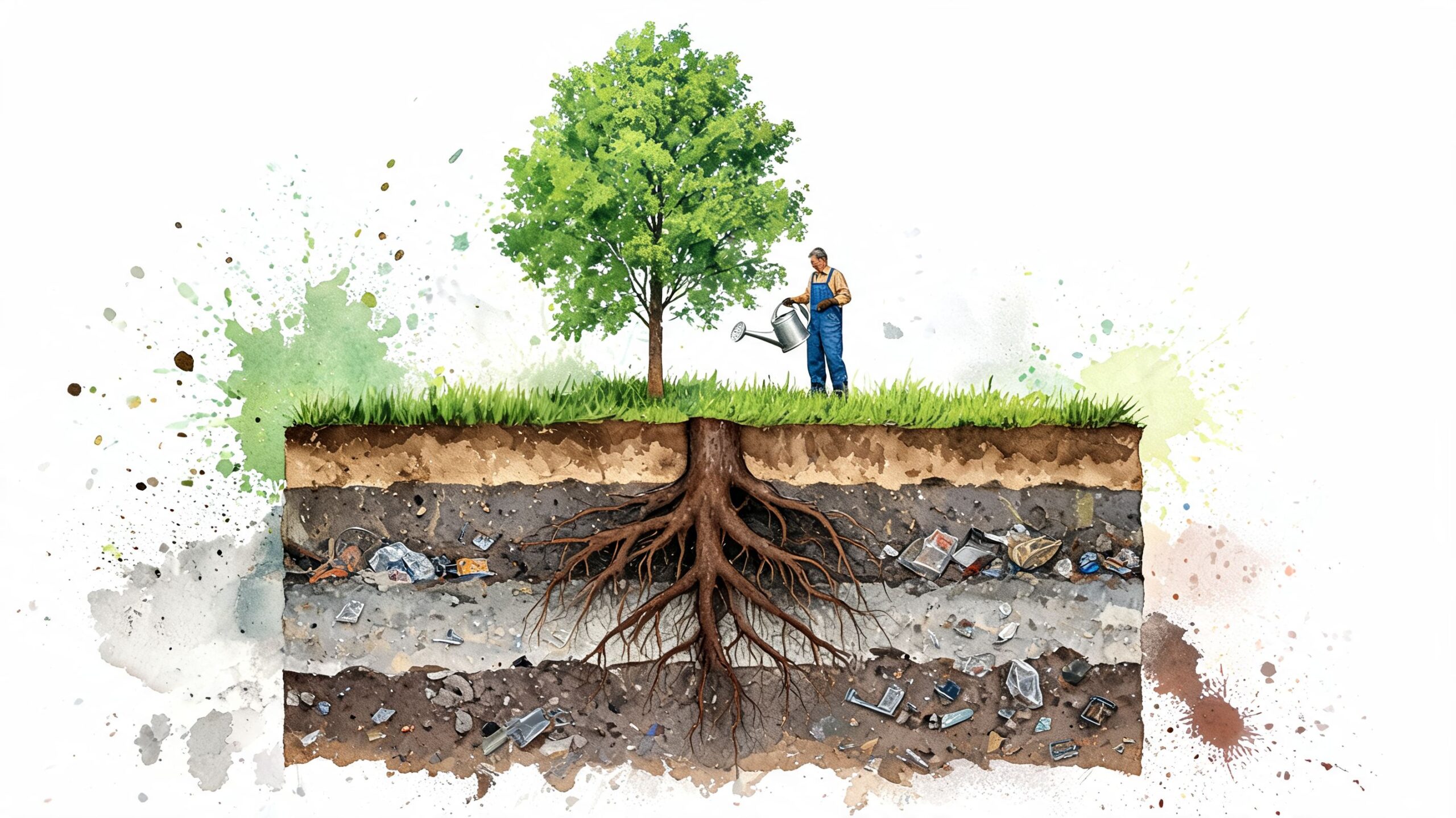
Its past matters to the cleanup. The park's history as a quarry and its location in an industrial area mean cleanup efforts must be strategic. Post-precipitation debris can collect near old drainage systems, and knowing the site's industrial past helps you tell the difference between surface litter and deeper soil issues. The park's governance under the Chicago Park District since 1934 also gives community groups a way to coordinate with official maintenance cycles, according to the Harrison Park assessment PDF from the Chicago Park District.
What smart cleanup looks like
This changes how I think about service in a place like Harrison Park. You don't attack every mess the same way.
If a storm pushes cups, wrappers, and bottles toward drainage areas, that's a surface-litter job. If you see something in the ground that looks off, or an area that feels more like a soil problem than a trash problem, that's when regular volunteers need to stop pretending they're a remediation crew. Discipline is part of care.
I like this because it keeps people safe and useful at the same time.
A simple field mindset
When I think about park cleanup, I use a rough filter:
- Surface litter means cans, bottles, food packaging, and loose trash you can remove safely.
- Drainage choke points deserve extra attention after rain because debris tends to gather there.
- Ground concerns need caution. If it feels deeper than a pickup job, don't freelance it.
That last part matters. Pride can make volunteers reckless. I don't admire reckless.
Field note: The strongest volunteer is the one who knows where the line is.
If you want a practical framework for organizing your own effort, this guide on how to clean up a park is useful because it keeps the work grounded in planning instead of hero fantasies.
Why strategy beats intensity
I've seen people come in hot, grabbers swinging, trying to "win" against trash in an hour. That energy burns out fast. A smart cleanup works more like chess than like a sprint.
You watch where debris gathers. You protect volunteers. You respect the site. You work with the people who manage the park instead of pretending you can outmuscle history with one Saturday morning.
That approach isn't less passionate. It's more mature.
And for a place with layered ground and a long industrial memory, mature beats dramatic every time.
Become Part of the Park's Next Chapter
Every park asks a simple question. Are you just passing through, or are you willing to leave the place a little better than you found it?
Harrison Park gets that question out of me fast because its whole existence came from change. Hard ground became play space. A worked-over site became somewhere people gather, swim, hoop, talk, watch, recover, and start over. When I spend time there, I don't feel pressure to be perfect. I feel pressure to participate.
Start small and make it real
You don't need a speech. You need one act.
Pick up one piece of trash on your way out. Straighten a bench area if you brought food and made a mess. Bring a friend next time instead of always treating public space like a private convenience. That's how care becomes habit.
A few good entry points:
- Visit with intention. Don't only consume the park. Pay attention to it.
- Learn its rhythm. Go in the morning once, then later in the day another time.
- Join hands with other people. Community work gets lighter when more people carry it.
The change goes both ways
This is the strange thing I keep learning. When you take care of a place, the place starts taking care of you back.
You become less numb. You notice more. You build a better relationship with your own word because you said you'd show up, and then you did. If you want a concrete next step, check out these Chicago volunteer opportunities.
I think that's the adventure in harrison park in pilsen. It isn't only the courts, the fieldhouse, or the grass under your shoes. It's the chance to practice being the kind of person who doesn't look away.
If this kind of service calls to you, take the next step with Litter Caterpillars. Join a cleanup, meet people who come out, and turn one Saturday morning into a better story for you and for Chicago.