Tag: grassroots activism

  • Environmental Justice Initiatives: A Community Guide 2026

    Environmental Justice Initiatives: A Community Guide 2026

    We were knee-deep in slush on a Chicago block when a stranger rolled down a window and asked why we bothered. I pointed at the curb, the alley, the torn bags snagged in a fence, and said, “Because nobody else showed up for this street.” A few minutes later, that same stranger came back with gloves.

    What Environmental Justice Initiatives Are

    I still remember standing in a hailstorm with three other people, bent over a sidewalk full of wet wrappers and broken glass. The neighborhood had been written off by people who never walked it, and the mess told the same story. We kept picking up trash anyway, because environmental justice initiatives begin when regular people decide that neglect is not normal.
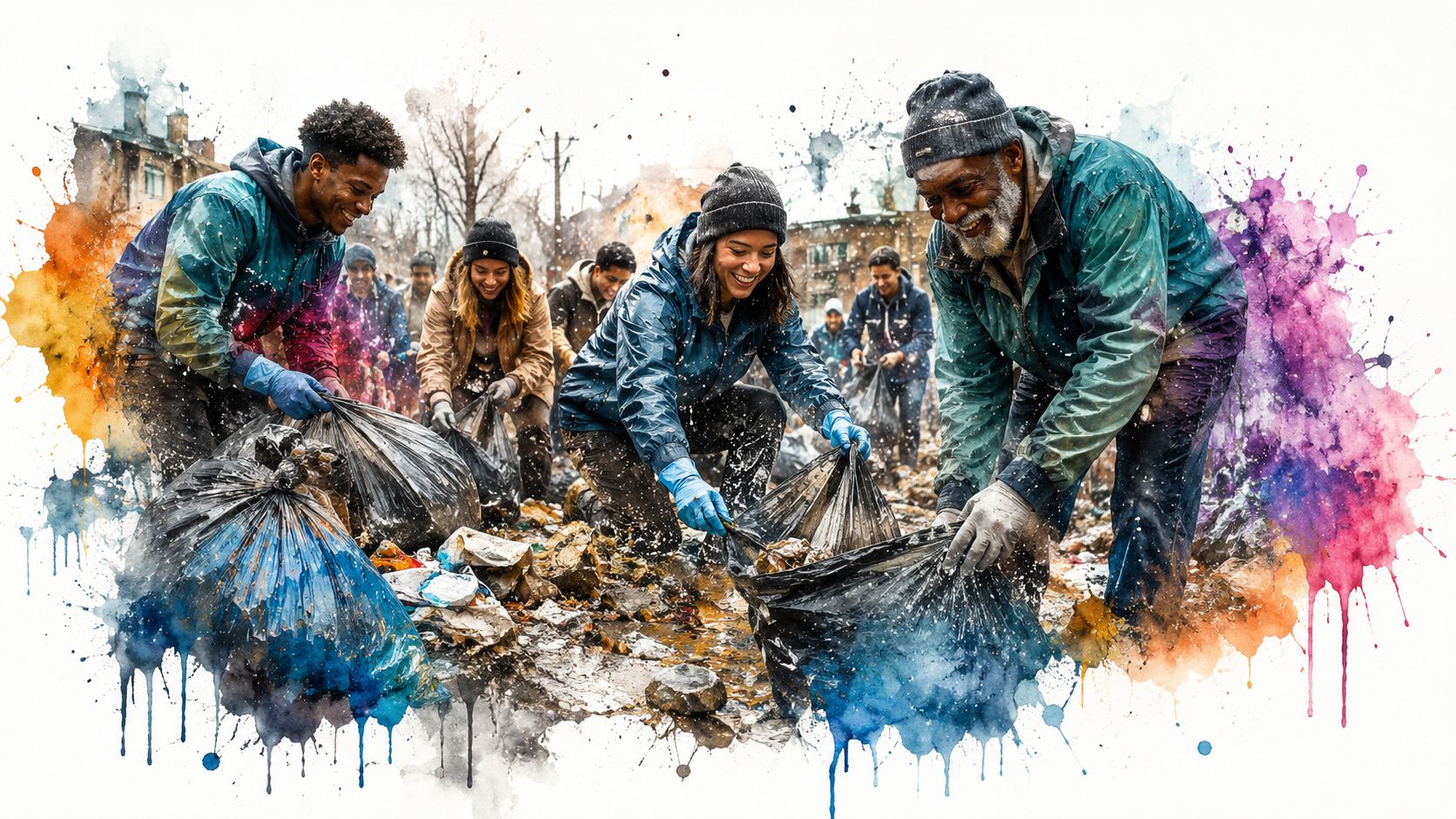
    A diverse group of volunteers wearing warm clothing working together to clean up litter in a neighborhood.

    What I mean when I say environmental justice

    Environmental justice means the people breathing the dirtiest air, living near toxic sites, or carrying the heaviest public health burdens should not bear that load alone. The policy roots go back to Executive Order 12898, signed in 1994 by President Bill Clinton, which directed federal agencies to identify and address disproportionate environmental and health burdens on minority and low-income communities (PMC environmental justice factsheet).

    That is different from general environmentalism, which often starts with nature in the abstract. I love trees and rivers too, but a tree-planting event in a wealthy suburb does not solve the same problem as a cleanup crew working in a food desert where trash piles up because no one has invested there in years. One protects scenery. The other tries to make daily life safer and more livable.

    Practical rule: If a project does not ask who carries the burden, where the burden sits, and who gets left out, it is not doing environmental justice work.

    The pattern is hard to ignore. People of color are 42% of the U.S. population, yet they account for 57% of residents in counties with unhealthy air pollution and 53% of residents in counties with the worst air quality (University of Michigan factsheet via PMC). In 2010, 45% of people living within 2 miles of toxic waste facilities were people of color, compared with 28% farther away. That is geography, infrastructure, and power stacking up in the same places.

    The Legal and Policy Framework Behind Environmental Justice

    A cleanup crew can spend a Saturday clearing bottles, tires, and broken furniture from a vacant lot, then go home and still see the same block overloaded with pollution risks the next morning. That gap between volunteer effort and lasting change is why the policy side matters so much. Federal environmental justice rules now try to turn community harm into something agencies have to measure, document, and answer for, not just acknowledge.

    The clearest example is Justice40, which directs federal agencies to deliver 40% of the overall benefits from certain climate, clean energy, affordable housing, clean water, and related investments to underserved communities (White House fact sheet). That target matters because agencies now have to track who benefits, where those benefits land, and whether the people living with the burden see relief. The promise sounds clean on paper. The hard part is making it work in a place where volunteers are hauling trash bags in the rain and still waiting for a grant call back.
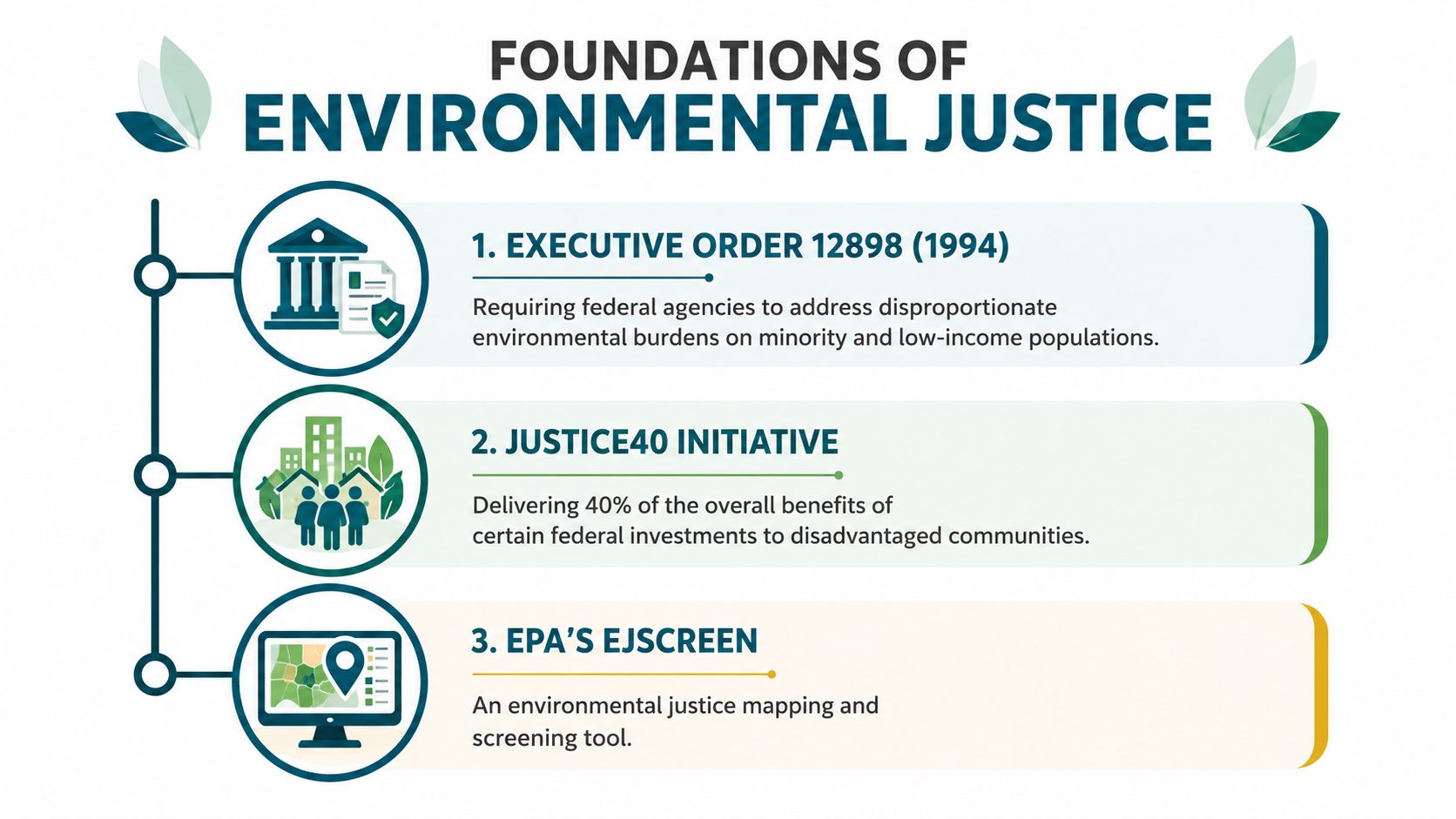
    An infographic titled Foundations of Environmental Justice showing three key initiatives for addressing environmental inequalities.

    How policy turns into a local map

    The policy shift shows up in census-tract-scale screening and cumulative-impact analysis. EPA guidance says agencies should look at demographic and socioeconomic data, pollution-source location, and historical, current, and projected emissions or concentrations together, because a single-pollutant check misses the full burden (EPA EJ technical guidance). That is why geocoded facility data and tract-level demographic layers matter. They let a neighborhood organizer stand at a block club meeting and show why the same streets keep getting hit from more than one direction.

    The public-facing tools matter too. The CDC/ATSDR Environmental Justice Index uses multiple indicators and community-level data, including EPA Facility Registry Service records and mine datasets. For a volunteer crew that has spent months picking up the same litter hotspot, a map like that can turn lived experience into something agencies are supposed to take seriously.

    EPA's enforcement and funding reports show how the machinery works once those complaints reach the federal level. In one progress report, EPA said it concluded 531 enforcement cases covering 562 facilities in areas with potential environmental justice concerns, and those cases were estimated to reduce pollution by 37.3 million pounds (EPA progress report). The same report also noted $3.0 billion for EPA Climate and Environmental Justice grants in 2022 under the Inflation Reduction Act, along with $108.0 million for EPA environmental justice activities in the Consolidated Appropriations Act, 2023. Those numbers show that federal attention exists, even if local groups still have to fight to reach it.

    For groups trying to document cleanup work in the same plain, accountable way, data center e-waste compliance 2026 is a useful example of how reporting can support oversight. A small team that keeps records on what it removed, where it worked, and how waste was handled has a much stronger story when it asks for support.

    Local advocates also need people who can translate policy into pressure. The Illinois Environmental Council helps community groups think beyond one-off events and into permit comments, policy language, and sustained public pressure. That kind of support matters because the gap is not only about knowing the rules, it is about having someone who can use them without losing the neighborhood voice that brought the issue forward.

    Why Federal Funding Does Not Always Reach Grassroots Groups

    I've stood in parking lots with volunteers whose hands were raw from trash bags and winter wind, and I've watched those same people get edged out by grant systems built for staff-heavy organizations. Justice40 spans 500 programs across 19 federal agencies, yet the groups closest to polluted lots, illegal dumping, and broken sidewalks still run into barriers when they try to access support (GAO). The problem is not a lack of need. It is that small crews doing the work on the ground often have to compete with applicants that can hire grant writers, manage compliance, and package their work in polished language.

    Who is eligible to apply

    Federal programs often reward paperwork skill as much as fieldwork. A block club, a tribe, or a neighborhood cleanup team may understand the problem better than anyone on paper, but if no one on the team has time to assemble a grant packet, the money usually goes to a better-resourced applicant. If you need a plain-English place to start, the community grant funding guide can help you sort out the basics before you spend a week chasing forms.

    Small groups often lose not because they lack need, but because they lack time.

    I tell groups to treat grant access like its own cleanup route. Keep one file with your mission, photos, event logs, volunteer counts, and cleanup locations, then update it every time you show up. When a funding window opens, that folder becomes the difference between scrambling and submitting something that proves your work exists.

    The other part nobody likes to say out loud is displacement. EPA says brownfield reuse should include strategies to prevent or minimize displacement, ensure affordable housing, and create living-wage jobs (EPA brownfields environmental justice page). I've seen an empty lot get cleaned, then watched speculators circle before longtime residents had any protection. The grass looks better, and then the rent notice arrives.

    Federal money has to do more than reach a city office. Grassroots groups need patient funding, local ownership, and rules that keep benefits in place after the ribbon-cutting. A cleanup that makes a street more desirable, then pushes out the people who kept that block together, is not a full win. The work has to stay with the neighborhood.

    Community-Led Initiatives That Create Real Change

    I keep coming back to the same winter cleanup in Chicago. People showed up in heavy coats, boots slushy from the curb, and gloves stiff in the cold, but they kept working because the block needed it. That is the kind of environmental justice work that changes a neighborhood from the ground up, and it is why groups like the Litter Caterpillars matter when they post up in bad weather, keep returning, and build trust one pickup at a time. Their Green City Project follows that same spirit, turning repeated cleanup days into something residents can recognize and use.
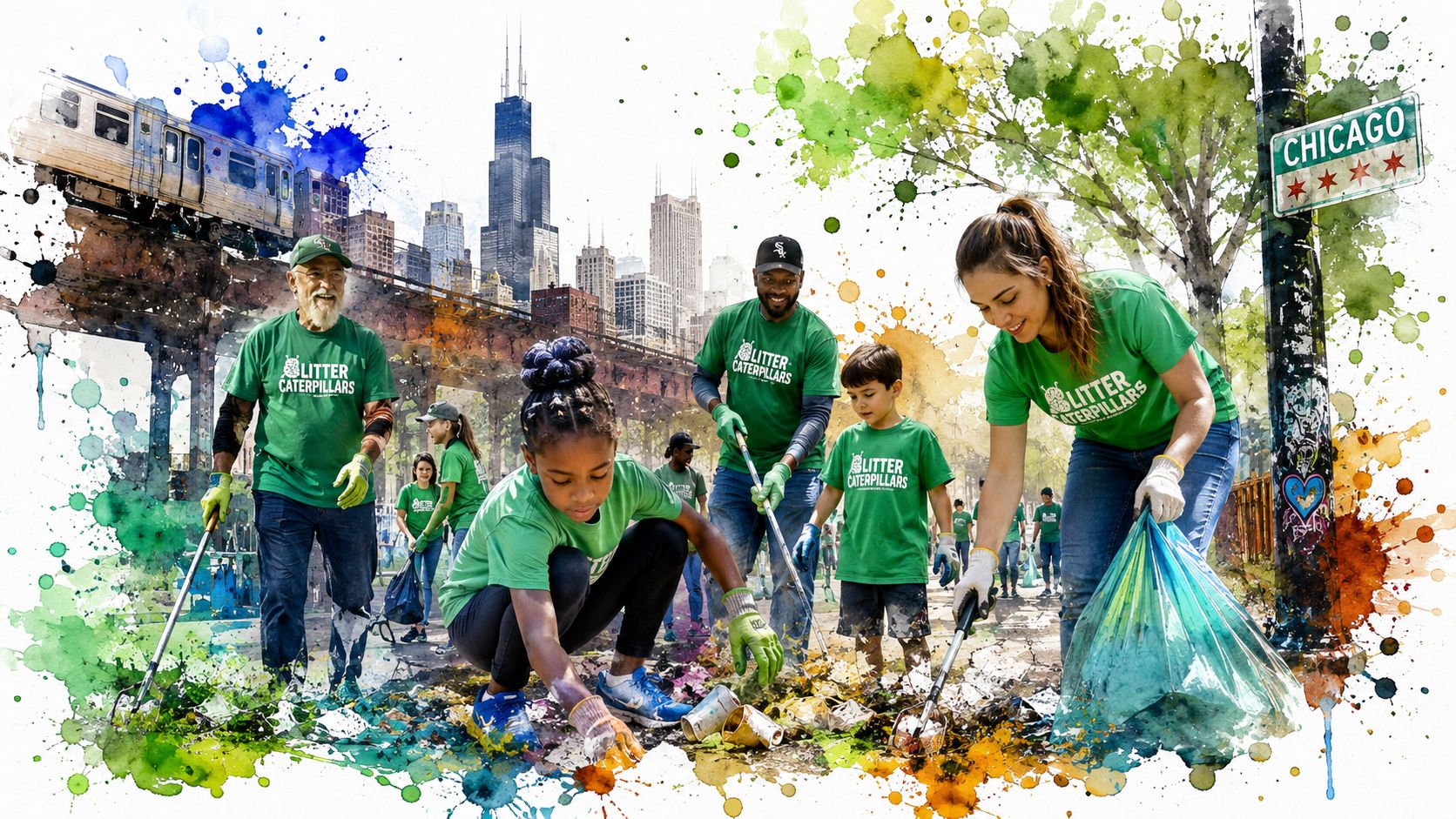
    A diverse group of volunteers cleaning litter in Chicago with the Willis Tower in the background.

    What happens when neighbors act first

    I have seen a crew clean a highway shoulder during a bike-event shutdown, and the scene said more than any flyer could. Cars slowed. People noticed the bags, the gloves, the work boots, the sweat. The mess stopped feeling hidden, and the neighbors doing the work stopped feeling like they were asking permission to care about their own streets.

    Caterpillar Park in Englewood shows the same lesson in another form. A group won an empty lot at auction and turned it into a place people could gather, rest, and return to. That kind of project moves cleanup beyond a one-time sweep and into place-making, where the block gains something lasting instead of just looking better for a day.

    Local lesson: A cleanup is stronger when it gives people a reason to come back.

    Identity matters more than people admit. A flag, a theme song, or a badge can sound small from the outside, but on the ground it gives volunteers a shared point of pride. I have watched someone come out for one litter pickup, then return the next week because the group felt familiar, steady, and worth belonging to. That feeling keeps a crew together after the first rush wears off.

    The work still has to stay grounded. Trash pickup, land reclamation, and policy pressure all matter, and the groups that last are the ones that keep all three in view. A street sweep tells residents the block is worth maintaining. A park project makes that care visible. A campaign pushes the city to fund what the neighborhood needs next.

    How to Start or Join Environmental Justice Work in Your Neighborhood

    I still remember the first time I joined a cleanup where the rain never let up. A few of us were picking up bottles along a curb line while neighbors came out with coffee, asked questions, and pointed to the spots where trash always gathered. That kind of morning teaches you fast. Environmental justice work starts with people already carrying the load, not with a polished announcement.

    Start with the crews already on the block. Look for block clubs, cleanup teams, church groups, school volunteers, and local advocates who keep showing up even when no one is filming. Go once before you try to lead. One visit tells you more than a month of scrolling posts.
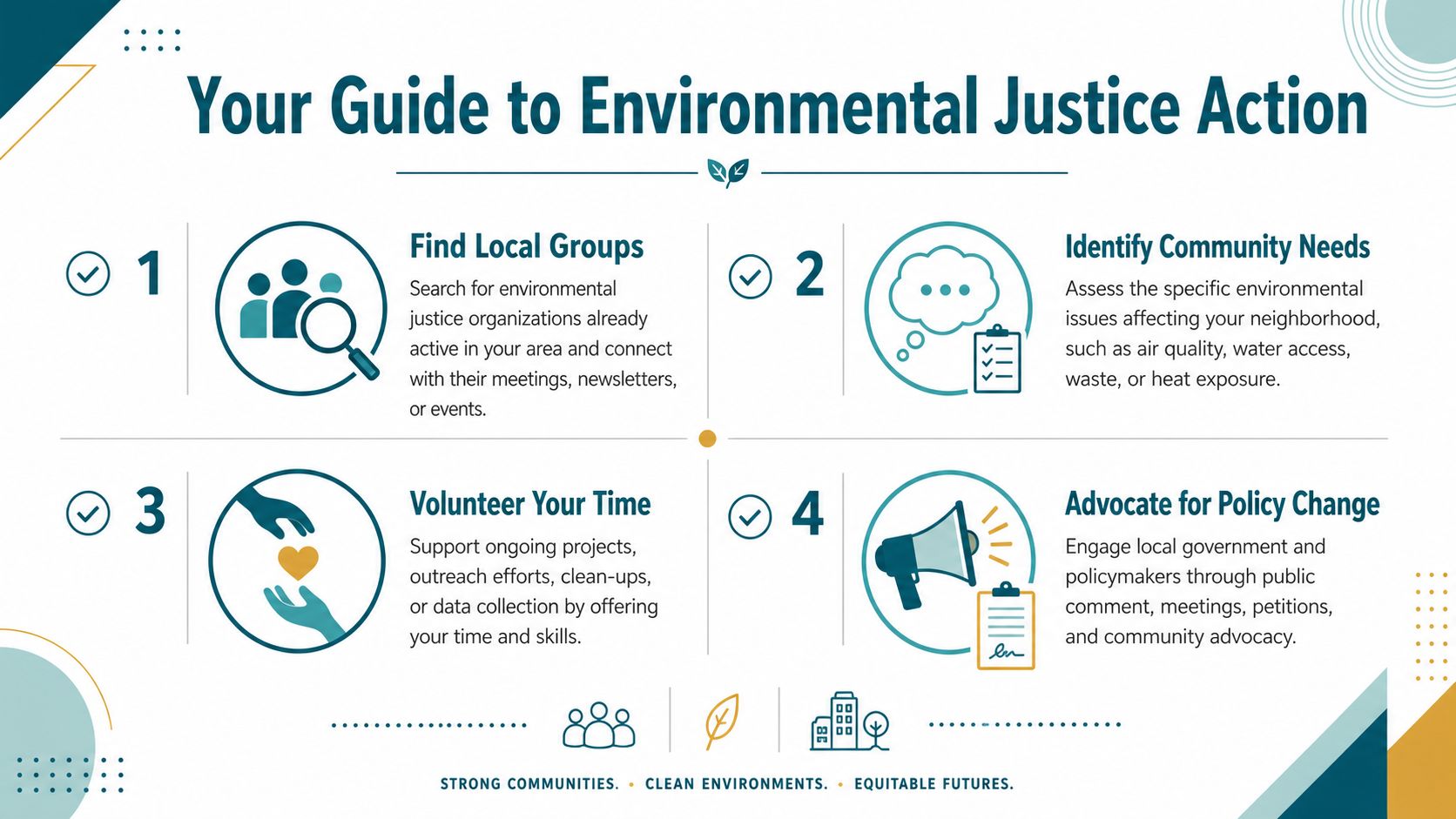
    A four-step infographic guide explaining how to take action for environmental justice within local communities.

    Four effective steps

    1. Find local groups. Look for crews already cleaning, planting, lobbying, or organizing in your area. If they meet on weekend mornings and keep the atmosphere welcoming, they probably know how to bring volunteers back.

    2. Identify community needs. Walk the block, talk to residents, and compare what you hear with tract-level screening results. The census-tract approach in EPA guidance helps people decide where litter pickup, park repair, or outreach should go first.

    3. Volunteer your time. Bring gloves, bags, water, and a steady attitude. Litter Caterpillars is one example of a group that builds around weekend mornings, keeps pressure off donors, and centers safe, steady participation.

    4. Advocate for policy change. Show up at meetings, write comments, and ask who benefits from cleanup dollars. If a project says it serves everyone, ask how it counts the people who live closest to the harm.

    The schedule matters more than a lot of people admit. Weekend mornings tend to draw people who want to give before errands, family obligations, or noise take over the day. I protect volunteer energy the same way I protect a fresh water cooler on a hot block. Safety first. Happiness second. Shame never.

    If you are starting something new, keep the setup simple. Use Meetup to find or post events, Instagram to share real before-and-after photos, and group chats to make the first visit less awkward. Build the crew first, then let the name grow out of the work.

    The Personal Transformation That Comes From Showing Up

    The odd thing about service work is that it cleans you while you clean the street. When you stand outside in bad weather with people who chose to be there, you learn who shows up when comfort disappears. You also learn that cleaning someone else's mess is often easier than facing your own habits, excuses, and clutter.

    The first time I felt that, I was freezing, tired, and weirdly alive. The hail hit hard, the bags got heavy, and the block still needed us. I left with a sore back and a clearer head, and I've seen that happen to other volunteers too.

    What steady service changes in people

    It makes you braver because you stop waiting for perfect conditions. It makes you kinder because you keep meeting people where they are, not where you wish they were. It makes you more resilient because you've already worked through cold mornings, awkward silences, and the feeling that nobody will notice.

    Show up enough times, and the city starts feeling less like a place that happens to you and more like a place you help hold together.

    That's why I care so much about volunteer-first structure. If people leave feeling drained, embarrassed, or used, they won't come back. If they leave with a cleaner block, a new friend, and a little more trust in themselves, they probably will.

    Environmental justice work does not end when the trash bags fill up. It keeps going in the habits people build, the pride they carry, and the way they start treating their own homes and neighbors. That's the quiet payoff nobody can put in a spreadsheet.


    If you want to do this work with people who show up rain or shine, Litter Caterpillars runs weekly Chicago cleanups, builds friendships through service, and keeps the focus on volunteer safety and happiness. Come grab gloves, meet the crew, and put your energy into a block that needs it.

  • What is Community Organizing? what is community organizing

    What is Community Organizing? what is community organizing

    Let's be real. Community organizing is the art of gathering folks together to untangle the messes that affect all of you. It’s about building a muscular kind of power, as a unit, to forge lasting change—not just slapping a flimsy bandage on a wound and calling it healed.

    More Than Just Helping Out

    Have you ever looked around your neighborhood and felt a knot of frustration tighten in your gut? Maybe it's the overflowing trash cans, a dangerous intersection everyone treats like a racetrack, or that overgrown, creepy vacant lot. I know that feeling intimately. My own journey, believe it or not, didn't start on the streets. It began inside my own disastrously messy apartment, a perfect mirror for how I felt inside: completely and utterly stuck.

    I stumbled upon a profound truth: cleaning up someone else’s mess is shockingly easier than facing your own. From that simple, almost selfish realization, Litter Caterpillars was born.

    Through that whole whirlwind, I unearthed the crucial difference between helping, advocating, and organizing. They all have a pulse, they all have a place, but they are not the same animal. To truly get what community organizing is, you first have to understand what it isn't.

    "If you want to go fast, go alone. If you want to go far, go together."

    This isn’t just some pretty quote you'd find on a coffee mug; it's the very heartbeat of organizing. It marks the moment you stop thinking in terms of "I" and start breathing in the world of "we."

    Organizing vs Volunteering vs Advocacy

    To really feel the difference in your bones, here’s a quick guide to how these actions stack up when you’re trying to actually make change happen.

    Action Type Core Goal Focus Example
    Volunteering Provide direct service Addressing immediate needs (the symptom) Picking up litter at the park every weekend.
    Advocacy Influence decision-makers Speaking for a group to people in power Calling the city to complain about the lack of trash cans.
    Organizing Build collective power Mobilizing a group to act for themselves Getting neighbors together to demand more bins and a recycling program from the city.

    Each path is valuable, but it is organizing that fundamentally shifts the power dynamic, creating solutions that have roots and can weather the storm.

    Let’s use an analogy to break it down. Imagine your favorite local park is constantly a mess.

    • Volunteering is you, armed with a trash bag, heading out there every Saturday morning. You’re providing a service. It helps immensely for that single day, but a part of you knows, with a sinking feeling, that the trash will be back next week. You're treating the symptom.

    • Advocacy is you picking up the phone to call the city council or firing off letters. You're speaking for the community, pleading with someone in a position of power to please, for the love of God, fix the problem. You're a representative, a voice, but the real power still rests with them.

    • Organizing? That’s where the lightning strikes. You start talking to your neighbors—the other parents, the dog walkers, the kids kicking a soccer ball around. You discover they're just as fed up as you are. Together, you realize the bins are always overflowing by Thursday. You forge a small team, you map out a plan, and you show up at the city meeting together to demand more bins and a new recycling program.

    Do you see the tectonic shift? You’re not just politely asking for change; you're building the power to demand it. You’re not just cleaning up the mess for a day; you’re rewiring the system so the mess doesn't happen in the first place.

    It's that old saying: give a person a fish, and you feed them for a day. Teach them to fish, and you feed them for a lifetime. But organizing is getting all the fishers together to buy the lake and ensure it never gets polluted.

    When I started my cleanup group, I wasn't some kind of expert. I was just a guy who realized that fixing problems with my neighbors was infinitely more powerful than trying to do it all myself. That is the soul of community organizing: building relationships and transforming shared frustration into collective, unstoppable action.

    Uncovering the History of People Power

    When my friends and I are out there, picking up trash in the middle of a Chicago blizzard, shivering and laughing at the absurdity of it all, I feel like we’re part of something vast. We are. This entire concept of people linking arms to demand change isn’t some new-fangled idea. It has deep, powerful roots right here in our city. It's a history that ignites a fire in me, and I hope it does for you, too.

    The story of modern community organizing practically erupts from the South Side of Chicago back in the 1930s. This was an era of intense struggle, a time when people felt utterly powerless against the crushing weight of big industry and broken systems. A man named Saul Alinsky witnessed this widespread frustration and had a revolutionary thought: what if everyday people could build their own power?

    He believed that power wasn't a gift bestowed from on high; it was something you seized by organizing. So, he began the painstaking work of uniting local churches, unions, and neighborhood groups—people who didn't necessarily agree on everything but who were bound by a shared, desperate desire for better lives.

    From Frustration to a Movement

    This wasn't just about yelling and protesting. Alinsky's method was a meticulous process of building relationships, identifying shared problems, and crafting a real strategy to apply pressure on the people in charge. In 1940, he created the Industrial Areas Foundation (IAF), which became a living blueprint for how regular folks could band together and exert real influence. By the 1940s, this 'Alinsky-style' organizing had already chalked up major victories, like improving wages and living conditions for thousands. Fast forward, and by 2015, you could find at least 180 similar faith-based organizations across the US, all tracing their lineage back to this initial spark. You can trace this incredible growth and learn more about its impact on the history of community organizing.

    This historical thread illuminates how shared frustration can be woven into the fabric of collective action. It's proof that when we feel ignored or overlooked, the answer isn’t to wait for a hero to swoop in. The answer is to find our neighbors and become the heroes ourselves.

    The purpose of an organization is to build power for people. It is a simple, straightforward, and honest statement. Power is the reason for being of organizations.

    This concept is the very bedrock of everything we do. It’s not about winning a single fight; it’s about building a muscle. You begin with small lifts, like getting a stop sign installed. Then you move on to heavier weights, like demanding cleaner air or better schools.

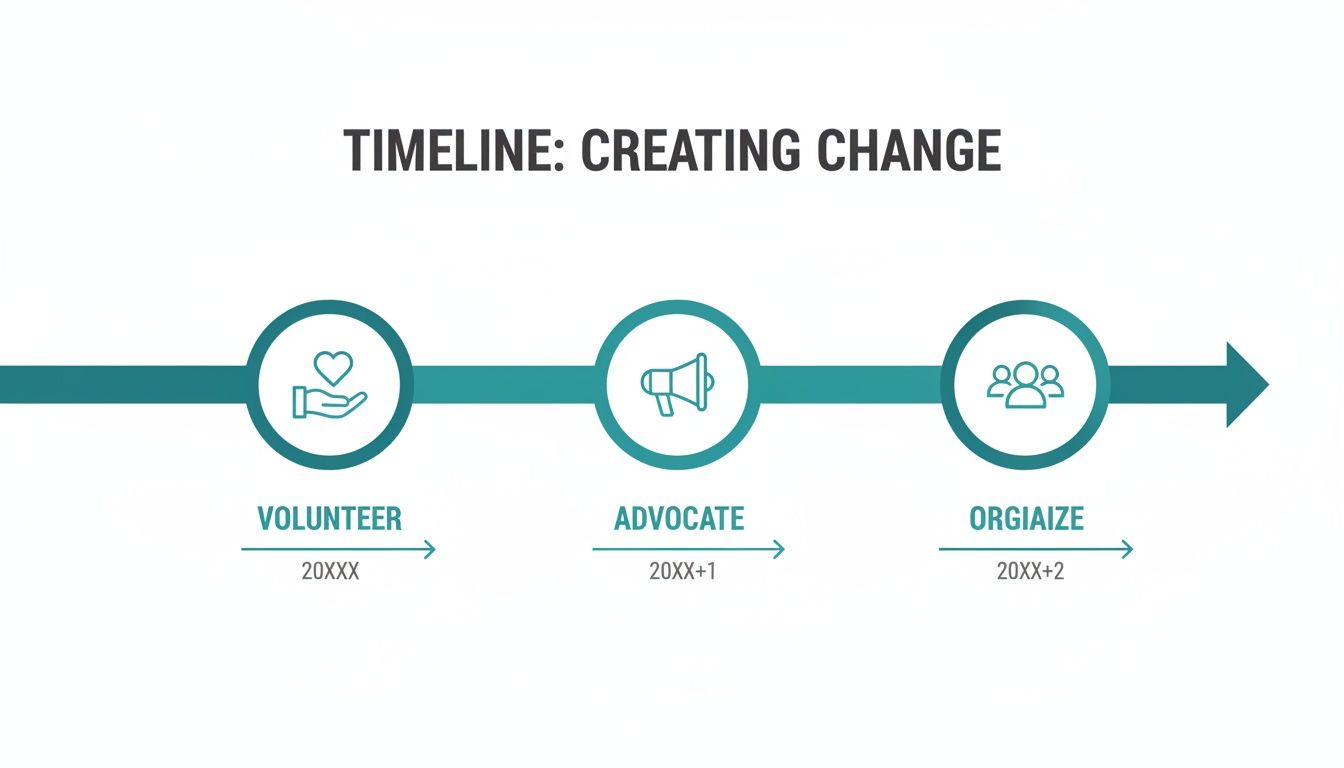
    The journey from one concerned person to a powerful collective often follows a clear path. This timeline shows how individual actions evolve into organized movements that create lasting change.

    A three-step timeline titled 'Creating Change', featuring volunteer, advocate, and organize actions over three years.

    This visual journey highlights that organizing is the ultimate step in building sustainable community power, moving beyond individual service to create systemic solutions.

    Your Place in This Long Legacy

    So, what does this history lesson mean for you and me, today? It means that when you join a group like Litter Caterpillars, you're not just picking up trash. You are stepping into a long and proud tradition of people who refused to accept the status quo. You are part of a legacy that includes:

    • The Civil Rights Movement: Where organizers used community-based strategies like boycotts and sit-ins to dismantle the brutal architecture of segregation.
    • The Labor Movement: Which built power through unions to fight for fair wages, safe working conditions, and the 8-hour workday.
    • Environmental Justice Groups: That organize residents in poisoned neighborhoods to fight for their fundamental right to clean air and water.

    Each of these monumental movements was powered by ordinary people who decided their voices mattered more together than they ever could alone. They understood, deep in their bones, that consistent, organized action was the only way to shift power and create a better world.

    This history isn't just something to read in a book. It’s a living, breathing wellspring of strength. It reminds me that our small, consistent actions are part of a much larger, more magnificent story. It’s the proof that when we stand together, we are unstoppable.

    The Essential Ingredients for Building a Movement

    So, how does a tiny spark of an idea actually catch fire and roar into a real, on-the-ground movement? It’s not magic, I can tell you that. It’s about having the right ingredients, stirred together with a whole lot of heart and a dash of shrewd strategy. I've watched it happen with my own eyes, seeing my own little group grow from just three of us shivering in a blizzard to a city-wide force for good.

    It all begins with something surprisingly simple.

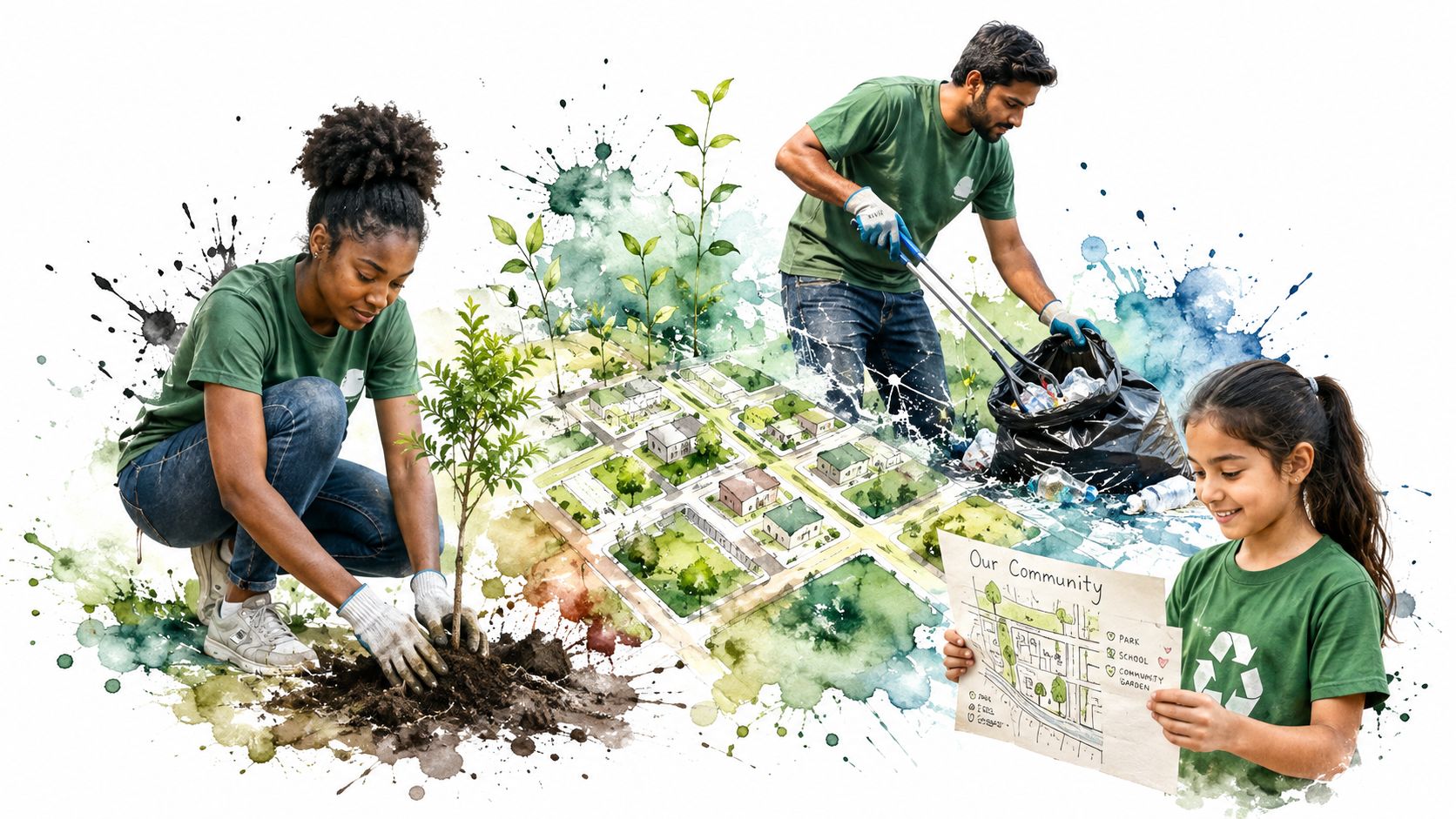
    A diverse group of smiling people look at a map with watercolor splashes.

    Building Authentic Relationships

    Before you can organize anyone, you have to truly connect with them. And I’m not talking about networking or collecting contacts like they're trading cards. I mean building real, genuine relationships, grounded in shared values and mutual respect.

    Think of it like tending a garden. You can’t just fling seeds onto the hard ground and expect a bountiful harvest. You have to first prepare the soil, give them water, and make sure they get sunlight. In the world of community organizing, that rich soil is trust, and the water is shared experience.

    This means you’ve got to spend real time just listening to people. What makes them proud? What keeps them tossing and turning at night? What do they wish was different about the place they call home? These one-on-one conversations are the bedrock upon which everything else is built.

    The purpose of activism is not primarily to win this or that given ‘ask’ but to build power—reflected in the relationships, resilience and self confidence of communities.

    This insight is everything. Wins are fantastic, they’re the fuel, but the real, lasting victory is the strong, interconnected web of people you build along the way. That’s the part that endures. You can learn more about how these connections are the absolute key to building resilient communities in our detailed guide.

    Identifying Natural Leaders

    Once you start genuinely talking to people, you'll begin to notice something fascinating. Leaders are everywhere, but they rarely look the way you'd expect. They aren’t always the loudest person in the room or the one with a fancy title after their name.

    A community leader might be:

    • The grandmother who knows everyone on her block by their first name.
    • The young person who organizes pickup basketball games at the local park.
    • The quiet neighbor who, without fail, always shows up to help when someone is in need.

    These are the people others naturally trust and listen to. Your job as an organizer isn’t to create leaders from scratch; it's to find these folks, lift them up, and give them the tools to become even more effective. You're just identifying and empowering the incredible leaders who are already there.

    This is the alchemical process that transforms a collection of individuals into a coordinated team, poised and ready to act. It's how you turn passive concern into active, potent participation.

    Understanding and Building Power

    Let's talk about the word "power." For a lot of us, it can feel like a dirty word, something that corrupts or oppresses. But in community organizing, we see power through a completely different lens.

    Power is simply the ability to act.

    Imagine you want to move a giant boulder that's blocking a path. By yourself, you have very little power. But if you gather ten of your neighbors, you suddenly possess the collective power to move it. That’s what we’re building.

    Building power is a lot like building a muscle. You don't walk into the gym for the first time and try to lift 500 pounds. You start with small reps, consistently.

    • First, you organize a small cleanup. That's a small win.
    • Next, you get a new trash can installed. That's a bigger win.
    • Then, you partner with local businesses for a neighborhood-wide recycling drive. Now you're building real, undeniable momentum.

    Each small victory builds confidence, deepens relationships, and flexes your collective strength. It shows everyone—including those in charge—that you are a force to be reckoned with. When our group started, our "power" was just the three of us with trash bags. Now, it’s hundreds of people showing up every week, changing the face of our city, block by block.

    This is the heart of what community organizing is. It's the slow, steady, and incredibly rewarding work of turning shared frustration into shared power, and shared power into lasting, meaningful change. You don't need anyone's permission to start. You just need to begin.

    Strategies and Tactics That Actually Work

    So, you’ve gathered your people and built a real foundation of trust. What’s next? This is where the real fun begins. Community organizing isn't just about feeling good together; it’s about doing things together.

    We have a whole toolbox of strategies, and it’s not always about marching in the streets—though that definitely has its time and place.

    Think of it like you're a chef. You wouldn't use a whisk to chop vegetables, would you? Of course not. You need the right tool for the right recipe. The same exact logic applies to organizing. A petition might be the perfect instrument for one goal, while a neighborhood-wide cleanup is a better choice for another.

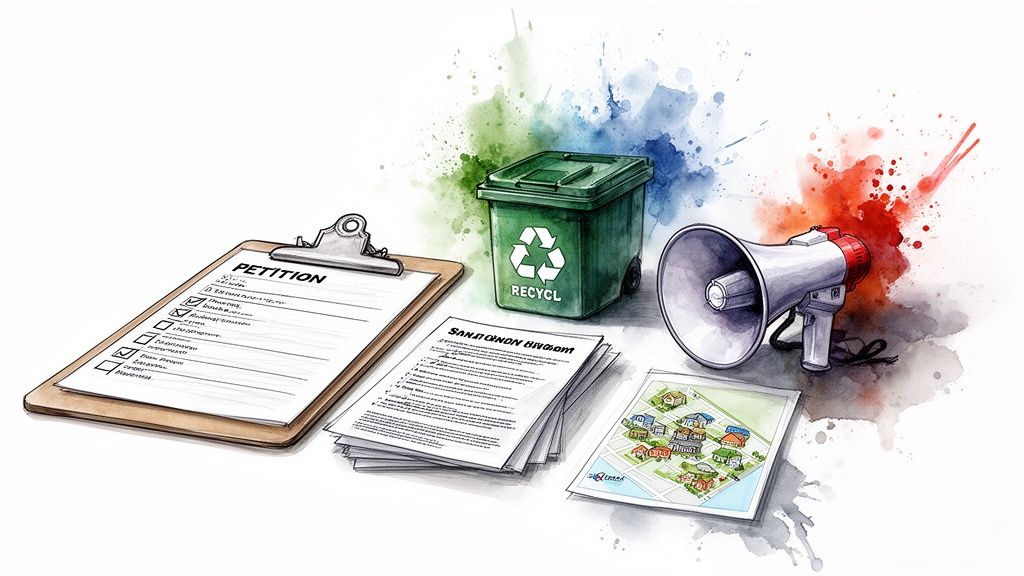
    An illustration showing community organizing tools: a petition, recycling bin, papers, neighborhood map, and megaphone.

    Building Power Through Action

    The heart of every single tactic is to build your group's power. Each action you take, no matter how small it may seem, sends a clear, ringing message: "We are here, we are united, and we are paying attention." Choosing the right move depends entirely on what you're trying to achieve.

    Here are some of the most effective tools in the organizer's kitchen:

    • One-on-One Meetings: This is the bedrock, the foundation of it all. It's where you sit down with a neighbor, maybe over a cup of coffee, and you just listen. You learn their story, their frustrations, and their deepest hopes. This isn't about recruiting; it's about making a genuine human connection.
    • Community Gatherings: Think bigger than just meetings. This could be a neighborhood potluck, a storytelling night, or a full-blown block party. These events weave the social fabric that transforms a group of strangers into a real, resilient community.
    • Door-to-Door Canvassing: Walking the streets and knocking on doors is one of the oldest and most potent tactics for a reason. It’s personal, it's direct, and it shows an incredible level of commitment. In fact, studies show that simple door-to-door canvassing can spike voter turnout by 2.5 percentage points. This isn't just about politics; it’s a proven method to connect with people right where they live.
    • Direct Action: This is when you collectively and publicly apply pressure to a decision-maker. It could be a rally, a sit-in, or a coordinated call-in day. The goal is to make it impossible for those in power to ignore your community's voice.

    A Story of Winning the Lot

    I want to share a story that shows how these pieces snap together. For years, there was this overgrown, garbage-strewn vacant lot in a neighborhood we cared deeply about. It was a festering symbol of neglect. We decided we wanted to transform it into a community park.

    We started with one-on-one meetings. We talked to everyone living near the lot, hearing their stories of frustration and their dreams for that little patch of land. We did our homework and learned it was owned by the city and was slated to go up for auction.

    Next, we held community gatherings in a local church basement. We shared our research, brainstormed wild ideas for the park, and hammered out a shared strategy. We weren't just a few angry people anymore; we were an organized force with a unified plan.

    Our power doesn't come from money or titles. It comes from our relationships, our numbers, and our commitment to a shared vision.

    Finally, we took direct action. We all showed up at the city auction, a sea of us in matching t-shirts, each of us holding a sign with a kid's crayon drawing of the future park. We made damn sure they saw us. When the auction began, we had a single representative bid on our behalf.

    And we won. We bought that lot for our community. That space is now Caterpillar Park. It wasn't one tactic that won the day; it was the strategic combination of relationship-building, meticulous planning, and bold, collective action. You can discover more about how we apply these lessons in our guide to community engagement best practices.

    Choosing the right strategy is an art, but it always starts with a simple question: What will build our power and get us closer to our goal? Start there, and I promise you, you'll find your path.

    Your First Steps to Making a Difference

    So you’ve got that spark. That little voice in the back of your head whispering, “I’ve got to do something.” That is a powerful, precious feeling. Let's make sure that incredible energy doesn't just fizzle out into nothing.

    This is your roadmap to taking that first brave step, whether you want to join a crew that's already rolling or get something brand new started in your own backyard. This isn't about becoming a full-time activist overnight. It's about channeling that fire into real, tangible action. I know it can feel like a huge, intimidating leap, but just remember, every single big movement in history started with one person simply talking to another.

    Finding Your People

    First things first: you need to find the people who care about the same things you do. I promise you, you are not alone in your frustrations. The real trick is bridging the vast chasm between feeling isolated and finding your allies.

    It’s often simpler than it sounds. You could try:

    • Diving into local forums or social media groups. Just search your neighborhood's name along with words like "improvement," "community," or "safety."
    • Showing up to neighborhood association or local government meetings. This is where you'll find the folks who are already in the game.
    • Just talking to your neighbors. Seriously. The next time you see someone on your block, start a conversation. "Hey, have you ever noticed…?" You'd be amazed how a shared annoyance can blossom into a shared purpose.

    When I started Litter Caterpillars, I used a simple filter to find my kind of people. I always scheduled our events on weekend mornings. This was a deliberate choice. It naturally attracted givers—people willing to trade a lazy Saturday morning for something bigger than themselves. That one tiny decision was key to building our core community of committed, kind-hearted people.

    Set Your First Tiny Goal

    Okay, once you have a few folks on board, you must fight the urge to go solve world hunger. You need a small, achievable win to build momentum. It’s like learning to lift weights; you don't walk in and immediately try to bench press 300 pounds.

    Your first goal should be:

    1. Specific: Not "clean up the neighborhood," but "clear the trash around the bus stop on Elm Street."
    2. Visible: Pick something people will actually see. The visual proof of your work feels amazing.
    3. Achievable: Choose a goal you can realistically knock out in a couple of hours with a small group.

    That first win is everything. It's not really about the trash or the weeds; it's about proving to yourselves that you can work together and make a real, visible difference.

    This idea isn't just a local thing; it's a model that has exploded globally. In Serbia, youth groups organized to get a new community center. In Slovakia, groups scrambled to create mutual aid networks for rural Roma communities during the pandemic. By 2015, Australia's Sydney Alliance was a powerhouse, building its strength entirely on volunteer leaders instead of paid staff. You can read more about the global spread of community organizing and its impact.

    "The most common way people give up their power is by thinking they don't have any." – Alice Walker

    This quote nails it. Your first small goal is all about taking that power back, one tiny victory at a time. For more ideas on getting started, check out our guide on proven community engagement strategies.

    Plan a Meeting People Actually Want to Attend

    Forget everything you know about boring meetings with rigid agendas and formal minutes. Your first get-together should feel more like hanging out with friends. The objective is connection, not bureaucracy. Keep it simple, keep it fun, and make sure every single person feels heard.

    And here’s the most important part: after you crush that first small goal, celebrate it. Grab some pizza. Share the photos online. Give each other high-fives. That celebration is what turns a one-off activity into the start of a real community. It’s the glue that will bring everyone back for the next challenge.

    Some Questions I Get Asked A Lot

    When I first started Litter Caterpillars, people began asking me questions. As we grew, the questions kept coming. People were curious, sometimes a little confused, maybe even a little intimidated. I totally get it. "Community organizing" sounds like this big, serious job for professionals, not for regular people like you and me.

    But that's dead wrong. It's for you, it's for me. It’s for anyone who has ever looked around and thought, "This is messed up. We can do better."

    These are the most common questions I get. I'm going to answer them from my own experience, straight from what I've learned picking up other people's garbage on the streets of Chicago.

    What’s the Difference Between Community Organizing and Activism?

    Great question. The two definitely get tangled up. Here's how I see it.

    Activism is often the loud, urgent response to a specific problem. It’s showing up for a protest, signing a petition, making a sign. It's the fire, the immediate pushback against something wrong. And it's absolutely necessary. We need that raw energy.

    Community organizing, on the other hand, is the slow, patient work of building relationships before the crisis even hits. It’s weaving people together into a resilient web of trust. It's the hundreds of quiet conversations, the shared meals, the check-in texts. It's building the "we" so that when it’s time to act, you’re already a formidable force.

    Think of it this way: activism is the lightning strike. It’s bright, powerful, and gets everyone’s attention. Organizing is the slow work of building the storm cloud, of gathering all that energy in one place so the lightning can happen. One is the moment; the other is the long, hard, beautiful work that makes the moment possible.

    Do I Need to Be an Expert to Be a Community Organizer?

    God, no. Actually, I think being an "expert" can sometimes get in the way.

    The best organizers I've ever met are just people who are stubbornly, deeply in love with their community. They listen far more than they talk. They connect people. They show up when they say they will.

    You don't need a fancy degree. The most important qualities are curiosity and being someone people can count on. Are you willing to listen, really listen, to your neighbors? Will you do what you say you’re going to do? That’s it. That’s the entire magic formula.

    Your lived experience is your expertise. Your passion is your credential.

    I started Litter Caterpillars because my own apartment was a disaster and my life felt just as chaotic. I was the farthest thing from an expert on cleanliness! All I had was a desperate need to change something, anything. Your job isn’t to have all the answers. It’s to get people in a room to find the answers together.

    How Do You Handle Disagreements Within the Group?

    If everyone agrees all the time, you're probably not doing anything important. Disagreements are a sign of life. It means people care enough to have an opinion, to fight for what they believe in.

    The trick isn’t to avoid conflict, but to build a foundation so strong that it can handle the shaking. For Litter Caterpillars, that foundation is our three core values: Bravery, Kindness, and Unity. When we're stuck, we always come back to those. "Is this decision brave? Is it kind? Does it bring us together?"

    We've worked really hard to create a space where it's safe to argue because we trust each other. We've built that trust by showing up for each other, week after week, in the rain and the sun. We all know we're there for the same reason: to make our city better. That shared purpose is the glue. It holds us together even when we're pulling in different directions.

    How Do You Measure the Success of Community Organizing?

    This is my favorite question because the answer isn't about spreadsheets. In a world obsessed with data, the real impact of organizing is often invisible. But it's the most real thing there is.

    Sure, you have the clear wins. You fought for a new stop sign and got it. You cleaned a park and it's staying clean. You should absolutely celebrate those things! They build hope and show people that their work matters.

    But the real success? It’s all about the people.

    • Are new leaders popping up?
    • Are people who were strangers a year ago now close friends?
    • Do people feel less alone, more connected to their home?

    For me, the biggest win is seeing someone who showed up to their first cleanup, quiet and nervous, and six months later they're the one leading the team, cracking jokes, and welcoming the new person. That’s it. That’s the whole game. It means you’re not just picking up trash; you're building a tough, loving, powerful community, one person at a time.


    At Litter Caterpillars, we believe in the power of showing up for each other and our city. If you’re ready to turn your frustration into action and find your people, join us at an upcoming event. Explore our upcoming cleanups and get involved!