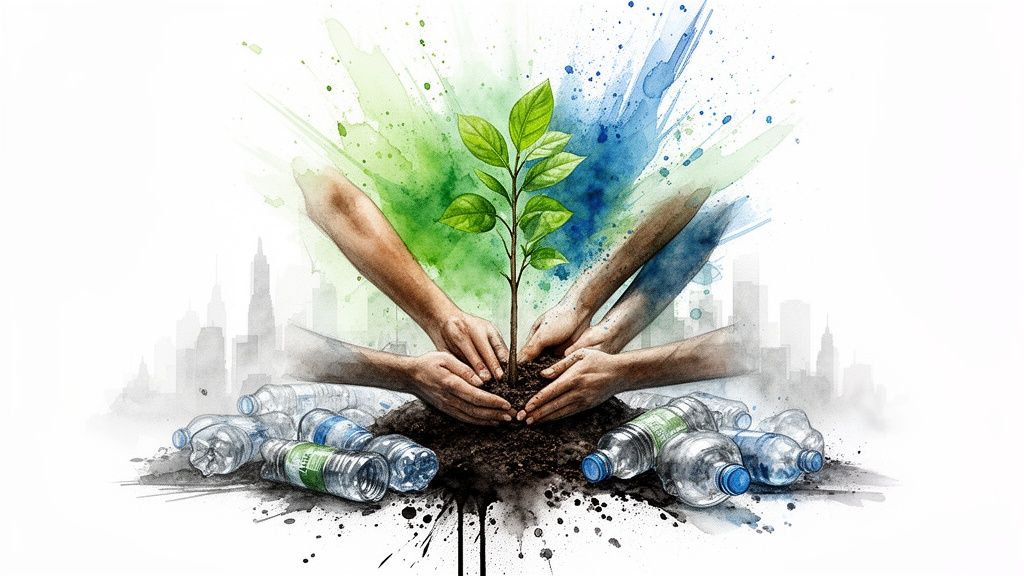
You might think environmental stewardship programs are just about picking up trash. But you’d be missing the best part. They’re really about personal transformation and community building. I’m telling you, these programs take the simple act of caring for your neighborhood and turn it into a journey. It’s a journey that can change your whole outlook, introduce you to lifelong friends, and build a stronger, tougher you.
The Day I Declared War On My Own Clutter
Let me tell you a story. For the longest time, my apartment was a perfect reflection of my life—cluttered, chaotic, completely weighed down by the past. Every single thing held a story I couldn't seem to let go of. Four-year-old jam in the back of the fridge. Snacks from a health kick I’d already abandoned. Each item felt like it weighed 500 pounds, a heavy anchor holding me in place.
Things finally hit a breaking point after a really tough breakup. I knew I needed a radical change. I decided I was going to build a life surrounded by givers, not takers. It was time to finally stare down the things I was most afraid of: consistency, cleanliness, and bravery.
From Inner Chaos to Outer Action
That’s when it hit me. The battle wasn't just inside my own four walls; it was happening right outside my front door. All over my neighborhood. The same feelings of neglect and being completely overwhelmed were visible on the streets, in the overflowing bins and forgotten lots. This realization sparked an idea, something that would grow into something much bigger than I ever imagined: Litter Caterpillars.
It all started with a simple truth I stumbled upon by accident.
Cleaning up other people's messes is way easier than cleaning up your own. It creates a strange, new kind of fun, and facing a little adversity together—like a freak hailstorm—just makes the story that much better.
This pivot, this jump from an internal struggle to external action, changed everything for me. My focus shifted away from my own clutter and onto a shared mission. It became less about what was wrong with me and more about what we could all make right, together.
The Unexpected Start of a Movement
Our very first cleanup was just three of us. We were ready to go, but Chicago, of course, had other plans. Out of nowhere, a bizarre spring hailstorm erupted. It forced us to huddle under a tree, shivering, as a string of Ubers canceled on us one by one. But in that moment of shared misery, something clicked. We weren't just picking up trash. We were building resilience. Forging a bond.
That day taught me that environmental stewardship isn't a chore. It’s a transformative act that can literally rewire your brain. It proves that you can show up, face down discomfort, and create a visible, positive impact with your own two hands. This is the foundation of all effective environmental stewardship programs: they start with a simple decision to act, turning personal frustration into collective power and creating friendships in the most unexpected places.
What Are Environmental Stewardship Programs, Really?
Forget the dry, academic definitions. Let's get real.
Imagine our planet is a huge, beautiful, and kinda neglected community garden. An environmental stewardship program is just you deciding to roll up your sleeves and start weeding your patch. It’s that simple, powerful act of taking responsibility for the world right outside your door.
Some of these programs are massive, like global initiatives steering billions of dollars to protect entire ecosystems. Others? As pure and simple as three friends meeting up on a Saturday morning to pick up trash on their street. There's no single "right" way to do it.
From Global Giants to Neighborhood Heroes
The scale can be wild. On one end, you have behemoths like the World Bank's Global Program on Sustainability. In fiscal year 2023 alone, they influenced over $4.2 billion in investments for sustainable land use, expanding their work to 26 countries. This is stewardship at the highest level—shaping national policies, directing huge sums of money.
But here’s the secret: that global impact starts with the exact same spark we felt huddled under a tree in a hailstorm. It's the decision to act. You don’t need a billion-dollar budget. You just need to care enough to show up.
The journey from feeling overwhelmed by a mess to taking real action is a powerful one. It’s a simple but profound path from chaos to growth that lies at the very heart of stewardship. I’ve lived it.
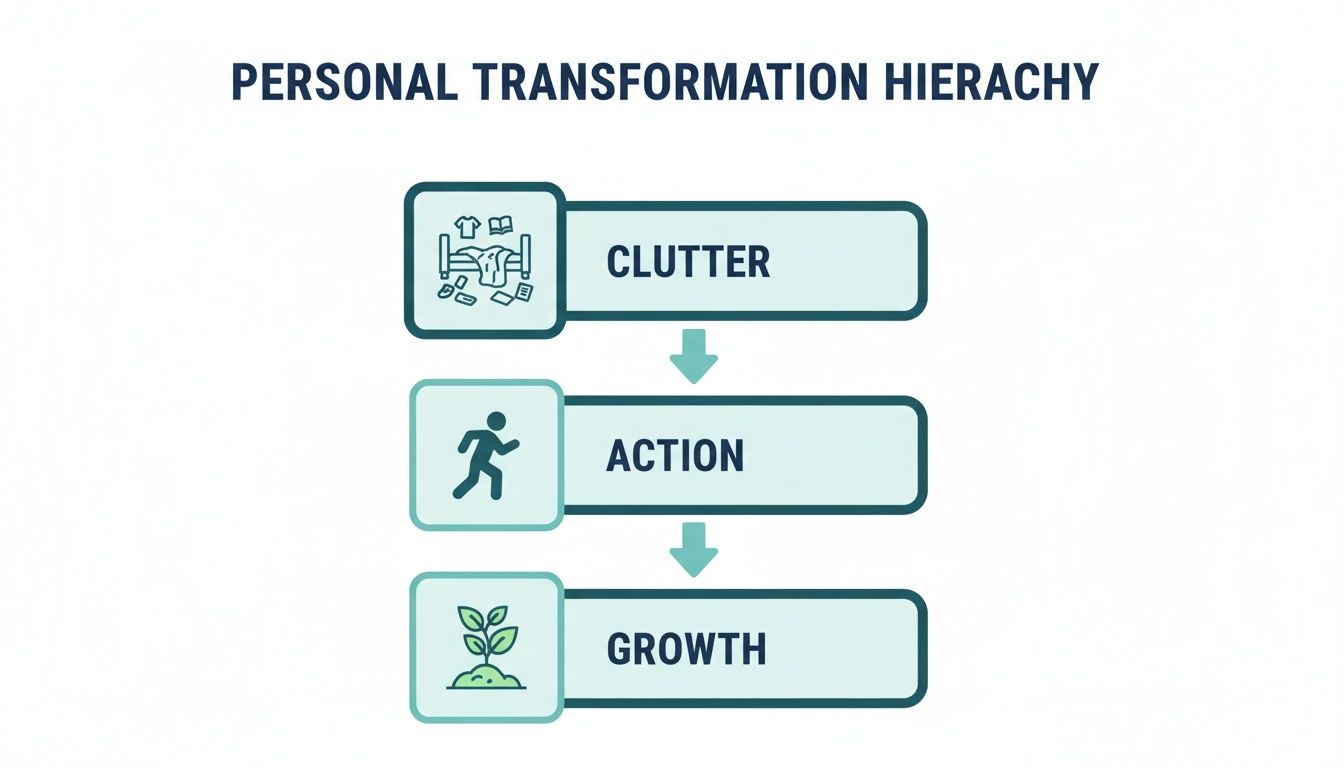
This process—moving from clutter to action and finally to growth—is exactly what stewardship is all about. It changes our environment. And it changes us, too.
The Different Flavors of Stewardship
Think of these programs like different kinds of teams. They all have their own playbook and goals, but we're all playing the same game: caring for our shared home.
To give you a better sense of the landscape, here's a quick look at the different ways people like you and me organize to care for our environment, from global organizations to neighborhood groups.
| Program Type | Who Runs It | Example | Best For |
|---|---|---|---|
| Government-Led | City, state, or national environmental agencies. | A city parks department's "Adopt-a-Park" program. | Structured, large-scale projects with official backing. |
| Corporate-Sponsored | Companies, as part of their CSR (Corporate Social Responsibility). | An annual company-wide volunteer day at a local beach. | Mobilizing lots of people for a single, high-impact event. |
| Nonprofit/NGO | Mission-driven 501(c)(3) organizations. | The Ocean Conservancy or The Nature Conservancy. | Focused, long-term campaigns on specific issues (e.g., ocean plastic). |
| Grassroots Community | Passionate local volunteers (like us!). | Litter Caterpillars, a neighborhood garden club. | Hyper-local, flexible action built on community passion. |
Each model has its own strengths, and there’s a place for everyone.
You might start by joining a city-wide cleanup and then realize you want to create something more personal, more consistent, right in your own neighborhood. That’s the beauty of it.
Stewardship isn't an academic term—it’s a choice you make. A community you build. A power you claim for yourself.
The Unexpected Rewards of Showing Up
When you first sign up for an environmental stewardship program, you probably think you know what you're getting into. You show up. You pick up some bottles and wrappers. You go home. But let me tell you, you walk away with so much more than a cleaner park. You walk away changed.
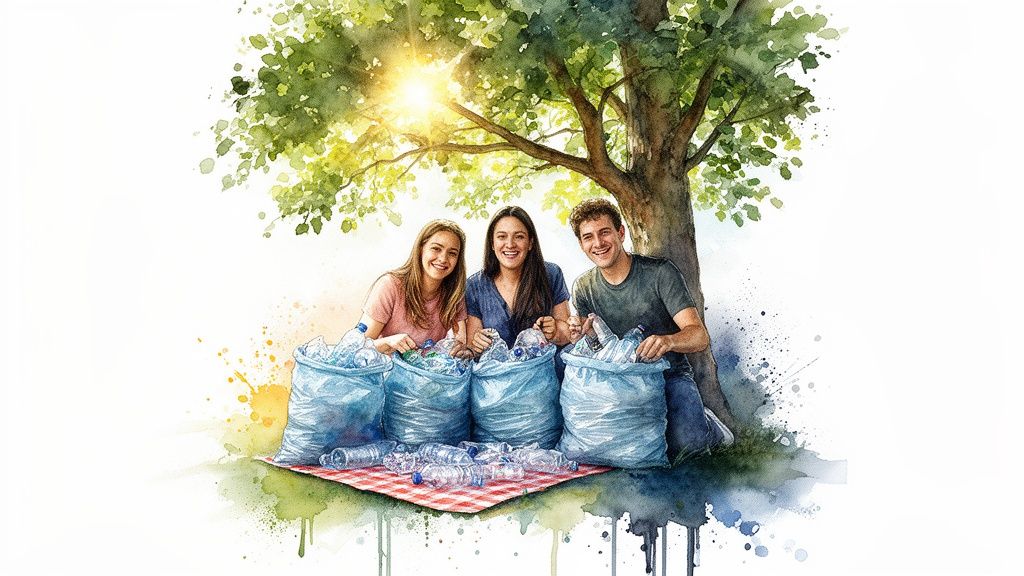
It’s about turning a chore into a shared mission. It's like the 'Tom Sawyer effect.' Remember that? When Tom was stuck painting a fence, he didn't complain. No, he made it seem like the most exciting, exclusive activity in the world. Pretty soon his friends were paying him for the privilege of helping out.
That's the magic. That's what happens when you turn individual work into a collective goal. Suddenly, sorting recycling or clearing an overgrown lot isn't a burden; it's an adventure.
From Strangers to a Tight-Knit Crew
I’ve seen the most incredible friendships forged in the middle of a cleanup. You're working side-by-side, united by a simple, tangible purpose. The usual social barriers? They just melt away.
You bond over the weirdest things you find. You celebrate filling another bag. And you get to know people on a level that just doesn't happen at a bar or a networking event. This shared effort creates a unique kind of connection, built on action rather than just words.
It’s in facing a little adversity—a sudden downpour, a scorching summer day—that the real camaraderie is built. Those are the moments that become stories, the shared experiences that turn a group of volunteers into a team.
You build a unique kind of toughness together. When you’ve survived a surprise Chicago blizzard just to clean a small patch of land, you know you can count on the people shivering next to you.
More Than Just a Clean Street
The benefits go far deeper than just community bonds. There's a powerful mental shift that happens when you're outside, working with your hands. Science tells us that spending time in nature reduces stress and improves mood, and I see it happen in real-time every single weekend.
The mix of sunlight, fresh air, and physical activity is a potent remedy for feeling stuck or powerless. You’re not just passively consuming nature; you are actively healing it.
Here’s what I’ve personally noticed:
- A Shift from Powerless to Powerful: Seeing a street go from trash-strewn to pristine in just a couple of hours is incredibly satisfying. It’s tangible proof that your actions matter. It fights those feelings of helplessness about bigger environmental issues.
- A Boost in Confidence: Consistently showing up and doing something hard builds self-respect. You prove to yourself that you are someone who follows through, someone who contributes.
- A Deeper Connection to Your City: When you’ve cleaned a place, you feel a sense of ownership and pride. It's no longer just a random block; it’s your block.
This is the real reward of getting involved in environmental stewardship programs. You might start by exploring the best ways for cleaning up trash in your community, but you end up discovering a new version of yourself—stronger, more connected, and filled with a quiet pride that can only come from making a real difference.
You don’t just clean a park. You reclaim a piece of your world and a piece of yourself.
How We Built a Movement From Nothing
Let me tell you about one of our proudest moments—a story that gets right to the heart of who we are. In Englewood, there was this abandoned lot. Overflowing with trash. It was a total eyesore, the kind of place you’d cross the street to avoid. But we didn't see neglect. We saw potential.
After months of sheer persistence—I’m talking endless calls, meetings, paperwork—we won that lot at a city auction. It was a massive win for us. Now, we're in the middle of turning that forgotten space into 'Caterpillar Park,' a green oasis built by and for the community.
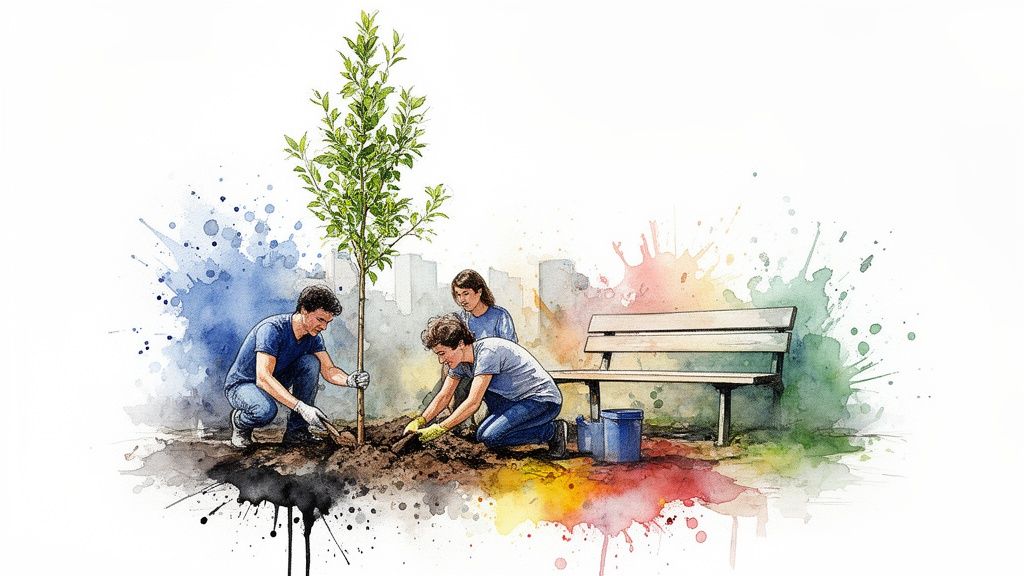
This isn't just one story; it's a whole collection of them, full of highs and lows. It’s the story of how we built a tough, impactful movement from absolutely nothing.
Living Our Values Out Loud
Every decision we make, every cleanup we host, is guided by a few core values. These aren't just pretty words on a website. They’re the compass that keeps us pointed in the right direction, especially when things get hard.
Our values are simple but they're everything to me:
- Bravery: Showing up when it’s cold, wet, or just plain miserable. It’s cleaning a highway during a bike race or tackling a lot that’s been ignored for decades.
- Kindness: Always looking out for each other. Our volunteer-first philosophy means we protect your energy and well-being above all else. That’s our golden rule.
- Unity: Bringing people together from every corner of the city. We know the mission is stronger when everyone has a place in it.
These principles shape our environmental stewardship programs and build a culture where people don't just volunteer—they belong. I've learned that building a movement is less about logistics and more about creating a shared identity rooted in real, actionable values.
The Power of Identity and Pride
Ever notice how sports teams have flags, songs, and mascots? It’s all about building pride. A sense of shared purpose. We thought, why can't service have that same energy? Kind people deserve to feel powerful, too.
So, we gave ourselves an identity. We fly our own flags proudly at every single event. We even have an official theme song that captures our spirit of joyful grit.
Pride is a crucial, natural emotion. When you give people a banner to rally under and a song to sing, you turn a simple act of service into a powerful statement. You make it feel like you're part of something much bigger than yourself.
We also created badges for our volunteers. These aren't just little trinkets; they're symbols of commitment, marking milestones. They celebrate the consistency and bravery it takes to show up week after week, rain or shine, across all 50 Chicago wards.
Creating this strong identity was a turning point. It transformed our cleanups from quiet acts of service into vibrant, inspiring events that pull people in. It made volunteering feel less like a duty and more like joining a team you’re damn proud of.
A Blueprint for Your Own Movement
This story isn't just about us. I'm sharing it because it's a blueprint. It's proof that you don't need a huge budget or some formal organization to start making a real difference.
You just need a clear 'why' and the guts to start. You have to believe in the power of showing up, even when you're the only one there. Our journey, my journey, from a few friends shivering under a tree to a city-wide movement was built one small, consistent step at a time.
It started with seeing potential where others only saw trash. It grew by creating a culture of bravery and kindness. And it became a movement by giving people a reason to feel proud of the work they were doing. This is how you build something that not only cleans a city but also changes lives—including your own.
Your Guide to Starting a Stewardship Movement
Got that fire in your belly? You don’t need a fancy nonprofit status or a truckload of cash to actually change things. All you need is a couple of friends and a rock-solid answer to one simple question: Why am I doing this?
This is your no-fluff guide to getting your own environmental stewardship thing off the ground. Forget the complicated fundraising plans for now. You start by just doing the work.
Getting Into the Arena
First things first: pick your battlefield. Is it that local park where the trash cans are always puking out garbage? That forgotten, weed-choked lot on your block? Pick a spot that means something to you, a place where winning a small battle will feel like winning a war.
Next, get your gear. Seriously. All you need to start are some tough trash bags and a good pair of gloves for everybody. Don't get hung up on the details. The whole point is to tear down the excuses and just begin.
Then, pick a time and carve it in stone. We do our cleanups on weekend mornings. That's not an accident. It's a filter. It selects for a certain type of person: the giver. These are the folks who will pick service over sleeping in, and that kind of heart is the foundation you build a real community on.
Finding Your People
Getting the right kind of volunteers is everything. You're not just looking for warm bodies to fill bags; you’re building an army. You want the people who show up for the mission, not just a selfie for their Instagram.
Here’s how I built our crew of givers:
- Be a Rock: Show up. Same time, same place, every single week. When people see you out there, sweating and committed, they start to believe. Then they join.
- Keep It Simple: Focus on one thing: the work. Don't bury your first events under a pile of sign-up sheets or long, boring speeches. Just say hi, hand them a bag, and get to it.
- Make It Fun: Your energy sets the tone. Make it a good time, high-five over a particularly gross find, and let people connect. Friendships will bloom in the dirt.
Our entire volunteer-first philosophy is built on this. We guard your energy and your time because we know that’s the most precious thing we have. If you need some more ideas, check out our guide on how to organize an effective volunteer trash pickup. It's packed with simple, straight-to-the-point tips.
Get ready for a hard truth: this won't always be easy. Some days, only two people will show up. Some days, it'll pour rain. You have to be relentless. This isn't about one heroic cleanup; it's about building something that doesn't quit.
The Bigger Picture
It’s easy to feel defeated. I get it. You look at the global picture and it's bleak. In 2022, the world lost 5.8 million hectares of forest. That's an area bigger than Croatia, and farming is behind almost 90% of it. We've got 41 out of 42 major climate indicators flashing red, nowhere near our goals. It can feel like we’re losing.
But that’s exactly why what you’re doing matters so damn much.
Every bag of trash you pull out of a ditch is an act of defiance. It’s a middle finger to apathy. It's in these moments—getting your hands dirty, facing a little bit of discomfort together—that we build the grit and the bond we need to even think about bigger change. Your small movement is a shockwave. It proves that change starts right where you stand.
Finding Your People and Growing Your Impact
A movement is just a good idea until people start showing up. But where do you find them? And maybe more importantly, how do you convince them to stick around? This is the human side of environmental stewardship programs, and if I'm being honest, it's the only part that really matters. You can have the best plan in the world, but without your people, you’re just one person picking up trash by yourself.
Think of it like tending a garden. You're not just yanking out weeds; you're cultivating a whole ecosystem. We use simple stuff like Meetup and Instagram to spread the word. The secret isn't some slick marketing campaign—it's showing the real, unfiltered grit and joy of what we do. People are starving for authenticity. They want to see the smiling, muddy faces and know they’re joining something genuine.
Building a Crew That Lasts
Getting people to show up once is just the first step. Getting them to come back is where you build real power. Why do people stay? It's not for the free trash bags, I can tell you that. They stay because they feel like they belong.
This is where communication becomes our secret weapon. We run open group chats where we make plans, share stupid jokes, and build friendships that go way beyond cleanup day. It turns a weekend chore into a real part of your social life. That constant, easy connection is the glue holding our community together. If you're stuck on this, our team put together a no-nonsense guide on how to find volunteers for your cleanup that cuts right to the chase.
Measuring What Actually Matters
So, how do you know if you're winning? Forget just counting the pounds of trash you collect. That’s a decent start, but it misses the entire point. The real signs of a healthy movement are human.
We measure our impact by the number of volunteers who come back again and again. I measure it by the laughter I hear during a tough cleanup. We measure it in the visible change of a neighborhood, week after week, because a dedicated crew just refuses to give up on it.
This is where the real magic happens. A recent UN report on the Sustainable Development Goals pointed out something huge: while global progress is stalling, small, focused stewardship programs driven by local passion are making incredible waves. Public trust in ethical stewardship is on the rise, hitting 45%, because people are seeing the results with their own eyes. When you transform your own block, it's a small-scale version of how bigger programs change policy on a national level. You can read the full 2023 SDG report from UN DESA to see how the dots connect.
The goal isn't just to clean a street. It's to build a culture so positive and welcoming that people don’t just want to join—they feel like they've finally found their people. That's how you build something that lasts.
Your Questions Answered
Got questions? Good. It means you’re really thinking about this. About taking that first brave step. Let's get into some of the common worries I hear from people who are right where you are now, ready to join or start one of these environmental stewardship programs.
What If I Am Not Physically Fit Enough For a Cleanup?
This is a totally fair question, but let me put your mind at ease. Any program worth its salt is inclusive. At Litter Caterpillars, our first and most important rule is always: "go at your own pace."
You don’t have to be a superhero. Seriously. There are so many ways you can be part of the mission. Some of our volunteers focus on a small, manageable patch. Others help by organizing supplies, taking incredible photos, or just being there to cheer everyone on. The real magic is in the collective effort, not individual heroics. Your presence alone is a huge contribution.
How Do I Find a Good Group Near Me?
Start by thinking local. Platforms like Meetup.com are a great place to look—that’s how a ton of our own volunteers find us. You can also search social media for hashtags like #[YourCity]Cleanup or #[YourNeighborhood]Volunteers.
Keep an eye out for a few signs of a healthy group:
- They show up: A consistent schedule shows they’re serious, not just a flash in the pan.
- They communicate: It should be easy for you to find out when and where to be.
- They're volunteer-first: The focus is on taking care of their people, not just fundraising or getting good press.
Don't be afraid to try out a few different crews. You'll know when you find the right one.
The right group won't feel like an obligation; it will feel like coming home. You'll know it when you find it because the focus will be on the shared mission and the friendships you build along the way.
I Want to Start a Group, But I'm Worried About Safety.
That concern is not just valid—it's the most important thing to get right. Safety is, and always will be, priority number one for me. No exceptions.
For your first few events, pick a public spot with plenty of visibility. Always have the essential gear on hand: good gloves, bright safety vests, and a solid first-aid kit. Before every single cleanup, gather everyone for a quick safety huddle. Remind people to watch for traffic, steer clear of hazardous materials, and stick together. The goal is to build a culture where everyone looks out for everyone else.
What’s the Most Important Thing for Making a New Program Successful?
Consistency. Hands down, it’s consistency.
It's not about that one massive cleanup that gets all the attention. It’s about you showing up, week after week, even when it’s raining, even when it’s cold, and even when only a few people make it out. That's what builds trust in the community. That's what creates real momentum. Most importantly, it forges a habit of service in you and your core team. When people know you’ll be there, rain or shine, they will eventually join you.
Ready to find your people and start making a difference? Join Litter Caterpillars at our next cleanup. We’re out there every weekend, building friendships, and making Chicago a little brighter, one piece of trash at a time. Find our next event at https://www.littercaterpillars.com.