
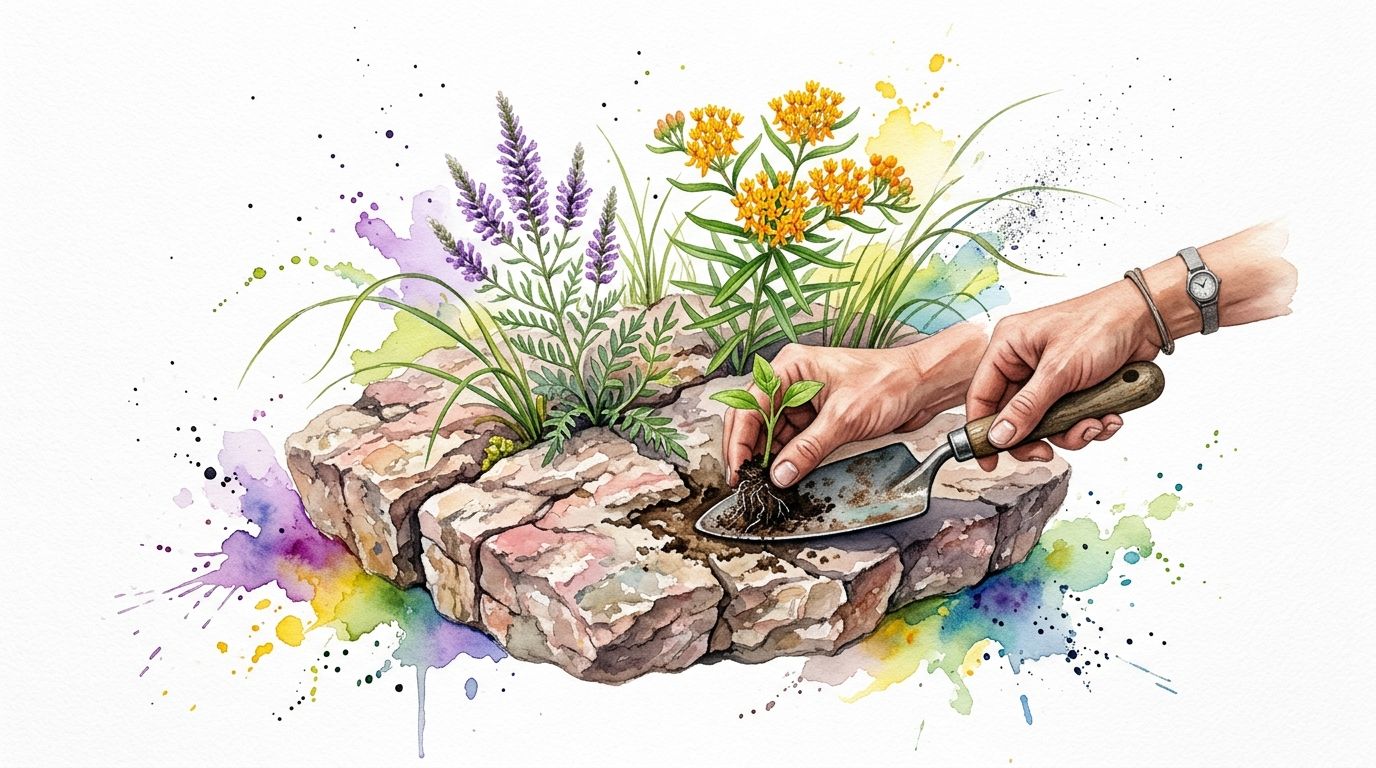
I once brought a friend here after a week when my head felt as cluttered as an alley after a windy day. We stepped out of the car, heard the grass moving before we really saw it, and my shoulders dropped for the first time all week.
More Than Just a Patch of Grass
The first time I walked into the Des Plaines Dolomite Prairies Land and Water Reserve, I expected something polite. A few nice plants. A trail. Maybe a sign or two. What I got felt closer to stepping into an old argument between stone, weather, and stubborn life.
You know that feeling when your room gets messy enough that you stop seeing individual objects and just see one big failure? I know that feeling too well. For me, city life can do that. Sirens stack on top of deadlines. The sidewalk has broken glass, a fast-food bag pinned to a fence, and one lonely weed forcing itself through concrete like it has something to prove.
Then I come here, and the whole lesson changes.
This place doesn't look manicured. It doesn't flatter you. It asks you to pay attention. The grasses lean, the rock sits close beneath the soil, and the ground feels like it's holding a memory older than anything bothering you today. That honesty is part of why I love it.
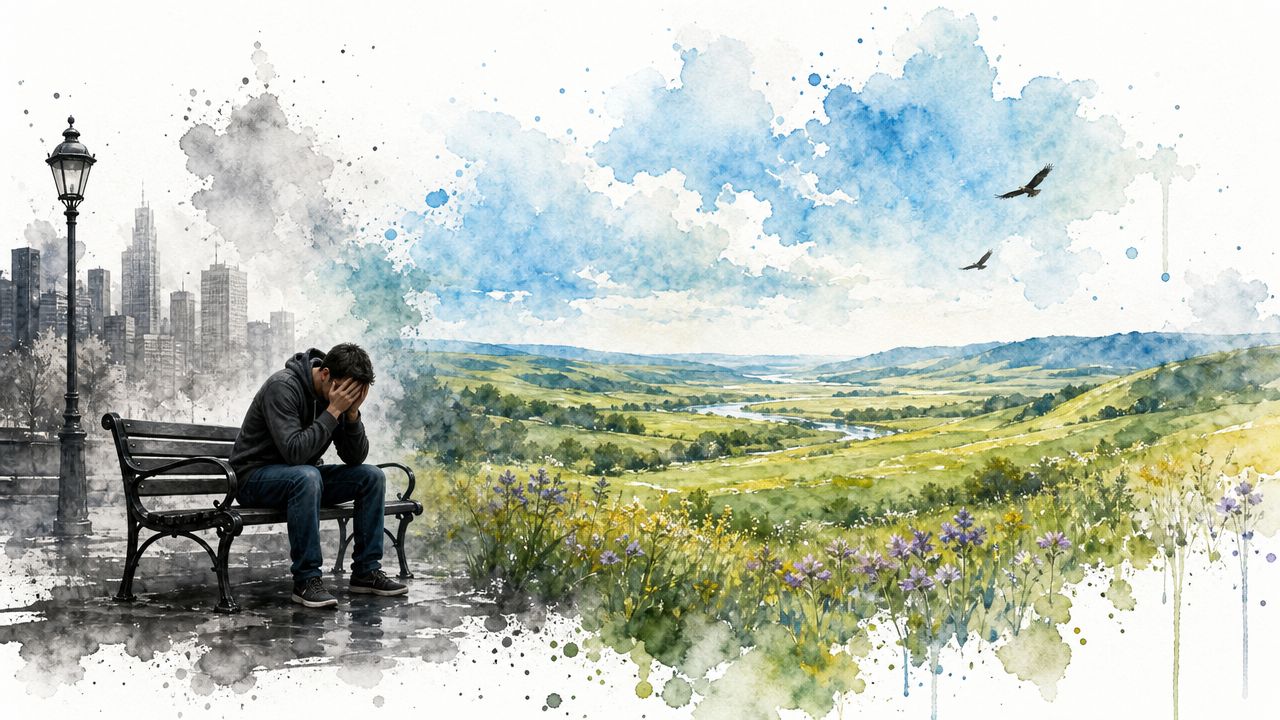
What this place felt like to me
I didn't come here as some polished nature guy with perfect hiking habits. I came here as a person who needed a reset. I needed a place that wasn't trying to sell me calm with curated signs and gift-shop energy. I needed a place that felt earned.
The prairie gave me that.
It reminded me of a forgotten city corner that still has dignity. A vacant lot can look dead until you kneel down and see volunteer sunflowers, ants hauling impossible crumbs, and roots splitting bad pavement. This reserve gives me that same feeling, except bigger, older, and wilder.
If you spend most of your days in Chicago, you might like places with rough edges because they tell the truth. This reserve tells the truth.
Some places cheer you up by distracting you. This one helps by making you smaller in the best way.
If you're looking for a doorway out of noise
Maybe you're tired. Maybe you want to get outside but don't want a fake version of nature. Maybe you want a place where you can walk slowly and feel your thoughts sort themselves out without forcing it.
That's what this can be.
If you're already exploring nearby preserves, you might also like this guide to the forest preserve experience around Chicago. But this reserve has its own mood. It feels leaner. Sharper. Like a place built for people who don't mind getting a little dirt on their shoes and a little perspective in their chest.
A Prairie Forged in Floods
The first time I understood this place, I was standing beside a volunteer on a cool morning after rain. He scraped the toe of his boot across a bare patch near the trail and said, "There. That's the whole lesson." Under a skim of soil, the rock sat close to the surface, plain and stubborn. You could feel right away that this prairie had not been given easy terms.
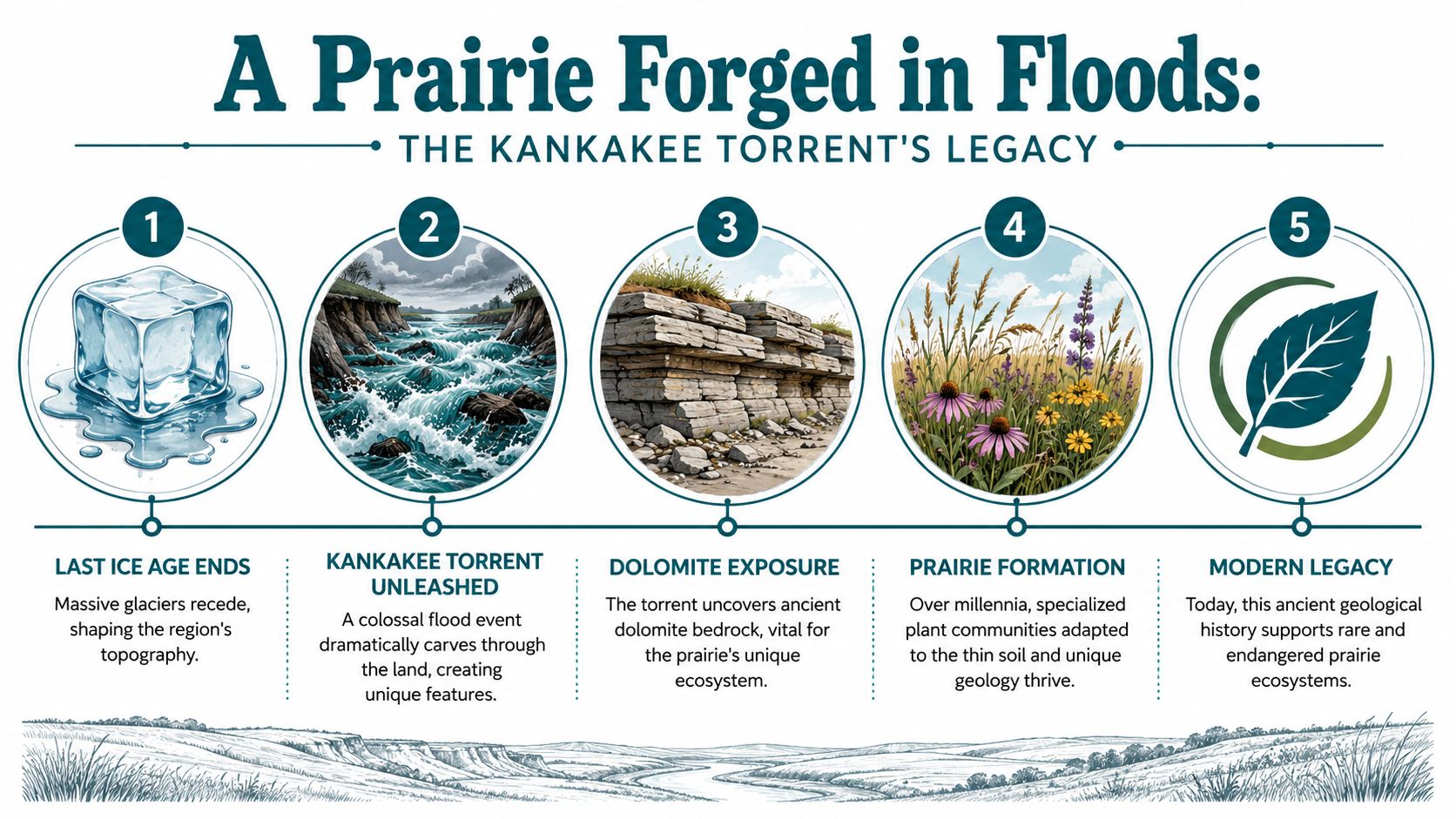
Long before our workdays, field notebooks, and muddy gloves, floodwater carved the ground hard enough to expose dolomite bedrock. That old force still sets the rules here, as described by the Illinois Department of Natural Resources page for the reserve.
The bones of the place
A lot of Illinois hides its bedrock under deeper, softer soil. Here, the ground often feels spare. Thin soil dries fast in some spots. Water lingers differently in others. Plants do not get much room for laziness, so the ones that last are the ones built for pressure.
That is one reason I bring new volunteers here when they are unsure of themselves. The prairie runs on limits. It grows beauty out of hard conditions. If you have ever felt scraped down by life and still kept going, this ground makes sense in your body before it makes sense in your head.
I usually explain the sequence like this:
- Ancient floodwater tore through the area.
- Dolomite bedrock ended up close to the surface.
- Soil stayed thin across many patches.
- Prairie and wetland communities adapted to those constraints.
Why the ground keeps changing under your feet
You can hear it in how people talk once they have walked a little farther. One person says the trail felt dry and open. Another swears the next stretch felt damp, almost hidden. They are both right.
The reserve holds several prairie and wetland community types, including a large area of Grade C dolomite prairie. That mix grows from the same rough geologic base noted earlier. The result is a place that keeps shifting mood as you move, a training field for attention. You learn to notice small changes. You slow down. You get less sure of your first impression, which is healthy work for a person, not just a hiker.
This short video helps if you want a visual companion before your visit.
How I explain a dolomite prairie to a friend
I keep it simple. A dolomite prairie is a place where life has to earn its footing.
Roots grip shallow soil. Water comes and goes on unforgiving terms. The plants that stay are the ones that can handle exposure, scarcity, and change. That is why volunteer work here never feels like charity to me. The prairie is teaching the same lesson it asks of its plants. Stand firm. Adapt. Work with others. Keep going.
Field note: When the trail goes quiet, look down. The ground usually explains the rest.
Discovering the Prairie's Treasures
The first time I brought a new volunteer here, she stopped after ten minutes and said, "I thought this place would ask me to look far out." Instead, she was crouched over a hand-sized patch of ground, grinning at a tiny bloom pushing up through stone and short grass. That is how this reserve gets you. It trains your eyes first, then your character.
You start to understand the place by getting low, staying quiet, and letting small things matter.
Why a small remnant can change how you walk
A friend once asked why our group gets so protective over what, to an untrained eye, looks like a modest stretch of prairie. I told him about the moment that changed me. I had paused to pull trash near a rough, open patch, and one of the older stewards waved me over like he was pointing out a jewel. He did not raise his voice. He just said, "Look carefully. Almost none of this is left."
That landed hard.
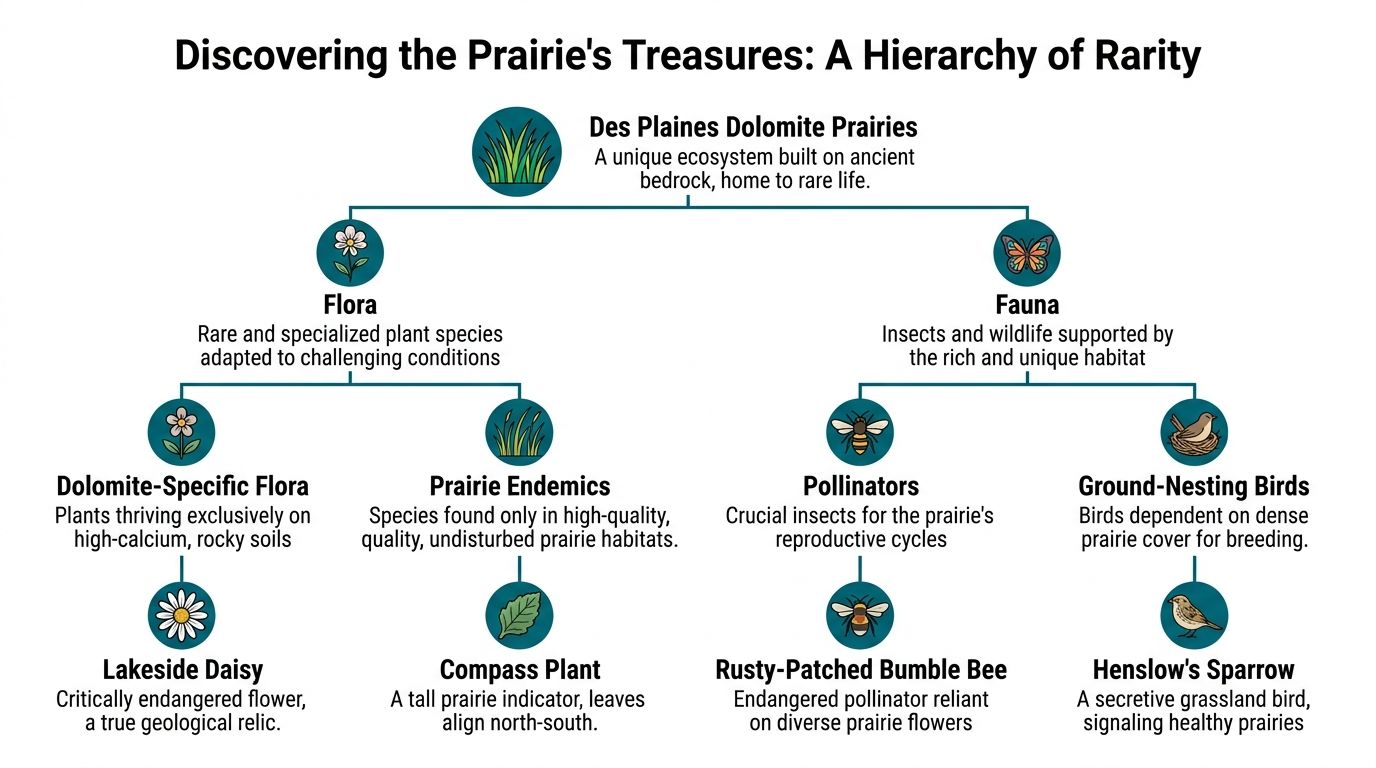
As noted earlier from state conservation material, this reserve holds a rare, high-quality remnant of dry-mesic dolomite prairie. Once you know that, your pace changes. You place your boots with more care. You stop treating the ground like background and start treating it like an elder that barely survived.
What the prairie gives to people who pay attention
I do not promise dramatic sightings on command. Prairie days do not work like that. What I can promise is that attention gets rewarded here, and the reward often comes in forms that make you better at more than hiking.
Here is what I tell new volunteers to watch for:
- A change in footing: Ground that turns stonier or thinner often marks a shift in the living community around you.
- Small flowers close to the soil: The prairie hides some of its best work down low, where hurried visitors never look.
- Busy insects over one patch: Pollinators will often show you the best stopping point before your own eyes do.
- Birds dropping into cover: That quick movement tells you the structure of the grass is doing real work for wildlife.
State information also notes that the reserve supports threatened and endangered species. I never turn that into a scavenger hunt. A place like this asks for respect, not conquest. Sometimes the bravest thing a person can do outdoors is accept that seeing less can still teach more.
One volunteer in our group learned that the hard way, then the good way. He came hoping for a big checklist day. Instead, he spent an hour helping clear a small stretch near the trail and left talking about one insect he had watched move from flower to flower. He had noticed a pattern, slowed his breathing, and finally stopped trying to win the walk. That proved to be the most valuable discovery.
A better way to search for treasure
Kneel if the ground allows it. Stay with one square foot longer than feels natural. Let your eyes sort out stem from shadow, bloom from gravel, movement from wind.
That simple act becomes practice for the rest of life. You get steadier. You get humbler. You become more useful to the people beside you because you are finally paying attention.
If you want to build a longer day around that same habit of slow observation, this guide to the Des Plaines River Trail near Chicago is a good companion route.
And when you find something beautiful, leave it where it is. The best thing you carry home from this prairie is sharper attention, and maybe a little more courage than you had when you arrived.
Finding Your Way Around the Reserve
The first visit always feels easier when somebody gives you the plain version. So here's my plain version.
Treat the Des Plaines Dolomite Prairies Land and Water Reserve like a field trip, not a rush job. Give yourself time to park, stand still for a minute, and let your eyes adjust to open ground. Prairie spaces can seem visually quiet at first, then suddenly full.
I also like pairing a visit here with other nearby outdoor routes. If you want another option for the same general part of the region, this guide to the Des Plaines River Trail near Chicago can help you build a longer day outside.
My advice before you leave home
Don't overpack. You don't need to dress like you're crossing a mountain range. Wear sturdy shoes, bring water, and expect uneven ground in places. If the weather turns, let that be part of the day instead of a crisis.
Here's the quick-reference version I wish somebody had handed me early on.
| Item | Details |
|---|---|
| Setting | A protected reserve within the Des Plaines Fish and Wildlife Area in Will County, Illinois |
| Best first move | Start slow and let your eyes adjust before you try to "find" anything |
| Footwear | Closed-toe shoes with grip make the walk more comfortable |
| What to bring | Water, sun protection, and patience |
| Mindset | Come ready to observe more than to conquer mileage |
| Facilities | Check current official guidance before you go, since access details can change |
| Pets and rules | Verify current site rules before your visit and stay on marked paths where allowed |
| Ideal pace | Unhurried. This place rewards people who stop often |
How I move through a place like this
I don't chase every turn. I pick a direction, walk gently, and pay attention to changes underfoot. That matters more here than trying to rack up distance.
Three habits help a lot:
- Start with the edges. Transitional areas often wake up your attention.
- Turn around halfway. The view back often feels completely different.
- Leave margin in your schedule. The best moments usually happen when you aren't rushing to the next thing.
Practical rule: If you catch yourself checking your phone every few minutes, stop walking and listen for one full minute.
How to Visit with Purpose
A lot of people visit prairies the way they scroll. Fast eyes. Quick judgment. If nothing flashy appears, they move on.
I think this place asks for another kind of visit. Slower. More deliberate. More willing to let small things matter.
Pick a season, then pick a question
I like giving each visit one question instead of one goal. In spring, my question might be, "What's waking up low to the ground?" In late summer, I ask, "Which plants are holding themselves tallest?" In fall, I pay attention to color, seed heads, and the sound of dry grass moving in the wind.
That little shift changes everything. You stop grading the day by whether you got a perfect sighting. You start noticing patterns.
A few simple ways to make the visit deeper:
- Get low once or twice. Crouching changes your whole relationship with the prairie.
- Look at one square of ground. Stay with it longer than feels natural.
- Follow one sound. Wind, insects, birds, your own footsteps. Let one sound lead your focus.
- Notice the rock story. Even if you can't see bedrock directly, remember what's shaping the plants.
Respect is a form of attention
Purpose isn't only about curiosity. It's also about restraint.
Stay on the path where you're supposed to. Leave flowers, seed heads, and anything living where you found them. Don't treat the reserve like a backdrop for content. Treat it like a place with its own rules and its own pace.
I learned this the hard way in nature spaces. I used to arrive wanting a payoff. A beautiful photo. A breakthrough thought. A clean emotional reset. Now I try to arrive ready to receive whatever the day gives me.
That makes the good moments stronger.
Some visits feel full right away. Others feel quiet until the drive home, when you realize your mind got lighter out there.
Small practices that change the day
If you're bringing a friend, ask them what they noticed before you tell them what you noticed. That keeps the place from turning into a lecture. If you're coming alone, try walking one stretch in silence with no music.
You don't need a grand ritual. You need a little patience and a willingness to be taught by details.
Answering the Call to Protect This Place
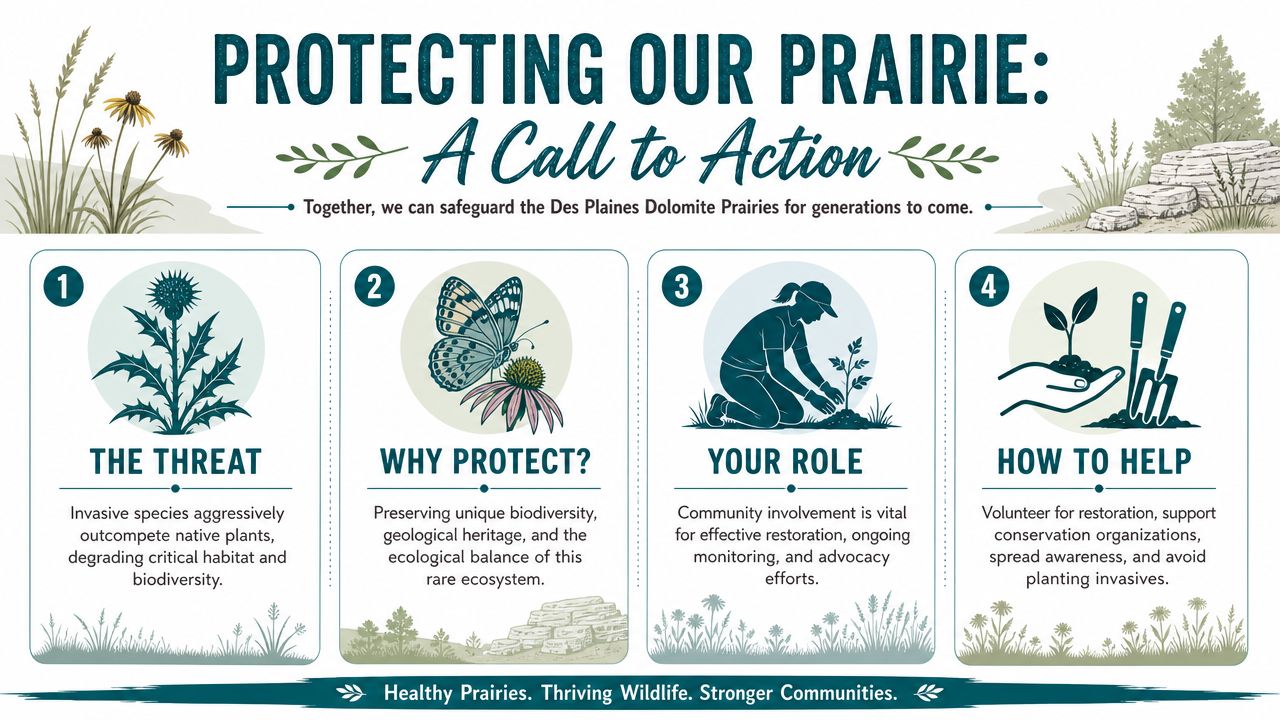
The older I get, the less I believe in the idea that special places stay special on their own. They need help. Usually practical help. Hands, time, restraint, and people who are willing to do unglamorous work.
Prairie care often looks like that. You don't always get a dramatic before-and-after reveal. Sometimes the work is slow, repetitive, sweaty, and absolutely worth doing.
Why service changes the person doing it
I've seen this over and over in outdoor volunteer spaces. Someone arrives a little shy, a little unsure, maybe just wanting to do one decent thing with their morning. Then they spend a couple hours picking up debris, hauling brush, or helping with habitat work. By the end, they stand differently.
Work with your hands can do that.
Nature service is good medicine for people who overthink. It gives your mind a job it can finish. You pull, carry, bag, clear, stack. The body understands what the mind has been circling.
That's one reason I think stewardship matters so much. It doesn't only help the place. It trains you.
What protecting a prairie can look like
I don't mean everybody needs to become a full-time field ecologist. I mean regular people can become useful fast.
That help can take a few forms:
- Show up for workdays. Habitat care often needs willing hands more than perfect expertise.
- Learn the rules of the site. Respect prevents damage.
- Stay observant. Care starts with noticing what doesn't belong.
- Bring a friend. Courage spreads socially. So does care.
If you want a grounding idea for that mindset, I like the language in this piece on environmental stewardship. It puts words to something simple. A place does better when people decide it is partly their job.
Bravery can be quiet
When people hear "be brave," they often picture something loud. I think bravery out here is quieter than that.
Bravery is waking up early and going anyway. Bravery is joining a volunteer day when you don't know anyone. Bravery is getting dirty, asking dumb questions, and learning in public. Bravery is deciding that care isn't embarrassing.
If you want to feel less powerless, help a real place with your real hands.
I love that prairie work can humble you without humiliating you. The plants don't care about your résumé. The ground doesn't care how polished you sound. You either help, or you don't. That's very freeing.
And once you've done that kind of work, even once, a reserve like this stops being scenery. It becomes somewhere you feel responsible to.
Your Story with the Prairie Starts Here
By the time I leave this place, I usually feel two things at once. Smaller, and steadier.
That's a good combination.
The Des Plaines Dolomite Prairies Land and Water Reserve has its own long story in rock and grass and thin soil, but that isn't the only story here. There's also the one you bring with you. Maybe yours is a solo walk because your week got too loud. Maybe it's a family morning where somebody young sees prairie ground up close for the first time. Maybe it's the day you decide you want your weekends to include service, sweat, and actual human connection.
I don't think personal growth always arrives through giant breakthroughs. Sometimes it starts when you walk into a place that asks you to slow down, pay attention, and care for something outside yourself. A prairie can train that in you. Subtly. Repeatedly.
So go. Wear the shoes you don't mind getting dusty. Bring water. Give the place more time than feels efficient. Let the grasses, stone, and open sky work on you a little.
Then come back.
Because that's how a place changes you. Not in one dramatic scene, but through return.
If this kind of outdoor service and honest community speaks to you, take a look at Litter Caterpillars. It's a Chicago volunteer group built around bravery, friendship, and caring for the environment with your own two hands.