
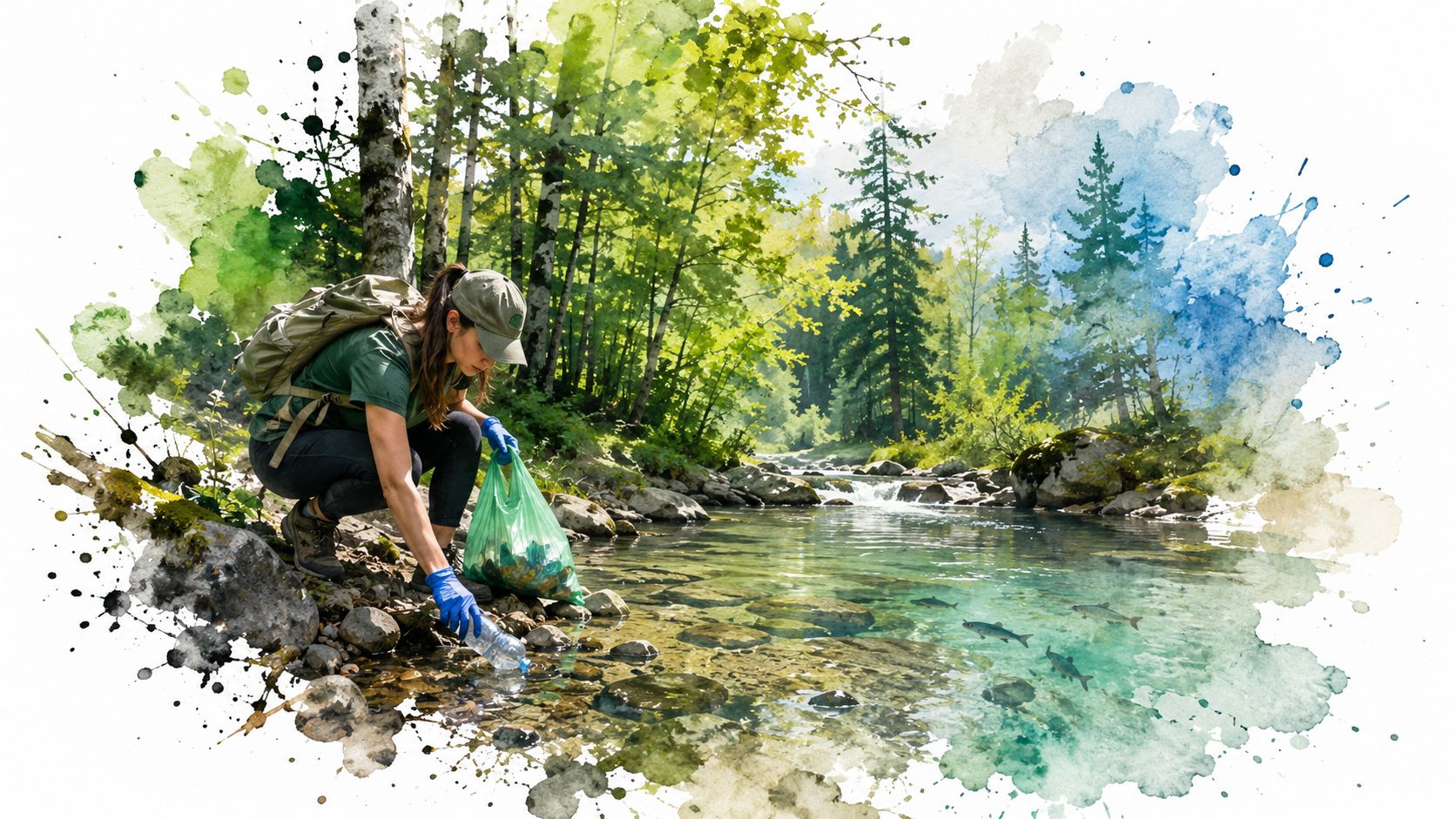
I bent down to grab a crushed bottle near the edge of the trees, and for a second I forgot the rest of my life. The noise in my head got quiet. That's what happened to me the first time I really paid attention in Crooked Creek Woods.
Finding Your Path in Crooked Creek Woods
I didn't come to the woods because I had myself figured out. I came because I was tired, scrambled, and carrying the kind of inner mess that follows you from room to room. Cleaning my own life felt impossible. Picking up one piece of litter on a trail felt doable.
That's still one of the strangest truths I know. Sometimes it's easier to lift someone else's mess than your own. You reach down for a bottle, an old can, a wrapper snagged in brush, and somewhere in that simple motion, your shoulders drop. You breathe deeper. You remember you can act.
Crooked Creek Woods gave me that feeling.
I've walked into a lot of green spaces hoping for some kind of reset. Some places are pretty but distant, like they don't need you. Crooked Creek Woods doesn't feel like that to me. It feels approachable. Human-sized. A place where you can arrive restless and leave steadier.
The first walk that changed me
I remember one visit when I didn't even mean to stay long. I thought I'd walk a little, clear my head, then head back to the car. Instead, I kept going. The trees made a kind of shelter that didn't ask anything from me except attention. I started noticing small things. Bent grass. Bird calls I couldn't name. Mud at the creek edge. Sun through branches.
That was enough.
Practical rule: If your mind feels loud, don't wait for the perfect plan. Start with one short walk.
You might come here because you want exercise. You might come because your kids need room to run. You might come because you're lonely and need to be somewhere alive. All of those reasons are good reasons.
Why I want you to go
I want you to think of Crooked Creek Woods as more than a place to pass through. I want you to treat it like a trailhead for your own next chapter. Maybe that sounds dramatic, but I mean it in a plain, everyday way. The same way a sink full of dishes can break your spirit, a quiet walk can put it back together a little.
Here's what I love about starting here:
- You can keep it simple. Show up, walk, breathe, notice.
- You can come as you are. Tired, hopeful, annoyed, curious. The woods can handle all of it.
- You can leave with momentum. One good hour outside can change the rest of your day.
If you've been waiting to feel ready before you visit, don't. Read this like a note from a friend who wants to meet you at the trailhead and say, come on, let's go.
Getting to Know the Woods and Its Creek
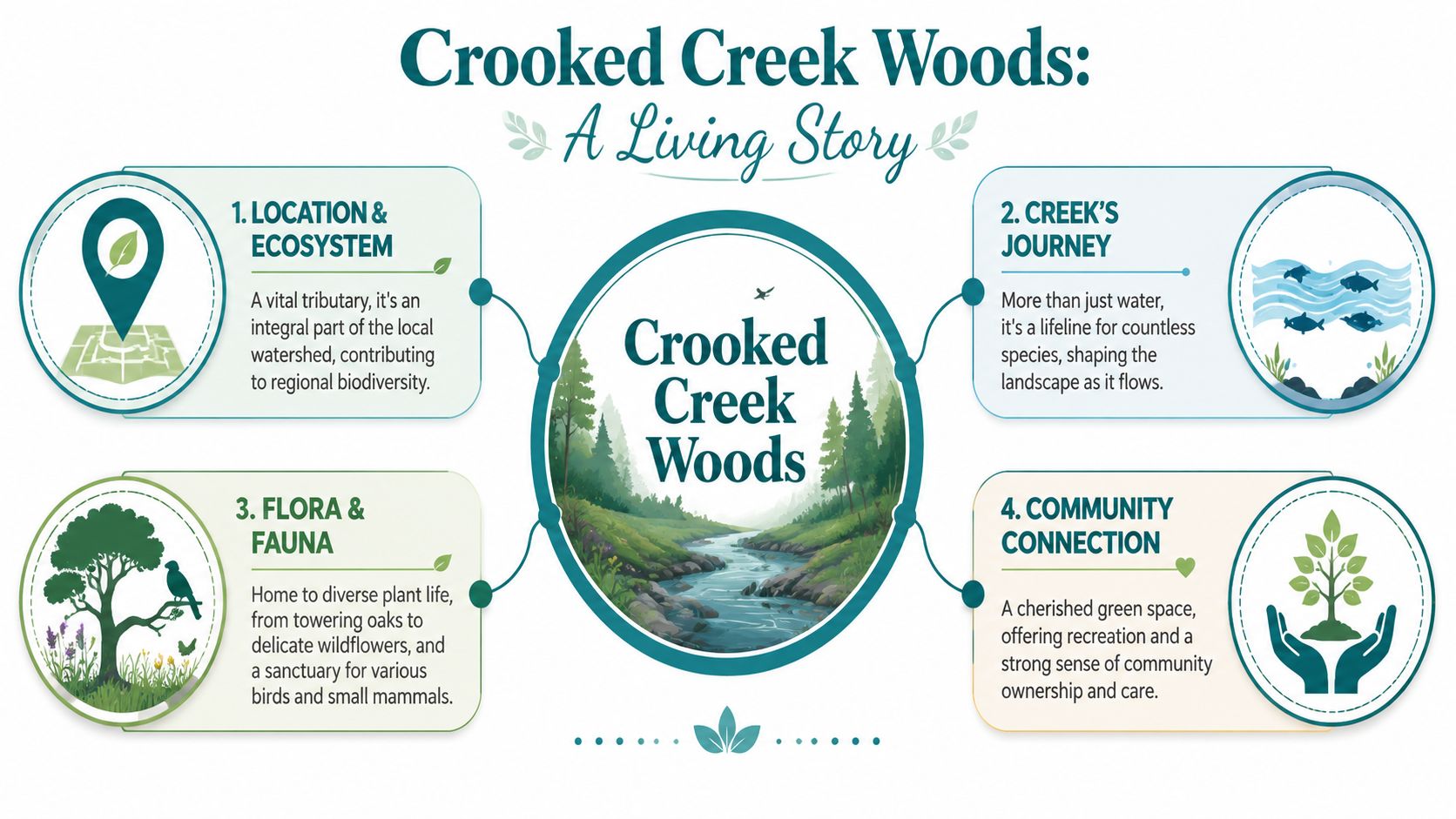
The first time I crouched beside Crooked Creek, I saw a bluegill flash near the bank and a plastic wrapper snagged in roots a few feet away. That is Crooked Creek Woods in one frame. Life holding on, and people being asked to choose what kind of neighbors we want to be.
Crooked Creek runs through a chain of wooded preserve corridors, including Country Lane Woods, Cranberry Slough, and Pioneer Woods, and it belongs to the larger Chicago River system. According to a Chicago River story on Crooked Creek, the waterway supports fish such as largemouth bass, bluegill, and pumpkinseed, and a restoration project was anticipated to begin in May 2017 to improve hydrologic processes and aquatic habitat.
The creek teaches by example
I come here for that lesson as much as the scenery.
Crooked Creek bends, slows, gathers itself, and keeps going. After a hard season in my own life, that mattered to me more than any brochure language ever could. You may feel it too when you stand at the edge and watch the current work around a fallen branch instead of fighting it head-on.
That shape of persistence is part of why this place stays with people. The creek is not background. It is the organizing force of the woods. Trees cluster around it. Wildlife depends on it. Walkers keep drifting back toward it, even when they start out thinking they are only here for a short stretch under the canopy.
A woods with an old foundation
The ground here carries a much older story than any single visit. Crooked Creek Woods sits in the Palos and Sag Valley division, which the Forest Preserves of Cook County describes as mostly hilly and forested, with roots in glacial and geologic history. You can feel that history in the rises under your feet and the way the land folds around water instead of flattening it into something generic.
I love that about this place. It asks you to pay attention to shape, slope, and time.
For me, that attention changes behavior. Once you notice how a creek bank crumbles, how roots hold soil in place, or how a bottle can wash downstream after one rain, care stops being abstract. It becomes practical. You pick up the can. You step more lightly. You start reading the woods as a living system instead of a backdrop for exercise.
That is the heart of the Litter Caterpillars philosophy. We do not only visit natural places. We build a relationship with them through small acts of service, steady observation, and shared responsibility. If you want to bring that spirit with you here, our guide to cleaning rivers and waterways is a good place to start.
You do not need expert training to care for a creek. You need attention, respect, and the willingness to leave the bank better than you found it.
When you get to know Crooked Creek Woods this way, the place gives you more than a pleasant walk. It gives you practice in noticing what matters, and then doing something about it.
Your Guide to the Trails
When you first arrive at Crooked Creek Woods, don't worry about doing it the “right” way. You don't need elite hiking gear or some secret route. You need decent shoes, enough water, and permission to wander a little.
I like to think of trail choices the way I think of conversations. Some are easy and social. Some are quiet and long. Some are best when you bring kids along and let the pace stay loose.
How to choose your walk
If you're coming with family, I'd keep your first visit simple. Pick the path of least resistance. Let the day be about curiosity, not distance. If you're coming alone and need room to think, give yourself more time and take the route that lets the sounds of the road fade.
Since trail conditions can shift and on-the-ground route patterns can vary, I'd treat the woods like a place to explore rather than a place to conquer. For nearby route ideas across the region, I often browse Chicago trail guides before heading out.
Here's a planning table I'd use with a friend before we go.
| Trail Name | Approx. Length (Miles) | Difficulty | Best For |
|---|---|---|---|
| Creekside Start | Short | Easy | First-time visitors, kids, slow walks |
| Grove Connector Walk | Moderate | Easy to Moderate | Families, casual conversation, picnic day add-on |
| Quiet Woods Loop | Moderate | Moderate | Solo walkers, birdwatching, decompression |
| Extended Wandering Route | Longer | Moderate | People who want more solitude and time outdoors |
If you're bringing kids
Kids don't usually need a perfect trail. They need discoveries close together. A stick bridge. A patch of mud. A sudden bird call. Space to ask questions that don't have answers.
I'd keep a family visit focused on rhythm instead of mileage:
- Start early enough to go slow. Rushing turns every root and puddle into a problem.
- Let children lead for stretches. They notice mushrooms, feathers, and odd-shaped leaves adults walk right past.
- Stop before anyone melts down. The best ending is one that makes your kids want to come back.
If you want quiet
I know the difference between taking a walk and going somewhere to hear yourself think. If that's what you need, arrive with your phone on silent and resist the urge to track every turn. Walk until your thoughts stop performing for you.
Look for the moments when the trees seem to close around the path and the outside world loosens its grip. That's where Crooked Creek Woods gets especially good.
Go slower than you think you need to. The woods open up when you stop trying to win at walking.
A few things I'd watch for
I won't pretend nature works on cue, but some patterns repeat. If you come at the softer edges of the day, the whole place feels more alert. If you pause near openings in the trees, you may catch better views through the canopy. If you stay quiet near the creek, you'll notice more than if you stomp through like you're late.
My own trail method is simple:
- Walk the first part without taking photos.
- Stop at the first place that makes you exhale.
- Turn around only after your pace changes on its own.
That last one matters. Your body usually knows before your mind does. At some point your stride gets easier, and that's when the walk begins to do its real work.
The Woods Through the Seasons
My relationship with Crooked Creek Woods changed when I stopped treating it like a one-season place. I used to think a preserve had one best moment. Now I think that's like saying a friend has one best mood. You get a different truth each time you return.
Spring wakes the place up fast
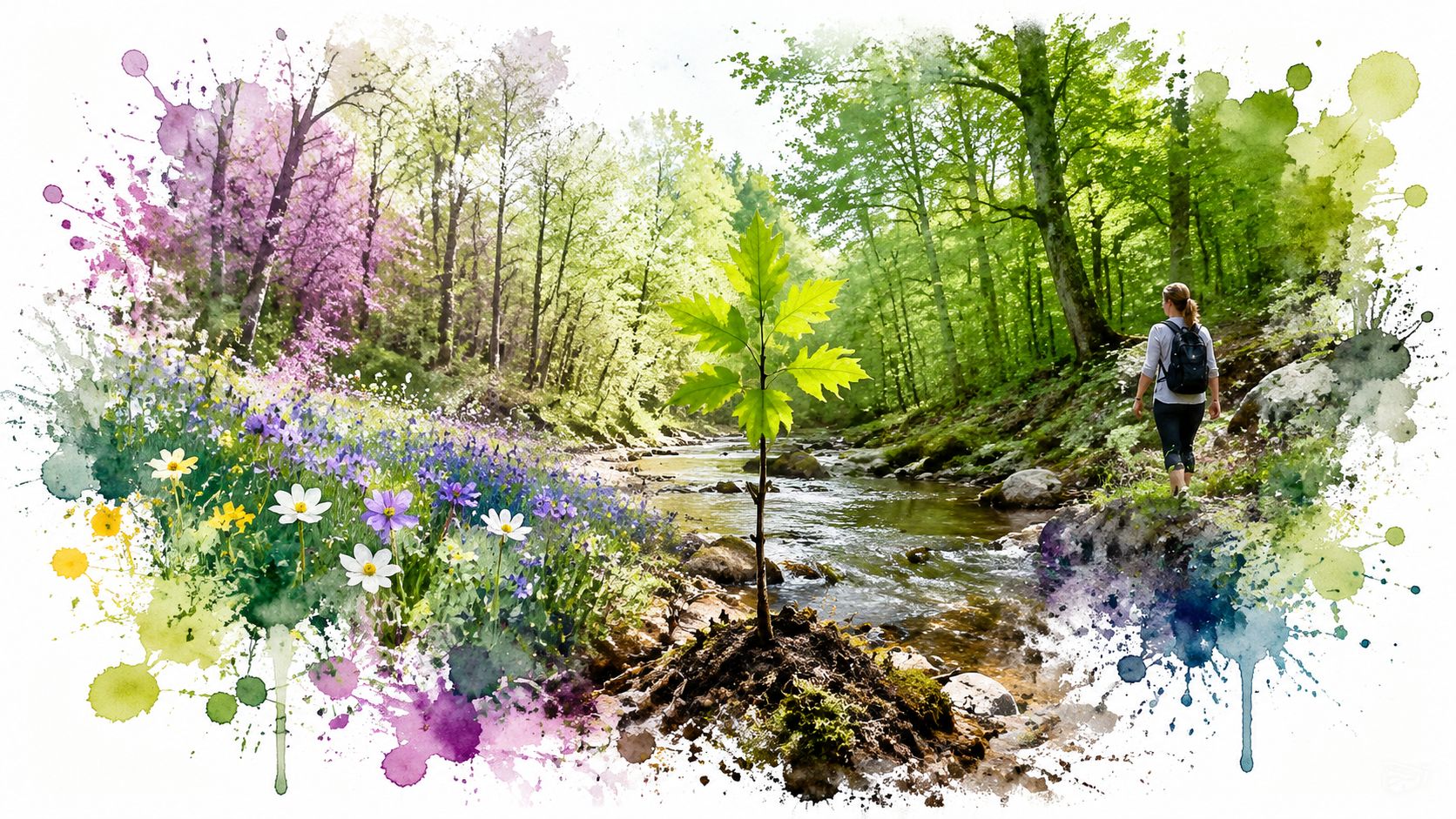
Spring in the woods always feels a little reckless to me. Everything starts speaking at once. Birds get loud. The ground shifts from dull to alive. You smell damp soil and fresh growth before you can explain it.
I like spring because it gives me hope without asking whether I earned it. You step onto the path carrying winter heaviness, and the woods answer with motion.
Summer teaches you how to slow down
Summer here is deep green shade and longer pauses. The air feels fuller. The trees create that cool cover that makes you want to stay out longer than planned.
When I walk in summer, I stop expecting speed from myself. I let the day stretch. I pay attention to the smell of leaves warming in the sun and the places where the creek draws your eye even when you can't fully see it.
A summer visit works well if you bring:
- Water you'll want to drink
- Shoes you trust on uneven ground
- Patience for a slower pace
Autumn is my favorite for thinking
Autumn doesn't need much salesmanship. You know what leaves can do. But what gets me is the sound. That dry crunch underfoot makes every step feel counted.
This is when I come to sort things out.
A hard conversation. A decision I've delayed. A season of life that's ending before I'm ready. Fall gives me room for all of that. The woods feel honest then. Nothing hidden. Nothing rushed.
Some days the best thing you can do is walk through leaves until your thoughts stop knotting themselves.
Winter clears the noise
A lot of people skip winter woods, and I think they miss something special. Without thick cover, you can read the shape of the land more clearly. You notice trunks, branches, slope, sky. The place feels stripped down to its lines.
Winter doesn't flatter. It steadies.
If there's snow, I look for tracks and follow them with my eyes until they disappear. If the air bites, I walk anyway because the silence feels clean. It's the season that reminds me strength doesn't always look cheerful.
Come back in every season if you can. Let the place meet you in all your moods.
Plan Your Visit the Smart Way
The first time I brought a small volunteer crew here, one friend showed up in slick-soled shoes, another forgot water, and all of us had different ideas about where to meet. We still had a good day, but we spent the first half hour fixing preventable problems. Since then, I've learned that a better visit often starts before you leave home.
According to the Forest Preserves of Cook County page for Crooked Creek Woods, the preserve is open sunrise to sunset year-round, has four groves with capacities of 100, 350, 100, and 200 people, and portable bathrooms are typically available from Memorial Day through Labor Day, weather permitting.
Know the setup before you go
Those details matter more than they sound like they should.
If you are planning a birthday meal, a family reunion, or a quiet meetup after a walk, knowing the grove sizes helps you choose a gathering that fits the day instead of forcing the day to fit your plan. The larger groves with shelters can make a group visit feel calmer from the start.
I also like knowing the hours before I arrive. Sunset comes faster than you think when conversation gets good and the creek keeps pulling you farther down the path.
My simple visit checklist
I pack for Crooked Creek Woods the same way I pack for a cleanup or a community walk. Light, useful, and honest.
- Water you will drink
- Shoes with grip for dirt, roots, and damp patches
- A charged phone for maps and timing
- A small bag for snacks, tissues, and hand sanitizer
- An extra layer if the weather looks uncertain
If you want to add one more thing, bring a spare bag or gloves so you can leave with a few pieces of trash if you spot them. That small habit changes the whole feeling of a visit. It turns a walk into participation, which is a big part of the spirit behind the Litter Caterpillars environmental stewardship programs.
If you're meeting other people
Group outings get better when someone claims the unglamorous job.
Send the meeting point. Send the arrival time. Tell people what kind of walk this is going to be. A short wander? A picnic with kids? A longer afternoon with time to sit and talk? Clear plans make room for everyone to relax once they get there.
I've also learned to arrive early if a grove is part of the plan. A few quiet minutes at the beginning can set the tone for the whole day.
A few safety habits I always keep
These are simple, and they work.
- Tell someone where you are going.
- Keep an eye on the time so you are heading out well before dark.
- Walk at a pace that lets you notice the ground and your own energy.
- Turn back if weather, footing, or your gut says it is time.
I want you to have the kind of visit that leaves you steadier than when you arrived. Good planning helps with that. It gives you more room to listen, notice, and care for the woods while they care for you.
Become a Guardian of the Woods
There's a moment that happens after you visit a place enough times. It stops feeling like scenery. It starts feeling personal.
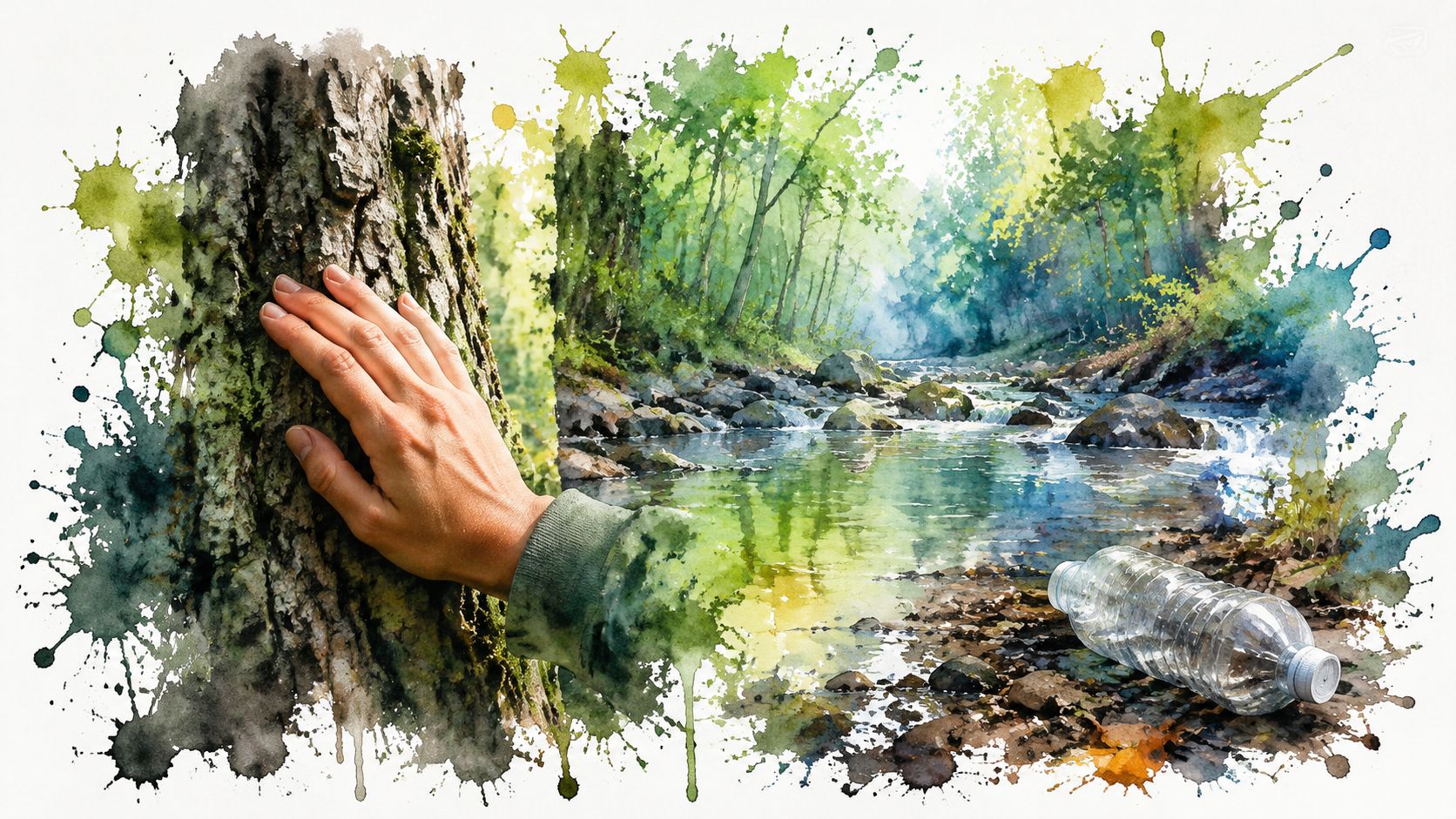
You notice the bottle near the creek bank. The wrapper caught in low branches. The can half-hidden in leaves. And then you get to choose what kind of person you're going to be in that moment.
Museum mindset or garden mindset
I think a lot of people move through public land like they're walking through a museum. Look, admire, move on. Don't touch anything. Don't get involved. Keep your role small.
I don't think that mindset helps us much.
A better analogy is a community garden. In a garden, you don't own the place, but you still care for it. You pull a weed. You water what's thirsty. You leave it better than you found it. That's how I want you to think about Crooked Creek Woods.
Small acts change the relationship
The first time you pick up trash in a place you love, something shifts. You stop being only a visitor. You become a participant. Your walk gets a new layer to it.
That change matters because action builds attachment. Attachment builds care. Care makes you come back.
Here are a few easy ways to practice that:
- Pick up one thing. You don't need a grand cleanup. Start with one bottle or one bag.
- Carry a glove or grabber if you like structure. Tools make action easier when hesitation shows up.
- Leave room for joy. Stewardship isn't punishment. It can be light, social, and even funny.
Caring for a place is one way of practicing care for yourself.
Service works on you too
This is the part I learned the hard way. I used to think service was mainly about output. Bags filled. Ground cleared. Mess removed. But service changes the person doing it.
When I started cleaning outdoor spaces, I got stronger in ways that had nothing to do with muscle. I got more consistent. Less afraid of starting small. Less trapped by perfection.
That's why I care about environmental stewardship programs. They give people a simple doorway into responsibility. You show up, do one concrete thing, and your identity starts to shift around it.
If you love Crooked Creek Woods, care for it in a visible way. Don't wait for someone else to be the kind of person who helps. You can be that person today.
Join the Litter Caterpillars Adventure
One Saturday at Crooked Creek Woods, I watched a teenager pull a crushed soda can from the creek bank while his grandmother held the trash bag open beside him. Ten minutes earlier, they had been quiet. By the time we reached the bend in the trail, they were trading stories about other parks they loved and arguing, happily, about who had found the strangest piece of litter. That is the kind of morning that stays with you.
The Litter Caterpillars bring people together for cleanup events around Chicago, and the work has a way of turning a simple outing into something larger. You show up for a few hours outside, and you leave with muddy shoes, new names in your phone, and a stronger sense that public land belongs to all of us.
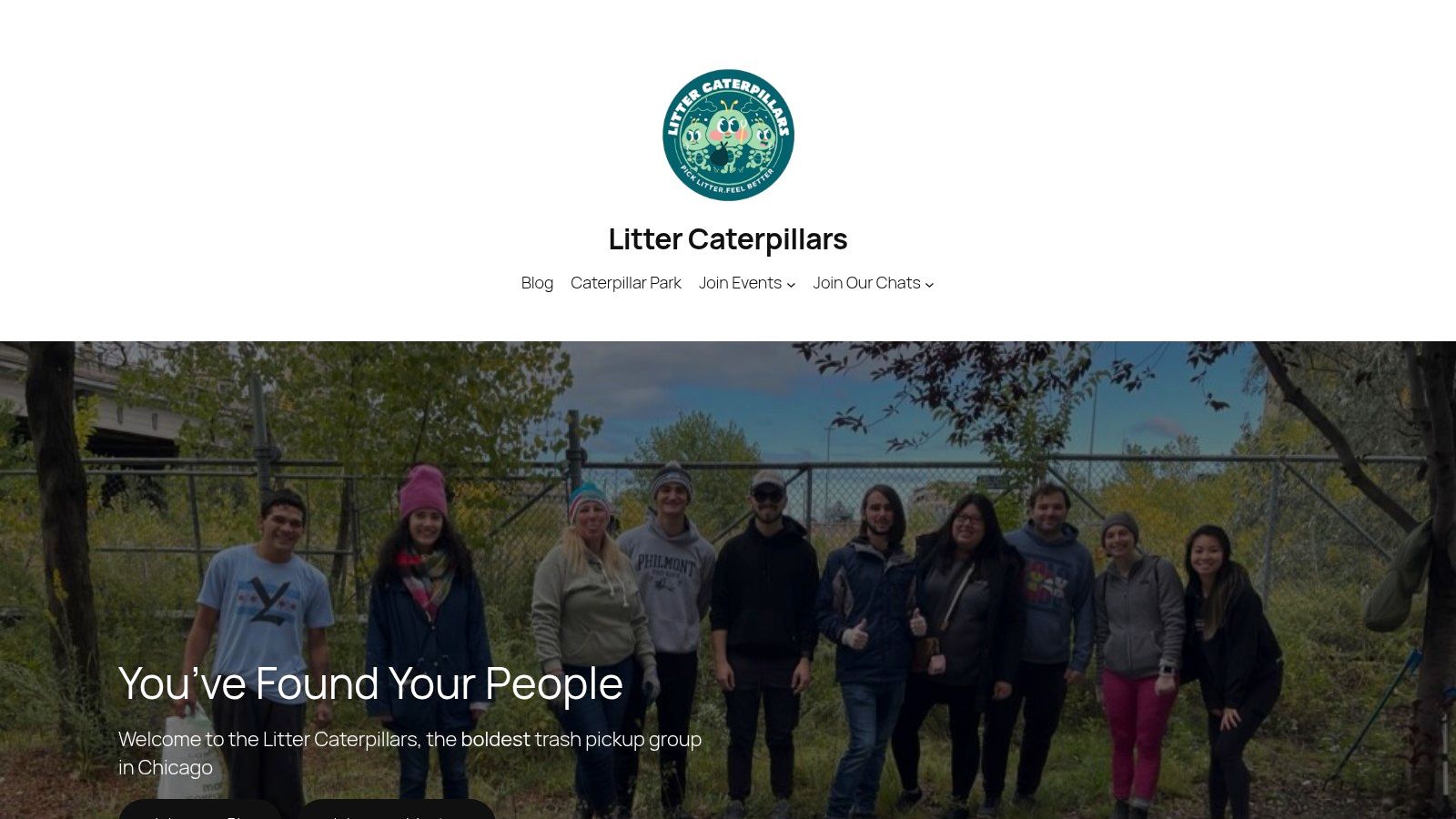
I love that nobody has to arrive with a perfect résumé in environmental service. You can come tired, curious, shy, or brand new. What matters is your willingness to pick up one piece of trash, walk one stretch of trail, and care for a place with other people who are learning the same habit.
That is part of the Litter Caterpillars philosophy that changed me. Service is not only about removing litter. It is a practice of belonging. When you kneel to clear a bottle from the leaves or carry out a bag someone else ignored, you start seeing yourself differently. You are no longer passing through the woods. You are helping shape what kind of place it will be for the next child, dog walker, bird watcher, or exhausted neighbor who comes here to breathe.
I have seen strangers become a crew in less than an hour. Gloves on, eyes scanning the ground, someone calls out a rusted can by the roots, someone else laughs at an ancient fast food cup, and the whole morning loosens up. If Crooked Creek Woods stirred something in you, follow it with your hands. Join a cleanup, bring a friend, and let your next walk become an act of care.