

You've seen them, right? The glossy photos. A dozen employees in matching t-shirts, awkwardly planting a single, sad-looking tree. It all feels a bit… staged. Like a box-checking exercise built for a press release. But what if corporate social responsibility wasn't about looking good? What if it was about actually being good? What if it could change not just a community, but your team, your brand, and maybe even you?
I know it can. I’ve lived it.
For a long time, my own life was a mess, literally and figuratively. I started a small trash pickup group right here in Chicago—we call ourselves Litter Caterpillars now—mostly to get a handle on my own issues with consistency and keeping things clean. What happened next blew my mind. We found this strange, unexpected joy in doing hard things together, even freezing our butts off in a Chicago hailstorm. I discovered that cleaning up somebody else's mess was often way easier than facing my own. That simple act of service started changing us. From the inside out.
So this article isn't another boring list of forgettable photo-ops. I want to take you on a deep dive into 12 powerful corporate social responsibility examples, many of them inspired by the raw, real lessons we learned out on the streets. I’ll share stories from my own journey, break down exactly what makes these ideas tick, and give you stuff you can actually use to build a program with a real heart and soul. Forget the empty gestures. It's time to build something that actually matters.
1. Community-Led Environmental Cleanup Programs
Picture this. You’re turning a neglected, trash-strewn street corner—a place you usually hurry past—into a spot that fills the whole neighborhood with pride. That’s the magic of these community-led cleanup programs. They aren't just about picking up litter. They are potent examples of corporate social responsibility that build a tangible, visible impact right where you live. When you sponsor or join one of these events, you're directly investing in the well-being of the communities you serve.
This is how CSR stops being some abstract idea and becomes a hands-on, team-building adventure. It’s more than just cutting a check. It’s about you, showing up. Getting your hands dirty. And creating immediate, visible change right alongside your neighbors and your team.
Strategic Insights & Actionable Takeaways
This whole model is like a campfire. It needs consistent fuel—that’s the community spirit—to keep burning bright. The goal isn't a one-off event. It’s a sustainable movement that makes people feel connected and gives them a sense of ownership.
- Build a Habit: You have to be consistent. It's everything. Our Litter Caterpillars group in Chicago hosts cleanups every single week. This makes it a regular, easy-to-join thing, not some rare, special occasion. That’s how you build momentum and a crew of dedicated volunteers.
- Create Team Identity: You need to inspire pride. A feeling of belonging. Use branded gear like t-shirts, come up with team chants, or offer little achievement badges. This transforms a simple cleanup into a shared mission.
- Focus on Underserved Areas: You can maximize your impact by going where help is needed the most. This shows you’re genuinely committed to equity and caring for the community, not just chasing easy PR wins.
- Prioritize People: The best programs I've seen put their volunteers' safety and happiness first. If you create a positive, supportive vibe, people will come back. They’ll become your biggest advocates.
By partnering with a program like this, your company can grow deep community roots and show a powerful commitment to local environmental health. You can see how this all works and find ways to get involved with local cleanup events.
2. Land Acquisition and Community Space Development
Imagine an abandoned, overgrown lot. Now, imagine it transforming into a vibrant hub where neighbors meet, kids play, and fresh food grows right out of the ground. This is what land acquisition and community space development can do. It's one of the most lasting corporate social responsibility examples I can think of. When your organization buys and redevelops a neglected property, you’re making a permanent, physical investment in a neighborhood’s future.
This kind of project isn't just a temporary fix. You're creating lasting assets—community gardens, little pocket parks, maybe even food forests—that become a part of the local fabric. When you help create a place like Caterpillar Park in Englewood, you're not just cleaning up a space; you're building a legacy of community health, connection, and pride.
Strategic Insights & Actionable Takeaways
This kind of thing is like planting a redwood. It needs a long-term vision and you have to work deeply with the community. Your goal is to create a self-sustaining space that the residents truly own and love.
- Co-Create with the Community: The best spaces are designed with residents, not just for them. You have to host design workshops and planning sessions from day one. This makes sure the final space actually meets what people in the community need and want.
- Plan for Longevity: A beautiful park is useless if it gets overrun with weeds a year later. You need a sustainable maintenance plan with a dedicated volunteer crew or partnerships with local groups before you even break ground.
- Document the Journey: You have to tell the story of the transformation. Use photos and videos to show the whole process, from neglected lot to vibrant community hub. This creates amazing marketing content and shows your tangible impact.
- Activate the Space: A park is just land until people use it. Partner with local groups to host regular events—farmers' markets, outdoor movie nights, gardening workshops. You have to make sure the space becomes a lively center of activity.
When you invest in land, you invest in people. You can learn more about how a small group turned an auctioned lot into a beloved community asset and find inspiration by exploring the story of Caterpillar Park.
3. Friendship, Social Connection, and Branded Identity
What if your corporate social responsibility initiative felt less like a chore and more like joining your favorite team? That's the power you get when you build a program around friendship and a shared identity. These initiatives intentionally create deep social bonds. They turn volunteering from a one-time act into a core part of someone's community life. It's about making people feel like they belong to something bigger than themselves.
This approach gets that the strongest movements are built on relationships, not just tasks. By fostering real connections and a proud, branded identity—with symbols like flags or team songs—you create an environment where people want to show up. It becomes a source of joy and belonging that fuels long-term engagement and turns your volunteers into passionate advocates for the mission.

Strategic Insights & Actionable Takeaways
Think of social connection as your main goal, not just a nice side effect. You're trying to build a resilient community that sustains itself through a shared purpose and real friendship.
- Create a Shared Identity: You have to go beyond just a logo. Develop traditions, symbols, and celebrations that bond your team. At Litter Caterpillars, we use a theme song, unique flags, and achievement badges to forge a powerful group identity.
- Facilitate Social Time: You have to intentionally build in time for people to connect. Always schedule some informal social time before or after your events so relationships can form naturally.
- Build Consistent Teams: Assign your volunteers to small, consistent groups. When people work with the same crew regularly, trust builds way faster. Acquaintances turn into real friends.
- Celebrate People, Not Just Metrics: You have to publicly recognize personal milestones, volunteer stories, and individual growth. This shows you value the people behind the work, and that fosters deep loyalty and a positive culture.
When you focus on building a community, you create a self-sustaining volunteer movement that is resilient, joyful, and deeply impactful. You can explore how to apply these community-building activities for adults to your own CSR programs.
4. Volunteer-First Fundraising Model
Imagine you join a cause you believe in. You're ready to give your time and energy, but then you're hit with constant pressure to donate money. That feeling can turn your inspiration into a sense of obligation. The volunteer-first fundraising model flips this whole script. It's one of the most powerful and authentic corporate social responsibility examples because it protects the volunteer experience by separating the act of service from the act of fundraising.
This model is like building a great band. You find passionate musicians first, and then you find a record label to support them. You build a passionate community first. Instead of asking volunteers to open their wallets, you get your funding through corporate sponsorships, grants, and major donors. This lets everyone, no matter their financial situation, contribute in a meaningful way. For a company like yours, supporting this model means you're funding pure, uncompromised community action.
Strategic Insights & Actionable Takeaways
This approach is about valuing human energy as your most precious resource. Your role as a corporate partner is to fuel that energy, not to extract value from it.
- Build Diverse Revenue Streams: Don't put all your eggs in one basket. We actively seek a mix of corporate sponsors, apply for grants, and develop partnerships to make sure our operations are sustainable without ever asking our volunteers for a dime.
- Create Clear Sponsorship Tiers: You need to develop attractive sponsorship packages that offer clear value to businesses. This could be brand visibility on gear, social media shout-outs, or dedicated cleanup events for your employees.
- Prioritize Transparency: You have to be open with your volunteers about how you're funded. When they know that corporate partners and grants make their work possible, it builds trust and shows them how valuable their contribution truly is.
- Focus on Impact Metrics: Track and publicize the results of what your volunteers are doing—pounds of litter collected, number of community members engaged. These metrics are powerful tools for attracting and keeping high-impact funders who want to see real results.
By sponsoring a volunteer-first model, your company shows a profound respect for the community and empowers people to give their best. You can see how this philosophy creates an incredible volunteer culture and explore sponsorship opportunities.
5. All-Weather, Year-Round Service Commitment
What does real commitment look like? I'll tell you. It’s showing up when it’s inconvenient. It’s facing a snowstorm or a heatwave and choosing to serve anyway. This is the heart of an all-weather, year-round service commitment. It's a powerful model of corporate social responsibility that proves your dedication isn't just for the sunny days. It shows that community needs don’t take a break for bad weather, and neither do you.
This approach builds incredible credibility. It creates a culture of resilience. When your team braves the elements together, you’re not just cleaning a park; you’re forging a bond built on shared hardship and unwavering purpose. This sends a clear signal to your community, employees, and customers that your values are non-negotiable.
Strategic Insights & Actionable Takeaways
This model is like being a lighthouse keeper. It's built on a foundation of safety, preparation, and a culture that finds strength in adversity. It’s about being stubborn for the right reasons.
- Embrace the Elements: You have to make resilience a core part of your identity. At Litter Caterpillars, we operate in rain, snow, and extreme heat. We never cancel an event. This unwavering consistency proves our commitment is absolute.
- Safety Is Non-Negotiable: Create clear, weather-specific safety protocols. This could mean providing hand warmers in winter, extra water in summer, or changing routes during storms. The goal is to show up, but to do it safely.
- Communicate and Prepare: Let your volunteers know what to expect and how to prepare. When you're transparent, you build trust and make sure everyone shows up with the right gear and the right mindset.
- Celebrate the Grit: You have to acknowledge and honor the effort. Share photos of your team working through tough weather on social media. Frame the challenge not as a problem, but as a source of shared pride and accomplishment.
Adopting an all-weather philosophy shows your company’s character. Your grit. It’s a tangible way to demonstrate that your commitment to the community is truly unconditional. You can see this dedication firsthand and find ways to join a mission that never stops.
6. Neighborhood-Specific and Equity-Focused Service
Think about your city. Think about the neighborhoods that get all the resources and the ones that are often forgotten. True corporate social responsibility examples don't just pop up in the most convenient places; they go where the need is greatest. This approach intentionally focuses on underserved and marginalized communities. It makes sure that efforts toward beautification and environmental health are distributed equitably.
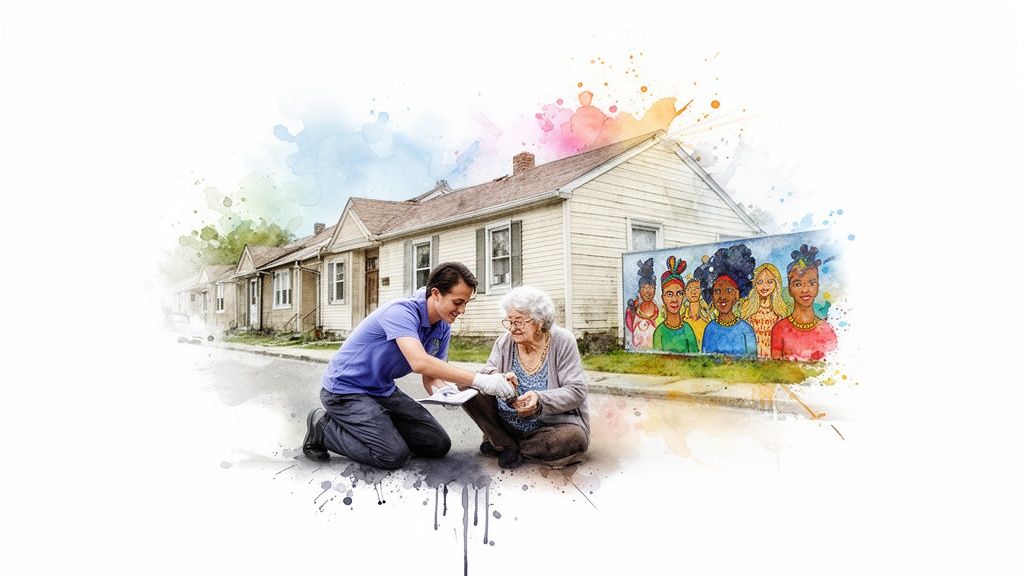
It’s about moving beyond photo ops and tackling environmental justice head-on. When you commit to showing up in all neighborhoods, not just the ones with the best PR value, you build genuine trust. You prove your commitment is about people, not just perception. This is how you transform a volunteer program into a real force for systemic change.
Strategic Insights & Actionable Takeaways
This model is like being a good neighbor. It's built on trust, respect, and a long-term vision. The goal is to become a reliable partner, not just a temporary visitor. You do that by empowering the residents you serve.
- Map for Equity: Don't just go where it's easy. You need a systematic plan to cover all neighborhoods, prioritizing those with the highest need. We're trying to do this at Litter Caterpillars by working to serve all 50 city wards, including places like Englewood that are often overlooked.
- Hire from the Community: The most powerful leaders are the ones with lived experience. You have to hire and develop team leaders from the neighborhoods you serve to make sure your efforts are authentic and culturally resonant.
- Listen First: When you first go into a new neighborhood, your most important job is to listen. Partner with community organizations that are already there. Let their wisdom guide your actions. Building relationships is the foundation for everything else.
- Commit for the Long Haul: Avoid one-off events. A sustained presence shows a real investment in the community's future and helps address the root causes of neglect, not just the symptoms.
By adopting an equity-focused strategy, your company can move beyond surface-level CSR and contribute to meaningful, lasting change where it matters most. You can see how this philosophy drives impact and find ways to join a mission-driven cleanup.
7. Personal Transformation and Resilience Building
What if volunteering could do more than just clean a park? What if it could help you rebuild a life? This is the core idea behind CSR programs that focus on personal transformation. These initiatives frame service not just as an act of giving, but as a journey of healing, growth, and resilience. By creating a safe and supportive space, you offer a place where overcoming challenges becomes a shared experience.
This model elevates corporate social responsibility from a PR effort into something deeply human. It's about recognizing that your volunteers and employees come with their own stories, their own struggles. When you facilitate mentorship and create opportunities for real connection, you invest in their personal well-being just as much as you invest in the community. It’s a powerful way to show you care about people, not just productivity.
Strategic Insights & Actionable Takeaways
This approach is like building a support group. It's built on vulnerability, trust, and celebrating personal wins. The goal is to create a community where people feel safe enough to grow through their service.
- Lead with Your Story: Authenticity builds trust. I openly share my personal journey of transformation as the founder of Litter Caterpillars. Sharing your own "why" creates a foundation for other people to feel safe sharing theirs.
- Focus on Growth Milestones: Shift your focus from just service metrics to personal progress. Celebrate a volunteer's courage to lead a team for the first time or their consistency in showing up.
- Create Spaces for Reflection: Meaningful service requires you to process it. Dedicate time after events for volunteers to reflect and share what the experience meant to them. This turns a simple cleanup into a lesson in resilience.
- Train for Emotional Intelligence: You have to equip your leaders with skills like active listening and empathy. The goal is to create a supportive network, not just manage a task list. A leader who knows how to listen is more valuable than one who only knows how to delegate.
By building a program that honors the journey of each individual, your company can foster profound loyalty and create an impact that goes far beyond clean streets. You can learn more about how Litter Caterpillars uses service for personal growth.
8. Demographic-Specific Volunteer Recruitment
What if you could design a volunteer program that speaks directly to the heart of a specific community? That’s what demographic-specific volunteer recruitment does. Instead of a one-size-fits-all approach, this strategy tailors its message, its timing, and its activities to connect with the unique motivations of a particular group. This makes it one of the most effective corporate social responsibility examples for deep engagement.
This approach turns your CSR initiative from a generic call for help into a personal invitation. It acknowledges that different people volunteer for different reasons. Some are looking for career skills, others want friendship, and many are just seeking a sense of purpose. When you understand and address these specific desires, you create a program that feels not just welcoming, but like it was truly made for them.
Strategic Insights & Actionable Takeaways
This model succeeds when you move beyond assumptions and genuinely get to know your audience. The goal is to build an authentic connection that makes people feel seen, valued, and essential to your mission.
- Understand Motivations: Don’t guess what people want. For example, we successfully engage a lot of young women by focusing on empowerment, community, and creating visible, inspiring change. You need to research what drives your target group.
- Recruit in Their Spaces: You have to go where your audience already is. If you're targeting new professionals, connect through LinkedIn or company resource groups. For students, focus on campus events and the social media platforms they actually use.
- Design for Their Lives: Respect their constraints. Offer weekend events for people who work 9-to-5, or flexible scheduling for parents. Your logistics should remove barriers to joining, not create new ones.
- Center Their Voices: Feature testimonials and leaders from within the target demographic. When people see others who look like them in leadership roles, it builds trust and shows them a clear path for involvement and growth.
By tailoring your outreach, you can build a more diverse, dedicated, and passionate volunteer base. You can find more targeted strategies and learn how to find volunteers who are a perfect fit for your cause.
9. Digital-First Community Building and Accessibility
What if your company’s impact wasn't limited by your physical presence? That's the power of digital-first community building. These initiatives use online platforms not just for promotion, but as the central hub for organizing, connecting, and making volunteerism accessible to everyone, no matter their schedule or social comfort level. It’s about meeting people right where they are—online—and guiding them toward real-world impact.
This strategy transforms corporate social responsibility into an ongoing conversation. Instead of just announcing an event, you’re creating a space for questions, sharing stories, and fostering connections long before and after the work is done. It removes barriers. It makes it easy for someone just scrolling on their phone to find a purpose and a community.
Strategic Insights & Actionable Takeaways
A strong digital presence turns passive interest into active participation. It's like having a friendly greeter at your front door, 24/7. Your goal is to create a seamless, welcoming journey from online discovery to offline engagement.
- Be Where Your People Are: Don't expect people to find you; you have to go to them. Groups like ours use a multi-platform approach, leveraging Instagram for visual storytelling, Meetup for event logistics, and Reddit for grassroots outreach. This ensures you reach all sorts of different people.
- Create a Clear Path to Action: Your digital channels should make it incredibly easy to get involved. A clear link to sign up, a visible schedule, and a friendly FAQ can be the difference between a "like" and a new volunteer showing up.
- Foster a Digital Community: Engagement shouldn't stop when an event ends. Use your platforms to celebrate volunteers, share photos, and ask for feedback. This builds a sense of belonging and keeps your mission top-of-mind.
- Prioritize Responsiveness: In a digital world, speed matters. When you respond quickly and warmly to messages and comments, it shows you value your community’s time and interest. It builds trust and encourages people to participate.
By adopting a digital-first mindset, your company can build a more inclusive, dynamic, and resilient volunteer program. You can see how this works and explore digital organizing in action to inspire your own strategy.
10. Strategic Partnerships with Local Nonprofits and Institutions
Imagine trying to build a house all by yourself versus with a team of expert carpenters, plumbers, and electricians. That's the difference between going it alone and forming strategic partnerships. This approach to corporate social responsibility is all about teaming up with established local nonprofits and institutions to amplify your impact. By joining forces, you tap into existing community trust, resources, and expertise. You turn your good intentions into powerful, coordinated action.
This model is all about synergy. It transforms CSR from an isolated corporate project into a deeply integrated community effort. Instead of reinventing the wheel, you align with partners who already know the neighborhood, understand the needs, and have the infrastructure to make things happen. It’s about lending your unique strengths—whether it's funding, volunteers, or skills—to a mission that’s bigger than any single one of you.
Strategic Insights & Actionable Takeaways
A successful partnership is a two-way street. It's built on shared goals and mutual respect. Your objective is to create a combined force that achieves more than either of you could on your own.
- Align Your Missions: Seek partners whose values mirror your own. Our partnerships with Chicago-area nonprofits and government agencies are effective because we all share a common goal: a cleaner, healthier community for everyone.
- Formalize Expectations: Don't leave things to chance. You need to create clear agreements that outline roles, resources, and goals. This makes sure both sides are on the same page and accountable.
- Amplify Your Story, Together: Develop a joint communications strategy. Co-branded materials and shared social media campaigns celebrate the partnership and show a united front. This strengthens both of your brands.
- Celebrate Your Partners Publicly: You have to give credit where it's due. Highlighting your partners’ contributions builds goodwill and shows a genuine commitment to collaboration over competition.
By forming strategic alliances, your company can move from simply funding causes to co-creating lasting community solutions. You can explore how groups like Litter Caterpillars build these powerful local partnerships to maximize their positive impact.
11. Adventure and Exploration Through Service
What if volunteering felt less like a chore and more like an urban expedition? This approach reframes community service as an exciting adventure. It turns a simple cleanup into a journey of discovery. By tapping into our natural curiosity, programs that blend service with exploration motivate people who are drawn to novelty and challenge. This makes your corporate social responsibility examples feel fresh and dynamic.
This model transforms civic duty into a compelling quest. It’s not just about giving back; it's about exploring new neighborhoods, uncovering hidden gems, and seeing your city through a whole new lens. Your team gets to connect with different communities and each other, all while leaving a positive, tangible mark on every place you visit.
Strategic Insights & Actionable Takeaways
This strategy is like a treasure hunt. It's built on curiosity and purpose. The goal is to make every service event a unique experience that combines genuine community benefit with the thrill of exploration.
- Map Your Adventure: Treat your service plan like an expedition map. At Litter Caterpillars, for instance, we have a goal to clean in all 50 of Chicago's wards. This turns our mission into a city-wide exploration. You can create a rotation plan to visit unique and diverse neighborhoods.
- Narrate the Journey: Frame your work through a story of adventure. Use your recruitment messages to highlight the exploration element. Share photos and stories from each location to build excitement for the next "mission."
- Balance Adventure with Impact: The adventure is the hook, but the service is the heart. You have to make sure the community benefit is clear and genuine. Partner with local community members or historians to deepen your team's understanding and connection to the area.
- Equip Your Explorers: Provide tools that enhance both the service and the adventure. Think branded gear, neighborhood fact sheets, or even photo challenges. This adds a layer of fun and identity to the experience.
By adopting an adventure-based model, your company can attract a wider range of volunteers and transform your CSR program into an ongoing story of discovery and impact. You can see how this works by following the Litter Caterpillars’ journey across Chicago.
12. Transparent Communication of Organizational Values and Decision-Making
Imagine knowing not just what your favorite company does, but why they do it. This is the heart of transparent communication. It's a powerful form of corporate social responsibility. It’s about pulling back the curtain and sharing the values, the motivations, and even the struggles behind your decisions. This practice builds unshakable trust with your customers, your employees, and your community partners.
When you openly share your journey, you invite people to become part of the story, not just spectators. It transforms a business transaction into a relationship built on shared principles and mutual respect. This isn't just about public relations; it's about creating a culture of accountability and authenticity that resonates deeply with people who want to support businesses that truly stand for something.
Strategic Insights & Actionable Takeaways
This approach is like having an honest conversation. It's rooted in vulnerability and consistency. Your goal is to build a community that feels heard, valued, and connected to your mission because they understand the "why" behind your actions.
- Share Your Origin Story: People connect with people. I openly share my own story and personal motivations for starting Litter Caterpillars. This creates an immediate human connection and makes the core values driving the organization crystal clear.
- Explain the 'Why,' Not Just the 'What': When you make a decision, communicate the reasoning behind it. This invites understanding and shows respect for your stakeholders, even if they don’t agree with the outcome.
- Embrace Imperfection: Be honest about your challenges, your failures, and what you’ve learned. Transparency isn't about being perfect; it's about being real. This builds credibility far more effectively than a flawless facade ever could.
- Create Feedback Loops: Actively ask for input and, crucially, show how that feedback influences your decisions. This demonstrates that you don’t just listen; you act on what you hear. It makes your community a true partner.
By embedding transparency into your company’s DNA, you can cultivate a loyal following and prove that your commitment to social responsibility is more than just a marketing slogan. It’s a core part of who you are and how you operate.
Comparison of 12 CSR Initiatives
| Approach | 🔄 Implementation Complexity | ⚡ Resource Requirements | 📊 Expected Outcomes | 💡 Ideal Use Cases | ⭐ Key Advantages |
|---|---|---|---|---|---|
| Community-Led Environmental Cleanup Programs | 🔄 Medium — recurring coordination, scheduling, permits | ⚡ Low–Medium: volunteers, basic supplies, modest branding | 📊 Visible local remediation, social cohesion, behavior change | 💡 Neighborhood engagement, low-cost civic action, pilot projects | ⭐ Strong social bonds, measurable local impact, low barrier to entry |
| Land Acquisition and Community Space Development | 🔄 High — legal, zoning, long-term planning | ⚡ High: land purchase, construction, ongoing maintenance | 📊 Lasting public assets, property value increase, long-term revitalization | 💡 Legacy projects, neighborhood redevelopment, multi-stakeholder partnerships | ⭐ Durable community assets, attracts investment and permanence |
| Friendship, Social Connection, and Branded Identity | 🔄 Medium — facilitation, cohort management, branding | ⚡ Low–Medium: design materials, events, small budgets | 📊 High retention, movement-building, mental-health benefits | 💡 Volunteer retention, community-building, identity-driven programs | ⭐ Deep volunteer loyalty and public visibility |
| Volunteer-First Fundraising Model | 🔄 Medium — fundraising strategy, sponsor cultivation | ⚡ Medium–High: grant writing, donor relations, sponsorships | 📊 Inclusive participation, sustained volunteer engagement, authenticity | 💡 Programs prioritizing accessibility and volunteer experience | ⭐ Protects volunteer energy; increases inclusivity |
| All-Weather, Year-Round Service Commitment | 🔄 Medium — safety protocols, weather adaptations | ⚡ Low–Medium: PPE, insurance, training, communication | 📊 Consistent service, organizational credibility, resilient volunteers | 💡 Organizations valuing reliability and strong identity | ⭐ Signals commitment; builds resilience and respect |
| Neighborhood-Specific and Equity-Focused Service | 🔄 Medium–High — cultural competency, trust-building | ⚡ Medium: partnerships, training, safety planning | 📊 Environmental equity, community trust, targeted impact | 💡 Environmental justice work, underserved neighborhoods | ⭐ Targets greatest need; fosters long-term trust |
| Personal Transformation and Resilience Building | 🔄 High — mentorship, reflection processes, skilled facilitation | ⚡ Medium: leader training, program design time | 📊 Deep personal growth, leadership development, high retention | 💡 Recovery, personal-development-focused volunteering | ⭐ Produces authentic leaders and durable commitment |
| Demographic-Specific Volunteer Recruitment | 🔄 Medium — tailored outreach, cultural nuance | ⚡ Low–Medium: targeted marketing, representative leadership | 📊 Efficient recruitment, peer networks, improved fit | 💡 Recruiting underrepresented or affinity groups | ⭐ Higher recruitment efficiency and aligned retention |
| Digital-First Community Building and Accessibility | 🔄 Low–Medium — platform management and moderation | ⚡ Low: social platforms, content creation, coordination tools | 📊 Greater accessibility, steady recruitment, persistent community | 💡 Scaling outreach, remote coordination, younger audiences | ⭐ Low barrier to entry; real-time coordination and documentation |
| Strategic Partnerships with Local Nonprofits and Institutions | 🔄 Medium — formal agreements, shared governance | ⚡ Medium: partner management, joint programming resources | 📊 Amplified impact, legitimacy, resource efficiency | 💡 Expanding reach, accessing institutional resources | ⭐ Leverages credibility and shared resources for scale |
| Adventure and Exploration Through Service | 🔄 Low–Medium — route planning, novelty management | ⚡ Low: logistics for varied sites, storytelling resources | 📊 High engagement, memorable experiences, broad geographic reach | 💡 Recruiting adventurous volunteers; novelty-driven campaigns | ⭐ Attracts explorers and younger demographics; high engagement |
| Transparent Communication of Organizational Values and Decision-Making | 🔄 Medium — reporting systems, feedback loops | ⚡ Low–Medium: communications, impact reporting tools | 📊 Increased trust, aligned volunteers, accountability | 💡 Building credibility, value-aligned recruitment, partnership development | ⭐ Builds trust, reduces conflict, attracts aligned supporters |
Your Turn to Be Brave: How to Start Small and Create Real Change
Reading a long list of corporate social responsibility examples is the easy part. It’s inspiring. You see what companies like Patagonia, Lego, and even local Chicago heroes are doing. But inspiration without action is just a pleasant daydream. The hard part is taking that first step. I know this because I’ve lived it.
For me, that step was picking up a single piece of trash on my block. It wasn't some grand, world-saving gesture. It was about saving myself from a cycle of frustration and inaction. It was about looking at a problem and not feeling so powerless. What I learned from that one small act, and the thousands that followed, is that bravery isn't what you see in the movies. It’s not about one single, heroic moment.
Real bravery is quiet. It’s showing up when it's cold, rainy, and inconvenient. It's embracing a little bit of discomfort because you know that's where growth happens. It's choosing connection over comfort, purpose over passivity.
From Ideas to Impact: Your First Brave Step
You've seen how diverse CSR can be. It's not just about writing a check. It’s about building something real.
- It’s about showing up consistently. Just like that all-weather commitment I talked about, your company’s impact grows from reliability, not from a single, splashy event.
- It's about deep listening. True change comes from understanding a neighborhood's specific needs, not from imposing your own top-down solution.
- It’s about building community. The strongest initiatives create social connection and a shared identity, turning isolated individuals into a unified force for good.
You don't need a massive budget or a C-suite sign-off to start this journey. The most powerful movements start small. Think of it like planting a seed. You don't just throw it on the ground and expect a forest to appear. You find good soil. You plant it. You water it. You protect it. Day by day, it grows.
Your Actionable Starting Point
So, what’s your first step? Let's make it real. Forget about crafting the perfect press release or designing a flawless, multi-year strategy right now. Start with one simple, tangible action.
- Find Your People: Identify a local group already doing the work you admire. Here in Chicago, organizations like ours are on the ground every single weekend, building community through environmental cleanup. Don’t reinvent the wheel; join the people already pushing it forward.
- Ask, "How Can We Help?": Instead of telling them what you want to do, ask them what they need. Is it sponsoring their cleanup equipment? Is it providing snacks and coffee for their volunteers on a cold morning? Is it using your marketing skills to amplify their message?
- Show Up: Commit to one event. Bring a small team. Rain or shine. Experience the work firsthand. Feel the energy of the community. See the direct impact of your time and effort.
This is how real change begins. Not with a boardroom decision. It begins with a human connection. It's built on a foundation of small, brave, consistent actions that ripple outward. The world doesn't need another perfectly polished corporate photo-op. It needs your heart. It needs your hands. It needs you.
Ready to take that first brave step? You can see these corporate social responsibility examples in action by connecting with a grassroots movement making a real difference. Join or support Litter Caterpillars to help build cleaner, kinder, and more connected communities across Chicago. Litter Caterpillars