
Tag: community volunteering

  • 8 Resilience Building Activities That Build Courage

    8 Resilience Building Activities That Build Courage

    Three people huddled under a tree while hail struck the street around us. The cold kept building, Ubers kept canceling, and we faced a simple choice: leave or stay together until it became safe.

    That first cleanup taught me that resilience grows through repeatable action, not a performance of toughness. You practice it when you pick up one piece of trash, make one difficult call, return after missing a week, or ask someone to walk beside you.

    The eight resilience building activities below move from short cleanup walks to neighborhood projects, shared challenges, personal barriers, and volunteer care. Choose by your age, available time, energy, access needs, and comfort with groups. You can do several alone. You can also invite one person and make the task lighter.

    You build trust in yourself one doable action at a time.

    1. Group Cleanup Walks

    On a Saturday morning, I grab a trash picker, a bag, and a few people who want to move. We walk. The trash disappears as we go, and the work gives our attention somewhere concrete to land.

    Cleaning someone else's mess can feel easier than cleaning your own. You don't have to sort through the memories attached to a gum wrapper or an old food container. You pick it up, place it in the bag, and move on. That small motion can teach you to release what doesn't deserve a permanent place in your mind.

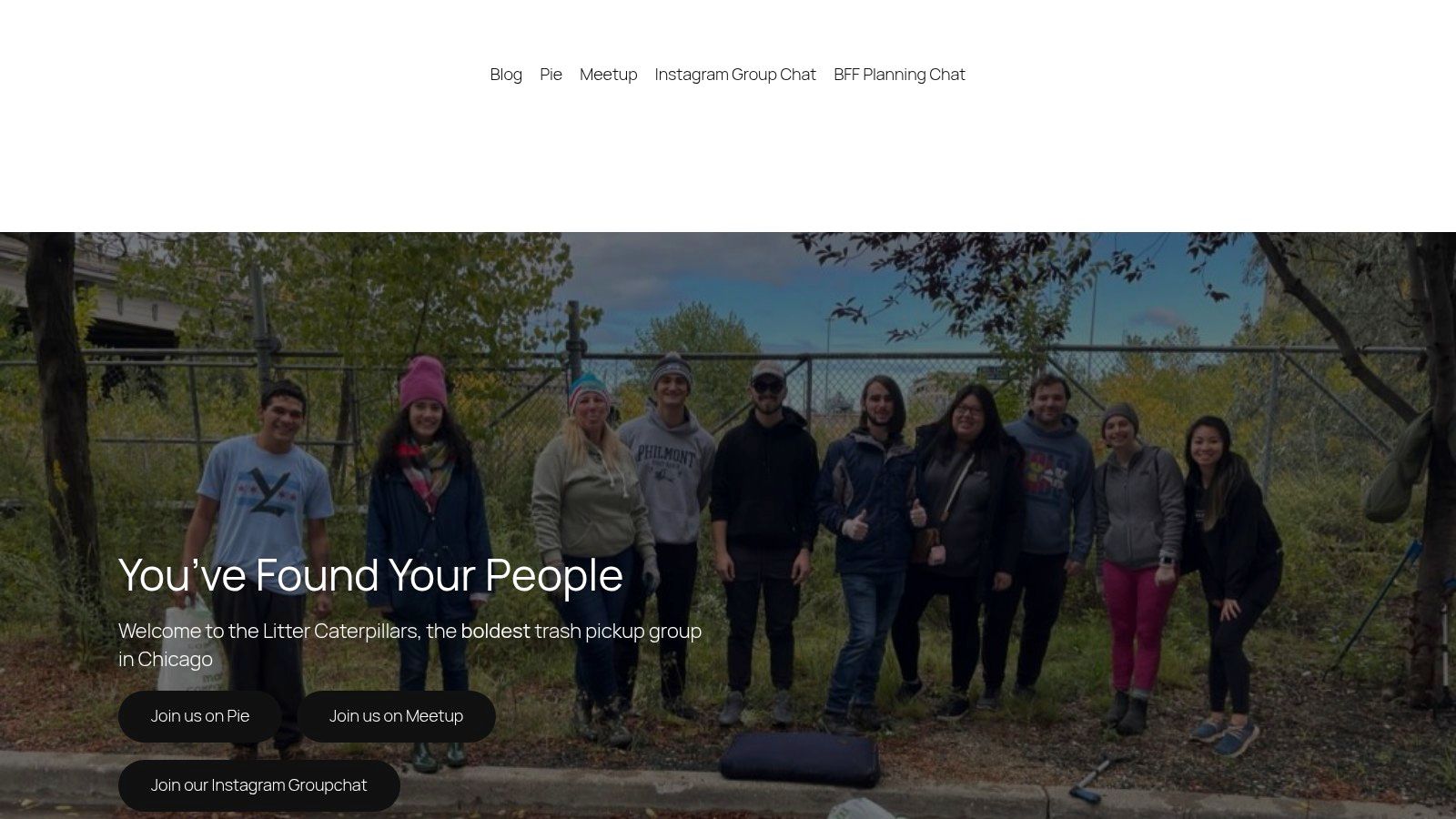
    Litter Caterpillars has used this format during a highway cleanup after a bike-event shutdown and through weekly rotations in Englewood, South Shore, Pilsen, and other Chicago neighborhoods. Over time, groups create their own jokes, routines, and small traditions. The cleanup becomes a walk with a shared purpose.

    Make the walk easy to repeat

    Wear clothes you can dirty. Bring water and a snack, especially during hot weather. Talk while you walk, because conversation gives the task a social pulse. Notice which blocks need more attention instead of staring only at the bag.

    • Keep the first route manageable: Choose one block, one path, or one visible problem area.
    • Invite different formats: A solo walker can use the same practice with music or quiet observation.
    • Return at a regular time: Repetition helps turn a good intention into a habit.

    For a first group session, use this volunteer trash pickup guide to prepare. Come for strange fun, not to fix an entire city in one morning.

    2. Neighborhood Transformation Projects

    A cleanup removes a problem. A transformation asks you to stay long enough to create something new.

    Litter Caterpillars won an empty lot at auction in Englewood and turned it into Caterpillar Park. That work required volunteers to move dirt, plant, paint, and return across many weekends. A block transformation with murals and benches follows the same pattern. You begin with a neglected space, then give people a reason to picture its next life.
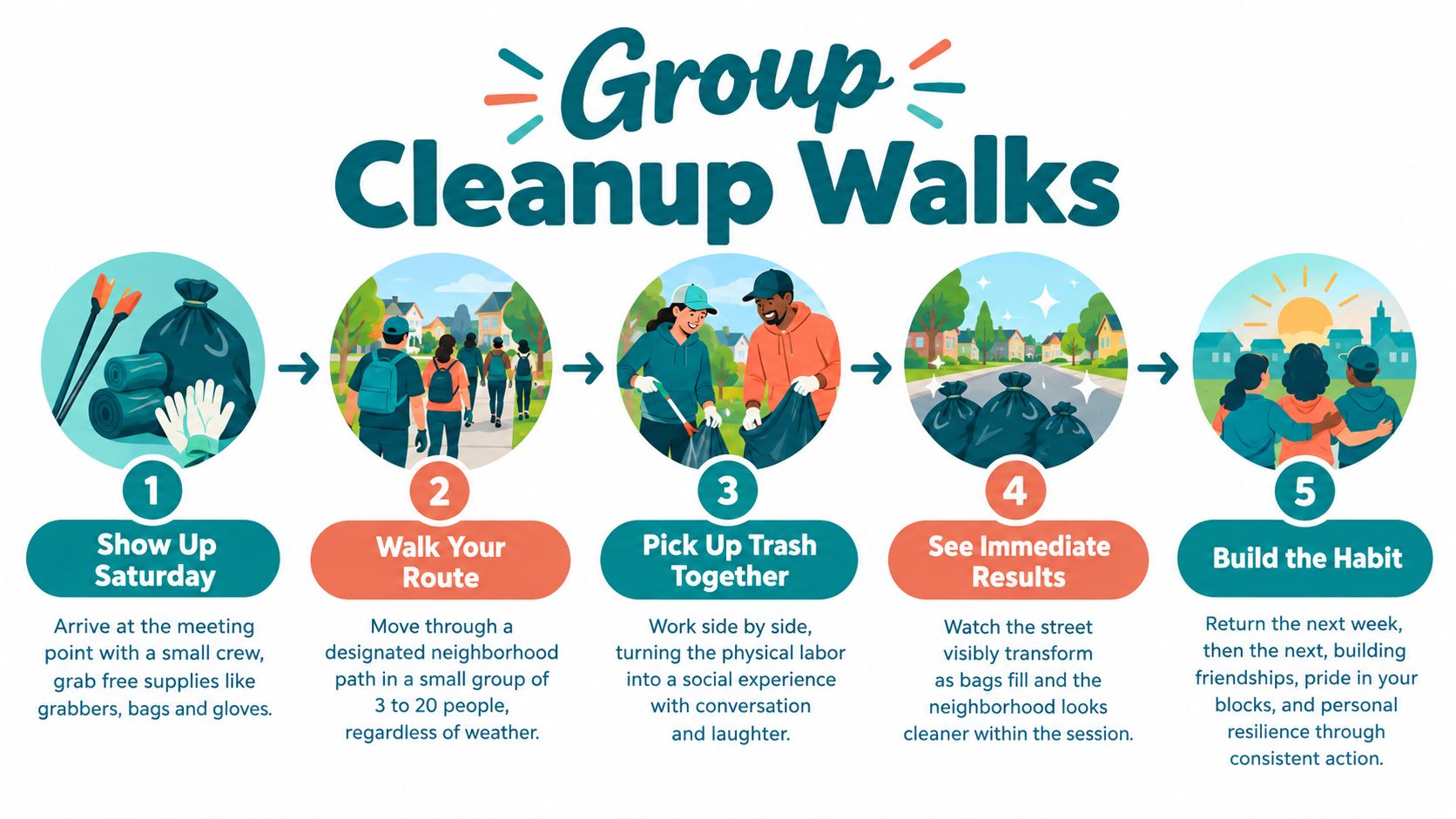
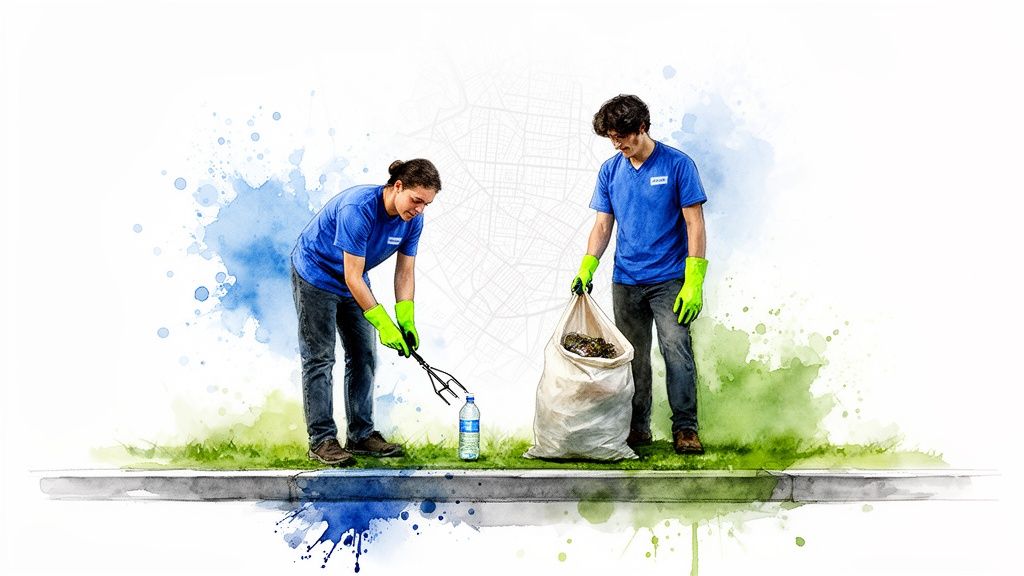
    An illustrated step-by-step guide on organizing group cleanup walks to improve neighborhood cleanliness and social connections.

    When I return to a project months later, I notice more than the physical change. I remember the awkward first meeting, the dirt under my fingernails, and the moment someone finally saw the plan. Each visit gives the group proof that patient work can produce a place people recognize as theirs.

    Build the project in small pieces

    Start with one corner, one lot, or one block face. Get local permission before work begins. Break the project into tasks that fit across multiple weekends, then photograph each stage so volunteers and residents can see what changed.

    Invite nearby residents early. They know the space, its history, and the people who use it. Let them help decide what belongs there.

    Watch this community cleanup video before you plan a workday. Celebrate the first cleared patch, the first planted area, and the first repaired bench. You don't have to wait for a finished park to recognize progress.

    3. Consistent Weekly Commitment

    A volunteer checks the calendar, sees Saturday morning, and laces up before motivation arrives. That small act, repeated through changing moods and weather, gives resilience a practical shape.

    For about three years, I've watched Litter Caterpillars meet weekly through rain, blizzards, negative wind chills, and scorching heat. People join, leave, return, and gradually accept more responsibility. Some volunteers have attended for more than 40 consecutive weeks and grown into team leaders. The meeting remains steady even as the people change.

    Your self-image shifts with that rhythm. You stop waiting to feel ready. You check the calendar, put on your shoes, and go. Courage becomes a door you keep opening.

    Make the promise fit your life

    Choose a recurring time you can protect. A solo cleanup, a neighborhood walk, or a group service hour can all count. Tell one person, add it to your calendar, and use a weekend cleaning schedule to find a regular service window.

    Keep these rules visible:

    • Return the next week: One missed session does not erase the habit.
    • Break the slide: After two missed weeks, restart with a shorter, easier task.
    • Use a backup person: Ask a friend to text when motivation fades.
    • Change the format: Work alone, bring a group, or choose an age-appropriate task for children and older adults.
    • Respect conditions: Wear winter gear, carry water in summer, shorten the route, and stop when safety requires it.

    A steady commitment should stretch you without trapping you. The goal is a practice you can repeat, adjust, and trust.

    4. Shared Suffering and Bonding

    Cold weather changes a conversation. So does heat, rain, a heavy bag, or a long walk back to the meeting point.

    During the first spring hailstorm, three of us huddled under a tree and watched every Uber cancel. We shivered, laughed, and waited until we could move safely. The hardship became part of our shared story. Later, winter cleanups and summer runs in 95-degree heat created more stories that people remembered because everyone had felt the same discomfort.

    Shared challenge can bring people closer, but you need to handle it with care. A freezing cleanup shouldn't become a test of loyalty. Someone who leaves because the conditions feel unsafe hasn't failed. They made a sound decision.

    Three friends sitting under a tree, sharing hot drinks from a thermos during a snowy hike.

    Let safety set the limit

    Check weather conditions before you meet. Bring seasonal gear, plan a warm place to go afterward in winter, and carry water during hot sessions. Choose a shorter route when the group runs low on energy.

    Hardship can become a good story when everyone has permission to stop.

    Name the discomfort instead of pretending it's easy. Then add a small reward, such as coffee after hail or ice cream after heat. A solo version might involve a brisk walk in manageable weather, followed by a warm drink and a short note about what you noticed. A group version can include children or older adults when the route, pace, and conditions fit them.

    5. Identity and Pride Building

    After a cleanup, Ella Duke's volunteer-made theme song can stay in your head. Litter Caterpillars also uses a logo, flags, and badges. These details give a practical task a recognizable shape. You arrive to collect trash and leave with a clearer identity: I'm someone who shows up for my city.

    That feeling can begin with a playful choice. Name the group, give the route a nickname, sew a patch, or take the same closing photo after each session. A solo volunteer might draw the route in a notebook or mark each visit with a personal symbol. Children can design cards, while older adults can choose a quieter tradition that feels comfortable and safe.

    Pride should point back to conduct. A group that values kindness greets newcomers and shares equipment. A group that values bravery makes room for beginners who feel awkward. A group that values unity treats badges as reminders, not rankings.

    Try a small marker, such as a sticker, pin, scarf, or handmade card. Celebrate concrete actions: returning, helping someone new, or making a route safer. Let volunteers add traditions instead of receiving a finished script.

    Keep the ritual human. A photo, a short story, or a sentence about the day can make participation feel real. In a group, share that moment aloud. Alone, write it down before heading home.

    Choose symbols that match the work. A badge cannot replace care, and a slogan cannot create belonging by itself. Identity grows when the marker reminds you what you did, including the ordinary sessions when showing up took effort. That practice can fit a short solo walk, a neighborhood team, or a service project adapted for age, time, and mobility.

    6. Cross-Ward Exploration and Neighborhood Knowledge

    Chicago has 50 wards, yet many residents spend most of their time in only a few familiar areas. Cleanup work can turn the city from an abstract map into a collection of streets, neighbors, storefronts, parks, and stories.

    Through ongoing work in Englewood, volunteers can learn the routes, recurring trouble spots, and people who care for the area. A visit to South Shore can reveal a safer walking path, a friendly neighbor, or a quiet block you hadn't noticed before. You begin to understand a place through contact, not assumption.

    Exploration also asks for humility. You're a guest when you volunteer in a neighborhood you don't know well. The litter tells you one part of the story. Residents can tell you what needs attention, what already works, and what outsiders often misunderstand.

    Turn a route into a learning practice

    Before you arrive, read a little about the ward's history. Talk with residents and listen without treating the conversation like research you need to collect. Look for beauty, ordinary care, and useful local knowledge alongside the trash.

    Keep a map or list of all 50 wards if tracking routes motivates you. Bring photographs back to other volunteers, while respecting people's privacy and asking before you photograph them. A solo version can include a short observation note after each walk. A group version can end with everyone sharing one thing they learned.

    This activity builds courage through unfamiliarity. You practice entering a new place with attention, respect, and a willingness to revise your first impression.

    7. Overcoming Personal Barriers Through Action

    I started Litter Caterpillars because I couldn't clean my own apartment. Each object carried a story. An old jar of blueberry jam could connect to a trip, a failed healthy-eating plan, or a relationship I didn't know how to release. A piece of trash weighed very little, yet moving it felt impossible.

    Cleaning someone else's space gave me a way in. The street didn't carry my memories, so I could pick something up and place it in a bag. Repeating that action taught me that I could begin before I felt ready. Eventually, I could use the same lesson at home.

    Shrink the barrier until you can move

    Start with the smallest action you can complete. You might attend for 20 minutes, greet one person, carry supplies instead of using a picker, or clean one surface at home after a group session. Track whether you showed up and tried. Those answers tell you more than a dramatic promise.

    A social-anxiety barrier may need a gradual plan. You can read this guide on how to overcome social anxiety and choose one low-pressure interaction before attempting a large group event.

    Tell one person what feels hard. Ask them to check in after the session. You don't need to explain every detail to everyone. A short sentence can work: “I'm practicing being around people, so I may stay quiet today.”

    Give the process time. Two weeks won't rewrite every habit. The trash is the task in front of you. The deeper practice is learning that you can act while resistance speaks.

    8. Community Partnership and Volunteer Stewardship

    A cleanup reaches farther when a corner shop, nonprofit, city agency, alderman, and residents each add something useful. One partner may supply gloves. Another may clarify permissions or suggest a neglected route. A shop might offer coffee after the walk. Before the event, agree on the contribution and the volunteer need. That simple exchange prevents confusion.

    Litter Caterpillars works with partners across all 50 wards and uses sponsorships to keep events free for volunteers. Meetup, Instagram, and open group chats help people find events and stay connected. A clear date, location, contact, task, and time commitment can turn good intentions into attendance.

    Volunteer care shapes whether people return. Give a group a short safety briefing, suitable equipment, water or breaks, and tasks that match different ages, abilities, energy levels, and comfort with social contact. A solo volunteer can sort supplies or document a route. A group can divide welcoming, cleanup, and follow-up roles. For extreme weather, unsafe areas, or limited mobility, offer an indoor, shorter, or remote task instead.

    After the event, ask what felt easy, tiring, or unclear. Make it simple to leave early without embarrassment. Thank the person who prepared materials as warmly as the person who filled a bag. Partners need the same reliable communication.

    A workable partnership follows four habits:

    • Start close to home: Choose a nearby partner whose values fit the project.
    • Name the exchange: State what you need and what you can return.
    • Keep events accessible: Offer varied tasks, formats, and time commitments.
    • Recognize real help: Thank people for preparation, welcoming, cleanup, and follow-up.

    NCVO's 2023 Time Well Spent survey found that 92% of recent formal volunteers in England were very or fairly satisfied, while 69% would recommend or had already recommended their volunteering. The survey connected satisfaction with enjoyment, appreciation, visible difference, and safety, according to NCVO's survey summary. Build those conditions into each event, whether you volunteer alone or with a team.

    8-Point Resilience Activities Comparison

    Initiative Implementation Complexity 🔄 Resource Requirements ⚡ Expected Outcomes ⭐📊 Ideal Use Cases 💡 Key Advantages ⭐
    Group Cleanup Walks Low 🔄, simple routes, minimal planning Low ⚡, basic supplies provided Immediate visible cleanliness; short-term pride ⭐⭐ 📊 Onboarding volunteers; regular neighborhood upkeep Accessible, social, low barrier ⭐
    Neighborhood Transformation Projects High 🔄🔄, permits, multi-week coordination High ⚡⚡, funding, skilled labor, materials Permanent physical change; media and donor attention ⭐⭐⭐ 📊 Long-term site rehab, park/lot conversions Lasting impact; skill-building and partnerships ⭐
    Consistent Weekly Commitment Moderate 🔄, schedule management and rotation Low–Moderate ⚡, recurring volunteer time Habit formation; steady volunteer retention ⭐⭐ 📊 Behavior change, leadership development Predictability fosters reliability and identity ⭐
    Shared Suffering and Bonding Low–Moderate 🔄, event safety planning needed Low ⚡, weather gear and contingency plans Rapid, durable friendships; strong cohesion ⭐⭐ 📊 Team-building; deepening volunteer commitment Fast trust-building; memorable shared stories ⭐
    Identity and Pride Building Moderate 🔄, branding and recognition systems Moderate ⚡, merch, media, milestone tracking Strong volunteer identity and sustained engagement ⭐⭐⭐ 📊 Retention strategies; culture- and brand-building Genuine belonging and internal motivation ⭐
    Cross-Ward Exploration & Knowledge Moderate 🔄, logistics for rotating locations Moderate ⚡, transport, maps, time Broader city knowledge; improved advocacy ⭐⭐ 📊 Outreach, education, recruiting diverse volunteers Citywide awareness; cross-neighborhood connections ⭐
    Overcoming Personal Barriers Through Action Low 🔄, individual support within group setting Low ⚡, consistent attendance and peer support Incremental personal growth; better habits ⭐⭐ 📊 Supporting isolated individuals; confidence-building Practical empowerment; compounding small wins ⭐
    Community Partnership & Volunteer Stewardship High 🔄🔄, stakeholder coordination, communications Moderate–High ⚡⚡, partnership management, staff time Sustainable model; institutional trust and resources ⭐⭐⭐ 📊 Scaling, fundraising, institutional collaboration Protects volunteer energy; durable partnerships ⭐

    Choose Your Next Brave Step

    You don't need to choose the hardest activity. Choose the one you can repeat.

    If your energy feels low, take a short solo reset. Walk one block, collect a few safe items with suitable equipment, or write about what made starting difficult. Expressive writing can use a direct 20-minute exercise, where you write continuously about an issue and push toward your deepest thoughts and feelings, as described in this resilience writing practice. Stop if the exercise overwhelms you, and choose a gentler activity instead.

    If you want contact without a large commitment, join a one-hour group session. A cleanup walk gives you a task to hold while you meet people. You won't need to invent conversation from nothing. You can point out a full bag, a difficult corner, or a block that needs another visit.

    If you want a habit, choose a weekly commitment. Pick a realistic weekend morning, tell one person, and put it on your calendar. England's 2023/24 volunteering survey found that 28% of adults, about 12.9 million people, took part in formal volunteering at least once during the previous year, while 16% volunteered at least monthly, according to NCVO's volunteering data. A recurring service time can give your week a reliable point of contact.

    For a longer project, choose one corner, lot, or block face. Get permission, invite residents, divide the work, and photograph the changes. Community resilience planning can include stakeholder engagement, social networks, health-promoting opportunities, plans for at-risk people such as children, and response and rebuilding plans that can activate after a disaster, as outlined in this community resilience framework.

    Your action plan can stay simple:

    • Choose a format: Solo reset, group hour, weekly service, or neighborhood project.
    • Set a small date: Put a specific day and time on your calendar.
    • Invite one person: Ask a friend to join, or join Litter Caterpillars through its website.
    • Record the result: Write what you did, what felt difficult, and what helped.
    • Return once more: Let the second attempt teach you more than the first.

    Challenge needs room for rest, consent, access needs, weather changes, and changing plans. Resilience doesn't require you to ignore pain or prove toughness. It grows when you take a manageable step, care for yourself and others, then decide to continue.

    Turn one Saturday morning into the start of a steadier habit. Choose the route, pack water, invite someone, and show up at a pace you can safely repeat.


    Litter Caterpillars gives Chicago volunteers a weekly way to clean neighborhoods, meet people, and practice courage through hands-on service. Visit Litter Caterpillars to find a cleanup and take your next small step with the group.

  • Hope for Every Island with Trash

    Hope for Every Island with Trash

    A jar of blueberry jam sat in the back of my fridge for years. I could not throw it away, not because it was useful, but because it had a memory attached to it, and that memory made the jar feel heavier than glass.

    We All Have Our Own Island of Trash

    My first island with trash was not in the Pacific. It was my room.

    I know how strange that sounds when people use the phrase to talk about floating plastic far out at sea. But for me, the feeling started at home. A bag of nuts from my failed healthy phase. Old receipts. Empty boxes. Food I was “saving” because part of me still believed I might become the person who used it all wisely.

    None of it looked dramatic on its own. That was the trick.

    When trash carries a story

    Every object had a tiny emotional hook in it. The jam reminded me of a trip. The nuts reminded me of hope. A shirt on the floor reminded me of who I was when I bought it. I was not staring at garbage. I was staring at unfinished chapters of my life.

    That is why mess can feel impossible. You are not just cleaning. You are deciding what version of yourself to keep.

    I used to look around and feel pinned in place. A single piece of trash weighed almost nothing in my hand, but inside my mind it felt like a boulder. My space became crowded, then my schedule became crowded, then my relationships got crowded too. Chaos on the floor started to rhyme with chaos everywhere else.

    The room and the planet

    That personal mess taught me something uncomfortable. Trash does not stay “outside” the story. It enters it.

    The same thing happens on a global scale. A bottle tossed somewhere else does not disappear. It travels. It waits. It lands in someone else’s life, or on someone else’s shore, or in the path of an animal that never asked for any of it.

    My apartment was a tiny model of the larger world. Delay the hard decision long enough, and the pile grows into a vast accumulation. Ignore enough objects, and they start shaping how you move, how you think, how you feel.

    Key takeaway: The first battle with an island with trash is often emotional, not physical.

    That is why I do not like shame-based talk about cleanup. Shame freezes people. It makes the room feel smaller and the pile feel taller. Compassion does the opposite. Compassion gives you enough air to pick up one thing.

    One piece at a time

    I did not wake up one morning and become organized. I started smaller than that.

    I threw away one expired thing. Then another. Then I wiped one shelf. Then I tied one trash bag and took it outside. None of those actions felt heroic. But each one broke the spell.

    That matters because the world’s trash crisis also feels too big when you stare at it all at once. Too much plastic. Too much drift. Too much history already baked into the mess.

    So I come back to the same lesson. You do not defeat chaos by arguing with its size. You defeat it by touching one piece and moving it somewhere better.

    That is how I learned to look at any island with trash, whether it is a room, a street, a beach, or a patch of ocean. Not as proof that people are hopeless, but as an invitation to begin.

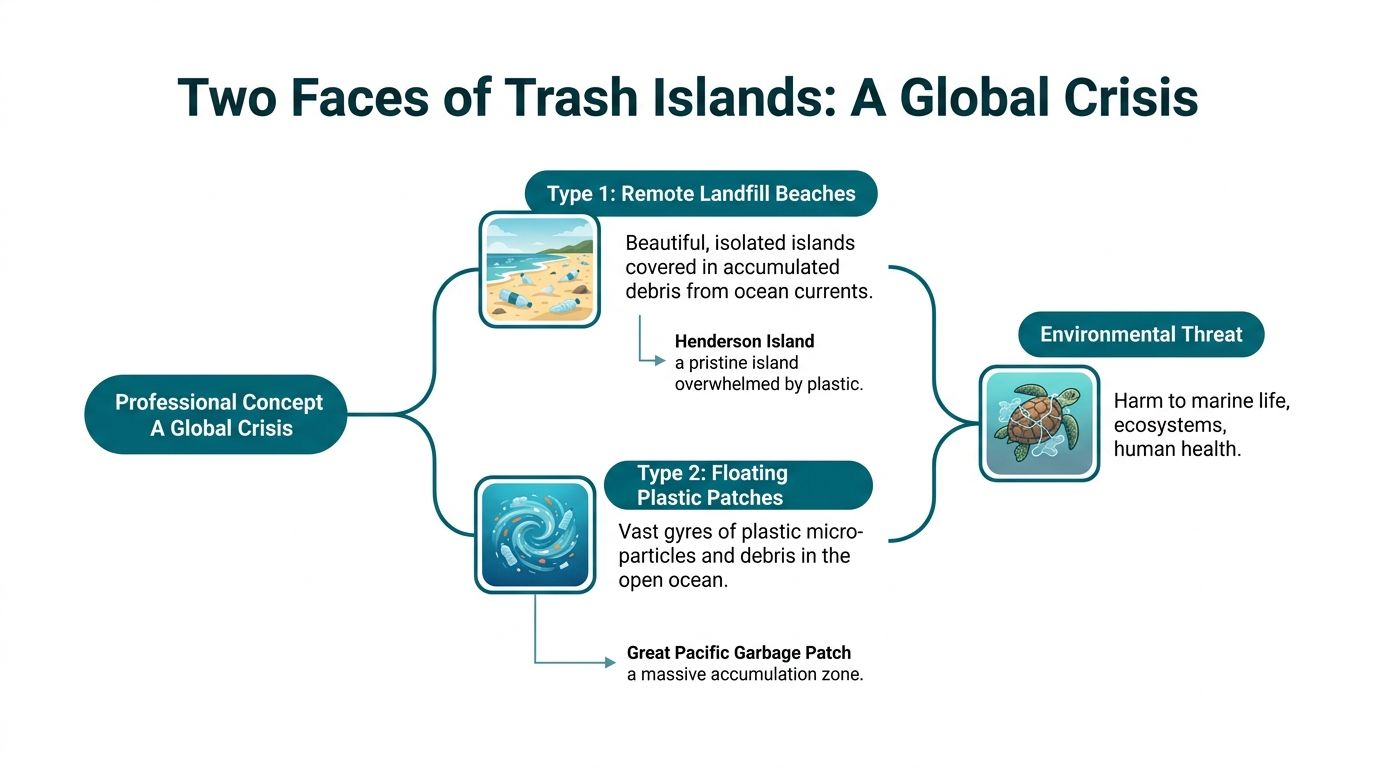
    Understanding the Two Types of Trash Islands

    The first time I understood this, the whole problem stopped feeling like one giant blur.

    A beach choked with bottles and fishing rope is one kind of island with trash. A drifting mass of plastic caught in ocean currents is another. They are related, but they are not the same thing, and that difference changes how we respond.

    Type one is a real island that keeps receiving what the world throws away

    Some islands are what you picture. Shoreline. Birds. Plants. Quiet.

    Then the currents arrive with our leftovers.

    Henderson Island is one of the clearest examples. It is remote, uninhabited, and known for its ecological importance. Yet wave after wave of debris has washed onto its beaches, turning a protected place into a receiving point for plastic from far beyond its own shores.

    I keep coming back to that image because it feels familiar. Sometimes a person becomes like that island. You did not create every part of the mess around you, but somehow you are still the one standing in the middle of it, sorting what arrived.

    That is one type of trash island. A real piece of land that becomes a collection point.

    Type two forms out at sea

    The second kind has no firm ground under it.

    It develops in open water where large circulating currents, called gyres, gather floating debris and keep it moving in broad loops. The plastic does not pile up into a walkable heap. It spreads across the surface and through the upper water in fragments, nets, containers, pellets, and pieces too small to spot from far away.

    The Great Pacific Garbage Patch is the example many people know best. It sits between California and Hawaii, not as a solid island, but as a vast accumulation zone.

    Infographic

    That misunderstanding matters. People hear “island” and picture something they could step onto with a trash bag and a pair of gloves. Open-water patches do not work like that.

    A simple way to separate them

    Type What it is How it collects trash What it feels like
    Remote landfill beach A real island or shoreline Currents and waves wash debris onto land A beautiful place forced to hold what drifted in
    Floating plastic patch A moving accumulation zone in open ocean Rotating currents keep debris circulating A diffuse, hard-to-reach spread of plastic in many sizes

    Cleanup changes with the setting.

    • On land: People can remove debris from beaches and coves, even when the work is slow and access is difficult.
    • At sea: Crews have to deal with a scattered field of floating and submerged plastic across an enormous area.
    • In both cases: The waste usually started somewhere else.

    That last part stays with me most. An island can suffer from trash it never used. A patch in the ocean can hold pieces from thousands of ordinary decisions made far away.

    Once I saw those two forms separately, I also saw something hopeful. If trash can travel piece by piece, care can travel that way too. One bottle refused. One bag picked up. One beach cleaned with friends. That is how a global mess starts, and it is also how change starts.

    The Unsettling Life on Floating Trash Islands

    The strangest part of this story is that floating plastic does not remain empty for long. Life moves in.

    A bottle cap or polyethylene fragment drifts through the sea, and tiny organisms begin treating it like real habitat. That should unsettle us, because the ocean is adapting to our garbage in ways that make the problem harder, not easier.

    Plastic becomes a raft

    Scientists now describe floating trash islands as novel ecosystems. Plastic’s hydrophobic surfaces show biofouling rates 2 to 5 times higher than natural substrates, and polyethylene fragments can gather up to 1,000 barnacles per square meter within 60 days, according to this report on the research.

    That means the plastic becomes less like litter and more like a raft. Algae cling to it. Barnacles stack onto it. Small creatures use it as shelter or transport.

    A surreal illustration of an island made of discarded plastic bottles and waste floating in water.

    Wood and seaweed break down. Plastic lingers. It keeps offering a ride.

    The ocean did not ask for this architecture

    I find that detail hard to shake. We did not just dirty the water. We accidentally built floating neighborhoods.

    Those neighborhoods can carry species across entire ocean basins. Organisms that would never have crossed naturally can now hitch a ride on our debris and arrive in places where they do not belong. That changes competition, feeding patterns, and local balance.

    The visual is almost absurd. A cracked fragment of consumer plastic, once part of a throwaway object, drifts across blue water carrying life on its back like a little stolen continent.

    Why cleanup gets more complicated

    This changes the moral picture in a subtle way. Most of us think of trash as dead matter. Pick it up and the job is done.

    At sea, it is no longer that simple. The debris is still pollution, but it can also host living communities. Removing it remains necessary, yet the delay creates extra ecological knots. Every extra day gives more time for colonization, transport, and disruption.

    A few realities sit side by side here:

    • Plastic is still harmful. Its presence alters where species can live and travel.
    • Life is opportunistic. Organisms use whatever stable surface they can find.
    • Cleanup timing matters. Fresh debris is different from long-drifting debris coated in growth.

    Practical insight: The longer plastic stays afloat, the more it stops behaving like a simple piece of trash and starts behaving like infrastructure.

    That is what makes an island with trash so eerie in open water. It is not only a monument to waste. It is a world we should never have built.

    A World Tour of Infamous Trash Islands

    The first time I saw photos of Henderson Island, I felt the same shame I feel when a junk drawer spills open and proves I have been postponing a mess for too long. Henderson is remote, uninhabited, and famous for its ecological value. Still, waves keep laying our leftovers at its feet.

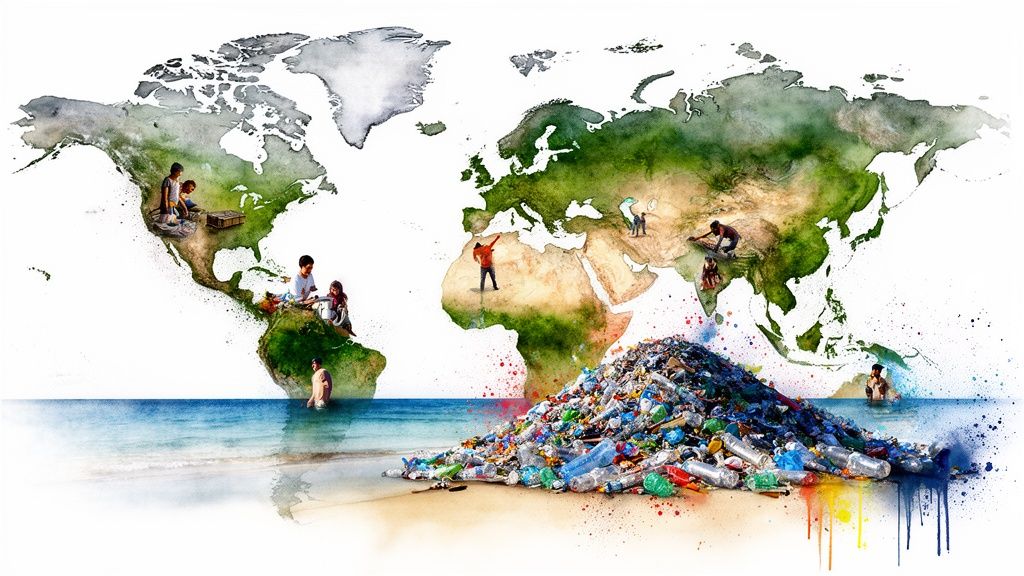
    A conceptual illustration showing a world map with various people and a large pile of plastic waste

    Henderson Island feels like a betrayal

    Researchers found Henderson covered with plastic at a scale that shocked even people who study pollution for a living. As noted earlier, the island holds millions of pieces of trash, much of it plastic, and a large share is buried in the sand rather than sitting plainly on top.

    That buried detail stays with me.

    A beach can look quiet and still be full of evidence. You see a little on the surface, then learn that much more is packed underneath, like personal clutter stuffed into closets before guests arrive. Henderson makes the global crisis feel intimate in that way. We hide nothing from the ocean. We only send it somewhere else, and the tide keeps returning it.

    Scientists tracing the problem have linked debris there to both fishing activity and land-based waste carried by currents. The island did not create this mess. It received it.

    The Great Pacific Garbage Patch is a spread-out trap

    Far offshore, the Great Pacific Garbage Patch gathers waste into a huge circulating zone between California and Hawaii. It is not a neat raft or a solid island. It is a loose field of floating debris, ghost gear, and tiny fragments suspended through the water.

    A 2018 Nature study, summarized by Iberdrola, describes it as spanning 1.6 million square kilometers and containing 80,000 tonnes of plastic made up of 1.8 trillion pieces, with 94% microplastics too small to spot from satellites, according to Iberdrola’s overview of the Great Pacific Garbage Patch.

    That mismatch matters. People hear “island” and picture something they could point to, walk across, and clean in a weekend with enough gloves and grit. The situation is harder. The mess is dispersed, weathered, and constantly moving.

    What the patch reveals about us

    The materials in the patch tell a blunt story about human habits. Iberdrola’s summary says 46% of the mass is fishing gear such as nets, ropes, and buoys. It also notes major origin shares from Japan, China, South Korea, the USA, and Taiwan.

    So this is not only a story about careless beachgoers dropping bottles after a picnic. It is also a story about industry, supply chains, lost gear, and systems big enough to feel faceless. If you want a clearer explanation of how these currents gather debris, the Litter Caterpillars guide to the ocean garbage patch breaks it down in plain language.

    A short visual can help turn those facts into something your brain can hold.

    Two places, one human pattern

    Henderson Island and the Great Pacific Garbage Patch are different forms of the same confession. One catches debris on shore. The other gathers it in motion. Both exist because people made something, used it briefly, and let distance hide the consequence.

    That is why cleanup matters at more than one scale.

    A person picking up a bottle from a park is not solving the Pacific alone. But that act pushes against the same habit that created these infamous trash islands in the first place. The outer mess and the inner mess come from a similar lie, that someone else will deal with it later.

    The hopeful part is simple. Communities can interrupt that pattern. One bag filled on a local walk. One fishing system improved. One crew deciding that service is better than denial. That is how an abstract horror on a world map becomes a personal practice, one piece of trash at a time.

    The Hidden Scars Our Plastic Leaves Behind

    A piece of plastic rarely harms the world in only one way. It keeps changing form, and each form creates a new kind of damage.

    First it is a visible object. Then it becomes fragments. Then it enters bodies, habitats, and food chains. The bottle you ignore today can become tomorrow’s invisible problem.

    Big plastic hurts in obvious ways

    On beaches and in open water, larger debris can trap animals or block their movement. The Henderson findings describe entanglement and ingestion risks to nesting sea turtles and endangered petrels. The Great Pacific Garbage Patch also kills marine animals through ingestion and entanglement, as noted in the earlier section’s cited reporting.

    This is the kind of harm that people can picture fast. A turtle caught in a net. A bird feeding plastic to its chick. A seal dragging line behind it.

    The pain is direct. The cause is direct too.

    Small plastic slips past our defenses

    Then the sun, salt, and wave action grind larger objects into smaller pieces. In the Great Pacific Garbage Patch, 94% of the pieces are microplastics, according to the Iberdrola source cited earlier.

    That detail changes everything. You cannot clean microplastics the same way you pick up a bottle from sand. Tiny fragments spread through water, move through ecosystems, and become easy for animals to swallow. This is comparable to breaking a plate on the kitchen floor. A whole plate is easy to see. The glittering dust afterward is what keeps cutting you.

    The scar is ecological and personal

    Plastic also changes the places it touches. On Henderson, much of the debris is buried in sediment, which means the mess is not only on the surface. It works its way into the structure of the beach itself.

    In floating patches, colonized plastic carries organisms across the sea, altering habitats in motion. That does not stay “out there.” Oceans feed coastlines, wildlife, weather patterns, and human communities. The line from a city sidewalk to the ocean is longer than one might assume, but it is still one line.

    A few connections matter in daily life:

    • Street litter can travel. Rain pulls it into drains, rivers, and eventually larger waters.
    • Single-use habits add up. One item feels trivial until millions of people repeat the same motion.
    • Invisible pollution still counts. When plastic becomes tiny, it becomes harder to confront, not less dangerous.

    Remember: The ugliest part of plastic pollution is not what you can see on top. It is what keeps happening after the item breaks apart.

    That is why cleanup matters so much. You are not just making a place look better. You are interrupting a chain reaction.

    How to Paint the Fence and Clean the World

    I stopped seeing cleanup as punishment when I remembered Tom Sawyer.

    He got stuck painting a fence, then turned the whole thing inside out. He made the task look meaningful, playful, even desirable. His friends wanted in. That old story sticks because it names a deep truth. The frame changes the feeling.

    A chore can become a dare

    When I hit a breaking point in my own life, I realized something odd. Cleaning my own mess felt emotionally loaded. Cleaning somebody else’s mess felt lighter.

    Not because the work was easier in a technical sense. It was easier because the shame was gone. I could step into service instead of self-judgment.

    That shift matters for any island with trash, from a cluttered block to an overwhelmed shoreline. If you tell yourself, “I have to fix everything,” you freeze. If you tell yourself, “I get to help this place breathe,” your body moves.

    A group of happy children painting a colorful picket fence made from recycled plastic bottles together outdoors.

    Shared hardship changes the mood

    Some of my favorite cleanup memories were not comfortable. Cold wind. Wet shoes. Bad timing. The kind of day when any reasonable person would stay home.

    But shared discomfort can turn into glue. When people face a hard task together, the story changes. It stops being “I did a chore.” It becomes “We survived that ridiculous morning together.”

    That is one reason service builds friendship so fast. You are not only collecting trash. You are making a memory in public, with a purpose.

    The practical side of this mindset is simple:

    • Bring symbols of pride. A flag, a shirt color, a team name, a little ritual before you begin.
    • Treat the event like an adventure. Walk a route. Notice the neighborhood. Celebrate weird weather.
    • Measure success by showing up. The habit matters as much as the haul.

    If you want ideas for larger-scale ocean responses, this overview of solutions for pollution in the oceans offers a useful set of approaches.

    Bravery matters more than perfection

    Many individuals wait to help until they feel ready. I think that is backwards.

    Bravery comes first. Readiness often follows. You show up awkward, unsure, underdressed, a little embarrassed, maybe carrying the wrong gloves. Then you learn by doing.

    I love that because it gives ordinary people a real entry point. You do not need to become a perfect environmental saint. You need to become someone willing to touch the mess.

    Best mindset: Do not ask whether cleanup feels glamorous. Ask whether it makes you more alive, more useful, and more connected.

    That question has changed my life. It can change yours too.

    An island with trash can break your heart. It can also train your courage. The same hands that once avoided the mess can become the hands that start clearing it.

    Join the Transformation and Find Your Crew

    A giant ocean patch can make you feel tiny. Your own block can make you feel powerful again.

    That is where I would start. Not with fantasies of solving the whole planet by yourself. Start with one corner, one morning, one bag, one friend.

    Why people hesitate

    The primary obstacle is often emotional before it is practical. On remote islands like Henderson, psychological barriers and isolation can deter volunteers. That same pattern shows up in cities too. Personal “trash stories” and the heaviness we attach to mess can stop us from acting, while cleaning other people’s messes often feels easier and shared hardship can make the work feel fun, according to Atlas Obscura’s reporting on the human side of cleanup.

    That insight gave me relief. If cleanup feels easier in a group, that is not weakness. It is a clue.

    How to build a cleanup crew

    You do not need a complicated system. You need a repeatable one.

    1. Pick a simple time
      Weekend mornings work well because they attract people who want to give their energy, not just squeeze in an obligation.

    2. Protect safety first
      Choose visible areas. Wear gloves. Bring bags. Watch traffic. Stop if conditions feel risky. Service should strengthen people, not grind them down.

    3. Make the group memorable
      Names matter. So do songs, badges, inside jokes, photos, and little traditions. People return to belonging, not just to tasks.

    4. Keep the first event small
      A short route beats an overambitious one. End while people still feel good.

    5. Stay volunteer-first
      Nobody likes feeling used. Build friendship. Share water. Thank people. Let the group become a place where people can breathe.

    For anyone ready to find a hands-on event, this volunteer trash pickup page shows what joining a cleanup community can look like.

    What transformation looks like

    Transformation is not dramatic most days. It is quiet.

    You become the kind of person who notices a bottle and picks it up. You become the kind of friend who invites somebody else. You become the kind of neighbor who leaves a place lighter than you found it.

    That identity grows slowly, like anything alive.

    • You gain trust in yourself because you did what you said you would do.
    • You gain resilience because weather, awkwardness, and inconvenience stop scaring you as much.
    • You gain community because useful people tend to find each other.

    Start where you stand: You do not need to reach a remote island with trash to join this story. Your sidewalk counts.

    I think that is the most hopeful part of all this. The world’s waste crisis is enormous, yes. But service shrinks the distance between helplessness and action. One bag closes that distance. One morning closes it more. One crew closes it faster.

    And somewhere along the way, while you are cleaning the street, you may notice that another mess is clearing too. The one inside you.


    If this way of serving speaks to you, join Litter Caterpillars. Show up for a cleanup, meet people who care, and turn one ordinary morning into a small act of transformation.

  • How to Start Volunteering and Transform Your Life

    How to Start Volunteering and Transform Your Life

    Starting to volunteer is a lot simpler than you think. You just have to find a problem you care about and look for the people who are already trying to solve it. You don't need some perfect, elaborate plan. I promise you, the biggest changes I've ever seen, both in my life and in my city, started with one small step that gets you out of your head and into the real world.

    From Personal Chaos to Public Purpose

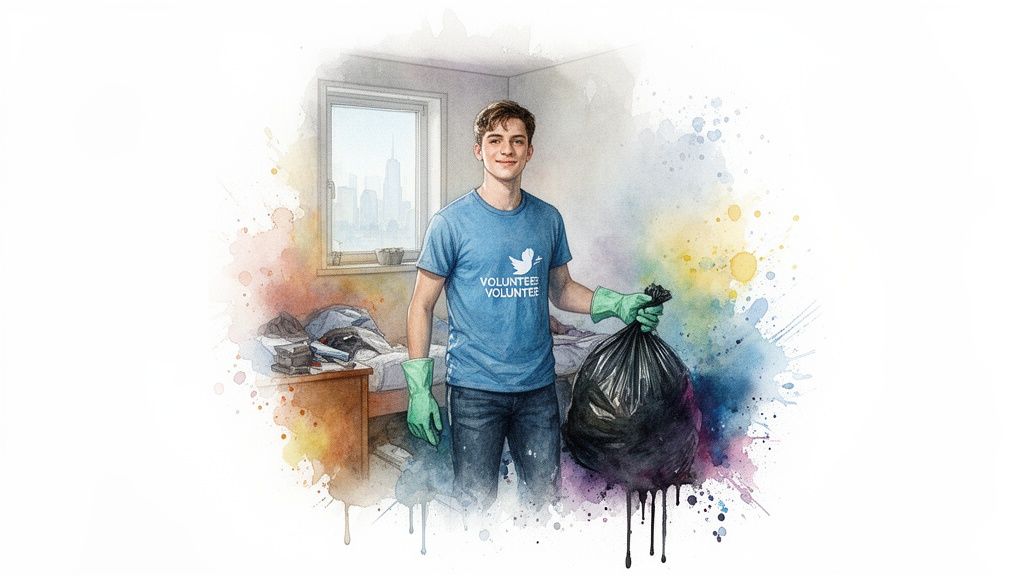
    Smiling young man in a volunteer shirt and green gloves holding a trash bag in a room.

    Let me be straight with you. When I started Litter Caterpillars, my mission wasn't to save the world. I was trying to save myself. My apartment was an absolute disaster, my motivation had bottomed out, and I felt completely, utterly stuck in the mud.

    Every single object in my place told a story of failure. That old jar of blueberry jam hiding in the back of the fridge? It was from a trip I took four years ago. That bag of nuts on the counter? A remnant of a health kick that lasted about a day. Each piece of trash, even if it weighed less than a pound, felt like it weighed 500. It was immovable, a monument to my inertia.

    Things finally hit a breaking point after I got out of a long, chaotic relationship. I remember looking around at my messy life and my even messier apartment and knowing, deep in my bones, that something had to change. The problem was, I was so overwhelmed by my own junk that I couldn't even think about where to begin. It was like trying to climb a mountain of my own making.

    Channeling Messy Energy

    So I tried something weird. Instead of dealing with my own mess, I decided to go clean up someone else’s. It just felt easier, less personal. I grabbed a trash bag and just went outside, no plan, no destination.

    The most incredible thing happened. By focusing on a problem I could actually see and solve—a sidewalk full of litter—I found this strange sense of freedom. The weight of my own chaos, that 500-pound trash, suddenly felt a little lighter.

    That’s the secret I want to share with you, especially if you're trying to figure out how to start volunteering. Sometimes, the best way to fix your own world is to step out your front door and into the bigger one. You don't have to have your life all figured out. In fact, I've found it often works better if you don't.

    That little bit of hesitation you're feeling right now? That worry about starting something new or not knowing anyone? I've been there. I know that feeling. You're not the only one who feels overwhelmed.

    • You feel like you don't have enough time.
    • You worry you don't have the right skills.
    • You're shy and dread the idea of meeting a bunch of new people.

    I get it. But that messy, chaotic energy you feel inside? That's not a weakness; it's fuel. My whole point is to show you how a city-wide movement like Litter Caterpillars can grow from a place of total personal chaos. It’s all about taking that restless energy and turning it into something that builds you, and your community, up.

    Finding Your People and Your First Event

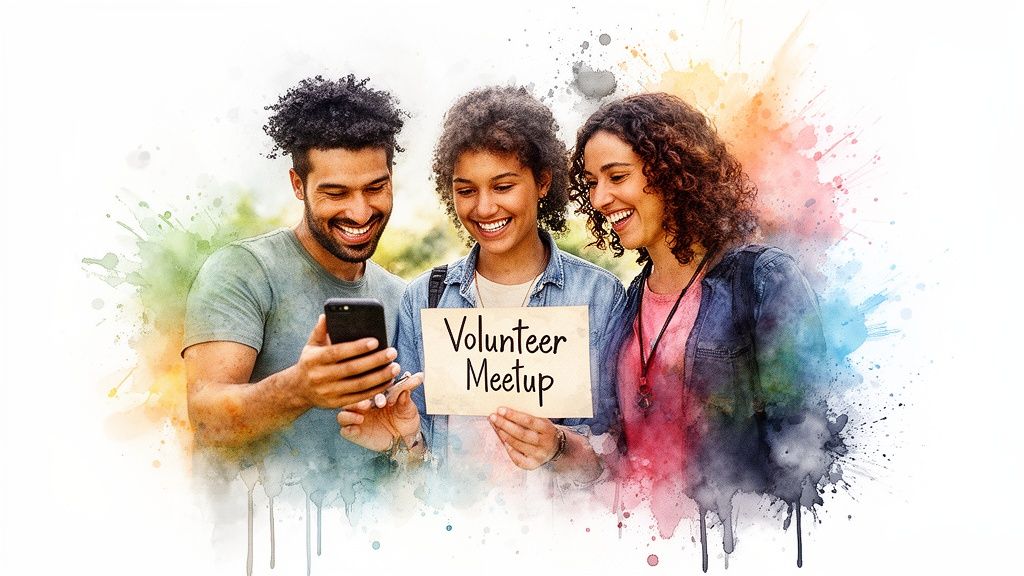
    Three diverse, smiling friends at a volunteer meetup, looking at a smartphone with colorful splashes.

    Alright, you feel that restless energy, that undeniable need to do something. Now it's time to give it a direction. You don't need a grand, five-year plan. You just need a place to start. One single point on the map.

    Finding your first volunteer event is a lot like searching for a good book club. You don't just want any old group—you want the one that geeks out over the same stories you do. The goal isn't just to find any opportunity; it's to find your opportunity.

    How to Find Your People

    Forget those giant, overwhelming databases with thousands of soulless listings. I found the first Litter Caterpillars using the same simple tools you probably use every day. We didn't have a fancy website or a marketing budget. We just grew through real connections, one person at a time.

    And you're not alone in this search. It might feel like it sometimes, but a staggering 2.1 billion people volunteer their time monthly. That’s 34.5% of the world's working-age population! Litter Caterpillars started that way too—just three of us huddled under a tree in a Chicago hailstorm. We were a tiny part of the 860 million people who volunteer somewhere in the world every month.

    Want to know where I would look to find your own crew? This table breaks down the simple methods I use to find like-minded people.

    Finding Your First Volunteer Opportunity

    Platform / Method What to Look For Pro Tip
    Meetup Groups with frequent events, active members, and clear descriptions. Look for photos of past events to see the vibe. This is my #1 tool. I use specific keywords like "trail cleanup" or "community garden," not just "volunteer."
    Instagram & Facebook Search local hashtags like #[yourcity]volunteers or #[yourpassion]. This is where you find the groups with real heart. Look for behind-the-scenes stories and genuine engagement.
    Community Boards Check local coffee shops, libraries, or community centers for flyers. Old school, I know, but it's super effective for finding grassroots efforts that aren't online yet.

    These are the same tools we use to get the word out for our weekend morning cleanups. It’s all about finding the people who share your energy.

    You can spot a great volunteer group a mile away. They communicate clearly, their photos show real people having a good time (not just staged shots), and they have a volunteer-first attitude. Their goal isn't to get your money; it's to get your time and energy.

    Showing Up Is the Hardest Part

    A few months ago, someone named Sarah messaged our Instagram page. She was full of hesitation. "I'm super nervous to come alone," she wrote. "I don't know anyone."

    I told her what I tell everyone: almost everyone comes alone the first time. That's the secret. The beauty of a shared task, like picking up litter, is that it kills the awkward small talk. You have an instant purpose. You're on a mission together.

    She showed up that Saturday, quiet and keeping to herself. But within twenty minutes, I saw her laughing with another first-timer about a weird toy they'd found in a bush. By the end, she was helping organize the group photo.

    That's it. That’s the whole "secret" to starting. You just have to show up once. The biggest step you'll ever take is the first one out your front door. For a deeper dive, you can also check out our complete guide on how to find volunteer work for even more ideas.

    The Adventure of Showing Up No Matter What

    Three smiling friends in raincoats laugh under a tree in the rain, sharing a thermos.

    Let's be real: volunteering isn’t always a feel-good photo op. Sometimes, it’s just plain miserable out there. And honestly? That's where the good stuff happens. It’s in those shared struggles that you find the story, the connection, and the real reason you do this.

    I'll never forget our very first cleanup. There were just three of us, total strangers who met up to pick up some trash. Then, a freak Chicago hailstorm came out of nowhere. We were soaked, freezing, and huddled under a single tree, watching our Ubers cancel on us, one by one.

    It was awful. And it was perfect.

    In that moment of shared misery, shivering together, a bond formed that you just can't fake. We weren't three strangers anymore. We were a team that had survived something together. If you really want to know how to start volunteering, you have to understand this: the best parts are often hidden inside the hardest moments.

    The Power of Showing Up in the Rain

    Bravery isn't about being fearless; it's about being scared and doing it anyway. It's about dragging yourself off the couch when every bone in your body is screaming to stay home.

    That’s where pride comes from. I always think about the story of Tom Sawyer painting that fence. He didn’t treat it like a chore. He reframed it as an honor. He actually convinced his friends that this miserable task was an exclusive, once-in-a-lifetime opportunity.

    That’s exactly what we do at Litter Caterpillars. We bring flags. We have a theme song. We award badges. Why? Because kindness and service deserve the same pride and identity as a sports team or a country. It turns a task into a mission.

    These symbols aren't just for show. They remind us that what we’re doing matters. They help us step into our power, especially when the weather is terrible and the work is hard.

    This isn’t just a Litter Caterpillars thing, either. I see this same spirit in our friends at Care For Real, who consistently show up to serve their community's needs, transforming simple acts of kindness into a powerful, unified force for good.

    Uniting Strangers Through a Shared Goal

    The things that turn volunteering into a life-changing experience aren't complicated. They’re the simple, core values that bring strangers together and turn them into a family.

    • Bravery: Having the guts to show up, especially when it’s uncomfortable or inconvenient.
    • Kindness: Putting the community’s needs first, without expecting a trophy for it.
    • Unity: Realizing that we go so much farther together than we ever could alone.

    This was never just about picking up litter. It’s about embracing the adventure, finding your people in the middle of a hailstorm, and discovering a stronger part of yourself you never knew was there. If you're looking for a real story, not just a task, this is for you.

    How to Build a Volunteering Habit That Sticks

    Showing up once is easy. But how do you make volunteering a real, consistent part of your life? It’s not about having more willpower than everyone else. It’s about being smart and intentionally designing your life—and especially your social circle—for success.

    I learned this firsthand building Litter Caterpillars. I schedule our events for weekend mornings on purpose. It's a natural filter. It weeds out the party people and attracts dedicated givers, the kind of people who choose service over sleeping in.

    It’s how I built a community I actually want to see every week.

    Engineer Your Social Circle for Success

    Think of your motivation like a tiny campfire. If you leave it out in the open, the first gust of wind—a busy week, a rainy day—will blow it right out. But if you build a circle of rocks around it, that fire will burn hotter and longer.

    Your fellow volunteers are those rocks.

    The social connection is the real fuel. When you know you’ll see friends, share some laughs, and maybe grab coffee afterward, the "chore" of volunteering becomes the highlight of your week.

    You stop thinking, "Ugh, I have to go pick up trash," and start thinking, "I can't wait to see my friends."

    Consistency isn't about forcing yourself to do something. It's about creating a system where showing up feels more rewarding than staying home. It’s about finding a group that respects your energy and gives back more than it takes.

    And this approach is catching on. After the pandemic, formal volunteering in the US saw a huge rebound. We’re talking 75.7 million people, or 28.3% of the population, getting back out there and pitching in. That's almost back to pre-2019 levels.

    A lot of that is driven by groups that make it simple and rewarding to join, using tools like Meetup or just a simple group chat to keep everyone connected. When you find the right crew, you'll realize every hour you give—valued at $34.79 by some measures—pays you back tenfold in real, human connection.

    Find Your Rhythm and Don't Burn Out

    You can’t pour from an empty cup. That's just a fact. A real, sustainable volunteer habit has to respect your energy and your time. I've seen too many good people burn out because they joined groups that demanded way too much, way too fast.

    The secret is finding a rhythm that works for you.

    • Start small and own it. Committing to just one event a month is a huge win. Don't compare your first step to someone else's marathon.
    • Find a "no-commitment" first event. Look for drop-in opportunities where there's no pressure to sign your life away. It makes just showing up that much easier.
    • Let your values guide you. Connect with a mission that actually fires you up. For us, it’s bravery and kindness. When the work aligns with your soul, you’ll want to come back.

    Seeing the results of your work is also a game-changer. When we won an empty lot in Englewood to build our volunteer-led Caterpillar Park, it wasn't just a win for the neighborhood. It was proof to every single volunteer that their time, their sweat, their effort—it all mattered.

    You can build a habit that sticks. I did it, and I know you can, too. For more on how we keep our community strong, check out our guide on volunteer retention strategies.

    The Ripple Effect of Your Contribution

    A hand plants a small green tree next to a black garbage bag in a watercolor park.

    It’s easy to get stuck on the small stuff. The gloves, the trash bags, whether you really want to get out of bed on a Saturday morning. But I need you to see what happens when you decide to show up anyway.

    When you start volunteering, you're doing more than just picking up a single piece of trash. You're casting a stone into a pond, starting a ripple. It’s small at first. But then it spreads, getting bigger and stronger until it changes everything.

    That’s the real secret of this work. It’s how one person, one afternoon, one small act, can completely transform a community. It all starts with you.

    From Empty Lots to Community Parks

    One of our proudest moments at Litter Caterpillars was born from a forgotten patch of dirt. It was an abandoned, overgrown lot in Englewood, full of junk and ignored by pretty much everyone. So, we just started showing up. Week after week, we kept clearing it out.

    Then we did something crazy. We entered an auction and, against all odds, we won the lot. That empty patch of dirt is now becoming Caterpillar Park—a green space built entirely by the hands of volunteers. This wasn't some city project. It was us, a community, taking back our own space because we decided our neighborhood was worth fighting for.

    Another time, the city shut down a major highway for a huge bike event. Most people saw a traffic nightmare. We saw our chance. Our crew got permission to get out on that empty expressway and clear out years of caked-on trash. We turned a city-wide headache into a massive win for the environment.

    These aren't just feel-good stories. They’re proof of a simple idea.

    Your small, consistent effort creates massive, beautiful change. You don't need a million-dollar grant or a government decree. You just need to show up with your friends.

    The Real Transformation Happens Inside You

    As incredible as building a park is, the biggest ripple effect is personal. It's the change that happens inside you and the people picking up trash next to you. The most powerful thing we build isn't a park—it's friendship.

    I’ve watched deep, lasting friendships form over shared garbage bags and weekend coffee. I’ve seen shy, nervous first-timers grow into confident leaders who now organize their own cleanups. This is why we call ourselves Caterpillars. We are all transforming.

    Our entire vision is built on three simple things:

    • Service: Giving your time to something bigger than yourself.
    • Sunlight: The healing power of getting outside and into the real world.
    • Friendship: The connections that turn a chore into a joy.

    Volunteering helps you learn to trust yourself again. It’s a reminder that you have the power to make a real difference—not just in your community, but in your own life. Every piece of litter you pick up is a small act of forgiveness for all the times you felt stuck or helpless.

    This is the inspiration I want to leave you with. Your journey to start volunteering isn't just about cleaning up a neighborhood. It's about rebuilding a part of yourself, one small, brave step at a time.

    Answering the Nagging Questions

    Look, I get it. The moment before you jump into something new is always full of “what ifs.” I want to tackle those head-on, with honest answers based on my experience building this community from the ground up and seeing hundreds of people face the same doubts.

    Let’s cut through the noise and talk about what’s really on your mind.

    What if I’m Shy and Don't Know Anyone?

    This is the number one fear I hear, and it's the entire reason groups like ours exist! I can promise you, almost everyone comes alone their first time. I did. We all did.

    The shared mission—picking up trash—is the ultimate icebreaker. There's zero pressure to make small talk because you already have a purpose. You’re in the trenches together, and that creates an instant bond. We've all been that new person standing awkwardly on the sidewalk, so we make sure no one ever feels that way for long. Just show up, grab a bag, and you’ll see people are just happy you’re there.

    Do I Need Any Special Skills or Equipment?

    Nope. Absolutely not. Any good volunteer group, especially for community cleanups, will have everything you need. We bring the gloves, the bags, the trash grabbers—all of it.

    Our rule is volunteer-first. That means we make it as simple as possible for you to show up and help. The only thing you need to bring is yourself. Just wear comfy shoes and clothes you don’t mind getting a little dirty.

    This isn't just a nice idea; it's how successful groups run. Making things accessible is everything. In fact, research I've seen shows that structured programs can have 1.9X higher engagement because they remove these exact barriers. It's why 29% of people find their first opportunities on easy-to-use platforms like Meetup or through social media. If you're curious about the data behind it, you can check out these corporate and individual volunteering trends on Goodera.

    My Schedule Is Crazy. What if I Can't Commit?

    That’s life! Nobody I know has a perfect schedule, and there is zero pressure for perfect attendance here. A healthy volunteer group isn't another stressful obligation to add to your calendar.

    I announce our events, and you come when it works for you. That’s it. Showing up once a month is just as awesome as showing up every week. The whole point is to build a habit that energizes you, not one that drains you.

    When you can't make it, others will be there to carry the flag. That’s the power of community. Just stay in the loop and come when you can. We'll be glad to see you.


    Ready to take that first step? At Litter Caterpillars, we turn the simple act of cleaning up into an adventure of friendship and transformation. I hope you join our next event and see for yourself. You can find your people and your purpose at https://www.littercaterpillars.com.

  • 7 Ways to Find a Volunteer Trash Pickup Near Me in 2026

    7 Ways to Find a Volunteer Trash Pickup Near Me in 2026

    You see it. That rogue plastic bag tangled in a tree branch. That faded fast-food cup just sitting there, silent, in the gutter. It’s an eyesore. A little papercut on the face of your neighborhood. I used to look at it and think, 'Someone should really get that.' My life changed when I decided 'someone' was me. It all started in my own messy apartment. Every old jam jar and bag of stale nuts felt like it weighed 500 pounds. My own life felt impossible to clean. But someone else's mess? That was different. It was… easy. It felt good. It was like I flipped a switch inside my head.

    Suddenly, I wasn’t just looking at a problem anymore. I was doing something about it. If you’re here, searching for a volunteer trash pickup near me, you’ve already felt that same little tug. You’re ready to stop waiting and start doing. I promise you, this isn’t just about picking up trash. This is about taking back a little piece of control. It's about meeting other people who also decided to be 'someone.'

    This guide is your map. It’s the straightest line I can draw for you to find them. I've gathered the best local crews, city programs, and online platforms that connect you with cleanups happening right where you are, focusing on my hometown of Chicago. For each one, I’ll tell you exactly what they offer, how you can join, and give you the direct links to get started right now. Let me show you how to find your people.

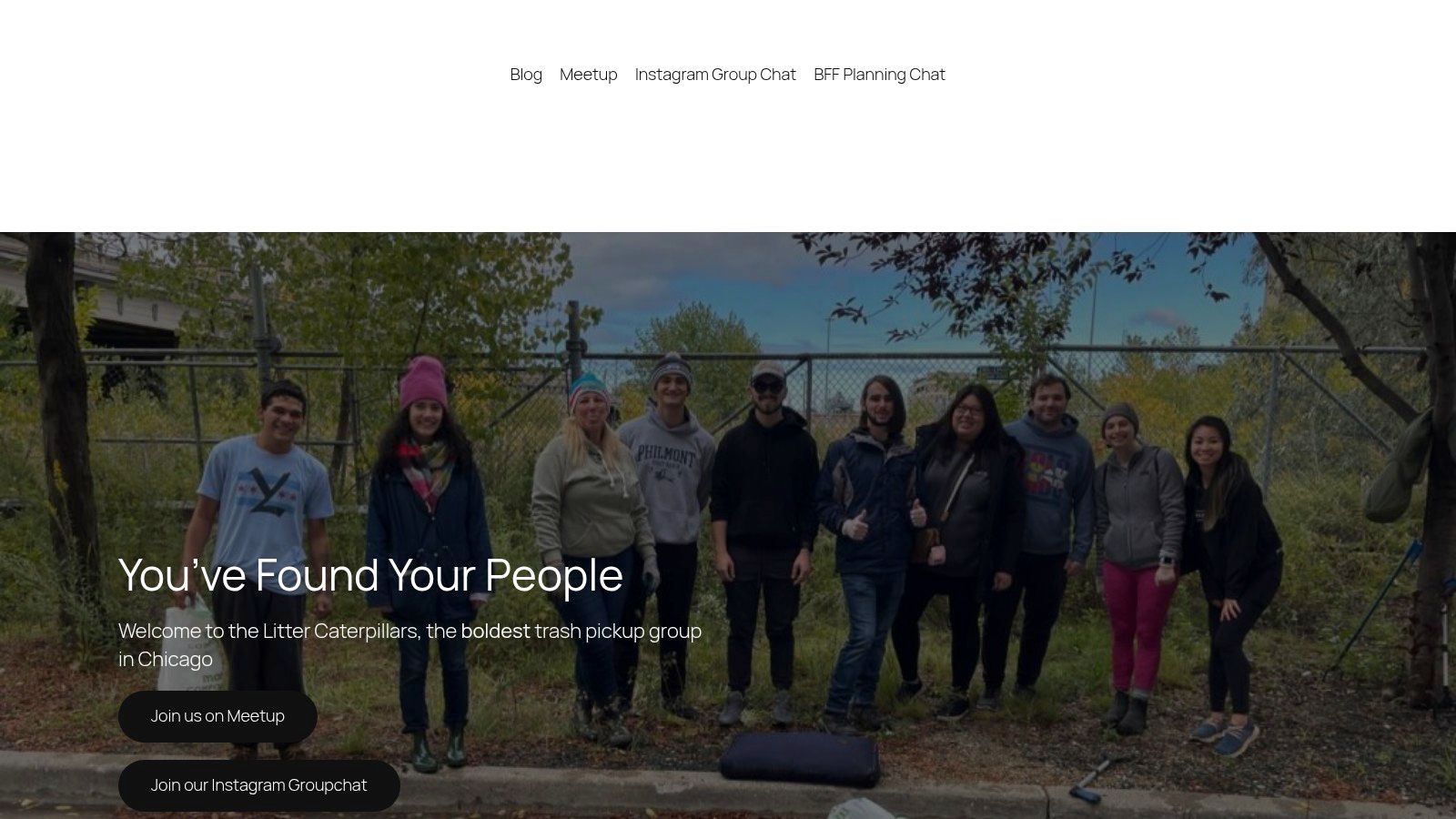
    1. Litter Caterpillars

    If you're in Chicago and your search for a volunteer trash pickup near me is about finding something that feels less like a chore and more like a heroic quest, then you need to know about Litter Caterpillars. This is your definitive choice. This isn’t just about picking up litter. It’s a full-blown movement. A movement built on guts, on community, and on the truly radical idea that a small group of people can absolutely transform a city, one block at a time. I see it as a weekly invitation to become part of something so much bigger than yourself, creating change you can literally point to and say, "I helped build that."

    Litter Caterpillars

    Kevin Tao, the founder, runs Litter Caterpillars with a bold, volunteer-first heart. I mean it. They meet every single weekend. No matter what the weather decides to do. They tackle neighborhoods across all 50 city wards. This relentless, almost stubborn consistency has led to some amazing stories, like the time they cleaned an entire highway during a bike event. Or, even more incredible, when they won an empty lot at auction and built the vibrant Caterpillar Park in Englewood from the ground up.

    What Makes Litter Caterpillars a Standout Choice?

    What really makes this group different is its culture. It’s so intentional. You’re not just a volunteer; you're a Caterpillar. When you're new, they welcome you with open arms, hand you a picker and a bag, and boom—you’re part of the team. The group has its own flags, its own badges, even its own theme song. They turn every cleanup into a celebration of doing something that matters, together.

    The whole thing is designed to protect your energy. Your spirit. There are no mandatory fees or pressures to donate. The focus is purely on the work and the friendships you build while you’re doing it. This creates this incredibly authentic, no-pressure space where people just connect. Communication is a dream, with active communities on Meetup, Instagram, and private group chats that keep everyone in the loop.

    How to Get Involved

    Getting started is so simple it's almost funny. All you have to do is show up.

    • Find an Event: Check their Meetup page or their Instagram to see where the next weekend cleanup is happening.
    • Just Arrive: They usually meet on weekend mornings, a time chosen to bring out people who are really dedicated to service.
    • Gear Up: They provide everything you need. Trash pickers, bags, gloves. You just bring yourself.

    Our Take: If you’re looking for a high-impact, deeply social way to make a real difference in Chicago, I don't think you can find anything like Litter Caterpillars. It’s a chance to build your own resilience, explore every corner of this city, and make genuine friends while you create a cleaner, more beautiful community for everyone.

    Feature Analysis Litter Caterpillars' Approach
    Accessibility Excellent. No fees, no sign-up barriers. Just show up.
    Community Exceptional. A strong, identity-driven culture with social events and active communication channels.
    Impact High and Visible. Completed cleanups in all 50 wards and built a community park.
    Schedule Consistent but Specific. Reliable weekend morning events may not fit all schedules.

    Website: littercaterpillars.com

    2. Idealist (includes VolunteerMatch)

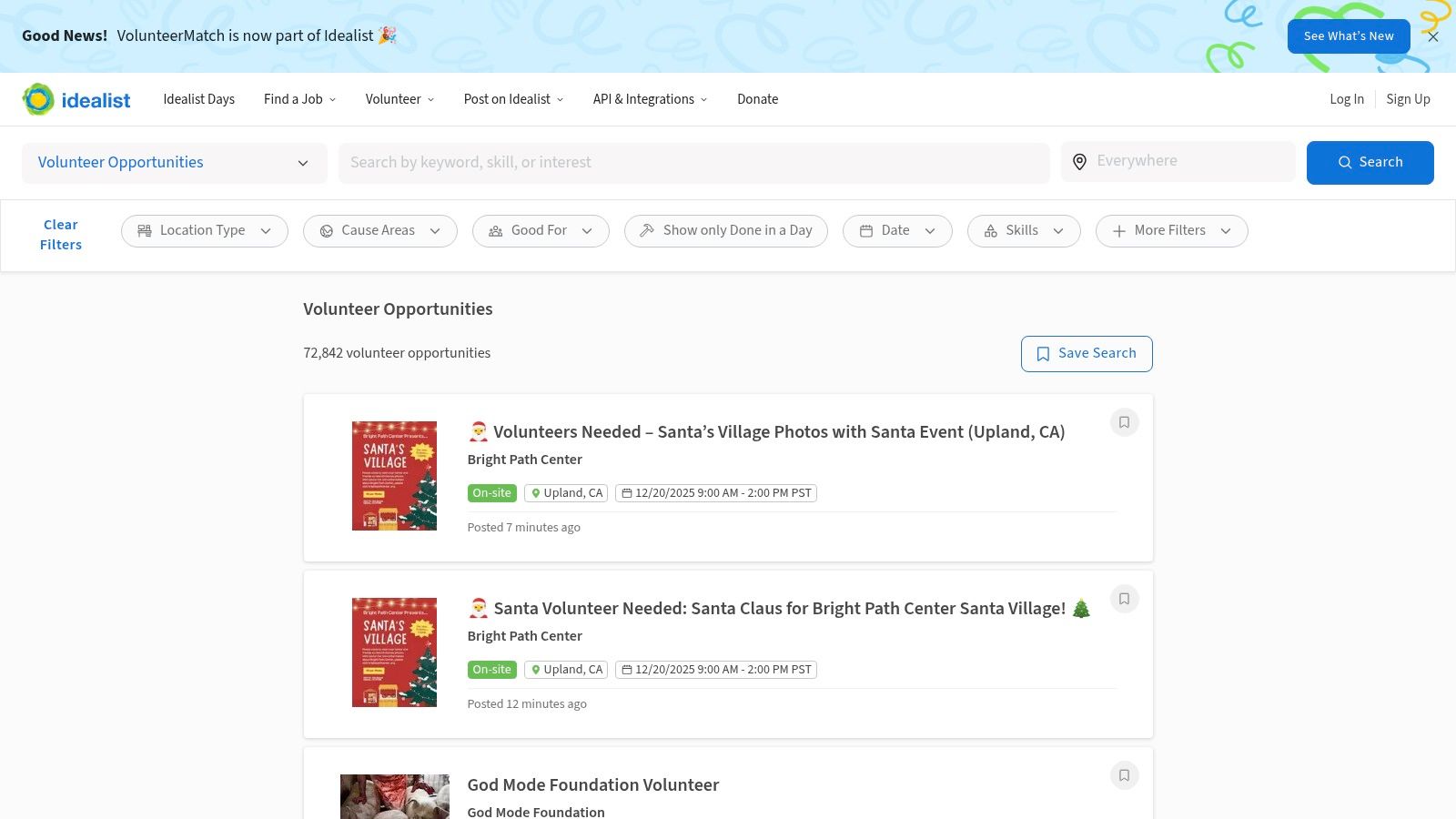
    I want you to think of Idealist as the Grand Central Station for doing good. After it absorbed VolunteerMatch, it became this absolute powerhouse directory, connecting passionate people like you with organizations that desperately need your help. It’s not just some boring list. It’s a launchpad for your next big act of kindness. When you’re hunting for a volunteer trash pickup near me, this should be one of the first doors you knock on.

    Its sheer size is inspiring to me. You’re tapping into a massive network of change with over 100,000 opportunities listed all over the country. You're not just looking for an event here; you're feeling the very heartbeat of community service right in your own area.

    How to Find Your Perfect Cleanup

    Using the platform is like a walk in the park. You just type in your location and a few keywords. Let me give you some pro tips to help you find what you’re looking for faster:

    • Be Specific with Keywords: Try searching for things like "litter cleanup," "park beautification," "river cleanup," or even "environmental stewardship." The more specific you are, the better your results.
    • Use the Filters: The real magic is in the filters. You can sort by date, which is perfect for finding something to do this weekend. My favorite is the "Good for Groups" filter. It’s a lifesaver when I’m trying to organize a service day with my friends or coworkers.
    • Set Up Alerts: If you don't find the perfect thing right away, don't sweat it. You can set up alerts, and they’ll send you an email whenever a new trash pickup opportunity gets posted in your area.

    The platform is totally free to use, and you'll find listings from all kinds of groups, from tiny neighborhood associations to big city-run park districts. While some places might have fewer listings than others, its national reach means you can almost always find something happening year-round. It's a tool that really empowers you, putting the chance to make a difference right at your fingertips. And hey, if you feel inspired to take the next step and organize your own event, I’ve got some great advice on how to start your own volunteer trash pickup.

    Find your next opportunity at: www.idealist.org/volunteermatch

    3. Keep America Beautiful (KAB) Volunteer Portal

    Keep America Beautiful (KAB) is like the nationwide conductor for an orchestra of neighborhood pride. This legendary organization runs the Great American Cleanup and supports a huge network of over 600 local affiliates. When you search for a volunteer trash pickup near me, their portal connects you directly to the action, to the real boots-on-the-ground work in your community.

    I love that KAB empowers these local "Keep [Your City] Beautiful" chapters. It feels like you aren't just signing up for some random event. You're joining a dedicated, local team that often gives you the tools, coordinates the trash disposal, and really understands your neighborhood’s specific problems. It’s like joining a movement that has these deep, strong roots.

    How to Find Your Perfect Cleanup

    The KAB volunteer portal is built to get you involved fast. You put in your zip code, and it brings up a map and a calendar with nearby opportunities. Here are some of my tips to make the most of it:

    • Look for Affiliate Pages: Don't just look at the main calendar. Find your local "Keep [City/County] Beautiful" affiliate. They often have their own websites with more detailed event schedules, special projects, and contact info.
    • Time Your Search: This portal is just buzzing with activity during the Great American Cleanup (which is usually March to May). If you’re looking for a big, high-energy event, that's the absolute best time to get involved.
    • Register in Advance: Many KAB events will ask you to pre-register. This just helps the organizers plan for supplies like gloves, bags, and grabbers, making sure there's enough gear for everyone who shows up.

    The portal is totally free for you as a volunteer, and the resources you get from local affiliates are priceless. While the number of events can change depending on how active your city's affiliate is, the sheer scale of their national network means there's almost always a way for you to contribute. It’s an amazing resource that not only helps you find an event but also plugs you into the ongoing story of community care in your own hometown. For more tips on what to expect, you should check out my guide on what happens when you're cleaning up trash.

    Find your next opportunity at: https://volunteer.kab.org

    4. Eventbrite

    If you think Eventbrite is just for concerts and food festivals, you are missing out on a hidden treasure for community action. I see it as a bustling town square. A place where anyone, from a city parks department to a tiny group of passionate neighbors, can post their call to arms. It’s an incredibly direct and easy way to find a volunteer trash pickup near me, especially for those one-off or pop-up events that just appear.

    I love how immediate it feels. You're not just signing up for a mailing list; you're grabbing a "ticket" (usually a free one) to a specific event on a specific day. It makes your commitment feel real, almost exciting. It turns a simple cleanup into something you can really look forward to.

    A screenshot showing Eventbrite's event discovery page for volunteer trash pickups, highlighting search filters and event listings.

    How to Find Your Perfect Cleanup

    Finding your way around Eventbrite is as easy as searching for a movie. You just type in your city and what you're looking for, and the opportunities magically appear. Here’s how you can make your search even better:

    • Cast a Wide Net with Keywords: Start with broad words like "cleanup," "beautification," or "volunteer day." Then you can try more specific phrases like "beach cleanup" or "park cleanup" to see what comes up.
    • Filter by Date and Price: The "Today," "This Weekend," and "Free" filters are your best friends. I use them constantly to find a last-minute chance to get outside and do some good without any hassle.
    • Read the Event Details Carefully: Each event page is like a mini-guidebook. The organizers often list exactly what you should bring (like water or sunscreen) and, most importantly, whether they provide supplies like gloves, bags, and grabbers. This little detail can save you from showing up unprepared.

    The platform is totally free for you to use, and the mobile app is fantastic for getting reminders and having your ticket ready. While the number of events can really vary depending on how active the local organizers are in your city, the quality of listings from groups like Keep America Beautiful affiliates is often top-notch. It’s a dynamic and straightforward way to find and commit to making a difference, one event at a time.

    Find your next opportunity at: https://www.eventbrite.com

    5. Meetup

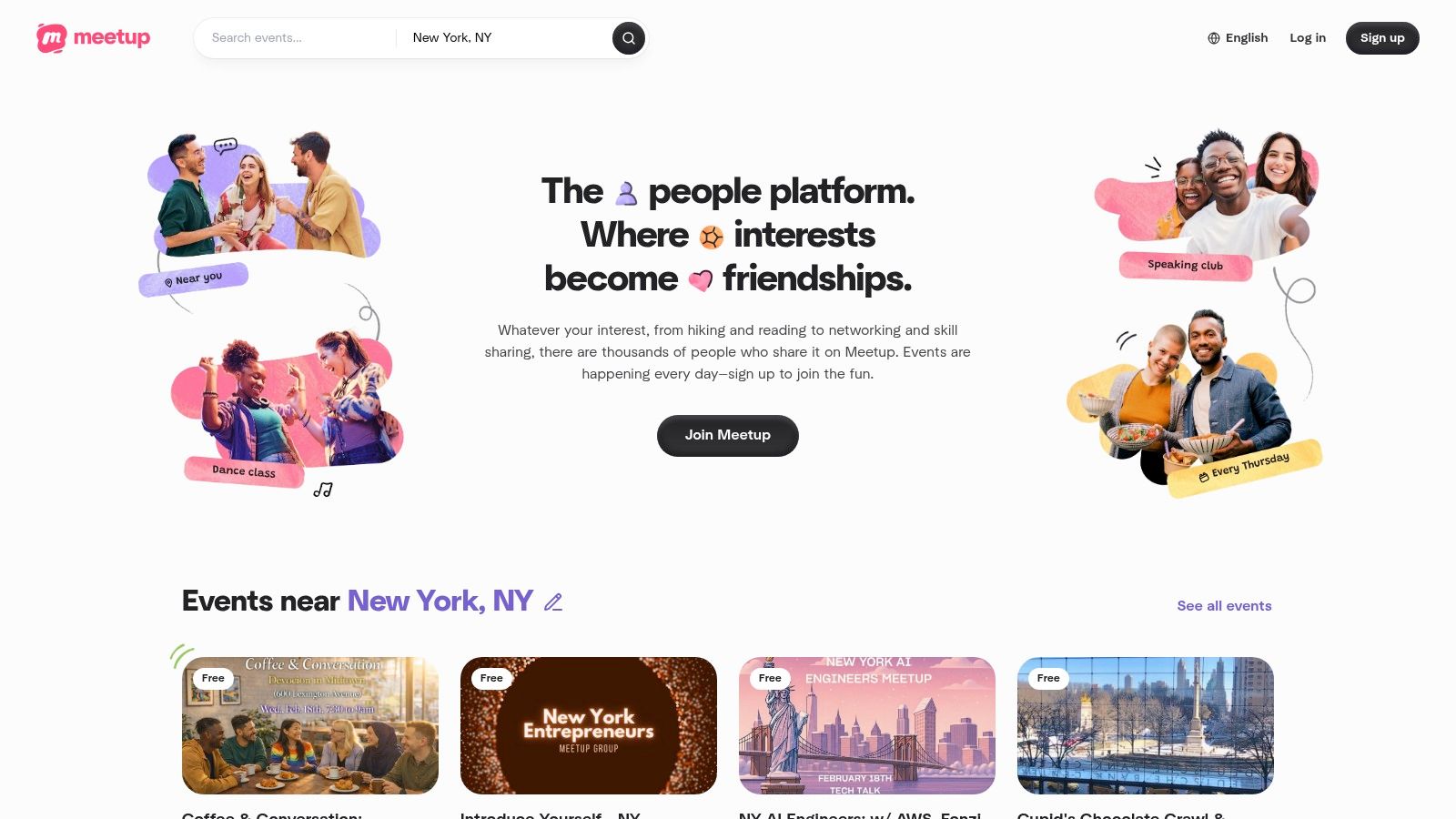
    Meetup is where community action really springs to life. It's not just a directory. It's a platform built for creating and keeping local groups going. It’s less about finding a one-time thing and more about finding your tribe. Your tribe of like-minded neighbors who are committed to making a difference, week after week. If you're looking for a volunteer trash pickup near me that feels like you're joining a team, Meetup is where you need to go.

    I love Meetup because it’s so grassroots. It's real. These aren't just listings; they are personal invitations from passionate local organizers who are out there every single month, rain or shine. You're not just picking up litter; you're building friendships and changing your own neighborhood, one cleanup at a time.

    A screenshot of the Meetup homepage showing various groups and events, highlighting its community-focused interface.

    How to Find Your Perfect Cleanup

    The whole platform is designed around groups, so your first step is to find your local crew. It's incredibly simple to get started and connect with people who are already making an impact right where you live.

    • Search for Groups, Not Just Events: Use terms like "litter picking," "environmental cleanup," "neighborhood cleanup," or "community service" to find groups that are dedicated to this cause. When you join a group, you get notifications for all their future events.
    • Check the Event Details: Organizers on Meetup are usually great at giving you the specifics. They’ll often tell you if they provide bags, gloves, and pickers. My favorite part is that many groups will schedule a social hour at a local coffee shop or pub afterward. It's perfect for connecting with new people.
    • Don't See a Group? Start One! This is what makes Meetup truly special. If your neighborhood doesn't have a cleanup crew, the platform gives you the power to become the organizer. It gives you the tools to schedule events and rally your neighbors.

    Meetup is free for you to join groups and attend events. While coverage can be a little spotty in smaller towns, major cities often have several active groups. The real strength of Meetup is in its consistency; many of these groups meet every week or every month, which helps you build a positive, powerful habit. If you want to take the initiative and become a local hero, I have some great resources on how to start your own volunteer trash pickup.

    Find your next opportunity at: https://www.meetup.com

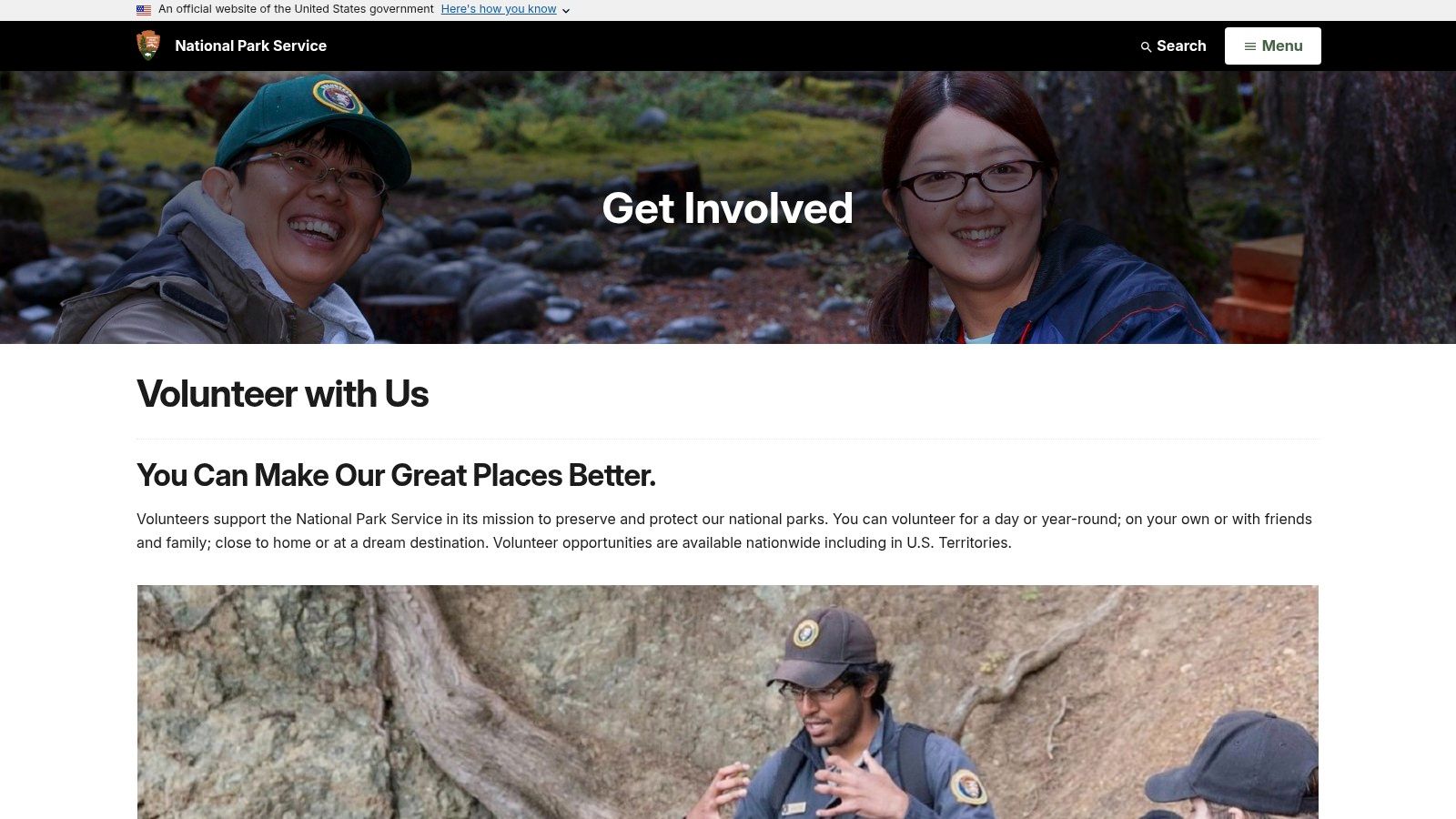
    6. National Park Service – Volunteers-In-Parks

    There’s something truly special about protecting our nation’s treasures. It just feels different. The National Park Service (NPS) offers you a chance to do exactly that through its Volunteers-In-Parks program. This isn't just about picking up trash; it's about becoming a temporary guardian of America's most beautiful and historic places. When your search for a volunteer trash pickup near me leads you to a national park, I promise you're in for an inspiring day.

    I love that this connects your local action to this grand, national mission. You might be cleaning a trail you hike every weekend or a shoreline you love, all while supporting a system that preserves these amazing spaces for generations to come. It transforms a simple cleanup into an act of national service.

    National Park Service – Volunteers-In-Parks

    How to Find Your Perfect Cleanup

    Getting around the NPS site is pretty easy. You can search by state or by park to find opportunities right in your backyard, whether it’s an urban historical site or a vast wilderness area. Here are a few tips to help you get started:

    • Go Directly to Your Park's Website: The best way to do it is to find the website for the national park closest to you. Look for a "Get Involved" or "Volunteer" section, which will list their current needs and any upcoming events.
    • Search for Key Events: Look for specific event titles like "National Public Lands Day," "Earth Day Cleanup," or "River Cleanup Day." Parks often organize huge volunteer drives on these dates.
    • Plan a Group Event: The NPS is fantastic for groups. I find that parks are often really welcoming for schools, scout troops, or corporate volunteer days. Their volunteer coordinators can help you set up a structured and impactful project, and they often provide all the tools and safety briefings you need.

    The opportunities are completely free, but some might need you to register in advance because they are so popular and well-structured. While the events are tied to the park's schedules, the experience of contributing to a national landmark is something you will never forget. You’re not just cleaning a space; you’re preserving a piece of America’s story.

    Find your next opportunity at: www.nps.gov/getinvolved/volunteer.htm

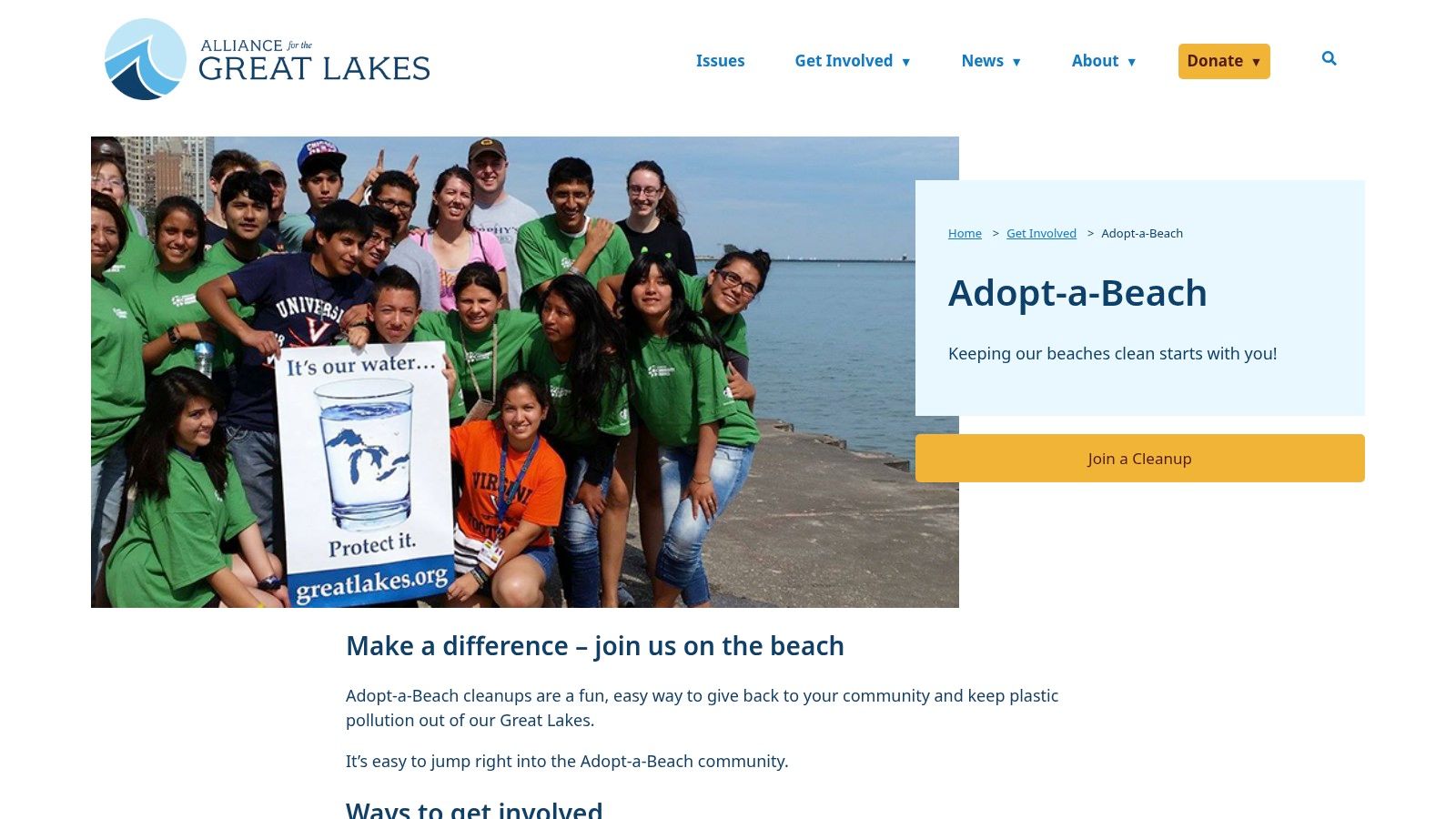
    7. Alliance for the Great Lakes – Adopt-a-Beach

    For those of us who live near the stunning shores of the Great Lakes, this platform is a total game-changer. The Alliance for the Great Lakes’ Adopt-a-Beach program isn't just a cleanup initiative. It's a massive, coordinated effort to protect one of the world's most vital freshwater resources. It connects you directly with the coastline, turning your simple search for a volunteer trash pickup near me into a mission to save a natural wonder.

    I see it as becoming a guardian for our waters. Every single cleanup is more than just picking up litter; it's an act of collecting data. The information you gather helps scientists and policymakers understand where the pollution is coming from and fight for stronger protections. You're not just cleaning; you're contributing to real, lasting change.

    Alliance for the Great Lakes – Adopt-a-Beach

    How to Find Your Perfect Cleanup

    Navigating their site is incredibly easy; it gets you right where you need to be. It’s built for action. Here’s how you can dive in and make a difference:

    • Use the “Find a Cleanup” Map: This is where you start. The interactive map shows you all the upcoming cleanups along the lakeshores. You can easily find an event near you and register in just a few clicks.
    • Become a Team Leader: Feeling inspired? The program provides excellent training and resources for you to lead your own cleanup. They give you the tools, the safety guidelines, and the support to host a successful event.
    • Focus on the Data: Remember that your work contributes to a huge regional database. After your cleanup, you'll enter the data you collected, which directly informs conservation efforts. It adds this powerful layer of purpose to your work.

    Joining a cleanup is free, though you'll need to create a quick account to register for an event or to lead one. While its strength is its laser focus on the Great Lakes region, that also means it won’t be the right tool if you live somewhere else. But for anyone in the area, it's an unparalleled chance to protect the incredible coastlines that define our region, especially those precious spots like the public beaches along Lake Michigan.

    Find your next opportunity at: https://greatlakes.org/get-involved/adopt-a-beach/

    Volunteer Trash Pickup Near Me — 7-Platform Comparison

    Item 🔄 Implementation complexity ⚡ Resource requirements 📊 Expected outcomes 💡 Ideal use cases ⭐ Key advantages
    Litter Caterpillars 🔄 Low — volunteer-led, simple weekend logistics ⚡ Low — volunteers + basic tools; no membership fees 📊⭐ High — visible neighborhood transformation; citywide coverage (50 wards) 💡 Neighborhood-building, regular weekend cleanups, high-visibility actions ⭐ Strong volunteer culture, consistency, local ownership
    Idealist (includes VolunteerMatch) 🔄 Low — search/listing platform; dependent on org postings ⚡ Minimal — web access and time to search 📊 Variable — many opportunities nationally but depends on local listings 💡 Finding one-off or recurring cleanups across regions ⭐ Large national directory with robust filters
    Keep America Beautiful (KAB) Volunteer Portal 🔄 Moderate — affiliate coordination and seasonal campaigns ⚡ Moderate — affiliates may supply kits and logistics 📊 Good — strong participation during Great American Cleanup 💡 Seasonal, affiliate-run community cleanups ⭐ Wide U.S. affiliate network and local support
    Eventbrite 🔄 Low — event discovery and RSVP platform ⚡ Low for volunteers; organizer-dependent supplies 📊 Variable — quick discovery for pop-ups; impact varies by organizer 💡 Pop-up or scheduled community cleanups requiring RSVPs ⭐ Easy discovery, ticketing, and reminders
    Meetup 🔄 Low–Moderate — group-centric event organization ⚡ Low — community-driven; organizers often provide basics 📊 High for community-building — consistent turnout and habits 💡 Regular neighborhood meetups and recurring crews ⭐ Builds habits, friendships, and repeat volunteers
    National Park Service – Volunteers-In-Parks 🔄 Moderate — park coordination, safety briefings, occasional permits ⚡ Moderate — NPS often provides supplies and structure 📊 Reliable — well-organized events suitable for service hours 💡 Structured group service (schools, scouts, companies) in parks ⭐ Safety-focused, organized, nationwide park access
    Alliance for the Great Lakes – Adopt-a-Beach 🔄 Moderate — registration, team-leader tools, data submission ⚡ Moderate — training, materials, and account required 📊 Regionally strong — shoreline cleanup impact + data for research 💡 Great Lakes shoreline events and data-driven cleanups ⭐ Regional expertise, data portal, strong host support

    Your Neighborhood Is Waiting For You

    It's easy to scroll through a list like this one, seeing all the different groups and platforms, and feel a little overwhelmed. So many choices. So many ways to start. But I want you to forget about all the options for a second and just focus on one simple, powerful idea: just show up. Once.

    I remember my very first cleanup. There were only three of us. We were standing on a street corner, and a freak Chicago hailstorm just rolled in out of nowhere. We were shivering under this flimsy little tree, getting pelted with ice, and I had this crazy thought: "This suffering is actually kind of interesting. It's making a story." That moment taught me that bravery isn't about being fearless; it's about doing the thing anyway, even when you're uncomfortable or scared.

    Turning Inspiration into Action

    That's what this is all about. Each piece of litter you pick up is a small act of bravery. It's a vote for the kind of neighborhood you want to live in. You're not just cleaning a street; you are transforming your relationship with your city and with yourself. You are proving, piece by piece, that you have the power to create visible, tangible change.

    So, let's make this simple. Look back at the tools I showed you:

    • For the social butterfly: If you want to meet new people and build friendships, Meetup and Eventbrite are your best bet. They are built around community and shared interests.
    • For the big-picture thinker: If you want to plug into a national movement, you should check out the Keep America Beautiful portal or the Alliance for the Great Lakes Adopt-a-Beach program. You’ll be part of a much larger, coordinated effort.
    • For the nature lover: If you feel most alive when you're surrounded by trees and water, the National Park Service volunteer opportunities will put you right where you want to be.
    • For the dedicated local: If you’re ready to dive deep into a passionate, neighborhood-focused community right here in Chicago, Litter Caterpillars is where you will find your people.

    Your First Step is the Hardest and Most Important

    Pick one. Just one. Don't overthink it. Go to their website, find an event that fits your schedule, and sign up. I promise you, that's the hardest part. The moment you click that button, you’ve already won.

    Then, you show up. You’ll feel the sun (or maybe the hail!) on your face. You'll meet people who just get it, who share your desire to make things a little better. You will see, with your own two eyes, the immediate impact of your work. The world doesn't need a handful of perfect environmentalists. It needs millions of us, imperfectly trying our best. You are the 'someone' your neighborhood has been waiting for. You are the change.


    Ready to join a group that combines community, impact, and a whole lot of Chicago pride? Check out Litter Caterpillars to find a "volunteer trash pickup near me" event and meet your new cleanup crew. Let’s make our neighborhoods beautiful, together.

  • Discover weekend volunteer opportunities near me and Start Giving Back Today

    Discover weekend volunteer opportunities near me and Start Giving Back Today

    Imagine your Saturday morning as the opening scene of your own hero’s journey—gloves in hand, determination in your heart, ready to transform a littered block into a piece of art. If you’re searching for weekend volunteer opportunities near me, juggling life’s demands can feel daunting. But just like planting a seed, a small act of service blossoms into confidence, friendships, and cleaner streets—and it’s a LOT easier to make impact than you think! And it’s FUN!

    Here’s what you’ll find in this listicle:

    • A curated set of 7 platforms for weekend volunteer opportunities near me, each with screenshots and direct links
    • Step-by-step join instructions to help you sign up in under five minutes
    • Practical tips on gear essentials, safety checks and easy transit routes
    • A featured profile of Litter Caterpillars so you can launch your first cleanup with courage
    • Fresh ideas to connect with new friends and boost your personal growth

    Ready to dive in and unlock your volunteer superpower? Let’s go.

    1. Litter Caterpillars

    Litter Caterpillars turns a regular weekend into an urban adventure. Imagine you’re Indiana Jones of city streets—except your treasure is cleaner sidewalks and new friendships. On my first cleanup, I knocked on doors in Englewood with a buddy and discovered how one block can feel brand new.

    Litter Caterpillars

    Why It Stands Out

    • Volunteer-first philosophy
      No donation pressure—just pure community service and camaraderie
    • Consistent weekend meetups
      Rain or shine, Saturday and Sunday mornings become your new ritual
    • Citywide reach
      From Lincoln Park to Little Village, every ward counts
    • Identity and rituals
      Bright green flags, catchy chants, and matching badges unite the crew
    • Safety and happiness focus
      Buddy systems, pre-event checklists, and volunteer-led coordination

    Learn more about Litter Caterpillars on domain.com

    Feature Comparison Table

    Feature Benefit
    Free to join Zero cost—just bring gloves and water
    All-weather commitment Builds resilience and consistency
    Nonprofit-like impact Cleansed 50 wards, won auction for Caterpillar Park
    Social channels Real-time updates, event photos and stories

    How to Get Started

    1. Visit littercaterpillars.com and click “Join a Cleanup”
    2. RSVP on Meetup or send a DM on Instagram
    3. Bring gloves, sturdy shoes and reusable bag
    4. Arrive 10 minutes early for safety briefing

    Insider Tips

    • Arrive caffeinated and with a snack to keep energy high
    • Team up with a friend and share a “before and after” photo
    • Look for the bright green flags—they mark your cleanup zone

    Pros and Cons

    Pros

    • Proven impact across all Chicago wards
    • Strong social network builds friendships
    • Completely free with no fundraising pressure

    Cons

    • Not a registered 501(c)(3), so donations aren’t tax-deductible
    • Physically demanding in extreme weather or challenging neighborhoods

    Litter Caterpillars shows that making an impact can be as effortless as stepping outside on a Saturday morning. It’s a fun, fearless way to transform your community and yourself.

    2. Idealist (Volunteer Opportunities)

    Idealist is like a treasure map of good deeds—your X marks the spot for a park cleanup one weekend, a literacy session the next. Scrolling feels as easy as browsing your favorite shopping app, but instead of adding sneakers to your cart, you add volunteer slots that light you up.

    Idealist (Volunteer Opportunities)

    Why Idealist Shines

    • Massive selection: thousands of listings updated daily
    • Location flexibility: radius, on-site, hybrid or remote roles
    • Free and easy to browse and apply
    • Aggregates partner and direct nonprofit posts for variety

    Key Features

    1. Date filter: pinpoint roles on specific weekends or days
    2. Saved searches: store filters and keywords for quick access
    3. Email alerts: get notified when new weekend events appear
    4. Cause categories: dive into environment, education, health and more

    Feature Comparison

    Feature Benefit
    Date Filter Zero in on weekend openings
    Location Radius Find roles near your neighborhood
    Email Alerts Stay ahead of fresh listings
    Cause Filters Match passion with purpose

    Tips for Using Idealist Effectively

    • Use specific keywords like Chicago park cleanup
    • Adjust radius to 5–10 miles for neighborhood impact
    • Subscribe to email alerts for weekend slots
    • Check listing dates frequently to avoid stale posts

    Pros and Cons

    Pros

    • Huge inventory across the US
    • Free to browse and apply
    • Alerts catch newly posted events

    Cons

    • Response times vary by nonprofit
    • Occasional outdated listings remain live

    Ready to dive in? Save time and make a real difference every weekend. Learn more about Idealist (Volunteer Opportunities) on LitterCaterpillars.com and start your next adventure.

    3. Points of Light Engage (formerly All for Good)

    Points of Light Engage is browsing Instagram for good deeds—swipe to find your next park cleanup or virtual mentoring slot. When I dove in, I earned my first badge within an hour, and that digital star felt like a gold medal.

    Points of Light Engage (formerly All for Good)

    Why Points of Light Engage Shines

    • Broad coverage: thousands of local weekend events updated daily
    • One-day focus: perfect for spontaneous Saturday or Sunday service
    • Affiliate perks: earn badges, unlock certificates, join recognition programs
    • Hybrid roles: on-site park pickups or virtual youth tutoring
    • Zip code search: zero in on Lincoln Park or Hyde Park projects

    Key Features

    1. Location-based search: filter by city or ZIP code for “weekend volunteer opportunities near me”
    2. Aggregated listings: pulls opportunities from Points of Light affiliates and partners
    3. Recognition engine: track hours, earn awards, share your impact on social media
    4. Flexible filters: choose in-person, virtual, date range, or cause type

    Feature Comparison

    Feature Benefit
    Zip Code Filter Pinpoint weekend events steps from your doorstep
    Aggregation Engine One-stop hub—no more juggling multiple sites
    Recognition Badges Stay motivated by earning local and national awards
    Date Range Selector Schedule service around busy life commitments

    Tips for Using Points of Light Engage Effectively

    • Set the date filter to “This Weekend” to skip weekday listings
    • Bookmark 2–3 projects to compare time commitments and travel
    • Opt into recognition programs to rally friends and spark friendly challenges
    • Use specific keywords (for example “Riverwalk cleanup Chicago”)

    Pros and Cons

    Pros

    • Massive, free database backed by a respected national nonprofit
    • Easy city/ZIP lookup delivers immediate weekend options
    • Gamified badges and certificates drive engagement

    Cons

    • Some listings redirect to partner sites for final signup
    • Filtering depth varies by source—expect occasional detours

    Ready to spark joy and accelerate your personal growth through weekend service? Discover your next adventure on Points of Light Engage and watch real impact bloom.

    4. JustServe

    JustServe is like a friendly map drawn by neighbors—click and you see a pizza-box cleanup two blocks away. Boom, instant hero status. It’s clean, it’s quick, and it’s open to everyone, making weekend volunteering feel as easy as ordering a snack.

    JustServe

    Why JustServe Shines

    • Wide range of one-day and ongoing projects for flexible schedules
    • Family-friendly events that let you bring kids or friends along
    • No subscription barriers or hidden fees, making volunteering accessible
    • Instant visibility of community needs across neighborhoods

    Key Features

    1. Location filters: search by ZIP code or city to pinpoint nearby projects
    2. Availability tags: instantly spot weekend-only or multi-day shifts
    3. In-person and remote options: join a park cleanup or support an online tutoring session
    4. Quick signup flow: register and commit in under two minutes

    Feature Comparison

    Feature Benefit
    ZIP/City Search Drill down to your neighborhood with precision
    Availability Filter Focus on weekend slots without scrolling weekdays
    Project Variety Choose between one-off cleanups or long-term roles
    Quick Signup Flow Stay spontaneous with last-minute registrations

    Tips for Using JustServe Effectively

    • Set filters for “weekend” and your preferred cause to see relevant shifts immediately
    • Bookmark saved searches in your profile for fast access on Friday evenings
    • Check new postings early in the morning for last-minute openings
    • Pack essentials like gloves, water, snacks, and a sun hat for outdoor work

    Pros and Cons

    Pros

    • Completely free platform with no paywalls
    • Family-friendly and community-led projects
    • Easy, last-minute signups

    Cons

    • Listing density varies by city and ZIP code
    • Requires an account to track and manage signups

    Ready to dive in? Find your next last-minute weekend opportunity and see how easy it is to make an impact. Visit JustServe. Learn more about JustServe park cleanups on LitterCaterpillars.com.

    5. United Way Volunteer Portals (national network)

    United Way’s portals feel like a well-stocked market—each affiliate curates fresh events like a chef choosing seasonal produce. Want a Saturday park restoration or a Sunday school supply drive? It’s on the shelf, ready for your cart.

    Why United Way Shines

    • Local focus: affiliates vet partners and update listings weekly
    • Weekend-ready: built-in Sat/Sun calendar filters highlight shifts
    • Group-friendly: sign up teams for Days of Caring and drives
    • Seamless signup: integrates directly with nonprofit registration

    Key Features

    1. Day-of-week filters: view only Saturday or Sunday slots
    2. Time-of-day options: morning, afternoon or evening shifts
    3. Local inventories: hundreds of events per metro region
    4. Direct integrations: register on the nonprofit’s own system

    Feature Comparison

    Feature Benefit
    Weekend Calendar Zero in on Saturday/Sunday availability
    Affiliate Curation Reliable events vetted by local experts
    Group Signup Organize friends or corporate teams easily
    Nonprofit Integration Streamlined registration and hour tracking

    Tips for Using United Way Portals Effectively

    • Bookmark your city portal for quick access each weekend
    • Set filters to “Saturday” and “Sunday” before browsing
    • Invite friends directly through group signup links
    • Check back monthly for seasonal drives and big events

    Pros and Cons

    Pros

    • Strong local curation means higher-quality events
    • Many community-wide Days of Caring bring big impact

    Cons

    • Activity level varies by city affiliate
    • You must create an account to apply

    Ready to turn a free weekend into a force for good? Learn more about United Way Volunteer Portals and discover hundreds of weekend volunteer opportunities near me at https://volunteer.unitedway.org. Start your next adventure and watch your neighborhood blossom.

    6. GivePulse

    GivePulse is like a Spotify playlist for service—you filter by date and distance, hit play on a weekend cleanup, and track your hours as if they were tracks on your favorite album.

    Why GivePulse Shines

    • Versatile access: university hubs, city programs and nonprofits all in one place
    • Real-time filters for date, cause and distance
    • Instant impact logs so you track verified hours without hassle
    • Peer-to-peer and group sign-ups encourage friends to join

    Key Features

    1. Date and availability filters: lock in Saturday or Sunday slots
    2. Distance radius: find cleanup events a short walk or bus ride away
    3. One-click registration: save your profile and RSVP in seconds
    4. Built-in hour tracking: log your service as soon as you finish

    Feature Comparison

    Feature Benefit
    Date Filter Zero in on specific weekend windows
    Distance Radius Scope to your neighborhood radius
    One-Click Registration Instant RSVPs without extra forms
    Hour Tracking Automatic logs for resumes and reports

    Tips for Using GivePulse Effectively

    • Set date filters to “This Weekend” to catch fresh events
    • Pin your home city radius to avoid long commutes
    • Sync with peers by sharing event links in group chats
    • Export hour logs monthly to celebrate your impact

    Pros and Cons

    Pros

    • Robust, layered filters for fine-tuned searches
    • Strong presence at universities and in city-run hubs
    • Instant tracking ideal for students and professionals

    Cons

    • Varies by region; smaller towns have fewer listings
    • Requires an account to unlock full features

    Ready to transform your free time into community impact? Visit GivePulse now and discover weekend volunteer opportunities near me in your neighborhood.

    7. AARP Create the Good

    AARP Create the Good is like a personalized event chef—matches you to projects based on your skills, stirs in curated guides, and serves up weekend volunteer opportunities near me on a welcome platter.

    AARP Create the Good

    Why AARP Create the Good Shines

    • Tailored matches: uses your skills, interests, and location to surface ideal roles every weekend
    • US-only focus: filters for in-person Chicago events and at-home service projects
    • DIY project guides: thorough checklists, sample outreach templates, and safety tips
    • Aggregated listings: pulls roles from Engage, VolunteerMatch, and local partners

    Key Features

    1. Location and remote filters: switch between neighborhood cleanups and at-home phone banking
    2. Profile-driven suggestions: AI-backed matches highlight weekend volunteer opportunities near me
    3. Project guides: customizable plans with timelines, supplies lists, and outreach email templates
    4. Aggregated listings: find events syndicated from partner sites to maximize weekend options

    Feature Comparison

    Feature Benefit
    Profile Suggestions Matches you to roles based on experience and interests
    Local + Remote Filters Zero in on Chicago neighborhoods or at-home opportunities
    DIY Project Guides Plans, checklists, and templates simplify event organization
    Aggregated Listings Broader weekend options via partner platform syndication

    Tips for Using AARP Create the Good Effectively

    • Fill out your profile fully, including skills and availability, to unlock precise matches
    • Use neighborhood keywords like “South Loop park” or “Wicker Park mural” for pinpoint weekend searches
    • Bookmark project guides on Thursday to gather supplies and volunteer buddies in time
    • Check the Trending Projects section each Friday morning for brand-new weekend slots

    Pros and Cons

    Pros

    • Free and intuitive interface perfect for skill-based and first-time volunteers
    • Comprehensive guides help small groups launch their own weekend service projects

    Cons

    • Some Chicago ZIP codes show fewer listings than giants like VolunteerMatch
    • You may need to broaden your search radius beyond city center for more weekend roles

    Ready to spark change on your next weekend? Learn more and start your journey with AARP Create the Good.

    7-Platform Comparison: Weekend Volunteer Opportunities

    Program 🔄 Implementation complexity ⚡ Resource requirements ⭐ Expected outcomes 💡 Ideal use cases 📊 Key advantages
    Litter Caterpillars Medium — recurring weekend logistics Low monetary, high volunteer time & effort ⭐⭐⭐ — visible cleanup + social cohesion Hands-on weekend volunteers seeking community & identity Strong local presence, consistent meetups, volunteer-first culture
    Idealist (Volunteer Opportunities) Low — search/filters; few barriers Low user time; no fees to browse/apply ⭐⭐ — broad options; match quality varies One-off or recurring weekend roles across causes Very large inventory, date filters, saved searches & alerts
    Points of Light Engage Low–Medium — aggregated listings Low user effort; occasional external signups ⭐⭐ — good for one-day projects; recognition Quick weekend sign-ups and civic volunteer events Backed by national nonprofit, wide aggregated coverage
    JustServe Low — minimal interface, quick signup Low time investment; account required ⭐⭐ — family-friendly, short-term projects Last-minute weekend volunteering and family groups Clean UX, quick browsing, community partner projects
    United Way Volunteer Portals Medium — varies by affiliate Moderate — account needed; local coordination ⭐⭐⭐ — reliable local events and drives Metro-area weekend shifts, group or corporate teams Strong local curation, links to trusted community partners
    GivePulse Medium — robust platform Moderate — account needed; integrated tracking ⭐⭐⭐ — verified hours and campus/municipal events Students, universities, clubs needing hour verification Powerful filters, one-click registration, verified impact logs
    AARP Create the Good Low — profile-driven suggestions Low — best for experienced/skills-based volunteers ⭐⭐ — curated matches for older adults Adults 50+ or volunteers seeking guided, skill-based projects Project guides, profile suggestions, resources for DIY service

    Your Next Steps to Weekend Impact

    As you close this roundup of weekend volunteer opportunities near me, you have all the ingredients to make a real difference. Below are the key takeaways and actionable steps to turn inspiration into impact.

    Key Insights to Remember

    Volunteering is like planting seeds in different neighborhoods—each effort blossoms into cleaner streets, stronger communities, and new friendships.

    • Litter Caterpillars offers hands-on cleanup meetups in Chicago’s parks and streets
    • Idealist and Points of Light Engage connect you with thousands of local projects
    • JustServe and United Way Volunteer Portals streamline sign-ups for causes you care about
    • GivePulse tracks your service hours and helps build your volunteer resume
    • AARP Create the Good welcomes all ages for community improvement events

    Choosing Your Perfect Volunteer Match

    1. Reflect on what excites you—environmental cleanup, neighborhood beautification, or social services
    2. Compare meetup times and locations to fit your weekend schedule
    3. Read real volunteer stories and profiles to feel confident about joining
    4. Sign up on the platform that best fits your style—app-based ease or email reminders

    Factors to Consider Before You Dive In

    • Equipment and attire: sturdy shoes, gloves, and a refillable water bottle
    • Safety and accessibility: check public transit routes or carpool with new friends
    • Group dynamics: small crews feel cozy; large groups create big visual impact
    • Event flexibility: look for drop-in events or sign up in advance to secure your spot

    Bringing It All Together

    • Plan your weekend volunteer like a mini adventure
    • Treat each meetup as an opportunity to meet neighbors, explore new areas, and build skills
    • Use the tools above to track your progress and share stories on social media
    • Celebrate small victories—a clean block, a revived park, or a new friend

    Remember, making impact starts with a single step out your door. Whether you choose a 90-minute park pickup or a multi-hour neighborhood paint day, your courage and kindness will inspire others.

    Keep this list handy, revisit it before each weekend, and watch how small actions add up. The community is waiting for someone just like you to bring energy, ideas, and heart to Chicago’s streets. Your next weekend volunteer adventure is closer than you think.


    Ready to start cleaning up your corner of Chicago? Check out Litter Caterpillars for guided, friendly cleanups, expert gear tips, and a welcoming crew. Join us and discover why local volunteers choose Litter Caterpillars for the best weekend volunteer opportunities near me.