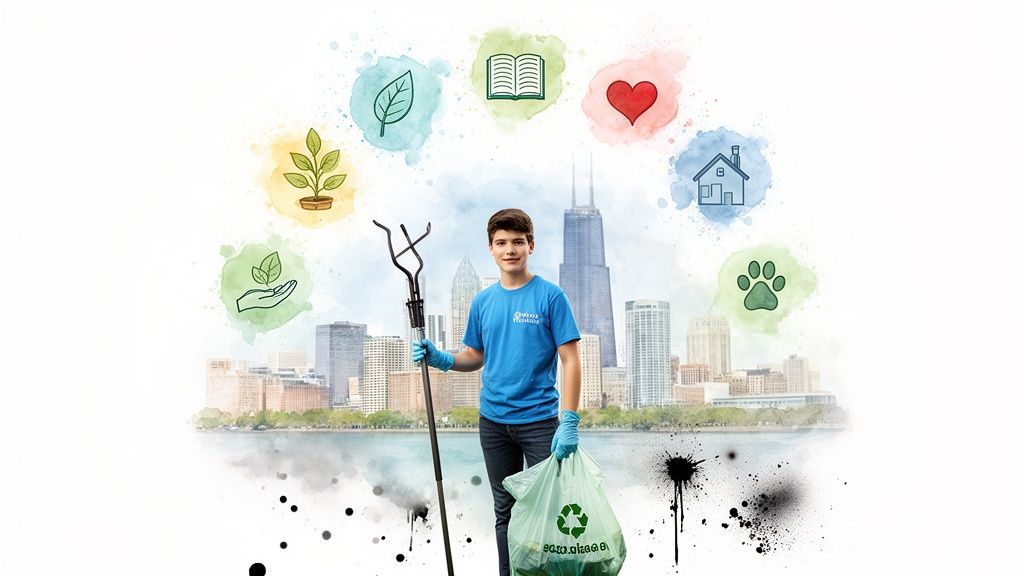
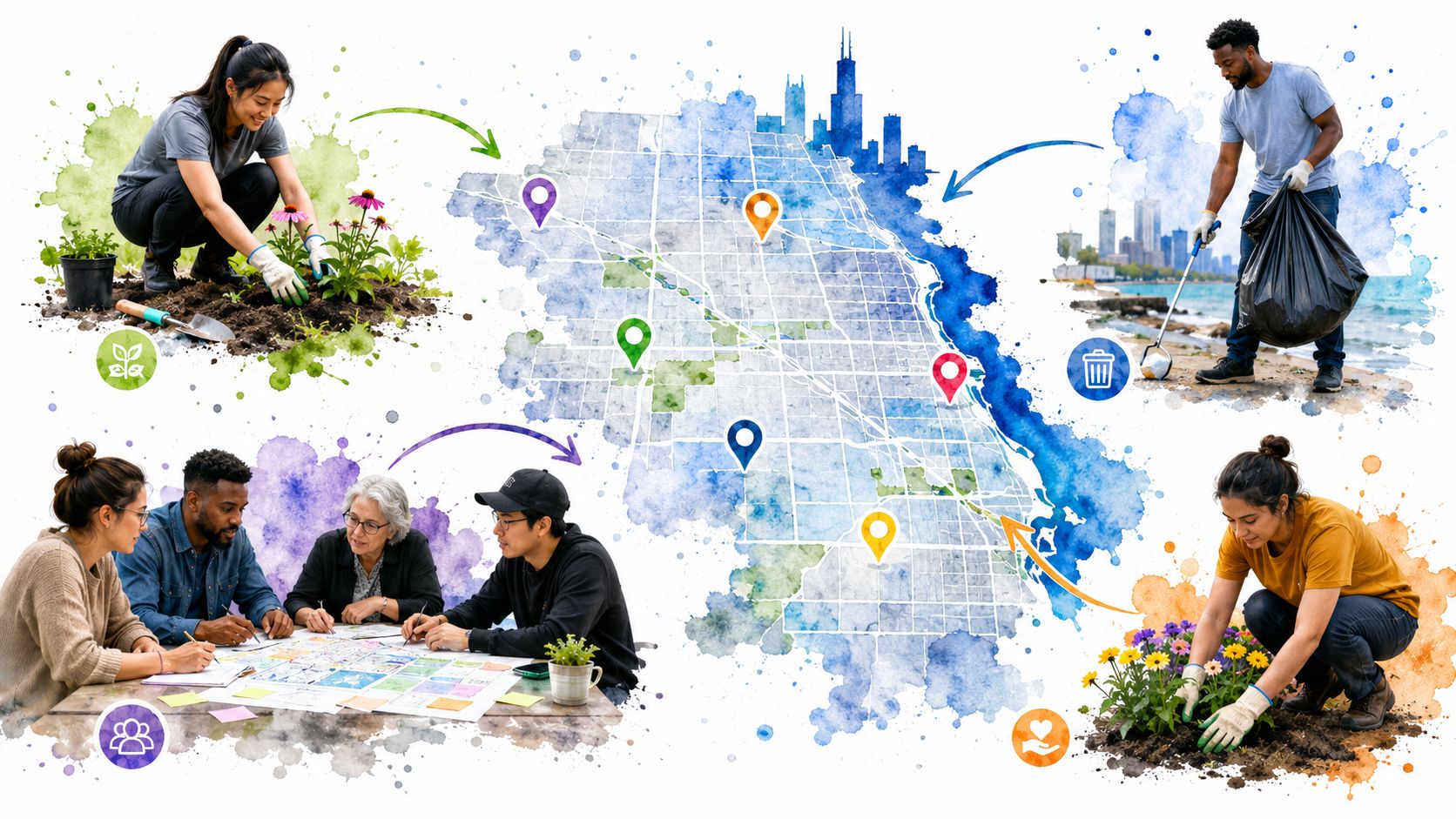
I used to walk past the same trash-blown corner and complain about it in my head like that counted. Then one cold morning I grabbed a bag, bent down, picked up the first bottle, and felt the whole problem shrink to hand size.
Tired of just talking? Let's get to work. I used to look around Chicago and feel overwhelmed. The problems seemed too big. But then I found that the answer was not to think bigger, but to act smaller. To pick one block, one park, one person to help. This is not a list of places to donate money. This is a guide to where you can show up, get your hands dirty, and become part of the story of your city. If you are looking for real civic engagement in Chicago, here is where we can start.
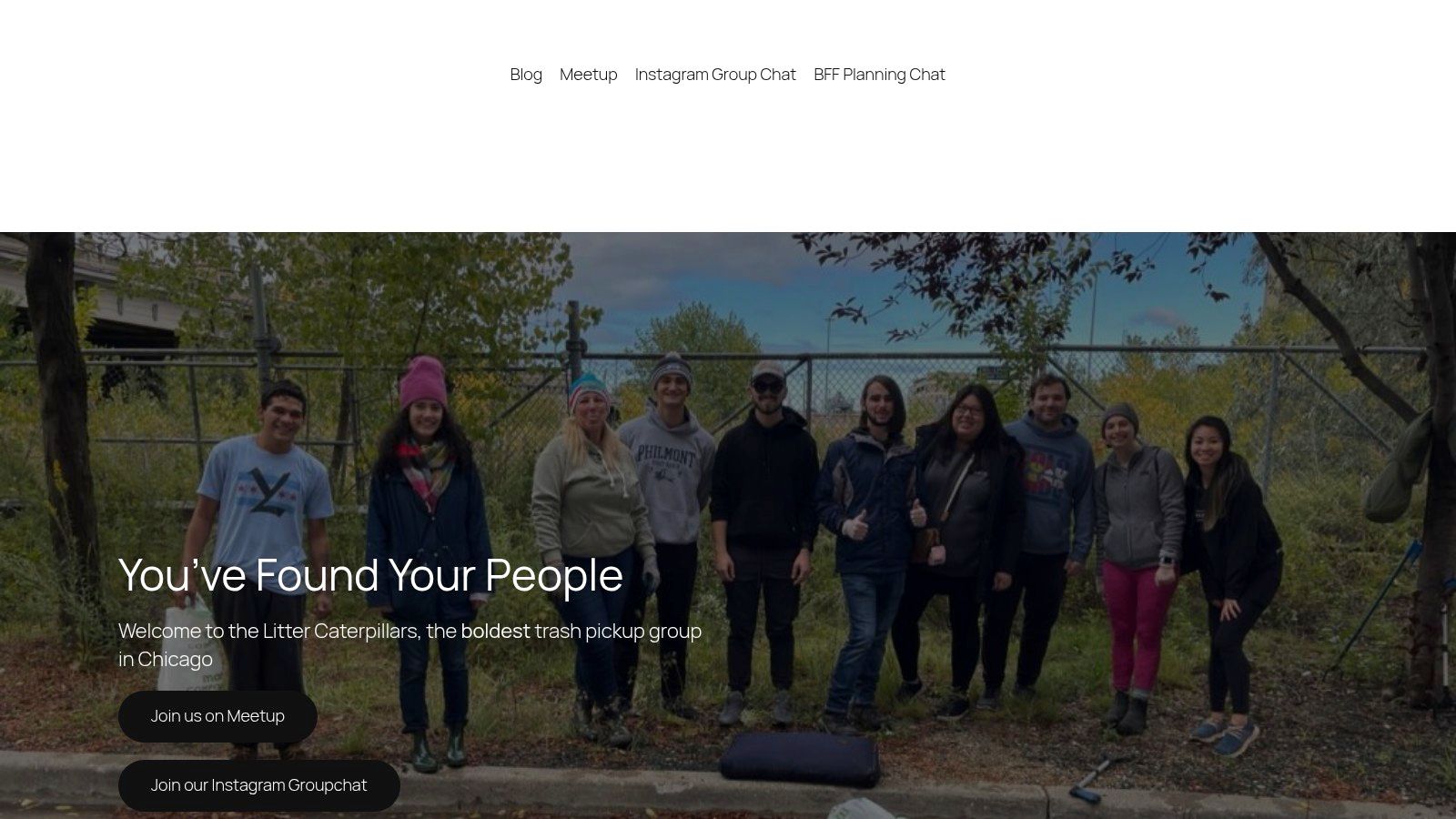
1. Litter Caterpillars
I started Litter Caterpillars because I had to fix something in myself before I could fix anything outside. Cleaning my own mess felt impossible for years. Weirdly, cleaning up a sidewalk with other people felt easier, like borrowing courage from the group until some of it stuck to me.
The first day was three of us in a spring hailstorm, hiding under a tree while rides kept canceling. That should've been enough to make normal people quit. Instead, it became the origin story. We kept showing up, rain or shine, and now the group has kept a weekly streak going for about three years across all 50 Chicago wards.
What it feels like on the ground
This is not polished volunteer work. You wear dirty shoes, drag full bags, laugh at bad weather, and end the morning happier than you started. We meet on weekend mornings on purpose. I want people around me who are ready to give.
We've done some wild jobs too. We picked up trash during a major bike-event highway shutdown. We won an empty lot at auction in Englewood and turned it into Caterpillar Park. A lot of friendships from these pickups spilled into the rest of life, which makes sense. If you do hard outdoor work with someone, small talk burns off fast.
Practical rule: Come as you are. You don't need experience, perfect habits, or fancy gear. You just need to show up.
- Find the meetup: Sign up on Meetup or follow Instagram so you know the weekly meeting spot and time.
- Dress for the job: Wear clothes you don't mind ruining and bring water.
- Help the edges: Show up early if you want to set up, or stay late if you want to help sort supplies.
- Bring somebody: The group feels even better when you drag a friend into it.
- Name your neighborhood: Tell us where you want to work. We go everywhere.
Chicago already has a strong base of people doing local work. Nearly 60% of Chicagoans have gotten involved in local civic life within the last year, and 18% have pushed for better local institutions, services, or policies, according to Civic News' writeup on Chicago information needs. That tracks with what I see. People want to help. They just need a place to start with their own hands.
2. Chicago Votes
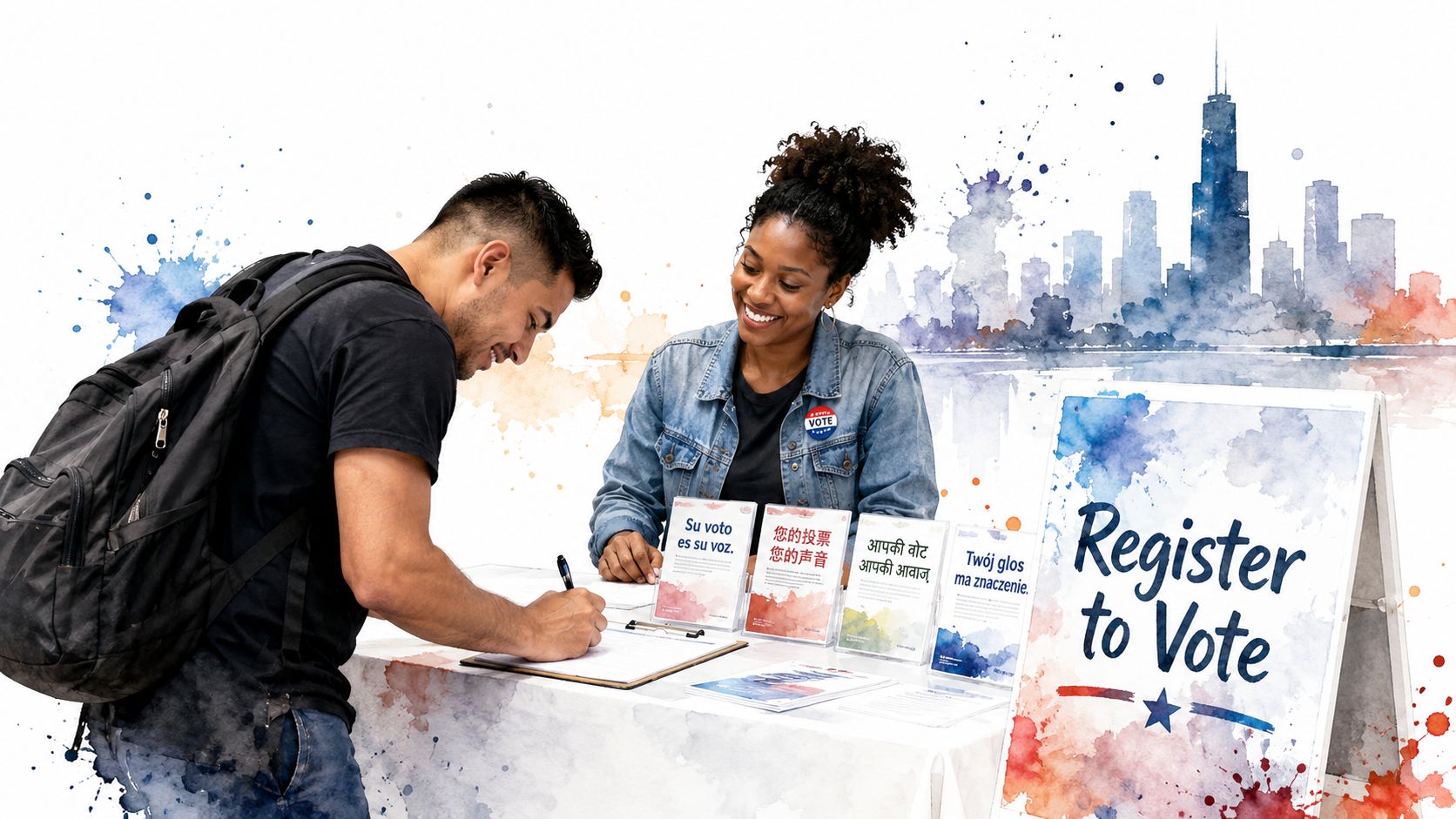
Trash pickup gives you one kind of power. Voting work gives you another. One clears a block. The other changes who makes the rules for the whole city.
Chicago Votes is where I'd send you if you want direct, practical election work. You can help with voter registration drives, answer basic questions, and get people through the little barriers that stop them from voting. A table at a library or a street fair can change somebody's whole relationship with city life.
Why this work matters
I like this group because they meet people where they already are. That matters. A lot of folks don't skip voting because they don't care. They skip because the process feels annoying, confusing, or built for someone else.
If you want a clean definition of the bigger idea, I like this plain breakdown of what civic engagement is. It isn't only elections, but elections are still one of the most obvious places where your time turns into visible action.
Go before election season if you can. That's when you learn names, systems, and the real pace of the work before everything gets loud.
I also trust voter work because steady organizing has measurable results. In Greater Chicago, each dollar of per capita investment in civic organizing and base-building was tied to a 0.31-point rise in turnout in 2012, with positive effects across all election years studied, according to this Civic Studies analysis. That doesn't mean every shift feels dramatic. It means repeated work adds up.
- Get trained early: Reach out before campaign season if you want more than a one-day role.
- Try poll work: If you want a paid lane, ask about becoming a poll worker.
- Work in pairs: Registration tables feel better with a friend.
- Ask direct questions: Find out where they need people most and what tasks you can own.
For civic engagement Chicago style, this is one of the clearest entry points. You can see the table, the forms, the faces, and the immediate effect.
3. Openlands
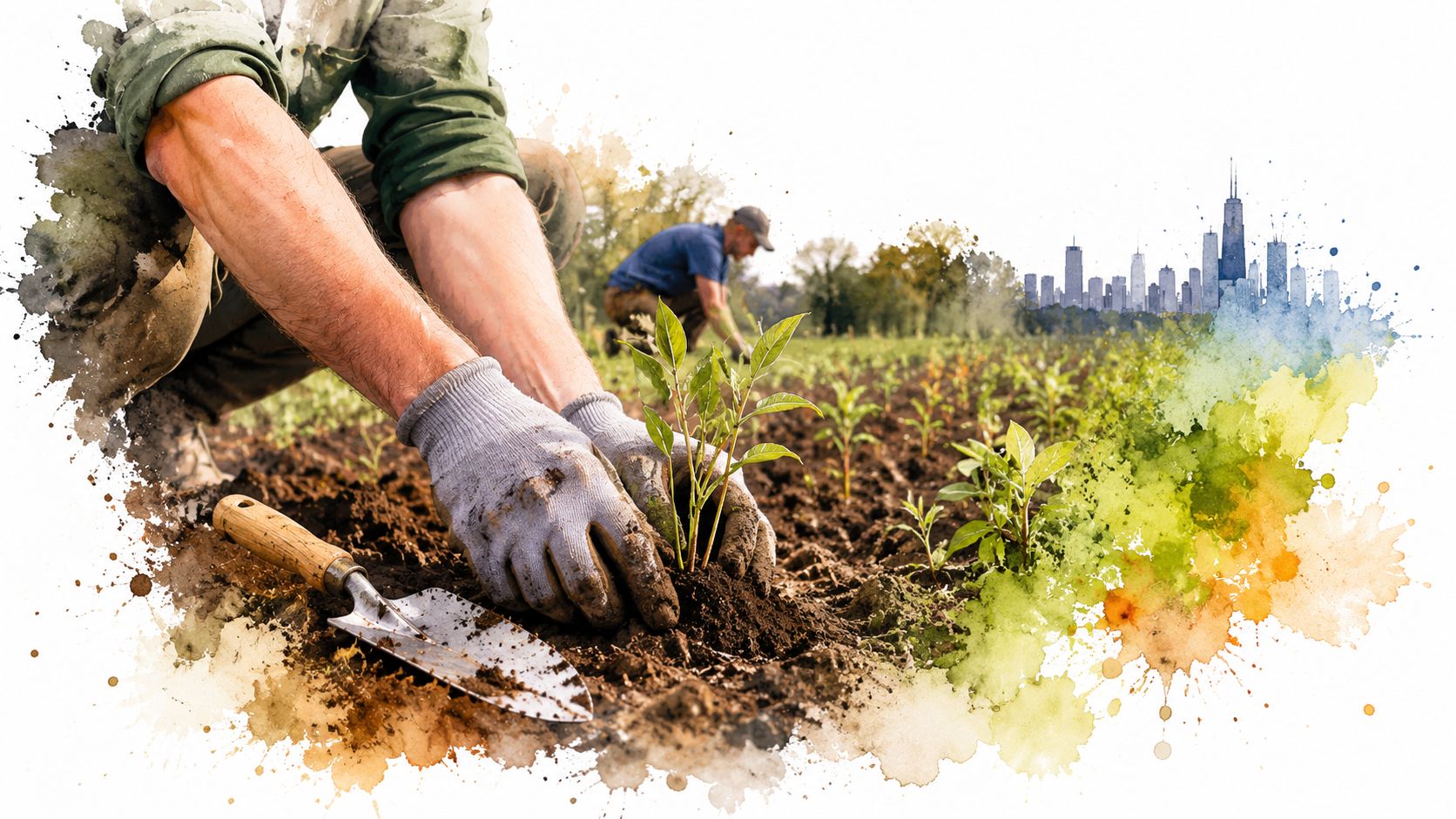
Some volunteer days feel like damage control. Openlands feels more like repair. You pull invasive plants, plant natives, maintain trails, and leave knowing the ground itself is in better shape than when you arrived.
I like trash cleanup because the before-and-after is blunt. Openlands has a different rhythm. You might spend a morning knee-deep in mud and leave with a small patch of restored habitat that looks modest to anybody driving by. Still, your body knows you did real work.
If you want nature work, start here
This is a good fit if you care about soil, water, trees, birds, or just being outside with people who don't mind getting filthy. You don't need experience to begin. Most of this work teaches you by doing. Somebody points at the invasive species, hands you a tool, and you're in.
If you're trying to understand where environmental service fits among other local groups, this roundup of charities in Chicago gives you more context. But Openlands is the one I'd pick when you want the day to end with dirt under your nails instead of another meeting in your calendar.
The work also fits what placemaking people keep learning around Chicago. A Scenic America case study on placemaking in Greater Chicago said successful civic efforts consistently combine open space, programming, historic preservation, public art, street life, and architecture, with programming driving repeated involvement in places people had ignored before, as described in Scenic America's Greater Chicago placemaking case study. That's exactly what regular volunteer restoration days do. They turn land into a reason to return.
- Watch the calendar: Sign up for email updates so you catch monthly volunteer days.
- Wear the right stuff: Boots, gloves, water, and sunscreen make the day way better.
- Bring backup: Restoration work moves faster and feels lighter with a friend.
- Ask about distance: They work across the region, so pick a site you can return to.
4. Blocks Together
If you want to stop asking why your block is a mess and start asking who else on the block is ready to fix it, try Blocks Together. This kind of work is less romantic than people think. It might start with folding chairs, weak coffee, and three neighbors talking about the same alley problem for the fifth time.
That's fine. That's how block power starts.
This is neighborhood muscle
I like Blocks Together because it pushes you into contact with the people who live right next to you. You stop treating your street like a hotel hallway and start treating it like a shared workshop. Potholes, vacant buildings, litter, lighting, alley repairs, trees, safety. These things become concrete once you're standing outside with the people who deal with them every day.
A lot of old civic metrics miss this kind of work. Traditional census data showed declining volunteering in Chicago from 2010 to 2019, but newer IRS-based analysis found Black, Latine, and working-class residents often help neighbors and organize civic action outside formal volunteer systems, according to Changing the Frame from The Chicago Community Trust. I love that because it matches real life. People have always been doing the work. The paperwork just didn't see them.
Your block is like a shared kitchen. If nobody claims the sink, everybody lives with the smell.
Use the group's tools, then add your own persistence. Here, community engagement best practices stop being theory and start looking like text chains, photos of broken curbs, and neighbors who finally know one another's names.
- Check first: See if your street already has a Block Club before you build a new one.
- Start tiny: Invite three or four neighbors for coffee and ask one question. What bothers you most on this block?
- Document everything: Take photos of potholes, trash piles, vacant buildings, and dead lights.
- Mix pressure with labor: Clean what you can yourself, then call, file, and push for the rest.
This route moves slower than a one-off volunteer event. It also gets under the skin of a place in a way one-off events rarely do.
5. ChicagoNEXT
Maybe you don't want to pick up trash or plant shrubs every weekend. Maybe you're good at design, finance, operations, policy, or public speaking, and you want to plug those skills into city work. That's where ChicagoNEXT makes sense.
This lane is less about gloves and more about chairs around a table. Still, don't mistake "meeting" for "fake work." A city runs on decisions. If better people don't show up in those rooms, bad decisions keep gliding through untouched.
Bring your actual skills
I think a lot of young professionals drift because they assume civic life only has two modes. Angry protest or charity shift. That's too narrow. Some of the most useful civic work is sustained project work with deadlines, drafts, and people who need somebody to finish the follow-up email.
ChicagoNEXT is good if you're early in your career and want to shape city projects, forums, and working groups. Go to one event first. Listen hard. Then decide whether you want to stay in the room.
- Lead with one skill: Say what you can actually do. Marketing, design, finance, research, tech, facilitation.
- Ask about timing: Some projects are short bursts. Others drag. Know which one you're saying yes to.
- Meet people honestly: Don't work the room like it's a networking mixer. Talk to people you'd still want to know without a business card involved.
- Pick one thread: Housing, neighborhood development, entrepreneurship, civic boards. Don't scatter yourself.
I treat groups like this the way I treat a good tool belt. You don't wear every tool at once. You pick the one that fits the job in front of you. If your version of civic engagement Chicago work is helping shape decisions, not just reacting to them later, this is a strong fit.
6. Chicago CAN (Community Action Network)
Some groups help you patch what's broken. Chicago CAN helps you ask who broke it, who profits from it, and how you pressure them to stop. That's a different kind of energy. Sharper. More political. Sometimes uncomfortable.
I respect that. A city needs people who will sweep the sidewalk and people who will stand at the microphone when the sidewalk keeps getting ignored.
If you want conflict with purpose
Chicago CAN is for you if housing, education, or police accountability hits close to home and you're ready to learn how organized pressure works. You can attend actions, join working groups, and stick with the same people long enough to learn the craft. Community organizing is a craft. It has pacing, discipline, roles, and follow-up. It isn't random outrage.
One reason this matters is that some Chicago communities still don't get enough accessible civic pathways. The Walder Foundation says leadership and civic engagement programs for immigrants and refugees in Chicago are limited and under-resourced, as described in Walder Foundation's piece on civic engagement and leadership development. So if you can join a grassroots coalition that makes room for people without a lot of institutional polish, that's worth taking seriously.
Some civic work feels like gardening. This feels more like moving furniture up a narrow stairwell. Heavy, awkward, and worth it once it lands where it belongs.
- Start with a public action: You'll know fast if the style fits you.
- Choose your issue: Pick the one that already keeps you up at night.
- Join a working group: Repeated contact builds trust and skill.
- Ask basic questions: Organizing has jargon. Don't let that scare you off.
I wouldn't send everybody here first. But if you're tired of symbolic volunteerism and want to understand power the hard way, this is a real path.
7. Wicker Park Bucktown Chamber of Commerce Community Events
Sometimes civic work looks like a rally. Sometimes it looks like helping set up tables before a street fair, hauling supplies, planting trees, or cleaning up after everybody else goes home. I count that too.
The Wicker Park Bucktown Chamber of Commerce has community events and neighborhood improvement work that gives you a softer landing if you're civic-curious but not ready for a picket line or a blizzard cleanup. There's nothing wrong with starting gentler. You still learn how a neighborhood functions.
A good place to practice being useful
I like chamber-led events for one simple reason. They give you reps. Repetition matters more than intensity. You learn who organizes, who shows up on time, who knows the businesses, and who can solve little problems without making a speech about it.
If you volunteer at several events, you start seeing the hidden wiring of a neighborhood. You meet business owners, event staff, residents, and the people who carry folding tables like they were born carrying folding tables.
- Study the calendar: Pick the event that holds your interest so you're more likely to come back.
- Introduce yourself early: Organizers remember the people who make setup easier.
- Do the ugly jobs: Cleanup and teardown are where dependable volunteers stand out.
- Return a few times: One event is a cameo. Repetition makes you part of the cast.
This kind of service won't scratch the same itch as direct organizing. But it can pull you into community life through routine, and routine is where a lot of good habits get built.
8. Restore the Core
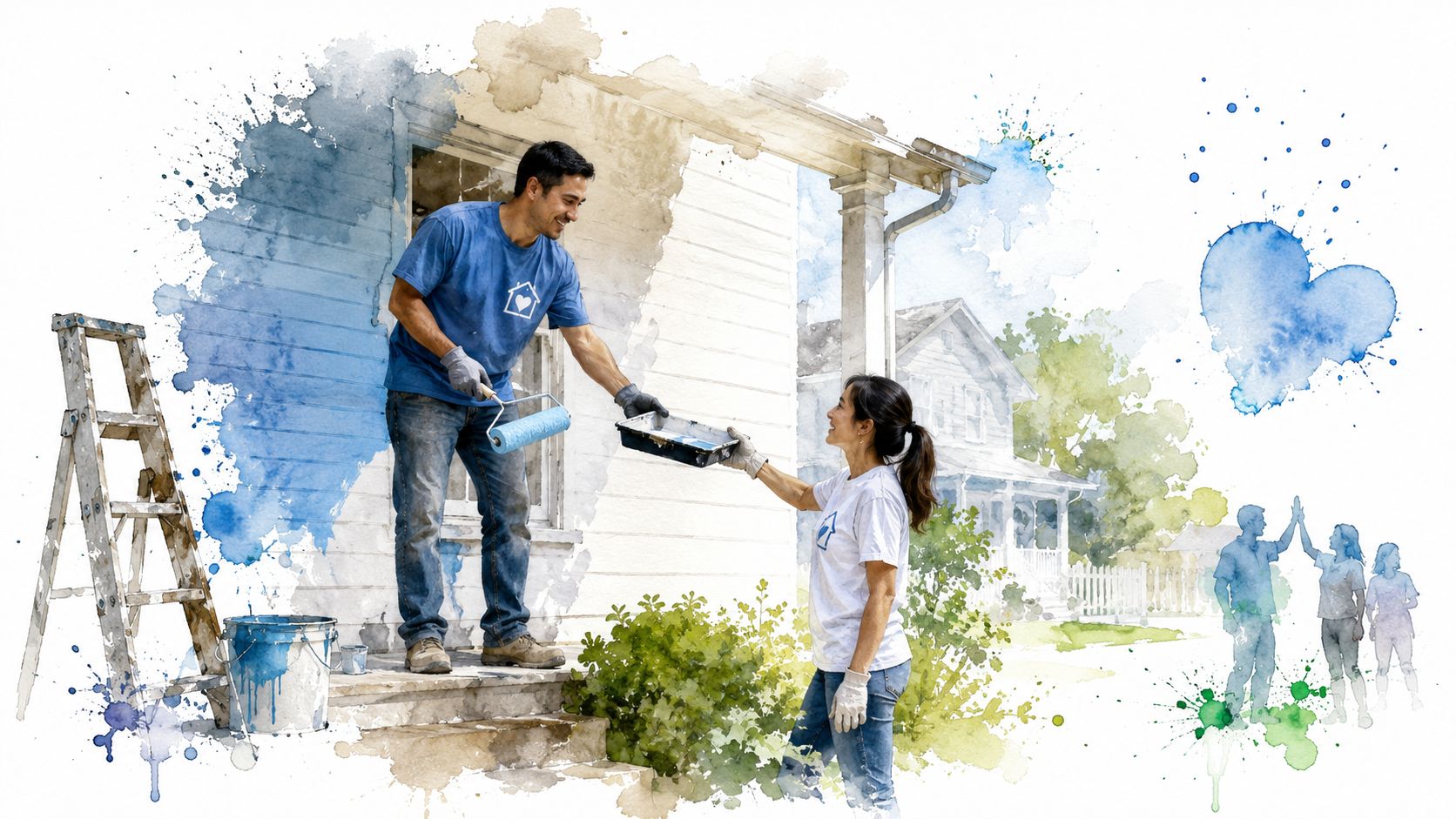
There's something different about working on a building. A litter cleanup changes what a block looks like today. Housing rehab changes what somebody's life feels like when they lock their door tonight.
Restore the Core is where I'd go if I wanted physical work with a clear, human result. You show up in work clothes, listen to the site supervisor, and start doing what needs doing. Paint. Drywall. Cleaning. Demolition. The task list is plain. The stakes are not abstract.
See the change room by room
I love this kind of volunteering because the progress is chunky. A scraped wall is scraped. A painted room is painted. A cleaned-out unit is ready for the next step. You don't need construction experience to begin. You need humility, attention, and the willingness to be taught.
Chicago residents also have practical ways to improve public space outside rehab work. For example, if a litter problem on your route keeps repeating, the CHI 311 trash can request rules say a new can must be within 50 feet of a business and can't be within 100 feet of an existing can, according to a discussion citing the CHI 311 guidelines. If the request gets denied, you get a written reason. I like rules like that because they turn vague frustration into a concrete next move.
If you can swing a roller, carry debris, or wipe down a filthy windowsill without complaining, you're useful on a housing site.
- Wear work clothes: Bring gloves and expect dust.
- Test it first: A Saturday workday tells you quickly whether construction volunteer work fits you.
- Match the task to your comfort level: Ask the supervisor where you can help best.
- Come back to the same site: Repeat visits let you watch the building change.
When people talk about civic engagement Chicago usually gets framed as meetings, votes, and speeches. Sure. But sometimes it is a brush, a bucket, and a room that stops looking abandoned.
Chicago Civic Engagement, 8-Organization Comparison
| Program | 🔄 Implementation complexity | ⚡ Resource requirements | 📊 Expected outcomes | 💡 Ideal use cases | ⭐ Key advantages |
|---|---|---|---|---|---|
| Litter Caterpillars | Low–moderate: weekly volunteer coordination, simple logistics | Low: volunteers, basic supplies (bags, gloves), minimal admin | Visible, immediate street-level cleanup and small public-space transforms | Casual weekend volunteering, community-building, neighborhood exploration | Low barrier to entry, strong social ties, immediate visible results |
| Chicago Votes | Moderate: training, compliance with election rules, coordinated drives | Moderate: staff/trainers, multilingual materials, transport for voters | Measurable increases in registrations and turnout (cycle-based) | Voter outreach, civic engagement, boosting turnout in underrepresented areas | Direct electoral impact, training provided, targeted outreach |
| Openlands | Moderate: site-specific planning, seasonal ecological work | Moderate: tools, native plants, expert guidance, site permits | Long-term habitat recovery, restored ecosystems (months–years) | Conservation volunteering, habitat restoration, learning native ecology | Educational, connects volunteers to land, measurable ecological benefits |
| Blocks Together | Moderate–high: grassroots organizing, sustained neighbor coordination | Low–moderate: volunteer time, organizing guides, documentation | Local infrastructure fixes, stronger block-level networks and political leverage | Starting or joining block clubs, neighborhood advocacy, sustained local change | Deep local ownership, tailored solutions, builds neighborhood power |
| ChicagoNEXT | Moderate: program coordination, events and advisory facilitation | Low–moderate: meeting spaces, staff, professional volunteers | Policy influence, professional development, project-based contributions | Young professionals seeking policy influence, skills-based volunteering | Access to decision-makers, career networking, influence on policy |
| Chicago CAN | High: coalition campaigns, strategic organizing, confrontational actions | Moderate–high: organizers, trained volunteers, sustained mobilization | Systemic policy change over years; campaigns and public pressure outcomes | Activist organizing, systemic reform campaigns, community leadership development | Addresses root causes, builds large-scale collective power |
| Wicker Park Bucktown Chamber of Commerce Events | Low–moderate: event planning with existing institutional support | Moderate: event budgets, business partnerships, volunteer staffing | Well-run community events, beautification, strengthened business–community ties | Event volunteering, neighborhood promotion, business-area improvements | Professional organization, pleasant social events, reliable logistics |
| Restore the Core | Moderate: supervised renovation projects, repeated site scheduling | Moderate: tools, materials, site supervisors, safety protocols | Renovated affordable housing units, visible before-and-after impact | Hands-on construction volunteering, housing rehabilitation, skill-building | Direct housing outcomes, skill development, tangible physical impact |
The Story Is Yours to Write
You've seen eight different ways to get involved, and they don't all ask the same thing from you. Some want your hands. Some want your voice. Some want your patience, your willingness to learn names, or your ability to keep showing up after the first burst of motivation burns off. That's normal. Cities are messy. Good civic work should be messy too.
I think people get stuck because they want the perfect fit before they begin. That's backwards. You find your fit by doing the work, not by thinking about the work. Your first event might be awkward. You might wear the wrong shoes, stand around for ten minutes not knowing who to talk to, or wonder if everybody else got some secret handbook you missed. They didn't. Many individuals are improvising with a little more confidence than they feel.
Chicago already has a lot of people trying. You can feel that in every block club meeting, cleanup, registration drive, and volunteer morning. But trying in your head is different from trying with your body. One is opinion. The other is action. Action changes your block, and it changes you too.
So pick one. Don't over-research it to death. If voting work pulls you, contact Chicago Votes. If you want trees, mud, and habitat, go with Openlands. If your own street is driving you crazy, start with Blocks Together. If you want to pressure power instead of asking nicely, try Chicago CAN. If you want a gentler on-ramp, help at a chamber event. If you want to rehab a home with your hands, show up for Restore the Core.
And if what you need is the simplest possible starting point, Litter Caterpillars is one option. You can come on a weekend morning, pick up trash with us, and see a visible change before lunch. That kind of direct feedback matters, especially when life feels too chaotic and city problems feel too big.
The perfect group does not exist. The perfect time will never come. The only thing that matters is showing up. Send the email. Go to one event. Learn one person's name. Carry one bag. Plant one thing. Fix one patch of your city, then come back and do it again.
I'll see you out there.
If you want a simple place to start, join Litter Caterpillars. Show up on a weekend morning, meet good people, and do work you can see with your own eyes by the end of the day.