
Tag: community gardens

  • The Tale Of The Vacant Lot: Unearth Community Hope

    The Tale Of The Vacant Lot: Unearth Community Hope

    The first lot I fell in love with looked terrible. Broken glass flashed in the dirt, a torn plastic bag clung to a fence, and I remember thinking, with total honesty, this place looks exactly like my room used to feel.

    Our Story Begins with a Void

    I didn’t start with urban planning. I started with shame.

    My apartment used to hold little relics of stalled intentions. An old jar from a trip I couldn’t let go of. A bag of healthy snacks from a week when I promised myself I’d change. Receipts, wrappers, random objects with stories attached to them like fishing hooks in my skin. None of it weighed much, but all of it felt impossibly heavy.

    Then I’d walk through Chicago and see vacant lots that gave me the same feeling. Not empty. Burdened. Forgotten. Like the city had one room it was too overwhelmed to clean, so it shut the door and hoped nobody would look too closely.

    That’s why the tale of the vacant lot hit me so hard. In the episode, the trade is never really about shoes or beauty. It’s about hunger. It’s about wanting to escape the pain of feeling ordinary, disappointed, or stuck. That part feels real because a lot of us know the temptation of a shortcut. We want a quick exchange. We want to hand over “something of no value” and become new.

    But life doesn’t work like that. Land doesn’t work like that either.

    A watercolor painting featuring a stack of vintage books, a broken ceramic jar, and an old photograph.

    The lot mirrored the mess inside me

    I remember standing at the edge of one neglected patch of land and noticing how specific the trash felt. Somebody’s fast food cup. A child’s shoe. A busted lawn chair. A crate. A wet magazine turning back into pulp. The lot looked random at first, but it wasn’t random at all. It was a record of abandonment.

    My own life looked like that too. Not dramatic enough to count as collapse, but cluttered enough to make forward motion hard. That kind of mess is sneaky. It doesn’t scream. It dulls you. It convinces you that mediocrity is permanent.

    So I stopped seeing vacant lots as real estate and started seeing them as sleeping parts of a city’s soul. A lot like a neglected corner of your own life, they wait in silence until somebody is brave enough to touch the mess without flinching.

    A vacant lot isn’t just unused land. It’s a story that stalled out and needs somebody to continue it.

    That’s also why I care so much about the emotional side of cleanup. A lot of people talk about beautification like it’s cosmetic. I don’t buy that. The deeper work happens in the volunteer, in the neighbor, in the kid who sees adults care for a space that everybody else wrote off.

    Why superficial gains never satisfy

    The episode’s core theme has a real-world parallel. A 2023 APA-linked discussion of materialism and youth mental health, alongside Chicago’s 2025 vacant lot count of 15,000+ sites notes that materialism correlates with 20 to 30% higher anxiety and depression in teens, and it connects that idea to Chicago’s 15,000+ vacant lots. That matters to me because it points to something bigger than trash. Service pushes against the lie that worth comes from acquiring more.

    I’ve felt that lie in my own body. Buy this. Keep that. Protect every object because maybe it proves something about you. Then one day you’re drowning in souvenirs of versions of yourself that never fully arrived.

    A lot can become the opposite of that trap. It asks less from you and more of you. It asks your labor, your humility, your patience. It gives back something slower and better. Purpose. Camaraderie. A reason to wake up on a cold morning and move.

    The first brave act isn’t glamorous

    People think transformation starts when you unveil a finished park. It doesn’t. It starts when you stop looking away.

    For me, the mental shift looked like this:

    • I quit calling the mess worthless. A place can be damaged without being meaningless.
    • I stopped waiting to feel ready. Readiness is overrated. Showing up matters more.
    • I let service become personal. I wasn’t just helping land. I was training my own character.
    • I accepted that ugliness can be an invitation. If a place repels everyone, then your presence already changes the story.

    There’s a strange relief in admitting that the lot and I had something in common. We both needed patient hands. We both needed repeated care, not one dramatic gesture. We both needed somebody to believe change could happen before there was evidence.

    That belief came first. The shovel came second.

    Waking Up the Sleeping Giant

    The first cleanup always feels a little ridiculous.

    You show up with gloves, bags, grabbers, maybe a rake if you’re lucky, and you stare at a patch of ground that has been ignored for so long it seems almost rude to disturb it. Then you bend down, pick up one bottle, and the spell breaks. The lot is no longer an abstract problem. It’s a physical conversation. You touch it, and it answers.

    Start with your eyes, not your dreams

    On day one, I don’t think like a visionary. I think like a cautious scavenger.

    Before anybody starts cleaning, I walk the edge and scan. I look for sharp metal, broken glass, needles, unstable debris piles, animal waste, deep holes, and anything that suggests somebody might get hurt if we rush. I also look for access points, where trash has accumulated, and where volunteers can stand without tripping over rubble.

    My basic first-day kit stays simple:

    • Work gloves: Cheap gloves beat bare hands every time.
    • Trash bags: Bring more than you think you need.
    • Grabbers: They save your back and keep your hands away from dangerous stuff.
    • Closed-toe shoes: Nobody cleans a lot safely in flimsy footwear.
    • Water: People work better when they’re not dehydrated and cranky.

    That’s enough to begin. Not enough to finish. Enough to wake the place up.

    Keep the first gathering small and honest

    I don’t like overproduced beginnings. You don’t need a giant banner, a polished slogan, or a perfect site plan to start. You need a handful of people willing to do unglamorous work in public.

    So I spread the word plainly. Weekend morning. Gloves if you have them. We’re cleaning this lot. Come if you want to help.

    That directness matters. It filters for people who want to serve. It also keeps expectations clean. Nobody arrives expecting a festival. They arrive ready to work.

    Practical rule: Your first event should be easy to understand and hard to misread. “Come clean this lot with us” beats a paragraph of grand vision.

    The grime is part of the initiation

    I still remember the smell of wet cardboard mashed into soil. The feeling of a grabber clamping onto a half-buried bottle. The weird archaeology of urban neglect. A traffic cone. A doll head. Soggy clothing. Pieces of somebody’s week, month, or year.

    That first cleanup taught me something I didn’t expect. Cleaning other people’s mess is often easier than cleaning your own. Your heart doesn’t cling to the object. You don’t negotiate with the trash. You just remove it.

    And then something even stranger happens. The work becomes fun.

    Not fun in the soft, easy sense. Fun in the way a hard hike becomes fun when your legs burn and your friends are laughing. Fun in the way bad weather improves a story. I’ve cleaned in conditions that made me question my life choices, and those are often the days I remember most clearly. Cold fingers, wet socks, wind in your face, everybody stubborn enough to keep going. That’s flavor. That’s plot.

    How momentum starts

    I’ve never seen momentum arrive because somebody wrote a beautiful document. I’ve seen it arrive when a passerby slows down, notices a few people cleaning, and realizes neglect isn’t permanent after all.

    The first cleanup does a few important things at once:

    1. It changes the visual signal. Even partial cleanup tells the block that somebody cares.
    2. It reveals the actual work. Once the surface trash goes, you can finally see the deeper problems.
    3. It creates memory. The volunteers now have a shared story, and shared stories keep people coming back.
    4. It invites conversation. Neighbors who ignored the lot may suddenly have opinions, concerns, or hopes.

    That’s why I call it waking a sleeping giant. The lot isn’t dead. It’s dormant. The first cleanup is the knock on the door.

    Treat the day like a beginning, not a verdict

    Don’t judge the whole project by the first session. A lot can look better and still look rough. That’s normal.

    I prefer a simple end-of-day check:

    What I look for Why it matters
    Safer walking paths People can move without immediate hazard
    Fewer visible piles The lot starts looking cared for
    Volunteer morale If people leave energized, you can build again
    Neighbor response Curiosity is often the first sign of support

    If you get those four, you’ve done enough for one day. Bag the trash. Take a breath. Thank people properly.

    Then go home tired, a little dirty, and proud in a way that doesn’t need explaining.

    Taming the Paper Dragons

    The lot gets easier once you touch the dirt. It gets harder once you touch the paperwork.

    The tale starts to resemble the old horror story. A mysterious offer appears. The thing everyone ignored might be yours, if you’re willing to enter a system full of veiled costs, unclear steps, and enough waiting to make a sane person mutter at their inbox.

    That’s how bureaucracy feels when you care about a place. Not evil. Just enchanted in the most annoying possible way.
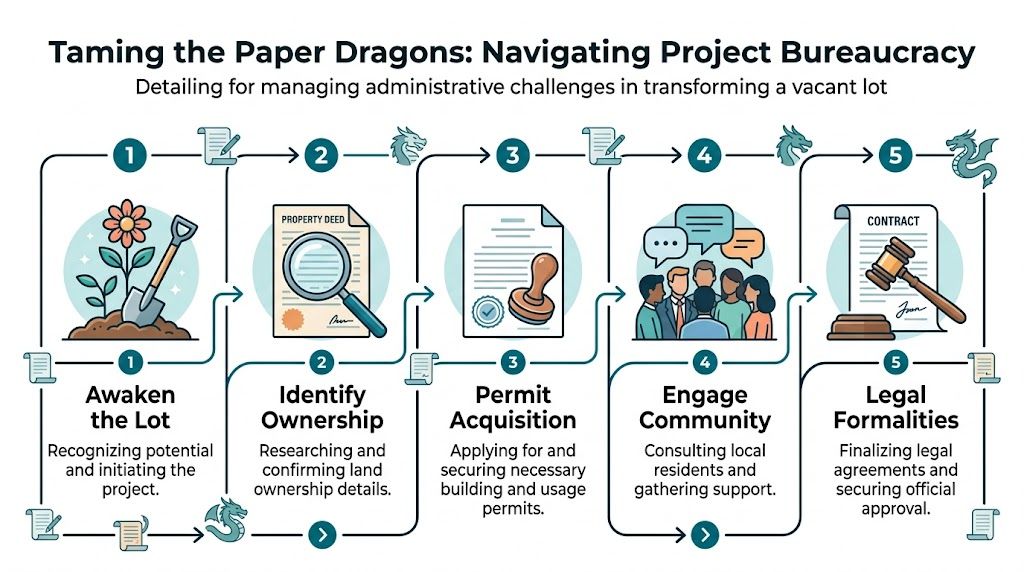
    A flowchart showing five steps to navigate bureaucratic challenges for a vacant lot transformation project.

    The bargain always hides the real price

    In the episode, the dangerous part isn’t just the object being offered. It’s the language. “Something of no value” sounds harmless until the cost lands. That’s why I think the story works so well as a metaphor for city process.

    The fan analysis of the episode’s Faustian bargain structure describes a temptation phase, a trade with hidden terms, and notes an 80% failure rate in simulations of ethically ambiguous bargains. I don’t treat that as urban policy data. I treat it as a sharp metaphor. Red tape often asks for things that sound minor at first. One more form. One more approval. One more week. Then you realize the actual payment is your time, your emotional energy, and your ability to stay hopeful while progress stalls.

    I’ve felt that drain firsthand. A lot that seems worthless to the system can cost you dearly in persistence.

    My rule for paper dragons

    I don’t fight bureaucracy by pretending it’s simple. I fight it by making it visible.

    When I’m trying to move a lot project forward, I break the process into tangible quests:

    • Find the owner: You need clarity before you need optimism.
    • Ask dumb questions early: I’d rather sound inexperienced than lose months to assumptions.
    • Keep a written trail: Names, dates, emails, calls. Memory gets foggy when delays pile up.
    • Expect hidden labor: Every “small step” may contain three unstated sub-steps.
    • Look for human allies: One kind person inside a system can save you from ten dead ends.

    That last point matters most. Systems feel faceless until you meet someone who actually wants to help. Then the maze gains a lantern.

    Winning the right to build

    A lot of people romanticize the build phase and skip over the administrative struggle. I don’t. I think the legal right to care for a place is part of the heroic arc.

    When I dealt with ownership questions, permission layers, and all the little official hurdles that make a project feel slippery, I had to learn patience as a physical skill. Not positive thinking. Actual discipline. Open the email. Follow up again. Save the document. Show up to the meeting. Clarify the requirement. Repeat.

    Sometimes a dream survives because somebody is stubborn enough to keep answering messages.

    Bureaucracy doesn’t just test your plan. It tests whether your care can outlast confusion.

    That’s why I tell people to prepare for hidden costs long before they prepare for landscaping. If you’re entering this process, don’t just ask, “Can we get the lot?” Ask, “What will this ask from our spirit?”

    Gather support without losing your mind

    You can make the paper side less painful if you organize your support early. That support might include neighbors who back the project, volunteers willing to make calls, or practical funding help while the process drags on.

    If you need a starting point for the money side, I’d look at practical ideas for grants for gardens and community green projects. Not because grants solve everything, but because they can give structure to the dream while you’re still cutting through legal fog.

    I also like a simple working chart during this phase:

    Challenge What I do
    Ownership is unclear Confirm records before making promises
    Permits feel vague Ask for the exact next step in writing
    Delays keep stacking Set a follow-up rhythm and stick to it
    Team gets discouraged Share progress in small, concrete updates

    Resilience is part of the permit

    The funniest lie about community work is that land is the hard part and paperwork is just admin. Sometimes the paperwork is the mountain.

    But I don’t hate that fact anymore. The struggle purifies the motive. If you keep going after the novelty is gone, after the forms multiply, after the shiny fantasy of “we should make a park” turns into slow institutional labor, then your dream is real. It has muscle.

    And once you’ve earned your way through the maze, you don’t just hold a parcel. You hold a deeper kind of legitimacy. You fought for the right to imagine in public.

    Building Your Band of Heroes

    A lot never changes because one person has a beautiful vision. It changes because a group of people decides to carry bags, move branches, haul mulch, make calls, share jokes, and come back when the first burst of excitement is gone.

    That’s why I care more about the team than the blueprint.
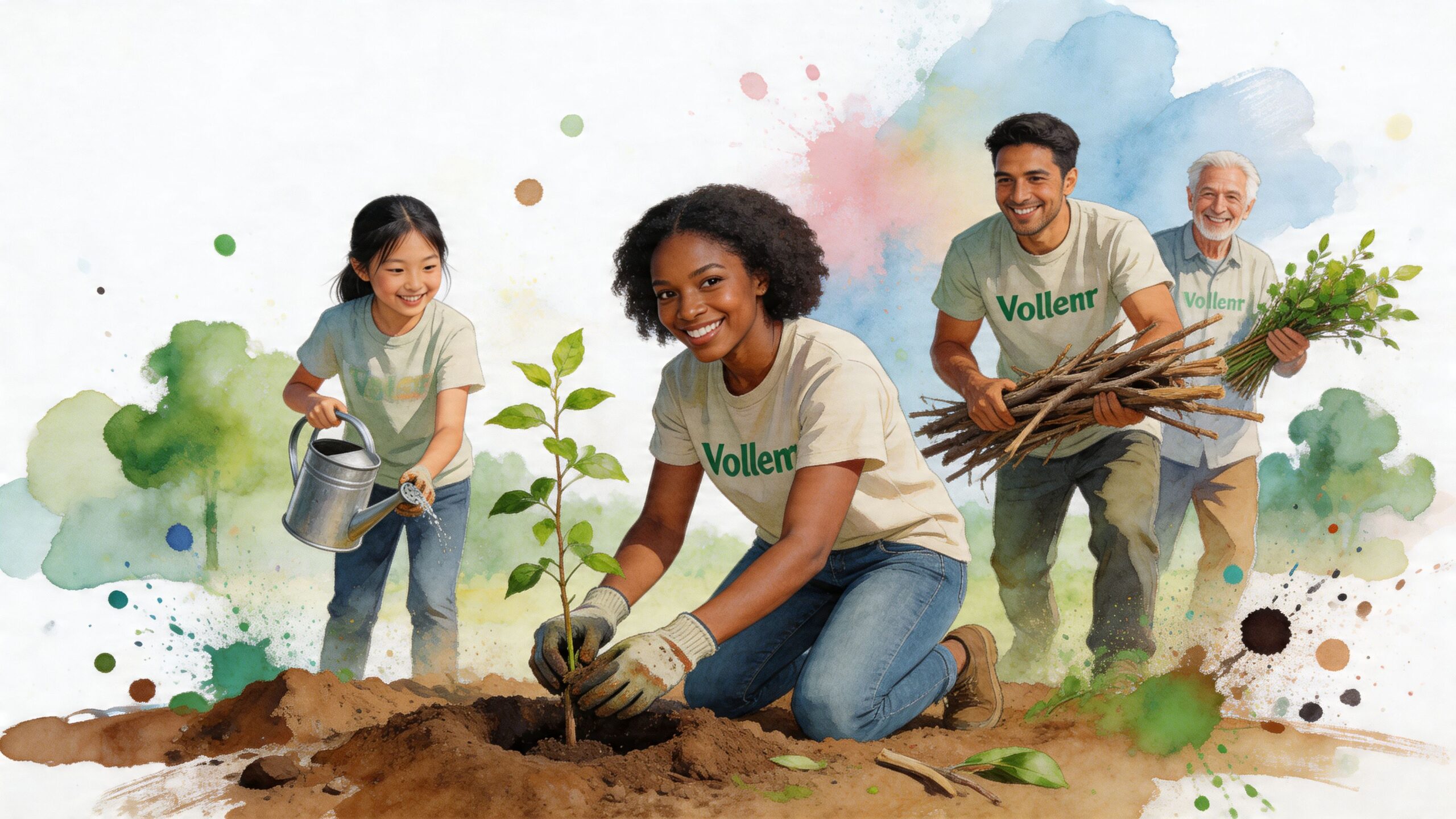
    A diverse group of volunteers of various ages working together to plant and water a small sapling.

    Choose people before perfection

    I learned early that a volunteer group has to protect its energy the way a campfire protects flame from wind. If the social atmosphere gets sour, if people feel used, if safety gets sloppy, the whole project weakens even when the plan looks impressive on paper.

    So I look for givers. Not saints. Not superheroes. Just people who can wake up on a weekend morning and offer their effort without needing the world to revolve around them.

    Weekend mornings matter for that reason. They create a gentle filter. The people who come are often the people who are ready to build something steadier than a fleeting good intention.

    Culture beats hype

    I love practical tools, but culture is the real engine.

    Give people something to belong to and they stand taller. That can be as simple as a group chat that feels warm, a shared ritual before work begins, a flag, a song, a nickname, a badge, a running joke, or the habit of celebrating gritty effort instead of polished image. Sports teams understand this. Nations understand this. Service groups should understand it too.

    A lot project needs identity because hard work gets easier when people feel they’re part of a brave little fellowship rather than a random pile of strangers holding trash grabbers.

    Here’s what I defend hard in any volunteer culture:

    • Safety comes first: Nobody should feel pressured to take dumb risks.
    • Happiness comes next: A burned-out volunteer doesn’t become a long-term builder.
    • Money pressure stays out: Service should feel clean, not extractive.
    • Friendship is not a side effect: It’s one of the main outcomes.

    The project people remember isn’t the one with the slickest concept. It’s the one where they felt useful, safe, and glad they came.

    A selfless group changes the ending

    One reason I keep thinking about the tale of the vacant lot is its ending. The curse breaks through sacrifice, not cleverness alone. The episode analysis tied to the “Power of Love” trope says that kind of self-sacrifice has 88% efficacy in similar narratives, and it notes that group-centered stakes building performs 92% higher than solo efforts in that framing. Again, I don’t treat that as field research on volunteer management. I treat it as a story truth with real bite. Selfless groups survive setbacks better than isolated heroes.

    That’s exactly what I’ve seen. One person gets sick, tired, discouraged, busy, or overwhelmed. A group absorbs the blow. A group can keep the story going.

    How I recruit without sounding fake

    I don’t like manipulative outreach. I’d rather be clear than flashy.

    When I invite people, I tell them what the work is, where we’re meeting, what they should wear, and why it matters. I don’t promise magic. I promise effort, company, and a visible result. Ironically, that honesty attracts better people than inflated language ever will.

    If you want practical ideas for outreach, this guide on how to find volunteers can help you think through where people gather and what makes them say yes.

    Here’s the recruitment test I use in my head:

    If my message says this It attracts
    “Come be part of something amazing” Curiosity, maybe
    “Come clean this lot with us Saturday morning” Commitment
    “No pressure, all welcome, bring gloves if you have them” Kindness and realism

    A humble invitation often travels farther than a glamorous one.

    Let people become heroes slowly

    Not everybody arrives bold. Some show up shy. Some come because they’re lonely. Some need structure. Some want to do good but haven’t found their people yet.

    I respect that. I don’t need every volunteer to arrive as a crusader. Often the transformation is gradual. A person comes once, then again. They start carrying extra bags for others. They learn names. They suggest ideas. They laugh more easily. They become dependable almost without noticing it.

    Later in the story, that person is part of the backbone.

    A short film can sometimes communicate that spirit better than another paragraph can. This one captures the feeling of people working side by side for something larger than themselves.

    Build the fellowship and the lot will follow

    I’ve seen groups with modest tools do excellent work because the chemistry was strong. I’ve also seen well-resourced efforts sag because the people never bonded.

    That’s why I’ll keep arguing the same point. The park is not the only project. The people are the project too.

    When volunteers trust one another, hard days become stories instead of burdens. Rain becomes a memory. Delays become a shared enemy. Heavy lifting turns into a joke somebody repeats months later. Community isn’t decoration around the work. It’s the force that lets the work continue.

    Crafting the Future from Dirt and Dreams

    Once the lot is legally yours to shape and the team has some rhythm, the dream stops being private. Now it has to survive contact with real preferences, real constraints, and real budgets.

    This is my favorite phase because it turns vague hope into objects you can point at. Paths. Beds. Benches. Fences. Saplings. Seating. Shade. The lot starts answering back in a new language.

    Let the neighborhood draw the map

    I don’t trust a design that only lives in one person’s head.

    A better process starts with listening on site. Walk the perimeter with neighbors. Ask where water pools. Ask what they’re tired of seeing. Ask what would make them use the space. A parent may want room for kids to move. An older resident may want a bench in shade. A volunteer may care about native plants. Somebody else may just want the dumping to stop.

    Write those answers down. Then look for overlap.

    I like a rough three-part sorting method:

    • Needs: Safety, cleanliness, access, visibility
    • Uses: Gathering, resting, gardening, play
    • Character: Color, art, signage, little touches that make the place feel loved

    That keeps design grounded. A lot doesn’t become meaningful because it looks expensive. It becomes meaningful because people recognize themselves in it.

    If the community can’t see its own reflection in the design, the lot may be cleaner, but it still won’t feel awake.

    Use money creatively, not worshipfully

    A lot of people freeze when they think about funding because they assume real transformation needs a massive budget. I don’t think that way.

    I think in layers. What can volunteers do by hand? What can neighbors donate? Which local businesses might offer materials instead of cash? Where can you source reclaimed items? What can be built in phases instead of all at once?

    Grassroots fundraising works best when it feels tangible. A small neighborhood event. A crowdfunding ask tied to a specific object. A request for lumber, soil, tools, or plants rather than an abstract appeal. People like to see what their contribution becomes.

    And sometimes the city itself has overlooked resources if you’re willing to ask around and stay persistent. Wood chips, extra materials, old planters, surplus supplies. Not glamorous. Useful.

    Build with what you have, then improve

    I’d rather start with a modest build that people use than wait forever for an ideal version that never lands.

    That means making decisions like these:

    1. Clear circulation first. People need to move through the space without confusion.
    2. Create one visible focal point. A bench, a garden bed, a sign, a tree. Something that says this place has intention.
    3. Add comfort early. Shade, seating, and simple beauty invite repeat visits.
    4. Leave room to evolve. The best community spaces stay editable.

    If I’m short on resources, I ask one practical question over and over. What can we build right now that makes the next stage easier?

    That approach lowers stress. It also keeps the group from getting trapped in fantasy architecture.

    Resourcefulness makes the place feel alive

    A transformed lot often carries the fingerprints of improvisation. A border made from recovered material. Plants donated by a local nursery. A seating area assembled through favors, sweat, and careful scavenging. Those details matter because they tell the truth about how community spaces emerge.

    If you want examples of what neighborhood green spaces can become in Chicago, this page on community gardens in Chicago, IL offers a useful sense of the possibilities.

    I like projects that show their seams a little. Too much polish can feel distant. A community-built place should retain some evidence of the hands that made it. Not sloppiness. Humanity.

    Keep the dream practical

    I always bring the conversation back to maintenance. If a design element is beautiful but impossible for the group to sustain, it may become tomorrow’s burden.

    So I ask hard questions before installation. Who waters this? Who empties that? Who repairs this edge if it breaks? Who trims this planting bed in late summer? Dreams survive when responsibility has a name attached to it.

    That may sound less romantic, but I think it is true romance. Love is maintenance. Care repeated over time is what turns dirt into trust.

    Your Story Is Waiting to Be Written

    When a lot changes, people often focus on the before-and-after photos. I get it. Those photos are satisfying. Trash, then garden. Blight, then gathering place. Dirt, then laughter.

    But the deeper transformation doesn’t live in the images. It lives in the habits that form afterward.

    A cared-for space needs regular cleanup, seasonal workdays, people who notice when something breaks, and neighbors who use it. It needs birthdays, conversations, quiet afternoons, dog walkers, kids asking questions, adults sitting on benches after hard weeks. It needs life.

    A watercolor illustration showing children playing in a park with adults sitting on benches and a dog.

    The magic stays alive through repetition

    I think maintenance is honorable. Maybe even sacred.

    Anybody can love a ribbon cutting. Fewer people love weeding in awkward weather, picking up new litter after a windy weekend, or showing up when there’s no applause left. But that’s where a space becomes real. Repeated care tells the neighborhood this wasn’t a stunt. It was a promise.

    I also think programming matters. A small cleanup day. A planting morning. A neighborhood meet-up. A simple event gives people another reason to return, and return is everything. Spaces become beloved through familiarity.

    What the lot gave back

    I started this kind of work because my own life felt messy and hard to carry. I thought I was just trying to clean things up.

    I wasn’t. I was learning bravery.

    I was learning that suffering for a good cause has a bright side to it. Rain, cold, delays, setbacks, awkward conversations, sore backs, muddy shoes. Those things don’t ruin the story. They deepen it. They make the final place feel earned.

    The lot may begin as the wounded thing, but if you stay with it long enough, it starts healing you too.

    That’s the secret buried inside the tale of the vacant lot. The cursed trade is always the shortcut. The better path is slower. You give your labor freely. You accept inconvenience. You let community change your pace. In return, you gain something no quick bargain can offer. Self-respect.

    My challenge to you

    Find the neglected space that bothers you. The ugly corner. The sleepy lot. The place everybody has learned to ignore.

    Stand there for a minute and ask a harder question than “Who should fix this?” Ask, “Who could I become if I helped?”

    That question changed my life. It might change yours too.

    You don’t need to begin with mastery. You need gloves, honesty, and the willingness to be a little uncomfortable in public. Start with one cleanup. Talk to one neighbor. Invite two friends. Learn one rule. Carry one bag. Then do it again.

    A lot can wake up. So can you.


    If you want to turn that first brave cleanup into a real neighborhood story, join Litter Caterpillars. You’ll find a volunteer-driven crew in Chicago that shows up in all weather, builds friendships through service, and proves that cleaning a forgotten place can also rebuild the people doing the work.

  • 12 Winning Garden Grants for Schools: Your 2026 Funding Guide

    12 Winning Garden Grants for Schools: Your 2026 Funding Guide

    I know that ache in your chest. You stand there, staring at a cracked patch of asphalt at school, but in your mind's eye, you see it. You see kids with dirt under their fingernails. You see them tasting a carrot they grew themselves. You see a green sanctuary humming with life, built by their own small hands. But then, the real world crashes in. Soil, seeds, lumber, shovels… it all costs money. Your dream feels like a boulder you’re supposed to move all by yourself.

    When I first started Litter Caterpillars, I stumbled upon a weird little secret. It's often easier to clean up someone else's mess—or in this case, to green up a shared space—than it is to tackle the clutter in our own lives. There's a power in shared purpose. You just need a nudge, a map, and a few friends to help you lift.

    This is your map. I'm going to guide you through the maze of garden grants for schools, but not like some boring textbook. Think of this as a treasure hunt. We’ll unearth national giants like the USDA and the Whole Kids Foundation, and we’ll also dig into hyper-local champions like Chicago's Space to Grow. For every grant, I’ll tell you the real story—the deadlines, the dollar amounts, and the insider tips that make an application sing.

    I'll show you exactly where to dig to find the gold that turns concrete into a classroom. This isn't just about getting a check. It’s about building something that echoes. Something that teaches courage, kindness, and togetherness, one tiny seed at a time. Let's go find that money and get our hands dirty.

    1. Whole Kids Foundation – Garden Grant

    If you're just dipping your toes into the world of garden grants for schools, let me introduce you to the Whole Kids Foundation. Think of them as the friendly, reliable neighbor who gets you started. Their whole process feels less like a sterile application and more like a handshake from a partner who genuinely wants to see you succeed. They have a predictable annual cycle, which is a gift when you're trying to plan a project.

    This grant is a beautiful, straightforward $3,000 cash award. You can use it for anything—from building the raised beds themselves to buying the soil that fills them and the seeds that will sprout from them. They designed it specifically for educational gardens, whether you’re breaking ground for the first time or expanding a garden you already love. Because they're so well-known, you can find stories of past winners all over the internet. It’s like getting a peek into hundreds of other schools' dreams to fuel your own.

    Now, while that $3,000 is a perfect catalyst for many, it can be competitive. My advice? Don't put all your seeds in one pot. You can learn how to mix and match funding by checking out our guide on finding a variety of grants for your garden.

    • Award: $3,000
    • Eligibility: K–12 schools, school districts, and non-profit organizations.
    • Best For: You, if you’re looking for a simple cash grant to kickstart or grow your educational garden.

    Apply Here

    2. USDA Farm to School Grant Program (Food and Nutrition Service)

    What if you're dreaming bigger than just a few garden beds? What if you see a future where your whole district changes its relationship with food? Then you need to meet the USDA Farm to School Grant Program. This is the heavyweight champion. This isn't just about planting kale; it's about rewriting the entire food story of your school, connecting the garden plot directly to the cafeteria tray, and building an educational legacy. The federal application is a beast, I won't lie. But the power you can unleash is breathtaking.

    USDA Farm to School Grant Program (Food and Nutrition Service)

    This grant is all about scale. With awards climbing up to half a million dollars, you can fund everything from curriculum design and teacher training to massive high-tunnel greenhouses. It’s built for sprawling, comprehensive projects that weave together local food, school lunches, and classroom lessons. You can see how different "tracks," like "Implementation" or "State Agency," let you choose your own adventure based on how big your dream is.

    The flip side of that massive potential? You need a team. You can't write this grant on a single Saturday. It’s an ironman triathlon, not a 5K. But it’s an opportunity to forge the partnerships and build the administrative muscle you need for real, systemic change, especially if you’re chasing those bigger garden grants for schools.

    • Award: Up to $500,000, depending on the grant track.
    • Eligibility: Schools, school districts, state and local agencies, tribal organizations, and non-profits working with you.
    • Best For: You and your district, if you're ready to build a comprehensive farm-to-school program with a serious budget.

    Apply Here

    3. KidsGardening – Youth Garden Grant

    If you're looking for the godmother of school garden grants, you’ve found her. KidsGardening has been doing this for decades, and you can feel their wisdom in every part of the process. Winning their Youth Garden Grant is like being welcomed into a long, proud lineage of garden educators. They provide a mix of cash and gear to bring your garden vision to life.

    KidsGardening – Youth Garden Grant

    What I love about this program is its holistic approach. You don't just get a check. You get a package that often includes cash alongside a thoughtfully curated box of tools, seeds, and curriculum from amazing sponsors. And get this—they have a Common Application system. You fill out one application and they consider you for several of their grant opportunities. It's a brilliant time-saver that gets your school’s story in front of multiple funders at once.

    The catch? This incredible support makes it fiercely competitive. Also, the award packages change from year to year depending on who the sponsors are, so you might not know the exact value when you apply. You have to think of it less like a guaranteed cash prize and more like a complete "garden-in-a-box" starter kit, which, for many of us, is exactly what we need.

    • Award: Varies; typically a package of cash and in-kind products/tools.
    • Eligibility: PreK–12 schools, school districts, and non-profit youth organizations in the US.
    • Best For: You, if you want a comprehensive package of funding, tools, and curriculum to launch or enrich your garden program.

    Apply Here

    4. GroMoreGood Grassroots Grant (KidsGardening + The Scotts Miracle‑Gro Foundation)

    Sometimes, you just need a little push. A little gust of wind at your back to get a project moving. The GroMoreGood Grassroots Grant, a team-up between KidsGardening and The Scotts Miracle-Gro Foundation, is that push. I tell everyone who feels intimidated by massive federal grants to look here first. It's designed to be approachable, to sprinkle its impact far and wide. The application is refreshingly simple, and they even offer it in Spanish, which tells me they really care about reaching everyone.

    GroMoreGood Grassroots Grant (KidsGardening + The Scotts Miracle‑Gro Foundation)

    What makes this grant a gem is its focus on small, winnable goals and the sheer number of awards they give out. You should think of it less as funding for a total garden makeover and more as a seed packet of money to buy your first raised bed, a fresh set of trowels, or a small hydroponics tower. A typical award is around $750, making it one of the absolute best garden grants for schools that are just starting or just need one specific thing to take their garden to the next level.

    That modest award size is its strength. It’s perfect for a specific need, but it won't build you a whole new garden from scratch. But because of that, your odds of winning are higher than with some of the bigger fish. It’s a fantastic confidence-builder. So don't be afraid to apply for just one piece of your bigger garden puzzle.

    • Award: Typically around $750
    • Eligibility: Schools and non-profit youth-serving organizations.
    • Best For: You, if you're a first-timer or just need a quick shot of cash for a specific garden part or upgrade.

    Apply Here

    5. Captain Planet Foundation – Project Learning Garden (PLG)

    If you're looking for the "easy button," the Captain Planet Foundation’s Project Learning Garden (PLG) is it. I think of this less as a grant and more like a complete garden starter kit dropped on your school's doorstep by a friendly superhero. They designed this program to eliminate the headaches. They give you everything you need to get growing, from the garden beds themselves to a mobile kitchen cart for cooking lessons. It’s an unbelievable resource if you feel overwhelmed by the thought of sourcing every single item yourself.

    Captain Planet Foundation – Project Learning Garden (PLG)

    The magic of PLG is its turnkey approach. Instead of cash, you typically get an in-kind package valued at around $6,000. That includes supplies, curriculum, and even training for you. It's one of the best garden grants for schools if you want to dive deep into hands-on learning and nutrition education. The foundation also partners with companies for regional contests, sometimes giving away full installations, which makes it even more exciting.

    The big challenge here is that availability is often tied to specific regions and corporate sponsorships. That makes it super competitive and not always an annual option where you live. You have to watch their website like a hawk for announcements in your area. But even if you don't win, the resources they offer are a fantastic blueprint for planning your own program.

    • Award: In-kind package (garden beds, supplies, mobile kitchen, curriculum) valued at ~$6,000.
    • Eligibility: K–12 schools, with availability dependent on regional sponsorships.
    • Best For: You, if you want a complete, turnkey garden and curriculum package with a strong focus on hands-on cooking and learning.

    Apply Here

    6. Captain Planet Foundation – ecoSolution Grants

    What if you could empower your students to be the heroes of their own environmental story? The Captain Planet Foundation's ecoSolution Grants are designed for exactly that. These grants are for projects driven by the kids themselves. It shifts the focus from just building a garden to solving a real-world environmental problem, making the garden a tool for change. This is the perfect way to connect your garden project to STEM goals and let genuine student leadership bloom.

    These grants are amazing because they are flexible and they celebrate creativity. They support a huge range of projects, from creating pollinator habitats to building hydroponic systems, as long as your students are in the driver's seat. Because the awards are smaller, it feels more attainable for schools just starting to explore grants. You can think of it as a powerful first step that validates your students' big ideas and gives them the confidence to dream even bigger next time.

    Now, while these smaller awards are perfect for specific projects, you'll likely need to pair them with other funds to build out a full garden. But I see this as an incredible teaching opportunity. This grant lets you teach your students about project management and budgeting, showing them how to build something meaningful, piece by piece. It’s a real-world lesson in what environmental stewardship means, right in your own schoolyard. You can dive deeper into this idea with your class by exploring what environmental stewardship means.

    • Award: Varies, typically $500–$2,500
    • Eligibility: K–12 schools and non-profit organizations.
    • Best For: You and your classroom, if you want to fund a student-led, problem-solving environmental project with strong STEM connections.

    Apply Here

    7. SeedMoney – Garden Grants + Crowdfunding Challenge

    If you're ready to rally your entire community, SeedMoney offers a unique and powerful way to secure garden grants for schools. It isn’t just a one-time handout. Instead, they give you a platform that combines a small starter grant with a 30-day crowdfunding challenge. It’s like a digital barn-raising for your garden. SeedMoney provides the first few beams, and then they empower you to build the rest with support from parents, local shops, and neighbors. You get to build both a garden and a loyal support system at the same time.

    SeedMoney – Garden Grants + Crowdfunding Challenge

    The real genius is in this hybrid model. You start with a small grant from them, then you launch your own fundraising page on their site. You keep 100% of the money you raise, and you can even win extra bonus grants by being one of the top fundraisers. They give you toolkits, graphics, and even garden design software to help you succeed. This approach means your funding isn't capped; it’s scalable.

    The main thing to know is that this requires you to run an active campaign. Your success is all about your ability to reach out and get people excited. If your school has a buzzing PTA or a strong social media game, this could be the most rewarding path you take. It turns the boring grant process into an inspiring, community-wide celebration.

    • Award: Micro-grants plus 100% of funds raised via crowdfunding and potential bonus grants.
    • Eligibility: Public and private schools, non-profits, and community groups planning food garden projects.
    • Best For: You and your school, if you have a strong community network you can activate for a fun fundraising campaign.

    Apply Here

    8. Wild Ones – Lorrie Otto Seeds for Education (SFE) Grants

    If your vision for a school garden is less about neat rows of lettuce and more about buzzing bees, fluttering butterflies, and plants that sing a song of your local ecosystem, then you need to know about the Wild Ones Lorrie Otto Seeds for Education Grant. This isn't just about getting money; it’s about joining a tribe. A tribe of people who are passionate about restoring native habitats. They don't just mail you a check. They connect you with a network of local chapter members who become your mentors, helping you choose the right native species and plan your planting day.

    Wild Ones – Lorrie Otto Seeds for Education (SFE) Grants

    This grant is specifically for creating outdoor classrooms that feature native plants. The funding is usually modest, but it’s perfectly aimed at buying the materials you need for a pollinator or habitat garden. What makes this program truly special is the emphasis on getting kids involved and the incredible support from the Wild Ones chapter network. These local experts give you priceless advice, turning your grant from a simple transaction into a long-term community partnership. This is one of the best garden grants for schools that want to focus on ecology.

    Now, while this is a golden opportunity for a habitat project, you have to remember its specific focus. This grant isn't for edible vegetable gardens. If your dream is a "farm-to-table" program, you’ll need to look at other options on this list. But if you want to teach your students about biodiversity and the magic of your local ecosystem, the SFE grant gives you the seed money—and more importantly, the community roots—to make it happen.

    • Award: Varies, typically around $500 in funds and/or materials.
    • Eligibility: Schools and non-profit organizations serving youth (preschool through high school).
    • Best For: You, if you're focused on creating native plant habitats, pollinator gardens, and outdoor ecological classrooms.

    Apply Here

    9. American Heart Association – Teaching Gardens / Teaching Gardens Network

    What if your school garden was more than just a place to grow vegetables? What if it became a living, breathing laboratory for heart health and good nutrition? That's the powerful vision behind the American Heart Association's Teaching Gardens Network. I think this program is brilliant because it frames the garden's purpose in a way that your principal and district leaders will instantly understand and support: it’s about student wellness. When you connect your garden to health outcomes, you make an incredibly strong case for support.

    American Heart Association – Teaching Gardens / Teaching Gardens Network

    Joining their network is free, and it immediately unlocks a treasure chest of resources for you—lesson plans, training, and a community of other educators. While this isn’t a traditional grant with a guaranteed annual check, the AHA periodically offers mini-grants or fully-stocked garden kits to members of its network. You should think of it less as a one-time funding shot and more as a long-term partnership. The free resources help you build a stronger program, which makes your school a top candidate when those special funding opportunities do pop up. It's a fantastic way to find other funding while tying your garden to a mission of lifelong health. Plus, you can always integrate native plants to attract wildlife and teach ecology, which you can learn about at your local native plant sale.

    Even if the funding isn't a sure thing every year, the educational framework they give you is priceless. The real value is the powerful, health-focused story it helps you tell about your project.

    • Award: Varies; periodic mini-grants and garden kits. Main benefit is free access to a resource network.
    • Eligibility: K–12 schools can join the free network; grant opportunities are for network members.
    • Best For: You, if you want to connect your garden to a strong health and nutrition curriculum and gain access to a supportive educational community.

    Apply Here

    10. Sprouts Healthy Communities Foundation – School Garden Support

    If your school is lucky enough to be near a Sprouts Farmers Market, you have an incredible partner hiding in plain sight. The Sprouts Healthy Communities Foundation doesn’t just write checks from a distance; they roll up their sleeves and dive in with you. Think of them as the energetic neighbor who shows up on build day with tools, a team of helpers, and expert advice, turning your garden project into a true community festival. Their support goes way beyond a simple cash award, often including donated materials and, best of all, volunteer build days with their own team members.

    Sprouts Healthy Communities Foundation – School Garden Support

    This foundation is unique because it invests in the whole school garden ecosystem. Yes, they give grants, but they also fund professional development for teachers and host summits to help you become a more confident garden leader. This focus on building your capacity means their impact lasts long after the grant money has been spent. They fund schools directly and also support the local non-profits that help school gardens thrive, creating a powerful web of resources.

    The main thing to keep in mind is geography—their support is focused on communities near their stores. Some of their funding might also be by invitation only. My advice? Get to know your local Sprouts store manager. Making that personal connection can be the single best first step you take toward securing one of these valuable garden grants for schools.

    • Award: Varies (includes financial grants, in-kind support, and volunteer labor).
    • Eligibility: K–12 schools and non-profit organizations located near Sprouts Farmers Market stores.
    • Best For: You, if your school is in a Sprouts community and you're looking for a hands-on partner to help with builds, training, and community buzz.

    Apply Here

    11. Illinois Schoolyard Habitat Action Grant (SHAG)

    For my fellow Illinois educators, especially those of you in the Chicago area, let me put a spotlight on the Schoolyard Habitat Action Grant, or SHAG. This isn't your average garden grant. It’s a special program designed to help you transform a piece of your school grounds into a vibrant native Illinois habitat. I want you to think less about vegetable rows and more about creating a pocket of prairie, a pollinator garden buzzing with life, or a rain garden that solves a drainage problem while teaching science. It’s about building a living lab that connects your students directly to our state's natural heritage.

    Illinois Schoolyard Habitat Action Grant (SHAG)

    The state's focus on native species makes this grant a perfect match for integrating local ecology into your science lessons. They give you two paths: one provides a pre-selected pollinator garden kit, and the other lets you design a more custom habitat project for up to $2,000. This is one of the most powerful garden grants for schools if you want to foster biodiversity and teach critical environmental science.

    Here's the key thing you need to plan for: this is a reimbursement grant. That means your school has to buy the materials first and then submit the receipts to get paid back. So, this works best if you have some starter funds or a super supportive PTO. Also, since edible gardens aren't eligible, you need to be sure your vision aligns perfectly with creating a native Illinois ecosystem on your campus.

    • Award: Up to $2,000 (reimbursement-based).
    • Eligibility: Illinois schools, both public and private.
    • Best For: You, if you're an Illinois educator focused on creating a native pollinator, prairie, or rain garden that connects to your science standards.

    Apply Here

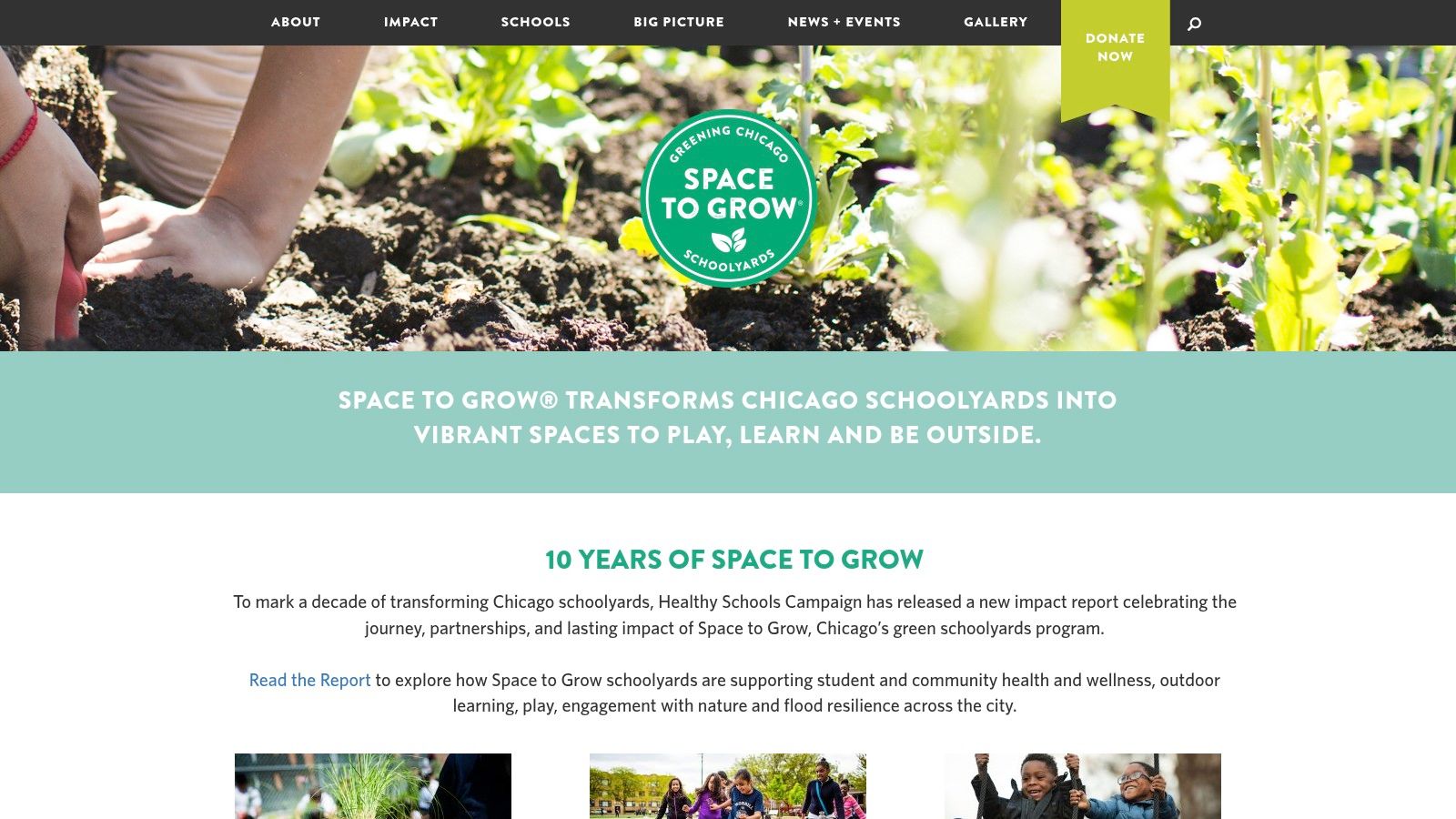
    12. Space to Grow – Chicago Green Schoolyards (CPS partnership program)

    For my Chicago Public Schools family, let's talk about dreaming big. I mean, really big. Space to Grow isn't a garden grant; it's a total schoolyard reinvention. This is a powerful partnership between Healthy Schools Campaign, Openlands, and CPS that transforms entire asphalt deserts into vibrant green spaces with outdoor classrooms, natural play areas, and stunning native gardens.

    Space to Grow – Chicago Green Schoolyards (CPS partnership program)

    This is the ultimate makeover for a CPS schoolyard. Instead of giving you a check, Space to Grow brings in a team of experts to design and build a green schoolyard that also manages stormwater—a huge issue for our city. It's a complete campus revitalization that gives your students a world-class outdoor environment for years to come. You have to think of this less as a grant and more as a deep, multi-year collaboration.

    Because this is a massive capital project, the process is much longer and more competitive than a simple equipment grant. This isn't a quick victory. It's a deep, lasting one for the schools that are chosen for the cohort. If your school is ready for a major, transformative change, you have to explore a partnership with Space to Grow.

    • Award: Full schoolyard redesign and capital project (value is in the hundreds of thousands).
    • Eligibility: Chicago Public Schools (CPS) only.
    • Best For: You, if your CPS school is ready for a major, long-term capital improvement project that integrates gardens, play, and environmental education.

    Apply Here

    School Garden Grants: 12-Program Comparison

    Program Funding & Value 💰 Core Features ✨ Best for 👥 Ease & Admin ★ Standout 🏆
    Whole Kids Foundation – Garden Grant 💰 $3,000 flat ✨ Annual cycle, webinars, K–12 edible gardens 👥 Schools & youth orgs starting edible gardens ★★★★☆ (straightforward) 🏆 Predictable, educator-focused
    USDA Farm to School Grant Program 💰 High — multi-year/district funding ✨ Multiple tracks; equipment, training, curriculum support 👥 Districts & multi-site programs ★★☆☆☆ (complex federal process) 🏆 Large-scale, systemic impact
    KidsGardening – Youth Garden Grant 💰 Variable (competitively awarded) ✨ Common Application; strong educator resources 👥 PreK–12 classrooms & youth groups ★★★★☆ (streamlined across programs) 🏆 Teacher-friendly support & materials
    GroMoreGood Grassroots Grant 💰 ~$750 micro-grant ✨ Many awards; flexible uses; Spanish materials 👥 First-time applicants & small projects ★★★★★ (easy, short app) 🏆 Accessible with high award odds
    Captain Planet – Project Learning Garden 💰 In-kind package ≈ $6,000 value ✨ Turnkey beds, Mobile Kitchen Cart, curriculum & installs 👥 Schools wanting turnkey garden + cooking lessons ★★★☆☆ (region/sponsor-dependent) 🏆 Reduces procurement & logistics
    Captain Planet – ecoSolution Grants 💰 Small mini-grants ✨ Student-led, STEM-linked projects with measurable outcomes 👥 Student teams & project-based classrooms ★★★★☆ (flexible, project-focused) 🏆 Emphasis on student leadership
    SeedMoney – Grants + Crowdfunding Challenge 💰 Variable — crowdfunding + bonuses ✨ Hybrid micro-grant + 30-day campaign; toolkits & design tools 👥 Schools with strong community outreach ★★★☆☆ (requires active fundraising) 🏆 Scalable via community donations
    Wild Ones – Lorrie Otto Seeds for Education 💰 Modest awards for native plants ✨ Native/pollinator focus; chapter mentorship & plant sourcing 👥 Schools building pollinator/native habitats ★★★★☆ (local chapter support) 🏆 Excellent for native habitat education
    American Heart Association – Teaching Gardens 💰 Variable; network resources often free ✨ Nutrition & heart-health curriculum, training, mini-grants 👥 Schools tying gardens to health education ★★★★☆ (resource-rich network) 🏆 Health framing aids district buy-in
    Sprouts Healthy Communities Foundation 💰 Grants & in-kind near Sprouts markets ✨ Volunteer build days, PD, media support 👥 Schools/partners in Sprouts communities ★★★☆☆ (geo-limited/opportunity-based) 🏆 High-visibility volunteer engagement
    Illinois Schoolyard Habitat Action Grant (SHAG) 💰 Up to $2,000 (reimbursement) ✨ Native habitat projects; clear tutorial & options 👥 Illinois schools (Chicago-area relevant) ★★★☆☆ (reimbursement admin) 🏆 State-tailored for Illinois ecology
    Space to Grow – Chicago Green Schoolyards 💰 Capital program — major builds ✨ Full yard redesign, stormwater, outdoor classrooms 👥 Chicago Public Schools seeking large transformation ★★☆☆☆ (competitive, long timeline) 🏆 Transformational, multi-agency backed

    Your Turn to Be Brave: How to Make Your Garden Dream a Reality

    So, we've walked through a whole forest of possibilities. You've met the big national players like the Whole Kids Foundation and the USDA Farm to School Grant, programs that can fund enormous projects. We've peeked into specialized paths, like the Wild Ones grant for native habitats or the brilliant crowdfunding model of SeedMoney. And for my fellow Chicagoans, we've zeroed in on our local heroes like the Illinois Schoolyard Habitat Action Grant and the game-changing Space to Grow program.

    I get it. It’s a lot. Looking at all those applications and deadlines can make your field of dreams feel more like a mountain of paperwork. But let me tell you a secret I learned during a freak Chicago hailstorm, huddled under an awning with the very first Litter Caterpillars volunteers. We were cold. We were soaked. We had only cleaned up half a block. It felt like we were failing.

    But you know what? That struggle is the best part of our story now. It's the flavor. Shivering together is what bonded us. It’s what made the eventual sunshine feel so much warmer.

    From List to Action: Your First Brave Step

    The real challenge isn’t finding the right grant. It’s finding the courage to start writing. It’s scary to ask for money. I know. It feels vulnerable to put your school's dream on paper, knowing you might get a "no."

    But that fear is the price of admission for doing something meaningful. It's true for starting a community group, and it's absolutely true for you as you chase one of these garden grants for schools. The fear tells you that you're aiming for something that matters.

    So, here is my challenge to you:

    1. Pick just one. Don't let yourself get overwhelmed. Are you just starting out? The KidsGardening Youth Garden Grant is a fantastic place to begin. Are you an established Chicago program ready for a massive transformation? You need to look hard at Space to Grow. Choose the one that whispers, "this could be us."
    2. Download the application. Go to the website right now. Find the PDF. Look at the online portal. Just look at it. You don't have to fill it out yet. I just want you to do this one simple thing. It turns an abstract idea into a concrete task.
    3. Start telling your story. Forget what you think "grant writing" sounds like. Just write. Why do you want this garden? What's the story of that ugly asphalt lot you want to destroy? Who is the one student you keep picturing with their hands in the soil for the first time? You need to tell that story. Perfection is a myth. Passion is a magnet.

    Your first grant application might feel small and clumsy. You might feel like just a few people shivering under a tree. That’s okay. That is exactly how transformations begin. Every beautiful community garden you've ever admired started with one person's brave "what if."

    Remember, grant funders don't just fund projects; they invest in your vision and in you. They want to know you have support. They want to see that you have a team. Sometimes, the best way to show them that is to get your hands dirty before you even get the check.

    Think about it. A proposal that says, "We partnered with a local volunteer group to clean up our proposed garden site" is a hundred times stronger than one that doesn't. It shows you have initiative. It shows you can rally people. It shows you’re a good bet.

    So go be brave. Go download that application. Go paint that fence, or pull those weeds, or just start talking to people. You have everything you need to begin.


    Ready to show grant funders you have real community buy-in for your school garden project? Partner with Litter Caterpillars for a schoolyard cleanup event that proves you’re ready to build. We bring the people, the energy, and the spirit of service to make your site sparkle, giving you the perfect "before" and "after" story for your application. Get in touch with Litter Caterpillars today and let’s build this dream together.