
From My Messy Fridge to a Citywide Movement: Let's Talk Real Community Engagement
I want to tell you a story. It starts with old blueberry jam and a bad breakup. My apartment was a disaster, and honestly, so was my life. I remember looking at a piece of trash, this monument to some past failure, and it felt like it weighed 500 pounds. Impossible. How could I ever clean up my own mess, let alone anyone else's?
Then something shifted. I found myself huddled under a tree during a freak Chicago hailstorm with two friends after our very first trash pickup. We were freezing, soaked, miserable. But cleaning up someone else's mess? It was fun. The suffering, the freezing cold—it wasn't a punishment anymore. It became a story. A beginning. That was the moment I knew the Litter Caterpillars were truly born. This isn't just about picking up litter; it's about the kind of radical transformation that happens when you decide to show up for your city, for each other, no matter what.
What you're about to read isn't theory. I’m giving you the hard-won lessons, the secrets to our success, the community engagement best practices we’ve learned from the front lines. I figured this out not from a textbook, but from three years of cleaning every single week, in blizzards and heatwaves, across all 50 of Chicago's wards. We went from three shivering friends to a citywide movement with thousands of volunteers, corporate sponsors, and even our own piece of land.
This guide is for you. It’s for you if you've ever looked around and felt that small, persistent ache to do something more. I want to show you how to turn a small idea into a genuine force for good, a community that changes you as much as it changes your neighborhood. Let's get started.
1. Identity and Pride Through Symbols (Flags, Badges, Theme Songs)
Imagine you're turning a simple neighborhood cleanup into something that feels like a city-wide movement. You aren't just picking up litter; you are part of an inspired team with its own soul. That's the power of symbols. When I created a distinctive visual and auditory identity using flags, badges, and even a theme song, I watched us foster a deep sense of pride and belonging among our volunteers. This simple act turns routine work into a mission. A culture.
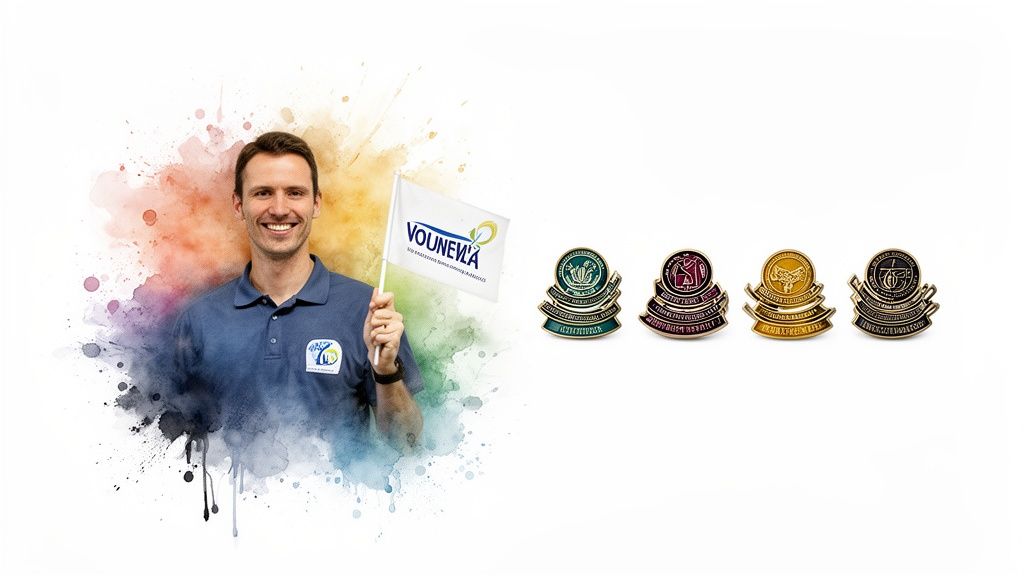
This is one of the most effective community engagement best practices because it taps into something primal inside all of us: the need to belong to something bigger than ourselves. When one of my volunteers carries our group's flag through a park or earns a special badge, they are no longer just an individual helping out. They become an ambassador. A hero for a shared cause.
How to Build Your Group's Symbolic Identity
Chicago's own Litter Caterpillars provide a brilliant blueprint. I didn’t just create a logo; I commissioned a custom theme song by artist Ella Duke that gets everyone energized. Our vibrant, recognizable flags make our cleanup events feel like a celebratory parade through the neighborhood. This isn't just branding. It's world-building.
Here’s how you can do it too:
- Co-Create Your Symbols: Don't impose a design from the top down. You should hold a workshop where volunteers brainstorm ideas for a flag, logo, or mascot. When they help you create it, they will feel a much deeper connection to it.
- Design Meaningful Badges: Think like the Boy Scouts or Girl Scouts. You can create achievement badges for milestones like "First Cleanup," "Recruited a Friend," or "Cleaned Up 10 Parks." This gamifies participation and gives you a way to provide tangible recognition for dedication.
- Feature Symbols Everywhere: Splash your logo and colors across your social media, your recruitment flyers, and your event pages. When people see your flag in a photo, they’ll instantly recognize your group's positive energy and impact.
"A flag isn't just a piece of cloth. For us, it’s a story, a rallying cry, and a promise we make to our community. When you see it, you know we're here to make a difference, together."
Ultimately, these symbols transform volunteering from a task into an identity. They help you build a powerful culture that attracts new members and keeps dedicated volunteers coming back, united under a banner of shared purpose and pride.
2. Strategic Time Scheduling to Filter for Values Alignment
Let me tell you about two volunteer groups. One meets whenever it's convenient, with inconsistent times that change weekly. The other meets every single Saturday at 9 AM, rain or shine. Which group do you think builds a more dedicated, core team? The answer, I’ve found, lies in the power of intentional scheduling. By deliberately choosing specific, consistent times, you communicate your group's values and attract members who share that same level of commitment.
This is one of the most underrated community engagement best practices because it goes beyond simple logistics. Scheduling becomes a filter. It self-selects for people who prioritize service over sleeping in, turning a simple time slot into a statement about your mission. It’s a quiet signal I use that says, "We are serious about this, and we are looking for others who are too."
How to Use Scheduling to Build a Committed Core
Litter Caterpillars founder Kevin Tao built his group's culture around this very principle. By consistently scheduling cleanups on weekend mornings, he attracted a community that values discipline and consistency. It’s a philosophy I see in high-commitment cultures everywhere, from CrossFit gyms with their 5 AM classes to meditation groups that meet at dawn. The barrier to entry creates a bond among those of us who choose to cross it.
Here’s how you can do it too:
- Be Transparent About the 'Why': When you announce your schedule, explain your reasoning. Say something like, "We meet every Saturday morning because we believe starting the weekend with service sets a powerful tone for our community."
- Celebrate the Commitment: I make a point to acknowledge the dedication it takes to show up. Publicly praise volunteers who have a consistent attendance record, reinforcing that you see and value their discipline.
- Use It in Your Narrative: You should weave your schedule into your group's story. It's not just a time; it's a ritual. This transforms the act of showing up from a choice into a shared habit that strengthens your community's identity.
"Our schedule isn't an accident; it's a declaration. It says we are willing to dedicate the best part of our weekend to our neighborhood. The people who join us feel the same way, and that's how we build a family."
Ultimately, a strategic schedule does more than just organize your events. It builds a tribe of the willing, a dedicated core of individuals whose actions align perfectly with the values you want your community to embody.
3. Vulnerability and Transformational Storytelling
Think about the stories that truly move you. They aren't the ones about perfect people having perfect days. They are the stories of struggle, of overcoming adversity, and of finding meaning in the mess. This is the heart of vulnerability. When I share the real, unpolished origin story of my group, including the struggles and doubts, I invite people into a mission that feels human, authentic, and deeply meaningful.

This approach is one of the most powerful community engagement best practices because it builds trust on a profound level. When I share my own moment of difficulty that sparked action, it gives others permission to be imperfect. It allows them to see their own challenges not as weaknesses, but as potential sources of strength and purpose. It reframes suffering as a catalyst. A superpower.
How to Share Your Transformational Story
The origin of Chicago's Litter Caterpillars wasn't born from a strategic plan; it was sparked by a blizzard. Founder Kevin Tao saw the beauty of his neighborhood vanish under a storm of trash and felt a deep sense of despair, which then transformed into a resolute call to action. Sharing this full emotional arc, from frustration to mobilization, makes the mission relatable. It makes it real.
Here’s how you can do it too:
- Share the Full Arc: Don’t just share the victory. You have to talk about the specific moment of struggle that led to a realization, which then fueled your action. This struggle → realization → action → transformation narrative is what I’ve found resonates with people.
- Be Specific, Not Vague: Instead of saying "I was frustrated," describe the specific scene, feeling, or event that triggered your motivation. Specificity makes your story feel real and allows others to connect their own experiences to yours.
- Invite Shared Stories: I always create space during events for others to share their "why." Ask them what brought them out and what challenges in the community they feel passionate about. This turns your personal narrative into a collective one.
"Your story of overcoming a challenge isn't just about you. It's an invitation. You’re inviting others to see the hero in themselves and believe that they, too, can turn a moment of difficulty into a movement of change."
Ultimately, vulnerability is a bridge. It closes the distance between you and a volunteer, transforming a group of participants into a deeply connected community united by shared experiences and a powerful, authentic mission.
4. Multi-Platform Community Connectivity (Meetup, Social Media, Group Chats)
Think about how you connect with different friends. You might plan big events over email. Share exciting moments on Instagram. Have rapid-fire chats in a group text. Your community group should be just as dynamic and accessible. By using a mix of platforms like Meetup for official events, Instagram for visual storytelling, and a group chat for real-time updates, you meet your volunteers where they are and empower them to connect in the ways they prefer.

This approach is one of the most vital community engagement best practices because it recognizes that a one-size-fits-all communication strategy just doesn’t work anymore. Some of my volunteers thrive on seeing beautiful photos of our impact, while others need the logistical clarity of an event calendar. When you offer multiple touchpoints, you ensure no one feels left out and keep the energy flowing between your cleanup events.
How to Weave Your Digital Community Together
Litter Caterpillars in Chicago is a masterclass in this. We use Meetup as our "source of truth" for event details, Instagram to share inspiring photos and reels that attract new members, and group chats to handle day-of logistics like "I'm running five minutes late!" or "Look at this cool thing I found!" Each platform has a distinct job, yet they all work together to build a vibrant, connected community. Want to dive deeper? I suggest you explore how to leverage these connections with more community building activities for adults.
Here’s how you can create your own connected ecosystem:
- Assign Each Platform a Job: You need to define a clear role for each channel. For example: Meetup is for RSVPs and event details. Instagram is for celebrating wins and recruitment. A WhatsApp or Signal chat is for immediate, on-the-ground communication during events.
- Create a Simple Onboarding Guide: When a new member joins, give them a quick rundown of your platforms and what each one is for. This prevents confusion and helps them plug into your community fabric from day one.
- Synchronize, Don't Duplicate: Let your platforms talk to each other. Your Instagram story can remind people to RSVP on Meetup. Your Meetup event description can link to the group chat. I make sure the content feels complementary, not just copied and pasted.
"Your community doesn't just exist during your events. It lives in the DMs, the photo tags, and the quick messages in between. If you nurture those digital spaces, you’ll build a movement that never sleeps."
By creating a multi-platform strategy, you’re building a resilient and accessible network. You’re giving your volunteers the power to engage on their own terms, transforming your group from a series of events into a constant, supportive, and active community.
5. Service-First Fundraising (No Volunteer Pressure, Sponsor-Based Model)
Imagine you show up to a volunteer event, excited to contribute your time, only to be hit with a request for money. It can feel transactional and awkward, shifting the focus from collective action to individual financial capacity. A service-first fundraising model protects your volunteers from this pressure entirely. When I committed to never soliciting donations from my volunteers, I created a space where their time and energy are the most valued contributions.
This approach is one of the most critical community engagement best practices because it builds psychological safety and trust. When people know they can participate fully without facing a financial ask, it lowers the barrier to entry and reinforces that their presence is the true gift. It sends a clear message from me to you: you are here to serve, not to be a source of revenue.
How to Fund Your Mission Without Asking Volunteers
The key is shifting your fundraising focus from individuals within your group to external partners who align with your mission. Chicago’s Litter Caterpillars again sets a powerful standard with our explicit "volunteer-first" policy. I secure funding through corporate sponsorships and grants, allowing us to provide all necessary supplies and support without ever asking volunteers to open their wallets.
Here’s how you can adopt this model:
- Be Explicit About Your Policy: I announced our "no-ask" commitment publicly on our website, social media, and at events. This transparency builds immediate trust and sets a welcoming tone for newcomers.
- Create Compelling Sponsorship Tiers: You can develop attractive packages for local businesses. Offer them tangible benefits like logo placement on your gear, social media shout-outs, and opportunities for their employees to volunteer as a team.
- Frame Sponsorship as Protecting Volunteers: When you pitch to potential sponsors, tell them their contribution does more than buy supplies; it protects the volunteer experience. Explain how their support allows you to maintain a purely service-focused, high-retention community.
- Offer Non-Monetary Support Options: For community members who want to give more, create alternative avenues. I ask for in-kind donations like gloves, trash bags, or snacks for events. This allows people to contribute tangibly without financial pressure.
"When we decided to never ask our volunteers for money, everything changed. People relaxed. They invited more friends. They knew their presence was what we valued most, and that trust is the foundation of our entire community."
This model transforms your group’s financial strategy from an internal obligation into an external partnership. It ensures your community remains centered on service, camaraderie, and shared impact, fostering a culture where you feel valued for who you are and what you do, not for what you can donate.
6. Inclusive Geographic Coverage (All 50 Wards, Including 'Avoided' Areas)
Imagine your group’s positive impact being felt not just in a few familiar neighborhoods, but rippling across every corner of your city. You aren't just cleaning up parks you know; you are building bridges and demonstrating a city-wide commitment to equity. This is the power of inclusive geographic coverage. By deliberately and systematically serving all areas, especially those often overlooked, you dismantle barriers and build trust where it's needed most.
This is one of the most powerful community engagement best practices because it proves your mission isn't just about convenience; it's about justice. When I see volunteers from different parts of the city working side-by-side in a neighborhood they've never visited, it confronts biases and builds a truly unified community. You're not just a North Side or a South Side group; you become a Chicago group.
How to Broaden Your Impact Equitably
The Litter Caterpillars embody this philosophy with their ambitious goal to host cleanups in all 50 of Chicago's wards. By creating a transparent rotation, we ensure no community is left behind. This isn’t just about logistics. It’s a profound statement that every neighborhood deserves care, attention, and investment. I've watched our work inspire volunteers to see and appreciate the entire city, not just their own block.
Here’s how you can do it too:
- Publish a Rotation Schedule: You should create a calendar that clearly shows which wards or neighborhoods you plan to visit and when. This transparency holds you accountable and lets residents know you’re coming.
- Build Local Bridges: Before you arrive in a new area, connect with local leaders, community groups, or aldermanic offices. I always ask them what their needs are and how we can best support their existing efforts.
- Share Stories from Everywhere: Use your social media and newsletters to highlight the unique beauty, challenges, and amazing people from every neighborhood you serve. This combats negative stereotypes and celebrates your city’s true diversity.
"True community isn't built in comfort zones. It's built by showing up, everywhere, for everyone. When we commit to all 50 wards, we're saying that every single Chicagoan matters."
Ultimately, this strategy transforms your group from a localized project into a unifying civic force. It challenges your volunteers to grow, forges unlikely connections, and sends a clear message that your commitment to a better city has no boundaries.
7. Authentic Partnership and Real Impact (Owned Land, Not Just Events)
Imagine your volunteers returning to a spot they once cleaned, not to find it littered again, but to see a thriving community garden or a vibrant pocket park they helped build. This is the difference between a one-off event and a lasting legacy. Moving beyond temporary cleanups to create permanent, tangible change is a powerful way to supercharge volunteer motivation. I give them a real sense of ownership and a visible monument to their hard work.
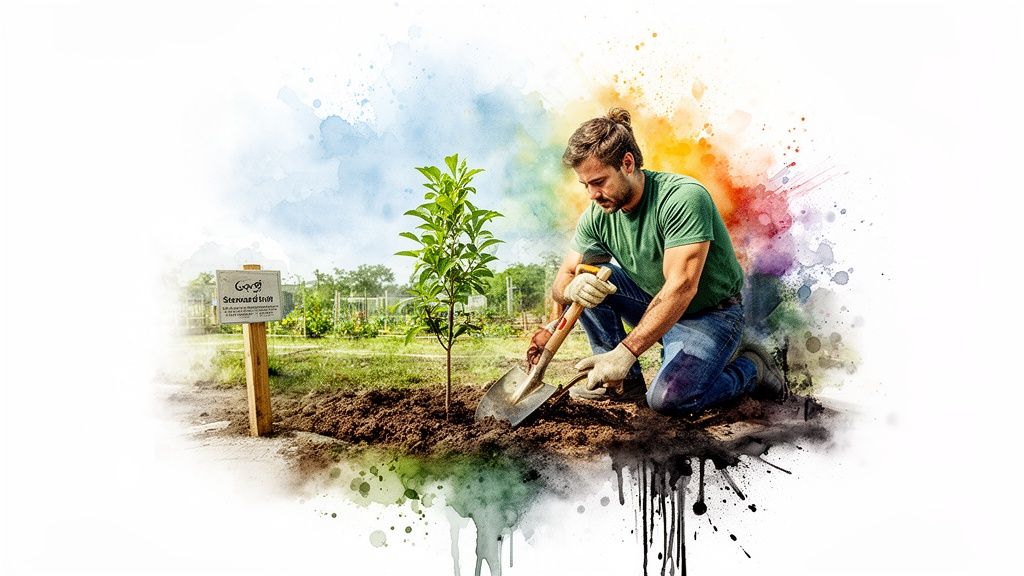
This is one of the most profound community engagement best practices because it transforms volunteering from a fleeting activity into a permanent investment in the neighborhood's future. When you can literally point to a park and say, "I helped build that," your connection to the cause and the community deepens immensely. It becomes a source of pride you can revisit for years.
How to Create a Lasting Legacy
Chicago’s Litter Caterpillars exemplify this perfectly with our Caterpillar Park project. We didn't just clean a vacant lot; we organized, raised funds, and won it at auction. Now, we are transforming it into a permanent public space for everyone to enjoy. This is placemaking in action. This is turning overlooked land into a community asset.
Here’s how you can achieve real impact:
- Scout for Opportunities: Start by identifying neglected spaces in your neighborhood. I look for vacant lots, overlooked public land, or forgotten corners that have potential for transformation.
- Build Strategic Partnerships: You can't do it alone. You have to connect with city agencies, local alderpersons, and property owners. These partnerships are crucial for gaining permission, resources, and support for your vision.
- Create Roles for Stewardship: A project doesn't end when the construction is done. You must plan for the long term by creating volunteer roles for ongoing maintenance, gardening, or event planning to keep the space vibrant and cared for.
- Start Small to Build Momentum: Your first project doesn’t have to be a full park. I suggest you begin with an "Adopt-a-Highway" commitment or a small community garden to build your group's capacity and prove your reliability.
"Don't just clean a space; claim it. When you turn a forgotten lot into a living garden, you're not just planting flowers—you're planting hope, ownership, and a legacy that will outlive us all."
Ultimately, creating tangible, lasting outcomes gives your volunteers a powerful answer to the question, "What did we accomplish?" They can see, touch, and experience the change they made, inspiring them and others to invest even more deeply in their community.
8. Selective Recruitment: Targeting Intrinsically Motivated Segments
Trying to be everything to everyone often means you end up being nothing special to anyone. Instead of casting a wide, generic net, imagine focusing your energy on finding the people who are already looking for exactly what your group offers. This is the core of selective recruitment: I identify and connect with specific groups who are intrinsically motivated to join my cause.
This approach is one of the most powerful community engagement best practices because it builds a stronger, more cohesive team from day one. When members share underlying values or life stages—a passion for sustainability, a desire for new friendships, a need for community—they connect faster and stay longer. You aren't just filling slots. You are gathering a tribe.
How to Find Your People
The key is to move beyond generic calls for "volunteers" and speak directly to the hearts of specific communities. Kevin Tao of Litter Caterpillars mastered this by targeting newcomers to Chicago, young professionals, and women seeking a safe and inspiring community space. The messaging wasn't just "help clean up"; it was "new in town? meet great people while making a real impact."
Here’s how you can do it too:
- Create Volunteer Personas: I ask, who is my ideal volunteer? Is it a young professional eager to network? A recent transplant looking to plant roots? A parent wanting to model civic duty? I define 2-3 key personas to guide my outreach.
- Tailor Your Message: Craft different messages for each persona. For the sustainability advocate, I talk about environmental impact. For the newcomer, I emphasize friendship and neighborhood exploration. You have to speak to their unique motivations.
- Partner Strategically: You must go where your target segments are. I partner with co-working spaces to reach young professionals, or with newcomer welcome groups on social media. This puts my message directly in front of the right people. Learn more about how to find the right volunteers for your group.
"When you stop trying to recruit everyone, you start attracting the right one. Your group's energy becomes magnetic because it's built on a foundation of shared purpose and genuine connection."
Ultimately, selective recruitment ensures your group is filled with people who aren’t just there to do a task, but are there because they truly believe in the mission and feel a sense of belonging. This focus creates a self-sustaining culture of high engagement and low turnover.
9. Peer-to-Peer Leadership Development and Distributed Ownership
Imagine your volunteer group not as a pyramid with you at the top, but as a thriving ecosystem where leadership grows naturally. When you empower dedicated volunteers to step up, take ownership, and guide their own small teams, you aren't just delegating tasks. You are cultivating the next generation of community leaders. This creates a resilient, sustainable movement that can outlast any single founder. Me included.
This is one of the most powerful community engagement best practices because it directly counters volunteer burnout and creates deep, lasting investment. When my members feel a true sense of ownership, they bring more creativity, energy, and commitment to the cause. I've watched it transform their role from simply showing up to actively shaping our group's future and success.
How to Cultivate Homegrown Leaders
The core idea I use is to create clear pathways for growth. Instead of one person organizing everything, you can have neighborhood "captains" or "team leads" who manage events in their specific area. This distributed model is exactly how many successful mutual aid networks and grassroots organizations thrive, ensuring the work is shared and localized.
Here’s how you can do it too:
- Create Clear Leadership Roles: You need to define what it means to be a "Team Lead" or "Neighborhood Captain." Outline their responsibilities, like coordinating a monthly cleanup or welcoming new members, so people know exactly what they are signing up for.
- Mentor, Don't Just Assign: I pair an aspiring leader with someone more experienced. This mentorship provides them with the support and confidence they need to succeed, creating a powerful cycle of knowledge-sharing.
- Provide Simple Training: You don't need a corporate seminar. A one-page guide on how to lead a small group, facilitate a quick pre-cleanup huddle, or resolve minor conflicts can make a huge difference. Documenting your process helps everyone stay aligned.
"True community power isn't held by one person; it's shared among many. When you give someone responsibility, you're not just giving them a task, you're telling them, 'I believe in you.'"
Ultimately, by developing leaders from within, you build a stronger, more resilient organization. You’re not just cleaning up a park; you’re building a network of capable, passionate advocates for your community. For a deeper dive into this concept, you can learn more about building resilient communities and sharing leadership.
10. Values-Driven Risk-Taking and Boundary-Pushing (Adventure as Service)
Imagine the difference between picking up litter in a quiet park and cleaning an entire stretch of a normally bustling highway during a temporary shutdown. One is helpful. The other is an adventure. By deliberately undertaking ambitious, challenging projects in overlooked or difficult spaces, you can transform community service into an exhilarating mission that attracts dedicated, brave volunteers. This is about you pushing boundaries and expanding your impact beyond the expected.
This is one of the most powerful community engagement best practices because it injects a sense of purpose and excitement into your work. When my volunteers feel they are part of something bold, something that requires courage and teamwork, their commitment deepens. They aren't just cleaning up. They are reclaiming spaces, making a statement, and proving what is possible when people come together.
How to Embrace Adventure as Service
Chicago’s Litter Caterpillars embody this spirit perfectly. We've organized cleanups on highway entrance ramps during bike-event shutdowns, a high-impact, high-visibility action that required meticulous planning and courage. This isn't just about picking up trash; it's about me showing up where no one else will and demonstrating a profound level of care for our city.
Here’s how you can do it too:
- Create Opt-In Challenges: Never force anyone into a high-risk situation. I frame ambitious projects as special, opt-in "missions" for volunteers who are ready for a challenge. I clearly communicate the risks and the safety protocols in place.
- Lead from the Front: As a leader, you must be the first one to step up. When your team sees you taking on the toughest jobs, it builds trust and inspires them to join you. Your bravery sets the tone for the entire group.
- Build a Safety Net: I partner with organizations that can provide safety support, like local authorities for traffic control or nonprofits for insurance guidance. Meticulously plan for every contingency to mitigate liability and ensure everyone's well-being.
- Debrief and Learn: After every ambitious project, I hold a debriefing session. We discuss what went well, what could be improved, and how the experience felt. This extracts valuable lessons and reinforces the sense of shared accomplishment.
"When you take on a challenge that feels a little scary, you're not just cleaning a street. You're building courage, trust, and an unbreakable bond with the people standing beside you. That’s where the real magic happens."
Ultimately, pushing boundaries in a calculated way demonstrates your group's unwavering commitment. It attracts adventurous spirits and proves that your mission isn't about easy wins but about creating profound, lasting change wherever it's needed most.
10-Point Comparison of Community Engagement Best Practices
| Initiative | 🔄 Implementation Complexity | ⚡ Resource Requirements | 📊 Expected Outcomes | Ideal Use Cases | ⭐ Key Advantages / 💡 Quick Tip |
|---|---|---|---|---|---|
| Identity and Pride Through Symbols (Flags, Badges, Theme Songs) | 🔄 Medium — creative design, brand consistency required | ⚡ Medium — designers, audio, production budget, upkeep | 📊 High cultural impact; improved retention & visibility | Teams seeking strong culture, recruitment, social campaigns | ⭐ Boosts pride & differentiation. 💡 Co-create symbols with volunteers for authenticity. |
| Strategic Time Scheduling to Filter for Values Alignment | 🔄 Low — scheduling policy and consistency | ⚡ Low — calendar management, communication | 📊 Moderate — higher commitment, lower churn | Groups prioritizing reliability and habit-forming volunteers | ⭐ Filters for committed volunteers. 💡 Publish schedule in advance and explain rationale. |
| Vulnerability and Transformational Storytelling | 🔄 Medium — ongoing narrative work and emotional labor | ⚡ Low–Medium — storytelling channels, time investment | 📊 High emotional connection and trust; deeper engagement | Organizations led by strong founders or seeking deep donor/volunteer bonds | ⭐ Builds authenticity and psychological safety. 💡 Share full narrative arc and set boundaries for wellbeing. |
| Multi-Platform Community Connectivity (Meetup, Social Media, Group Chats) | 🔄 Medium — cross-platform coordination and moderation | ⚡ Medium — platform tools, moderators, content calendar | 📊 High reach and retention across demographics | Groups serving diverse audiences with varied communication preferences | ⭐ Meets people where they are. 💡 Assign platform owners and use Meetup as source-of-truth. |
| Service-First Fundraising (No Volunteer Pressure, Sponsor-Based Model) | 🔄 Medium — policy + sponsor development | ⚡ Medium–High — business relations, sponsorship materials | 📊 Moderate — stronger volunteer trust; funding concentrated in sponsors | Organizations prioritizing volunteer experience and long-term partnerships | ⭐ Protects volunteer psychological safety. 💡 Publish a clear no-ask policy and offer sponsor tiers. |
| Inclusive Geographic Coverage (All 50 Wards, Including 'Avoided' Areas) | 🔄 High — complex logistics and safety planning | ⚡ High — transportation, coordination, community outreach | 📊 Moderate — equitable relationships, broader trust-building | Missions focused on equity and citywide presence | ⭐ Demonstrates equity and builds diverse relationships. 💡 Publish rotation schedule and partner locally. |
| Authentic Partnership and Real Impact (Owned Land, Not Just Events) | 🔄 High — long-term planning, legal/steer resources | ⚡ High — capital, partnerships, maintenance commitments | 📊 High lasting impact and visible legacy (slower ROI) | Groups aiming for permanent community assets and stewardship | ⭐ Creates tangible, lasting change. 💡 Start with small projects to build capacity and partners. |
| Selective Recruitment: Targeting Intrinsically Motivated Segments | 🔄 Medium — audience research and tailored messaging | ⚡ Low–Medium — targeted outreach channels and partnerships | 📊 High retention and cohesion; smaller but aligned volunteer base | Organizations seeking cultural fit and high retention among specific demographics | ⭐ Efficient engagement and stronger culture. 💡 Use persona profiles and measure retention by segment. |
| Peer-to-Peer Leadership Development and Distributed Ownership | 🔄 Medium–High — governance redesign and training | ⚡ Medium — curricula, mentorship time, documentation | 📊 High sustainability and shared responsibility long-term | Groups scaling leadership capacity and preventing founder burnout | ⭐ Builds resilience and succession. 💡 Create clear role descriptions and mentorship pairings. |
| Values-Driven Risk-Taking and Boundary-Pushing (Adventure as Service) | 🔄 High — risk management and specialized planning | ⚡ Medium–High — training, safety gear, insurance | 📊 Variable — high visibility and narrative impact; greater liability | Organizations seeking bold differentiation and memorable impact | ⭐ Generates strong brand stories and attracts adventurous volunteers. 💡 Start with calculated risks and strict opt-in/safety protocols. |
Your Turn to Paint the Fence
Do you remember the story of Tom Sawyer? He was handed a punishment, a dreaded chore: paint a massive fence. But Tom didn't see it as a burden. Instead, he reframed the entire narrative. He turned that tedious task into a coveted privilege, an exclusive event so compelling that his friends actually paid him for the chance to take part.
That, right there, is the heart of what I’ve been exploring with you. These strategies, these tactics I've laid out, they aren't just a manual for running a volunteer group. They are your toolkit for "painting the fence." They are the methods you can use to transform the hard, often thankless work of community building into a joyful, magnetic, and pride-filled adventure. Each practice I've shared, from designing a flag that instills a sense of shared identity to strategically scheduling events that filter for commitment, is about changing the story. You’re not just picking up litter; you're on a mission to reclaim your neighborhood. You’re not just meeting strangers; you're building a chosen family.
From Chore to Calling
The most powerful community engagement best practices recognize a fundamental human truth: service isn't a sacrifice you make for others. It’s a gift you give yourself. It's the alchemy of turning external action into internal transformation. When you clean up a neglected park, you're also clearing out the clutter in your own mind. When you show up for a community you've been told to avoid, you're confronting your own biases and expanding your capacity for empathy.
I’ve shown you a lot of ground:
- Building an Identity: It starts with symbols like flags and theme songs that turn a group into a tribe.
- Telling Your Story: Vulnerability isn't a weakness; it's the glue that connects us and inspires others to join the narrative.
- Creating True Ownership: By distributing leadership and empowering others, you build a resilient movement, not a top-down organization.
- Making it an Adventure: Infusing service with risk, exploration, and a bit of boundary-pushing makes the work irresistible.
The secret ingredient binding all these ideas together is authenticity. You don't need a perfectly polished plan, a nonprofit status, or a huge budget to start. You just need to be real. You need to care, deeply and openly, and then invite others to care with you.
Your Story Starts Now
I know the journey from a passive resident to an active community builder can feel intimidating. It’s easy to look at this list of best practices and feel overwhelmed, thinking you need to implement everything at once. You don't.
Your next step isn't to master all ten principles. Your next step is to pick one.
- Could you design a simple logo for your block club?
- Could you share a personal story on social media about why you love your neighborhood?
- Could you schedule one single cleanup event on a Saturday morning and invite three friends?
Bravery isn't the absence of fear; it’s feeling the uncertainty and showing up anyway. It’s taking that first, small, imperfect step. Your city isn’t a static backdrop; it's a living story, and you are one of its authors. What I've shared here are the tools. Now, it's your turn to pick up the brush, advance the plot, and start painting.
If you're looking for a living example of these community engagement best practices in action, or if you're ready to jump into a pre-built adventure, check out Litter Caterpillars. I’ve built our entire model on turning service into a shared, city-wide quest, and you can see how we apply these principles every weekend. Find your next mission and join the story at Litter Caterpillars.