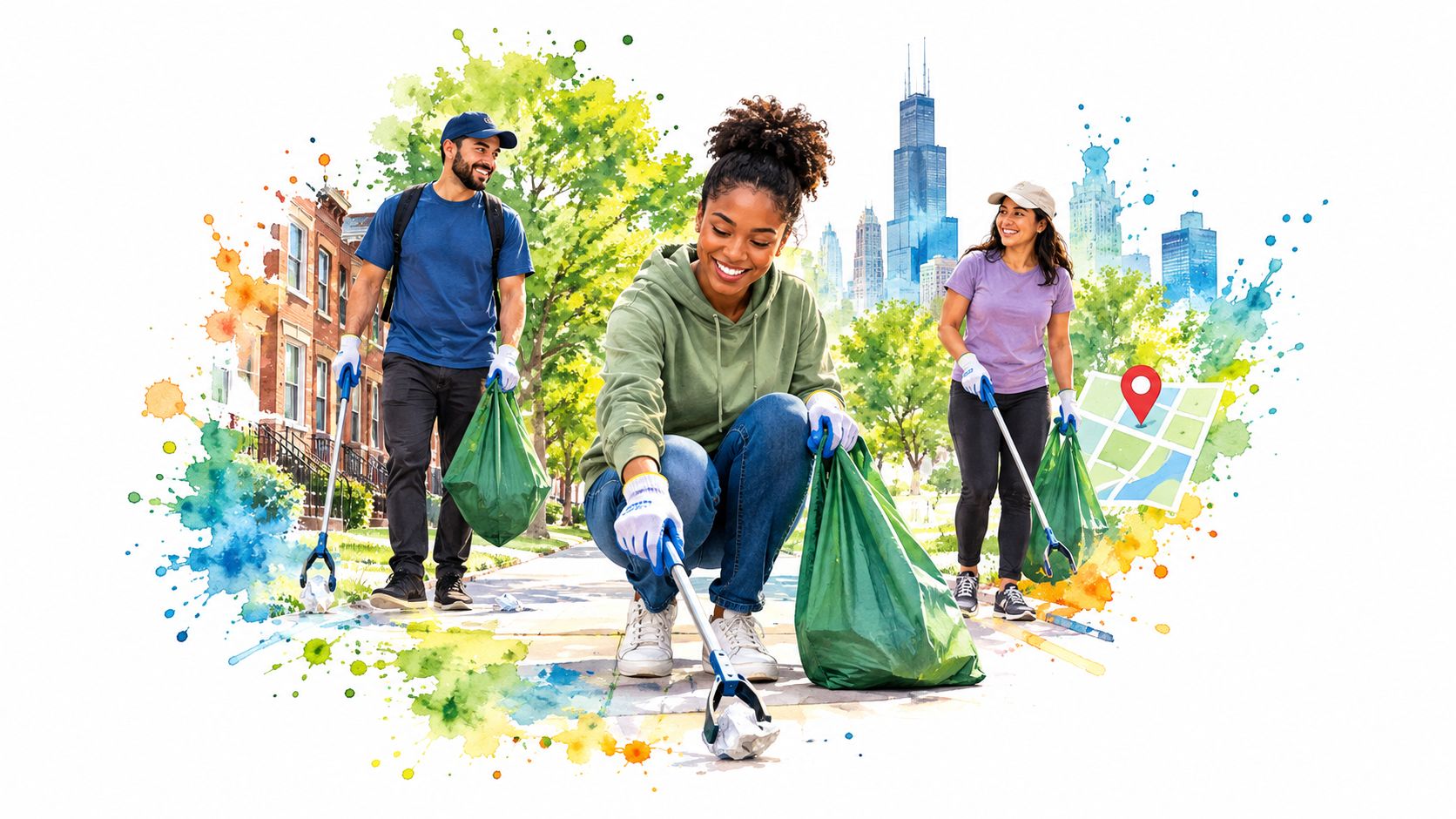
You step outside on a Saturday with coffee in your hand. You see a bag stuck in a fence, cups in the gutter, and a bottle rolling toward a drain. You type community clean ups near me into your phone, and you get a list of dates with no real answers.
You wonder if you can show up alone. You wonder what you bring, how long you stay, and what happens if you run late. I get those questions every week, and I answer them below in plain order, one step at a time.
Why Community Clean Ups Matter in Chicago
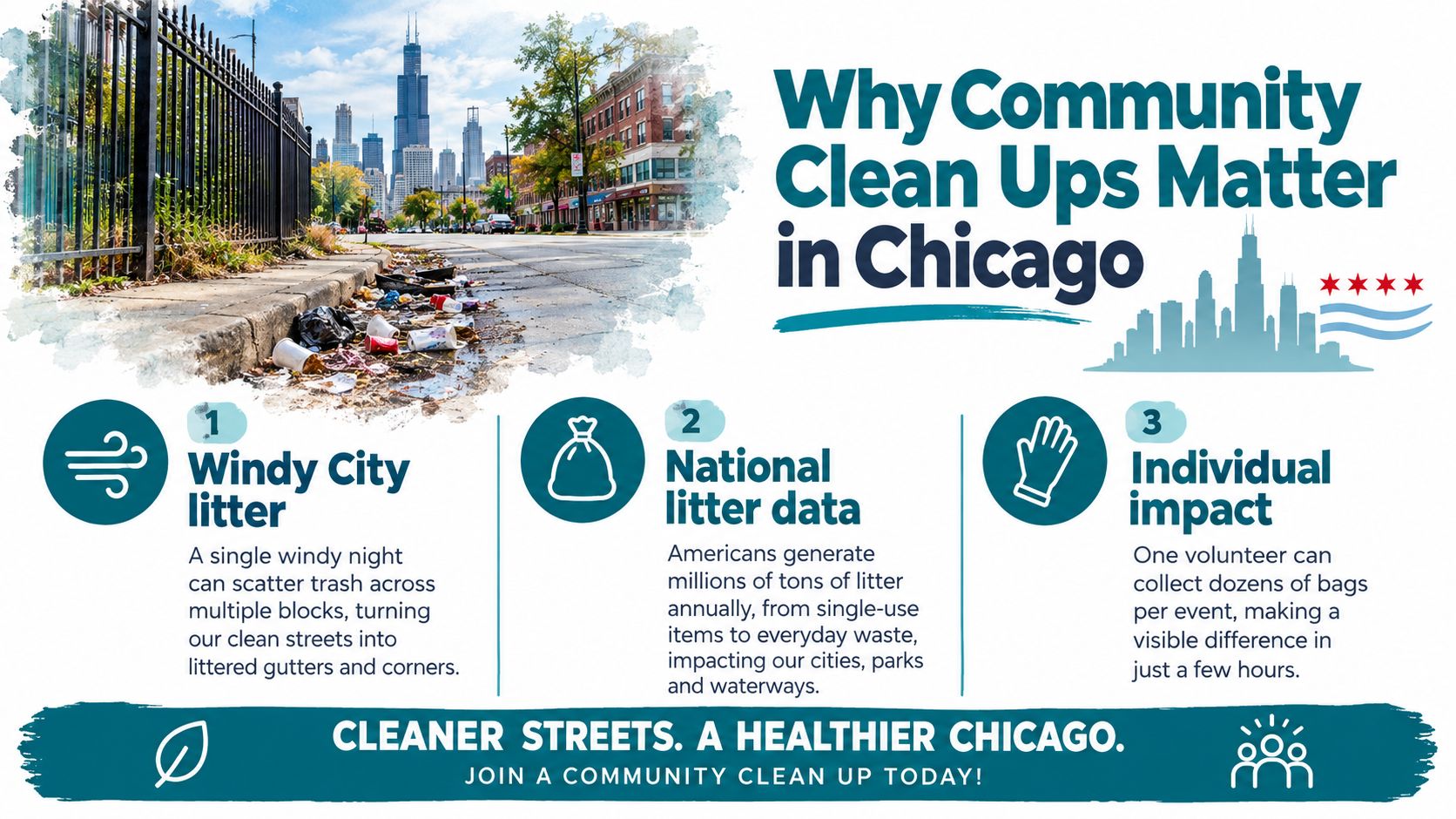
I remember a windy night on the West Side. Wind pushed trash down the block like tumbleweeds made of plastic. By morning, fences held bags, gutters held cans, and one alley looked like a dumpster had tipped over.
You clean that kind of mess one piece at a time. You grab a cup. You grab a wrapper. Soon your bag feels heavy, and the corner looks different.
The Numbers Behind Your Block
Keep America Beautiful's 2020 National Litter Study estimated nearly 50 billion pieces of litter along U.S. roadways and waterways, about 152 pieces for every resident. That number turns a huge problem into a personal picture. You can picture 152 items. You can picture picking them up over a few Saturday mornings.
The same study found roadside litter declined by approximately 54% over the decade before the study. People changed habits, cities changed systems, and volunteers kept showing up. Your work fits that pattern.
One cleaned block is not a drop in the bucket. One cleaned block is the bucket, because neighbors see it and treat the block with more care.
Why Your One Morning Counts
Think of litter like dishes in a sink. One plate looks small. A week of plates fills the counter and makes the whole kitchen feel dirty. Streets work the same way, and wind spreads the mess faster than people expect.
You also meet people when you clean. A neighbor asks what you're doing. A kid asks for a grabber. A shop owner brings water. I wrote more about that ripple effect in my notes on why you should pick up litter, and I see the same idea in social responsibility at SANS, where a company ties daily choices to care for other people.
- You remove trash: You keep plastic and paper out of drains and waterways.
- You change signals: You show neighbors that someone cares about this block.
- You learn your area: You spot dumping spots, broken lights, and overflowing bins early.
You don't fix Chicago in one morning. You fix one corner, and you learn how to fix the next one faster.
What a Community Clean Up Actually Looks Like
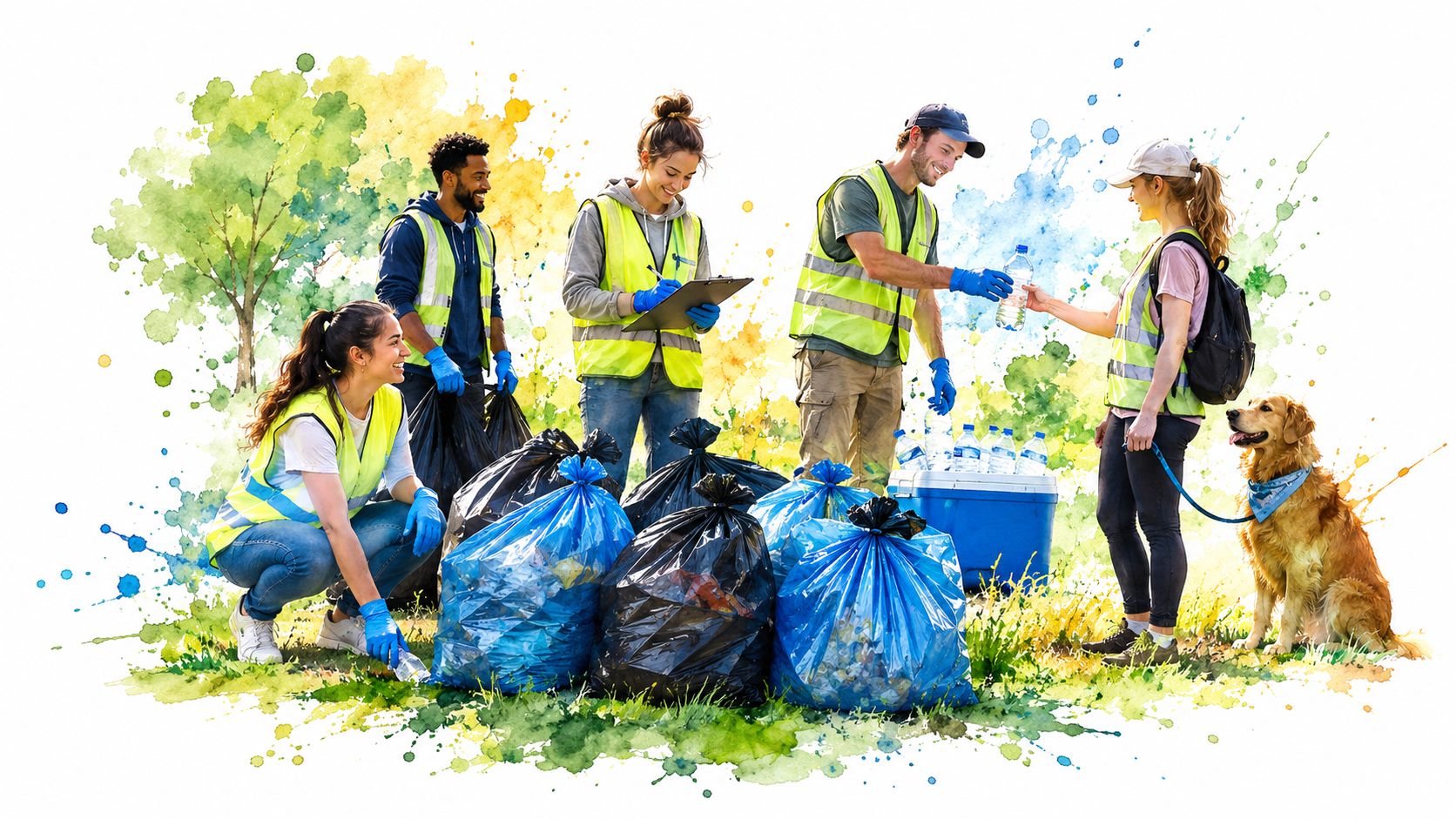
You arrive at a park gate or a street corner. A coordinator in a bright vest waves you over to a table. You sign in, you grab gloves, and you hear a short talk about the route and the rules.
That first ten minutes calms most nerves. You learn where you walk, where you put full bags, and who you call if you find something strange. You don't guess. You follow a simple plan.
How a Morning Flows
Most groups split you into small teams. One person leads the route, one person carries extra bags, and everyone picks up what they see. You walk slowly, you talk, and you fill bags as you go.
- Meet and gear up: You check in and take gloves, a bag, and a grabber if the group has one.
- Walk your route: You cover a few blocks or one park edge with a buddy.
- Stage full bags: You tie bags shut and leave them at one pickup spot.
- Count and close: You return tools, wash hands, and hear the bag count.
One Day Events and Weekly Groups Differ
A one day park event suits you if you want a low promise. You show up once, you work, and you go home. A weekly neighborhood group suits you if you want friends and a routine, because you see the same faces and you learn the same streets.
City crews still do the heavy base work. Chicago's Bureau of Sanitation collects residential garbage from approximately 600,000 households, and city street sweepers clean approximately 295,000 lane miles of Chicago streets each year. You fill gaps between those runs in alleys, lots, and park edges, and you work best as a recurring, place based supplement to city sanitation.
What I tell first timers: You don't need speed. You need steady eyes, closed bags, and a buddy within sight.
You leave tired in a good way. You also leave with a clear before and after picture in your head, and that picture pulls many people back.
How to Find Clean Ups Near You
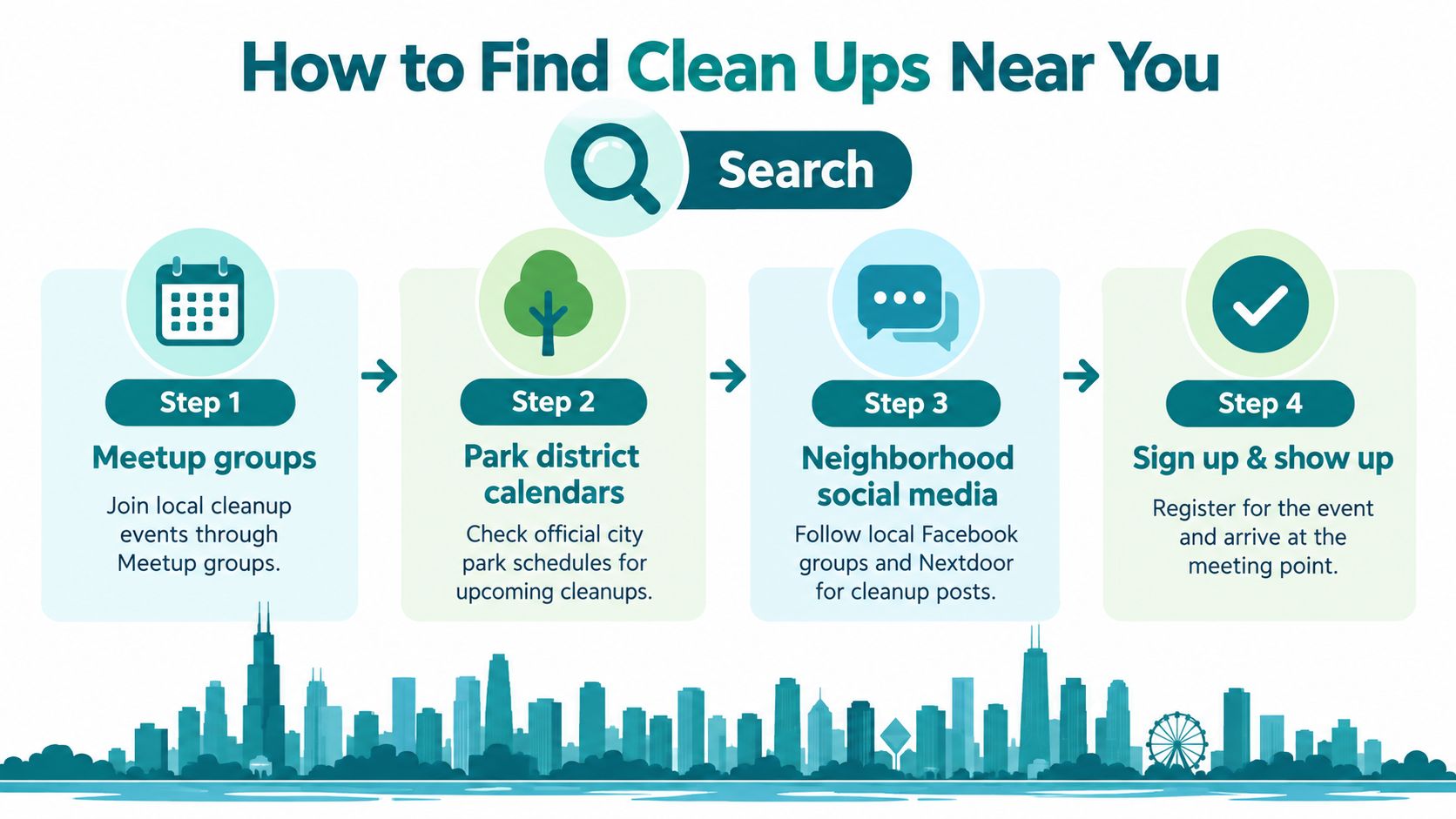
You find good events when you search by place and by routine. Start close to home, because a short trip removes half the excuses. I tell people to pick a spot they can reach by bus, train, bike, or a short walk.
Search results often skip the details you need. You need the meeting point, the end time, the gear plan, and a contact name. You ask for those details before you commit your morning.
Four Places I Check First
- Meetup groups: You search cleanup and your neighborhood name, then you read recent photos and comments.
- Park district calendars: You check official park pages for stewardship days and one day workdays.
- Neighborhood social media: You follow local Facebook groups and Nextdoor posts from block clubs.
- Local park staff: You call or visit your nearest park and you ask about the next workday.
You can also learn from groups in other cities. I like how the Durham refill shopping guide lists exact local options in one place, because clear local lists help people act instead of guessing.
The Friction That Stops People
International volunteering research found 65% of respondents identified limited resources for transportation, meals, or balancing work with volunteering as barriers, and 61% cited insufficient knowledge about available opportunities. A separate 2026 Gallup survey found 54% of Americans with time and interest in community involvement were unsure how to get involved.
Those numbers match what I hear at sign in tables. You care, but you lack a clear first step. So you ask direct questions, can I come alone, can I arrive late, and where do I meet if I miss the start?
Arrive late? Text the lead, go to the home base table, and join the nearest team. Don't wander off alone to catch up.
Good groups welcome solo newcomers and pair you with a returning volunteer. You judge fit by clear answers, a named lead, and a set end time.
What to Bring and How to Prepare
You prepare like you prepare for a long walk with work gloves. Simple gear keeps you comfortable, and comfort keeps you out there for the full route. I pack the night before so I don't rush in the morning.
Groups often supply gloves, bags, and grabbers. You still bring your own basics, because sizes run out and weather changes fast in Chicago. You ask the organizer what the group has before you leave home.
Your Packing List
- Closed toe shoes: You protect your feet from glass, metal, and uneven ground.
- Long pants: You guard your legs from brush, bugs, and sharp edges.
- Water and a hat: You stay cool and you avoid a headache by mid morning.
- Sun protection: You cover skin that sun hits while you bend and walk.
- Phone with charge: You reach your lead and you mark spots that need a report.
Dress in layers you can shed. Wind off the lake can turn a warm forecast cold in one block. I also bring a small snack for the train ride home.
Paperwork and Clean Hands
Many park events ask you to sign a waiver before you start. You complete that step online or at the table, and you give yourself a few extra minutes. Some longer term roles ask for more steps, so you read the signup page with care.
After you finish, you wash your hands well. You can read about regular soap vs antibacterial dish soap if you wonder what soap to keep at home, but plain soap, water, and a good scrub handle the job after a cleanup. You also wash before you eat, every time.
If you wouldn't wear it for a long walk, don't wear it to a cleanup.
You bring a good attitude too. You greet people, you learn names, and you ask questions when you feel unsure.
Safety Rules That Keep Everyone Happy
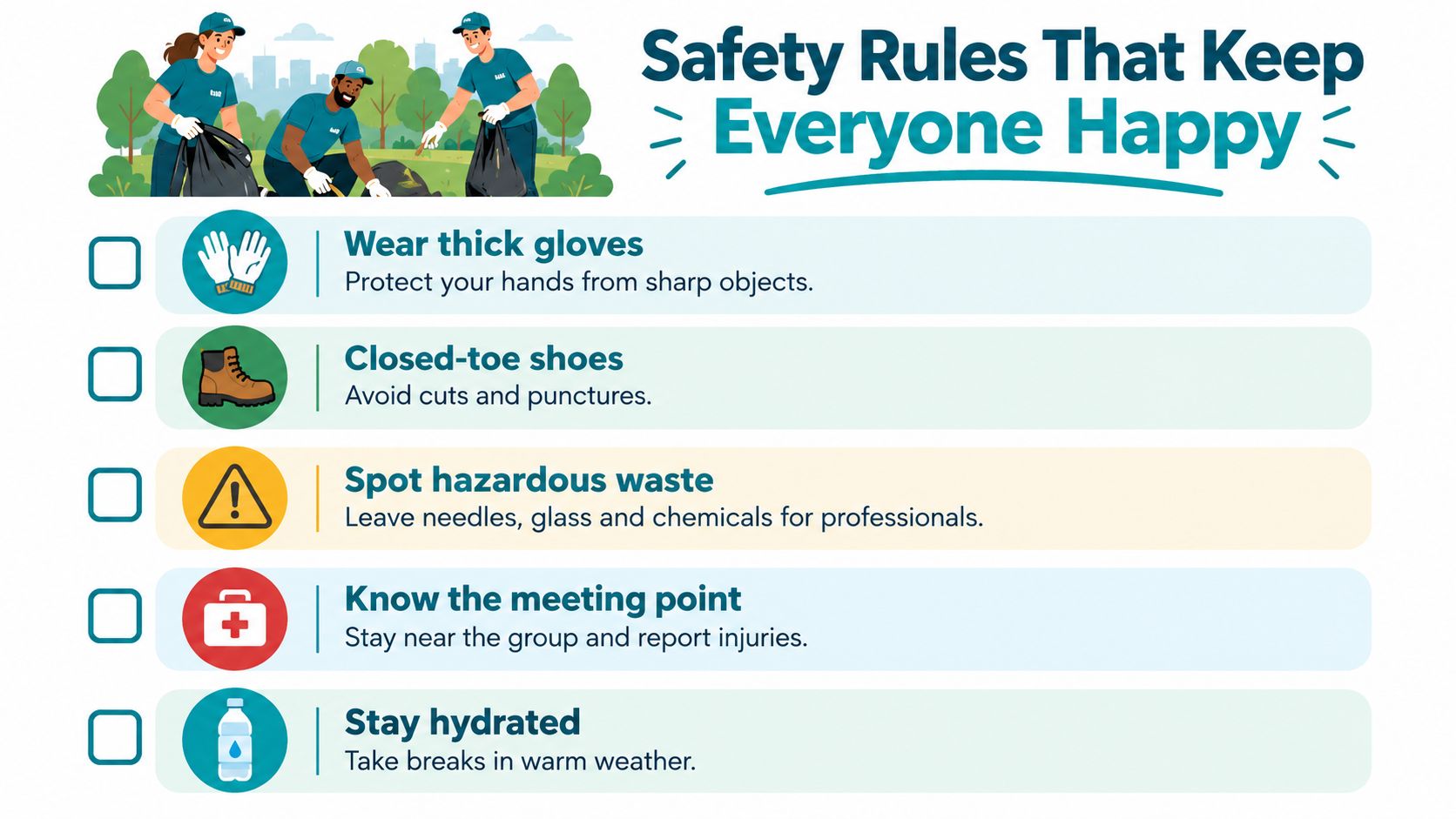
You might think a good volunteer picks up everything. I teach the opposite rule. A good volunteer picks up ordinary litter and reports danger fast.
Gutters and bushes hide sharp and dirty items. You slow down, you look before you reach, and you keep your hands where you can see them. That habit prevents most injuries.
Use the See It Rule
Ask yourself one question. Can I see the whole item clearly, and can I grasp it safely with gloved hands or a grabber? If you answer yes, you ask your lead if it belongs in your bag, and if you answer no, you leave it alone.
The University of Kansas Community Tool Box recommends defining in advance what volunteers may and may not collect, with immediate stop and report rules for needles, medical waste, unknown chemicals, fuel or oil spills, suspected asbestos, unstable structures, electrical hazards, weapons, explosives, and dead animals. I use that same line in Chicago, and I put the details in our volunteer safety checklist for cleanup days.
Stop, Mark, Report
- Stop: You step back and keep others away from the item.
- Mark: You note the nearest address or landmark and you take a photo from a safe distance.
- Report: You tell your lead right away so the lead can route the issue to the right city service.
- Glass and sharps: You leave them for a lead with the right tools.
- Bulky dumping: You report tires, furniture, and construction debris, and you don't drag them.
- Bad ground: You skip steep banks, fast water, and dark underpasses.
Bags filled matter. Hazards reported correctly matter too, because one bad grab can end a volunteer's season.
You wear bright clothing near traffic, you drink water, and you take shade breaks. You speak up when you feel dizzy, cold, or unsafe, and a good lead thanks you for speaking up.
Real Cleanups in Chicago You Can Join
I start newcomers with two paths. You can join a park stewardship day for a set task in one place. You can join a weekly neighborhood group for a moving route and a social routine.
Both paths welcome first timers. You choose based on your schedule, your energy, and how much structure you want. I suggest you try one of each in your first month.
Park District Stewardship Days
Chicago Park District stewardship days welcome people of every age, background, and experience level. You must sign a liability waiver before you start, and if you bring a child younger than 13, a parent or guardian must accompany that child and sign the waiver.
Work varies by site and season. You might pick up litter, mulch a trail, remove invasive plants, or plant native plants. You wear long pants and closed toe shoes, you bring water and a hat, and you plan ahead because many sites lack bathrooms.
A Small Group That Kept Showing Up
Our first outing had three people. A spring hail storm hit us, rides kept canceling, and we huddled under a tree and laughed at the mess. That cold morning taught me a lesson I still use, cleaning someone else's mess feels easier than cleaning your own, and shared discomfort bonds people fast.
That small start grew into Litter Caterpillars, a volunteer group that meets on weekend mornings in different Chicago neighborhoods and supplies gloves, bags, and grabbers at events. The group later won an empty lot at auction and turned that lot into Caterpillar Park in Englewood. You can see one route focus in our Chicago River cleanup work, where water edges need extra care and extra eyes.
- You want structure: You pick a park day with staff, a waiver, and a set task list.
- You want a routine: You pick a weekly group with the same meeting style each time.
- You want to explore: You pick a moving route that visits new blocks and wards.
Every regular you meet once stood at a sign in table and felt unsure. Someone handed that person gloves and said, walk with me.
You don't need experience. You need a meeting point, a start time, and a willingness to say hello first.
How to Make Cleanups a Habit
You build a habit when you make the next step easy. Pick the same morning, lay out your clothes, and put water by the door. Small prep beats big motivation on a cold Saturday.
You also return for people. Names become faces, faces become friends, and friends notice when you miss a week. That social pull carries you through weather that might stop a solo effort.
Why People Come Back
A longitudinal analysis using UK survey datasets found a bidirectional relationship between social cohesion and volunteering, stronger cohesion predicted later volunteering, while volunteering predicted greater later cohesion. In plain words, you show up, you belong more, and belonging helps you show up again.
Predictable attendance builds trust. Trust helps you learn routes, follow safety rules, and work faster with less confusion. You start to spot patterns, like which corner fills after a game or which lot needs a report.
A Simple Four Week Plan
- Week one: You attend once and you learn names.
- Week two: You return and you take a small role, like carrying extra bags.
- Week three: You invite one friend and you show that friend the ropes.
- Week four: You decide your rhythm, weekly, twice a month, or once a month.
- Track your streak: You mark each outing on a calendar you see daily.
- Pair the habit: You link cleanup to coffee, a farmers market, or a walk home.
- Rest without quitting: You skip a week when life gets busy, and you book the next one right away.
Don't aim for perfect attendance. Aim for a next date on your calendar.
Pick one event from your search for community clean ups near me, show up once, and see how your block looks through new eyes. Chicago changes one block at a time, and you can start your block this weekend.
Join a weekend morning pickup with Litter Caterpillars, grab gloves and a bag from our table, and walk a route with friendly Chicago neighbors who will pair you with a buddy. Pick your first date today, show up as you are, and help us clean one more block together.