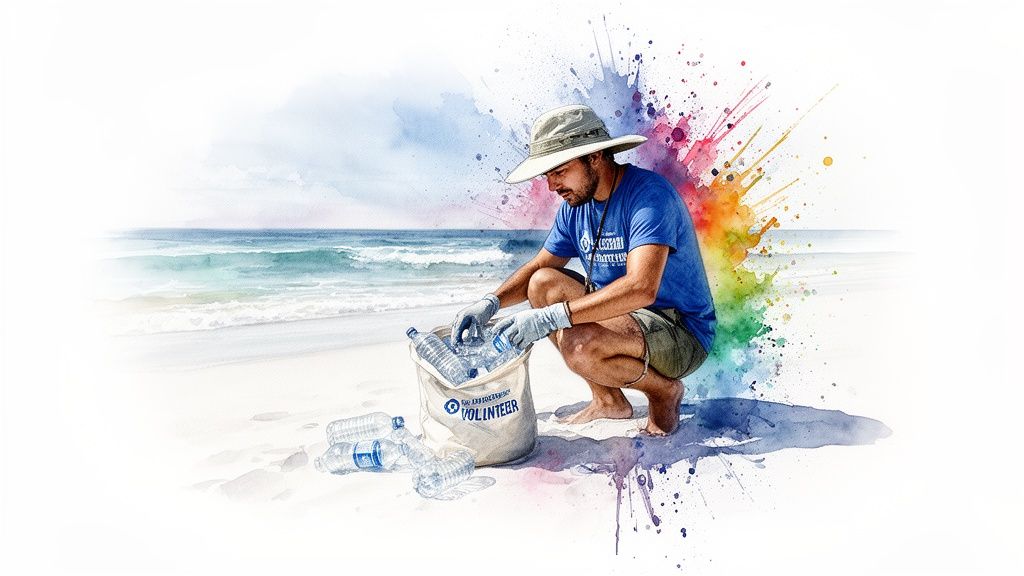
To volunteer to clean up beaches is to do something beautifully simple. You show up. You make a small piece of our world visibly better. It’s one of the most direct, most satisfying ways I’ve ever found to really connect with my community, to see an impact I can actually touch.
The Surprising Joy Of Cleaning Our Shorelines
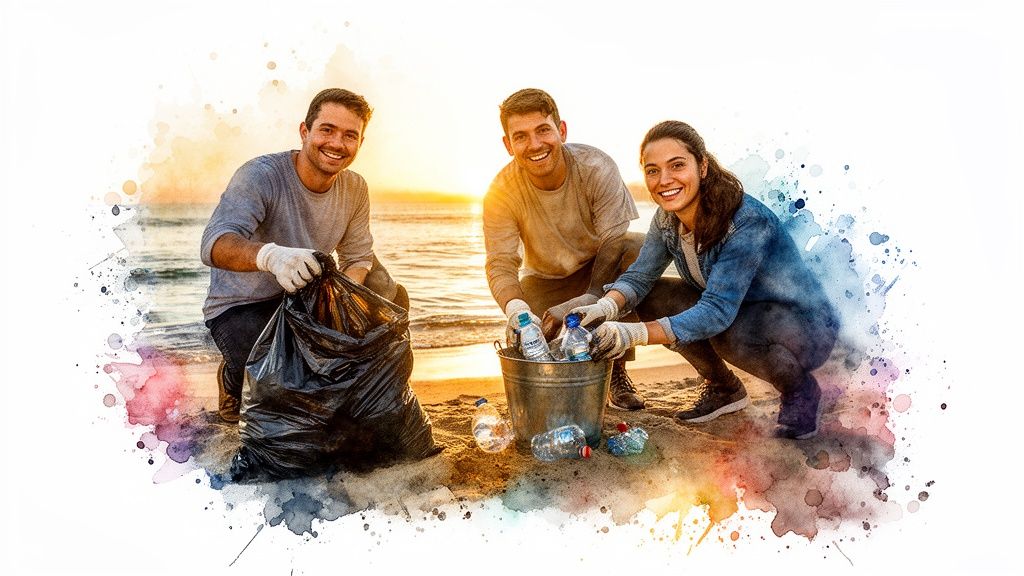
Let's be honest with each other. The idea of spending your weekend picking up somebody else's trash doesn't exactly scream 'fun.' I get it. It sounds like a chore. Another item on a never-ending to-do list.
But what if I told you it’s one of the most fulfilling things you could ever do? I stumbled into this world feeling a bit lost. What I found on those sandy shores was a huge, powerful sense of purpose. Imagine you’re a gardener. You pull the weeds, and suddenly, the flowers can breathe again. That’s what this feels like.
Finding Purpose One Piece At A Time
Tackling a problem you can see, like beach litter, is just unbelievably satisfying. You aren't just sending a check or signing a petition. No. You're out there, physically changing the landscape, seeing the impact of your work happen right before your eyes. That instant gratification? It’s a powerful, wonderful feeling.
It’s a strange, new form of "fun." You suffer a bit, you get dirty, but it adds this flavor to your life. Another page in the story. It advances the plot.
This guide is my story, but it's also your roadmap. I want to walk you through how you can get out there and volunteer. Not as a duty. But as an adventure. An adventure that connects you with incredible people and leaves you feeling genuinely proud.
I found that this simple act connects you to something so much bigger. You join a global movement. Your small effort, your one afternoon, contributes to a massive, international database that helps protect our oceans. It’s proof that you’re not alone in caring.
- You build a real community with others who get it.
- You gain a unique, firsthand perspective on consumption and waste.
- You get to leave a place better than you found it.
So, let's explore how you can get started.
How To Find Your Beach Cleanup Community
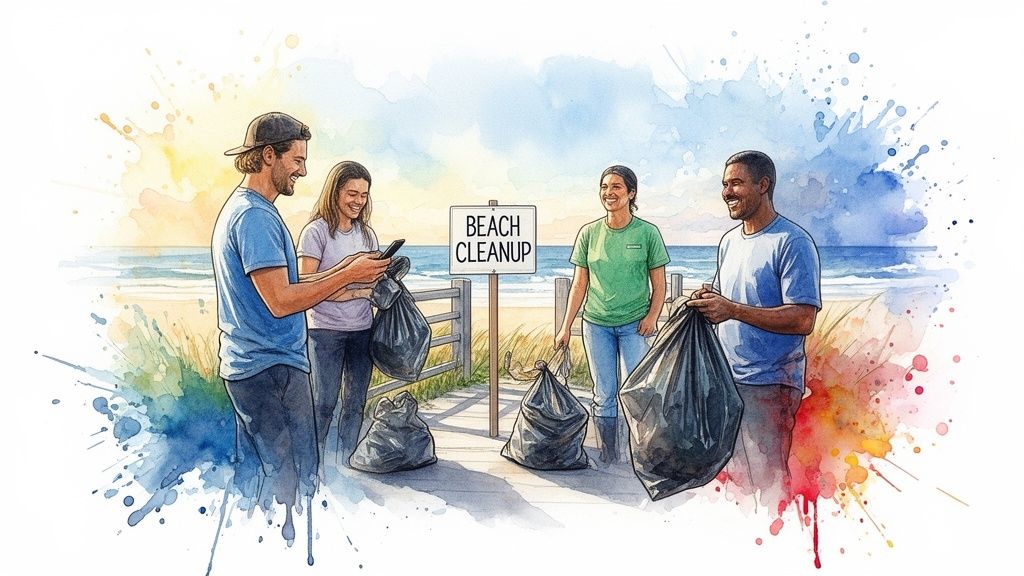
The first step isn't just finding an event; it's finding your people. Let’s be real. You’re looking for a community, not just another task to check off a to-do list.
When I started my own group, I realized it’s like trying to find the right band to join. You don't just show up and start playing; you listen to their music first, see if their style clicks with yours. That's why I used platforms like Meetup and Instagram. They let you get a feel for the vibe before you commit.
Where To Start Your Search
As you begin your hunt to volunteer to clean up beaches, I want you to look beyond the event title. Scan the photos. Read the descriptions. And ask yourself a few questions:
- What’s the energy like? Are people laughing and high-fiving, or is it a more quiet, focused group? Both are great, but one will probably suit you better.
- Do they prioritize safety? Look for mentions of gloves, safety briefings, and clear instructions. A good leader cares about their crew’s well-being.
- Does the schedule work for you? It’s a lot easier to stick with something when the timing actually fits into your life.
Finding a group that resonates with your personal style is what turns a one-time volunteer gig into a regular, fulfilling habit.
You want to find a team that feels like home. When you click with the people, the work becomes secondary, and the experience becomes something you look forward to every time.
A great place to start is with established organizations or on community-focused platforms. To make it even easier for you, here’s a quick guide to some of the best spots to find your crew.
Where To Find Beach Cleanup Opportunities
Use this guide to discover the best online platforms and local resources for finding beach cleanup events and organizations near you.
| Platform / Resource | What to Look For | Pro Tip |
|---|---|---|
| Local Community Groups | Search Facebook, Meetup, or local forums for "beach cleanup [Your Town]" or "coastal conservation." | These are often smaller, tight-knit groups. It’s a great way to meet neighbors who care. |
| Ocean Conservancy | Check for their annual International Coastal Cleanup, a massive global event. | Sign up early! Events in popular locations can fill up fast, especially during peak seasons. |
| Surfrider Foundation | Look for your local chapter on their website. They host regular cleanups and advocacy events. | Chapters often have their own social media pages where they post last-minute event details. |
| Local Parks & Rec Dept. | Visit your city or county’s official website. They often organize or partner on environmental volunteer days. | These events are typically well-organized and family-friendly, perfect for bringing the kids along. |
Don't be afraid to try out a few different cleanups. Each group has its own personality. It might take a couple of tries to find the one that feels right. You can also explore more ways for finding environmental volunteering near you.
Your tribe is out there waiting for you.
Gearing Up For A Successful Cleanup Day
Showing up is half the battle. But what you bring with you can make or break the day. When you volunteer to clean up beaches, you’re at the mercy of Mother Nature. I learned this the hard way during a freak hailstorm at our very first event.
We were soaked. Freezing. Huddled under a tree as Ubers kept canceling on us. It was a miserable, wonderful disaster that taught me a lesson I’ll never forget: preparation is everything. Now, I never leave home without the essentials.
This isn’t just about grabbing a bag and some gloves. Think of it like packing for a day hike. You need the right gear to stay safe, comfortable, and effective out there.
Your Essential Cleanup Kit
You don't need a bunch of expensive equipment to make a difference. It's all about smart, simple choices to protect you from the sun, sand, and the strange things you might find. Here’s my go-to list:
- Sturdy, closed-toe shoes: This is non-negotiable for me. Beaches are notorious for hiding sharp objects like broken glass and rusty metal just under the surface. Your favorite flip-flops just won't cut it.
- Reusable work gloves: Ditch the flimsy disposables. I always use a good pair of gardening or work gloves. They’ll protect your hands from anything sharp or just plain gross, and they give you a much better grip.
- Sun protection: The sun reflecting off the water and sand can be brutal. A wide-brimmed hat, sunglasses, and a good layer of sunscreen are your best friends out there. I learned that lesson the hard way, too.
Your goal is to be a trash-collecting machine, and you can't do that if you're dealing with a nasty sunburn or a cut on your foot. Your safety and comfort come first—always.
Beyond that core three, a couple of other items can make your day go a lot smoother. I always pack a full reusable water bottle to stay hydrated and a small first-aid kit with the basics like bandages and antiseptic wipes. Being ready for minor scrapes means you can patch yourself up and get right back to the mission.
For a deeper dive, you can also check out our other guides on what to expect when you volunteer to pick up trash.
Your Local Effort And Its Global Impact
Standing on the shore, picking up a single plastic bottle, it's easy to wonder, "Does this really make a difference?" I'm here to tell you—it absolutely does.
That one bottle is a world of difference for the sea turtle that won't mistake it for a meal. It's one less piece of plastic that will break down into a million toxic micro-shards, poisoning the sand and sea for generations.
Every piece of trash you pull from the coastline is a direct win. You're not just tidying up a small patch of sand; you're an essential part of a massive, global movement. Think of us like a giant orchestra. Your part might seem small on its own, but together, we’re creating this powerful symphony of change.
From Local Hands To Global Data
Big-picture organizations track this stuff. They prove that what we do on our local beaches adds up to a worldwide impact. You’re not just a volunteer; you're a citizen scientist contributing vital information.
Take the International Coastal Cleanup, for example. For decades, they've built a massive database on marine debris. All thanks to everyday people like you and me.
Your hands-on work provides the raw data that shapes our understanding of ocean pollution. You're connecting the dots between a local problem and global solutions, giving scientists the evidence they need to drive policy change.
This data isn't just filed away in some report. It directly informs policy. It helps researchers pinpoint the real sources of pollution. Since it all began back in 1986, the International Coastal Cleanup has rallied almost nineteen million volunteers. Together, we've removed over 400 million pounds of trash, creating an incredible database that helps protect our oceans. You can check out their website to see the amazing impact of their local cleanups.
Keeping that bigger picture in my mind is the key to staying motivated. Once the beach is clean and you're ready for the next step, you can learn more about the bigger solutions for pollution in the oceans.
How To Organize Your Own Beach Cleanup
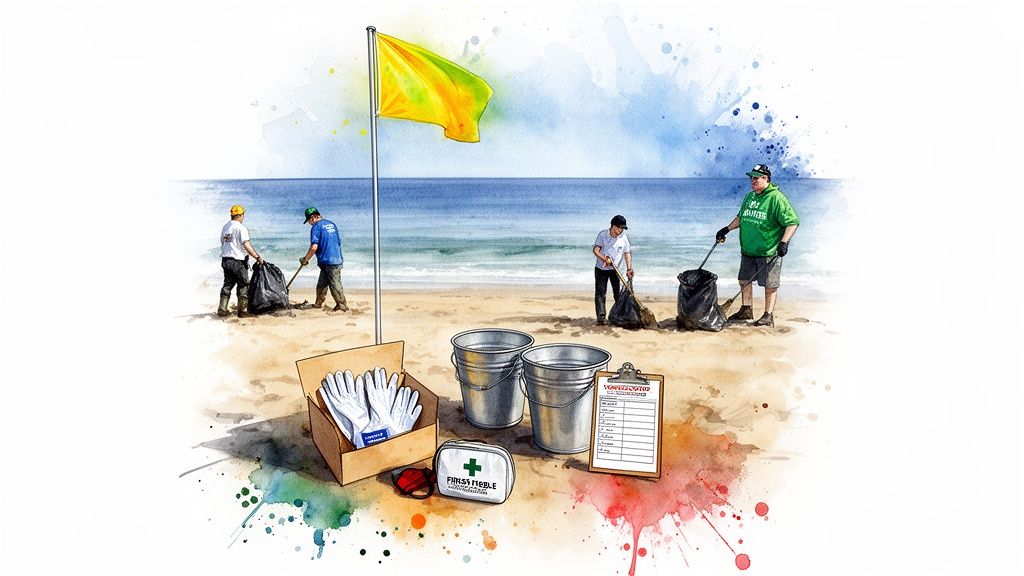
So, you’re feeling the pull to start your own thing? That's awesome. Leading a beach cleanup is one of the most fulfilling things you can do, and I'm here to tell you it's nowhere near as daunting as it sounds.
My own group, the Litter Caterpillars, started with just three of us caught in a freak hailstorm. You don't need a huge budget or a formal non-profit to make a real impact. The most powerful step you can take is simply to start.
Getting The Ball Rolling
Start small. I can't stress this enough. Pick a beach you love, circle a date on the calendar, and invite a handful of friends. It's really just like organizing a casual hangout, except your main activity is giving a little love back to the planet.
Before you do anything else, go scout your location. I want you to walk the beach you’ve chosen and get the lay of the land. Where's the easiest place for people to park and meet? Where are the worst spots for trash? Are there any potential hazards?
This initial walk-through isn't just about logistics. It’s about you connecting with the very place you're about to help heal. Once you have a basic idea, you'll want to see if you need any permits. A quick call to the local parks department usually does the trick. Most of the time, they are thrilled that people volunteer to clean up beaches and will be happy to support you.
Leading isn’t about having all the answers. It’s about creating a space where people feel welcome, safe, and part of something bigger than themselves. Your enthusiasm is the most important tool you have.
Creating An Unforgettable Vibe
With the practical stuff sorted, you can focus on the heart of the matter: creating an atmosphere that makes people genuinely excited to be there. This is how you transform a chore into a community-building event people look forward to.
I've learned that the little things make all the difference. We have a big, colorful flag so new people can spot us easily. I always bring a small Bluetooth speaker for some music—it’s amazing how a good playlist can lift everyone's spirits.
Here are a few other things that have worked for us:
- Set a simple, visible goal: It could be "let's clear this whole stretch of dunes" or "let's try to fill 10 bags today." Having a shared target creates an incredible sense of teamwork.
- Celebrate the weird finds: Someone is going to find something bizarre, guaranteed. A vintage soda bottle, a single left shoe, a message in a bottle. Make a big deal out of it! It’s a great icebreaker and always gets a laugh.
- Plan a post-cleanup hang: This is huge. Grabbing coffee or tacos together afterward is where the real friendships form. It gives everyone a chance to relax and connect on a personal level.
Your job is to make people feel like they’re part of a crew on a mission. That shared sense of accomplishment is what turns first-timers into regulars who show up again and again.
Got Questions? I've Got Answers
So, you're ready to get your hands sandy, but a few questions are probably rattling around in your head. That's totally normal. Before you jump into your first volunteer beach cleanup, you want to know what you’re getting into.
I’ve heard pretty much every question under the sun. Let’s get you some answers so you can show up feeling confident and ready to go.
"What If I Find Something… Sketchy?"
I'm talking about things that are sharp, look like chemicals, or are medical-related—like a needle. Your safety is, without a doubt, the number one rule. Do not, under any circumstances, touch it.
Seriously, don't be a hero. Your job is to spot it, not handle it. The best thing I can tell you to do is mark the area. Scuff a big circle in the sand around it or just prop a piece of driftwood up to point it out.
Then, you go find your event organizer immediately and show them where it is. They’ll have a protocol for this stuff and will know exactly who to call to get it handled safely.
The goal is to leave the beach cleaner, not to leave the beach in an ambulance. Your well-being comes first, so let the trained leaders handle the dangerous stuff.
"Can I Bring My Kids? What About My Dog?"
This really comes down to the specific group organizing the cleanup. I see lots of organizations that are thrilled to see kids getting involved—it’s an amazing real-world lesson for them! Just know they'll almost always require you, a parent or guardian, to be right there with them, supervising.
Dogs, on the other hand, are usually a different story. More often than not, you can't bring them. This could be due to local beach rules or just for the safety and comfort of the other volunteers.
The easiest way to find out? Check the event details page or just send a quick email to the organizer. I always think it's better to ask first.
"So… What Happens to All This Trash?"
You'd be surprised! A good organizer has this all mapped out. Typically, we sort the collected items right there on the sand, separating recyclables from stuff that’s headed for the landfill.
From there, the event leader is in charge of getting it all to the right facilities. Some really cool groups I've seen even have partnerships with local artists who upcycle the marine debris they find into amazing sculptures or other products.
Don't be afraid to ask your group leader about their process. Most of us who run these things are total nerds about it and love to share where it all ends up.
At Litter Caterpillars, we're all about the power of showing up and making a difference, one piece of trash at a time. If you're ready to see that impact for yourself, check out our story and find an upcoming event at https://www.littercaterpillars.com.