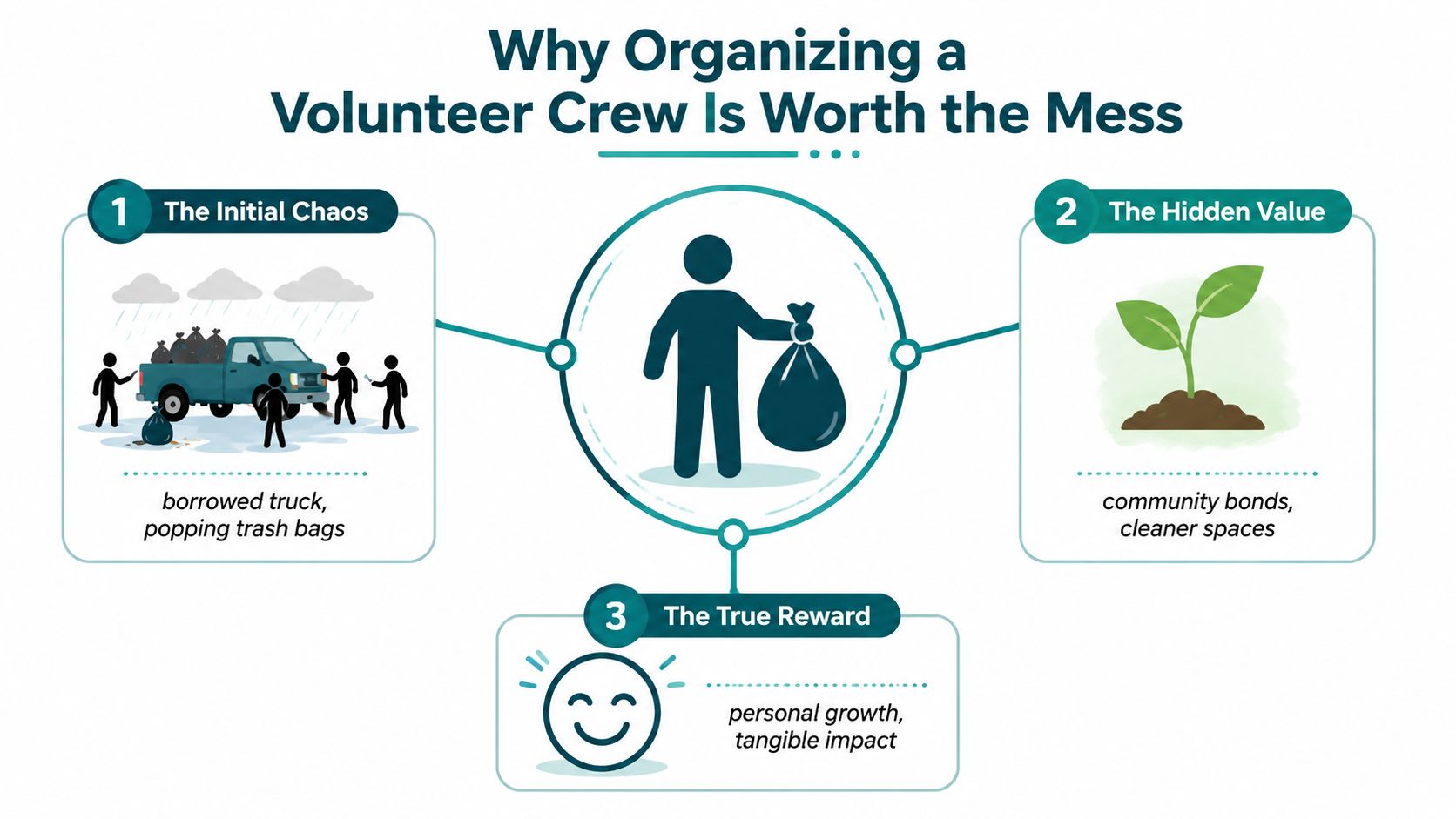
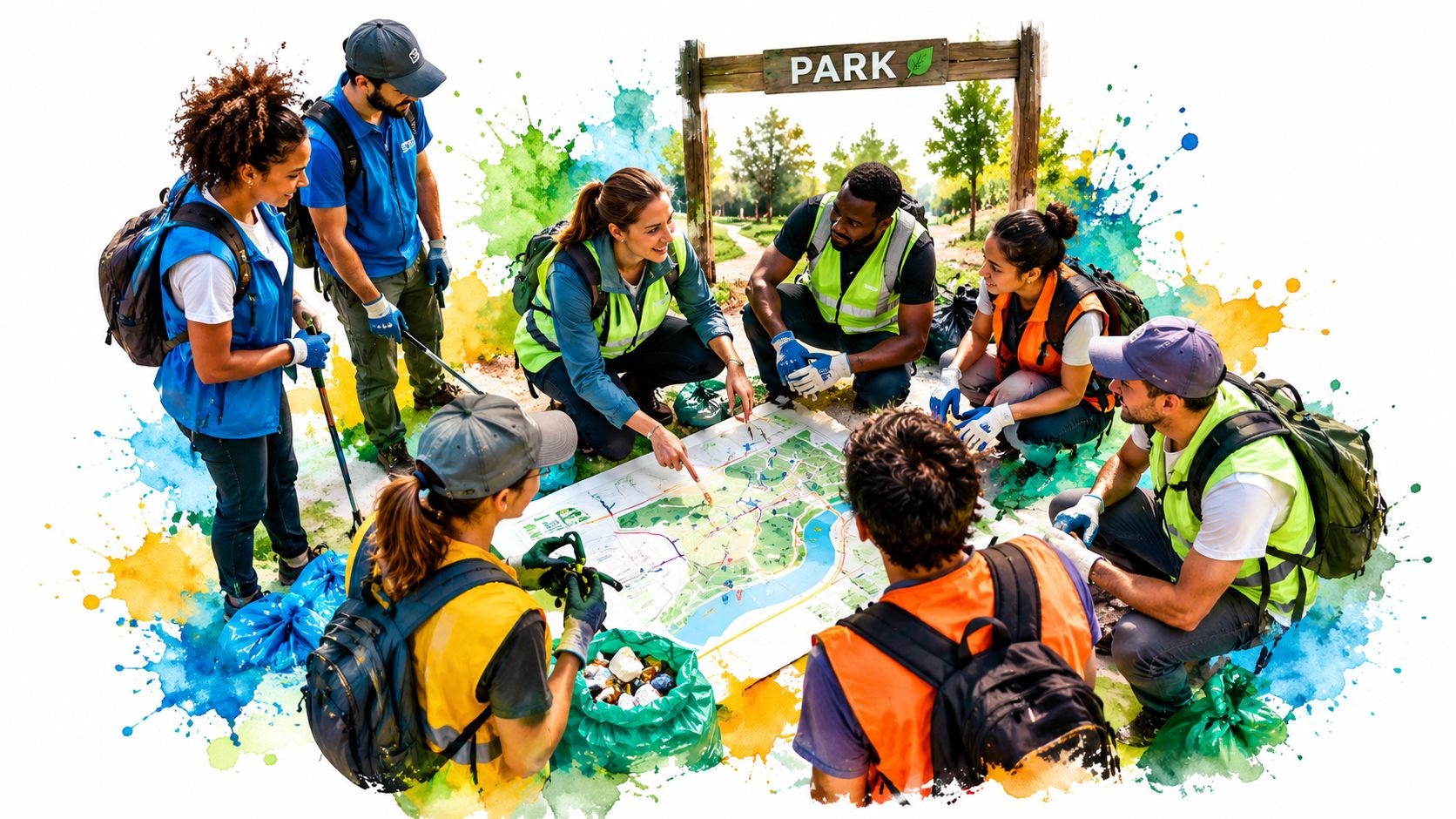
The first Litter Caterpillars cleanup had three people, one tree, and a Chicago hailstorm. Every Uber canceled while we shivered under the branches, but we kept laughing, and that strange afternoon became the beginning of a weekly habit.
Why Shared Struggle Builds Real Community
I remember looking at the hail bouncing off the pavement and thinking about the mess inside my own apartment. A discarded wrapper on a sidewalk felt easy to move. My own old belongings felt welded to my life. We couldn't fix the weather, so we waited, then returned to the route when the storm eased.
That day taught me something I still use when I plan community service weekends. Shared discomfort gives strangers a story before they know one another's names. Cold hands, wet sleeves, a bad route, and the relief of a finished block create a small chapter people can retell.
I don't send people outside to prove their toughness. I protect their energy because volunteer energy is fragile. Safety comes first, happiness comes next, and the work has to leave room for friendship. A weekend cleanup should feel demanding enough to feel real, while still giving every participant a safe way to stop, rest, or choose a lighter task.
The weather becomes part of the story
Weekend mornings attract people who choose service before entertainment. That schedule won't fit everyone, so it needs flexibility, but it gives a group a steady rhythm. People learn where to meet, who carries the bags, and which café has room for a wet crew afterward.
The first storm also changed how I think about preparation. A route leader needs more than gloves and bags. They need a meeting point, a weather check, an emergency contact, and a clear way to bring the group back together. For teams working outdoors, a practical resource on land rescue news from Mobile Systems can help organizers think through location, communication, and recovery when a route becomes difficult.
Practical rule: Give people a challenge they can share, never a danger they must endure.
A cleanup can filter for generosity without filtering out people who have jobs, children, disabilities, or limited transport. I want brave volunteers, yet bravery includes asking for help and leaving early. The strongest group isn't the one that suffers most. It's the one that returns because people trust the organizers to protect them.
Removing the Hidden Barriers to Showing Up
I have seen a volunteer decide whether to stay before the first bag opens. She got off the bus late, looked around for a restroom, asked if there was a shorter route, then checked her phone because her child might need her back early. None of that had anything to do with whether she cared. It had everything to do with whether the event had made room for her life.
That is the part many weekend service projects miss. People do not vanish because they lack goodwill. They get squeezed out by timing, transport, cost, care work, physical access, and the quiet fear of being stranded in a setup that was built for someone else.
Those barriers show up clearly in the 2025 State of Volunteering report. Work or study commitments limited participation for 46.1% of current volunteers, cost affected 32%, transport affected 14.7%, caregiving affected 14.6%, and 21.1% said where they lived made volunteering more difficult (State of Volunteering report). If volunteer energy is fragile, logistics are not a side issue. They protect that energy or waste it.
Publish the details people need
An access guide should answer the questions people are often too tired, too new, or too embarrassed to ask. If your event page is vague, the burden shifts to the volunteer. Many will not ask. They will just stay home.
- Transit directions: Name the nearest train and bus stops, describe the walking distance, and say whether volunteers can arrive after the start without losing the group.
- Physical conditions: State the terrain, route length, stairs, traffic exposure, and whether someone can choose a stationary sorting, sign-in, or reporting task instead of walking the full route.
- Equipment: Say exactly what you provide, including gloves, bags, grabbers, water, food, and weather gear. If volunteers need to bring personal items, list them plainly.
- Facilities: Tell people about restrooms, shade, seating, and planned breaks. If bathrooms are unavailable, say so before people leave home.
- Care and timing: Explain age rules, caregiver options, cancellation decisions, and the total time commitment. A fixed morning slot can shut out shift workers, caregivers, and people who depend on public transit.
Small design choices change who can belong. A flexible arrival window lets someone join after a bus delay. Short roles let a caregiver contribute between responsibilities. Remote tasks, route mapping, supply prep, and follow-up messages keep people connected when outdoor work is not possible.
The point is bigger than attendance. When you remove friction, you tell people their presence matters before they even arrive. That is how a cleanup stops being a trash run and starts becoming a place people can return to.
Designing a Repeatable Weekend Operating Cycle
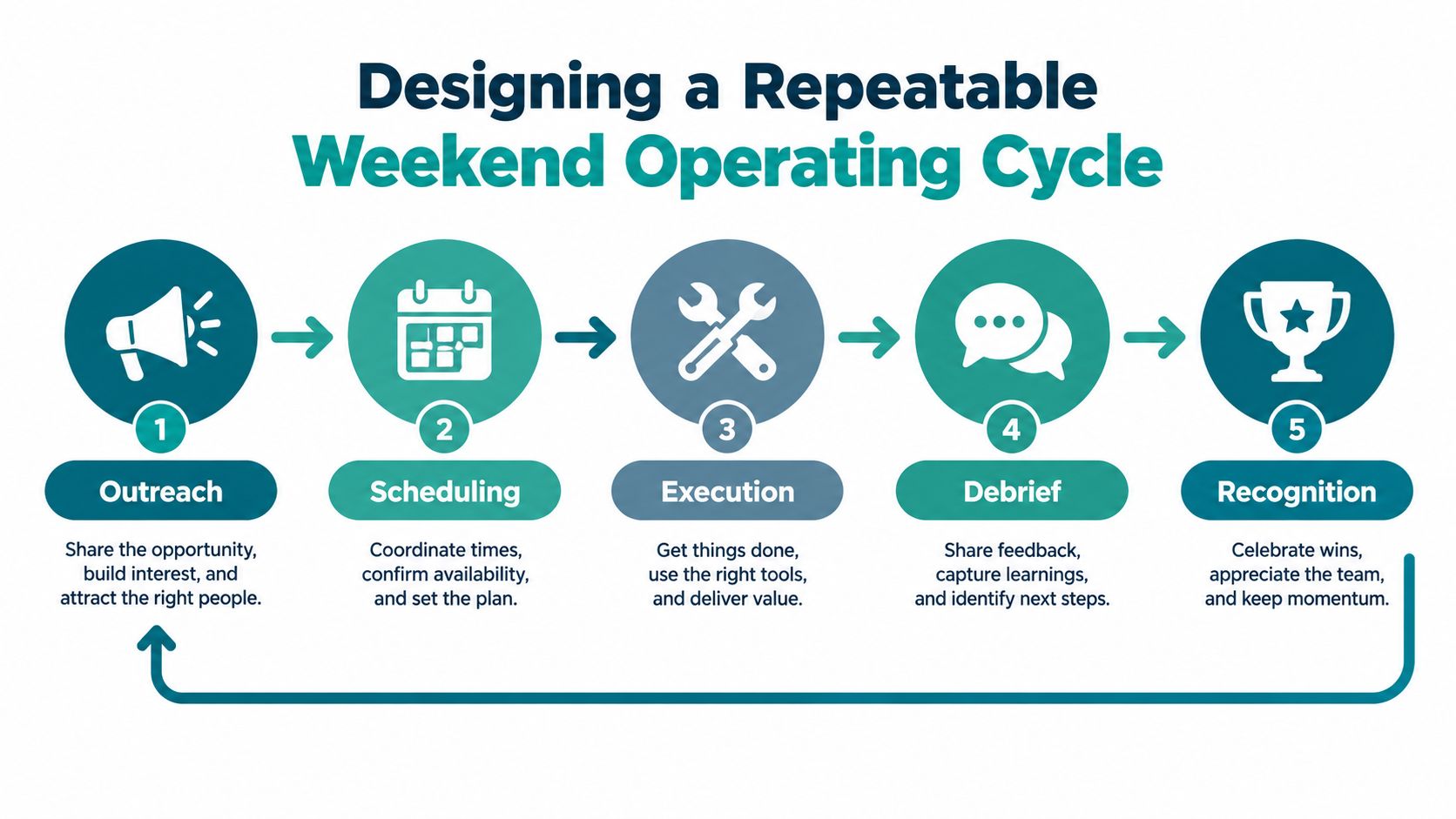
The first cleanup that taught me this lesson looked busy from the curb. Too many people stood around the supply pile, half the route got crowded, and one block over nobody had enough hands. A repeatable weekend works when the promise is small and clear. Choose an area you can finish, then pick an outcome you can count, weigh, map, or verify. Bags can work for a quick morning. Linear distance or mapped litter points work better when you want to compare one route with the next.
Research on 148 environmental-stewardship volunteers found that project organization and social factors shaped commitment, and the researchers urged organizers to train volunteers, use their time well, and avoid overstaffed workdays (environmental-stewardship volunteer research). That matters because volunteer energy is fragile. If people spend their Saturday waiting, wandering, or feeling unnecessary, they do not just lose an hour. They lose trust.
Give every person a job
- Define the route. Mark boundaries, hazards, entry points, and the handoff location before anyone arrives.
- Create small teams. Give each team a named leader and one clear assignment, so nobody spends the morning guessing.
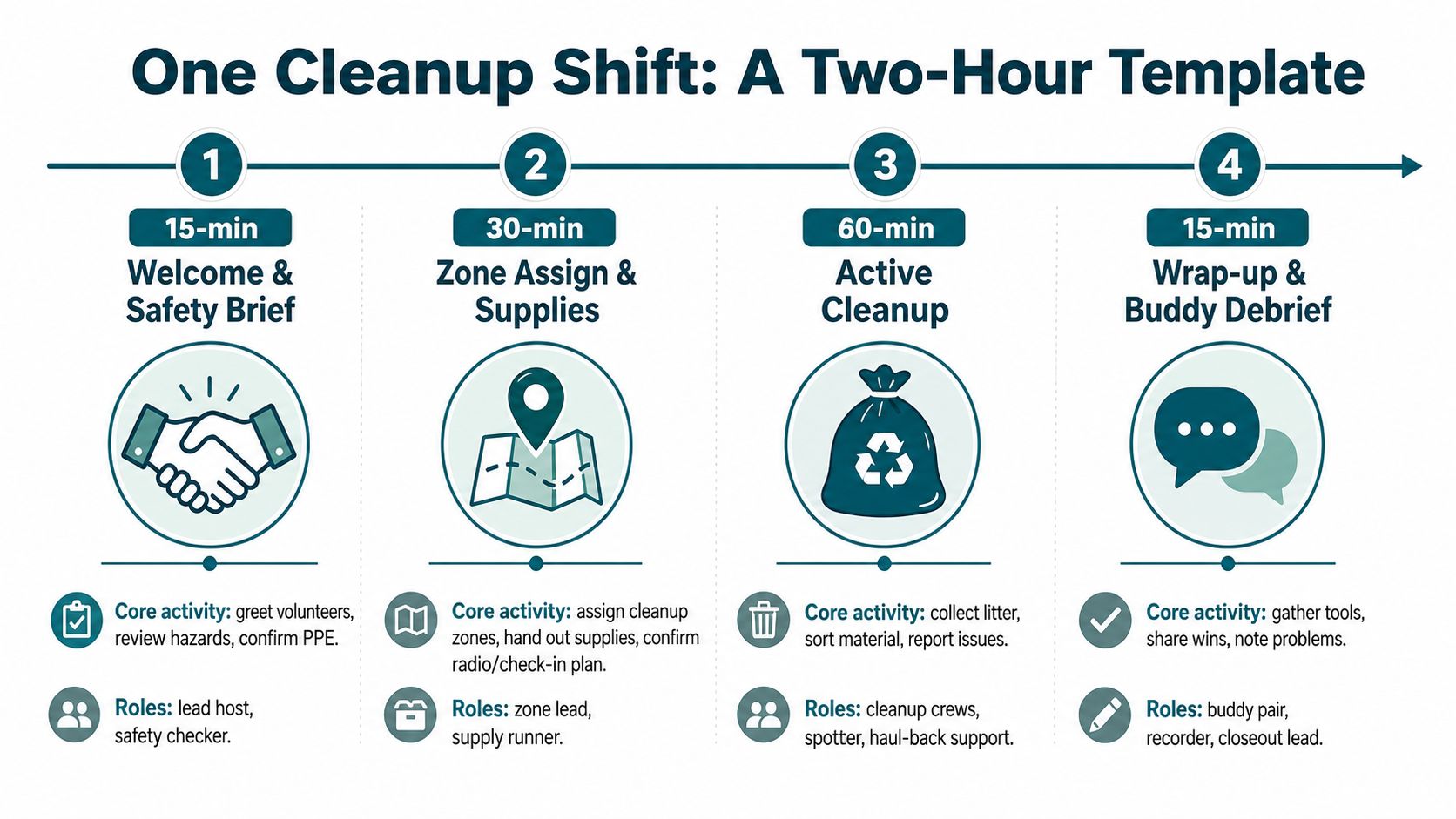
- Run a short briefing. Cover route limits, traffic, weather, hydration, sharps, hazardous materials, and what to do when something needs escalation.
- Standardize the closeout. Hand out the same basic equipment, then require a final count, weigh-in, or mapped report.
- Close socially. Share results, thank people by name, record what happened, and invite them back before they head home.
Keep an event log. Record attendance, first-time and returning status, start and end time, bags collected, hazardous items isolated, weather, incidents, and whether people plan to come back. That same study's authors recommend comparing results across four to six weekends rather than guessing from one busy morning. Test route size, team ratio, briefing length, and the social pieces around the work.
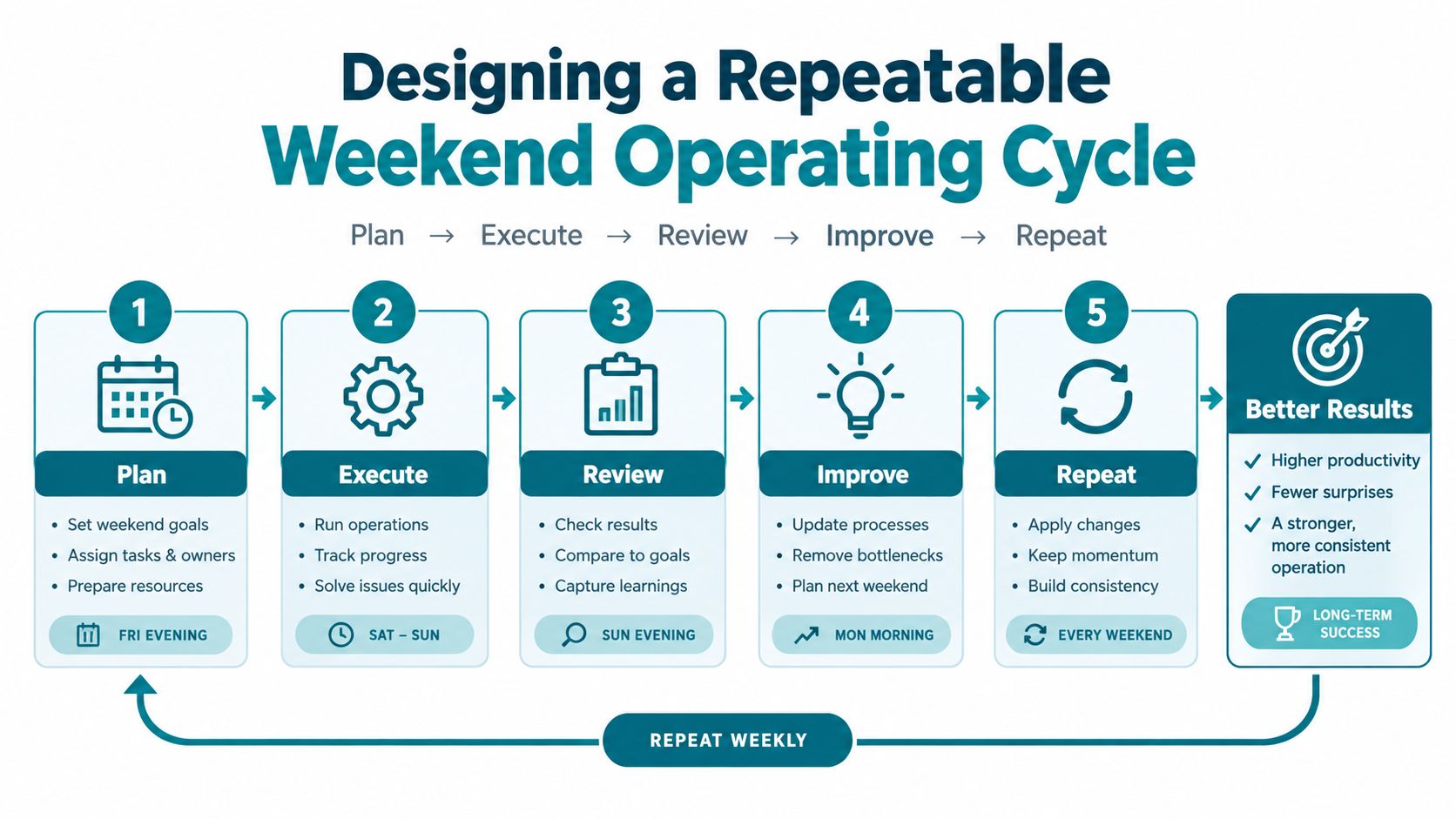
Total bags can fool you. A larger crew may pull in more trash while leaving people idle, short on equipment, or unsure where they belong. Track output beside completion, incidents, and the next-event invitation. A clean spreadsheet and a clear weekend cleaning schedule give you enough structure to improve the work while protecting the people who make it possible.
Setting Non-Negotiable Safety and Route Rules
A good cleanup can turn in minutes if the route leader lets enthusiasm outrun judgment. I have seen a new volunteer spot a syringe in the grass, step toward it out of pure helpfulness, and freeze only when someone barked, "Leave it." That moment is why safety rules have to live in plain speech, close enough to the street that people can use them under pressure.
Start with entry rules before anyone grabs a bag. Require a signed waiver. For Chicago Park District stewardship days, every participant signs one, and anyone younger than 13 must attend with a parent or guardian (Chicago Park District stewardship rules). The same published guidance tells people to wear long pants, closed-toe shoes, and weather-appropriate layers, and to bring water and a hat, while gloves are supplied. If your budget is tight, low minimums apparel suppliers let you order branded vests or shirts in small batches, which helps people stay visible without overbuying gear.
Then make the hard calls simple.
Use three categories in the briefing and repeat them at the curb:
- Pick up: ordinary litter that fits the tools on hand and does not expose anyone to traffic, punctures, chemicals, or bodily fluids.
- Flag and isolate: bulky waste, suspicious items, or anything that needs trained handling. Keep people back and call the route leader over.
- Leave alone: needles, biohazards, broken glass, unstable debris, and anything that makes a volunteer hesitate.
One Chicago cleanup club's posted participation rules also set a minimum age of 8, require an adult chaperone for anyone under 18, and tell volunteers not to touch needles or other biohazards (Chicago cleanup participation rules). I would not build a whole safety system on one event page, but the street-level lesson holds. Volunteers need permission to stop, step back, and ask for help.
Weather and traffic deserve the same clarity. Set a cancellation rule before the first RSVP. Mark where shade, shelter, and water breaks happen. Define the route boundary block by block, and name who can pause or end the event. A written cleanup volunteer safety checklist keeps those calls from depending on memory.
Route choice matters, too. Chicago's ward maps, sweeping schedules, and sanitation contacts help you see where city crews are already assigned and where service responsibility sits (Chicago city services by address). Check the address before you send people out. If a block needs official equipment or enforcement power, hand it off. Protecting volunteer energy means saving people for the work neighbors can do safely, together, and come back to do again.
Engineering Belonging and Volunteer Retention
At one cleanup, a first-timer filled a single bag, stayed quiet through most of the route, then asked at the end when we were coming back. That is the moment I care about. A sign-up is interest. A return visit is trust.
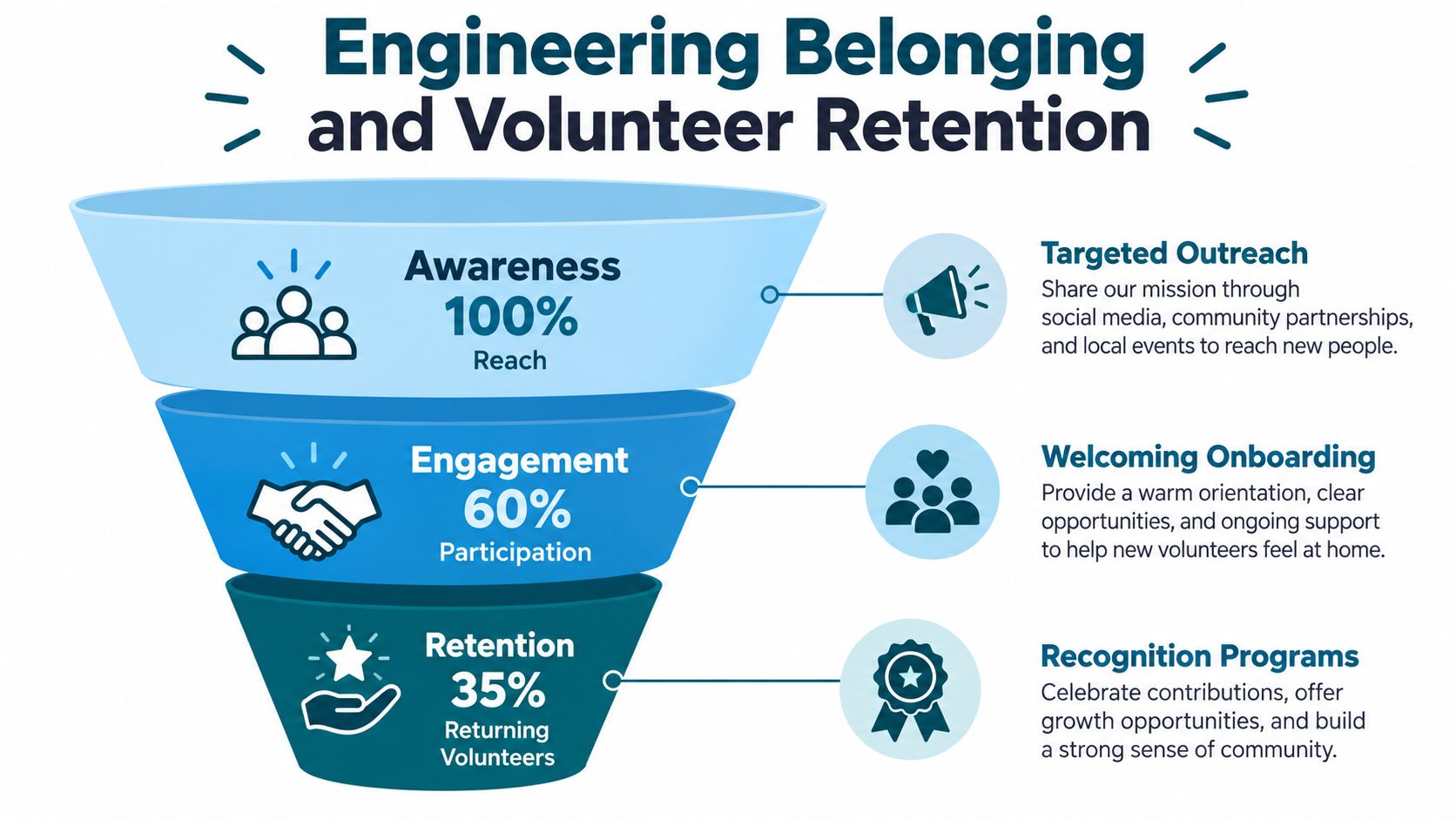
Research on 1,383 environmental-event volunteers across 13 countries found that 74.2% were 18 to 44 and 57.7% were women, and it linked continued participation with satisfaction, community involvement, socialization, training, education, and recognition (environmental volunteer retention research). The lesson on the street is simple. Volunteer energy is fragile. If you want people back, you have to protect it and give it somewhere human to land.
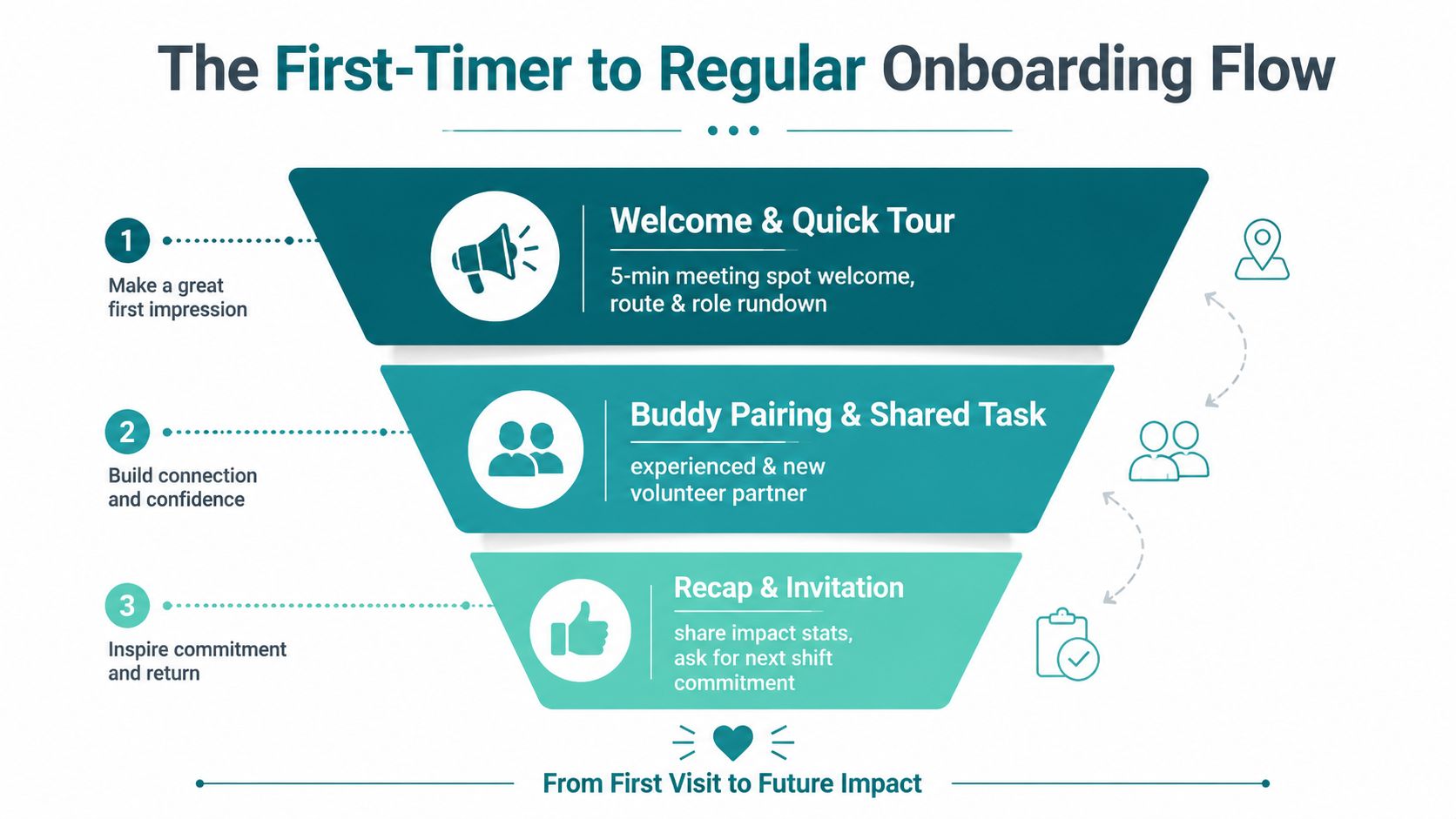
I build the first experience around one visible win. Send the meeting point and equipment list early. Keep the first 10 minutes for orientation. Then give each newcomer a task they can finish within 30 to 45 minutes, pair them with someone returning, pause briefly at the midpoint, and name what the group changed before everyone heads home. Ask for the next RSVP while the feeling is still warm.
Make recognition specific
Generic thanks fade fast. A route flag, a team name, a small award, or a ritual people can carry into next Saturday gives the work texture and memory. Research summarized in a 2019 study found that awards recognizing volunteer contributions predicted whether volunteers stayed the following year, while training alone did not directly reduce turnover (volunteer recognition research).
I track four separate rates. Registration to attendance. Attendance to completion. First-time return to a second event within 30 days. Returning-volunteer attendance frequency. Each one exposes a different weak point. A big sign-up list does not tell you who felt useful, who felt welcome, or who left drained.
The groups that last give people room to choose their pace. Let volunteers leave early, switch physical tasks, skip a week, or just talk with neighbors for part of the route without guilt. A study on LGBTQ+ volunteerism found that relationships, socialization, belonging, and community support helped people feel more comfortable volunteering and stay involved longer (LGBTQ+ volunteerism study). The same study reported that 21.5% of current volunteers cited burnout from too much volunteering, compared with 10.2% of former volunteers, and 11.1% said lack of recognition helped drive them away.
For a workplace parallel, the FLYP LTD employee engagement guide raises useful questions about connection and recognition. My own practical volunteer retention strategies come back to the same promise. People should leave proud, rested, and free to choose their next step.
Building a Lasting Civic Identity
The Saturdays that stick in people's lives usually start with something small. A familiar corner. A volunteer who remembers your name. A route that begins on time even when the sky looks rough. A cleanup earns a place in someone's routine when the logistics hold, the group feels steady, and nobody has to burn extra energy figuring out where to stand or whether they belong.
That is how a weekly event turns into local identity.
From September 2022 to September 2023, 75.7 million Americans aged 16 and older, or 28.3% of the population, reported volunteering through an organization, according to AmeriCorps and U.S. Census Bureau volunteering data. Within that group, the median volunteer served 24 hours while the average served 70 hours. You can feel the shape of a weekend crew inside that gap. A smaller core carries a lot of weight. A much larger circle shows up when the invitation is clear, the work is manageable, and returning never feels awkward.
That reality matters on the street. If you build only for the regulars, you slowly close the door on parents with tight schedules, neighbors testing the waters, and people who want to help but cannot promise every weekend. If you build only for drop-ins, nobody holds the rhythm long enough to welcome others well. Lasting groups protect both kinds of energy. They give frequent volunteers useful responsibility without turning them into unpaid machines. They give occasional volunteers a smooth on-ramp, so one missed Saturday does not become a quiet exit.
I want people to carry home more than a bag count. I want them to remember the block captain who waved from a stoop, the stranger who became a friend halfway down the route, the moment a hard morning turned into shared work that felt possible. That is civic identity in real life. It grows through repetition, trust, and barriers removed before people ever ask for help.
Litter Caterpillars organizes free, volunteer-led trash cleanups across Chicago, providing supplies such as gloves, bags, and trash grabbers while giving people a way to meet weekly and work across the city's wards.