

You walk your dog past the same park bench every morning, and you see the same wrappers under it. You pick up one cup on Monday. You find three more on Friday. You want to clean up parks with neighbors, but you don't want chaos, injuries, or a one-time burst that fades. I run cleanups like small field operations. You set a boundary, you give people clear jobs, and you record what you find so your next visit works better.
Start With the Park You Can Use
You arrive, and I watch bags pop open before anyone agrees on a plan. One volunteer races toward the playground. Another volunteer drifts toward the parking lot. A third volunteer reaches into a hedge because she spots a bottle. I stop the group, smile, and ask everyone to keep bags closed for two minutes.
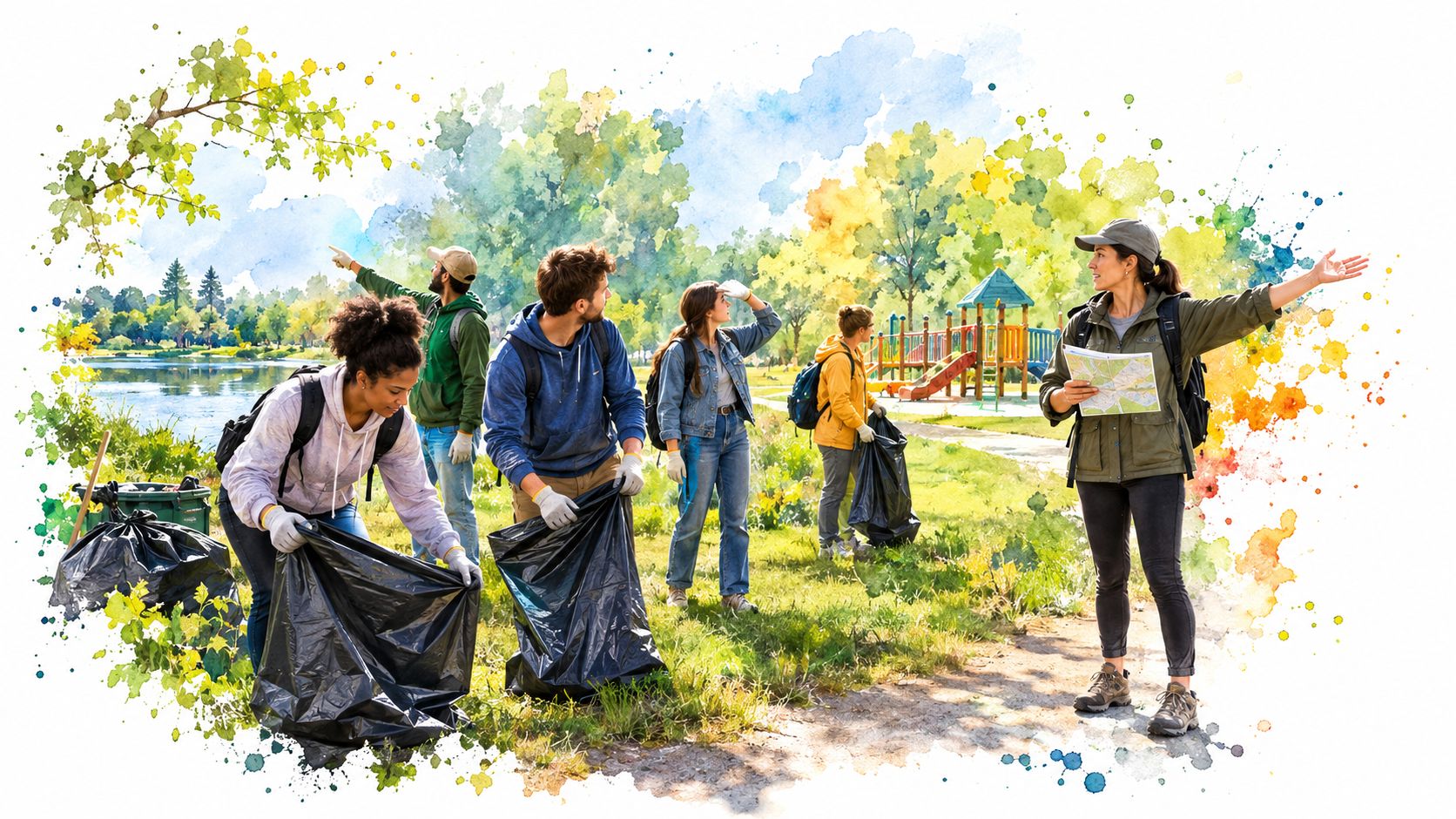
I point to the meeting point first, usually a bench or sign you can see from the paths. I walk your eyes around the boundary next, from one corner to the next, and I name places you won't enter. Think of the park like a kitchen before you cook. You check the counters, you find the sink, and you put knives where kids can't grab them.
Make a New Volunteer Useful Fast
I hand a first-timer a grabber, gloves, and one simple job. I say, you walk the path edge with your buddy, and you call me if you see anything sharp or sealed. You feel useful in minutes because you know your lane, your partner, and your stop point.
- Bring: You bring closed-toe shoes, water, weather layers, and a phone with charge.
- Leave behind: You leave headphones, loose sandals, and any urge to reach into brush you can't see through.
- Check local options: You can compare Chicago parks and cleanup locations before you pick a site your crew can finish well.
You don't need a huge park to learn this rhythm. If you travel and want ideas for smaller, well-marked sites, you can browse Texas state parks and study how clear trailheads and meeting points help groups start calmly. I choose a park you can cover completely, because a finished small park teaches you more than a half-finished big one.
Start slow for two minutes, and you save twenty minutes of confusion later.
When you slow the start, you make coverage even and you keep people close enough to help each other. You also protect scarce nearby space, because UN-Habitat counts streets and open public spaces at about 16% of urban land in its sample of 911 cities across 114 countries. You can't swap your neighborhood park for another one down the road if yours looks neglected.
Plan the Cleanup Before Bags Come Out
The curb is the worst place to make decisions. Volunteers stand around waiting, bags stay in the trunk, and the one person with answers is still circling for parking. I make every call on paper days earlier, and the whole plan fits on a single page you can tape to a cooler.
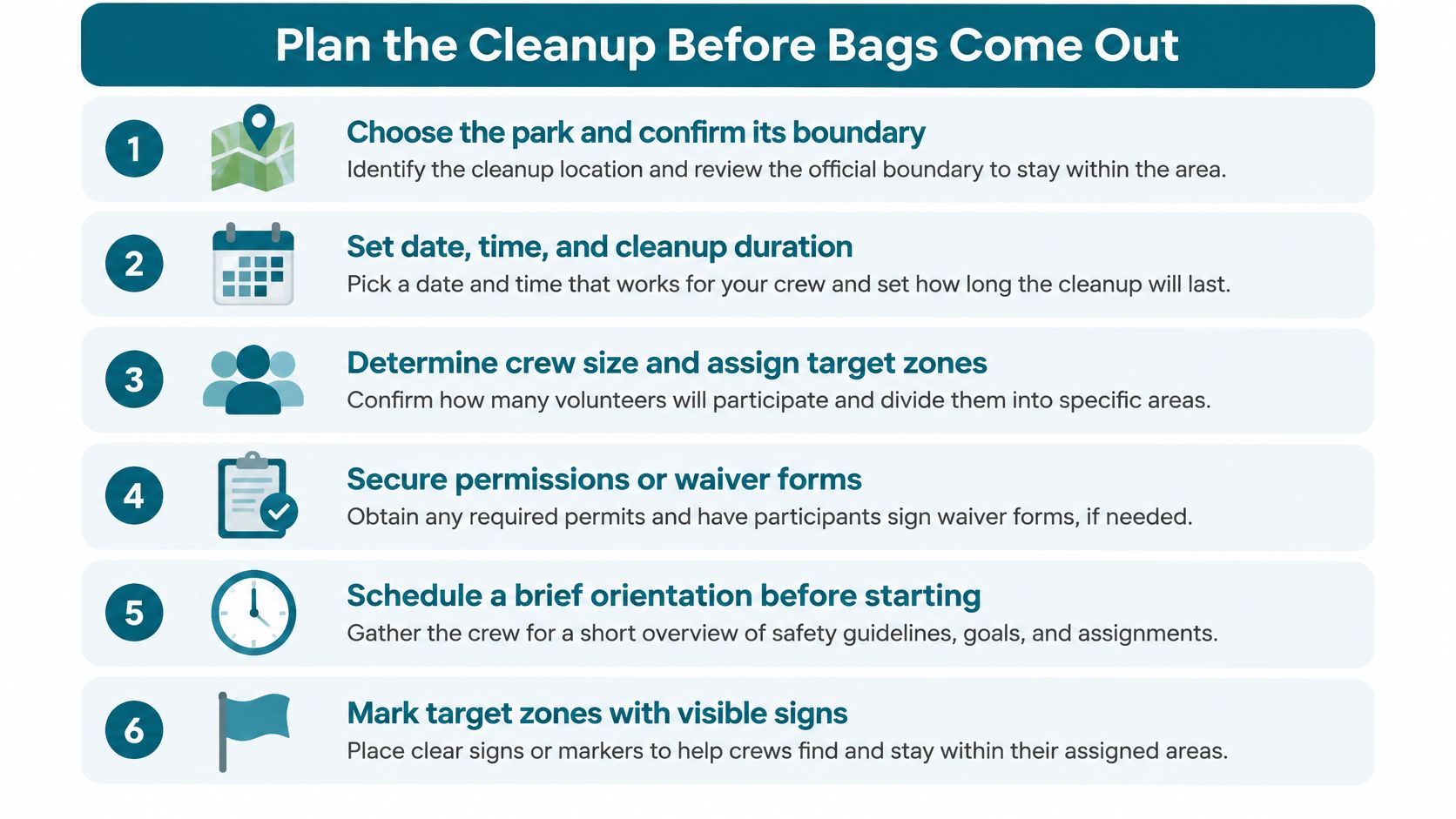
That page holds the date, start time, end time, meeting point, and a zone map drawn from paths, fences, and landmarks. Zones let me send small teams out and bring them back without shouting across the grass. Next to each zone I pencil an empty count column, because planning is where I decide the sweep will produce a litter tally. A tally improvised at the curb never survives the first hour.
Paperwork comes before the day itself. In Chicago, the Park District requires every one-day volunteer to complete an online waiver before work starts, and long-term volunteers follow a different process with a background check. Confirm RSVPs and site limits at the same time, since some programs cap how many people a host can place.
Roles go on the page too, matched to what people want to do:
| Role | What the person handles |
|---|---|
| Team leader and backup | Zone assignments, headcounts, timing calls |
| Route walkers | Litter pickup with grabbers inside a set zone |
| Recorder | Item counts, before and after photos |
| Supply carrier | Spare gloves, bags, water, first aid kit |
| Greeter | Late arrivals, waivers, parking and bathroom notes |
I ask the supply carrier to keep everything in one packed tote, and if your group wants matching supply totes you can buy custom cotton tote bag options and keep one ready as a grab-and-go kit.
Two small decisions finish the plan. I set a weather call the night before and again at dawn, and I tell people exactly when the go or no-go message arrives so parents, older volunteers, and anyone managing transit or medication can plan around it. I cap the event at a focused one to two hours rather than a vague all-morning promise, because full attention is easier to ask for when people know they will still have energy for lunch. Then I write a short orientation script and deliver the same lines every single time.
Engineer Safety Into Every Sweep
A narrow path beside a road can look like an easy pickup zone until a volunteer steps into traffic to reach a bottle. Set boundaries before anyone starts. Pair volunteers, assign each pair a defined area, and give one named lead authority to pause or end the sweep.
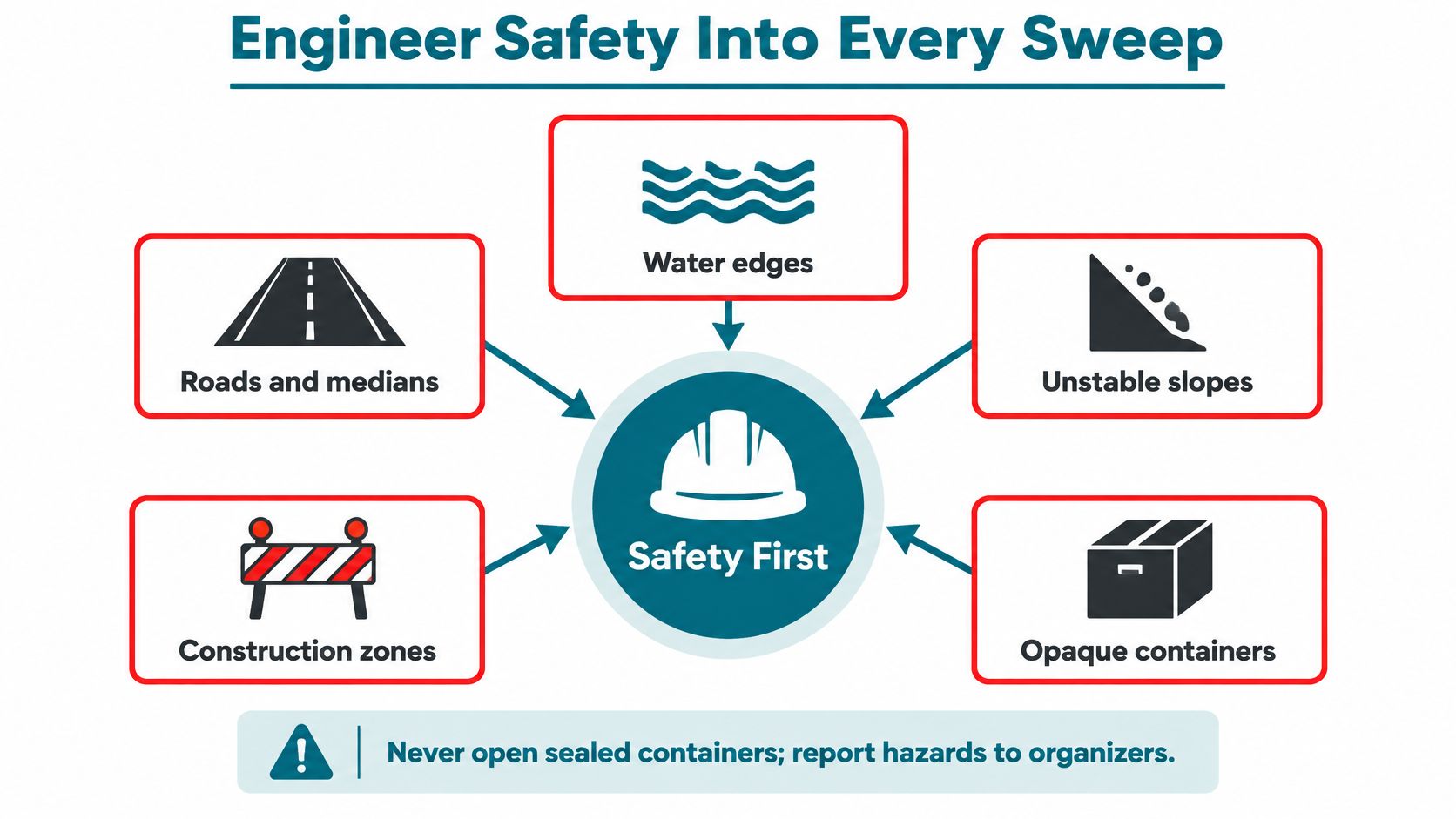
Walk the site first and mark roads and medians, water edges, unstable slopes, and construction zones as off-limits. Volunteers should not open opaque containers or reach into places they cannot see. Pittsburgh's volunteer safety guidance advises leaders to identify safe and unsafe pickup areas and exclude hazards such as syringes and car batteries. Put those boundaries on the route map and repeat them at the start.
Give One Person Stop-Work Authority
Name the stop-work lead during the huddle, and make sure every volunteer knows they can report a concern without being asked to prove it is dangerous. Take a headcount before and after the sweep. Schedule work in daylight, identify a shaded rest point, and make water available.
Before the event, review a volunteer cleanup safety checklist with the lead team. For a second reference on spotting and responding to hazards, share this hazard awareness guide.
Pause for lightning, flooding, poor visibility, or signs of heat illness such as dizziness or confusion. If someone finds a syringe, chemicals, a battery, an unknown powder, or an object too heavy to lift safely, stop nearby work and report its location rather than approaching it. Mapping, photography, supply coordination, and recording observations give people lower-risk ways to contribute.
Practical rule: If you cannot identify an object, do not touch it.
Safety also shapes who feels welcome. A 2025 national cleanup campaign report found that 90% of Americans believed their communities had too much litter, while 44% said they regularly acted to remove it. Clear boundaries, flexible roles, and an ordinary, no-blame cancellation process make it easier for people to take part without pressure to prove their commitment.
Collect Litter Without Making New Risks
A wrapper on open grass and a sharp object half-hidden beside a bench call for different responses. Build that judgment into the sweep: inspect each item before reaching, use a grabber for ordinary litter, and leave anything uncertain for the cleanup lead to assess.
For routine pickups, work in a steady sequence: scan the ground, grasp the item with a tool, then place it in the bag. Keep the tool between your hand and anything dirty, torn, or partly buried. Bag ordinary litter by zone so the crew can track where it came from.
Near a fence or planting bed, slow down and watch where you place your feet. On open grass, volunteers can move in steady lines. Adjust the pace to the footing and visibility rather than trying to keep every person moving at the same speed.
A torn glove means stop and replace it before continuing. If lifting an item strains your back or wrist, leave it and record its location for follow-up. At the end of each zone, turn around and scan the area from another angle. Bench legs and signposts can hide small pieces on the first pass.
Turn the Sweep Into a Litter Audit
I love a full bag, but I don't trust bag counts alone. A bag can hide wet leaves, loose packing, or a few heavy items, and you learn almost nothing about what keeps coming back. When you clean up parks and record what you find, you turn service into civic intelligence you can use next week.
You start with a fixed boundary and repeatable zones, and you keep both stable across visits. You record date, weather, crew size, volunteer-hours, and starting conditions, and you photograph the same points each time. If you change the boundary or the counting rules, you can't tell real improvement from a new ruler.
Count Categories, and Normalize Your Numbers
During the sweep, you collect with grabbers and gloves, and you log hazardous and bulky items separately. After the sweep, you count or categorize representative items by zone, and you weigh bags where you can do it safely. The EPA Wichita litter study used defined assessment for items larger than four inches and logged items by category. You can borrow that discipline at park scale without turning your morning into a lab.
| Measure | Example recording | Why it helps |
|---|---|---|
| Pieces per volunteer-hour | Zone and item count divided by crew time | You compare visits with different crew sizes |
| Pounds per volunteer-hour | Bag weight by zone divided by crew time | You track effort when you can weigh safely |
| Pieces per 100 square meters | Item count for a mapped zone | You compare small and large areas fairly |
| Recurrence by category | Category check after 7, 14, and 30 days | You spot habits and sources that return |
Small litter tells a story that weight can bury. Connecticut and New York cleanups recorded cigarette butts, bottle caps, food wrappers, and small plastic pieces among the most common debris, with leading categories persisting for nine years. One coastal cleanup in that release reported 18,321 cigarette butts and 12,718 bottle caps. You see why I ask you to count pieces, because a light item can show up again and again.
I keep the audit short enough that you'll repeat it. You use one page, one photo set, and the same zone names, and you review the page before you leave the park. You write what surprised you while the park still sits in front of you.
Use Data to Improve the Next Visit
At the picnic table, last visit's map shows the same small litter concentrated near the entrance. That pattern gives the crew a practical choice: repeat the same sweep, or test a change and see whether the litter returns.
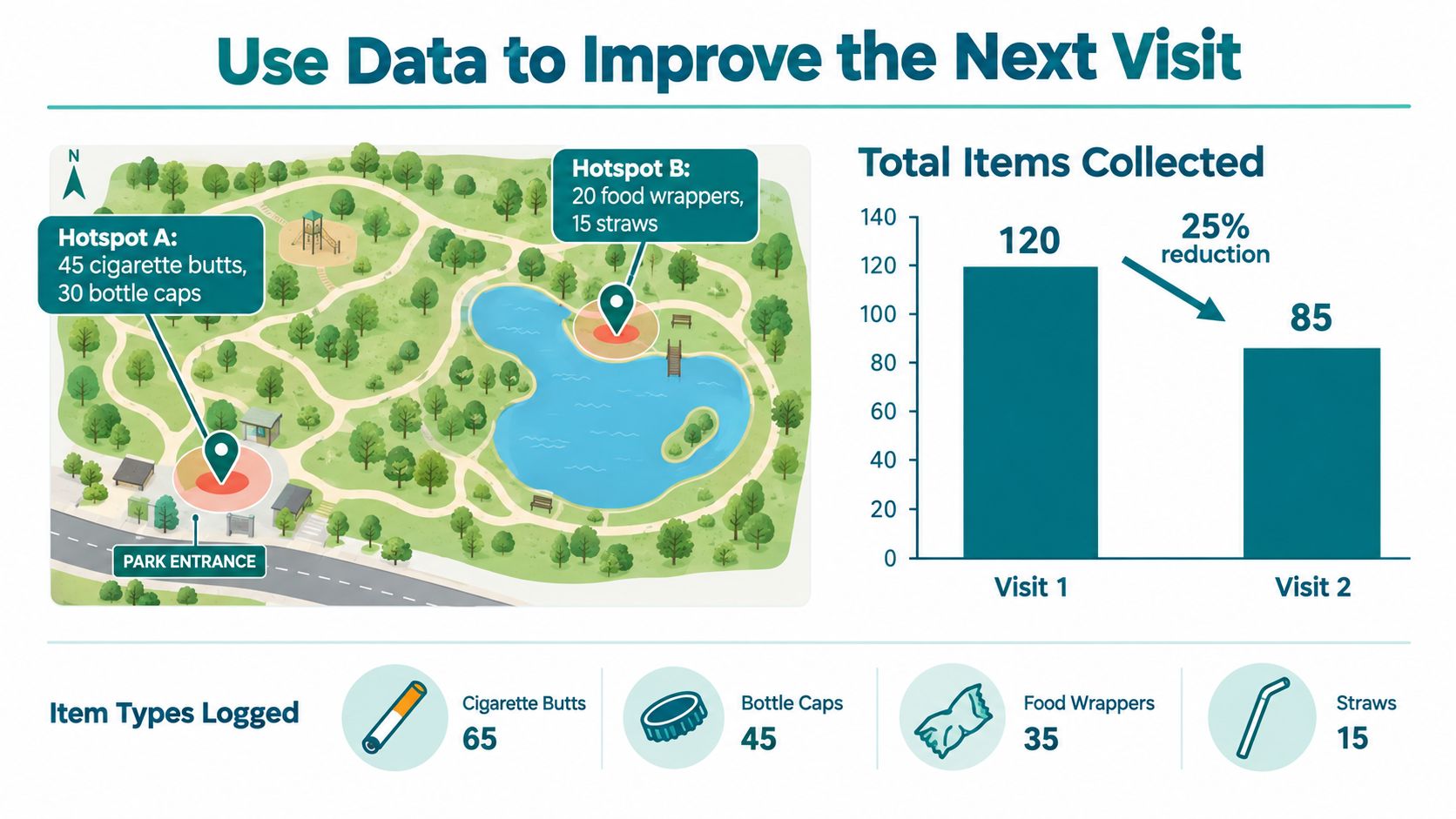
Mark hotspots by zone and litter category, then record visible conditions nearby. Note overflowing bins, missing receptacles, broken lids, wind-exposed corners, bus stops, and entrances where people pause. Separate a one-time party mess from litter that returns week after week. The likely cause, and the response, may differ.
Pick One Test You Can Finish
For the next few visits, request a bin repair, ask whether a bin can be moved, or focus on cigarette litter near one entrance. Keep zone boundaries and counting rules steady so the crew can compare results after the change. The guide to measuring community cleanup impact can help you keep that comparison consistent.
You can also route findings to the right city office. Chicago has 50 legislative wards, and each ward elects one alderperson to a four-year term. Record which wards the crew has covered, then contact the relevant office about a bin, vacant lot, or dumping spot that needs city action.
Clean the park, track what returns, address one cause, and measure again.
Your bags help care for the park people can reach today. Cities still need to invest in parks, bins, pickup, and repairs. Both truths belong in the plan.
Build a Recurring Park Care Routine
I measure success by whether you come back with energy two weeks later. A single heroic morning feels good, but a calm routine changes a park and changes your habits. You publish the next date before you leave, and you confirm the site, waiver, supplies, and lead while the group still stands together.
History backs up that small, steady rhythm. The National Park Service began its Volunteers-in-Parks program in December 1970, and in 2023 more than 123,000 volunteers donated over 3.7 million hours. You don't need that scale to borrow the lesson. You need consistency, clear roles, and a schedule people can trust.
In Chicago, the Chicago Parks Foundation lets groups organize independent cleanups at more than 600 parks and supplies bags, gloves, and promotional signs at no charge during its June 1 through October 31 season. You choose the park, date, and time, and you lead a simple pickup. On other weeks, Park District stewardship days welcome people of any age, background, or experience for work that includes litter pickup, mulching, planting, and habitat monitoring. You RSVP with the steward because capacity can fill and schedules can change.
- Before you leave: You share photos, zone notes, and the next date.
- Between visits: You rotate supply duty and send one reminder with waiver and weather details.
- At the next visit: You greet returners by name and pair each newcomer with a buddy.
I keep the invitation simple. You showed up, you learned the park, and you left it cleaner and safer. Come back, bring one friend, and let's see what the audit tells us next time.
If you're ready to clean up parks across Chicago with a weekly, volunteer-led crew that brings supplies and gives you a clear role on day one, visit Litter Caterpillars and pick your next weekend morning with us. You bring your shoes and your curiosity, and we'll help you turn a single sweep into a habit you can keep.