I kept an old jar of blueberry jam in the back of my fridge for four years because it carried the memory of a trip to Michigan. The jar weighed less than a pound, yet I treated it like a five-hundred-pound stone. One morning, after a chaotic relationship finally ended, I walked outside, picked up a crushed cup from the sidewalk, and felt something inside me move.
The Heavy Weight of Trash and the Freedom of Cleaning
My apartment had become a museum of unfinished decisions. The jam stayed because of Michigan. A bag of stale nuts stayed because I once tried to eat healthier. Every object came with a story, and every story gave me another reason to leave the mess alone.
After the relationship ended, I saw the pattern more clearly. I had trouble with cleanliness, consistency, and bravery. I could explain every pile, every drawer, and every old container. Explanation didn't clear a single surface. I needed an action I could finish with my hands.
Cleaning other people's messes felt easier than cleaning my own. A wrapper on the pavement didn't carry my memories. I could bend down, pick it up, and drop it into a bag. The result appeared immediately. One piece disappeared. Then another.
A small physical action can interrupt a long mental freeze.
That first outdoor cleanup gave me a strange kind of fun. I walked from one piece of litter to the next, and the block slowly changed under my feet. I didn't solve my whole life that afternoon. I did prove that I could see a problem, approach it, and do something about it.
The Litter Caterpillars story about picking up litter comes from that same struggle. A person can feel stuck under clutter, shame, fear, or exhaustion. Then a simple task creates a narrow path forward. Find the bottle. Grab the wrapper. Tie the bag. Keep walking.
Why public messes feel different
Public litter gives you a clean boundary. You show up at a park, sidewalk, shoreline, or vacant lot. You choose a patch of ground. You work until the area looks different. Your mind gets a break from vague problems because your hands have a clear job.
Estonia gave the modern cleanup movement a dramatic example in 2008, when about 50,000 people, roughly 4% of the population, removed more than 10,000 tons of waste in five hours during a nationwide cleanup. World Cleanup Day identifies that effort as the historical anchor for a movement that later became global. By 2018, nearly 18 million people across 157 countries joined the campaign, and participation rose above 21 million across 180 countries in 2019, according to the same source.
Those numbers matter because they show what people can do when someone gives them a place to start. Still, your own first bag matters for a more personal reason. You get to practice consistency without waiting to feel ready.
Pick up one piece. Then pick up the next. The pavement won't ask you to explain why you waited so long.
Finding Your Local Clean Up Events
You don't need a perfect plan. You need a meeting point, a time, and a group that shows up.
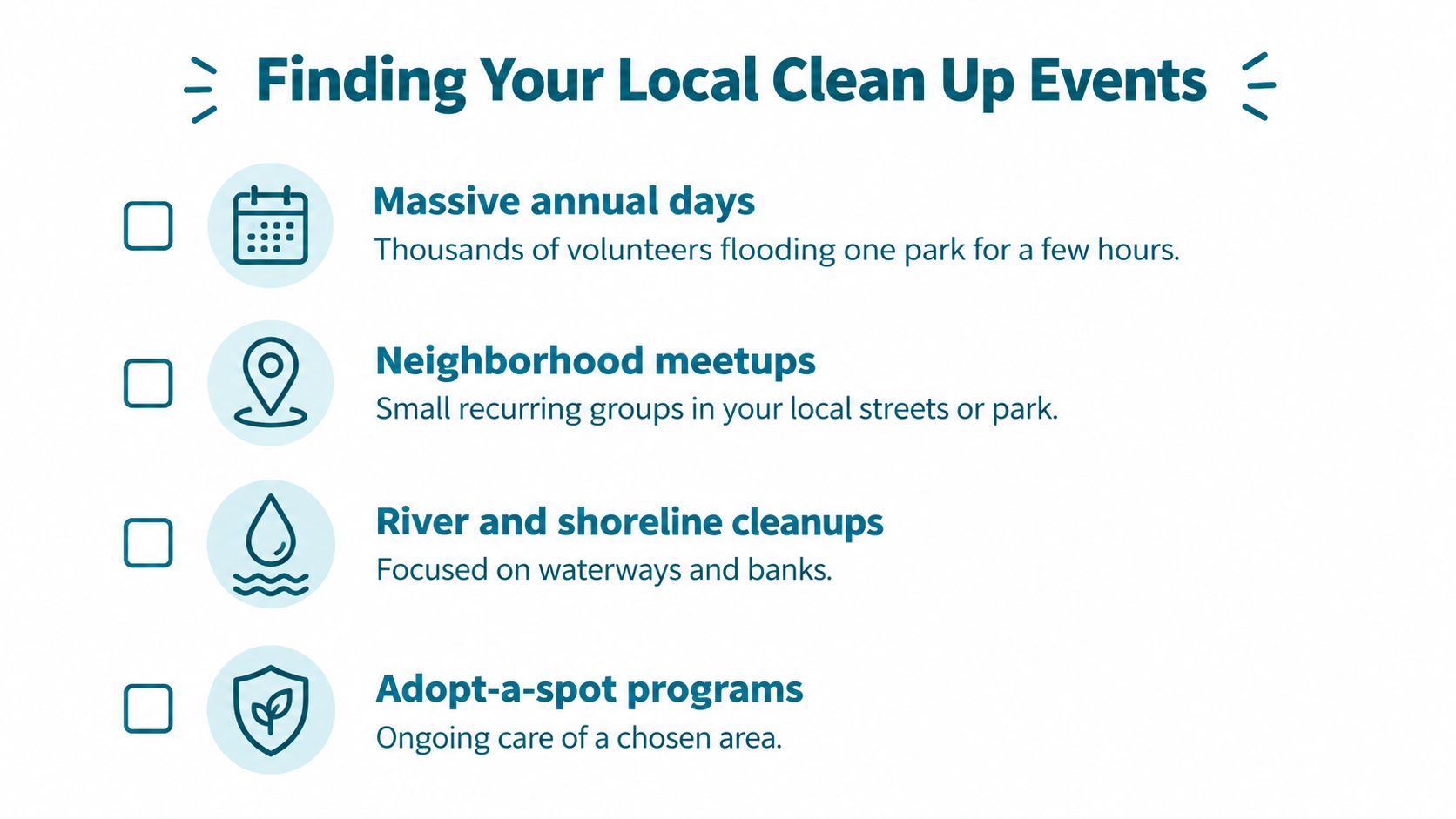
Clean up events usually fall into a few practical formats. A large annual day may bring a crowd into one park for a short work period. A neighborhood meetup may gather a small crew near local streets. River and shoreline cleanups focus on banks and waterways, while adopt-a-spot programs give volunteers an area to revisit and care for over time.
Search where real crews gather
Start with your city name and a specific place. Search phrases like “clean up events near me,” “neighborhood litter pickup,” “park cleanup this weekend,” “river cleanup volunteer,” and “adopt a street volunteer.” Check Meetup, Instagram, city department pages, park district calendars, community groups, and nonprofit event pages.
Look for a clear start point and a named organizer. A useful event page tells you what to bring, whether the group supplies bags and gloves, how long the work lasts, and what area volunteers will cover. If the page only says “come help,” send a message before you travel.
Weekend mornings often suit people who want a steady service habit. I also look for groups that publish events in ordinary weather, because consistency tells you more than a polished one-day announcement. A crew that returns to the same streets gives you a better chance to recognize faces and build trust.
Some nonprofits manage volunteers across many sites or need help coordinating employee groups. A volunteer employee app for nonprofits can help those teams organize signups and communication in one place.
Choose your first format
Pick a large event if you want energy and simple instructions. Choose a recurring neighborhood crew if you want familiar faces. Select an adopt-a-spot program if you enjoy watching one area change across repeated visits. For a nearby starting point, use this guide to find volunteer trash pickup near you.
Before you leave home, save the organizer's phone number, wear shoes you can walk in, and tell someone where you're going. You don't need to know anyone before you arrive. Introduce yourself at the meeting point, accept the first assignment, and let the work handle the awkward beginning.
Safety Rules and Gear You Actually Need
A cleanup can look as harmless as sweeping a kitchen floor. A dark piece of metal under wet leaves can behave more like broken glass in a hallway. You can't treat every object as ordinary litter.
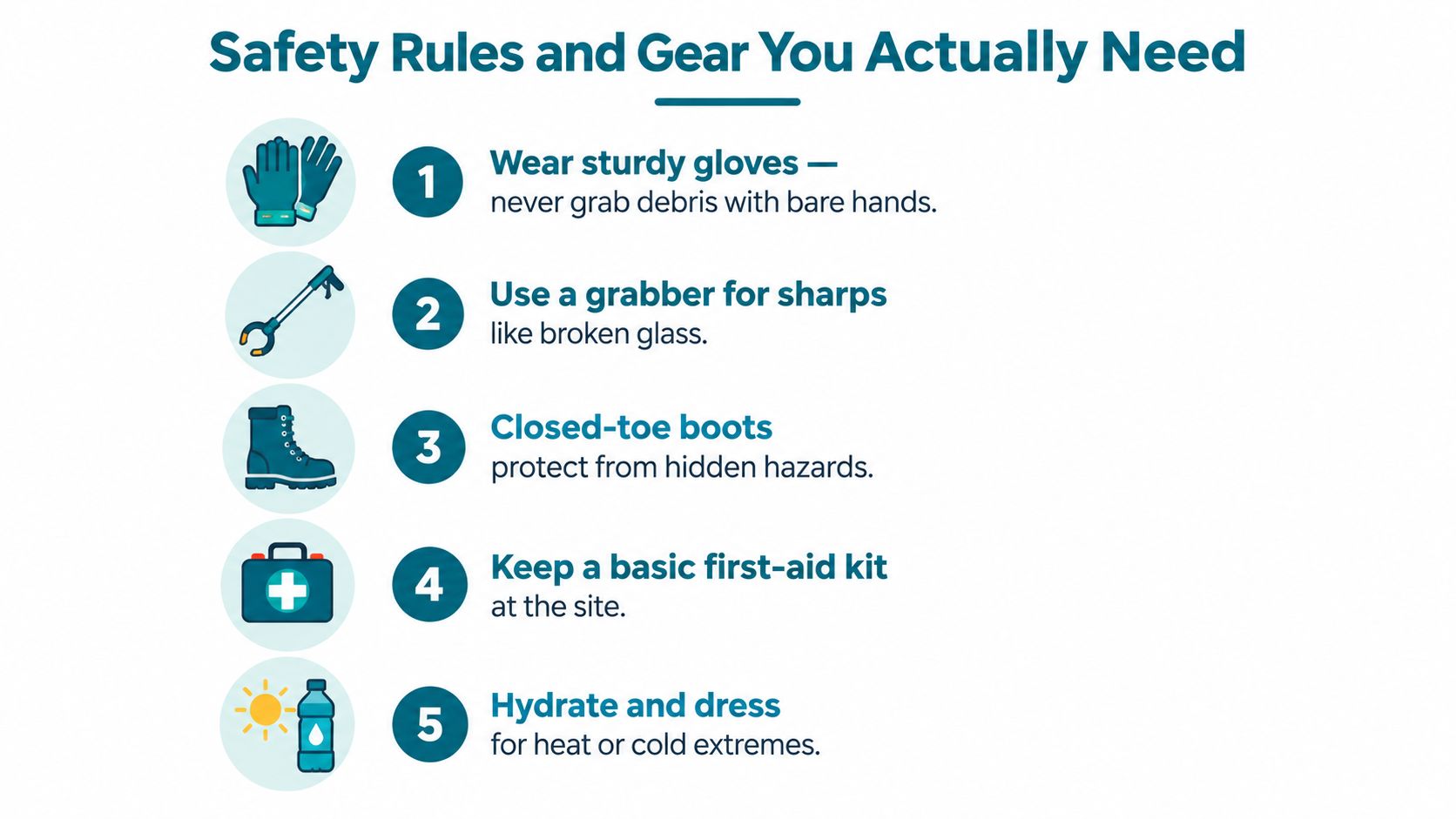
Wear sturdy gloves, closed-toe shoes, and bright clothing. Bring water, a phone, and clothing that suits the weather. Use a grabber or another tool for sharp, awkward, or hard-to-reach debris. The cleanup guidance from San Mateo County Health recommends buddy teams of at least two, safety briefings, central starting points, and work limited to non-hazardous human-made debris.
Leave dangerous objects alone
Never touch needles, broken glass, unknown containers, heavy objects, or debris near recent encampment areas. Don't reach into holes, dense brush, drains, or places where you can't see your hand. Mark the location and tell the team leader or site coordinator. North Central Texas Council of Governments cleanup guidance tells volunteers to report hazardous items rather than pick them up.
Traffic creates another hard boundary. Stay out of roads, medians, roundabouts, bridges, rocky slopes, guardrails, and concrete walls. Seattle's Adopt-a-Street volunteer handbook gives those limits plainly. Work where the ground stays predictable.
If your group cleans beside a road, walk facing oncoming traffic and work on one side at a time. Greenville County's volunteer safety guidelines also call for a first aid kit, water, a cell phone, and orange safety vests. Skip horseplay. A joke isn't worth a twisted ankle or a distracted driver.
Check the site before anyone bends down
Organizers should inspect the area before volunteers arrive, plan first aid, keep work in daylight, and pause during fog, rain, high winds, or electrical storms. This cleanup event checklist also points organizers toward bright clothing, gloves, closed-toe shoes, hydration, and clear rules for hazards.
A printed name or logo on a hard hat can help a large crew identify leaders, though you still need to choose equipment suited to the task. This custom printed hard hats guide can help organizers compare options before ordering.
For a simple pre-event walkthrough, use this volunteer safety checklist. Safe work lets you return next week with your hands, knees, and confidence intact.
The Litter Caterpillars and the Power of Showing Up
The first Litter Caterpillars pickup had three people, a spring hailstorm, and a string of canceled rides. We huddled under a tree, shivering while every Uber canceled on us. The weather made the story harder, stranger, and more memorable.
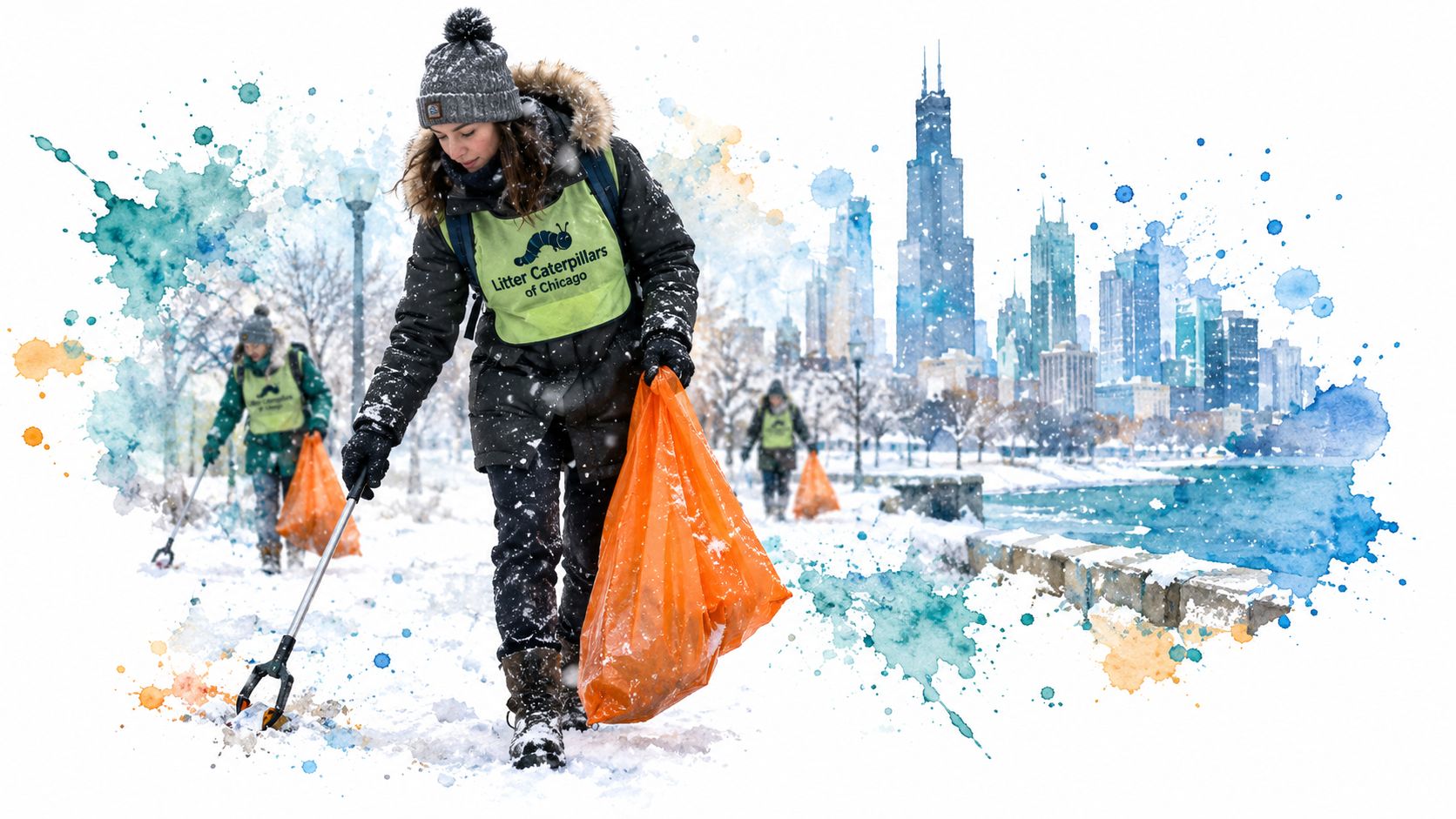
I learned something under that tree. Cleaning another person's mess felt easier than facing my own. The cold didn't make the work comfortable, but it gave the three of us a shared problem. We laughed, waited, and kept moving when the storm eased.
The group now meets across Chicago, including all 50 wards, and volunteers work through rain, snow, cold, and heat. I don't use bad weather as a badge that excuses unsafe choices. We check conditions, protect volunteers, and choose the work we can handle. The point is to return, again and again, with courage and care.
Pride gives ordinary work a pulse
Flags, badges, and a theme song may sound playful until you watch a tired volunteer straighten up after receiving a badge. People want to know that their effort belongs to something. A name can turn a lonely bag of trash into a shared chapter.
Fear doesn't disqualify you from service. You can feel nervous, miss a piece of litter, or struggle through the first hour and still belong. I believe failure gives you information. You learn where you need help, what tools work, and how to come back with a steadier hand.
A cleanup group also needs room for people with different bodies and abilities. Stories about seniors with arthritis giving back offer a useful reminder. People can contribute in different ways, from sorting and documenting debris to carrying light bags or helping at the meeting point.
Caterpillar Park in Englewood began with an empty lot won at auction. Volunteers are building something there through hands-on work and shared responsibility. The work asks for more than a quick photo and a goodbye. It asks you to return, learn names, and take care of the place after the excitement fades.
See how the work feels in motion before you decide whether the group fits your life.
Building Friendships and Personal Resilience
You can arrive at a cleanup knowing nobody and leave with three people you can text next weekend. The work creates an easy opening. You don't need a clever introduction when you can ask, “Which side of the block are you taking?”
A service-minded group changes the social equation. You meet people who chose a cold morning, a public sidewalk, and a dirty pair of gloves. Their choice tells you something before either of you shares a biography.
Shared discomfort creates trust
The first ten minutes may feel awkward. Then someone finds a tire, another person wrestles a tangled cord from a fence, and the group starts talking. You laugh at the absurd objects people abandon. You compare routes. You carry a full bag to the collection point together.
That small sequence trains you to stay with discomfort. You can't control the weather, the amount of litter, or the behavior of strangers. You can control whether you arrive, whether you follow the safety plan, and whether you help the person beside you.
The friendship often begins before the conversation. It begins when someone keeps pace with you.
Weekend mornings create a particular rhythm. People show up before the day scatters them into errands, parties, work, and screens. A group that protects volunteer safety and happiness gives friendships room to grow without turning every gathering into a fundraiser.
Let service reshape your self-trust
I used to treat consistency like a personality trait other people possessed. Cleanup taught me to treat it like a practice. I put on shoes, reached the meeting point, and completed the assignment even when I felt tired or distracted.
You can use the same practice in small ways. Arrive on time. Bring water for someone who forgot. Ask before lifting. Thank the person who sorts the bags. Learn the name of the street you cleaned. Each action makes you a little more dependable to yourself.
The physical result helps. You can look back at a cleared patch of sidewalk and see evidence that your hands did something useful. That evidence won't fix every private problem, but it can weaken the belief that you never follow through.
Service also gives you a place to forgive yourself. You don't need a perfect past to join a cleanup. You need the willingness to stand beside other people and do the next decent thing.
Your First Weekend on the Streets
Stop waiting for the perfect Saturday. The perfect Saturday keeps moving. A clean up event needs your ordinary body, your ordinary shoes, and your decision to leave the house.
Choose one event this weekend and save the meeting point. Read the organizer's safety notes. Pack gloves, water, a charged phone, closed-toe shoes, and clothing you can move in. If the organizer hasn't explained what volunteers should avoid, ask before you arrive.
Use a simple morning checklist
- Confirm the plan: Check the start time, location, contact person, weather policy, and expected work area.
- Pack for the ground: Bring sturdy gloves, water, a phone, and a tool for debris that you shouldn't touch directly.
- Meet your buddy: Work with at least one other person, stay within the assigned area, and tell the leader when you find a hazard.
- Introduce yourself: Ask the person beside you what brought them out. You may find your first local friend before the first bag fills.
- Leave with a return plan: Thank the crew, note the next gathering, and decide whether you want a recurring group or a different kind of cleanup.
When you pick up that first wrapper, pay attention to the feeling. The object may weigh almost nothing. Your action carries more weight because you chose it instead of waiting for motivation.
You don't have to feel brave before you begin. You build bravery by bending down carefully, asking for help, walking through discomfort, and returning after the first event. Consistency grows the same way. One morning becomes another morning, and a stranger becomes a teammate.
Chicago residents can join neighborhood litter pickups and park work days with Litter Caterpillars, while newcomers, students, workers, and longtime residents can use the group's open gatherings to meet people through service. Visit Litter Caterpillars to find an upcoming cleanup, bring your gloves, and take your first block with the crew.
Litter Caterpillars hosts volunteer-led cleanups across Chicago, including parks and public spaces, and provides supplies such as gloves, trash bags, and hand sanitizer at its events. Visit Litter Caterpillars this week, choose a cleanup, and show up ready to make a friend and leave the street cleaner.