

Getting rid of that old can of paint or those dead batteries isn't just another chore. It's a quiet act of bravery. In Chicago, the city makes it free to drop off household chemicals and old electronics at their permanent facility or mobile collection events. It’s a surprisingly simple way to protect our shared home, and honestly, it’s one of the kindest things you can do for the whole city.
Turn Your Clutter into a Crusade
You know the stuff I’m talking about—the forgotten bottle of bleach under the sink, the half-used paint cans from that project five years ago. They feel like small, nagging problems. But what if they were actually clues on a map to a better you and a healthier Chicago? This isn't just a guide about trash; it’s about transformation. We’re going to show you how tackling the hidden gunk in your home is a powerful act of courage.
I started Litter Caterpillars from this exact feeling. My apartment was a disaster, a perfect mirror for the chaos I felt inside. Cleaning it up wasn't about tidying; it was an act of choosing bravery over avoidance. I learned that by properly managing the mess in our homes, we clean up our inner worlds, too. This is your invitation to an adventure, where every item you dispose of correctly is a heroic step.
The Scale of Our Shared Challenge
It's easy to feel like one can of old paint thinner doesn't matter. But our individual clutter adds up to a massive, city-wide problem.
In 2020 alone, Chicago produced a staggering 4.13 million tons of waste. Imagine the weight of that. And a huge chunk of it—over 1.4 million tons—came from commercial and industrial sources, which are prime generators of hazardous stuff. When you see those numbers, it's clear our small actions are part of a much bigger story. You can dig deeper into Chicago's waste strategy and its findings to get the full picture.
This is where personal growth slams right into community impact. The story of Litter Caterpillars began when I hit a personal breaking point. My messy apartment mirrored a messy life. The decision to finally clean up wasn't just about throwing things away; it was an act of taking control. It was about choosing bravery over avoidance.
That's the secret we discovered: cleaning someone else’s mess is often easier than cleaning our own. It builds a muscle. It teaches you consistency and gives you a strange, new kind of fun—the kind that comes from doing something hard with friends.
That’s the exact spirit we bring to our weekly cleanups, rain or shine. For three years, we’ve shown up. We've cleaned highways and are even turning an auctioned lot into a park, all fueled by the simple idea that service can redeem and transform us.
Why Your Small Act of Sorting Matters
Disposing of your hazardous waste correctly is an act of kindness to thousands of people you’ll never meet. It protects the sanitation workers who handle our trash every day and the water we all drink from Lake Michigan. It's a quiet, heroic choice that ripples outward.
Think of it like this: every single item has a story. That old bottle of weed killer is a potential threat to the soil in a local park. Those expired batteries could leach heavy metals into the ground. When you choose to take them to a proper disposal site, you’re not just getting rid of clutter. You are rewriting the end of that item's story from a harmful one to a helpful one.
This guide is here to make that choice easy. We believe making an impact is a lot easier than you think, and it can even be fun. It’s about building new habits, one brave decision at a time. The same focus it takes to sort your hazardous waste is the focus you can bring to other parts of your life. This isn't just a cleanup; it's a crusade.
Recognize the Hidden Hazards in Your Home
Before you can tackle a problem, you have to know what you're looking at. This part is your field guide for a brave mission: finding the common household hazardous waste (HHW) hiding in your own home. Forget boring lists. We’re going on a scavenger hunt, and the prize is a safer home and a healthier Chicago.
This isn’t about making you paranoid; it’s about making you powerful. Think of yourself as a detective and your home as the scene. The clues are usually hiding in plain sight—the old can of paint thinner, the half-used bottle of drain cleaner, the expired pills in the medicine cabinet. By learning to see your space with new eyes, you’re taking the first, most important step.
Meet the Garage Goblins
The garage is often the main hideout for some of the nastiest stuff we own. We call them "Garage Goblins" because they're usually out of sight, but they can cause some serious trouble.
I'm talking about things like used motor oil, antifreeze, and old gasoline. When these liquids get tossed in the regular trash, they can seep into the ground at the landfill, contaminating soil and our groundwater. That’s a direct threat to Lake Michigan, our drinking water source.
Then you've got the pesticides, herbicides, and fertilizers. These chemicals are designed to be powerful, and that power doesn't just vanish when you throw them away. Spotting these goblins is the first move in getting them out of your life for good.
Unmasking the Kitchen Gremlins
Your kitchen might seem innocent, but it’s a favorite hiding place for its own tricky creatures. These "Kitchen Gremlins" often come in bottles and cans, promising a sparkling clean home.
We're talking about items like:
- Caustic Cleaners: Oven cleaners and drain openers are no joke. They often contain lye or strong acids that can cause severe burns and eat right through stuff.
- Aerosol Cans: Even if they seem empty, cans for cooking spray or air fresheners can still explode under pressure in a garbage truck.
- Cooking Oils: While it’s not toxic like a chemical, pouring old cooking oil down the drain is a fast way to clog up the city's sewer lines. Throwing it in the trash just makes a greasy mess and attracts pests.
The real danger here is how normal these things are. We use them all the time, so we forget how potent they can be. Treating them with respect by disposing of them properly is a small act of kindness to our city's workers and our environment.
To make this even clearer, here’s a quick reference table to help you spot these creatures around your house and understand the "why" behind handling them carefully.
Common Household Hazardous Waste and Its Dangers
| Item Category (The 'Creature') | Common Examples | The Hidden Danger (Why it's hazardous) |
|---|---|---|
| Garage Goblins | Motor oil, antifreeze, gasoline, paint thinner, pesticides, herbicides | Can contaminate soil and groundwater, posing a risk to drinking water and wildlife. Flammable. |
| Kitchen Gremlins | Oven cleaner, drain opener, aerosol cans, polishing agents | Corrosive chemicals can cause severe burns. Aerosols can explode. Fumes can be toxic. |
| Bathroom Bogeymen | Expired medications, mercury thermometers, nail polish remover, button batteries | Pharmaceuticals pollute waterways. Heavy metals (like mercury) are highly toxic. Flammable. |
Spotting these items is half the battle. Once you know what you have, you can make a plan to get rid of it the right way.
Battling the Bathroom Bogeymen
The bathroom cabinet is another prime spot for what we call the "Bathroom Bogeymen." This is where you'll find expired pharmaceuticals, old-school mercury thermometers, and nail polish remover.
Flushing old pills was once common advice, but now we know better. It just sends those chemicals straight into our water system, and treatment plants aren't built to filter them all out. This stuff can mess with aquatic life and eventually circle back into our environment.
Even something tiny like a button battery from a hearing aid or a watch is packed with heavy metals like mercury, cadmium, or lithium. If you’re looking to tackle this specific challenge, our guide on how to properly recycle batteries in Chicago gives you clear, actionable steps. Every single battery you keep out of a landfill is a small but heroic victory against pollution.
Your Guide to Official Chicago Disposal Programs
Alright, you’ve bravely hunted down the hazardous goblins and gremlins lurking in your home. Now what? You’re holding a box of powerful, potentially messy stuff. Don't worry. This next part isn't some bureaucratic chore; it's a simple mission. It’s all about getting these items into the right hands, and the City of Chicago has made it surprisingly easy.
Think of yourself as a secret agent on a delivery mission. Your package is sensitive, and your job is to get it to the drop-off point safely and securely. The city provides the secure location; you just need to handle the transport. This isn't about navigating red tape; it's about being part of a city-wide effort to do the right thing, together.
The Main Hub: The Permanent Drop-Off Facility
Chicago has one central, permanent location dedicated to this mission: the Household Chemicals & Computer Recycling Facility at 1150 N. North Branch Street. This is your go-to headquarters for safe disposal. It’s a place built specifically to handle the tricky items you’ve gathered.
The best part? It's completely free for Chicago residents. No appointment needed. You just show up with your items, and a trained crew takes them off your hands. It feels good, like completing a quest. You drive in with a problem and drive out with a solution, leaving your community a little bit safer.
So, what can you bring? The list is long, but here are the highlights:
- Garage & Garden Chemicals: Think paint thinners, lawn chemicals, antifreeze, and used motor oil.
- Cleaning Supplies: Bleach, ammonia, drain cleaners, and all those old household cleaners under the sink.
- Electronics: This is a big one. Computers, monitors, printers, cell phones, and televisions.
- Miscellaneous Hazards: Fluorescent light bulbs (CFLs), thermostats, old batteries, and expired medications.
Just a heads-up, they do not accept things like latex-based paint (which you can just dry out and toss in the regular trash), explosives, fireworks, or smoke detectors. Knowing what they take beforehand is key to a smooth drop-off.
Mobile Missions: Pop-Up Collection Events
What if the permanent facility on North Branch feels like a journey? This is where the city’s kindness really shows up. Throughout the year, they host mobile collection events in different neighborhoods.
These events are like a traveling roadshow for responsible disposal. They bring the solution closer to your doorstep, making it even easier to participate. It’s a powerful reminder that you’re not alone in this. When you see your neighbors also dropping off their old electronics and chemicals, you realize you're part of a movement.
This is community in action. Each person showing up to a mobile event is casting a vote for a cleaner Chicago. It’s a shared moment of responsibility, proving that when we make good choices accessible, people will bravely make them.
Keep an eye on the city's official website for the schedule. These events are fantastic opportunities to clear out your clutter and feel connected to a larger purpose.
Your Pre-Mission Checklist: Safe and Simple Transport
Getting your items to the drop-off site safely is the final, crucial step. It’s not complicated, but it requires a little mindfulness.
Think of it this way: you wouldn't carry a leaky water bottle in your backpack, right? The same principle applies here. Your goal is to make sure everything stays contained.
Start by checking that all your containers have tight, secure lids. If a product is in its original container, leave it there—that label has important info. If you have something in a leaky container, place the entire thing inside a larger, sealed plastic tub or a heavy-duty bag.
The visual below breaks down the typical hunt for these items in your home, from the garage to the bathroom.
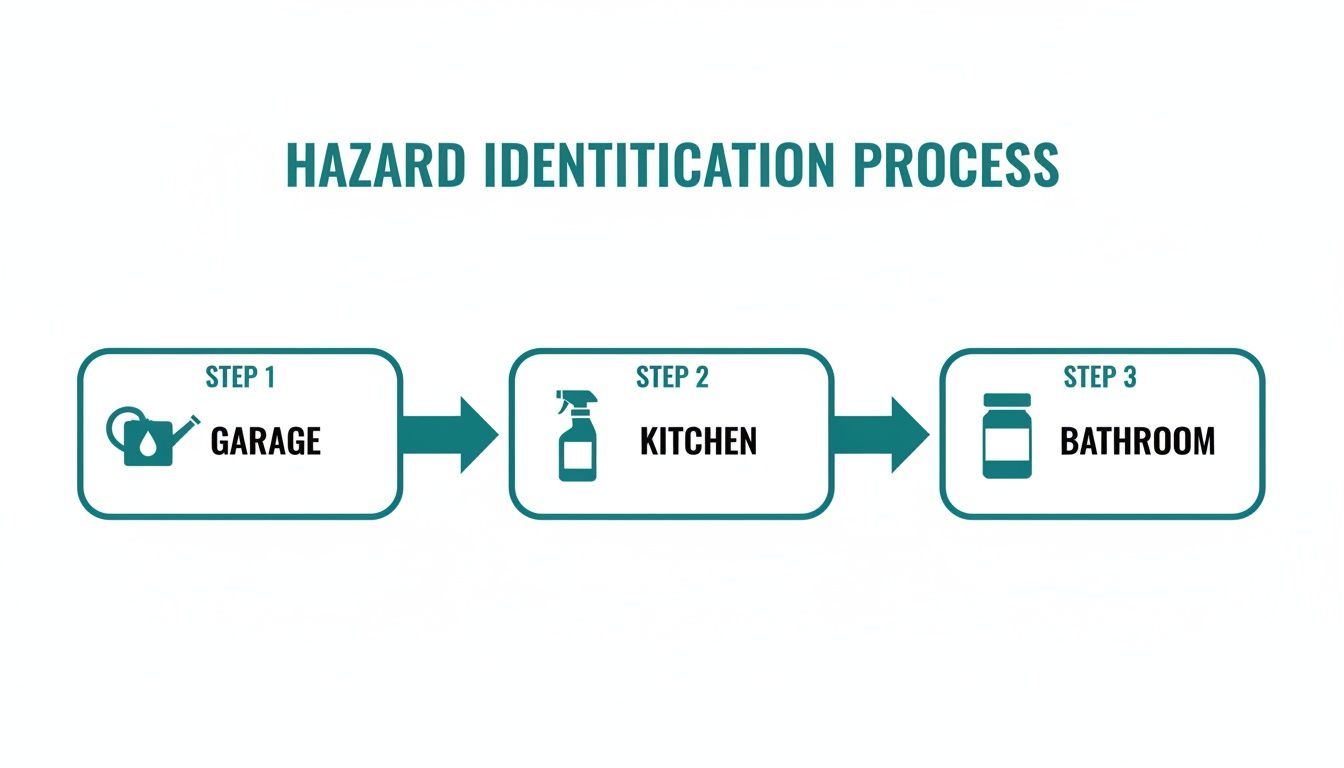
This simple flow highlights the key areas where these hidden dangers often reside, making your search more focused and effective.
When you're ready to drive, place the items in your trunk or the bed of your truck, away from the main passenger area. This prevents fumes from building up and keeps everyone safe in case of a spill. It’s a small act of kindness to yourself and anyone riding with you.
And once you've made your drop-off, you'll find there are many other ways to continue your journey. For those items that aren't hazardous but still need a new home, our guide to Chicago recycling centers can help you find the right place for everything else.
Why Your Small Action Creates a Big Impact
It’s easy to look at that one can of old paint or your little box of dead batteries and think, "what difference does it really make?" Chicago is a massive city with problems that feel way too big for one person to solve. But trust me, your small, brave choice to do the right thing sends ripples out farther than you can see.
Think of our recycling system as a giant river. When it’s clean, everything flows perfectly. But toss in one wrong thing—like a leaky can of bug spray—and you poison everything downstream. This isn't just an analogy; it's the hard reality of Chicago's waste problem.
The Contamination Nightmare
When you toss a bottle of bleach into your blue bin, you're not just making a tiny mistake. That single item can get an entire truckload of good, clean recyclables rejected and sent straight to a landfill. It's a heartbreaking domino effect. The system is more fragile than people realize, and one person's choice holds a shocking amount of power.
This is what we call contamination, and it’s a monster of a problem. It’s why proper city of chicago hazardous waste disposal isn’t just a nice-to-do. It’s a critical mission. Your one correct decision literally protects the good work of hundreds of your neighbors.
The numbers don't lie. Chicago's household waste diversion rate—the stuff we actually keep out of landfills—is only 9.4%. That’s embarrassingly low compared to other big cities. Contamination makes that bad number even worse. With our local landfills having less than 10 years of space left, every single choice matters more than ever. You can read more about Chicago's recycling mess and what you can do to help.
Your Quiet Act of Bravery Echoes Through the City
This isn't about shaming anyone. It’s about empowerment. It’s about understanding the real power you hold in your hands.
Let's tell a different story. Imagine you have that half-used can of pesticide. Instead of just tossing it, you take a brave step. You look up the city's drop-off site, you seal the can, and you make the trip. What did you just accomplish?
- You Protected Our Water: You stopped toxic junk from seeping into the ground and maybe even into Lake Michigan, where we get our drinking water.
- You Saved Landfill Space: You made sure a whole truck full of recycling didn't get contaminated and dumped into a landfill that's about to burst.
- You Became a Good Neighbor: You did something that helps millions of people you will never, ever meet. It’s a quiet, powerful act of kindness.
Every time you correctly dispose of a hazardous item, you are casting a vote. You’re voting for a healthier lake, cleaner parks, and a city that values its resources. Your small act is a massive contribution to our shared community challenge.
This is the exact same spirit we live by at Litter Caterpillars. We know that cleaning up trash is about more than just making a block look pretty; it's about taking pride in our home and inspiring others to do the same. Each piece of litter we grab feels small, but together, we've transformed entire neighborhoods.
Your personal decision to handle hazardous waste with care is no different. It’s a quiet, heroic act that builds a stronger, kinder, and more resilient Chicago for all of us.
Creative Solutions and Community Power
Tackling hazardous waste doesn't have to be a lonely trip to a drop-off site. The journey you started by finally cleaning out that scary garage corner can be the start of something bigger—an act of connection and real community power. This is where it gets fun. This is where you see your own personal growth start to ripple out and inspire other people.
Think of it like this: your house is your personal ecosystem, but the city is our shared one. When you find a smarter way to handle waste, you're not just cleaning a shelf; you're healing a tiny piece of Chicago. It’s about looking at "waste" and seeing potential instead of just an ending.
Give Your Stuff a Second Act
Before you tape up that box and haul it to the city's hazardous waste facility, take one last brave look inside. Is every single thing in there truly "waste"? Sometimes, what we see as a problem is actually a solution that's just waiting for a new home.
This is especially true for things like leftover latex paint. Now, oil-based paints are a different story, but latex paint? If it’s still good, it's a resource! That half-full can could be exactly what a local theater group needs for their next set design, or what a community garden needs to finally paint those planters.
This tiny shift in mindset is powerful. It turns a chore into an act of kindness. Here’s how you can find a new home for your usable stuff:
- Hit up local arts and theater groups. Most of them are running on shoestring budgets and would be thrilled to get usable materials like paint.
- Check with schools and community centers. You never know, their art or maintenance departments might be looking for exactly what you have.
- Post on neighborhood groups. Platforms like Facebook or the Buy Nothing Project are incredible for connecting your "clutter" with a neighbor's need.
Every single item you can keep out of the waste stream is a victory. It’s a creative act that saves resources, supports local groups, and weaves our community a little bit tighter. It’s you, looking at a can of paint and choosing to see a possibility instead of a problem.
This same logic works for other items, too. That old laptop you replaced isn’t just e-waste; it could be a lifeline for a student who doesn’t have one. Finding a proper electronics recycler or refurbisher gives it a second life.
The Power of Collective Action
This is how we go from personal growth to community transformation. One person making a trip to the disposal facility is good. A whole neighborhood organizing together? That’s unstoppable. This is the heart of what we do at Litter Caterpillars. We know that when kind, brave people join forces, they can literally change the landscape of our city.
The Chicago Metropolitan Region is facing a landfill crisis that makes our work even more urgent. As of early 2025, our region's main landfills have an average of just 23.6 years of capacity left, and some have less than a decade. With budgets being cut, volunteer groups are the ones stepping up. You can learn more about the critical state of Illinois's landfill capacity and see for yourself.
This is where community groups shine. Imagine a block club organizing a "Hazardous Waste Carpool Day," where a few neighbors with cars help others get their stuff to the city’s facility. Or picture a group pushing for more pop-up collection events in their area. This is kindness in action—seeing a shared problem and tackling it together.
At Litter Caterpillars, we saw this happen firsthand. We found a trashed-out vacant lot in Englewood and saw a park. So we rallied, we cleaned, we bid, and we won it at auction. That lot is now becoming Caterpillar Park. A small team with a brave vision is turning a forgotten space into something beautiful.
That’s the kind of power you tap into when you join a group or even just start a conversation with your neighbor. Your personal mission to handle your city of chicago hazardous waste disposal can be the spark that ignites a block-wide, a neighborhood-wide, or even a city-wide movement. Together, our small, brave acts are truly unstoppable.
Your Questions Answered Fearlessly
Look, every big adventure starts with a few nagging questions. It’s that last little bit of doubt that tries to trip you up before you even take the first step. Let's tackle those common worries about city of chicago hazardous waste disposal head-on. No fluff, just clear, kind answers.
This isn't some official manual. Think of it as a chat with a friend who’s already figured this stuff out. These are the real-world problems people worry about but feel weird asking. Let's get into it.
What Happens If I Mess Up?
"Okay, real talk. What if I accidentally toss something hazardous in my regular trash?"
First off, don't beat yourself up. It happens. We’re not aiming for perfection overnight; we’re building new habits.
The real risk is that the item could leak, maybe harming a sanitation worker or, down the line, seeping into the soil and water at the landfill. So, forgive yourself for the mistake. Then, use that "oops" moment as fuel. Set up a little "hazard box" in your garage or under the sink. Now you have a designated spot for the next time you find an old can of paint thinner. Every small change adds up.
Solving the Transportation Challenge
"I don't have a car. How am I supposed to get this stuff to a drop-off site?"
This is a huge, very real problem for a lot of Chicagoans. And honestly, it’s where the power of community really kicks in. This is your chance to be brave in a different way: by asking for help.
Your first move should be to check the city’s website for any mobile collection events that might pop up in your neighborhood. But don’t stop there. Reach out! Post in your local Facebook or Nextdoor group. Ask a friend who drives. You could even organize a little carpool with a few neighbors. You’ll be shocked how many people are happy to help when they know it’s for a good cause.
Is My Small Effort Really Worth It?
"Seriously, is it worth all this trouble for just a few batteries and one can of paint?"
Yes. A thousand times, yes. Think about it like our cleanups. At Litter Caterpillars, every single piece of trash we pick up is small. A bottle cap, a chip bag. But when we work together, we’ve cleared literal tons of it from our city. Your "small" effort is part of a giant, city-wide movement.
That one can of paint you dispose of correctly keeps gnarly pollutants out of Lake Michigan. Those few batteries prevent heavy metals from poisoning the ground our food grows in. Your single action is a vote for a healthier Chicago. It’s not just worth it; it’s everything.
Can My Community Group Host a Collection Event?
"Can my block club or community group host our own hazardous waste collection event?"
This is a great idea, but organizing an official event is a beast. It means partnering with licensed waste handlers and getting city permits to make sure everything is safe and legal. It’s a mountain of liability and logistics.
But that doesn’t mean your group can't lead the charge! Instead of collecting the waste yourselves, host a "Hazardous Waste Awareness Day." You can be the neighborhood experts.
- Hand out flyers with the official drop-off locations and hours.
- Educate neighbors on what counts as hazardous waste.
- Organize a carpool to the city's permanent facility on North Branch Street.
This way, you create a massive impact and build community spirit without taking on the legal and safety risks. You become the guide, the helper, the spark.
Ready to turn your personal mission into a community movement? Join Litter Caterpillars and see how a few hours of kindness each week can transform our city and you. Find your next adventure at https://www.littercaterpillars.com.