
A young professional stares at a calendar packed with meetings, deadlines, and one empty Saturday morning. They want service that feels real, not symbolic, but they don't know whether to grab a trash picker, lend a marketing skill, join a peer group, or take on a leadership role.
The best volunteer opportunities for young professionals match your time, energy, skills, social setting, and preferred structure. I've gathered seven paths, from Chicago weekend cleanups and pro bono projects to corporate schedules, peer networks, and longer-term leadership. Start with one open block, one cause, and one next step. If you're building community online too, these social engagement tactics for brands offer useful ideas for bringing people together.
Consistency usually beats one heroic day.
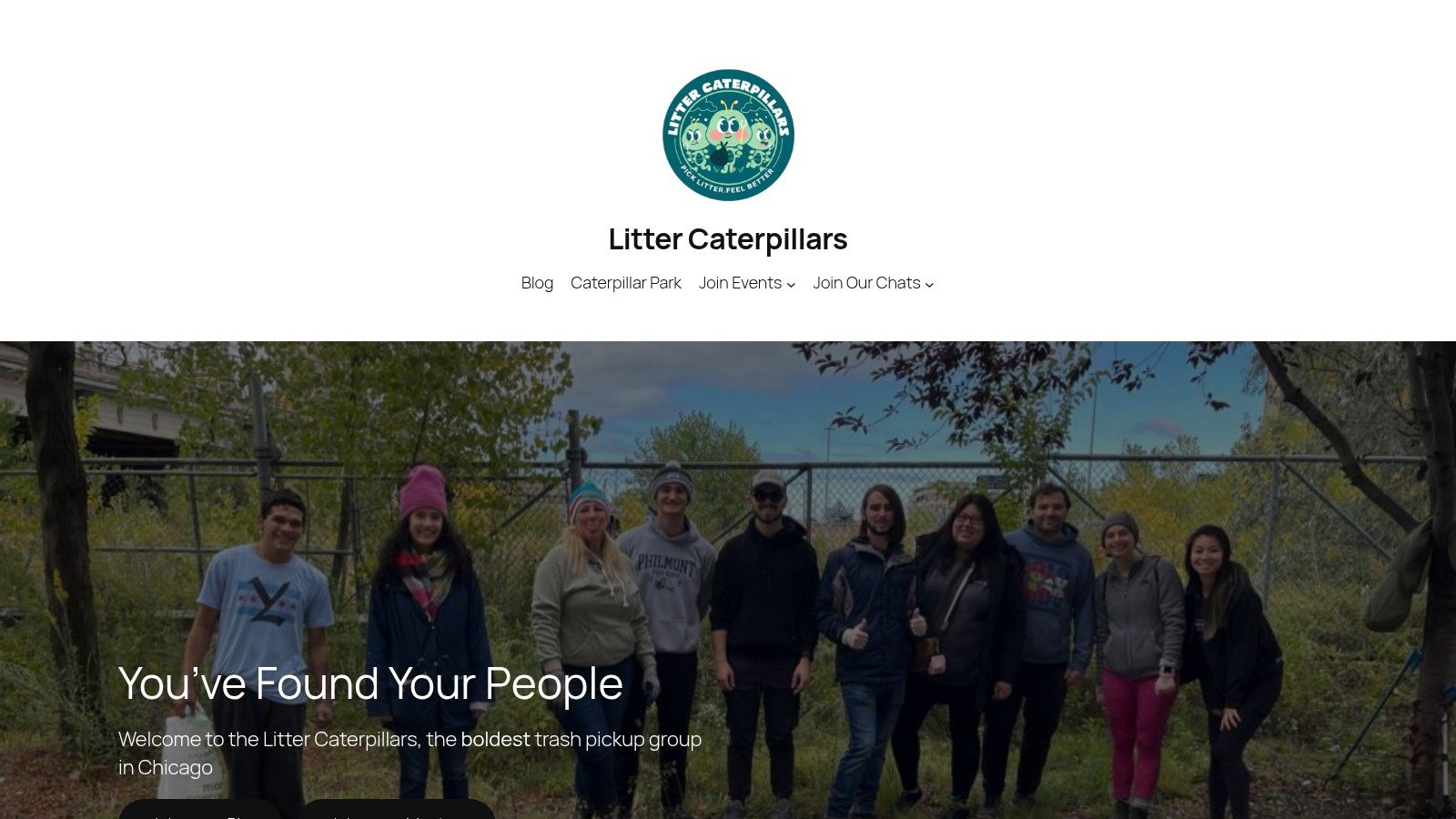
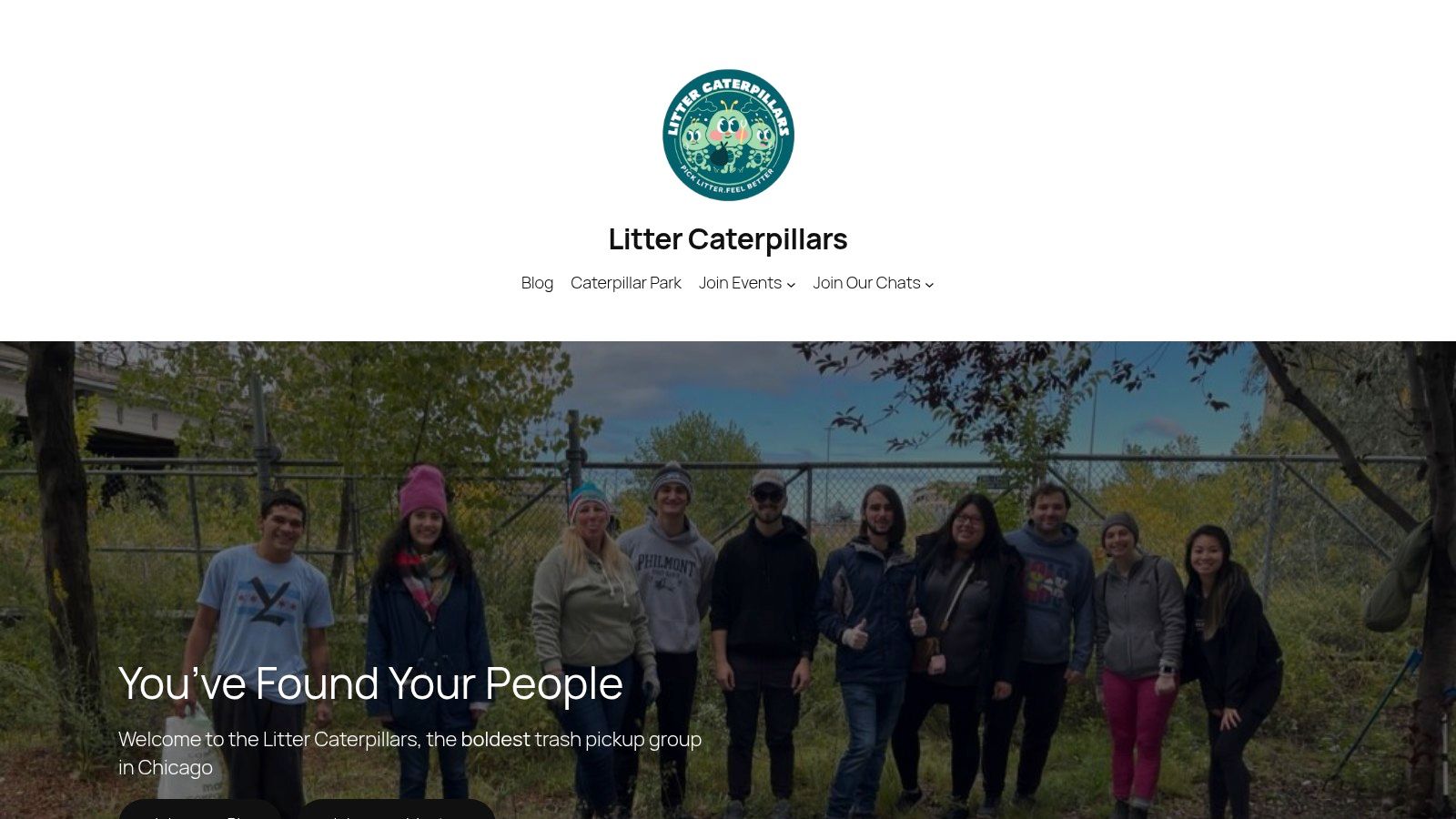
1. Litter Caterpillars
Saturday morning in Chicago: coffee and an inbox can wait. You meet a group of volunteers, pull on gloves, and watch a littered block change before lunch. Litter Caterpillars cleanup volunteering turns that visible work into a recurring weekend commitment.
Founded by Kevin Tao, the volunteer-driven group meets across Chicago, rain or shine. Its stated goal covers all 50 wards. Past projects include cleaning an entire highway during a bike-event shutdown and winning an empty lot at auction to create Caterpillar Park in Englewood. The results have a clear finish line: filled bags, an open sidewalk, a cleared block, and new conversations with neighbors.
The group builds its identity around bravery, kindness, and unity. Flags, badges, a theme song, Meetup and Instagram groups, and active group chats give newcomers several ways to join the team. Litter Caterpillars also says it puts volunteer safety and happiness ahead of fundraising and does not pressure volunteers for donations.
Why this works for a busy calendar
Weekend morning events fit a schedule shaped by meetings and deadlines. You can reserve one regular block for service without adding another weekday obligation. The organization says most cleanups do not require pre-registration and provides grabbers, bags, and gloves. Check the current event details before leaving home, particularly the weather, meeting point, and available equipment.
The format suits someone who wants hands-on work and a social setting. You do not need to design a project or present professional expertise. You show up, work alongside other Chicago volunteers, and leave with a result you can see.
Pros
- Visible local results: You work block by block and neighborhood by neighborhood.
- Social connection: Meetup, Instagram, group chats, flags, and badges help newcomers meet people.
- Low financial pressure: The group does not pressure volunteers for donations.
- Simple routine: Weekly weekend events make repeat participation easier.
Trade-offs
- Outdoor demands: Changing weather and physical work are part of the commitment.
- Weekend timing: Saturday mornings will not suit every calendar.
- Organizational structure: Litter Caterpillars is not positioned as a traditional 501(c)(3) fundraising nonprofit, which may matter if you seek a tax-deductible donation structure.
Choose this option if you want Chicago community work, new connections, and an immediate result. Start with one cleanup, then decide whether the rhythm fits your life.
2. Taproot Foundation's Taproot Plus
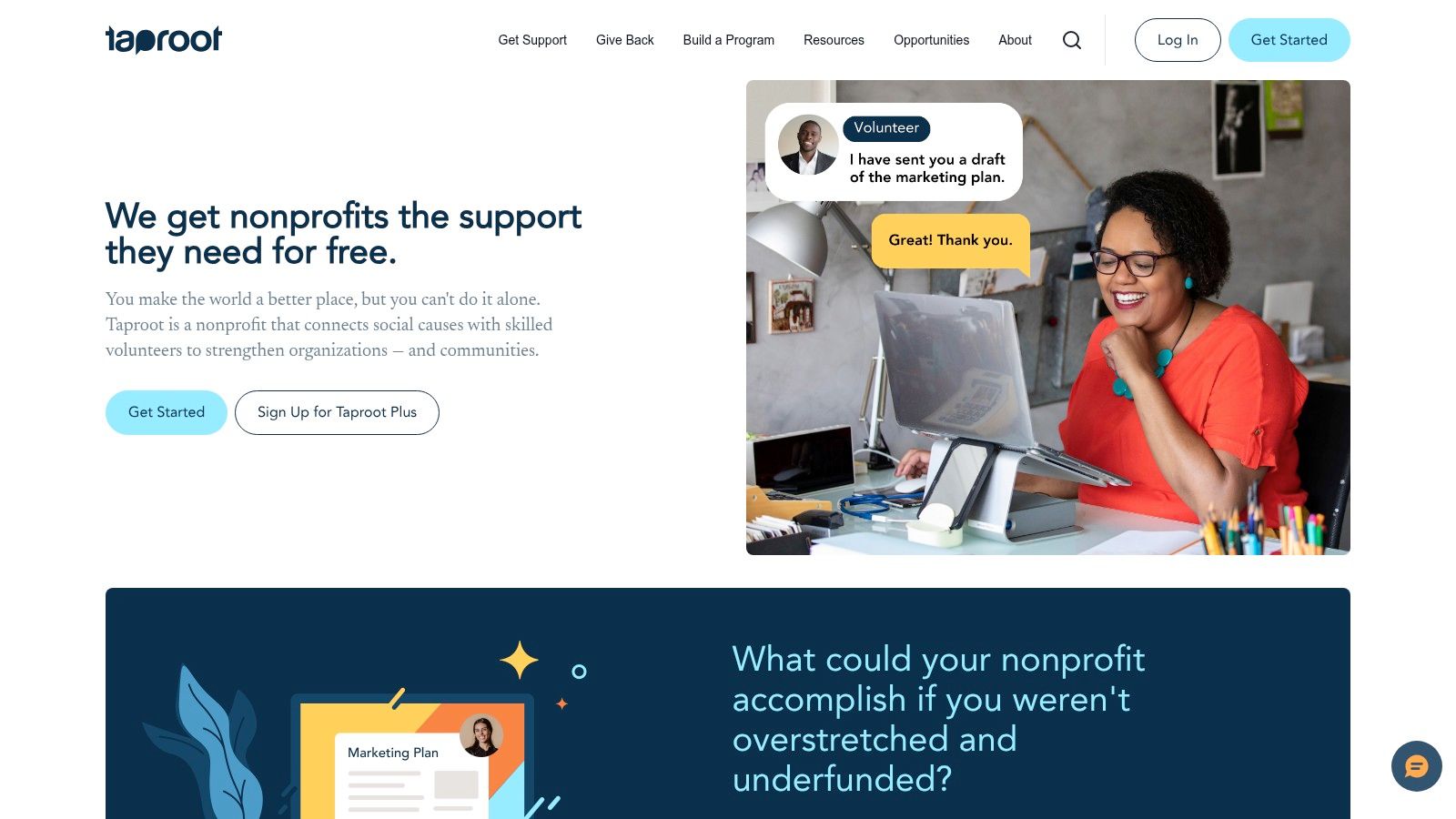
A nonprofit has a tangled spreadsheet, an unfinished campaign brief, or a website problem that keeps getting postponed. You already know how to fix it from your day job. Taproot Plus gives you a route to apply that experience through a pro bono project, without committing to a regular onsite shift.
Taproot Foundation's marketplace connects professionals with nonprofits seeking help in marketing, technology, human resources, finance, and strategy. Browse remote projects, short engagements, and live advisory sessions. The format suits a young professional whose calendar changes from week to week, but whose skills are clear.
Choose a defined contribution
Start with the result you can produce. You might clarify a nonprofit's messaging, review a hiring process, examine a financial question, or advise a team on a digital issue. Orientation events and staff support can help you judge whether the brief matches your experience and available time.
Before applying, review these volunteer job descriptions. They can help you describe your own contribution in plain language and spot questions to ask about scope, deadlines, and feedback.
Taproot Plus says volunteers can join and serve without a minimum-hour requirement. That makes a small first project possible for someone testing skills-based service. A completed deliverable may also give you a concrete example to discuss in a portfolio or career conversation.
Bring one focused offer, such as improving a content plan or organizing a process. A narrow proposal is easier for a nonprofit to assess than a promise to help with everything.
What you gain
- Flexible format: Remote projects and advisory sessions can fit around a corporate schedule.
- Professional relevance: You use skills employers already recognize.
- Range of causes: Projects cover environment, health, youth, arts, and other fields.
- Selection support: Orientation and staff guidance can reduce guesswork.
What to check first
- Project availability can vary by skill and timing.
- Virtual work may offer fewer chances for the peer connections that grow through shared physical work.
- Confirm who makes the final decision, what you will deliver, and when the nonprofit needs it.
Visit Taproot Plus to inspect current projects and requirements. Choose one assignment you can finish well, agree on the boundaries, and set a follow-up time before your first task begins.
3. Catchafire
A communications specialist in Chicago might spend one evening reviewing a nonprofit homepage, then take on a defined project over several weeks. Catchafire connects volunteers with skills-based projects and one-hour consultation calls, giving young professionals a way to match service with the time they have.
Search by marketing, design, development, data, operations, finance, or related skills. Listings usually explain the task, timeline, and intended result. That makes it easier to compare a quick conversation with a larger assignment before you apply.
Start with the smallest useful commitment. A one-hour call can reveal whether you understand the nonprofit's needs, communicate well with its team, and want to continue.
Turn one project into evidence
A completed Catchafire assignment may produce something you can describe clearly in a career conversation: a communications plan, design package, operations recommendation, or other agreed deliverable. Ask the nonprofit whether you may share the work publicly or describe it privately on your CV. The permission matters as much as the finished file.
The platform also lets volunteers signal interest in board service. That route suits someone seeking governance experience and a closer view of how nonprofits make decisions beyond individual projects.
Before browsing, use this guide to finding volunteer work to define your cause, available time, and strongest skill.
Choose Catchafire if you want:
- A defined assignment: The stated scope and timeline help you judge the commitment.
- A short first try: One-hour consultations fit a crowded corporate week.
- Remote service: You can contribute without crossing Chicago for every meeting.
- A usable work sample: With nonprofit approval, the completed work may support your portfolio.
Read the listing closely. Popular projects can draw many applicants, while some descriptions leave important questions open. Ask who approves the work, what success looks like, and whether the project is available in your region. Nonprofits typically pay platform fees, so confirm any expectations before accepting.
Bring a narrow promise: “I can review your homepage and send three practical recommendations.” Both sides can assess that offer quickly.
Visit Catchafire to review current projects and consultation options.
4. Habitat for Humanity Young Professionals
Saturday morning, you trade a laptop for work gloves. Habitat Young Professionals, often called HYP, connects young adults with local Habitat affiliates for build days, service projects, fundraising, advocacy, leadership, and social events.
A build can give you a physical task and a visible result. Later, a committee meeting may shift your role toward event planning, fundraising, or volunteer coordination. That progression suits someone who wants weekend service now and a longer leadership path later.
A chapter-based commitment
HYP follows the rhythm of its local affiliate. One chapter may offer regular construction days and active committees, while another may schedule fewer activities. Check the local calendar before joining, especially if your workweek makes weekday events difficult.
The peer setting also changes the experience. You arrive with a shared task, meet other professionals who work full time, and learn whether you enjoy serving as part of a group. A single build can be a useful trial before you accept a committee role.
Choose HYP if you want:
- Hands-on service: Build days let you contribute physically and see the work take shape.
- A professional peer group: Social events and shared projects create natural conversation.
- A recognizable organization: You can explain the commitment clearly to colleagues.
- A route into leadership: Committees and boards can add planning, fundraising, and group-management experience.
The trade-offs are practical. Local chapters differ, popular build slots may fill quickly, and some events can conflict with office hours. Equipment and training requirements also vary by project.
Before committing, ask the affiliate three questions: When are builds scheduled? What training or equipment must volunteers provide? Can you attend one event before choosing a committee?
Use Habitat Young Professionals to find the nearest affiliate. Start with one build, then decide whether the chapter's schedule and leadership options fit the way you want to give time.
5. United Way Young Leaders United
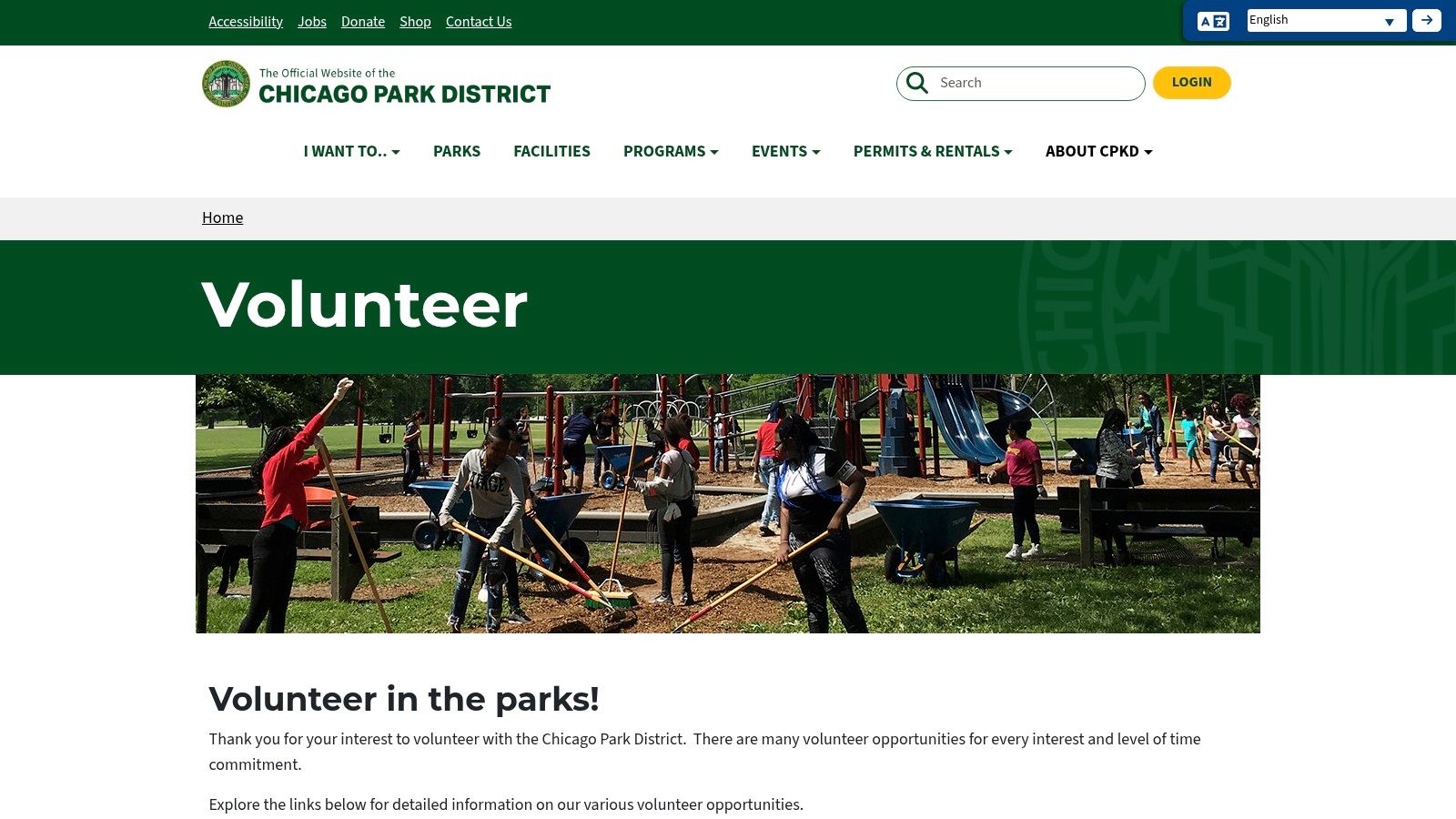
A new job can introduce you to coworkers without introducing you to your city. United Way's young-leader groups offer another route. You might spend one evening meeting community partners, then join a volunteer project or visit a local program with people who also work full time.
Chicago calls its group Young Leaders United. Other cities may use Young Leaders Society or a related name. These programs generally target emerging professionals, often with an upper age limit below 40. One study defines young professionals as working adults ages 23 to 39 and notes that many nonprofit groups set 40 as the upper cutoff. Wisconsin research
Choose the entry point that fits your calendar
United Way groups can bring together hands-on service, professional skills projects, site visits, leadership events, and conversations with civic or corporate partners. That mix suits you if you want to test several causes before choosing one. Start with a single event, notice which issue holds your attention, and ask how participants move into deeper roles.
The local chapter sets the terms. Dues, benefits, donation expectations, event schedules, and giving thresholds differ by city. Check current details before assuming participation requires a payment or a weekday commitment.
A broad civic network can offer:
- Local connections: Meet organizations and professionals in the city where you live and work.
- Cause variety: Explore several community priorities through one network.
- Professional context: Pair service with civic learning and peer conversation.
- Leadership practice: Some chapters offer roles involving planning, outreach, or fundraising.
The trade-offs deserve equal attention. A chapter's staff and partner network shape the experience, while structured groups may expect regular attendance or giving. If your corporate schedule changes often, confirm event timing before signing up.
Chicago readers can review the current details through Young Leaders United in Chicago. Choose one event, ask what continued participation involves, and keep the commitment only if it fits your actual week.
6. Rotaract
A Rotaract visit can begin with a project, continue over coffee, and eventually lead to an officer role. Adults aged 18 and older join local clubs that combine community service, professional development, and social events. Rotary members may offer mentorship, while the wider Rotary network can connect clubs with service projects beyond their city.
The commitment grows in stages. You might help at one project, then plan an event, coordinate volunteers, or work with members in another city. That continuity suits a young professional who wants leadership practice rather than a single volunteer shift. It also means the club's culture matters.
Start with the people and calendar
Rotaract clubs vary widely. One may focus on hands-on projects and informal gatherings. Another may expect regular meetings, active attendance, and a stronger networking schedule. Dues, meeting times, and the balance between service and social events depend on the individual club.
Visit before joining. Ask how new members find their first project, what attendance looks like, and how much time an officer role requires. A first meeting should give you enough evidence to judge whether the members, causes, and calendar fit your working life.
You can gain:
- Leadership practice: Officer roles involve planning, coordination, and follow-through.
- Mentorship: Rotary members may provide guidance and professional connections.
- Local and global reach: Clubs can collaborate with groups beyond your city.
- Professional development: Some clubs include career-focused events and peer networking.
The trade-offs are practical. Regular meetings may strain a crowded corporate schedule, and a club that suits one professional may feel wrong for another. Ask about dues, attendance, and upcoming projects before committing.
Use the Rotaract clubs directory to find a starting point. If your city has several options, attend more than one meeting, choose one manageable project, and keep the commitment only if it fits your actual week.
7. American Red Cross Young Professionals
A blood drive needs greeters, a disaster response needs trained hands, and a preparedness workshop needs someone who can explain the plan clearly. American Red Cross young-professional groups connect those practical needs with volunteers who want a mission beyond occasional networking.
You might begin locally, helping with blood services, community education, fundraising, or disaster preparedness. Later, the National Young Professionals Council offers a broader route for shaping young-adult engagement. That progression suits professionals who enjoy coordination, systems, and responsibility when circumstances become demanding.
Choose the role before the title
Start with the work you can realistically fit into your calendar. A blood drive may offer a defined shift. Preparedness education can build presentation skills. Disaster response may require training and greater schedule flexibility. Fundraising can draw on communication, event planning, or relationship-building experience.
Training gives unfamiliar tasks a clearer entry point, particularly when safety or emergency response is involved. Read each current role description carefully, then ask how scheduling works, what training comes first, and what support volunteers receive.
The program can offer:
- Varied service: Choose among blood services, preparedness, disaster work, fundraising, and leadership.
- Practical training: Learn procedures before taking on unfamiliar responsibilities.
- Leadership routes: Local participation can lead to wider young-professional opportunities.
- Peer connections: Meet volunteers from different industries and regions.
The trade-offs deserve equal attention. A major response can interrupt your normal workweek, while a national leadership role may involve a competitive application and a stated time commitment. Local activity, meeting frequency, and available roles also differ by region.
Before joining, choose one manageable entry point. If the first experience fits your schedule and interests, add responsibility gradually rather than accepting a title you cannot sustain. The American Red Cross Young Professionals program lets you compare local participation with broader national paths.
7 Young Professionals Volunteer Opportunities Comparison
| Program / Group | Implementation Complexity 🔄 | Resource Requirements ⚡ | Expected Outcomes 📊 | Ideal Use Cases 💡 | Key Advantages ⭐ |
|---|---|---|---|---|---|
| Litter Caterpillars | Low–Moderate (volunteer-run, recurring logistics) 🔄 | Low (volunteers, basic supplies) ⚡ | Visible local litter removal; stronger neighborhood cohesion 📊 | Weekend hands-on cleanups; community-building; accessible entry | High local impact and strong social identity, ⭐⭐⭐⭐ |
| Taproot Foundation, Taproot Plus | Moderate (platform matching, onboarding) 🔄 | Moderate (pro bono hours, remote tools) ⚡ | Clear, deliverable-based nonprofit capacity building 📊 | Short-term advisory projects; remote pro bono for busy professionals | Reputation for pro bono excellence; resume-ready outputs, ⭐⭐⭐⭐ |
| Catchafire | Moderate (project selection, scoped work) 🔄 | Moderate (varied hours; remote) ⚡ | Quantifiable project outcomes and portfolio pieces 📊 | Flexible remote projects or 1-hour consults; CV-building | Large project variety and active community, ⭐⭐⭐⭐ |
| Habitat for Humanity, HYP | Moderate–High (build coordination, training) 🔄 | High (physical labor, tools, occasional fundraising) ⚡ | Tangible housing outcomes; leadership and skill development 📊 | On-site builds, networking, leadership roles for young professionals | Tangible service + professional development; trusted brand, ⭐⭐⭐⭐ |
| United Way, Young Leaders | Moderate (local chapter coordination) 🔄 | Moderate (volunteer time; possible dues/giving) ⚡ | Strong local partnerships; civic exposure and pathways 📊 | Civic engagement, cross-sector networking, local leadership | Deep local network and diverse project access, ⭐⭐⭐ |
| Rotaract (Rotary International) | Moderate (club governance, meetings) 🔄 | Moderate (dues, meeting cadence) ⚡ | Leadership training, mentorship, global collaboration 📊 | Structured leadership development with mentorship; international projects | Leadership pipeline + Rotary mentorship and network, ⭐⭐⭐⭐ |
| American Red Cross, Young Professionals | Moderate–High (training, operations coordination) 🔄 | High (training, time commitments during responses) ⚡ | National-scale disaster response impact; clear leadership ladders 📊 | Disaster preparedness/response, blood services, national leadership roles | Large infrastructure, training, and national reach, ⭐⭐⭐⭐ |
Turn One Good Fit Into a Real Habit
You don't need the perfect volunteer role. You need a first role that fits the life you live.
Start by choosing one option from the list. Read its current requirements, then contact the local group or platform. Ask about the time commitment, safety expectations, equipment, accessibility, transportation, and what happens when you miss a session. Attend one event, meeting, consultation, or orientation before you make a longer promise.
Use your calendar as the filter:
- Weekend mornings: Choose Litter Caterpillars or a hands-on Habitat project if you want outdoor work and face-to-face connection.
- After-work windows: Try a United Way group, Rotaract meeting, or Red Cross activity if you want a scheduled civic or professional setting.
- Remote project time: Choose Taproot Plus or Catchafire when you can contribute a skill from home.
- Leadership energy: Explore Rotaract, United Way, Habitat Young Professionals, or Red Cross roles when you want to plan, coordinate, and guide other volunteers.
Your first visit should include a quick safety and inclusion check. Can you handle the weather and physical demands? Does the group provide or explain equipment? Can you reach the location by transit or another reliable method? Can you request an accessibility adjustment? Do organizers explain conduct expectations? Can a newcomer ask a basic question without pressure?
Young adults often face a drop in volunteering after school and during the early working years. A U.S. Bureau of Labor Statistics report recorded an 18.4% volunteer rate for people ages 20 to 24 in 2015, compared with 26.4% for teenagers ages 16 to 19. A Do Good Institute brief also recorded a decline for ages 22 to 35, from 25.6% in 2003 to 21.6% in 2015. BLS volunteer data A predictable one-hour slot can help you protect service from the noise of work.
Satisfaction matters too. NCVO found that 82% of volunteers ages 18 to 24 were satisfied, compared with 96% of volunteers ages 55 and older, while continuation reached 59% among 18- to 24-year-olds and 86% among volunteers ages 55 and older. Younger volunteers also cared about making a difference, enjoying the activity, feeling appreciated, and feeling safe. NCVO volunteer experience findings
So start small. Write down the next date before you leave. Invite one colleague or friend, then keep the promise modest enough that you can repeat it. In Chicago, you can take one concrete step this week by checking the next Litter Caterpillars cleanup and deciding whether the weekend morning fits your calendar.
Litter Caterpillars gives Chicago volunteers a weekly, hands-on way to clean neighborhoods, meet people, and build a service habit without donation pressure. If you want volunteer opportunities for young professionals that feel physical, social, and easy to try, visit Litter Caterpillars and choose your next cleanup.