
Tag: chicago volunteer groups

  • Cleanup Volunteer Work: A Beginner’s Guide for 2026

    Cleanup Volunteer Work: A Beginner’s Guide for 2026

    The hail hit the Chicago Riverwalk sideways. I had one glove, a half-filled bag of dog waste and plastic shards, and frozen rain biting my bare hand while traffic roared along Wacker Drive. Five minutes later, three strangers were laughing, sharing grabbers, and working like teammates.

    You may want to find cleanup volunteer work, join a crew without feeling awkward, or organize your own event. I've done all three, and I've run the same weekly crew for three years through rain, heat, blizzards, wind chills, and hail. This guide covers the practical parts, including finding events in Chicago and other cities, showing up prepared, staying safe, building a crew, and solving the harder problem. How do you get people to return after the second week?

    The Day I Got Caught in a Hailstorm Picking Up Trash

    The sky over the Chicago Riverwalk turned the color of old steel. The river smelled like wet stone, diesel, and something sour hiding under the docks. Hail rattled against the railings and bounced off the pavement, leaving tiny white beads around my boots.

    My gloves filled with grit. Frozen rain stung the skin between my fingers. At my feet sat a bag that still needed room for a torn food wrapper, two plastic shards, and a leaking pouch of dog waste. I wanted to finish the block. I also wanted to crawl into a warm car.

    Then someone handed me a spare glove.

    A woman from the next group grabbed a litter picker. A man moved the bag away from the walking path. Another volunteer pointed toward a dry patch under the bridge. We didn't know each other, but cleanup work gives strangers a job before it gives them a conversation. Within five flat minutes, we had a plan.

    A dedicated volunteer cleaning up litter along the snowy Chicago Riverwalk during a cold winter day.

    That's why I keep returning. The work can feel grimy, cold, repetitive, and occasionally ridiculous. It can also turn a silent morning into a shared story.

    If you're looking for cleanup volunteer work in Chicago, start with the Chicago Park District volunteer page, the Friends of the Chicago River calendar, alderperson-led neighborhood cleanups, or the city's Adopt-a-Portion program for street and alley segments. Other cities usually have similar routes through parks departments, watershed groups, conservancies, and neighborhood offices.

    I'll also show you how to join without standing alone beside the sign-in table, what to wear, what to leave untouched, and how to organize a safe event from scratch. Most of all, I'll focus on keeping people around after the first event, because a full sign-up sheet means little if the same people never return.

    Where to Find Cleanup Volunteer Work Near You

    I usually start local, then widen the search. In Chicago, the Chicago Park District volunteer page is useful for park projects, while Friends of the Chicago River lists river-related events. Alderperson offices often announce ward cleanups in newsletters and social posts. The city's Adopt-a-Portion program can connect volunteers with a street or alley segment that needs regular attention.

    Search by the place, not only by the activity. “Cleanup volunteer work Chicago” can return polished pages with no current event. “Litter pickup Logan Square,” “river cleanup near me,” “beach sweep South Shore,” or “trail cleanup Cook County” usually gets closer to an actual gathering.

    Search paths that usually work

    • VolunteerMatch: Filter by your ZIP code and search for litter, parks, rivers, or environmental volunteering.
    • All for Good: Search your city and nearby suburbs, then check the event date carefully.
    • Meetup: Filter by “environment” and “cleanup.” Some groups post recurring events there.
    • Eventbrite: Search local nonprofit listings, then confirm that the organizer still has supplies and permission.
    • Alliance for the Great Lakes: Look for shoreline cleanup events around the Great Lakes.
    • Forest preserve districts: Search for trail days, habitat workdays, and preserve volunteer calendars.

    Neighborhood Facebook groups and Nextdoor can surface small cleanups that never reach larger platforms. I also check Instagram accounts for local conservancies, park friends groups, and river organizations. A photo from last month may point you toward a recurring crew even when the group's website looks quiet.
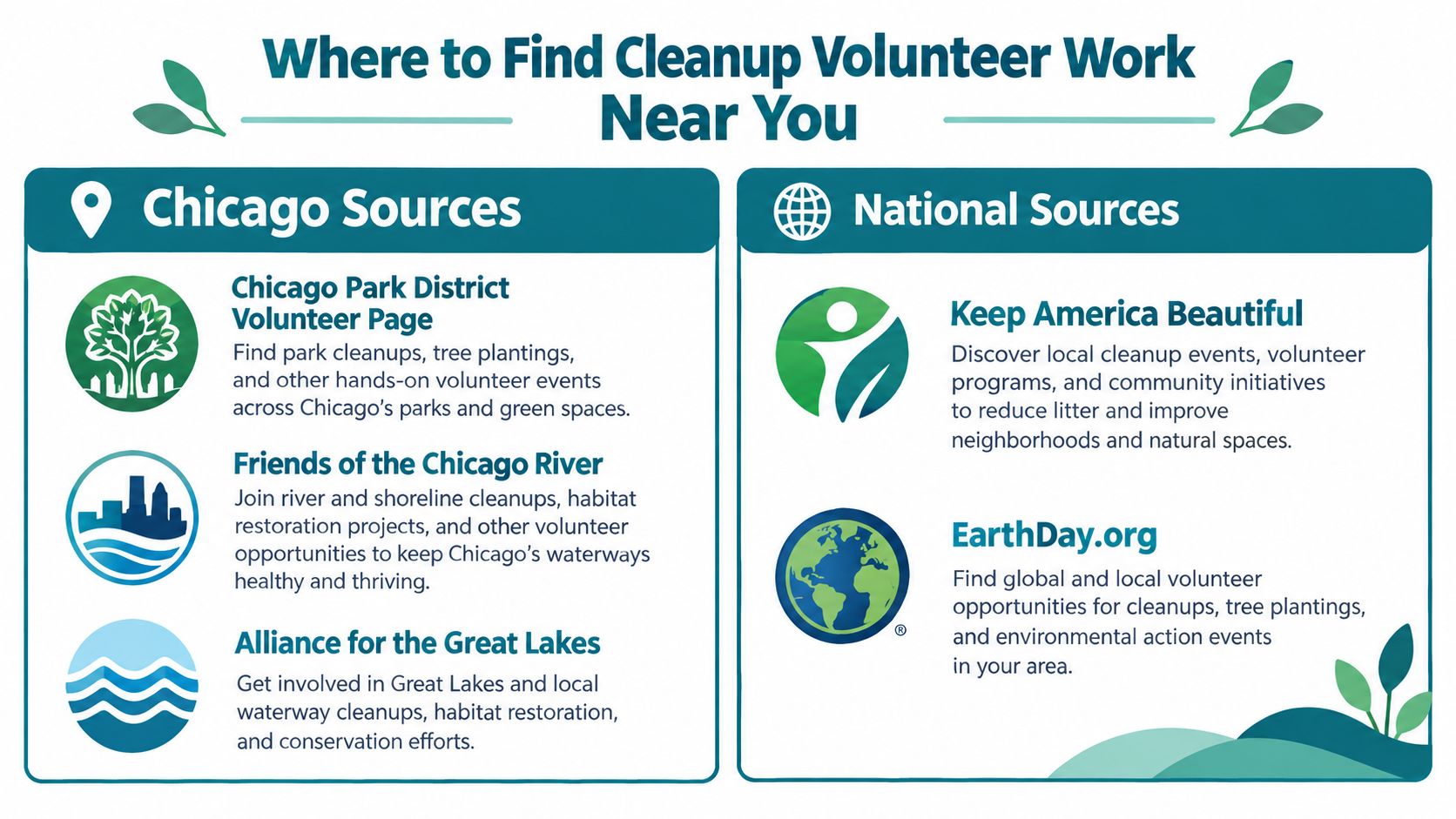
    An infographic titled Where to Find Cleanup Volunteer Work Near You listing Chicago and National sources.

    You can also browse this guide to environmental volunteering near you for additional search ideas.

    Try calling. The best event may live in an organizer's phone, not on a webpage. Ask three questions: where do volunteers meet, what equipment does the group provide, and what happens when the weather turns bad?

    How to Join Your First Cleanup Without Feeling Lost

    Your first event feels easier once you know the sequence. Register through the event link, then read the confirmation email all the way through. It should tell you the meeting point, parking options, start time, and what the organizer provides.

    Arrive ten minutes early. Find the person with the gloves and clipboard. That person usually knows where newcomers should sign in, where the bags sit, and which section needs the most help.

    Bring less than you think

    Wear closed-toe shoes, layers, a hat, work gloves, and sunscreen. Carry water and a small backpack for your phone, keys, and anything you don't want inside a trash bag.

    Most organized crews lend grabbers, bags, and safety vests. Take a grabber even if you think you can work faster with your hands. You'll protect your back, avoid mystery residue, and reach beneath benches without kneeling in wet litter.

    Pair up with someone who has attended before. You don't need to make conversation right away. I've worked beside people for an hour before learning their names. The silence usually breaks at the bag pile, when someone pulls out a bicycle wheel, a bowling ball, or a tire and everyone wants to know the story.

    A typical event starts with a short safety talk and a route assignment. Then you pick for sixty to ninety minutes, bring the bags back, weigh or count the results, and take a group photo. Some crews finish with coffee. Others find a nearby bar or café. The post-cleanup gathering often creates the friendships that make the next event feel less like an appointment.

    First-timer rule: Nobody expects you to perform. Pick up what you can handle, ask when you're unsure, and stay near the route.

    Before you leave, thank the organizer and join the email list or group chat. Mark the next date while the memory still feels fresh. This litter cleanup volunteer guide can help you compare different ways to get involved.

    Safety Rules Every Volunteer Crew Actually Uses

    I've watched a clean street turn dangerous in seconds. A car cuts too close. A volunteer reaches for something sharp. Heat builds under a dark shirt. Good crews prevent those moments before the first bag opens.

    Start with clothing. Wear closed-toe shoes, puncture-resistant gloves, long sleeves, and layers that match the weather. Use a high-visibility vest near streets. Bring water, sunscreen, and a small first-aid kit.

    Seattle guidance tells volunteers to stay out of roadways, medians, and roundabouts. It also warns against bridges, steep slopes, guardrails, construction areas, utility sites, headphones, alcohol, and mind-altering substances. Work in daylight only, and use a litter grabber instead of bare hands. You can review the Seattle Adopt-a-Street safety guide before planning roadside work.

    Treat unknown objects as unknown

    Use the stick-before-touch rule. Tap or move ordinary-looking material with a grabber or stick before you lift it. Annapolis guidance recommends using a rake or stick to identify an item, and sweeping dangerous litter with a broom and dustpan. Its cleanup checklist also tells volunteers to obey traffic signals and wear gloves.

    Leave needles, syringes, chemicals, weapons, medical waste, dead animals, and anything poisonous for trained handlers. Don't squeeze, kick, open, or carry an object just because it fits in your bag. Report illegal dumping through the city's 311 system when that route applies, and ask the organizer how the crew handles hazardous material.

    Jacksonville guidance says crews should park off the roadway, work on one side at a time, wear bright clothing, safety vests, gloves, and protective footwear, and carry plenty of water. It also says volunteers shouldn't enter the roadway or shoulder or work on bridges, tunnels, or overpasses. The Jacksonville cleanup safety guidance gives a clear model for leaders.

    North Carolina rules set a minimum age of 12, and volunteers aged 12 to 17 need supervision from adults aged 21 or older. The rules also require daylight work, a distance of at least five feet from the pavement edge, small groups, facing oncoming traffic, and stopping during bad weather. Read the North Carolina DOT safety rules before taking a crew beside a road.

    Before anyone starts, I run a quick check:

    • Route: Are we away from traffic, steep edges, unstable ground, and water hazards?
    • Gear: Does everyone have gloves, a grabber, a bag, and visible clothing where needed?
    • Buddy: Does every volunteer have a partner or a clear group?
    • Weather: Do we have water, shade, warm layers, and a stop plan?
    • Hazards: Does everyone know what stays on the ground?
    • Emergency: Does the leader have a phone, first-aid supplies, and emergency contacts?

    This volunteer safety checklist gives you a compact version to use before your next event.

    Why People Stop Showing Up and How to Keep Them

    The first Saturday can draw a crowd. The third Saturday tells you whether you built a crew.

    I've seen volunteers disappear after one cold morning, one confusing meeting point, or one event where nobody remembered their name. Cleanup programs often focus on sign-ups because sign-ups look good. I care more about the person who returns, learns the route, and starts bringing a friend.

    Make the event easy to remember

    Pick the same day, time, and meeting place whenever you can. People can build a cleanup into a weekly routine when they don't have to solve a new puzzle every time.

    Weather causes obvious trouble. Chicago can give you heat, rain, snow, wind, and hail in the same broad season. I use rain dates when possible, move seasonal events to more comfortable times, and keep an indoor backup task ready, like sorting recyclables or preparing supplies.

    Social connection matters, but you don't need forced games or loud introductions. A crew that grabs coffee afterward gives people a natural place to talk. Volunteers often connect while washing muddy tools, comparing strange finds, or arguing over whether a soaked sofa cushion counts as one item or two.

    People return when they know where to go, who will be there, and what their work changed.

    Show the work without turning it into a sales pitch

    Post bag counts, before-and-after photos, and short notes about the route. Keep a simple attendance record. The Durham Adopt-a-Street program tracked 10,914 pounds of litter over one year, with an average of 7.75 cleanup events and 893 pounds per month, then estimated the removed material at $21,037 using a public removal cost of $1.93 per pound. Its cost-benefit analysis shows why weight records tell a clearer story than bag counts alone.

    Give returning volunteers ownership. Ask one person to manage supplies. Ask another to lead a route. Celebrate milestones at five and twenty events, and use name tags so people don't have to rebuild the group from scratch each week.

    A retention benchmark cited in the provided volunteer-sector coverage places nonprofit volunteer retention at around 65%, meaning roughly one-third may not return year over year. The volunteer retention discussion makes the practical gap plain. Recruitment fills a calendar. Predictability, friendship, and visible results help fill the next one.

    How to Organize Your Own Cleanup From Scratch

    Choose a site you can finish or revisit. A four-to-six-block stretch, one park, or a half-mile riverbank gives a new organizer a manageable boundary. Walk it first. Look for traffic, water, construction, broken glass, dumping, restrooms, shade, and a place to stage full bags.

    Get permission before you advertise. In Chicago, contact the Chicago Park District for park work, ask an alderperson's office about ward coordination, or approach Friends of the Parks for a park partnership. A short email should name the site, proposed date, cleanup limits, disposal plan, and safety approach.

    Build the smallest useful kit

    • Bags: Use 50-gallon contractor bags for bulky litter.
    • Tools: Gather grabbers, rakes, and dustpans.
    • Protection: Provide gloves, hand sanitizer, and a first-aid kit.
    • Water: Bring a cooler or water station.
    • Hazard control: Use sharps containers only through a trained disposal process.

    Recruit in places where people already gather. Post in neighborhood Facebook groups and Nextdoor. Contact LISC Chicago networks, university service boards, local businesses, and corporate volunteer coordinators. Ask a nearby café if it wants to host a post-cleanup stop.

    Set one route captain at each boundary. Give everyone a meeting point and a stop time. Weigh the bags before disposal, record the date and site, and photograph the same view before and after the work. Ocean Conservancy's International Coastal Cleanup guidance also encourages item data and cleanup cards, so organizers can track what volunteers remove instead of relying on a vague pile of bags.

    Send a thank-you message soon after the event. Include the route photo, weight, next date, and one clear way to help. A person who returns quickly can become a route captain before the group loses momentum.

    Your First Saturday Morning and What Comes After

    I arrive before the crew. I check the meeting point, set out gloves and grabbers, and walk the first section for new hazards. Then people appear in twos and threes. We sign in, run the safety talk, pair up, and start at the first bend in the river or the first block of the park.

    The first ten minutes feel quiet. Then somebody finds a shopping cart. Somebody else pulls a tire from the weeds. A new volunteer asks where to put a cracked bottle, and suddenly they're part of the crew.

    After the bags go to the weigh-in spot, we take a photo and get coffee. That small ritual often matters more than a speech. On the second visit, people recognize the meeting place. On the third, they recognize each other.

    Over the next six months, you might join a smaller core group, take ownership of a parkway, or mentor the next newcomer. You don't need to plan six months today. You need to make the next Saturday easy.

    This week, RSVP to a Chicago cleanup through the Park District, Friends of the Chicago River, an alderperson's office, or a local group, then add the next event to your calendar before you leave. The second time you show up is where cleanup volunteer work starts becoming a habit.


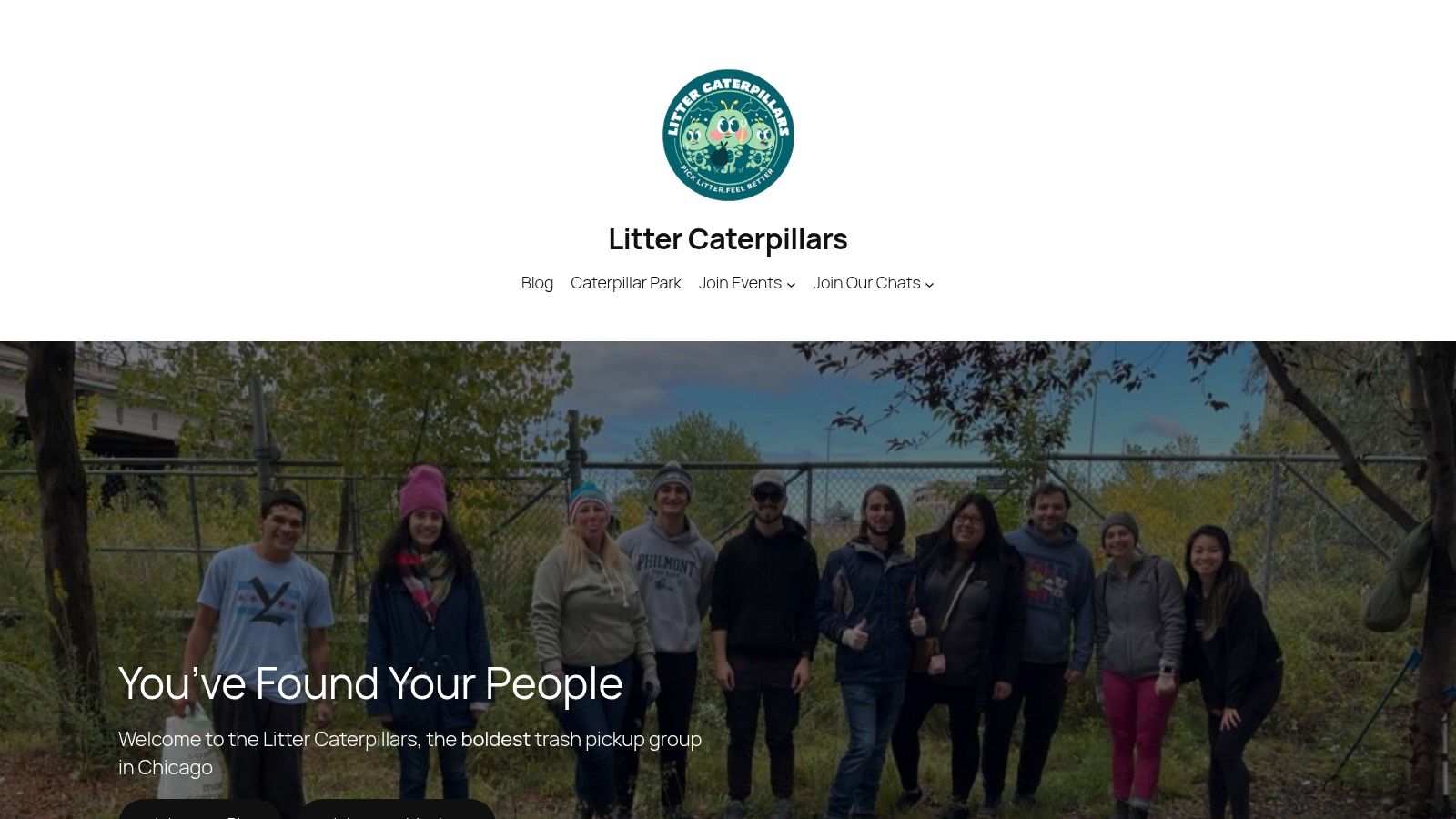
    Litter Caterpillars organizes Chicago trash pickup events where volunteers gather, pair up, and clean neighborhood areas with supplies such as grabbers, bags, gloves, and hand sanitizer. Visit Litter Caterpillars to find a crew, join an upcoming pickup, and take your next Saturday morning outside.

  • 7 Chicago Social Groups to Find Your People

    7 Chicago Social Groups to Find Your People

    I remember stepping off the train with two bags, a dead phone battery, and no clue where I'd find my people. Chicago felt huge, loud, and already in motion, like everybody had a lane except me. Then I started doing one thing each week, and the city stopped feeling like a wall and started feeling like a room full of open doors.

    1. Litter Caterpillars

    The first time I joined a cleanup, I didn't feel like I was “networking.” I felt like I was picking up one stubborn wrapper at a time with strangers who got weirdly excited about the same block I'd just walked past a hundred times. That's what makes Litter Caterpillars different from a lot of Chicago social groups, it turns service into the thing that makes people talk, laugh, and come back. You're not standing around trying to force conversation. You're moving, hauling, sweating, and noticing who shows up when the weather gets ugly and the work gets real.

    Litter Caterpillars

    The group's weekly rhythm matters. Chicago's South and West Sides often get left out of easy digital-first outreach because broadband adoption varies sharply by community area, from 58% in Fuller Park to 93% in Beverly in a 2022 analysis using ACS 2016-2020 data (study on Chicago's digital divide). So if you want a group that doesn't assume everyone lives online, this one makes sense in a very practical way. You can find people through Meetup, Instagram, and open group chats, then meet in person and do real work together.

    Practical rule: If you want friends in a city this spread out, pick a group that gives you a repeated reason to return. One Saturday cleanup can feel nice. A weekly habit starts to feel like your life.

    I also like that Litter Caterpillars protects volunteer energy. The group says it never pressures volunteers for donations, keeps safety and happiness first, and centers weekend mornings so people show up ready to give, not half-baked after a long night. That's a better filter than small talk. You learn fast who's there to help and who's there to disappear.

    Pros

    • Citywide reach: The group cleans across all 50 wards and goes where some groups won't.
    • Volunteer-first culture: No pressure to donate, and the rhythm stays focused on showing up.
    • Real-world payoff: Clean streets, cleared lots, and visible progress you can point to.
    • Identity built into the group: Flags, badges, and a theme song make the work feel shared, not lonely.

    Cons

    • Less formal structure: A volunteer-driven model can feel looser than a registered nonprofit.
    • Harder conditions: Some cleanups happen in rough weather or high-need areas, which can feel intense if you're new.

    If you want the direct path, visit Litter Caterpillars and look for the next cleanup. I'd start there if you want your first Chicago social group to feel like action, not awkwardness.

    2. Chicago Cares

    I like groups that hand you a plan when your week already feels messy. Chicago Cares does that well, because you can make a free account, browse a calendar, and jump into a project without hunting through ten different nonprofit pages. That's a relief when you want connection, but you don't want the entire social side of it to depend on luck.

    Chicago Cares

    The best part is how low-friction it feels for a newcomer. You can show up for schools, parks, shelters, and other projects, then let the work do the social heavy lifting. If you're the kind of person who talks more easily while handing out supplies or planting something in the ground, this kind of structure helps.

    For people comparing Chicago social groups, Chicago Cares is the steady, organized option. It's less about becoming a regular at one tiny circle and more about getting into the habit of being useful alongside other people. That's how a lot of friendships start for adults anyway, not with a perfect icebreaker, but with repetition and a shared task.

    You don't need a dramatic personality to make friends here. You need a calendar slot, a willingness to help, and enough curiosity to talk to the person next to you while the work gets done.

    The site's workflow makes that easier, too. The volunteer portal keeps the rules clear, and the mix of one-off and recurring opportunities lets you try a project once before you commit to it. If you're new in town, that matters. You can test the fit before you start building your Saturday around it.

    One practical note, the popular shifts can fill quickly, so don't wait until the last minute if you want a better shot at the project you want. If you like knowing exactly where to go and what to do, this is a solid place to start.

    Here's the internal guide that pairs well with this kind of volunteering, best volunteer opportunities in Chicago. It's useful if you want to keep your search focused on hands-on groups that get you around the city.

    Pros

    • Easy sign-up: Free account, clear portal, simple path into projects.
    • Good for solo joiners: You can arrive alone and still have a reason to talk to people.
    • Reliable logistics: The structure helps reduce guesswork.
    • Flexible commitment: One-off and recurring options let you move at your own pace.

    Cons

    • Projects fill fast: Popular times can disappear before you decide.
    • Social time is secondary: The mission comes first, so don't expect a built-in hangout vibe.

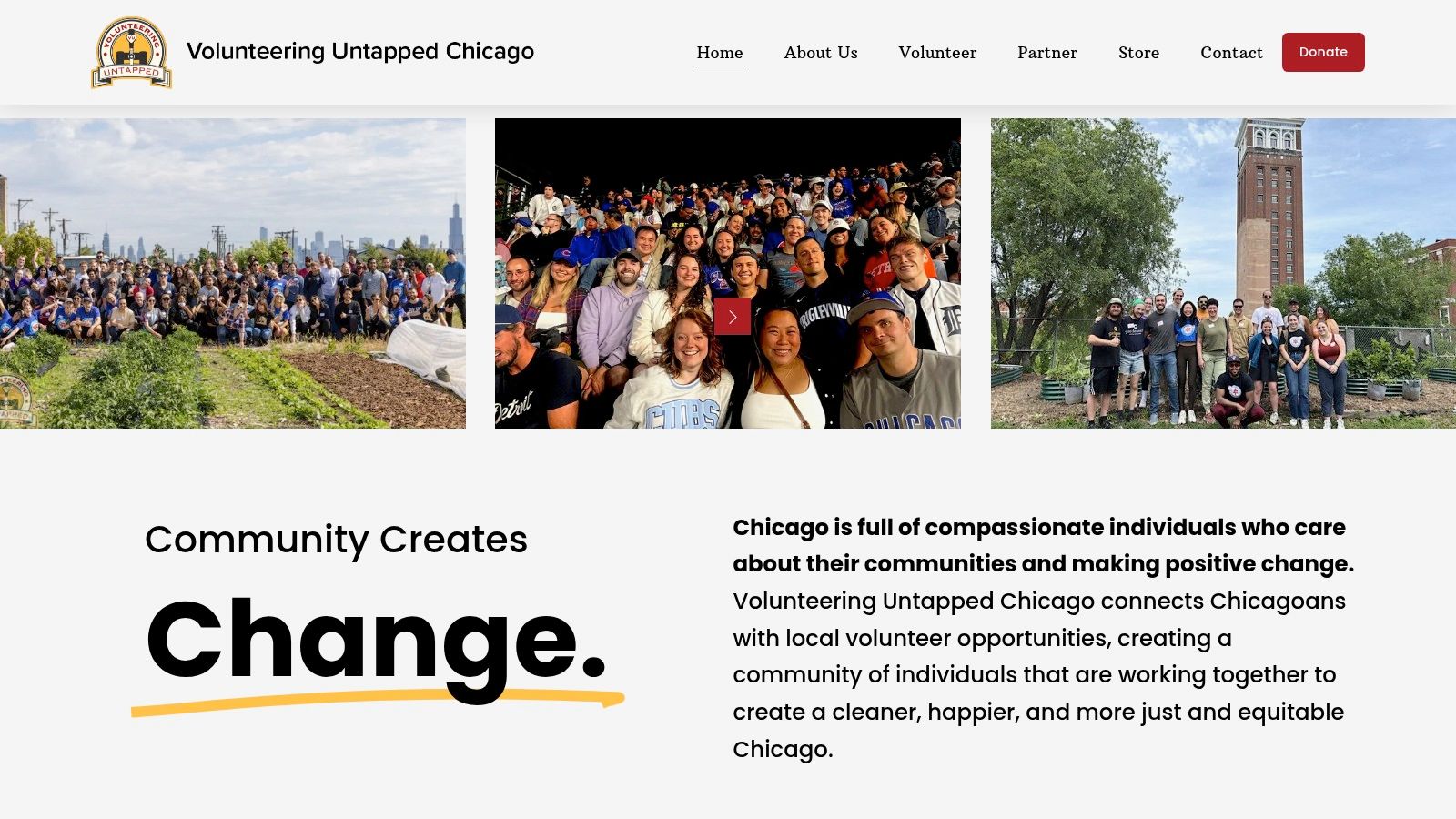
    3. Volunteering Untapped Chicago

    Some groups feel like a shift. Volunteering Untapped Chicago, or VU Chicago, feels more like a monthly ritual you can build around. It usually runs free volunteer events on the second Saturday of the month, then leaves room for an optional after-party if you want to keep talking after the work ends. That's a good setup if you want your social life to grow out of action instead of small talk in a noisy bar.

    Volunteering Untapped Chicago (VU Chicago)

    The rhythm is the selling point. When you know events are coming up on a predictable schedule, it gets easier to say yes, and saying yes more than once is how people start remembering your face. VU Chicago also adds carpools, which helps if you live farther out or don't want the trip itself to feel like a barrier.

    You'll also notice the group keeps the experience social without making it forced. Snacks and water are provided, leaders are on site, and the events are organized around different themes and nonprofit partners. That means you can spend the day building a habit and still have something to talk about afterward besides the weather.

    If you're comparing Chicago social groups by how easy they are to keep doing, this one lands in a sweet spot. It has enough structure to feel dependable and enough looseness to keep it friendly. The optional gathering after the event is a nice move because it gives shy people a natural exit and outgoing people a reason to stay.

    Useful rule of thumb: Pick a group that makes the next visit easier than the first one. Familiar timing and familiar faces lower the friction every single month.

    The main drawback is simple. Tickets can sell out, and waitlists happen. If you know you want in, don't treat it like a maybe. Check early, claim your spot, and treat it like something you plan to do.

    Pros

    • Predictable cadence: The second-Saturday rhythm helps you build a habit.
    • Built-in social layer: You can stay after for the optional gathering.
    • Access help: Carpools make attendance easier.
    • Beginner-friendly: Free events and on-site leadership make it easy to try.

    Cons

    • Capacity limits: Tickets can go fast and waitlists are common.
    • After-party limits: Some venues have age restrictions.

    Website: Volunteering Untapped Chicago

    4. Chicago Sport and Social Club

    The first time I joined a rec league, I learned something fast. A team gives you a reason to text people again next week without feeling weird about it. Chicago Sport and Social Club is built for that exact kind of repetition, with leagues and tournaments across sports like volleyball, soccer, softball, kickball, dodgeball, and ping-pong.

    Chicago Sport and Social Club (CSSC)

    This is one of the easiest Chicago social groups to use if you want structure. You can sign up with a team or as a free agent, which helps if you moved here without a built-in roster. That free-agent path matters more than people think, because it lets you show up alone without feeling like a spare part.

    The social side grows out of the season itself. You see the same faces, you learn who takes wins too seriously, and you figure out who's there for the game and who's there for the postgame hangout. That repeated contact changes the feel of the city. Instead of always starting over, you start recognizing people on purpose.

    Here's where the fit gets personal. If you like a little competition, this group gives you that. If you want something lighter, you can still find leagues and locations that feel more casual. The mix of sports and social events gives you a built-in excuse to keep showing up even on weeks when your motivation dips.

    For a lot of people, the hard part isn't the game itself. It's the first text, the first signup, the first Tuesday night when you walk into a gym or field with nobody waiting on you. This group handles that awkward middle well, and the published FAQs help make deposits and team rules feel less mysterious.

    If you want another practical route into the city, how to make friends in Chicago pairs nicely with this kind of league-based plan. I'd use both if you're rebuilding your routine from scratch.

    Pros

    • Strong repeat structure: Seasons make it easier to stay connected.
    • Solo-friendly entry: Free-agent placement helps if you don't have a team.
    • Lots of sport choices: You can match the league to your energy.
    • Social extension: Events tied to leagues keep the circle from ending at the final whistle.

    Cons

    • Fees can add up: League and team costs vary.
    • Not every league takes individuals: Some signups need a full team.
    • Energy varies: Some divisions lean more competitive than social.

    5. November Project Chicago

    I've always trusted groups that don't wait for perfect conditions. November Project Chicago meets early, moves hard, and keeps the whole thing free. The regular schedule is part of the charm, with meetings commonly on Wednesdays and Fridays at 6:06 am at rotating city locations shared through social channels.

    That early start does a lot of social work by itself. People who show up before sunrise tend to remember each other quickly, because nobody is pretending to be polished at that hour. You're just there, sweating, laughing, and trying to keep up. That creates a kind of honesty you don't always get in later-day social plans.

    The group also keeps the entry barrier low. It's free, open to all fitness levels, and built around the simple idea that you show up. That matters if you've ever felt intimidated by the gym scene or too out of shape to join a more performance-driven fitness group.

    Practical rule: If you want accountability, go where attendance matters more than looking impressive. A group that welcomes your messy first week is easier to stick with than one that rewards only the already-fit.

    The downside is obvious, the time. Not everybody wants to wake up that early, and weather can make outdoor workouts rough. But if mornings sharpen you instead of draining you, this group can become a steady anchor in your week. The after-workout social time also helps, because people usually stick around long enough to talk before the city fully wakes up.

    For a similar outdoors-first mindset, I'd also look at outdoor group activities for adults. It's a good companion idea if you want your social life to happen outside, not just online.

    Pros

    • Always free: No registration barrier.
    • Clear routine: Two weekly meetups make it easier to keep going.
    • Welcoming pace: It's open to all fitness levels.
    • Real accountability: Early start times keep the habit honest.

    Cons

    • Very early: 6:06 am is a dealbreaker for plenty of people.
    • Weather matters: Rain, snow, and heat all count.

    6. Chi Hack Night

    If your version of fun involves making something useful with other smart people, Chi Hack Night can feel like a good home base. It's a free weekly civic-tech night where technologists, designers, organizers, students, and public-interest folks come together to learn, prototype, and talk through projects that help the public. That mix matters, because you don't have to arrive as a polished coder to belong here.

    I like that the format gives people a reason to participate without forcing instant expertise. Talks open the door, breakout groups move the conversation forward, and project time lets people build together. That's a nice model if you want to meet people through ideas instead of just hobbies.

    The group also works well if you're trying to build a professional-social circle with some purpose behind it. You'll meet people who care about data, design, policy, and public interest work, which can be a relief if you're tired of shallow event chatter. Chicago social groups like this one can make you feel less like a visitor and more like a contributor.

    There's a practical upside too. Weekly meetings make it easier to recognize the same faces, and recognition is where a lot of adult friendships begin. You stop being “the new person” and start being the person who always shows up for the talk on transit, housing, or a community project.

    The main limitation is simple. If civic tech isn't your thing, the topics may not click. But if you like solving problems with other people and you're comfortable around tech or data talk, this is an easy place to plug in.

    Pros

    • Weekly rhythm: Regular meetings make it easier to build familiarity.
    • Open entry: You don't need a narrow background to join.
    • Collaborative format: Talks and hands-on sessions create real interaction.
    • Good for civic-minded networking: You meet people who like building useful things.

    Cons

    • Topic-specific: It leans toward civic tech, data, and related work.
    • Formats can change: You'll want to check event pages before you go.

    Website: Chi Hack Night

    7. Out Our Front Door

    Some people make friends over coffee. Some do it over a long bike ride with a lake breeze and a shared map. Out Our Front Door gives you that second path. It brings people together through guided bike adventures, including day rides, bike-camping overnights for adults and families, adaptive rides, and route resources around the Lake Michigan region.

    What I like here is the combination of movement and learning. You're riding, but you're also hearing local history, ecology, and culture as you go. That gives the day some texture. You're not just covering miles, you're noticing where you are with other people who want to notice too.

    This group works well if you're the type who relaxes when someone else handles the planning. The guides and volunteers take on the structure, and you get to show up ready to ride. That can be a huge relief if you want outdoor community without becoming the trip organizer.

    If you're thinking about Chicago social groups as a way to change your own habits, this one is remarkably powerful. You learn the city by moving through it, and you get more comfortable talking to people while your body is doing something useful. That's a good combination when you're trying to make friends without forcing it.

    The limits are real, though. Most guided trips are ticketed, weather can matter, and you need a working bike plus basic gear. Beginners can still find a place here, but you'll be happier if you come prepared and know your comfort level before the ride starts.

    Pros

    • Guided adventure: The trip structure keeps the planning light for you.
    • Inclusive options: Adaptive rides widen access.
    • Learning built in: You get history, ecology, and culture along the route.
    • Good for outdoors people: A natural fit if you like moving while you talk.

    Cons

    • Ticketed trips: Many rides cost money and can sell out.
    • Gear matters: You need a functioning bike and basic equipment.
    • Weather and distance: Some trips can feel demanding for beginners.

    Comparison of 7 Chicago Social Groups

    Organization 🔄 Implementation complexity ⚡ Resource requirements 📊 Expected outcomes 💡 Ideal use cases ⭐ Key advantages
    Litter Caterpillars Medium, volunteer-run coordination with flexible, on-the-ground logistics Low–Medium, volunteers, basic cleanup supplies; occasional larger project funding Visible, neighborhood-level cleanup; occasional large wins (e.g., park creation) Regular weekend volunteers seeking hands‑on, community-driven cleanup Citywide reach; strong volunteer culture; tangible, local impact
    Chicago Cares Low, structured nonprofit operations and streamlined sign-up portal Medium, staff, partner nonprofits, volunteer-management systems Consistent, scalable volunteer placements across many causes Newcomers or busy people wanting reliable, one‑off or recurring projects Large calendar; reliable logistics; clear safety and participation policies
    Volunteering Untapped Chicago Low–Medium, monthly themed events coordinating multiple partners Low, volunteer leaders, event coordination, carpools, modest supplies Social-first volunteer events that build habit and small-scale impact People who want social volunteering with optional after-parties Regular cadence; built-in social element; improved access via carpools
    Chicago Sport and Social Club (CSSC) Medium, season scheduling, team placement, and rule enforcement Medium, venue rentals, staff/referees, equipment and team fees Recurring social connections and fitness through league play Adults seeking organized recreational sports and seasonal social groups Wide sport variety; solo-friendly placements; structured seasons for consistency
    November Project Chicago Low, volunteer-led, no-registration meetups on a fixed schedule Very low, volunteer leaders and public meeting spaces High consistency in fitness, accountability, and peer connections Early-morning fitness seekers who value routine and community Free and inclusive; strong accountability and camaraderie
    Chi Hack Night Medium, weekly events with talks, breakout groups, and project coordination Low–Medium, venue/tech support, volunteer organizers, contributor time Networking, skill development, and civic‑tech project prototypes Technologists, designers, and civic-minded collaborators Newcomer-friendly civic‑tech community with project continuity
    Out Our Front Door (OOFD) Medium, trip logistics, guide coordination, and safety planning Medium, bikes/gear, trained guides, ticketing for guided trips Improved cycling skills, outdoor stewardship, and strong rider community Outdoor enthusiasts wanting guided rides, overnight trips, and learning Guided, education-forward routes; inclusive and adaptive programming

    Your First Step Is the Best One

    Looking at a list like this can feel a little overwhelming, like you've opened a map of a city you still barely know. I've been there. The fix isn't to plan the perfect social life from scratch. The fix is to pick one place, show up once, and let the second visit happen only if the first one feels right.

    I'd keep it simple. If you want movement and purpose, try Litter Caterpillars or Chicago Cares. If you want repeat contact and built-in conversation, go for Chicago Sport and Social Club, November Project Chicago, or Volunteering Untapped Chicago. If you want your brain engaged too, Chi Hack Night and Out Our Front Door give you people, rhythm, and something to do with your hands or your legs.

    The city gets a lot smaller after that first hello. You learn names. You learn faces. You start to recognize who laughs at the same joke, who stays for cleanup, who comes back the next week. That's how Chicago social groups start to feel less like listings and more like your life.

    All you need is one move. Pick the group that feels easiest to try, put it on your calendar, and go.


    If you want the shortest path into a real Chicago social group, start with Litter Caterpillars. It's weekly, hands-on, and built for people who want friendships to grow out of doing something useful together. Visit the site, pick a cleanup, and give yourself one good reason to show up this weekend.

  • 7 Ways to Find a Friendship Center Chicago in 2026

    7 Ways to Find a Friendship Center Chicago in 2026

    I remember staring at a jar of blueberry jam in my fridge that had followed me for years. It was expired, sticky on the lid, and somehow heavier than a dumbbell in my mind. A bag of nuts sat beside it from my brief, failed era of trying to become a person who meal-prepped and had matching containers.

    My apartment looked like my inner life. Cluttered. Avoidant. Full of little unresolved stories.

    After I got out of a chaotic relationship with someone who loved partying and loved themselves even more, I hit a wall. I knew I couldn't keep letting random chemistry decide who got close to me. I wanted to build a life that filtered for steadier people. People who'd wake up, show up, and care about something besides the next distraction.

    So I made a strange decision. I would stop hunting for friendship in bars, apps, and clever small talk. I would look for it in service. I would put myself in places where generosity was normal, where people did hard, boring, useful things together. I figured that if I wanted a better social circle, I had to change the bait.

    That's how my search for a friendship center chicago really began. For me, it started before I ever walked into a pantry or organized a cleanup. It started with a private vow to practice cleanliness, consistency, and bravery by helping other people first.

    If you're in that same place, lonely, restless, tired of shallow scenes, this list is for you. I didn't put it together like a directory. I wrote it like a map. Each place gives you a different kind of tribe. Some are quiet and practical. Some are scrappy and outdoorsy. Some gather around food. Some gather around pets. All of them give you a chance to meet people while your hands are busy doing something real.

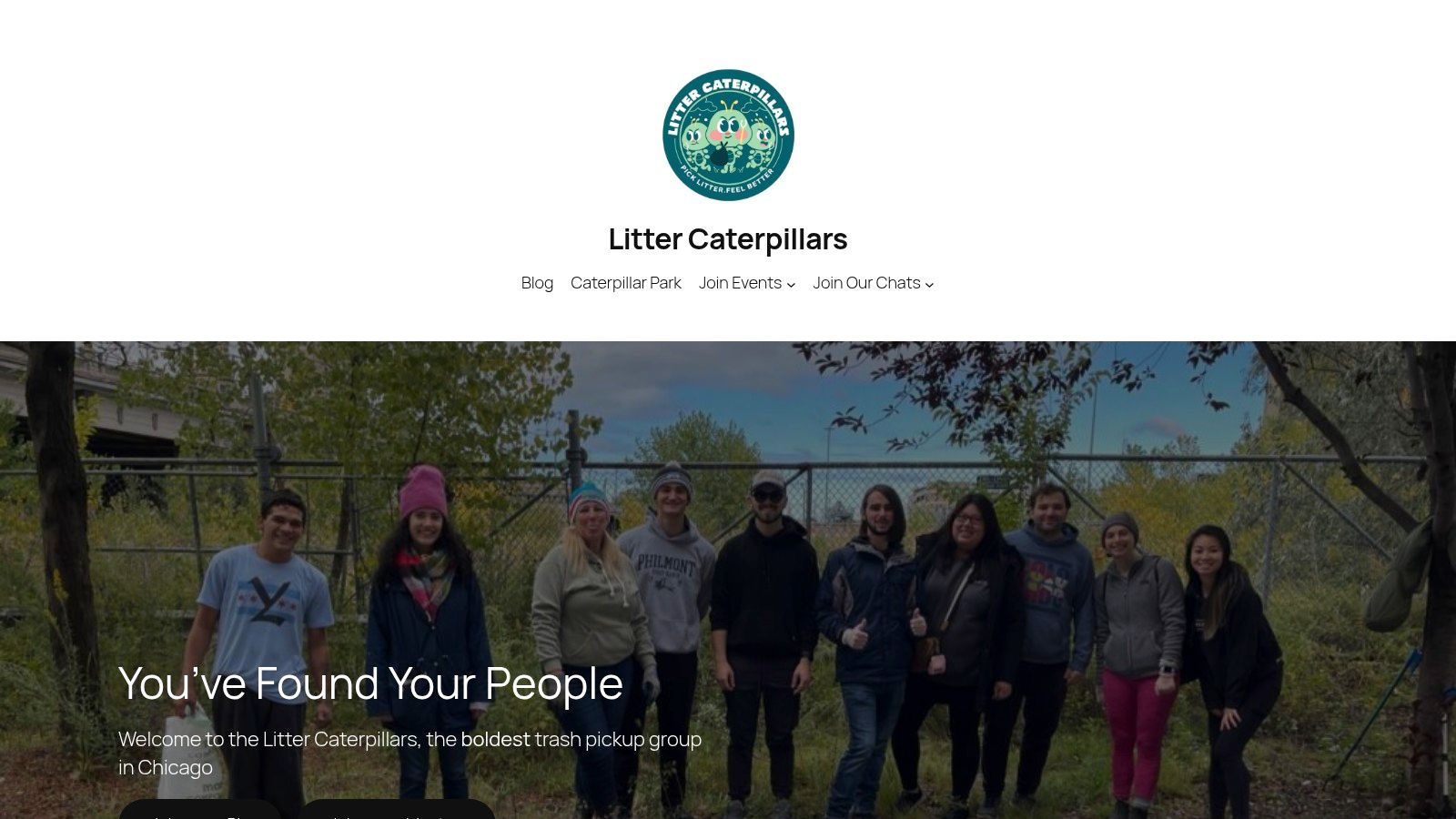
    1. Litter Caterpillars

    Litter Caterpillars

    The first time I picked up trash with Litter Caterpillars, I felt ridiculous. I was holding a grabber tool on a Chicago sidewalk, wearing gloves, and wondering if this was rock bottom or the start of a better life. Then the weather turned nasty, the day got harder, and something in me relaxed. Hard things have a way of stripping the performance out of people.

    That is why I put Litter Caterpillars first. If you're looking up friendship center chicago because what you really want is belonging, this group gives you a fast, honest filter. People who wake up on a weekend morning to clean a block usually aren't there to posture. They came to give.

    Litter Caterpillars is a volunteer-first cleanup group in Chicago. You can join events through the Litter Caterpillars website, and the whole thing feels built around habit. Weekend mornings. Clear purpose. Work you can see with your own eyes. You don't have to guess whether the day mattered. The street tells you.

    Why it works for making real friends

    I learned something ugly but useful after my breakup. I had spent too much time choosing people based on charisma, not character. Cleanup work flips that. You meet people in gloves, not in costumes. You see who comes early, who shares bags, who checks if others are safe, who laughs when the weather gets weird.

    That stuff tells me more than a polished dating profile or a slick conversation ever could.

    Litter Caterpillars has a strong identity, and that matters more than people admit. Flags, badges, a theme song, group chats, all of that creates a sense of shared mission. Some people hear that and think it sounds cheesy. I think it's smart. Humans stick when they feel part of something.

    Practical rule: If you want deeper friendships, join groups with rituals. Repetition turns strangers into familiar faces, and familiar faces become your people.

    This group also keeps service visible. You pick up litter in places many people ignore. You see the before and after. That visible change gives shy people something easy to talk about. You don't need to force chemistry. The work itself gives you a shared subject.

    What I like and what you should know

    What I like most is the volunteer-first philosophy. Nobody is trying to squeeze you for money or sell you on a polished brand story. The focus is the experience, the safety of volunteers, and the friendships that can grow when people do difficult things together.

    A few things stand out:

    • Free to join: You can show up without treating service like a paid social club.
    • Predictable schedule: Weekend mornings create a rhythm. Rhythm is how friendships grow.
    • Visible impact: Trash leaves the block. You can see the result.
    • Strong culture: The chats, symbols, and shared jokes help new people plug in faster.
    • Adventure factor: If you like exploring neighborhoods and doing hands-on work, this scratches that itch.

    There are tradeoffs too.

    • Grassroots setup: This isn't a polished institution with layers of infrastructure.
    • Early starts: If you're attached to late nights, you may hate the schedule.
    • Physical work: Some cleanup spots are gritty, and that won't fit everyone.

    What makes Litter Caterpillars different from a classic friendship center chicago option is that it isn't built around receiving aid or formal services. It's built around becoming the kind of person who can carry a bag, finish the route, and still ask the new volunteer if they want coffee after.

    We don't become close by talking about being good people. We become close by doing useful things side by side.

    That's the secret I wish someone had told me earlier. Service is social x-ray vision. It shows you who people are much faster.

    2. The Friendship Center

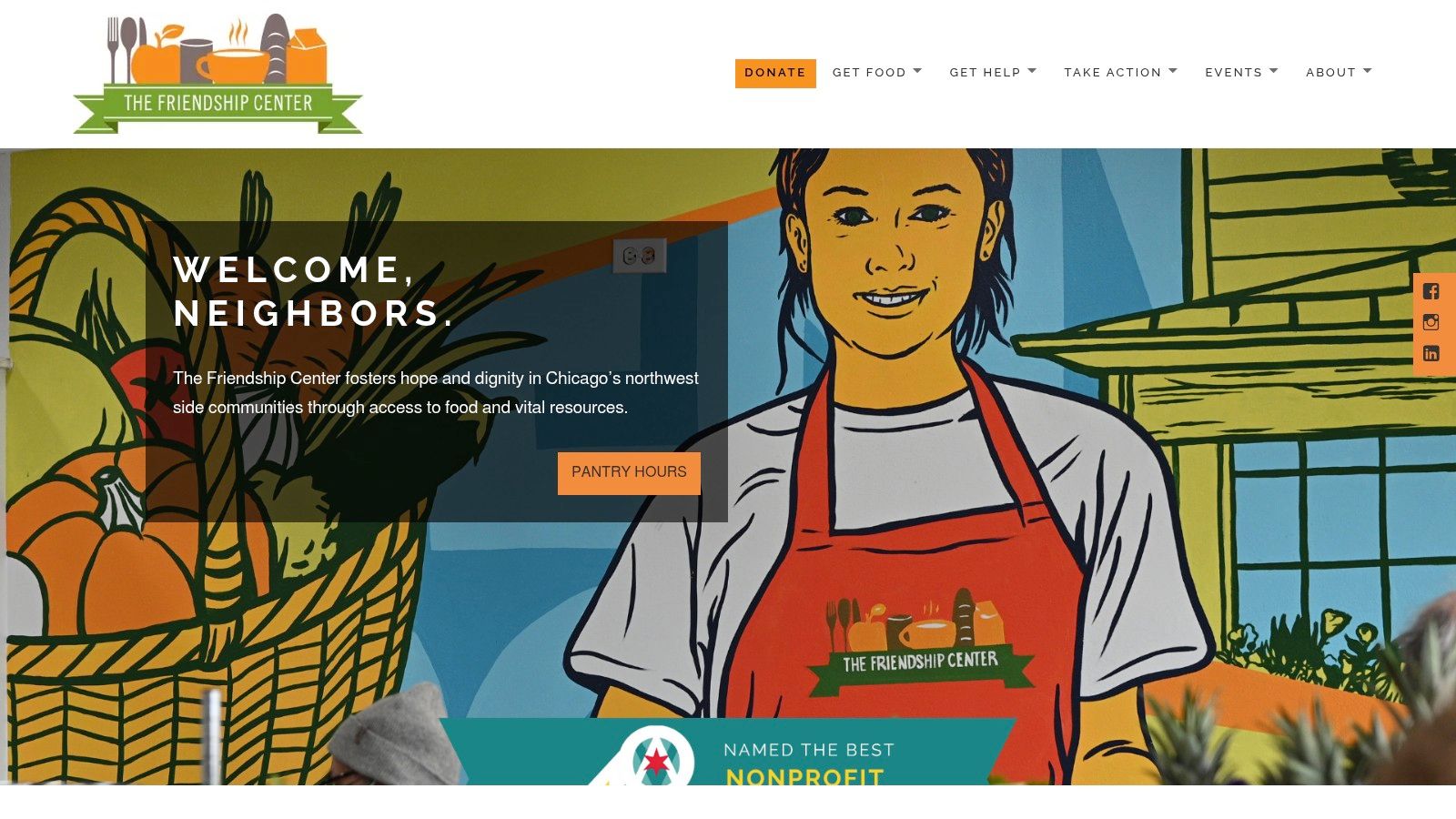
    The Friendship Center (Lincoln Square/Ravenswood)

    If Litter Caterpillars is the gritty outdoor version of finding your tribe, The Friendship Center is the warm kitchen light version. You walk in, and the idea is simple. People need food, dignity, and a place that feels human.

    The Friendship Center is one of the clearest answers to the phrase friendship center chicago. Its home base is at 2711 W Lawrence Ave, and in 2023 it delivered 7,391 services to 722 known individuals, according to The Friendship Center 2023 annual report. I like facts like that because they make the work tangible. This isn't vague goodwill. It's repeated, practical help.

    What it feels like

    I think a lot about the difference between relief and dignity. Relief is getting handed something. Dignity is getting to choose. The Friendship Center has a full-choice pantry model, which means the experience is closer to grocery shopping than standing in a line and accepting whatever appears in a box.

    That matters. When life already feels stripped down, small choices can steady you.

    The center also has hot meals, home delivery, and pet food support. If you're volunteering, that mix gives you more than one path in. Some people love direct pantry work. Some do better with sorting, setup, deliveries, or behind-the-scenes help. If you're trying to meet people you click with, variety helps because you can choose the kind of task that suits your personality.

    For anyone trying to build a social life through service, I also like pairing this with advice from how to make friends in Chicago. The short version is that consistency beats intensity. One visit won't change your life. Repeated visits might.

    Why I would choose it

    The Friendship Center works well if you want a setting that is structured but still warm. It has clear systems, clear hours, and a clear mission. That structure helps when you're anxious or new to volunteering because you don't have to invent your role from scratch.

    A few reasons it belongs on this list:

    • Dignity-first setup: The pantry experience respects choice.
    • Multiple service tracks: Food pantry, hot meals, home delivery, and pet support create different ways to help.
    • Accessible location: The Lawrence Avenue site is easy to work into city life.
    • Year-round relevance: Hunger doesn't take seasons off, so the need stays real.

    The main downside is also the sign that people trust it. Popular sites can get busy. Demand has a way of making even the best-run place feel crowded at times.

    Still, if your idea of friendship center chicago includes food, routine, and useful work with kind people, this is one of the strongest places to start.

    3. Friendship Pet Food Pantry

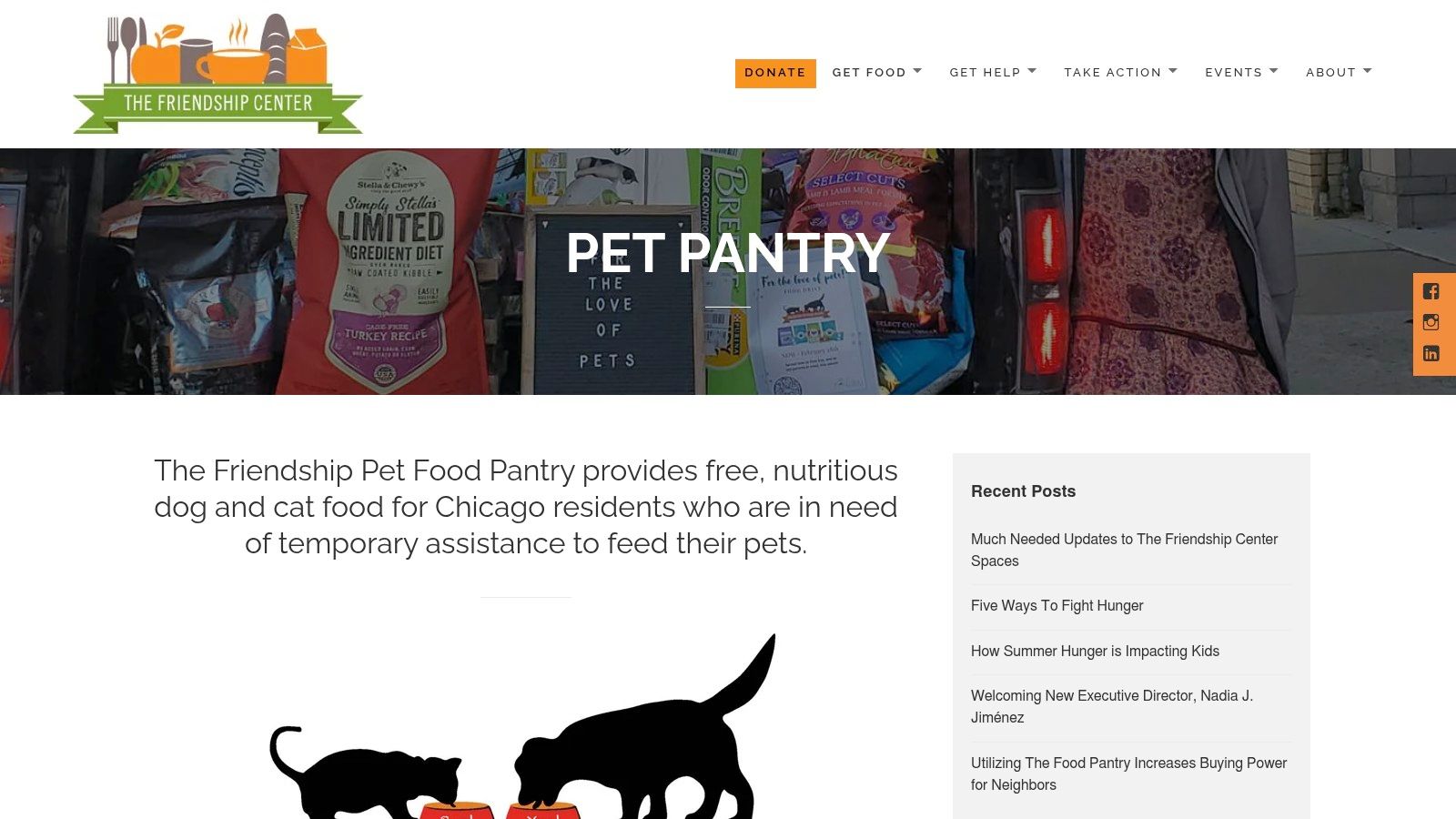
    Friendship Pet Food Pantry (program of The Friendship Center)

    A lot of people can ask for help for themselves. Asking for help for a pet can feel harder. I know that sounds backwards, but love often works that way. We can tolerate our own discomfort longer than we can tolerate watching an animal depend on us.

    That is why I have a soft spot for the Friendship Pet Food Pantry. It gives Chicago residents a way to keep pets fed and at home, and that kind of support carries a quiet emotional weight. A bag of cat food can mean a family gets to stay a family.

    Why this one feels different

    Most volunteer spaces are built around human need in obvious ways. Pet pantry work creates a different energy. People show up with stories about a senior dog, a rescue cat, a pet that got them through grief, illness, or loneliness. The mood can be tender in a way that cuts through social awkwardness fast.

    I like that because friendship often grows faster when people are talking about someone they love. Sometimes that someone has four legs.

    The Friendship Center's materials also note that its programming grew over more than 12 years and came to include pet services, according to the 2023 impact report PDF. I read that as a sign of listening. Communities change. Need changes. Good organizations adapt.

    Best fit and tradeoffs

    If you're an animal person, this program can feel more natural than a general volunteer shift. You already have an emotional hook. You care. That makes it easier to keep coming back, and repeat attendance is where acquaintance turns into friendship.

    Here are the reasons I'd point someone here:

    • Clear recurring rhythm: The program runs on a regular monthly schedule.
    • Emotional connection: Pets give people an immediate point of conversation.
    • Useful extras: When available, supplies beyond food can make the visit more helpful.
    • Referral angle: Connections to low-cost pet care resources make the support broader than one pickup.

    The limits are straightforward too.

    • Once a month cadence: If you want a weekly social anchor, this alone may not be enough.
    • Supply can vary: Donation-driven programs always have some uncertainty.
    • Crowds happen: People know pet food costs real money, so popular dates can move fast.

    Sometimes the easiest way to meet kind people is to stand where love is obvious.

    If your version of friendship center chicago includes wagging tails, carrier crates, and conversations that start with "What's your dog's name?", this is a beautiful route.

    4. Nourishing Hope

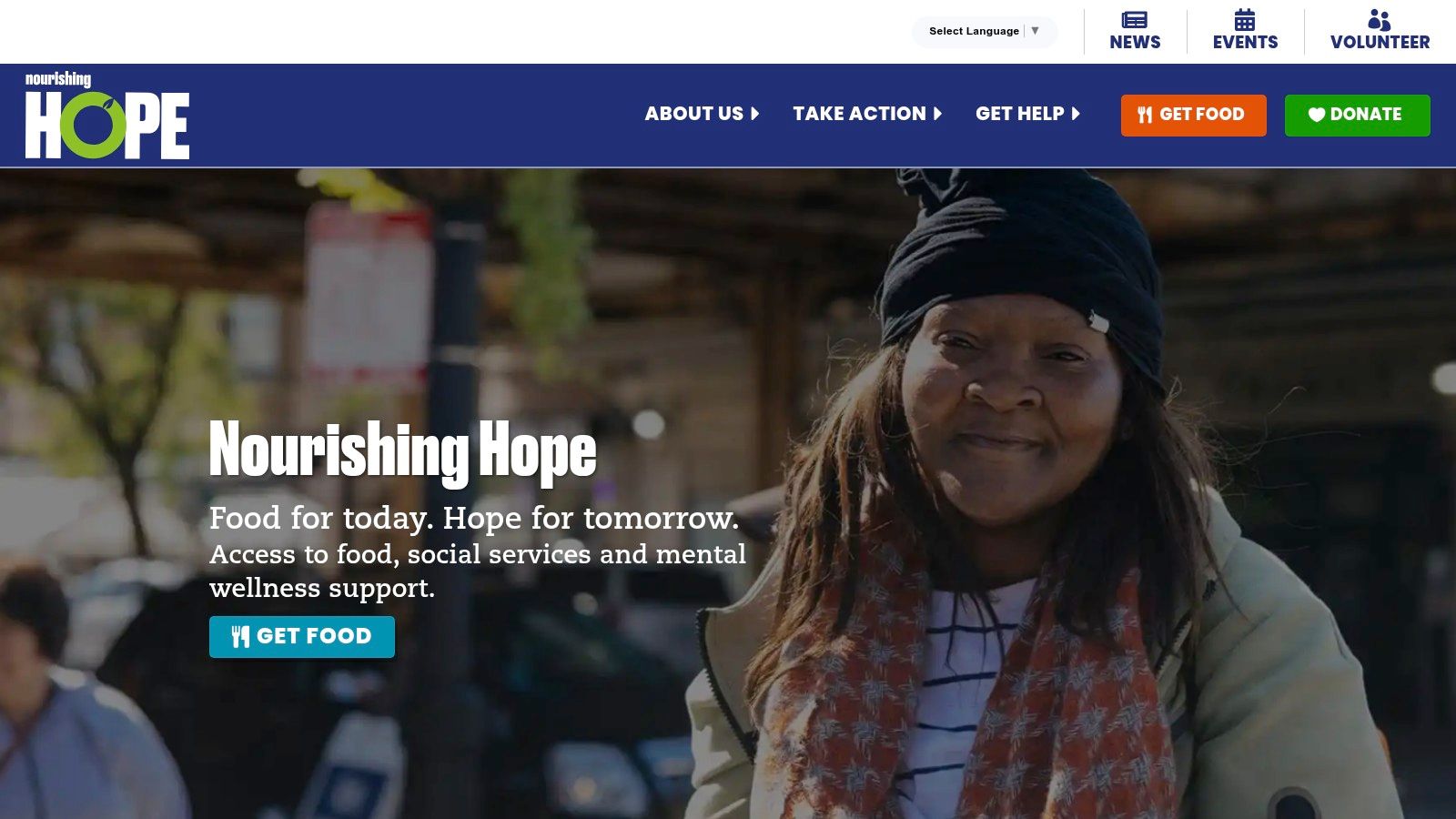
    Nourishing Hope (formerly Lakeview Pantry)

    Some places feel like a corner store for care. Nourishing Hope feels more like a whole system. Food is still at the center, but the structure around it is wider. That changes the kind of volunteer or visitor experience you get.

    You can explore it through the Nourishing Hope website. What pulled me in is the mix of in-person markets, an online market model, home delivery for eligible neighbors, and support that goes beyond groceries. If your life is chaotic, systems matter. A place with several doors into help can meet people where they are.

    When this is the better choice

    I wouldn't send everyone to the same place. That's part of the point of this list. You find your tribe by matching your temperament to the work.

    Nourishing Hope makes sense for people who like organized operations and multiple ways to plug in. Maybe you're the person who loves logistics. Maybe you prefer a role with clear process, or you care about food access but also want a setting that acknowledges mental wellness and case management.

    That broader frame can attract a different mix of volunteers too. Some want simple, physical service. Others want layered care work. Neither is better. They're just different social ecosystems.

    If you're comparing anti-hunger volunteering routes, this piece on Chicago food bank volunteer options helps frame the choice between hands-on pantry work and broader service environments.

    What stands out to me

    I like that Nourishing Hope gives people several access points. Online ordering can reduce friction for some households. In-person markets create face-to-face contact. Home delivery helps people who can't easily travel. That variety can make the organization feel less intimidating.

    A few pros jump out:

    • More than food: Mental wellness and case support create a fuller care environment.
    • Several access modes: Online, in-person, and delivery options meet different needs.
    • Good for process-minded volunteers: If you like order and systems, you'll probably feel at home.
    • Strong entry points: You can often find a role that fits your comfort level.

    The tradeoffs are the usual ones with larger systems. Registration steps can feel less spontaneous. Capacity and site details can differ, so you need to check before going.

    I think of Nourishing Hope as the friend who has a planner, labels everything, and still remembers to ask how you're doing. If that style calms you, it may be your best friendship center chicago match.

    5. Care for Real

    I trust places that listen and adjust. It's one thing to say you care. It's another thing to change your hours because people's lives don't fit neat nonprofit schedules.

    That's one reason I like Care for Real. It has service hubs in Edgewater and Rogers Park, and it pairs pantry support with things like clothing, pet pantry days, home delivery, and referrals. To me, that feels less like a single transaction and more like meeting an actual life.

    The social angle

    If you're trying to find community through service, multi-service organizations have a special advantage. They attract volunteers who understand that people rarely have one tidy problem. Hunger often arrives with laundry problems, transportation problems, pet care stress, and paperwork confusion. The people who stick around in those spaces usually have patience.

    Patience is underrated in friendship. I learned that late.

    Care for Real also added evening pantry hours based on community feedback. I like details like that because they tell me the place isn't frozen in one idea of who needs help and when. And if you're a volunteer with a day job, evening hours can make joining much easier.

    If this one catches your eye, the Litter Caterpillars writeup on Care for Real gives another neighborhood-level look at it.

    Why someone picks this over another option

    I would point people here if they want a practical, neighborhood-grounded setting and don't want their service experience to feel abstract. With food, clothing, referrals, and some pet-related support in the mix, the work touches daily life in a direct way.

    Here are the strongest reasons:

    • Two hubs: That gives more flexibility depending on where you live.
    • Several need areas: Food isn't the only thing on the table.
    • Responsive schedule choices: Evening options help more people take part.
    • Home delivery path: Some neighbors need care brought to them.

    And the cautions:

    • Hours vary by location: You need to double-check before heading out.
    • Demand can be heavy: Busy periods may mean waiting or limited slots.
    • Different sites feel different: The best fit may depend on the specific hub.

    A good volunteer space doesn't ask you to be impressive. It asks you to be dependable.

    That line sits in my head whenever I think about friendship center chicago options. Care for Real feels built for dependable people.

    6. Ravenswood Community Services at All Saints Episcopal Church

    Tuesday evening is an underrated time for human connection. It isn't glamorous. Nobody builds a fantasy life around Tuesday evening. That is exactly why I trust it.

    Ravenswood Community Services leans into that humble slot with a weekly food pantry and a community kitchen at All Saints Episcopal Church on Hermitage. I love the timing because it invites regular people with regular schedules. You don't need your life to be polished to make it there.

    Why the evening schedule matters

    A lot of community spaces accidentally favor people with flexible days. That can narrow who you meet. Evening service opens the door to working people, tired people, people coming straight from jobs, and people who still decide to spend part of the night helping or receiving help with dignity.

    That changes the feeling of a room.

    The community kitchen piece matters too. Food passed hand to hand has a different social temperature than food discussed in theory. Carryout gives practical help. Limited dining time creates a shared scene. Even brief moments of eating near other people can soften the edges of a hard week.

    Where it fits in your life

    I see Ravenswood Community Services as a good fit for someone who wants consistency without needing a giant organization. Weekly rhythm can anchor you. If your social life is scattered, one reliable Tuesday can start stitching it together.

    A few reasons I like it:

    • Weekly evening timing: Easier for many working schedules.
    • Pantry plus meal: Different forms of food support create different volunteer roles.
    • Neighborhood feel: The setting tends to feel grounded and personal.
    • Regular opportunities: Repetition helps you recognize faces and build trust.

    There are limits, and they are simple.

    • Once a week: If you miss Tuesday, you wait for the next one.
    • Short dining window: Timing matters if you want that part of the experience.
    • Less constant than larger operations: The pace is steadier and narrower.

    This one reminds me of a church basement version of friendship center chicago. I mean that in the best way. Plain chairs. Warm food. People trying. Sometimes that is exactly the medicine.

    7. Irving Park Community Food Pantry

    There is something comforting about a neighborhood pantry that keeps regular weekday hours and keeps doing the work without fanfare. It feels like the old reliable friend in your phone. Maybe you don't talk every day, but when things get rough, you know who to call.

    That is the feeling I get from the Irving Park Community Food Pantry. It focuses on Irving Park and Avondale, with regular Wednesday morning distribution and some limited evening service. If your life works best when routines are simple and local, that matters.

    Why local can be better

    I used to think bigger always meant better. Then I got older and realized smaller, closer, and more repeatable often wins. A neighborhood pantry can become part of the weekly shape of your life. You see the same blocks, maybe the same volunteers, maybe the same produce tables. Familiarity lowers the emotional cost of showing up.

    This pantry also works with local partners and garden donations for fresh produce and staples. I like that because local food always changes the mood a bit. A pantry feels less like a warehouse transaction and more like a neighborhood effort when the food has nearby roots.

    Who should pick this one

    If you live on the Northwest Side and want your version of friendship center chicago to feel close to home, Irving Park Community Food Pantry is a smart choice. It won't fit everyone, especially if you need broad hours. But if mornings work for you, the simplicity is a strength.

    Here is where it shines:

    • Predictable weekly rhythm: Wednesday mornings give your week a fixed point.
    • Neighborhood focus: Local service can turn volunteering into a true habit.
    • Fresh produce link: Garden and community partnerships add a human touch.
    • Straightforward setup: Easy to understand, easy to return to.

    And the tradeoffs:

    • Mostly weekday mornings: That can shut out people with rigid work hours.
    • Evening access is limited: You may need another option if mornings fail.
    • Eligibility may vary: It's smart to confirm fit before going.

    I think of this pantry like a well-worn path through a park. It isn't flashy. It just keeps getting used because it gets people where they need to go.

    Friendship Center Chicago, 7-Point Comparison

    Program Implementation Complexity 🔄 Resource Requirements ⚡ Expected Outcomes ⭐ Ideal Use Cases 💡 Key Advantages 📊
    Litter Caterpillars Low–Medium: volunteer-led coordination for weekly cleanups Low: volunteers, basic cleanup supplies, social media coordination Visible citywide litter removal; stronger neighborhood pride Social volunteering, public-space cleanups, community-building High visibility impact; consistent schedule; strong volunteer culture
    The Friendship Center (Lincoln Square/Ravenswood) Medium: established pantry operations with registration & meal prep Moderate: food storage, kitchen, volunteers, referral networks Reliable food access with dignity-forward grocery experience Grocery-style pantry visits, hot meal pickup, year‑round volunteering Full-choice selection; weekly hot meals; clear eligibility
    Friendship Pet Food Pantry Low: monthly distribution logistics and eligibility checks Low: donated pet food, volunteers, occasional supplies Helps keep pets with families; reduced shelter surrenders Pet owners needing monthly support; access to vet referrals Predictable monthly schedule; pet-focused resources
    Nourishing Hope (formerly Lakeview Pantry) High: multi-site operations, online market, integrated services High: staff, logistics, tech for online orders, delivery capacity Broad food access plus counseling and case management Comprehensive anti-hunger support, online ordering, home delivery Multiple access points; integrated social services; large scale
    Care for Real (Edgewater & Rogers Park) Medium: two hubs with varied offerings and responsive scheduling Moderate: staff/volunteers, inventory for food/clothing/pet days Neighborhood-level support across food, clothing, and referrals Multi-service needs, evening access, home delivery referrals Multi-service model; flexible hours responsive to community
    Ravenswood Community Services (All Saints) Low–Medium: weekly pantry + community kitchen operations Moderate: kitchen facilities, volunteers, church venue Reliable evening pantry and meal service; community connection Working households needing evening food and communal meals Evening schedule; meal component fosters dignity and socializing
    Irving Park Community Food Pantry Low: neighborhood pantry with regular weekly distributions Moderate: partnerships with food bank, garden donors, volunteers Consistent local access to fresh produce and staples Neighbors preferring morning distributions and fresh produce Strong local partnerships; emphasis on fresh produce

    A Quick Tip: Turning Service Into Friendship

    Showing up is the first step. It isn't the whole thing.

    I learned that the hard way. For a while, I thought proximity would do the work for me. I figured that if I volunteered beside good people, friendship would naturally bloom like some movie montage. Sometimes it did. Often it didn't. We would finish the shift, wave politely, and drift back into our separate lives.

    The missing piece was intention.

    Service gives you the raw material for connection. It gives you a shared task, a low-pressure setting, and a built-in topic. But you still have to take the social risk. You have to turn "we worked near each other" into "want to grab coffee?" That tiny move is where a lot of potential friendships die.

    I think about Tom Sawyer and the fence all the time. The trick wasn't really the fence. It was the shared experience around the fence. Human beings bond through stories. We remember the weird morning, the rain, the heavy boxes, the volunteer who brought the wrong gloves, the dog who tried to eat the donation receipt. Those little moments are social glue.

    My favorite example from my own life is still that first Litter Caterpillars cleanup in the hail. We were cold, huddled under a tree, and every Uber kept canceling. It should have been miserable. In a literal sense, it was miserable. But it was also alive. We were in it together. The discomfort gave the day flavor. It turned an ordinary cleanup into a story we could carry.

    Don't run from the awkward parts. The awkward parts are often where the bond begins.

    So if you want to use a friendship center chicago space, or any volunteer group, to build actual relationships, do a few simple things on purpose.

    • Stay a little longer: Help stack chairs, sweep up, or close out the last task. The after-moment is often where real conversation starts.
    • Join the group chat: Friendship likes repetition. If people have a chat thread, get in there and say something human.
    • Ask one direct question: Try "How did you find this group?" or "Do you usually volunteer here?" Easy questions open doors.
    • Make one tiny invitation: Coffee after. A walk to the train. Splitting a pastry nearby. Keep it light and concrete.
    • Come back soon: Don't wait a month if you can help it. Momentum matters.

    I also think it helps to remember what you're screening for. You are not trying to impress everyone. You are trying to find givers. That changes your whole posture. Instead of asking, "Do they like me?" ask, "Do they show up? Do they care? Are they kind when the work gets annoying?"

    Those are better questions. They lead to better people.

    Service is a filter. It won't guarantee instant closeness. It will save you time. It puts you near people whose values already leak into their calendars. In my experience, that is a much better starting point than trying to reverse-engineer trust from banter alone.

    If you feel lonely, start small. Pick one place from this list. Go once. Then go again. Let your hands have something useful to do while your heart catches up. You may think you're just sorting food, picking up trash, or carrying pet supplies. Sometimes you're building the sort of life where good people can find you.


    If you want the fastest path into this kind of service-based friendship, start with Litter Caterpillars. Show up on a weekend morning, do something useful with your hands, and give yourself one simple mission: talk to one person and come back the next week. That's how I started changing my life, one trash bag and one brave little conversation at a time.