
Tag: chicago social groups

  • 7 Chicago Social Groups to Find Your People

    7 Chicago Social Groups to Find Your People

    I remember stepping off the train with two bags, a dead phone battery, and no clue where I'd find my people. Chicago felt huge, loud, and already in motion, like everybody had a lane except me. Then I started doing one thing each week, and the city stopped feeling like a wall and started feeling like a room full of open doors.

    1. Litter Caterpillars

    The first time I joined a cleanup, I didn't feel like I was “networking.” I felt like I was picking up one stubborn wrapper at a time with strangers who got weirdly excited about the same block I'd just walked past a hundred times. That's what makes Litter Caterpillars different from a lot of Chicago social groups, it turns service into the thing that makes people talk, laugh, and come back. You're not standing around trying to force conversation. You're moving, hauling, sweating, and noticing who shows up when the weather gets ugly and the work gets real.
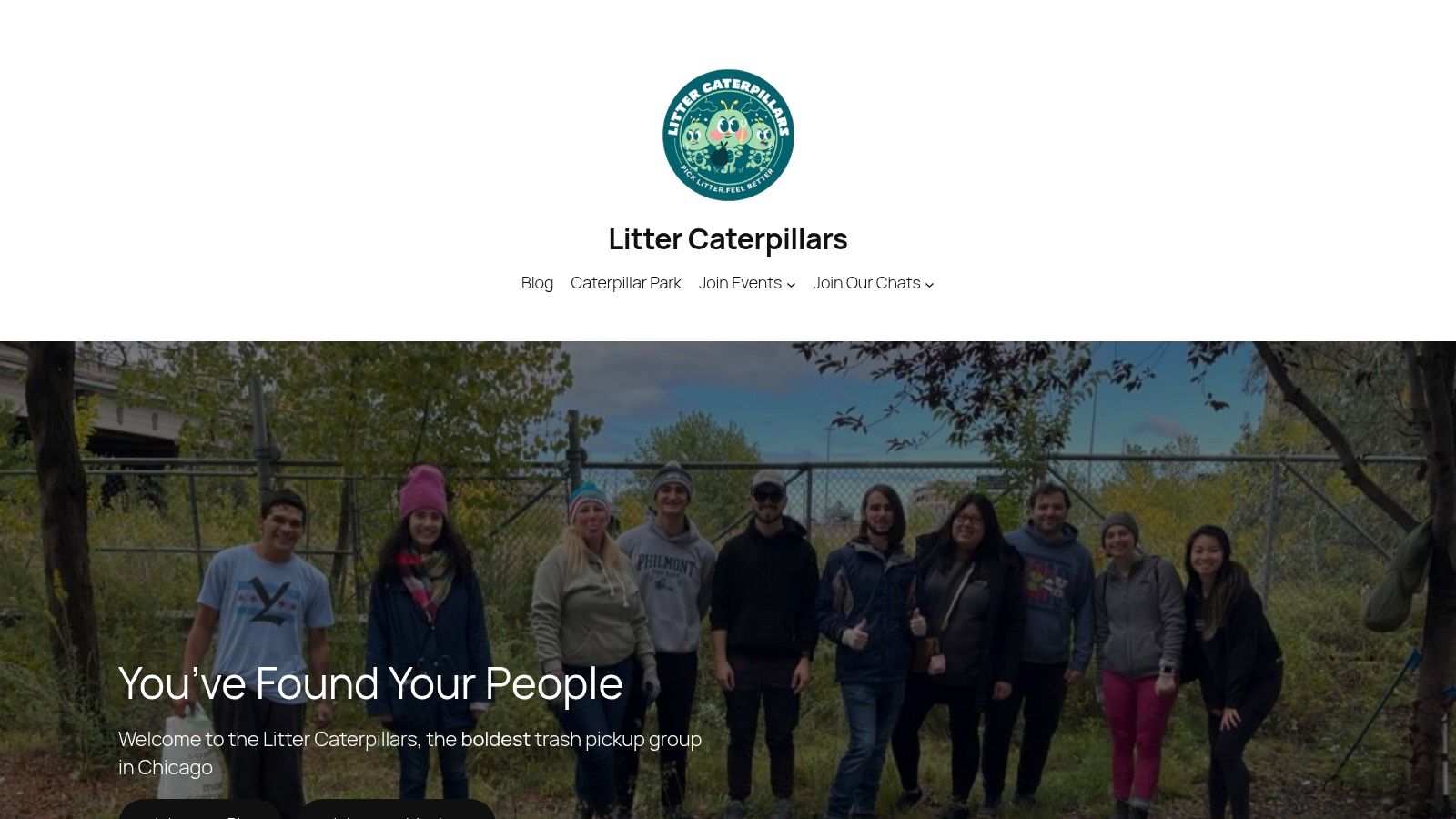
    Litter Caterpillars

    The group's weekly rhythm matters. Chicago's South and West Sides often get left out of easy digital-first outreach because broadband adoption varies sharply by community area, from 58% in Fuller Park to 93% in Beverly in a 2022 analysis using ACS 2016-2020 data (study on Chicago's digital divide). So if you want a group that doesn't assume everyone lives online, this one makes sense in a very practical way. You can find people through Meetup, Instagram, and open group chats, then meet in person and do real work together.

    Practical rule: If you want friends in a city this spread out, pick a group that gives you a repeated reason to return. One Saturday cleanup can feel nice. A weekly habit starts to feel like your life.

    I also like that Litter Caterpillars protects volunteer energy. The group says it never pressures volunteers for donations, keeps safety and happiness first, and centers weekend mornings so people show up ready to give, not half-baked after a long night. That's a better filter than small talk. You learn fast who's there to help and who's there to disappear.

    Pros

    • Citywide reach: The group cleans across all 50 wards and goes where some groups won't.
    • Volunteer-first culture: No pressure to donate, and the rhythm stays focused on showing up.
    • Real-world payoff: Clean streets, cleared lots, and visible progress you can point to.
    • Identity built into the group: Flags, badges, and a theme song make the work feel shared, not lonely.

    Cons

    • Less formal structure: A volunteer-driven model can feel looser than a registered nonprofit.
    • Harder conditions: Some cleanups happen in rough weather or high-need areas, which can feel intense if you're new.

    If you want the direct path, visit Litter Caterpillars and look for the next cleanup. I'd start there if you want your first Chicago social group to feel like action, not awkwardness.

    2. Chicago Cares

    I like groups that hand you a plan when your week already feels messy. Chicago Cares does that well, because you can make a free account, browse a calendar, and jump into a project without hunting through ten different nonprofit pages. That's a relief when you want connection, but you don't want the entire social side of it to depend on luck.
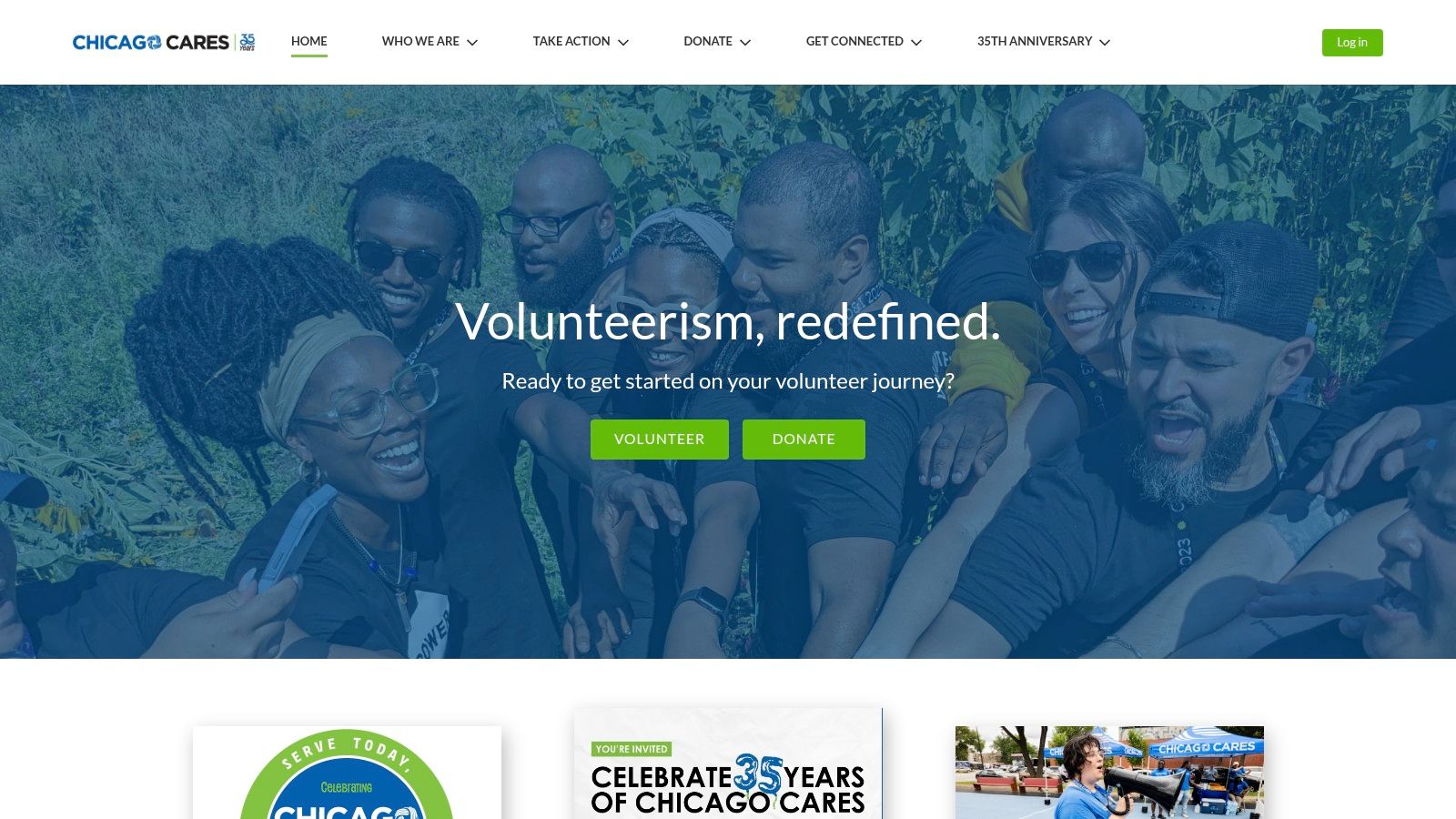
    Chicago Cares

    The best part is how low-friction it feels for a newcomer. You can show up for schools, parks, shelters, and other projects, then let the work do the social heavy lifting. If you're the kind of person who talks more easily while handing out supplies or planting something in the ground, this kind of structure helps.

    For people comparing Chicago social groups, Chicago Cares is the steady, organized option. It's less about becoming a regular at one tiny circle and more about getting into the habit of being useful alongside other people. That's how a lot of friendships start for adults anyway, not with a perfect icebreaker, but with repetition and a shared task.

    You don't need a dramatic personality to make friends here. You need a calendar slot, a willingness to help, and enough curiosity to talk to the person next to you while the work gets done.

    The site's workflow makes that easier, too. The volunteer portal keeps the rules clear, and the mix of one-off and recurring opportunities lets you try a project once before you commit to it. If you're new in town, that matters. You can test the fit before you start building your Saturday around it.

    One practical note, the popular shifts can fill quickly, so don't wait until the last minute if you want a better shot at the project you want. If you like knowing exactly where to go and what to do, this is a solid place to start.

    Here's the internal guide that pairs well with this kind of volunteering, best volunteer opportunities in Chicago. It's useful if you want to keep your search focused on hands-on groups that get you around the city.

    Pros

    • Easy sign-up: Free account, clear portal, simple path into projects.
    • Good for solo joiners: You can arrive alone and still have a reason to talk to people.
    • Reliable logistics: The structure helps reduce guesswork.
    • Flexible commitment: One-off and recurring options let you move at your own pace.

    Cons

    • Projects fill fast: Popular times can disappear before you decide.
    • Social time is secondary: The mission comes first, so don't expect a built-in hangout vibe.

    3. Volunteering Untapped Chicago

    Some groups feel like a shift. Volunteering Untapped Chicago, or VU Chicago, feels more like a monthly ritual you can build around. It usually runs free volunteer events on the second Saturday of the month, then leaves room for an optional after-party if you want to keep talking after the work ends. That's a good setup if you want your social life to grow out of action instead of small talk in a noisy bar.
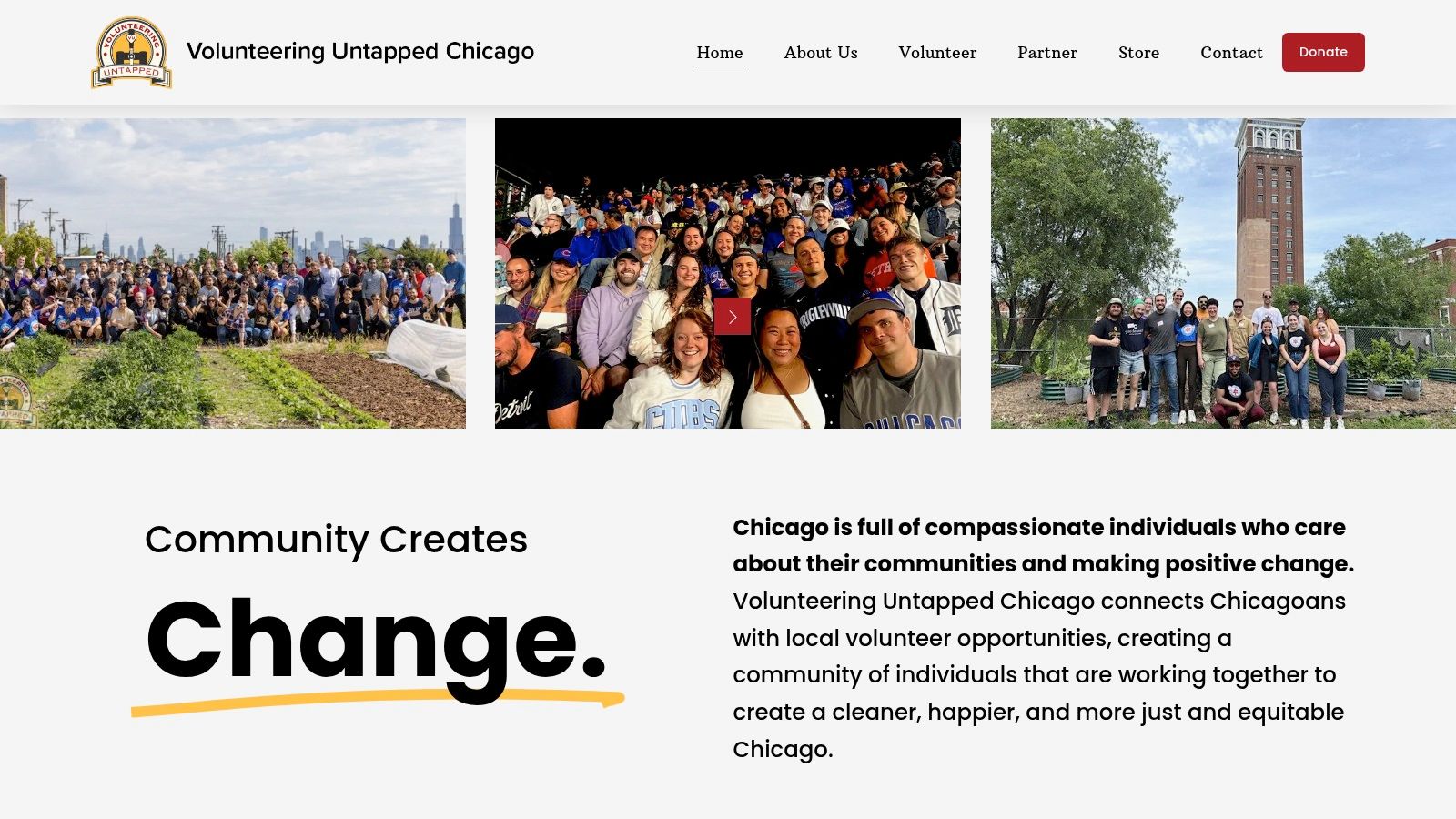
    Volunteering Untapped Chicago (VU Chicago)

    The rhythm is the selling point. When you know events are coming up on a predictable schedule, it gets easier to say yes, and saying yes more than once is how people start remembering your face. VU Chicago also adds carpools, which helps if you live farther out or don't want the trip itself to feel like a barrier.

    You'll also notice the group keeps the experience social without making it forced. Snacks and water are provided, leaders are on site, and the events are organized around different themes and nonprofit partners. That means you can spend the day building a habit and still have something to talk about afterward besides the weather.

    If you're comparing Chicago social groups by how easy they are to keep doing, this one lands in a sweet spot. It has enough structure to feel dependable and enough looseness to keep it friendly. The optional gathering after the event is a nice move because it gives shy people a natural exit and outgoing people a reason to stay.

    Useful rule of thumb: Pick a group that makes the next visit easier than the first one. Familiar timing and familiar faces lower the friction every single month.

    The main drawback is simple. Tickets can sell out, and waitlists happen. If you know you want in, don't treat it like a maybe. Check early, claim your spot, and treat it like something you plan to do.

    Pros

    • Predictable cadence: The second-Saturday rhythm helps you build a habit.
    • Built-in social layer: You can stay after for the optional gathering.
    • Access help: Carpools make attendance easier.
    • Beginner-friendly: Free events and on-site leadership make it easy to try.

    Cons

    • Capacity limits: Tickets can go fast and waitlists are common.
    • After-party limits: Some venues have age restrictions.

    Website: Volunteering Untapped Chicago

    4. Chicago Sport and Social Club

    The first time I joined a rec league, I learned something fast. A team gives you a reason to text people again next week without feeling weird about it. Chicago Sport and Social Club is built for that exact kind of repetition, with leagues and tournaments across sports like volleyball, soccer, softball, kickball, dodgeball, and ping-pong.
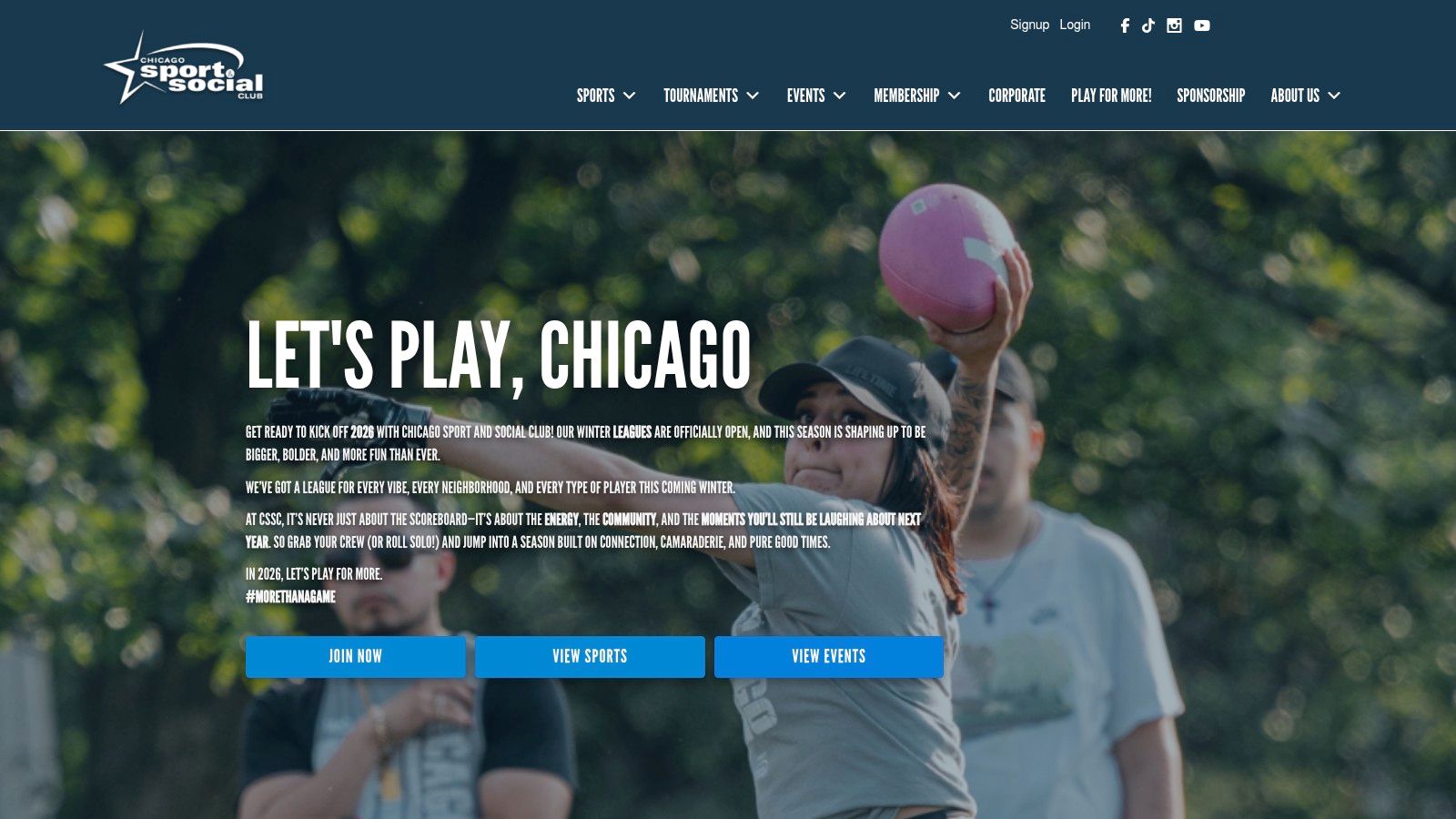
    Chicago Sport and Social Club (CSSC)

    This is one of the easiest Chicago social groups to use if you want structure. You can sign up with a team or as a free agent, which helps if you moved here without a built-in roster. That free-agent path matters more than people think, because it lets you show up alone without feeling like a spare part.

    The social side grows out of the season itself. You see the same faces, you learn who takes wins too seriously, and you figure out who's there for the game and who's there for the postgame hangout. That repeated contact changes the feel of the city. Instead of always starting over, you start recognizing people on purpose.

    Here's where the fit gets personal. If you like a little competition, this group gives you that. If you want something lighter, you can still find leagues and locations that feel more casual. The mix of sports and social events gives you a built-in excuse to keep showing up even on weeks when your motivation dips.

    For a lot of people, the hard part isn't the game itself. It's the first text, the first signup, the first Tuesday night when you walk into a gym or field with nobody waiting on you. This group handles that awkward middle well, and the published FAQs help make deposits and team rules feel less mysterious.

    If you want another practical route into the city, how to make friends in Chicago pairs nicely with this kind of league-based plan. I'd use both if you're rebuilding your routine from scratch.

    Pros

    • Strong repeat structure: Seasons make it easier to stay connected.
    • Solo-friendly entry: Free-agent placement helps if you don't have a team.
    • Lots of sport choices: You can match the league to your energy.
    • Social extension: Events tied to leagues keep the circle from ending at the final whistle.

    Cons

    • Fees can add up: League and team costs vary.
    • Not every league takes individuals: Some signups need a full team.
    • Energy varies: Some divisions lean more competitive than social.

    5. November Project Chicago

    I've always trusted groups that don't wait for perfect conditions. November Project Chicago meets early, moves hard, and keeps the whole thing free. The regular schedule is part of the charm, with meetings commonly on Wednesdays and Fridays at 6:06 am at rotating city locations shared through social channels.

    That early start does a lot of social work by itself. People who show up before sunrise tend to remember each other quickly, because nobody is pretending to be polished at that hour. You're just there, sweating, laughing, and trying to keep up. That creates a kind of honesty you don't always get in later-day social plans.

    The group also keeps the entry barrier low. It's free, open to all fitness levels, and built around the simple idea that you show up. That matters if you've ever felt intimidated by the gym scene or too out of shape to join a more performance-driven fitness group.

    Practical rule: If you want accountability, go where attendance matters more than looking impressive. A group that welcomes your messy first week is easier to stick with than one that rewards only the already-fit.

    The downside is obvious, the time. Not everybody wants to wake up that early, and weather can make outdoor workouts rough. But if mornings sharpen you instead of draining you, this group can become a steady anchor in your week. The after-workout social time also helps, because people usually stick around long enough to talk before the city fully wakes up.

    For a similar outdoors-first mindset, I'd also look at outdoor group activities for adults. It's a good companion idea if you want your social life to happen outside, not just online.

    Pros

    • Always free: No registration barrier.
    • Clear routine: Two weekly meetups make it easier to keep going.
    • Welcoming pace: It's open to all fitness levels.
    • Real accountability: Early start times keep the habit honest.

    Cons

    • Very early: 6:06 am is a dealbreaker for plenty of people.
    • Weather matters: Rain, snow, and heat all count.

    6. Chi Hack Night

    If your version of fun involves making something useful with other smart people, Chi Hack Night can feel like a good home base. It's a free weekly civic-tech night where technologists, designers, organizers, students, and public-interest folks come together to learn, prototype, and talk through projects that help the public. That mix matters, because you don't have to arrive as a polished coder to belong here.

    I like that the format gives people a reason to participate without forcing instant expertise. Talks open the door, breakout groups move the conversation forward, and project time lets people build together. That's a nice model if you want to meet people through ideas instead of just hobbies.

    The group also works well if you're trying to build a professional-social circle with some purpose behind it. You'll meet people who care about data, design, policy, and public interest work, which can be a relief if you're tired of shallow event chatter. Chicago social groups like this one can make you feel less like a visitor and more like a contributor.

    There's a practical upside too. Weekly meetings make it easier to recognize the same faces, and recognition is where a lot of adult friendships begin. You stop being “the new person” and start being the person who always shows up for the talk on transit, housing, or a community project.

    The main limitation is simple. If civic tech isn't your thing, the topics may not click. But if you like solving problems with other people and you're comfortable around tech or data talk, this is an easy place to plug in.

    Pros

    • Weekly rhythm: Regular meetings make it easier to build familiarity.
    • Open entry: You don't need a narrow background to join.
    • Collaborative format: Talks and hands-on sessions create real interaction.
    • Good for civic-minded networking: You meet people who like building useful things.

    Cons

    • Topic-specific: It leans toward civic tech, data, and related work.
    • Formats can change: You'll want to check event pages before you go.

    Website: Chi Hack Night

    7. Out Our Front Door

    Some people make friends over coffee. Some do it over a long bike ride with a lake breeze and a shared map. Out Our Front Door gives you that second path. It brings people together through guided bike adventures, including day rides, bike-camping overnights for adults and families, adaptive rides, and route resources around the Lake Michigan region.

    What I like here is the combination of movement and learning. You're riding, but you're also hearing local history, ecology, and culture as you go. That gives the day some texture. You're not just covering miles, you're noticing where you are with other people who want to notice too.

    This group works well if you're the type who relaxes when someone else handles the planning. The guides and volunteers take on the structure, and you get to show up ready to ride. That can be a huge relief if you want outdoor community without becoming the trip organizer.

    If you're thinking about Chicago social groups as a way to change your own habits, this one is remarkably powerful. You learn the city by moving through it, and you get more comfortable talking to people while your body is doing something useful. That's a good combination when you're trying to make friends without forcing it.

    The limits are real, though. Most guided trips are ticketed, weather can matter, and you need a working bike plus basic gear. Beginners can still find a place here, but you'll be happier if you come prepared and know your comfort level before the ride starts.

    Pros

    • Guided adventure: The trip structure keeps the planning light for you.
    • Inclusive options: Adaptive rides widen access.
    • Learning built in: You get history, ecology, and culture along the route.
    • Good for outdoors people: A natural fit if you like moving while you talk.

    Cons

    • Ticketed trips: Many rides cost money and can sell out.
    • Gear matters: You need a functioning bike and basic equipment.
    • Weather and distance: Some trips can feel demanding for beginners.

    Comparison of 7 Chicago Social Groups

    Organization 🔄 Implementation complexity ⚡ Resource requirements 📊 Expected outcomes 💡 Ideal use cases ⭐ Key advantages
    Litter Caterpillars Medium, volunteer-run coordination with flexible, on-the-ground logistics Low–Medium, volunteers, basic cleanup supplies; occasional larger project funding Visible, neighborhood-level cleanup; occasional large wins (e.g., park creation) Regular weekend volunteers seeking hands‑on, community-driven cleanup Citywide reach; strong volunteer culture; tangible, local impact
    Chicago Cares Low, structured nonprofit operations and streamlined sign-up portal Medium, staff, partner nonprofits, volunteer-management systems Consistent, scalable volunteer placements across many causes Newcomers or busy people wanting reliable, one‑off or recurring projects Large calendar; reliable logistics; clear safety and participation policies
    Volunteering Untapped Chicago Low–Medium, monthly themed events coordinating multiple partners Low, volunteer leaders, event coordination, carpools, modest supplies Social-first volunteer events that build habit and small-scale impact People who want social volunteering with optional after-parties Regular cadence; built-in social element; improved access via carpools
    Chicago Sport and Social Club (CSSC) Medium, season scheduling, team placement, and rule enforcement Medium, venue rentals, staff/referees, equipment and team fees Recurring social connections and fitness through league play Adults seeking organized recreational sports and seasonal social groups Wide sport variety; solo-friendly placements; structured seasons for consistency
    November Project Chicago Low, volunteer-led, no-registration meetups on a fixed schedule Very low, volunteer leaders and public meeting spaces High consistency in fitness, accountability, and peer connections Early-morning fitness seekers who value routine and community Free and inclusive; strong accountability and camaraderie
    Chi Hack Night Medium, weekly events with talks, breakout groups, and project coordination Low–Medium, venue/tech support, volunteer organizers, contributor time Networking, skill development, and civic‑tech project prototypes Technologists, designers, and civic-minded collaborators Newcomer-friendly civic‑tech community with project continuity
    Out Our Front Door (OOFD) Medium, trip logistics, guide coordination, and safety planning Medium, bikes/gear, trained guides, ticketing for guided trips Improved cycling skills, outdoor stewardship, and strong rider community Outdoor enthusiasts wanting guided rides, overnight trips, and learning Guided, education-forward routes; inclusive and adaptive programming

    Your First Step Is the Best One

    Looking at a list like this can feel a little overwhelming, like you've opened a map of a city you still barely know. I've been there. The fix isn't to plan the perfect social life from scratch. The fix is to pick one place, show up once, and let the second visit happen only if the first one feels right.

    I'd keep it simple. If you want movement and purpose, try Litter Caterpillars or Chicago Cares. If you want repeat contact and built-in conversation, go for Chicago Sport and Social Club, November Project Chicago, or Volunteering Untapped Chicago. If you want your brain engaged too, Chi Hack Night and Out Our Front Door give you people, rhythm, and something to do with your hands or your legs.

    The city gets a lot smaller after that first hello. You learn names. You learn faces. You start to recognize who laughs at the same joke, who stays for cleanup, who comes back the next week. That's how Chicago social groups start to feel less like listings and more like your life.

    All you need is one move. Pick the group that feels easiest to try, put it on your calendar, and go.


    If you want the shortest path into a real Chicago social group, start with Litter Caterpillars. It's weekly, hands-on, and built for people who want friendships to grow out of doing something useful together. Visit the site, pick a cleanup, and give yourself one good reason to show up this weekend.
  • How to Make Friends in Chicago and Build a Community You Love

    How to Make Friends in Chicago and Build a Community You Love

    Trying to make friends in Chicago can feel like you’re searching for a specific needle in a haystack the size of Lake Michigan. It’s overwhelming. So here’s my advice, straight up: Ditch the loud bars and find your people by doing something that actually matters. This isn’t about just meeting people; it’s about forging real connections with the kind of humans who share your heart.

    The Unspoken Challenge of City Life

    Let's get real. You can be standing in the middle of Millennium Park, literally surrounded by thousands of people, and feel so alone it echoes.

    Chicago is a city of beautiful, chaotic motion. The L trains rattle, neighborhoods shift, and people move in and out like it's a revolving door. This city is electric, but its sheer size can swallow you whole. It's easy to feel like a ghost floating through someone else’s vibrant life.

    If you’re feeling that ache of isolation, hear me: You are not broken. This is a universal human story.

    I hit my own rock bottom a few years back. I was crawling out of a messy relationship that had left my spirit completely drained. My apartment was a disaster zone, a perfect mirror for my social life. I finally had this lightning bolt moment where I realized the old playbook—shouting over deafening music at some bar, hoping for a random spark—was a losing game. It was a strategy built on luck, not intention.

    I knew I had to engineer my life differently. I needed to meet people in a way that wasn't about performance or painful small talk, but about genuine, side-by-side, sleeves-rolled-up connection.

    Why It's Harder Than You Think

    This feeling isn't just in your head. It's the reality of modern city life. In Chicago, a city of 2.71 million residents, more than half the population rents. That means people are always on the move, constantly severing the social roots that take so long to grow.

    Nationally, the stats are even more stark: the amount of time we spend with friends in person has absolutely cratered. This isn't a personal failing; it's a cultural tidal wave we're all swimming against. You can dig into Chicago's unique social data at Data USA.

    That realization was a game-changer for me. It wasn't about me being unlikeable or awkward. My method was just all wrong. I needed a filter—a way to find the givers, the doers, the kind of people who actually show up.

    So, I started with a simple, almost ridiculously brave act. I decided to clean up a park.

    I thought, "Who else is crazy enough to pick up trash on a Saturday morning?" The answer, it turned out, was my future friends. People who cared. People who weren't afraid to get their hands dirty to make something better.

    This is the whole secret. Making friends isn't about landing the perfect opening line; it’s about showing up for a shared purpose. It’s about planting roots, even in a city that’s always moving, by creating something meaningful together.

    Find Your People Through Purposeful Action

    Ever tried to forge a real connection shouting over the music in a packed, overpriced bar? It’s a game of chance. You’re both putting on a performance, exchanging surface-level facts, and just hoping something—anything—sticks. It's exhausting.

    Now, imagine this instead: you're working shoulder-to-shoulder with a group of people, turning a forgotten, trash-filled lot into a vibrant community garden. The conversation isn't forced. It just happens because you’re all there for the same reason, united by a mission. You learn who people are by what they do, not just by what they say over a cocktail.

    This is the foundation we’re built on. Genuine friendships aren't hunted; they're the natural byproduct of doing meaningful things together. It’s a simple shift in focus from, "How can I make friends?" to "What can we build, fix, or create together?"

    The Friendship Filter

    Think of volunteering as a powerful friendship filter. It naturally attracts people who are givers, not takers—the kind of people who show up consistently, not just when it’s easy. When we started organizing our weekend cleanups, we had a very specific person in mind: someone who genuinely values kindness, bravery, and making a real, tangible impact.

    This is a big deal in a city like Chicago, where putting down roots can feel impossible.

    The city's massive scale and constant churn can make anyone feel lonely. That's why having a consistent, purpose-driven group to plug into is a lifeline.

    It’s an intentional design. We hold our events on weekend mornings for a reason. It's not just scheduling. It's a deliberate choice to attract people willing to dedicate their precious free time to service. That simple act filters for a certain kind of person—the exact kind you want in your corner.

    Making friends through service is like planting a tree. The effort you put into nurturing the community is the same effort that helps your own roots grow deep and strong.

    Action Forges Bonds

    When you’re sweating together, laughing about a ridiculous piece of trash you just found, or feeling that wave of shared pride as you look at a newly cleaned street, you’re building a story together. That shared experience is the bedrock of real friendship. It’s a bond created through collective effort, not a string of forced small talk.

    A friendship built in a bar can feel like a house of cards—one wrong move and it all tumbles. But a friendship built through service? That’s like a structure made of bricks, each one laid with purpose, shared experience, and maybe a little bit of mud. You’ve been through something together.

    To see all the different ways you can meet people, it helps to compare them side-by-side.

    Where to Find Your Crew: Chicago Edition

    Activity Type Best For Finding Bravery & Kindness Factor
    Volunteering (like ours!) People who are givers, community-minded, and consistent. High. Shows up for others and isn't afraid to get their hands dirty.
    Hobby/Interest Groups People who share your specific passions (e.g., board games, hiking). Medium. Takes initiative to join, but the focus is on the hobby itself.
    Sports Leagues Teammates who are active and enjoy competition or fun. Medium. Requires teamwork and showing up for the game.
    Bars/Nightlife Spontaneous, fleeting encounters with a wide variety of people. Low. Often performative; kindness isn't the primary filter.
    Networking Events Professional contacts and career-focused individuals. Low. Transactional by nature, not geared for deep friendship.

    As you can see, each avenue has its place, but purpose-driven groups are uniquely designed to attract the kind of reliable, kind-hearted people who make the best friends.

    This is about so much more than picking up litter. It’s about building a community of people you can actually count on. It’s about finding your people by doing something that matters.

    If you’re ready to see this in action, check out some of our volunteer opportunities in Chicago and see what we’re all about. It’s a lot easier to make an impact—and a friend—than you might think.

    Building Your Chicago Social Toolkit

    While we believe service is a superpower for connection, your social life needs variety. Think of volunteering as the foundation—the high-protein meal that builds strength. But you also need the energizing carbs and healthy fats that other activities bring. This is about filling your pantry with a full toolkit for finding your tribe across Chicago.

    Building a social life is like building a fire. You can’t just throw one big log on and hope it catches. You need different kinds of fuel: small kindling to get it started, medium-sized sticks for a steady burn, and bigger logs for lasting warmth. Let’s add some more fuel to your fire.

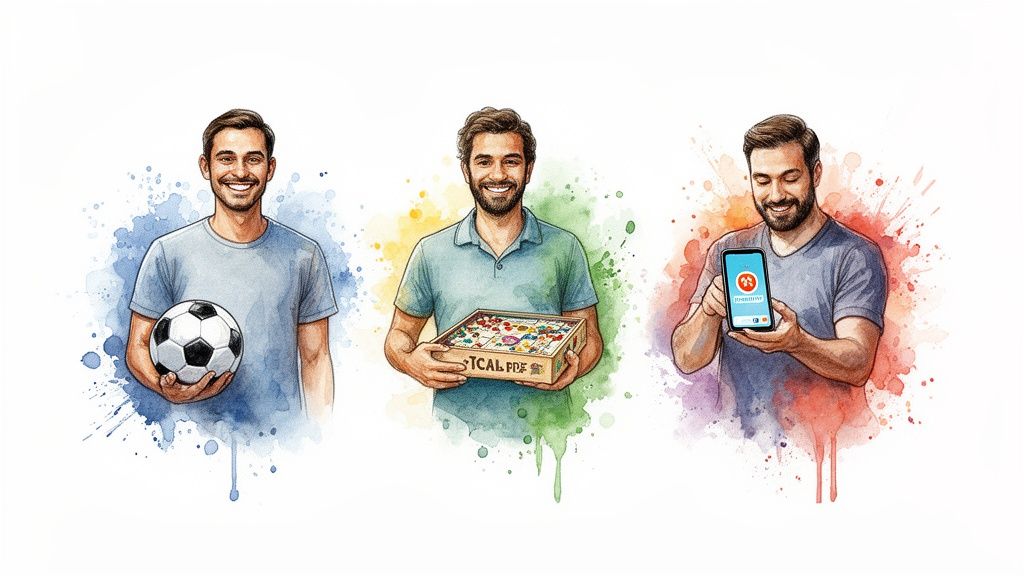
    Watercolor illustrations of three smiling men enjoying hobbies like soccer, board games, and phone apps.

    Find Your Team On and Off the Field

    One of the best shortcuts to camaraderie is a little friendly competition. Groups like the Chicago Sport and Social Club are absolute goldmines for meeting people, bringing together over 100,000 participants every year for dozens of sports.

    These leagues give you a built-in reason to see the same faces every week, turning teammates into friends who grab a beer after the game. It’s not about being a star athlete; it’s about showing up. Whether you're playing kickball, volleyball, or even skeeball, you're building muscle memory for friendship through shared wins and losses.

    Dig Into Niche Communities

    Beyond the sports fields, Chicago is overflowing with micro-communities built around literally every interest you can imagine. This is your chance to get specific.

    • Meetup Groups: Dive into groups for urban hiking along the 606, intense board game nights in Logan Square, or learning to code. The shared hobby is your social lubricant. It gets the conversation started for you.
    • Hyper-Local Facebook Groups: Find the group for your specific neighborhood, like "Wicker Park Parents" or "Lincoln Square Lovers." These are hotspots for block parties, stoop sales, and finding a neighbor to walk your dog with.
    • Creative Classes: Sign up for a pottery class at Lillstreet Art Center or an improv workshop at The Second City. Creating something together—even if it's hilariously bad—is a seriously powerful bonding experience.

    The secret ingredient in every single one of these is consistency. Showing up to the same place, with the same people, week after week, is the secret sauce that turns casual acquaintances into real friends.

    This is the core principle behind so many successful community building activities for adults. It’s the simple, brave act of returning that signals you're invested. It lets relationships deepen naturally, without all the pressure of a first impression.

    The goal isn't to be everywhere at once. Just pick one or two things that genuinely excite you and commit. Be the person who shows up. That simple act of reliability is one of the kindest and most powerful things you can do for your future friendships.

    The Art of the Follow-Up: From Hello to Hangout

    You did the brave thing. You showed up, shared a laugh while cleaning a park, and met some genuinely great people. So… what now?

    This is where the fear creeps back in. The follow-up feels like the final boss level of making friends. It's the point where we overthink ourselves into paralysis. We worry about seeming weird, or desperate, or pushy.

    Let's kill that idea right now. The follow-up isn’t pushy; it's an act of kindness. You’re simply making it easy for someone else to say "yes." You’re carrying the conversational torch for a moment, signaling that you enjoyed their company and want more of it. That’s a gift, not a burden.

    Making the First Move Easy

    Sending that first text is like being the first person on the dance floor. A little scary, sure, but your bravery gives everyone else permission to join in. The key is to keep it simple, specific, and totally low-pressure.

    Always reference the thing you did together. This immediately grounds the message in a shared, positive memory instead of making it feel like it came out of thin air.

    • Example 1 (After a cleanup): "Hey, it was great meeting you today! My back is sore but seeing that park so clean was totally worth it. Hope to see you at the next one!"
    • Example 2 (After a sports game): "That was such a fun game! Still can't believe that last play. We should definitely grab that beer we were talking about sometime next week."

    See how there’s no immediate, hard-to-answer question? You’re just opening a door. This is how you start building a real connection beyond the event itself.

    Kindness means making it easy for people to say 'yes.' It’s about taking that small, brave step to show you’re invested, without demanding anything in return.

    From there, suggesting the next step should feel just as light. Propose something easy and public, like grabbing a coffee or checking out a neighborhood street fest. A low-commitment hangout makes it a simple yes or no, which takes all the pressure off.

    Our open group chats are built for this exact moment. Think of them as a built-in tool for easy follow-ups. You can drop a casual message in the chat, keeping the group energy alive and making any individual outreach feel way more natural.

    It transforms the follow-up from a one-on-one risk into a collective conversation. The real art is realizing you're just continuing a story that has already begun.

    Embrace the Adventure of Exploring Chicago

    Making friends in a city this big isn't just about showing up to a happy hour. It's an adventure waiting to happen across all 77 of Chicago's unique community areas. This is your official invitation to stop seeing the city as just the place you live and start treating it like a treasure map of potential connections.

    It's time to become a tourist in your own town.

    Think about it: how many neighborhoods have you actually set foot in? So many of us get stuck in our little bubbles, commuting from our apartment to work and back, rarely wandering beyond a few familiar blocks. That mindset shrinks your world—and your chances to meet new people. But what if every weekend was a new mission of exploration?

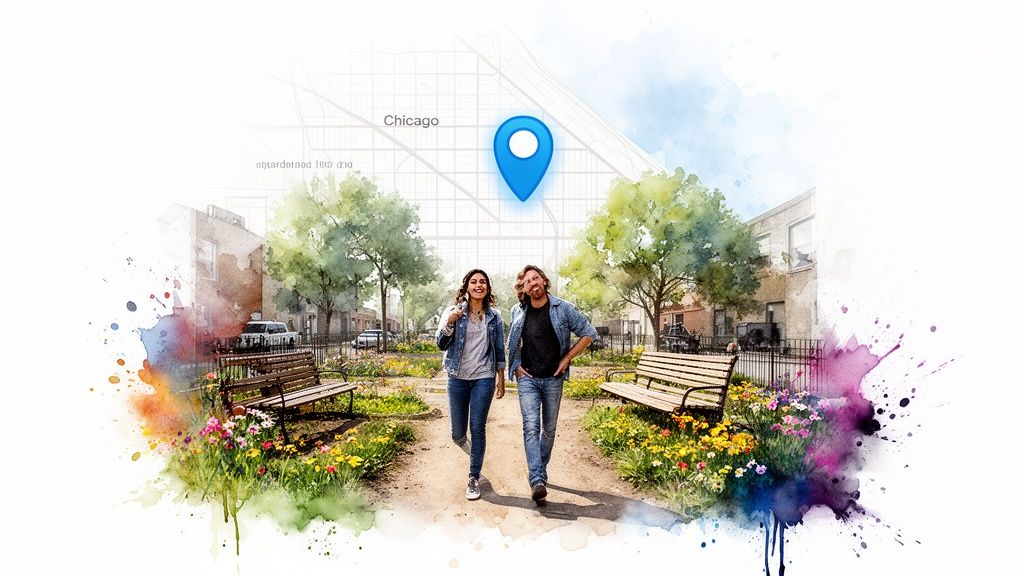
    Two smiling people walk through a vibrant park with a Chicago map overlay and watercolor effects.

    From Empty Lot to Community Hub

    We’ve hosted cleanups everywhere from the northern tip of Rogers Park to the heart of Englewood on the South Side. At first, it was just about picking up trash. But then something incredible started happening.

    People weren't just cleaning up; they were seeing parts of their own city for the very first time. They were breaking down invisible walls they didn't even know they'd built.

    One of our proudest stories comes from Englewood, where we found a neglected, empty lot. Instead of seeing urban decay, we saw raw potential. Our community rallied, won the lot at auction, and is now transforming it into a beautiful park. That project isn’t just about creating a green space. It’s living proof that when people come together with a shared purpose, they build real, profound human bonds.

    Adopting an explorer’s mindset is an act of bravery. It’s choosing curiosity over comfort, and connection over the convenience of staying home.

    This "show up everywhere" approach makes connection accessible to everyone. Sure, exclusive social clubs exist, but they often have a steep price tag that just doesn't work for most people, especially with Chicago's significant wealth disparities. Our method is different. By meeting in every corner of the city, we’re building social capital and unity where it truly matters.

    Your Call to Adventure

    Seeing Chicago as a landscape of adventure is a powerful mental shift. It turns the daunting task of "making friends" into an exciting quest.

    Here’s how you can start:

    • Pick a new L stop: Each weekend, choose a different stop on the map and just get off. Walk around, find a local coffee shop, and just take it all in.
    • Explore a new park: Chicago has nearly 600 parks. Challenge yourself to visit a new one every month.
    • Join a neighborhood-specific event: Follow a community group in a different area on social media and show up for their farmers' market or street festival.

    This isn't just about sightseeing; it's about being present in new spaces where new people are. It's about finding pride not just in your own block, but in the entire, sprawling, beautiful city.

    When you join a group dedicated to this kind of exploration—like when you volunteer to clean up a park with us—you’re fast-tracking the entire process. You’re stepping into a ready-made adventure with a crew of like-minded explorers. You’re not just seeing the city; you’re helping to build it, one block and one friendship at a time.

    Your Questions on Making Friends in Chicago Answered

    Putting yourself out there to find your people takes real guts. It’s totally normal for questions and doubts to creep in. We get it. Here are our honest answers to the things we hear most often, packed with the same fearless, get-it-done spirit that got us started.

    I'm an Introvert. How Can I Make Friends Without Feeling Drained?

    This is the biggest myth we need to bust: that introverts can't build a thriving social life. It's not about magically becoming an extrovert. It's about finding situations where the main event is a shared activity, not forced small talk.

    Think about a typical party—the whole point is to "talk to people," which can feel like a high-stakes performance that just wipes you out. But at a cleanup, the goal is simple: "let's get this block clean." The friendships just sort of happen in the spaces between grabbing litter and bagging it up.

    You’re doing something with your hands, which takes all the pressure off. It’s like parallel play for adults. You're working together on the same mission, but you can chat as much or as little as you want. Look for these kinds of low-stakes, structured events where you can just be there and contribute, without feeling like you have to be “on” the entire time.

    What if I Try and Get Rejected or Feel Awkward?

    First, let’s reframe this. That awkward feeling? That’s not failure. That’s the feeling of being brave. It's a non-negotiable part of the story. Every great adventure has moments of discomfort.

    A single clunky conversation doesn't say a single thing about your worth as a person. Not everyone is going to be your person, and that’s more than okay. It's just a mismatch, not a final judgment on your social skills.

    Our best advice? Go to group events where you aren’t putting all your social eggs in one basket. If one chat feels a little off, you can just pivot and go help another group with their section of the street. A moment of awkwardness is just a tiny, manageable bit of discomfort that actually makes you tougher and, believe it or not, better at finding the right people down the road.

    Awkwardness is the feeling of your comfort zone stretching. Lean into it. That's where all the growth happens.

    How Long Does It Realistically Take to Make a Good Friend Here?

    There's no magic number, but the formula is dead simple: consistency over intensity. It’s like watering a plant. You can't just dump a gallon of water on it once and call it good for the next six months. It needs small, steady attention.

    We’ve seen incredibly strong friendships pop up in just a few weeks between people who show up to our cleanups consistently. Seeing the same face every Saturday, grabbing a coffee after, and joking around in the group chat during the week builds real trust and familiarity way faster than a once-a-month happy hour ever could.

    A good goal is to commit to one weekly thing for three solid months. By the end of that, you’ll have moved way past the "new person" phase and built a real, unshakable foundation for genuine friendships to actually grow. This is a marathon, not a sprint, and every single step you take is worth it.


    Ready to stop wondering and start doing? The best way to find a community is to build it yourself, side-by-side with others. Join Litter Caterpillars and see how showing up for your city helps you find your people. It's a lot easier to make an impact—and a friend—than you think. Find your next adventure with us at https://www.littercaterpillars.com.