Tag: chicago recycling guide

  • A Real Guide to How We Recycle in Chicago

    A Real Guide to How We Recycle in Chicago

    Let's be real for a second. Figuring out how to recycle in Chicago can feel like you're trying to solve a puzzle with half the pieces missing. You think you’re doing the right thing, but the rules seem to change with every block. I’m here to cut through that noise and give you a simple, straightforward guide to finally mastering that blue cart.

    Mastering the Blue Cart: Chicago Recycling Basics

    I get it. You’re standing in your kitchen, holding an empty yogurt container, and you just… pause. Blue cart or trash? It’s a tiny moment, but it’s a moment we all face.

    Imagine it this way: every bottle you rinse, every box you flatten, is a small victory for our neighborhoods. It feels insignificant, but those little actions create a ripple. The good news is, you really only need to focus on five main things: paper, plastics, glass, metal, and cartons. That’s it.

    Keeping It Clean and Simple

    The biggest hurdle we face isn't just knowing what to recycle, but how. Contamination is the single greatest villain in this story. It’s like trying to bake a cake and accidentally spilling salt in the sugar bowl; one mistake ruins the whole batch. One greasy pizza box can contaminate an entire bin of otherwise perfect recyclables, sending it all straight to a landfill.

    So, how do you make sure your stuff actually gets a second life? It boils down to a simple rhythm.
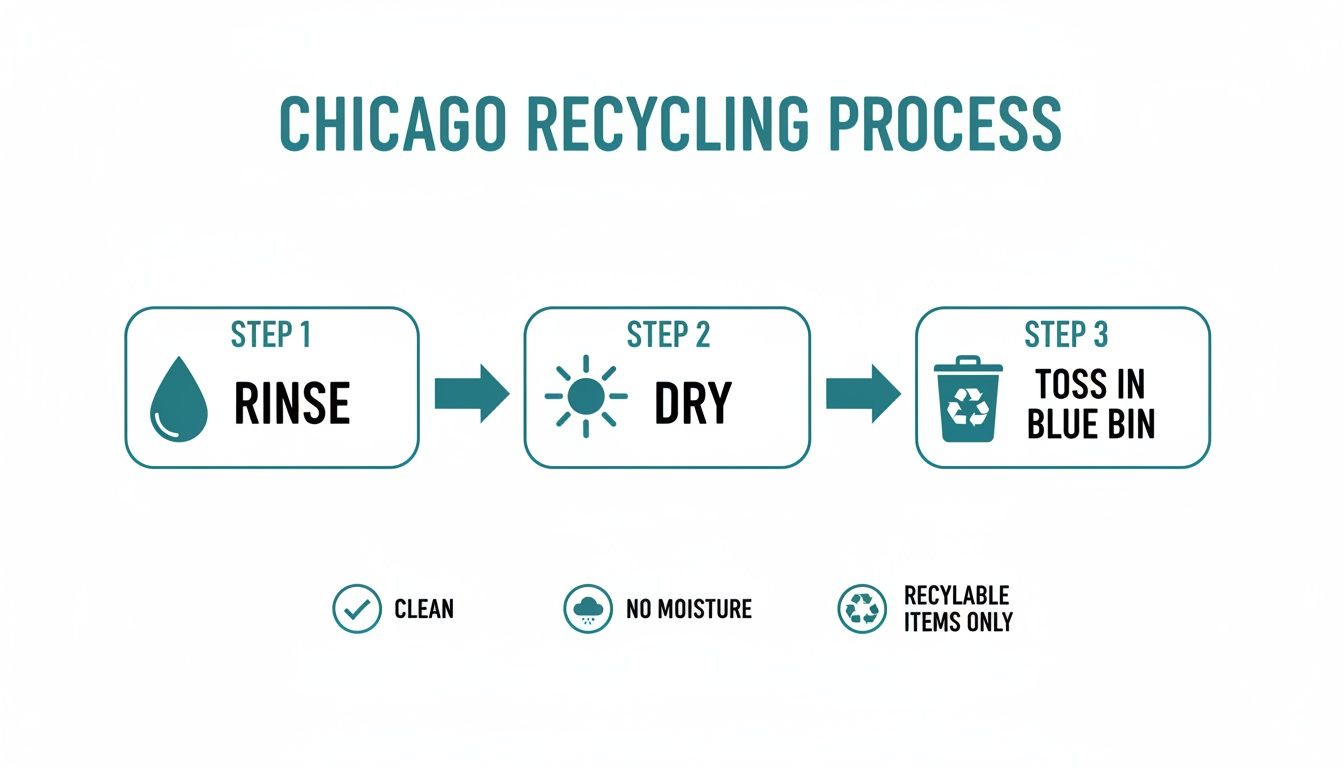
    Infographic illustrating the Chicago recycling process: rinse, dry, and toss in a blue bin, emphasizing clean, dry, recyclable items.

    This simple flow—Rinse, Dry, Toss—is the absolute key. A quick rinse to get food residue off and a shake to dry is usually all it takes to make your efforts count.

    Here’s a quick-and-dirty guide to help you sort like a pro.

    Your Quick Chicago Recycling Cheat Sheet

    This table breaks down what goes in your blue cart and what definitely needs to stay out to avoid contaminating the whole load.

    Recyclable Category Yes Please (Clean & Dry) No Thank You (Keep These Out)
    Plastics Bottles, jugs, tubs & jars (#1, #2, #5) Plastic bags, film, bubble wrap, Styrofoam
    Glass Bottles & jars (all colors) Drinking glasses, mirrors, light bulbs
    Paper Newspapers, junk mail, magazines, cardboard Greasy pizza boxes, used paper towels, receipts
    Metal Aluminum cans, tin cans, empty aerosol cans Pots & pans, electronics, batteries, hangers
    Cartons Milk, juice, and soup cartons "Tetra Pak" pouches, waxy paper cups

    Keep this list handy, and you'll be well on your way to becoming a recycling expert.

    The Reality of Our Recycling Efforts

    Making this small effort is more important than you might think. Chicago's recycling rates have been stubbornly low for years, clocking in at a mere 9.4% waste diversion rate recently. It’s a sad story compared to cities like San Francisco, which pushes toward 50% or more.

    A huge culprit is contamination, with some studies finding that up to 30% of items in our blue bins are just plain wrong. You can explore the full data behind Chicago's recycling challenges to get a deeper sense of why our city struggles.

    This isn't just about sorting trash; it's about reclaiming our neighborhoods, one clean container at a time. It’s a mindful act that ripples outward, creating a cleaner, more vibrant city for all of us.

    When you nail the basics of the blue cart, you’re not just following rules. You're taking an active role in a larger story and building a habit of mindfulness that extends beyond your doorstep. And if you're looking to take it a step further, you might be interested in my guide on how you can reduce plastic use in your daily life.

    Why Our Recycling Past Still Matters

    Ever wonder why recycling in Chicago feels so… complicated? It’s not just you. There’s a history here, a ghost story that explains a lot of the confusion and, frankly, the skepticism that many of us feel. It all traces back to the city’s infamous 'Blue Bag' program that kicked off in 1995 and left a pretty deep scar on our collective trust.

    Picture this: You spend years carefully sorting your recyclables, stuffing them into those special blue bags, and putting them out with the trash, just like the city told you to. You think you’re doing your part. We all did.

    A Tale of Two Realities

    The whole idea behind the Blue Bag program was simple. Toss everything in together, and they'd sort it out later. City officials even threw out some huge numbers, claiming the program diverted 2 million tons of material from landfills by 2006. Sounds amazing, right?

    Except it was a fairy tale. An independent study blew the lid off the whole thing, revealing the actual recycling rate was a pathetic 13.3%. That’s less than a third of what they were telling us. Most of those blue bags we all so diligently filled? They were just getting dumped in a landfill right alongside the regular trash. You can read the full, frustrating story behind the Blue Bag program's numbers to see just how bad it was.

    This wasn't just a policy failure; it was a betrayal. It’s like tending a garden for months only to find out the seeds were duds. That kind of thing sticks with you. It created a lingering doubt about recycling in Chicago that we’re still fighting today.

    This history isn't about pointing fingers. It's about understanding why our own hands-on efforts are so ridiculously important. When the big systems fail us, the best way to make a real change is to just grab a bag and clean up our own block.

    Rebuilding Trust from the Ground Up

    This history is exactly why I started Litter Caterpillars. I saw firsthand how big, top-down systems could fail the very people they were supposed to serve. But I also saw the undeniable power of just doing the work yourself.

    When you get together with a few neighbors to clean up a park or a stretch of sidewalk, you completely bypass the bureaucracy. The change you make is immediate. It’s visible. No one can spin the story or fudge the numbers.

    You see the bags of trash you collected with your own eyes. You feel that sense of pride from looking at a clean street. This is how we start to fix that broken trust—not by waiting for a perfect system, but by building our own momentum, one cleanup at a time. We’re proving to ourselves, and to our city, that what we do matters. We're writing a new story.

    Beyond the Blue Cart: Where to Recycle Everything Else

    Okay, so you've mastered the blue cart. Your cardboard is flat, your plastics are rinsed, you're a curbside recycling champion. But then you look around your home… and see the other stuff.

    That old laptop gathering dust in the closet. The bag of dead batteries shoved in a junk drawer. That half-can of paint from a project you finished three years ago. These are the ghosts of projects past, and they can't just be tossed in with your bottles and cans. These tricky items need their own game plan.

    Think of it as finding the right home for everything, even at the end of its life. We’re just trying to make sure we don't move a problem from our garage into the environment.

    Tackling E-Waste and Hazardous Materials

    Your old electronics—phones, computers, TVs—are a double-edged sword. They're packed with valuable stuff like gold and copper, but they also contain toxic materials like lead and mercury. Trashing them is a huge waste and a real environmental hazard.

    Even huge companies are getting in on this. Microsoft, for instance, has a Circular Center right here in Chicago to reuse and recycle server parts from their massive data centers. We can apply that same thinking to our own gadgets.

    • Electronics: Many big-box electronics stores have take-back programs. The city also hosts collection events for this "e-waste" every so often. Don't let that old tech haunt your drawers!
    • Household Chemicals: Things like paint, harsh cleaning products, and automotive fluids are considered Household Hazardous Waste (HHW). They require special handling and absolutely must be taken to a designated facility.

    It all comes down to taking responsibility for the full life of our stuff. Just because something is out of sight doesn't mean it magically disappears. Finding the right drop-off spot is the final, crucial step in this whole journey.

    Beyond the Usual Suspects

    What about all those other awkward items? Plastic bags are a big one. They are notorious for tangling up the machinery at recycling plants like a python strangling its prey, and should never go in your blue cart. Seriously.

    The good news is, most grocery stores have collection bins for plastic bags and film wrap right by the entrance. Just make it a habit to bring them with you on your next shopping trip. For a complete list of where to take these harder-to-recycle items, check out my detailed guide on Chicago recycling centers and drop-off points.

    Even your food scraps have a better destiny than the landfill. Composting is an amazing way to turn kitchen waste into "black gold" for gardens. The city now has 33 free food scrap drop-off sites, making it way easier to keep organic waste out of landfills where it just sits and produces harmful methane gas. It’s a beautiful way to complete the circle—turning yesterday’s leftovers into tomorrow’s soil.

    From Bystander to Changemaker: How to Join the Movement

    Sorting your recycling is a great first step. Seriously. But what happens when you want to do more? When you want to feel that connection to the city in a bigger, more tangible way?

    That's where the real fun begins. It's the difference between tidying your own room and helping repaint a community center. One is just maintenance; the other is about creating something new. That's exactly the feeling that led me to start Litter Caterpillars. I was drowning in my own personal mess, and funny enough, the easiest way for me to start cleaning it up was to go clean up someone else's.
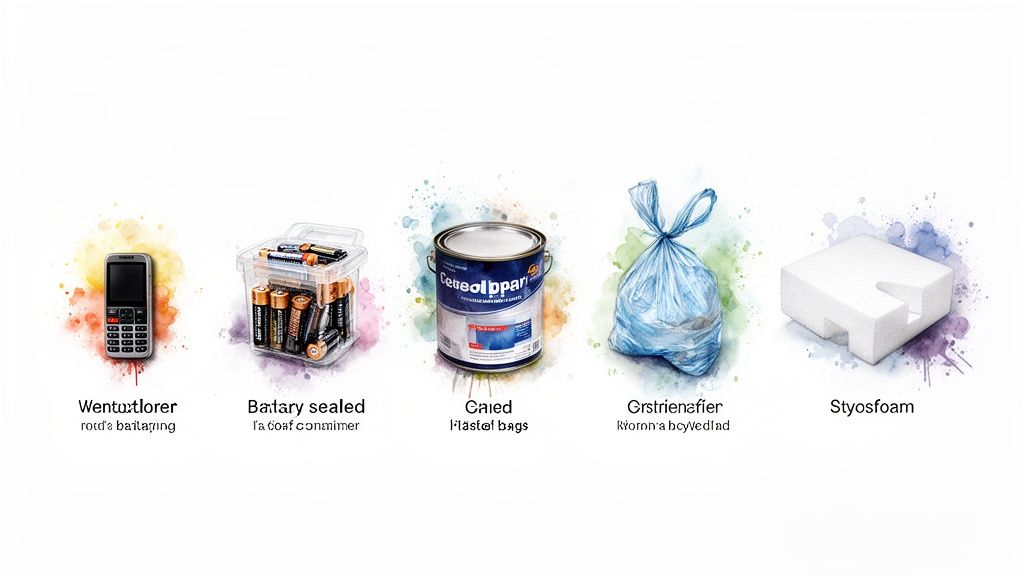
    Various items depicted for recycling and waste disposal: a mobile phone, batteries, a paint can, a trash bag, and styrofoam.

    It turned out to be a lot more interesting, especially when things got a little rough. I’ll never forget the time three of us got caught in a freak hailstorm. As we huddled under a tree, totally soaked and shivering, something clicked. Shared struggle is an incredible glue.

    Finding Your Crew

    That day taught me that real change is built on three things: service, friendship, and a little shared suffering to build resilience. You don't have to start your own group to find that. Dozens of awesome organizations are already out there making a difference every single day.

    Here are a few ways for you to jump in:

    • Join a Community Cleanup: Groups like Litter Caterpillars meet every single week, rain or shine, to clean up neighborhoods across all 50 wards. You just show up, grab a bag, and start making friends.
    • Adopt a Park: The Chicago Park District has programs where you can help take care of your local green space, from planting gardens to yanking out invasive species.
    • Transform Vacant Lots: Some organizations focus on turning neglected empty lots into community gardens or beautiful little parks. They’re creating green oases where there was once just concrete and weeds.

    It’s not just about picking up trash. It’s about taking ownership of your corner of the world.

    It’s About More Than Just Cleanup

    When you join a movement to recycle in Chicago and make its streets cleaner, you’re doing something much bigger than just picking up litter. You are weaving yourself into the very fabric of the city. You are building relationships with people you might never have met otherwise, all united by a common goal.

    It’s the incredible feeling of seeing a street transform because you and a team of new friends showed up. You’re not just removing litter; you’re injecting hope and care back into the community.

    You start to see the city differently. An overflowing bin isn’t just an eyesore anymore; it’s a call to action. An empty lot isn’t a blight; it’s potential. You become an active character in Chicago’s story, not just a bystander watching it happen.

    And the best part? It changes you, too. You become more resilient, more connected, and more hopeful. You prove to yourself, one bag of trash at a time, that you have the power to create the city you want to live in. And that feeling is something you can’t put in a blue cart.

    Meet the People Who Paved the Way

    Change doesn't just happen overnight. Long before blue carts lined our alleys, a bunch of passionate Chicagoans were fighting tooth and nail for a cleaner city. When you and I choose to recycle, we’re walking a path they blazed for us through pure stubbornness and will. That's a powerful legacy.

    It’s easy for me to feel like my own small actions don't add up to much, but their story is proof that they do. Groups like the Chicago Recycling Coalition were laying the groundwork for decades, brick by brick.
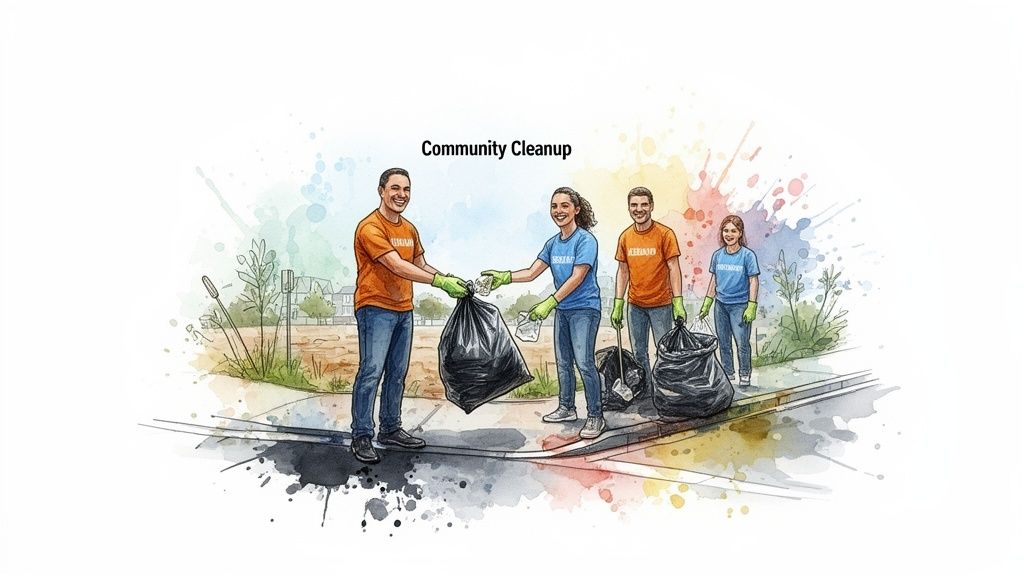
    Illustrated volunteers in orange and blue shirts and gloves participate in a joyful community cleanup, collecting litter.

    The Fight for a Better System

    This wasn't just a few meetings here and there; this was a real fight. Kicking off in 1985 as the Coalition for Appropriate Waste Disposal, they actually rallied neighborhoods to shut down the city's last municipal waste incinerator. Think about that. These weren't politicians; they were people like you and me.

    Later, they were the ones who held the city’s feet to the fire over the failed Blue Bag program. They used studies and relentless pressure to get it phased out and pushed for the system we have today. You can actually read the full history of their activist roots and see how much they shaped our city.

    Their story is an incredible lesson in persistence. They refused to accept a broken system and organized until something finally changed.

    This reminds me that our collective voice matters. When we join together, we become part of a legacy of people who refuse to accept the status quo. We are the next chapter in that story.

    We Are the Next Chapter

    When I started Litter Caterpillars, I didn't think of myself as an activist. Honestly, I just wanted to clean up my own life by cleaning up the city around me. But every time we gather for a cleanup, we’re doing more than just picking up trash—we’re honoring that same spirit.

    We are literally continuing their work. We’re the next wave of people who believe in a cleaner Chicago and are willing to show up and do something about it.

    Whether you’re meticulously sorting recyclables in your kitchen or joining us on a Saturday morning with a trash grabber in hand, you're part of this. The people who came before us gave us a foundation to build on. They proved a small group of determined citizens can change the direction of a major city. Now it's our turn to take that legacy and run with it.

    Common Questions About Chicago Recycling

    Look, if you have questions, that's a fantastic sign. It means you’re actually thinking about this and want to get it right. Let's tackle some of the most common things people ask me about trying to recycle in Chicago.

    What Is the Biggest Recycling Mistake People Make

    Hands down, the single biggest mistake I see is "wish-cycling." It’s that moment you stand over the blue cart with something in your hand, not totally sure if it's recyclable, and you toss it in anyway hoping for the best. We've all been there. I have. But that good intention can seriously mess things up.

    Things like plastic bags, greasy food containers, and old electronics are huge contaminants. Plastic bags are the absolute worst—they get tangled in the giant sorting machines, forcing the entire facility to shut down for hours just to cut them out. Even one greasy pizza box can ruin an entire bale of otherwise clean paper.

    It feels totally wrong, I know, but when in doubt, it’s actually better for you to throw the item in the trash. Focusing on recycling the "big five" categories correctly makes a way bigger positive impact than trying to recycle everything and contaminating the whole stream.

    And if you're wrestling with something that feels like it might be hazardous, you should probably check out my guide on how to handle hazardous waste disposal in Chicago.

    My Blue Cart Was Missed What Should I Do

    It’s so frustrating to see your cart is still full long after the truck should have come. The very first thing you should do is walk out there and look for a bright orange "Contamination" sticker. If you see one, it means they spotted something non-recyclable. You'll have to pull it out before your next scheduled pickup.

    No sticker? Then it was probably just a missed pickup. Don't just let it sit there! The best thing you can do is report it right away.

    • Call 311 and tell them about the missed pickup.
    • Use the 311 CHI app on your phone to submit a service request.

    Have your address ready when you report it. Being proactive is the only way to get them to send a truck back out. Your persistence helps keep our alleys clean and holds the system accountable.

    How Can I Recycle in an Apartment Building

    This is a massive challenge for so many of us. The good news is that large apartment buildings are actually required by city ordinance to provide recycling through a private company. The not-so-good news? Many of them just… don't.

    If your building is one of them, your first move should be to talk directly with your landlord or property management. A polite conversation mentioning the city ordinance can sometimes be the nudge they need to get the ball rolling.

    If they blow you off, you can report the building to 311 for non-compliance. In the meantime, you aren't totally stuck. You can find public recycling drop-off centers to take your materials to. It’s definitely an extra effort, but that kind of commitment is what actually inspires change in our communities.


    At Litter Caterpillars, we believe every small act adds up to a city we can all be proud of. Join one of our weekly cleanups to meet some amazing people and make a real, visible difference. Find your next event at https://www.littercaterpillars.com.
  • Your 2026 Guide to the Top 12 Recycling Centers Chicago Volunteers Trust

    Your 2026 Guide to the Top 12 Recycling Centers Chicago Volunteers Trust

    My life felt like a cluttered garage. You know the one. Full of things I couldn't part with. An old bike tire wasn't just rubber; it was that one perfect summer afternoon. Every piece of junk had a story, a weight that pulled me down, even if it was just a few ounces. It’s funny how memories can feel like anchors.

    Then, a sudden storm in my personal life forced me to clean house. I realized I had to build something new, something that demanded the very things I’d always dodged: consistency, cleanliness, courage. And just like that, Litter Caterpillars crawled into existence.

    I remember our first cleanup. Three of us, caught in a freak Chicago hailstorm. We huddled under an oak tree, soaked and shivering, watching Ubers cancel on us one by one. And in that miserable, beautiful moment, a thought struck me like lightning. Cleaning up a stranger's mess is a thousand times easier than facing your own. It was fun. It became a story. We weren't just picking up trash anymore; we were writing a new chapter.

    That day, I learned that tackling a huge, messy problem together makes you stronger. A huge part of that is knowing what to do with everything you find. It’s not just about bagging it. It's about giving it a second chance. This guide isn't just a list of addresses for you. It's my map, our playbook for turning forgotten waste into a resource. These are the very recycling centers Chicago needs to complete the circle, to make our hard work mean something. Think of this as your secret weapon for making a real, lasting mark on our city, one bottle, one box, one piece of forgotten metal at a time.

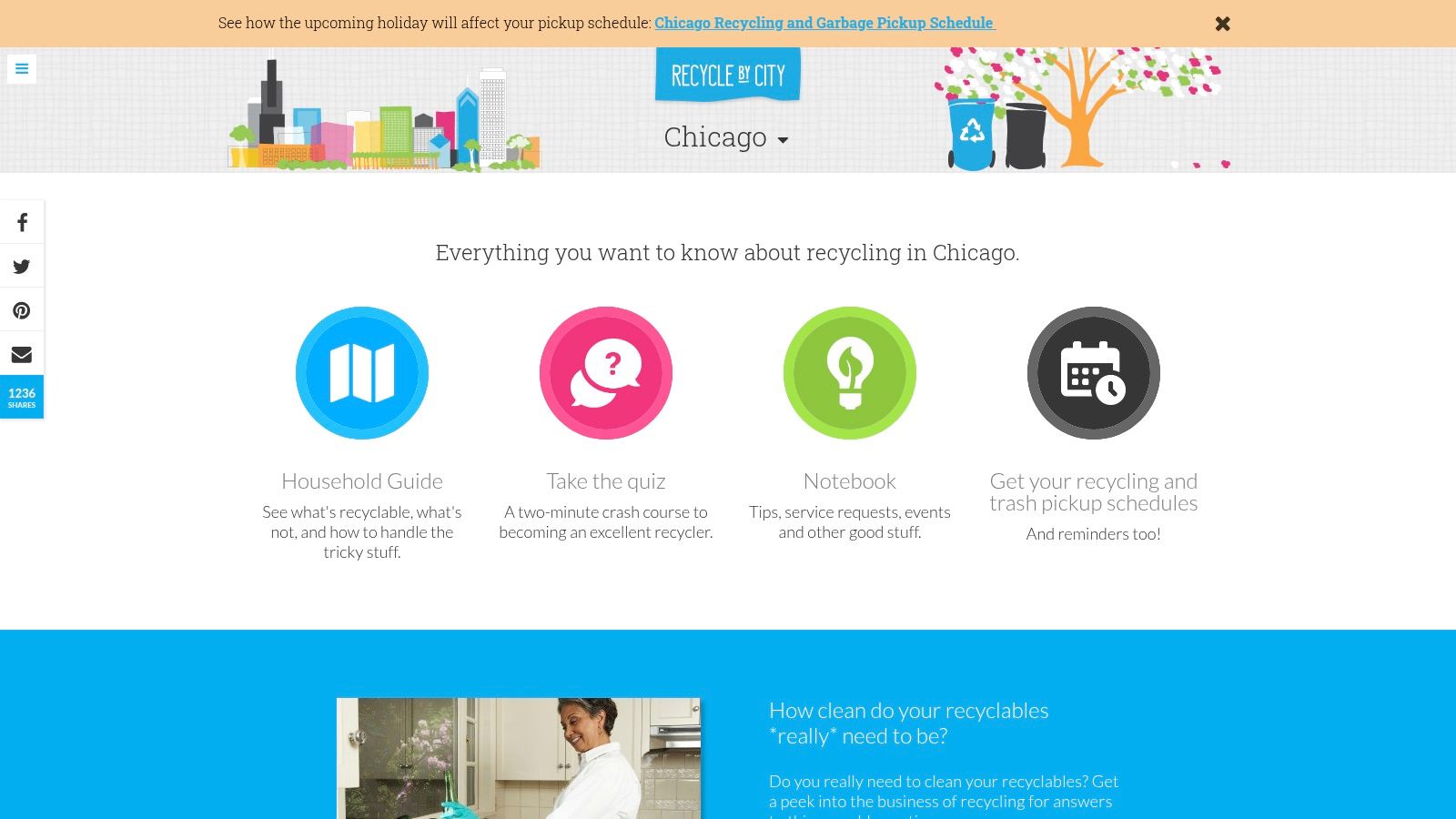
    1. Recycle by City – Chicago: Your Official Blue Cart Rulebook

    Before you haul anything anywhere, you have to start here. This is your foundation. Think of this website as the official rulebook for the game of Chicago recycling. It’s the ground truth for everyone with a blue cart, cutting through the fog of "I think this is recyclable?" that so often sends our good intentions straight to the dump. I pull it up on my phone constantly. It’s my North Star for sorting.

    Recycle by City – Chicago: Your Official Blue Cart Rulebook

    I tell every Litter Caterpillars volunteer that this resource is non-negotiable. When you’re out there leading a cleanup and someone holds up a greasy pizza box or a weird plastic clamshell, you become the judge and jury. You can settle the debate instantly. The “What Goes Where” search tool is my favorite part; it’s like having a recycling guru in your pocket, whispering the right answer. It makes sure our efforts actually feed the recycling stream, not just clog it with trash. It’s free, it works on your phone, and it’s the first step to understanding the system.

    Key Features & Assessment

    Feature My Take
    "What Goes Where" Tool Your secret weapon for on-the-spot checks. No more "wish-cycling."
    Pickup Schedules Look up your blue cart day by address. Perfect for planning.
    Drop-Off Center Info All the details for the city's Household Chemicals & Computer Recycling Facilities (HCCRF).
    • Pros: It’s the official word, straight from the city. The mobile site is clean and dead simple to use.
    • Cons: It only covers residential blue carts and city-run spots, so you won't find help for commercial needs or specialty items here.

    Website: https://www.recyclebycity.com/chicago

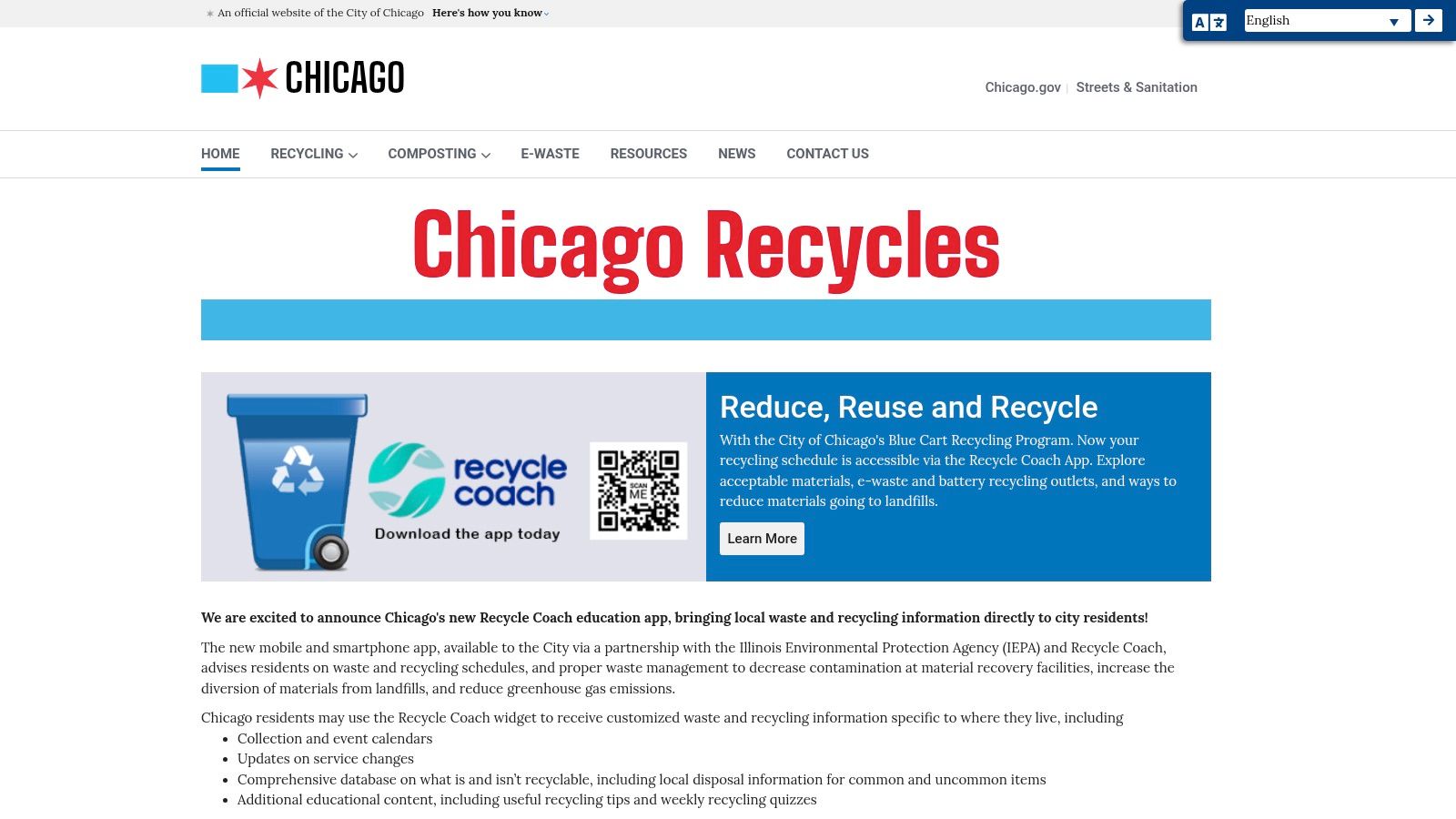
    2. Chicago Recycles (Recycle Coach portal)

    If Recycle by City is the rulebook, think of Chicago Recycles as your personal coach. This isn't just a static website; it’s an active partner. You plug in your address, and it builds a personalized game plan just for you. A calendar. Pickup reminders. Hyper-specific instructions. It’s like having a friend who texts you, "Hey, don't forget the blue cart goes out tomorrow!"

    Chicago Recycles (Recycle Coach portal)

    I love this tool for its pure, simple convenience, especially when I'm organizing a weekend cleanup. You can quickly check pickup days for any address we're targeting, which means the bags we collect don't sit on the curb for a week like sad, forgotten soldiers. The "What Goes Where" search is just as powerful as the main city site, but it's wrapped in a slicker package. This portal also becomes a star during special city events, like the holiday tree recycling program. It’s the perfect digital sidekick for your recycling life, whether for your own home or for a massive neighborhood effort.

    Key Features & Assessment

    Feature My Take
    Address-Based Calendars Takes all the guesswork out of your pickup day. A lifesaver if you're new to a neighborhood or helping out elsewhere.
    Collection Alerts The app pings you so you never miss a collection. It's surprisingly motivating.
    "What Goes Where" Tool A fast, reliable search for tricky items, right in the app or on the site.
    • Pros: It’s an official city tool, totally free, and easy to use. The personalized alerts make it incredibly practical.
    • Cons: This is purely for information and scheduling. It won't help you find private recycling centers in Chicago or book any services.

    Website: https://chicagorecycles.org

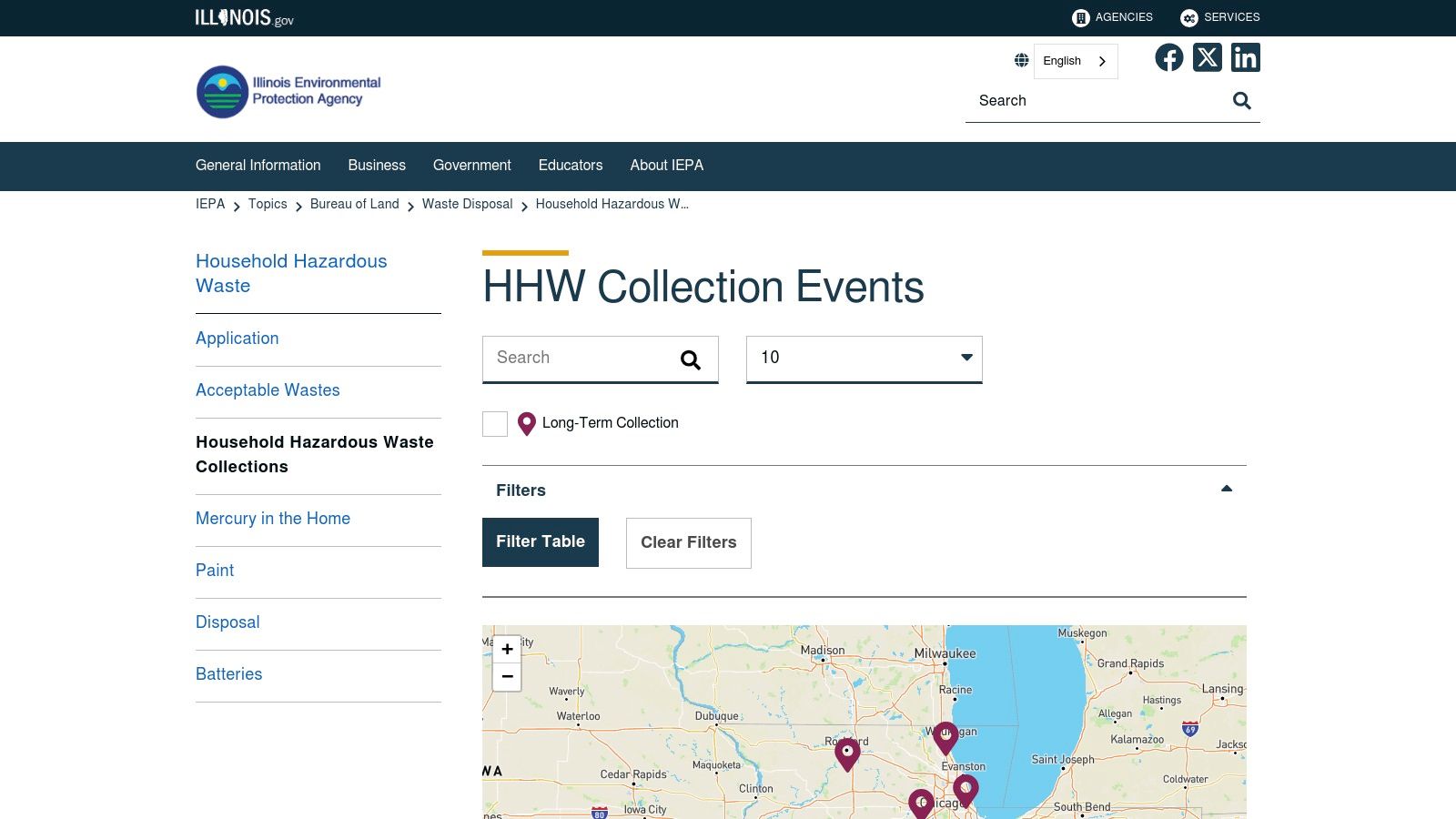
    3. Illinois EPA – Household Hazardous Waste (HHW) Collections

    Then you find the weird stuff. The really nasty stuff. A half-empty can of paint from the 90s. Mysterious cleaning chemicals under the sink. A mountain of dead batteries. Your blue cart can't help you here. This is when you turn to the Illinois EPA's website. I see it as the hazardous materials command center, the place you go to learn how to handle the things that could seriously poison our corner of the world. It’s the official source, giving you the confidence that you’re doing it right.

    Illinois EPA – Household Hazardous Waste (HHW) collections

    For Litter Caterpillars, this page is our mission control when we organize a special collection day for electronics or hazardous materials. We use it to lock down the hours and exact location of Chicago's permanent facility on North Branch Street before we even tell anyone about the event. The list of what they take—and what they don't—is critical. It stops us from collecting a pile of, say, latex paint only to find out it’s not accepted (pro-tip: you have to dry it out first!). This site makes our specialized efforts smart and effective.

    Key Features & Assessment

    Feature My Take
    Official HCCRF Info The final word on Chicago’s permanent HHW facility hours and address.
    Statewide Site Listings Great for finding other drop-off points if the Chicago location is out of your way.
    Accepted Materials List A clear, authoritative guide on what you can and cannot bring. Plan your attack with this.
    • Pros: It’s an authoritative, state-level resource that’s regularly updated. It clears up the confusing rules around hazardous and electronic waste.
    • Cons: It's a library, not an interactive tool. You might still need to call the facility if you have a really weird item.

    Website: https://epa.illinois.gov/topics/waste-management/waste-disposal/household-hazardous-waste/collections.html

    4. LRS (Lakeshore Recycling Systems): The Big-Project Powerhouse

    Sometimes you graduate from bags to mountains. A gut rehab. A massive spring cleaning. Or when a Litter Caterpillars cleanup uncovers a huge illegal dump site. Your blue cart will just laugh at you. That's when you call in the big guns. That’s LRS. Think of them as the special forces of recycling for businesses, big apartment buildings, and huge community projects. This isn't a place you drop off your weekly cans; it's who you call for a full-scale assault on waste.

    I remember we once coordinated a vacant lot overhaul in Englewood that needed a massive roll-off dumpster. LRS was the company that made it happen. Their website is your portal to these larger services, from ordering construction and demolition recycling containers to setting up ongoing commercial pickups. They're a key part of the city’s whole recycling machine, running one of the major material recovery facilities (MRFs) where everything gets sorted. Knowing about them helps you see the entire picture of how our city's waste gets a new life.

    Key Features & Assessment

    Feature My Take
    Commercial & Construction Recycling Essential for businesses and contractors who need a reliable, scheduled service.
    Roll-Off Container Ordering The go-to solution for huge cleanups, renovations, or community projects.
    Material Recovery Facility (MRF) They operate key infrastructure, making them a pillar of Chicago's recycling system.
    Service Scalability They handle everything from small business bins to giant industrial compactors.
    • Pros: An established local player with immense capacity for big jobs. They fill a critical gap the city can't.
    • Cons: Not a public walk-in place for you and me. All services are by contract and need a quote, so it’s not for casual drop-offs.

    Website: https://www.lrsrecycles.com/

    5. GreenWay Recycling Services: Get Paid for Your Recycling Efforts

    Your garage is bursting with cardboard from a move. You've collected a mountain of plastic bottles after a block party. The blue cart isn't big enough. You need a place like GreenWay Recycling Services. This is one of the few real-deal recycling centers in Chicago where you, a regular person, can drive right up, weigh your materials, and sometimes even walk away with cash in your pocket. It’s a total game-changer.

    GreenWay Recycling Services

    I’ve brought truckloads here after our biggest Litter Caterpillars events, especially when we’ve sorted out a huge volume of good, clean cardboard. Driving onto their scale feels powerful. It's like you’re pulling back the curtain and seeing the industrial heart of recycling. It reminds you that these materials aren't just trash; they have real value. Seeing that firsthand is incredibly motivating. Their website is your first stop to check their hours—thankfully including Saturdays—and see what they're buying.

    Key Features & Assessment

    Feature My Take
    Public Drop-Off & Scale A drive-through process for dropping off large volumes of recyclables.
    Material Purchasing They buy qualifying materials like cardboard and certain plastics, with rates that change with the market.
    Extended Hours Open on Saturdays, which is a massive help for weekend warriors like us.
    • Pros: You can get paid for your work. Their central location is convenient, and the process is easy for large quantities.
    • Cons: It’s an industrial site, so you have to follow their safety rules. The list of what they buy and how much they pay can change, so always check their site first.

    Website: https://www.greenwayrecycles.com/

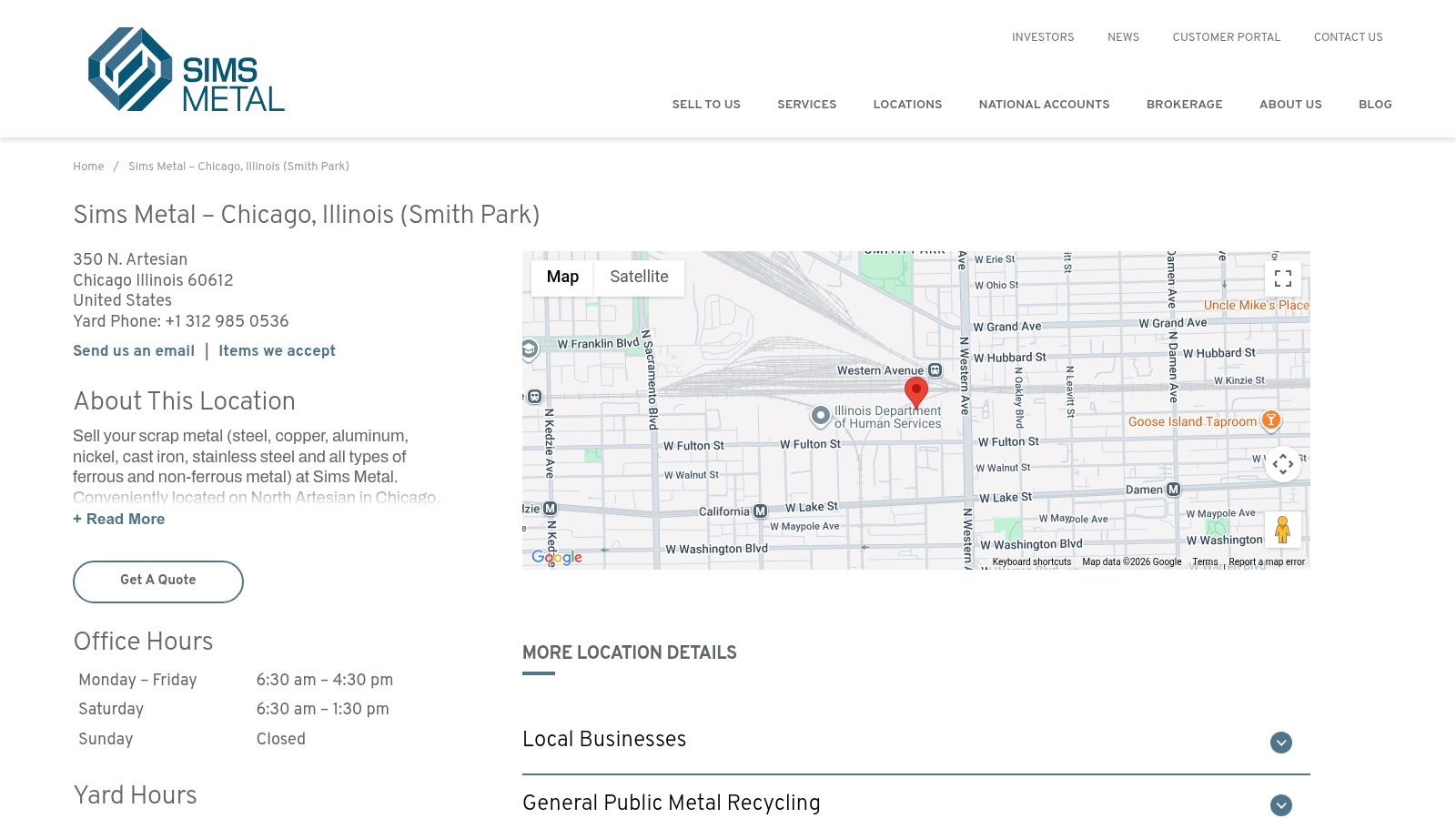
    6. Sims Metal – Chicago (Smith Park yard)

    When our cleanups unearth heavy-duty stuff—old pipes, rusty fences, a dead washing machine—it’s a whole different ballgame. This isn’t just about diverting waste from a landfill. It's an opportunity. You can turn that trash into treasure. That's where a professional scrap yard like Sims Metal becomes your secret weapon. You shouldn't think of it as just a drop-off; it’s a fundraising engine fueled by metal.

    Sims Metal – Chicago (Smith Park yard)

    I've organized community scrap drives with our Litter Caterpillars volunteers, and the experience at Sims is surprisingly simple. You haul in your metal, they weigh it on a giant scale, and you get paid on the spot. It's an incredible feeling to watch a pile of blight from a vacant lot transform into actual money that buys more gloves and bags for the next event. Their website is your pre-game strategy guide; use it to see what they accept so you can sort everything and get the biggest payout. It’s one of the most direct ways you can see your hard work pay off.

    Key Features & Assessment

    Feature My Take
    Public Scrap Buying Getting paid for scrap is a game-changer for fundraising.
    Accepted Materials List You have to check their site before you go to avoid rejected items. Pre-sorting is key.
    Location & Hours Convenient weekday and Saturday hours make it accessible for weekend cleanups.
    • Pros: It’s a reputable, professional operation. They offer a transparent way to make money from metal waste. Great for big cleanups.
    • Cons: This is only for metal. It's not a solution for your everyday plastics, paper, or glass. Scrap prices also change every single day.

    Website: https://www.simsmm.com/locations/chicago-artesian/

    7. United Scrap Metal (Cicero)

    Sometimes, you find more than just bottles and cans. When we tackle illegal dump sites or help people clear out alleys, we find metal. Piles of it. Old appliances, rusty pipes, discarded construction materials. My brain immediately switches from the blue cart to a place like United Scrap Metal. This isn't your normal recycling center. It's a place where junk metal transforms from a neighborhood eyesore into actual cash, money we can pour right back into our community projects.

    United Scrap Metal (Cicero)

    They're just outside the city in Cicero, but their public yard and pickup services make them a vital resource for all of us in Chicagoland. I've used their website to figure out exactly what kinds of metals they accept and to get the details I need to schedule a pickup for a really big haul. There’s something empowering about taking a pile of what someone considered worthless trash and watching it get weighed, valued, and properly recycled. This is one of the best recycling centers Chicago volunteers can use for a massive metal clear-out.

    Key Features & Assessment

    Feature My Take
    Public Retail Yard Great for dropping off metal you collected during a cleanup and getting paid for it.
    Commercial Programs For bigger, ongoing projects, this is how you can form a more formal partnership.
    Pickup Scheduling A lifesaver when you’ve collected too much scrap to fit in a volunteer's pickup truck.
    • Pros: They pay you for your scrap metal, which can be a great fundraising source. Their capacity is huge, and they offer convenient pickups for large loads.
    • Cons: It's a commercial operation, so wait times and rates can vary. I always call ahead to confirm the details before I drive over with a full load.

    Website: https://unitedscrap.com/

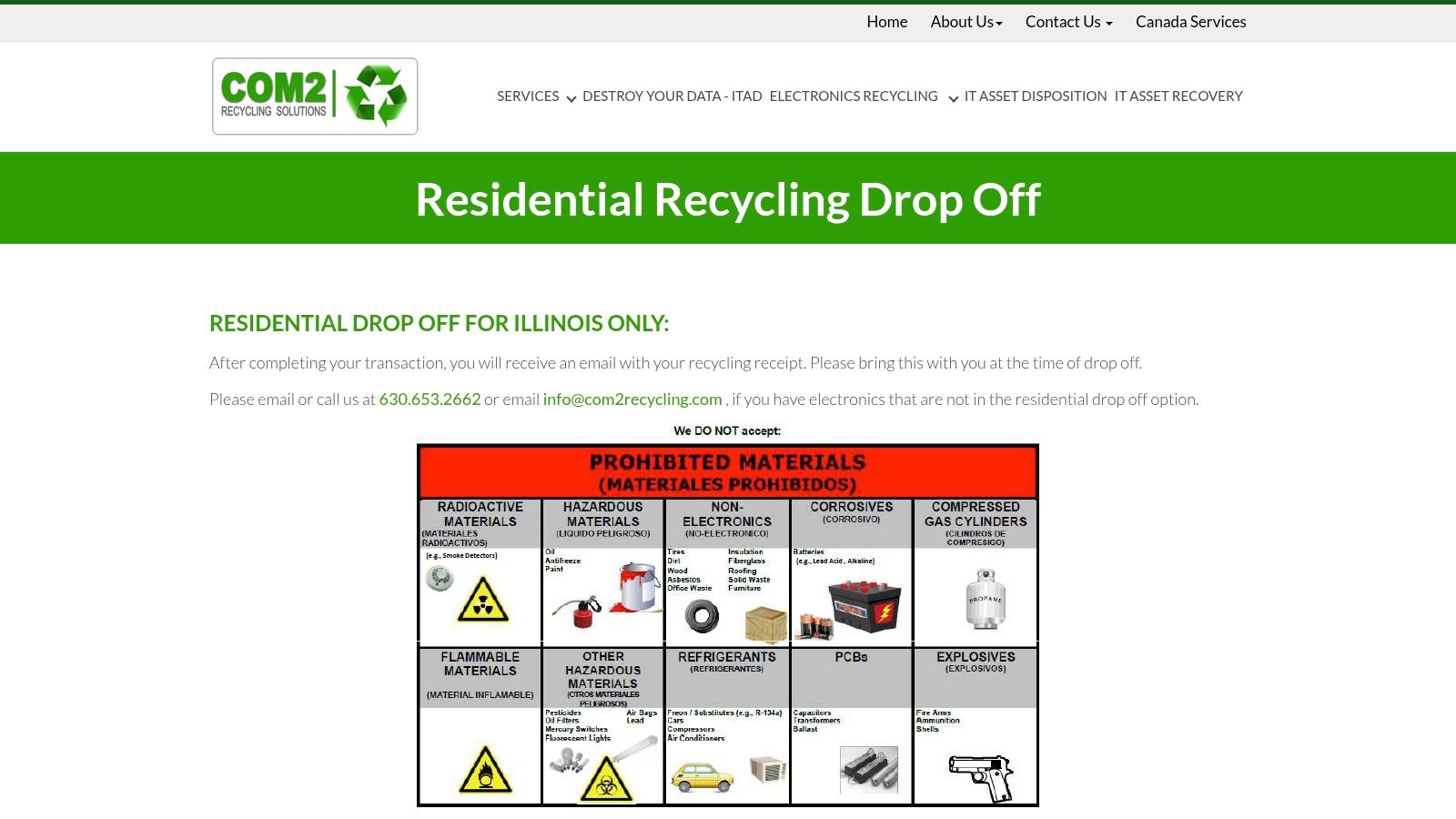
    8. COM2 Recycling Solutions

    E-waste is one of the biggest monsters we have to face. Finding a place you can trust with your old electronics can feel like a quest. COM2 Recycling Solutions attacks this problem head-on with a process so simple and clear, it removes all the usual excuses. What I love about their website is the transparency. They built an online checkout system for dropping off items, so you know exactly what you'll pay, if anything, before you even leave home. No surprises. No mystery fees.

    COM2 Recycling Solutions

    This system is a revolution for our neighborhood e-waste drives. Instead of guessing, we can point everyone to their site to pre-pay for their old TVs or monitors. It makes our event logistics so much smoother. Knowing they are a certified recycler gives me peace of mind that the devices we collect are being handled with integrity, not just dumped in a landfill overseas. It’s a professional-level solution that’s open to every single resident, making it an essential tool for any group serious about tackling electronic waste in Chicago.

    Key Features & Assessment

    Feature My Take
    Online Checkout/Pre-payment Brilliant. You pay for your TV/monitor recycling online and just bring the receipt. It simplifies everything.
    Free Core E-Waste Recycling They take computers, laptops, tablets, phones, and more for free, which covers most of what you have.
    Clear Fee Structure All potential costs for bulky items are posted right on their website. The transparency is a breath of fresh air.
    • Pros: The pre-payment system is unique and incredibly smart. Their certified status means they do things the right way.
    • Cons: You have to unload your own car, so be ready to lift. The program is only for the electronics listed on their site.

    Website: https://com2recycling.com/checkout.php

    9. AVA Recycling: The E-Waste Professionals with Security in Mind

    When you're dealing with electronics, it's about more than just keeping heavy metals out of the ground. It's about data security. AVA Recycling understands this perfectly. For our Litter Caterpillars events, especially when we partner with local businesses or after a big neighborhood garage sale, we end up with a pile of old computers, monitors, and printers. AVA is my go-to recommendation for anyone worried about the personal info left on those old hard drives. They don't just recycle your hardware; they vaporize your digital ghost.

    AVA Recycling

    What makes them different is their professional touch. They offer scheduled pickups, which is a godsend when you’re dealing with bulky items like an old tube TV or a whole office's worth of desktops. They can even give you certificates of data destruction, which is official proof that your sensitive information was handled properly. This professional-grade service, available for both you and for businesses, makes AVA one of the most trusted e-waste recycling centers in Chicago when you need that extra layer of security and convenience.

    Key Features & Assessment

    Feature My Take
    Scheduled Pickups Incredibly convenient for large quantities or heavy items like TVs and appliances.
    Secure Data Destruction NIST-compliant data wiping with optional certificates. This is a huge peace-of-mind feature.
    Broad Coverage They serve the entire Chicagoland area, making them accessible for almost any project.
    • Pros: They combine secure e-waste recycling with convenience. The certificate of destruction is a major plus for businesses or anyone with sensitive data.
    • Cons: This isn't a free service. Pricing is based on a quote, and certain items like old CRT TVs will have a fee, so you need to plan ahead.

    Website: https://www.avarecycling.com/chicago-recycling

    10. Call2Recycle – Battery drop-off locator

    You’ve found one. A rogue battery during a cleanup. It feels like a tiny, hazardous hot potato. You can't put it in the blue cart, and you definitely can't toss it in the trash where it can leak or start a fire. This is where Call2Recycle becomes one of my most important digital tools. It’s not one single center, but a powerful map that turns places you already go—like Home Depot or Staples—into convenient drop-off points for rechargeable batteries.

    This website is a game-changer for our post-cleanup sorting parties. Instead of hoarding old laptop batteries or power tool cells until someone can make a special trip, we can instantly find a dozen nearby drop-off spots. I especially appreciate their clear instructions on how to safely prep batteries for recycling, like taping the ends. It’s a simple step that prevents fires and shows a level of care that I think reflects our whole mission. For anyone searching for recycling centers in Chicago specifically for batteries, this is where you start.

    Key Features & Assessment

    Feature My Take
    Drop-Off Locator Type in a zip code and get an instant map of participating stores. Simple and brilliant.
    Safe Handling Guides Essential for preventing fires. Their visual guides make it easy to do it right.
    Battery ID Resources Helps you figure out what kind of battery you've got and if they'll take it.
    • Pros: It’s a free, massive network that makes responsible battery disposal incredibly easy. The safety advice is top-notch.
    • Cons: Not all locations take every type of battery, and single-use alkaline battery acceptance can be spotty, so you might need to check with the store first.

    Website: https://www.call2recycle.org/recycle-your-batteries/

    11. Earth911 – Recycling Locator

    The city’s blue cart program is great, but it has its limits. Earth911 is the search engine that takes over where the official resources stop. I think of it as the wise old librarian of recycling. You can bring it your weirdest problems—a pile of old batteries, a can of latex paint, a worn-out yoga mat—and it pulls out a map showing you exactly who in your area wants it. It’s my secret weapon for finding specialty recycling centers in Chicago beyond the usual suspects.

    For Litter Caterpillars, this tool is a lifesaver when we find hazardous or unusual stuff during a cleanup. Instead of just shrugging and bagging something questionable for the landfill, we can quickly search Earth911 by material and zip code. This helps us responsibly handle things that don't belong in a blue cart, like single-use batteries, making our cleanups as sustainable as they can be. For example, I used it to find drop-off points for a bag of old batteries we collected, which you can read more about our battery recycling process.

    Key Features & Assessment

    Feature My Take
    Material & Zip-Code Search The core function is incredibly powerful. You can search for almost anything, from aerosol cans to Ziploc bags.
    Center Details & Accepted Items It gives you addresses, hours, and contact info for each location, saving you a ton of research.
    Educational Articles Great for learning the "why" behind recycling certain things, not just the "where."
    • Pros: The massive size of its database for specialty items is unmatched. It’s an essential tool for finding private recyclers who handle what the city can’t.
    • Cons: Because it's a national database, sometimes the listings can be out of date. I always, always call a place to confirm before I drive over.

    Website: https://search.earth911.com

    12. Resource Center (Chicago)

    If you're looking for a recycling partner with a deep, soulful connection to Chicago, you've found it. The Resource Center is it. They started way back in 1975. This nonprofit isn't just a service; it's part of the city's DNA. I think of them as the seasoned community organizers of the recycling world, focused on a mission, not just on hauling stuff. Their work fits perfectly with the Litter Caterpillars idea of creating real, grassroots change that lasts.

    Resource Center (Chicago)

    For me, the Resource Center is the ideal partner for bigger community events or for setting up a new neighborhood recycling program. When we're planning a big cleanup and need more than just a place to drop bags, this is who I think of. They get the subtleties of community engagement and zero-waste projects from the ground up. Partnering with them means you're not just hiring a hauler; you're investing in a local organization that has been fighting the good fight for sustainability in Chicago for decades.

    Key Features & Assessment

    Feature My Take
    Community Diversion Programs Their expertise goes way beyond bins, focusing on education and community-based solutions.
    Nonprofit Mission Working with them means our efforts support a local nonprofit, not some corporate bottom line.
    Zero-Waste Initiatives Great for event planning when you're trying to have a minimal impact on the landfill.
    Local Focus They have an institutional knowledge of Chicago's neighborhoods that is priceless.
    • Pros: Deep local roots and a mission-driven approach. They're experienced in community programs, making them a perfect partner for events.
    • Cons: Their website and programs can be in flux because of organizational changes. You absolutely have to call to check on their current services, hours, and availability.

    Website: https://theresourcecenterchicago.org/

    Comparison of 12 Chicago Recycling Centers

    Resource Core offering Standout feature ✨ Quality / Access ★ Best for 👥 Cost / Value 💰🏆
    Recycle by City – Chicago Official City recycling guide; address-based rules & HCCRF info Item-level "What Goes Where" + HCCRF details ✨ ★★★★★ — authoritative, mobile-friendly Residents seeking official rules 👥 Free 💰 — official source 🏆
    Chicago Recycles (Recycle Coach) City-backed schedule + app reminders & guidance App + tailored pickup calendars & alerts ✨ ★★★★ — easy onboarding, localized Residents who want reminders & calendars 👥 Free 💰
    Illinois EPA – HHW collections State listing of HHW sites, hours, and policies Statewide HHW site options & policy updates ✨ ★★★★★ — authoritative for hazardous items Residents with hazardous/electronic waste 👥 Free 💰 — authoritative guidance 🏆
    LRS (Lakeshore Recycling Systems) Commercial hauler; roll-off dumpsters & MRF services Scalable commercial & construction services ✨ ★★★★ — large local operator Businesses, multi-unit buildings, projects 👥 Quote/contract pricing 💰
    GreenWay Recycling Services Public drop-off MRF; buys recyclables; dumpsters Public scale house + possible rebates/payments ✨ ★★★ — convenient drop-off, bilingual support Residents & small businesses wanting drop-off 👥 Possible rebates; fees vary 💰
    Sims Metal – Chicago Public scrap-metal yard; instant pay by weight Fast pay-for-scrap for many metals ✨ ★★★★ — reputable, transparent pay Metal-heavy cleanups & fundraising drives 👥 Market-based pay 💰🏆
    United Scrap Metal (Cicero) Regional scrap yard; drop-off & scheduled pickups Woman-owned, pickup dispatch available ✨ ★★★ — good capacity; variable wait times Sellers of scrap metal & large loads 👥 Market rates; call ahead 💰
    COM2 Recycling Solutions Certified e-waste recycler with online checkout Posted fees & pre-payment for TVs/monitors ✨ ★★★★ — transparent pricing for e-waste Residential e-waste drop-offs 👥 Posted fees; receipts provided 💰
    AVA Recycling E-waste pickup + secure data destruction NIST-compliant data destruction certificates ✨ ★★★★ — broad service area & documentation Businesses/residents needing secure disposal 👥 Quote-based; item fees apply 💰
    Call2Recycle – Battery locator Locator for battery drop-off sites & prep guidance Retail network + battery safety prep tips ✨ ★★★★ — widely available network Consumers with rechargeable batteries 👥 Free at participating stores 💰
    Earth911 – Recycling locator National recycling search by material type Broad specialty coverage & education ✨ ★★★ — comprehensive but listings can lag Users seeking specialty recyclers or comparisons 👥 Free 💰
    Resource Center (Chicago) Nonprofit recycling & community diversion programs Mission-driven partnerships & zero-waste support ✨ ★★★ — deep local roots; program variability Events, nonprofits, community partnerships 👥 Variable; mission-aligned value 💰

    Join Us: Let's Go Far, Together

    We've just walked through a hidden map of our city. This isn't a map of 'L' stops or tourist spots. It’s a map of renewal, a network of places from the City of Chicago's official blue cart program to specialized powerhouses like Sims Metal and COM2 Recycling Solutions. Looking at this list, you can see that recycling is so much more than just a bin on the curb.

    It’s a city-wide circulatory system. It's powered by people who believe that waste is just a resource in the wrong place. Each of the recycling centers in Chicago that we explored is like a different organ, each with a special job. One handles the city’s metallic skeleton, another its electronic brain, and yet another safely processes the toxic stuff we can’t just toss away.

    When you know how to navigate this system, something inside you shifts. You’re no longer just a person throwing things away; you become an active participant in our city’s health and rebirth.

    From Information to Action

    I remember feeling overwhelmed when I first started this journey. I had a bag full of dead batteries, a broken laptop, and a can of old paint, and I felt paralyzed. Where do I even start? This guide is the answer I wish I had back then. It’s a tool. A compass.

    • For everyday items: Rely on your blue cart and the Chicago Recycles portal. It’s your foundation for building great habits.
    • For the tricky stuff: Bookmark the Illinois EPA's HHW page and the Earth911 locator. These are your go-to resources for those "what do I do with this?" moments.
    • For large or specialized loads: Places like LRS, GreenWay, and United Scrap Metal are your heavy hitters. They’re built for the big jobs, turning what looks like junk into valuable raw materials.

    Think of it like learning to cook. At first, you follow a recipe exactly. But soon, you understand how the ingredients work together. You start to improvise. To create. This guide is your recipe book. The more you use it, the more you’ll understand the rhythm of recycling in Chicago, and the more confident you'll become in your ability to make a real difference.

    More Than Just Trash

    Remember Tom Sawyer convincing his friends that painting a fence was a grand adventure? I believe cleaning our city is one of the most fun and rewarding things you can do. I can tell you from experience, it’s about so much more than picking up litter.

    It’s about taking tangible pride in our home. It’s about showing up, rain or shine, and doing something real with your hands and your heart. Most of all, it’s about the incredible friendships you forge when you're working side-by-side for a common goal. I’ve met some of my closest friends while sorting recyclables and clearing out a neglected alley.

    We are the Litter Caterpillars because we know we’re not perfect. We’re all just trying to transform, to grow into something better. Through service, you learn to trust yourself, forgive your mistakes, and evolve. This guide to recycling centers in Chicago is a powerful tool, but the real power comes from you. It comes from your decision to show up. To be brave. And to be kind.

    There’s an old saying I love: "If you want to go fast, go alone. If you want to go far, go together." We want to go far. Come with us.


    Ready to turn this knowledge into action and meet amazing people along the way? Join Litter Caterpillars this weekend. We use this guide every week to properly dispose of everything we collect, turning neighborhood cleanups into true recycling missions. Find your community and make a real impact with us at Litter Caterpillars.