
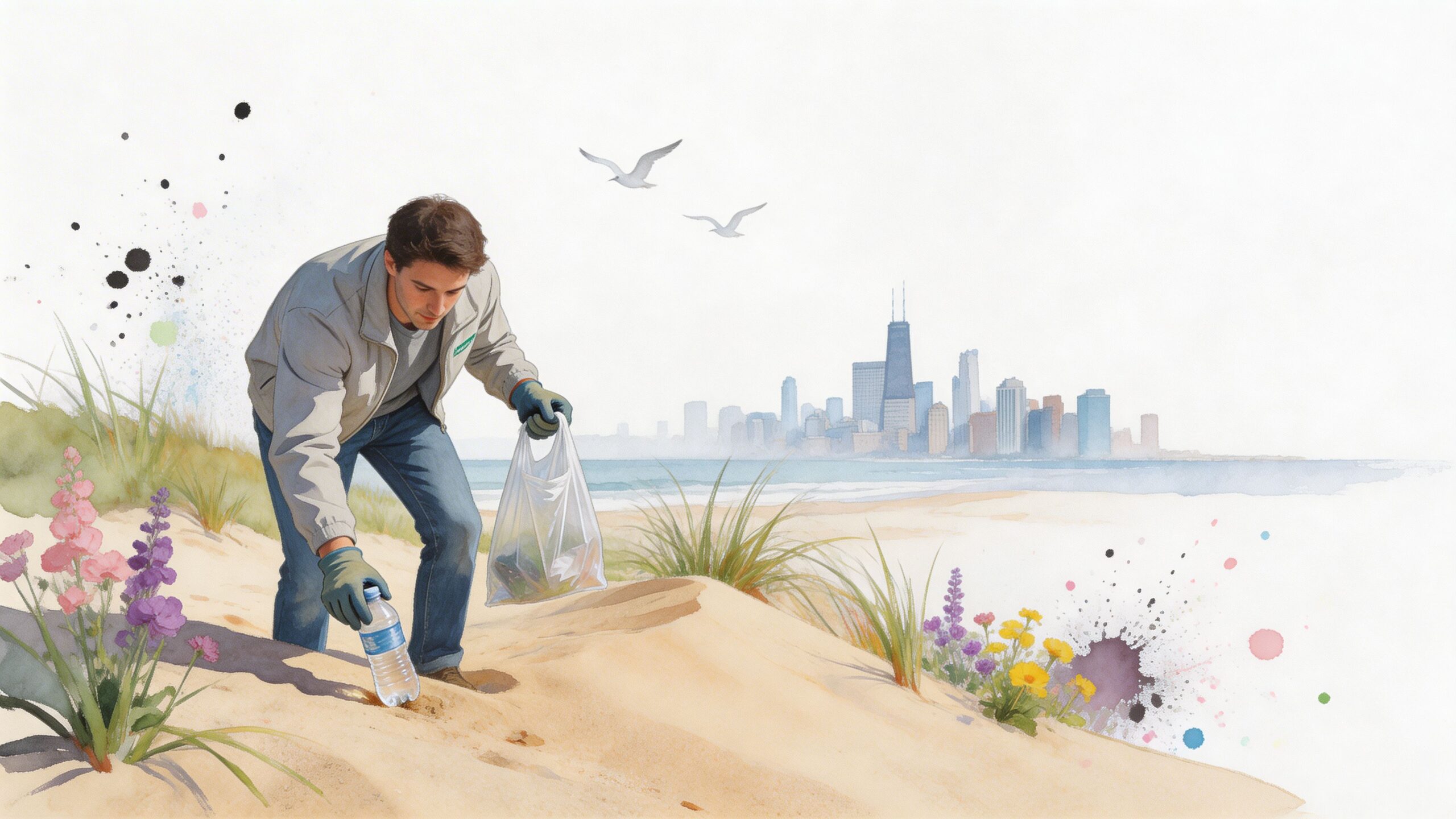
I found the south shore nature sanctuary on a day when my brain felt like a traffic jam. I had spent the morning rushing, doom-scrolling, and snapping at people I like, then I walked toward the lake and suddenly heard wind moving through grasses instead of sirens.
Finding Your Wild in the City
The first time I stepped into this place, I did not feel like I was visiting a destination. I felt like I had surfaced.

Chicago can do that to you. It can fill your day so completely that you forget you have an inner life at all. You move from train to sidewalk to screen to grocery line, and somewhere in the shuffle your thoughts start to sound like loose change in a dryer.
I know that feeling well.
There was a stretch in my life when my apartment felt cluttered, my calendar felt louder than a fire truck, and even my free time felt like another chore. Then I wandered down by the lake at South Shore and took a path into the sanctuary. The city did not vanish. But it softened. That mattered.
A place that changes your pace
The south shore nature sanctuary is not one of those manicured spaces that asks you to admire it from a distance. It invites you to slow down enough to notice little things.
I noticed sand holding its shape in the wind. I noticed birds moving with a purpose I did not share. I noticed that my shoulders had crept up near my ears and then, without any grand ceremony, dropped back down.
That is why I love hidden green spaces in Chicago. They do not lecture you. They reset you.
Tip: If you arrive feeling fried, do not start by trying to “see everything.” Stand still for a minute and listen. Let the place introduce itself.
Why this spot feels personal
Some parks feel programmed. This one feels lived in. You can sense care in it.
You can also sense struggle. This is still an urban natural area. It sits near beach activity, neighborhood life, and all the beautiful mess that comes with a real city. That tension is part of why the sanctuary means so much to me. It is not wild because people left it alone. It is wild because people chose to protect it.
That distinction changed me.
I used to think peace meant escape. Now I think peace often means relationship. You show up. You pay attention. You stop acting like the land is scenery and start treating it like a neighbor.
What you may find there
Some people come for birdwatching. Some come for a quiet walk after a hard week. I come for all of that, but also for something harder to name.
- A reset button: Not a cure, not a miracle. Just a real pause.
- A smaller scale of life: Grass, pond edge, moving water, drifting clouds. Things that do not care about your inbox.
- A reminder: You are still part of nature, even if you spent the morning under fluorescent lights.
That is the invitation of the south shore nature sanctuary. Not just “go take a walk.” More like, “come back to yourself.”
The Story of a Resilient Oasis
This place did not happen by accident. Someone had to imagine it first.
The land along the South Peninsula could have remained just another overlooked edge of the lakefront. Instead, people saw possibility in it. They saw a chance to build something that would feel both local and bigger than the city around it.
Built from community vision
The sanctuary spans over six acres of habitat, and its path to existence started with the 1999 South Shore Cultural Center Framework Plan, which folded in community input about restoring and expanding natural habitats on the peninsula. Construction began in 2001, and the sanctuary opened in 2002, as described by the Chicago Park District page for South Shore Nature Sanctuary.
I love that timeline because it tells a human story. Someone listened. Someone planned. Someone planted. Someone kept going long enough for the public to step into the finished space.
That is how good citymaking works. You do not build a living habitat with one ribbon cutting and a speech. You build it seed by seed, trail by trail, season by season.
A home assembled with intention
When I walk there, I think about the sanctuary the way I think about an old Chicago bungalow that somebody restored with respect. The bones matter. The details matter. The purpose matters.
This land became a kind of living library of native Chicagoland ecosystems. Not a museum behind glass. A breathing one. Wind runs through it. Birds use it. People lean on it after rough days.
That matters even more because of where it sits. The sanctuary lives within South Shore Cultural Center Park along Lake Michigan. It offers a pocket of habitat inside one of the biggest urban regions in the country.
Why its history still matters now
A place like this tells you what a neighborhood believes is worth saving. The sanctuary says native natural areas deserve room in the city. It says restoration belongs on the lakefront. It says community input can shape something beautiful and durable.
Here is the part I carry with me. The sanctuary is a vote against shrinkage.
Cities can convince us to accept less sky, less silence, less habitat, less patience. This place pushes back. It says a peninsula can hold dune, wetland, pond, woodland, prairie, savanna, shrubland, and beach. It says even a compact urban site can carry ecological memory.
Takeaway: The south shore nature sanctuary feels peaceful today because people made hard, hopeful choices years ago.
A short timeline you can feel
| Moment | Why it matters |
|---|---|
| 1999 framework plan | Community voices helped shape the vision |
| 2001 construction began | Restoration moved from idea to action |
| 2002 opening | The public gained a new urban refuge |
That is the story I wish more park signs told. Not just what a place is, but how many hands and hopes it took to make it real.
Exploring the Seven Worlds Within
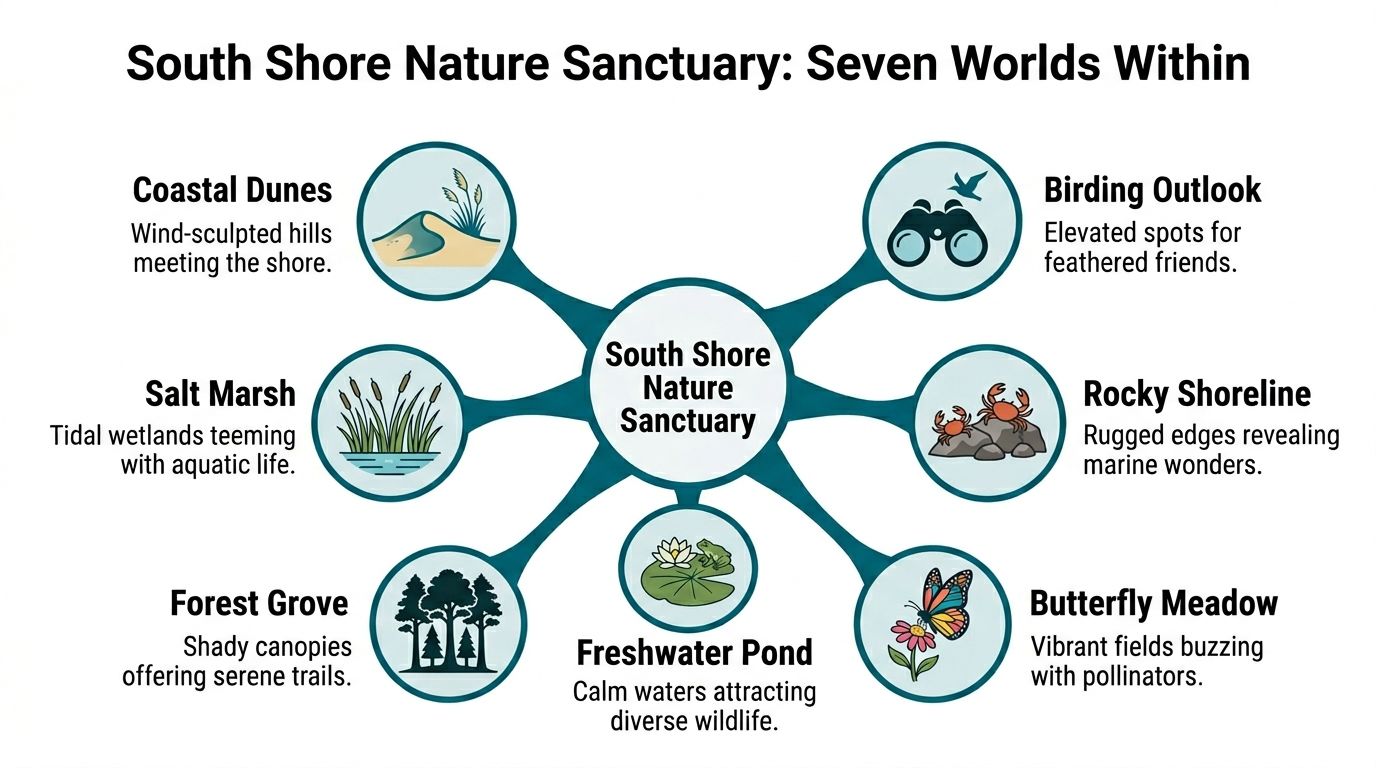
You can walk into the south shore nature sanctuary and feel like you crossed several states in one afternoon. That is the magic of it.
The land shifts under your feet and in front of your eyes. Sand gives way to brush. Water opens up. Trees gather overhead. Then a meadow-like stretch changes the whole mood again.
Start with the edge
I like to begin where the lake announces itself.
The sanctuary includes dune, beach, wetland, pond, woodland, prairie, savanna, and shrubland. That mix creates the feeling of moving through “worlds” rather than one flat park experience. The Chicago Park District describes the site as a vital microcosm of native Chicagoland ecosystems and notes that its lakeside position makes it an important stopover during spring and fall migration.
The dune and beach areas always stop me first. The plants there look humble until you realize they are doing hard work in hard conditions. Rare dune-beach species such as sea rocket, marram grass, and sand reed hold their own in shifting sand and lake wind. They remind me of tough Chicagoans. Not flashy. Just built to endure.
Walk inland and watch the logic unfold
The wetland edge feels different immediately. It softens sound. It cools the mood.
There you get plants like indigo bush, button bush, cardinal flower, bulrushes, and blue iris. These are not decoration. They create food and cover, and they help shape the sanctuary as a place where wildlife can pause, hide, feed, and move through.
Then the shrubland starts speaking in berries and branches. Plantings include oaks, hawthorn, American plum, serviceberry, hazelnut, viburnum, and native roses. If the sanctuary is a roadside inn for migrating birds, this is the stocked kitchen and sheltered porch.
Tip: Bring binoculars if you have them, but bring curiosity even if you do not. A “successful” walk does not depend on spotting a rare bird.
A Bird Highway Rest Stop
The sanctuary’s location along Lake Michigan makes it a critical migration stopover. I always tell friends to imagine it as a service plaza on a long interstate, except the travelers arrive on wings and read the shoreline instead of road signs.
That idea changes how you walk.
You stop asking, “What can I get out of this visit?” and start asking, “What does this place provide?” Food. Shelter. Rest. Safe transition. In a city full of hard surfaces, that is a profound gift.
Use your eyes differently
Try this on your next visit:
- Look low first: Notice what grips the soil or sand. Roots tell the survival story.
- Then scan the middle layer: Shrubs often hold the action. Birds dart, pause, and disappear there.
- Finish by looking up: Tree canopies change the temperature and sound of a space.
If you enjoy learning tree species before you go, this guide to trees in Illinois gives useful context for what native trees contribute to local natural areas.
The seven worlds feeling
I know the official habitat list is longer and more precise than “seven worlds.” I still love that phrase because it captures the experience.
One path can feel spare and sandy. Another feels lush. Another opens like a room with a view of water. The sanctuary keeps changing its voice, but the song stays coherent.
That is why I return. I do not go there to conquer a route. I go there to practice noticing how different forms of life hold each other up.
Planning Your Visit Like a Pro
My best visits happen when I do a little prep and then forget about logistics once I arrive. You do not need a complicated strategy. You need a simple one.
What to bring and why
I dress for the lakefront, not for the forecast app’s optimism. Wind off Lake Michigan can rewrite your plans fast.
Here is my standard kit:
- Water: Even for a short walk. The lake breeze can fool you into forgetting thirst.
- Comfortable shoes: You are not climbing a mountain, but uneven natural surfaces still matter.
- Binoculars or a camera: Optional, but rewarding.
- A small bag: Keep your hands free.
- Layers: Always. Chicago teaches this lesson the hard way.
A notebook is a nice extra. This is a strong place for writing down one honest thought.
Best visit style for your mood
Some days you want a quick exhale. Other days you want to wander.
| Your mood | Best approach |
|---|---|
| Burned out | Take a short slow loop and spend more time sitting than walking |
| Curious | Move gradually through different habitats and stop often |
| Reflective | Find a quieter edge, put your phone away, and stay still |
| Bird-focused | Arrive with patience and keep your pace gentle |
Tip: Morning light often feels softer and quieter by the water. If you crave calm, go early.
How to make the day easy
South Shore works best when you pair the sanctuary with the rest of the neighborhood instead of treating it like an isolated stop. Build in time to linger. Leave buffer room. Do not rush yourself out the moment you arrive.
I also recommend checking transit, parking, and park conditions before you leave home. If you want to shape a broader neighborhood day around walking, this guide to Chicago walking tours you can do self-guided can help you think beyond a single destination.
A few practical habits
Respect the land
Stay on marked paths where appropriate. Fragile habitat does not need our creativity underfoot.
Keep your voice low
You will hear more, and so will everyone else.
Leave room for surprise
The best sanctuary moments are often the unscheduled ones. Wind in grasses. A bird landing close by. That sudden feeling that your mind has finally unclenched.
Go solo or with one good friend
Big groups can be fun elsewhere. This spot shines when the pace stays gentle.
I have had great visits in all kinds of moods, but the easiest ones shared one trait. I did not try to squeeze the sanctuary into my day. I let the day shape itself around the sanctuary.
The Sanctuary Through the Seasons
I never recommend waiting for the “perfect” time to visit. The south shore nature sanctuary does not have one perfect season. It has personalities.
Each one teaches you something different about attention.
Spring wakes the whole place up
Spring feels like the sanctuary taking a deep breath after holding still.
Because the site serves as a stopover during spring migration, the air can feel charged even when the area still looks half asleep. Bare branches hold movement. Mud looks promising instead of dreary. Early green feels like a rumor becoming fact.
I love spring there because nothing is polished. Everything looks earned.
Summer settles in
Summer drapes the sanctuary in fullness. Green thickens. Edges blur a little. The place feels less like a sketch and more like a song held on one long note.
This is when I notice texture most. Sun on leaves. Dense shrubland. The contrast between open water and enclosed plantings. Summer asks less of your imagination because the setting is already speaking loudly.
Bring water. Wear a hat. Then take your time.
Fall sharpens your senses
Fall might be my favorite, though I say that cautiously because each season has a strong case.
The air feels cleaner on the inhale. Movement overhead matters again as migration shifts. Seed heads, dried stalks, and changing leaves make the sanctuary look less lush but more legible. You start seeing structure. You notice how the place is built.
Fall always reminds me that beauty does not depend on abundance alone. Sometimes beauty comes from clarity.
Takeaway: If spring is arrival and summer is fullness, fall is understanding.
Winter reveals the bones
Winter strips the environment down to truth.
A lot of people skip urban nature in cold weather. I think that is a mistake. Winter lets you see shape, spacing, and resilience. The sanctuary becomes quieter, sterner, and somehow more intimate.
You can watch the wind work harder. You can see how plants hold their ground. You can feel the lake in a more direct way.
That kind of visit has changed me more than once. On a cold day, you do not come for comfort alone. You come for honesty. The place gives it.
Pick your season by what you need
- Need hope: Go in spring.
- Need ease: Summer helps.
- Need perspective: Fall is generous.
- Need toughness: Winter will meet you there.
The sanctuary does not ask you to visit only when it looks easy. It rewards people who show up across the cycle.
Becoming a Guardian of the Sanctuary
A beautiful place can make you grateful. A vulnerable place can make you responsible.
That is where the south shore nature sanctuary lands for me. I do not walk out thinking only, “That was nice.” I walk out thinking, “How do we deserve this place better?”
Start with the smallest promise
The first form of stewardship is simple. Leave the space better than you found it.
That can mean packing out your own stuff. It can mean staying on paths. It can mean not treating a shoreline habitat like your personal backdrop for chaos. Small acts are not glamorous, but they are real.
I think of stewardship like sweeping your own front steps. No applause. Just care.
The issue too many guides skip
A lot of writing about the sanctuary celebrates its habitats, volunteer spirit, and migration value. That celebration is deserved. But existing content often fails to address litter challenges in this urban natural area, even though the issue matters for the visitor experience and for habitat health, as noted by the South Shore Nature Sanctuary website.
That omission bothers me because litter changes how a place feels.
You cannot fully sink into birdsong if a plastic bottle is jammed in the reeds near your feet. You cannot talk about restoration in glowing abstract language while pretending trash never blows in from nearby activity. A sanctuary can be precious and pressured at the same time.
Why cleanup work changes people
This is personal for me. Service outside has a strange way of clearing internal static.
When you help care for a place, your role shifts. You stop being a consumer of scenery. You become part of the place’s defense. That can sound dramatic, but it feels practical when you are performing it.
You bend down. You pick something up. The ground looks better. Your mind often does too.
There is also something human about shared stewardship. Caring for a space with other people builds trust fast. You do not need perfect conversation. The task itself gives the day shape.
Tip: If you feel intimidated by volunteering, remember that stewardship is often just a series of small useful choices made side by side.
What care can look like in real life
The sanctuary already has a volunteer ethos. People contribute through seed collection and scattering, native planting, trash pickup, vegetation and bird monitoring, and invasive species removal, as described by the Chicago Park District in the earlier section. You do not need to be a botanist to respect that work. You only need to see that every healthy urban natural area rests on repeated acts of attention.
If you want your visits to mean more, try one of these approaches:
- Carry out more than you carried in: If you safely remove a stray piece of litter on your way out, that counts.
- Learn one plant community: Knowing what belongs helps you notice what threatens it.
- Return often: Stewardship grows from familiarity.
- Support organized volunteering: Group effort creates momentum and safety.
If you want to turn that instinct into regular service, these environmental volunteer opportunities in Chicago can help you find a way in.
Protection is also belonging
The sanctuary sits on the traditional unceded homelands of the Council of the Three Fires and other tribal nations identified by the Chicago Park District. I try to remember that land respect did not begin when I discovered a favorite walking path. It runs deeper than my personal story.
That thought keeps me humble.
It also keeps me hopeful. Urban biodiversity preservation is not some abstract expert-only concern. It lives in local habits. Native propagation. Cleanup. Monitoring. Showing up. Refusing to let neglect define a place.
The sanctuary receives highly positive feedback and numerous reviews on the Chicago Park District page, telling me people already feel its value. I want that appreciation to mature into guardianship.
Love for a place should leave fingerprints. Good ones.
Your Perfect Sanctuary Day Itinerary
The best day at the south shore nature sanctuary depends on what you need from it. I have seen this place hold people in very different ways.
Here are three ways to spend your day well.
The Solo Recharger
Arrive early if you can. Start slow and keep your phone in your pocket for the first stretch.
Walk without trying to document anything. Find a spot where you can see water or shifting grasses. Sit down and write a few lines in a notebook, even if all you write is, “I am more tired than I thought.”
Stay until your breathing feels less rushed.
The Urban Naturalist
Bring binoculars, water, and one field guide or plant app you are familiar with. This is not the day to overpack.
Move through the sanctuary with patience. Spend time at transitions between habitats because that is often where the environment teaches you the most. Look at ground cover, then shrubs, then canopy. Pay attention to food sources, shelter, and movement.
Leave with one new name in your head. One tree, one bird, one flower. That is enough to make the place feel more alive next time.
The Community Builder
Come with a friend, or come open to meeting one. Walk first.
Talk while you move, but let the surroundings interrupt you. Good conversation often gets better when you both stop to watch something. After your sanctuary visit, keep the service spirit going by joining a neighborhood cleanup or another local stewardship effort later in the day.
That pairing works beautifully. You get serenity, then purpose. Or maybe purpose, then serenity.
A simple rule for all three
Do not treat the sanctuary like a box to check.
Let it be an encounter. Drink water. Notice what steadies you. Respect the habitat. Leave room for the place to surprise you. If a city can exhaust you block by block, a place like this can restore you step by step.
The south shore nature sanctuary is one of my favorite reminders that Chicago is not only made of concrete, traffic, and hurry. It is also made of dunes, shrubs, birds, pond edges, volunteer care, and people who still believe a patch of restored land can change a day.
Sometimes that is enough to change more than a day.
If this piece stirred something in you, take the next step with Litter Caterpillars. They give Chicagoans a practical, welcoming way to turn love for places like this into real service, friendship, and visible care for the city block by block.