
Saturday mornings in Chicago can start with a cold path, an empty bag, and one friend who still shows up anyway. I know that feeling. You pull your hood tighter, step toward the lake, and the city feels wide open even before you pick up the first wrapper.
That was the spirit behind Litter Caterpillars, and it fits this list of Chicago outdoor activities perfectly. I'm not sending you to vague park ideas. I'm sending you to real places where you can clean up, walk, paddle, watch birds, or help reset a block, one outing at a time. Some are best in spring. Some fit a hot summer morning. Some feel better when the wind cuts hard in winter. The point is simple, you can go soon, with people, and leave the place better than you found it.
If you want a quick warm-up before you head out, I like a cup of instant coffee for camping on the way to the lake. It keeps the morning simple.
1. Lakefront Trail Litter Walk
I start here because the Lakefront Trail is the easiest place to say yes. You can meet near a train stop, grab gloves and a heavy-duty bag, and walk a stretch with two or three friends on a weekend morning. It feels like reading a long book one page at a time. You notice the small stuff, a cap near a bench, a wrapper in the rocks, a straw stuck in wet grass.
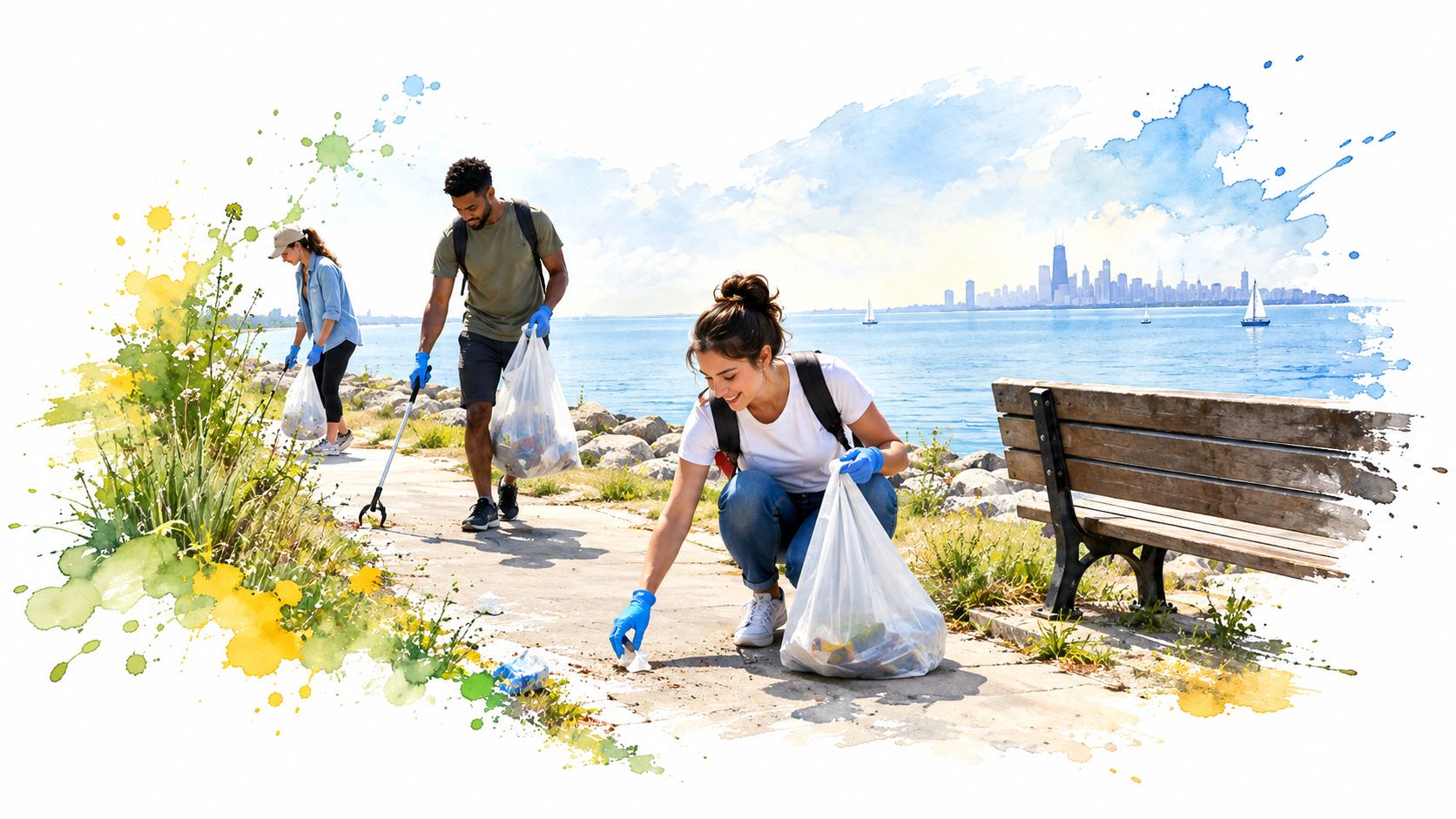
The Lakefront Trail is a natural fit for repeat cleanups because the route stays busy and the trash shows up fast. Neighborhood groups on the North Side and South Side often adopt pieces of the lakefront, and that same short-route rhythm works well for a weekly morning pickup. Pick one section, post the meeting spot the day before, and keep it easy for someone to join without a car.
Practical rule: pick a start point near transit, then keep the route short enough that people can return next week without thinking too hard.
A few things make the walk smoother:
- Bring reacher grabbers and gloves. Some trash is sharp, sticky, or both.
- Carry water and snacks. A short route always feels longer once you start bending down.
- Post the route in a group chat. People show up faster when the plan is plain.
- Use a weekend morning. The light is better, and the path feels calmer.
I like this outing in spring and fall most, when the wind is manageable and the lakefront feels open without getting punishing.
2. Chicago Riverwalk Litter Stroll
The Riverwalk works when your day is already full. You can do this at lunch or after work, keep the group small, and still leave with a bag full of cups and wrappers. The path is flat, close to cafés, and easy to read, like a hallway that happens to run beside the river.
If you want a place to start, the Riverwalk is a good one for a tight crew of six or eight people. That keeps the path clear and makes it easy to stop for coffee after the pickup. I like this kind of outing in late spring and early fall, when the sidewalks are busy but the heat is not crushing everybody.
A clean walk, then a table
Ask the nearest café if they'll share a bin for bagged trash. Some spots are willing, and that small ask can save time. Plan the cleanup early in the morning or on a weekend if you want fewer crowds.
I'd keep the social side simple.
- Meet near one landmark. Nobody likes wandering downtown with a trash bag and no clue where the group is.
- Keep the route short. A lunch-hour cleanup should feel like a reset, not a hike.
- Take one before-and-after photo. It helps people see what changed.
- Leave time for coffee. That's where the new friendships usually start.
The Riverwalk feels good in summer too, especially when you want an easy cleanup that still gives you a reason to sit down together afterward.
3. 606 Trail Walk and Pick
The 606 is a good choice when you want a shorter outing with a clean start and finish. It's like sweeping a long hallway. You move along the edges, work in pairs, and keep your bag close so you don't block runners or cyclists. The narrow parts collect trash where people miss it, under railings and near the side paths.

A weekend morning works best here, especially in spring and early summer when the trail feels active but not packed. You can start near a ramp by transit, split into pairs, and make the route easy for first-timers. I've seen shorter trail cleanups pull in people who later move on to longer lakefront or park events because the 606 feels manageable from the first step.
Small route, easy entry
Use this outing when you want to bring someone who's never volunteered before. The trail gives them a clear path, clear boundaries, and a quick finish. That matters.
Keep one eye on the flow of walkers and one eye on the ground. If you have to choose, let the traffic pass first.
A few simple habits help:
- Start near transit. It makes the outing feel open to more people.
- Split into pairs. That keeps the path clear.
- Carry sunscreen in summer. The open stretch can get hot fast.
- Ask nearby shops about a bin. Small businesses often know where trash should go.
4. Lakefront Beach Cleanup
A beach cleanup is slow work. That's the whole point. Wind and waves push bottles, cigarette butts, and plastic bags onto the sand, and you walk the shoreline one step at a time, bent down and looking close. It feels a little like emptying a sponge by hand.
For a cleaner, organized version of this outing, I'd point you to the Litter Caterpillars public beach cleanup guide for Lake Michigan. It fits the kind of morning where you want the job to be obvious, the shoreline to be visible, and the impact to show up right away.
The best time here is late summer into early fall, when the lake still draws people but the beach litter starts to stack up after busy days. You can join a larger group or bring a few friends and work a tight stretch. I like this one because you feel the sand under your shoes and see the change with every bucket.
Work with the weather, not against it
Check the lake and the weather forecast before you go. Waves can rise fast, and broken glass or fishing hooks can hide in the sand. A bucket with a handle helps, and a second bag helps with sharp or wet items.
Beaches teach patience. You do not clean a whole shoreline at once. You clean the line in front of you.
If your group has a tally sheet, use it. If not, just note what you keep finding. That simple record helps you remember where the mess gathers next time.
5. Chicago River Cleanup and Paddle
On a warm Chicago morning, I like the river for one reason. You can paddle past bridges, then reach down for a bottle that floated out of sight from the street. The work feels different from a shore cleanup. It moves with the current.
If you want a route to start from, I use Chicago River cleanup ideas before I pick a launch point. I usually save this outing for summer, when a kayak or canoe feels natural and the water keeps people on the river a little longer after the bags fill up. Many paddlers also mark their boats with a kayak decal for paddlers before the season starts.
Friends of the Chicago River posts volunteer days on its website, and I book those dates before I plan a paddle. A small crew works well here, and calm water matters more than speed.
A cleanup that stays close to the water
From the boat, you catch the details that people on the bank miss. Wrappers drift near the edges. Bottles snag by the pilings. The skyline looks close, almost like a postcard with dirty corners.
For launch day, keep it simple: life jacket on, mesh net or grabber in reach, water conditions checked, hands washed after you dock. That short list keeps the trip focused and safe without turning it into a chore list.
I like this outing for friends who want action with a purpose. It has the rhythm of paddling and the plain satisfaction of pulling trash out of the river one piece at a time.
6. Montrose Point Bird Watching Cleanup
Montrose Point is quiet in the right way. You walk slowly, watch the trees, and wait for movement. Then the cleanup starts to layer in. Plastic bags, fishing line, and other loose trash can tangle birds, so every piece you pick up helps the place work better for the animals and for you.
Spring and fall are the best seasons here because migration brings birds through the sanctuary. That makes the outing feel like a double plan, first the bird walk, then the trash sweep. Bring binoculars, keep your voice low, and treat the whole morning like a slow conversation with the shoreline.
Chicago birding groups often host spring walks that end with trash collection, and I think that format makes sense here. You look up, then you look down. You move between patience and action without rushing.
Clean around the birds, not through them
Use a long-handled grabber for branches and shrubs. Don't climb into trees. Keep loose fishing line in a separate container so it doesn't tangle again.
If you can hear your own shoes too much, you're probably moving too fast.
I like this outing for early mornings. The light is soft, the path is calm, and the cleanup feels respectful instead of loud.
7. Forest Preserve Trail Cleanup
One Saturday in spring, I walked a Cook County preserve trail with gloves in one pocket and a trash picker in the other. The leaves looked clean at first. Then the old wrappers, bottle caps, and torn bags showed up along the edge like coins hiding in grass. That is the work here. Slow, quiet, and honest.
I keep a Forest Preserve cleanup guide for Chicago for the kind of outing that needs a little more planning than a neighborhood sweep. Spring works well after the ground dries, and early fall feels good when the air cools and the bugs ease off.
Go with a small group if you can, and carpool to the trailhead. Many preserve entrances sit far from transit, so one shared ride keeps the day simple. Wear long pants, closed-toe boots, and bug spray. Bring a trash picker and a sturdy bag. Thin plastic tears fast on branches.
Keep your feet on the edge, not the mud
Check the Forest Preserves of Cook County site for event rules and approved volunteer days. Then choose a trail edge where everyone can stay out of wet spots and work without trampling the path.
- Look low as you walk. That is where wrappers hide.
- Wear boots, not soft shoes. Mud does not care.
- Carry bug spray. The woods remind you quickly.
- Share the ride. A carpool keeps the morning easy.
This outing feels like a reset button for the trail. You start with trash in the brush, and you leave with a cleaner path under your feet.
8. Vacant Lot Transformation Day
A vacant lot can feel like a bowl waiting for rain and trash. I know that from watching empty spaces turn around one afternoon at a time. Litter Caterpillars once turned an auctioned lot in Englewood into Caterpillar Park, and that kind of before-and-after work hits differently because you can see the change under your own hands.
I like this activity in spring and early summer, when clearing debris and planting feel good instead of miserable. Start with trash pickup, then move to planting, painting, or simple seating. If the lot belongs to someone else, confirm ownership first. If the soil needs testing, test it before you plant, and use raised beds if the results call for that.
This is the kind of day where neighbors should hear about the plan early. If people join at the start, they feel ownership by the time the last bag goes out.
Build the space, then let it breathe
Schedule a bulk pickup or rent a dumpster if the lot holds heavier junk. You do not want to drag old boards and broken furniture by hand all afternoon.
A lot changes faster when people see themselves in the work.
If you want a cleanup that turns into a place where somebody can sit and talk, this is the one.
9. Bike the Drive Shutdown Cleanup
A shut-down Lake Shore Drive looks like a long, empty ribbon. During Bike the Drive, that ribbon becomes workable ground. I like it for a cleanup because you can walk the lanes, reach the medians, and catch the litter that regular traffic usually hides.
Summer fits this outing well. The closure gives your group room to spread out without crowding riders, as long as you check the schedule and road closure map first and talk with organizers before the day. Wear high-visibility vests. Keep your group small. Stay out of the cycling lanes during the busiest stretches.
I have seen Litter Caterpillars use a highway cleanup during a bike-event shutdown, and the setup makes sense. The road stays active, but your crew can work in pockets, like sweeping a stage between acts. One person watches the lane, one picks, one bags. That rhythm keeps people safe and keeps the work moving.
Work the closure like a short window
Use the shutdown as a brief opening, not a free-for-all. The space is shared, so every move should be clear and steady.
- Wear bright gear. Riders need to spot you fast.
- Stay small and organized. Tight groups are easier to manage.
- Coordinate ahead of time. Permits and timing prevent problems.
- Move methodically. A steady pace covers more ground.
For a cleanup that feels tied to a real city event, this one stands out. You get the energy of Bike the Drive and still leave the road cleaner than you found it.
10. Winter Park Litter Patrol
Winter cleanups sound hard until you do one and realize the cold sharpens everything. Snow hides trash, then the thaw brings it back. So a winter patrol feels like weeding before spring, only with gloves, layers, and a hot drink waiting at the end.
Maggie Daley Park gets enough winter foot traffic that litter can collect along the paths, and that makes it a good place for a short patrol. Keep the route short, move fast, and stop often enough to warm your fingers. I like this outing best on a clear cold morning, when the air stings but the sidewalks still let you work.
Dress in layers, add a waterproof shell, and bring hand warmers if you have them. Use bright bags so they stand out in the snow. End with a warm drink together. That last part matters more than people think.
Cold days make people talk
When you're bundled up and moving side by side, the conversation gets easier. The cold gives everybody the same job, keep going and keep your hands warm.
Short route. Warm gloves. Hot drink after. That's the winter formula.
I've done cold pickups in blizzards and negative wind chills, and the memory sticks because the work feels honest. You show up, you move, and you leave a patch of winter a little cleaner than you found it.
10 Chicago Outdoor Activities Comparison
| Title | Implementation Complexity 🔄 | Resource Requirements ⚡ | Expected Outcomes 📊 | Ideal Use Cases 💡 | Key Advantages ⭐ |
|---|---|---|---|---|---|
| Lakefront Trail Litter Walk | Low, simple route planning, repeatable | Gloves, bags, grabbers, transit access | 📊 Visible litter reduction along high-traffic corridor | 💡 Weekend or beginner group outreach | ⭐⭐⭐⭐ Visible impact; easy access |
| Chicago Riverwalk Litter Stroll | Low, short, flat route; crowd management needed | Gloves, small bags, permission for dumpsters sometimes | 📊 Quick, visible cleanup of cafe/riverfront litter | 💡 Lunchtime or after-work cleanups for downtown workers | ⭐⭐⭐ Easy, time‑friendly; good visibility |
| 606 Trail Walk and Pick | Low–Medium, narrow sections need coordination | Gloves, grabbers, water; transit access at ramps | 📊 Targeted removal along edges and railings | 💡 Short outings with neighborhood engagement | ⭐⭐⭐ Good for local outreach; clear endpoints |
| Lakefront Beach Cleanup | Medium, organized events common; safety by water | Buckets, gloves, data cards, first aid, weather check | 📊 Measurable debris counts; shoreline restoration | 💡 Organized Adopt‑a‑Beach or community science events | ⭐⭐⭐⭐ Strong data value; visible before/after |
| Chicago River Cleanup and Paddle | Medium–High, boat logistics and safety required | Kayaks/canoes, life jackets, nets, skilled volunteers | 📊 Removal of floating debris; skyline engagement | 💡 Paddling groups or combined recreation & cleanup | ⭐⭐⭐⭐ Unique viewpoint; engaging experience |
| Montrose Point Bird Watching Cleanup | Medium, quiet approach, seasonal timing matters | Binoculars, long grabbers, separate fishing-line containers | 📊 Wildlife protection; reduced entanglement hazards | 💡 Birding groups paired with habitat protection | ⭐⭐⭐⭐ Combines wildlife viewing with targeted cleanup |
| Forest Preserve Trail Cleanup | Medium, remote sites, permit checks advisable | Sturdy bags, pickers, boots, tick protection, carpool | 📊 Habitat benefit; removals from natural features | 💡 Longer, slower-paced stewardship outings | ⭐⭐⭐⭐ Good for ecological impact and education |
| Vacant Lot Transformation Day | High, permits, soil tests, heavy‑debris removal | Dumpster or bulk pickup, soil tests, plants, tools | 📊 Lasting site transformation and community space | 💡 Block‑scale community projects and placemaking | ⭐⭐⭐⭐⭐ Creates durable, visible neighborhood change |
| Bike the Drive Shutdown Cleanup | Medium, event coordination and timing required | High‑vis vests, gloves, bags, event permits | 📊 Large short‑term haul; high public visibility | 💡 Cleanups during road‑closure events | ⭐⭐⭐⭐ Big result in short time; safe access to roadway |
| Winter Park Litter Patrol | Medium, weather planning and safety focus | Warm gear, bright bags, short routes, hand warmers | 📊 Prevents spring runoff of hidden litter | 💡 Small brisk crews in cold months | ⭐⭐⭐ Builds community resilience; seasonal prevention |
Pick One Outing and Bring a Friend
Choose the outing that matches your calendar and your neighborhood, then pack gloves, a bag, and one person who'll show up. The Lakefront Trail and the Riverwalk are easy first mornings. The 606 fits a shorter weekday cleanup. Montrose Point works when you want quiet. The forest preserves, the river, the beaches, and the winter patrol each give you a different mood, but they all start the same way, with you deciding to go.
If you want a steady place to plug in, Litter Caterpillars runs weekly pickups you can join through Meetup, Instagram, or open group chats, with details at Litter Caterpillars. I like that model because it keeps the plan simple. You pick a weekend morning, bring what you need, and walk out with a bag, a few new names, and a neighborhood that feels a little more like yours.
Litter Caterpillars runs free, volunteer-led Chicago cleanups with bags, gloves, and trash grabbers ready for you. If you want a weekend morning that mixes outdoor time, service, and a real neighborhood route, visit Litter Caterpillars and pick the next cleanup that fits your season.