Tag: chicago hiking trails

  • DuPage River Greenway Trail: Your Guide to Adventure

    DuPage River Greenway Trail: Your Guide to Adventure

    I stepped onto the dupage river greenway trail on a cold March morning with fingers already going numb. A paper cup rattled in the reeds beside the path, and by the time I reached the next bend, I understood that this trail asks for more from you than a casual stroll.

    Finding Your Way by Getting a Little Lost

    The first time I really met this trail, the sky had that flat gray color that makes every sensible person stay in bed. I had a hat pulled low, mud on my shoes within minutes, and that tiny inner voice that says, why am I doing this today?

    Then the trail started doing what good trails do. It stopped arguing with me and let me walk.

    Bare branches leaned over the corridor. Wet ground held the smell of thawing earth. The river flowed gently off to the side like it had all day to wait for me to catch up. That kind of morning strips away the fantasy version of outdoor life. No postcard light. No perfect temperature. Just you, your breath, the path, and whatever mood you brought with you.

    I like days like that because they tell the truth.

    The trail gets more honest in rough weather

    On a warm blue-sky Saturday, almost any path can charm you. A windy day in early spring is different. You notice puddles. You notice the slick leaves pressed into the edge of the pavement. You notice the branch hanging low enough to make you duck. You notice that a chip bag trapped in brush can bother you more than it should.

    That's when the dupage river greenway trail starts to feel alive instead of staged.

    I've learned that a little discomfort often sharpens the memory. A cold headwind wakes you up. A surprise drizzle gives the day some plot. Even a wrong turn or a muddy shoulder becomes part of the story you tell later. Easy outings blur together. The awkward ones stay with you.

    Practical rule: If the weather is safe, go anyway. You'll remember the day better, and you'll pay closer attention to the trail under your feet.

    Small hardship changes how you see the place

    I've walked paths in perfect conditions and forgotten them by dinner. I still remember that gray morning because I had to earn it a little. When you show up on a day that isn't begging for visitors, you notice the work a trail needs. You see where litter snags in grass. You see where runoff carries debris toward the river. You see the gap between a place being open and a place being cared for.

    That shift matters.

    The dupage river greenway trail isn't just a route from one point to another. It's a corridor that changes with season, rain, wind, and human use. Some days it feels generous. Some days it feels blunt. Both are good. Both teach you something.

    So if you arrive and the wind bites your ears or the clouds look unfriendly, don't turn around too fast. Walk a little farther than you planned. Let the day be imperfect. Getting a little lost, in weather or in thought, is often how you start finding your way.

    Mapping the DuPage River Greenway Trail

    The first time I helped organize a cleanup on a river trail, the map mattered less than the pinch point. We found it where a bend in the path narrowed near the water and wind-blown cups collected in the weeds. Ten volunteers with grabbers and contractor bags could clear that stretch in under an hour, but only because we knew how the route fit together before we showed up.

    That is how I read the DuPage River Greenway Trail now. Part outing, part working map.
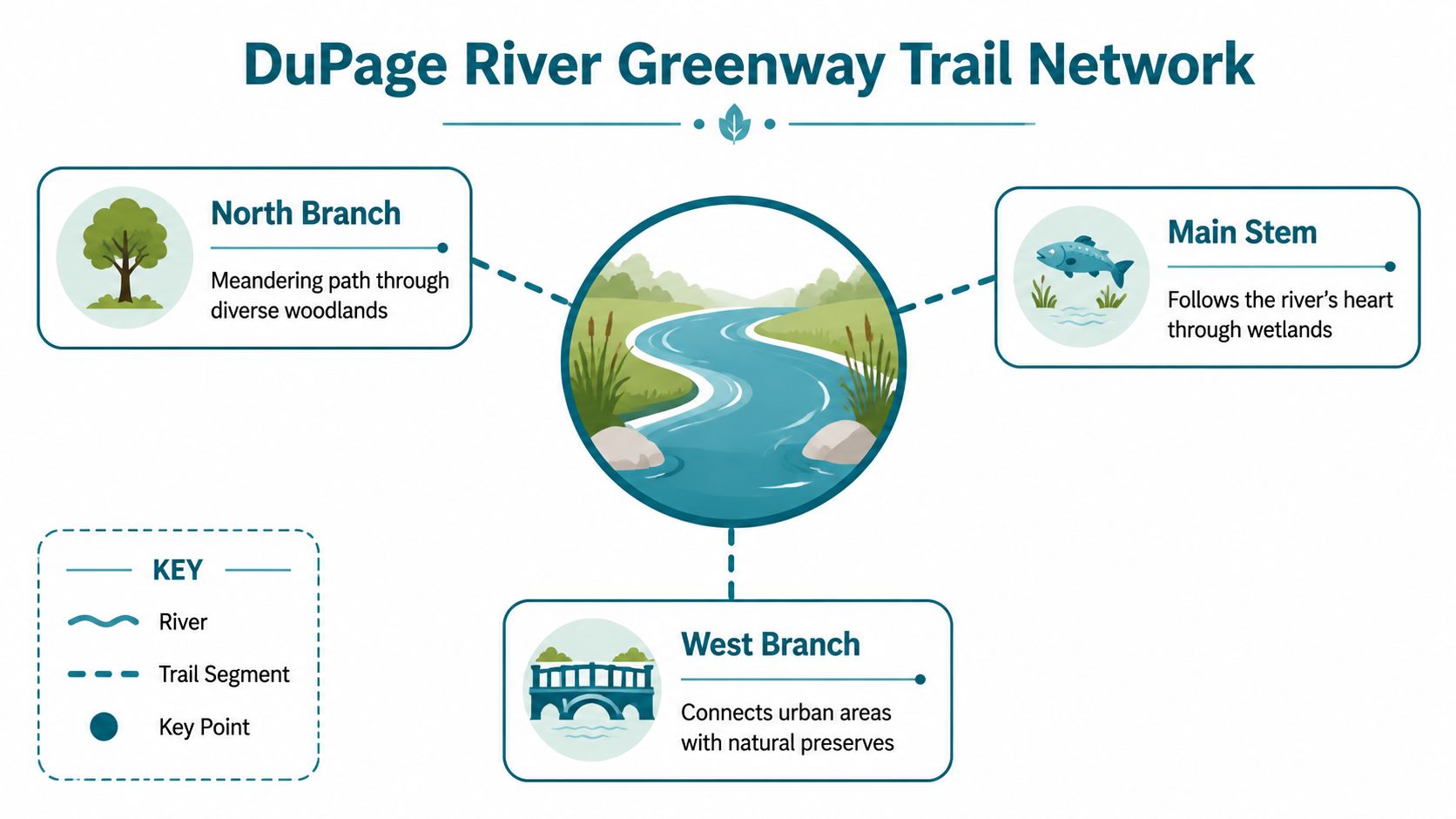
    A map showing the DuPage River Greenway trail network including the North Branch, Main Stem, and West Branch.

    Start with one segment you can remember

    Bolingbrook gives you a clear mental picture. The local stretch runs along the East Branch of the DuPage River, linking Royce Road near Route 53, Hidden Lakes Historic Trout Farm, and Indian Boundary Park. It is paved and built for shared use, so you can picture walkers, runners, bikes, strollers, and cleanup crews all using the same corridor with a little courtesy.

    That kind of route is easy to hold in your head because it has landmarks with names, not just a line on a screen. Road. River. Trout farm. Park.

    Once you can repeat those anchors from memory, the trail stops feeling vague. It becomes a place you can use and care for.

    The greenway works like a chain of local stories

    Regional trails rarely make sense all at once. You learn them in pieces. One town shows you a riverside path that feels friendly for a first walk. Another gives you a longer connector that makes more sense on a bike. Soon the whole system starts to click because each segment teaches you the next one.

    That is also how service grows. A person who picks up litter on one reliable mile often comes back with a friend, then a bucket, then a simple plan.

    If you have walked a larger corridor such as the Des Plaines River Trail near Chicago, you already know the pattern. You do not memorize every turn on day one. You learn the backbone, then your favorite access points, then the spots that need attention after a windy weekend.

    Map it with a volunteer's eye

    A recreational map asks where you can go. A cleanup map asks where help will matter most.

    I use three checks before I invite anyone out:

    Question What to look for Why it matters
    Where does the group gather? A named park, visible trailhead, easy parking People arrive calm, not frustrated and late
    Where will trash collect? River bends, fence lines, bridge edges, low spots after rain You spend your energy where debris actually piles up
    Where can people pause or turn back? Restrooms, benches, short out-and-back options New volunteers stay comfortable and are more likely to return

    That small shift changes the whole outing. You are no longer tracing a path just to finish it. You are reading the corridor like a steward.

    For the DuPage River Greenway Trail, the river is the constant reference point. Follow that, remember the named anchors, and mark a few likely cleanup zones on your phone or a printed map. After one visit, you will know enough to come back with purpose.

    How to Access Your Trail Adventure

    The first cleanup I ever led on a river trail started with six people standing around a trunk full of grabbers, asking the least glamorous question in outdoor life. Where do we park so nobody begins the morning annoyed?

    That question matters here too. Access shapes the whole day. If the first five minutes feel calm, people stay open to the place. If the start feels confusing, they rush, miss the river, and head home before the trail can do its work.
    A hiker holding a map points toward a trailhead sign in a beautiful watercolor forest landscape.

    Two smart starting points

    For a first visit, I would start with Hidden Lakes Historic Trout Farm or Indian Boundary Park. Both are the kind of access points that lower the friction of a first outing. You can arrive, get oriented, use the restroom, and step onto the trail without turning the morning into a scavenger hunt.

    They serve different moods.

    Hidden Lakes feels like the better choice for a slower outing, especially if you want time to look around, notice where the river pulls your attention, and spot the edges where litter tends to gather after a windy day. Indian Boundary Park suits an out and back with cleaner rhythm. If I were bringing a new volunteer, a teenager earning service hours, or a friend who says they are "just coming to help for one hour," I would probably choose the start that feels easiest to read at a glance.

    That first impression carries weight. People are more likely to come back when the trail greets them kindly.

    How I choose a trailhead for recreation or service

    I do not pick an access point by name alone. I picture the end of the outing.

    If I am walking for quiet, I want the start that settles me down fast. If I am running, I want an access point that lets me find a steady rhythm without constant stops. If I am showing the trail to someone new, I want the lot, the path, and the first decision point to be obvious.

    Cleanup days need one more layer of thought. Bags get heavier on the way back. Mud clings to gloves. Someone always finds something awkward, a tire scrap, a soggy bundle of cans, a length of plastic fencing, and suddenly the distance from trail to car matters more than scenery.

    So I use a short filter:

    • For a solo walk: choose the access point that feels easiest to read on arrival.
    • For a run or bike outing: choose the one that gives you a clean out and back.
    • For first-time visitors: choose restrooms, visible parking, and a simple path from lot to trail.
    • For a cleanup: choose the place that makes unloading and hauling filled bags back to the car less miserable.

    Simple choices save energy for the trail itself.

    A first visit that actually teaches you something

    On your first trip to the dupage river greenway trail, skip the urge to cover a huge stretch. Start at one known access point. Walk far enough to learn the feel of the corridor, notice where people naturally slow down, and mark any spots where debris collects near edges, bridge approaches, or low ground. Then turn back while the day still feels fresh.

    That is how a casual visit turns into stewardship.

    I have watched this happen over and over. Someone comes out for "just a walk," notices bottles tucked into grass at a bend, comes back next week with one grocery bag, and a month later is texting friends about a cleanup date. The trail gives you a job if you pay attention.

    If you like building a day around nearby preserves and practical service, this Aurora forest preserve outing guide with the same stewardship mindset fits well with that approach.

    Bring less than you want to bring. Bring better shoes than you think you need.

    Coming without a car

    Getting here without a car takes planning, but it can be done with patience and a willingness to piece the trip together. I would treat it like a small expedition. Handle the train or bus segment first, then decide whether the final stretch works best on foot or by rideshare.

    For cleanup volunteers, that usually means packing lighter and planning a shorter route. One bucket, gloves, water, and a firm turnaround time beat overcommitting and dragging too much gear across a long approach.

    There is something good in that extra effort. You arrive with intention. You notice more. And if you spend even one hour leaving a small stretch cleaner than you found it, the trip home feels different.

    The Trail Under Your Feet

    The first time I brought a cleanup bucket onto this stretch, I noticed the pavement before I noticed the river. My wheels did not rattle. My ankles did not hunt for stable ground. I could carry gloves, a grabber, and a half-full bag without feeling like the trail was fighting me for every step.

    That matters more than people think.

    On this section, the path feels broad, paved, and forgiving. You can settle into a walking rhythm fast. A bike rolls cleanly. Two friends can talk side by side without drifting into that awkward shoulder-to-shoulder shuffle. For a volunteer morning, that kind of surface changes the whole tone. You spend less energy dealing with footing and more energy paying attention to what the edges are holding.

    What pavement changes

    I have seen this play out with new volunteers. Put someone on rough ground with a trash bag, and their focus narrows to roots, mud, and balance. Put that same person on a paved shared-use trail, and their eyes lift. They start spotting fishing line near brush, bottles caught where grass meets asphalt, and snack wrappers pinned against a bridge approach.

    Pavement also makes stops easier. You can set down a bucket, sort recyclables from trash, tie off a bag, and keep moving. If a child joins for part of the route, or an older neighbor wants to help for thirty minutes, the trail gives them a fair shot at contributing without turning the outing into a test of agility.

    Runners and walkers will feel that predictability in different ways. Walkers get steadier footing and easier conversation. Runners get a consistent cadence, though long efforts still ask you to pay attention to your legs. Cyclists get flow. Cleanup crews get a practical work surface.

    Matching surface to activity

    Here is how this ground tends to behave in real use:

    Activity How the surface feels Best use on this trail
    Walking Steady and low-stress Good for scouting litter pockets and talking while you move
    Running Consistent underfoot Good for shorter training efforts or run-walk outings
    Biking Smooth and efficient Good for covering more ground and checking several access points
    Cleanup walks Easy for tools, bags, and frequent stops Good for small groups, families, and first-time volunteers

    The width helps too. On a narrow path, every bag pickup becomes a traffic problem. Here, people can pass, pause, and work around each other with less fuss. Courtesy gets easier when the trail gives you enough room to practice it.

    Read the path like a volunteer

    I do not judge this kind of trail by mileage first. I judge it by how well it holds a morning's purpose.

    A short outing works well if you are carrying tools, checking conditions, or bringing someone who is new to cleanup work. A medium outing gives you enough time to notice patterns. Where cans collect after a windy week. Where flooded edges leave debris behind. Which bend looks clean from a distance but tells a different story when you slow down. Long outings have their place, but they ask for more planning, more water, and a more honest read on your energy.

    That is one of the quiet gifts of the dupage river greenway trail. The surface lowers the barrier to entry, then leaves the deeper part up to you. You can come here for a smooth walk and leave with a fuller bag than you expected. You can show up to get exercise and end up feeling responsible for a half mile of river corridor. Sometimes purpose starts with something as ordinary as good footing.

    Sights and Seasons Along the River

    One April morning, I stepped off the trail with a trash bag and came back twenty minutes later with three water bottles, a rusted bait tin, and a kid's blue sandal that had wintered in the reeds. The river smelled like thawed mud and leaf mold. Red-winged blackbirds were already staking claims in the cattails. Nothing about it looked polished, but the place felt awake, and so did I.
    A scenic watercolor painting of a man sitting by a tranquil river with ducks and falling leaves.

    That is part of the trail's hold on people. You do not get one fixed version of the dupage river greenway trail. You get a corridor that shifts from wetland hush to open river light, from green abundance to bare winter structure. Come often enough and you start recognizing not just scenery, but patterns. Where floodwater leaves a line of plastic. Where ducks gather when the current slows. Which patch of prairie looks ordinary in July and catches low gold light in October.

    Spring and summer on the trail

    Spring has loose edges. Water slips out of its usual lines. The soil gives off that cold, rich smell that says the ground is working again. Trees have not leafed out enough to hide everything, so you can watch the river and the brush at the same time.

    For cleanup walks, spring is honest. Winter exposes what people dropped and what water carried in. A volunteer group can cover a short stretch and come away with a clear result, lighter banks, cleaner shoulders, one less mess working its way downstream. That kind of morning changes people. A teenager who showed up because a parent made them starts asking for a second bag. A neighbor who came for exercise starts noticing the same problem spot every week.

    Summer tells a different story. Shade starts to matter. The trail grows louder with tires, footfalls, bird calls, and families moving toward the next bend. Hidden Lakes Historic Trout Farm adds another layer to the experience. You feel the age of human use here, not as a museum lesson, but as a reminder that this corridor has always been shaped by hands, choices, and care.

    I like summer evenings best. The heat backs off. Swallows cut across the water. Someone up ahead slows at the river and points something out to a child. If you are carrying gloves and a few spare bags, that is often when a casual walk turns into a small act of service.

    Fall and winter change what you notice

    Autumn sharpens attention. Leaves scrape over the pavement. Gaps open in the greenery, and the river shows itself again. Seed heads dry out, grasses fade, and the whole corridor starts speaking in texture instead of lush color.

    It is a good season for people who want to train their eyes.

    You can spot the places where wind gathers cups and wrappers. You can see where a recent rain pushed debris into brushy corners. You can also see beauty with less competition around it. A heron at the edge of dark water. Sunlight on reeds. One yellow cottonwood leaf stuck to wet pavement like it was placed there on purpose.

    Winter strips the trail down even further. Branches draw clean lines against the sky. Wetlands go quiet. Snow, when it comes, turns every tossed object into a bright accusation. A red glove, an aluminum can, a torn snack wrapper. If you have ever wanted to show a new volunteer why stewardship matters, take them out after a snowfall. The river corridor makes the lesson plain.

    This video catches some of that river-trail feeling in motion.

    What I tell people to notice

    The people who build a real bond with this trail usually start by paying attention in specific ways.

    • Listen for seasonal sound shifts: Bare branches rattle differently than full summer canopy, and wetlands carry bird calls farther on cold mornings.
    • Study the margins: Reeds, muddy edges, brush piles, and grassy shoulders hold wildlife sign, flood debris, and the litter that cleanup crews can remove in one outing.
    • Pause where habitats meet: Open water beside woodland or prairie beside wet ground changes the feel of the trail fast. Those transition points often become the most memorable stops.
    • Read ordinary objects closely: A cluster of drifted cans, a line of seed heads bent one direction, duck tracks in soft mud. They show how wind, water, and people move through the corridor.

    Some of my strongest days on this trail started under a flat gray sky. A cold afternoon can make one patch of sunlight feel like a reward. A quiet winter walk with a half-full trash bag can do more for your mood than a perfect-weather stroll where you notice nothing.

    That is why I keep coming back with both curiosity and work gloves. The dupage river greenway trail gives you beauty, but it also gives you a chance to leave a stretch of river better than you found it. For a lot of us, that is where the deeper part begins.

    Planning Your Hike Bike or Run

    People get stuck because they ask the wrong question. They ask, what's the best way to do the dupage river greenway trail? There isn't one best way. There's only the best fit for the day you have.

    I like to plan by energy, company, and purpose. That keeps the route honest.

    Three outing blueprints

    The easy family walk

    Start from a known access point with restrooms. Keep the distance short enough that curiosity stays ahead of complaints. Let kids stop at bridges, water edges, or open views. If they want to pick up a stray wrapper with gloves on, even better. They'll remember doing something, not just being taken somewhere.

    The steady run

    Use a clean out-and-back from a simple trailhead. Don't make your training run a navigation challenge. A paved path helps you lock into rhythm, and a river corridor gives your mind something to follow when your legs start bargaining with you.

    The bike spin

    This works best when you want flow rather than technical riding. Check your tires, bring water, and ride with enough patience to share the trail well. River trails reward people who can soften their speed now and then and see where they are.

    A simple decision table

    If your day looks like this Choose this style
    You have under two hours Short out-and-back from a known parking area
    You want low stress Walk or easy ride on a paved segment
    You need training structure Repeatable run with a clear turnaround
    You're bringing new people Start where restrooms and parking are easy
    You want more meaning Bring gloves and carry out a little litter

    The plan I use most often

    My favorite trail plan is humble. I arrive with water, one extra layer, and enough time to not rush. I walk first, because walking teaches me the day. If the trail feels lively and my body feels good, I stretch the outing. If wind, mud, or crowds make the path feel off, I keep it shorter and enjoy what's there.

    That approach almost always beats overplanning.

    Field note: Leave room for the trail to make one decision for you. Maybe you stop longer by the river. Maybe you turn around early. Maybe you bring home a bag of trash instead of chasing distance.

    That flexibility is what turns a route into a practice. You stop trying to conquer the trail and start learning how to return to it well.

    Become a Guardian of the Greenway

    The shift from user to caretaker is small on paper. In real life, it changes everything.

    You walk a trail one day and notice a bottle in the reeds. The next time, you bring gloves. After that, you start carrying an extra bag in your car. Soon the trail is no longer just a place you visit. It's a place you help.
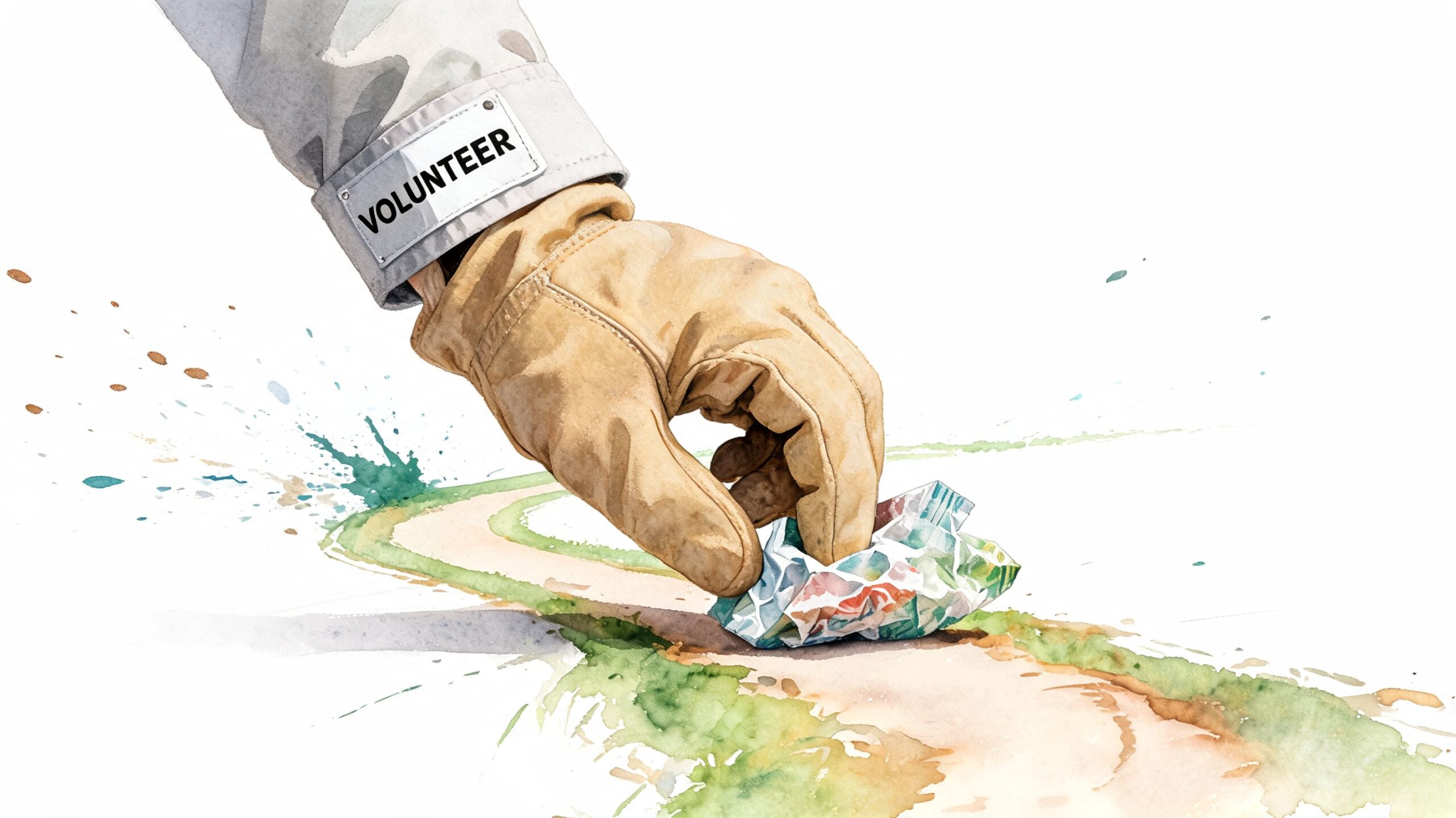
    A volunteer wearing a work glove picks up litter from a painted watercolor greenway trail path.

    The practical case is clear. Trail guides usually focus on scenery and recreation, but the DuPage River Greenway overview on Komoot notes a gap in public information about litter patterns and seasonal cleanup needs, even though the route is described there as an expanding 42-mile regional corridor. That means ordinary volunteers can do useful work by noticing what glossy guides skip.

    Why cleanup work changes you

    I've seen this happen again and again. Someone shows up thinking they're doing a small good deed, and halfway through the morning they look different. More alert. Less self-absorbed. More rooted.

    Cleanup work is physical and simple. Bend. Grab. Sort. Bag. Repeat. That rhythm can quiet a noisy mind. It also gives you fast proof that your effort mattered. A patch of trail that looked ignored now looks cared for because you were there.

    There's something else too. Picking up trash strips away the fantasy that caring for public space is somebody else's job. It becomes your job, at least for an hour.

    A clean stretch of trail feels good. Being one of the people who made it clean feels better.

    How to run a small cleanup well

    You don't need a giant operation to do this. A tiny, well-run outing beats a messy big one.

    Here's the setup I trust:

    • Bring the right gear: Work gloves, sturdy trash bags, water, closed-toe shoes, and a grabber if you have one. A five-gallon bucket can help with glass or awkward items.
    • Keep the group small at first: Two to six people is easy to manage. You can communicate clearly and stay aware of each other.
    • Work one short segment: Don't spread out across the whole trail. Pick a manageable stretch and do it thoroughly.
    • Stay visible and cautious: Watch for bikes, runners, slick shoulders, and any trash near water or roads. Skip anything that feels unsafe to retrieve.
    • Sort your ending before you start: Know where bags will go after pickup. Nothing kills momentum like a full trunk and no disposal plan.

    The mindset matters as much as the bags

    If you treat cleanup like punishment, people feel it. If you treat it like a mission with a little pride and a little play in it, people come alive. I always think of Tom Sawyer and the fence. Energy is contagious. So is reluctance.

    You want bravery, but not recklessness. Kindness, but not chaos.

    A good cleanup leader does four things well:

    1. Names a meeting point clearly
    2. Brings extra gloves
    3. Keeps people away from risky spots
    4. Ends while everyone still feels good

    That last one matters. Finish with a win, not exhaustion.

    If you want ideas for making river cleanups safer and more organized, this practical guide on how to clean up rivers is a useful companion mindset. Keep the plan simple. Respect the water. Protect volunteer energy.

    What to expect from your first one

    Your first cleanup probably won't feel cinematic. It may feel awkward. Someone will ask where to put cigarette butts. Somebody else will find something weird. You might spend more time talking than collecting. That's okay.

    The point isn't perfection. The point is beginning.

    A trail doesn't need your grand theory. It needs your hands, your time, and your willingness to care for one small piece of it today.


    If this kind of work calls to you, Litter Caterpillars is a good place to find people who treat cleanup as adventure, friendship, and real service. Join a weekend effort, bring your gloves, and see what happens when you leave a place better than you found it.

  • Your Ultimate Guide to the Des Plaines River Trail Chicago IL in 2026

    Your Ultimate Guide to the Des Plaines River Trail Chicago IL in 2026

    Let me tell you about my escape hatch. It's a place that feels miles away from the city's ceaseless hum, a green ribbon of a path that I swear has saved my sanity more than once: the Des Plaines River Trail Chicago IL.

    My Story with This Trail

    I've been on this trail in every kind of Chicago weather you can imagine—those freezing mornings where your breath hangs in the air like a ghost, and those sticky summer days where you feel like you're wading through soup. For me, and for you too I hope, a trail isn't just a strip of dirt. It's a reset button.

    You know that feeling when you finally clean a hopelessly messy room, and suddenly you can think straight? That’s what this trail does for me. It's my go-to place for untangling the knots in my head. In fact, it’s the very reason our group, Litter Caterpillars, even exists—this wild idea that you can find your own purpose by cleaning up a mess, whether it's the clutter in your own life or a forgotten stretch of riverbank.

    This trail is a beast. The Des Plaines River Trail (DPRT) unfurls for an insane 56.1 miles, a winding journey from the Wisconsin border all the way down to River Grove. I see it as this vital green artery, a life-giving pulse cutting through Lake and Cook Counties, a real-deal escape for the 9.5 million people packed in around here. You can see its entire magnificent scope and history over on TrailLink.

    I believe the trail is alive. Every time I'm on it, it feels like a conversation. It'll test me with a muddy, washed-out path, then turn around and reward me with a quiet moment of staggering beauty I never saw coming.

    Your Map to Getting Out There

    Think of this guide as your personal cheat sheet. I want to help you skip all the "where do I even start?" paralysis and get right to the good stuff.

    We’re going to cover everything you actually need to know so your first (or next) trip is a smashing success:

    • The best spots to park your car and hit the trail.
    • What the path actually feels like to walk, run, or bike on.
    • How you can avoid getting caught off guard by Chicago's famously bipolar weather.

    My goal here is simple: I want to give you the confidence to just go. This trail has been a huge chapter in my own story, and I’m ready for it to become part of yours. Let's get you out there.

    Finding Your Perfect Starting Point

    Staring at a map of a 56-mile trail can feel like staring at a messy room you’ve been avoiding for weeks. You know you want to tackle it, but every corner looks like its own overwhelming project. The secret, I've found, is that once you just pick a spot and begin, you're already moving. The Des Plaines River Trail is full of these starting points, and I want to help you skip the "where do I even park?" headache and get right to the good stuff.

    Let's cut through the analysis paralysis. I'm going to walk you through my favorite trailheads in Cook County, the ones I find myself returning to, the ones closest to the city. My goal is to get you off the pavement and onto the path, soaking up that nature you came for.

    This decision tree might help you figure out your vibe for the day.

    The first step is always the hardest. Let’s take it together.

    My Go-To Trailheads Near Chicago

    Think of these trailheads as different doors into the same wild, wonderful world. Some are bustling with energy, vibrant hubs of activity, while others are quiet little secrets waiting to be discovered. The right one for you just depends on the kind of day you’re looking to have.

    Here are a few I keep coming back to.

    • Allison Woods (North): This is a popular spot, and for good reason. You'll find a massive parking lot and a gateway to a seriously beautiful, wooded part of the trail. It's my pick for a long, uninterrupted walk or ride. This is also where my Litter Caterpillars crew had one of our most epic cleanups. We pulled over 50 bags of trash out of the woods after a spring flood and felt like absolute champions. The energy here is just different.

    • Dam No. 4 Woods-East (Central): If you want to get right up next to the river, this is your place. The trail hugs the water here, and the views are incredible. The parking lot is smaller, so my advice is to hit it on a weekday or get there early on the weekend. It’s a peaceful spot to launch a shorter, more thoughtful journey.

    I remember standing here one quiet Tuesday morning, just watching a heron stalk its breakfast in the shallows. It’s those small, unexpected moments that really get me. They remind you there’s this whole other world humming with life right next to our own.

    • Sunset Bridge Meadow (South): This is the southern anchor of the Cook County trail, and it has a more open, prairie-like feel in some spots. It's a fantastic access point if you're coming from the city or want to connect for a longer ride heading south. If you're getting fired up about exploring and cleaning up our local trails, you might dig what we've written about other local paths. You can check out our guide on the Old Plank Road Trail for more ideas.

    To make it even easier, I've put my favorite access points into a quick table.

    Key Trailheads for the Des Plaines River Trail (Cook County)

    Here's a simple breakdown of the best places for you to park and hop on the trail. No guesswork needed.

    Trailhead Name Nearest Major Intersection Parking Notes Why I Like It
    Allison Woods (North) Milwaukee Ave & IL-294 Large, paved lot. Can fill up on peak weekends, but you can usually find a spot. Great for long distances. You connect to scenic, wooded sections. Home of an epic Litter Caterpillars cleanup!
    Dam No. 4 Woods-East W. Higgins Rd & N. River Rd Smaller gravel lot. You should arrive early or on a weekday to guarantee a spot. Unbeatable river views. The trail is right on the water. It feels quiet and secluded.
    Sunset Bridge Meadow W. North Ave & N. 1st Ave Ample parking in a large, paved lot. Good signage from North Ave. Perfect southern access point. You connect to different ecosystems (prairie, woods). Easy to get to from Chicago.
    Catherine Chevalier Woods E. River Rd & W. Foster Ave Huge lot, but it serves a popular picnic area. Can get very busy, especially summer weekends. Super close to the city and O'Hare. Great for a quick escape. A good place to see deer.

    Choosing any of these spots is a solid win. Just pick one, get out there, and see what you find.

    What to Expect From the Trail Surface

    Close-up of a person's feet in blue running shoes next to a bicycle on a gravel path near a river.

    Look, if you want a perfectly smooth ride, go to a spin class. The Des Plaines River Trail Chicago IL isn't like that, and that’s exactly why I love it. It’s got a bit of grit, a bit of character. It’s real.

    Most of the trail in Cook County is crushed limestone gravel. It's packed down hard, so it's not like you're slogging through sand, but it's not a city sidewalk either. You feel the trail under you. That crunch of gravel is the sound of you leaving the pavement—and all its nonsense—behind.

    I think that not everything has to be easy to be good. Sometimes, the little bit of roughness is what makes it an adventure. It forces you to pay attention and be present.

    Biking This Thing

    If you’re biking, leave your skinny-tired road bike at home. Seriously. It’ll feel jumpy and you’ll spend the whole time worrying about a flat instead of enjoying the ride. You need a bike that can handle a little bit of life.

    Here's what I see working out here:

    • Hybrid Bikes: The jack-of-all-trades. Perfect for riding from your apartment right onto the trail.
    • Gravel Bikes: The name says it all. They were born for this.
    • Mountain Bikes: Total overkill, but you'll feel like you can ride over anything. And honestly, that’s a great feeling to have.

    Bringing the right bike is like showing up to a cleanup with a grabber and a bag—it just makes everything better. You can actually focus on the beauty around you instead of fighting your equipment.

    For the Walkers and Runners

    If you're on foot, your regular running shoes are all you need. I find the gravel is actually way easier on my joints than pounding the concrete mile after mile. You get that satisfying crunch with every step, a rhythm that connects you to the ground.

    And the best part? The trail is almost completely flat. No soul-crushing hills. Nothing. This is what makes the Des Plaines River Trail Chicago IL so incredible—it's for everyone. You can go for an hour or an entire day, and the only thing stopping you is how far you want to go.

    It’s a place for you to find your pace, to let your mind wander, to just be. The lack of hills makes it a mental game, a meditation. It’s about endurance, not just power. Knowing this stuff before you go means you show up ready for the trail's real, unfiltered, and deeply rewarding character.

    Navigating the Seasons and Staying Safe

    Chicago weather. It’s a force of nature, and it doesn't care about your plans. One minute it's a perfect sunny day; the next, you're getting pelted with hail. I learned this the hard way during one of our very first Litter Caterpillar cleanups—three of us, huddled under a tree, shivering, as a freak hailstorm hit.

    The Des Plaines River Trail goes through this same drama every year. Each season tells a different story, and if you want to be part of it, you better learn how to read the signs and prepare for a plot twist.

    Spring Thaws and River Highs

    Spring on the trail is incredible. Wildflowers are pushing up through the dirt, and the whole world feels like it's waking up. But this season has a dark side: flooding. I've learned that the trail's biggest strength—its closeness to the river—is also its biggest weakness.

    The Des Plaines River Trail runs for 31.4 miles through Lake County, cutting through some gorgeous forest preserves. But that whole area is a natural floodplain. When the spring rains come hard, you can expect up to 20-30% of the trail to be underwater and closed off. It's a humbling reminder that we're just guests here. You can even see how serious enthusiasts track these conditions on route-logging sites.

    Before you even think about heading out, you should check the Forest Preserves of Cook County website for closures. It takes literally ten seconds and can save you from a miserable, water-logged failure of a trip.

    Summer Buzz and Autumn Hues

    Summer is when the trail is bursting with life, a dense, green tunnel that feels wild and ancient. It’s beautiful, but you're not the only one out there. I find the mosquitoes are no joke, especially in the humid, shady spots near the water. I never leave home without bug spray, and I always pack more water than I think I’ll need. Don't be a hero; you have to stay hydrated.

    Then comes fall—my absolute favorite time on the trail. The world turns into a masterpiece of red, orange, and gold. The air gets that perfect crispness, the bugs finally die off, and the only sound is the crunch of leaves under your tires or feet. It's pure magic.

    At our cleanups, the safety of our volunteers is our first priority. Always. I believe the same principle applies to any adventure—your safety is the foundation. Being smart about it is what allows you to truly enjoy yourself.

    Your Trail Safety Checklist

    Being safe isn't about being scared; it's about being smart so you can stop worrying and actually have fun. You can think of it like packing the right gear for a cleanup—it's the prep work that makes the real work possible.

    • Tell Someone Your Plan: This is non-negotiable. You must let a friend know where you're going and when you plan to be back. It’s the simplest, most important thing you can do.
    • Be Aware of Your Surroundings: You should ditch both earbuds. Stay present. Say "hello" to people you pass. Your awareness is your best defense.
    • Follow Trail Etiquette: Yell "on your left!" when you're passing. It’s a shared space, and a little common courtesy makes it better for everyone.
    • Pack Smart: Water, a basic first-aid kit, a charged phone, and a snack. It's not much, but it can be a lifesaver if your quick trip turns into a longer-than-expected adventure.

    The Trail Needs You. Are You Bold Enough?

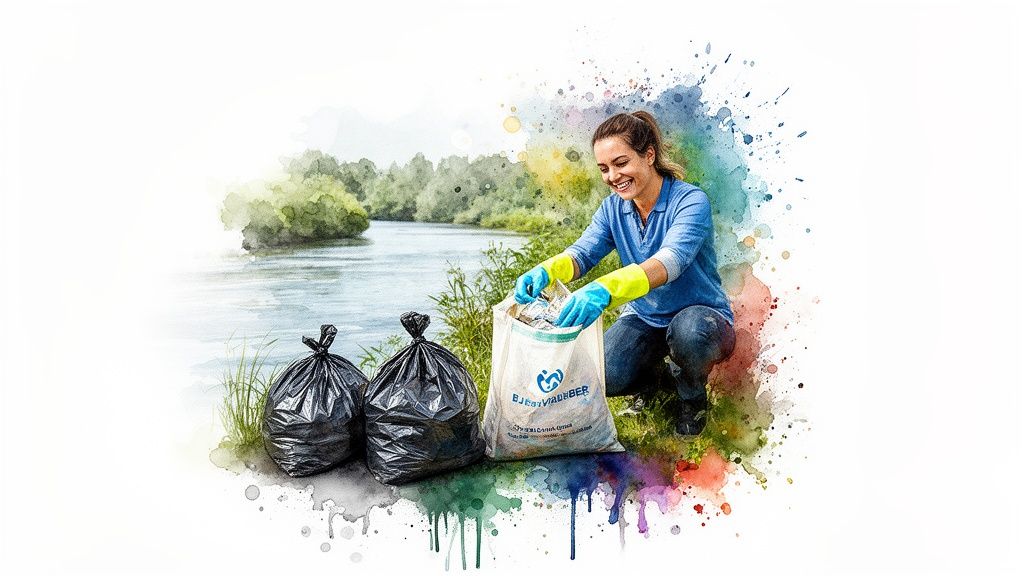
    Happy woman in gloves collects trash into a white bag by a river, two black bags beside her.

    I started Litter Caterpillars because, for most of my life, my own room was a disaster. Cleaning it felt impossible. It was this weird mental block. But I discovered something powerful: cleaning up someone else's mess is WAY easier. It’s a shot of pure satisfaction. It's taking control.

    The Des Plaines River Trail is one of those places I love, a real sanctuary from the city. But let’s be real—its popularity and the river's tendency to flood mean it becomes a magnet for trash. You'll see a plastic bag tangled in a bush, a coffee cup peeking out of the mud… it's the price of being a well-loved place.

    This is where the story gets good. This is where you come in.

    We're the Caterpillars. Join Us.

    I want you to join one of our official Litter Caterpillar events on the Des Plaines River Trail Chicago IL this year, in 2026. Forget what you think you know about cleanup groups. We’re a little different. We bring the gear—gloves, bags, grabbers—and we definitely bring the energy. We even have a theme song.

    When you join us, you’re not just picking up trash. You’re finding your people. You’ll be laughing and sharing stories with a crew that believes showing up—rain or shine—can actually change things. It’s not just work; it's an adventure.

    I’ve learned that cleaning up someone else's mess is way easier than cleaning up your own. It gives you a sense of power and control, a feeling that you can make things right. I believe it’s not just about trash; it’s about taking pride in your home and proving that kindness and a little bit of bravery can actually change the world.

    Or, Start Your Own Adventure

    Can't make an official event? No problem. Maybe you’re a lone wolf. I respect that. Turning any hike into your own cleanup mission is one of the most rewarding feelings there is. It's simple.

    All you need is the will to do it, and a few basic tools:

    • A tough trash bag (a reusable one is a boss move).
    • A pair of thick work or garden gloves. You have to protect your hands.
    • A "grabber" tool. It’s a total back-saver, trust me.

    Just filling one bag on your own is a huge win. You’ll be shocked at how fast it fills and how good you feel. You've literally made the world a better place. If you want to get in the right mindset, you can read our thoughts on cleaning up a river and the philosophy behind it.

    Whether you roll with our crew or go solo, you’re making a statement. You're showing you care. That one brave act inspires others and helps make the Des Plaines River Trail Chicago IL a place we can all be proud of.

    A Few of My Favorite Trail Plans

    Sometimes, you just need a roadmap. It’s like when we show up for a cleanup; knowing the game plan makes everything flow. Whether you have an hour or a whole day for the Des Plaines River Trail, I’ve put together a few of my personal go-to trips to get you started.

    Think of these as story prompts. I’m giving you the setting and the first line; you go out there and write the plot. These are the exact routes I take when I need to clear my head, reconnect with myself, and remember why we do what we do.

    The Quick Escape

    Life gets crazy. I get it. This is your one-hour reset button.

    You should start at Catherine Chevalier Woods, which is surprisingly close to the city. From the parking lot, just head north on the trail for 30 minutes. You’ll find yourself surrounded by trees so fast you’ll forget you were just stuck in traffic. The path is wide, the air feels different, and you can just… walk. After 30 minutes, turn around and walk back. It’s a simple, perfect little journey that delivers an instant dose of nature.

    I truly believe an hour in the woods can do more for you than a week of trying to "relax" at home. It’s about changing your environment to change your mind.

    The Half-Day Biker's Loop

    Are you ready for a little more adventure? This is a killer 12-mile loop that shows you a beautiful, diverse stretch of the trail.

    I recommend you begin at Allison Woods and ride south. You'll pass through shady forests and catch glimpses of the river. Your destination is the Dam No. 4 Woods-East trailhead. It's a great spot to pause, have a snack by the water, and just appreciate the view. Then, hop back on your bike and ride north, retracing your path. The journey back always feels different, I promise.

    And hey, if you're inspired by our local green spaces, you should check out another one of my favorite spots in our guide to Waterfall Glen Forest.

    The Full Nature Immersion

    For those days when you need to go deeper. This is about losing track of time and connecting with the quiet rhythm of the trail itself.

    I suggest you start at Sunset Bridge Meadow and head north. Just keep going. The further you go, the quieter it gets. Don't set a distance goal. Your only goal is to walk until you feel that mental shift—the moment the noise in your head finally fades away and all you can hear is the world around you.

    To help you get a clearer picture, I've put some of these ideas into a table. You can mix and match them, or use them as a jumping-off point to create your own adventure.

    Sample Trail Itineraries

    Itinerary Name Best For Suggested Start Point Approx. Time/Distance
    The Quick Escape A fast, one-hour mental reset Catherine Chevalier Woods 1 hour / ~3 miles
    Half-Day Biker's Loop Seeing a diverse stretch by bike Allison Woods 2-3 hours / 12 miles
    The Full Immersion A long, meditative walk to disconnect Sunset Bridge Meadow As long as you need

    These aren't rules; they're invitations. The real magic happens when you get out there and let the trail guide you. Go find your own favorite spot.

    Stuff You Gotta Know Before You Go

    After what feels like a lifetime spent on this trail—riding it, walking it, and cleaning up every inch of it—you start to hear the same questions over and over. Here’s the real scoop on what people ask me about the Des Plaines River Trail Chicago IL.

    Can I Ride My Road Bike?

    I see this all the time. Someone shows up with their skinny-tired race bike, all excited, and then they hit the trail. The surface is mostly crushed limestone. It's packed, sure, but it's not a silky-smooth road.

    Think of it like this: I believe trying to ride a road bike on this trail is like trying to run a marathon in flip-flops. You might finish, but you're going to be miserable, and you’ll probably break something. Do yourself a favor and bring a hybrid, gravel, or mountain bike. Your teeth (and your bike) will thank you.

    Can I Bring My Dog?

    Absolutely, and you should! This trail is a paradise for dogs. You just have to keep them on a leash—that's the rule, and it's about respecting everyone else out here.

    It’s simple, really. You have to be a good trail citizen. Bring water for your pup, and for the love of all that is good, you must pack out their waste. It's a small thing that makes a huge difference in keeping this place somewhere we all want to be.

    I see bringing your dog as being like bringing a friend to a party. You want them to have a great time, but you're also responsible for making sure they're a good guest.

    How Do I Know if It's Flooded?

    This is a big one, especially in the spring. That river doesn't mess around, and parts of the trail can disappear underwater fast. You shouldn't just show up and hope for the best.

    Your best bet is the Forest Preserves of Cook County website. They have an "Alerts and Closures" page that's usually up-to-date. A ten-second check before you leave the house can save you from a completely wasted trip and a pair of soaked, muddy shoes. Trust me on this.

    Are There Bathrooms?

    Yes, there are—usually. You'll find them at the main trailheads and bigger forest preserve groves. But here’s the reality: "usually" isn't "always." They can be locked up in the off-season or just… out of service.

    My advice? It's the same advice my dad gave me on road trips. You should go before you go. Use the bathroom when you see one at your starting point. You don't want to find yourself doing the potty dance with five miles of trail between you and relief.


    Join us at Litter Caterpillars and turn your love for the trail into action. You can find an event and help us keep Chicago beautiful. https://www.littercaterpillars.com

  • A Guide to Waterfall Glen Forest and Its Hidden Wonders

    A Guide to Waterfall Glen Forest and Its Hidden Wonders

    I need to tell you about a place, a secret really, tucked just beyond Chicago's reach. Imagine a forest where ancient oak trees stand like giants and a genuine waterfall whispers secrets that shift with every season. This is Waterfall Glen Forest Preserve, and for me, it's so much more than just a park.

    This Isn't Just a Map, It's My Story

    I want to pull you into this world with me. I need you to see why Waterfall Glen transcends being a mere collection of trails. It's the very place where my volunteer crew, the Litter Caterpillars, stumbled upon a mission that goes deeper than just clearing away trash. We unearthed something vital out here.

    For years, my own apartment mirrored the chaos in my life—cluttered, overwhelming. I talk about this constantly, how sorting through my own stuff felt like an impossible climb. Every single object held a story, a weight that pinned me down. The thought of cleaning up an entire forest? That was a mountain a thousand times taller. But then, I started coming here.

    I discovered something profound: cleaning a public space feels like scrubbing your own soul clean. It's a liberation. You're tidying a small fragment of the world, and in doing so, you mend something fractured inside yourself.

    How I Found My Way in the Woods

    This preserve became my personal reset button. I remember reading the poet Donna Vorreyer, who described this place as a living character in her work, existing in a "constant state of change and cycles." Her words struck me like lightning. That was it. That was exactly the feeling. The forest doesn’t judge your messy life; it simply persists. The waterfall thunders with life in the spring, only to transform into silent, crystalline sculptures when winter arrives.

    It's the very same journey we all embark on with Litter Caterpillars. We show up intending to clean, but we always leave with something more profound.

    • You get this visceral sense of accomplishment, watching a tangled mess untangle into pristine beauty right before your eyes.
    • You forge real friendships, bonds tempered by the shared fire of doing something that truly matters.
    • You connect with nature in a way that feels utterly impossible anywhere else near the city's hum.

    This guide is my story. It’s pieced together from all the hours I've spent wandering these trails, sometimes alone with my thoughts, other times with my crew. Just as we guide people through the nooks and crannies of the city in our tour of Chicago's parks, I want to help you discover the raw magic pulsating within Waterfall Glen. Let’s dive in. This place is for anyone who just needs to take a deep, cleansing breath and feel new again.

    Navigating the Trails of Waterfall Glen

    So, you’re ready to find your own path. The lifeblood of Waterfall Glen is its sprawling 9.5-mile main loop. Picture this incredible ribbon of crushed limestone weaving through sun-drenched prairies, ancient savannas, and woods so deep they feel like another time. The first time I walked it, every single bend in the trail felt like opening a door to a new room in a vast, secret mansion.

    It’s an analogy for life’s own journey, isn't it? It's long, presenting you with smooth, easy stretches and a few challenging climbs, but the feeling of completion you get at the end makes every step worthwhile. This main trail is your personal canvas. It’s perfect for a long, soul-searching hike, a heart-pounding run, or just a breezy bike ride to blow the cobwebs out of your mind.

    Let me break down how you can conquer this place, whether you have just one precious hour or an entire day to get beautifully lost in the soul of Waterfall Glen.

    The Main Loop: Your Grand Adventure

    The 9.5-mile main trail is the preserve's central artery. It’s a wide, meticulously maintained path that's surprisingly gentle underfoot, making it a dream for hikers, runners, and cyclists. I love that it’s a loop; there’s something deeply satisfying about circling back to your starting point, yet feeling like a completely different person after the miles you've traveled.

    This trail is your companion, marked with posts every half-mile like little friends cheering you onward. You’re never truly lost. The path meanders through a breathtaking tapestry of landscapes. One moment you're bathing in the warm sun of an open prairie; the next, you're plunged into the cool, dark sanctuary of an old oak forest.

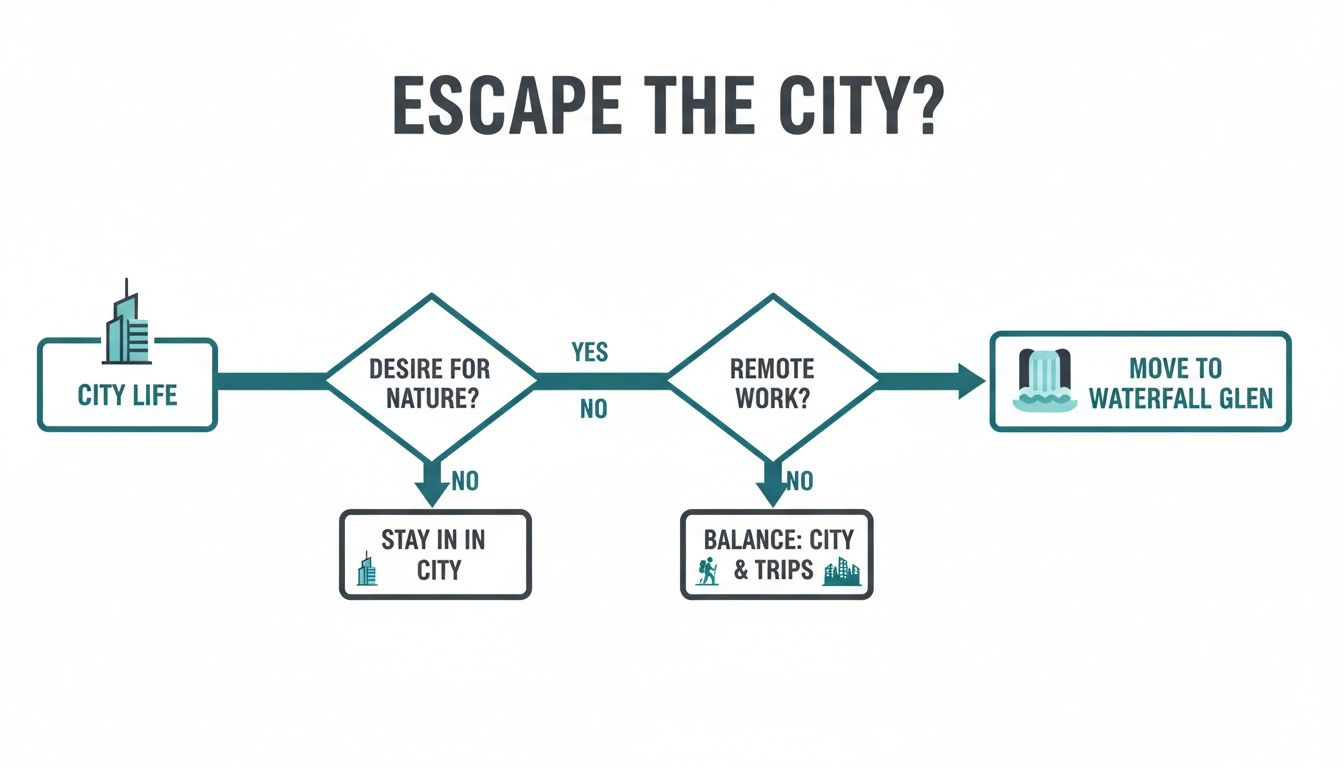
    Sometimes the biggest hurdle is just making the decision to walk out the door. This little flowchart says it all—when that primal pull for nature strikes, the path leads directly here.

    Flowchart illustrating decisions to escape city life, considering desire for nature and remote work.

    It really is that simple. When you need nature, this is your sanctuary.

    Shorter Routes for Quick Escapes

    Don’t have the time to commit to the full 9.5 miles? Don't even worry about it. Waterfall Glen is a beautiful web of smaller, intersecting trails that empower you to craft your own adventure. You can carve out a short, potent walk that slots perfectly into a crammed schedule.

    These shorter paths are my secret weapon for a quick, potent dose of nature. They feel more intimate, like you’re stumbling upon a hidden corner of the woods that no one else knows, a secret shared just between you and the trees.

    Here's a quick rundown of the main options to help you choose your own journey.

    Waterfall Glen Trail Options at a Glance

    This table offers a quick snapshot of the main loop and a couple of my favorite shorter routes to help you plan your escape.

    Trail Name Distance (Miles) Surface Type Best For
    Main Loop 9.5 Crushed Limestone Long Hikes, Running, Biking
    Waterfall Dash < 1 Crushed Limestone Families, Quick Visits, Photos
    Prairie Meander 1 – 2 Dirt & Limestone Open Views, Bird Watching

    Whether you choose a marathon or a sprint, you're guaranteed an incredible experience. Here are a couple of my go-to ways to leverage the shorter trails:

    • The Waterfall Dash: This is your quickest victory. Park at the main lot on Northgate Road and just follow the short spur trail directly to the waterfall. It’s a simple, immensely rewarding walk, less than a mile round-trip, that delivers you straight to the preserve’s crown jewel.
    • The Prairie Meander: For a completely different flavor, start from the trailhead on Cass Avenue and lose yourself in the paths winding through the Bluff Savanna. You'll be met with these vast, sweeping views that feel like a world away from the dense, intimate woods.

    These routes are your lifeline when you just need to breathe. They prove you don’t need an entire day to connect with the wild, untamed spirit of Waterfall Glen. You just need to show up.

    Alright, let's talk about the main event—the waterfall. This is the reason most people make the pilgrimage out to Waterfall Glen in the first place.

    But let me frame your expectations correctly. This isn’t some colossal, thundering cascade you’d find plastered on a national park brochure. It's smaller, more personal. It feels like a secret you stumble upon, a tiered masterpiece on Sawmill Creek that rewards your effort for getting out there.

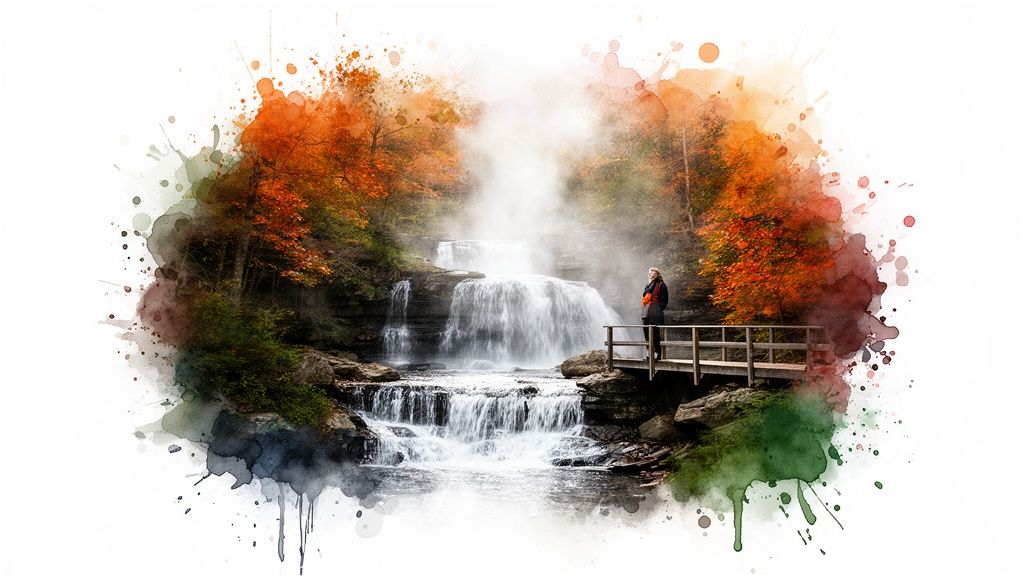
    A person on a bridge admires a beautiful multi-tiered waterfall amidst colorful autumn trees.

    Finding it is a breeze. If you use the main lot on Northgate Road, it’s just a quick stroll down the southern spur trail. I promise, you’ll hear its whisper before you see its face.

    So, When Should You Go?

    Honestly, when you visit is more critical than how you get there. The waterfall’s personality undergoes a complete metamorphosis with the seasons. It’s like the forest’s own mood ring, and each color tells a unique and compelling story.

    After a heavy spring rain, that thing is a beast. The water churns, powerful and alive, feeling like it’s washing the entire world clean. It reminds me of the catharsis we feel at a Litter Caterpillars cleanup—purging the old junk to make space for something new and vibrant.

    I truly believe a forest is the ultimate classroom for watching change unfold. It’s a relentless cycle of death and rebirth, a kind of reinvention that mirrors the transformations we all navigate in our own lives.

    Summer arrives, and the entirety of Waterfall Glen Forest is draped in this deep, heavy blanket of green. The air by the falls grows cool and misty—a perfect little pocket to escape the city’s oppressive heat and just breathe for a moment. It becomes a quiet, contemplative sanctuary.

    My Favorite Time at the Falls

    But if you’re asking for my personal favorite, it’s autumn. Hands down. The entire forest simply detonates in a riot of reds, golds, and oranges. The waterfall, framed by that blaze of color, is something surreal. It’s the kind of beauty that forces you to stop, to just stand and stare, completely humbled.

    Even winter offers its own stark magic. The waterfall frequently freezes solid into a wild, otherworldly ice sculpture. A profound quiet descends. You can see the very bones of the forest. Every season is a new chapter in its story, and I think you owe it to yourself to experience every single one.

    Getting There and Getting Started

    A little foresight will take you a long way. Think of this as the essential intel you need before you even think about lacing up your hiking boots. Getting to Waterfall Glen Forest is the easy part; where you park, however, can literally make or break your entire day, especially on a gorgeous weekend morning.

    The main parking lot off Northgate Road is popular for a very good reason—it’s your most direct line to the waterfall. But it fills up with astonishing speed. My advice? Get there early. And I mean early. Show up before 9 a.m. on a Saturday or Sunday, or you'll find yourself in a frustrating loop, circling for a spot that may never appear.

    The Weekend Morning Filter

    We use this very same strategy for our Litter Caterpillar meetups. There’s a certain magic to showing up on a weekend morning with a shared purpose. We've discovered it acts as a filter, attracting a specific kind of person: a giver. Someone who is willing to trade a little extra sleep for an experience that resonates with meaning. It sets a powerful, positive frequency for the entire day.

    If you’re not an early riser or if the main lot is a complete circus, pivot and try the parking area off Cass Avenue. It’s almost always less crowded and drops you right near the Bluff Savanna and the prairie sections. Starting your hike here offers a completely different, and equally beautiful, flavor of the preserve.

    Think of your visit to Waterfall Glen as a story you are writing. The trail is the main plot, absolutely. But the details—where you park, when you arrive, what you pack—that’s the stuff that adds texture and transforms a simple walk into a genuine adventure.

    The Bare Necessities

    Okay, let's talk gear. While the trails are remarkably well-maintained, you must remember this is still a wild space. You will find restrooms at the main parking areas, but they are just pit toilets, and they become scarce once you're deep in the woods. Plan accordingly.

    Most importantly: bring your own water. I cannot stress this enough. There are absolutely zero drinking fountains along the entire 9.5-mile loop. Dehydration is no joke; it’s a silent predator that can turn a beautiful hike into a miserable, even dangerous, ordeal. Do not get caught without it.

    Finally, a quick word on trail etiquette. The path is a shared space, a beautiful mix of hikers, runners, and bikers. It’s a community. So, I need you to act like it.

    • Stay to the Right: This is the golden rule. It’s just like driving. This allows faster people to pass you safely on your left.
    • Announce Yourself: If you're approaching someone from behind, a simple, friendly "On your left!" works miracles. Nobody enjoys being startled.
    • Keep Your Ears Open: This one is huge, especially if you listen to music. Keep the volume low or leave one earbud out. You have to be able to hear a cyclist or runner coming up behind you.

    Sharing the trail with a little kindness and awareness ensures everyone’s visit to the magnificent waterfall glen forest is a happy one.

    Join Us and Transform With the Litter Caterpillars

    This is where the story of the waterfall glen forest becomes our story. I started Litter Caterpillars because my own life felt like an unmanageable mess, and I discovered a strange kind of therapy in cleaning up our shared parks. It actually all began right here, in this very preserve.

    Something just clicked for me when I figured out how to reframe a chore as a mission. It’s like that old story of Tom Sawyer, who brilliantly convinced his friends that painting a fence wasn't work at all, but a privilege. What looked like a tedious job transformed into a shared adventure—something people were eager to be a part of.

    That’s precisely what we do. We take the simple act of picking up trash and we elevate it into something powerful and deeply enjoyable. We aren't just cleaning; we are forging a real community and changing ourselves, one small, deliberate act of service at a time. This is my personal invitation for you to join us.

    What We Stand For

    Our group is built on a few core beliefs that we live and breathe every single time we gather, especially here at Waterfall Glen. These aren't just empty words on a website; this is the real, tangible ethos of our crew.

    • Bravery: We show up. No matter what. Rain, snow, or blazing sun. Facing a little discomfort together is precisely what builds grit and turns a simple morning into a story you’ll actually want to tell later.
    • Kindness: We look out for each other on the trail. Kindness means we create a safe, welcoming space where every single person feels like they belong from the very second they arrive.
    • Unity: We bring people together from every walk of life, every background. The philosophy is simple: if you want to go fast, go alone. If you want to go far, go together.

    These values are the very bedrock of our group. They are the reason a weekend morning spent picking up litter feels more like a celebration than a task. It's about discovering your own strength through service.

    When you join us, you’re not just helping clean the waterfall glen forest. You’re making a powerful statement that you believe in the transformative power of showing up—for your community, and more importantly, for yourself.

    Your First Cleanup: What to Expect

    Joining us couldn’t be easier. The most important thing for you to bring is just your positive energy and a willingness to meet some new, like-minded people. We handle everything else.

    We provide all the necessary supplies for every single event:

    • Gloves to keep your hands clean and safe.
    • Trash bags for collecting all the litter we uncover.
    • Hand sanitizer because, well, it’s just a smart move.

    You don't need any special gear or prior experience. All you have to do is show up. We make our events easy to find and incredibly welcoming for newcomers. You can check out all of our volunteer opportunities in Chicago and see exactly where we'll be next.

    This isn’t about achieving perfection; it’s about making progress. It’s about taking one small step alongside a group of people who believe that together, we can make a real, visible, and lasting difference. We are the Litter Caterpillars, and I truly hope to see you on the trail.

    The Hidden Life of the Forest

    A watercolor painting of a deer, surrounded by colorful wildflowers, green oak leaves, and two small birds.

    Look, Waterfall Glen is so much more than just a place to burn off miles on a trail. It’s an entire living, breathing world, and most people just blast right past it, totally oblivious. I was guilty of that myself. For years, I just came here to hike, obsessing over my pace, and I completely missed the point.

    But once you force yourself to slow down, the place truly begins to speak to you. I want to show you how to see the waterfall glen forest for what it truly is. Imagine the towering oak and hickory trees as the skeleton. They're the first thing you notice, the massive structure holding it all together.

    The Forest Floor and Its Secrets

    But the real magic, the real story, is in the details. You have to get down low. In the spring, the forest floor is carpeted with these delicate wildflowers—trout lilies, spring beauties, wild ginger. They're called ephemerals because they don't linger. They erupt, live their beautiful, brief lives, and then vanish. Spotting them feels like you’ve been let in on a precious secret. You can learn more about the incredible trees you'll see in our guide on trees found throughout Illinois.

    It’s just like our Litter Caterpillars cleanups. Every single piece of discarded trash tells a dumb, meaningless story, but every plant and animal here is part of a much larger, more beautiful narrative. It’s all interconnected.

    I’m telling you, the best parts of this preserve only reveal themselves when you’re moving slowly. This isn’t a race. It’s a conversation with nature, and you have to shut up for a minute to actually hear what it’s trying to tell you.

    If you’re quiet and just a little bit patient, you’ll get lucky. The real show, after all, happens at the edges of the day.

    My Favorite Sights and Photo Spots

    I love coming here when the sun is just beginning its ascent or descent. That’s when the white-tailed deer grow bold, stepping out from the cover of the woods to graze. Seeing them is a stark reminder that you are a guest in their home. So, act like one.

    And listen! Just stop what you’re doing and listen. The air is thick with birdsong, this wild, ever-changing chorus. It’s the forest's own personal soundtrack.

    Here are a few spots I always hit for photos:

    • The Bridge over Sawmill Creek: It’s a perfect, natural frame for the woods and the creek. You simply can't take a bad picture here.
    • The Prairie Vistas: That enormous, wide-open sky set against the tall grasses is just breathtaking.
    • The Waterfall Itself: Yes, it’s the main attraction, but for a very good reason. Don't just take the standard head-on shot. Get low, get high, and capture the intricate way the water spills and dances down the tiers.

    Connecting with this hidden life is what makes Waterfall Glen truly special. It elevates a simple walk into something more. It turns it into a discovery.

    Your Questions About Waterfall Glen Answered

    People ask me a lot of the same questions before they head out to waterfall glen forest for the first time. I get it. After all our cleanups and hikes here, I've learned a thing or two. Let me get you ready.

    Are dogs allowed? Yes. But they must be on a leash, without exception. This isn't just some arbitrary rule; it's about respect. We are guests in the home of deer, coyotes, and countless other creatures. Keeping your dog on a leash protects them and ensures everyone feels safe and comfortable on the trail.

    What About Ticks and Bugs?

    Look, it's a forest. Of course there are bugs. Mosquitoes can be a nuisance in the summer, especially down by the water. The real thing you need to be smart about is ticks. They are a fact of life in the Illinois woods.

    But fear is not our way. Fear keeps you trapped inside. Bravery gets you out there.

    We don't let a little challenge stop us, whether it's a blizzard during a cleanup or a few bugs on a hike. Just be smart: stay in the middle of the trail, wear light-colored clothing so you can easily spot any stowaways, and give yourself a quick check when you get back to your car. It’s a simple, powerful habit.

    Is the waterfall always flowing? Nope. And that’s what makes it so interesting. After a heavy rain, it’s a roaring spectacle. During a dry spell, it might diminish to a mere trickle. It's a humbling reminder that nature is in charge, not us. You never get the same view twice.


    At Litter Caterpillars, being prepared is everything. It's the first courageous step in showing up for yourself and for your community. We’re all about transformation, one brave act at a time. Come see what we're about at https://www.littercaterpillars.com.