
Tag: chicago food pantry

  • Sanad Social Services: Your Guide to Support in Chicago

    Sanad Social Services: Your Guide to Support in Chicago

    A parent opens the fridge, sees half a bottle of ketchup and a light that makes the emptiness look bigger, and starts doing the math again. Dinner, bus fare, the gas bill, school tomorrow. Something has to give.

    More Than Just a Food Pantry

    I've learned that hunger rarely walks into a room alone. It brings stress with it. It brings that tight feeling in your chest when a child asks what's for dinner and you need ten more minutes to figure out an answer that sounds calm.

    That's why Sanad Social Services matters to me in a very human way. When you hear the words food pantry, you might picture a shelf of cans and a quick handoff at the door. You might picture a transaction. Sanad feels more like a neighbor pulling up a chair and saying, “Let's get through this week first. Then we'll think about the next one.”
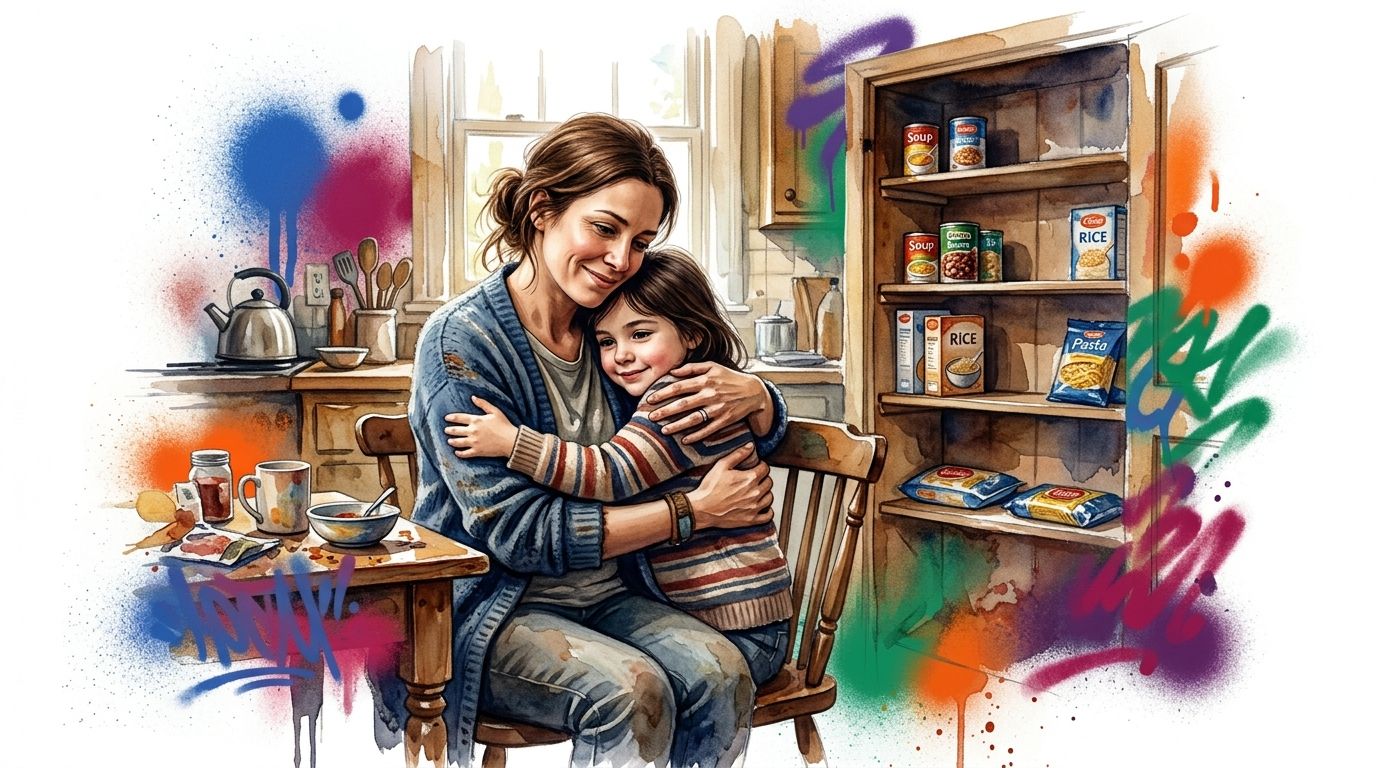
    A warm watercolor illustration of a mother and daughter embracing in a cozy kitchen setting.

    What help looks like up close

    A box of food can sound small on paper. In real life, it can change the whole tone of a home. It can mean a parent cooks instead of skips. It can mean a kid eats breakfast before school. It can mean the argument about money doesn't happen that night because there's one less emergency on the table.

    Sanad Social Services works with low-income, diverse households in Chicago. I don't think of that as an abstract category. I think of families carrying grocery bags with numb hands in winter. I think of grandparents stretching meals. I think of people who work hard and still hit a wall.

    Food help is never just about food. It gives a family room to breathe.

    Why people keep coming back

    A place like this becomes part of your routine the way a steady bus line or a trusted clinic does. You learn where it is. You learn the faces. You stop feeling like you have to explain every hard thing from the beginning each time you ask for help.

    That's what I want you to know from the start. This isn't a dry directory entry. This is a story about support that feels practical and personal at the same time. If you need help, I want you to feel less alone. If you want to help, I want you to see the people behind the pantry, not just the program names.

    Here, support feels less like charity dropped from above and more like someone bracing the ladder while you climb.

    The Story and Mission of Sanad

    Back in 1991, Fatima Abueid started Sanad in Chicago. I keep coming back to that date because every long-running community effort begins with one person deciding that waiting politely for someone else to fix things isn't good enough. That first decision matters.

    Sanad began at 6248 S Spaulding Ave in Chicago, and I imagine the early work the way many neighborhood efforts begin. One person sees the gap. One person knows families are carrying too much. One person starts where they are, with what they have, and refuses to look away.

    The meaning inside the name

    The word Sanad means support or anchor in Arabic. I love that because an anchor doesn't make the storm disappear. It keeps you from drifting away while the storm is still going.

    That's the clearest way I can explain the mission. Sanad Social Services isn't trying to dress up hardship with polished language. It is trying to hold people steady when life starts sliding. If your budget is cracking, if your kitchen is bare, if one overdue bill is about to knock over everything else, support has to be sturdy. It has to hold.

    Practical rule: The best community work starts with a simple question. “What do people need today?”

    A mission built from lived reality

    I don't read Sanad's story as an institution first. I read it as an act of attention. Fatima Abueid saw hunger in her city and answered it with structure, repetition, and care. That matters because families in crisis don't need grand speeches. They need people who keep showing up.

    And showing up year after year changes the tone of a place. You can feel it. Work like this gets built in ordinary moments. A volunteer loading food. A parent asking a quiet question. A staff member remembering a family's name. Those moments stack up like bricks.

    Here's how I see it:

    Part of the mission What it feels like in real life
    Support Someone helps carry weight you can't carry alone that week
    Anchor Your life stops spinning quite so fast
    Dignity You don't feel reduced to your hardest month
    Consistency Help isn't random. You know where to turn

    That kind of mission doesn't need flashy language. It needs trust. And trust grows when people keep their doors open, keep their word, and keep treating you like a person instead of a problem.

    Finding Support Through Sanad Programs

    A mother finishes a late shift, gets home, and opens the fridge to do the kind of math nobody should have to do. What feeds the kids tonight. What gets saved for tomorrow. What can wait. In neighborhoods across Chicago, that pressure shows up in different forms, so support has to meet people in different ways too.

    Sanad does that through onsite help, mobile pantry access, utility relief, and educational seminars. The model matters because families do not all face the same barrier. One person can stop by a fixed location after work. Another is caring for children, covering two bus rides, or trying to keep the lights on before the shutoff notice becomes real.
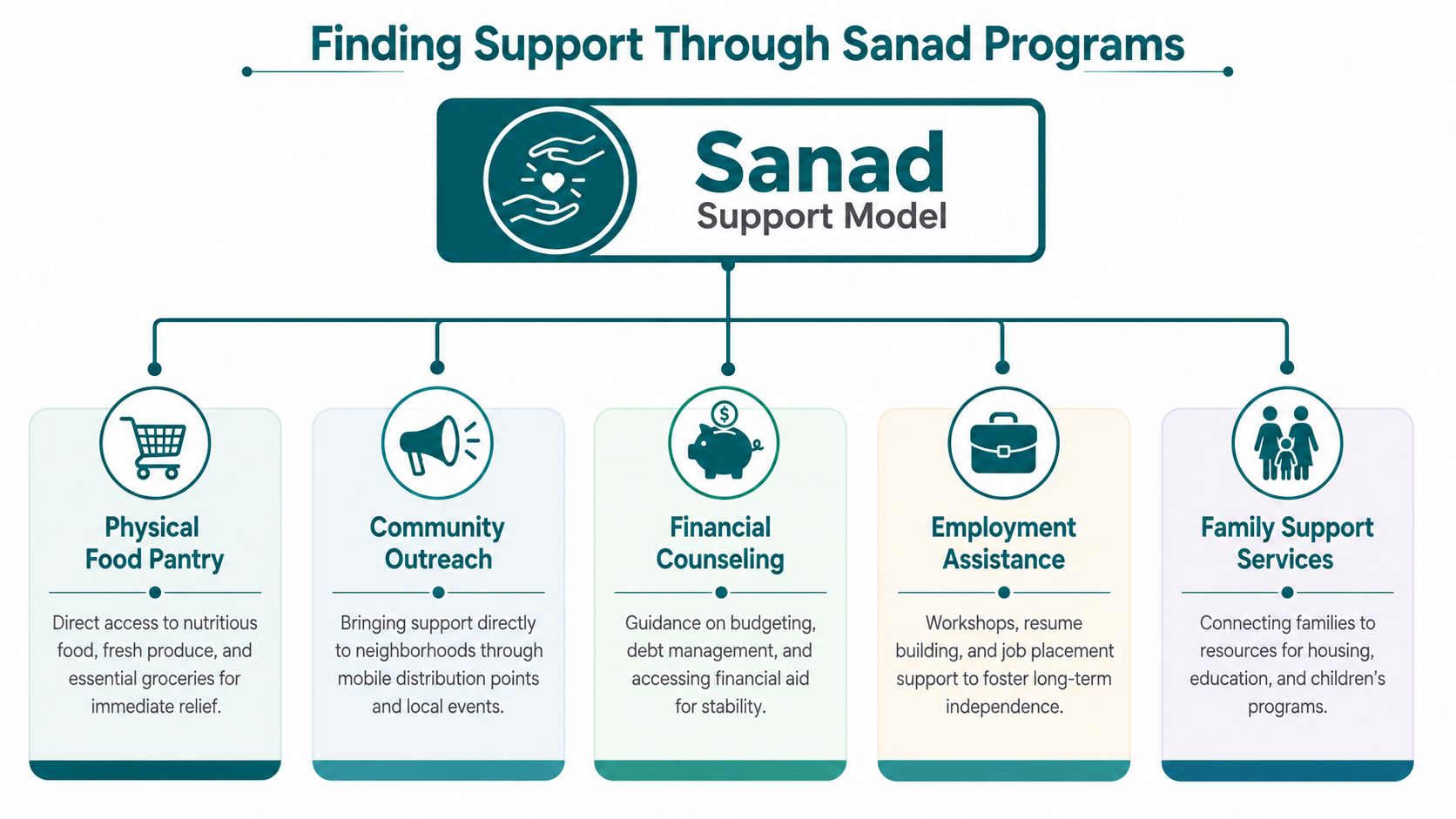
    An organizational chart showing five types of Sanad social support programs offered to the community.

    What support can look like in real life

    I keep coming back to one simple truth. Hunger rarely arrives alone.

    Sometimes the need is groceries. Sometimes it is groceries plus an overdue utility bill. Sometimes it is a family that needs food this week and better information so next month feels less fragile. Sanad's programs make more sense when you look at them through that lens.

    A pantry visit can give someone staples for the kitchen. A mobile distribution can reach people who cannot easily cross town. Utility help can protect a household from slipping from financial stress into full disruption. Seminars can give people practical guidance they can carry into the next month, not just the next meal.

    That mix feels grounded. It respects how real life works.

    The programs, person by person

    If you can get to a set location and want direct contact with staff or volunteers, onsite pantry support may feel steadier. You know where to go. You can ask questions face to face. For some people, that kind of routine lowers the stress.

    If travel is the problem, mobile pantry support can make the difference between getting help and going without. A service model that moves closer to people matters when transportation, work hours, health, or caregiving responsibilities keep tightening the day.

    Utility relief speaks to a different kind of fear. You can have food in the house and still feel the month falling apart if the gas or electric bill is overdue. Help in that area can protect more than a budget. It can protect a household's sense of stability.

    Educational seminars serve another purpose. They create room for longer-term support, whether someone wants guidance, clearer information, or a stronger footing after a hard stretch.

    If you're comparing nearby options, this guide to Casa Catalina Food Pantry in Chicago shows how different neighborhood programs serve families in different ways.

    Why people stay connected

    I have seen people ask for help only after they have run through every private option first. They skip meals. They stretch rice. They tell themselves they can hold out one more week. What often brings them back to a place like Sanad is not only the food. It is the feeling that the help fits the shape of their actual problem.

    A family dealing with hunger, transportation trouble, and utility stress does not need a one-note response. They need support that can hold more than one burden at a time. That is what makes these programs feel human. They leave room for dignity, practical relief, and the kind of follow-through that helps a hard month stop becoming a harder year.

    How to Get Help From Sanad

    Asking for help can feel heavier than carrying the problem another week. I know that. A lot of people know that. You rehearse what to say, wonder if you'll qualify, and worry someone will make you feel small.

    Sanad's location is 6248 S Spaulding Ave, Chicago, and sometimes having one clear place to start is half the battle. You don't need a perfect script. You just need a first step.

    A friendly Sanad representative explains service steps to a woman using an informative visual guide.

    Start with the simplest move

    If I were helping a friend do this, I'd say keep it basic.

    1. Reach out directly. Use the contact pathway listed on Sanad's website and ask the plain question: you need food support and want to know how to receive it.
    2. Ask what they need from you. Requirements can change, so it's better to hear it straight from the organization than guess.
    3. Tell them what pressure feels biggest right now. Food, utilities, transportation, schedule conflicts. Be direct about your primary need.
    4. Ask whether onsite or mobile support fits your situation better.

    That last point matters. If getting across town is hard, say so. If your work hours are unpredictable, say so. Clear information helps people match you to the right option faster.

    Keep your questions short and honest

    You don't need polished words. Try something like this:

    • “I need help with food for my household.”
    • “I'm not sure if I should come in person or ask about mobile distribution.”
    • “I'm also struggling with utility bills. Can you tell me what support might fit?”

    That's enough. You don't have to defend your hardship like you're in court.

    The fastest way to get useful help is to say what's happening in plain language.

    If you're also looking at other meal support options in the city, this Chicago soup kitchen guide may help you compare what kind of immediate food access fits your day.

    A few things to remember before you go

    I won't invent hours or eligibility details that I can't verify. So here's the honest version. Check Sanad's official contact information before you visit. Ask about current pantry times, any paperwork they may request, and whether they have neighborhood or household guidelines.

    Use this quick checklist:

    Before you contact Sanad Why it helps
    Write down your address They may need it to match you with the right service area
    List household basics It helps explain your food need clearly
    Note scheduling limits This can shape whether mobile or onsite support fits better
    Ask about documents It saves you an extra trip

    The hard part is often the first call, first message, or first visit. After that, the path usually gets clearer.

    Join the Mission to Support Our Neighbors

    Some people read about a pantry and think, “I wish somebody would do more.” I always want to answer that sentence with one word. You.

    Community support runs on people who decide to show up. Not people with perfect schedules. Not people with endless money. Just people who are willing to give a few hours, a little energy, a bit of care, and treat that offering like it counts.

    A diverse group of volunteers sorting donated goods and food items for a community social service project.

    What your help can look like

    Maybe you sort food. Maybe you donate money. Maybe you connect a family to the pantry because you know they're struggling privately and too proud to ask. Maybe you partner through a workplace, faith group, school, or block club.

    I like to think of community help the way I think of carrying groceries up a walk-up apartment staircase. One bag is awkward alone. Four people make the whole load feel possible.

    Here are a few real ways to step in:

    • Give time: Volunteer for pantry operations, distribution days, or community support tasks.
    • Give funds: Financial gifts help cover food, logistics, and day-to-day operations.
    • Spread the word: Tell families where to go when they need steady help.
    • Build partnerships: If you run a group or business, ask how you can support ongoing work.

    If you want a wider view of places doing hands-on good in the city, this roundup of charities in Chicago is a useful place to browse.

    Why volunteering feels different from donating alone

    Money matters. Of course it does. But human presence matters too. When you sort food, carry boxes, greet visitors, or help organize distribution, you become part of the atmosphere people walk into. You help turn a stressful errand into a decent encounter.

    That's no small thing. Dignity lives in details. It lives in a warm greeting, clear directions, patience, and a room that doesn't make people feel like a burden.

    A short look at community action can make that easier to picture.

    If you've been waiting for a sign

    This is it. If you care about families eating well, keeping the lights on, and getting through rough stretches with dignity intact, then your help has a place. You don't need to arrive with a grand plan. You can begin with one hour, one donation, one conversation.

    A strong neighborhood is built by people who decide someone else's hard week matters to them.

    Your Questions Answered

    The questions people ask at the door are rarely just about hours or paperwork. They sound more like this: Will I be judged. Will anyone understand what my family is carrying right now. If I call, will a real person talk to me like I matter.

    Those are the questions worth answering.

    What if my situation feels too complicated to explain

    Start small. You do not need a perfect summary of your life before you reach out.

    A parent trying to keep up with rent, groceries, school forms, and a shutoff notice may only have the energy to say, “We're having a hard month.” That is enough to begin. From there, the conversation can get clearer, one detail at a time.

    What if I have asked for help before and had a bad experience somewhere else

    That history can stay with you. One cold front desk, one rude comment, one long wait with no answer can make the next phone call feel heavier than it should.

    If that is you, I hope you hear this plainly. A bad experience somewhere else does not mean you should stop asking for support. You still deserve to be treated with care, patience, and respect.

    Can I reach out for someone else

    Yes, if you are trying to help a neighbor, parent, friend, or family member take the first step. Sometimes the strongest person in the room is the one making the call on someone else's behalf because that person is overwhelmed, ashamed, sick, or exhausted.

    That kind of help matters.

    What if I do not know the right words to say

    Use your own words. Everyday words are enough.

    “I'm behind.”
    “We're stretched.”
    “I need help figuring out what to do next.”

    Nobody should need polished language to ask for support.

    What if I need help, but I am afraid of being seen as a burden

    I have met so many people who carry this fear unspoken. You may be one of them.

    But communities do not survive because everyone handles every crisis alone. Communities survive because people step in for each other during the weeks when life breaks its usual rhythm. Asking for help is part of how neighborhoods stay human.

    How can I support Sanad if I am not in a position to volunteer regularly

    Steady support does not always look like a weekly shift. You can mention Sanad in conversation when someone needs a place to turn. You can share updates with a friend who wants to help. You can keep the organization in mind during holidays, hard winters, and back-to-school season, when family budgets often feel tightest.

    Small acts travel farther than you think.

    If you believe cleaner, kinder neighborhoods start with people who show up, spend some time with Litter Caterpillars. You'll find a Chicago group built around service, friendship, and the simple act of making a block feel more cared for.
  • Lakeview Pantry Chicago: A Guide to Getting and Giving Help

    Lakeview Pantry Chicago: A Guide to Getting and Giving Help

    Last winter, I watched a woman steady an older man's grocery bags on a slushy corner while another neighbor held the door. Nobody made a speech. They just saw a need and moved.

    A Story of Neighbors in Our City

    That's the feeling I associate with Lakeview Pantry Chicago. They're often looking for an address, hours, or a way to volunteer. What they're really circling is something more basic. They want to know where people in this city still show up for each other.

    Lakeview Pantry, now called Nourishing Hope, began in 1970 and in 2025 it served 50,000 neighbors and distributed more than 6 million pounds of food, according to Nourishing Hope's official site. I don't read that like a cold number. I read it like thousands of grocery bags lifted, carts rolled, doors opened, and kitchen tables made less stressful for one more week.

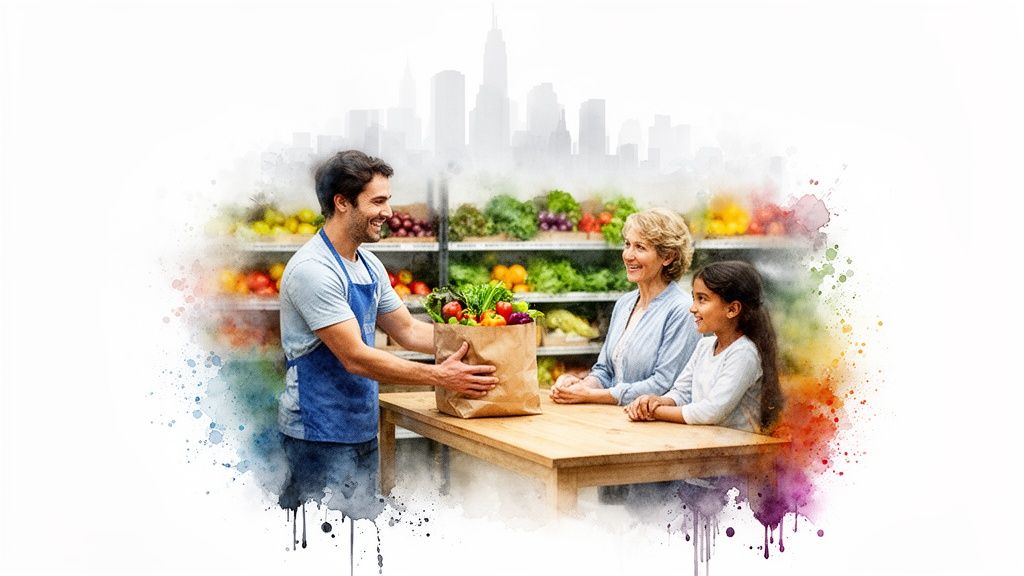
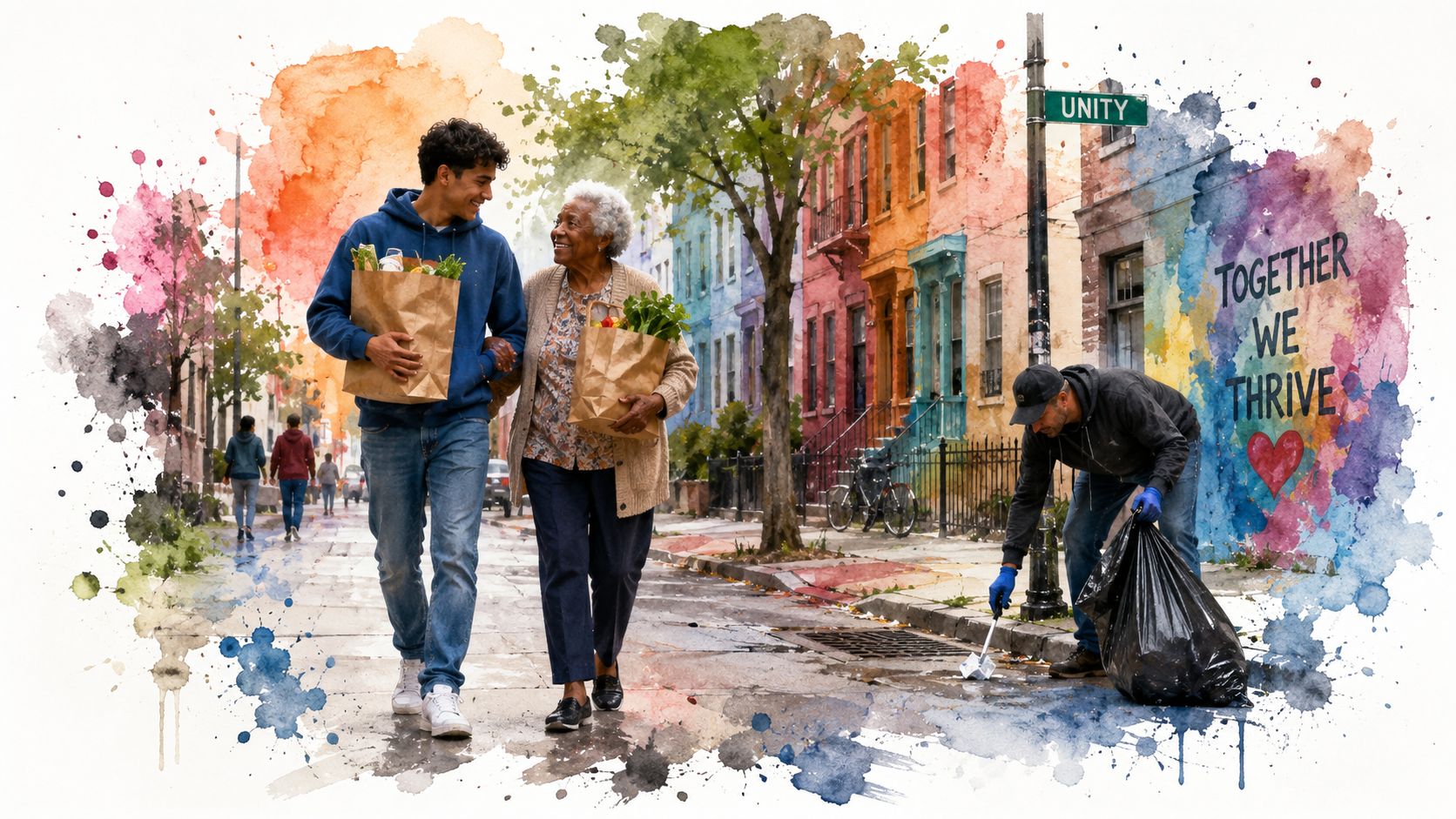
    A young man and an elderly woman walk down a vibrant street carrying grocery bags while a volunteer cleans.

    If you've ever joined a cleanup, you know how this works. One person picks up one bottle. Another grabs a bag. Then a whole block starts to change. A pantry works in that same rhythm. One volunteer sorts food. One staff member greets a guest. One family gets enough groceries to breathe a little easier. By the end of the day, what started small feels like a city moving together.

    What the name still carries

    A lot of Chicagoans still call it Lakeview Pantry, and that makes sense. Names stick when they're tied to memory. Maybe you donated there years ago. Maybe a friend told you about it. Maybe you passed the building and wondered what happened inside.

    Now the name is Nourishing Hope, but the heartbeat is still local and neighborly. The work has grown wider.

    Chicago runs on these everyday exchanges. A hand on the door. A bag passed over. A stranger who decides not to stay a stranger.

    For people looking for other ways neighbors support neighbors across the city, this roundup of charities in Chicago is a good place to keep reading.

    Why people keep coming back

    Some people come because they need food. Some come because they need a place to help. Some come because they've been on both sides of that line in different years of their lives.

    That's what makes this place easy to understand. It isn't a machine. It's a habit of care.

    More Than a Meal What Nourishing Hope Means

    Food gets you through tonight. Stability helps you get through next month.

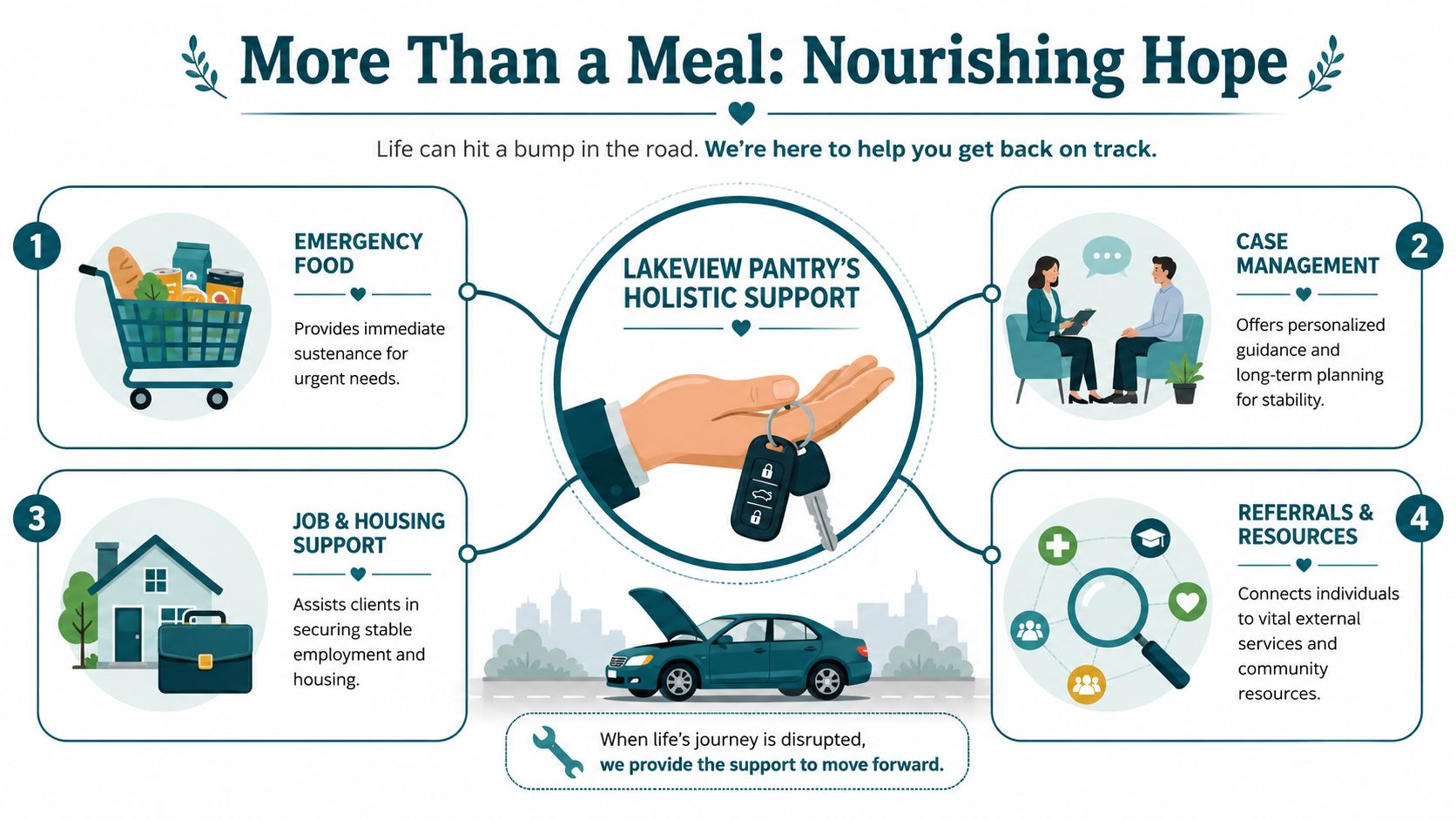
    That's the cleanest way I can explain the change from Lakeview Pantry to Nourishing Hope. If your car breaks down, a sandwich helps if you're hungry, but you still need the engine fixed, a ride to work, and someone who knows which shop to call. Hunger works like that too. A bag of groceries matters right away. But a lot of people also need help with stress, housing, work, and the tangle of problems that pile up around an empty fridge.

    The shift to Nourishing Hope points to that wider mission. The organization says the rebrand includes mental health counseling, job assistance, and housing support through its broader social service model, as noted by the Lakeview Roscoe Village Chamber listing for Nourishing Hope.

    An infographic detailing Lakeview Pantry's holistic support programs, including emergency food, case management, and job resources.

    Food is one tool in the toolbox

    I like to think of Nourishing Hope as a workbench instead of a shelf. On that bench, food is one tool. It's the first one you reach for. It solves the immediate problem. Then you look around and see other tools nearby.

    • Emergency food helps when the cabinet is bare and payday is still far off.
    • Case management gives people a real conversation and a plan, not just a quick handoff.
    • Job and housing help gets at the pressure points that make food insecurity keep coming back.
    • Referrals and outside resources connect people to support that one organization alone can't cover.

    That changes the experience. You don't walk away with only groceries. You walk away with more options.

    What that feels like in real life

    Say your rent jumps, your hours get cut, and the stress starts crawling into your sleep. Food help keeps the week from falling apart. A conversation about work or housing can keep the next few months from doing the same. If the strain has gotten heavy, mental health counseling matters too.

    Practical rule: When a pantry also helps with the problems around hunger, asking for food can become the first step instead of the last resort.

    That's why the name change matters in a practical way. It tells you the door opens to more than one kind of help.

    How to Get Help A Friendly Walkthrough

    Asking for help can feel awkward the first time. Individuals typically don't want to explain their situation to a room full of strangers. They want to walk in, get oriented, and leave with dignity intact.

    From what I've seen, Nourishing Hope tries to make that first step less tense. The building itself was designed with that in mind. Its permanent home, designed by Wheeler Kearns Architects, includes a dedicated entrance desk so every guest is greeted by a volunteer, which helps create a more welcoming arrival, according to the Chicago Neighborhood Development Awards project page.

    What to expect when you arrive

    Think of your first visit like walking into a well-run library instead of a chaotic giveaway line. You're not supposed to guess what happens next. Somebody is there to orient you.

    A friendly walkthrough usually looks like this:

    1. Start with the website or a phone call if you can. Check current details before heading over.
    2. Look at location options so you know which site makes the most sense for your trip.
    3. Prepare for a brief intake or check-in. Keep it simple. Bring what the organization asks for.
    4. Expect a greeting at the door. That part matters more than people realize.
    5. Ask about other support if food isn't the only issue on your mind.

    Some people need one visit. Others need a steadier rhythm for a while. Either way, it helps to know that the space was built to feel human.

    A few things I'd tell a friend

    If you're going for the first time, give yourself a little extra time and don't rush in flustered if you can avoid it. If English isn't your first language, or if forms make you nervous, bring a calm friend if the organization allows that kind of support.

    And if you want another example of how neighborhood food support works in Chicago, this piece on Casa Catalina Food Pantry in Chicago, IL gives a useful local comparison.

    Walk in like you belong there, because you do if you need the help.

    Questions worth asking on site

    A first visit gets easier when you ask direct questions.

    Question Why it helps
    What do I need for my next visit? You leave with a clear plan.
    How does scheduling work? You avoid confusion later.
    Can someone tell me about social services? You learn whether more support fits your situation.
    What if I have trouble with online steps? You find out what help is available before it becomes a barrier.

    That last question matters a lot right now, and I'll come back to it in a minute.

    Join the Crew How You Can Help

    Volunteering here feels a lot like any good group project in Chicago. People show up half-awake, grab a task, joke a little, then lock in. Before long, the room has a rhythm. Boxes move. Lists shrink. Somebody learns a name they didn't know an hour ago.

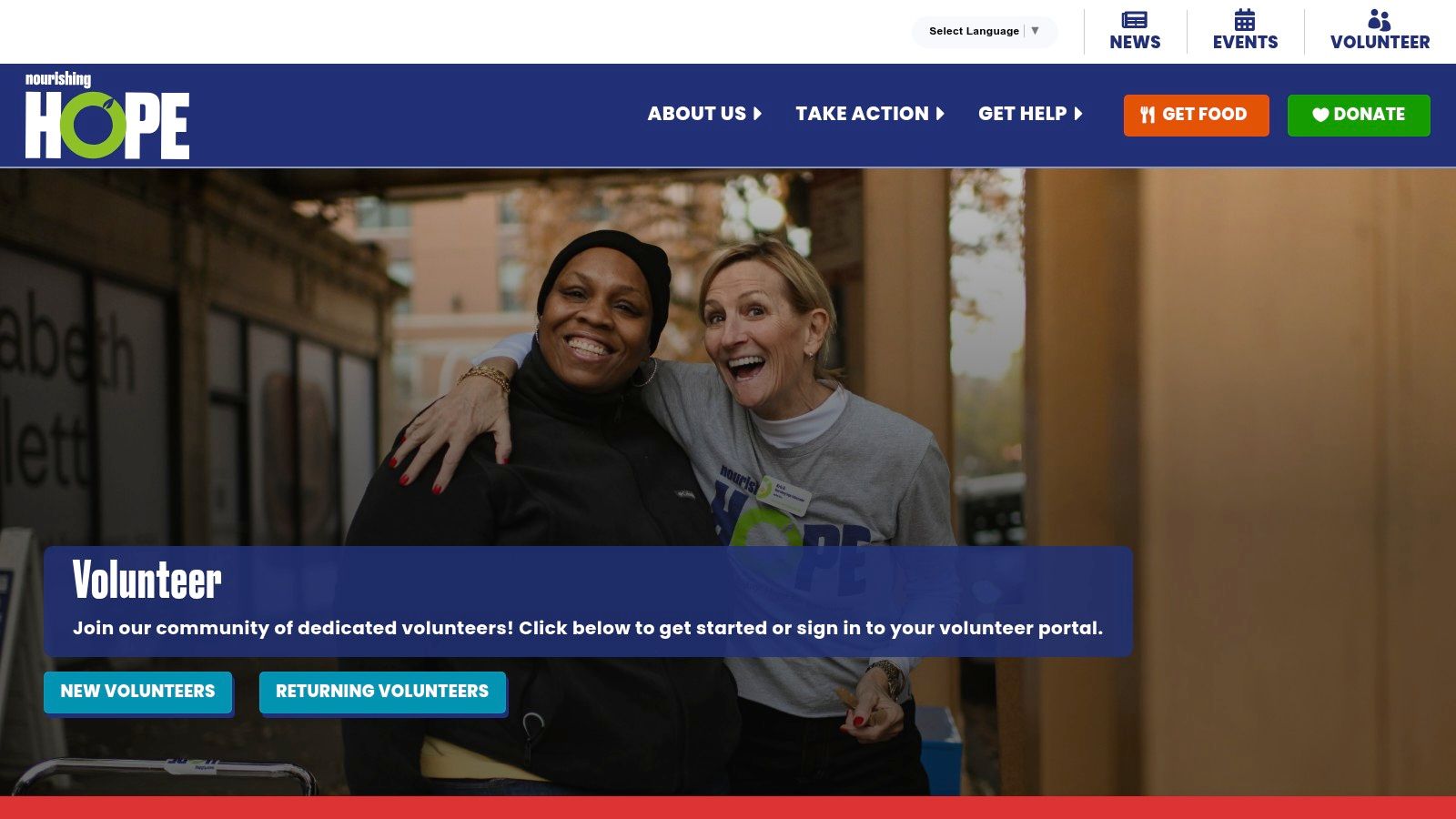
    Nourishing Hope has more than 5,000 volunteers, including adults, children, and families, supporting work like on-site distribution and home delivery, according to Lakeview Pantry's volunteer page.

    Screenshot from https://nourishinghopechi.org/get-involved/volunteer/

    That number tells me something simple. You do not need to be a superhero to join in. Plenty of regular people already have.

    What helping can look like

    Some folks like direct contact. They want to greet guests, pack groceries, or make deliveries. Others prefer behind-the-scenes tasks that keep the day from wobbling.

    Here are a few ways people usually plug in:

    • Hands-on pantry work means sorting, packing, stocking, and keeping food moving where it needs to go.
    • Guest-facing support fits people who are warm, patient, and good at making others feel at ease.
    • Home delivery help works well for volunteers who like a clear route and a clear purpose.
    • Material or financial donations help when your schedule is packed but you still want to contribute.

    None of those roles are glamorous. That's part of the beauty of it. Real care often looks ordinary up close.

    Why volunteering changes the volunteer too

    A lot of us sign up thinking we're only going to help someone else. Then we leave steadier ourselves. We meet people outside our routine. We remember our city is full of generosity that rarely makes noise.

    If you want another route into food-focused service, this guide to Chicago food bank volunteer opportunities can help you compare options and find the right fit.

    A short look at the volunteer side helps make it real:

    Some people donate because they have money. Some volunteer because they have time. Many do both in different seasons of life.

    If you're on the fence

    Go once. That's my advice.

    You don't need a lifelong plan. You need one morning, one shift, one honest try. Places like this run because enough people keep saying yes to one doable act at a time.

    Tips for Your First Visit or Partnership

    The hardest part is often the tiny practical stuff. Which door do I use. What should I bring. Do I need to book online. What if my neighbor doesn't use a smartphone. Those details decide whether help feels easy or far away.

    One issue deserves plain language. Nourishing Hope's system now leans heavily on online bookings, and there is a real access gap for the 40% of food pantry users in the area who do not use smartphones, especially seniors and disabled neighbors. That means convenience for one person can become a wall for another.

    If you're visiting for help

    Start simple and stay organized.

    • Check booking steps early if you use a phone or computer comfortably. Don't wait until the last minute.
    • Write down details on paper if that feels safer than keeping everything on a screen.
    • Bring a support person when possible if technology, forms, or travel feel stressful.
    • Ask staff what the backup plan is if you miss an online step or can't complete it at home.

    If you're helping an older neighbor, don't just send them a link and hope for the best. Sit down with them. Make the appointment together. Write the time clearly. Ask if they need a ride or a reminder call.

    If you're a community group

    Partnership starts with one practical question. What problem can your group reliably solve?

    Maybe your team can help people use digital booking. Maybe you can organize a volunteer day. Maybe you can collect items the pantry needs most. The best partnerships aren't flashy. They remove friction.

    A good first outreach note usually includes:

    What to include Why it matters
    Who you are Staff can place your group quickly
    What kind of help you can repeat Reliability beats a one-time burst
    How many people may join It helps with planning
    What dates or times work It moves the conversation forward

    Keep the human part in view

    When systems move online, some neighbors fall quiet. They don't complain. They just disappear from the process. That's why I think the best support people in Chicago do one extra thing. They notice who isn't in the room.

    If you're comfortable online, use that comfort for somebody else too.

    From a Pantry to a Partnership

    When I think about Lakeview Pantry Chicago, I don't think first about a building or a brand name. I think about motion. A volunteer greeting someone at the desk. A delivery heading out. A person walking in tense and walking out with a little more steadiness.

    That's why this story feels familiar to anyone who has ever done local service. You pick up what someone else couldn't carry alone. Sometimes that's a grocery bag. Sometimes it's a hard week.

    Chicago gets better when more of us treat care like participation instead of applause. If you need help, step toward it. If you can give help, step toward that too. Both acts belong to the same city.


    If you want one more way to put that spirit into motion, join Litter Caterpillars. We clean blocks, build friendships, and practice the same simple habit that keeps pantries, parks, and neighborhoods going. Show up, do one useful thing, and let that small act pull you into a bigger community.

  • Your Guide to the Casa Catalina Food Pantry Chicago IL

    Your Guide to the Casa Catalina Food Pantry Chicago IL

    That feeling when you open the fridge and it’s almost empty? It’s a heavy weight, a stone in your gut. I get it. I want to help lift some of that weight by walking you through exactly how you can get help at the Casa Catalina Food Pantry Chicago IL. No confusing steps, no judgment—just me giving you a straightforward guide so you know exactly what to expect.

    Your Practical Guide to Visiting Casa Catalina

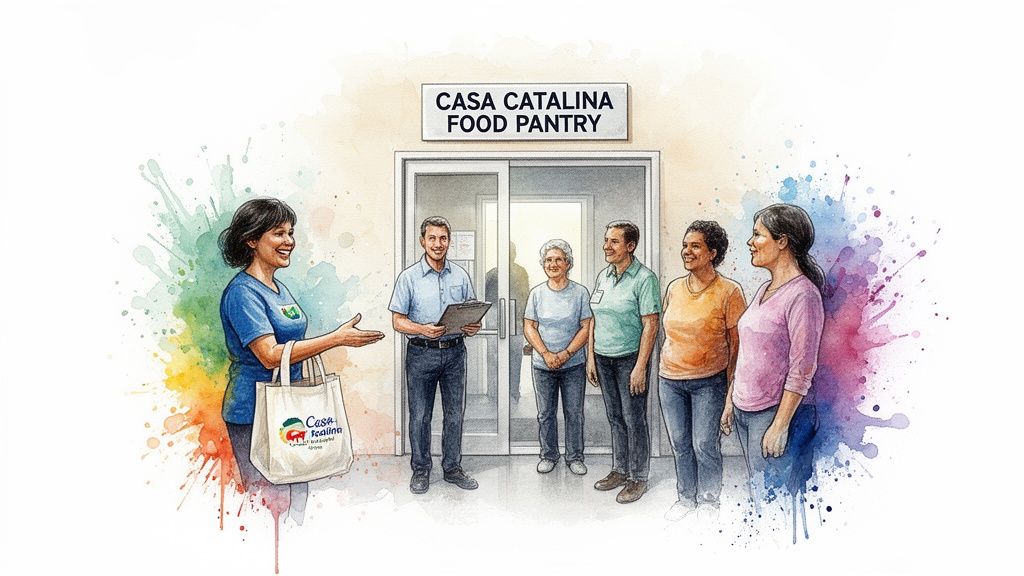
    Watercolor illustration of smiling people outside Casa Catalina Food Pantry, a woman holding a branded bag.

    Walking up to a new place to ask for help can feel incredibly intimidating. I’ve been there. My goal here is to vaporize that anxiety. Let's make sure you arrive at Casa Catalina feeling prepared and welcome, not stressed out and lost.

    This place is so much more than just a food pantry. Seriously. In the very heart of the Back of the Yards neighborhood, it’s a pillar of hope, a real-life testament to what happens when a community truly cares for its own. Here, they treat you like a neighbor, not a number.

    A Beacon in the Back of the Yards

    For over 30 years, Casa Catalina has been a steady presence at 4537 S Ashland Ave. It’s run by Catholic Charities, but its doors are flung wide open for everyone, no matter your story or what you believe. It’s a lighthouse, cutting through the fog for this neighborhood.

    Every single week, this pantry helps between 300 and 350 families. That’s roughly 1,500 to 1,750 of our Chicago neighbors getting the support they need to get by. This only happens because of the monumental deliveries they get—I'm talking about 5,000 to 7,000 pounds of food from the Greater Chicago Food Depository. It’s an incredible, powerful operation.

    I want you to see this not just as giving your time, but as this amazing opportunity for connection, for growth. It's a chance to become part of something truly meaningful in our community.

    My whole mission with Litter Caterpillars is to show you how service can transform us. Casa Catalina operates with that same spirit, treating every person who walks through its doors with a deep, profound sense of dignity. It's about so much more than a meal; it’s about respect. If that fires you up, you should check out our guide on how to start volunteering and find even more ways you can make an impact.

    What It’s Really Like Inside

    Walking into a new place, especially when you’re looking for a little help, can be nerve-wracking. I get it. So let’s walk through the doors of the Casa Catalina food pantry together, you and me, so you know exactly what to expect.

    First thing’s first: forget any old, sad picture you might have in your head of grim lines and identical, pre-packed bags of depressing food. What you'll find here is something else entirely. It's a place built on respect, plain and simple.

    This Isn't a Handout, It's Your Choice

    Casa Catalina was a trailblazer with its "client choice model"—an idea so simple yet so powerful it changes everything. Imagine it less like a pantry and more like a small neighborhood grocery store where you are the shopper. Instead of getting a bag someone else packed, you get to walk the aisles yourself and pick out the items your family will actually eat and enjoy.

    It’s about dignity. Do your kids tear through oatmeal for breakfast? Go ahead and grab it. Is your family all about black beans instead of pinto beans? The choice is entirely yours.

    This system puts you in the driver's seat. It also brilliantly slashes food waste, making sure groceries end up on a dinner plate, not forgotten in the back of a cupboard. It respects you and what your family needs, with options for things like eggs or no eggs, and meat or no meat, depending on your diet.

    "The client choice pantry is a dignified way to help people. It gives them the choices to select food that they want, that they are going to use, and it is a better way to respect people."

    And the support doesn't stop with groceries. Casa Catalina often runs extra programs during the winter, fall, and summer to give even more support to families, kids, and teens. You can read more about how they are bridging Chicago's food gap and creating a place where people feel genuinely supported.

    The volunteers here are amazing. They aren’t there to rush you along; they are there to guide you with a smile and make you feel like a welcome neighbor.

    Why This Pantry Is a Lifeline for Chicago

    Food insecurity isn't some abstract concept. It's a quiet crisis hitting our neighbors, right here in Chicago's vibrant Latino communities. It's a real, heavy struggle that's only gotten worse, and I want to show you the reality behind the numbers.

    The need for a place like Casa Catalina Food Pantry Chicago IL has absolutely exploded. The reasons are both simple and complicated. Just think about summertime. School's out, and suddenly that safety net of free breakfast and lunch is gone. For a family already stretching every single dollar, their grocery budget is now expected to cover a ton of extra meals.

    The Real-Life Impact of the Growing Need

    This isn't a vague issue; it's a full-blown crisis you can measure. Food insecurity among Chicago's Latino families has hit staggering, heart-breaking levels, with 28% of households with children struggling to put food on the table.

    Casa Catalina felt this surge firsthand. They saw 200 new clients walk through their doors between May and June alone as summer kicked off. It’s not just them, either. Across the city, Catholic Charities agencies have seen a staggering 62% jump in need since 2019. This isn't just a small uptick; it's a seismic shift, an earthquake under our feet. You can get a deeper look into these trends from a WTTW news report on Chicago food insecurity.

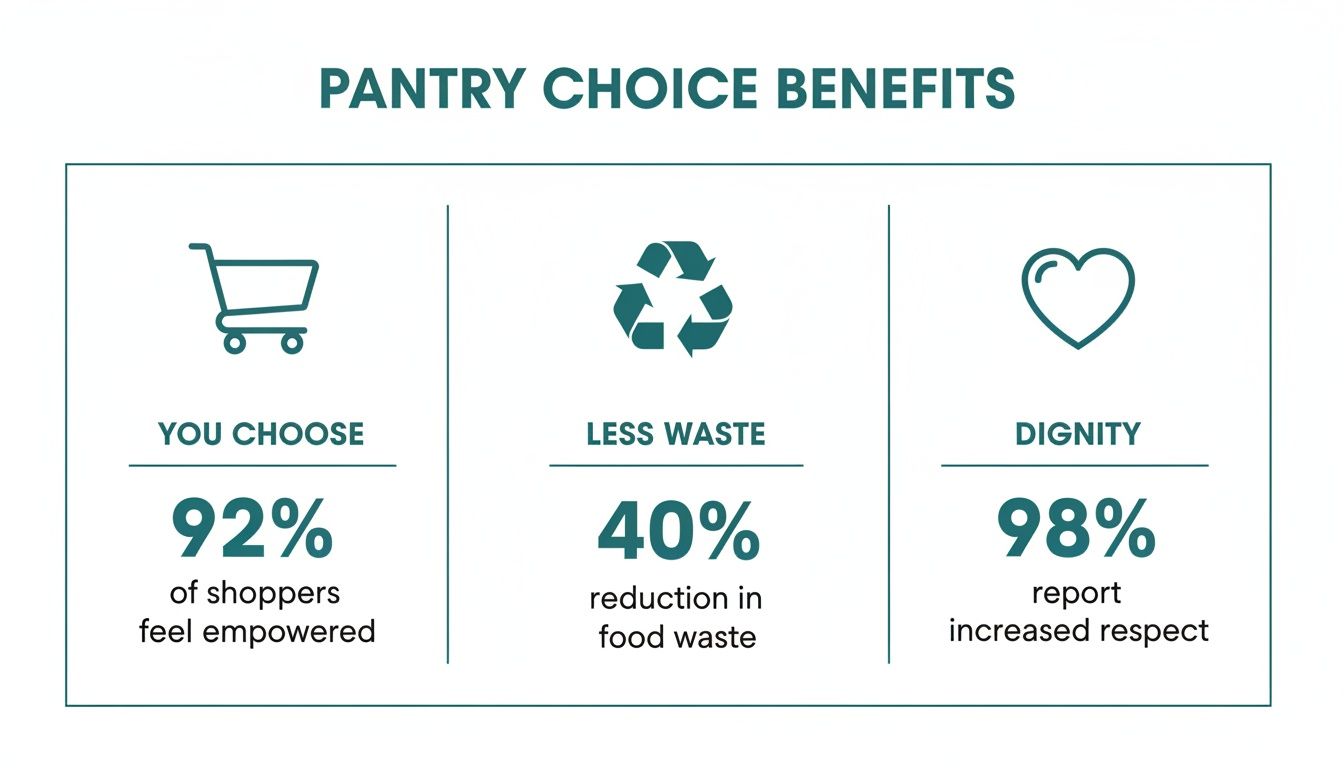
    This infographic gets to the heart of why Casa Catalina’s client-choice model is so powerful—it’s about giving people control, cutting down on waste, and, most importantly, showing profound respect.

    Infographic showing food pantry choice benefits: shopper empowerment, less waste, and increased respect.

    The big takeaway here is that how we give is just as important as what we give. It turns a handout into a powerful, transformative gesture of dignity.

    This growing need can feel overwhelming, but that’s exactly why places like Casa Catalina are so vital. They are the frontline defense against hunger, a place of refuge in the storm.

    Seeing the "why" isn't about getting discouraged. It's about understanding the incredible purpose behind every single donation and every volunteer hour you give. Every meal you help provide makes a real, tangible difference for a family in our city.

    Every can of beans, every hour you spend sorting produce, every dollar you give—it all becomes part of a much bigger story. It's a story of neighbors showing up for each other with incredible resilience and a hell of a lot of heart.

    Ready to Actually Do Something?

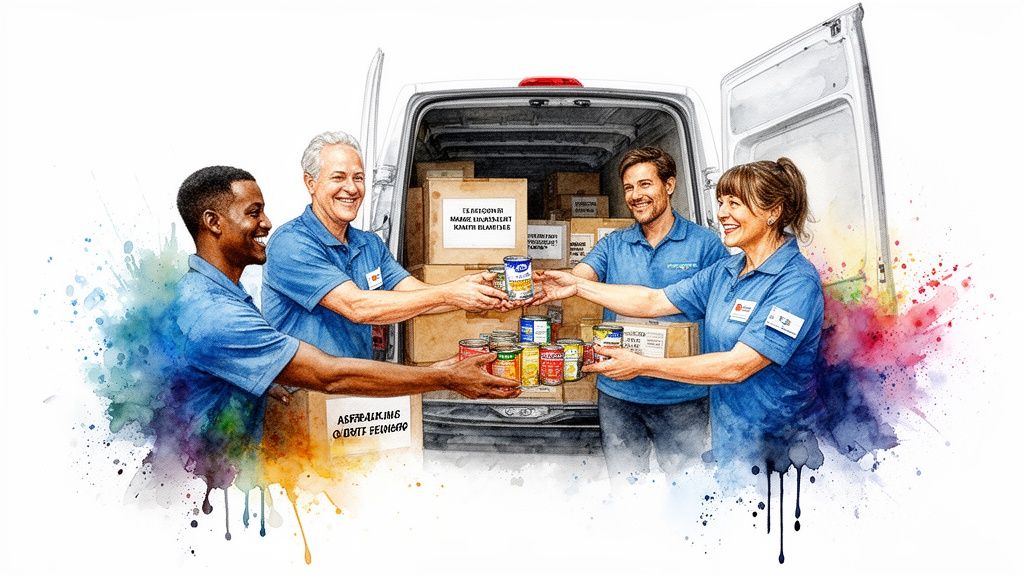
    Four diverse volunteers happily unload boxes and cans from a white delivery van, surrounded by watercolor splashes.

    You know that feeling when you just want to stop talking and start doing? That’s what volunteering at the Casa Catalina Food Pantry Chicago IL is all about. This isn't about feeling good; it's about doing good.

    It's a place where your hands can finally do the work your heart has been asking for.

    Picture this: you're part of a team unloading a truck packed with 7,000 pounds of food. It's real work. You can feel the satisfying weight of the boxes. You're a critical link in the chain that gets that food from a truck bed into the kitchen of a family down the street. It’s so tangible.

    It's Not a Task List, It's Connection

    Sure, there's work to do, but it’s not all about heavy lifting. The real magic happens in the small moments.

    You might be the person who walks with a mom through the aisles, sharing a smile as she finds her kids' favorite cereal. Or maybe you're the one keeping the shelves stocked, making sure the space feels organized and dignified for everyone who walks in.

    There are different jobs for different people, and every single role matters. The team is always looking for new folks to join the crew, and they're flexible with time.

    This isn't just about giving away a few hours of your time. It’s an investment. You're building a real connection to your city and seeing firsthand the impact of showing up. It’s the kind of work that sticks with you long after you go home.

    This is the kind of hands-on service we live for at Litter Caterpillars. If this gets you fired up, you should check out the other volunteer opportunities in Chicago we've found to keep that incredible momentum going.

    Signing up is your first step. It’s your chance to join a community that believes in the simple, powerful act of being there for others. Time to get to work.

    How to Support Through Donations

    It’s easy to feel overwhelmed by the sheer scale of hunger in a city as big as Chicago. But you don't need to solve the whole problem to make a real, concrete difference.

    You can absolutely make sure one family has a good meal on their table tonight. That single can of soup you donate is a direct line of support to a neighbor. It feels incredible to give, doesn't it? Let’s talk about how to turn that powerful feeling into action at the Casa Catalina Food Pantry Chicago IL.

    Donating Food The Smart Way

    When you're grabbing items to donate, I want you to think like you're stocking a pantry from scratch. What are the absolute essentials? What items form the backbone of a week's worth of meals? That’s where you can make the biggest, most direct impact.

    These are the items that are like gold to a food pantry:

    • Shelf-stable proteins: Canned tuna, chicken, and beans (black, pinto, kidney) are the foundation of so many hearty, filling meals.
    • Grains and starches: You can never go wrong with rice, pasta, and cereal. They are absolute must-haves for stretching a budget and keeping bellies full.
    • Jarred and canned goods: Think peanut butter, pasta sauce, and canned vegetables. These provide crucial nutrition and flavor that turn basic ingredients into a real, satisfying meal.

    Here's a pro tip from me to you: always check the expiration dates. Handing over food that’s fresh and ready to use is a small detail that shows a huge amount of care and respect.

    The Power of a Financial Gift

    Donating food is fantastic, but giving money is like handing the pantry a superpower. Why? Because cash is unbelievably flexible.

    A financial gift allows the team at Casa Catalina to use their deep expertise and buying power to get exactly what they need, right when they need it most.

    Every single can of soup, every dollar you give, is a direct act of kindness that makes a world of difference for a family right here in our city.

    This flexibility is a complete game-changer. Maybe they just ran out of eggs, or a local farm is offering a massive discount on fresh produce. Your donation gives them the freedom to jump on those opportunities instantly. Supporting the groups that strengthen our communities is one of the most powerful things we can do. If this fires you up, check out our guide to other impactful charities in Chicago.

    Your Questions, Answered

    Got questions? Good. Hesitation is normal, but I don't want it to stop you from getting help or giving it. Let's clear up the common stuff people ask about Casa Catalina Food Pantry Chicago IL so you can get moving.

    Think of this as the final push from me to you. No more uncertainty. Just clear, direct answers so you can take that first step, whether you're walking through their doors for a bag of groceries or to lend a hand.

    What Paperwork Do I Actually Need?

    Usually, you'll want to bring some form of ID and proof of address, like a recent utility bill. This is just standard procedure to confirm you're in their service area.

    But listen to me, and I mean this: Casa Catalina is a safe zone. They are here for everyone, especially immigrant families who might be worried about this stuff. Don't let a piece of paper stop you from feeding your family. Their mission is food, not gatekeeping.

    If you're stressed about what to bring, just call them. Seriously. A two-minute phone call will solve everything. They want to help you, not turn you away.

    Can I Bring My Whole Crew to Volunteer?

    Hell yes! Volunteering as a group is one of the best ways to make a real dent. It’s like a flash mob of helpfulness—you can knock out a mountain of work in a few hours and have a damn good time doing it.

    Just be smart about it. Have your group leader call their volunteer coordinator and schedule a time. That way, they're ready for you and can put your team to work on something meaningful, like sorting a huge delivery before a big distribution day. Don't just show up.

    What Food Donations Are Most Needed?

    Think basics. Think foundation. The best things you can donate are the non-perishable staples that a family can build a week's worth of meals around.

    • Pantry Powerhouses: I'm talking rice, pasta, cereal, and peanut butter. The stuff that fills bellies and lasts.
    • Canned Heroes: Beans (black, pinto, kidney), canned veggies, and proteins like tuna or chicken are always in high demand.

    These items are absolute gold because they don't spoil. Just do one simple thing: check the expiration date. It's a small act of respect that goes a very long way.


    Here at Litter Caterpillars, we're all about showing up. Whether we're cleaning an abandoned lot or backing up a crucial spot like Casa Catalina, we believe in action. If you're ready to stop thinking about it and start doing it, come find your place with us. We’re out there every single week, making Chicago better and building a community of people who aren't afraid to get their hands dirty. Join the mission at https://www.littercaterpillars.com.