
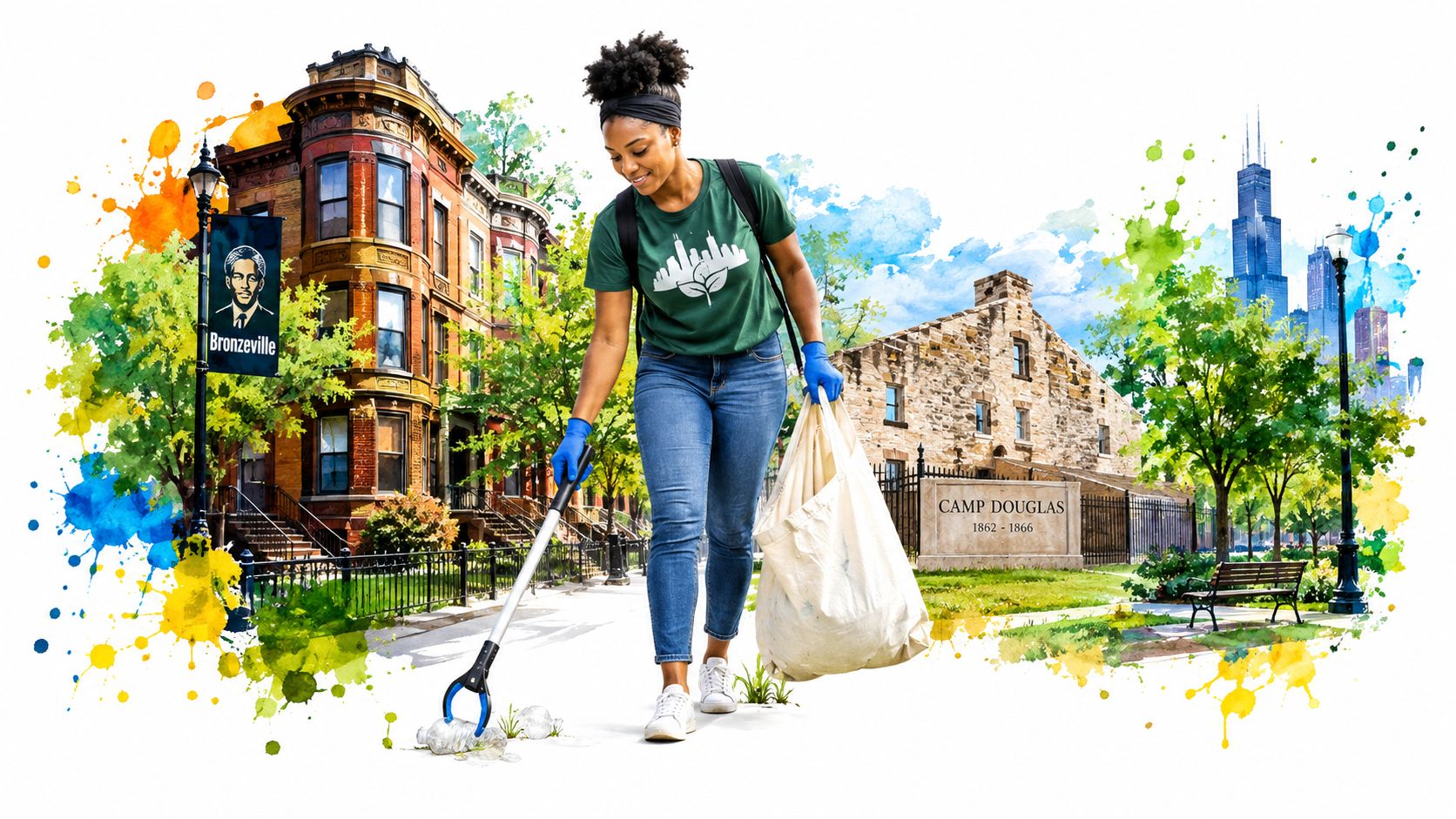
A spring hailstorm once left Kevin Tao and three other people shivering beneath a tree while Uber cars repeatedly cancelled around them. Instead of going home, they picked up trash, and that uncomfortable morning became the first chapter of a volunteer habit that now reaches every Chicago ward.
How a Hailstorm Started a Movement in Chicago
Kevin Tao had always found it difficult to clean his own space. An old jar of blueberry jam could carry a memory from a trip to Michigan. A bag of nuts could remind him of an abandoned attempt to eat better. Each object became heavier in his mind than it was in his hand.
Then came the storm. Kevin and three other people stood under a tree during a Chicago springtime hailstorm, watching Uber after Uber cancel while the cold worked through their clothes. They had every reason to quit. Instead, they started picking up other people's trash.
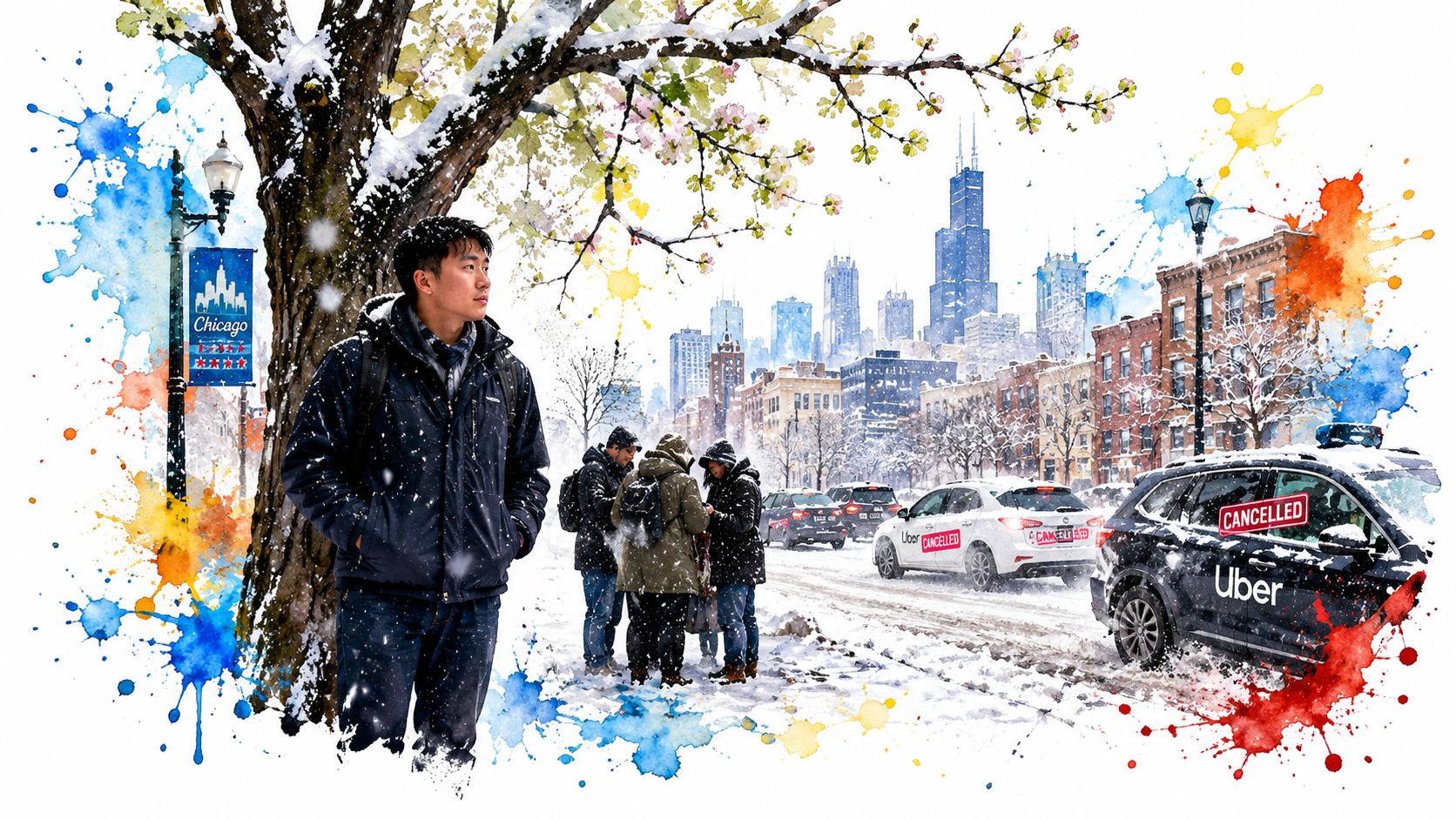
That first cleanup taught Kevin something he hadn't expected. Other people's messes felt easier to move than his own. The work gave the group a strange kind of fun, and the freezing weather added a story they could share later. Suffering didn't disappear, but the group turned it into part of the adventure.
A practical lesson: You don't need perfect motivation to begin. You need a meeting point, a small task, and enough courage to stay when the weather changes.
Showing up before feeling ready
The idea behind cleaning litter from public spaces starts with a simple reversal. You don't wait until you feel organized, fearless, or fully prepared. You step outside, pick up one piece of waste, and let the next action become easier.
Kevin built the group around that idea. He wanted service to help people work on cleanliness, consistency, and bravery at the same time. A volunteer doesn't need to arrive as a polished environmental champion. Someone can arrive distracted, shy, tired, or unsure and still hold a bag.
That matters in a place like Douglas, where volunteers may walk past apartments, transit approaches, small businesses, parks, and historic streets within the same outing. A cleanup becomes less like an abstract environmental project and more like a conversation with the block. You notice which corner collects food packaging, where a bin overflows, and which route residents use every morning.
Why discomfort can bring people together
The group didn't build its identity around convenience. It meets weekly in rain, heat, blizzards, and difficult wind conditions. The point isn't to prove that bad weather feels good. The point is to show that people can keep a promise to one another when conditions aren't comfortable.
That promise changes the social experience. Volunteers share gloves, carry full bags together, laugh at the strange things they find, and learn names while walking. A difficult morning gives everyone a common memory before they know each other well.
For someone searching for a way into the Douglas neighborhood Chicago community, that structure can feel more approachable than a formal meeting. You don't need a long speech or a special title. You can start with a route, a pair of gloves, and the decision to return.
The History That Makes Douglas Groundbreaking
A volunteer can walk through Douglas and encounter several eras before the morning is over. The community area includes the northern portion of Bronzeville, where residential blocks meet churches, businesses, public spaces, transportation routes, and buildings connected to Black Chicago history. A cleanup here follows streets shaped by migration, conflict, enterprise, and memory.
The name Douglas reaches back to Stephen A. Douglas, the Illinois senator and 1860 presidential candidate who debated Abraham Lincoln over slavery. His former estate later became Camp Douglas, first a Union training site and then a Confederate prisoner-of-war camp during the Civil War. Camp Douglas held as many as 10,000 Confederate prisoners at one time and about 26,000 during the war. An estimated 4,200 Confederate soldiers who died there were buried in a mass grave at Oak Woods Cemetery, according to the University of Chicago's account of Chicago history.
From migration to the Black Metropolis
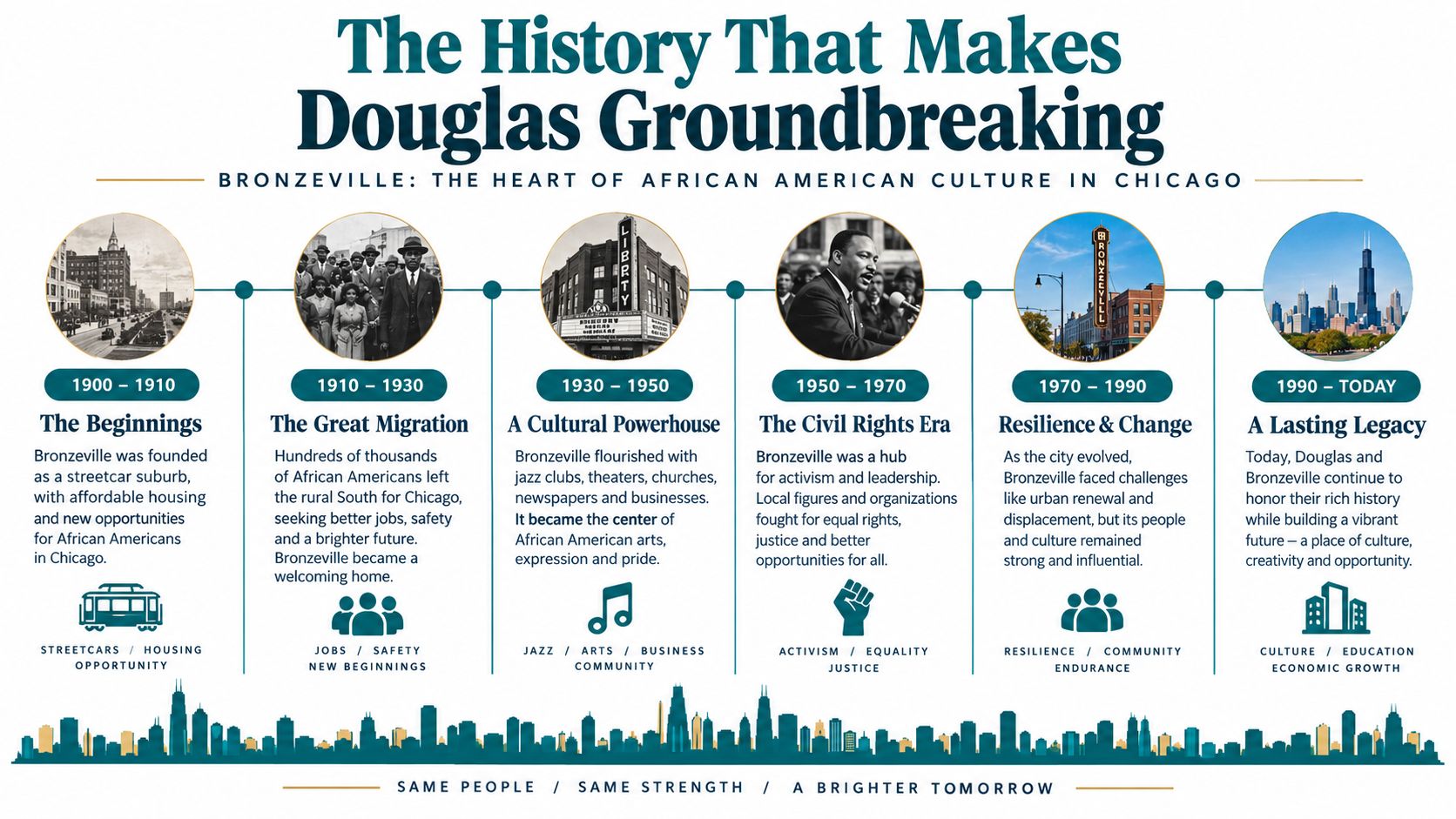
During the Great Migration, Black southerners came to Chicago and built homes, businesses, newspapers, churches, music scenes, political organizations, and arts institutions in Douglas and the surrounding Bronzeville district. From the 1910s through the 1940s, these efforts helped establish the area as part of Chicago's Black Metropolis.
Families built support networks while discriminatory housing and employment practices restricted where Black residents could live and work. Businesses along streets such as State Street supported daily needs. The stretch known as “The Stroll” gave people a place to shop, meet, hear music, and exchange news. A history of Bronzeville's development follows the area's earlier Jewish community, later Black migration from the Near South Side and the Jim Crow South, and the growth of its commercial life.
That history gives a cleanup route a human scale. A volunteer may collect wrappers near a sidewalk once used by families walking to work, school, worship, or a neighborhood business. The task does not recreate those lives or give outsiders ownership of their history. It offers a practical way to care for the same streets where community networks took root.
Walking beside landmarks
Chicago's historic designations also shape how volunteers should move through Douglas. Major sites include the Chicago Defender Building, Chicago Bee Building, Wabash Avenue YMCA, Victory Monument, and Supreme Life Building. They can help orient a walking route while reminding visitors to act with care around places that carry meaning for residents and descendants.
Do not move historic objects, enter restricted property, or treat a residential block like an outdoor museum. Keep your attention on the pavement, the people nearby, and the work at hand. A respectful cleanup leaves room for residents, visitors, students, workers, and neighbors to share the streets without turning the community into a backdrop.
The area also sits near the site of the 1919 Chicago race riot, a five-day episode that left 38 people dead and about 500 injured, as documented in the University of Chicago's account of Chicago history. That history calls for care rather than spectacle. Douglas holds beauty, pain, ordinary routines, and active community life at the same time.
Service can also connect to the wider issue of environmental justice in Chicago. Start by listening to the place. Pick up litter without erasing context, learn the street names, respect the people who live there, and choose actions that remain useful after your gloves come off.
Who Lives in Douglas and Why It Matters
A volunteer walking through Douglas can cross a busy sidewalk, a residential block, and a commercial corner within a short route. The community area had an estimated 2024 population of 21,088 across about 1.65 square miles, according to the Douglas neighborhood profile. With about 12,781 residents per square mile, Douglas is roughly 4.7 times as dense as Chicago overall, based on that population and area.
That density gives a discarded wrapper a wider effect. One piece of waste may seem minor beside a single doorway, yet the same sidewalk can serve residents, workers, students, and visitors throughout the day. A cleanup team can cover several pedestrian corridors in one outing, reaching more people without moving a vehicle between every location.
A community with many histories
Douglas has a predominantly Black population, alongside Asian, White, Hispanic, multiracial, and other residents, as the same community profile reports. Those categories describe part of the area's composition, not the experience or priorities of each person who lives there. A useful cleanup begins with that distinction.
A resident may know that a corner collects fast-food packaging after school dismissal, that an alley needs a different approach, or that a public space has a maintenance problem volunteers cannot solve with bags and gloves. Ask before choosing a route. Use plain language, listen to the answer, and adjust the work when local knowledge changes the plan.
The neighborhood's population history adds another layer. Douglas reached its earlier peak during the period when the Great Migration helped establish Bronzeville as a center of Black life. Later population loss followed deindustrialization, disinvestment, segregation, and public-housing demolition. The 2020 census showed an 11.3% increase over the prior decade, as the same profile records. Volunteers now work in a community with deep roots and signs of renewed growth.
That history makes cleanup a form of participation in community resilience. Picking up litter does not repair segregation, restore lost housing, or replace public investment. It can, however, support the everyday spaces where neighbors build trust, run businesses, care for children, and move through the area.
Treat density as a planning tool
A compact area rewards careful route design. Divide the work into small sectors, record bag counts and hazard types by street segment, and revisit the same routes each month. Those notes can show whether litter repeatedly gathers near food businesses or transit stops, or whether it appeared after a storm or event.
A group can keep volunteers connected between outings with clear messages, welcoming introductions, and focused local tasks. This guide on community building for social media offers ideas organizers can adapt for those updates.
Residents already care for their buildings, sidewalks, children, businesses, and neighbors in ways visitors may never see. A volunteer contributes capacity to a defined task. The goal is to support the public realm while respecting the people and history that make Douglas a living community.
Getting Around and Finding Your Spot
Start with a visible meeting point near public transit, then choose a route that keeps the group together. Douglas connects residential streets with transit corridors, parks, commercial edges, and lakefront access, so you don't need to move a vehicle between every cleanup sector.
The community area's mean commute time is 32.1 minutes, and 10,665 residents are in the labor force, according to the Chicago Metropolitan Agency for Planning profile of Douglas. Those figures suggest a simple courtesy for event organizers. State the meeting point, service area, expected finish time, and return route before volunteers arrive.
Pick a route with purpose
Dunbar Park gives you a clear recreation anchor. The Chicago Park District lists 21.80 acres and includes four baseball diamonds, athletic fields, picnic groves, tennis courts, a running track, a batting cage, an interactive water feature, and a reading garden among its facilities, as shown on the Dunbar Park information page.
A park route needs more than a quick sweep of the entrance. Check paths near sports areas, picnic spaces, courts, water play, and access points. Keep volunteers away from active games and ask park users to move around your group rather than forcing them into the street.
For other parts of Douglas, use a route plan that divides the work:
- Transit approaches: Inspect sidewalks leading toward stations and bus stops, where food packaging and drink containers can gather.
- Commercial edges: Walk slowly near storefronts and corners, but leave entrances clear and speak with business owners before placing bags nearby.
- Residential blocks: Keep noise down, protect parked cars, and avoid entering private property or alleys without permission.
- Parks and lakefront connections: Watch for broken glass, sharp metal, needles, and unstable waste. Report hazards instead of handling them.
A 60-to-90-minute service block can reduce friction for residents balancing work, commuting, and caregiving. Keep the same route when possible, measure bags per volunteer-hour, and record hazards separately from ordinary litter. Community-area data can guide your first plan, but block-level observation should guide the next one.
Plan around safety, not reputation
Douglas has comparatively high crime, yet one recent assessment reported that incidents declined by about 28% over the analyzed period and averaged roughly 62 incidents per month, according to the Douglas safety assessment. Those figures don't predict what will happen on your exact block or at your exact time.
Choose daylight routes with good visibility. Use busy streets and public transit approaches, travel in groups, keep a charged phone available, and tell a contact when the event will end. If a volunteer feels uneasy, the group should change the route or stop. No bag of litter deserves a risky decision.
For ward-level planning, organizers can also use Chicago ward boundary information to understand where a route sits administratively. That context can help you direct questions about public services to the right office, while your own observations show what volunteers encounter on the ground.
Why We Pick Up Trash Rain or Shine
A volunteer cleanup can begin with a forecast that looks unpleasant. Rain taps against the meeting point, wind pushes wrappers along the curb, and someone wonders whether the group will still arrive. Then one person puts on gloves, another opens a bag, and the morning gains a direction.
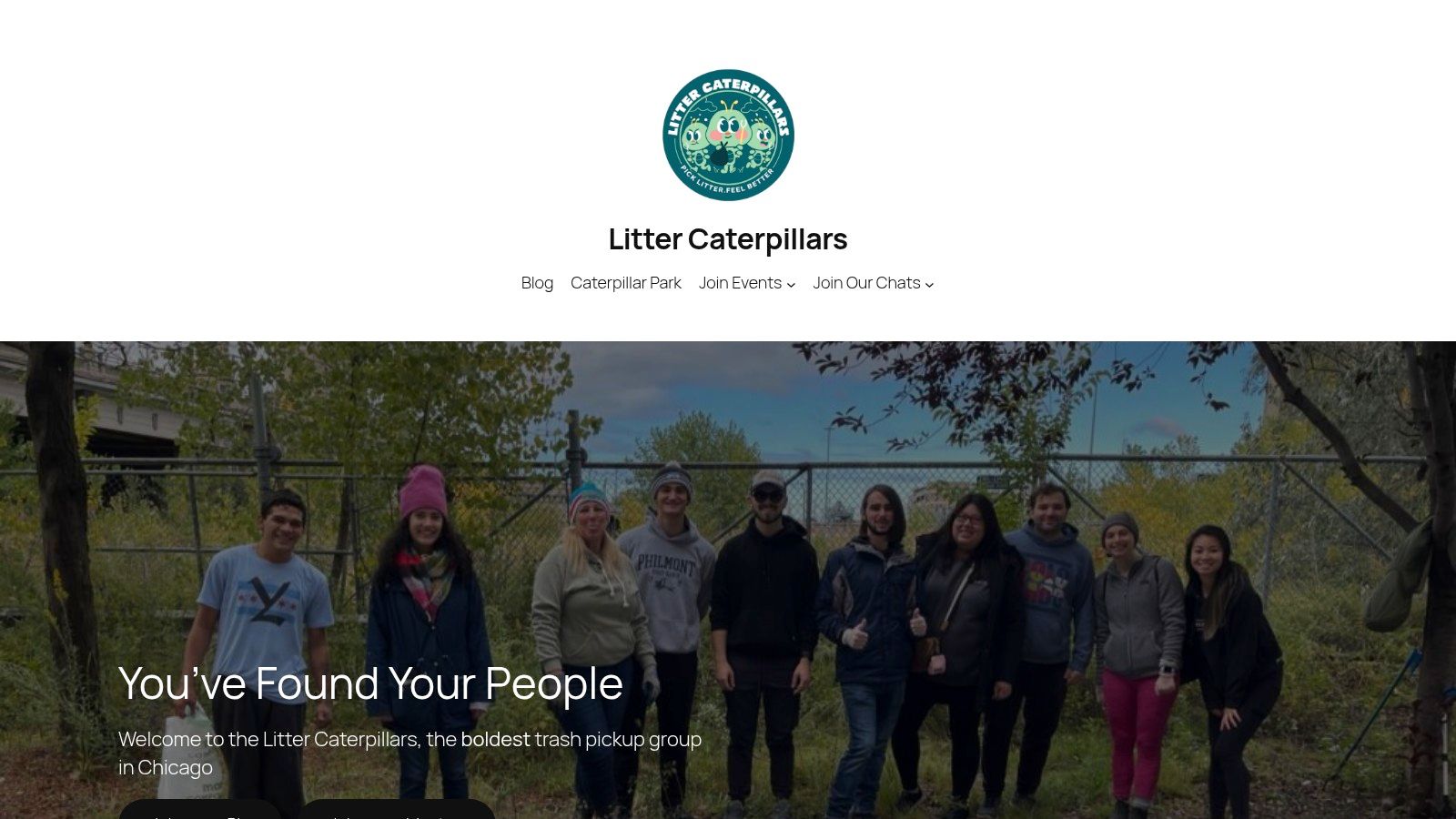
Litter Caterpillars meets weekly, rain or shine, and has cleaned up all 50 wards of Chicago, including areas other groups avoid. The group also won an empty lot at auction to build Caterpillar Park in Englewood. Those actions express a simple belief: service works best when people protect the habit of showing up.
Bravery changes the first step
Bravery doesn't require you to feel calm. It asks you to act while you still feel uncertain. You might worry that you won't know anyone, that you won't know what to do, or that a difficult weather forecast will make the morning awkward. Once you pick up a bag and walk with another person, the uncertainty becomes a shared task.
The group uses flags, theme songs, and badges to give service a visible identity. That may sound playful, but play helps people stay engaged with work that could otherwise feel repetitive. A wrapper becomes one small part of a route. A route becomes a shared accomplishment. A shared accomplishment can bring strangers into conversation.
Volunteer-first rule: Safety comes before the cleanup goal, and volunteer happiness comes before a full bag.
That rule creates room for judgment. Volunteers can refuse hazardous items, leave a location that feels unsafe, and ask organizers for a different assignment. A group that protects its people can keep serving without treating exhaustion or fear as proof of dedication.
Kindness needs a schedule
Weekend mornings provide a predictable time for service-minded people to meet. The schedule creates a useful filter. People who want to give their time can find one another before the day fills with errands, parties, work, or family responsibilities.
The point isn't to criticize anyone who spends a Saturday differently. People need rest and recreation. The point is to create a regular place for people who want to practice generosity with others.
Organizers can make that experience easier by explaining what to bring and what the group will provide:
- Wear practical clothing: Choose closed-toe shoes, weather-appropriate layers, and clothes that can handle dirt.
- Protect your hands: Use gloves, and don't touch sharp or unknown objects.
- Share the route: Keep the group aware of boundaries, meeting times, and the location of filled bags.
- Leave room for friendship: Talk while you work, welcome new people, and avoid turning the event into a competition.
The group doesn't pressure volunteers for donations. It protects volunteer energy and puts safety first. That approach makes service feel like a relationship rather than a transaction.
After you read the group's story, you can watch how its weekly work feels in practice:
Rain doesn't automatically make a cleanup meaningful, and sunshine doesn't guarantee a good one. The value comes from the people who prepare, communicate, notice hazards, and return. In Douglas, that discipline can connect a simple bag of litter with a stronger habit of caring for shared streets.
Joining the Legacy of Service
A Douglas cleanup begins with a present-day decision, but the street already carries many human stories. Black migrants built homes and institutions during the Great Migration. Business owners served customers despite discrimination. Journalists, musicians, teachers, faith leaders, and neighbors created routines that helped Bronzeville function as a community.
You don't honor that work by pretending to belong to someone else's history. You honor it by behaving responsibly in the place you visit. Learn before you arrive, listen when residents speak, keep public paths usable, and leave the block safer and cleaner than you found it.
A useful first outing
Choose one defined route rather than trying to cover the whole community area. Meet near a visible transit point or a public recreation site, work in small sectors, and set a clear finish time. Afterward, record the bag count, the kinds of hazards you found, and the locations that need attention from city services or property managers.
Use public records and direct observation together. Chicago's 311-related data includes issues involving basement flooding, vacant buildings, fly dumping, and possible building violations. When litter appears alongside those problems, volunteers should report the wider maintenance issue instead of treating every condition as a cleanup task.
Safety planning belongs in the same conversation. Use daylight, maintain group visibility, stay alert around traffic, and change course when conditions call for it. A clean route matters, but people matter first.
Let the habit grow
The Douglas neighborhood Chicago community gives volunteers many ways to return. You can walk a residential block, check a park edge, observe a transit approach, or help a group build a monthly record of recurring waste. Each outing teaches you something specific about the route.
The work may look small from a distance. Up close, it involves hands, feet, conversations, weather, and decisions. You learn which waste belongs in a bag, which hazard needs a report, which resident has useful local knowledge, and which volunteer may need help carrying a full load.
That is how service becomes practical community resilience. You don't need to claim the neighborhood or solve every problem. You need to show respect, do the task in front of you, and return often enough for your presence to become dependable.
Are you willing to show up when the morning feels inconvenient? Bring your gloves, choose a route, and let your first cleanup teach you what the next one should look like.
Litter Caterpillars gives Chicago volunteers a weekly, rain-or-shine way to pick up trash, meet neighbors, and work across communities including Douglas. Visit Litter Caterpillars to find an upcoming cleanup and take your first step toward serving the neighborhood in person.