

I started Litter Caterpillars after trash in my own life felt impossible to move. A scrap could weigh less than a pound and still feel like it weighed 500. In Chicago, you may need a hands-on cleanup, regular city collection, or a private hauler for a building, business, or major clear-out. This roundup compares meeting logistics, service fit, strengths, limits, and the easiest way to begin. For one-off junk removal, Reworx Recycling junk removal services can fit a different need than recurring collection.
Choose the option that matches the mess, the address, and the help you have available.
1. Litter Caterpillars
The first Litter Caterpillars cleanup had three people, bad Chicago weather, and a string of cancelled Ubers. We huddled under a tree during a spring hailstorm and learned something strange. Cleaning someone else's mess felt easier than cleaning our own.
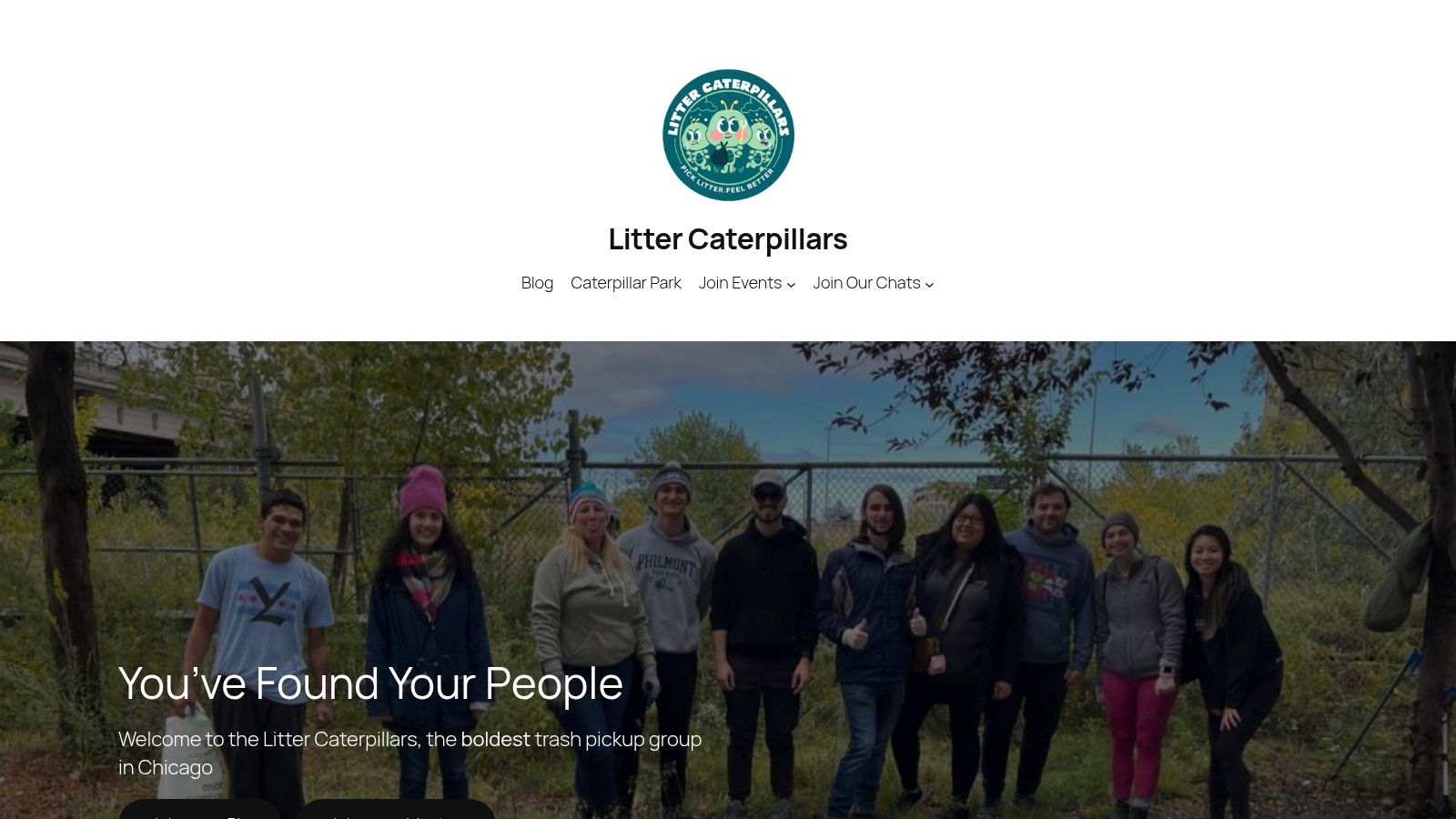
That feeling still drives the group. Kevin Tao founded Litter Caterpillars around consistency, bravery, kindness, and the belief that service can help people trust themselves again. Volunteers meet on weekend mornings, rain or shine, and clean neighborhoods across all 50 Chicago wards, including places other groups may avoid.
The group keeps participation simple. You don't need to donate, buy equipment, or prove anything before joining. You show up, take safety seriously, and work beside people who want a cleaner block and a better Sunday.
Why this choice feels different
Litter Caterpillars brings a social rhythm to trash pickup. Flags, badges, a theme song, Meetup events, Instagram updates, Pie, and group chats give newcomers several ways to find the next event and stay connected. The group also puts volunteer safety and happiness first.
The work can feel physical and unpredictable. Weekend mornings won't fit every schedule, and outdoor cleanup won't suit everyone. A volunteer group also won't replace household collection, dumpster service, or a private hauler for a large building.
Still, the results reach beyond a filled bag. Volunteers cleaned a highway during a bike-event shutdown, and the group won an empty lot at auction and turned it into Caterpillar Park in Englewood. Those projects show what can happen when people keep showing up.
Best fit: Choose Litter Caterpillars when you want to remove litter with your own hands, meet people, and build a weekly habit.
Start with the Litter Caterpillars volunteer trash pickup page, check the next Sunday morning event, and wear gloves and sturdy shoes. If you find a sharp, don't touch it by hand. Use a grabber or tongs, keep the sharp point away from you, and report it for proper collection through Litter Networks safety guidance.
2. City of Chicago Department of Streets & Sanitation
For an eligible Chicago home, the Department of Streets & Sanitation, or DSS, usually gives you the cleanest first answer. The city handles weekly garbage collection and Blue Cart recycling for single-family homes and buildings with four or fewer dwelling units.
You get a city-managed route, a low and transparent refuse fee, and 311 support for common service problems. If your cart breaks, disappears, or needs replacement, you can use the city's service channels. You can also report missed pickups and sanitation concerns.
Bulk items can often go out on regular garbage days, though you still need to follow the city's placement and material rules. Before putting anything outside, confirm what DSS accepts and where you should place it.
The address decides
DSS works best when your building falls inside the city's eligibility rules. Buildings with five or more units generally need a private hauler, so a property manager shouldn't assume city service covers every Chicago address.
A missed pickup can disrupt an alley quickly. Use 311 when the cart, route, or sanitation condition needs city attention, then keep the request details. City response times can vary by ward and workload, especially when many residents report problems at once.
You can confirm your route and service details through the Chicago trash pickup schedule before moving carts or planning a cleanup.
Best fit: Pick DSS when you live at an eligible Chicago address and want routine collection with city support instead of shopping for a hauler.
3. LRS
A five-unit building has a different problem from a single-family home. You need enough container capacity, an alley plan, a collection schedule, and a way to handle recycling, organics, bulky items, or construction debris without calling several companies.
LRS, formerly Lakeshore Recycling Systems, covers that wider job. The Chicago-based hauler works with residential and commercial customers and provides recurring trash pickup, recycling, organics and yard-waste service, roll-off dumpsters, and construction recycling options.
Where LRS fits
LRS can make sense for multi-unit buildings, HOAs, property managers, and businesses that want one vendor for several waste streams. Its municipal service footprint across Chicagoland and the Midwest also means availability may depend on the community or contract involved.
You'll need a quote rather than a simple posted household price. Ask for the service frequency, container size, extra-pickup terms, contamination rules, and the full contract length. Rates can rise during a contract term, so read the renewal and adjustment language before signing.
The practical advantage is coordination. One vendor can handle recurring collection, a roll-off for a renovation, organics, and event service. The trade-off is that scale brings paperwork. A quote that looks simple can hide container limits, delivery charges, fuel adjustments, or pickup conditions.
Use the LRS website to check the service path for your municipality, then request a written quote tied to your exact address.
4. Groot Industries
Groot works well when your service depends on a particular suburb, municipality, or property setup. The company serves Chicagoland with residential carts and dumpsters, recycling, yard waste, bulk pickup, roll-off rentals, compactors, and commercial service.
A property manager might use Groot for regular alley pickup while a contractor orders a roll-off for a construction project. An HOA may need a municipality-specific schedule, while a business may need a compactor and a tighter collection plan.
Check the local terms first
Groot's service menu looks broad, but your community determines what you can order. Municipal franchise agreements can control service terms, routes, materials, and pricing. Residential rates often require a quote, and the same company can present different options in different towns.
Start with the Groot Industries service-area tools. Enter the community before you compare prices. Then ask whether the quote includes cart delivery, extra pickups, bulk items, yard waste, and seasonal changes.
Groot's strength is local route knowledge paired with a broad equipment menu. Its limit is the same local variation. You can't judge the final deal from a general service page alone.
Best fit: Choose Groot when municipality-specific coverage matters and you want one provider for household, HOA, commercial, or project waste.
5. Flood Brothers Disposal
A condo board often needs a responsive answer more than a giant service catalog. The board has to manage dumpsters, recycling, yard waste, bulky items, access, invoices, and resident complaints without turning every missed pickup into a long dispute.
Flood Brothers Disposal serves Chicago-area homes, multifamily properties, businesses, and events. It provides cart service, multifamily dumpsters, recycling, yard waste, bulk-item service, and roll-off rentals. The company operates across more than 150 Chicago-area communities, according to its service description at Flood Brothers Disposal.
A practical choice for smaller managed properties
Flood Brothers can suit small-to-mid-sized HOA and condo buildings that want flexible container sizes and pickup frequencies. Local customer service may also appeal to boards that prefer a direct relationship with the provider handling their property.
The address still controls the deal. Availability, collection terms, and exact pricing can vary by neighborhood and municipality. Request a quote that states the dumpster size, pickup frequency, overflow policy, recycling service, delivery terms, and cancellation rules.
For an event, ask who handles setup and removal. For a building, ask how the company handles blocked access or an overfilled container. Those details matter more than a low starting quote when residents depend on the route every week.
Flood Brothers is a strong candidate when you manage a neighborhood property and want local service with options for both regular pickup and occasional cleanup.
6. WM
WM fits the customer who wants a large provider with digital account tools and a wide service menu. The company handles residential, multifamily, and commercial work, including garbage, recycling, carts, dumpsters, roll-offs, bulk pickup, and specialty programs.
A property manager with several buildings may value one account structure and a provider that can coordinate recurring routes with larger containers. A business may want online service requests, billing access, and notifications instead of relying on phone calls for every change.
Scale helps, but read the bill
WM's size can help with routing depth and equipment access. It can also create a more formal contract. Residential pricing depends on the municipality or service agreement, and fees or surcharges can change the total bill.
Open the WM Chicago service page and ask for a complete cost breakdown. Separate the base charge from fuel, recovery, environmental, delivery, overage, and extra-pickup charges. Ask what happens after the initial term.
For recycling questions, use where you can recycle to think through the material before you add a service. The city or hauler may accept different items, and mixing the wrong materials can create extra work.
Best fit: Choose WM when your building or business needs a broad service menu, digital account management, and the capacity of a large hauler.
For practical waste-management ideas, WipesBlog.com cleaning insights can also help you organize internal rules before you sign a collection contract.
7. Republic Services
Republic Services gives multifamily and commercial customers another large-hauler option, with carts, dumpsters, recycling, organics in some municipalities, bulky-item programs, and app-based account management. Many suburbs also have residential service through local arrangements, so your address needs a direct availability check.
The app can simplify billing, service requests, and account updates. Some service areas also publish fee-methodology information, which gives you a place to start when you compare quotes.
Compare the whole price
Republic may work well for a multi-site customer or a property that wants a larger provider across several locations. The difficult part comes during quote review. Fuel and recovery components, surcharges, annual adjustments, and variable fees can change the final amount.
Use the Republic Services Chicago trash pickup and recycling page, then ask for a written service summary. Confirm the container, pickup frequency, accepted materials, bulky-item rules, on-call limits, billing cycle, and cancellation terms.
Republic is less useful when you need a free, social cleanup or a city service for an eligible small residential building. It becomes more practical when you manage recurring waste across a larger property, business, or group of locations.
Best fit: Choose Republic when app access, commercial capacity, and a multi-property contract matter more than a simple household arrangement.
Top 7 Trash Pickup Services Comparison
| Service | Implementation Complexity 🔄 | Resource Requirements ⚡ | Expected Outcomes 📊/⭐ | Ideal Use Cases 💡 | Key Advantages ⭐ |
|---|---|---|---|---|---|
| Litter Caterpillars | 🔄 Low, volunteer-run coordination, simple weekly schedule | ⚡ Low money, moderate volunteer/time commitment, basic supplies (bags, gloves) | 📊 Visible neighborhood cleanup, high community engagement, tangible wins (e.g., park) ⭐ | Community-driven street/park cleanups, outreach, volunteer engagement | ⭐ Strong volunteer retention and identity; low barrier to join |
| City of Chicago – DSS | 🔄 Moderate, city processes, fixed routes and rules | ⚡ Low resident cost (refuse fee); high municipal infrastructure (trucks, staff) | 📊 Predictable weekly collection for eligible 1–4 unit homes; reliable but scope-limited ⭐ | Single-family and small multi-unit residences within city eligibility | ⭐ Cost-controlled service with 311 support and transparent fees |
| LRS (Lakeshore) | 🔄 Moderate, contract/quote-based, municipal partnerships | ⚡ Medium–high budget for contracts, roll-offs, organics services | 📊 Comprehensive services for multi-unit/commercial customers; scalable impact ⭐ | 5+ unit buildings, HOAs, businesses, construction sites | ⭐ Local expertise and bundled service offerings across Chicagoland |
| Groot Industries | 🔄 Moderate, municipality-specific franchises and scheduling | ⚡ Medium–high; quote-dependent pricing and franchise terms | 📊 Reliable alley pickup and broad service menu; municipality-tailored operations ⭐ | HOAs, property managers, municipalities with Groot service | ⭐ Deep local coverage and varied service options (dumpsters, roll-offs) |
| Flood Brothers Disposal | 🔄 Low–Moderate, local operations, flexible service setup | ⚡ Medium; competitive quote-based pricing and flexible container options | 📊 Responsive local service for small–mid buildings; cost-competitive outcomes ⭐ | Small-to-mid HOAs/condos and neighborhoods in service area | ⭐ Strong local reputation and responsive customer care |
| WM (Waste Management) | 🔄 Moderate–High, large-scale systems, digital account management | ⚡ High resources and scalability; digital tools for self-serve accounts | 📊 Enterprise-grade reliability and program breadth (recycling, roll-offs) ⭐ | Large multifamily, commercial accounts, municipalities needing scale | ⭐ Scale, routing depth, and robust digital/self-serve tools |
| Republic Services | 🔄 Moderate, app-based management, contract complexity | ⚡ Medium–high; contract/fee structures and app infrastructure | 📊 Competitive for multi-site and long-term contracts; program flexibility ⭐ | Multi-site portfolios, commercial contracts, municipalities | ⭐ Strong Midwest presence, app for account management and fee transparency |
Turn the Shortlist Into a Cleanup Plan
Start with the mess in front of you. A bag of street litter, a missed household cart, an overflowing apartment dumpster, and construction debris each need a different response. The best trash pickup option isn't always the company with the biggest truck. It's the option that can reach the address, accept the material, and recover when something goes wrong.
Choose Litter Caterpillars when you want hands-on service and weekend community. You'll pick up litter yourself, meet volunteers, and help clean Chicago block by block. The group suits residents who want action and connection rather than a bill for someone else to do the work.
Choose DSS when your eligible Chicago address needs regular city collection. Confirm that your home or building falls within the city's service rules, then check garbage, Blue Cart, cart repair, missed-pickup, and bulk-item information. Keep your 311 request details if the route misses you.
Choose a private hauler when you manage a larger building, business, dumpster, recurring commercial need, or project with more waste than a normal cart can handle. LRS, Groot, Flood Brothers, WM, and Republic each bring different combinations of local coverage, containers, digital tools, contracts, and service streams.
Before you commit, confirm:
- Address eligibility: Ask who can serve the exact property and whether a municipal agreement controls the route.
- Pickup frequency: Put the collection days and extra-pickup terms in writing.
- Container size: Match the cart, dumpster, roll-off, or compactor to your actual volume.
- Bulk-item rules: Confirm accepted items, notice requirements, placement, and charges.
- Contract terms: Read the initial term, renewal language, adjustment clauses, and cancellation process.
- Surcharges: Request the full bill, including fuel, recovery, delivery, overage, and environmental fees.
Sort what you collect before disposal. New York City's disposal guidance says to separate recyclables from trash and sort materials before putting them out. For needles and syringes, use a separate hazard process. Seattle's cleanup guidance says to use tongs or a grabber, avoid breaking the needle tip, pick up the item by the plunger or barrel, and place it in a sharps container for approved disposal.
If you plan a large cleanup with a shared parking lot or gathering spot, ask the property owner for permission first, as advised by the University of Kansas neighborhood cleanup guide.
Take one small action this week. Join a cleanup, check your DSS eligibility, or request a written private-hauler quote. A clear next step turns a pile of trash into a plan you can finish.
Litter Caterpillars organizes free, volunteer-led trash pickups across Chicago, with weekend events for people who want to clean streets while meeting neighbors. Visit Litter Caterpillars to find your next cleanup and bring your time, energy, and willingness to help.