
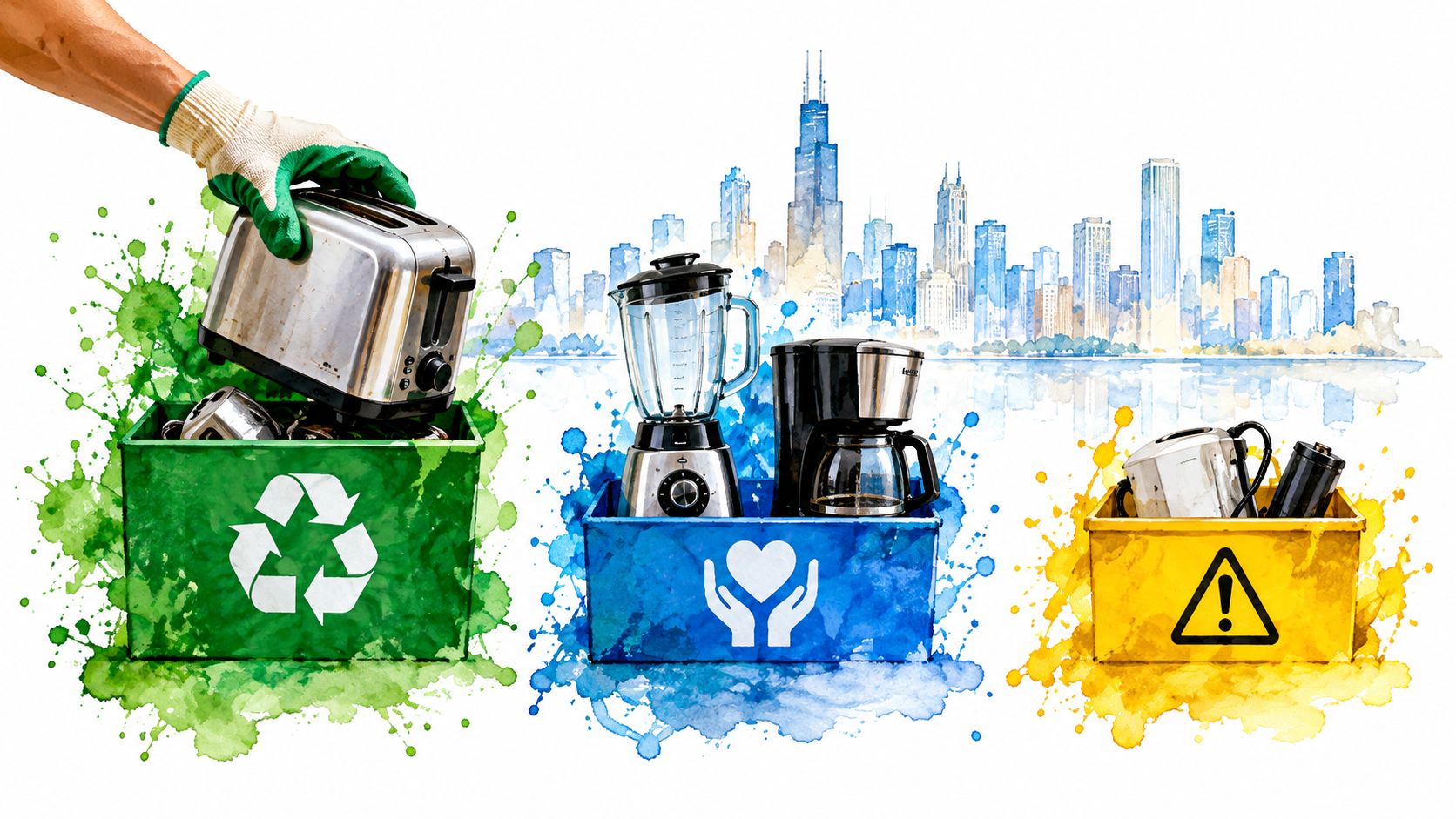
Rain hit the alley behind a Chicago apartment building when I found a cracked coffee maker beside a busted toaster. I could've tossed both into a dumpster and called the cleanup done. That would've moved the mess, not solved it.
Why Tossing Electronics in the Trash Fails Us
A small appliance looks harmless until you open the wrong waste stream. A toaster carries metal, wiring, insulation, and electrical parts. A coffee maker may hold mineral residue, plastic, a circuit board, and a cord. A vacuum can contain a battery, dust, and tightly packed components that workers can't safely sort from ordinary garbage.
When I clean an alley, I separate litter removal from responsible disposal. A bag of fast-food wrappers belongs in a different lane from a microwave, hair dryer, blender, or electric kettle. The item may look like junk, but its final destination determines whether a processor can recover materials or whether a landfill receives the whole device.
Street rule: Removing an appliance from public space is only the first job. You still need to send it through the right channel.
Chicago residents should check local guidance before loading a device into a car. The city directs residents toward designated drop-off locations, and its seasonal collection period runs from April 1 through December 30. Rules can differ by appliance type, location, and program, so the Chicago hazardous waste disposal guidance can help you sort the next step before you travel.
The safer approach starts with three questions. Does it still work? Can someone repair it safely? Does it need e-waste, battery, refrigerant, or hazardous handling? Those questions take a minute. They also prevent a cleanup crew from creating a second problem after solving the first one.
A city block gets cleaner when volunteers act with nerve and discipline. Grab the appliance, protect yourself, identify the material, and send it somewhere that can process it.
The Massive Gap in Global E-Waste Recovery
The scale of small-appliance disposal makes casual dumping hard to defend. The Global E-waste Monitor data summarized by UNITAR reports that the world generated approximately 62 billion kilograms of e-waste in 2022, or about 7.8 kilograms per person.
Small equipment accounted for approximately 20.4 billion kilograms, roughly 33% of all e-waste. That category includes household devices such as microwave ovens, vacuum cleaners, radios, toys, and similar equipment. Yet documented formal collection and recycling reached only about 12% of small equipment.
That leaves almost 88% outside documented formal recycling systems. Across every e-waste category, only 22.3% of the 2022 total entered documented collection and recycling. Those figures describe more than a landfill problem. They describe a materials problem involving metals, plastics, circuit boards, batteries, and components that need controlled handling.
The United States baseline
The U.S. Environmental Protection Agency's durable-goods data estimated approximately 2.2 million tons of small-appliance waste in 2018. The category included toasters, hair dryers, and electric coffee pots.
Only about 5.6%, or approximately 123,000 tons, went to recycling. The EPA estimated that 75.9% went to landfill and 18.5% went to energy recovery. In rounded terms, for every 100 tons generated, about 76 tons went to landfill, 19 tons went to energy recovery, and fewer than 6 tons went to recycling.
That baseline explains why careful sorting matters during a Chicago cleanup. A volunteer who pulls one appliance from a mixed waste pile creates an opportunity for recovery, but only if the team keeps the item out of the general stream and confirms the processor's route.
What recovery actually requires
Recycling doesn't happen because an appliance reaches a parking-lot collection point. A processor must separate material, remove pollutants, and document the treatment. If you want a plain-language example of how responsible material handling fits within a wider sustainability program, review sustainability at Used Mobiles 4 U.
Watch this short video for another practical look at sorting and recovery decisions.
The best habit is simple: separate first, transport safely, and ask for proof of final treatment. A clean alley matters. So does what happens after the truck leaves.
Deciding Between Reuse Repair and Recycling
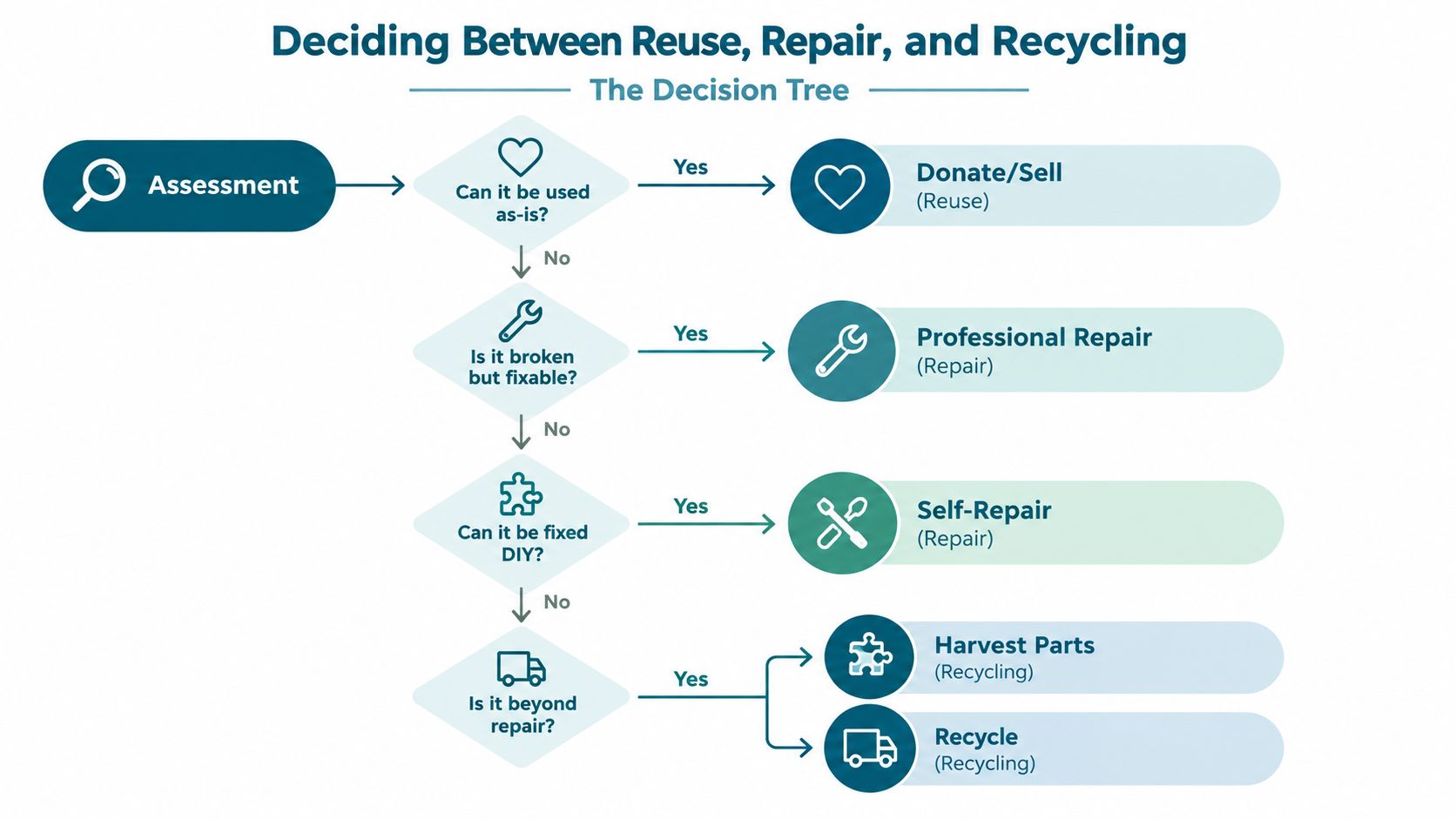
A dead appliance doesn't automatically belong in a recycling bin. Start with its condition, then choose the least harmful realistic route.
A working coffee maker with a clean reservoir may go to a neighbor, community group, resale channel, or donation site. A blender with a loose jar and an intact motor may deserve repair. A vacuum with a swollen battery needs isolation and specialist direction. A microwave with severe damage may need an appliance or e-waste processor.
Use this decision order
Test function only when the item looks safe. Check the plug, cord, housing, switches, and signs of overheating. If you see exposed wire, burn marks, a melted plug, a cracked battery case, or moisture inside the unit, don't plug it in.
Choose direct reuse for clean, working equipment. Include the model, accessories, operating condition, and any known fault. A donation center can't use your honesty if you hand over a device that trips a breaker or smells hot.
Choose professional repair when the fault needs electrical diagnosis. A repair shop can assess a coffee maker, vacuum, fan, or countertop mixer without forcing a volunteer to open a mains-powered appliance in an alley.
Try self-repair only for low-risk tasks. Replacing a removable filter, cleaning a detachable container, or tightening an approved external fitting differs from opening a sealed heating or electrical assembly. Keep the manual nearby and stop when the job reaches wiring, capacitors, heating elements, or damaged batteries.
Harvest parts or recycle the rest. A repair technician may use a motor, switch, jar, tray, or cord. If no safe reuse path exists, route the whole device to an authorized processor rather than stripping it on the sidewalk.
A working appliance deserves a real test. A dangerous appliance deserves distance.
The research repository review on small waste electrical and electronic equipment reports that collected appliances often need evaluation for repair or refurbishment before anyone can call them reusable. That makes donation a decision, not a reflex.
For vacuum-specific handling, use this guide to recycle vacuum cleaners. Keep dust, hair, and loose debris contained, and isolate battery-powered models before transport.
The brave choice isn't always the fastest choice. Sometimes it means carrying a working item to someone who can use it. Sometimes it means admitting that a frayed cord makes donation irresponsible.
Prepping Your Gear for Safe Transport
Before you lift an appliance into a truck, make it stable, dry, and identifiable. A volunteer team should treat every device as a separate object, not as one anonymous pile.
Clear the easy hazards
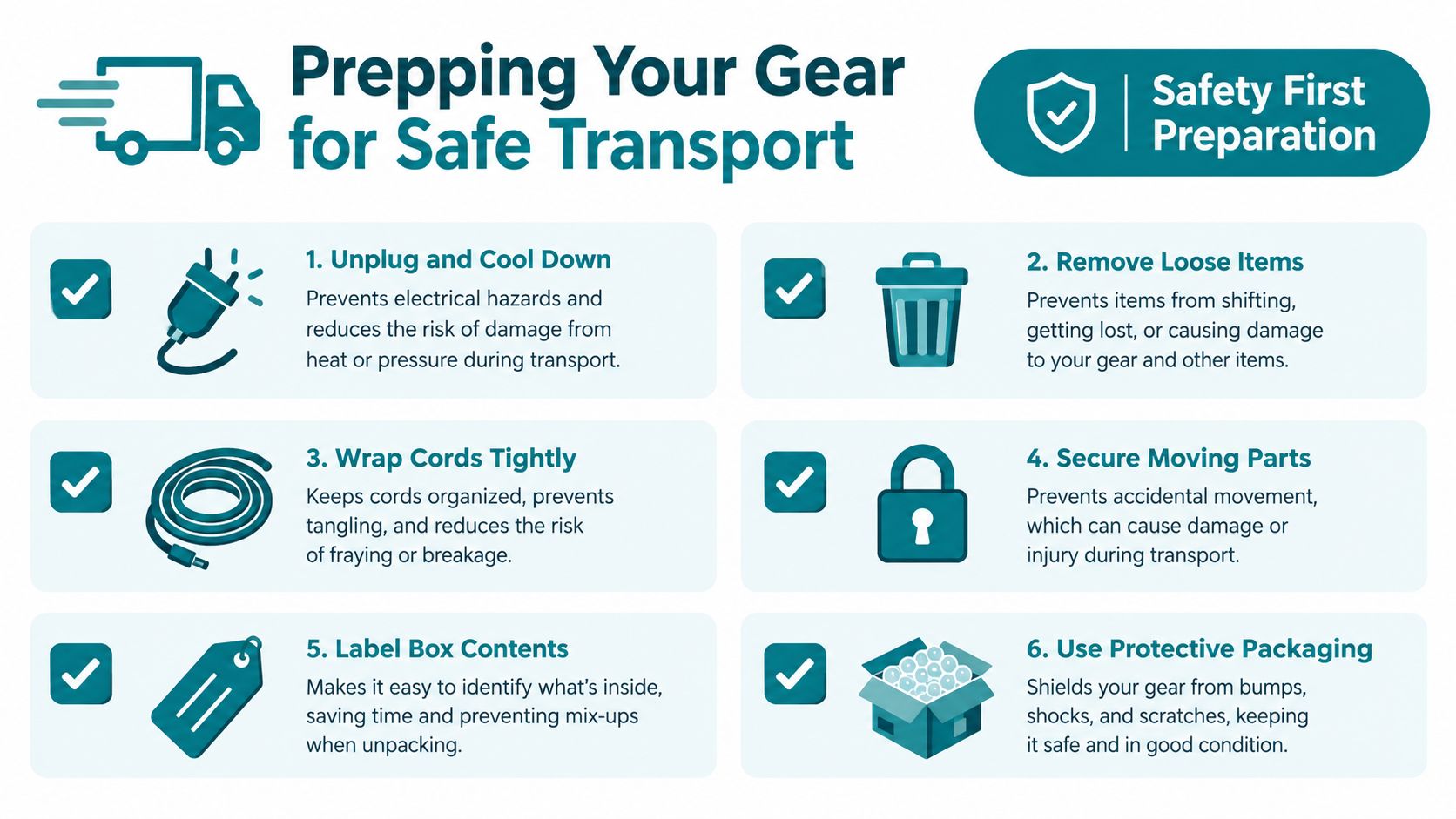
Unplug the device and let hot parts cool. Empty coffee grounds, water, crumbs, dust, hair, and food residue where the design permits. Remove detachable trays, jars, bags, filters, and loose accessories, then place them with the main unit or label them separately.
Remove batteries when you can do so without opening sealed electrical housing. Put loose batteries in a separate, protected container and isolate any battery that looks swollen, hot, leaking, crushed, or damaged. Don't throw a damaged lithium battery into a box with metal tools or other batteries.
Keep appliances dry. Water inside a coffee maker, humidifier, or dehumidifier can leak into a vehicle or processor load. A sealed bag can contain residue, but don't seal a hot device or a leaking battery in a way that traps heat.
Keep the load intact
Don't crush appliances to save space. Don't dismantle mains-powered devices in the field. Crushing can damage circuit boards, release residues, or turn a battery problem into a fire problem during storage, transport, or shredding.
Use a labeled quarantine container for leaking, swollen, hot, or damaged battery-containing devices. Keep that container away from heat, sparks, and direct sun, and ask the receiving facility for instructions before you move the item.
Cooling appliances need a separate level of care. Refrigerators, freezers, window air conditioners, and similar units can contain refrigerant and compressor oil even when they no longer run. The EPA appliance disposal rules prohibit knowingly releasing most refrigerants during disposal.
You can't cut a refrigerant line, remove a compressor, or puncture the unit yourself. EPA rules place responsibility on the final disposer to recover refrigerant before landfill disposal or recycling. If another company already recovered it, the disposer needs a signed statement naming that company and giving the recovery date.
Transport rule: Dry, separate, label, and protect the appliance. If it contains refrigerant or a damaged battery, call before you move it.
Illinois also bans disposal of white goods with their components still inside. The Illinois EPA disposal guidance covers refrigerators, freezers, ranges, water heaters, air conditioners, humidifiers, and similar domestic or commercial appliances. A landfill needs component removal and an Illinois EPA-approved plan and permit, so contact the hauler, transfer station, or recycling facility before loading a large unit.
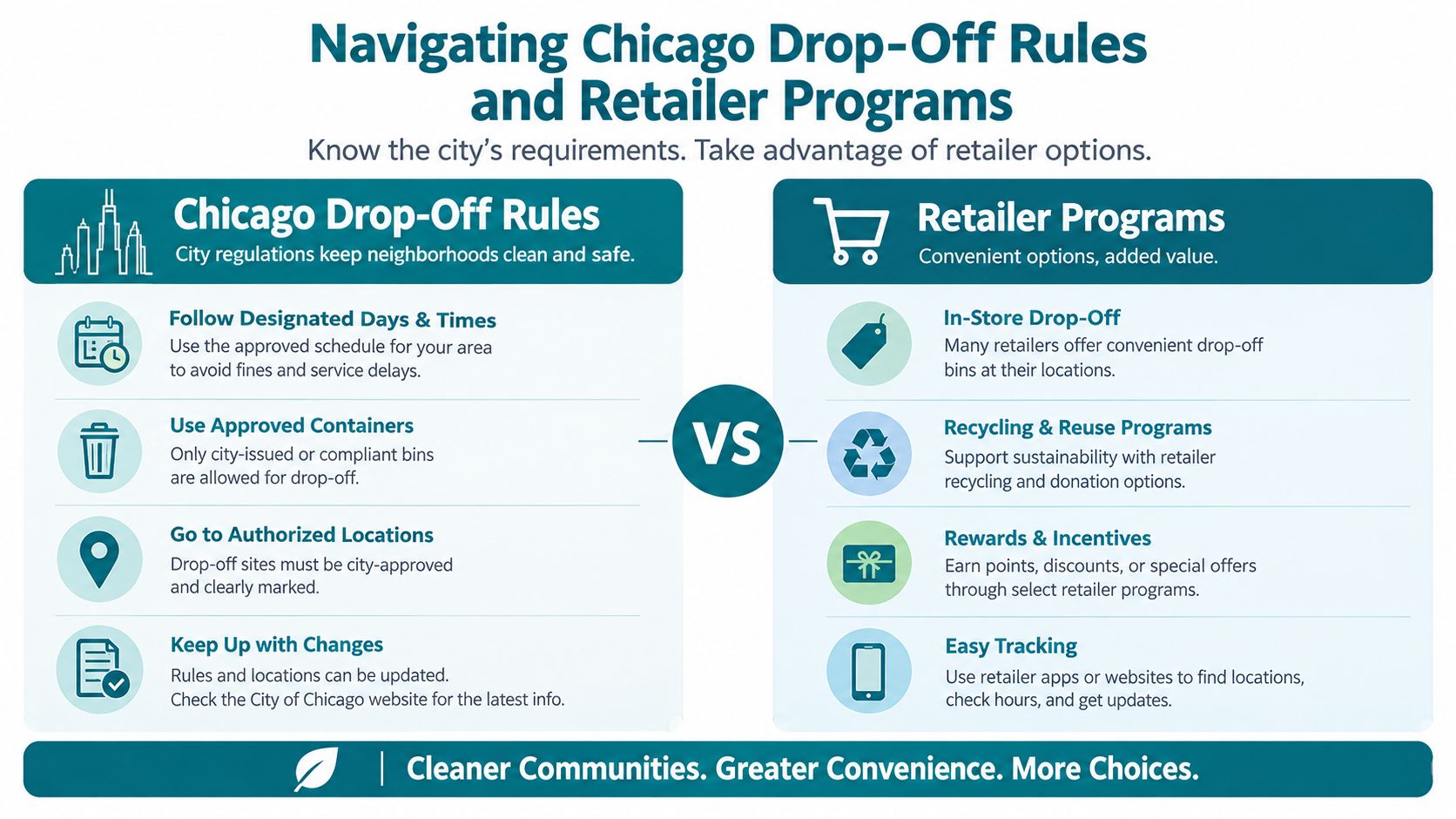
Navigating Chicago Drop-Off Rules and Retailer Programs
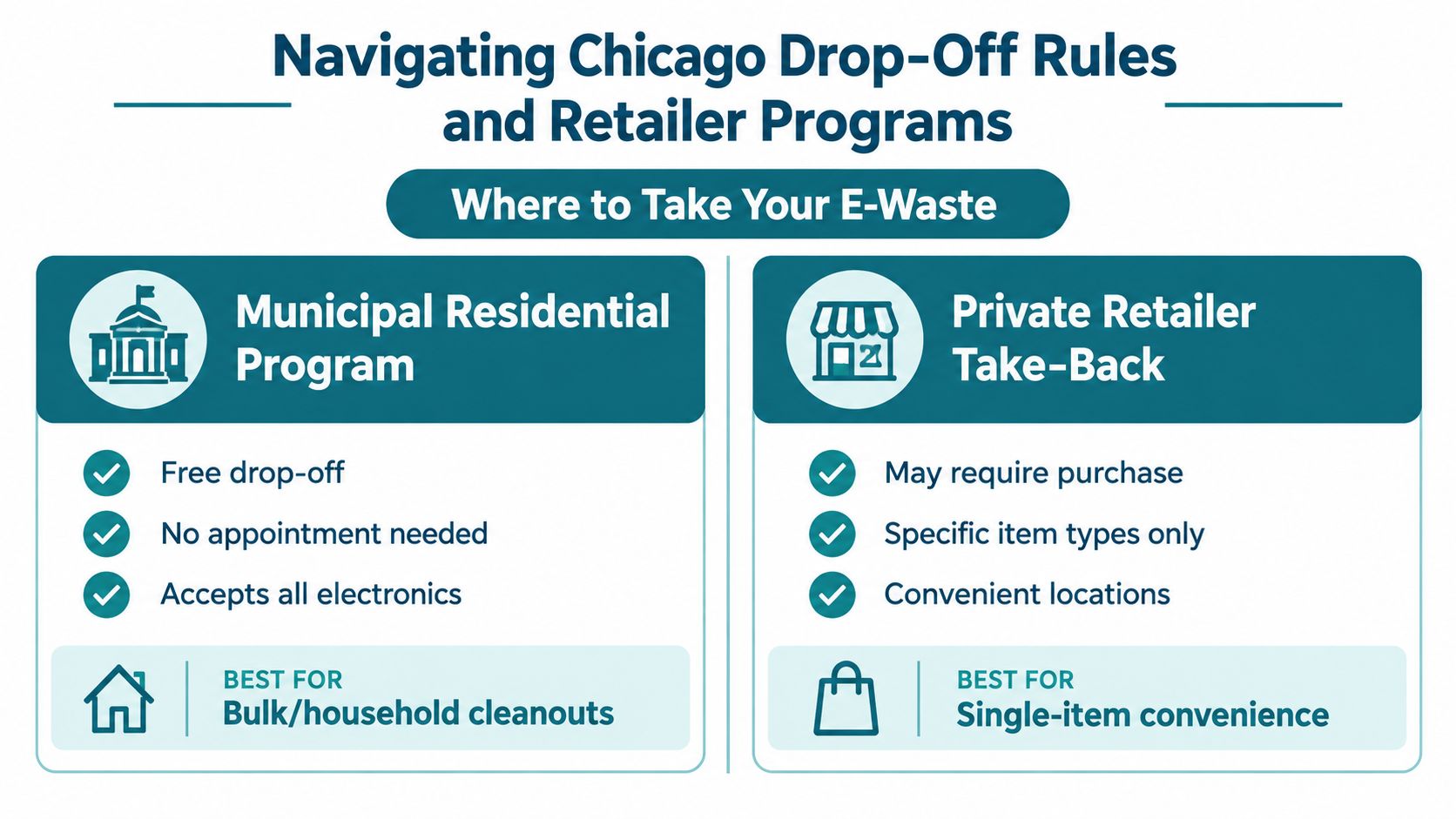
Chicago's municipal program and a private retailer may both collect electronics, but you can't assume they accept the same items. A location that takes a laptop may reject a microwave. A store that accepts a countertop device may not handle a refrigerant unit.
Start with the exact appliance name and condition. Say “countertop microwave with cord,” “cordless vacuum with removable lithium battery,” or “window air conditioner containing refrigerant.” That description gets you a better answer than “I have some electronics.”
Compare the routes before you drive
| Route | What you should confirm | Where it fits |
|---|---|---|
| Chicago residential drop-off | Current accepted-item list, location, hours, and seasonal availability | Household electronics when the city confirms the item |
| Retailer take-back | Accepted brand or product type, purchase conditions, quantity limits, and fees | A single item or a store-specific return route |
| Authorized e-waste processor | WEEE acceptance, battery handling, refrigerant service, and documentation | Mixed loads, unusual items, and verified downstream treatment |
| Reuse or repair destination | Function, cleanliness, safety, parts, and testing expectations | Working or repairable appliances |
Chicago residential electronics locations don't accept commercial electronics. Residents also can't leave materials at a site outside operating hours. Leaving a box beside a closed gate turns a good recycling attempt into illegal dumping.
The city program limits seasonal collection to April 1 through December 30, according to Chicago's official other-wastes guidance. Confirm the current dates and accepted items immediately before you go because local rules can change.
One Chicago-area provider lists small appliances but excludes microwaves, while another city resource describes broader electronics collection. That conflict makes a phone call worthwhile. Don't spend an hour crossing the city only to carry the same appliance home.
For broader questions about finding electronics recycling options near me, use a location-finding resource as a starting point, then verify the destination's own acceptance rules.
When a city site confirms your item, follow its hours and household limits. When it doesn't, call a certified processor or retailer. Use this small household appliances recycling guide to organize the item list before you make those calls.
A successful trip ends with the facility accepting the appliance, not with you leaving it beside a locked entrance.
Tracking Your Real Recycling Impact
A drop-off receipt can prove that you delivered an appliance. It can't always prove that a processor recycled the material. Volunteers who want an honest account should track the item from intake through final treatment.
The Global E-waste Monitor methodology calls for measuring both collection and final treatment. Weigh appliances when they arrive, record categories, photograph unusual or hazardous items, and request processor receipts.
Record what your team handles
Use a simple intake sheet with:
- Item category: Toaster, microwave, vacuum, coffee maker, battery device, or cooling appliance.
- Condition: Reusable, repairable, parts candidate, recyclable, or hazardous hold.
- Mass: Record the accepted weight at intake.
- Destination: Write the facility name and the date of handoff.
- Evidence: Keep the weight ticket, receipt, processor statement, or chain-of-custody report.
Don't count a transfer as recycling. Resale, donation, repair referral, and parts recovery each describe a different outcome. A working coffee maker may reach reuse. A damaged blender may reach material separation. Your report should name the result instead of placing every destination under one convenient word.
Calculate the verified recycling rate as material recycled divided by total accepted appliance mass. That formula prevents a collection event from claiming success based only on the number of items removed from a sidewalk.
Measure the ending, not only the pickup.
Ask processors direct questions. Do they weigh the load? Do they separate batteries? Do they document refrigerant recovery? Can they identify downstream treatment? Do they issue a receipt that distinguishes reuse, repair, parts, and recycling?
A volunteer crew doesn't need a complicated database. A shared spreadsheet, labeled photos, and a folder for receipts can expose weak handoffs quickly. If a facility won't explain what happens after intake, choose another route when safety and access allow.
Chicago cleanups run on trust. Protect that trust by reporting only what you can verify. Record the appliance, record the weight, save the receipt, and tell neighbors exactly which part you completed.
Join Litter Caterpillars for Chicago cleanup events that tackle litter in every kind of weather, then bring your small appliances to the right reuse, repair, or recycling channel. Visit the group to find a weekend morning event, meet volunteers who care about safe disposal, and help clean the next block with us.