Month: January 2026

  • Volunteer tips for volunteer work on saturdays to start a weekend habit

    Volunteer tips for volunteer work on saturdays to start a weekend habit

    Finding meaningful volunteer work on saturdays can feel like the perfect cure for a chaotic work week. I know you're looking for a way to trade a few hours of your weekend for a feeling of purpose, of real connection, of making a dent in a problem you can actually see. This guide is all about helping you find that perfect fit, a place where you belong.

    Your Weekend Can Be More Than Just An Escape

    I know how it feels. The work week is a frantic blur of deadlines and demands, and Saturday is your one sacred day to just breathe. To escape. But what if I told you that giving away just a couple of hours on a Saturday morning could actually give you more energy back than sleeping in ever could?

    Let me tell you my story. A few years ago, I hit a wall. My life felt like a cluttered room I just couldn't figure out how to clean. A long, draining relationship had just cratered, leaving me feeling… well, stuck. I knew I needed to change something fundamental about how I spent my time. I had to build consistency, find some courage, and surround myself with genuinely good people who showed up.

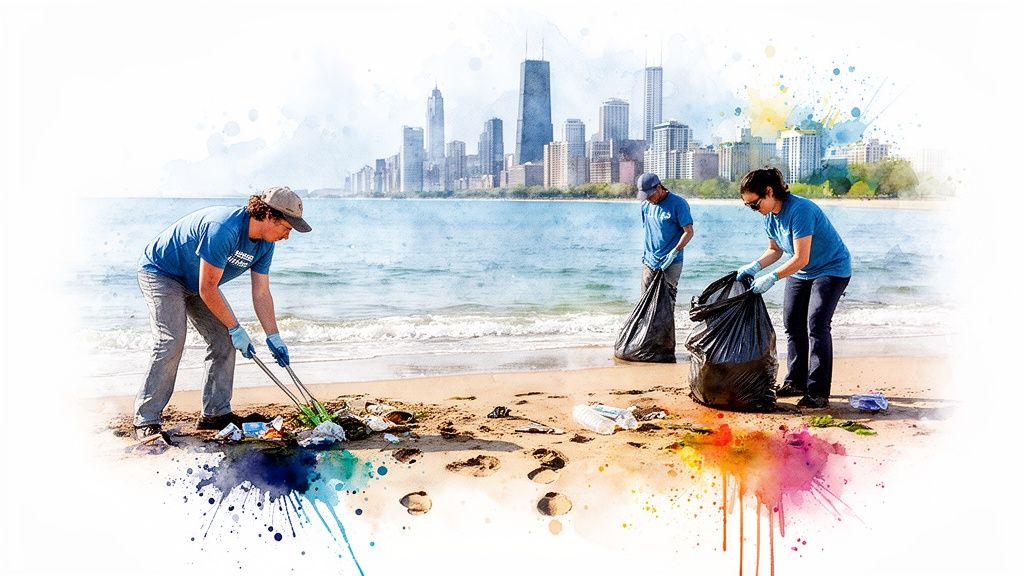
    So, on a whim, I did something that felt totally radical to me then. I signed up for a Saturday morning trash pickup.

    A Surprising Discovery in the Rain

    That first day, it was just me and two other souls. And within an hour, a classic Chicago storm rolled in—a bizarre, biting mix of freezing rain and hail. We were huddled under a tree, shivering, watching Ubers cancel on us one by one. It was miserable. But in that misery, something incredible happened. I realized that cleaning up someone else’s mess was a lot simpler, a lot more direct, than trying to untangle my own.

    That shared struggle, that moment of absurd "fun," became a turning point for me. It taught me a few things pretty quickly:

    • Action Creates Clarity: Focusing on a simple, physical task cleared my head in a way that just thinking about my problems never could. It was like meditation, but with a trash grabber.
    • Shared Hardship Builds Bonds: The freezing rain was a better icebreaker than any forced small talk. It created an instant "we're in this together" feeling that was raw and real.
    • Purpose Is Energizing: I went home cold and wet, but I felt more alive than I had in months. I had turned my weekend into something that mattered.

    That day, I learned that a Saturday morning doesn't have to be an escape from your week. It can be the foundation for a better one. It’s about building a life you don't need to escape from.

    This isn’t just about picking up litter. It’s about you finding a rhythm of service that grounds you. It’s a way to meet people who show up, who care, and who, like you, want to make things a little bit better.

    If you're ready to start this journey, learning how to find volunteer work is the essential first step. This guide will help you discover that perfect opportunity to make your weekend mean something more.

    Finding Your Volunteer Tribe

    So, you’re ready. You've decided to trade a lazy Saturday morning for a meaningful one, but that big question is hanging in the air: where do you even start? It can feel like searching for a specific book in a library with no catalog. I get it. When I first started, I felt the exact same way.

    The good news is, you’re looking at the perfect time. The world has shifted, and organizations finally understand that you need flexibility. Short, predictable shifts—like a couple of hours on a Saturday—are becoming the new normal for volunteering. It’s no surprise that formal volunteering in the U.S. shot up by a massive 22.1% between 2022 and 2023. This boom is happening because groups are finally offering these manageable, weekend-friendly roles that actually fit into your life.

    My own group, Litter Caterpillars, was born on Meetup. I think it's a fantastic place to start because it’s built around shared interests and community, not just tasks. You get a real feel for a group's personality before you even show up. But don't sleep on the old-school approach, either.

    Where To Find Your People

    Finding the right group is like finding a good pair of shoes; they have to fit your style and your energy. To help you zero in on your perfect match, here's a quick rundown of the most effective places I've found to look.

    Where To Find Your Saturday Volunteer Crew

    Platform Best For What to Look For
    Online Platforms Niche interests & city-wide groups Use filters for "Saturday" or "weekend" on Meetup, VolunteerMatch, and local Facebook groups.
    Community Boards Hyper-local neighborhood projects Check the bulletin boards at your local library, coffee shop, or community center for flyers.
    Nonprofit Websites Supporting a cause you already love Look for a "Volunteer" or "Get Involved" page on the websites of your favorite animal shelters or food banks.

    These are the big three, and mixing and matching them is usually the fastest way you'll find a group that clicks. You might find a big park cleanup on Meetup one week and then spot a flyer for a small community garden project the next. Keep your eyes open!

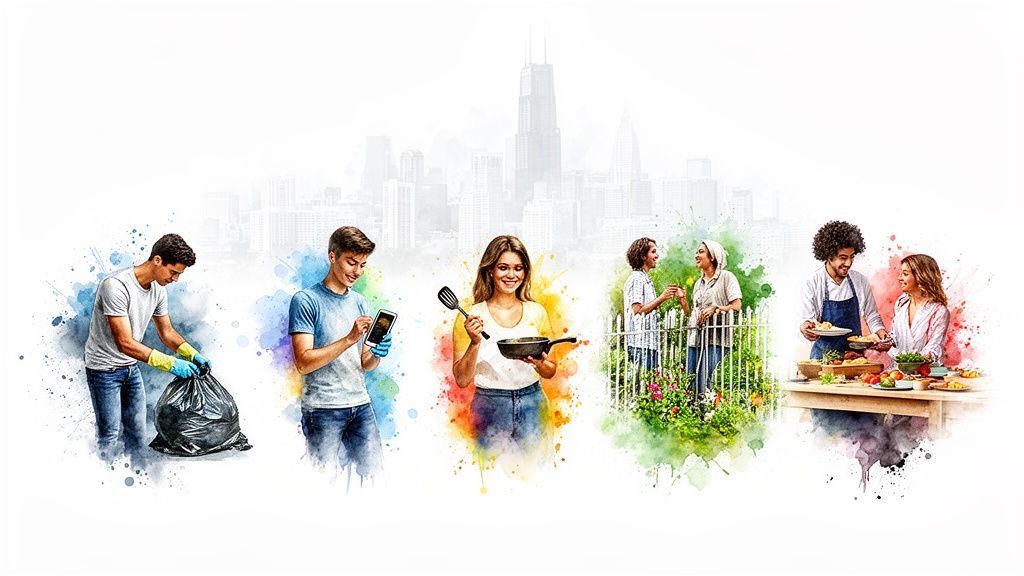
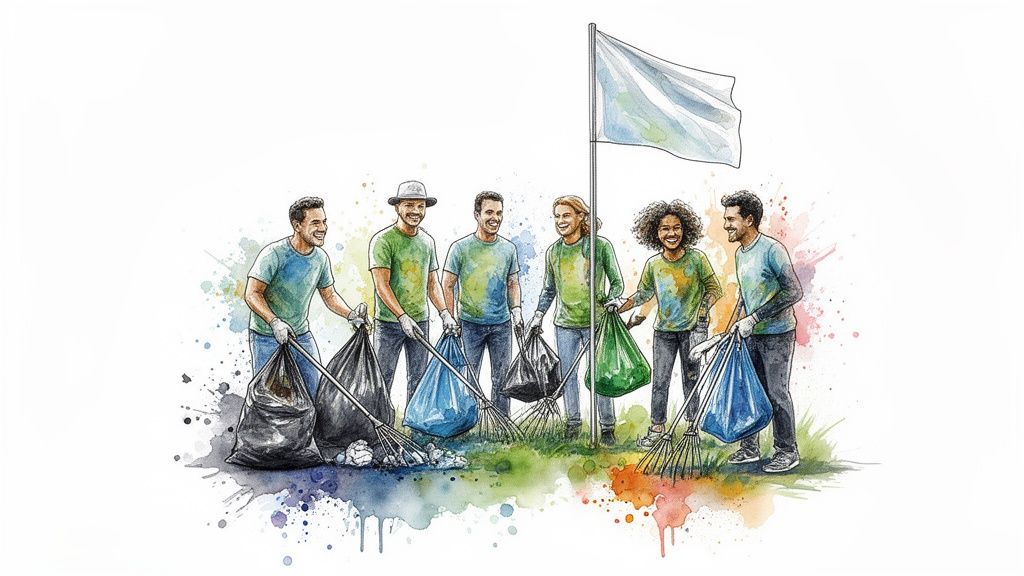
    This image really captures the three core elements that make Saturday volunteering so powerful.
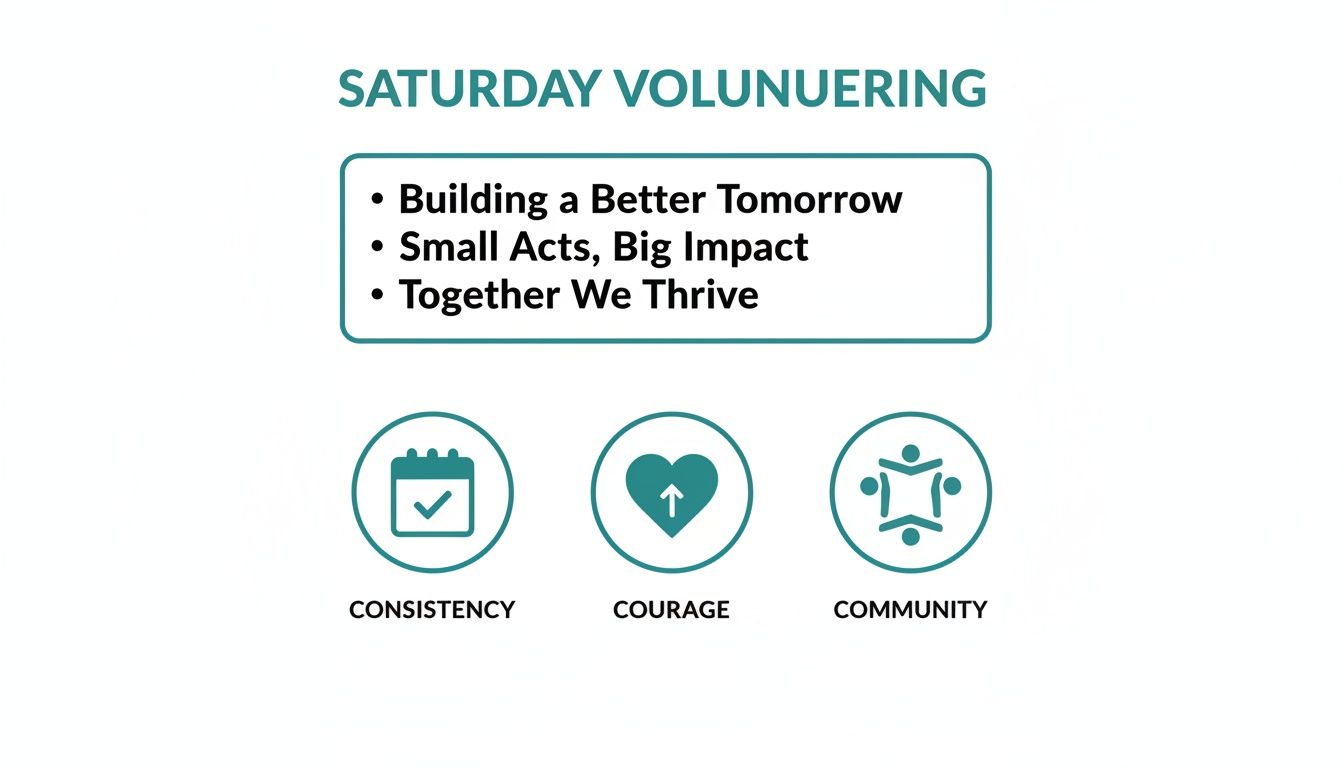
    A graphic about Saturday volunteering, highlighting consistency, courage, and community themes.

    It’s all about consistency, courage, and community coming together. When you find a group that nurtures all three, you’ve hit the jackpot.

    Spotting Red Flags and Green Lights

    As you start exploring, you have to be a bit of a detective. Not all groups are created equal, and the vibe matters more than you think. A great organization makes you feel valued from the first email; a bad one makes you feel like just another cog in a machine.

    A huge green light is a group that puts its volunteers' happiness and safety first. If their first message is an ask for a donation, or they seem disorganized and never reply, that’s a big red flag. You're giving your most valuable asset—your time. It should be respected.

    Look for a crew with a clear mission and a welcoming vibe. Do they post photos of smiling volunteers? Do they share stories about their impact? These are signs of a healthy, thriving community where you won't just be volunteering—you'll feel like you belong.

    If you want to see some concrete examples, we’ve put together a list of great weekend volunteer opportunities near me.

    Navigating Your First Day With Confidence

    Walking into a group of total strangers can be terrifying. I still get flashbacks to my first time—that awkward hesitation, the internal debate about whether I’d know anyone, or if I’d just end up glued to my phone to avoid eye contact. It’s basically the first day of school all over again, but for adults.

    Let’s walk through it together. My goal here is to get you so prepped that you can show up feeling less like a nervous newcomer and more like you actually belong. This isn't just about showing up; it's about owning it.
    A smiling young man, a volunteer, in a safety vest and gloves holding a bottle and can, amidst colorful watercolor splashes.

    What To Bring And Wear

    First, let's get the practical stuff out of the way. Think of this as your personal adventure kit. For any volunteer work on Saturdays, especially somewhere like Chicago where the weather has a personality of its own, layers are your best friend. Seriously.

    A comfy t-shirt, a hoodie or fleece, and maybe a light jacket will let you adapt to whatever the morning decides to do. You’ll be moving, bending, and lifting, so wear clothes you don’t mind getting a little dirt on.

    Here’s a quick-and-dirty checklist for your bag:

    • A reusable water bottle. You’ll be surprised how thirsty you get.
    • A small snack, like a granola bar. A little fuel goes a long, long way.
    • Your phone, fully charged. For directions, photos, and swapping numbers with new friends.
    • An open mind. Honestly, this is the most important thing on the list.

    Breaking The Social Ice

    Okay, now for the part that trips most people up: talking to strangers. Here's the secret—the beauty of volunteering is that the work itself is the ultimate icebreaker. You don’t need some clever opening line when you can just turn to the person next to you and ask, "Hey, have you seen any other plastic bottles over here?"

    The shared task completely removes the social pressure. I've seen the shyest people I know absolutely blossom when they’re focused on a common goal right alongside someone else. The minute you put on your gloves, you’re already a team.

    It's completely okay to just listen at first. You’re there to contribute, not to perform. Your presence alone says you care, and that’s the only introduction you really need.

    And remember this: every single person there was new once. The volunteer working next to you probably felt the exact same way on their first Saturday. They aren’t judging you; they’re just happy to have another set of hands. You’ve already done the hardest part by stepping out of your comfort zone.

    How To Turn One Saturday Into A Lasting Habit

    One awesome Saturday of volunteering feels great. But a real habit of showing up? That's life-changing. Let’s be real, though—how do you make it stick when your calendar is a mess and your bed is screaming your name?

    It’s not about having some kind of superhuman willpower. It's about building a system so simple and rewarding that showing up feels way easier than staying home. Think of it like learning to play guitar. You don't start by shredding a crazy solo; you start with basic chords until it becomes muscle memory.

    Building Your System For Showing Up

    Your first few Saturdays are all about laying down the tracks. You want to make the path to volunteering so ridiculously smooth that you just glide right into it. The whole point is to kill every little bit of friction that could give you an excuse to bail.

    Here’s the simple system I stumbled into:

    • Prep The Night Before: I lay out my "volunteer uniform"—old jeans, a comfy shirt, sturdy boots—before I even think about going to bed. This one tiny step saves my groggy Saturday morning brain from having to make a single decision.
    • Link It To A Reward: My post-cleanup ritual is grabbing a coffee from a favorite local spot. This anchors the whole experience with something I genuinely look forward to, turning the morning into a positive feedback loop.
    • Put It In Your Calendar: Seriously, treat it like a doctor's appointment you can't miss. That little block on your digital calendar is a promise you’re making to yourself and your community.

    The Power Of A Shared Struggle

    Consistency isn't just about showing up on the sunny days. It’s forged in those moments when you’d rather be literally anywhere else.

    I'll never forget our first "official" Litter Caterpillars event. It was a classic Chicago spring day that turned on a dime—one minute it was cloudy, the next we were getting pelted with actual hail.

    There were only three of us, huddled under a tree, just laughing at how absurd it all was. We were cold, soaked, and pretty miserable. But that shared struggle bonded us more than a hundred perfect, sunny days ever could have. We had a story.

    That’s the secret sauce. When you show up on the hard days—the rainy, cold, or just plain "I don't feel like it" days—you’re not just picking up trash. You’re building resilience and a deep, unspoken trust with the people right there next to you.

    This is why volunteer work on saturdays becomes such a huge deal globally. Big international networks often mobilize thousands of people for city-wide service campaigns on specific Saturdays to maximize this shared energy. For instance, some groups coordinate an annual Global Volunteer Day on a Saturday in May, getting people in dozens of cities to serve their communities all at once.

    Finding Your Accountability Partner

    Somewhere in your new volunteer tribe, find one person who makes you want to show up. This doesn't have to be some formal thing. Just find someone whose energy you vibe with and make a point to check in. A simple "See you Saturday?" text can be the nudge you both need.

    This person becomes your anchor. They're living proof that you’re part of something real. Celebrate the small wins together—a ridiculously clean block, a hilarious story from the morning. These little moments are the glue that holds the habit together.

    And for those of you leading groups, we have a whole guide on volunteer retention strategies that digs way deeper into this idea.

    The Unexpected Rewards Of Showing Up Consistently

    You might sign up for your first Saturday morning volunteer gig thinking it’s about cleaning up a park or planting a tree. That’s what I thought, too. But after years of doing this, I can tell you that the real payoff has almost nothing to do with the task itself.

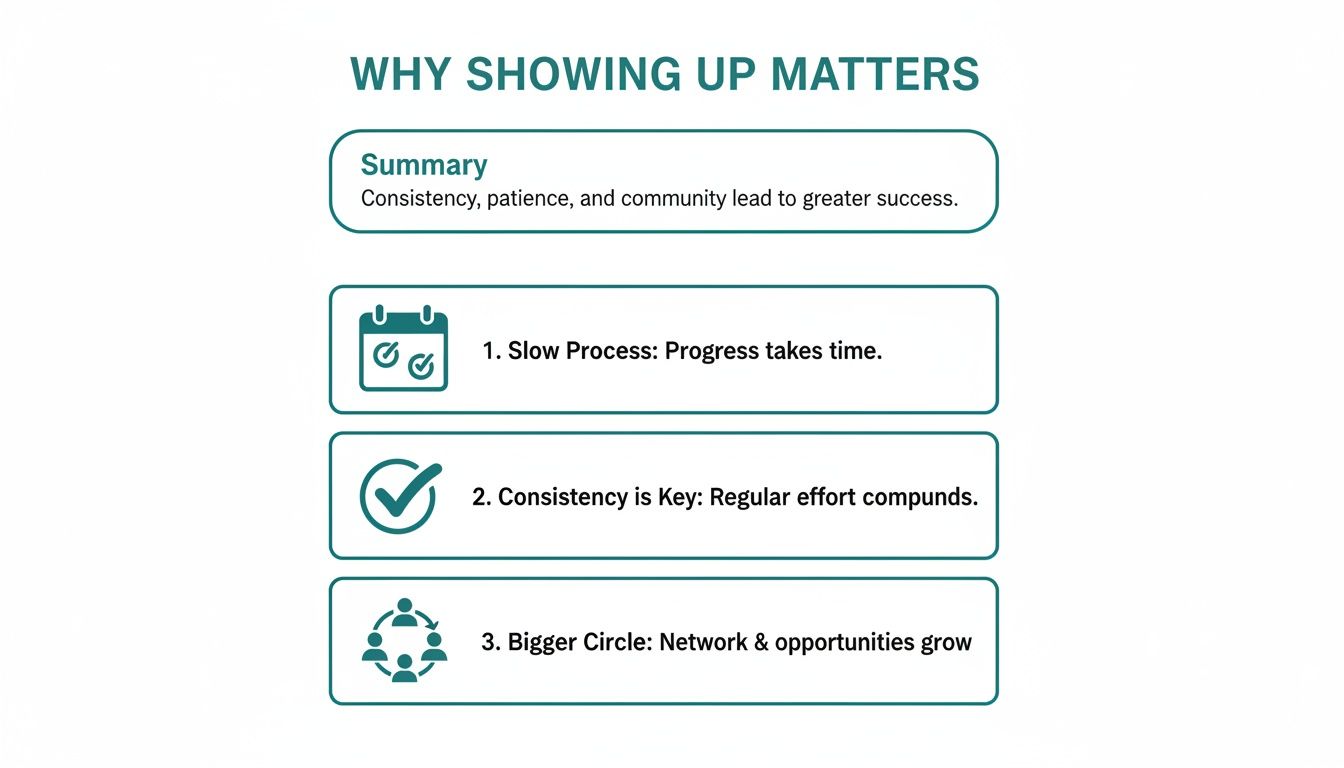
    The magic is in the consistency. It’s what happens when you show up again and again, especially on the days you really don't feel like it.

    Happy man and woman smiling while planting a small green tree, hands in the soil.

    You Build Real Resilience

    Something powerful happens when you willingly face a little discomfort. Dragging yourself out of bed on a drizzly, gray Saturday morning to do something for someone else builds a kind of inner strength that spills over into every other part of your life.

    It's like a workout for your soul.

    That project you’ve been avoiding at work? Suddenly, it doesn’t seem so bad compared to picking up trash in 40-degree rain. You learn that a little hardship won’t break you. In fact, it makes you stronger, more capable, and a whole lot less likely to quit when things get tough anywhere else.

    You Find Your People, Not Your Network

    Forget those awkward networking events. The friendships you forge while doing volunteer work on Saturdays are different. They're built on a foundation of shared action and shared values, not on what you can do for each other professionally.

    These are the people who see you at your most authentic—sleepy-eyed, wearing old clothes, and totally focused on a common goal. This shared purpose strips away all the pretense. You’re not trying to impress anyone; you’re just trying to get the job done, together.

    This isn’t networking; it's community. It’s the kind of genuine connection we’re all starving for, found not over cocktails, but over a shared pair of work gloves and a desire to make things a little bit better.

    You Take Ownership Of Your City

    Finally, there’s an incredible sense of pride that comes from consistently caring for your community. You start to see the city not just as a place you live, but as your place. That park isn’t just some random patch of green; it’s the park you helped clean.

    This feeling connects you to something much bigger than yourself. It’s a powerful antidote to feeling small or helpless in a huge city.

    And this is why Saturday volunteering is so widespread. In just one year, about 75.7 million U.S. adults volunteered, with a huge chunk of them giving up a slice of their weekend. Organizations know that scheduling recurring Saturday shifts is a strategic choice—it attracts people willing to sacrifice leisure time, which is a strong predictor of long-term commitment. You can check out some fascinating volunteer statistics on ActivateGood.org that show just how much this time is valued.

    You’re not just a resident anymore. You become a guardian, a caretaker, and an active participant in the story of your neighborhood.

    Answering Your Questions About Saturday Volunteering

    Got questions spinning around in your head? Good. That means you’re actually thinking about this. It means you’re on the verge of doing something incredible.

    I’ve heard a lot of the same worries pop up over the years, so let’s just tackle them head-on, right now. Think of this as our little pre-game huddle. Once we get these out of the way, you’ll be ready to jump in.

    What If I Can’t Commit To Every Single Saturday?

    This is the big one. And the answer is simple: don’t. That’s totally fine.

    Any group worth your time will never, ever pressure you to show up. My whole philosophy is "come when you can." Your time is a gift, not a contract. Honestly, showing up just one Saturday a month is huge. It all adds up.

    The goal isn't perfect attendance; it's finding a crew that gets it. A place that’s just happy to have you when you can make it. It’s about contribution, not checking a box.

    I’m Shy And Awkward Around New People. Is This Really For Me?

    Yes. Absolutely. In fact, volunteering might just be the best place for introverts.

    This isn’t some loud party where you have to force small talk. Here, we have a job to do. We have a shared mission. You can just focus on the task—picking up the trash, pulling the weeds, whatever it is—and the conversation just… happens. It grows naturally out of the work.

    There's zero pressure to be "on." Some of our most dedicated people are the quiet ones who just love getting in the zone and making a difference.

    The task is the icebreaker. When you're working side-by-side toward a common goal, the connection builds itself. You don’t have to force a thing.

    Do I Need Special Skills Or My Own Equipment?

    For the kind of volunteer work on saturdays we do, like a neighborhood cleanup, you need zero special skills. I'm serious. If you can show up, you’re qualified.

    We’ve got all the gear you’ll need: gloves, bags, grabbers, the works. Just bring a good attitude. That’s the real beauty of this—it’s simple, direct, and you can see the impact you’ve made by the end of the morning. No experience necessary.

    What If The Weather Is Bad On Saturday Morning?

    Ah, my favorite question. This is where the real magic happens.

    We go out rain or shine, cold or heat. I’m telling you, pushing through a little bad weather together is what forges the strongest bonds. It gives the group a story. You’ll be laughing about that time it hailed on you in May for years to come.

    Of course, safety is always priority number one. We’ll cancel for anything truly dangerous like lightning. But overcoming a little discomfort? That shows you what you’re made of. Those are the days you remember.


    At Litter Caterpillars, we live these principles every single weekend. We’re the volunteer crew out there cleaning up Chicago, building a community of brave, kind people who aren’t afraid of a little hard work.

    If you’re ready to see what your Saturdays can really be, we’d love for you to join us. Find our next event and become part of the story at https://www.littercaterpillars.com.


  • Corporate Social Responsibility Examples That Drive Real Impact

    Corporate Social Responsibility Examples That Drive Real Impact

    You've seen them, right? The glossy photos. A dozen employees in matching t-shirts, awkwardly planting a single, sad-looking tree. It all feels a bit… staged. Like a box-checking exercise built for a press release. But what if corporate social responsibility wasn't about looking good? What if it was about actually being good? What if it could change not just a community, but your team, your brand, and maybe even you?

    I know it can. I’ve lived it.

    For a long time, my own life was a mess, literally and figuratively. I started a small trash pickup group right here in Chicago—we call ourselves Litter Caterpillars now—mostly to get a handle on my own issues with consistency and keeping things clean. What happened next blew my mind. We found this strange, unexpected joy in doing hard things together, even freezing our butts off in a Chicago hailstorm. I discovered that cleaning up somebody else's mess was often way easier than facing my own. That simple act of service started changing us. From the inside out.

    So this article isn't another boring list of forgettable photo-ops. I want to take you on a deep dive into 12 powerful corporate social responsibility examples, many of them inspired by the raw, real lessons we learned out on the streets. I’ll share stories from my own journey, break down exactly what makes these ideas tick, and give you stuff you can actually use to build a program with a real heart and soul. Forget the empty gestures. It's time to build something that actually matters.

    1. Community-Led Environmental Cleanup Programs

    Picture this. You’re turning a neglected, trash-strewn street corner—a place you usually hurry past—into a spot that fills the whole neighborhood with pride. That’s the magic of these community-led cleanup programs. They aren't just about picking up litter. They are potent examples of corporate social responsibility that build a tangible, visible impact right where you live. When you sponsor or join one of these events, you're directly investing in the well-being of the communities you serve.

    This is how CSR stops being some abstract idea and becomes a hands-on, team-building adventure. It’s more than just cutting a check. It’s about you, showing up. Getting your hands dirty. And creating immediate, visible change right alongside your neighbors and your team.

    Strategic Insights & Actionable Takeaways

    This whole model is like a campfire. It needs consistent fuel—that’s the community spirit—to keep burning bright. The goal isn't a one-off event. It’s a sustainable movement that makes people feel connected and gives them a sense of ownership.

    • Build a Habit: You have to be consistent. It's everything. Our Litter Caterpillars group in Chicago hosts cleanups every single week. This makes it a regular, easy-to-join thing, not some rare, special occasion. That’s how you build momentum and a crew of dedicated volunteers.
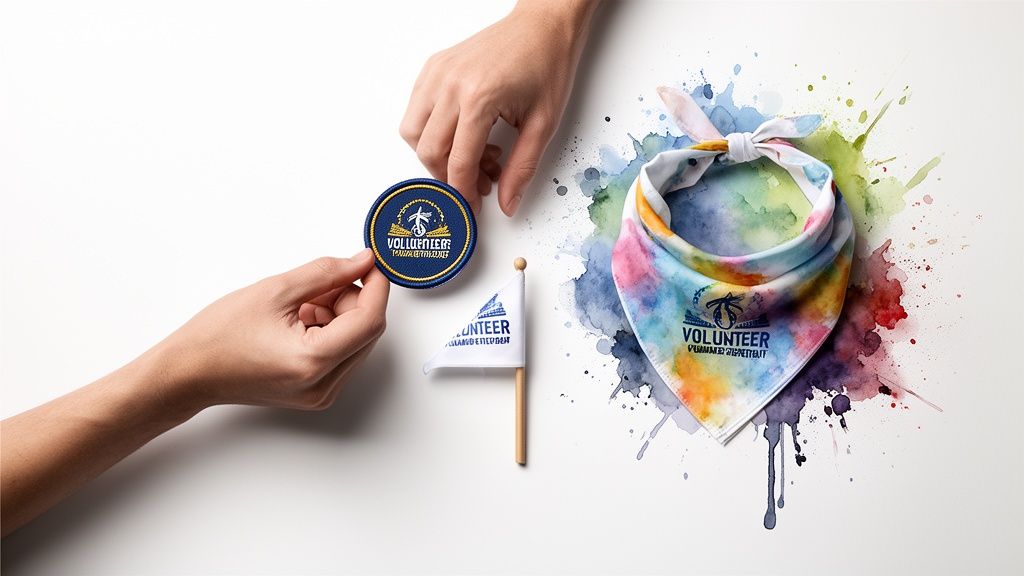
    • Create Team Identity: You need to inspire pride. A feeling of belonging. Use branded gear like t-shirts, come up with team chants, or offer little achievement badges. This transforms a simple cleanup into a shared mission.
    • Focus on Underserved Areas: You can maximize your impact by going where help is needed the most. This shows you’re genuinely committed to equity and caring for the community, not just chasing easy PR wins.
    • Prioritize People: The best programs I've seen put their volunteers' safety and happiness first. If you create a positive, supportive vibe, people will come back. They’ll become your biggest advocates.

    By partnering with a program like this, your company can grow deep community roots and show a powerful commitment to local environmental health. You can see how this all works and find ways to get involved with local cleanup events.

    2. Land Acquisition and Community Space Development

    Imagine an abandoned, overgrown lot. Now, imagine it transforming into a vibrant hub where neighbors meet, kids play, and fresh food grows right out of the ground. This is what land acquisition and community space development can do. It's one of the most lasting corporate social responsibility examples I can think of. When your organization buys and redevelops a neglected property, you’re making a permanent, physical investment in a neighborhood’s future.

    This kind of project isn't just a temporary fix. You're creating lasting assets—community gardens, little pocket parks, maybe even food forests—that become a part of the local fabric. When you help create a place like Caterpillar Park in Englewood, you're not just cleaning up a space; you're building a legacy of community health, connection, and pride.

    Strategic Insights & Actionable Takeaways

    This kind of thing is like planting a redwood. It needs a long-term vision and you have to work deeply with the community. Your goal is to create a self-sustaining space that the residents truly own and love.

    • Co-Create with the Community: The best spaces are designed with residents, not just for them. You have to host design workshops and planning sessions from day one. This makes sure the final space actually meets what people in the community need and want.
    • Plan for Longevity: A beautiful park is useless if it gets overrun with weeds a year later. You need a sustainable maintenance plan with a dedicated volunteer crew or partnerships with local groups before you even break ground.
    • Document the Journey: You have to tell the story of the transformation. Use photos and videos to show the whole process, from neglected lot to vibrant community hub. This creates amazing marketing content and shows your tangible impact.
    • Activate the Space: A park is just land until people use it. Partner with local groups to host regular events—farmers' markets, outdoor movie nights, gardening workshops. You have to make sure the space becomes a lively center of activity.

    When you invest in land, you invest in people. You can learn more about how a small group turned an auctioned lot into a beloved community asset and find inspiration by exploring the story of Caterpillar Park.

    3. Friendship, Social Connection, and Branded Identity

    What if your corporate social responsibility initiative felt less like a chore and more like joining your favorite team? That's the power you get when you build a program around friendship and a shared identity. These initiatives intentionally create deep social bonds. They turn volunteering from a one-time act into a core part of someone's community life. It's about making people feel like they belong to something bigger than themselves.

    This approach gets that the strongest movements are built on relationships, not just tasks. By fostering real connections and a proud, branded identity—with symbols like flags or team songs—you create an environment where people want to show up. It becomes a source of joy and belonging that fuels long-term engagement and turns your volunteers into passionate advocates for the mission.

    Two diverse young adults laughing, holding flags, against a vibrant watercolor splash background.

    Strategic Insights & Actionable Takeaways

    Think of social connection as your main goal, not just a nice side effect. You're trying to build a resilient community that sustains itself through a shared purpose and real friendship.

    • Create a Shared Identity: You have to go beyond just a logo. Develop traditions, symbols, and celebrations that bond your team. At Litter Caterpillars, we use a theme song, unique flags, and achievement badges to forge a powerful group identity.
    • Facilitate Social Time: You have to intentionally build in time for people to connect. Always schedule some informal social time before or after your events so relationships can form naturally.
    • Build Consistent Teams: Assign your volunteers to small, consistent groups. When people work with the same crew regularly, trust builds way faster. Acquaintances turn into real friends.
    • Celebrate People, Not Just Metrics: You have to publicly recognize personal milestones, volunteer stories, and individual growth. This shows you value the people behind the work, and that fosters deep loyalty and a positive culture.

    When you focus on building a community, you create a self-sustaining volunteer movement that is resilient, joyful, and deeply impactful. You can explore how to apply these community-building activities for adults to your own CSR programs.

    4. Volunteer-First Fundraising Model

    Imagine you join a cause you believe in. You're ready to give your time and energy, but then you're hit with constant pressure to donate money. That feeling can turn your inspiration into a sense of obligation. The volunteer-first fundraising model flips this whole script. It's one of the most powerful and authentic corporate social responsibility examples because it protects the volunteer experience by separating the act of service from the act of fundraising.

    This model is like building a great band. You find passionate musicians first, and then you find a record label to support them. You build a passionate community first. Instead of asking volunteers to open their wallets, you get your funding through corporate sponsorships, grants, and major donors. This lets everyone, no matter their financial situation, contribute in a meaningful way. For a company like yours, supporting this model means you're funding pure, uncompromised community action.

    Strategic Insights & Actionable Takeaways

    This approach is about valuing human energy as your most precious resource. Your role as a corporate partner is to fuel that energy, not to extract value from it.

    • Build Diverse Revenue Streams: Don't put all your eggs in one basket. We actively seek a mix of corporate sponsors, apply for grants, and develop partnerships to make sure our operations are sustainable without ever asking our volunteers for a dime.
    • Create Clear Sponsorship Tiers: You need to develop attractive sponsorship packages that offer clear value to businesses. This could be brand visibility on gear, social media shout-outs, or dedicated cleanup events for your employees.
    • Prioritize Transparency: You have to be open with your volunteers about how you're funded. When they know that corporate partners and grants make their work possible, it builds trust and shows them how valuable their contribution truly is.
    • Focus on Impact Metrics: Track and publicize the results of what your volunteers are doing—pounds of litter collected, number of community members engaged. These metrics are powerful tools for attracting and keeping high-impact funders who want to see real results.

    By sponsoring a volunteer-first model, your company shows a profound respect for the community and empowers people to give their best. You can see how this philosophy creates an incredible volunteer culture and explore sponsorship opportunities.

    5. All-Weather, Year-Round Service Commitment

    What does real commitment look like? I'll tell you. It’s showing up when it’s inconvenient. It’s facing a snowstorm or a heatwave and choosing to serve anyway. This is the heart of an all-weather, year-round service commitment. It's a powerful model of corporate social responsibility that proves your dedication isn't just for the sunny days. It shows that community needs don’t take a break for bad weather, and neither do you.

    This approach builds incredible credibility. It creates a culture of resilience. When your team braves the elements together, you’re not just cleaning a park; you’re forging a bond built on shared hardship and unwavering purpose. This sends a clear signal to your community, employees, and customers that your values are non-negotiable.

    Strategic Insights & Actionable Takeaways

    This model is like being a lighthouse keeper. It's built on a foundation of safety, preparation, and a culture that finds strength in adversity. It’s about being stubborn for the right reasons.

    • Embrace the Elements: You have to make resilience a core part of your identity. At Litter Caterpillars, we operate in rain, snow, and extreme heat. We never cancel an event. This unwavering consistency proves our commitment is absolute.
    • Safety Is Non-Negotiable: Create clear, weather-specific safety protocols. This could mean providing hand warmers in winter, extra water in summer, or changing routes during storms. The goal is to show up, but to do it safely.
    • Communicate and Prepare: Let your volunteers know what to expect and how to prepare. When you're transparent, you build trust and make sure everyone shows up with the right gear and the right mindset.
    • Celebrate the Grit: You have to acknowledge and honor the effort. Share photos of your team working through tough weather on social media. Frame the challenge not as a problem, but as a source of shared pride and accomplishment.

    Adopting an all-weather philosophy shows your company’s character. Your grit. It’s a tangible way to demonstrate that your commitment to the community is truly unconditional. You can see this dedication firsthand and find ways to join a mission that never stops.

    6. Neighborhood-Specific and Equity-Focused Service

    Think about your city. Think about the neighborhoods that get all the resources and the ones that are often forgotten. True corporate social responsibility examples don't just pop up in the most convenient places; they go where the need is greatest. This approach intentionally focuses on underserved and marginalized communities. It makes sure that efforts toward beautification and environmental health are distributed equitably.

    A young man helps an elderly woman on a street with houses and a vibrant mural.

    It’s about moving beyond photo ops and tackling environmental justice head-on. When you commit to showing up in all neighborhoods, not just the ones with the best PR value, you build genuine trust. You prove your commitment is about people, not just perception. This is how you transform a volunteer program into a real force for systemic change.

    Strategic Insights & Actionable Takeaways

    This model is like being a good neighbor. It's built on trust, respect, and a long-term vision. The goal is to become a reliable partner, not just a temporary visitor. You do that by empowering the residents you serve.

    • Map for Equity: Don't just go where it's easy. You need a systematic plan to cover all neighborhoods, prioritizing those with the highest need. We're trying to do this at Litter Caterpillars by working to serve all 50 city wards, including places like Englewood that are often overlooked.
    • Hire from the Community: The most powerful leaders are the ones with lived experience. You have to hire and develop team leaders from the neighborhoods you serve to make sure your efforts are authentic and culturally resonant.
    • Listen First: When you first go into a new neighborhood, your most important job is to listen. Partner with community organizations that are already there. Let their wisdom guide your actions. Building relationships is the foundation for everything else.
    • Commit for the Long Haul: Avoid one-off events. A sustained presence shows a real investment in the community's future and helps address the root causes of neglect, not just the symptoms.

    By adopting an equity-focused strategy, your company can move beyond surface-level CSR and contribute to meaningful, lasting change where it matters most. You can see how this philosophy drives impact and find ways to join a mission-driven cleanup.

    7. Personal Transformation and Resilience Building

    What if volunteering could do more than just clean a park? What if it could help you rebuild a life? This is the core idea behind CSR programs that focus on personal transformation. These initiatives frame service not just as an act of giving, but as a journey of healing, growth, and resilience. By creating a safe and supportive space, you offer a place where overcoming challenges becomes a shared experience.

    This model elevates corporate social responsibility from a PR effort into something deeply human. It's about recognizing that your volunteers and employees come with their own stories, their own struggles. When you facilitate mentorship and create opportunities for real connection, you invest in their personal well-being just as much as you invest in the community. It’s a powerful way to show you care about people, not just productivity.

    Strategic Insights & Actionable Takeaways

    This approach is like building a support group. It's built on vulnerability, trust, and celebrating personal wins. The goal is to create a community where people feel safe enough to grow through their service.

    • Lead with Your Story: Authenticity builds trust. I openly share my personal journey of transformation as the founder of Litter Caterpillars. Sharing your own "why" creates a foundation for other people to feel safe sharing theirs.
    • Focus on Growth Milestones: Shift your focus from just service metrics to personal progress. Celebrate a volunteer's courage to lead a team for the first time or their consistency in showing up.
    • Create Spaces for Reflection: Meaningful service requires you to process it. Dedicate time after events for volunteers to reflect and share what the experience meant to them. This turns a simple cleanup into a lesson in resilience.
    • Train for Emotional Intelligence: You have to equip your leaders with skills like active listening and empathy. The goal is to create a supportive network, not just manage a task list. A leader who knows how to listen is more valuable than one who only knows how to delegate.

    By building a program that honors the journey of each individual, your company can foster profound loyalty and create an impact that goes far beyond clean streets. You can learn more about how Litter Caterpillars uses service for personal growth.

    8. Demographic-Specific Volunteer Recruitment

    What if you could design a volunteer program that speaks directly to the heart of a specific community? That’s what demographic-specific volunteer recruitment does. Instead of a one-size-fits-all approach, this strategy tailors its message, its timing, and its activities to connect with the unique motivations of a particular group. This makes it one of the most effective corporate social responsibility examples for deep engagement.

    This approach turns your CSR initiative from a generic call for help into a personal invitation. It acknowledges that different people volunteer for different reasons. Some are looking for career skills, others want friendship, and many are just seeking a sense of purpose. When you understand and address these specific desires, you create a program that feels not just welcoming, but like it was truly made for them.

    Strategic Insights & Actionable Takeaways

    This model succeeds when you move beyond assumptions and genuinely get to know your audience. The goal is to build an authentic connection that makes people feel seen, valued, and essential to your mission.

    • Understand Motivations: Don’t guess what people want. For example, we successfully engage a lot of young women by focusing on empowerment, community, and creating visible, inspiring change. You need to research what drives your target group.
    • Recruit in Their Spaces: You have to go where your audience already is. If you're targeting new professionals, connect through LinkedIn or company resource groups. For students, focus on campus events and the social media platforms they actually use.
    • Design for Their Lives: Respect their constraints. Offer weekend events for people who work 9-to-5, or flexible scheduling for parents. Your logistics should remove barriers to joining, not create new ones.
    • Center Their Voices: Feature testimonials and leaders from within the target demographic. When people see others who look like them in leadership roles, it builds trust and shows them a clear path for involvement and growth.

    By tailoring your outreach, you can build a more diverse, dedicated, and passionate volunteer base. You can find more targeted strategies and learn how to find volunteers who are a perfect fit for your cause.

    9. Digital-First Community Building and Accessibility

    What if your company’s impact wasn't limited by your physical presence? That's the power of digital-first community building. These initiatives use online platforms not just for promotion, but as the central hub for organizing, connecting, and making volunteerism accessible to everyone, no matter their schedule or social comfort level. It’s about meeting people right where they are—online—and guiding them toward real-world impact.

    This strategy transforms corporate social responsibility into an ongoing conversation. Instead of just announcing an event, you’re creating a space for questions, sharing stories, and fostering connections long before and after the work is done. It removes barriers. It makes it easy for someone just scrolling on their phone to find a purpose and a community.

    Strategic Insights & Actionable Takeaways

    A strong digital presence turns passive interest into active participation. It's like having a friendly greeter at your front door, 24/7. Your goal is to create a seamless, welcoming journey from online discovery to offline engagement.

    • Be Where Your People Are: Don't expect people to find you; you have to go to them. Groups like ours use a multi-platform approach, leveraging Instagram for visual storytelling, Meetup for event logistics, and Reddit for grassroots outreach. This ensures you reach all sorts of different people.
    • Create a Clear Path to Action: Your digital channels should make it incredibly easy to get involved. A clear link to sign up, a visible schedule, and a friendly FAQ can be the difference between a "like" and a new volunteer showing up.
    • Foster a Digital Community: Engagement shouldn't stop when an event ends. Use your platforms to celebrate volunteers, share photos, and ask for feedback. This builds a sense of belonging and keeps your mission top-of-mind.
    • Prioritize Responsiveness: In a digital world, speed matters. When you respond quickly and warmly to messages and comments, it shows you value your community’s time and interest. It builds trust and encourages people to participate.

    By adopting a digital-first mindset, your company can build a more inclusive, dynamic, and resilient volunteer program. You can see how this works and explore digital organizing in action to inspire your own strategy.

    10. Strategic Partnerships with Local Nonprofits and Institutions

    Imagine trying to build a house all by yourself versus with a team of expert carpenters, plumbers, and electricians. That's the difference between going it alone and forming strategic partnerships. This approach to corporate social responsibility is all about teaming up with established local nonprofits and institutions to amplify your impact. By joining forces, you tap into existing community trust, resources, and expertise. You turn your good intentions into powerful, coordinated action.

    This model is all about synergy. It transforms CSR from an isolated corporate project into a deeply integrated community effort. Instead of reinventing the wheel, you align with partners who already know the neighborhood, understand the needs, and have the infrastructure to make things happen. It’s about lending your unique strengths—whether it's funding, volunteers, or skills—to a mission that’s bigger than any single one of you.

    Strategic Insights & Actionable Takeaways

    A successful partnership is a two-way street. It's built on shared goals and mutual respect. Your objective is to create a combined force that achieves more than either of you could on your own.

    • Align Your Missions: Seek partners whose values mirror your own. Our partnerships with Chicago-area nonprofits and government agencies are effective because we all share a common goal: a cleaner, healthier community for everyone.
    • Formalize Expectations: Don't leave things to chance. You need to create clear agreements that outline roles, resources, and goals. This makes sure both sides are on the same page and accountable.
    • Amplify Your Story, Together: Develop a joint communications strategy. Co-branded materials and shared social media campaigns celebrate the partnership and show a united front. This strengthens both of your brands.
    • Celebrate Your Partners Publicly: You have to give credit where it's due. Highlighting your partners’ contributions builds goodwill and shows a genuine commitment to collaboration over competition.

    By forming strategic alliances, your company can move from simply funding causes to co-creating lasting community solutions. You can explore how groups like Litter Caterpillars build these powerful local partnerships to maximize their positive impact.

    11. Adventure and Exploration Through Service

    What if volunteering felt less like a chore and more like an urban expedition? This approach reframes community service as an exciting adventure. It turns a simple cleanup into a journey of discovery. By tapping into our natural curiosity, programs that blend service with exploration motivate people who are drawn to novelty and challenge. This makes your corporate social responsibility examples feel fresh and dynamic.

    This model transforms civic duty into a compelling quest. It’s not just about giving back; it's about exploring new neighborhoods, uncovering hidden gems, and seeing your city through a whole new lens. Your team gets to connect with different communities and each other, all while leaving a positive, tangible mark on every place you visit.

    Strategic Insights & Actionable Takeaways

    This strategy is like a treasure hunt. It's built on curiosity and purpose. The goal is to make every service event a unique experience that combines genuine community benefit with the thrill of exploration.

    • Map Your Adventure: Treat your service plan like an expedition map. At Litter Caterpillars, for instance, we have a goal to clean in all 50 of Chicago's wards. This turns our mission into a city-wide exploration. You can create a rotation plan to visit unique and diverse neighborhoods.
    • Narrate the Journey: Frame your work through a story of adventure. Use your recruitment messages to highlight the exploration element. Share photos and stories from each location to build excitement for the next "mission."
    • Balance Adventure with Impact: The adventure is the hook, but the service is the heart. You have to make sure the community benefit is clear and genuine. Partner with local community members or historians to deepen your team's understanding and connection to the area.
    • Equip Your Explorers: Provide tools that enhance both the service and the adventure. Think branded gear, neighborhood fact sheets, or even photo challenges. This adds a layer of fun and identity to the experience.

    By adopting an adventure-based model, your company can attract a wider range of volunteers and transform your CSR program into an ongoing story of discovery and impact. You can see how this works by following the Litter Caterpillars’ journey across Chicago.

    12. Transparent Communication of Organizational Values and Decision-Making

    Imagine knowing not just what your favorite company does, but why they do it. This is the heart of transparent communication. It's a powerful form of corporate social responsibility. It’s about pulling back the curtain and sharing the values, the motivations, and even the struggles behind your decisions. This practice builds unshakable trust with your customers, your employees, and your community partners.

    When you openly share your journey, you invite people to become part of the story, not just spectators. It transforms a business transaction into a relationship built on shared principles and mutual respect. This isn't just about public relations; it's about creating a culture of accountability and authenticity that resonates deeply with people who want to support businesses that truly stand for something.

    Strategic Insights & Actionable Takeaways

    This approach is like having an honest conversation. It's rooted in vulnerability and consistency. Your goal is to build a community that feels heard, valued, and connected to your mission because they understand the "why" behind your actions.

    • Share Your Origin Story: People connect with people. I openly share my own story and personal motivations for starting Litter Caterpillars. This creates an immediate human connection and makes the core values driving the organization crystal clear.
    • Explain the 'Why,' Not Just the 'What': When you make a decision, communicate the reasoning behind it. This invites understanding and shows respect for your stakeholders, even if they don’t agree with the outcome.
    • Embrace Imperfection: Be honest about your challenges, your failures, and what you’ve learned. Transparency isn't about being perfect; it's about being real. This builds credibility far more effectively than a flawless facade ever could.
    • Create Feedback Loops: Actively ask for input and, crucially, show how that feedback influences your decisions. This demonstrates that you don’t just listen; you act on what you hear. It makes your community a true partner.

    By embedding transparency into your company’s DNA, you can cultivate a loyal following and prove that your commitment to social responsibility is more than just a marketing slogan. It’s a core part of who you are and how you operate.

    Comparison of 12 CSR Initiatives

    Approach 🔄 Implementation Complexity ⚡ Resource Requirements 📊 Expected Outcomes 💡 Ideal Use Cases ⭐ Key Advantages
    Community-Led Environmental Cleanup Programs 🔄 Medium — recurring coordination, scheduling, permits ⚡ Low–Medium: volunteers, basic supplies, modest branding 📊 Visible local remediation, social cohesion, behavior change 💡 Neighborhood engagement, low-cost civic action, pilot projects ⭐ Strong social bonds, measurable local impact, low barrier to entry
    Land Acquisition and Community Space Development 🔄 High — legal, zoning, long-term planning ⚡ High: land purchase, construction, ongoing maintenance 📊 Lasting public assets, property value increase, long-term revitalization 💡 Legacy projects, neighborhood redevelopment, multi-stakeholder partnerships ⭐ Durable community assets, attracts investment and permanence
    Friendship, Social Connection, and Branded Identity 🔄 Medium — facilitation, cohort management, branding ⚡ Low–Medium: design materials, events, small budgets 📊 High retention, movement-building, mental-health benefits 💡 Volunteer retention, community-building, identity-driven programs ⭐ Deep volunteer loyalty and public visibility
    Volunteer-First Fundraising Model 🔄 Medium — fundraising strategy, sponsor cultivation ⚡ Medium–High: grant writing, donor relations, sponsorships 📊 Inclusive participation, sustained volunteer engagement, authenticity 💡 Programs prioritizing accessibility and volunteer experience ⭐ Protects volunteer energy; increases inclusivity
    All-Weather, Year-Round Service Commitment 🔄 Medium — safety protocols, weather adaptations ⚡ Low–Medium: PPE, insurance, training, communication 📊 Consistent service, organizational credibility, resilient volunteers 💡 Organizations valuing reliability and strong identity ⭐ Signals commitment; builds resilience and respect
    Neighborhood-Specific and Equity-Focused Service 🔄 Medium–High — cultural competency, trust-building ⚡ Medium: partnerships, training, safety planning 📊 Environmental equity, community trust, targeted impact 💡 Environmental justice work, underserved neighborhoods ⭐ Targets greatest need; fosters long-term trust
    Personal Transformation and Resilience Building 🔄 High — mentorship, reflection processes, skilled facilitation ⚡ Medium: leader training, program design time 📊 Deep personal growth, leadership development, high retention 💡 Recovery, personal-development-focused volunteering ⭐ Produces authentic leaders and durable commitment
    Demographic-Specific Volunteer Recruitment 🔄 Medium — tailored outreach, cultural nuance ⚡ Low–Medium: targeted marketing, representative leadership 📊 Efficient recruitment, peer networks, improved fit 💡 Recruiting underrepresented or affinity groups ⭐ Higher recruitment efficiency and aligned retention
    Digital-First Community Building and Accessibility 🔄 Low–Medium — platform management and moderation ⚡ Low: social platforms, content creation, coordination tools 📊 Greater accessibility, steady recruitment, persistent community 💡 Scaling outreach, remote coordination, younger audiences ⭐ Low barrier to entry; real-time coordination and documentation
    Strategic Partnerships with Local Nonprofits and Institutions 🔄 Medium — formal agreements, shared governance ⚡ Medium: partner management, joint programming resources 📊 Amplified impact, legitimacy, resource efficiency 💡 Expanding reach, accessing institutional resources ⭐ Leverages credibility and shared resources for scale
    Adventure and Exploration Through Service 🔄 Low–Medium — route planning, novelty management ⚡ Low: logistics for varied sites, storytelling resources 📊 High engagement, memorable experiences, broad geographic reach 💡 Recruiting adventurous volunteers; novelty-driven campaigns ⭐ Attracts explorers and younger demographics; high engagement
    Transparent Communication of Organizational Values and Decision-Making 🔄 Medium — reporting systems, feedback loops ⚡ Low–Medium: communications, impact reporting tools 📊 Increased trust, aligned volunteers, accountability 💡 Building credibility, value-aligned recruitment, partnership development ⭐ Builds trust, reduces conflict, attracts aligned supporters

    Your Turn to Be Brave: How to Start Small and Create Real Change

    Reading a long list of corporate social responsibility examples is the easy part. It’s inspiring. You see what companies like Patagonia, Lego, and even local Chicago heroes are doing. But inspiration without action is just a pleasant daydream. The hard part is taking that first step. I know this because I’ve lived it.

    For me, that step was picking up a single piece of trash on my block. It wasn't some grand, world-saving gesture. It was about saving myself from a cycle of frustration and inaction. It was about looking at a problem and not feeling so powerless. What I learned from that one small act, and the thousands that followed, is that bravery isn't what you see in the movies. It’s not about one single, heroic moment.

    Real bravery is quiet. It’s showing up when it's cold, rainy, and inconvenient. It's embracing a little bit of discomfort because you know that's where growth happens. It's choosing connection over comfort, purpose over passivity.

    From Ideas to Impact: Your First Brave Step

    You've seen how diverse CSR can be. It's not just about writing a check. It’s about building something real.

    • It’s about showing up consistently. Just like that all-weather commitment I talked about, your company’s impact grows from reliability, not from a single, splashy event.
    • It's about deep listening. True change comes from understanding a neighborhood's specific needs, not from imposing your own top-down solution.
    • It’s about building community. The strongest initiatives create social connection and a shared identity, turning isolated individuals into a unified force for good.

    You don't need a massive budget or a C-suite sign-off to start this journey. The most powerful movements start small. Think of it like planting a seed. You don't just throw it on the ground and expect a forest to appear. You find good soil. You plant it. You water it. You protect it. Day by day, it grows.

    Your Actionable Starting Point

    So, what’s your first step? Let's make it real. Forget about crafting the perfect press release or designing a flawless, multi-year strategy right now. Start with one simple, tangible action.

    1. Find Your People: Identify a local group already doing the work you admire. Here in Chicago, organizations like ours are on the ground every single weekend, building community through environmental cleanup. Don’t reinvent the wheel; join the people already pushing it forward.
    2. Ask, "How Can We Help?": Instead of telling them what you want to do, ask them what they need. Is it sponsoring their cleanup equipment? Is it providing snacks and coffee for their volunteers on a cold morning? Is it using your marketing skills to amplify their message?
    3. Show Up: Commit to one event. Bring a small team. Rain or shine. Experience the work firsthand. Feel the energy of the community. See the direct impact of your time and effort.

    This is how real change begins. Not with a boardroom decision. It begins with a human connection. It's built on a foundation of small, brave, consistent actions that ripple outward. The world doesn't need another perfectly polished corporate photo-op. It needs your heart. It needs your hands. It needs you.


    Ready to take that first brave step? You can see these corporate social responsibility examples in action by connecting with a grassroots movement making a real difference. Join or support Litter Caterpillars to help build cleaner, kinder, and more connected communities across Chicago. Litter Caterpillars

  • 10 Community Engagement Best Practices to Transform Your Neighborhood in 2026

    10 Community Engagement Best Practices to Transform Your Neighborhood in 2026

    From My Messy Fridge to a Citywide Movement: Let's Talk Real Community Engagement

    I want to tell you a story. It starts with old blueberry jam and a bad breakup. My apartment was a disaster, and honestly, so was my life. I remember looking at a piece of trash, this monument to some past failure, and it felt like it weighed 500 pounds. Impossible. How could I ever clean up my own mess, let alone anyone else's?

    Then something shifted. I found myself huddled under a tree during a freak Chicago hailstorm with two friends after our very first trash pickup. We were freezing, soaked, miserable. But cleaning up someone else's mess? It was fun. The suffering, the freezing cold—it wasn't a punishment anymore. It became a story. A beginning. That was the moment I knew the Litter Caterpillars were truly born. This isn't just about picking up litter; it's about the kind of radical transformation that happens when you decide to show up for your city, for each other, no matter what.

    What you're about to read isn't theory. I’m giving you the hard-won lessons, the secrets to our success, the community engagement best practices we’ve learned from the front lines. I figured this out not from a textbook, but from three years of cleaning every single week, in blizzards and heatwaves, across all 50 of Chicago's wards. We went from three shivering friends to a citywide movement with thousands of volunteers, corporate sponsors, and even our own piece of land.

    This guide is for you. It’s for you if you've ever looked around and felt that small, persistent ache to do something more. I want to show you how to turn a small idea into a genuine force for good, a community that changes you as much as it changes your neighborhood. Let's get started.

    1. Identity and Pride Through Symbols (Flags, Badges, Theme Songs)

    Imagine you're turning a simple neighborhood cleanup into something that feels like a city-wide movement. You aren't just picking up litter; you are part of an inspired team with its own soul. That's the power of symbols. When I created a distinctive visual and auditory identity using flags, badges, and even a theme song, I watched us foster a deep sense of pride and belonging among our volunteers. This simple act turns routine work into a mission. A culture.

    Smiling man holding a 'VOUNEVA' flag next to four detailed recognition badges.

    This is one of the most effective community engagement best practices because it taps into something primal inside all of us: the need to belong to something bigger than ourselves. When one of my volunteers carries our group's flag through a park or earns a special badge, they are no longer just an individual helping out. They become an ambassador. A hero for a shared cause.

    How to Build Your Group's Symbolic Identity

    Chicago's own Litter Caterpillars provide a brilliant blueprint. I didn’t just create a logo; I commissioned a custom theme song by artist Ella Duke that gets everyone energized. Our vibrant, recognizable flags make our cleanup events feel like a celebratory parade through the neighborhood. This isn't just branding. It's world-building.

    Here’s how you can do it too:

    • Co-Create Your Symbols: Don't impose a design from the top down. You should hold a workshop where volunteers brainstorm ideas for a flag, logo, or mascot. When they help you create it, they will feel a much deeper connection to it.
    • Design Meaningful Badges: Think like the Boy Scouts or Girl Scouts. You can create achievement badges for milestones like "First Cleanup," "Recruited a Friend," or "Cleaned Up 10 Parks." This gamifies participation and gives you a way to provide tangible recognition for dedication.
    • Feature Symbols Everywhere: Splash your logo and colors across your social media, your recruitment flyers, and your event pages. When people see your flag in a photo, they’ll instantly recognize your group's positive energy and impact.

    "A flag isn't just a piece of cloth. For us, it’s a story, a rallying cry, and a promise we make to our community. When you see it, you know we're here to make a difference, together."

    Ultimately, these symbols transform volunteering from a task into an identity. They help you build a powerful culture that attracts new members and keeps dedicated volunteers coming back, united under a banner of shared purpose and pride.

    2. Strategic Time Scheduling to Filter for Values Alignment

    Let me tell you about two volunteer groups. One meets whenever it's convenient, with inconsistent times that change weekly. The other meets every single Saturday at 9 AM, rain or shine. Which group do you think builds a more dedicated, core team? The answer, I’ve found, lies in the power of intentional scheduling. By deliberately choosing specific, consistent times, you communicate your group's values and attract members who share that same level of commitment.

    This is one of the most underrated community engagement best practices because it goes beyond simple logistics. Scheduling becomes a filter. It self-selects for people who prioritize service over sleeping in, turning a simple time slot into a statement about your mission. It’s a quiet signal I use that says, "We are serious about this, and we are looking for others who are too."

    How to Use Scheduling to Build a Committed Core

    Litter Caterpillars founder Kevin Tao built his group's culture around this very principle. By consistently scheduling cleanups on weekend mornings, he attracted a community that values discipline and consistency. It’s a philosophy I see in high-commitment cultures everywhere, from CrossFit gyms with their 5 AM classes to meditation groups that meet at dawn. The barrier to entry creates a bond among those of us who choose to cross it.

    Here’s how you can do it too:

    • Be Transparent About the 'Why': When you announce your schedule, explain your reasoning. Say something like, "We meet every Saturday morning because we believe starting the weekend with service sets a powerful tone for our community."
    • Celebrate the Commitment: I make a point to acknowledge the dedication it takes to show up. Publicly praise volunteers who have a consistent attendance record, reinforcing that you see and value their discipline.
    • Use It in Your Narrative: You should weave your schedule into your group's story. It's not just a time; it's a ritual. This transforms the act of showing up from a choice into a shared habit that strengthens your community's identity.

    "Our schedule isn't an accident; it's a declaration. It says we are willing to dedicate the best part of our weekend to our neighborhood. The people who join us feel the same way, and that's how we build a family."

    Ultimately, a strategic schedule does more than just organize your events. It builds a tribe of the willing, a dedicated core of individuals whose actions align perfectly with the values you want your community to embody.

    3. Vulnerability and Transformational Storytelling

    Think about the stories that truly move you. They aren't the ones about perfect people having perfect days. They are the stories of struggle, of overcoming adversity, and of finding meaning in the mess. This is the heart of vulnerability. When I share the real, unpolished origin story of my group, including the struggles and doubts, I invite people into a mission that feels human, authentic, and deeply meaningful.

    A man speaks, with a watercolor cloud illustrating sun, growth, darkness, and diverse human silhouettes.

    This approach is one of the most powerful community engagement best practices because it builds trust on a profound level. When I share my own moment of difficulty that sparked action, it gives others permission to be imperfect. It allows them to see their own challenges not as weaknesses, but as potential sources of strength and purpose. It reframes suffering as a catalyst. A superpower.

    How to Share Your Transformational Story

    The origin of Chicago's Litter Caterpillars wasn't born from a strategic plan; it was sparked by a blizzard. Founder Kevin Tao saw the beauty of his neighborhood vanish under a storm of trash and felt a deep sense of despair, which then transformed into a resolute call to action. Sharing this full emotional arc, from frustration to mobilization, makes the mission relatable. It makes it real.

    Here’s how you can do it too:

    • Share the Full Arc: Don’t just share the victory. You have to talk about the specific moment of struggle that led to a realization, which then fueled your action. This struggle → realization → action → transformation narrative is what I’ve found resonates with people.
    • Be Specific, Not Vague: Instead of saying "I was frustrated," describe the specific scene, feeling, or event that triggered your motivation. Specificity makes your story feel real and allows others to connect their own experiences to yours.
    • Invite Shared Stories: I always create space during events for others to share their "why." Ask them what brought them out and what challenges in the community they feel passionate about. This turns your personal narrative into a collective one.

    "Your story of overcoming a challenge isn't just about you. It's an invitation. You’re inviting others to see the hero in themselves and believe that they, too, can turn a moment of difficulty into a movement of change."

    Ultimately, vulnerability is a bridge. It closes the distance between you and a volunteer, transforming a group of participants into a deeply connected community united by shared experiences and a powerful, authentic mission.

    4. Multi-Platform Community Connectivity (Meetup, Social Media, Group Chats)

    Think about how you connect with different friends. You might plan big events over email. Share exciting moments on Instagram. Have rapid-fire chats in a group text. Your community group should be just as dynamic and accessible. By using a mix of platforms like Meetup for official events, Instagram for visual storytelling, and a group chat for real-time updates, you meet your volunteers where they are and empower them to connect in the ways they prefer.

    A hand holds a smartphone displaying a meetup app, surrounded by watercolor icons of Instagram, community, and a calendar.

    This approach is one of the most vital community engagement best practices because it recognizes that a one-size-fits-all communication strategy just doesn’t work anymore. Some of my volunteers thrive on seeing beautiful photos of our impact, while others need the logistical clarity of an event calendar. When you offer multiple touchpoints, you ensure no one feels left out and keep the energy flowing between your cleanup events.

    How to Weave Your Digital Community Together

    Litter Caterpillars in Chicago is a masterclass in this. We use Meetup as our "source of truth" for event details, Instagram to share inspiring photos and reels that attract new members, and group chats to handle day-of logistics like "I'm running five minutes late!" or "Look at this cool thing I found!" Each platform has a distinct job, yet they all work together to build a vibrant, connected community. Want to dive deeper? I suggest you explore how to leverage these connections with more community building activities for adults.

    Here’s how you can create your own connected ecosystem:

    • Assign Each Platform a Job: You need to define a clear role for each channel. For example: Meetup is for RSVPs and event details. Instagram is for celebrating wins and recruitment. A WhatsApp or Signal chat is for immediate, on-the-ground communication during events.
    • Create a Simple Onboarding Guide: When a new member joins, give them a quick rundown of your platforms and what each one is for. This prevents confusion and helps them plug into your community fabric from day one.
    • Synchronize, Don't Duplicate: Let your platforms talk to each other. Your Instagram story can remind people to RSVP on Meetup. Your Meetup event description can link to the group chat. I make sure the content feels complementary, not just copied and pasted.

    "Your community doesn't just exist during your events. It lives in the DMs, the photo tags, and the quick messages in between. If you nurture those digital spaces, you’ll build a movement that never sleeps."

    By creating a multi-platform strategy, you’re building a resilient and accessible network. You’re giving your volunteers the power to engage on their own terms, transforming your group from a series of events into a constant, supportive, and active community.

    5. Service-First Fundraising (No Volunteer Pressure, Sponsor-Based Model)

    Imagine you show up to a volunteer event, excited to contribute your time, only to be hit with a request for money. It can feel transactional and awkward, shifting the focus from collective action to individual financial capacity. A service-first fundraising model protects your volunteers from this pressure entirely. When I committed to never soliciting donations from my volunteers, I created a space where their time and energy are the most valued contributions.

    This approach is one of the most critical community engagement best practices because it builds psychological safety and trust. When people know they can participate fully without facing a financial ask, it lowers the barrier to entry and reinforces that their presence is the true gift. It sends a clear message from me to you: you are here to serve, not to be a source of revenue.

    How to Fund Your Mission Without Asking Volunteers

    The key is shifting your fundraising focus from individuals within your group to external partners who align with your mission. Chicago’s Litter Caterpillars again sets a powerful standard with our explicit "volunteer-first" policy. I secure funding through corporate sponsorships and grants, allowing us to provide all necessary supplies and support without ever asking volunteers to open their wallets.

    Here’s how you can adopt this model:

    • Be Explicit About Your Policy: I announced our "no-ask" commitment publicly on our website, social media, and at events. This transparency builds immediate trust and sets a welcoming tone for newcomers.
    • Create Compelling Sponsorship Tiers: You can develop attractive packages for local businesses. Offer them tangible benefits like logo placement on your gear, social media shout-outs, and opportunities for their employees to volunteer as a team.
    • Frame Sponsorship as Protecting Volunteers: When you pitch to potential sponsors, tell them their contribution does more than buy supplies; it protects the volunteer experience. Explain how their support allows you to maintain a purely service-focused, high-retention community.
    • Offer Non-Monetary Support Options: For community members who want to give more, create alternative avenues. I ask for in-kind donations like gloves, trash bags, or snacks for events. This allows people to contribute tangibly without financial pressure.

    "When we decided to never ask our volunteers for money, everything changed. People relaxed. They invited more friends. They knew their presence was what we valued most, and that trust is the foundation of our entire community."

    This model transforms your group’s financial strategy from an internal obligation into an external partnership. It ensures your community remains centered on service, camaraderie, and shared impact, fostering a culture where you feel valued for who you are and what you do, not for what you can donate.

    6. Inclusive Geographic Coverage (All 50 Wards, Including 'Avoided' Areas)

    Imagine your group’s positive impact being felt not just in a few familiar neighborhoods, but rippling across every corner of your city. You aren't just cleaning up parks you know; you are building bridges and demonstrating a city-wide commitment to equity. This is the power of inclusive geographic coverage. By deliberately and systematically serving all areas, especially those often overlooked, you dismantle barriers and build trust where it's needed most.

    This is one of the most powerful community engagement best practices because it proves your mission isn't just about convenience; it's about justice. When I see volunteers from different parts of the city working side-by-side in a neighborhood they've never visited, it confronts biases and builds a truly unified community. You're not just a North Side or a South Side group; you become a Chicago group.

    How to Broaden Your Impact Equitably

    The Litter Caterpillars embody this philosophy with their ambitious goal to host cleanups in all 50 of Chicago's wards. By creating a transparent rotation, we ensure no community is left behind. This isn’t just about logistics. It’s a profound statement that every neighborhood deserves care, attention, and investment. I've watched our work inspire volunteers to see and appreciate the entire city, not just their own block.

    Here’s how you can do it too:

    • Publish a Rotation Schedule: You should create a calendar that clearly shows which wards or neighborhoods you plan to visit and when. This transparency holds you accountable and lets residents know you’re coming.
    • Build Local Bridges: Before you arrive in a new area, connect with local leaders, community groups, or aldermanic offices. I always ask them what their needs are and how we can best support their existing efforts.
    • Share Stories from Everywhere: Use your social media and newsletters to highlight the unique beauty, challenges, and amazing people from every neighborhood you serve. This combats negative stereotypes and celebrates your city’s true diversity.

    "True community isn't built in comfort zones. It's built by showing up, everywhere, for everyone. When we commit to all 50 wards, we're saying that every single Chicagoan matters."

    Ultimately, this strategy transforms your group from a localized project into a unifying civic force. It challenges your volunteers to grow, forges unlikely connections, and sends a clear message that your commitment to a better city has no boundaries.

    7. Authentic Partnership and Real Impact (Owned Land, Not Just Events)

    Imagine your volunteers returning to a spot they once cleaned, not to find it littered again, but to see a thriving community garden or a vibrant pocket park they helped build. This is the difference between a one-off event and a lasting legacy. Moving beyond temporary cleanups to create permanent, tangible change is a powerful way to supercharge volunteer motivation. I give them a real sense of ownership and a visible monument to their hard work.

    A man wearing gloves kneels to plant a small tree with a shovel in a vibrant community garden.

    This is one of the most profound community engagement best practices because it transforms volunteering from a fleeting activity into a permanent investment in the neighborhood's future. When you can literally point to a park and say, "I helped build that," your connection to the cause and the community deepens immensely. It becomes a source of pride you can revisit for years.

    How to Create a Lasting Legacy

    Chicago’s Litter Caterpillars exemplify this perfectly with our Caterpillar Park project. We didn't just clean a vacant lot; we organized, raised funds, and won it at auction. Now, we are transforming it into a permanent public space for everyone to enjoy. This is placemaking in action. This is turning overlooked land into a community asset.

    Here’s how you can achieve real impact:

    • Scout for Opportunities: Start by identifying neglected spaces in your neighborhood. I look for vacant lots, overlooked public land, or forgotten corners that have potential for transformation.
    • Build Strategic Partnerships: You can't do it alone. You have to connect with city agencies, local alderpersons, and property owners. These partnerships are crucial for gaining permission, resources, and support for your vision.
    • Create Roles for Stewardship: A project doesn't end when the construction is done. You must plan for the long term by creating volunteer roles for ongoing maintenance, gardening, or event planning to keep the space vibrant and cared for.
    • Start Small to Build Momentum: Your first project doesn’t have to be a full park. I suggest you begin with an "Adopt-a-Highway" commitment or a small community garden to build your group's capacity and prove your reliability.

    "Don't just clean a space; claim it. When you turn a forgotten lot into a living garden, you're not just planting flowers—you're planting hope, ownership, and a legacy that will outlive us all."

    Ultimately, creating tangible, lasting outcomes gives your volunteers a powerful answer to the question, "What did we accomplish?" They can see, touch, and experience the change they made, inspiring them and others to invest even more deeply in their community.

    8. Selective Recruitment: Targeting Intrinsically Motivated Segments

    Trying to be everything to everyone often means you end up being nothing special to anyone. Instead of casting a wide, generic net, imagine focusing your energy on finding the people who are already looking for exactly what your group offers. This is the core of selective recruitment: I identify and connect with specific groups who are intrinsically motivated to join my cause.

    This approach is one of the most powerful community engagement best practices because it builds a stronger, more cohesive team from day one. When members share underlying values or life stages—a passion for sustainability, a desire for new friendships, a need for community—they connect faster and stay longer. You aren't just filling slots. You are gathering a tribe.

    How to Find Your People

    The key is to move beyond generic calls for "volunteers" and speak directly to the hearts of specific communities. Kevin Tao of Litter Caterpillars mastered this by targeting newcomers to Chicago, young professionals, and women seeking a safe and inspiring community space. The messaging wasn't just "help clean up"; it was "new in town? meet great people while making a real impact."

    Here’s how you can do it too:

    • Create Volunteer Personas: I ask, who is my ideal volunteer? Is it a young professional eager to network? A recent transplant looking to plant roots? A parent wanting to model civic duty? I define 2-3 key personas to guide my outreach.
    • Tailor Your Message: Craft different messages for each persona. For the sustainability advocate, I talk about environmental impact. For the newcomer, I emphasize friendship and neighborhood exploration. You have to speak to their unique motivations.
    • Partner Strategically: You must go where your target segments are. I partner with co-working spaces to reach young professionals, or with newcomer welcome groups on social media. This puts my message directly in front of the right people. Learn more about how to find the right volunteers for your group.

    "When you stop trying to recruit everyone, you start attracting the right one. Your group's energy becomes magnetic because it's built on a foundation of shared purpose and genuine connection."

    Ultimately, selective recruitment ensures your group is filled with people who aren’t just there to do a task, but are there because they truly believe in the mission and feel a sense of belonging. This focus creates a self-sustaining culture of high engagement and low turnover.

    9. Peer-to-Peer Leadership Development and Distributed Ownership

    Imagine your volunteer group not as a pyramid with you at the top, but as a thriving ecosystem where leadership grows naturally. When you empower dedicated volunteers to step up, take ownership, and guide their own small teams, you aren't just delegating tasks. You are cultivating the next generation of community leaders. This creates a resilient, sustainable movement that can outlast any single founder. Me included.

    This is one of the most powerful community engagement best practices because it directly counters volunteer burnout and creates deep, lasting investment. When my members feel a true sense of ownership, they bring more creativity, energy, and commitment to the cause. I've watched it transform their role from simply showing up to actively shaping our group's future and success.

    How to Cultivate Homegrown Leaders

    The core idea I use is to create clear pathways for growth. Instead of one person organizing everything, you can have neighborhood "captains" or "team leads" who manage events in their specific area. This distributed model is exactly how many successful mutual aid networks and grassroots organizations thrive, ensuring the work is shared and localized.

    Here’s how you can do it too:

    • Create Clear Leadership Roles: You need to define what it means to be a "Team Lead" or "Neighborhood Captain." Outline their responsibilities, like coordinating a monthly cleanup or welcoming new members, so people know exactly what they are signing up for.
    • Mentor, Don't Just Assign: I pair an aspiring leader with someone more experienced. This mentorship provides them with the support and confidence they need to succeed, creating a powerful cycle of knowledge-sharing.
    • Provide Simple Training: You don't need a corporate seminar. A one-page guide on how to lead a small group, facilitate a quick pre-cleanup huddle, or resolve minor conflicts can make a huge difference. Documenting your process helps everyone stay aligned.

    "True community power isn't held by one person; it's shared among many. When you give someone responsibility, you're not just giving them a task, you're telling them, 'I believe in you.'"

    Ultimately, by developing leaders from within, you build a stronger, more resilient organization. You’re not just cleaning up a park; you’re building a network of capable, passionate advocates for your community. For a deeper dive into this concept, you can learn more about building resilient communities and sharing leadership.

    10. Values-Driven Risk-Taking and Boundary-Pushing (Adventure as Service)

    Imagine the difference between picking up litter in a quiet park and cleaning an entire stretch of a normally bustling highway during a temporary shutdown. One is helpful. The other is an adventure. By deliberately undertaking ambitious, challenging projects in overlooked or difficult spaces, you can transform community service into an exhilarating mission that attracts dedicated, brave volunteers. This is about you pushing boundaries and expanding your impact beyond the expected.

    This is one of the most powerful community engagement best practices because it injects a sense of purpose and excitement into your work. When my volunteers feel they are part of something bold, something that requires courage and teamwork, their commitment deepens. They aren't just cleaning up. They are reclaiming spaces, making a statement, and proving what is possible when people come together.

    How to Embrace Adventure as Service

    Chicago’s Litter Caterpillars embody this spirit perfectly. We've organized cleanups on highway entrance ramps during bike-event shutdowns, a high-impact, high-visibility action that required meticulous planning and courage. This isn't just about picking up trash; it's about me showing up where no one else will and demonstrating a profound level of care for our city.

    Here’s how you can do it too:

    • Create Opt-In Challenges: Never force anyone into a high-risk situation. I frame ambitious projects as special, opt-in "missions" for volunteers who are ready for a challenge. I clearly communicate the risks and the safety protocols in place.
    • Lead from the Front: As a leader, you must be the first one to step up. When your team sees you taking on the toughest jobs, it builds trust and inspires them to join you. Your bravery sets the tone for the entire group.
    • Build a Safety Net: I partner with organizations that can provide safety support, like local authorities for traffic control or nonprofits for insurance guidance. Meticulously plan for every contingency to mitigate liability and ensure everyone's well-being.
    • Debrief and Learn: After every ambitious project, I hold a debriefing session. We discuss what went well, what could be improved, and how the experience felt. This extracts valuable lessons and reinforces the sense of shared accomplishment.

    "When you take on a challenge that feels a little scary, you're not just cleaning a street. You're building courage, trust, and an unbreakable bond with the people standing beside you. That’s where the real magic happens."

    Ultimately, pushing boundaries in a calculated way demonstrates your group's unwavering commitment. It attracts adventurous spirits and proves that your mission isn't about easy wins but about creating profound, lasting change wherever it's needed most.

    10-Point Comparison of Community Engagement Best Practices

    Initiative 🔄 Implementation Complexity ⚡ Resource Requirements 📊 Expected Outcomes Ideal Use Cases ⭐ Key Advantages / 💡 Quick Tip
    Identity and Pride Through Symbols (Flags, Badges, Theme Songs) 🔄 Medium — creative design, brand consistency required ⚡ Medium — designers, audio, production budget, upkeep 📊 High cultural impact; improved retention & visibility Teams seeking strong culture, recruitment, social campaigns ⭐ Boosts pride & differentiation. 💡 Co-create symbols with volunteers for authenticity.
    Strategic Time Scheduling to Filter for Values Alignment 🔄 Low — scheduling policy and consistency ⚡ Low — calendar management, communication 📊 Moderate — higher commitment, lower churn Groups prioritizing reliability and habit-forming volunteers ⭐ Filters for committed volunteers. 💡 Publish schedule in advance and explain rationale.
    Vulnerability and Transformational Storytelling 🔄 Medium — ongoing narrative work and emotional labor ⚡ Low–Medium — storytelling channels, time investment 📊 High emotional connection and trust; deeper engagement Organizations led by strong founders or seeking deep donor/volunteer bonds ⭐ Builds authenticity and psychological safety. 💡 Share full narrative arc and set boundaries for wellbeing.
    Multi-Platform Community Connectivity (Meetup, Social Media, Group Chats) 🔄 Medium — cross-platform coordination and moderation ⚡ Medium — platform tools, moderators, content calendar 📊 High reach and retention across demographics Groups serving diverse audiences with varied communication preferences ⭐ Meets people where they are. 💡 Assign platform owners and use Meetup as source-of-truth.
    Service-First Fundraising (No Volunteer Pressure, Sponsor-Based Model) 🔄 Medium — policy + sponsor development ⚡ Medium–High — business relations, sponsorship materials 📊 Moderate — stronger volunteer trust; funding concentrated in sponsors Organizations prioritizing volunteer experience and long-term partnerships ⭐ Protects volunteer psychological safety. 💡 Publish a clear no-ask policy and offer sponsor tiers.
    Inclusive Geographic Coverage (All 50 Wards, Including 'Avoided' Areas) 🔄 High — complex logistics and safety planning ⚡ High — transportation, coordination, community outreach 📊 Moderate — equitable relationships, broader trust-building Missions focused on equity and citywide presence ⭐ Demonstrates equity and builds diverse relationships. 💡 Publish rotation schedule and partner locally.
    Authentic Partnership and Real Impact (Owned Land, Not Just Events) 🔄 High — long-term planning, legal/steer resources ⚡ High — capital, partnerships, maintenance commitments 📊 High lasting impact and visible legacy (slower ROI) Groups aiming for permanent community assets and stewardship ⭐ Creates tangible, lasting change. 💡 Start with small projects to build capacity and partners.
    Selective Recruitment: Targeting Intrinsically Motivated Segments 🔄 Medium — audience research and tailored messaging ⚡ Low–Medium — targeted outreach channels and partnerships 📊 High retention and cohesion; smaller but aligned volunteer base Organizations seeking cultural fit and high retention among specific demographics ⭐ Efficient engagement and stronger culture. 💡 Use persona profiles and measure retention by segment.
    Peer-to-Peer Leadership Development and Distributed Ownership 🔄 Medium–High — governance redesign and training ⚡ Medium — curricula, mentorship time, documentation 📊 High sustainability and shared responsibility long-term Groups scaling leadership capacity and preventing founder burnout ⭐ Builds resilience and succession. 💡 Create clear role descriptions and mentorship pairings.
    Values-Driven Risk-Taking and Boundary-Pushing (Adventure as Service) 🔄 High — risk management and specialized planning ⚡ Medium–High — training, safety gear, insurance 📊 Variable — high visibility and narrative impact; greater liability Organizations seeking bold differentiation and memorable impact ⭐ Generates strong brand stories and attracts adventurous volunteers. 💡 Start with calculated risks and strict opt-in/safety protocols.

    Your Turn to Paint the Fence

    Do you remember the story of Tom Sawyer? He was handed a punishment, a dreaded chore: paint a massive fence. But Tom didn't see it as a burden. Instead, he reframed the entire narrative. He turned that tedious task into a coveted privilege, an exclusive event so compelling that his friends actually paid him for the chance to take part.

    That, right there, is the heart of what I’ve been exploring with you. These strategies, these tactics I've laid out, they aren't just a manual for running a volunteer group. They are your toolkit for "painting the fence." They are the methods you can use to transform the hard, often thankless work of community building into a joyful, magnetic, and pride-filled adventure. Each practice I've shared, from designing a flag that instills a sense of shared identity to strategically scheduling events that filter for commitment, is about changing the story. You’re not just picking up litter; you're on a mission to reclaim your neighborhood. You’re not just meeting strangers; you're building a chosen family.

    From Chore to Calling

    The most powerful community engagement best practices recognize a fundamental human truth: service isn't a sacrifice you make for others. It’s a gift you give yourself. It's the alchemy of turning external action into internal transformation. When you clean up a neglected park, you're also clearing out the clutter in your own mind. When you show up for a community you've been told to avoid, you're confronting your own biases and expanding your capacity for empathy.

    I’ve shown you a lot of ground:

    • Building an Identity: It starts with symbols like flags and theme songs that turn a group into a tribe.
    • Telling Your Story: Vulnerability isn't a weakness; it's the glue that connects us and inspires others to join the narrative.
    • Creating True Ownership: By distributing leadership and empowering others, you build a resilient movement, not a top-down organization.
    • Making it an Adventure: Infusing service with risk, exploration, and a bit of boundary-pushing makes the work irresistible.

    The secret ingredient binding all these ideas together is authenticity. You don't need a perfectly polished plan, a nonprofit status, or a huge budget to start. You just need to be real. You need to care, deeply and openly, and then invite others to care with you.

    Your Story Starts Now

    I know the journey from a passive resident to an active community builder can feel intimidating. It’s easy to look at this list of best practices and feel overwhelmed, thinking you need to implement everything at once. You don't.

    Your next step isn't to master all ten principles. Your next step is to pick one.

    • Could you design a simple logo for your block club?
    • Could you share a personal story on social media about why you love your neighborhood?
    • Could you schedule one single cleanup event on a Saturday morning and invite three friends?

    Bravery isn't the absence of fear; it’s feeling the uncertainty and showing up anyway. It’s taking that first, small, imperfect step. Your city isn’t a static backdrop; it's a living story, and you are one of its authors. What I've shared here are the tools. Now, it's your turn to pick up the brush, advance the plot, and start painting.


    If you're looking for a living example of these community engagement best practices in action, or if you're ready to jump into a pre-built adventure, check out Litter Caterpillars. I’ve built our entire model on turning service into a shared, city-wide quest, and you can see how we apply these principles every weekend. Find your next mission and join the story at Litter Caterpillars.

  • How to Make Friends in a New City: A Practical Guide

    How to Make Friends in a New City: A Practical Guide

    The first step feels like a leap of faith, but it’s surprisingly simple: you have to show up somewhere new, on purpose. That’s it. That’s the entire secret. The whole winding road from stranger to friend is paved with shared moments, with the intentional act of putting yourself in the same room with the same people, over and over again. It’s how you transform a cold map of unfamiliar streets into a place that finally feels like home.

    Why This Adventure Feels So Damn Hard

    Moving to a new city like Chicago is supposed to be this grand, cinematic montage, isn't it? You cram your entire existence into cardboard boxes, a current of excitement buzzing under your skin for the glittering skyline, the new job, the blank-slate beginning.

    But then, the quiet arrives. An uninvited guest. It’s the echo in your empty apartment on a Friday night. It’s the ocean of anonymous faces flowing past you on the train. Suddenly, that grand "adventure" begins to feel a lot more like simple, stark solitude.

    If this is you, you’re not failing. Not even close. Forging friendships as an adult is just plain difficult. The built-in social scaffolding we had in school—orientation week, dorm life, those mandatory group projects we all complained about—has been dismantled. We're left to navigate the wilderness without a map.

    The Campfire Analogy

    Building a social circle from scratch is like trying to start a campfire in a cold, steady drizzle. You have the spark, that innate human desire for warmth and connection, but the world around you feels damp. Unresponsive. Every unanswered text, every solo weekend, feels like another wet log tossed onto the pile, making it harder and harder to coax a real flame into existence.

    This isn’t a personal failing; it’s a modern phenomenon. The architecture of our lives has changed, and with it, the very mechanics of how we connect. The truth is, millions of people are in your exact same boat. In the US, about 27–30 million people move every year, a huge number of them landing in totally new cities, blinking in the unfamiliar light.

    Yet, our collective muscle for friendship is atrophying. Surveys reveal a startling trend: the share of adults with no close friends has quadrupled since 1990. Meanwhile, Americans now spend a mere 4 hours per week with friends, a precipitous drop from over 6.5 hours in the past. If this stings with familiarity, you can discover more about this friendship recession and the lost art of connecting.

    Shifting Your Mindset

    So, what does this mean for you, standing in the middle of a bustling new city feeling utterly alone? It means passively hoping for connection is like waiting for rain in a desert. The strategy has to change from passive to active.

    The data itself points to a clear path forward:

    • About 35% of people meet friends right in their neighborhood.
    • Around 40% connect through the branches of existing friendships.
    • A crucial 19% find their people through clubs or organizations.

    That last one? That’s where the magic is hidden. You have to intentionally embed yourself in groups that revolve around a shared purpose. Think of a weekly cleanup crew that meets across all 50 of Chicago's wards, a book club wrestling with the same story, or a sports league striving for a common goal. This is how you plug directly into the most reliable circuit for building a new social life.

    It creates the perfect conditions for that soggy campfire to finally roar to life, turning the cold isolation into a warm, crackling community.

    Find Your People Through a Shared Purpose

    Two cheerful men in gloves clean up trash, putting litter into a black bag, smiling happily.

    Real friendships, the kind with deep roots, aren't constructed from the flimsy material of small talk. They are forged in the trenches of shared experiences, built while working side-by-side with people who genuinely care about the same things you do.

    So, instead of just showing up to another random happy hour, think about finding a mission.

    Imagine this: you join a crew to clean up a neglected park on a Saturday morning. You're both picking up discarded coffee cups, you share a laugh over a bizarre piece of trash, and suddenly, you’re not just strangers anymore. You’re teammates. This is the simple, profound alchemy of a shared purpose.

    Why a Mission Matters More Than a Mixer

    Activities built around a common goal create a low-pressure greenhouse where connection just happens. You're not there with the slightly desperate, awkward goal of "making friends." You’re there to do something that matters, and friendship becomes the beautiful byproduct of that shared effort.

    Volunteering, for example, acts as a natural filter. It attracts people who are kind, community-minded, and willing to give their time to something beyond themselves. These are precisely the qualities you want in a new friend.

    It’s an incredible shortcut. You get to bypass all the superficial interview questions and see someone’s character in action. You see who shows up when it’s cold, who encourages others when the work gets tough, and who finds joy in the simple act of contribution. These are the real, solid building blocks of trust.

    "A shared purpose is like a compass for your social life. When you follow what you care about, it doesn't just lead you to interesting activities; it guides you to interesting people who are walking the same path."

    The Data Backs It Up

    This isn't just a feel-good idea—it’s a strategically sound approach. National surveys show that about 19–21% of Americans met a close friend through an organization or club, which is exactly what a recurring volunteer group feels like.

    In fact, over 50% of people who made a new friend last year did it through in-person situations like work, school, or organizations. In contrast, only 5–8% met online. Committing to a visible, city-wide effort like a cleanup in Chicago puts you right in the heart of where real, in-person ties are being built.

    If you're wondering where to start, check out our guide on how to find volunteer work that actually clicks with your passions. This approach works because you’re joining the small group of people who are actively forming friendships through organizations—in a city already known for its strong sense of community. You can discover more insights about the state of American friendship here.

    The Unspoken Power of Just Showing Up

    A great conversation over coffee is a spark. But it’s not the fire. The fire is built through the quiet, unglamorous act of just showing up, week after week after week.

    This is the exact point where most people’s efforts to make friends in a new city completely fall apart. Not in the first hello, but in the silent follow-through.

    Think of it like tending a garden. You can't just toss a seed on the ground, walk away, and hope a beautiful flower appears. It needs consistent watering, patient attention. Showing up to your book club, your volunteer group, your running club—that's the watering. It's the simple, powerful signal that communicates you’re invested, you’re reliable, you’re here to stay.

    I’ll never forget the story a friend told me about her volunteer group that met during a freak Chicago blizzard. The entire city had ground to a halt. Roads were impassable. Yet, a handful of them still showed up, huddled together in the shared absurdity of it all. That moment of collective struggle became a foundational memory, a story they would retell for years. It deepened their bond in a way a sunny, easy day never could.

    The Art of a Steady Presence

    When you're new and the loneliness bites, the urge to try everything at once is a powerful siren song. A book club one week, a pottery class the next, a hiking group after that. But this "group-hopping" rarely leads to anything deep. You just become a familiar face to many but a true friend to none.

    The real move is to commit. Pick one or two core activities and just stick with them for a few months. This steady, reliable presence does something magical: it moves you from being a guest in the room to being part of the fabric of the group.

    This consistency is especially vital for adults. Research shows that as we get older, our routines become more rigid, and we take longer to grant our trust to new people. While little kids form bonds in an instant on the playground, we're more like cautious teenagers, sticking to the friends we already have.

    In fact, a staggering 22% of Americans say it’s been five years or more since they last made a new friend. Passively waiting for serendipity in a new city will likely land you in that exact same spot. You can learn more about how friendship patterns change as we age.

    From Familiar Faces to Your People

    By repeatedly showing up, you create the high-frequency contact that friendship needs to germinate and grow. It’s the slow, steady process that transforms "that person from the cleanup group" into the friend who checks in when you’re sick.

    It’s about choosing an active strategy over a passive one. So many people wait for friendship to happen to them, but the ones who succeed are the ones who go out and build it, brick by patient brick.

    Friendship Building Methods: A Comparison

    Approach Passive Method (Low Success) Active Method (High Success)
    Consistency Hops between different groups and events weekly. Commits to 1-2 recurring activities for several months.
    Effort Waits for others to initiate conversation and plans. Actively participates and becomes a reliable presence.
    Outcome Meets many people but forms few lasting bonds. Builds trust and familiarity, turning acquaintances into friends.

    The active method isn't about being the loudest person in the room. It’s about being a quiet constant. It’s hauling trash bags in the subzero wind or sweating together in the thick July humidity. This shared effort, this simple commitment to showing up, is the raw material for building the kind of friendships that finally make a new city feel like home.

    How to Turn Acquaintances Into Friends

    So you did it. You found a group, you've been showing up, and now you’re starting to see the same faces every week. This is where the real work—and the real fun—begins. But it's also the chasm where a lot of us get stuck, staring at the other side.

    Making the leap from a friendly "see you next week" acquaintance to a real-deal friend comes down to one small, brave move: you have to be the one to initiate.

    You have to be the one to send that first text. I know, it feels like a test. A pop quiz on your own social value. But it’s not a test of your coolness or popularity; it’s a test of your courage. Every single time you put yourself out there and ask, you're planting a seed. Trust me, most people are just as nervous and hopeful as you are about taking that next step.

    That fear of rejection is a monster. It whispers, "What if they say no?" "What if it's super awkward?" Let's reframe this. The "win" isn't getting a "yes." The win is in the asking. The victory is in being brave enough to try, no matter the outcome. You're showing you're interested, and that simple act is what propels a relationship forward.

    From Shared Activity to Shared Lives

    Here’s the thing: if you only ever see your book club friends at the monthly meeting, they'll always just be your book club friends. The goal is to move the connection outside of the place where you first met. You have to create a new, shared context for your budding friendship.

    Your consistency up to this point is the launchpad that makes this next move possible.

    An infographic titled 'Why Showing Up Matters' with a summary and three points on consistency, progress, and networking.

    As you can see, just showing up consistently builds the foundation. Now, you’re ready to build the house on top of it.

    Your Script for Taking the Leap

    You don't need some grand, perfectly-planned event. Small, low-stakes invitations are your secret weapon. The whole idea is to make it casual and incredibly easy for them to say yes.

    Give these a shot. They're simple, direct, and they work:

    • The Group Invite: "Hey, a few of us are grabbing coffee after this, want to join?" This is my go-to. It's low-pressure because it’s not a one-on-one spotlight.
    • The Callback: "I loved hearing about your hiking trips. I'm checking out a new trail next weekend if you're free." This is powerful. It demonstrates that you were actually listening and remembered something specific about them.
    • The Neighborhood Connection: "You mentioned you live in Logan Square too, right? There’s this amazing taco spot I’ve been meaning to try if you’re around next week." This uses shared geography to make a get-together feel super convenient and organic.

    Each of these lines is a bridge. It takes your connection from the "public square" of your group activity to a more personal space. If you're looking for more inspiration, checking out different community building activities for adults can spark some great ideas. It's all about turning a shared moment into a real friendship, one small invitation at a time.

    Embracing Your New City and Your New Self

    Landing in a new city feels like you've been given a blank social calendar to fill, but it’s so much bigger than that. It’s an invitation to meet a new version of yourself—someone who’s a little braver, more resilient, and deeply connected to the world around them.

    This whole journey isn't just about finding people. It's about becoming someone you’re actually proud to be.

    Picture your new city like a giant, unfinished sculpture, and you've just been handed the chisel. Every time you show up for your community, you’re not just carving out a spot for yourself; you’re literally shaping the city itself. When you join a group to clean up a neglected park, you're not just picking up trash. You're making a statement: "I care. I am part of this place now."

    From Stranger to Stakeholder

    That mindset shift—from a passive bystander to an active participant—changes everything. Suddenly, the city isn't just a backdrop anymore. It's yours. That sense of ownership is an incredibly potent force. It’s the difference between renting a life and truly building one.

    By pouring your time and energy into your new home, you're also investing in yourself. You’re teaching yourself that you can show up, even when it’s uncomfortable, and proving that your actions have a tangible, visible impact.

    "The friendships you build will be a direct reflection of this newfound confidence and resilience. They're not just a reward for your effort; they are the evidence of your growth."

    The discomfort of being new isn't a red flag; it's the raw material for transformation. Every awkward conversation, every solo outing, every pang of uncertainty is an opportunity. It’s a chance to shed old habits and step into a more courageous version of yourself.

    The Real Reward of Showing Up

    The real goal here isn’t just to have people to call on a Friday night. It's about building a life that feels meaningful from the inside out. The kindness you show your city, you learn to show yourself. The consistency you bring to a volunteer group, you learn to bring to your own goals.

    The friendships that grow from this kind of fertile ground are just different. They’re rooted in shared values, mutual respect, and the quiet understanding that comes from working side-by-side on something bigger than yourselves.

    • You learn resilience when you show up on a cold morning you’d rather spend in bed.
    • You build confidence every time you start a conversation with a stranger.
    • You discover kindness by doing something for a community that is now yours.

    This entire process is about more than just finding your people. It’s about becoming one of them. It's about looking at the map of intimidating streets and finally seeing a home, filled with faces you know and stories you helped write. If you're ready to dive deeper, exploring different community engagement strategies can give you a powerful roadmap.

    Questions Everyone Asks About Making Friends

    Trying to build a social circle in a new city feels a lot like fumbling through a foreign language. You know what you want to connect about, but everything feels awkward and clunky at first. That's totally normal. Here are a few things people always wonder about.

    How Long Does This Actually Take?

    Let's be real: there’s no magic number here. Think in terms of seasons, not weeks. Building the kind of trust and inside jokes that friendships are made of takes real, consistent effort. It's a slow burn, not a house fire.

    Commit to one weekly group for at least 3-6 months. That's a realistic runway. It gives you enough time to get past the initial "hello, what do you do?" phase and lets some real roots grow. It's way slower than it was in school or college, and that’s okay. The goal isn't speed; it's finding your people.

    What if I'm an Introvert?

    If the thought of non-stop socializing makes you want to curl up and hide, I get it. The trick is to focus on activity-based groups where the shared task is the main event, not the conversation.

    When you're all focused on gardening, cleaning up a park, or building something, the pressure to be "on" just melts away. You can chat about the task at hand, have short, natural conversations, and then step back when your social battery is low—without anyone thinking you're being rude. You'll leave feeling energized by what you accomplished together, not drained by small talk. A shared purpose is an introvert's secret weapon.

    "Reframe the act of asking as a victory in itself—it's an act of courage. One 'no' is just a data point, not a verdict on your worth. Consistency and bravery will always win out over time."

    What if They Say No?

    Rejection stings. It just does. But it's almost never as personal as it feels in that gut-punch moment. People have messy, complicated lives. A "no" is usually about their own chaotic schedule, a bad day, or a prior commitment they can't break. It's about their life, not about you.

    Don't let it throw you off your game. Keep showing up. Keep being that friendly, reliable person in the group. And then, extend another small, low-pressure invitation to someone else. You can even try asking the same person again in a few weeks! Each time you ask, you're practicing courage. You're building resilience. And you're getting one step closer to the "yes" that's definitely on its way.


    At Litter Caterpillars, we know that showing up for your city is the best way to find your people. Our weekly cleanups are about so much more than trash. They’re about building real connections, practicing bravery, and creating a community where everyone belongs. Come see how picking up litter can completely change your social life.

    Learn more and sign up for a weekend event at https://www.littercaterpillars.com.
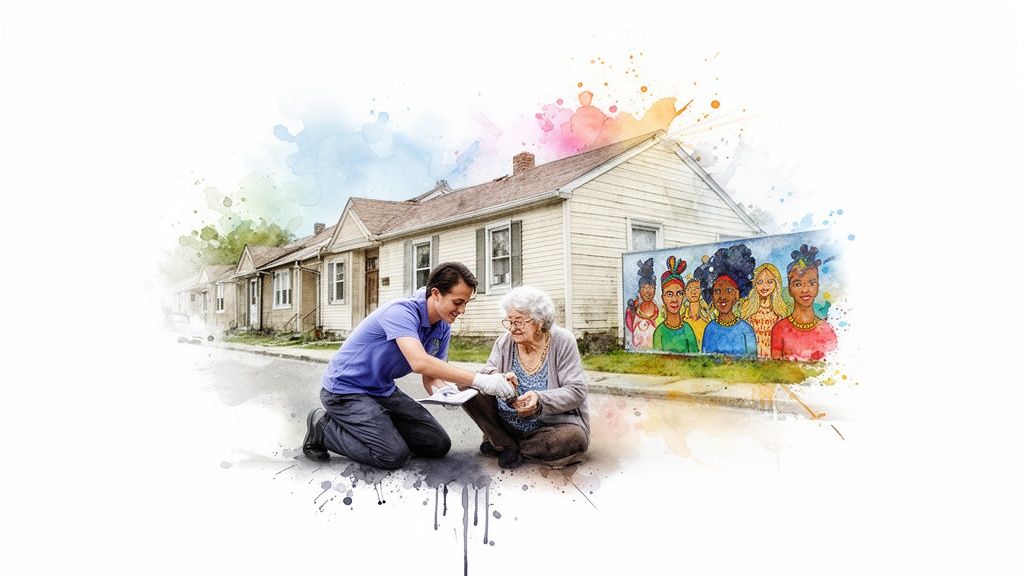
  • Your Guide to the 10 Best Public Beach Lake Michigan Cleanup Spots for 2026

    Your Guide to the 10 Best Public Beach Lake Michigan Cleanup Spots for 2026

    Imagine the Chicago skyline shimmering across the water. A postcard view, for sure. But look down. At the tideline. The real story isn't just the grand vista, but the tiny details—the plastic bottle caps, the forgotten snack wrappers, the ghosts of yesterday's picnics. My life felt like that once. A collection of forgotten things, a jumble of messes I couldn't face. A chaotic relationship. A messy apartment. A deep, sinking feeling of being stuck. Strangely, tackling other people's messes, sorting through the city's forgotten bits, became the key that unlocked my own. It taught me something profound: cleaning up isn’t a chore; it’s a metamorphosis.

    It's like being Tom Sawyer, tricking his friends into painting a fence. The task itself is mundane, but through shared effort, it becomes an adventure, a source of pride, a point of connection. So this guide? It’s more than a list of the best public beach Lake Michigan spots. It's an invitation to find that same transformation, to see the shoreline not just as a place to relax, but as a stage for action. Each beach is a different act in the play, a unique opportunity to connect, to serve, and to grow. For our volunteer group, the Litter Caterpillars, these shores are our dojo—a training ground for bravery, kindness, and building a city we can all be proud of. This article won’t just show you where to lay your towel. It reveals where you can make a tangible difference, find your tribe, and maybe even discover a new version of yourself. Let's find your beach.

    1. North Avenue Beach

    Step onto the sands of North Avenue Beach, and you feel the city's heartbeat. It’s right there, pulsing against the glittering Gold Coast skyline. This iconic public beach on Lake Michigan is a living thing, a vibrant hub of city life more than just a place for a tan. Its sprawling shoreline, a battlefield of volleyball nets dominated by the unique, ocean-liner-shaped beach house, draws thousands, creating an energy that is pure, uncut Chicago. And that very popularity, that immense human gravity, makes it a place of incredible opportunity for community action.

    The high foot traffic is a double-edged sword. It means that, inevitably, litter accumulates like snow in a blizzard, dimming the sparkle of this urban oasis. This is where the story changes. This is where the magic of community effort shines brightest. For volunteer groups like the Litter Caterpillars, North Avenue Beach isn't a mess; it's a canvas. It’s a chance to paint a powerful, visible picture about our shared responsibility for these beautiful public spaces.

    Making an Impact on an Iconic Shoreline

    Picture a Saturday morning. The sun is just climbing over the lake, casting a golden glow on the Hancock Tower. A small group gathers, armed with gloves and bags, ready to restore the beach to its pristine state before the city truly wakes. This is the golden hour to act. Focusing on high-traffic zones—the volleyball courts, the picnic areas—yields the most dramatic results, transforming the landscape from chaotic to calm in just a couple of hours.

    "Cleaning North Avenue Beach is like polishing a diamond. The beauty is already there; we're just helping it shine its brightest for everyone to see. The immediate transformation is incredibly rewarding and shows what a handful of dedicated people can accomplish."

    This high-profile stage is a powerful recruitment tool. A successful cleanup here, captured in before-and-after photos against that stunning backdrop, tells a compelling story on social media. It’s a story of action, of community, of a deep love for our city. It’s an open invitation, inspiring others to join the movement and become stewards of their favorite public beach on Lake Michigan.

    2. Montrose Beach

    Venture north of the downtown hustle, and you'll find it. Montrose Beach. A serene and sprawling public beach on Lake Michigan that feels like another country. As Chicago's largest beach, its mile-long shoreline is a patchwork quilt of sandy expanses, a chaotic dog-friendly area, and, most uniquely, a designated natural habitat. This isn't just a playground; it's a vital sanctuary for wildlife, including the federally endangered Great Lakes Piping Plover. It's a place with two souls.

    A plover on a sandy beach with dune grass, ocean waves, and a sailboat, accented with watercolor splatters.

    The unique dual-purpose nature of Montrose Beach presents a special calling, a higher purpose for community volunteers. Litter here isn’t just an eyesore; it's a landmine in a fragile ecosystem. For groups like the Litter Caterpillars, a cleanup at Montrose is an act of conservation, a chance to guard a rare piece of wild nature nestled within our concrete city. Here, community action becomes habitat stewardship. This is where we protect the vulnerable.

    Making an Impact on a Living Shoreline

    Imagine a crisp autumn morning. The beachgoers have thinned, and the migratory birds are packing their bags for a long journey south. This is the prime time for a focused cleanup, carefully scheduled outside the plovers' sensitive nesting season (typically April-August). Volunteers can become detectives, combing the tide line and the delicate dune areas, removing the plastic villains and debris that could harm nesting birds and other wildlife.

    "Cleaning Montrose Beach feels different. You're not just picking up trash; you're protecting a home. When you see a tiny plover chick, you understand that a bottle cap isn't just a piece of litter—it's a real danger. Our work here is a promise to share our shoreline responsibly."

    This powerful conservation narrative makes for an incredibly compelling volunteer story. It's not just about cleaning; it's about protecting life. Partnering with organizations like the Audubon Society for an educational cleanup event amplifies the impact, transforming participants from helpers into passionate advocates. Documenting these efforts, especially with the story of the plovers as the central character, creates a powerful recruitment tool, inviting others to join one of the most meaningful environmental volunteer opportunities in Chicago and help preserve this precious public beach on Lake Michigan.

    3. Rainbow Beach

    Journey to the South Side, and you’ll discover Rainbow Beach, a public beach on Lake Michigan with a story etched into its very shoreline. This isn't the slick downtown scene; this is a place with deep community roots and a rugged, industrial beauty. Its name comes from the colorful rocks, a ghost of nearby steel mills, that line the water's edge, creating a mosaic of history and resilience. For a group like the Litter Caterpillars, Rainbow Beach represents a profound opportunity to live out a core value: that every Chicago neighborhood deserves care. Every single one.

    A person picks up trash on a vibrant, watercolor-style beach with colorful rocks by the ocean.

    This is where commitment is tested. This is where it's proven. The work here goes beyond a simple cleanup; it's about building trust, about demonstrating that our mission extends to all 50 wards, not just the ones with the best views. Showing up, consistently, in areas that are often overlooked sends a powerful message of unity and equity. It’s a chance to partner with the proud, hardworking community that calls this place home and amplify their efforts.

    Forging Bonds and Building Trust

    Picture a consistent, dedicated cleanup, the first Saturday of every month, rain or shine. This is how you build something that lasts. Not with grand gestures, but with reliability. By establishing a dependable presence, Litter Caterpillars can transform from an outside group into a familiar, welcome part of the neighborhood fabric. Partnering with local community centers and South Side nonprofits for recruitment doesn't just bring in more hands; it fosters genuine local ownership. It builds pride.

    "Working at Rainbow Beach is about more than just trash. It’s about showing up. It’s about listening. When a local resident joins us and tells us stories about this beach, we're not just cleaning a space; we are honoring a community's history and its future."

    This location is a testament to the Litter Caterpillars' city-wide promise. Documenting the transformation here, showcasing the restored beauty of the colorful shoreline, powerfully illustrates the organization's dedication. This story, shared far and wide, isn't just about cleaning up a public beach on Lake Michigan; it's about bridging divides and proving that a united effort can make every single shore a cherished community asset. To get involved with these essential city-wide efforts, you can Learn more about cleaning up trash on littercaterpillars.com.

    4. Olive Park / Ping Tom Beach

    Venture beyond the downtown bustle to Olive Park, a sprawling natural sanctuary on the far South Side. This isn't just another stretch of sand; it's a vibrant ecosystem, a place where wetlands kiss the shores of Lake Michigan. This hidden gem provides a unique opportunity to expand our impact, to graduate from simple beach cleaning to holistic habitat restoration. It offers a profound connection to the nature thriving within our city's limits.

    The diverse landscape here, a tapestry of beach and wetland, calls for a more ambitious kind of stewardship. It’s a challenge. For Litter Caterpillars, this public beach on Lake Michigan is a living laboratory. It’s a chance to host transformative events that combine the simple satisfaction of a cleanup with the deep-seated reward of healing a vital local habitat, engaging volunteers on a whole new, much deeper level.

    Making an Impact on a Living Shoreline

    Picture a full-day adventure. The morning is a blitz, clearing the shoreline of debris. But the afternoon is dedicated to something more subtle, removing invasive species from the precious wetlands alongside partners like Friends of the Chicago Parks. This isn't just a cleanup; it's an immersive educational experience. By adding elements like water quality testing or workshops on local ecology, we turn a volunteer day into a powerful lesson in environmental science. The focus here shifts from just picking up what’s visible to understanding the root causes of pollution and its invisible effects. To learn how individual actions can prevent this kind of pollution, check out our guide on reducing plastic use.

    "Working in Olive Park is like helping a wild garden grow. You're not just weeding; you're nurturing an entire ecosystem. It connects you to the lake's wild heart in a way no other beach can, and it builds a team spirit that lasts long after the day is done."

    This type of destination event is a forge, perfect for creating deeper bonds within our volunteer community. We can market it as an "urban eco-adventure," a call to arms for those who crave a more hands-on, exploratory experience. By emphasizing discovery and education, we inspire a dedicated group of advocates who understand that protecting Lake Michigan means caring for every part of its diverse and beautiful shoreline.

    5. Juneway Beach / Rogers Beach

    Travel to Chicago's Far North Side, and you’ll discover the quiet charm of Juneway Terrace and Rogers Beach. These are not the sprawling, chaotic shorelines of downtown. They are intimate, neighborhood gems where the city feels a world away. Flanked by residential streets and local parks, these beaches are the living heart of the Rogers Park community, offering a peaceful retreat and a unique opportunity to build something lasting.

    This strong neighborhood identity makes these smaller beaches the perfect ground for cultivating a dedicated community of caretakers. It's like tending a small garden instead of a massive farm. Unlike a one-off event at a major tourist spot, efforts here are about building relationships, about fostering a deep sense of local ownership. For a group like the Litter Caterpillars, this public beach on Lake Michigan is an ideal place to plant seeds of change that can grow into a permanent, self-sustaining movement, nurtured by the very people who call this shoreline home.

    Cultivating Community Ownership, One Block at a Time

    Picture a small team of neighbors. They gather every other Saturday morning, not as strangers, but as friends united by a common purpose. This isn't just a cleanup; it's a neighborhood ritual. Focusing on a regular, predictable schedule, like the second and fourth Saturday of each month, builds powerful habits. It makes volunteering a natural part of community life. The goal is to make caring for their beach as routine as walking the dog or grabbing coffee.

    "At Rogers Beach, we're not just picking up litter; we're building a family. When you clean alongside the same people week after week, you create bonds. The beach becomes 'our' beach, and protecting it becomes personal. It’s amazing to see that pride take hold."

    The impact here is measured in relationships as much as in bags of trash. Partnering with the local alderman's office or Rogers Park community associations amplifies the message, weaving the cleanup effort into the very fabric of the neighborhood. By framing the work through the lens of Rogers Park pride, you transform a simple task into a powerful act of community love, inspiring a lasting legacy of stewardship on this beloved public beach on Lake Michigan.

    6. Loyola Beach / Sheridan Beach Area

    Where the vibrant energy of Rogers Park and Edgewater meets the serene shoreline of Lake Michigan, you'll find Loyola Beach. This long, curving stretch of sand is a backyard for thousands of residents and the students of nearby Loyola University. It creates a unique blend of quiet neighborhood charm and youthful dynamism. It's a place where families build sandcastles, students unwind between classes, and the community comes together.

    This constant, diverse flow of visitors makes Loyola Beach an ideal ground for nurturing the next generation of environmental stewards. The proximity to a major university presents an incredible opportunity for Litter Caterpillars to tap into a wellspring of passion, idealism, and a structured desire to give back. For us, this isn't just another public beach on Lake Michigan; it's a living classroom for community engagement.

    Cultivating the Next Generation of Stewards

    Imagine a cleanup event that’s more than just picking up litter. It’s a partnership. By collaborating with Loyola University's student organizations and community engagement office, a simple beach cleanup can become a credited service-learning project or a fulfilling weekend activity for students eager to make a difference. Scheduling events to align with the academic calendar—maybe as a welcome week activity or a pre-finals stress reliever—ensures maximum participation.

    "Working with students at Loyola Beach is like planting a forest. You're not just cleaning up for a day; you're cultivating a mindset of stewardship that these young leaders will carry with them for a lifetime. Their energy is infectious and brings a whole new level of purpose to our work."

    This location is perfect for building a sustainable volunteer base. A self-renewing resource. By creating specific leadership roles for students and offering formal documentation for their service hours, we can establish a powerful pipeline of committed advocates. A cleanup here becomes a story of intergenerational collaboration, showing how a community and its university can unite to protect a shared and cherished natural resource.

    7. 31st Street Beach

    Just south of the city's bustling center lies 31st Street Beach, a gem nestled in the historic Kenwood neighborhood. This isn't just another stretch of sand; it's a shoreline with a story, deeply woven into the fabric of one of Chicago’s most culturally rich and diverse communities. For a volunteer group, this public beach on Lake Michigan offers a unique opportunity to connect with history and support a vibrant, community-focused neighborhood.

    The energy here is different. It’s not the tourist-heavy downtown beaches. It's more intimate, more rooted, reflecting the strong spirit of the South Side. This provides a chance for Litter Caterpillars to move beyond simple cleanup and engage in meaningful community building. Our efforts here aren't just about removing litter; they are about honoring a legacy and contributing to the ongoing revitalization of a proud and historic area.

    Making an Impact on a Historic Shoreline

    Imagine a crisp autumn morning. Volunteers from the Litter Caterpillars partner with the Kenwood Community Association. Together, they don't just clean the sand; they share stories about the neighborhood's past and discuss its future, forging genuine connections over shared work. This is the perfect setting for education-focused events that highlight environmental stewardship as an act of community pride and social justice.

    "Working at 31st Street Beach feels like we're tending to a community garden. We're not just pulling weeds; we're nurturing the soil, connecting with the history of the place, and ensuring it continues to be a beautiful, welcoming space for generations to come."

    By aligning our cleanups with neighborhood events, by partnering with local institutions, our impact multiplies. Documenting our work here tells a powerful story of South Side revitalization and environmental stewardship. It's a narrative that resonates deeply, attracting a civically-engaged audience and inspiring a new wave of volunteers dedicated to preserving the unique character of this essential public beach on Lake Michigan.

    8. Garfield Park Beach / 61st Street Beach

    Step onto the sands of 61st Street Beach, and you'll find a different kind of urban energy. Tucked away on the South Side, adjacent to the vital Burnham Wildlife Corridor, this public beach on Lake Michigan feels less like a city hotspot and more like a meeting point. A borderland. A place where the urban landscape and a resilient natural world shake hands. It’s a place of quiet beauty, where the focus shifts from skyscrapers to the subtle rustle of native grasses.

    This unique setting offers a profound opportunity. Community action here goes beyond simple litter removal. The beach's proximity to a major ecological restoration site means that every piece of trash collected has a direct, measurable impact on the health of local wildlife and plant communities. For volunteer groups like the Litter Caterpillars, 61st Street Beach is a classroom and a sanctuary, a place to connect community cleanup with the larger, more hopeful story of Chicago's habitat recovery.

    Making an Impact on a Living Shoreline

    Picture a crisp autumn morning, with migrating birds passing overhead like a whispered secret. A group of volunteers gathers not just with bags, but with a shared purpose: to protect this fragile ecosystem. The work here is strategic, focusing on the boundary where the sandy beach meets the restored dunes and grasslands of the Burnham Wildlife Corridor. This is the frontline, where urban debris most threatens the native habitats that organizations like the Audubon Society work so hard to protect.

    "Cleaning 61st Street Beach feels like tending a garden for the whole city. We’re not just picking up trash; we're protecting a home for birds and pollinators. It's a powerful reminder that our small actions support a vast, interconnected web of life."

    This location is a perfect ground for creating a deeper connection. A cleanup here, paired with an educational walk led by a local naturalist, transforms a volunteer event into an inspiring lesson on urban ecology. Documenting this work with photos of volunteers against the backdrop of the restored prairie tells a story of stewardship and environmental justice, motivating others to join the effort to preserve this vital public beach on Lake Michigan.

    9. Foster Avenue Beach / Edgewater Beach

    Step onto the sands of Foster Avenue Beach, and you feel the vibrant, diverse heartbeat of Chicago's Edgewater neighborhood. This expansive public beach on Lake Michigan is a cultural crossroads. It's a place where families from dozens of backgrounds come together to enjoy the sun and waves. Its unique character, shaped by a strong neighborhood identity and a rich tapestry of communities, makes it more than just sand and water; it’s a living celebration of the city's diversity.

    This cultural mosaic presents a beautiful opportunity for community action that goes beyond a simple cleanup. The presence of so many distinct groups means that litter can sometimes become a byproduct of joyful gatherings. A sign of life. For volunteer groups like the Litter Caterpillars, Foster Avenue Beach is a chance to build bridges, fostering connection and shared ownership across different cultures through the common goal of protecting this cherished space.

    Making an Impact by Building Community Bridges

    Picture an early Saturday morning. The sun is just beginning to warm the shore. Volunteers gather, not just with bags and gloves, but with greetings in multiple languages. This is the perfect time to act, restoring the beach's natural beauty before the daily crowds arrive. Focusing on the high-use picnic groves and the shoreline near the pier allows a small team to make a significant, visible difference. Quickly.

    "Cleaning Foster Beach is like weaving a community quilt. Each person brings a different thread, a different story, and together we create something warm and beautiful. It's about more than just picking up trash; it's about showing that we all care for this shared home, no matter where we come from."

    This location is a powerful incubator for inclusive action. A cleanup event here, promoted with bilingual flyers and shared through local community centers, tells a story of unity. By aligning events with neighborhood festivals or creating family-focused cleanups, we can transform a simple volunteer effort into a multigenerational cultural celebration, inspiring a deeper, more personal connection to this incredible public beach on Lake Michigan.

    10. Osterman Beach (Hollywood Beach)

    Step onto the fine sands of Osterman Beach, and you'll find a different kind of energy. Known affectionately to locals as Hollywood Beach, this Uptown gem offers a more relaxed, community-focused atmosphere compared to its larger, more chaotic neighbors. It's a place where families gather and neighbors connect, creating a close-knit vibe that feels like a shared backyard. This intimate setting makes it the perfect public beach on Lake Michigan to cultivate deep, lasting community engagement.

    The smaller scale and strong neighborhood feel of Osterman Beach mean that volunteer efforts here aren't just about cleaning; they're about building relationships. It's a long-term investment. For Litter Caterpillars, this beach is fertile ground for growing a dedicated, recurring volunteer group. It’s an opportunity to move beyond one-off events and create a sustainable tradition of stewardship, woven directly into the fabric of the Uptown community.

    Building a Legacy of Local Stewardship

    Imagine a "Hollywood Sunday." A weekly ritual where neighbors meet, not just as volunteers, but as friends. They arrive with coffee in hand, sharing stories as they walk the shoreline, collecting the stray litter left behind from the week. This isn't a massive, impersonal event; it's a habit, a cherished routine that deepens their connection to both the place and each other. The focus shifts from the scale of the cleanup to the consistency of the commitment.

    "At Osterman, we're not just picking up trash; we're building a family. Each week, we see the same faces, and new ones become regulars. It's like a neighborhood watch for our beach, powered by pride and a shared desire to protect this beautiful public space."

    This consistent presence fosters a powerful 'neighbors helping neighbors' dynamic. Partnering with a local Uptown community center or business can provide a home base and amplify the message. By cultivating local volunteer leaders and celebrating milestones—like a family’s tenth cleanup—the effort becomes a multi-generational tradition. It’s a testament to how small, consistent actions on a beloved public beach on Lake Michigan can create a powerful and enduring legacy of community care.

    10 Lake Michigan Public Beaches Comparison

    Beach 🔄 Implementation Complexity ⚡ Resource Requirements 📊 Expected Outcomes 💡 Ideal Use Cases ⭐ Key Advantages
    North Avenue Beach 🔄 Moderate — crowd management; Park District coordination ⚡ High — large volunteer teams, early starts, limited parking 📊 High visibility; large trash volume collected; strong recruitment 💡 Flagship events, community awareness, high-profile campaigns ⭐ Iconic skyline, excellent transit access, broad demographics
    Montrose Beach 🔄 Moderate–High — nesting season restrictions; dune care ⚡ Moderate — habitat protection gear; partner coordination 📊 Significant ecological impact; strong education outcomes 💡 Habitat protection, environmental education, seasonal cleanups ⭐ Extensive dunes; appeals to eco-focused volunteers
    Rainbow Beach 🔄 Moderate — community trust-building; safety planning ⚡ Moderate — transport planning; local partnership needs 📊 Deep community relationships; visible neighborhood improvement 💡 Underserved neighborhood engagement; recurring monthly events ⭐ Strong local ties; mission-aligned equity impact
    Olive Park / Ping Tom Beach 🔄 High — remote logistics; wetland restoration coordination ⚡ High — full-day events, transport, safety oversight, testing supplies 📊 High ecological restoration impact; strong team cohesion 💡 Wetland restoration, destination events, educational workshops ⭐ Diverse habitat; restorative volunteer experience
    Juneway / Rogers Beach 🔄 Low–Moderate — small-scale coordination; repeat scheduling ⚡ Low — local volunteers; transit access 📊 Steady volunteer retention; strong neighborhood ownership 💡 Weekly/biweekly routines; family and multigenerational engagement ⭐ Intimate scale; easy habit formation and local pride
    Loyola / Sheridan Beach 🔄 Low — campus coordination; academic calendar alignment ⚡ Moderate — student recruitment channels; university liaison 📊 High student engagement during term; recurring volunteers 💡 Student service programs; leadership development; credit partnerships ⭐ Large student pool; strong campus partnership potential
    31st Street Beach 🔄 Moderate — multi-stakeholder coordination ⚡ Moderate — institutional outreach; targeted recruitment 📊 Neighborhood revitalization support; civic engagement 💡 Quarterly community cleanups; cultural-institution partnerships ⭐ Cultural significance; engaged and civically active community
    Garfield Park / 61st Street Beach 🔄 High — technical habitat work; remote coordination ⚡ High — specialized restoration tools, transport, monitoring 📊 Strong ecological restoration and long-term habitat benefits 💡 Habitat-focused cleanups; partnerships with conservation orgs ⭐ Connection to wildlife corridor; measurable conservation impact
    Foster Avenue / Edgewater 🔄 Moderate — event timing; festival coordination ⚡ Moderate — bilingual materials, early scheduling, transit 📊 Diverse volunteer participation; cross-cultural community building 💡 Bilingual outreach, festival-aligned cleanups, family events ⭐ High cultural diversity; very good public transit access
    Osterman Beach (Hollywood) 🔄 Low — simple coordination; small scale ⚡ Low — transit-friendly, consistent volunteer core 📊 High volunteer retention; steady visible impact 💡 Signature weekly events; core volunteer development ⭐ Consistency, strong neighborhood relationships, repeatable program

    Join the Transformation: Your First Cleanup Awaits

    We’ve journeyed together along the shimmering coastline of Lake Michigan. We've explored ten distinct slices of urban paradise. From the iconic energy of North Avenue Beach to the serene, community-focused shores of Loyola Beach, each location tells a unique story. You now have the ultimate guide to every public beach Lake Michigan has to offer in Chicago, complete with details on parking, accessibility, and the best times to visit. You’re equipped. You have the knowledge to find your perfect patch of sand, whether you’re seeking a volleyball match, a quiet sunrise, or a family picnic.

    But this guide is more than just a list of places. It's an invitation. It’s a map to the heart of the city, and the heart of a community dedicated to protecting these precious spaces. The real story isn't just about finding a beach; it's about what you do when you get there. It’s about leaving a place better than you found it. And in the process, transforming a piece of yourself.

    More Than a Shoreline: It's Our Story

    Each of these beaches tells a story. The laughter echoing from the playground at 31st Street Beach. The quiet dignity of Rainbow Beach's vast expanse. The dedicated birdwatchers at Montrose. They all contribute to the soul of our city. But this story isn't finished. You are the next chapter.

    I remember my first cleanup. Three of us, huddled under a small tree during a freak hailstorm, watching our Uber drivers cancel on us one by one. We were drenched, cold, and a little defeated. It was miserable. And it was perfect. That struggle, that completely unexpected adventure, was the 'flavor' that made the memory powerful. It’s in those moments of shared challenge that real connection is forged. We believe that fear, failure, and even a little suffering are good. They're the essential ingredients of transformation. They are the friction that polishes the stone.

    "By cleaning up messes that aren't ours, we learn to forgive ourselves for our own."

    That’s why we are Caterpillars. We aren’t perfect. But we show up, rain or shine, to become something more. We embrace the messy, the imperfect, and the difficult because that’s where growth happens. When you bend down to pick up a piece of forgotten trash on a public beach in Lake Michigan, you’re doing more than cleaning. You are casting a vote for the kind of city you want to live in. You’re performing a small act of radical care, an act that ripples outward.

    Your Invitation to Become a Part of It

    This article has given you the 'where' and the 'how' for enjoying Chicago's beaches. Now, we want to give you the 'why'. Why show up for a shoreline you don’t own? Why spend a Saturday morning with strangers and a garbage bag? Because it’s how we build community. It’s how we turn a collection of individuals into a unified force for good. It's how we write our chapter in the ongoing story of this great lake and this great city.

    You don't need to be an expert environmentalist. You just need to be willing to show up. We have the gloves, the bags, and maybe even a cheesy theme song ready to go. All we need is you. Are you ready to add your page to the story?


    Ready to turn your love for a public beach Lake Michigan into meaningful action? Join Litter Caterpillars for a cleanup event where we combine community, purpose, and a bit of adventure. Find our next event and become part of the transformation at Litter Caterpillars.

  • 7 Ways to Dig into Community Gardens Chicago IL and Grow with Your City

    7 Ways to Dig into Community Gardens Chicago IL and Grow with Your City

    Imagine turning a forgotten patch of dirt into a place that pulses with life. A quiet corner of your neighborhood, once just dust and maybe a ghost of a plastic bag, is now exploding with tomatoes, sunflowers, and the sound of neighbors laughing. This isn't a dream. It's the real, dirt-under-your-fingernails magic happening every day across the incredible network of community gardens in Chicago, IL.

    Getting involved is a lot less complicated than you think. It's not about being a perfect gardener with a flawless green thumb; it’s about the simple, brave act of showing up. It’s a lot like when we started Litter Caterpillars, shivering in a hailstorm with only three people. We discovered a powerful secret that day: tackling a big mess together is infinitely easier, and way more fun, than facing your own alone. Each weed you pull, each seed you plant, is a small act of defiance against apathy. It’s a way of telling your block, your city, and yourself: ‘I’m here. I care. Let’s grow something beautiful.’

    This guide is your map to that feeling. It’s not just a list of places; it's a treasure map to finding your own power to transform things, one plot at a time. We've gathered the best platforms and resources to help you find a green space to call your own, whether you want to volunteer for a day, adopt a plot for a season, or even claim a city lot to start something brand new. Forget getting lost in a jungle of search results. Here, you’ll find direct links, screenshots, and clear, actionable steps for each resource. Let’s dig in and find your garden.

    1. Litter Caterpillars

    Imagine a different kind of garden. Instead of tending to seeds in soil, you are cultivating change on the sidewalks, streets, and forgotten lots of Chicago. This is the groundbreaking work of Litter Caterpillars, a citywide volunteer collective that transforms the act of picking up trash into an inspiring, community-building adventure. While not a traditional garden with plots for rent, this organization is a foundational partner for anyone invested in creating cleaner, greener, and more vibrant public spaces, making it an essential resource for the community gardens Chicago IL movement.

    Litter Caterpillars is your entry point to hands-on neighborhood transformation, a way to reclaim public spaces and prepare the ground, often literally, for future greening projects. Founded by the tireless Kevin Tao, this group meets every single weekend, regardless of rain, snow, or summer heat, to clean one of Chicago's 50 wards. Their ethos is built on a powerful, simple idea: show up, be kind, and make a visible difference together.

    Why Litter Caterpillars Stands Out

    What makes this group exceptional is its "volunteer-first" philosophy. Joining is completely free, and the culture is intentionally low-pressure. You won’t be solicited for donations or pressured into commitments. The focus is squarely on your safety, your happiness, and the profound sense of accomplishment that comes from collaborative effort. This isn't just about cleaning; it's about building a citywide family.

    The group fosters a unique and powerful identity through shared symbols like flags, badges, and even a theme song. It feels less like a chore and more like joining a team on a mission. This sense of belonging is the secret sauce that turns a one-time volunteer into a dedicated member who finds friendship and personal growth while beautifying the city.

    Key Features and How You Can Get Involved

    • Citywide Impact: From cleaning a shut-down highway during a bike event to winning an empty lot at auction to create Caterpillar Park in Englewood, their projects are bold and impactful. You can be part of efforts that make headlines and inspire citywide change.
    • Zero-Barrier Entry: Getting involved is incredibly easy. Find their next event on Meetup, follow their journey on Instagram, or join one of their open group chats. It’s designed for anyone to jump in, whether you're a student, a newcomer, or a lifelong Chicagoan.
    • Direct Support for Garden Spaces: A clean neighborhood is the first step toward a thriving garden. By clearing litter and debris from surrounding areas, Litter Caterpillars creates healthier environments for existing community gardens Chicago IL and paves the way for new ones to flourish. Their work directly combats blight and fosters a sense of stewardship that is vital for any green space.
    • Adventurous Community Service: Each weekend offers a chance to explore a new corner of Chicago, from neighborhoods you know and love to areas you’ve never visited. It’s an urban adventure with a purpose.

    A Note on Their Unique Model: Litter Caterpillars operates as a passionate grassroots collective. While they may not offer the formal infrastructure of a traditional nonprofit (like tax-deductible receipts), their agility and volunteer-centric model allow them to be incredibly responsive and authentic.

    Practical Tips for Joining the Mission

    1. Check the Schedule: Visit their website or Meetup page to find the next cleanup location. They are always somewhere in the city every weekend.
    2. Just Show Up: No pre-registration is required for most events. Simply arrive with a positive attitude; they provide the gear (gloves, bags, grabbers).
    3. Dress for the Weather: Their commitment is year-round. Layer up in the winter and bring water in the summer. Being prepared ensures you can focus on the fun and the impact.

    Litter Caterpillars is more than a cleanup crew; it's a movement of bravery, kindness, and unity. It’s proof that you don't need a grand plan or a lot of money to start making a monumental difference. You just need to show up.

    Website: https://www.littercaterpillars.com

    2. Chicago Urban Agriculture Mapping Project (CUAMP)

    Imagine having a satellite view of every single sprout of community effort across Chicago, a living map that pulses with green energy. That's precisely what the Chicago Urban Agriculture Mapping Project (CUAMP) offers. It’s not a garden itself, but rather your indispensable treasure map to finding the perfect plot of soil to call your own. Think of it as the central nervous system for community gardens in Chicago, IL, connecting eager hands with open land.

    Chicago Urban Agriculture Mapping Project (CUAMP)

    This powerful, free tool is your first and best stop for navigating the city's vast urban agriculture landscape. It’s a dynamic, interactive directory that lets you zoom into your neighborhood, search by ward, or even filter by specific needs, like finding a garden that composts. Each pin on the map is a story waiting to unfold, a community waiting to welcome you.

    How to Use CUAMP to Find Your Garden

    Getting started with CUAMP is as simple as dropping a pin on a map. The platform is designed for discovery, making it easy to turn your curiosity into action.

    • Search Near You: Pop in your address and watch as nearby gardens appear like stars in a clear night sky. It’s the fastest way to see what’s growing just around the corner.
    • Filter Your Search: Looking for something specific? Use the filters to find food-producing sites, gardens with active composting, or even identify which gardens are open versus locked. This helps you target your outreach effectively.
    • Explore Site Profiles: Click on a garden pin to open its profile. Here, you’ll find contact information for the garden manager, its operational status (active, dormant), and other crucial details.

    Key Insight: CUAMP empowers you to be a proactive community builder. It’s not just about finding a garden; it’s about understanding the city's green infrastructure and identifying where you can make the biggest impact.

    Why It Deserves a Top Spot

    CUAMP stands out because it's a collaborative, data-driven resource maintained by trusted local partners. While some listings might have slightly outdated contact info (a common challenge with volunteer-run projects), its citywide scope is unparalleled. It’s a tool built for everyone: the individual looking for a plot, the community organizer planning a cleanup, and even city planners analyzing green space.

    For a group like Litter Caterpillars, CUAMP is a strategic goldmine. You can download the data to identify clusters of gardens in a specific ward, helping you plan a targeted outreach day or a neighborhood-wide cleanup event that supports multiple green spaces at once. It transforms your passion from a single act of kindness into a coordinated wave of positive change.

    Website: https://cuamp.org/

    3. NeighborSpace (Chicago’s community‑garden land trust)

    What if a garden could last forever? Imagine a green space protected from development, a community hub guaranteed to be there for your children and your children’s children. This isn't a fantasy; it's the mission of NeighborSpace, the guardian angel for many community gardens in Chicago, IL. This organization acts as a land trust, essentially putting a permanent protective shield around community-managed gardens, ensuring they remain vibrant green spaces for generations.

    NeighborSpace (Chicago’s community‑garden land trust)

    NeighborSpace is the foundational support system that lets gardeners focus on what they do best: growing. By taking on the heavy lifting of land ownership, insurance, and even water access, they remove the biggest hurdles that can cause a community project to wither. They are the soil in which stable, long-term community gardens can firmly take root and flourish without fear.

    How NeighborSpace Supports the Green Community

    While you won't use NeighborSpace to sign up for an individual plot, their website is a vital resource for understanding the ecosystem of protected gardens and for groups looking to secure their future.

    • Find Protected Gardens: While they don't have an interactive map like CUAMP, their site profiles the gardens they protect. This is a great way to discover established, long-term gardens with strong community ties.
    • Access Resources: The site provides guidance for existing gardens on everything from planning and maintenance to becoming a protected site themselves. They offer tool lending and educational resources to their member gardens.
    • Understand the Trust Model: For anyone dreaming of starting a new garden, exploring NeighborSpace’s process is a masterclass in sustainability. It shows you how to build something that lasts.

    Key Insight: NeighborSpace isn’t about the "how" of finding a plot today; it's about the "why" these gardens will still be here tomorrow. Supporting a NeighborSpace garden means investing in a permanent piece of your neighborhood’s green legacy.

    Why It Deserves a Top Spot

    NeighborSpace provides the invisible architecture that makes a thriving urban garden scene possible. They are the backbone, the quiet partner ensuring that a community’s hard work doesn’t disappear with a new property development. Their work increases garden stability, reduces overwhelming administrative burdens for volunteer leaders, and provides practical, essential support like liability insurance.

    The major difference is that they don't manage the gardens directly. Each site has its own rules and plot assignment process, so you’ll still need to contact the garden managers individually. For a group like Litter Caterpillars, partnering with a NeighborSpace garden means you're helping a site that is deeply rooted and committed to its community for the long haul. Your cleanup efforts aren’t just a one-day boost; they are a contribution to an enduring local landmark.

    Website: https://neighbor-space.org/

    4. Chicago Park District – Community Gardens in the Parks

    What if the heart of your neighborhood park, the place you already love for picnics and playgrounds, also held a space for you to grow your own food? The Chicago Park District makes this a reality, weaving edible landscapes directly into the fabric of our city’s public green spaces. This initiative isn't just a list of gardens; it's a testament to the idea that community and nature can flourish together, right in our own backyards.

    Chicago Park District – Community Gardens in the Parks

    The Park District's directory lists nearly 100 gardens nestled within parks across the city, each managed by dedicated neighborhood groups. These aren't just plots of land; they are vibrant hubs of activity, learning, and connection. Think of them as open-air community centers where the price of admission is simply a willingness to get your hands dirty and share in the harvest.

    How to Get Involved with Park Gardens

    Navigating the Park District's system is your first step toward claiming a piece of public land for your private passion. It's about connecting with the local stewards who make these gardens bloom.

    • Find a Park Near You: The website features a comprehensive list of all parks with community gardens. Browse the directory to pinpoint the green space closest to you.
    • Contact the Garden Leader: Each park garden is run by a local volunteer group. The Park District page provides staff contacts who can connect you with the specific garden's coordinator to inquire about plot availability and volunteer days.
    • Explore Educational Programs: Many of these park gardens host free workshops and educational events. Keep an eye on the schedule to learn new skills, from composting basics to advanced planting techniques.

    Key Insight: Gardening in a public park elevates your efforts. Your work becomes a visible, inspiring part of the neighborhood, encouraging passersby to think about food, nature, and what's possible when a community comes together.

    Why It Deserves a Top Spot

    The Chicago Park District’s program stands out because it leverages our most accessible public assets: our parks. It removes the barrier of finding private land and provides an existing infrastructure of staff support and public visibility. While individual plot availability can be limited and requires connecting with local garden managers, the network is robust and deeply integrated into neighborhood life.

    For a group like Litter Caterpillars, these park-based community gardens in Chicago, IL are perfect partners. You can organize a cleanup that not only beautifies the park but also directly supports the gardeners who are growing food for their community. By clearing away litter from the garden's perimeter, you're helping protect their hard work from pests and pollution. It’s a powerful way to contribute to a park cleanup and amplify the positive impact happening there.

    Website: https://www.chicagoparkdistrict.com/node/132841

    5. Urban Growers Collective – Community Garden Plots

    If you're ready to stop dreaming and start digging, the Urban Growers Collective (UGC) provides a clear, direct path to claiming your own piece of Chicago's fertile ground. This isn't just about finding a garden; it's about joining a movement. UGC offers a structured, supportive way to rent a personal plot for a full growing season, turning your vision of fresh, homegrown produce into a delicious reality. Think of it as your personal launchpad into the world of urban farming, backed by one of the city's most respected food-justice organizations.

    Urban Growers Collective – Community Garden Plots

    This program is perfect for those who crave a dedicated space to cultivate. With standardized plots, a defined season from April to October, and transparent pricing, UGC removes the guesswork so you can focus on the joy of growing. Their community gardens, primarily located on the South Side, are more than just soil; they are vibrant hubs of connection, learning, and nourishment.

    How to Secure Your UGC Plot

    Getting started with a UGC plot is a straightforward process designed to set you up for success. They ensure every gardener has the foundational knowledge to thrive.

    • Check Availability: Head to their website to see which of their farm locations are offering plots for the upcoming season. Applications typically open in early spring and close quickly.
    • Submit an Application: The application process is simple and outlines the costs and expectations. UGC is committed to accessibility, offering a sliding scale for those with financial need.
    • Attend Orientation: All new plot holders are required to attend an orientation. This is where you’ll meet fellow gardeners, learn the rules, and get invaluable tips for a successful harvest.

    Key Insight: UGC’s approach is about empowerment through structure. By providing clear guidelines and a supportive community, they make it incredibly easy for beginners to gain confidence and for experienced gardeners to flourish.

    Why It Deserves a Top Spot

    Urban Growers Collective stands out for its deep commitment to community and food justice. Renting a plot here means you’re not just growing food for yourself; you're investing in an ecosystem that nourishes entire neighborhoods. The process is transparent, beginner-friendly, and rooted in the mission of a powerful local nonprofit.

    While plot availability is limited and highly sought after, the opportunity is transformative. For a group like Litter Caterpillars, partnering with a UGC garden for a cleanup day is a perfect fit. You can help beautify a space that is a vital source of fresh food and community pride. Beyond the garden plots, UGC offers incredible volunteer opportunities in Chicago at their larger farms and markets, allowing you to support their mission even if you don't have a plot. It's a way to connect your passion for a cleaner city with the powerful work of growing a healthier one.

    Website: https://www.urbangrowerscollective.org/community-gardens

    6. Chicago Public Library – Seed Libraries (multiple branches)

    Before a garden can grow, there must be a seed. Imagine a library not just for books, but for the very potential of life itself, a place where the beginnings of a thousand gardens are nestled in tiny paper packets, free for the taking. This is the magic of the Seed Libraries at select Chicago Public Library branches, a quiet but powerful force supporting community gardens in Chicago, IL. It’s the starting line for your gardening adventure, whether you have a backyard, a balcony box, or a freshly claimed plot in a community space.

    Chicago Public Library – Seed Libraries (multiple branches)

    This initiative transforms your local library into an essential hub for urban agriculture. It's a completely free, grassroots resource that democratizes gardening, removing the initial cost barrier and empowering anyone to start growing. The concept is beautifully simple: take seeds to plant, and if you can, bring back seeds from your harvest to share with others next season. It's a cycle of giving that nourishes both the soil and the community spirit.

    How to Use the Seed Library to Get Growing

    Tapping into this resource is as easy as checking out a book. The library has made it incredibly accessible, ensuring nothing stands between you and the joy of planting.

    • Visit a Participating Branch: Check the Chicago Public Library website for the list of branches with active seed libraries. Availability is seasonal, so it's a good idea to call ahead.
    • Browse and Borrow: The seeds are typically displayed in old card catalogs or special cases. You can simply take the packets you need; there are no library cards required or due dates to worry about.
    • Learn and Grow: While you're there, explore the library's collection of gardening books. You can also ask about related workshops or programs, like hydroponic kit giveaways, that can expand your skills.
    • Share the Harvest: At the end of the season, consider saving seeds from your strongest plants to return to the library, continuing the cycle for the next wave of gardeners.

    Key Insight: The Seed Library is more than just free supplies; it's an investment in a resilient, food-sovereign community. By encouraging seed saving, it helps cultivate plants that are uniquely adapted to Chicago's microclimates.

    Why It Deserves a Top Spot

    The Seed Library is a fundamental resource that complements every other tool on this list. While it doesn't provide land, it provides the spark of life that turns a patch of dirt into a source of food and beauty. Its zero-cost, open-access model makes it the ultimate entry point for new gardeners, school projects, and community plots operating on a shoestring budget. The selection varies, but that's part of its charm; you might discover a new variety of tomato or a beautiful native flower you'd never have thought to plant.

    For a group like Litter Caterpillars, this is an incredible asset. After a big neighborhood cleanup, you can empower residents to keep the momentum going by providing them with free seed packets from the library. It's a simple, tangible way to transition a space from clean to vibrantly alive, leaving behind a legacy of growth that lasts long after the cleanup day is over.

    Website: https://www.chipublib.org/news/seed-libraries-at-select-chicago-public-library-branches/

    7. City of Chicago – ChiBlockBuilder (city-owned lot sales)

    What if you didn't just join a garden, but created one from the ground up? Imagine transforming a forgotten, overgrown city lot into a vibrant hub of life, a permanent sanctuary for your neighborhood. That’s the powerful promise of ChiBlockBuilder, the City of Chicago's official portal for purchasing city-owned vacant land. It's more than a website; it's a doorway to lasting impact, the blueprint for building a green legacy.

    City of Chicago – ChiBlockBuilder (city-owned lot sales)

    This platform isn't about finding an existing plot; it's about claiming the land to start new community gardens in Chicago, IL. It’s the direct, official channel for acquiring long-term land control, turning a dream of a permanent green space into a deed-in-hand reality. Think of it as the ultimate tool for community builders ready to put down permanent roots.

    How to Use ChiBlockBuilder to Build a Legacy

    Navigating the path to land ownership might seem daunting, but ChiBlockBuilder streamlines the process, making it transparent and accessible for dedicated groups. It’s your first step toward transforming forgotten land.

    • Explore the Map: Use the interactive map to scout for city-owned vacant lots in your neighborhood. You can see which parcels are available, which are under review, and which might open up soon.
    • Express Your Interest: Found the perfect spot, but it’s not for sale yet? Use the “I’m Interested” feature. This signals your intent to the city and ensures you're notified the moment the application window opens.
    • Follow the Application Process: When a lot is available, the site provides a clear, step-by-step application guide. This formal process ensures your project is recognized and supported at the city level.

    Key Insight: Owning the land is a game-changer. It provides the stability to invest in long-term infrastructure like fruit trees, perennial beds, and community structures, ensuring your garden becomes a permanent fixture for generations to come.

    Why It Deserves a Top Spot

    ChiBlockBuilder is fundamentally different from other resources. It empowers communities to move beyond temporary agreements and achieve land security. While the process requires commitment, including purchase costs and navigating eligibility rules, the payoff is unparalleled: a permanent asset for your neighborhood. The platform's direct-from-the-source information and transparent mapping tools demystify what was once a complex bureaucratic maze.

    For a group like Litter Caterpillars, this tool offers a visionary path. You can identify a blighted lot during a cleanup event, then use ChiBlockBuilder to rally neighbors and begin the official process of transforming it forever. It's the ultimate evolution from cleaning a space to owning and cultivating it, turning a single day of service into a lifetime of community growth.

    Website: https://chiblockbuilder.com/

    Chicago Community Gardens — 7-Point Comparison

    Item Implementation Complexity 🔄 Resource Requirements ⚡ Expected Outcomes 📊 Ideal Use Cases 💡 Key Advantages ⭐
    Litter Caterpillars 🔄 Low — volunteer coordination and recurring events ⚡ Low — volunteers, basic cleanup gear 📊 High visible neighborhood cleanup and increased social cohesion Residents/newcomers seeking hands‑on, low‑barrier civic action ⭐️⭐️⭐️⭐️ Bold citywide impact, strong culture and easy joining
    CUAMP (Chicago Urban Agriculture Mapping Project) 🔄 Medium — data curation and map maintenance ⚡ Medium — data partners and web hosting 📊 High discovery value; supports planning and analysis Garden seekers, planners, researchers needing site data ⭐️⭐️⭐️ Comprehensive searchable map with downloadable data
    NeighborSpace (land trust) 🔄 Medium — legal and stewardship onboarding ⚡ Medium — staff, insurance, tool programs 📊 High site stability and long‑term protection for gardens Groups needing land protection, insurance, operational support ⭐️⭐️⭐️⭐️ Trusted land‑trust backbone with practical supports
    Chicago Park District – Community Gardens 🔄 Medium — park policies + garden group management ⚡ Medium — park infrastructure and staff time 📊 Moderate — public access gardens with variable availability Neighborhood groups wanting park‑based plots and staff support ⭐️⭐️⭐️ Public‑land visibility and municipal support
    Urban Growers Collective – Community Garden Plots 🔄 Low — standardized seasonal application process ⚡ Medium — plot fees, orientations, nonprofit operations 📊 High for individual plot access during season Individuals wanting a guaranteed seasonal plot with guidance ⭐️⭐️⭐️ Transparent pricing, nonprofit support, sliding scale access
    Chicago Public Library – Seed Libraries 🔄 Very low — borrow/return seed system ⚡ Very low — free seeds, modest program support 📊 Moderate — seed access and education for new gardeners New gardeners or community plots needing low‑cost seed stock ⭐️⭐️⭐️ Zero‑cost entry to seeds and related educational resources
    ChiBlockBuilder (City lot sales) 🔄 High — formal applications, eligibility windows ⚡ High — purchase costs, site prep, long‑term maintenance 📊 High long‑term land control enabling permanent gardens Organizations/groups pursuing land acquisition for new gardens ⭐️⭐️⭐️⭐️ Direct, official path to long‑term land ownership and development

    Final Thoughts

    We’ve journeyed through a landscape bursting with green possibilities, from the sprawling digital map of CUAMP to the hyper-local seed packets at your neighborhood library. This guide wasn't just a list; it was an invitation. An invitation to see the forgotten corners of Chicago not as problems to be solved, but as canvases awaiting a brave first stroke of a paintbrush, or in this case, a shovel. The world of community gardens chicago il is a vibrant, living ecosystem of tools and people, and you are now holding the key to unlock its gates.

    Think of this journey like learning to cook. At first, a well-stocked kitchen can feel overwhelming. You have spices (the seed libraries), appliances (NeighborSpace’s land trust), and recipes (the park district programs). You might feel like you can only follow one recipe perfectly. But the real magic happens when you start to combine them. You grab some seeds from the library, find a nearby lot on ChiBlockBuilder, and get land-use guidance from NeighborSpace. Suddenly, you're not just a cook; you're a chef. You’re creating something new.

    Your Path to Impact: From Seed to Harvest

    The tools we've explored are designed to work together, to weave a safety net of support beneath your ambition. Don't fall into the trap of thinking you need to choose just one. The most successful urban gardeners are resourceful connectors, building a toolkit that fits their specific vision.

    • For the Data-Driven Planner: Start with the Chicago Urban Agriculture Mapping Project (CUAMP). Use its bird's-eye view to identify food deserts or areas with a high concentration of vacant lots. Let this data tell a story and guide your first steps.
    • For the Community Organizer: NeighborSpace is your first call. They are the guardians of green space, the experts in turning a passionate idea into a legally protected, community-owned reality. They understand the human element better than anyone.
    • For the Hands-On Grower: If you just want to get your hands dirty now, look to the Chicago Park District or the Urban Growers Collective. Their existing plots offer a lower barrier to entry, letting you learn the ropes and connect with veteran gardeners immediately.

    The most profound takeaway is this: the gap between the city you see and the city you dream of is not as wide as you think. It's the width of a single raised garden bed. It’s the length of a conversation with a neighbor. It’s the effort it takes to fill one bag with litter, clearing the way for something beautiful to grow.

    "To plant a garden is to believe in tomorrow." – Audrey Hepburn

    This belief is the true currency of community change. It’s a quiet act of rebellion against cynicism, a bold declaration that you are willing to invest your time and energy into a future you can’t yet see. Every weed pulled, every seed planted, every harvest shared is a vote for a greener, kinder, more connected Chicago. The tools are here. The land is waiting. The community is ready. The only remaining question is, what will you grow?


    Ready to take that very first step? A clean space is the first chapter of any community garden story. Join a Litter Caterpillars event to help clear a future garden site or organize your own neighborhood cleanup. Find your next adventure in making a difference at Litter Caterpillars.

  • A Brave Guide to Corporate Social Responsibility Programs That Actually Matter

    A Brave Guide to Corporate Social Responsibility Programs That Actually Matter

    Corporate social responsibility programs are your company’s chance to show the world its heart. This isn’t about cutting a check for a photo op. It's about rolling up your sleeves, finding the courage to care, and weaving purpose right into the fabric of your business—uplifting communities, acting with fierce integrity, and building a brand people fall in love with.

    CSR Is Your Brand's Story Told Through Action

    A smiling man in a suit gives a small green plant to a happy young boy.

    Let’s be fearless for a second. Forget the stuffy press releases and the giant, awkward check-passing ceremonies. Real Corporate Social Responsibility (CSR) isn’t a performance. It’s about being good, not just looking good. It's a brave choice to weave kindness right into the soul of your business.

    Picture your company as a character in the world’s unfolding story. Is it the hero who steps up? The quiet mentor who lifts others? Or just another face in the crowd? CSR is your chance to stop being a background player and step into a leading role for positive change.

    And this isn't some labyrinthine strategy only giant corporations can afford. It's a deeply human adventure. A quest that kicks off with one simple, brave choice.

    Why Your Story Matters More Than Ever

    People today don't just buy products; they buy into a mission. A company that stands for something more than its bottom line earns a totally different kind of loyalty. It’s the difference between a fleeting transaction and a lifelong fan.

    True impact is born from bravery and kindness. It’s about seeing a problem—whether it’s litter on your street or a crack in your community’s foundation—and deciding, with courage, to be part of the solution. This is how you write a better story for your brand and the world.

    When what your brand does matches what it believes, you build something that can't be bought: trust. Your CSR programs become the thrilling chapters in a story people are excited to follow and proud to share. They stop seeing you as just a business and start seeing you as a neighbor, a friend.

    This single shift creates a tidal wave of goodness:

    • Deeper Customer Connection: People are drawn to brands that mirror their own values, forging a bond that laughs in the face of price tags.
    • Inspired and Engaged Teams: Employees are yearning to work for companies they believe in. A strong CSR mission fuels a wildfire of passion and pride from the inside out.
    • Stronger Communities: When businesses invest their heart and hands right where they live, they help build a more vibrant, supportive home for everyone. We talk more about this profound impact in our article on building resilient communities.

    Finding Your Brand's Authentic Voice

    Authenticity is the secret sauce. Your CSR work should feel as natural as breathing. If you're a tech company, maybe you ignite a love of code in local kids. If you're in the food business, you could wage a joyful war on hunger in your town. The only rule is that it has to feel true.

    The most breathtaking CSR programs aren't about enormous, dramatic gestures. They spring from a real desire to help, nurtured by small, consistent acts of kindness and courage. It’s about showing up, truly listening to what your community needs, and finding creative—even ridiculously fun—ways to pitch in.

    This is your shot to prove that making an impact is way easier than most people think. It all begins with one brave step, one kind act, one decision to write a new, more meaningful chapter for your brand.

    The Unstoppable Rise of Purpose-Driven Business

    Something’s different out there, isn't it? The air has changed. People aren't just buying stuff or clocking in for a paycheck anymore. They’re joining missions. They’re investing their hearts. This isn’t a fleeting trend—it's a deep, seismic shift in what we expect from the world of business.

    Think of it like this: for decades, a business was like a planet held in orbit by a single sun: profit. But now, a second sun has ignited in the sky: purpose. And it’s just as powerful. It’s creating a whole new gravitational pull, shaping everything from who buys your products to who begs to work for you. Companies ignoring this new reality are sputtering, while the ones who bravely fly toward it are soaring.

    What's driving this cosmic shift? It’s a very human hunger for meaning. We want the brands we support and the companies we work for to stand for something more than a healthy bottom line. We’re all starting to ask a brave, simple question: What good are you doing in the world?

    The Data Behind the Demand

    This isn't just a feeling; the numbers are shouting it from the rooftops. People are voting with their wallets and their careers, and they’re consistently choosing companies that reflect their own values.

    The data tells a story of a revolution. A recent analysis found that 63% of consumers would rather buy from brands that stand for something real. Even more telling, a staggering 95% of employees now believe their companies should be benefiting society, not just the shareholders. This isn't a niche market anymore. It’s the new mainstream. You can dig into these CSR trends to see for yourself how this groundswell of support is fueling the purpose-driven movement.

    "Purpose is the new currency for trust. In a world of infinite choices, what a company stands for is often the only thing that truly sets it apart. It’s your greatest competitive advantage, and it can't be copied."

    All this means that having a genuine corporate social responsibility program isn't just a "nice-to-have" bullet point in an annual report. It's the beating heart of any business that wants to grow, thrive, and stick around for the long haul.

    Winning Hearts, Minds, and Talent

    The companies that are getting this right are winning. Big time. They’re building brands that feel less like faceless corporations and more like partners in creating a kinder world. And the rewards aren’t just warm fuzzy feelings; they’re tangible business results that create a powerful, self-sustaining cycle of success.

    • Attracting Top Talent: The best people want to do meaningful work. A strong CSR program acts like a beacon for passionate, skilled individuals who are looking for more than just a salary. They want to pour their soul into a cause they believe in.
    • Building Unshakable Loyalty: When customers see you showing up for your community time and time again, they form a real emotional bond with your brand. That kind of loyalty transcends price wars, turning casual buyers into fierce advocates who will sing your praises from the mountaintops.
    • Fueling Innovation and Morale: Getting your team out of the office to solve a real-world community problem is a game-changer. It builds camaraderie and a sense of shared purpose that spills right back into the workplace, sparking creativity and boosting morale into the stratosphere.

    At the end of the day, the rise of purpose-driven business shows that doing good isn't a cost. It’s your most powerful engine for growth. It’s about understanding that kindness and bravery are just plain smart business. It’s about building a company that not only thrives financially but leaves the world a little brighter than you found it.

    And that’s a mission anyone can get behind.

    Four Powerful Ways to Build Your CSR Program

    Feeling that spark? That little whisper that says, "We could do some good here"?

    Amazing. This is where inspiration gets its hands dirty. Building a real-deal corporate social responsibility program doesn't require a ten-person department or a million-dollar budget. It starts with a single, brave choice. Then it grows, wild and beautiful.

    Think of it as a 'choose your own adventure' for making a difference. There are many paths up the mountain, but they all lead to the same breathtaking view: a business that gives back, a team that feels connected, and a community that's stronger because you're in it. This isn't about finding the one "right" way—it's about finding the path that feels true to you and your people.

    Let’s dig into four of the most common—and powerful—models. You might find one that fits like a glove, or you might mix and match a few. The goal is simple: stop just thinking about it and start doing it.

    Choosing Your Path to Impact: Four CSR Models

    Every company has its own unique spirit, so what works for a global giant might not be the right fit for a plucky startup. The beauty is, you don't have to follow a rigid formula. Below is a quick breakdown of the four main ways businesses can create an impact. Feel into your company's strengths, culture, and the change you want to see in the world.

    CSR Model What It Looks Like Best For Companies That… Real-World Example
    Philanthropy Directly donating money or resources to nonprofits and charities. Have the financial resources to make a direct impact but may lack the time for hands-on programs. Wells Fargo donates up to 1.5% of its revenue annually to thousands of nonprofits.
    Employee Volunteering Organizing opportunities for staff to donate their time and skills to community causes. Want to boost team morale, build stronger internal bonds, and leverage their team's unique talents. Disney's "VoluntEARS" program, where employees have given millions of hours to community service.
    Cause Marketing Tying product sales directly to a charitable donation or social cause. Have a strong consumer product and want to give customers a clear reason to choose their brand. TOMS Shoes' original model: for every pair of shoes bought, one pair was donated to a child in need.
    Impact Investing & Operations Integrating social and environmental goals into core business operations and investments. Are ready to make a deep, long-term commitment by aligning their entire business model with their values. Johnson & Johnson's goal to power its facilities with 100% renewable energy.

    Each of these paths offers a powerful way to connect your business to a bigger purpose. The best programs often blend elements from a few, creating a unique strategy that reflects who they are.

    1. The Heart of Giving: Philanthropy

    This is the classic approach to CSR, and for good reason. It’s direct, clear, and powerful. Philanthropy is the simple act of writing a check or transferring funds to a cause that needs it. It’s your company stepping up and saying, “We have enough, and we want to share.”

    Think of it like being the rain for a garden. You might not be the master gardener, but you can provide the life-giving water that helps dedicated experts—the nonprofits on the front lines—do their best work. This could be a one-time donation to a disaster relief fund, a recurring grant to a local food bank, or even setting up a foundation for the long haul.

    It's a brave act to give without expecting anything in return. But the truth is, the return is immense—it comes back in the form of community trust, brand integrity, and the quiet pride of knowing you helped make something better.

    This path is perfect for companies that want to make a significant financial difference but don't have the bandwidth for more hands-on initiatives.

    2. Hands-On Help: Employee Volunteering

    This is where the magic really happens. Employee volunteering is about giving your most valuable resource—the time, talent, and passion of your people. It’s about getting out from behind the desk and physically showing up for your community.

    Imagine your team is a crew of superheroes, each with a unique power. Volunteering is how you unleash those powers for good. Your accounting wizards could help a nonprofit untangle its finances. Your marketing team could design a brilliant campaign for a local shelter. Or your entire company could just spend a day laughing together while cleaning up a park. It’s about action.

    Decision tree illustrating the CSR strategy process and potential benefits or reconsideration.

    As this decision tree shows, no matter your primary business goal, an authentic CSR program is a validated path forward.

    Volunteering is incredible for team building. It forges bonds and memories that no office happy hour ever could. It also lights a fire of purpose in people that they carry back to their day jobs. Of course, keeping that fire lit takes work, which is why exploring effective volunteer retention strategies is so important for building a program with real staying power.

    3. Business With a Cause: Cause Marketing

    Cause marketing is a beautiful dance that connects your business success directly with community impact. It's a partnership where every sale you make helps a cause you care about. You’re telling your customers, "When you support us, you’re also supporting this."

    The most famous story here is TOMS Shoes. Their original "one-for-one" model was simple and powerful: buy a pair of shoes, and they give a pair to a child in need. They’ve since shifted their model to donating a third of their profits, but the core idea remains the same. It transforms a simple purchase into an act of giving.

    This model is a true win-win. It drives sales by giving customers a compelling reason to choose you over a competitor, and it creates a steady stream of support for your chosen cause. It's about weaving purpose so deeply into your business that your growth and your impact become one and the same.

    4. Investing in a Better World: Impact Investing & Operations

    This is the most visionary approach, where you use your company's investments to create positive social and environmental outcomes. It’s about putting your money where your values are—not just in donations, but in your core financial strategy.

    Think of it as planting an entire forest instead of just picking the fruit. You’re investing in the long-term health of the whole ecosystem. This can look like:

    • Impact Investing: Directly funding companies that are solving big social or environmental problems.
    • Sustainable Operations: Investing in things like clean energy for your own facilities.
    • Ethical Supply Chains: Making sure your partners and suppliers meet high standards for how they treat people and the planet.

    This approach proves that profitability and purpose are not enemies. In fact, they can be powerful allies. It’s a deep commitment to building a business that is a force for good from the inside out.

    Building Partnerships That Create Real Impact

    Watercolor illustration of a man and woman exchanging a building drawing over a tray of plant seedlings.

    An idea without action is just a daydream. You’ve felt that spark, you've chosen a cause, but now comes the real adventure: turning that vision into dirt-under-your-fingernails reality. This is where your corporate social responsibility program truly comes alive—not in a boardroom, but right on the streets of your community.

    The secret? You don't have to go it alone. In fact, you shouldn't. The most powerful way to make a difference is by joining forces with the people already doing the work.

    Think of it less like a legal agreement and more like making a new friend. You show up, you listen with an open heart, and you find ways to help that feel right for everyone. This is about forging genuine connections that create visible, tangible change—one brave step at a time.

    The Power of Showing Up

    The world is filled with incredible grassroots organizations, often powered by pure volunteer heart, who know their community's needs inside and out. They are the heroes on the ground. Partnering with them isn't just smart; it's an act of respect. It’s a way to amplify the good they’re already doing instead of trying to reinvent the wheel.

    Your role is to be the ally, the friend who brings extra resources to the party. The goal is a relationship built on mutual respect and shared dreams, where your company’s energy lifts up the folks on the front lines.

    And here’s the good news: businesses are finally getting it. A recent industry report revealed that a surprising number of corporate social responsibility (CSR) teams reported budget increases, signaling a real commitment to making a bigger impact. While overall operational budgets stayed flat, the biggest boosts went to employee engagement programs—the very initiatives that get your team out into the community. Find out more about key trends in corporate social impact.

    Your Partnership Playbook: A Simple Guide

    Ready to make that first move? It’s easier than you think. Forget about intimidating outreach plans and just focus on being a good human. Here’s a simple playbook to get you started.

    Step 1: Listen First, Act Second
    Before you offer a single thing, do your homework. Find local groups whose mission makes your heart beat a little faster. Follow them on social media. Read their newsletters. If you can, show up to one of their events as just another volunteer. Your first job is to understand their world—their struggles and their victories.

    Step 2: Reach Out With Humility
    When you’re ready, send a simple, honest email. Introduce yourself and your company, but lead with what you admire about their work. Ask if they’d be open to a conversation about how you might be able to support them. That key phrase, "support them," changes everything. It shows you’re there to serve, not to take over.

    The best partnerships begin with a simple question: "What do you need, and how can we help?" It shifts the dynamic from a transaction to a relationship built on trust and kindness.

    Step 3: Ask What They Truly Need (It’s Not Always Money)
    While funding is almost always helpful, it’s not the only resource you have to offer. Many grassroots groups are starved for other kinds of support. During your conversation, explore all the ways you could chip in.

    You have more treasures than you realize:

    • Your Team's Skills: Can your marketing team design a flyer? Can your accountants help with bookkeeping? Offering pro bono professional services can be a total game-changer for a small nonprofit.
    • Your Physical Space: Do you have a conference room they could use for a board meeting? Or a bigger space for a volunteer training event?
    • Your Voice and Network: Can you feature their work in your company newsletter or on social media? A signal boost from you can bring in new volunteers and donors they'd never otherwise reach.
    • Your People Power: This is the big one. Can you rally a team of volunteers for their next big event? The energy of a dedicated group showing up to help is priceless.

    By offering a menu of support options, you empower the organization to choose what’s most valuable to them right now.

    Step 4: Start Small and Build Trust
    Don’t try to launch a massive, year-long campaign on day one. Start with one small, specific project. Commit to providing volunteers for their annual park cleanup. Offer your office space for one meeting.

    Then, deliver on that promise with genuine enthusiasm. Prove you’re reliable. Trust is built through small, consistent actions over time. As that relationship deepens, the opportunities for bigger, bolder collaborations will naturally appear. This is how you build a partnership that doesn't just create a press release—it creates real, lasting change.

    How Transparency in CSR Builds Unbreakable Trust

    If you do something amazing and nobody knows about it, how can it possibly inspire a movement?

    When it comes to your corporate social responsibility program, telling your story isn’t about bragging. It’s a brave act of trust-building. It’s an open invitation for others to join you on the adventure.

    Think of it like a ship’s log. A good captain doesn't just record the sunny days and smooth sailing. They document the storms, the repairs, the tough calls—all of it. That complete, honest story is what proves the journey was real.

    From Data Points to Human Stories

    For too long, CSR reporting has felt like a homework assignment: dry, dense, and packed with charts nobody really understands. But trust isn't built on spreadsheets; it's built on shared human experience. The secret weapon here is authentic, heart-centered communication.

    This isn’t about showing off. It's about showing up, fully and honestly. It’s a huge, courageous shift from saying, "Look how perfect we are," to "Look what we’re learning along the way."

    Perfection is a myth. Progress is the goal. Your community doesn't expect you to have all the answers. They just want to know your heart is in the right place and that you're genuinely trying.

    Sharing your journey—the messy, imperfect parts included—is what builds that unbreakable bond. It proves your commitment is real, not just another marketing tactic. It's the difference between a press release and a real, honest-to-goodness conversation.

    The Art of Authentic Reporting

    So, how do you actually tell your story in a way that feels real? You let the people doing the work share their own experiences. You trade the corporate jargon for kindness and courage.

    Here are a few simple ways to bring your impact to life:

    • Spotlight Your Volunteers: Share a short quote or a candid photo of a team member at a cleanup event. Let them explain in their own words why the work matters to them. Their passion is infinitely more powerful than any metric.
    • Show, Don't Just Tell: Post a quick video of your team laughing while planting trees or a before-and-after picture of a park you helped restore. Visuals connect with the heart in a way numbers never can.
    • Share the Bumps in the Road: Did a project not go as planned? Talk about it! Sharing what you learned from a setback shows humility and proves you’re committed to getting it right, not just looking good.

    This whole shift toward transparency is becoming the new standard. In fact, a whopping 91% of companies by global market capitalization now disclose sustainability-related information. This global trend shows that being open about your efforts isn't optional anymore; it's essential. You can discover more about this global corporate sustainability report and see how the biggest players are doing it.

    Your Story Is a Ripple Effect

    Every story you share does more than just report on the past; it creates the future. It inspires another company to start its own program. It encourages an employee to sign up for their first volunteer event. It shows a community that someone out there genuinely cares.

    For instance, when we share stories from a Litter Caterpillars cleanup, we're not just showing bags of trash. We're showing friendship, resilience, and the pure joy of reclaiming a neighborhood. This storytelling is part of a much larger effort, just like our commitment to finding ways to reduce plastic use in the first place.

    Your transparency becomes an act of kindness in itself. It’s a brave declaration that you believe in a better world and you’re willing to do the work—openly and honestly—to help build it.

    By sharing your journey, you give others the courage to start their own. You prove that making an impact is easier, and more fun, than anyone thinks. And that is how a single brave action transforms into a movement.

    Your First Brave Step on the Path to Purpose

    Every big, meaningful journey starts exactly where you are right now. This isn't just a summary; it's an invitation. A call to be brave, get out of your own head, and just start.

    We’ve talked about how corporate social responsibility programs are your brand’s story in action, how purpose is flipping the script on business, and how partnerships make good things happen faster. But honestly, none of that matters without one small, courageous move. Your first step.

    If there’s one thing to take away from all this, it's that real change kicks off the moment you decide to clean up a mess. It could be the litter on your block or a broken system in your industry. The scale doesn't matter. The brave decision to do something about it does.

    You don't need a grand plan to start making a difference. You just need the kindness to see a need and the bravery to do something about it. That’s it. That’s the entire secret.

    What Will Your First Step Be?

    Making an impact is simpler, more fun, and way more rewarding than you probably think. It’s not about getting it perfect; it’s about picking a direction and starting to walk. The momentum you build from that first action will carry you farther than you can imagine.

    Choose one thing you can do today:

    • Start a Conversation: Ask your team, "If we could help our community in one small way, what would it be?" Then just listen.
    • Do 15 Minutes of Research: Find one local, volunteer-driven group that genuinely inspires you. Follow them on social media. See what they're up to.
    • Take a Walk: Step outside and just look around your neighborhood with fresh eyes. What do you see that needs a little help?

    You're ready. You already have everything you need to be a force for good in your own unique way. All that's left is to take that first brave step.

    Go on. The world is waiting.

    Still Have Questions? Good.

    It's smart to ask questions. It means you're already thinking about how to do this right. Here are some of the things we hear most often from companies trying to figure out their first steps.

    We're Just a Small Business. Can We Really Make a Difference?

    Heck yes, you can. Impact isn’t about the size of your bank account; it's about the size of your heart. It’s about showing up, consistently.

    Honestly, a small team getting their hands dirty at a neighborhood cleanup creates a much bigger ripple effect—in team spirit and in the community—than some giant corporation just cutting a check from an office tower. Start with who you are and what you have. That genuine desire to help is your most powerful asset.

    How Do We Find the Right Cause to Support?

    Don't overthink it. Look for that spark—the thing that gets your team genuinely excited. The best partnerships feel natural, not like a homework assignment. Your company’s values are a good starting point, but the real magic happens when you tap into what your people are passionate about.

    What’s going on in your own backyard? What issues do your employees talk about? When you rally around a cause your team truly cares about, the energy is unstoppable. It becomes a mission, not just a program.

    "The best partnerships feel like friendship. They are built on mutual respect, shared goals, and the simple desire to help each other succeed. Listen first, then act with kindness."

    How Can We Possibly Measure the ROI on This?

    Forget "Return on Investment." Let's talk about your “Return on Impact.” This is the stuff that tells a story much deeper and more powerful than anything on a spreadsheet.

    It’s not just about the numbers, but you can still track what matters:

    • Team Vibe: Are people happier? Is the energy in the office better? Are your best people sticking around longer?
    • Hiring Magnetism: Do new recruits bring up your community work in their interviews? That's a huge tell.
    • Good Buzz: Are people sharing positive stories about your company online without you even asking?
    • Real Stories: What are your partners and volunteers saying? Collect those quotes and testimonials. That’s pure gold.

    This is the proof that you're building something real.


    At Litter Caterpillars, we're all about the power of just showing up. If you want to see how a few hours of simple, honest work can change your team and your city, come join a cleanup. We make it easy, and dare we say, fun. Find an event and see for yourself at https://www.littercaterpillars.com.
  • 10 Brave Volunteer Recognition Ideas That Actually Build Community in 2026

    10 Brave Volunteer Recognition Ideas That Actually Build Community in 2026

    Let’s be honest. The world tells us recognizing people means a gift card or a slice of cold pizza. But is that what really says, "I see you"? Does it honor the courage it takes to show up on a freezing Saturday morning, not for yourself, but for your city? At Litter Caterpillars, we learned a powerful lesson huddled together in a Chicago hailstorm: true recognition isn't about rewarding effort, it's about celebrating transformation. It's about seeing the bravery in every gloved hand that picks up a piece of someone else's mess.

    This isn't just about cleaning streets; it's about cleaning our own lives, finding consistency, and building friendships that can withstand any storm. Think of volunteer energy as the most precious resource on the planet, a fragile force that can change the world. Protecting it means recognizing the whole person, their growth, their courage, their kindness. This list is for the leaders who know their volunteers are more than just numbers.

    These are volunteer recognition ideas forged in blizzards and heatwaves, designed not just to say 'thank you,' but to say, 'Welcome to the story. We're so glad you're here.' From creating a system of badges that honor bravery in extreme weather to celebrating personal transformation stories, each idea in this guide is a tool to build a stronger, more connected community. We'll show you how to celebrate milestones, build a digital hall of fame, and even create a theme song for your group. Get ready to discover powerful, authentic ways to honor the real heartbeat of your movement.

    1. The Badge and Insignia System: Wear Your Story of Growth

    Imagine turning your volunteer journey into a visible story, a collection of symbols that narrate your courage, dedication, and growth. That's the power of a badge and insignia system. It’s more than just a pin; it’s a tangible piece of your impact, a way to wear your story of transformation with pride. This isn't just about handing out trinkets; it's a structured approach to volunteer recognition that creates a powerful, motivating pathway for every person who joins your cause.

    Think of the Girl Scouts, where each badge tells a story of a new skill learned or a challenge overcome. We embrace this same philosophy at Litter Caterpillars, transforming abstract contributions into concrete achievements. A badge system gamifies positive action, making it one of the most effective volunteer recognition ideas for fostering consistent engagement and a deep sense of belonging. It’s like leveling up in a video game, but the prize is real-world impact and personal growth. It shows volunteers a clear ladder of growth, inviting them to climb higher and see what they're truly capable of.

    How to Build Your Badge System

    Ready to create a program that inspires? Start by defining clear, meaningful milestones that reflect your group's unique values.

    • Design with Identity: Create badges that embody your mission. Our "Caterpillar Commander" badge, for example, isn't just a title; it’s a symbol of leadership and bravery.
    • Establish Clear Criteria: Transparency is key. Publicize the requirements for each badge, such as attending five cleanups to earn the "Steady Soldier" pin or volunteering in the rain for the "Storm Chaser" patch.
    • Celebrate the Wins: Don't just award a badge; make it an event. Feature earners in your newsletter or on social media, telling the story behind their achievement.
    • Create a Display: Provide lanyards, vests, or tote bags where volunteers can proudly display their growing collection, turning their gear into a canvas of their impact.

    2. Group Flags and Identity Symbols: A Banner for Belonging

    A flag is more than just cloth and color; it’s a declaration. It’s a symbol that says, “We are here, we are together, and we are making a difference.” By creating strong visual symbols like flags and branded gear, you give your volunteers a banner to rally under. This transforms individual efforts into a collective movement, creating a powerful sense of unity and shared purpose that no words can fully capture. It’s a way of saying you’re part of a tribe, a family bound by a common mission.

    Think of a sports team running onto the field, united by their jerseys. That same electrifying energy comes from seeing our Litter Caterpillars flag flying high at a cleanup. Our logo itself tells a story of our origin, born from a hailstorm pickup, embedding bravery into our very identity. When a volunteer holds that flag, they are not just cleaning a street; they are representing a story of courage and community. This approach is one of the most effective volunteer recognition ideas because it fosters deep-seated pride and turns every event into a photo-worthy moment of impact.

    How to Build Your Visual Identity

    Ready to create a symbol that unites and inspires? It starts with weaving your story into your visuals and making volunteers the heroes who carry them.

    • Design with Meaning: Create a logo and flag that tell your story. Our caterpillar symbolizes transformation and resilience, connecting every volunteer to our founding values.
    • Make it Visible: Feature volunteers proudly holding the flag in all photos and social media posts. This visually centers them as the heart of the movement.
    • Rotate the Honor: Create a "flag bearer" role for each event. This simple gesture highlights a different volunteer each time, making them feel seen and valued as a leader for the day.
    • Encourage Ownership: Start a trend of "flag selfies" at iconic locations. This empowers volunteers to become brand ambassadors, spreading your mission across the city with pride.

    3. The Theme Song and Playlist Recognition: The Soundtrack of Your Mission

    Imagine the feeling when a song comes on and instantly transports you to a moment of triumph, a shared victory, or a feeling of belonging. That’s the magic of music, and it’s a force we can harness to honor our volunteers. A theme song is more than just a melody; it’s the heartbeat of your movement, an anthem that captures the spirit of your mission and creates an unbreakable emotional bond among your team. It's a unique cultural asset that transforms a simple cleanup into a cinematic moment of purpose.

    When our official theme song, created by the incredible Ella Duke, plays at an event, the energy shifts. It’s a rallying cry that says, “We are here, we are together, and we are making a difference.” It becomes synonymous with our identity, a powerful and unconventional form of recognition that celebrates the collective spirit of every volunteer. This approach is one of the most unique volunteer recognition ideas because it builds a deep, shared culture that music alone can foster, making every volunteer a part of the same epic story.

    How to Create Your Soundtrack of Impact

    Ready to give your mission a voice? Weaving music into your recognition strategy is a fun and powerful way to build community.

    • Commission an Anthem: Collaborate with a local artist who understands your mission to create an official theme song. Feature it at the start and end of every event to bookend the experience with inspiration.
    • Curate Collaborative Playlists: Create a shared playlist on a platform like Spotify and invite volunteers to add songs that motivate them. This gives everyone ownership of the group's vibe.
    • Dedicate a "Song of the Month": Shine a spotlight on a standout volunteer by dedicating a song to them in your newsletter or on social media. Share their story and explain why that particular track represents their contribution.
    • Use Music for Milestones: Commemorate major achievements, like your 100th cleanup or hitting a significant goal, by creating a special video set to your theme song. This immortalizes the moment and honors everyone who made it happen.

    4. Public Recognition Wall or Digital Hall of Fame

    Imagine a space, either a sunlit wall in a neighborhood coffee shop or a vibrant corner of the internet, dedicated entirely to celebrating the heroes of our community. This is the heart of a Public Recognition Wall or Digital Hall of Fame. It's a living monument to the individuals who show up, who dare to get their hands dirty, and who transform forgotten spaces into places of pride. It’s more than a simple thank you; it’s a public declaration that their effort matters and their stories inspire us all.

    This approach immortalizes the impact of your volunteers, turning fleeting moments of service into a lasting legacy. Instead of letting incredible stories fade after a cleanup event, we build a gallery of courage, kindness, and transformation. Highlighting these journeys is one of the most powerful volunteer recognition ideas because it shifts the focus from mere hours logged to the human experience of making a difference. It shows the world, and reminds our volunteers, that their personal growth is just as important as the trash they collect.

    How to Build Your Hall of Fame

    Ready to turn your volunteers into local legends? Start by creating a platform that showcases their stories with authenticity and respect.

    • Tell Transformation Stories: Go beyond the numbers. Interview volunteers about why they show up. Feature the student who overcame shyness and found their voice, or the newcomer who built friendships that turned a big city into a small town.
    • Embrace Visual Impact: Create a dedicated "Hall of Fame" highlight series on Instagram or a gallery on your website. Use powerful before-and-after photos of cleaned spaces, paired with compelling portraits of the volunteers who made it happen.
    • Celebrate Peer-to-Peer Recognition: Empower your community to nominate each other. Create a simple "spotlight" nomination form where volunteers can share stories about a peer who inspired them, fostering a culture of mutual appreciation.
    • Partner with Local Spaces: Collaborate with local businesses to host a physical recognition wall. A display in a café or library not only honors volunteers but also broadcasts your mission to the entire neighborhood, inviting more people to join the movement.

    5. Anniversary and Milestone Celebration Events: Honor Your Collective Journey

    A journey is marked not just by the steps taken but by the moments we pause to look back at how far we’ve come. Milestone celebrations are more than just parties; they are powerful rituals of collective remembrance and shared pride. These events transform abstract numbers like years or completed projects into a living, breathing testament to your group's grit, growth, and unwavering impact. This is how you honor the shared story you are writing together, one cleanup at a time.

    Imagine the energy of celebrating Litter Caterpillars' three-year anniversary, not as a corporate meeting, but as a heartfelt reunion of a family forged in action. Picture the monumental joy of a festival to mark the cleaning of all 50 Chicago wards, a city-wide victory lap. These events are cornerstone volunteer recognition ideas because they elevate individual efforts into a legendary collective achievement. They are anchors in time that remind every volunteer, "I was part of that. We did that, together."

    How to Host a Milestone Celebration

    Ready to create an unforgettable celebration that honors your shared history? Focus on connection, storytelling, and creating a sense of legacy.

    • Choose a Symbolic Venue: Host your event at a location that tells your story, like the site of your very first cleanup or the beautiful new Caterpillar Park your group helped create in Englewood.
    • Tell Your Origin Story: Share the vulnerable, brave beginnings. Recount the early struggles and the pivotal moments of transformation. This connects new volunteers to the group's soul and reminds veterans of their foundational role.
    • Showcase Your People: Center the event around your volunteers. Feature a video montage of candid moments, invite a few people to share their personal stories, and create a "wall of fame" with photos from past events.
    • Create Commemorative Keepsakes: Design a special edition t-shirt, pin, or poster for a major anniversary. This gives everyone a tangible piece of the history they helped build.

    6. Friendship and Community-Building Recognition

    What if the greatest reward for volunteering wasn't a certificate, but a friend? So often, the real magic happens in the shared laughter over a stubborn piece of trash or the quiet conversation while walking between sites. Recognizing the friendships and community bonds forged through service honors the true, human heart of your mission. This is about celebrating the connections that turn a group of volunteers into a family.

    At Litter Caterpillars, we believe that protecting our volunteers' energy means nurturing the relationships that fuel them. A volunteer who finds a friend is a volunteer who will return, not out of obligation, but out of a genuine desire to connect and belong. Celebrating these bonds is one of the most powerful and authentic volunteer recognition ideas because it acknowledges the real reason many people stay: they found their people. It transforms your mission from a task to be done into a community to be a part of.

    How to Celebrate Your Community

    Ready to honor the connections that make your group thrive? Focus on telling the stories of the people who make your mission feel like home.

    • Spotlight Dynamic Duos: Feature volunteer pairs or small "crews" on social media. Share their story: how they met, an inside joke, or what they admire about each other.
    • Acknowledge the Connectors: Give a special shout-out to the person who always introduces themselves to newcomers or the one who brought three friends to their first event.
    • Create "Buddy" Awards: Launch a fun, informal award like the "Dynamic Duo" or "Community Weaver" award, presented to pairs or individuals who exemplify friendship and inclusion.
    • Host Social Gatherings: Organize low-key social events with no agenda other than connection. These events are the soil where friendships grow. Find inspiration for your next event with our guide to community-building activities for adults.

    7. Leadership and Mentorship Recognition: Elevate the Core of Your Crew

    Some volunteers don't just show up; they lift everyone around them. They are the ones who arrive early to set up, stay late to mentor a newcomer, and innovate ways to make your mission stronger. Recognizing these hidden heroes is about honoring the invisible work that transforms a group of individuals into a powerful, cohesive force. It’s a way to say, "We see the leader in you, and we want to help you grow."

    This form of acknowledgment creates a clear pathway for personal and professional growth within your organization. It’s one of the most profound volunteer recognition ideas because it invests back into the people who invest the most in you. At Litter Caterpillars, we see our neighborhood "Squad Leaders" as the backbone of our movement. By formally recognizing their leadership, we not only thank them but also inspire others to step up, showing that every volunteer has the potential to guide, teach, and lead.

    How to Champion Your Leaders

    Building a leadership recognition program is about creating structure and opportunity. It’s about cultivating the skills that will serve your volunteers for a lifetime.

    • Define Leadership Roles: Create clear, empowering "job descriptions" for roles like "Neighborhood Captain" or "New Volunteer Mentor." Outline responsibilities and the impact the role has on the mission.
    • Invest in Their Growth: Offer exclusive training sessions, workshops, or one-on-one mentorship from experienced leaders like our founder, Kevin Tao. This shows you value their development, not just their labor.
    • Spotlight Their Stories: Don't just give them a title; tell their story. Feature your leaders in newsletters, on social media, or at events. Share how they’ve grown and what inspires them to take on more responsibility.
    • Establish a Mentorship Program: Pair seasoned volunteers with newcomers. This not only eases the learning curve for new members but also formally recognizes the wisdom and experience of your veteran crew.

    8. Personal Transformation Storytelling: Your Impact, Your Story

    Beyond the bags of litter collected and the hours logged, there is a deeper, more profound impact: the transformation within each volunteer. Personal Transformation Storytelling is about capturing and celebrating this human journey. It’s about recognizing that showing up to a cleanup is an act of bravery, and that the biggest change often happens inside us. This isn't just a thank you; it's a testament to the life-altering power of community action.

    Litter Caterpillars was born from our founder Kevin Tao’s own story of turning personal chaos into a force for good. We honor that legacy by sharing the stories of our volunteers, showing how their participation has changed their lives. These narratives are the most authentic volunteer recognition ideas because they connect individual growth to collective impact. They prove that volunteering isn't just about cleaning streets; it's about rewriting your own story, one cleanup at a time. It’s a powerful reminder of how to find volunteer work that truly matters.

    How to Capture and Share Your Volunteers' Stories

    Ready to turn your volunteers' experiences into your organization's most inspiring asset? Here’s how to bring their journeys to light.

    • Create a Platform: Dedicate a section of your website or social media to "Volunteer Spotlights." Use video testimonials, written interviews, or photo essays to share their stories.
    • Ask Deeper Questions: Go beyond "Why do you volunteer?" Ask about the barriers they overcame to be there, how their perspective has shifted, or a moment that surprised them.
    • Embrace Raw Authenticity: Polished, corporate-style videos don't resonate. Use raw, unedited clips from a phone, capturing genuine emotion and spontaneous reflections. Authenticity builds trust.
    • Connect to Your Origin Story: Frame individual stories within the larger narrative of your organization. Show how each volunteer's journey echoes the core values and founding mission, creating a powerful, unified message.

    9. Weather Extremes and Bravery Celebration

    Anyone can show up on a perfect, sunny day. But what about when the wind whips off Lake Michigan with a vengeance, or when the summer sun beats down on the asphalt? True bravery isn't the absence of fear or discomfort; it’s showing up anyway. Celebrating volunteers who brave the elements transforms a challenge into a badge of honor and a legendary story. It’s a way to recognize the sheer grit at the heart of our community.

    At Litter Caterpillars, our philosophy is simple: rain or shine, blizzard or heatwave. We draw inspiration from the Marine Corps motto to "embrace the suck," finding strength and camaraderie in shared adversity. This approach makes our mission unstoppable and forges unbreakable bonds. These extreme weather celebrations are among the most powerful volunteer recognition ideas because they don't just reward time; they honor courage, resilience, and an unwavering commitment to the cause.

    How to Celebrate Bravery

    Ready to honor the toughest members of your crew? Here’s how to turn extreme weather into an opportunity for recognition, always putting safety first.

    • Prioritize Safety Above All: This is non-negotiable. Bad weather is a backdrop, not a requirement. Have clear safety protocols, provide hand warmers or water, and establish cancellation criteria for truly dangerous conditions.
    • Create Unique Accolades: Award special titles or certificates like the "Polar Plunger" for winter warriors or the "Sunstone Survivor" for those who brave the summer heat. These become legendary parts of your group's culture.
    • Capture the Story: Document these moments with dramatic photos and videos. A shot of a volunteer smiling through a snow flurry is more powerful than a thousand words. Share these stories on social media with a "Bravery Spotlight."
    • Host Post-Cleanup Celebrations: After a tough cleanup, gather somewhere warm (or cool) for hot chocolate or iced tea. This gives everyone a chance to thaw out, share their stories, and celebrate their collective toughness together.

    10. Community Impact and Neighborhood Legacy Recognition: Your Footprint on the City

    What if recognition wasn't just about what you did, but where you did it? Imagine transforming a neglected street corner or a forgotten park and knowing that your effort left a permanent, beautiful mark. This is the heart of neighborhood legacy recognition. It moves beyond abstract hours and tasks to celebrate the tangible, lasting change our volunteers create across every corner of the city, turning fleeting actions into an enduring legacy.

    This approach connects the dots between a single cleanup and a city-wide transformation. It’s for the volunteers who are driven by results, who want to see the "before" and "after" and know their hands made the difference. By documenting and celebrating this impact, we make our collective progress visible, creating one of the most powerful volunteer recognition ideas for those who dream of a cleaner, greener Chicago. It’s about building a story of renewal, one neighborhood at a time.

    Think of the day we cut the ribbon at the first Caterpillar Park, a space once choked with debris, now vibrant with life. That wasn't just a park opening; it was a monument to every volunteer who believed in that space. It's the same feeling we get when we complete our 50th ward, creating a city-wide tapestry of care. We are showing our volunteers, and the world, that their impact is not just felt, it's seen.

    How to Showcase Community Legacy

    Ready to turn your group's efforts into a visible map of change? Focus on documenting and celebrating the physical transformation of the spaces you serve.

    • Create a Visual Story: Document every site with "before" photos and videos. After the cleanup, create powerful before-and-after montages to share on social media, making the impact undeniable.
    • Track Your Metrics of Change: Go beyond just counting bags. Measure pounds of trash removed, number of neighborhoods revitalized, and miles of trails cleared. Share these powerful statistics in quarterly impact reports.
    • Map Your Progress: Develop a digital map on your website that visually tracks your journey. At Litter Caterpillars, we fill in each of Chicago's 50 wards as we clean them, creating a live portrait of our collective achievement.
    • Celebrate Milestones as a Community: When a major goal is reached, like transforming a specific lot or completing a neighborhood, host a small celebration on-site to honor the volunteers who made it happen.

    For more inspiration on building these powerful connections, explore our complete guide on community engagement strategies on littercaterpillars.com.
    Side-by-Side Comparison of 10 Volunteer Recognition Ideas

    Item Implementation Complexity 🔄 Resource Requirements ⚡ Expected Outcomes ⭐📊 Ideal Use Cases 💡 Key Advantages ⭐
    Badge and Insignia System Medium 🔄🔄 — needs tracking & tier design Low-Medium ⚡⚡ — design, admin time ⭐⭐⭐ 📊 Increases retention, friendly competition Regular volunteers; social-sharing campaigns ⭐ Visible motivation; low-cost & scalable
    Group Flags and Identity Symbols Low 🔄 — design + production Low ⚡ — one-time production & merch ⭐⭐ 📊 Strong brand visibility; unity in photos Public cleanups; Instagram-ready events ⭐ Instant recognition; builds belonging
    Theme Song and Playlist Recognition Medium 🔄🔄 — creative commissioning Low-Medium ⚡⚡ — recording or collaborations ⭐⭐ 📊 Emotional branding; shareable content Events, recruitment videos, playlists ⭐ Memorable identity; high viral potential
    Public Recognition Wall / Digital Hall of Fame Medium 🔄🔄 — content curation & platform Medium ⚡⚡ — ongoing content creation ⭐⭐⭐ 📊 Showcases volunteers; boosts recruitment Volunteer spotlights; organizational memory ⭐ Archives impact; personalizes contributions
    Anniversary & Milestone Celebration Events Medium-High 🔄🔄🔄 — event planning & logistics Medium-High ⚡⚡⚡ — venue, coordination, promo ⭐⭐ 📊 Creates PR moments; strengthens bonds Major milestones (anniversary, 50 wards) ⭐ Memorable community bonding; PR value
    Friendship & Community-Building Recognition Low-Medium 🔄🔄 — pairing & social programming Low ⚡ — simple coordination, small events ⭐⭐⭐ 📊 Increases retention via social bonds Onboarding; retention; buddy systems ⭐ Deepens loyalty; encourages referrals
    Leadership & Mentorship Recognition High 🔄🔄🔄 — role defs, training systems Medium-High ⚡⚡⚡ — training, oversight ⭐⭐⭐ 📊 Builds capacity; enables scale Scaling to many wards; continuity planning ⭐ Develops leaders; improves sustainability
    Personal Transformation Storytelling Medium-High 🔄🔄🔄 — interviews & production Medium ⚡⚡ — recording, editing, consent ⭐⭐⭐⭐ 📊 Powerful recruitment; emotional trust Fundraising, recruitment, culture-building ⭐ Deep authenticity; strong persuasive impact
    Weather Extremes & Bravery Celebration Low-Medium 🔄🔄 — policy + documentation Low ⚡⚡ — badges, photo ops, safety prep ⭐⭐ 📊 Distinctive identity; story-rich content Hardcore volunteer recognition; social media ⭐ Differentiates brand; memorable narratives
    Community Impact & Neighborhood Legacy Recognition High 🔄🔄🔄 — data systems, mapping High ⚡⚡⚡ — tracking, reporting, media ⭐⭐⭐⭐ 📊 Demonstrable results; donor & city appeal Impact reports; stakeholder engagement ⭐ Concrete metrics; credibility with partners

    Your Turn to Be Brave: Recognition Is an Act of Kindness

    We've journeyed through a landscape of ideas, from tangible badges that tell a story to the invisible but powerful bonds of friendship forged over shared work. We explored how a simple theme song can become an anthem for a movement and how celebrating a volunteer's anniversary can feel more meaningful than a birthday. This wasn't just another list of volunteer recognition ideas; it was a blueprint for building a culture of profound, fearless kindness.

    The truth is, recognizing someone is an act of bravery. It requires you to stop, to truly see another person, and to find the words to tell them they matter. In a world that often rushes past the quiet work of givers, your acknowledgment is a radical act. It’s the lighthouse that guides a volunteer back to your cause, again and again.

    The Heartbeat of Your Mission

    Think of your volunteer program as a living organism. The cleanup events, the meetings, the planning sessions—those are the muscles and bones. But recognition? That's the heartbeat. It's the steady, rhythmic pulse that pumps life, energy, and warmth through the entire body. Without it, the system grows cold, stiff, and eventually stops moving altogether.

    The ideas we’ve shared—celebrating leadership, honoring bravery in bad weather, and creating a public Hall of Fame—are all ways to keep that heart beating strong. They transform the transactional nature of volunteering ("I give my time") into a transformational journey ("I found my people, I found my purpose"). This is how you protect the fragile, powerful energy that actually changes neighborhoods and, ultimately, the world.

    Your First Brave Step

    Feeling overwhelmed by the possibilities is normal. The good news? You don't have to build Rome in a day. Just like Tom Sawyer convinced his friends that painting a fence was a grand adventure, your job is to infuse meaning and fun into the hard work. The magic isn't in a big budget; it's in your authenticity.

    Here’s your immediate, actionable next step. Don't try to implement all ten ideas at once.

    1. Choose ONE: Pick the single idea from this list that sparked the most excitement in you. The one that made you think, "Yes, we could totally do that!"
    2. Start Small: If you chose the badge system, design just one badge. If you picked the digital Hall of Fame, feature just one volunteer. The goal is to start the motion.
    3. Be Fearless: Don't wait for perfection. Launch your small recognition experiment and learn as you go. Your genuine effort will shine brighter than any polished, corporate-style program ever could.

    The world is waiting for more givers, more people willing to show up and clean up messes that aren't their own. Your most important job is to find them, welcome them, and reflect their own courage back at them so they can see it for themselves. These volunteer recognition ideas are your tools. Now, it's your turn to be brave, because making an impact is a lot easier, and a lot more fun, than you think.


    Ready to put these ideas into action with a group that lives and breathes this philosophy? Join Litter Caterpillars and experience firsthand how we celebrate every single person who shows up for their community. Find your next cleanup adventure and become part of a movement built on bravery and kindness at Litter Caterpillars.

  • 10 Fearless Volunteer Retention Strategies That Actually Work in 2025

    10 Fearless Volunteer Retention Strategies That Actually Work in 2025

    Let's be brutally honest. Most advice on volunteer retention strategies feels like trying to trap a butterfly in a jar. It’s sterile, corporate, and misses the entire point. People don't stick around for a better scheduling app or another free t-shirt. They stay for a feeling. They stay because they found a place where showing up, even when it’s hard- especially when it’s hard- makes them feel more alive.

    This isn't just about keeping names on a roster; it’s about forging a community so strong that people can't imagine leaving. It’s like the difference between a forced team-building exercise and that one time you and your friends got caught in a freak hailstorm and huddled under a tree, laughing. One is an obligation; the other is a story you’ll tell for the rest of your life. We're here to talk about building the hailstorm moments.

    This guide moves beyond generic tips and dives deep into the real, raw, human connections that make volunteering an act of self-transformation, not just a task. You will learn actionable blueprints for fostering true belonging and visible impact, creating a magnetic culture that doesn't just attract volunteers, but turns them into lifelong advocates. You're about to discover that making a massive impact is way easier, and a heck of a lot more fun, than you think. Let's get started.

    1. Clear Mission and Values Alignment

    Before a single piece of litter is picked up, the most powerful of all volunteer retention strategies is already at work: the why. People don't just show up to clean a street; they show up to transform a neighborhood, to stand for something bigger than themselves. When your mission resonates deeply with a volunteer's personal values, their commitment shifts from a casual activity to a core part of their identity.

    Think of it like this: anyone can join a gym to lift weights, but people join a community like CrossFit or a specific yoga studio for the shared philosophy and sense of belonging. Litter Caterpillars isn’t just about trash bags and grabbers. It’s about embodying bravery by tackling neglected spaces, fostering friendship in a disconnected world, and finding personal growth through service. This is the magnetic force that attracts volunteers who are searching not just for an event, but for a purpose.

    Putting Your Mission into Action

    A mission on a website is just words. A mission lived out in every action is a movement. To make your values the heartbeat of your organization, you must make them tangible.

    • Tell Your Origin Story: Share the personal journey that started it all. For Litter Caterpillars, Kevin Tao’s story of finding connection and purpose isn't just history; it’s a constant reminder that one person’s courage can inspire a community. This humanizes the mission and makes it relatable.
    • Live Your Values Loudly: Ensure your leadership team consistently embodies the values you preach. If your value is bravery, leaders should be the first to enter the messiest alleys. If it's friendship, they should be the first to welcome a newcomer.
    • Create Reinforcing Rituals: Small, consistent actions build a powerful culture. Develop a team theme song, design unique badges for milestones, or create a group flag for events. These symbols are more than just fun; they are anchors for your shared identity.
    • Screen for Alignment, Not Just Availability: During your onboarding process, ask questions that reveal a person’s motivations. Instead of just asking "When can you start?" ask "What does making an impact in your community mean to you?" For a deeper dive into connecting with the right people, explore these tips on how to find volunteer work that aligns with your spirit.

    When volunteers see their own aspirations reflected in your organization’s DNA, they don't just show up; they belong. This profound sense of belonging is the ultimate foundation for lasting commitment.

    2. Recognition, Identity, and Pride-Building Systems

    While a shared mission forms the soul of your group, tangible symbols of belonging form its uniform. This isn't about giving away free stuff; it’s about creating a powerful, visible identity that transforms a group of individuals into a unified team. When someone puts on a Litter Caterpillars bandana or earns their first bravery badge, they aren't just a person cleaning a street. They are a Litter Caterpillar, part of a tribe known for its courage and kindness.

    Hands holding a volunteer patch, next to a small flag and a colorful bandana on a white background.

    Think of the fierce loyalty inspired by military unit insignia or the lifelong bond created by sorority letters. These symbols are not just decorations; they are anchors of identity. They give people a way to show their pride, to feel ownership over the work, and to signal their commitment to a shared cause. This sense of collective identity is one of the most effective volunteer retention strategies because it taps into our deep human need to belong to something respected and meaningful.

    Putting Your Identity into Action

    A strong identity must be seen, heard, and felt. It’s built through consistent and creative reinforcement that turns an abstract idea into a concrete reality.

    • Create a Visual Uniform: Design simple, distinctive gear that volunteers can wear with pride. Our flag, with its nod to the blizzard that started it all, isn't just a banner; it’s a story. A unique bandana or a patch for a jacket creates an immediate visual bond during events.
    • Commission an Anthem: Music connects directly to emotion. When our friend Ella Duke created the Litter Caterpillars theme song, it gave us a voice. Singing it together before a cleanup doesn’t just hype us up; it solidifies our shared purpose in a way words alone cannot.
    • Develop a Badge System: Recognize specific achievements with tangible rewards. Earning a "Blizzard Survivor" badge for volunteering in the cold or a "Friendship Ambassador" badge for welcoming new members makes accomplishments visible and celebrated. This gamifies service and encourages continued participation.
    • Reframe the Work: Remember Tom Sawyer getting his friends to paint the fence? He didn't offer them a chore; he offered them a chance to be part of something special. Frame your cleanups not as work, but as an opportunity to earn pride, demonstrate bravery, and build a legendary community together.

    When volunteers can wear, see, and sing your mission, their connection deepens. They are no longer just participating in an event; they are carrying the banner for a movement.

    3. Consistent, Predictable Scheduling and Accessibility

    Human beings are creatures of habit. While spontaneity has its magic, commitment is built on rhythm and reliability. One of the most underrated yet powerful volunteer retention strategies is creating a schedule so consistent that it becomes a non-negotiable part of a volunteer’s weekly routine, as natural as their morning coffee or Sunday brunch.

    Imagine a lighthouse. Its beam doesn't shine whenever it feels like it; it sweeps across the dark water at a steady, predictable pace. Sailors depend on that rhythm. In the same way, your volunteers need a dependable rhythm to anchor their good intentions. Our consistent weekend morning schedule is that lighthouse beam. It cuts through the fog of a busy week and says, "Here. Here is your chance to make a difference. We are always here." This predictability attracts deeply committed people, making the choice to show up effortless.

    Putting Your Schedule into Action

    A predictable schedule is more than a calendar entry; it’s a promise to your community. It says, “We will be here, you can count on us.” This reliability is the bedrock upon which habits and deep-seated friendships are built.

    • Choose a Time That Filters for Your Ideal Volunteer: Our weekend morning slot wasn't an accident. It was chosen to attract service-minded people who prioritize community impact. Consider who you want to attract and design a schedule that aligns with their lifestyle and values.
    • Commit to Consistency, No Matter What: Communicate a 'rain or shine' philosophy. When people see the group out there in less-than-perfect weather, it doesn't deter them; it builds a profound sense of pride and shared resilience. This dedication naturally weeds out casual participants and strengthens the core team.
    • Make the Start a Welcoming Ritual: Dedicate the first 15 minutes of every event to a consistent social ritual. This could be a simple greeting, sharing a weekly win, or a quick icebreaker. This buffer transforms the event from a task into a gathering of friends, making people eager to arrive on time.
    • Automate to Stay Focused: Use tools like Meetup's recurring event feature or a simple, predictable social media posting schedule. This reduces administrative headaches and ensures your communication is as reliable as your events. Volunteers will learn where and when to look for information without constant reminders.

    When your schedule becomes a dependable anchor in the chaos of modern life, volunteers don't just attend an event; they join a movement they can build their lives around. This rhythm transforms participation from an occasional activity into a cherished, identity-affirming habit.

    4. Social Connection and Friendship Development

    The bags of trash are temporary, but the bonds forged while picking them up can last a lifetime. One of the most overlooked yet powerful volunteer retention strategies is the intentional cultivation of friendship. People may come for the mission, but they stay for the community. When a volunteer event feels less like a shift and more like a meetup with friends, their commitment transforms from a task into a cherished part of their social fabric.

    This is the whole secret. The work is just the excuse we use to get together. We’re not a cleanup crew; we’re a friendship factory. The litter is just the raw material. The real product is the connection, the laughter, the feeling that you’ve found your people. That’s the magic that turns a one-time volunteer into a lifelong member of the family.

    Three happy volunteers in blue shirts and gloves, laughing together near a park bench and rake.

    Putting Friendship into Action

    A group of strangers with trash grabbers is just a crew. A group of friends making an impact is a movement. To weave social connection into your organization's DNA, you must design for it.

    • Structure Social Time: Don’t let the event end when the last bag is tied. Plan for a casual coffee, pizza, or just a 15-minute hangout session before or after every cleanup. This dedicated time signals that connection is just as important as the work itself.
    • Pair Up with Purpose: Intentionally pair new volunteers with seasoned veterans. This "buddy system" not only eases anxiety for newcomers but also creates an immediate personal connection and a familiar face for the next event.
    • Create a Digital Campfire: Use a group chat on WhatsApp or a similar platform to keep the conversation going between cleanups. Share photos, celebrate personal wins like birthdays or new jobs, and create a space for the inside jokes and shared memories to flourish.
    • Organize Social-Only Events: Plan occasional gatherings that have nothing to do with cleanup, like a picnic, a happy hour, or a game night. For more inspiration, explore our guide to community building activities for adults that can strengthen your team’s bonds.

    When volunteers know they have friends waiting for them, showing up becomes the easiest decision they’ll make all week. This deep sense of belonging is a magnetic force that keeps your community strong and growing.

    5. Transparent, Volunteer-First Organizational Practices

    Many organizations treat volunteers as a resource to be managed, a means to an end. This is the fastest path to burnout and resentment. A truly powerful volunteer retention strategy is to flip this dynamic entirely: place the volunteer's wellbeing, happiness, and safety above all else, even organizational growth or metrics. It's a radical act of trust.

    Think of it this way: are you building a machine or growing a garden? A machine uses parts to achieve an output. A garden nurtures living things, knowing that if the plants are healthy, the beautiful blooms will follow naturally. Litter Caterpillars is a garden. We make a public promise to never solicit donations from our volunteers and to always prioritize their safety over picking up one more bag of trash. This creates psychological safety and transforms the relationship from transactional to one built on mutual respect and care.

    Putting Your Volunteers First

    Making a promise is one thing; living it is everything. This philosophy must be embedded in your operational DNA, visible in every decision you make.

    • Create a Volunteer Bill of Rights: Publicly state your commitments. This isn't just a document; it's a social contract. Detail their right to a safe environment, their right to be heard, and their right to never be treated as a fundraising tool. This transparency builds profound trust.
    • Default to the Volunteer's Benefit: When a conflict or difficult decision arises, always ask: "What is the best outcome for our volunteers?" Even if it costs more time or means a less "productive" event, prioritizing their experience shows they are truly valued.
    • Train Leaders in a Service Mindset: Your event leaders aren't bosses; they are hosts. Train them to actively listen, to shut down any language that feels transactional, and to constantly check in on their team’s well-being. Their primary job is to ensure every volunteer feels seen, safe, and appreciated.
    • Tell Stories of Putting People Over Metrics: Did you end an event early because of the heat? Share that story. Did you spend money on better safety gear instead of marketing? Celebrate that decision. These actions communicate your values more powerfully than any mission statement ever could.

    When volunteers know, without a doubt, that you have their back, they will give you their heart. They won't just participate; they will become fierce advocates and protectors of the community you’ve built together.

    6. Progression Pathways, Leadership Development, and Shared Decision-Making

    A volunteer who shows up once is a participant. A volunteer who feels a sense of ownership, growth, and influence becomes a leader, the very backbone of the movement. One of the most powerful volunteer retention strategies is to stop seeing people as just "helpers" and start seeing them as future leaders, giving them a clear path to grow their impact and responsibility.

    Think of it like leveling up in a game or earning belts in martial arts. The journey from a first-time caterpillar to a seasoned "Ward Captain" shouldn't be a mystery. It should be an intentional, visible pathway that invites deeper commitment. Litter Caterpillars isn’t just about the work we do on a Saturday morning; it’s about discovering the leader within yourself, the one who can rally a team, organize an event, and truly transform a block from the ground up. This sense of personal progression is what turns a one-time activity into a long-term passion.

    Putting Your Mission into Action

    A pathway to leadership is built with intention, not assumption. It’s about creating clear steps and opportunities that empower your most committed members to take the wheel.

    • Create a Visual Progression Map: Don't just talk about leadership; show what it looks like. Design simple badges or titles for different levels of commitment and skill, such as "Caterpillar Scout," "Team Lead," and "Ward Captain." This makes the journey tangible and aspirational.
    • Start with Shared Decisions: True ownership begins with influence. Start small by letting the group vote on the next cleanup location in your group chat. Create a simple "suggestion box" form where volunteers can submit ideas. When you implement a great idea, publicly credit the person who suggested it.
    • Define and Delegate Real Responsibility: Formalize leadership roles. A "Ward Captain," for example, could be given autonomy over scouting locations, coordinating with neighbors, and leading events in their specific area. Clear responsibilities give people a tangible sense of purpose and authority.
    • Mentor, Don't Just Manage: Pair emerging leaders with experienced ones. A two-month mentorship can provide the guidance and confidence needed to master new skills, from leading a team huddle to organizing logistics. This builds a culture where everyone is invested in each other's growth.

    When volunteers see a future for themselves within your organization, one where their voice matters and their skills can grow, they are no longer just volunteering for a cause. They are investing in their own potential and, in doing so, become the sustainable, driving force of your mission.

    7. Removal of Logistical Friction and Barriers to Entry

    The biggest obstacle standing between a person’s good intentions and their actual participation is often just a handful of small, annoying steps. The most effective volunteer retention strategies recognize that modern life is complicated, and the easier you make it to show up, the more people will. This isn't about coddling; it's about respecting people’s time and energy by making service seamless and joyful.

    Think of it like the difference between ordering a pizza with a one-click app versus having to find a phone number, call, get put on hold, and read your credit card details aloud. Both get you pizza, but you will only use one of them again and again. Litter Caterpillars removes every possible barrier. We provide the tools, the bags, the location, and the plan. All a volunteer has to do is bring their heart and show up. This simple act of removing friction is a profound act of welcome.

    Putting Friction Removal into Action

    Your goal is to make volunteering feel as effortless as meeting a friend for coffee. Scrutinize every step of the journey from a newcomer’s perspective and eliminate anything that feels like a chore.

    • Audit the Entire Volunteer Journey: Map out every single touchpoint: How do they find you? What’s the signup like? How do they get information? What happens when they arrive? What happens when they leave? Identify and crush every single point of friction.
    • Provide All Necessary Tools: This is non-negotiable. Never ask a volunteer to bring their own gloves, grabbers, or bags. Having everything staged and ready when they arrive sends a powerful message: "We are prepared for you, and we value you."
    • Simplify Your Signup Process: Aim for a one-step registration. For Litter Caterpillars, using Meetup's simple RSVP button is ideal. No follow-up confirmation emails, no complex forms, just a single click that means "I'm in."
    • Communicate Clearly and Proactively: Send a friendly reminder one day before and one hour before an event. Include crystal-clear information about parking, public transit, and a map pin. Answering questions before they are even asked builds confidence and reduces anxiety. For more on getting the word out, check out our guide on how to organize a community cleanup.

    When you treat a volunteer's time and energy as the precious resources they are, they repay you with loyalty and enthusiasm. Making it easy to do good is one of the most powerful forms of respect you can show.

    8. Flexible, Judgment-Free Participation and Commitment Expectations

    Life is not a perfect, predictable line, and neither is a volunteer’s journey. One of the most compassionate and effective volunteer retention strategies is to build a culture that honors this reality. This means creating an environment where people can show up, step back, and return without an ounce of shame or guilt. It’s the radical idea that any contribution, no matter how small, is a victory.

    Think of a yoga studio where the instructor constantly reminds you to “take child’s pose anytime you need it.” That permission doesn't make you weaker; it makes you trust the process and listen to your body, ensuring you’ll come back to the mat again. Litter Caterpillars operates with the same philosophy. Our 'rain or shine, show up when you can' mantra isn't a pass for low commitment; it's a profound statement of trust. It says, "We value you as a whole person, not just as a pair of hands."

    Putting Flexibility into Action

    A culture of grace isn’t built by accident; it’s built through intentional words and actions that prioritize psychological safety over rigid attendance sheets.

    • State Your Philosophy Loud and Clear: From the very first welcome email, make your flexibility explicit. Use language like, “Come when you can, leave when you need to. Whatever you can give is exactly what we need.” This sets the tone and removes the unspoken pressure that drives so many people away.
    • Celebrate the Ebb and Flow: When a volunteer needs to step back for a new job, a family matter, or just to rest, announce it as a "sabbatical," not a departure. Publicly wish them well. This transforms a potential moment of shame into a celebrated, normal part of life’s journey.
    • Create a "Welcome Back" Ritual: When someone returns after a break, greet them with genuine enthusiasm, not questions. A simple, "It's so great to have you back!" reinforces that the door is always open. This is the essence of the 'keep coming back' principle that makes support groups so powerful.
    • Focus on Presence, Not Absence: Instead of tracking who isn’t there, celebrate who is. Never call out absent members or use guilt-inducing language like "we really needed you last week." Instead, reach out with genuine care: "We missed seeing you and hope you're doing well!" This simple shift from accusation to curiosity changes everything.

    When you give volunteers the freedom to participate in a way that truly fits their lives, you don't lose them. You earn their loyalty for life.

    9. Visible Impact and Measurable Results

    Volunteering can feel like shouting into the void unless you can see and feel the echo. The most powerful fuel for a volunteer's spirit isn’t praise or a free t-shirt; it's the undeniable proof that their sweat and time mattered. When a person can point to a once-littered park and say, "I did that," they aren’t just a helper anymore. They are a changemaker, a restorer, a creator of beauty.

    Contrasting watercolor artwork: a messy bench with trash versus a bright flower with colorful splashes.

    This is why Litter Caterpillars documents everything. From the stunning transformation of Caterpillar Park to simple before-and-after photos from a Saturday cleanup, we make the impact tangible. It’s the difference between telling someone they filled ten trash bags and showing them a photo of a sparkling clean playground where children can now play safely. One is a statistic; the other is a story. This visual evidence is a core part of our volunteer retention strategies because it connects effort directly to outcome.

    Putting Your Impact into Action

    A story of impact is more powerful than any mission statement alone. To turn your volunteers’ work into a visible legacy, you must become a master storyteller with a camera and a spreadsheet as your tools.

    • Become Relentless Documentarians: The before-and-after photo is your greatest weapon. Assign one person at every event to be the "documentation lead." Their only job is to capture the "before" shot from a specific angle the moment you arrive and the "after" shot from the exact same spot when you leave.
    • Share the Proof Immediately: Don't let the momentum fade. Post those transformation photos to your social media channels and group chats within 24 hours. This instant gratification reinforces the positive feeling of accomplishment and shows everyone what you achieved together.
    • Visualize Your Progress: Create a simple map of your city's wards or neighborhoods and color-code the areas you’ve cleaned. This turns your collective effort into a game, showing a tangible march toward a larger goal and inspiring volunteers to help fill in the map.
    • Quantify the Collective Effort: Numbers tell a powerful story. At the end of each month, share simple metrics like "This month: 8,200 lbs of trash collected, 12 wards visited, 150 volunteers mobilized!" These figures give volunteers a sense of scale and shared accomplishment. For a closer look at our methods, see our guide on the art of cleaning up trash and making it count.

    When people see the world changing right before their eyes because of something they did, they come back. They bring friends. They become the unstoppable force your community has been waiting for.

    10. Inclusivity and Belonging for Diverse Participant Types

    A community cleanup isn’t just about the trash; it’s about the people who show up to claim their neighborhood. One of the most effective volunteer retention strategies is to intentionally design an experience where every single person, regardless of their background, feels not just welcomed, but truly seen and valued. This is about building more than a team; it’s about creating a "friendship factory."

    Imagine your group as a potluck, where every dish adds a unique flavor. Some people bring energy and enthusiasm, others bring quiet dedication. Newcomers to Chicago bring fresh eyes, students bring new ideas, and young professionals bring a drive to connect. Litter Caterpillars isn’t just a cleanup crew; it's an integration point for people seeking a place to belong. When you explicitly create a space for everyone, commitment becomes a natural byproduct of feeling at home.

    Putting Inclusivity into Action

    A statement of inclusivity is passive. A culture of belonging is active, woven into every part of your operation. You must intentionally build the bridges that connect diverse people.

    • Explicitly Invite Everyone In: Use your recruitment messaging to call people in by name. Phrases like, "Newcomers to Chicago, this is YOUR community now!" or "Students, looking for a way to make a real impact?" signal that you are thinking specifically of them. People are more likely to show up if they feel they’ve already been invited.
    • Engineer Connection: Don't leave friendship to chance. Implement a buddy system that pairs a first-timer with a seasoned volunteer. Start events with an icebreaker that encourages people to share something beyond their name and occupation. These small acts of structured connection turn strangers into teammates.
    • Design for All Abilities: True inclusivity means everyone can participate meaningfully. Ensure your events offer a range of tasks, from heavy lifting to lighter duties like sorting recyclables, managing supplies, or greeting newcomers. This ensures that physical ability is never a barrier to making an impact.
    • Show, Don't Just Tell: Your social media, website, and promotional materials should be a mirror reflecting the community you want to build. Feature photos and stories of diverse volunteers in action. When people see someone who looks like them or shares their story, it sends a powerful message: "You belong here, too."

    When your organization becomes a place where anyone can find their people and their purpose, you build a volunteer force held together by the powerful glue of genuine human connection.

    Volunteer Retention — 10-Point Comparison

    Approach Implementation Complexity 🔄 Resource Requirements ⚡ Expected Outcomes 📊 Ideal Use Cases 💡 Key Advantages ⭐
    Clear Mission and Values Alignment Moderate 🔄 — needs consistent messaging & leadership modeling Low–Moderate ⚡ — time for documentation and storytelling High 📊 — stronger long-term commitment; self-selecting volunteers Recruiting purpose-driven volunteers; retention focus 💡 Builds identity & pride; reduces need for incentives ⭐⭐⭐
    Recognition, Identity, and Pride-Building Systems Moderate 🔄 — design assets and ongoing creative upkeep Low–Moderate ⚡ — merch, badges, audio/media production High 📊 — increased visibility & social recruitment (+30–40% retention) Public-facing groups, community events, recruitment campaigns 💡 Low-cost emotional value; social proof; retention boost ⭐⭐⭐
    Consistent, Predictable Scheduling and Accessibility Low–Moderate 🔄 — scheduling systems and leader consistency Low ⚡ — calendar tools and coordinator time High 📊 — habit formation; reliable attendance Programs seeking routine participation; working professionals 💡 Reduces decision fatigue; builds accountability ⭐⭐⭐
    Social Connection and Friendship Development Moderate–High 🔄 — intentional facilitation and programming Moderate ⚡ — time for social activities and community management Very High 📊 — major retention driver (volunteers stay much longer) Community integration; retention-first strategies 💡 Creates deep bonds; generates organic recruitment ⭐⭐⭐⭐
    Transparent, Volunteer-First Organizational Practices Moderate 🔄 — policy changes and cultural reinforcement Low–Moderate ⚡ — communication, leadership training High 📊 — trust, psychological safety, volunteer ambassadors Organizations prioritizing wellbeing over fundraising 💡 Builds trust; differentiates from transactional models ⭐⭐⭐
    Progression Pathways, Leadership Development, and Shared Decision-Making High 🔄 — program design, governance, training systems Moderate–High ⚡ — mentorship, documentation, ongoing meetings Very High 📊 — sustained engagement, leadership pipeline Scaling organizations; succession and capacity building 💡 Retains & develops leaders; distributes workload ⭐⭐⭐⭐
    Removal of Logistical Friction and Barriers to Entry Low 🔄 — audit and streamline participant flow Moderate ⚡ — supplies, platform subscriptions, staging High 📊 — increased signups and repeat participation Early-stage growth; spontaneous or walk-up participation 💡 Lowers barriers; respects volunteer time; easier onboarding ⭐⭐⭐
    Flexible, Judgment-Free Participation and Commitment Expectations Low–Moderate 🔄 — culture-setting and clear communication Low ⚡ — messaging and leader coaching High 📊 — longer lifetime participation; reduced burnout Groups with variable availability; students and busy adults 💡 Psychological safety; sustainable engagement; reduced churn ⭐⭐⭐
    Visible Impact and Measurable Results Moderate 🔄 — documentation processes and consistency Moderate ⚡ — photography, tracking tools, dashboarding Very High 📊 — motivation, recruitment, pride in work Impact-focused campaigns; reporting to volunteers & communities 💡 Tangible evidence of change; strong recruitment content ⭐⭐⭐⭐
    Inclusivity and Belonging for Diverse Participant Types Moderate–High 🔄 — training, outreach, accessibility planning Moderate ⚡ — accommodations, translations, targeted outreach High 📊 — larger, more resilient volunteer pool Diverse cities; targeted demographic growth; newcomer integration 💡 Broader reach; stronger community resilience; diverse perspectives ⭐⭐⭐

    The Only Strategy That Matters: Make It Mean Something

    We’ve journeyed through ten distinct strategies, from the nuts and bolts of scheduling to the high art of building community. We’ve talked about removing friction, celebrating wins, and creating leadership paths. But if you take only one thing away from this comprehensive guide to volunteer retention strategies, let it be this: people don’t show up for trash. They show up for transformation.

    Your true work isn’t about logistics or equipment. It's about storytelling. Not just telling stories, but creating a space where people can step into a new story for themselves. A story where they are brave. Where they are connected. Where their small, consistent acts of kindness ripple outward to create visible, undeniable change.

    Every strategy we covered is just a different tool to help you build that story.

    Weaving the Golden Thread of Meaning

    Think of your volunteer program not as a machine with interchangeable parts, but as a living ecosystem. Each element nourishes the others.

    • Your Mission (#1) is the sun, the source of all energy and purpose.
    • Recognition and Identity (#2) are the vibrant colors of the flowers, giving everyone a unique beauty and a reason to feel proud.
    • Consistent Scheduling (#3) is the predictable rhythm of the seasons, creating a reliable foundation people can build their lives around.
    • Social Connection (#4) is the complex root system, unseen but essential, linking everyone together in a network of mutual support.
    • Transparent Practices (#5) are the clean air and clear water, building the trust necessary for anything to grow.

    When you focus on the ecosystem, the individual plants-the volunteers-thrive. They dig their roots deeper. They stay longer. They weather the occasional storm because they are part of something alive and interconnected. They are part of a narrative that is bigger than any single cleanup event.

    Beyond Management, Toward Movement-Building

    The old model of "volunteer management" is transactional. It’s about filling slots, tracking hours, and preventing churn. It treats people like resources to be managed. But a person is not a spreadsheet entry. A person is a universe of potential waiting for a spark.

    Your real job is to be the keeper of that spark. Your most potent volunteer retention strategy is to create a container so compelling, so full of purpose and genuine friendship, that people want to be there. They don’t show up out of obligation; they show up because it’s where they feel most alive, most connected, and most themselves. They show up because it’s where they get to be the hero of their own story, even if it’s just for two hours on a Saturday morning.

    Ditch the guilt trips and the complicated sign-up forms. Ask a simpler, more powerful question: What story are we inviting people into? Is it a story of drudgery and obligation, or one of adventure, friendship, and collective power?

    This is how you build something that lasts. You stop managing volunteers and start building a movement. A movement isn't held together by schedules and reminders. It's held together by a shared belief that a better world is not only possible, but is being built, right here, right now, by us. By our own two hands. That is the only retention strategy that will ever truly matter.


    Ready to see these volunteer retention strategies in action? Join Litter Caterpillars for a neighborhood cleanup and experience firsthand how we build a community of kindness and bravery. We’ve built our entire model around making it fun, easy, and deeply meaningful to make a difference, and we’d love for you to be a part of our story. Litter Caterpillars

  • 10 Brave & Kind Best Ways to Meet People in a New City in 2025

    10 Brave & Kind Best Ways to Meet People in a New City in 2025

    Moving to a new city feels like landing on a new planet. The streets are strange, the silence is loud, and every closed door can feel like a personal rejection. It’s a moment that asks for bravery, a quiet courage that whispers, "Keep going." I know because I’ve been there. My first apartment felt like a museum of past failures, and my social circle was a ghost town. I felt stuck, adrift in a sea of unfamiliar faces.

    But then I discovered a secret, something as simple and profound as picking up a single piece of litter: it's a lot easier to clean up someone else's mess than your own. In doing so, you somehow clean up a part of yourself. This isn't just another generic list. This is a battle plan for belonging, written in a fearless style because finding your community is a true act of courage. It’s a guide to transforming yourself by serving others, turning loneliness into leadership, and proving that making a real impact is not only possible, it’s the most fun you’ll ever have.

    This article is your roadmap. It details the best ways to meet people in a new city, not as a chore, but as the beginning of your next great adventure. We'll skip the surface-level advice and give you actionable strategies, from joining community cleanups in Chicago's vibrant neighborhoods to finding your crew through shared passions and purposeful projects. Each step is a brave 'yes' waiting to happen. You’re not lost, you're just getting started. Let’s begin your story.

    1. Volunteer-Based Community Groups and Meetups

    Imagine showing up to a park, not as a stranger, but as part of a team with a shared mission. This is the magic of volunteer-based community groups. Instead of the forced small talk you might find at a bar, you're immediately united by a common purpose, whether it's cleaning a local park, restoring a nature preserve, or supporting a community garden. This approach transforms a simple act of service into one of the most effective and soul-fulfilling ways to meet people in a new city.

    The beauty of this method is that connection happens naturally. When you're working side-by-side, picking up litter or planting flowers, conversations flow easily from the task at hand to shared interests and life stories. It removes the pressure of "networking" and replaces it with genuine collaboration. Repeated interactions at weekly or monthly events build familiarity and turn acquaintances into true friends.

    Diverse group of six happy volunteers cleaning up outdoors with rakes and trash bags.

    Why It Works

    This method is powerful because it’s built on shared values and consistent effort. You’re not just meeting people; you're building something better together, creating a tangible, positive impact you can all see and feel proud of. This shared sense of accomplishment is a powerful foundation for lasting friendships.

    “When your hands are busy doing good, your heart opens up. The friendships you make while serving your community are forged in purpose and kindness, creating bonds that go deeper than a casual chat over coffee.”

    How to Get Started

    • Find Your Cause: Look for groups focused on an activity you genuinely care about. In Chicago, organizations like Litter Caterpillars host weekly trash pickups in all 50 wards, making it incredibly easy to join a friendly crew and make an immediate impact.
    • Commit to Consistency: Try to attend the same group's events regularly. This is how you move from being a new face to a familiar one.
    • Show Up Ready to Connect: Arrive with a positive attitude, introduce yourself to the organizers, and don't be afraid to strike up a conversation with the person working next to you. A simple "Wow, we're making a real difference here!" can be the perfect opener.

    If you’re ready to dive in, you can learn more about how to find volunteer work in your area and start your journey today.

    2. Neighborhood Exploration Events

    What if getting to know your new city felt less like a chore and more like a grand adventure? Neighborhood Exploration Events turn the daunting task of learning a city’s layout into an exciting, mission-driven scavenger hunt. Instead of wandering aimlessly, you join a group dedicated to visiting every single part of the city, achieving a tangible goal like a cleanup or a beautification project in each area. This isn't just about sightseeing; it's about actively shaping the character of your new home.

    This method brilliantly combines discovery with purpose. As you travel from one neighborhood to the next, you’re not just a tourist. You're a contributor, a builder, and a partner in progress. The shared experience of exploring new streets, finding hidden gems, and making a measurable impact in every community creates an incredible sense of camaraderie. You’ll learn the city’s geography while building meaningful connections with people who are just as adventurous and community-minded as you are.

    Three young people with a map and clipboard, pointing towards a colorful watercolor city skyline.

    Why It Works

    This is one of the best ways to meet people in a new city because it gamifies the process of community building. It taps into our natural love for exploration and accomplishment. Completing a map or a "passport" of neighborhoods fosters a unique and powerful shared history among participants, transforming a group of strangers into a tight-knit crew of city explorers.

    “Exploring your city one neighborhood at a time with a team is like building a story together. Each community you serve becomes a chapter, and the friendships you forge along the way become the heart of your personal narrative in a new place.”

    How to Get Started

    • Find a Mission-Driven Group: Look for organizations with a city-wide goal. In Chicago, Litter Caterpillars is pioneering this concept with their mission to host cleanups in all 50 city wards, offering a perfect way to explore diverse communities while making them cleaner.
    • Track Your Progress: Create a personal map or checklist to mark off the neighborhoods you've visited. This visual representation of your journey adds a fun, motivating element to your experience.
    • Embrace the Journey: Go to each event with an open mind, ready to learn about the area's history and culture. Ask questions, talk to locals, and celebrate the unique character of every place you visit.

    To see how this works in action, you can learn more about these powerful community engagement strategies and get inspired to start your own urban adventure.

    3. Social Media Community Building

    Imagine scrolling through your feed and stumbling upon a post that radiates pure joy: a group of people, laughing and high-fiving, surrounded by bags of collected litter with a beautifully clean park in the background. This isn’t just a post; it’s an open invitation to join a movement. This is the power of social media community building, where platforms like Instagram and Facebook are used to document a group's journey, celebrate its impact, and create an infectious energy that draws new people in.

    This approach turns a digital feed into a living story of connection and purpose. It broadcasts the culture of a group, showing not just the work being done, but the friendships being formed and the fun being had. By showcasing the real, tangible results and the genuine camaraderie, it creates a powerful sense of FOMO (fear of missing out) that inspires people to stop scrolling and start participating. This is one of the most dynamic and modern ways to meet people in a new city.

    Why It Works

    This method thrives on visual storytelling and social proof. When potential members see authentic photos and videos of people just like them making a difference and having a blast, it removes the uncertainty of joining a new group. The consistent documentation of positive experiences builds trust and makes the idea of showing up feel less like a risk and more like joining a party with a purpose.

    “A picture of a clean park is nice, but a video of people laughing while cleaning it is an invitation. Your social feed can be more than an archive; it can be a beacon, signaling to others that this is where the fun, friendship, and fulfillment is.”

    How to Get Started

    • Follow and Engage: Find local groups on Instagram or Facebook. In Chicago, following the Litter Caterpillars provides a masterclass in this, with their vibrant posts of weekly cleanups and member highlights that perfectly capture their welcoming spirit.
    • Share the Story: When you attend an event, take a picture or a short video and share it. Tag the group and the location. Your personal post becomes a testimonial that can inspire your own followers to join the cause.
    • Amplify the Mission: Don’t just be a passive observer. Like, comment on, and share the group's posts. Your engagement helps their story reach more people who are also looking for connection and a way to contribute.

    If you’re ready to see this in action, check out how local groups are using social media to build vibrant communities and find your next adventure.

    4. Themed Events and Identity Markers

    Think of your favorite sports team. It’s more than just a game; it’s a shared identity. The jerseys, the chants, the collective roar of the crowd all create a powerful sense of belonging. This same psychological principle can be harnessed to create incredibly strong social bonds, making it one of the most unique and effective ways to meet people in a new city. When a group shares visual symbols, traditions, or even a theme song, it transforms from a simple gathering into a unified tribe.

    This approach taps into our innate human desire to belong to something bigger than ourselves. Creating a distinct culture with flags, matching gear, or special traditions gives members a sense of pride and exclusivity. It’s not just about showing up; it’s about being part of an identity. This shared culture becomes an instant conversation starter and a foundation for deep, meaningful connections that feel both fun and profound.

    White t-shirt, pin, and flag merchandise featuring five cartoon men and vibrant watercolor paint splatters.

    Why It Works

    This method is powerful because it gives people a story to tell and a team to root for. A shared identity makes every interaction feel more significant and turns participation into a memorable experience. It fosters a level of camaraderie that goes beyond typical social mixers, building a community that feels more like a family.

    “When you put on that shared t-shirt or wave that common flag, you’re not just an individual anymore. You are part of a movement, a story, a family. This shared identity is the glue that turns a group of strangers into a force for good.”

    How to Get Started

    • Look for Groups with Strong Culture: Seek out communities that have a clear identity. In Chicago, Litter Caterpillars exemplifies this with their vibrant flags, badges for achievements, and even a theme song, creating a welcoming and spirited atmosphere at every event.
    • Embrace the Symbols: Don’t be shy about participating in the group's traditions. Wear the gear, learn the chant, and celebrate the shared milestones. This is your invitation to fully belong.
    • Help Build the Identity: The best group cultures are co-created. Suggest a new tradition, design a fun badge idea, or help tell the group's origin story. Your contribution will deepen your own sense of connection and ownership.

    You can get inspired by exploring more community building activities for adults and see how these small symbols create a massive impact.

    5. Structured Mentorship and Buddy Systems

    Walking into a room full of strangers can feel like the first day of school all over again, no matter how old you are. A structured mentorship or buddy system acts as your personal guide, pairing you with a seasoned member who can show you the ropes. This approach intentionally creates a one-on-one connection, transforming your first experience from intimidating to inviting. It’s like being handed a map and a friendly co-pilot for your new social journey.

    Instead of navigating group dynamics alone, you have an instant ally. This person is there to introduce you to others, answer your questions, and share the unwritten rules of the group. It’s one of the most thoughtful and effective ways to meet people in a new city because it builds a foundational friendship right away, giving you the confidence to branch out and form even more connections. The anxiety of being the “new person” simply melts away.

    Why It Works

    This method is powerful because it’s built on intentional inclusion and personal welcome. It removes the guesswork and initial awkwardness, making a newcomer feel seen, valued, and immediately part of the community. Having a designated buddy ensures you don’t fall through the cracks and gives you a safe, reliable point of contact.

    “Being paired with a buddy is like being given a key. It doesn’t just unlock the door to a new group; it unlocks the confidence within yourself to step through it. That first friendship becomes the cornerstone for the entire community you'll build.”

    How to Get Started

    • Seek Out Structured Groups: Look for organizations that explicitly mention mentorship or buddy programs for new members. Professional networks, larger running clubs, and some faith-based groups often have these systems in place.
    • Ask for a Guide: If a group you like doesn't have a formal program, don't be afraid to ask an organizer. Say something like, "I'm new here and would love to get to know people. Is there anyone you'd recommend I connect with to learn more about the group?"
    • Be a Great Mentee: When you're paired up, come with curiosity. Ask your buddy about their experience, what they love about the group, and for introductions to others. This proactive approach shows you’re genuinely interested in becoming part of the community.

    6. Spatial Community Hubs and Gathering Spaces

    Imagine turning a forgotten, trash-filled lot into a vibrant park where neighbors gather for barbecues and kids play safely. This is the power of creating a spatial community hub, a physical “home base” that solidifies the bonds you form while volunteering. It’s about taking shared effort and giving it a permanent address, a place that belongs to everyone who helped build it and serves as a constant reminder of your collective impact.

    This approach elevates a series of events into a lasting legacy. When a group has a dedicated space, whether it’s a community garden, a revitalized park, or even a designated corner cafe, it fosters a profound sense of ownership and belonging. It’s no longer just a place you go to volunteer; it’s your spot. This transforms casual meetups into a true, grounded community, offering one of the most rewarding ways to meet people in a new city.

    Why It Works

    This method works because it anchors social connections to a physical place. You’re not just building friendships; you’re building a landmark together. Having a shared space encourages spontaneous gatherings and deeper relationships beyond scheduled events. It’s the difference between being guests at an event and being hosts in your own home.

    “When a community claims a space, it’s not just about pulling weeds or painting benches. It’s about planting roots. The space becomes a living symbol of your shared story, a place where every hello feels like coming home.”

    How to Get Started

    • Identify Potential: Look for underutilized spaces in your neighborhood that your group could adopt or improve. In Chicago, the Litter Caterpillars transformed an abandoned lot in Englewood into Caterpillar Park, a beautiful example of community-led revitalization.
    • Host Gatherings: Use the space for post-cleanup celebrations, potlucks, or casual weekend meetups. A simple cooler of drinks and some music can turn a cleanup site into a social hub.
    • Empower the Group: Involve everyone in the design and maintenance process. Let volunteers suggest ideas for benches, gardens, or murals. This shared ownership is the secret ingredient that turns a location into a cherished community asset.

    7. Deliberately Inclusive Events Across Socioeconomic and Demographic Lines

    Imagine a gathering that doesn’t just happen in a community but is built with and for the entire community, erasing the invisible lines that often keep us apart. This is the power of deliberately inclusive events, which are intentionally designed to bring together people from all walks of life. Instead of staying in familiar social bubbles, you're joining a movement that actively breaks down barriers, whether they’re based on income, race, or neighborhood. This is more than just meeting people; it’s about building a city where everyone truly belongs.

    The magic here is in the intention. By consciously choosing to hold events in underserved areas, scheduling for working families, and ensuring activities are free, these groups create a space where genuine connection can flourish. Friendships form not just over shared hobbies, but over a shared commitment to equity and understanding. You meet people you might never have crossed paths with, enriching your perspective and building a more resilient, interconnected community.

    Why It Works

    This approach is one of the most profound ways to meet people in a new city because it’s rooted in justice and shared humanity. It moves beyond surface-level diversity to create authentic integration. When you join a group committed to showing up for every single neighborhood, you become part of the solution, forging bonds based on mutual respect and a collective vision for a better, more equitable city.

    “True community isn't built by accident; it's built on purpose. When you intentionally create spaces where everyone is seen, valued, and welcomed, the connections you make are not just social, they are transformational.”

    How to Get Started

    • Seek Out Bridge-Builders: Look for organizations that explicitly state their commitment to equity and serving all communities. In Chicago, Litter Caterpillars embodies this by hosting cleanups in all 50 city wards, especially those that are often overlooked.
    • Check Their Values: Explore an organization's mission statement. Do they talk about removing barriers like cost, transportation, or childcare? This is a strong indicator of their commitment.
    • Show Up with an Open Heart: Arrive ready to listen, learn, and connect with people whose life experiences may be different from yours. Ask questions like, "What do you love most about this neighborhood?" to open the door to meaningful conversations.

    8. Challenge-Based and Adventure Elements

    Some connections aren't just made; they're forged in the face of a challenge. Imagine standing shoulder-to-shoulder with new friends, not just picking up litter, but doing it in a swirling blizzard or a determined downpour. This is the heart of challenge-based connection, where overcoming a shared obstacle becomes the very thing that binds you together. It reframes meeting people from a simple social activity into an epic adventure.

    This approach attracts a certain kind of person: resilient, spirited, and ready for anything. When the weather gets tough, the stories get better. These shared experiences of braving the elements or tackling a difficult task create a powerful sense of camaraderie. You aren't just acquaintances; you're teammates who have a "war story" to tell, and that's a connection that sticks.

    Why It Works

    This method is one of the best ways to meet people in a new city because it bypasses superficial small talk and goes straight to building trust and shared memories. Facing a physical challenge together accelerates bonding, creating a story of triumph you all get to own. It's not about what you say, but what you accomplish side-by-side.

    "True character is revealed in a storm. The friendships you forge while facing down a challenge together are built on a foundation of mutual respect and shared grit. You don't just find friends; you find your crew."

    How to Get Started

    • Embrace the Adventure: Look for groups that explicitly welcome a challenge. In Chicago, Litter Caterpillars is famous for its motto of cleaning up in all 50 wards, rain or shine, in blizzards and heat waves. This "come what may" attitude turns a simple cleanup into a memorable quest.
    • Find Your Thrill: Search for adventure sports clubs, obstacle course training groups like Tough Mudder, or outdoor education programs. These communities are built around pushing limits and supporting each other.
    • Lean into the Story: When you show up, come with a spirit of adventure. A simple "Well, this is going to be a story for the grandkids!" can instantly connect you with others who share that same brave, fun-loving energy.

    9. Strategic Partnerships with Local Nonprofits and Institutions

    Imagine your small community group suddenly having the reach and resources of a much larger organization. This isn't a fantasy; it's the power of strategic partnerships. Instead of trying to grow your circle one person at a time, you can connect with established local nonprofits, businesses, and universities, tapping into their networks to find like-minded people. This approach amplifies your impact and introduces you to entire communities who are already passionate about making a difference.

    This method transforms your search for connection from a solo mission into a collaborative effort. By aligning with organizations that share your values, you're not just finding individuals; you're joining a city-wide movement. A local business might sponsor your cleanup event, bringing its employees who are eager to volunteer, or a university might promote your group to students looking for service hours. These partnerships create a powerful ripple effect, making it one of the most efficient ways to meet people in a new city.

    Why It Works

    This approach works because it's built on mutual benefit and shared goals. Established institutions lend you credibility and a wider audience, while you offer them a tangible, fun way to engage their own members in community service. This creates a win-win scenario where everyone involved feels invested, leading to stronger, more diverse connections and a greater collective impact on your city.

    "True community isn't built in isolation. It's woven together through threads of collaboration. Partnering with others is like opening a door to a hundred new friendships at once, all united by a desire to do good."

    How to Get Started

    • Identify Aligned Partners: Make a list of local businesses, schools, or other nonprofits whose missions resonate with yours. In Chicago, Litter Caterpillars actively partners with corporate groups and neighborhood associations, creating tailored volunteer days that are a blast for everyone.
    • Create a Simple Proposal: Draft a one-page "partnership packet" that clearly explains who you are, what you do, and what the benefits are for them (e.g., team-building, brand visibility, community goodwill).
    • Start with a Small "Ask": Propose a single joint event or a specific in-kind donation, like a coffee shop providing refreshments for your volunteers. Success here builds trust for bigger collaborations. A simple "We'd love to host your team for a cleanup day!" can be the start of a beautiful friendship.

    10. Progression and Leadership Development Pathways

    Joining a group is a great first step, but what happens when you’re ready for more? The most vibrant communities don't just welcome new faces; they create clear pathways for members to grow into leaders. This transforms your involvement from a casual hobby into a meaningful journey of personal development, making it one of the most profound and best ways to meet people in a new city. It’s the difference between being a passenger and learning to pilot the ship.

    This approach deepens your connection to both the mission and the people. When you take on more responsibility, like leading a project or mentoring a newcomer, your investment grows exponentially. You’re no longer just showing up; you’re actively shaping the group’s future. This shared ownership fosters an incredible sense of camaraderie and turns fellow volunteers into a trusted inner circle.

    Why It Works

    Growth is a powerful magnet for connection. When you and others are striving together, learning new skills, and celebrating each other's progress, you build relationships based on mutual respect and shared ambition. This structure provides a tangible sense of purpose that goes beyond simple socializing, creating a resilient network of friends who empower one another.

    “True community isn’t just about belonging; it’s about becoming. When a group invests in your growth, you invest your heart right back, forging friendships that are built on shared purpose and personal transformation.”

    How to Get Started

    • Seek Groups with Structure: Look for organizations that have clear roles. In Chicago, groups like Litter Caterpillars offer defined progression from a participant (Caterpillar) to a leader (Butterfly), giving you a clear path to follow.
    • Voice Your Interest: Don’t wait to be asked. If you’re enjoying a group, tell the organizers you’re interested in helping more. Ask, "What would it take for me to lead a small project or help with new member orientation?"
    • Embrace the Challenge: Take on "stretch" assignments. Volunteer to lead a breakout session, manage the social media for an event, or organize a carpool. Stepping up is the fastest way to become an indispensable part of the core team.

    10-Point Comparison: Ways to Meet People in a New City

    Approach Implementation Complexity 🔄 Resource Requirements ⚡ Expected Outcomes 📊⭐ Ideal Use Cases 💡 Key Advantages ⭐
    Volunteer-Based Community Groups and Meetups Medium — recurring coordination and leadership Low — volunteer time, meetup platforms, minimal budget Strong local bonds, steady volunteer retention, visible community impact Regular cleanups, local civic engagement, newcomer socializing Sustainable volunteer energy; low barrier; repeated interactions
    Neighborhood Exploration Events Medium–High — routing, transport, safety planning Moderate — transport logistics, mapping, planning time Broadened city familiarity, memorable place-based experiences Onboarding newcomers, city discovery, outreach to neglected areas Teaches geography; reaches underserved neighborhoods; memorable
    Social Media Community Building Low–Medium — content cadence and moderation Low — time for content, basic tools, minimal spend Increased awareness/recruitment, documented history, remote engagement Recruitment, storytelling, amplifying events and impact Low-cost reach; viral potential; builds pre-event belonging
    Themed Events and Identity Markers Low — design and occasional production Low–Moderate — merch, creative assets, small production costs Strong group identity, higher recognition and social media traction Building belonging, visual recruitment, celebratory events Instant solidarity; shareable visuals; emotional investment
    Structured Mentorship and Buddy Systems High — matching, training, and tracking systems Moderate — coordinator time, mentor training materials Higher newcomer retention, faster onboarding, durable one-on-one bonds New member integration, inclusion-focused programs, retention drives Personalized welcome; leadership development; reduced anxiety
    Spatial Community Hubs and Gathering Spaces High — permits, maintenance, ongoing management High — space costs, upkeep, equipment storage Sense of place, spontaneous interaction, logistical base for activities Long-term community building, tool storage, social hubs Physical “home base”; recruiting hub; increased visibility
    Deliberately Inclusive Events Across Socioeconomic and Demographic Lines High — targeted outreach, accommodations, evaluation Moderate–High — outreach, transport support, training Cross-class friendships, increased equity, deeper social impact Equity initiatives, citywide service, work in marginalized areas Reduces segregation; transforms relationships; social justice impact
    Challenge-Based and Adventure Elements Medium — safety planning and risk management Moderate — safety gear, trained leaders, contingency planning High bonding, memorable experiences, attracts adventurous volunteers Recruiting active/younger demographics; creating compelling stories Strong engagement; shareable content; personal growth and resilience
    Strategic Partnerships with Local Nonprofits and Institutions Medium — relationship building and formal agreements Moderate — staff time, coordination, shared resources Expanded reach, credibility, resource and funding opportunities Scaling impact, accessing institutional networks, fundraising Institutional support; resource multipliers; recruitment pipelines
    Progression and Leadership Development Pathways High — structured programs, training, governance Moderate–High — training, coordinator time, recognition costs Sustainable leadership pipeline, increased retention, capacity building Long-term sustainability, volunteer career paths, leadership cultivation Clear advancement; reduces burnout; builds organizational capacity

    Stop Searching for Your People and Start Building with Them

    Moving to a new city can feel like you’ve been dropped into the middle of an ocean. You see islands of people everywhere, laughing in cafes, jogging in parks, and gathering in homes, but you’re just treading water, trying to figure out how to swim to shore. This guide was designed to be your life raft, but more than that, it’s a blueprint for building your own island.

    We've explored ten powerful currents that can carry you to connection, from joining volunteer groups and exploring neighborhood events to leveraging social media and finding a mentor. Each path, whether it’s a structured cleanup, a hobby-based club, or an adventure challenge, shares a secret ingredient: shared purpose. This is the core takeaway. The most profound, lasting friendships aren't forged over small talk at a bar; they are built, brick by brick, through shared effort, shared laughter, and shared investment in something bigger than yourselves.

    The Tom Sawyer Effect: Turning Work into Play

    Remember the story of Tom Sawyer? He was tasked with the boring chore of whitewashing a fence. Instead of complaining, he reframed the work as a rare and exciting privilege. Soon, his friends were begging him for a turn, even paying him for the opportunity. This is the magic we’re talking about. The best ways to meet people in a new city aren’t about finding the perfect party. They’re about finding a fence to paint together.

    When you join a community cleanup, you’re not just picking up litter. You are painting a brighter future for your neighborhood, and every person beside you is a co-artist. This is the ultimate mindset shift:

    • Stop looking for an invitation. Start creating the event.
    • Stop waiting for a "perfect fit." Start with a simple, brave "yes."
    • Stop searching for your people. Start building with the people right in front of you.

    This approach transforms the daunting task of "making friends" into a joyful adventure of "building community." It takes the pressure off and replaces it with a sense of purpose.

    Your First Brave Step

    The journey from newcomer to neighbor doesn't happen overnight. It’s a series of small, courageous steps. It's showing up to that volunteer event even when you feel awkward. It's introducing yourself to someone new, knowing they might be just as nervous as you are. It’s choosing action over anxiety.

    Like a caterpillar, we are all in a constant state of transformation. You moved to this new city to grow, to change, to become a new version of yourself. Service is how you build your cocoon. It’s the work that strengthens you, connects you, and ultimately, helps you grow your wings.

    So, where do you begin? Don’t get overwhelmed by the options. Pick just one path from this list that sparks a flicker of excitement. Take a deep breath and take the first step. Send the email. Sign up for the event. Show up. Your city isn’t just a collection of streets and buildings; it’s a garden waiting for you to help it grow. Your community is waiting. We’re waiting. Be brave, do the work, and watch how quickly your world changes, starting with you.


    Ready to take that first brave step and have fun doing it? Join Litter Caterpillars for a Chicago neighborhood cleanup and meet amazing people who are turning community service into a city-wide adventure. Find your next event and your future friends at Litter Caterpillars.